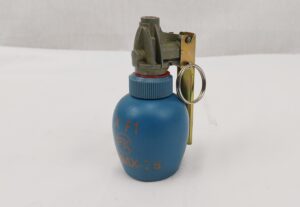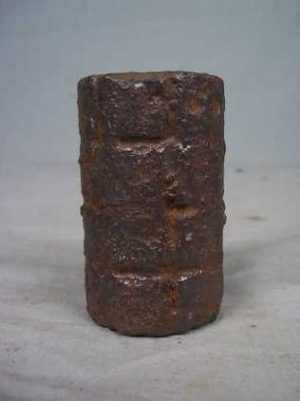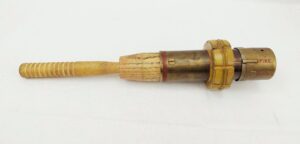
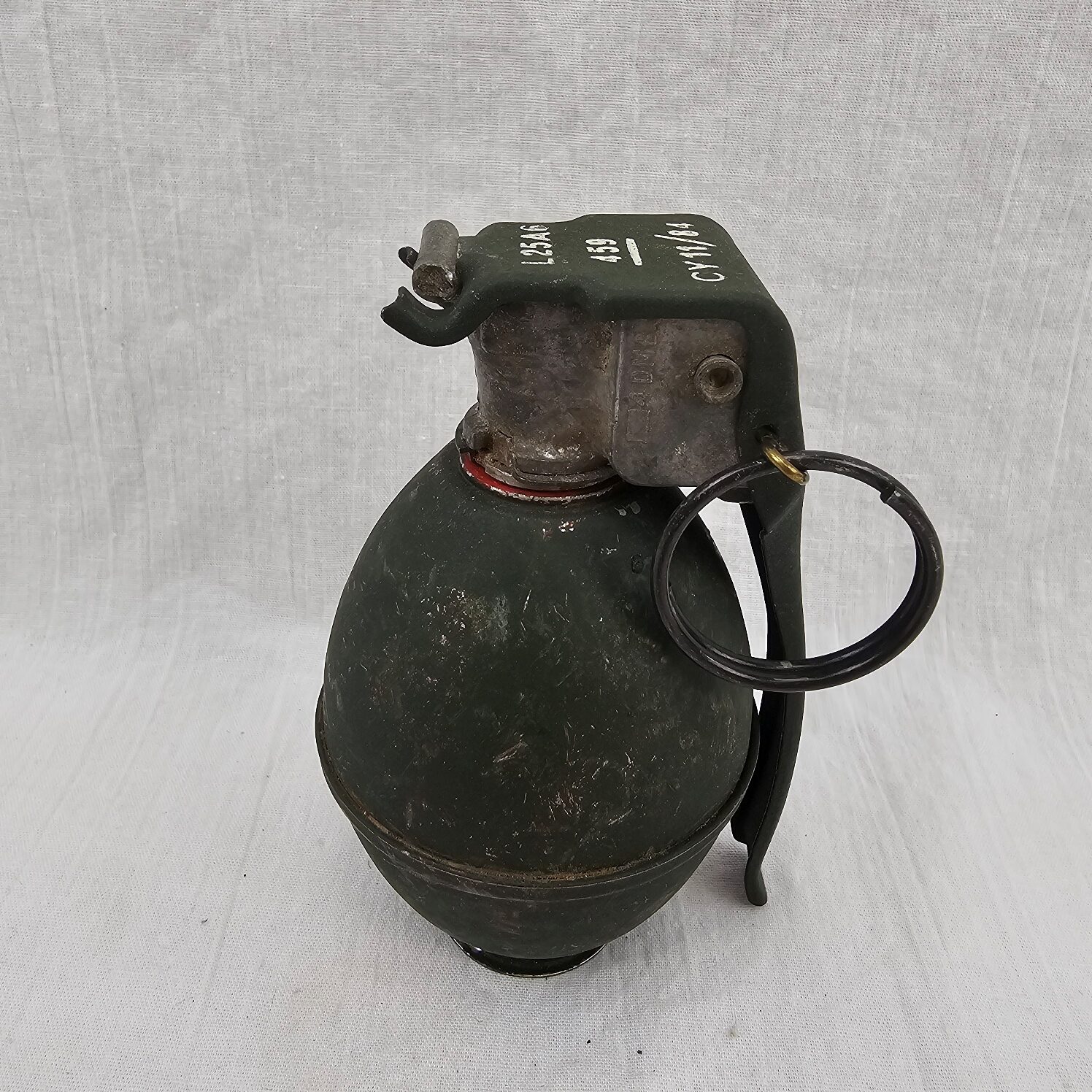
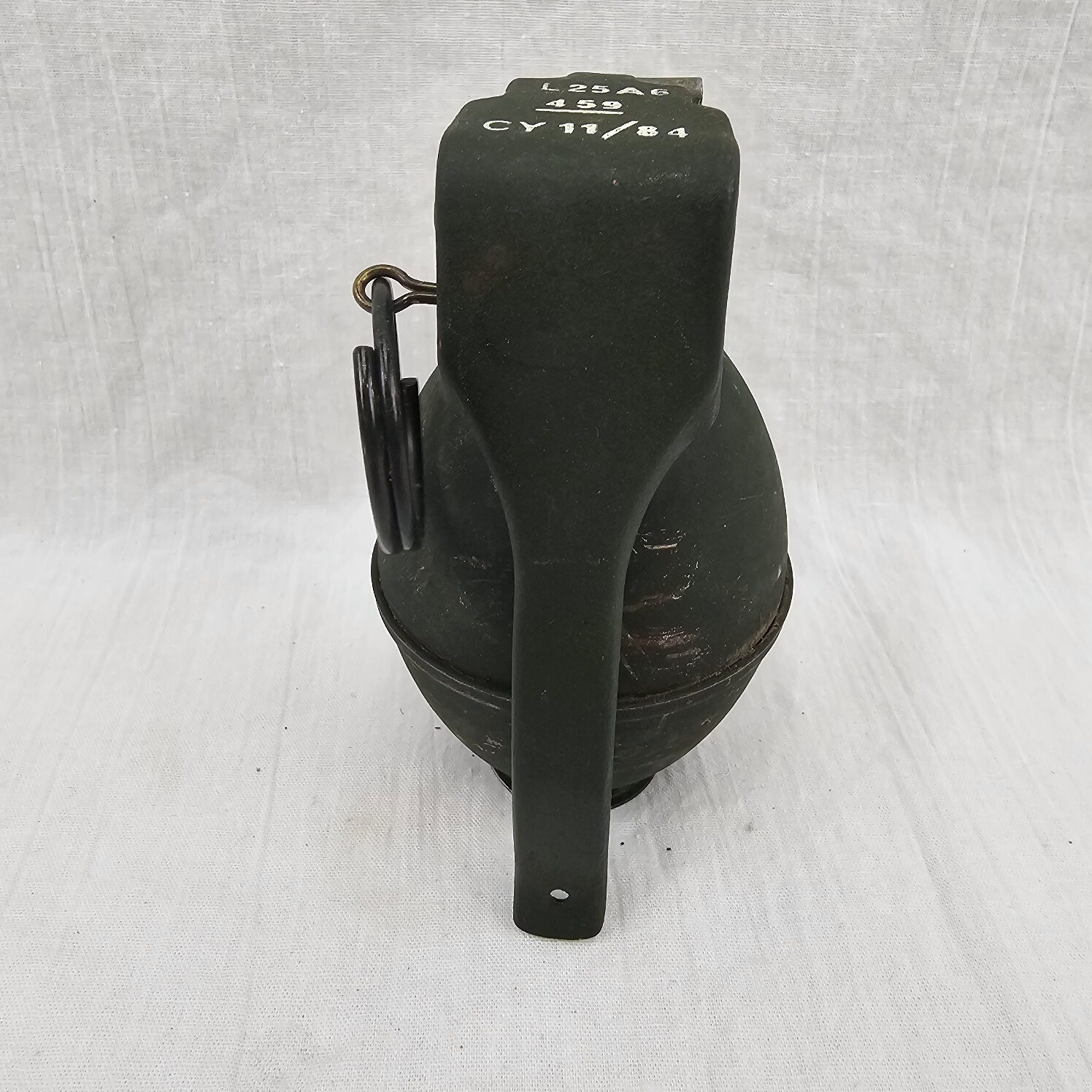
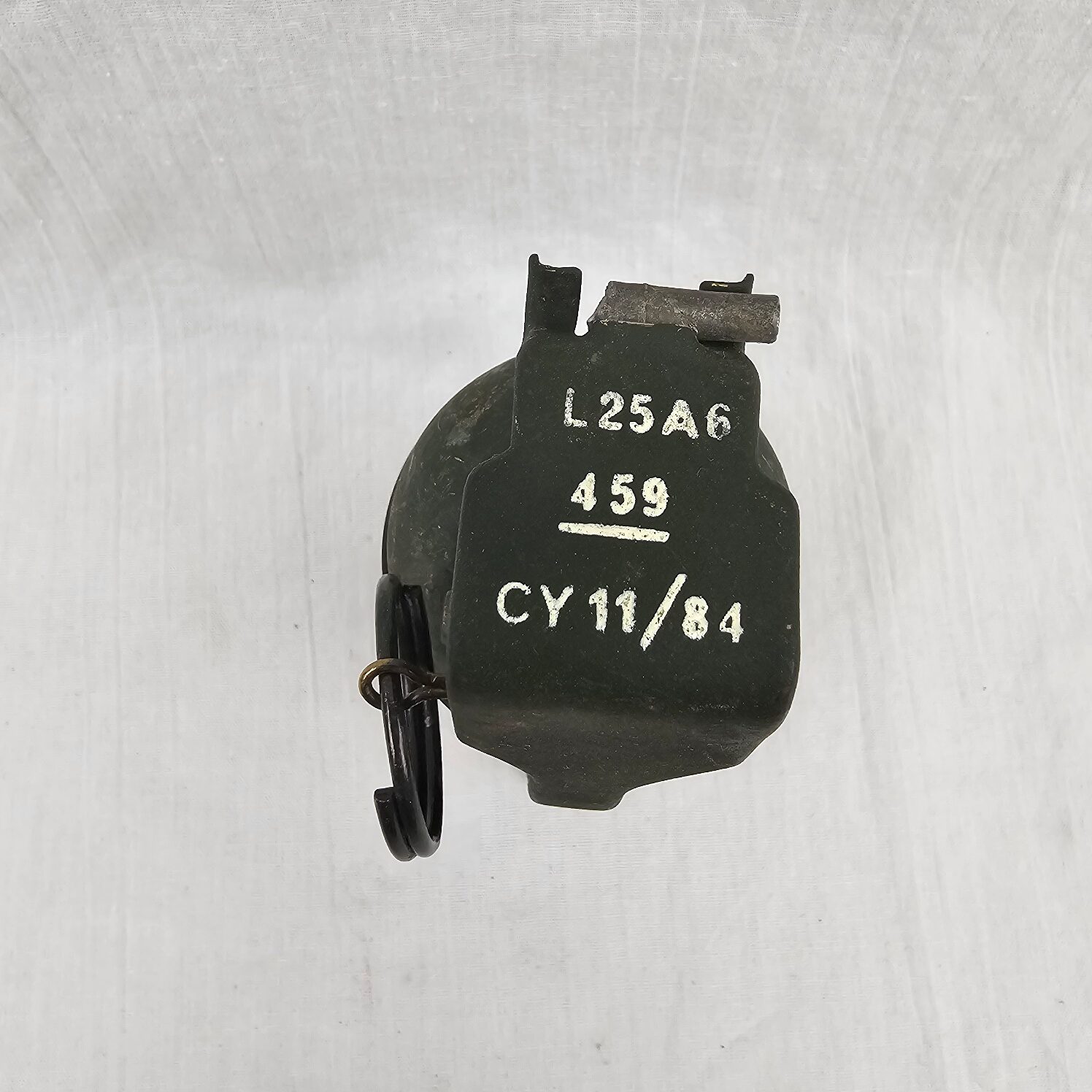
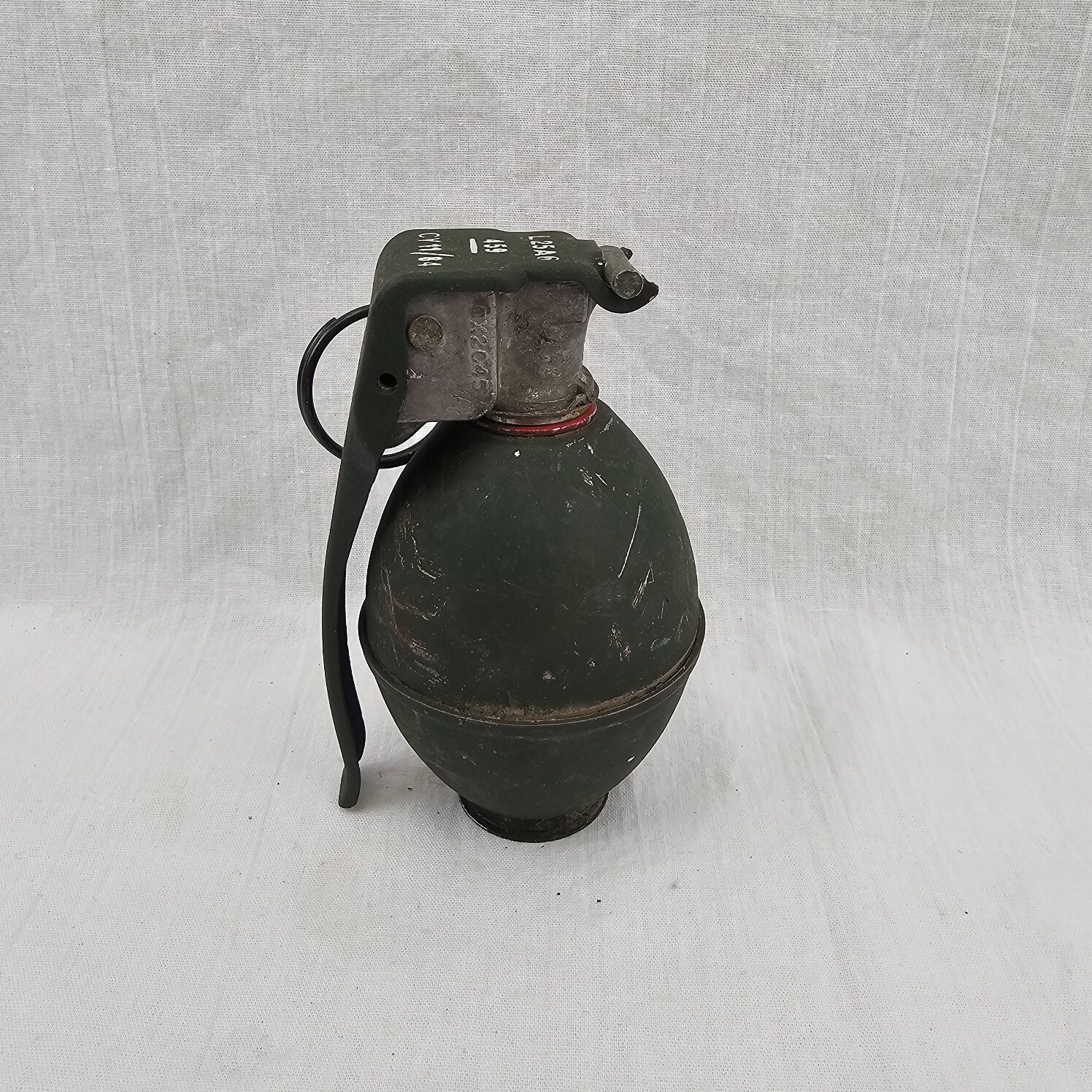
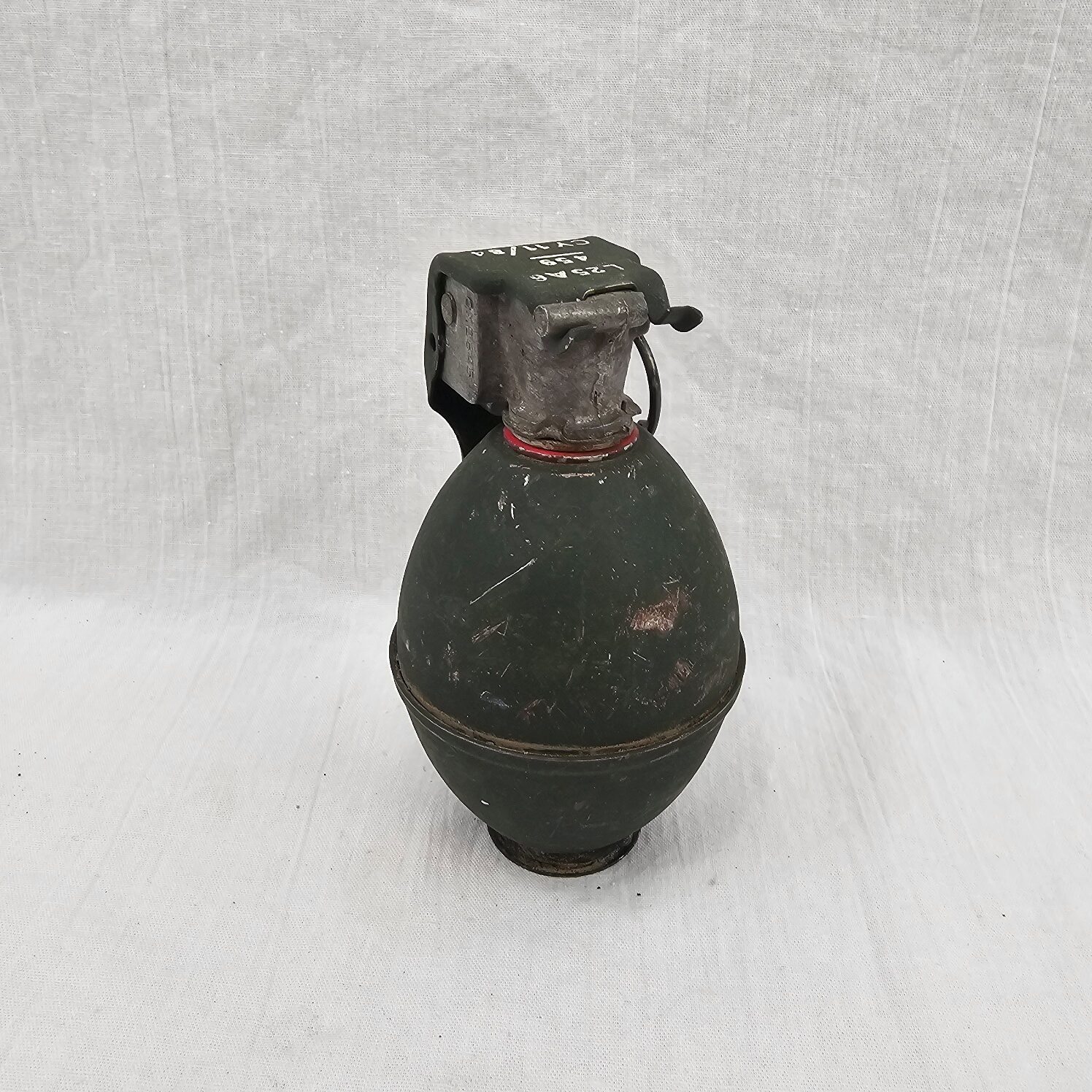
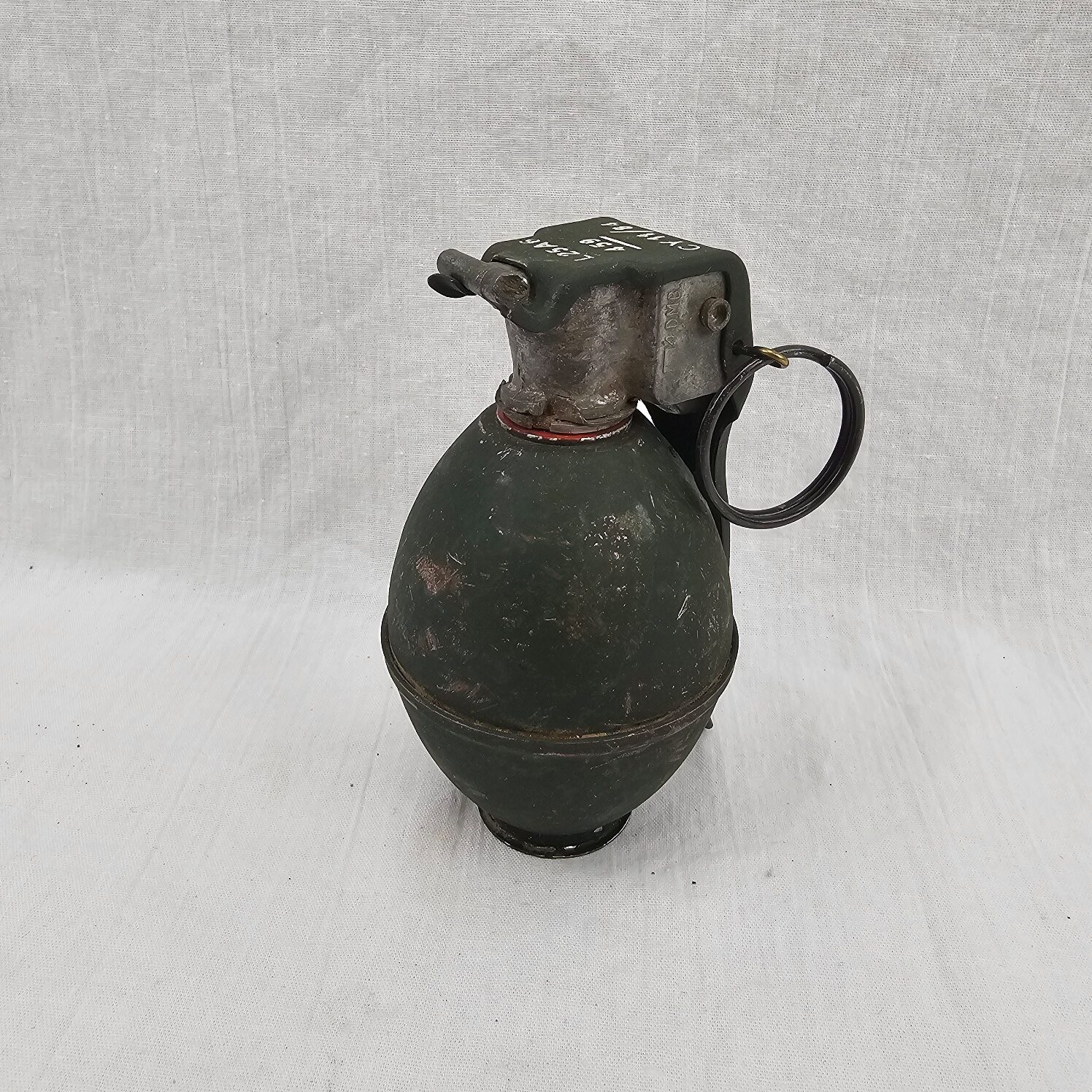
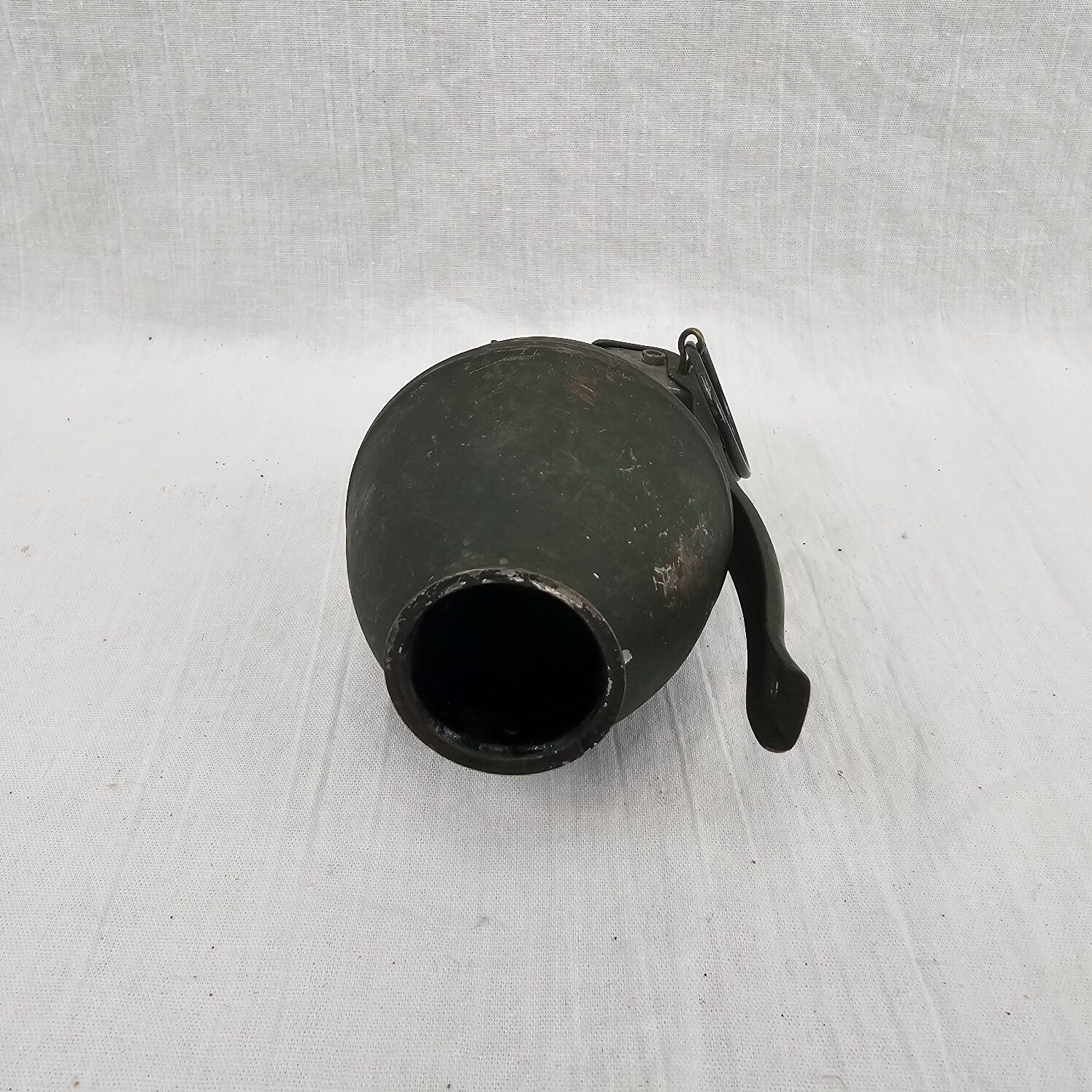
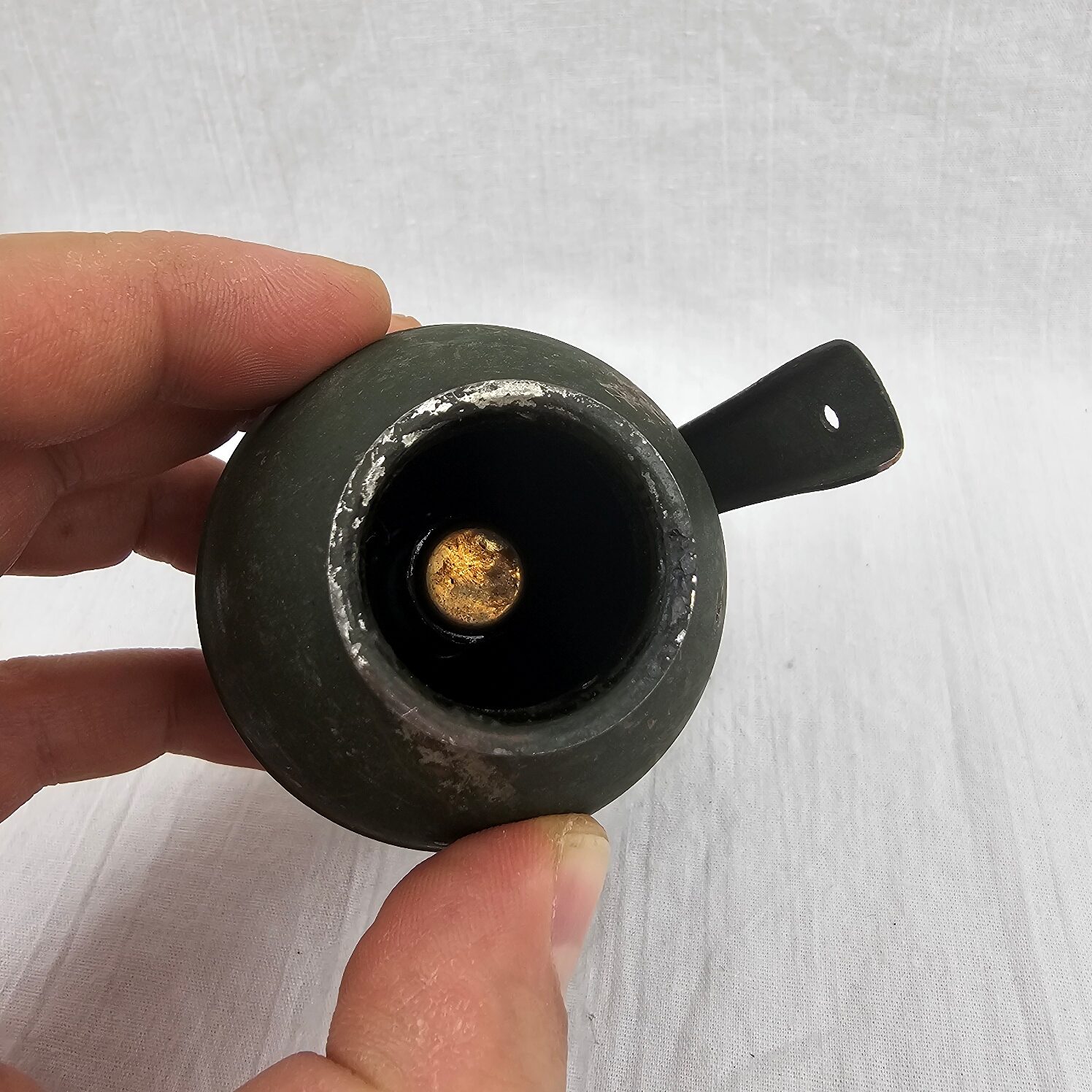
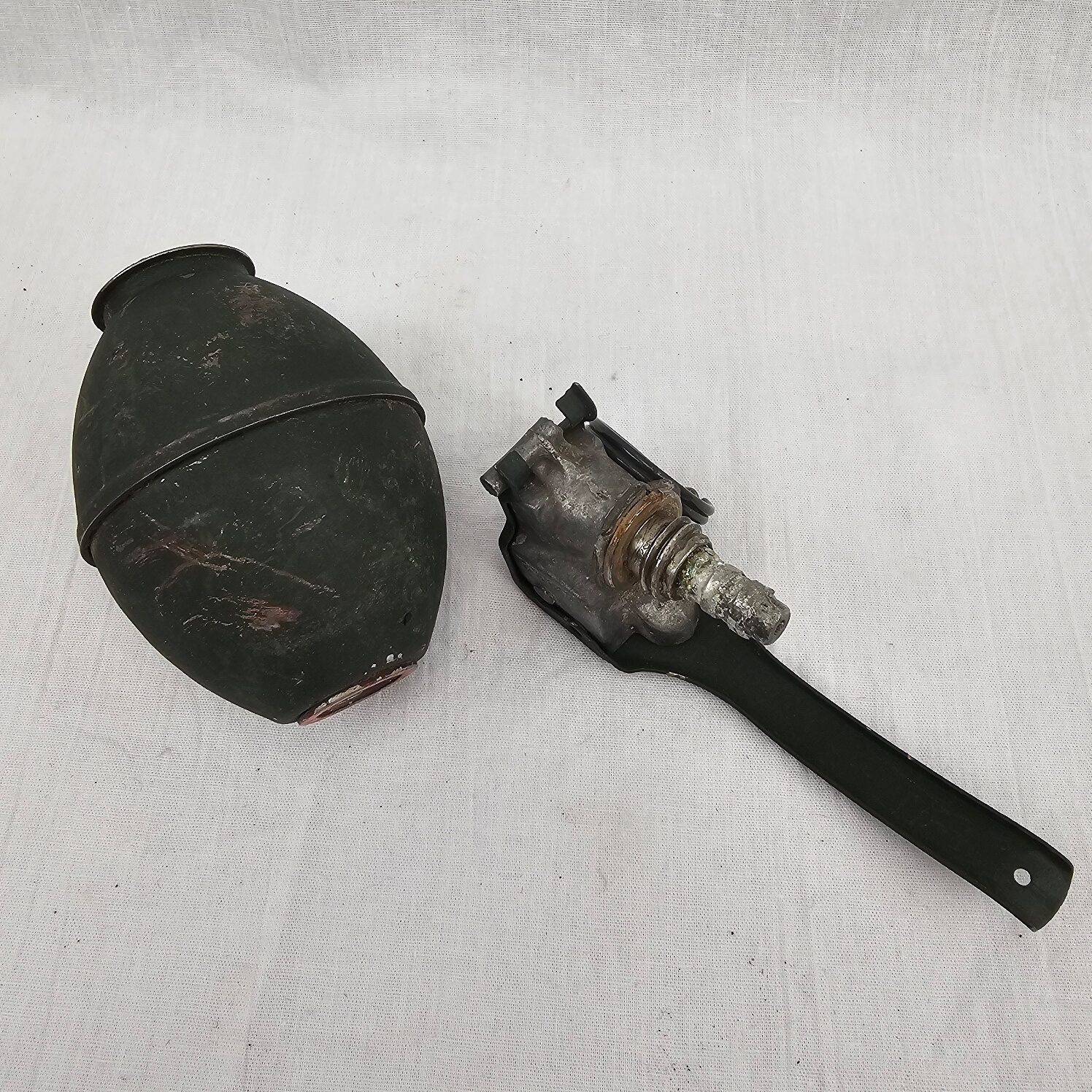
~ British L2 L25A6 fused H.E. Fragmentation Grenade ~
The L2 series is the post-WWII British fragmentation hand-grenade family that replaced the older Mills-type No.36M. The transition away from the “pineapple” style took place in the 1950s–1970s as the British Army moved to smooth-cased, coiled-wire fragmentation designs.
Variants include L2A1 (adopted in the 1960s) and L2A2 (production/fuse improvements). The L2 family is essentially a British derivative of the US M26 style fragmentation grenade concept.
Design & technical highlights
Type: Anti-personnel fragmentation (high explosive) hand grenade.
Smooth, egg/oval metal body with internal coiled/segmented fragmentation liner (unlike the external “pineapple” grooves of Mills bombs).
Explosive fill: L2 grenades are reported to contain a TNT/RDX type filling (comparable to M26 family fill formulations).
Weight/size: overall mass roughly in the ~450 g range (exact depends on variant and markings).
The L25A6 fuse
Fuse designation: L25A6 (common firing/delay fuse used on L2 grenades). It provides a time delay fuze rather than impact detonation.
militaryfactory.com
Delay: typical delay is roughly ~3.6–4.4 seconds depending on manufacture/marking and exact fuse mark — fuses in British service were shortened from older 7s types to around 4s for tactical reasons. The L25A6 is reported to allow up to about 4.4 s before detonation.
Service & replacement
The L2 replaced the No.36M in British service (No.36M remained in service in some places longer). The L2 family in turn was later superseded by more modern multi-mode grenades (for example the L109 series in the 2000s)