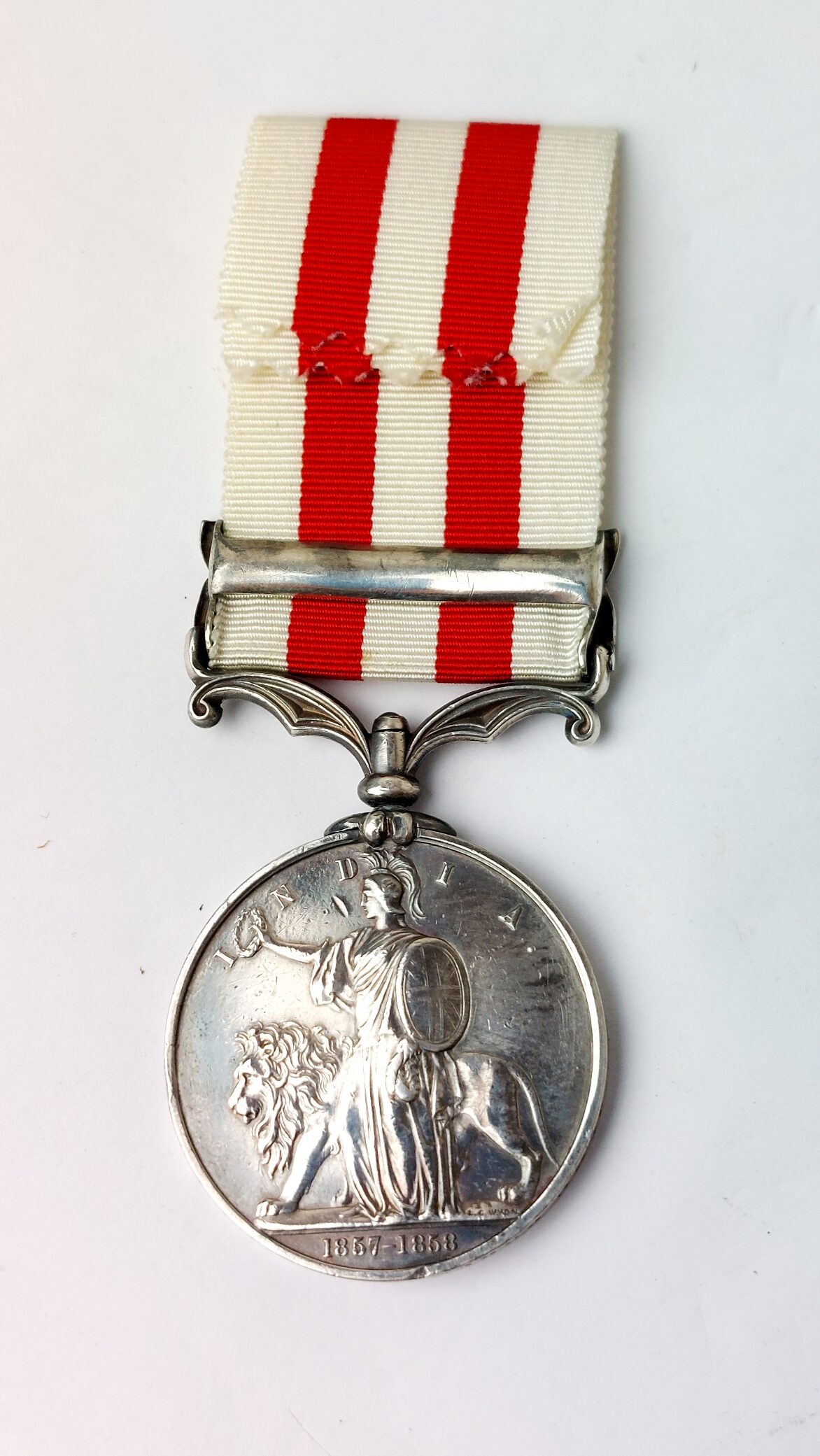
British, Indian Mutiny Medal 1857–1858, Lucknow Clasp, Named to John Roberts, 7th (Queen’s Own) Hussars

£595.00

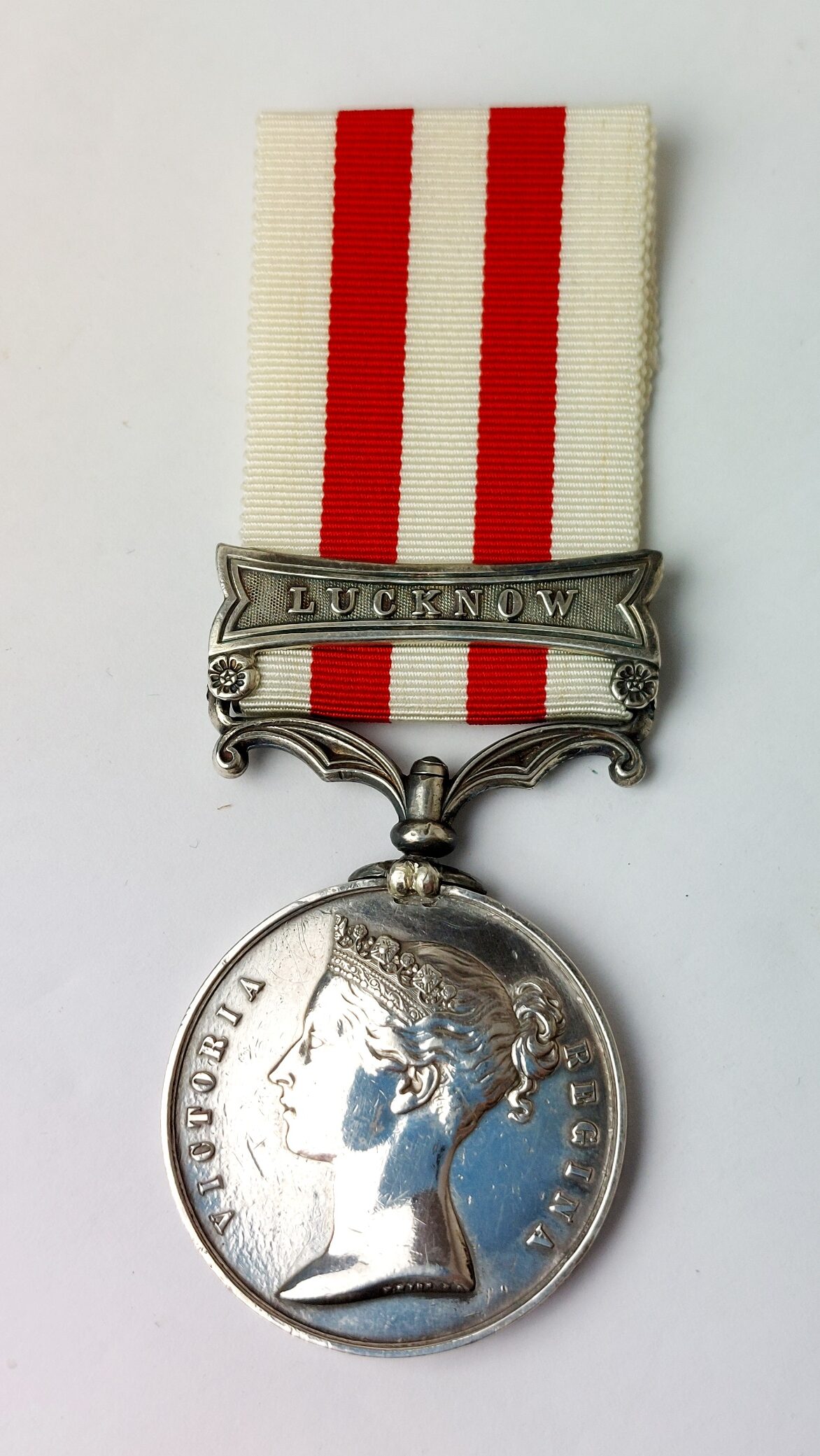
Indian Mutiny Medal 1857–1858 with Lucknow clasp, officially named to John Roberts, 7th (Queen’s Own) Hussars, confirmed on the Indian Mutiny Medal Roll and further identified through surviving Royal Hospital Chelsea service papers, showing later promotion to Corporal and service at Umballa, India in 1861.

Availability: 1 in stock

Would you like to find out more about this product?
Enquire about this product
SKU: RQMCFOXEEO_8239231207 Category: Tags: , , , , , , , , , , , , , ,

*British, Indian Mutiny Medal 1857–1858, Lucknow Clasp, Named to John Roberts, 7th (Queen’s Own) Hussars*

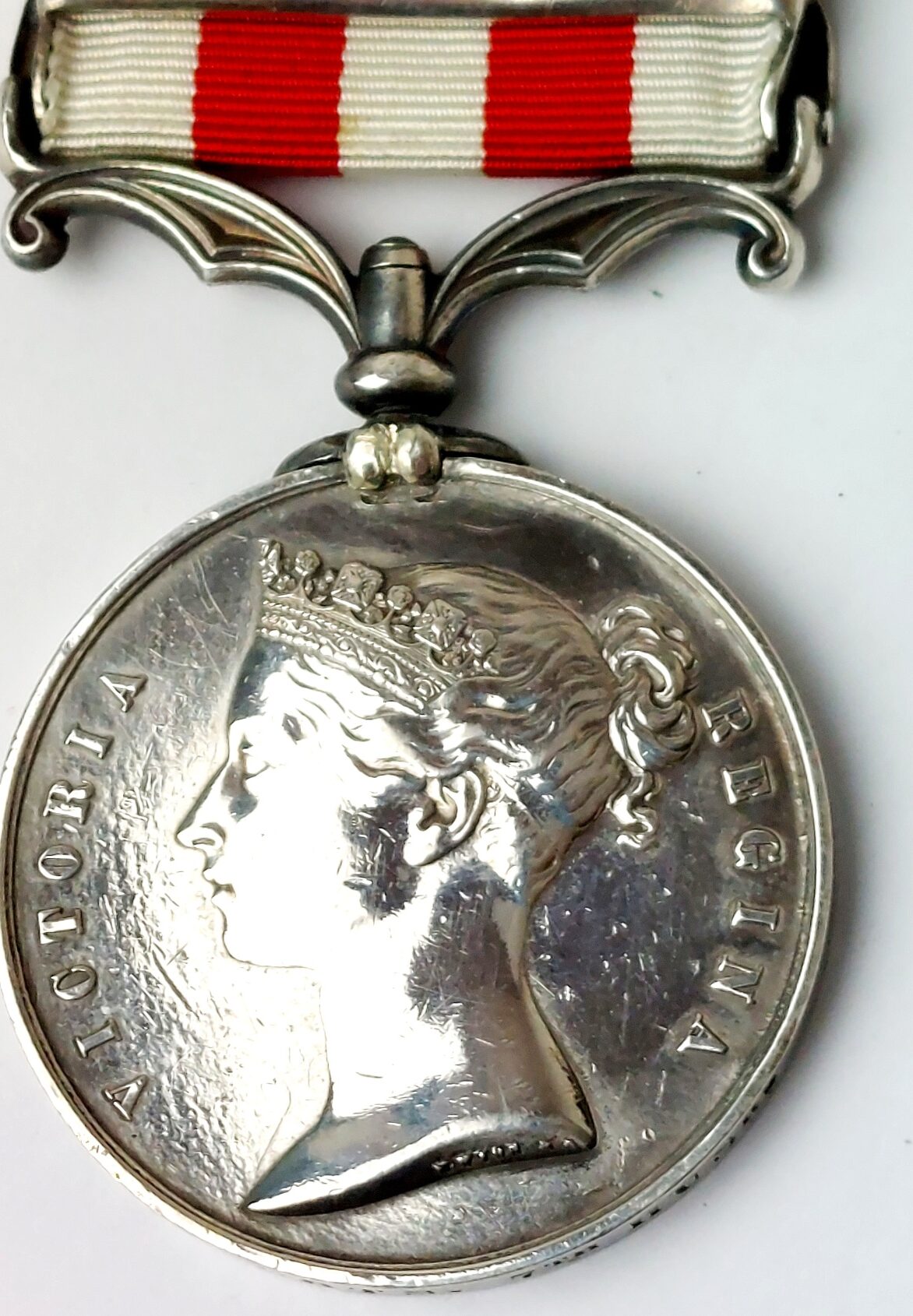
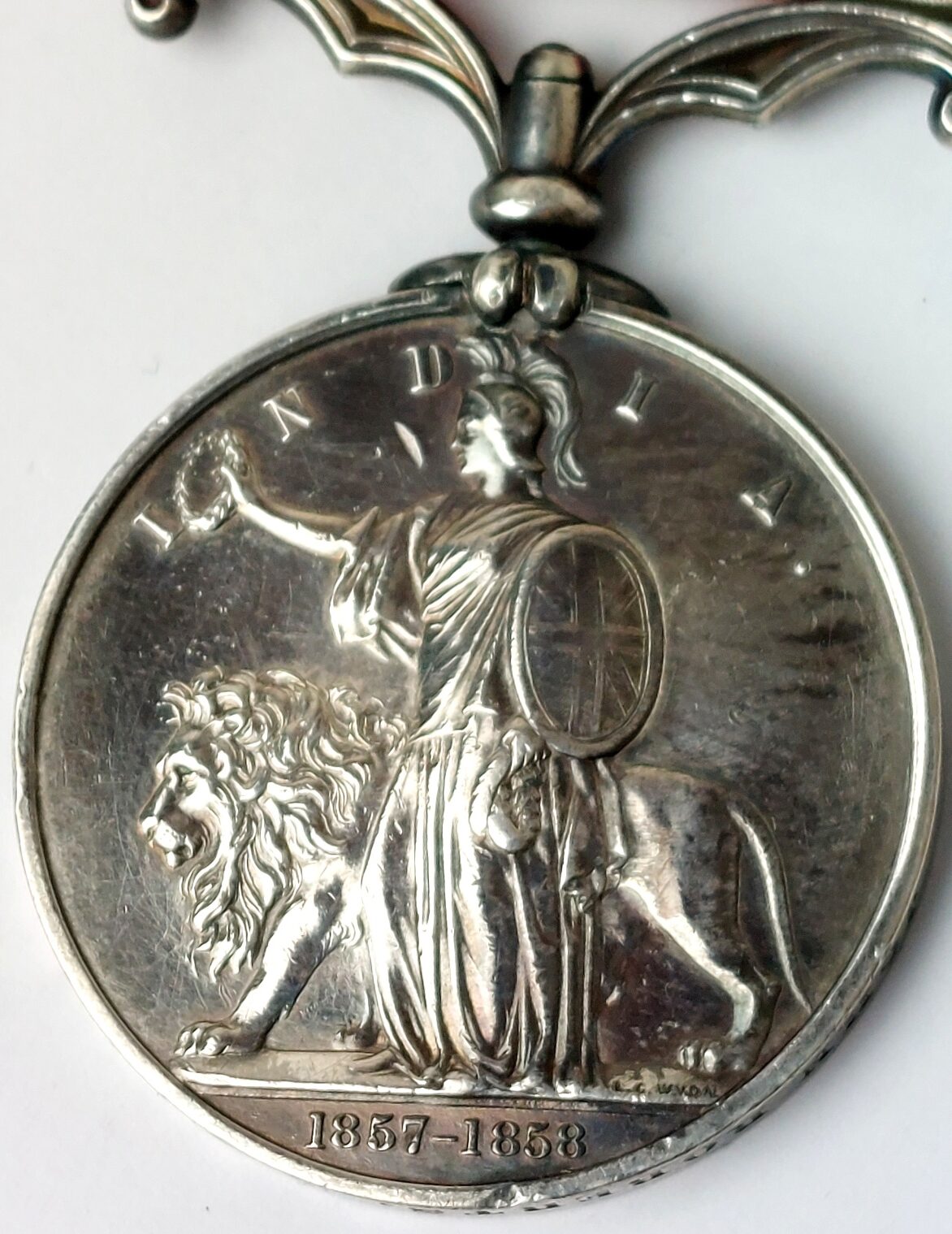
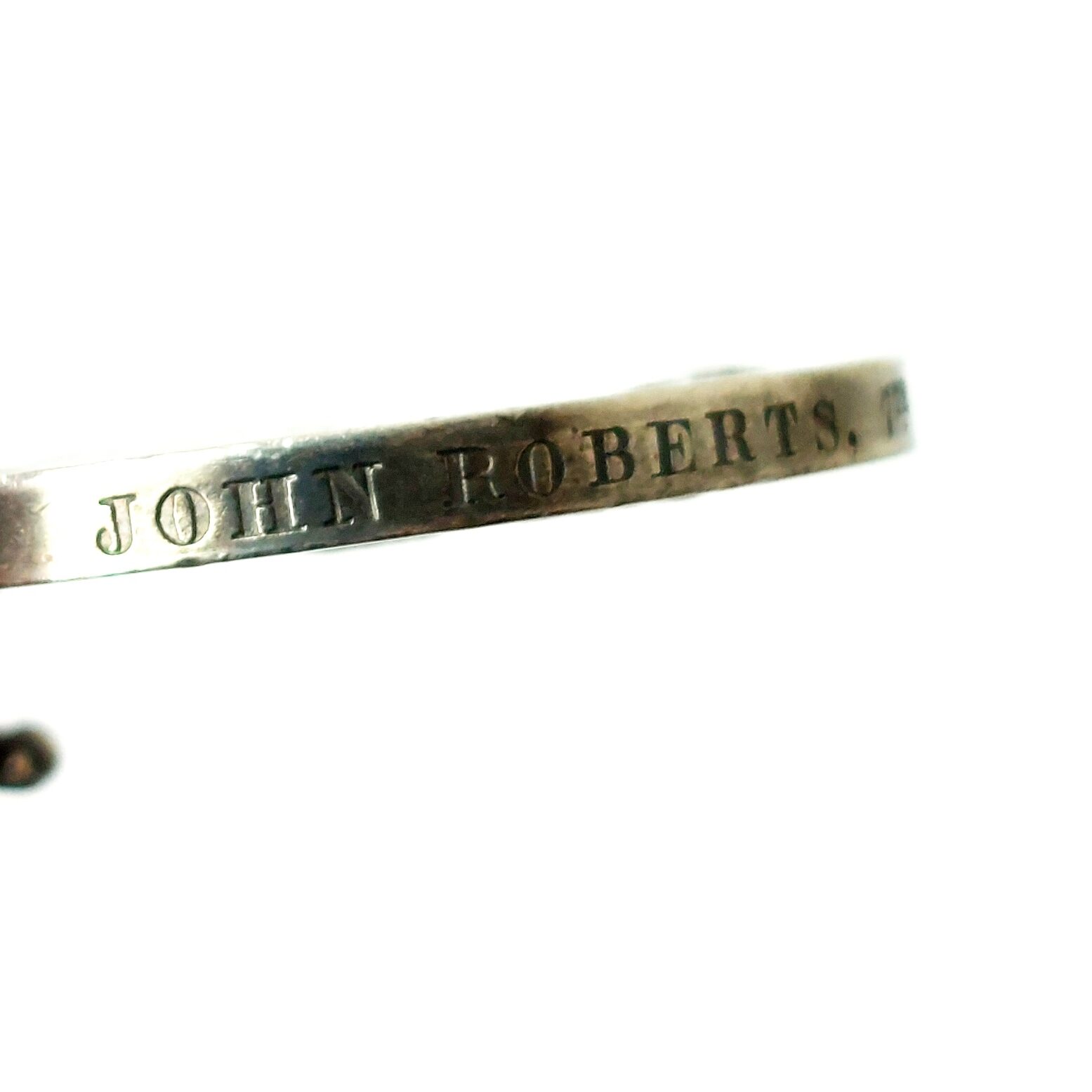
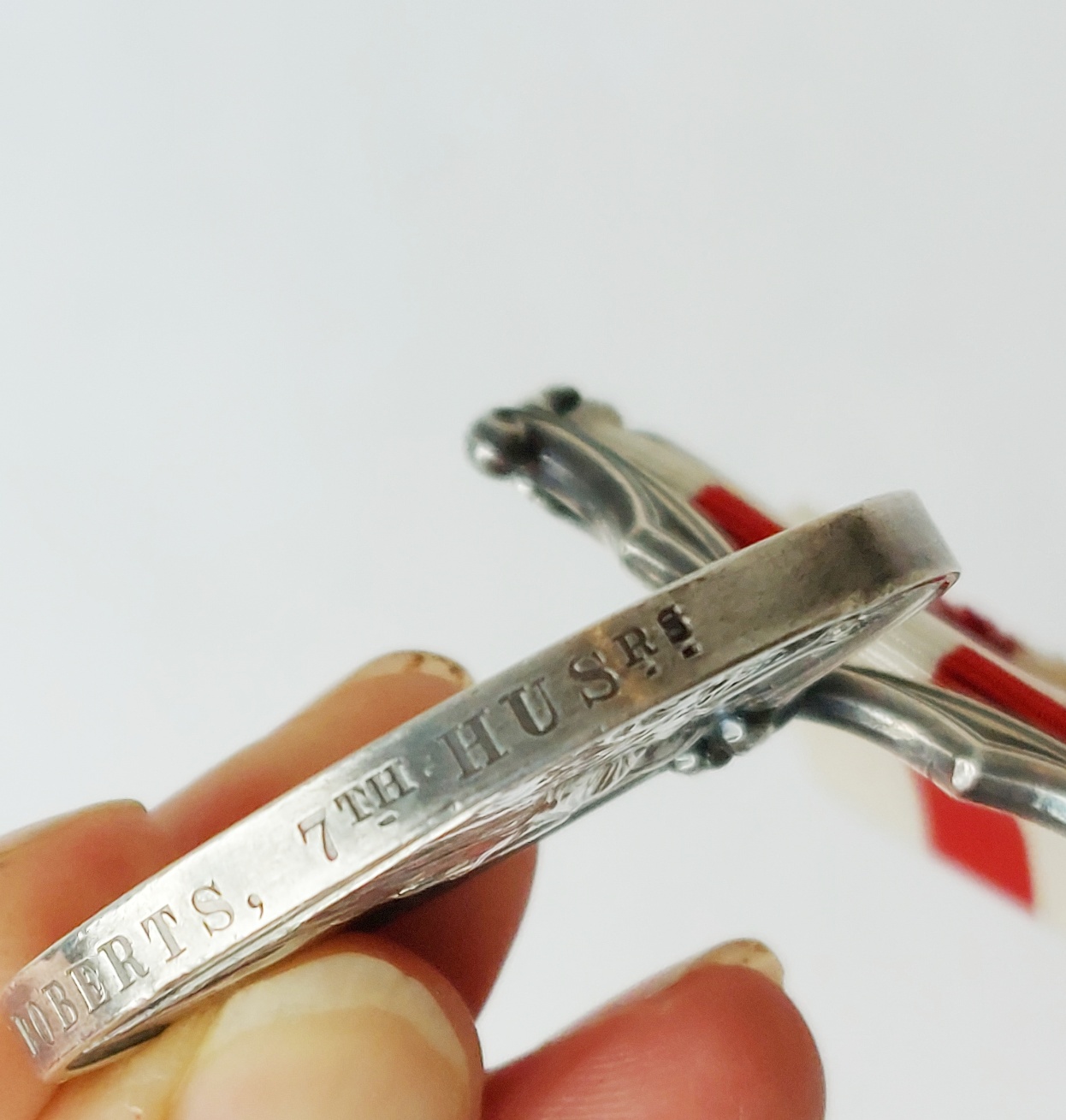
A British Indian Mutiny Medal (1857–1858) in silver with single clasp “LUCKNOW”, officially named on the edge “JOHN ROBERTS, 7TH HUSSARS.” The medal is fitted with the correct Victorian scroll suspension and retains its ribbon of white with two red vertical stripes. The obverse bears the diademed head of Queen Victoria facing left with the legend VICTORIA REGINA. The reverse depicts Britannia standing beside a lion, holding a wreath and shield, with the word INDIA above and the campaign dates 1857–1858 below in the exergue. The medal remains well preserved with clear detail to both sides and pleasing toning to the silver.

Approx. Measurements – Medal diameter: 36 mm.

Historical Note:
The Indian Mutiny Medal was instituted in 1858 to recognise service during the uprising in India between 1857 and 1859. The rebellion, often referred to as the Sepoy Mutiny or Indian Rebellion of 1857, began among soldiers of the Bengal Army serving the East India Company and quickly spread across northern India. The conflict represented the most serious challenge to British authority in India during the nineteenth century and required extensive military operations before it was finally suppressed. In the aftermath of the rebellion the East India Company was dissolved and the administration of India was transferred directly to the British Crown.

One of the most significant campaigns of the conflict centred on the province of Oudh (Oude), where rebel forces had established strong positions around the city of Lucknow. British forces mounted several relief and assault operations during 1857 and 1858 before finally securing the city. The clasp “Lucknow” was awarded to those who participated in the operations connected with the final capture of the city between 2 and 16 March 1858, during the campaign conducted under the command of Sir Colin Campbell.

The 7th (Queen’s Own) Hussars, a light cavalry regiment of the British Army, played an active role in these operations. Regimental histories record the unit participating in the campaign in Oudh during the advance on Lucknow and the subsequent suppression of rebel forces throughout the region. Cavalry regiments such as the 7th Hussars were heavily employed in reconnaissance, escort duties, and the pursuit of rebel forces following the capture of the city. During the wider operations in Oudh the regiment was also involved in actions and pursuit operations around the River Raptee, where British cavalry were engaged in driving rebel forces from the region.

The medal roll for the regiment confirms the entitlement of John Roberts of the 7th Hussars to the Indian Mutiny Medal with the Lucknow clasp, recorded in the Indian Mutiny Medal Roll (British Forces), 1857–1859. The roll itself is headed “Roll of Officers and Men of the 7th Regiment of Hussars who have been employed in the suppression of the Mutiny in Oude,” dated Camp near Salone, Oude, 14 November 1858, and records service in the field in Oude and Rohilcund during 1858, including the operations connected with the siege and capture of Lucknow.

A review of the regimental roll shows John Roberts to be the only soldier of that name serving in the 7th Hussars and entitled to the Indian Mutiny Medal, confirming the attribution of the medal.

Additional regimental records further demonstrate that Roberts continued in service with the regiment following the campaign. Muster rolls preserved at The National Archives record Private John Roberts of the 7th Hussars serving at Umballa (Ambala), India in 1861, one of the principal British military cantonments in northern India during the period following the Mutiny.

The medal therefore represents the service of a cavalry soldier of the 7th (Queen’s Own) Hussars who served during the decisive campaign in Oudh and the capture of Lucknow, one of the defining military operations of the Indian Mutiny.

*Condition*
The medal remains in very good collectible condition. The silver surfaces display light age-related marks consistent with handling over time while retaining strong detail to both obverse and reverse. The naming remains clear and well defined. The Lucknow clasp is securely mounted and correct to the medal. The ribbon appears to be a later replacement but appropriate for display. Please see photographs as part of the condition report.

RQMCFOXEEO_8239231207

Download QRPrint QR
Scroll to Top