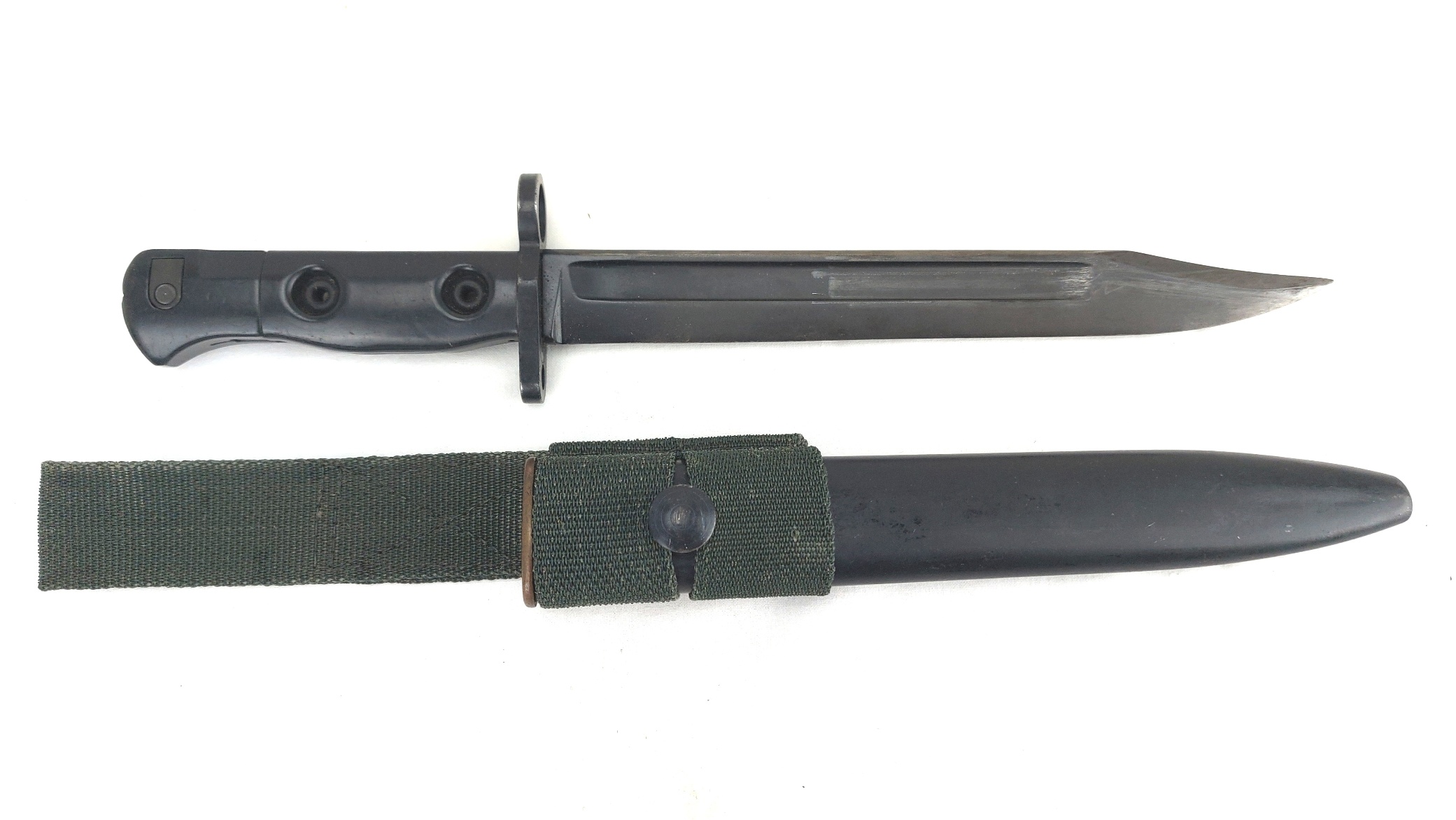
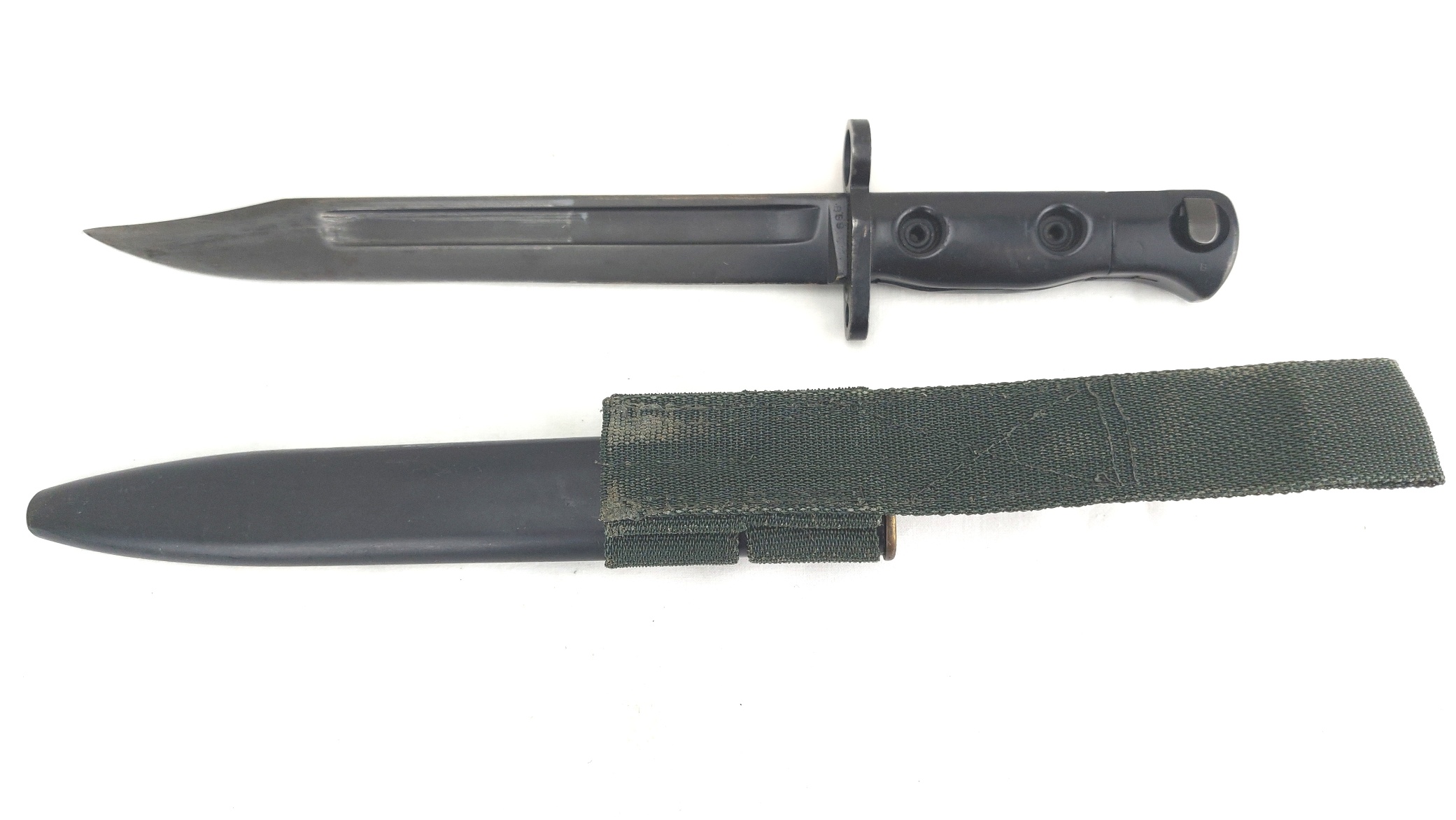
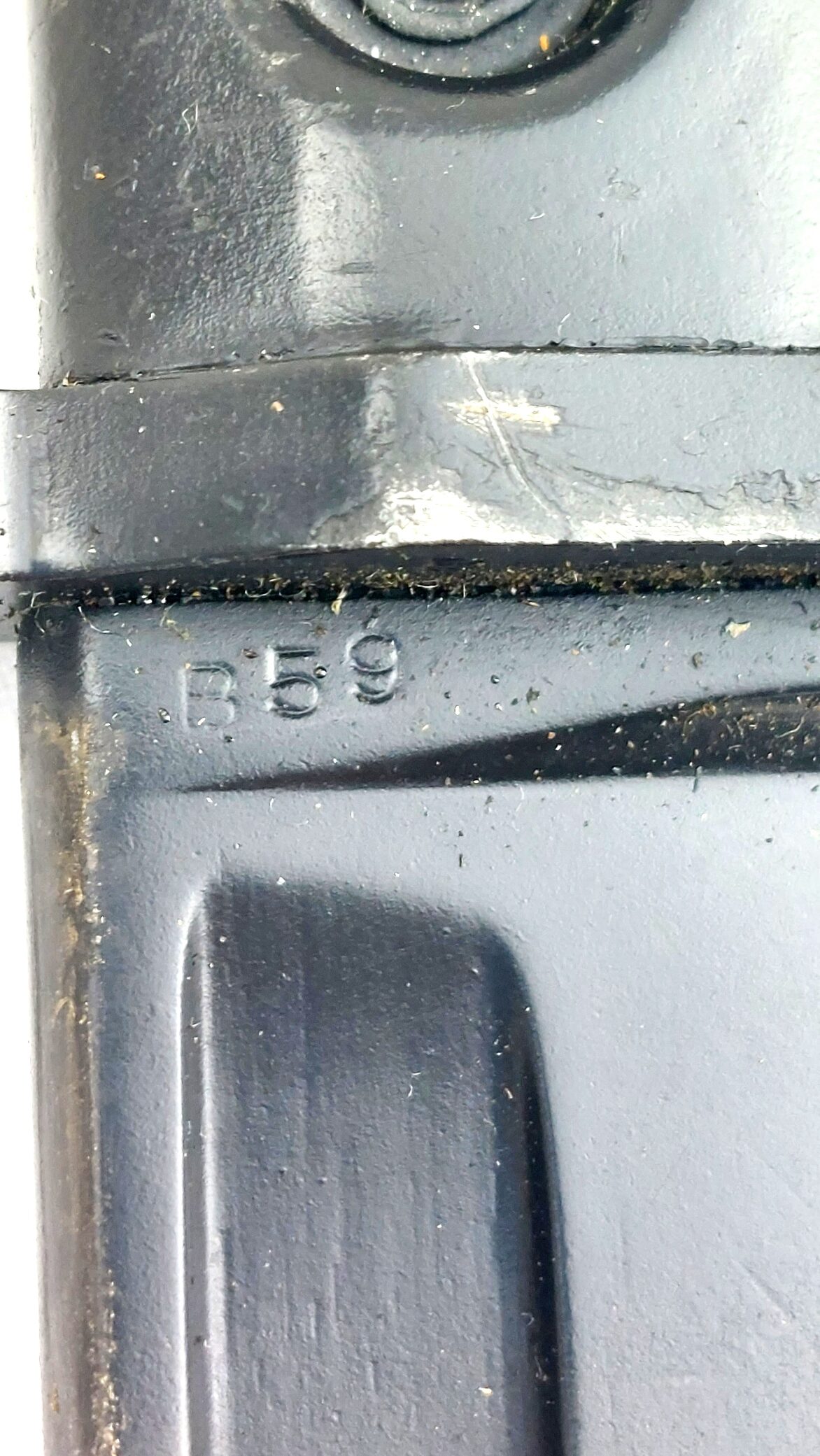
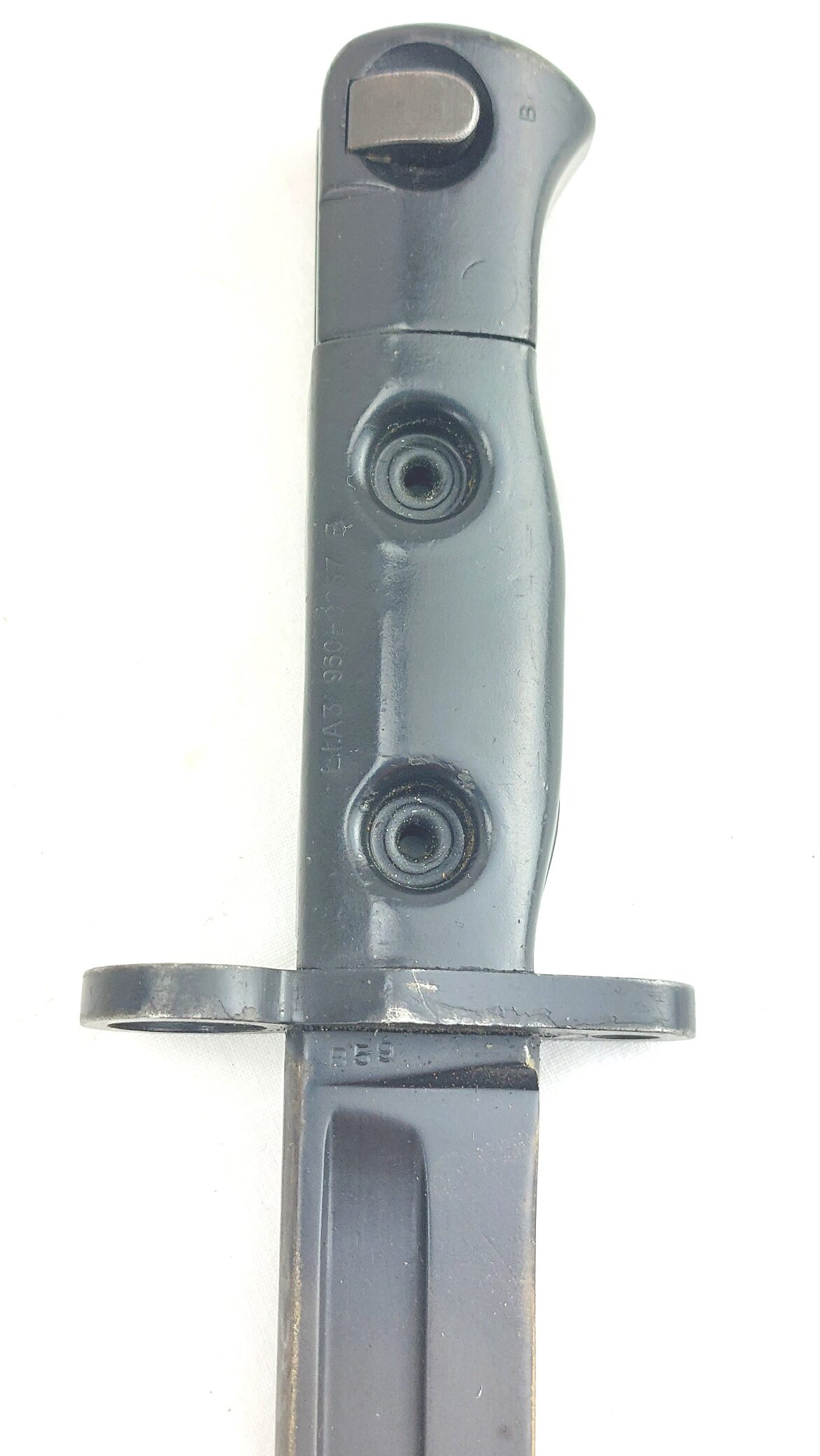
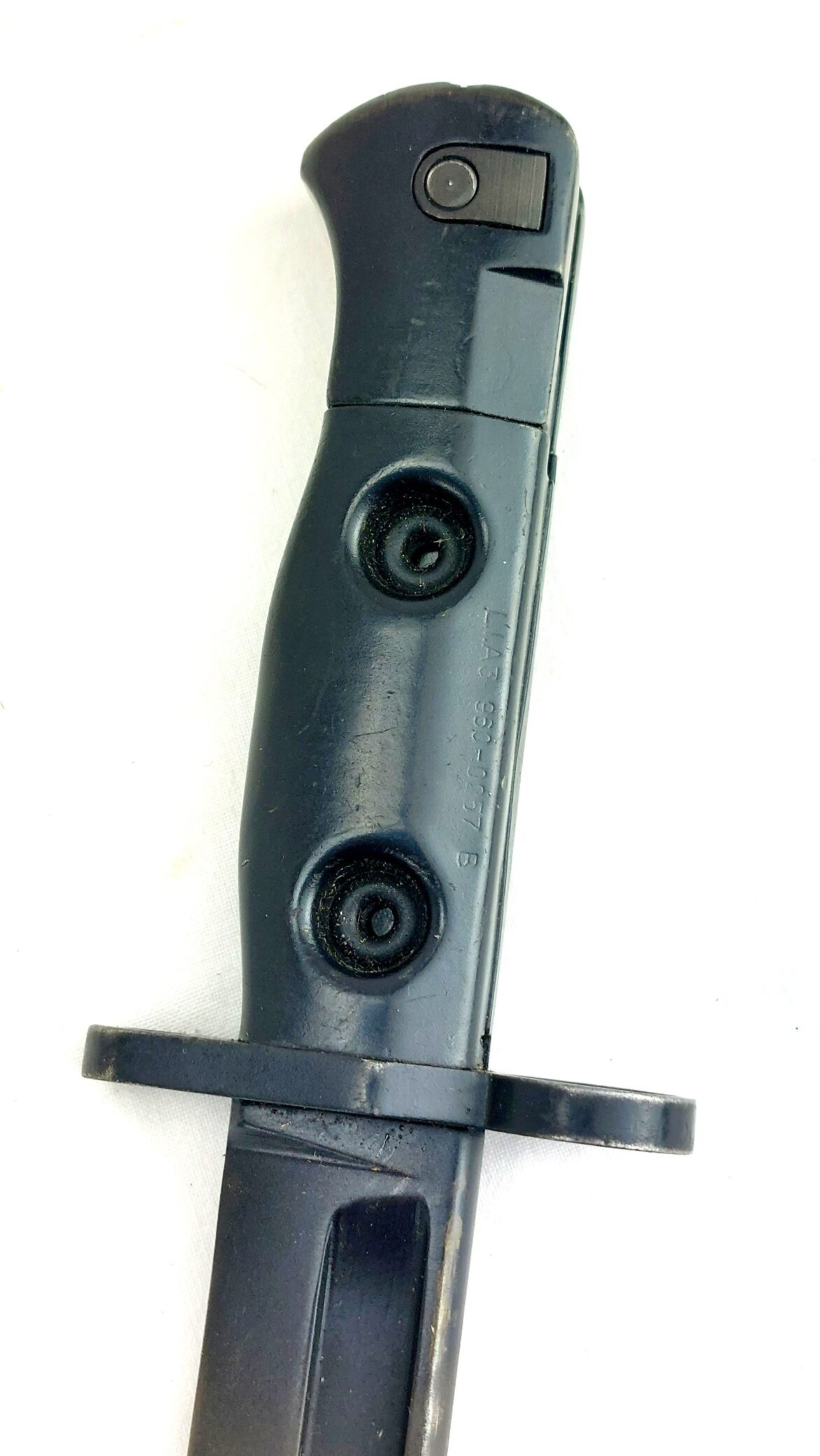
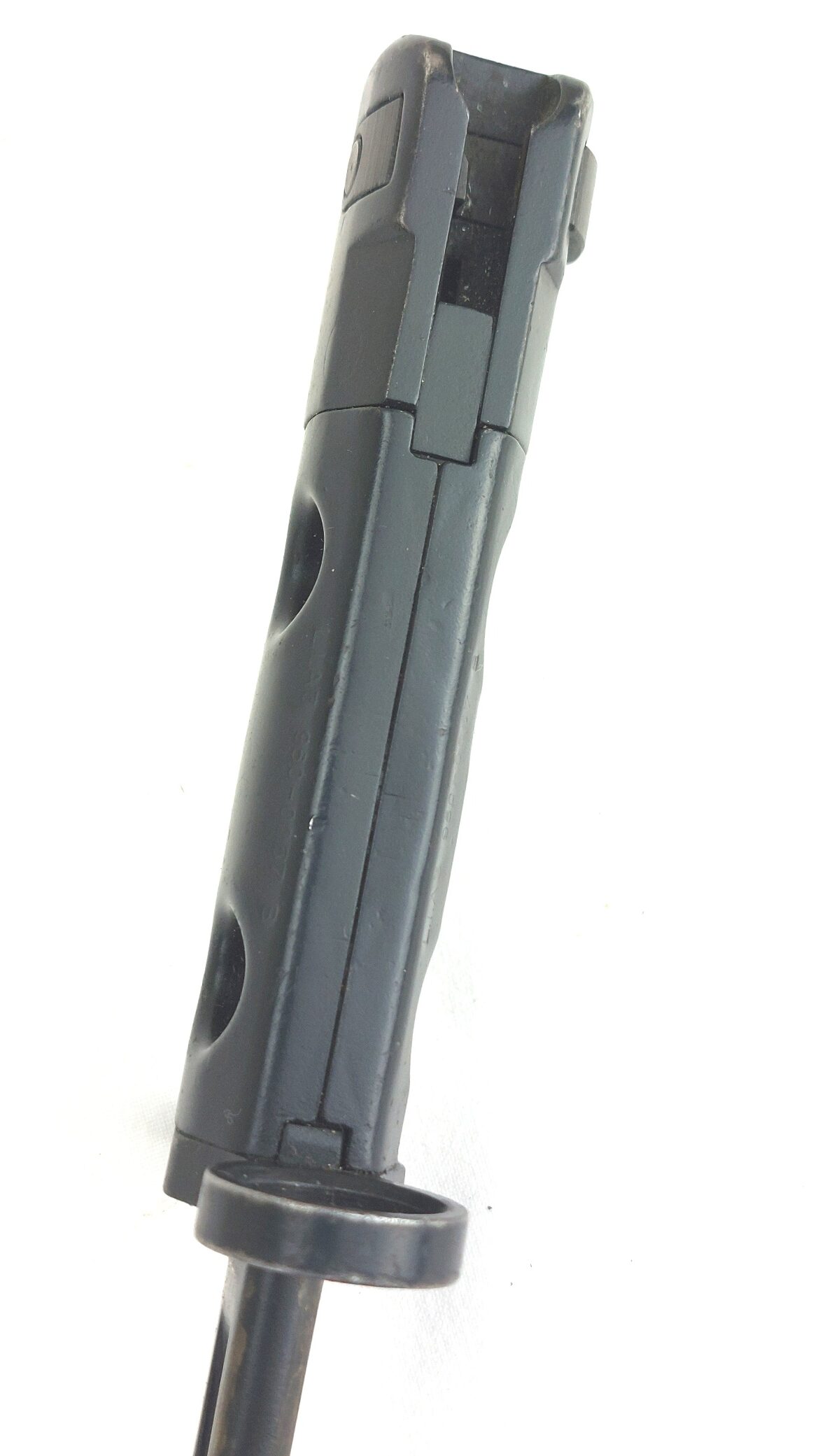
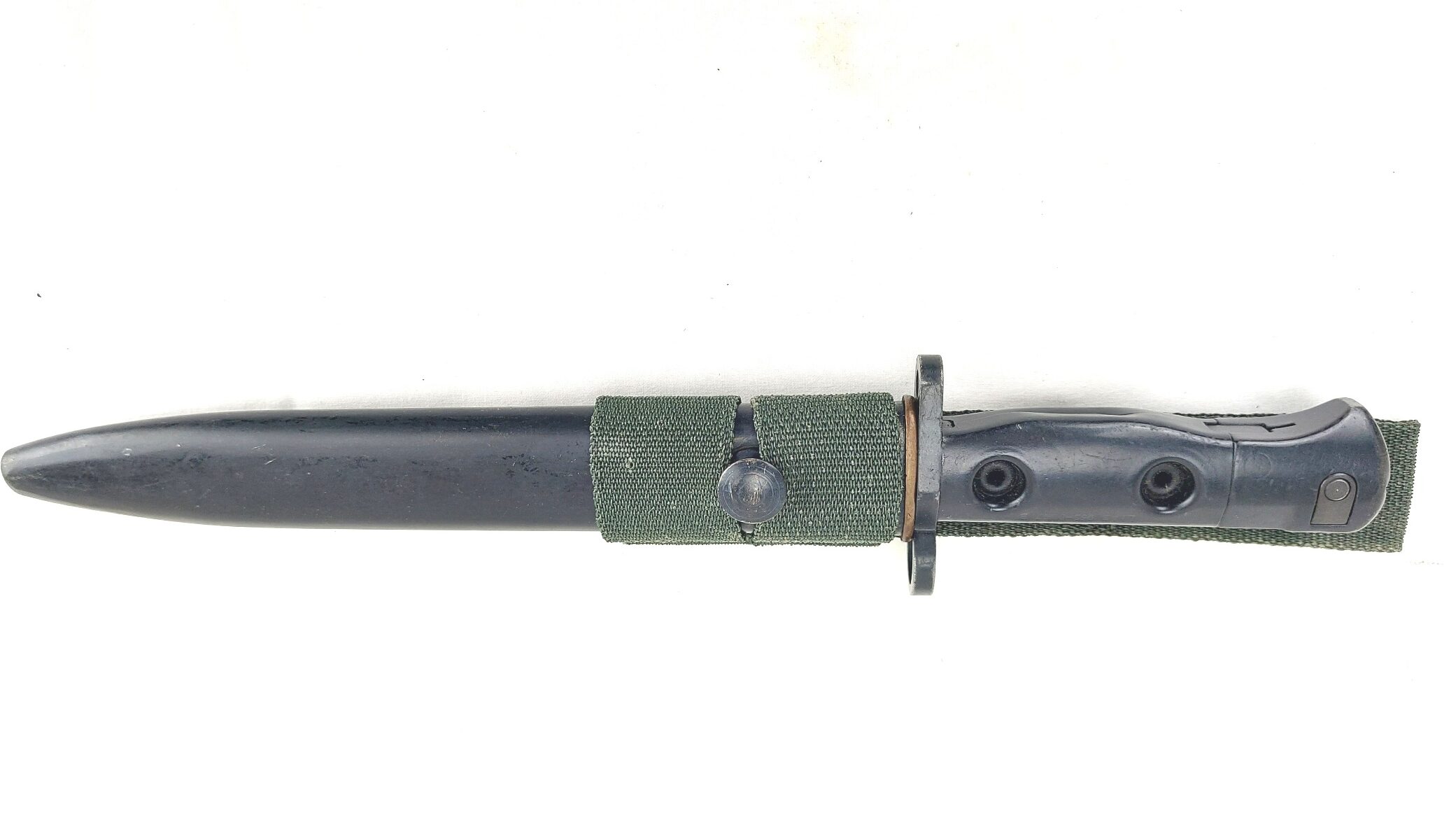
British L1A3 knife bayonet for use with the 7.62 mm NATO calibre L1A1 Self-Loading Rifle (SLR), the British service variant of the FN-FAL. This example is an early production L1A3, distinguished by its long fuller blade and waisted transitional crossguard, features associated with late-1950s manufacture.
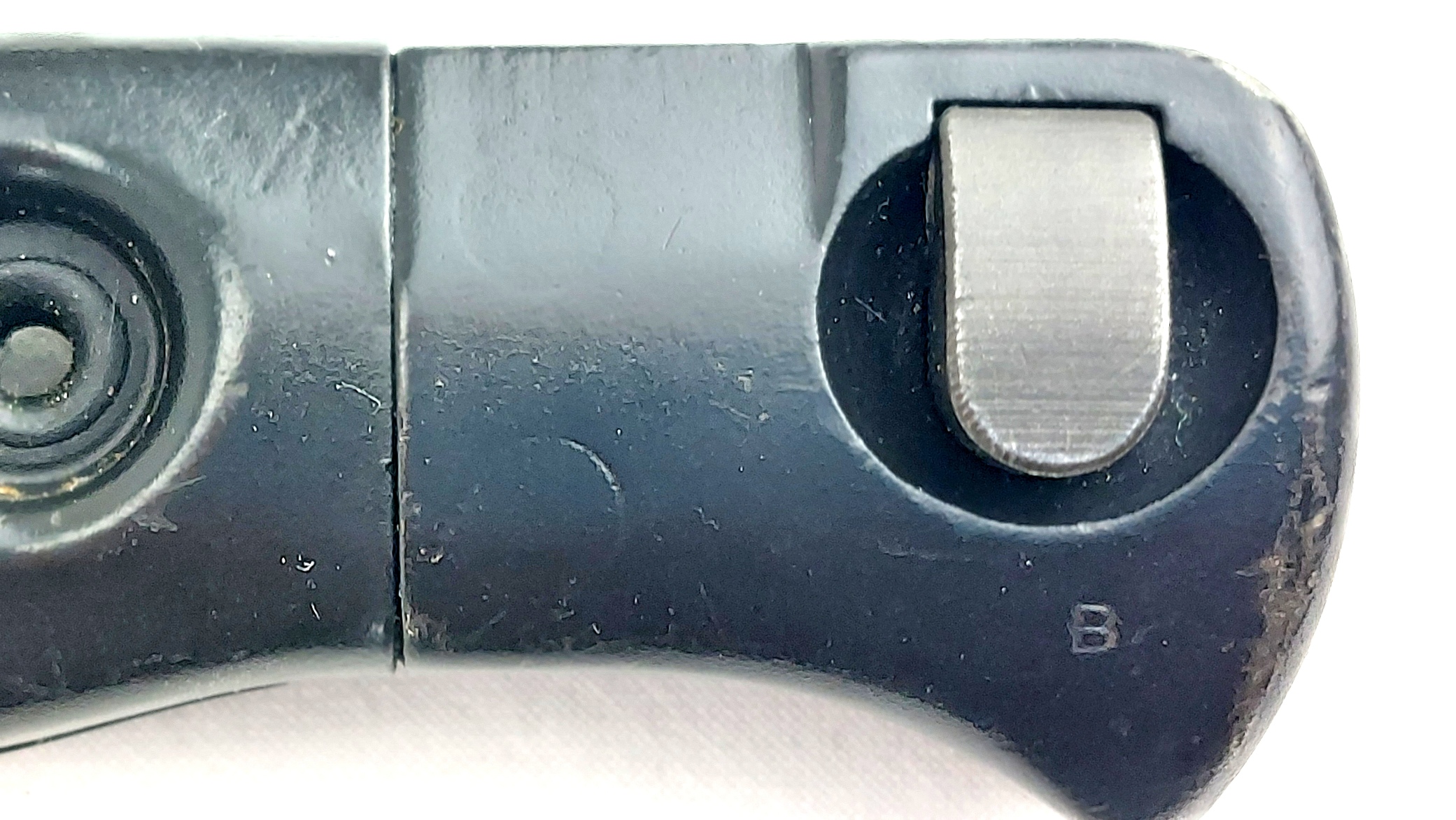
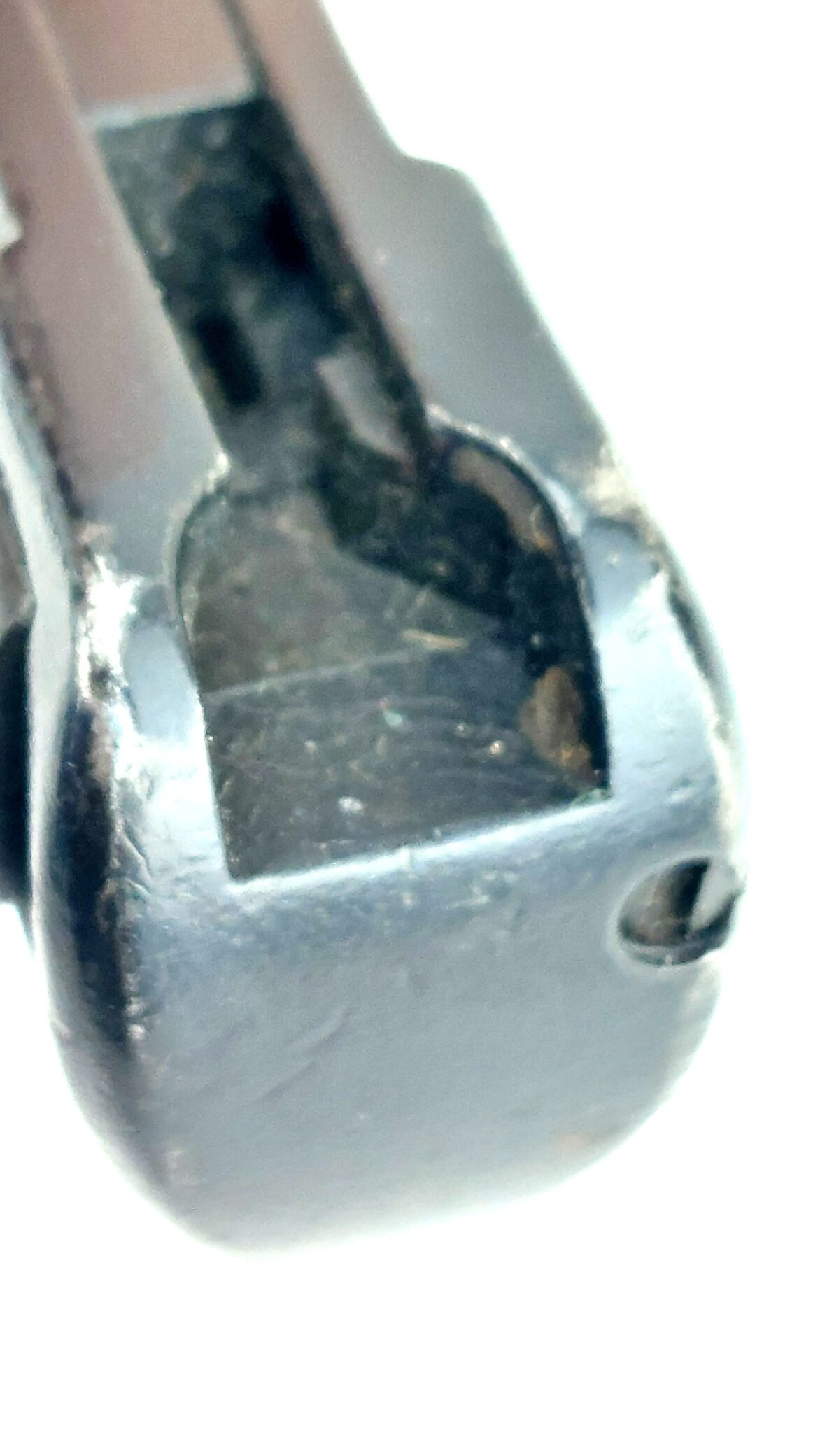
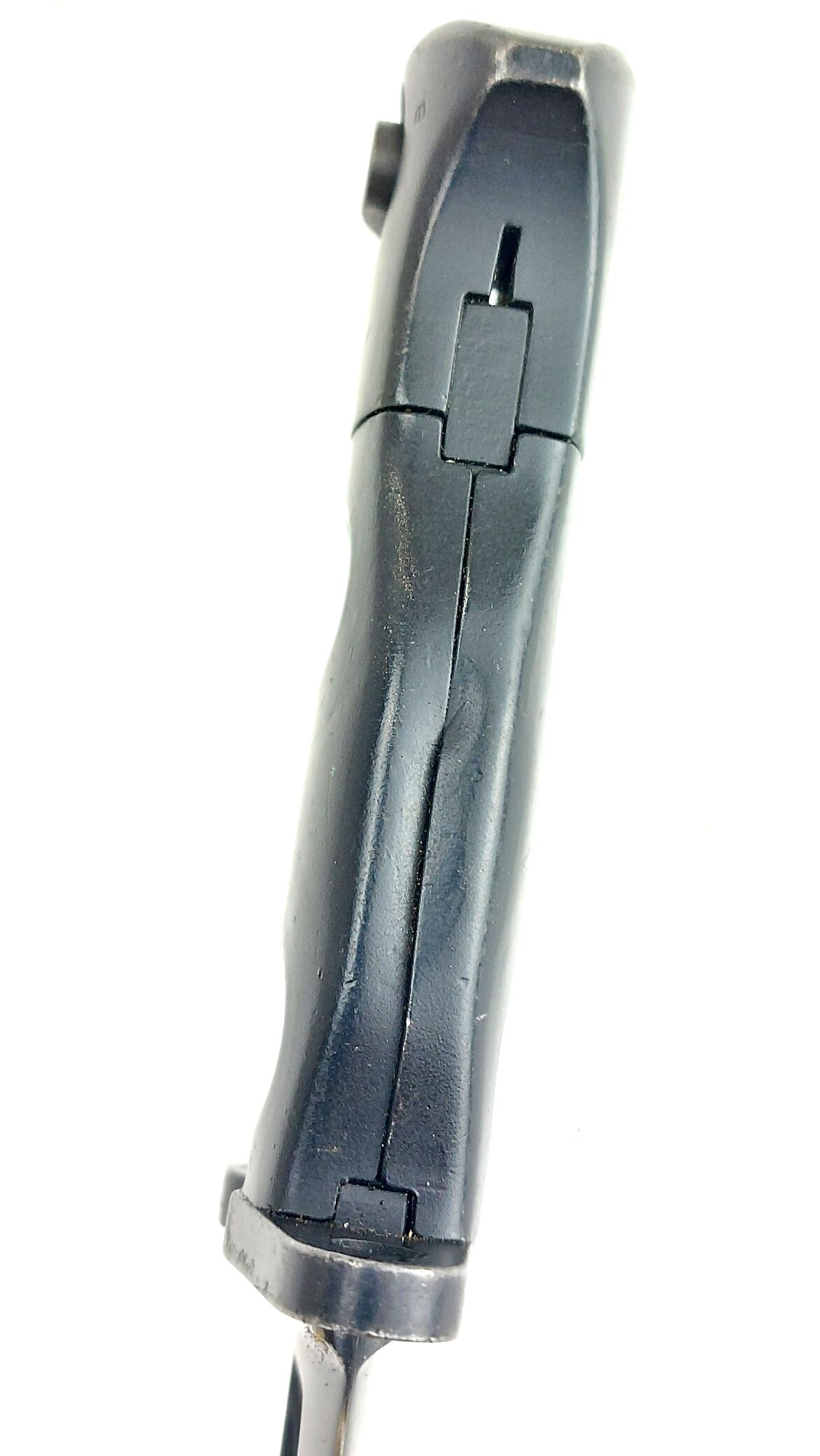
The bayonet retains its original blackened finish throughout, with moulded synthetic grip scales secured by twin rivets and a recessed press-stud release, a defining improvement of the L1A3 over the earlier L1A1 pattern. The blade follows Britain’s long-standing preference for the clipped Bowie-style profile, directly descended from the No.5 / No.7 / No.9 bayonet lineage.
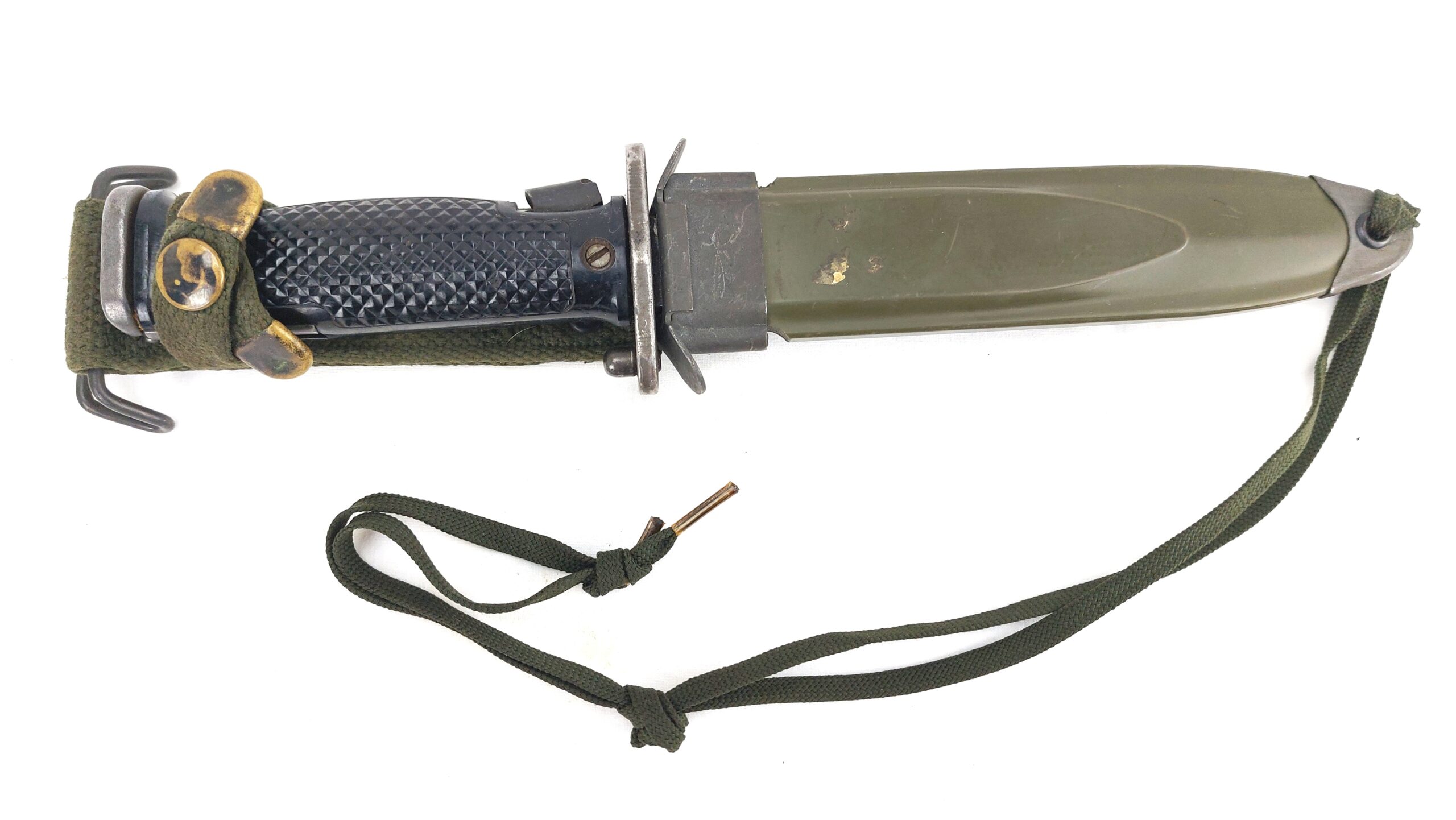
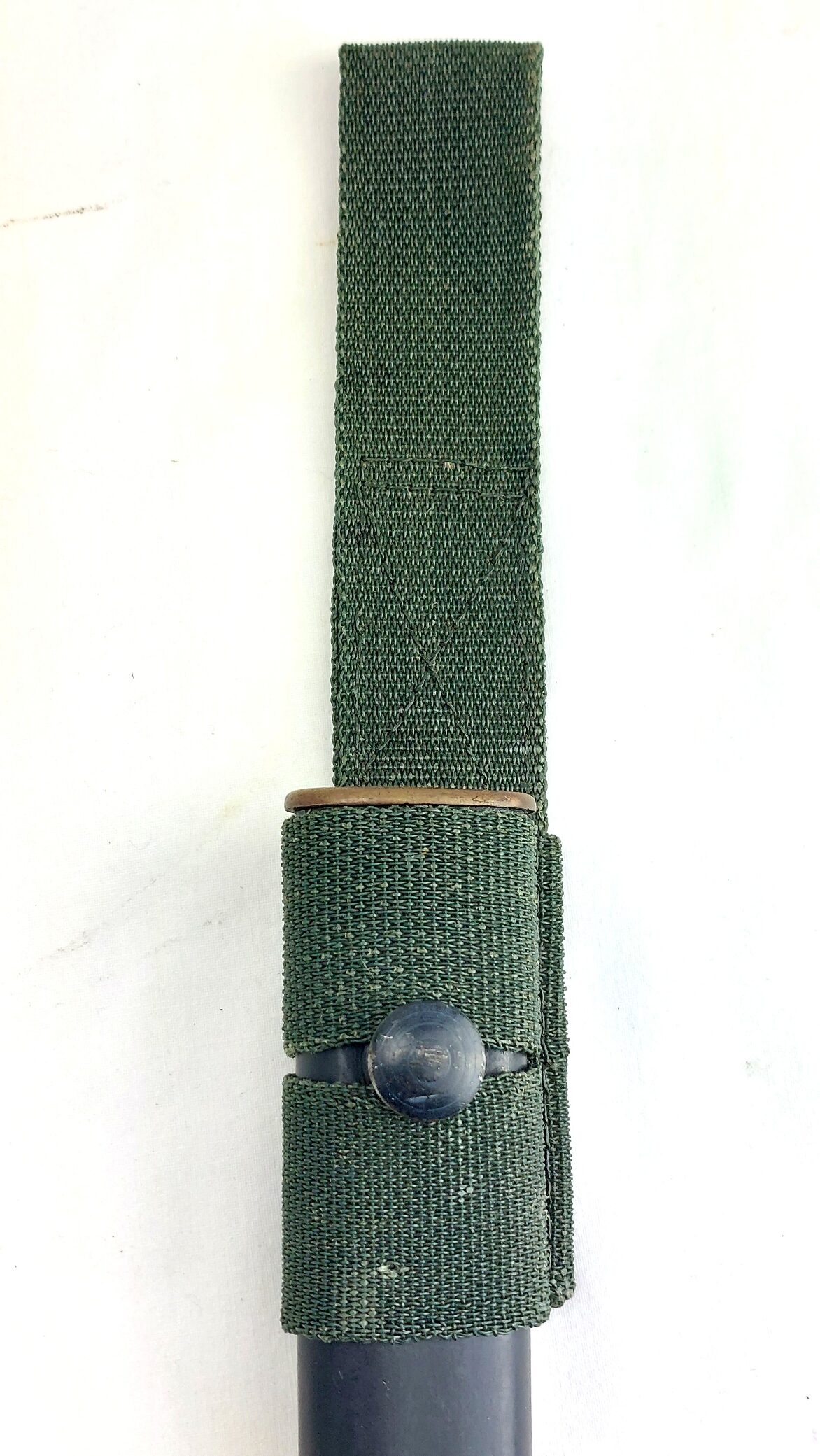
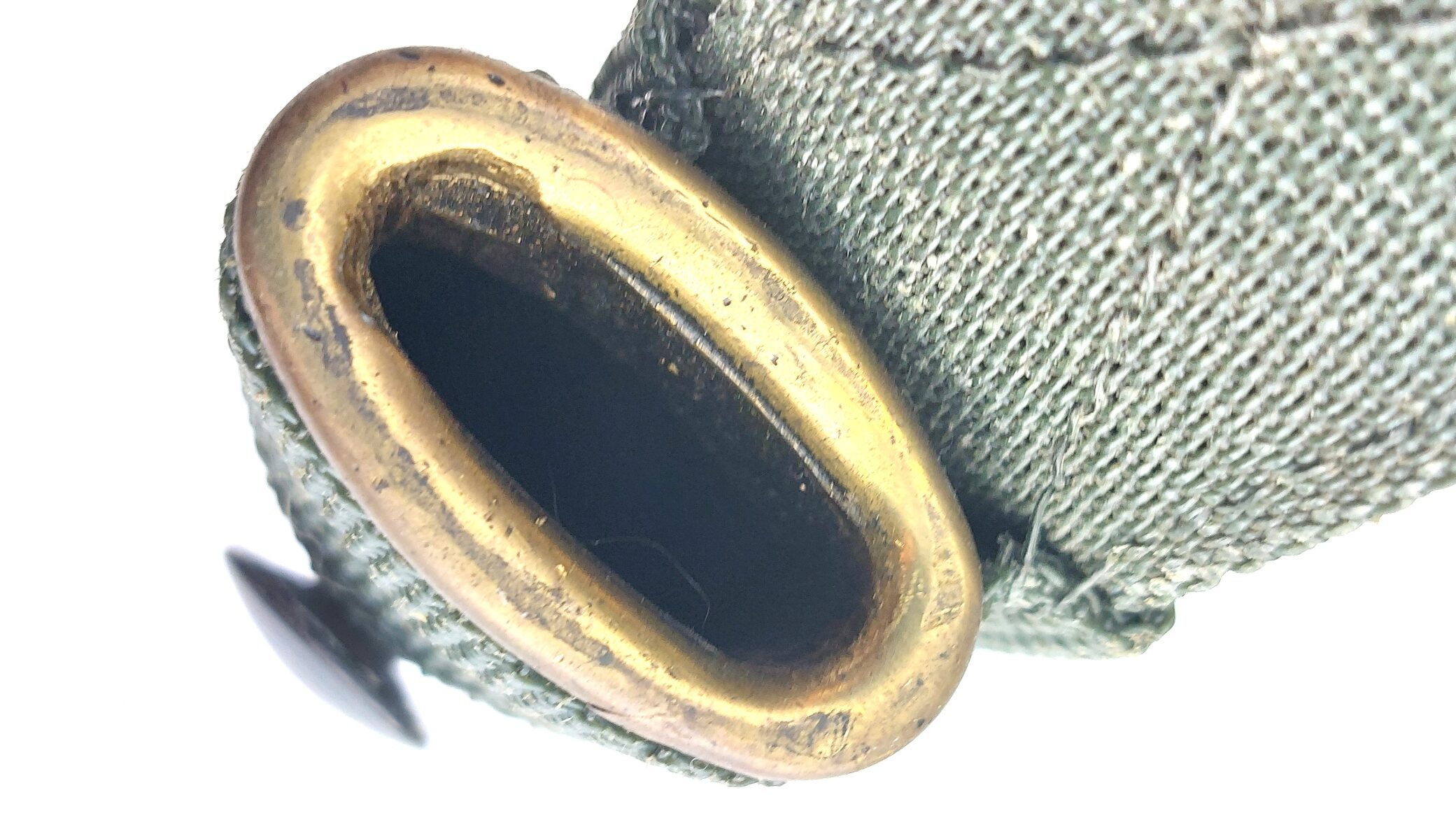
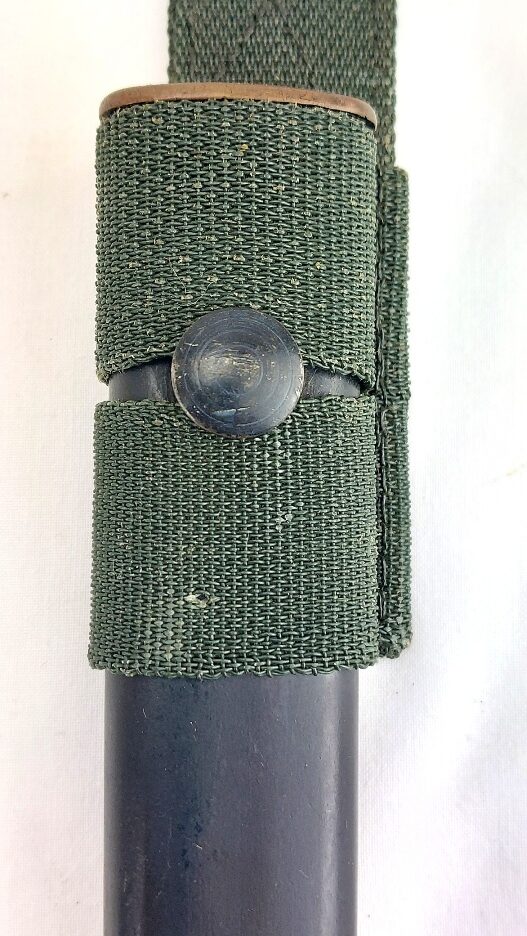
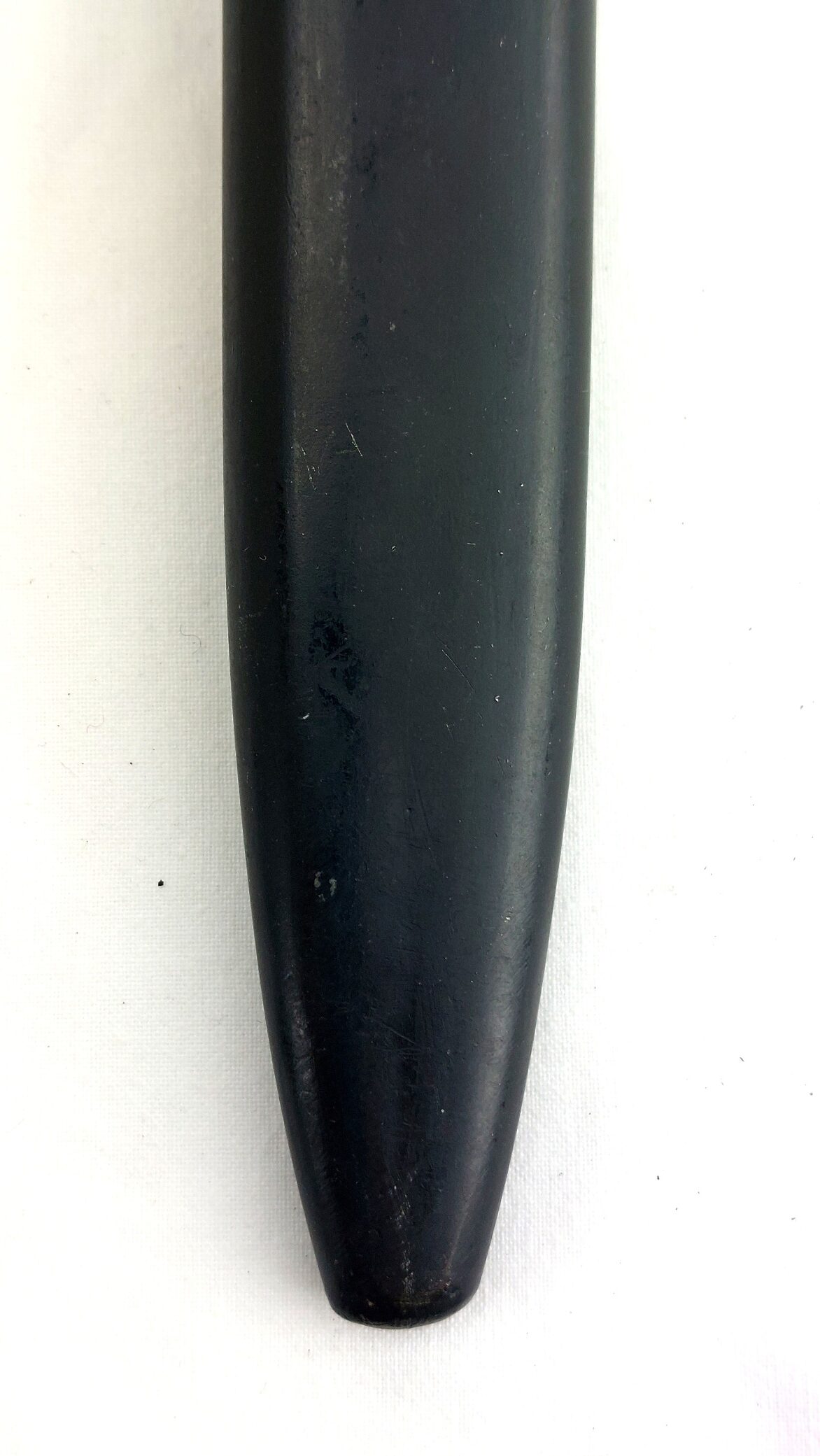
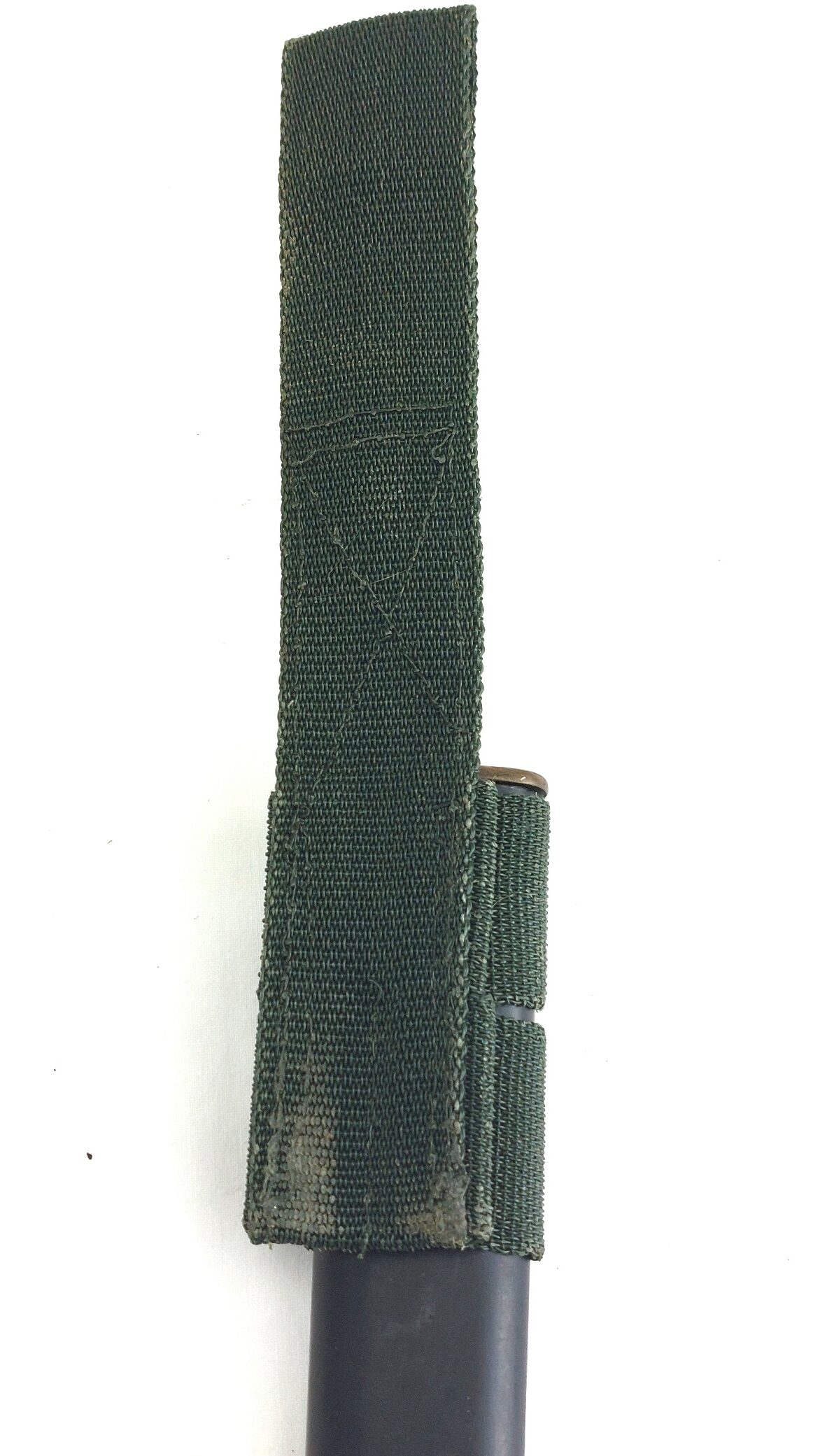
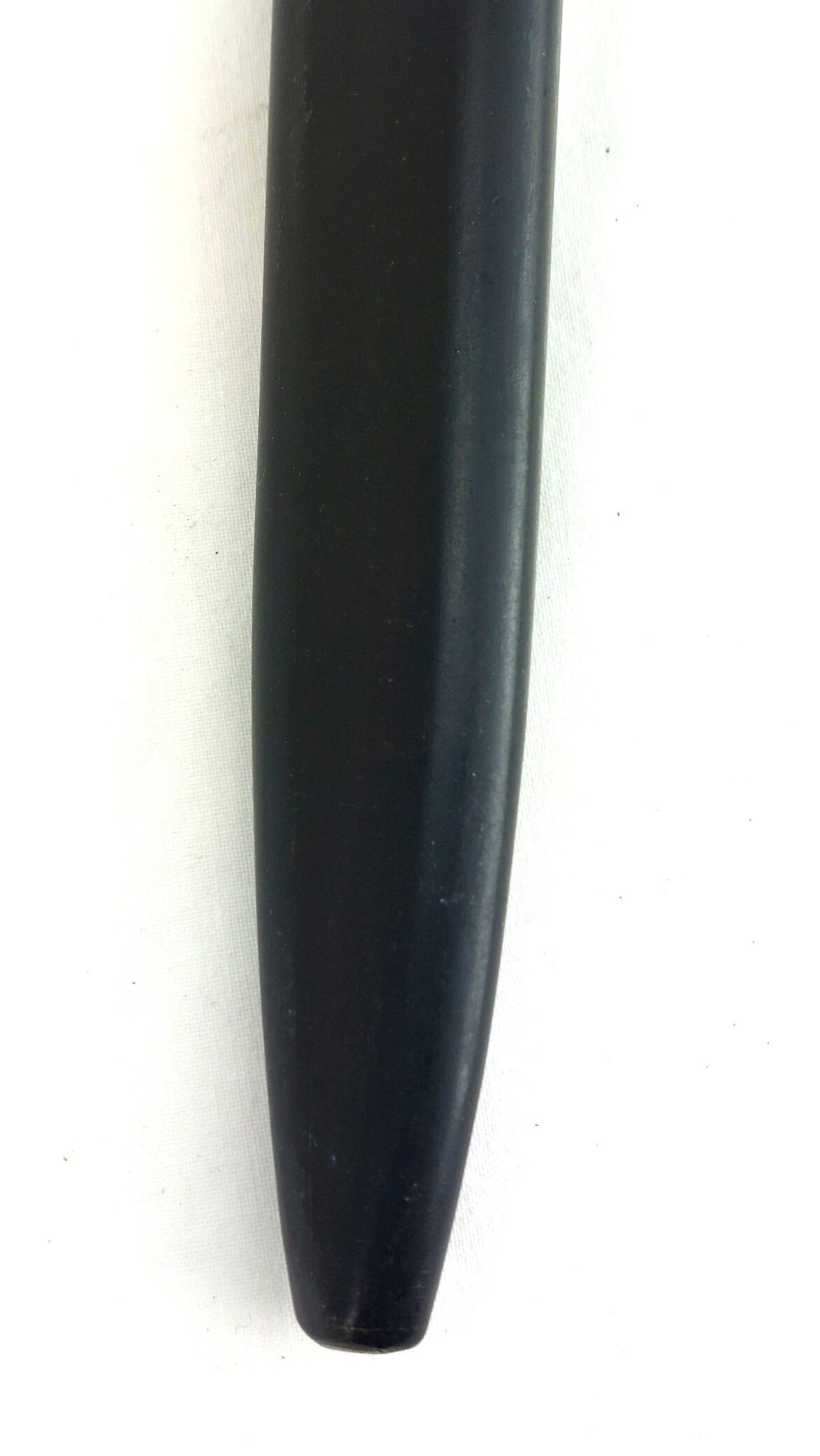
The bayonet is complete with its correct No.5 Mk 1. scabbard fitted with brass throat and dark green web frog, consistent with British post-war issue practice.
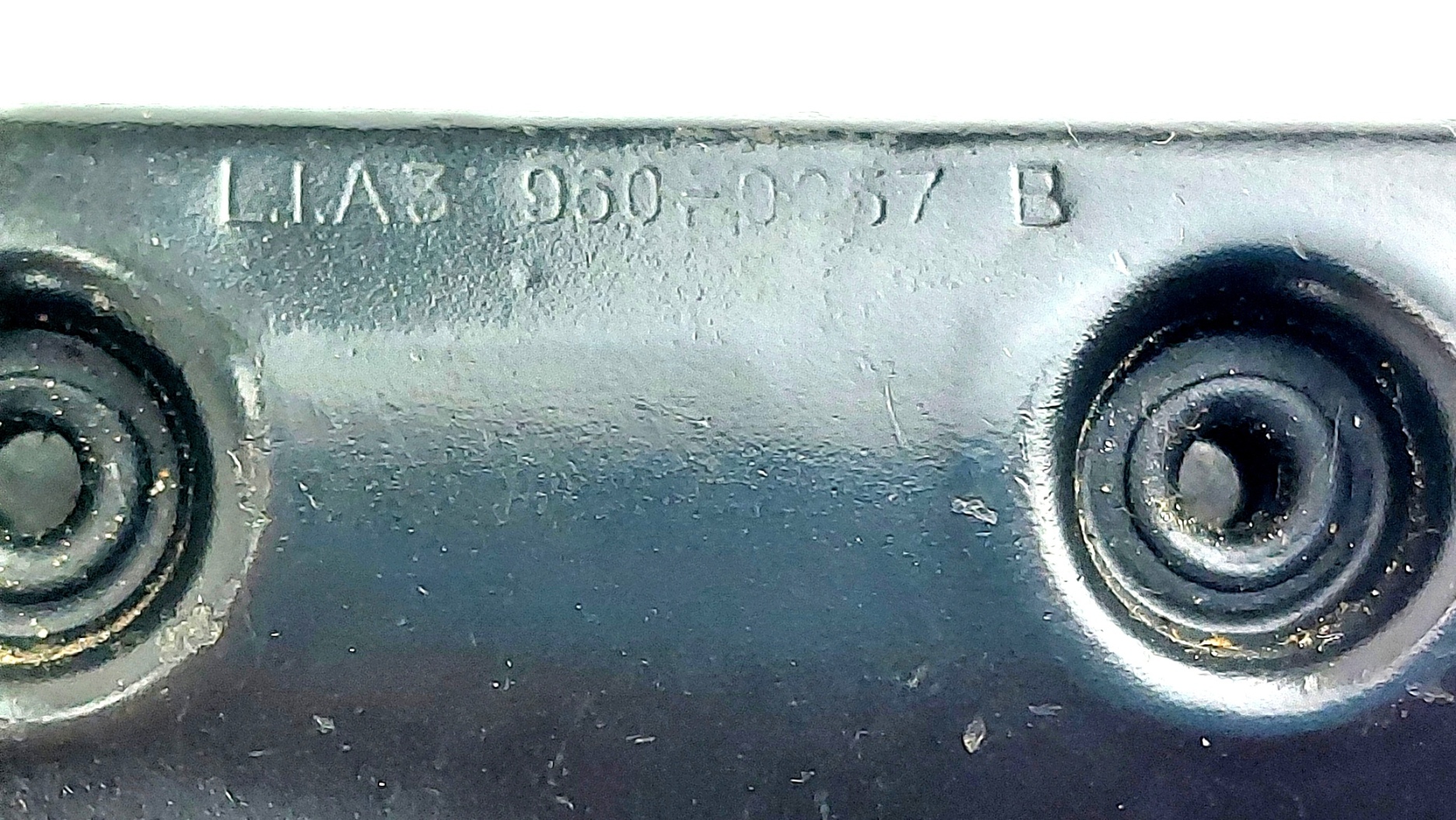
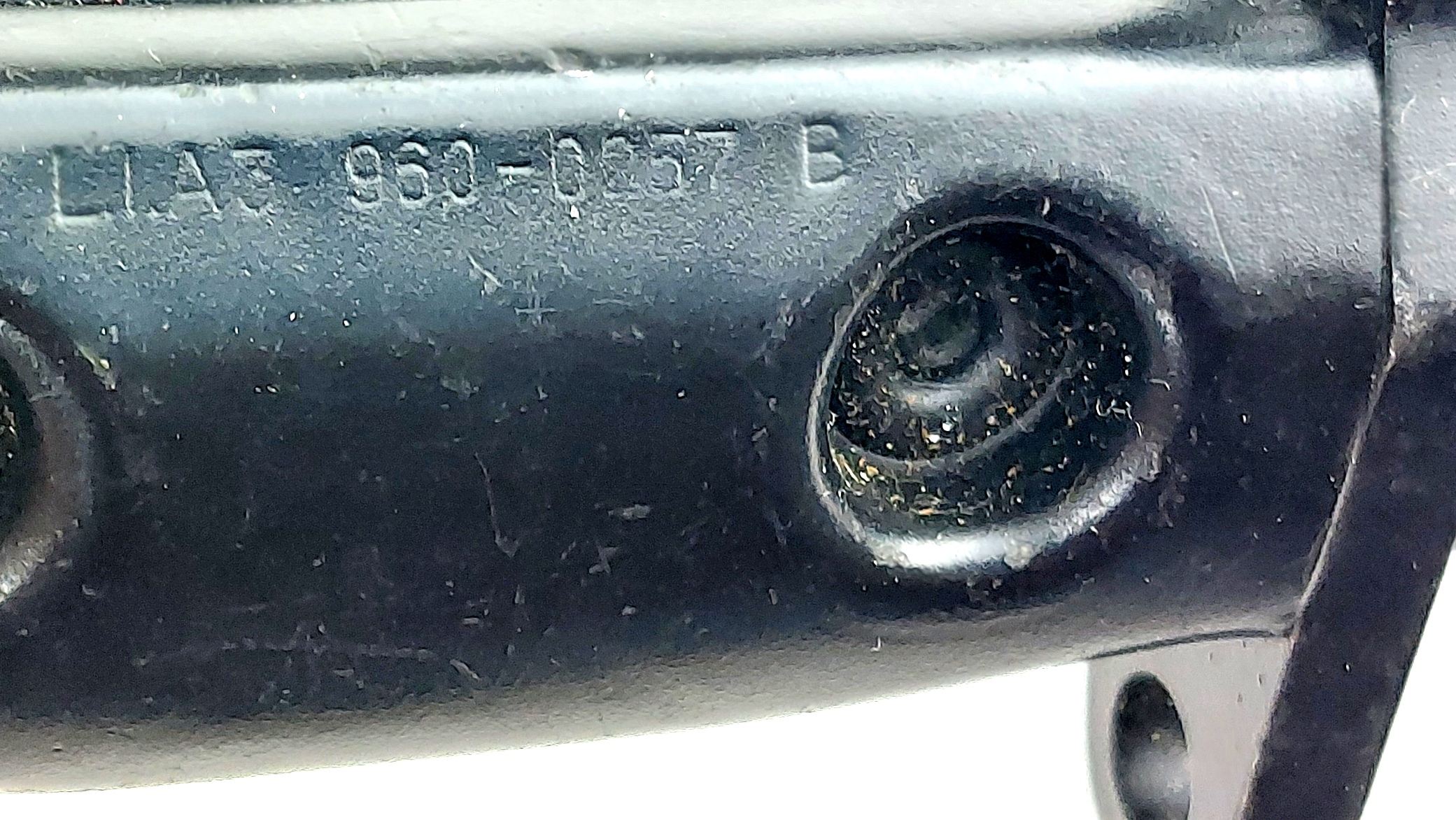
The number 960-0257 is the British/NATO Stores Reference for the L1A3 bayonet.
Approx. Measurements – Blade length: 20.3 cm. Overall length: 30.5 cm.
Historical Note:
Britain formally adopted the L1A1 Self-Loading Rifle in 1954, marking the end of over sixty years of Lee-Enfield bolt-action service. While the rifle represented a significant leap forward, British ordnance designers remained attached to the proven clipped-point blade form that had served successfully throughout the Second World War. The resulting L1 series bayonets were therefore evolutionary rather than radical. The L1A3, introduced as an improvement over the L1A1, incorporated a flush, recessed catch mechanism to prevent accidental release — a known issue with the earlier protruding press-stud design.
Early L1A3 production retained a long fuller, as seen on this example. By the mid-1960s this was shortened following concerns over blade rigidity, making long-fuller L1A3 bayonets increasingly scarce. The waisted crossguard seen here represents an early transitional form before later simplification.
Despite the introduction of newer rifle systems, the L1A1 and its bayonets remained in British service until 1987, a testament to the robustness of the design.
*Condition*
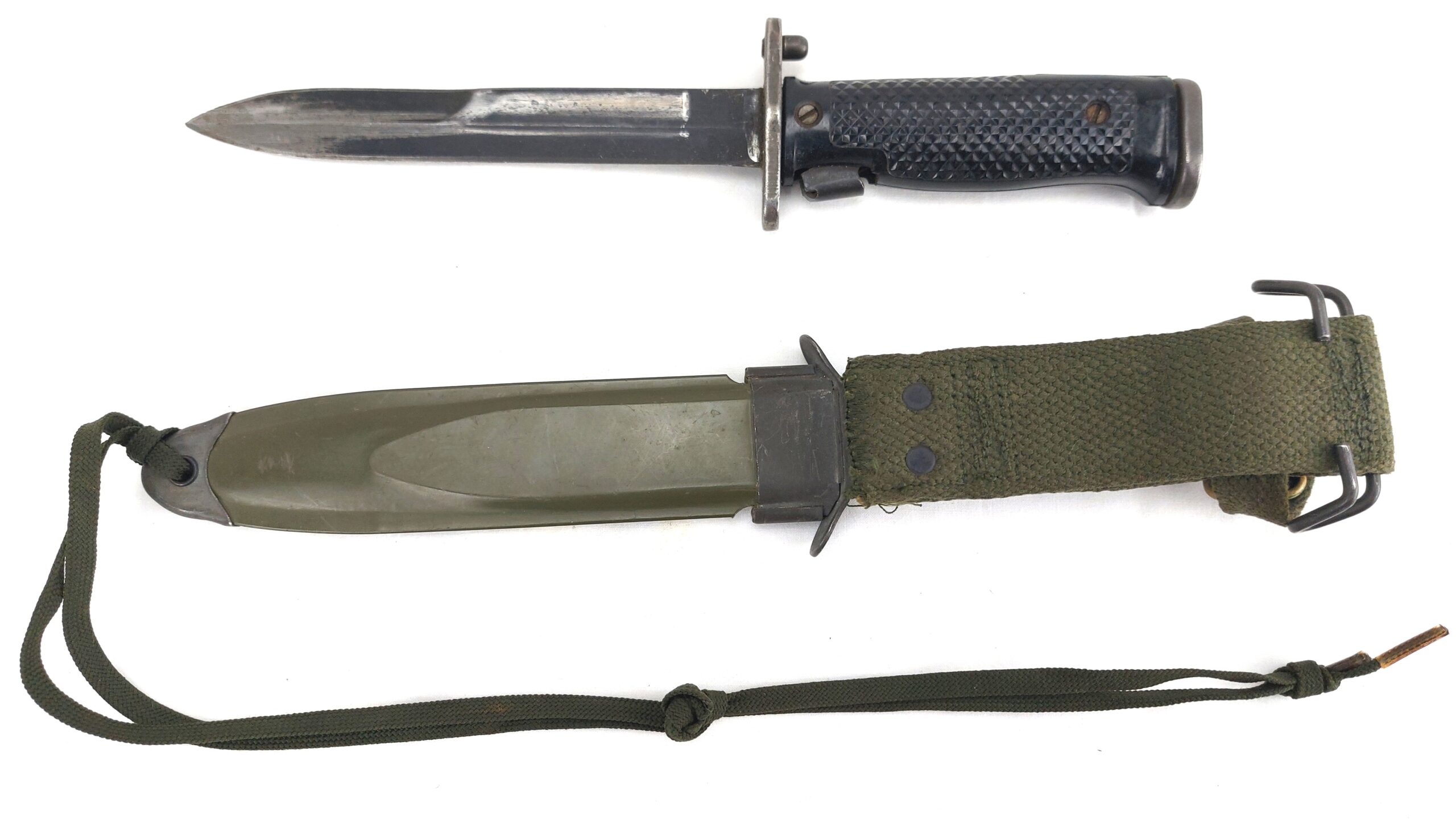
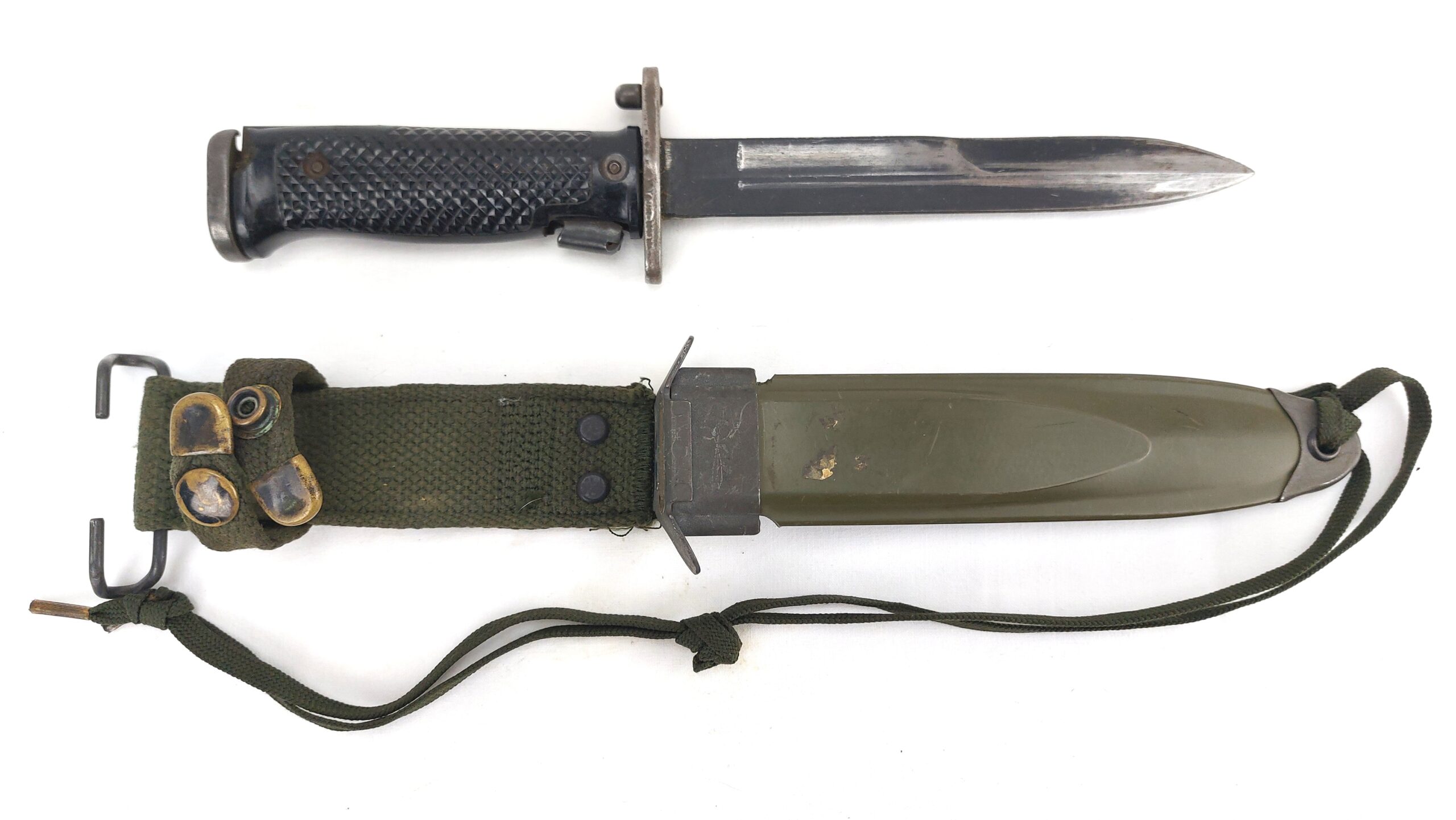
Bayonet in very good service condition, retaining strong original finish with only minor handling marks and light edge wear consistent with storage rather than field use. Blade remains straight with clean fuller definition and no damage. Grip scales intact and secure; catch mechanism functions correctly. Scabbard shows light age wear with a well-patinated brass throat. Frog sound, with honest service wear and no structural issues. Please see photographs as part of the condition report.
*In order to complete the online purchase we will require a picture/scan of a photo ID (Driving Licence, Passport or an official document with a recent picture). If you don't posses any such document please call to buy. If we consider that the proof of ID is incorect or insuficient, we reserve the right to cancel the transaction.
*We also reserve the right to cancel the transaction with a full refund if there is any suspicion that the provided item will be used in any way contrary to the laws and legislation of UK.