British, c1790, Royal Navy Figure-of-Eight Guard Cutlass, Pre-1804 Pattern, Battle of the Nile Period
£1,595.00
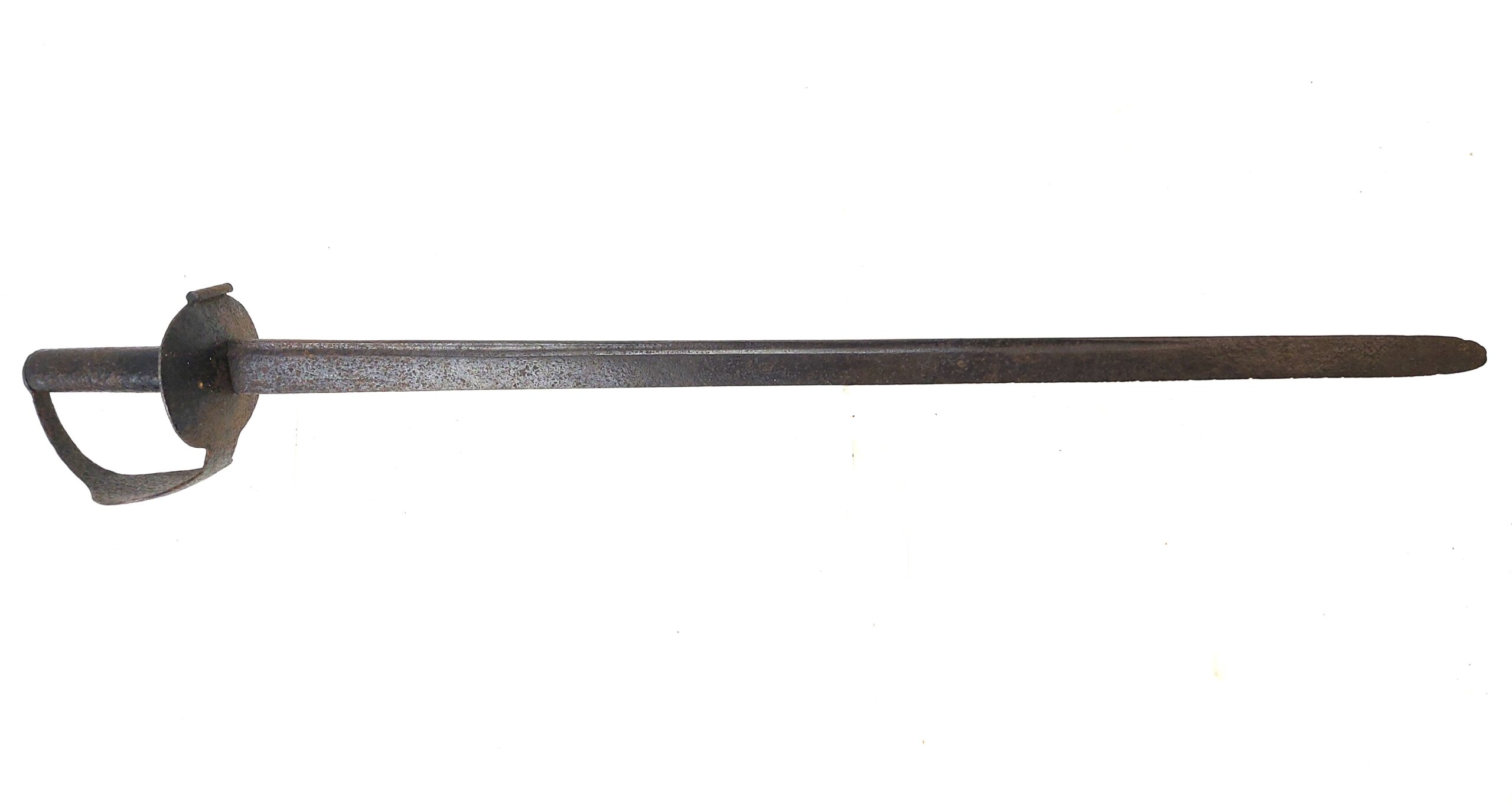
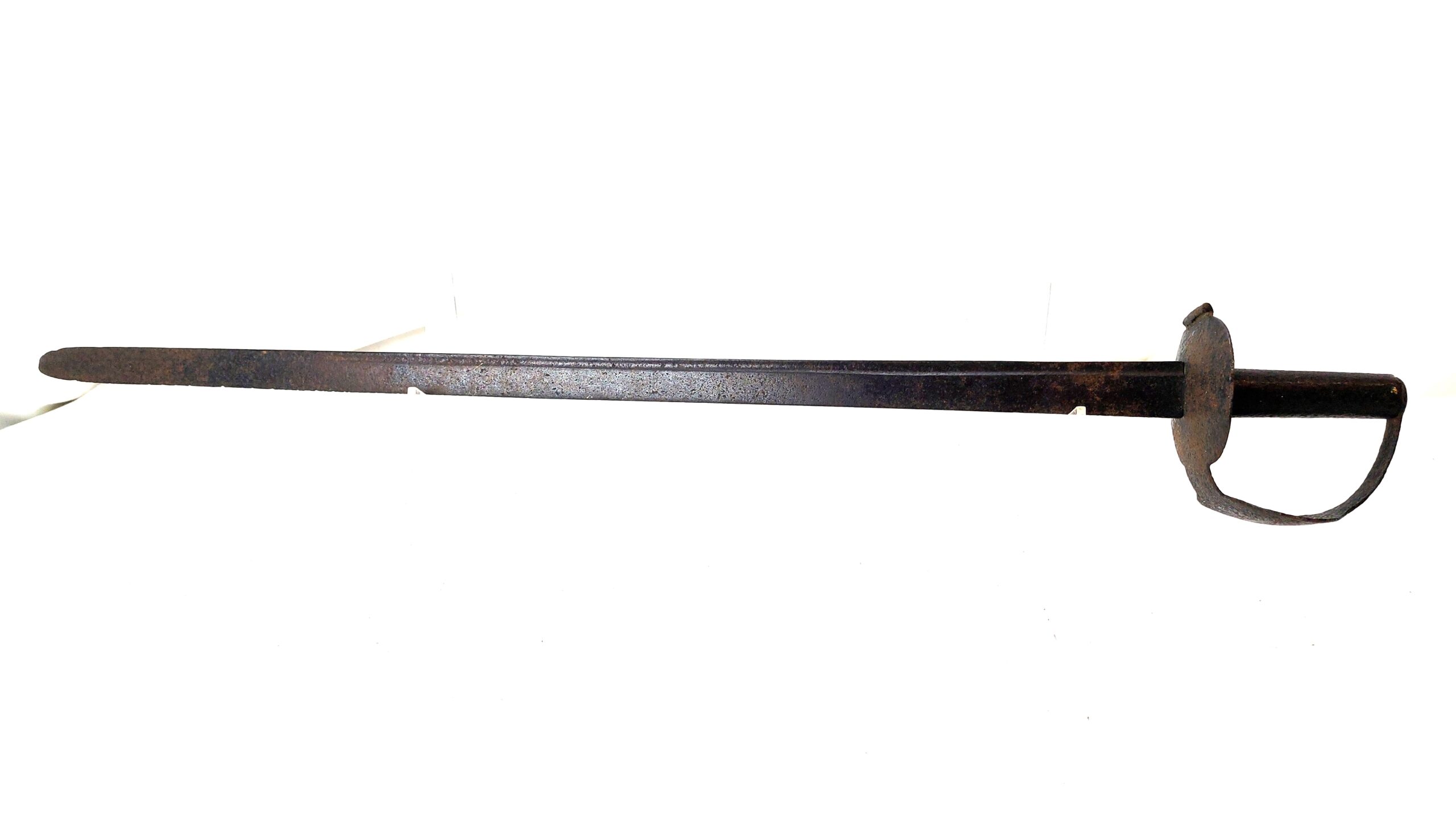
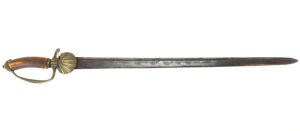
Late 18th-century, circa 1790, British Royal Navy figure-of-eight guard cutlass of the pre-1804 type, an original boarding weapon of the kind carried by sailors during the French Revolutionary and early Napoleonic Wars, including the Battle of the Nile period, surviving in untouched condition with correct iron hilt and fullered blade.
*British, c1790, Royal Navy Figure-of-Eight Guard Cutlass, Pre-1804 Pattern, Battle of the Nile Period*
An original late 18th-century, c. 1790, British naval cutlass of the well-known figure-of-eight guard type, a form widely associated with Royal Navy use during the French Revolutionary and early Napoleonic Wars, prior to the introduction of the official Pattern 1804 cutlass. These swords were typical boarding weapons carried by seamen and marines during close-quarters fighting at sea.
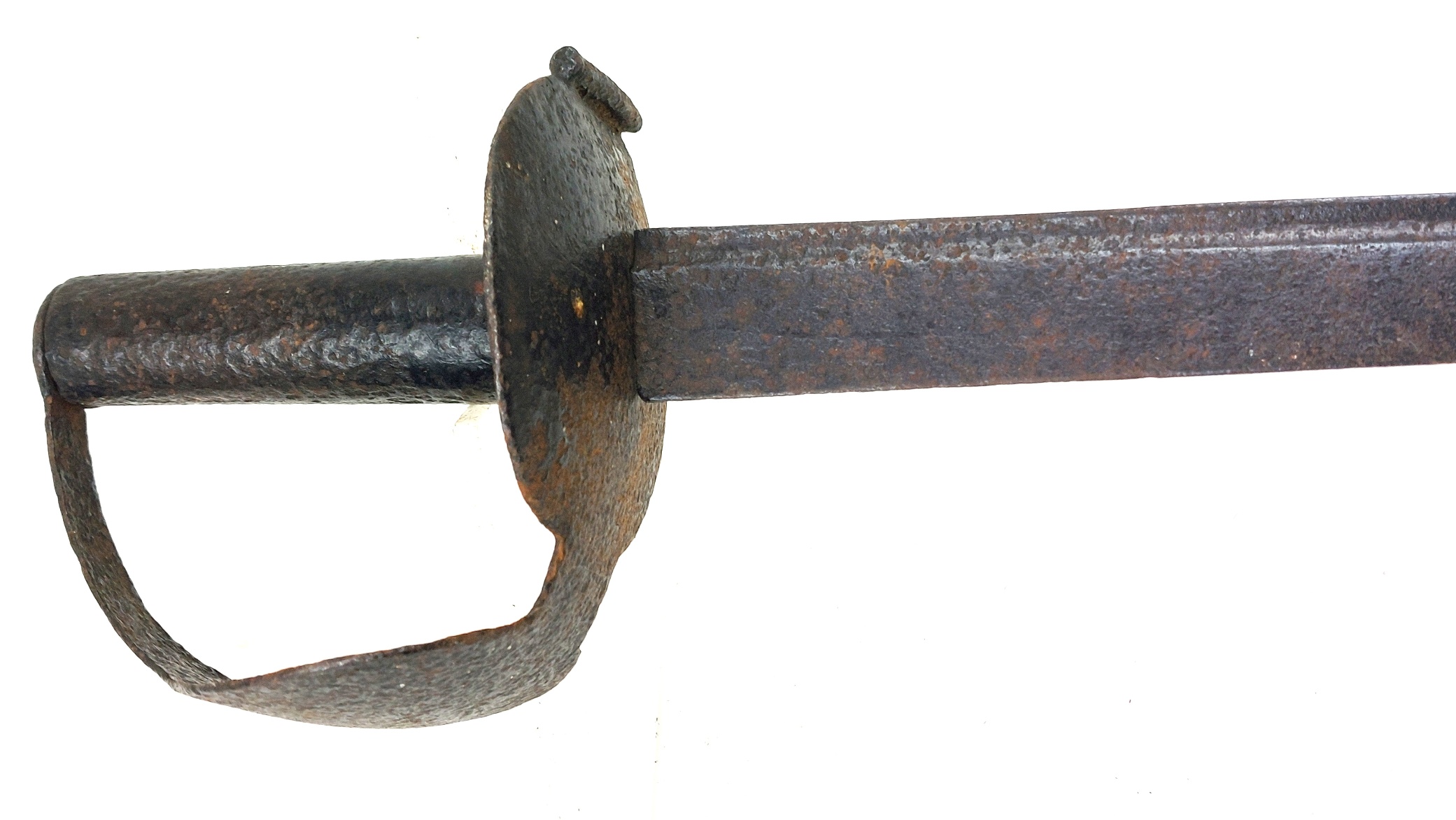
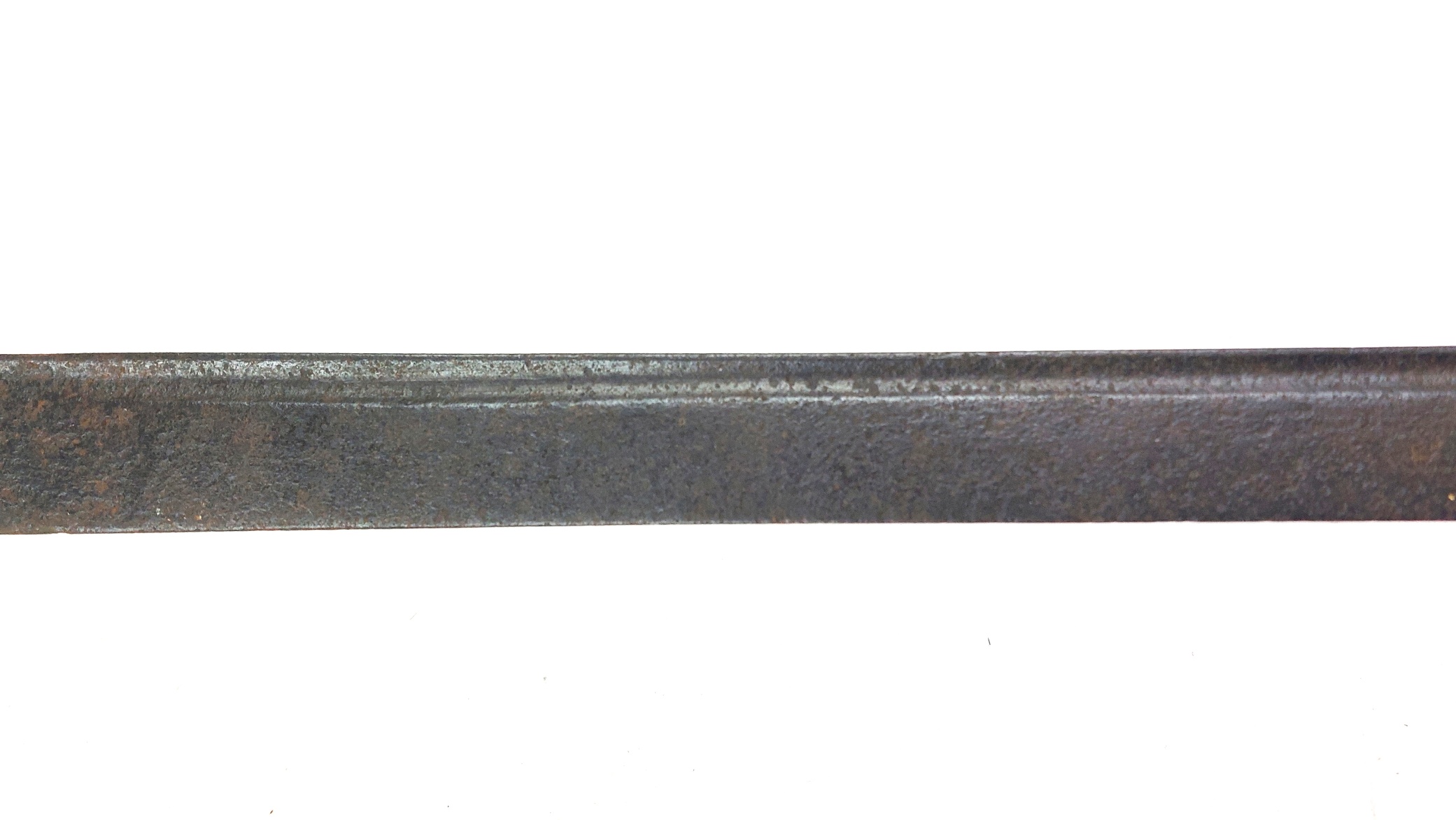
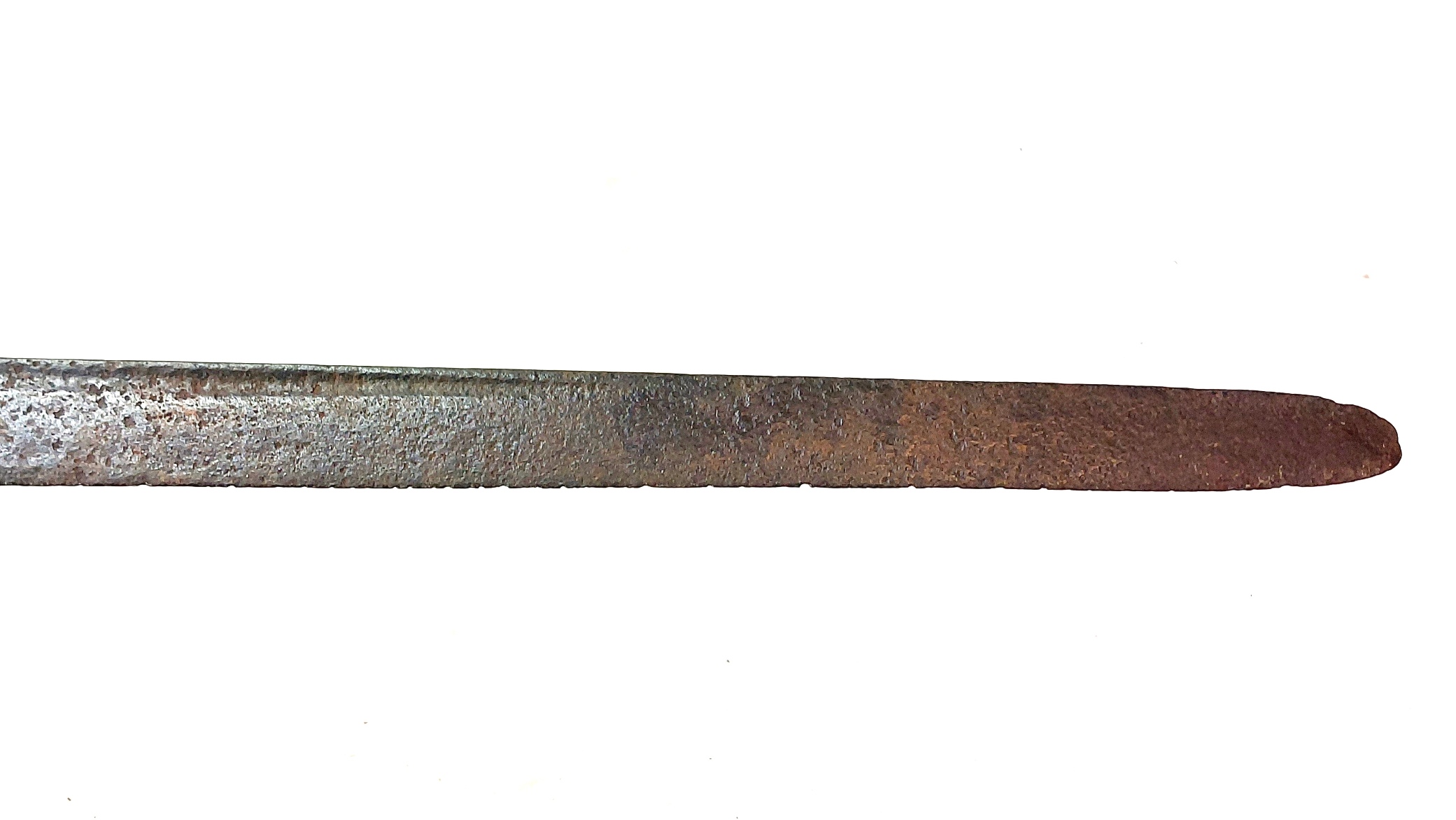
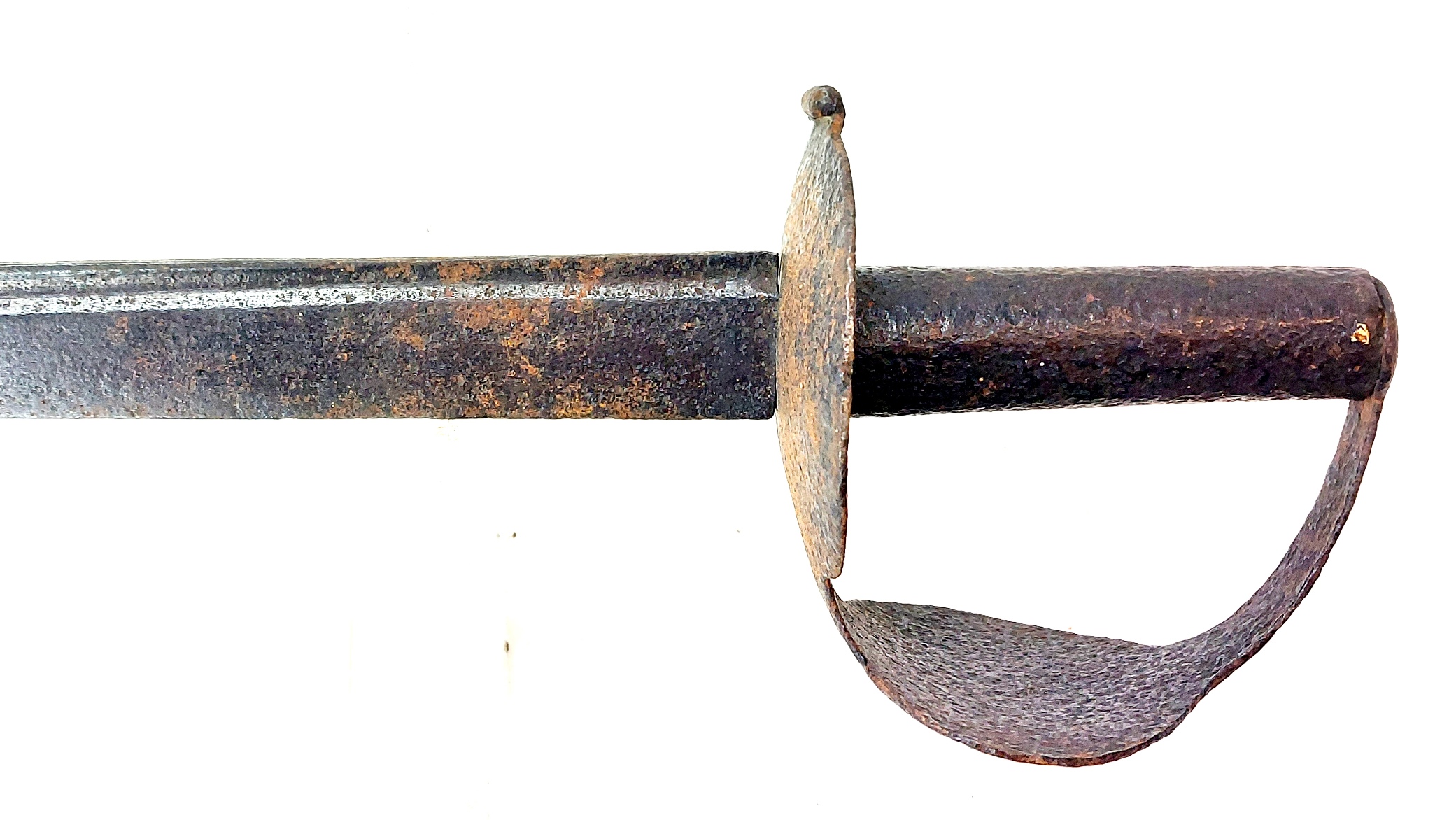
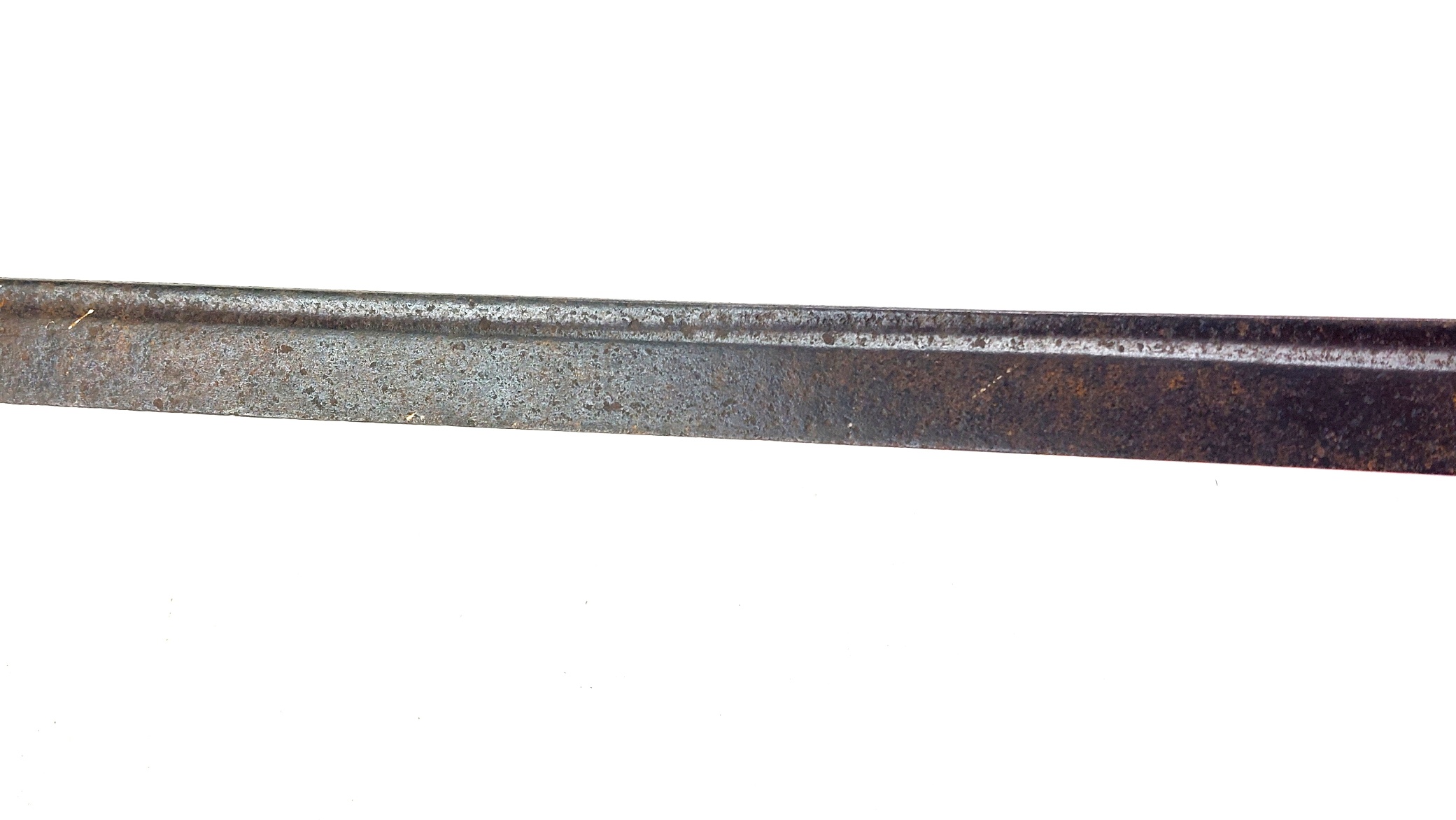
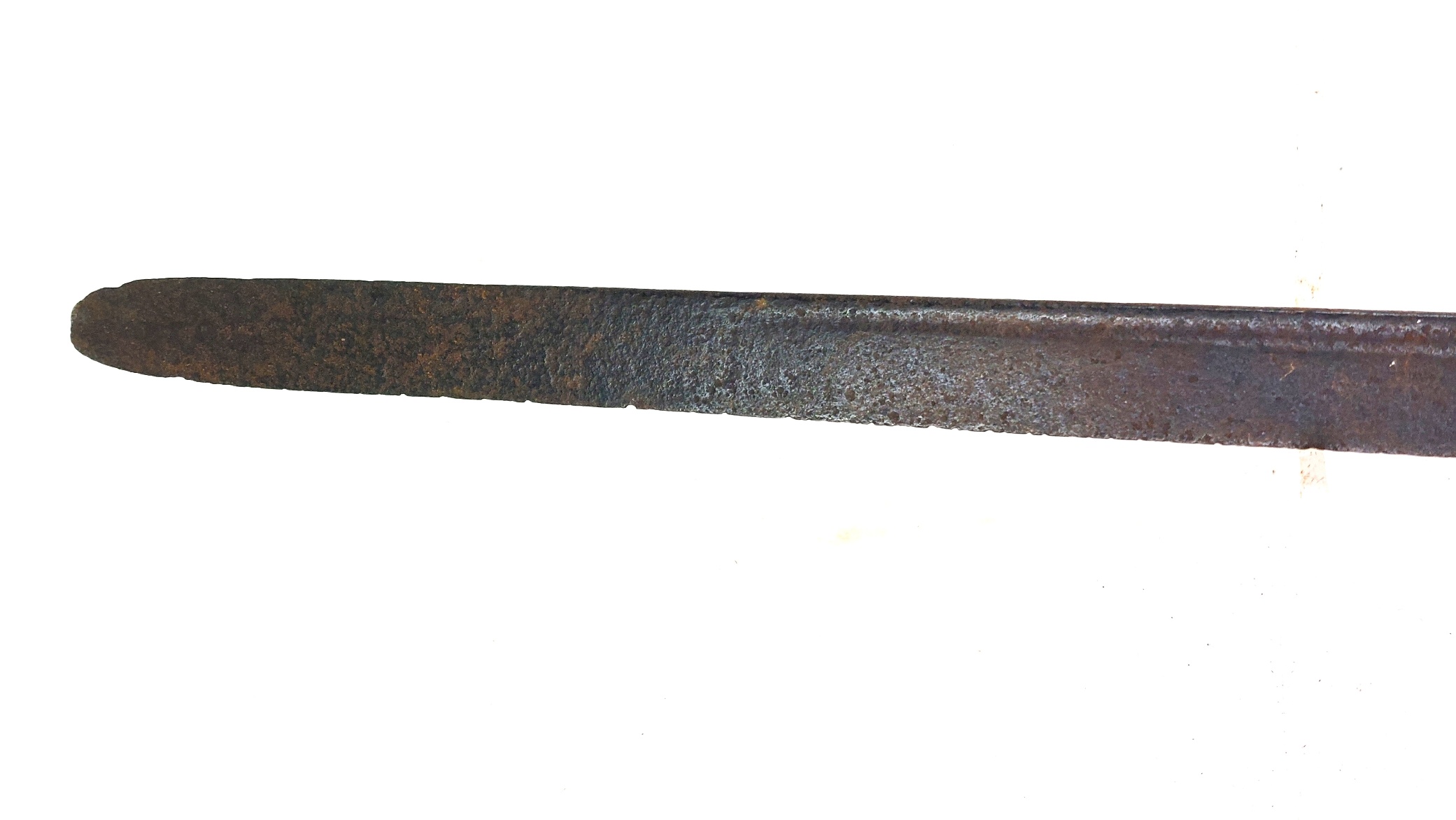
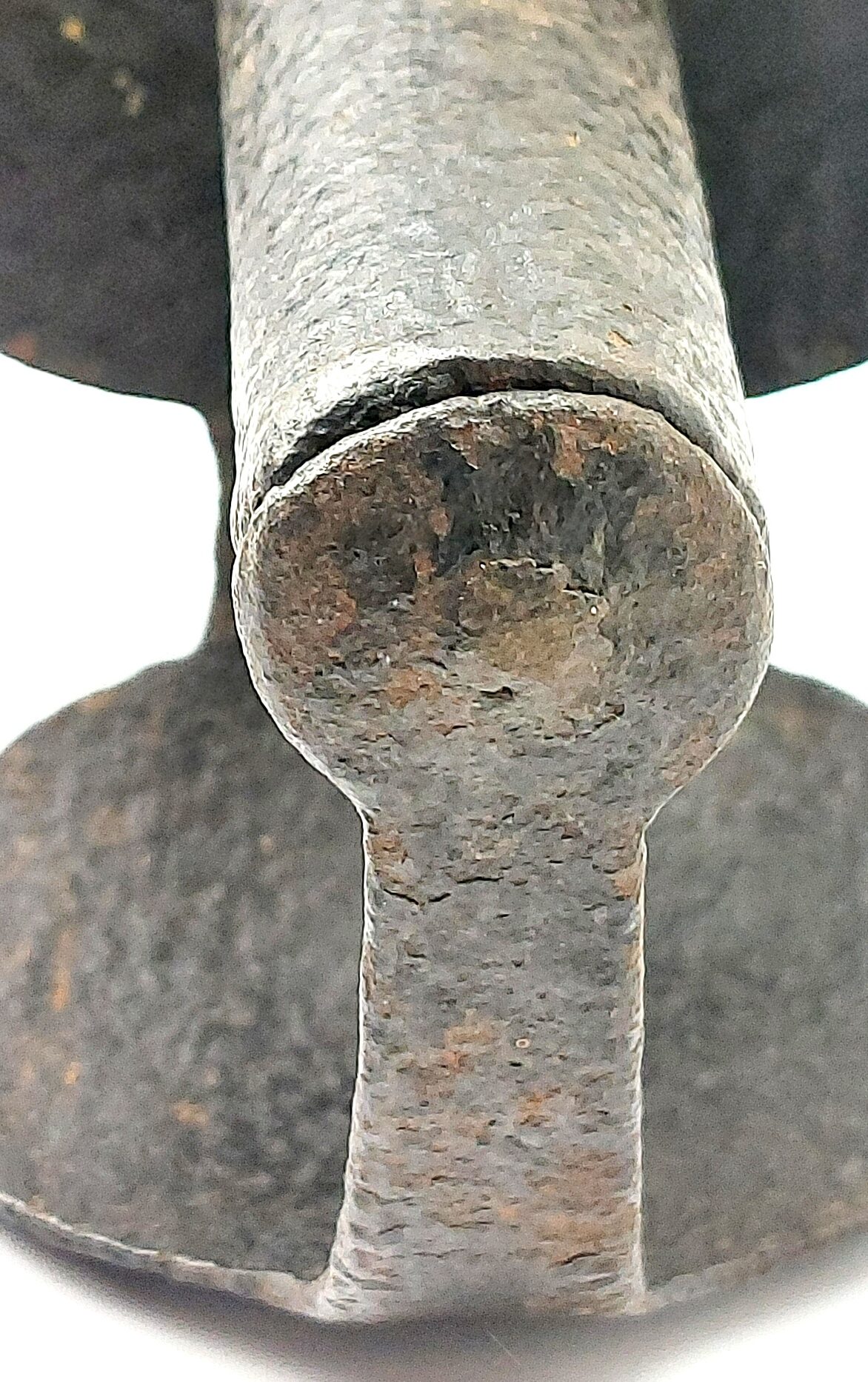
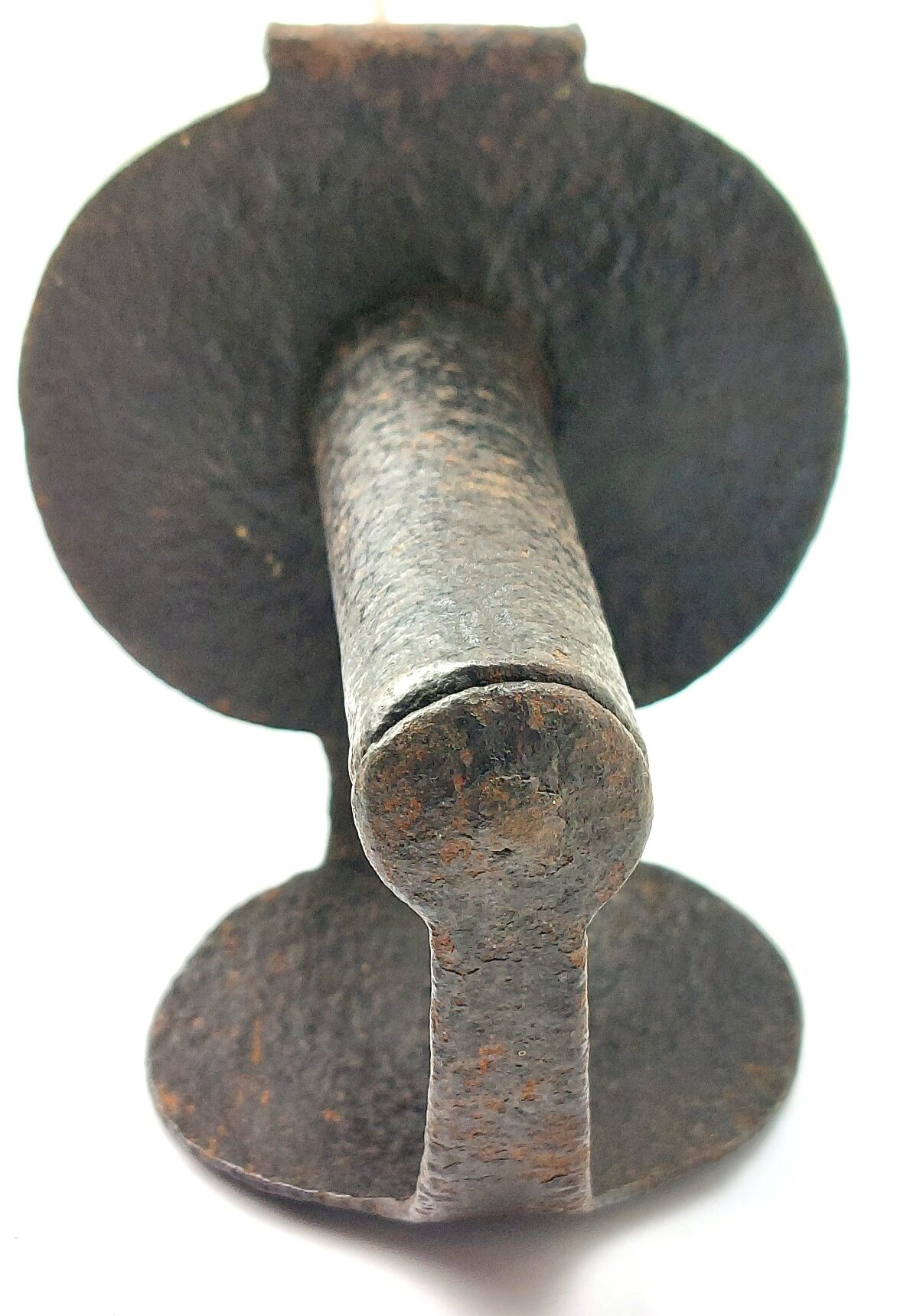
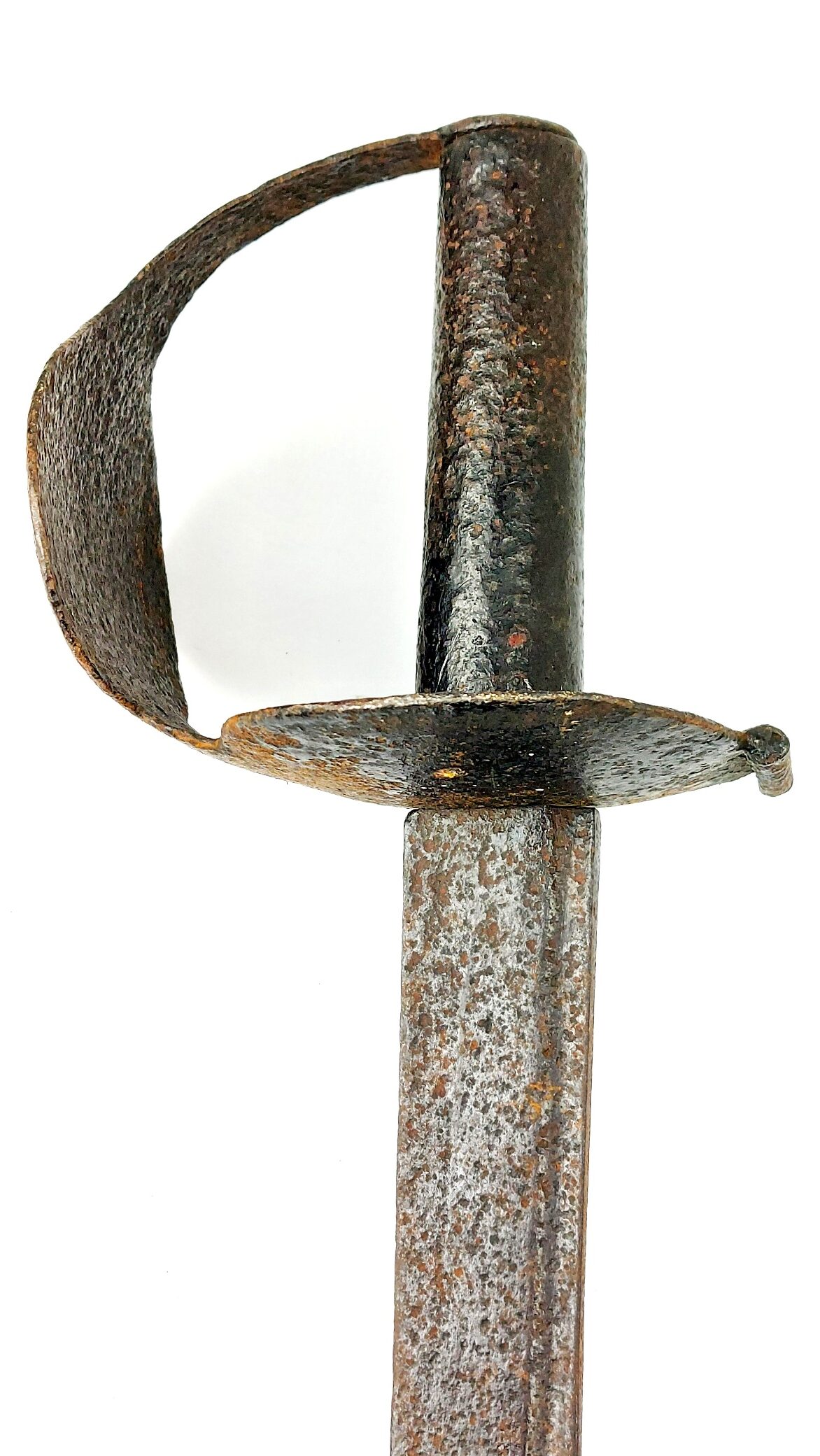
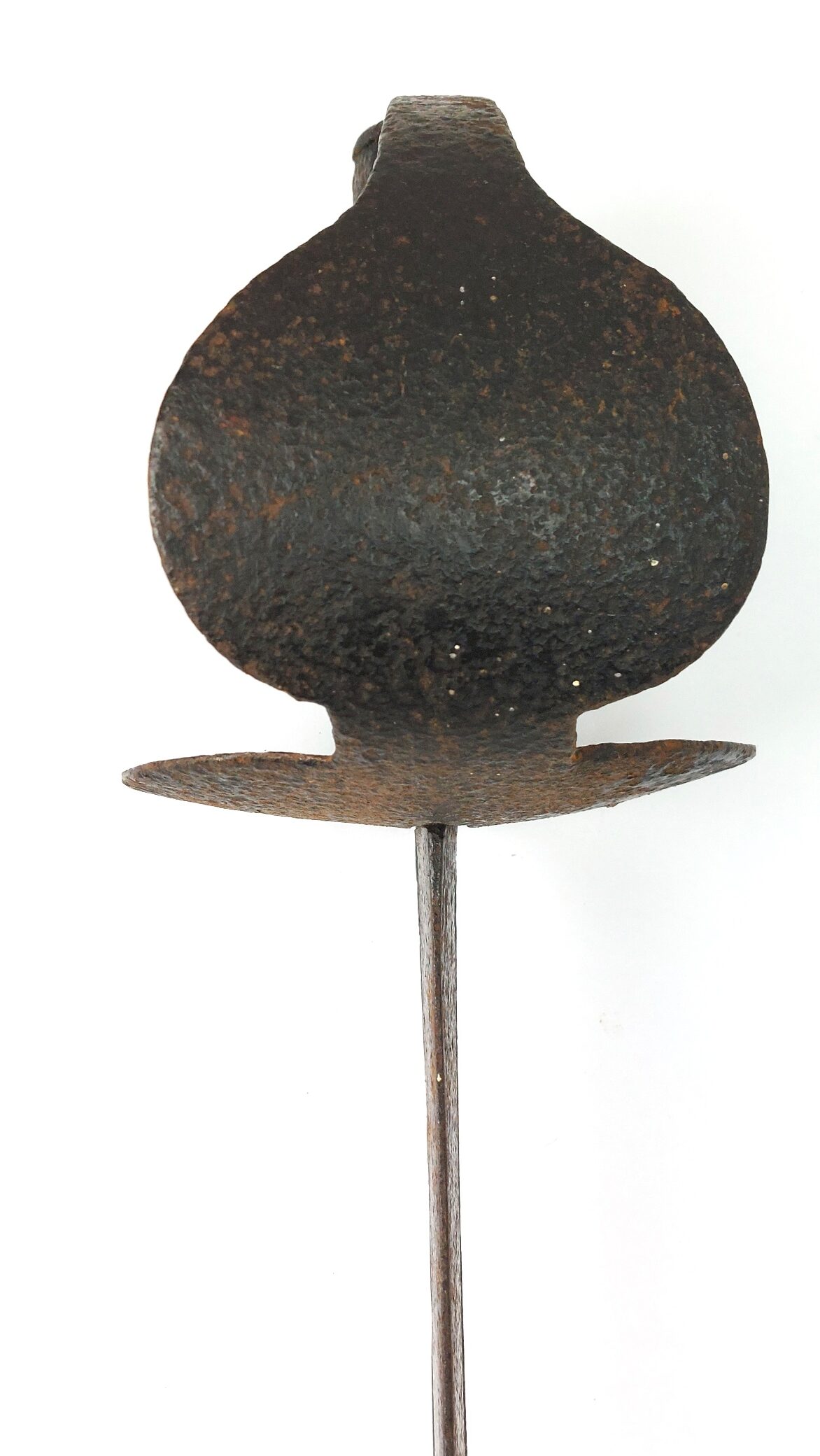
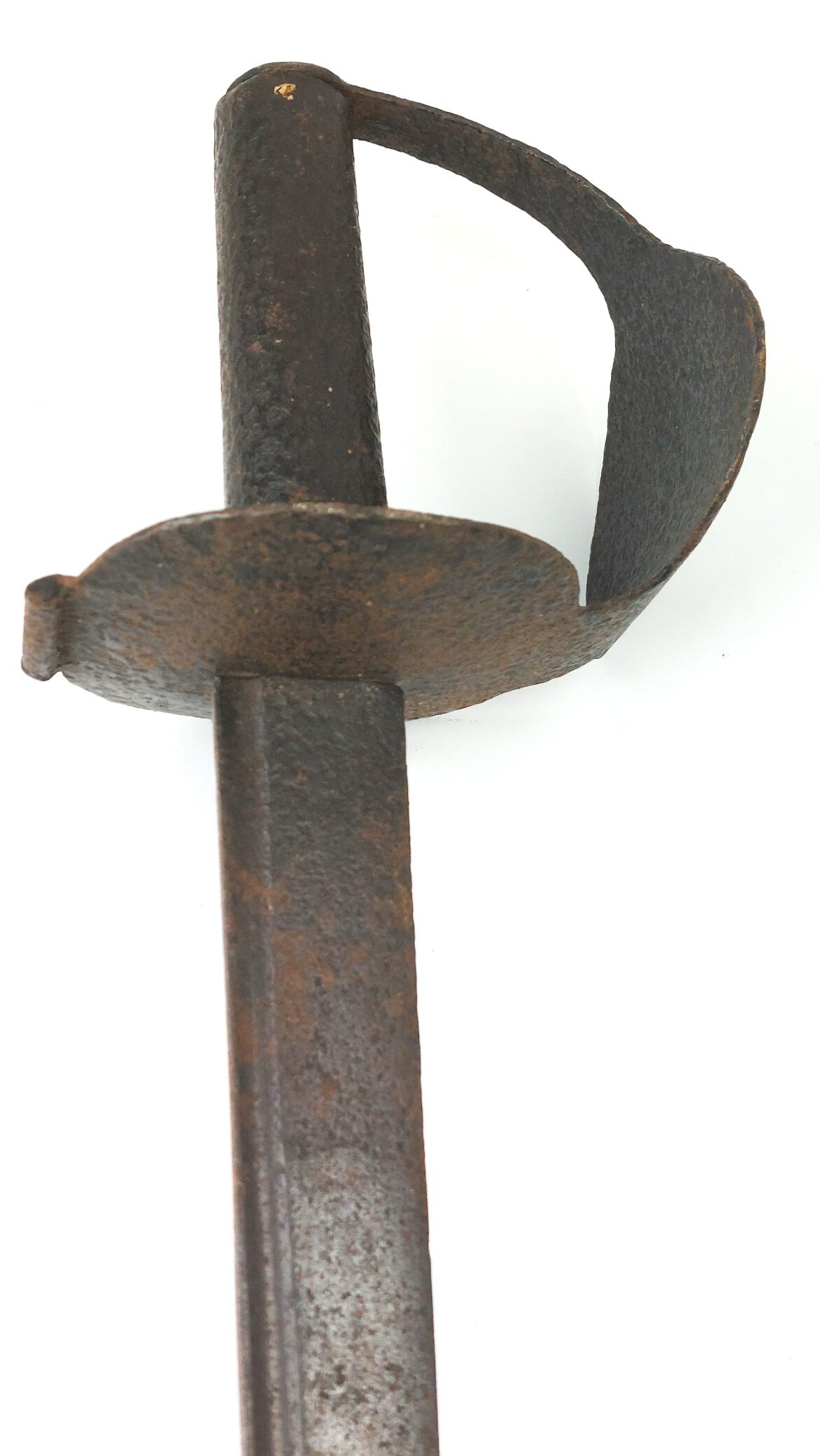
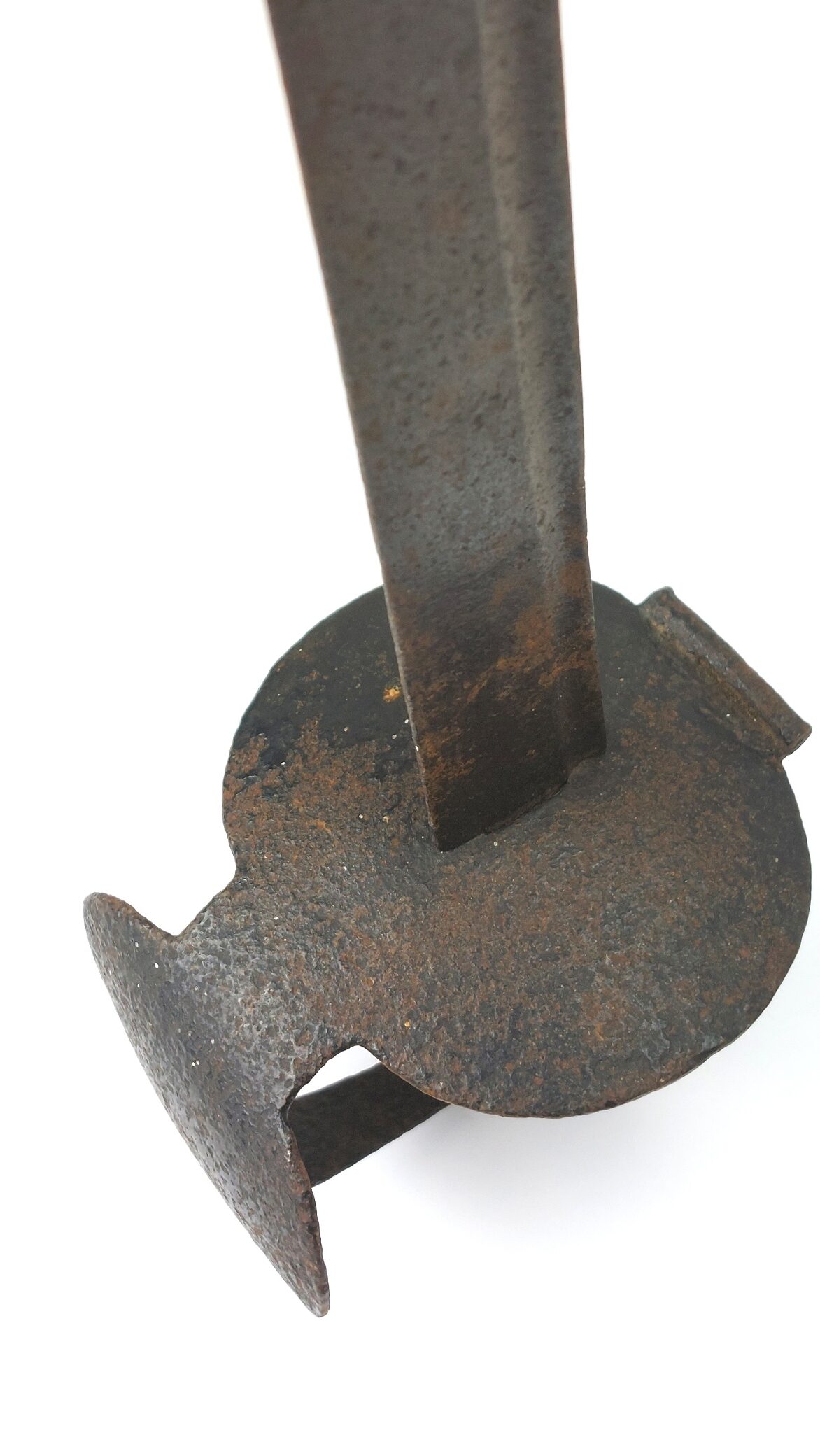
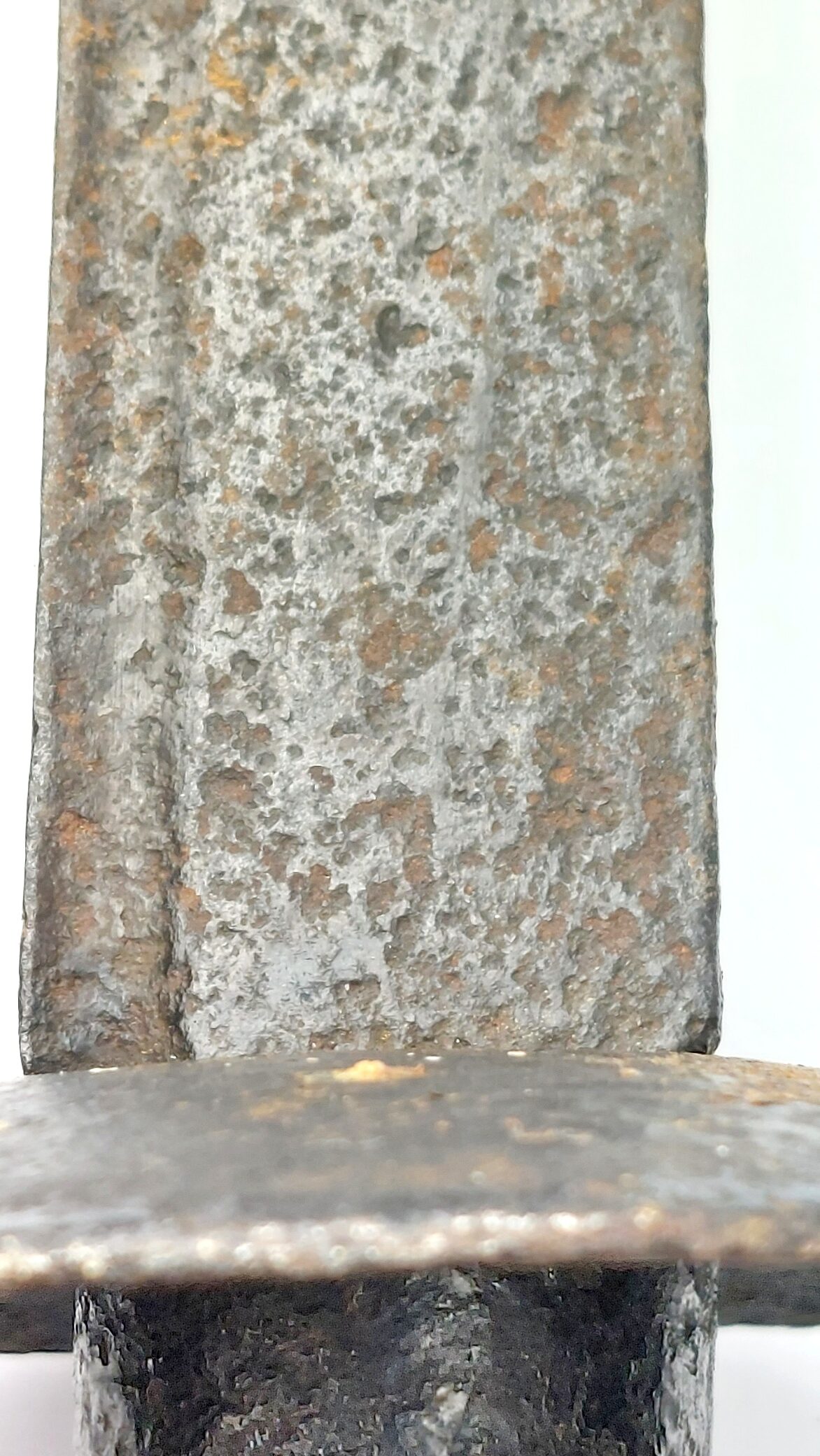
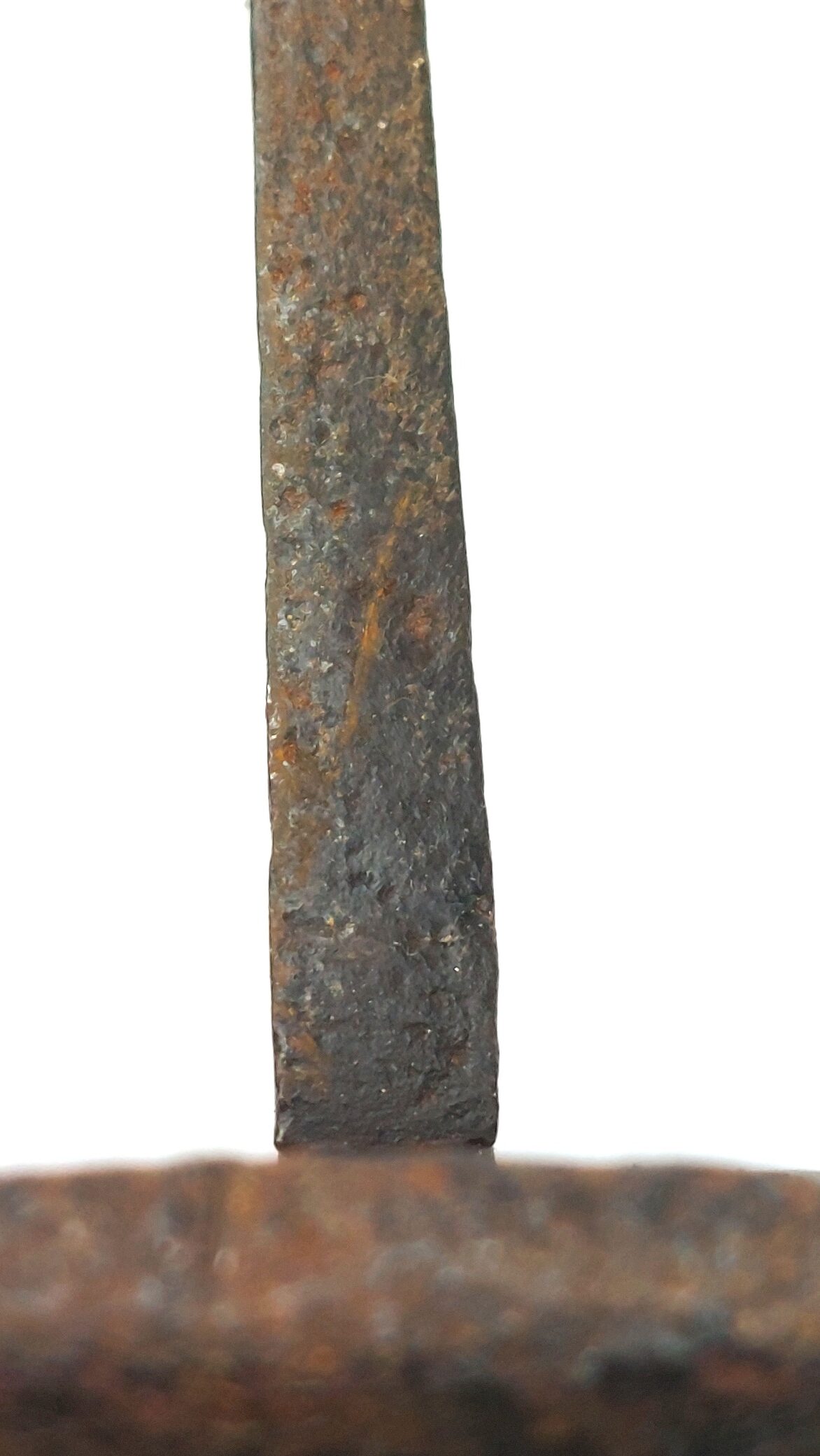
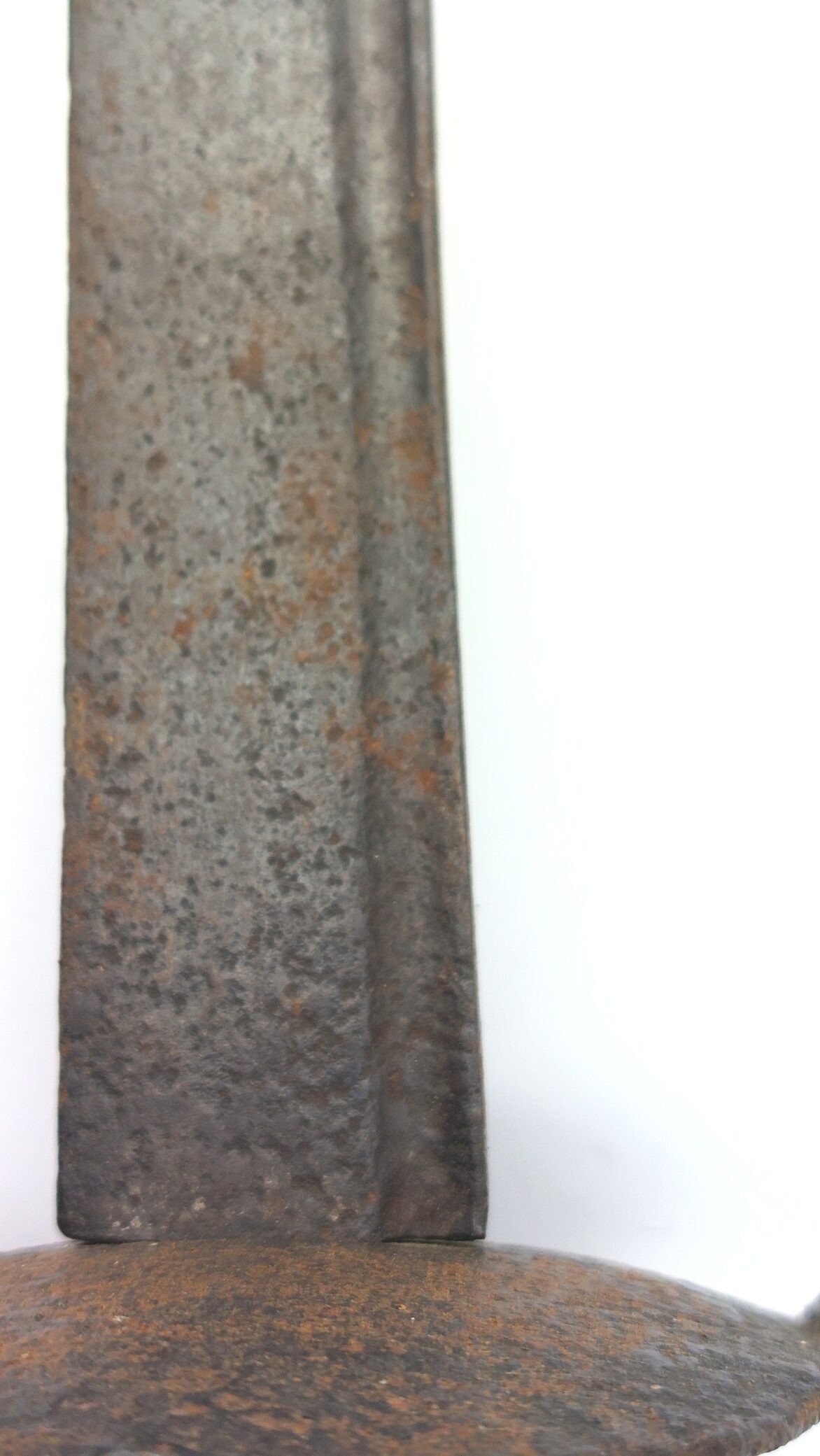
The blade is straight and single-edged with a long narrow fuller, the back edge becoming sharpened toward the tip to form a short false edge, a feature often seen on late 18th-century naval cutlasses, the point now rounded from age and wear. It has a long shallow fuller running for most of its length. The blade is mounted in a characteristic sheet-iron hilt formed with the distinctive double-disc or “figure-of-eight” guard, with a forged knuckle bow joining the grip to the guard. The grip itself is of cylindrical iron construction, fitted over the tang and secured by peening at the pommel end, a construction typical of late 18th-century naval contract cutlasses.
Unlike the later regulation Pattern 1804 cutlass, which introduced the heavy cast-iron ribbed grip, this earlier type shows the lighter forged and fabricated construction seen on late 18th-century examples, often produced by Birmingham contractors supplying the Royal Navy in the period before full standardisation.
The overall form, dimensions, and construction correspond closely with known examples of British naval cutlasses used during the American War of Independence, the French Revolutionary Wars, and the Napoleonic period, including the era of Nelson’s fleet and the Battle of the Nile (1798), when such weapons were still in widespread service.
Approx. Measurements – Blade length: 72 cm. Overall length: 84.5 cm.
History Note: Before the introduction of the first official Royal Navy cutlass pattern in 1804, naval edged weapons were supplied by a variety of private contractors, most notably Birmingham makers such as Woolley, Osborn, Craven, and other cutlers working under Board of Ordnance contracts. As a result, late 18th-century naval cutlasses show considerable variation, although many share the distinctive double-disc or “figure-of-eight” iron guard seen on this example.
These cutlasses were designed primarily for boarding actions, where fighting took place at very close quarters on crowded decks. The relatively short, sturdy blade combined with a protective iron guard made them ideal for naval combat, where durability and simplicity were more important than refinement.
Weapons of this type would have been in service throughout the closing decades of the 18th century and into the early Napoleonic Wars, and were almost certainly carried by British sailors during major engagements such as the Battle of the Nile (1798) and other actions of the period, before being gradually replaced by the heavier and fully standardised Pattern 1804 cutlass. Because many of these earlier swords were produced under contract rather than as strict regulation patterns, surviving examples are often unmarked, and each piece represents an individual example of the transitional period in British naval edged-weapon development.
*Condition* In untouched condition with heavy surface patination and areas of corrosion consistent with age. The hilt remains structurally solid, with the figure-of-eight guard, knuckle bow and grip intact. The blade retains its full length and form, with visible fuller, though with pitting and surface wear throughout. No visible maker’s marks. A completely original and honest example showing clear age and period construction. Please see photographs as part of the condition report.
*In order to complete the online purchase we will require a picture/scan of a photo ID (Driving Licence, Passport or an official document with a recent picture). If you don't posses any such document please call to buy. If we consider that the proof of ID is incorect or insuficient, we reserve the right to cancel the transaction.
*We also reserve the right to cancel the transaction with a full refund if there is any suspicion that the provided item will be used in any way contrary to the laws and legislation of UK.