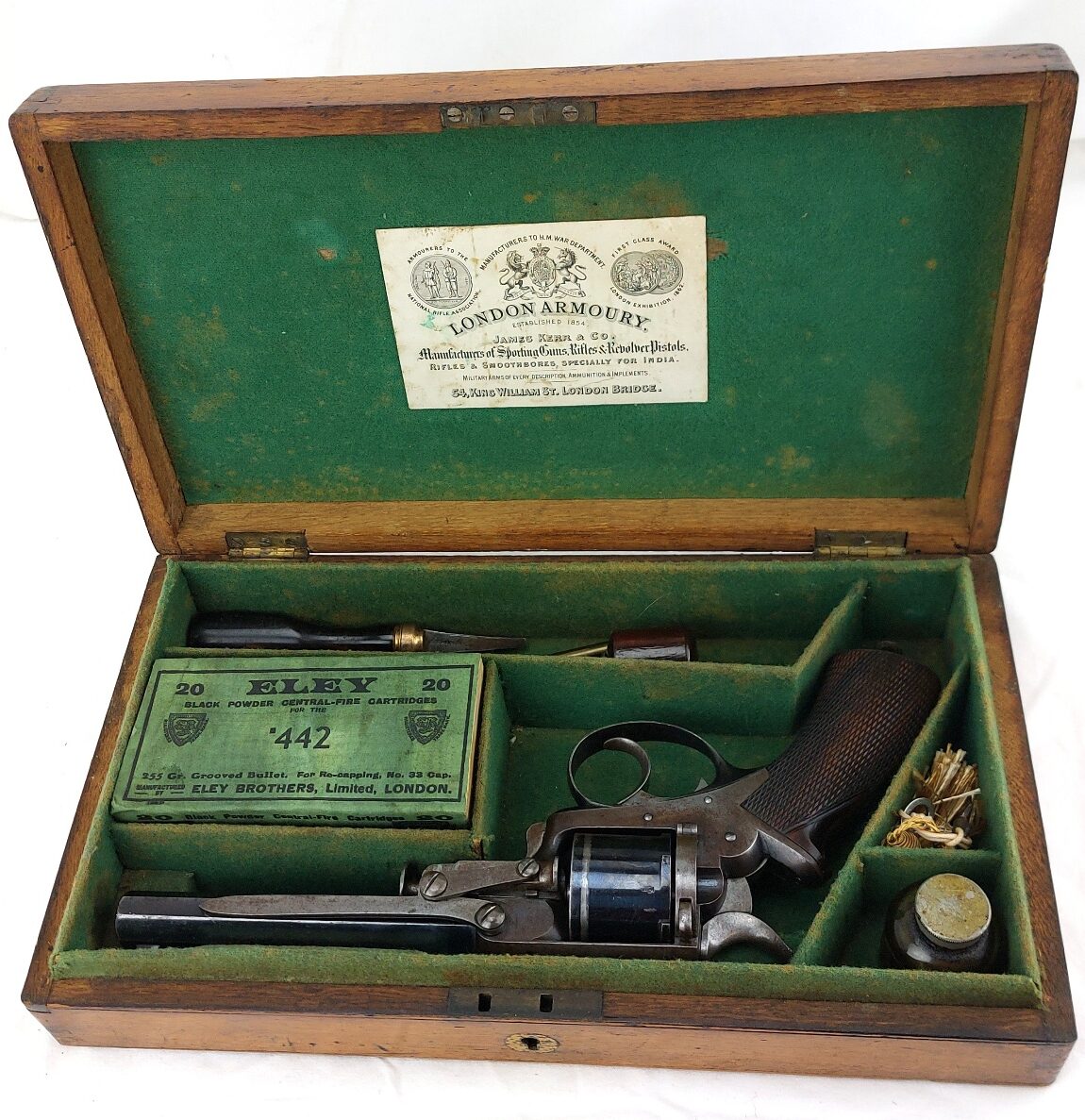
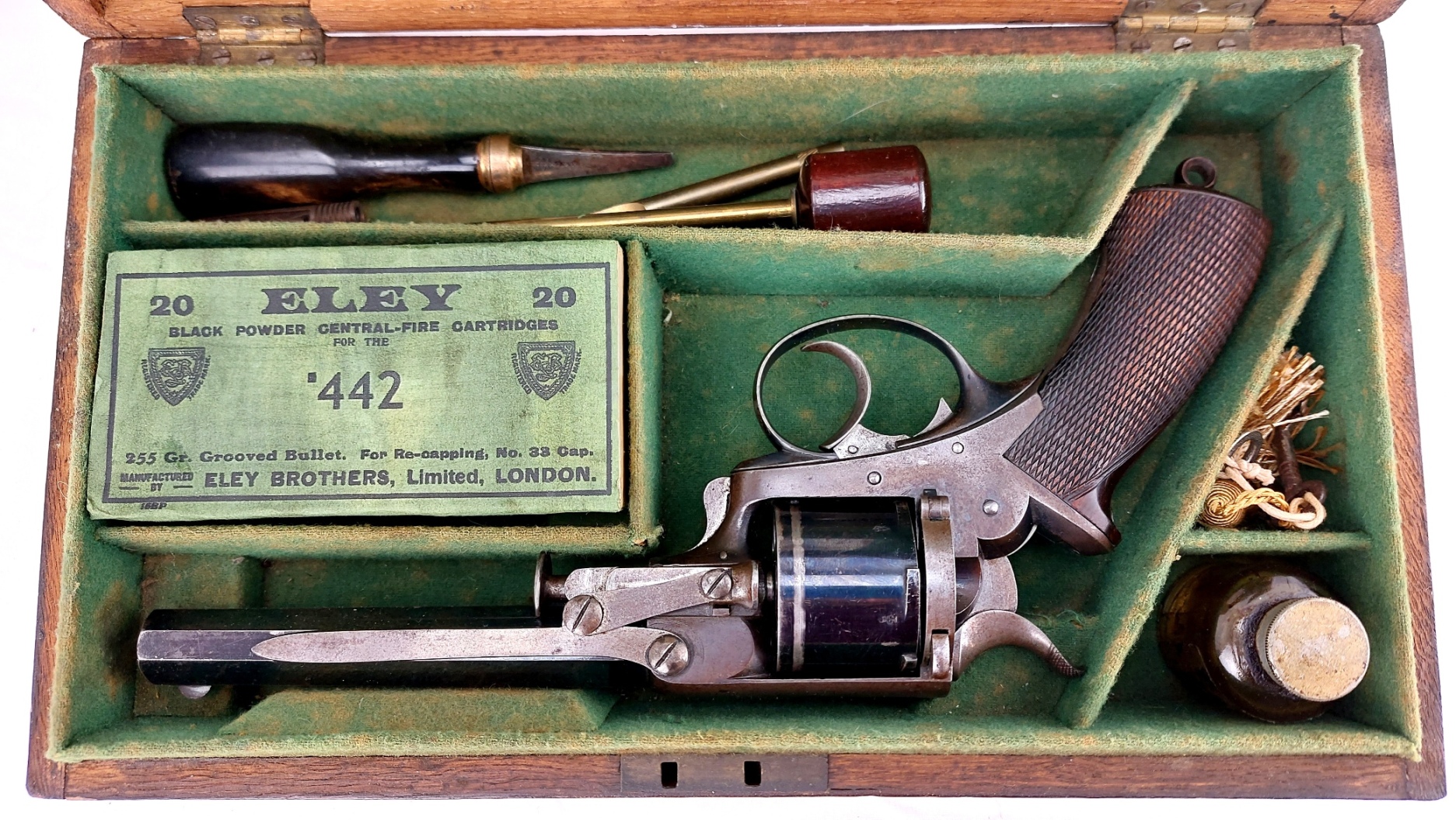
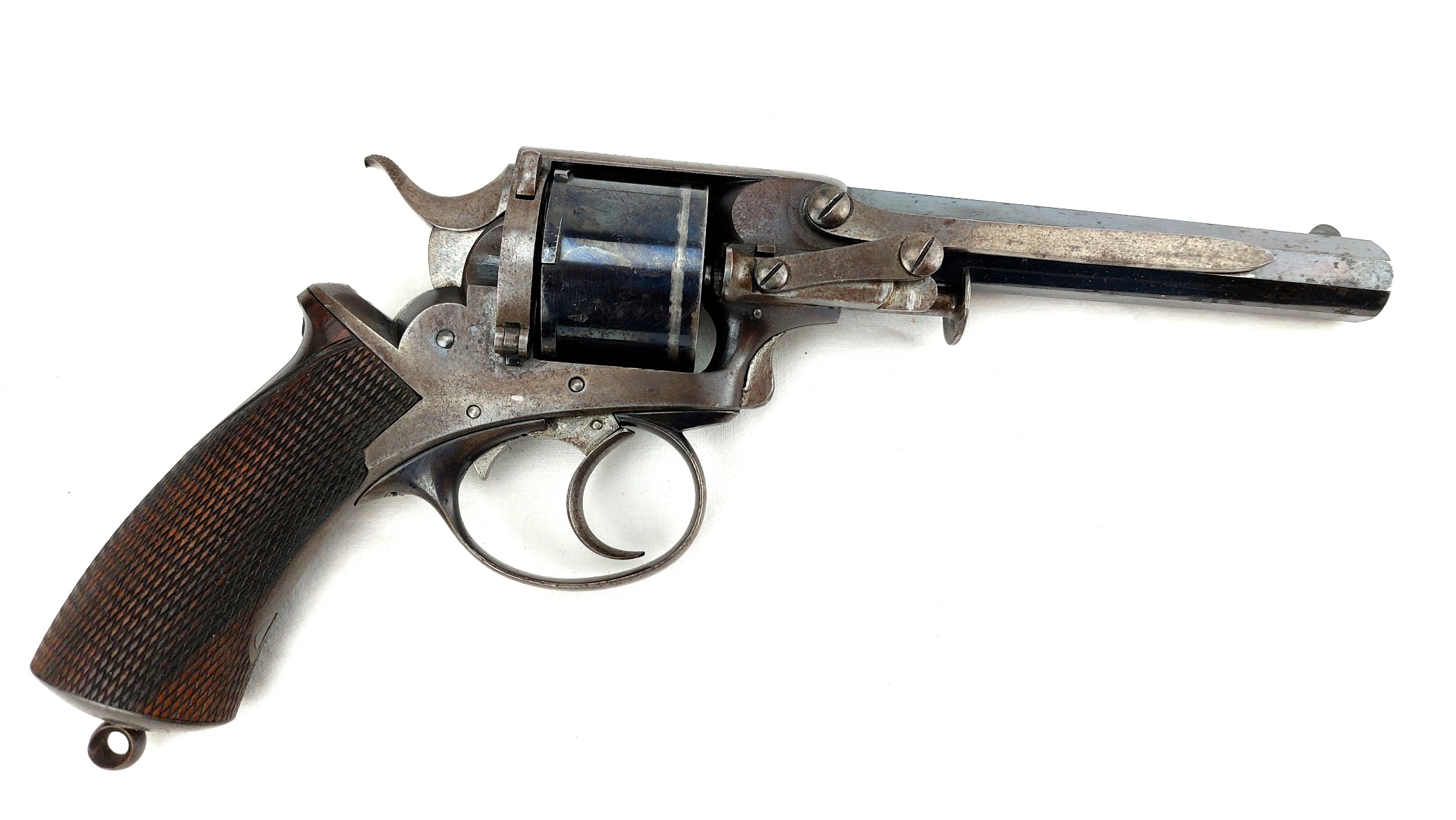
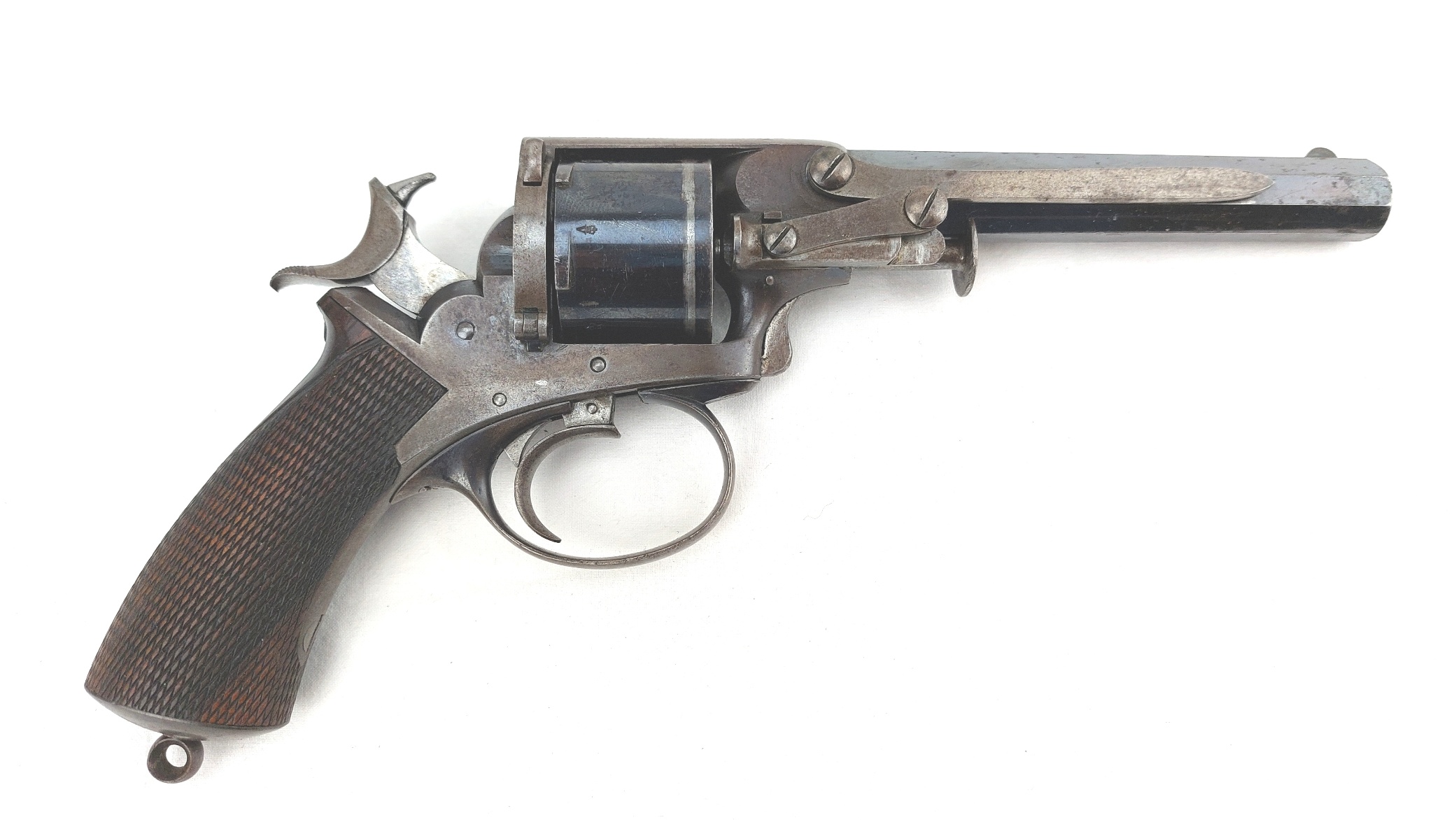
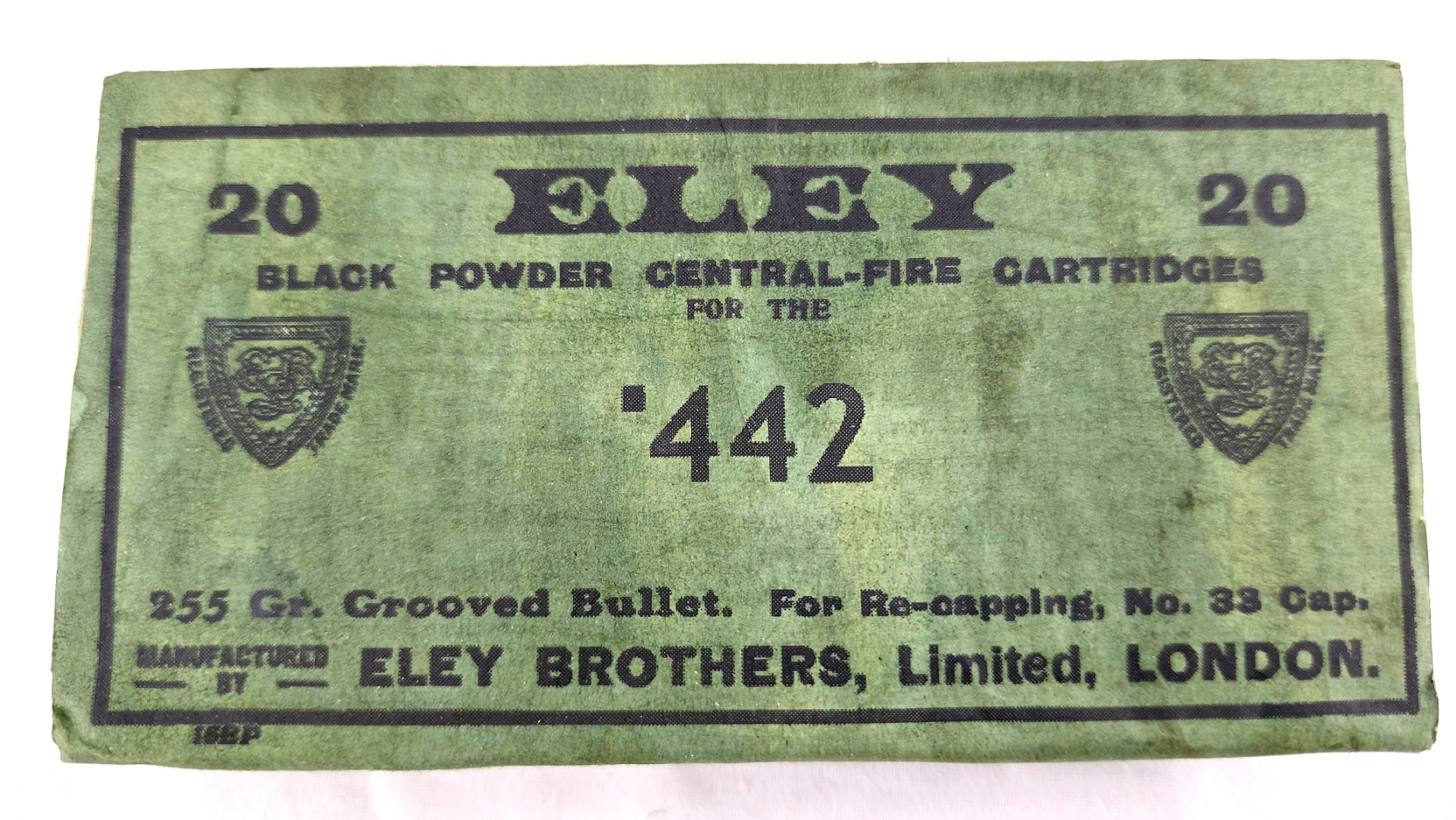
*British, c.1870, Boxed 54-Bore (.442) Six-Shot Double-Action Rim-Fire Revolver, Webley-Pattern Solid Frame, London Armoury Company (Jas. Kerr & Co.), No. 687, with Accessories, Obsolete Calibre*
Approx. Measurements – Barrel length: 15.2 cm (6 inches). Overall length: 28.5 cm.
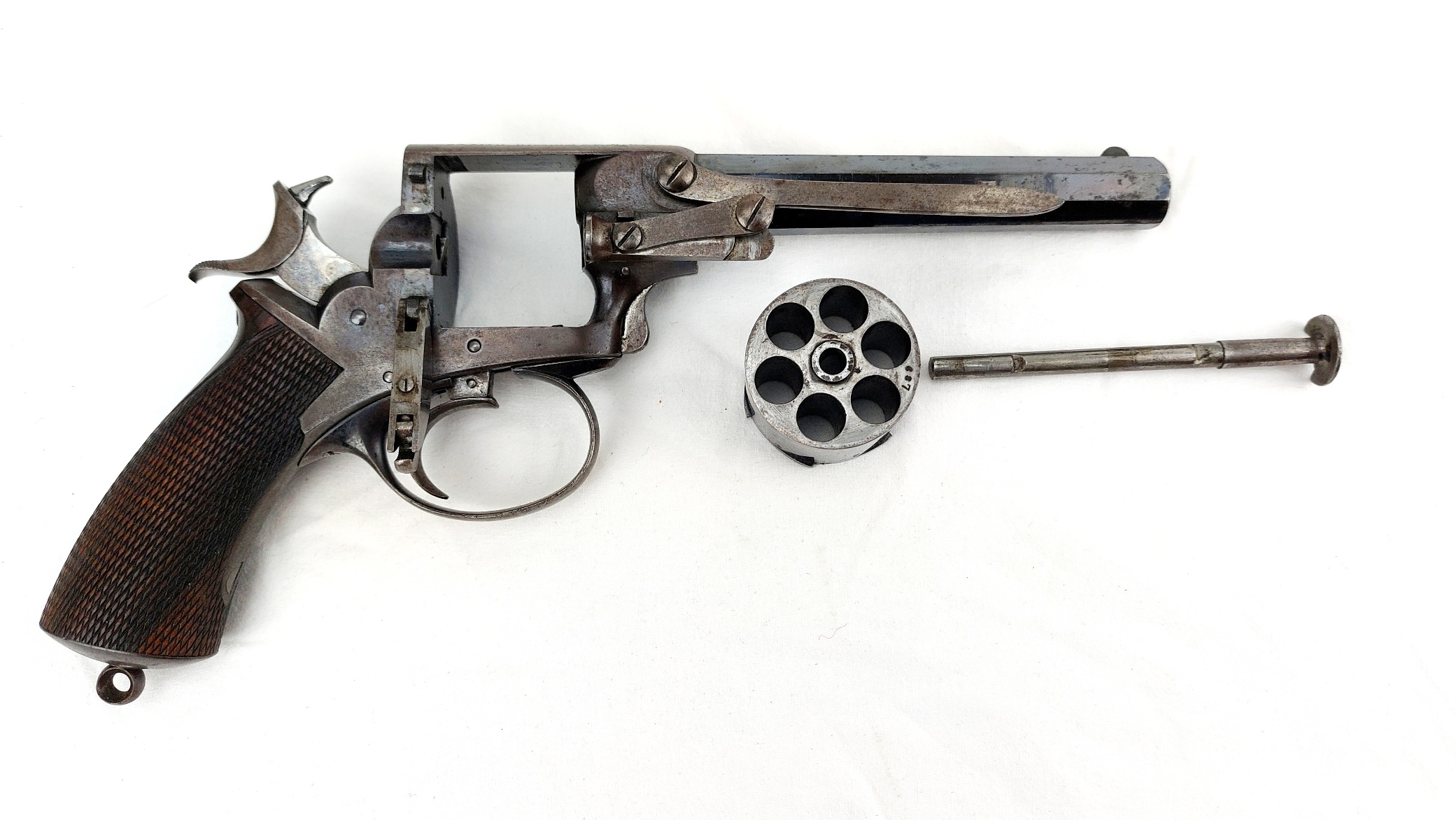
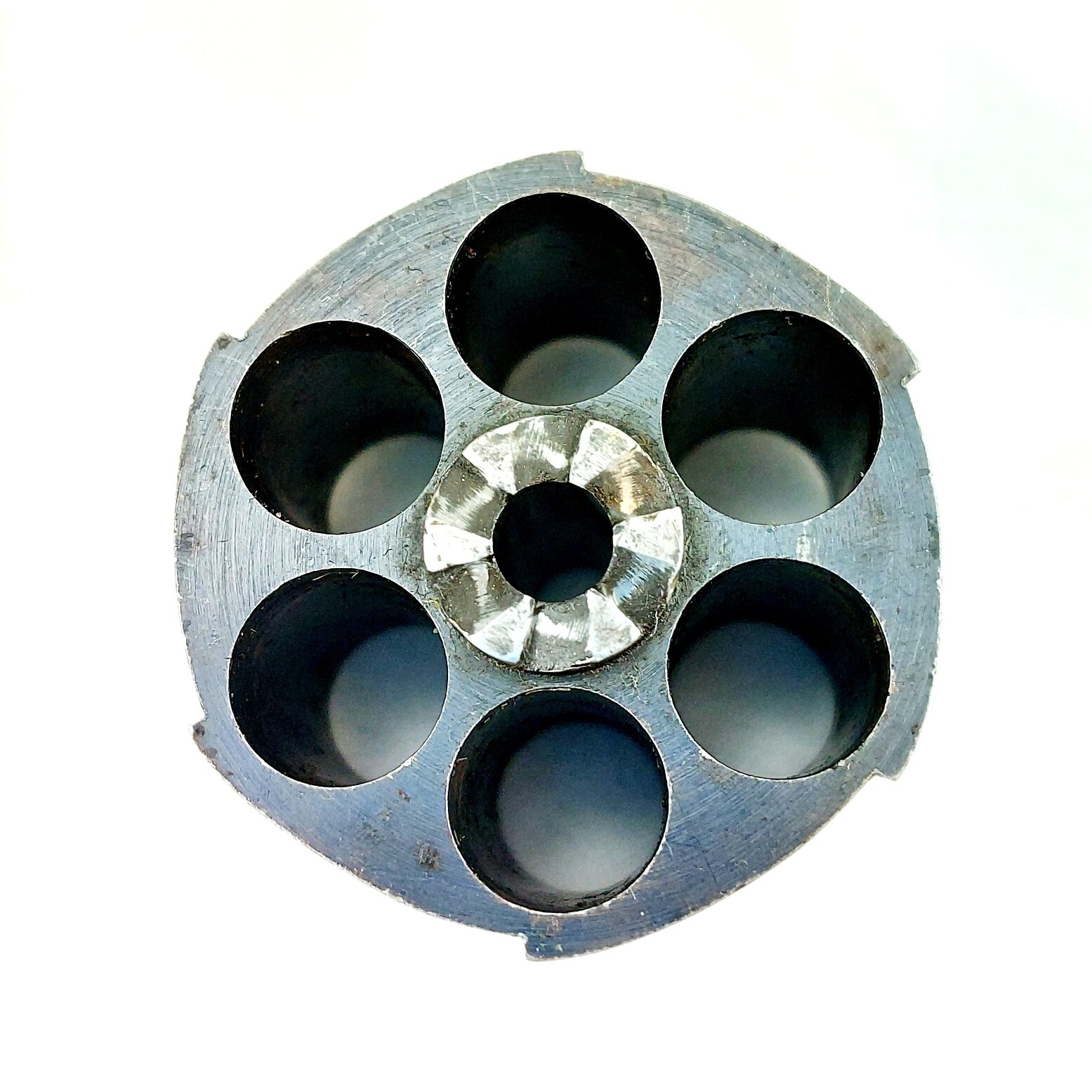
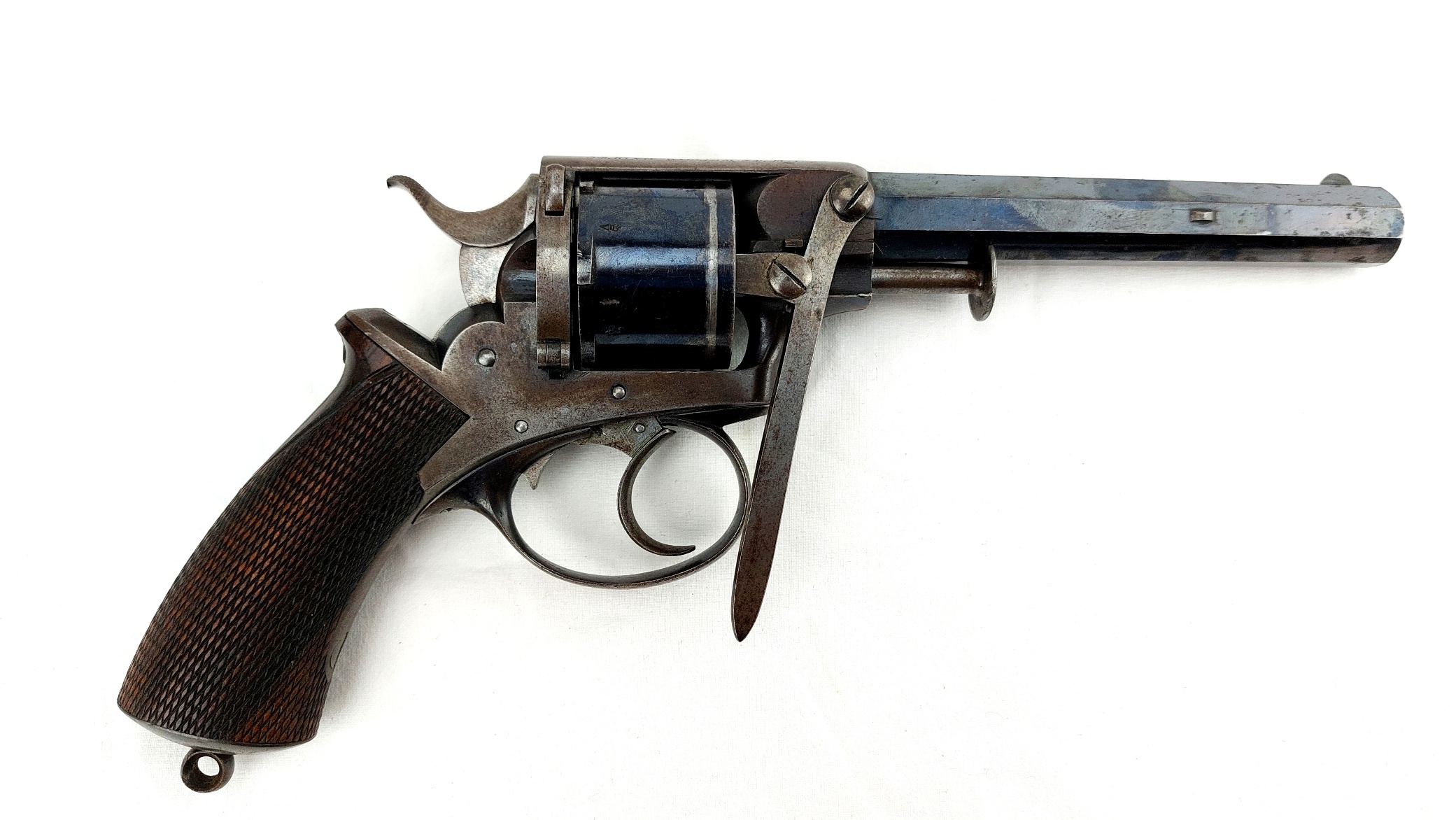
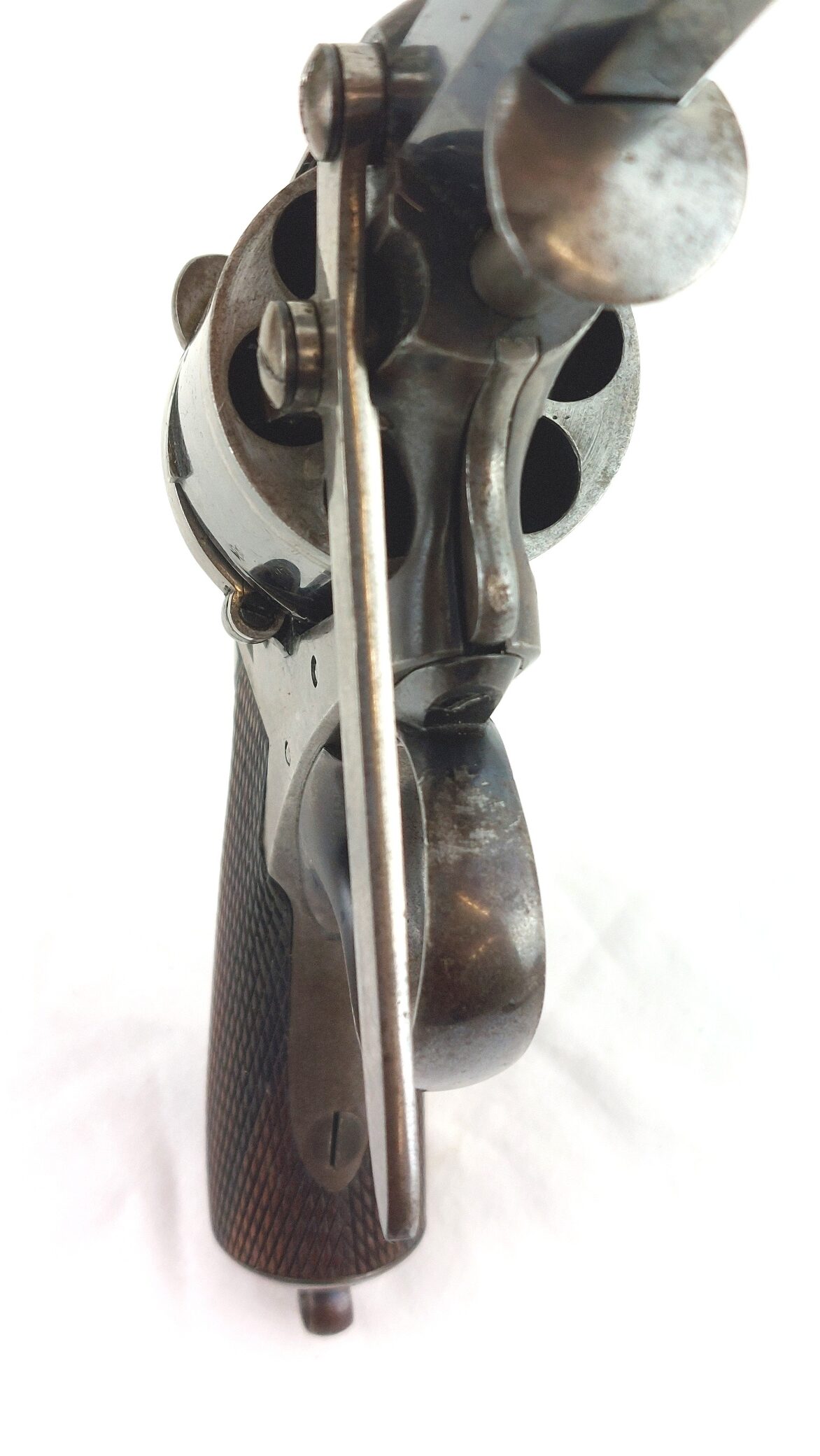
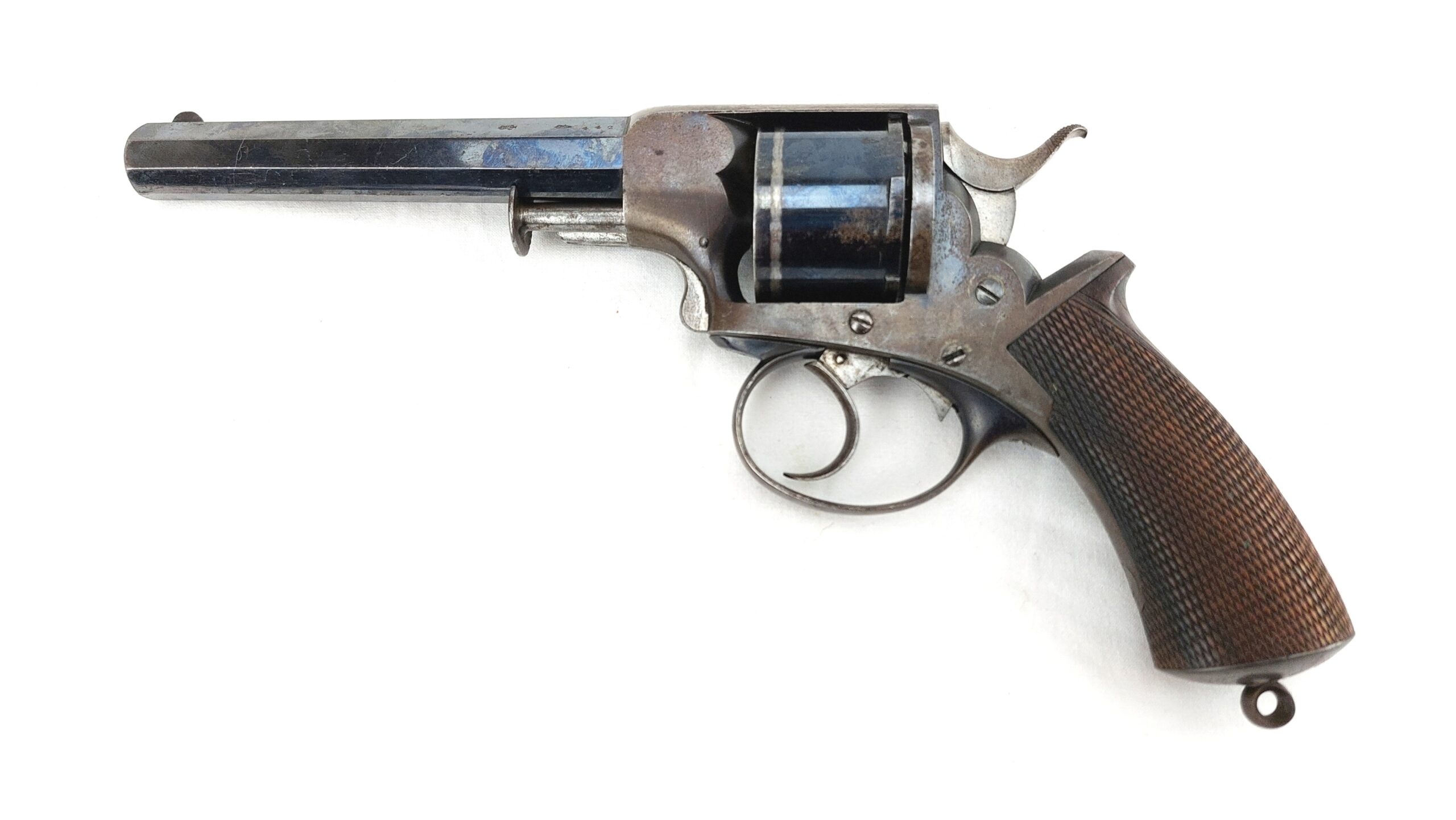
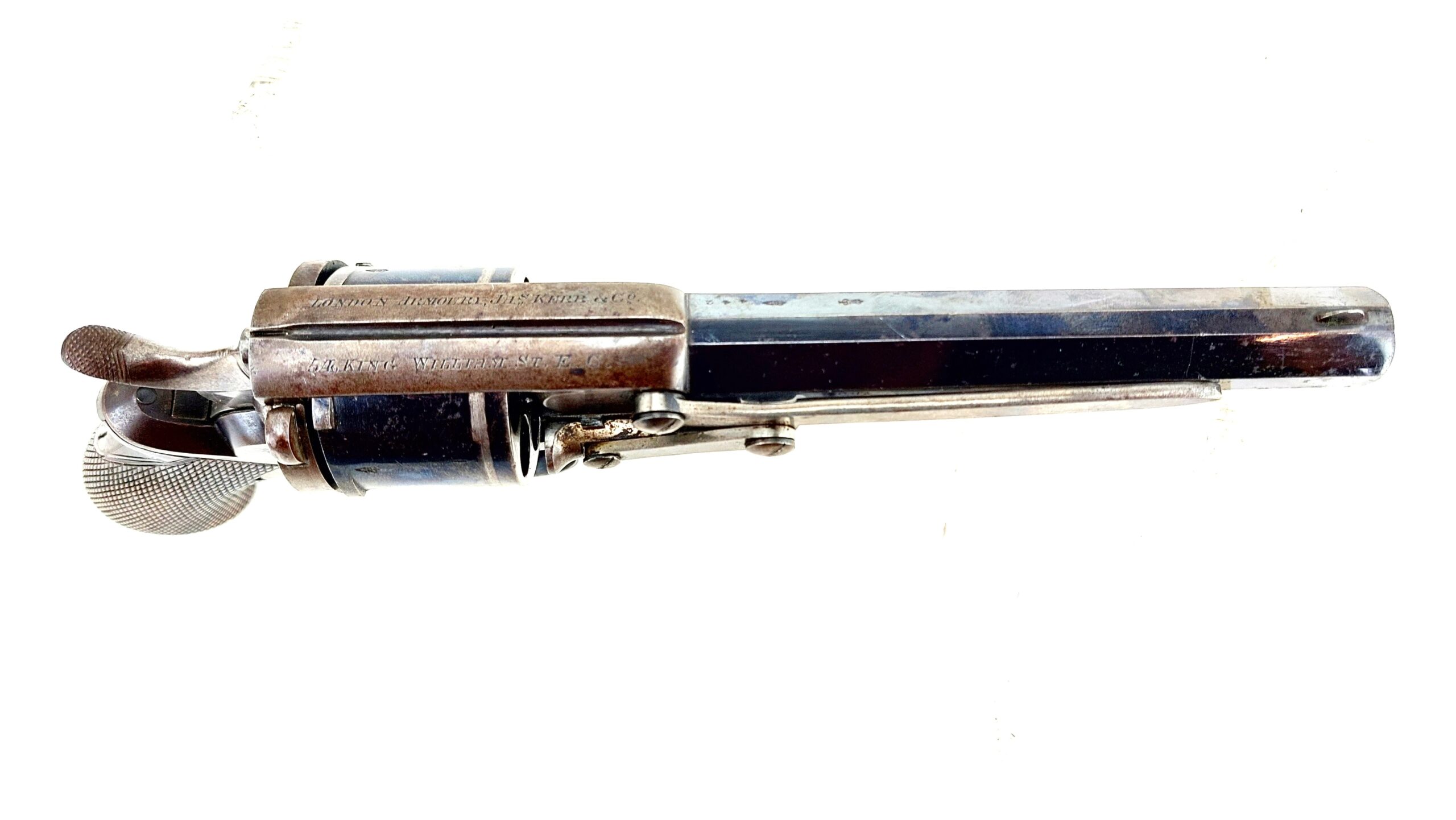
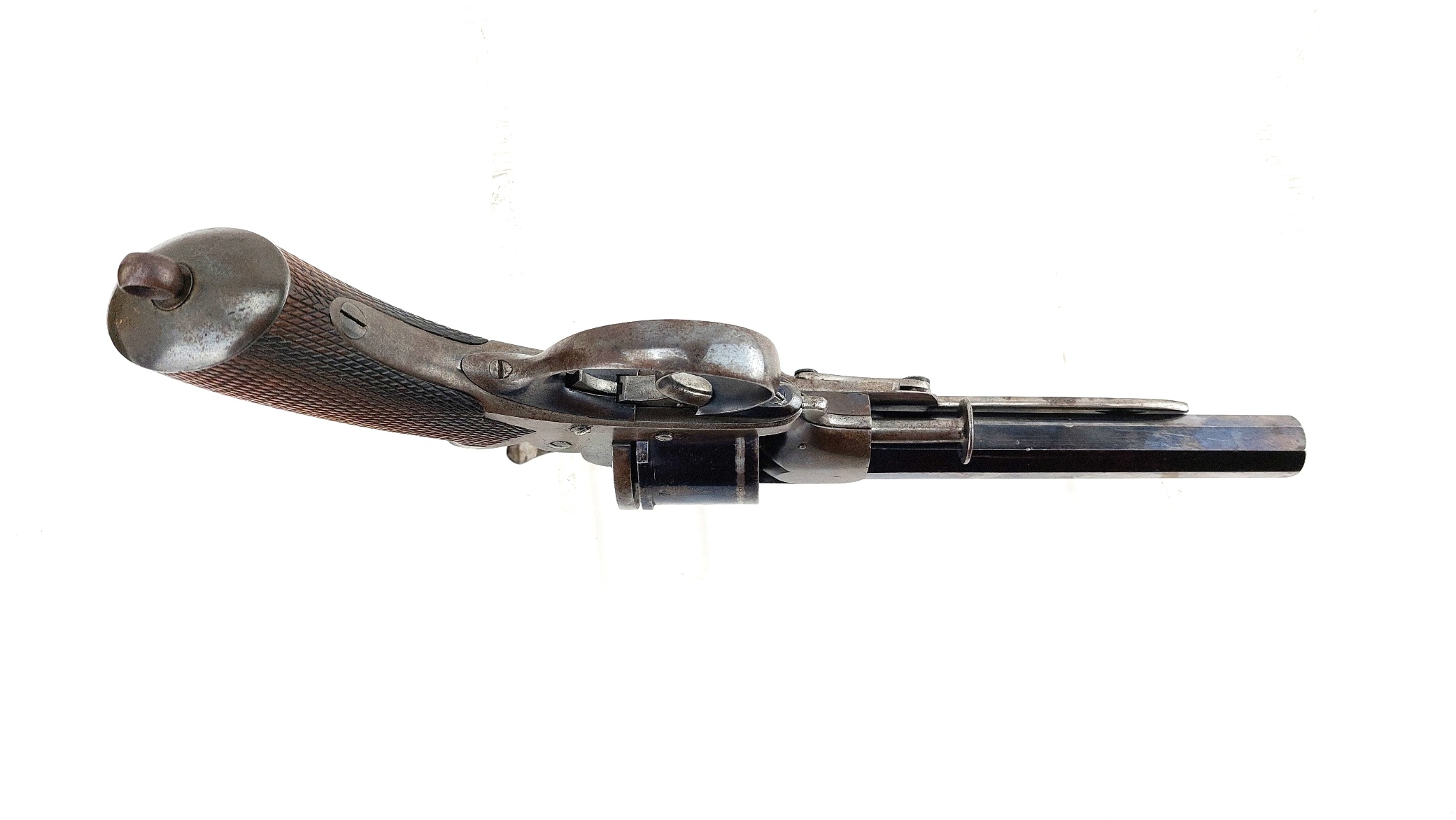
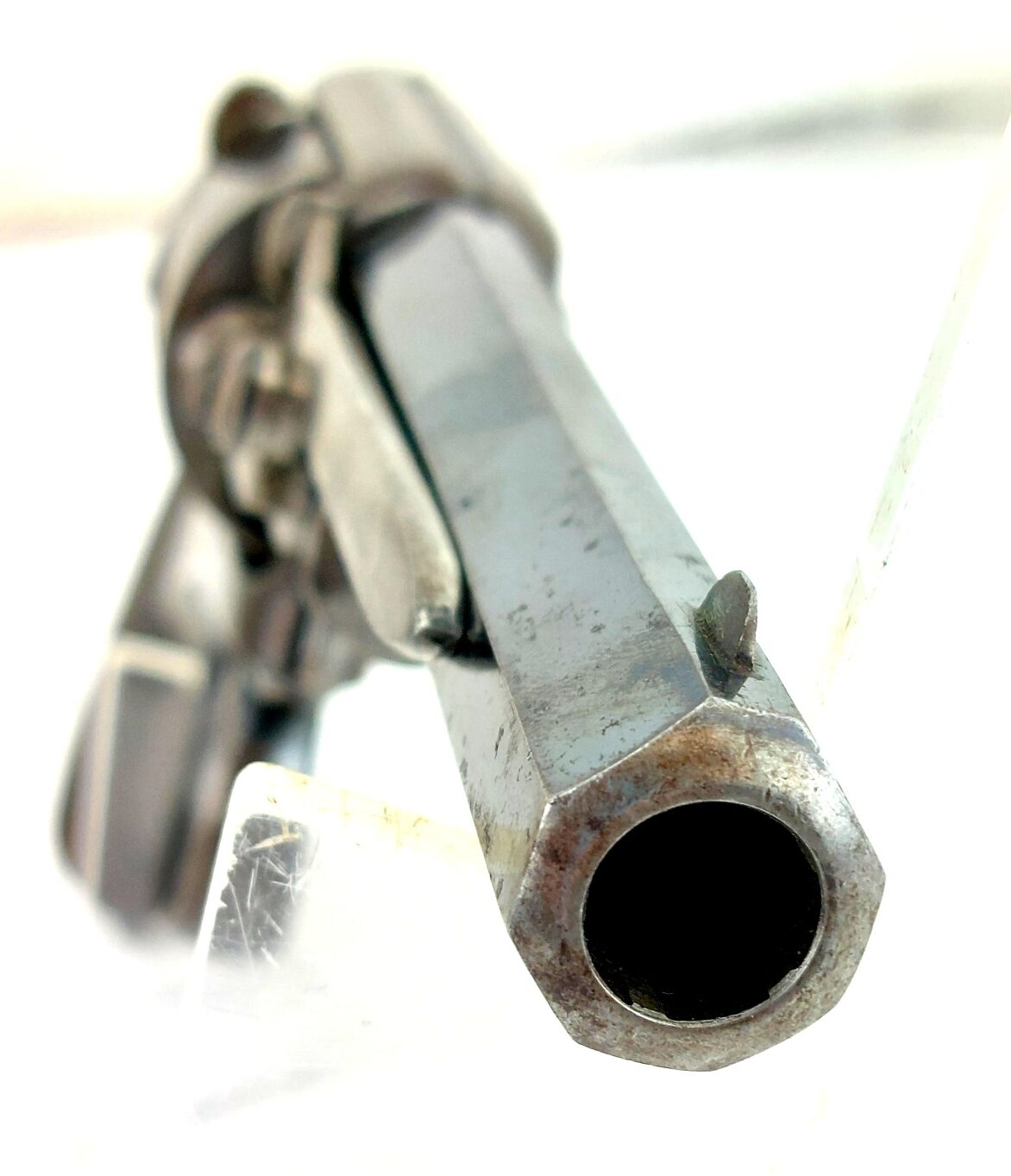
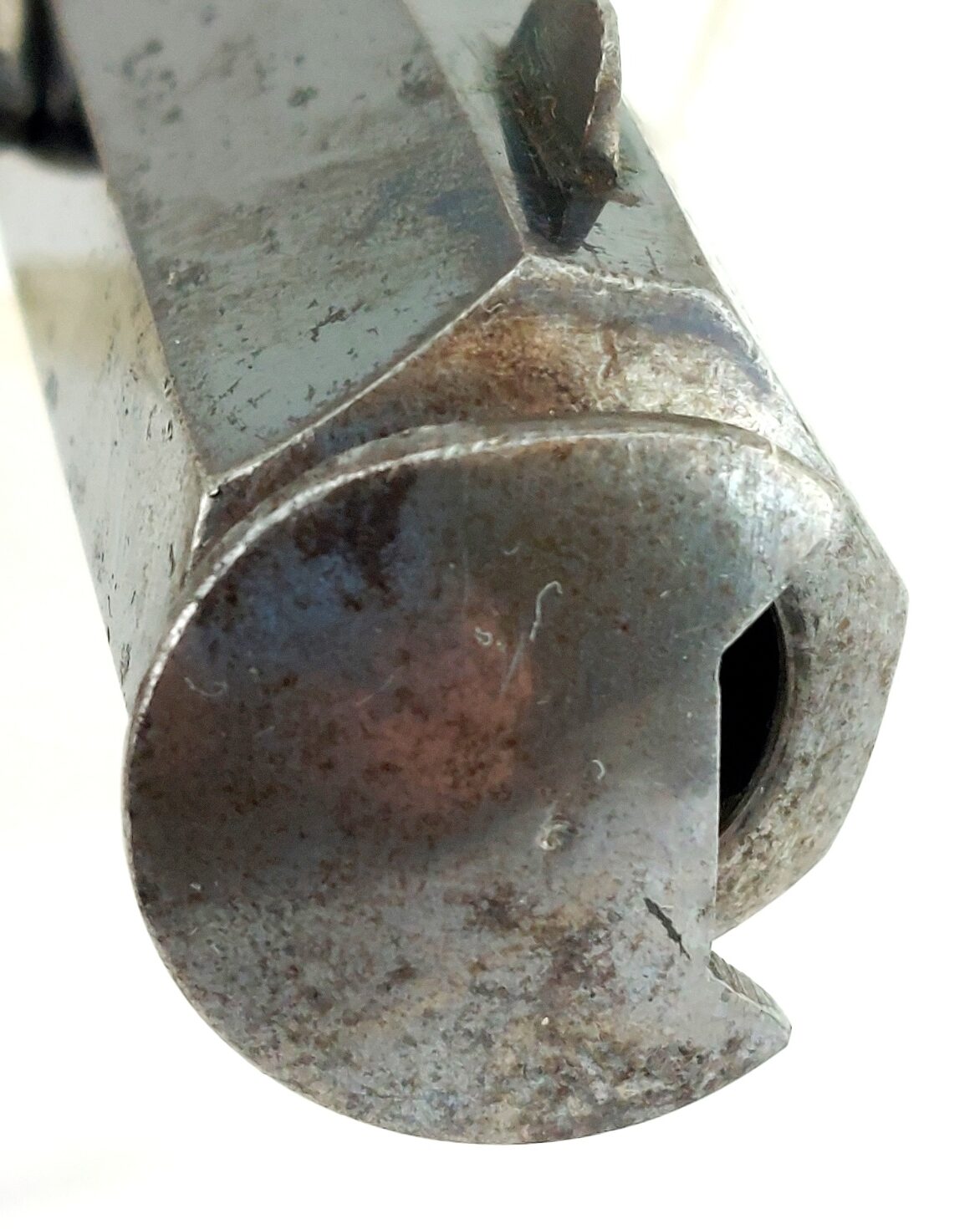
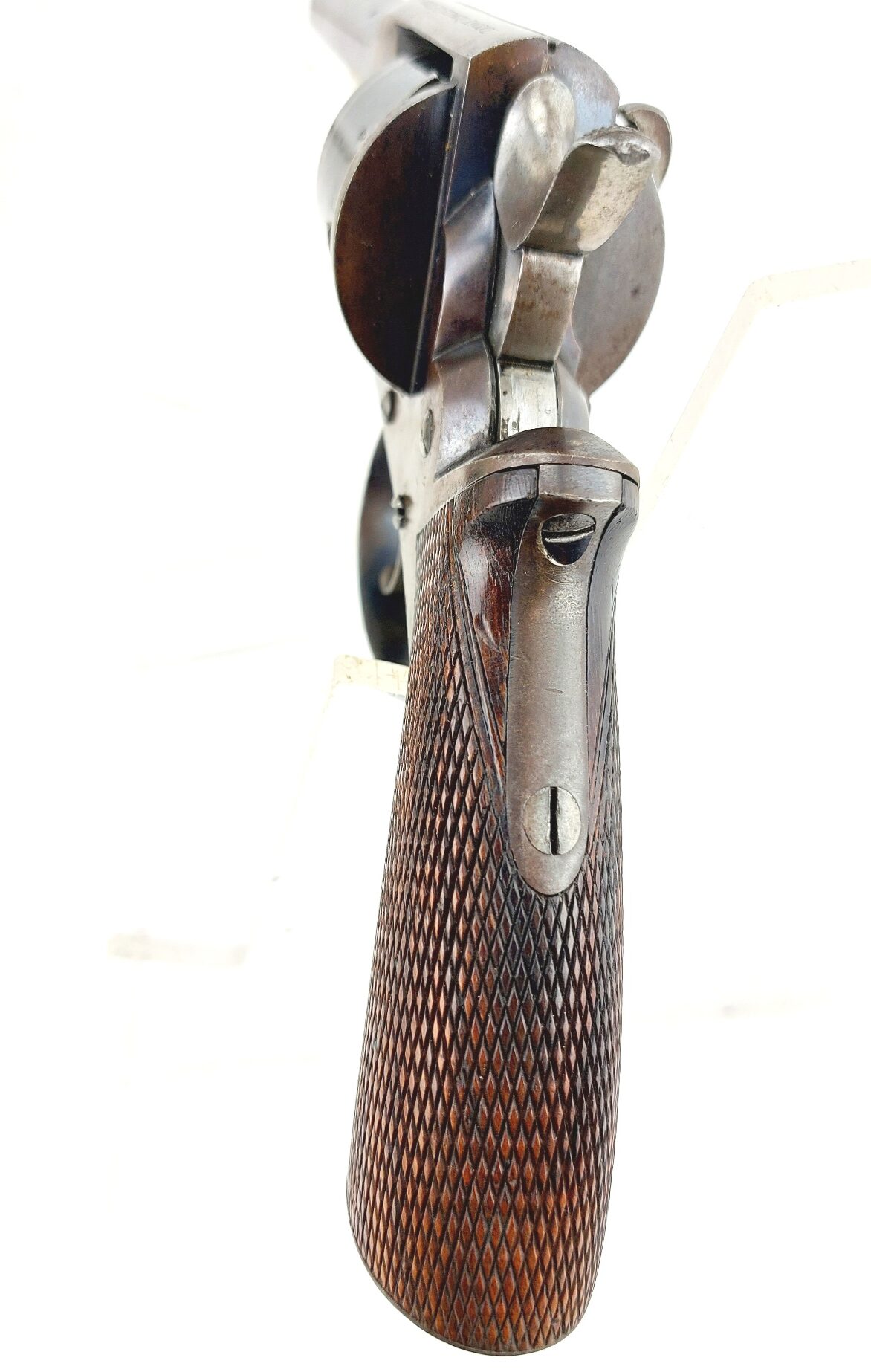
A scarce Victorian British six-shot double-action rim-fire revolver in 54-bore (.442) calibre, of solid-frame, Webley-pattern form, retailed by London Armoury, Jas. Kerr & Co., from their City of London premises at 54 King William Street, E.C. The revolver is fitted with a blued octagonal barrel, solid frame, and non-fluted cylinder, together with a hinged under-barrel ejector/rammer for the extraction of spent rim-fire cartridges. The action is double-action, with exposed hammer, chequered walnut grips, and a lanyard ring to the butt.
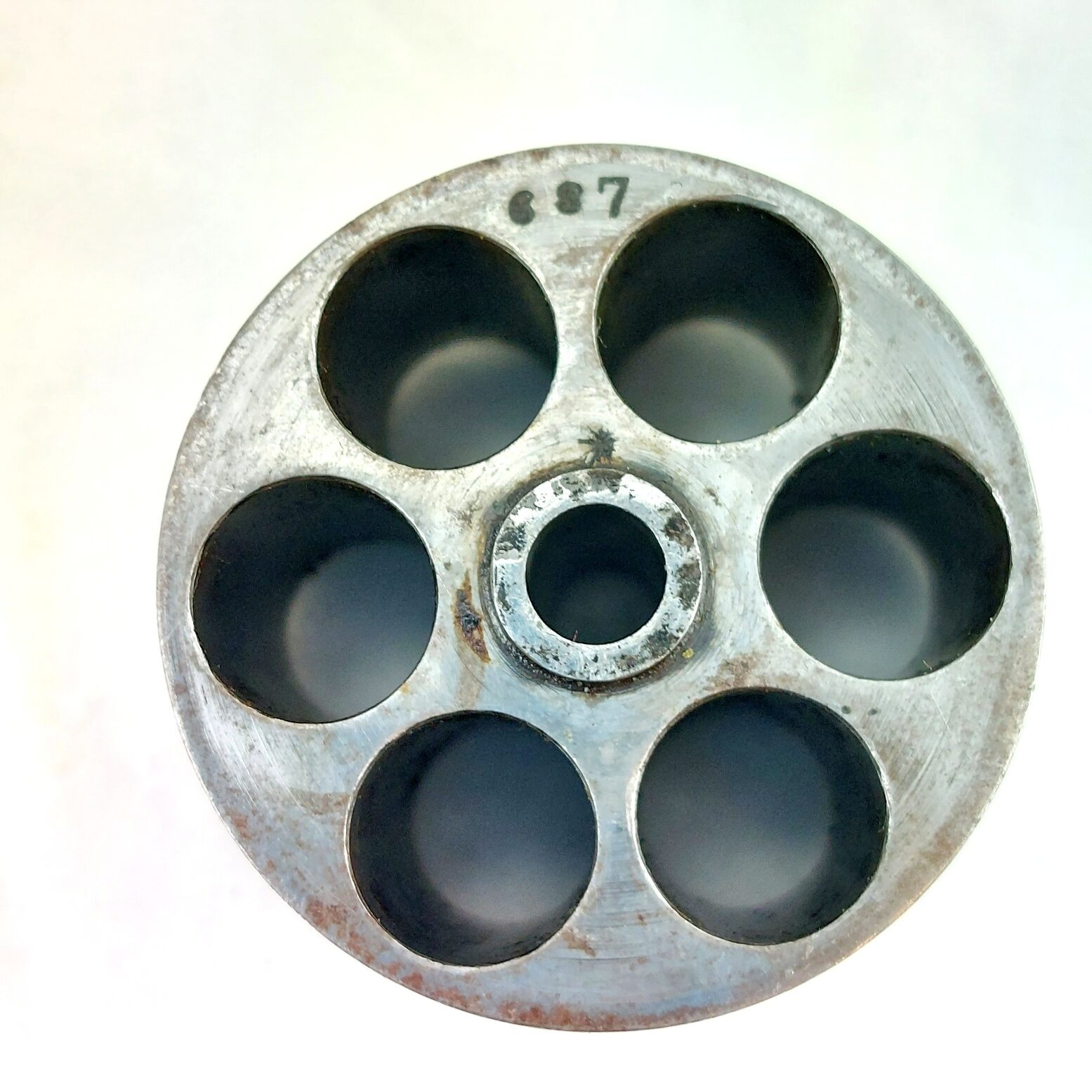
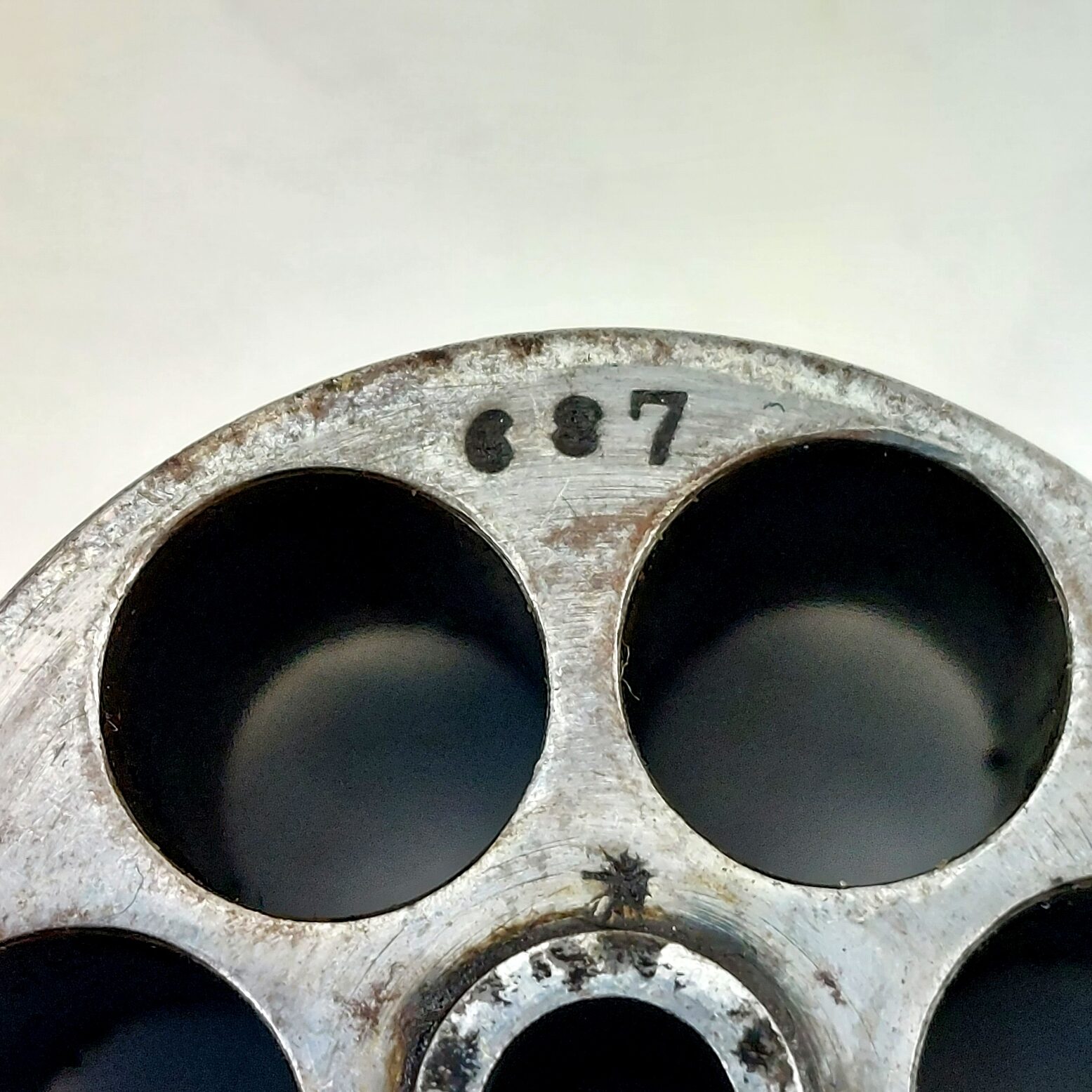
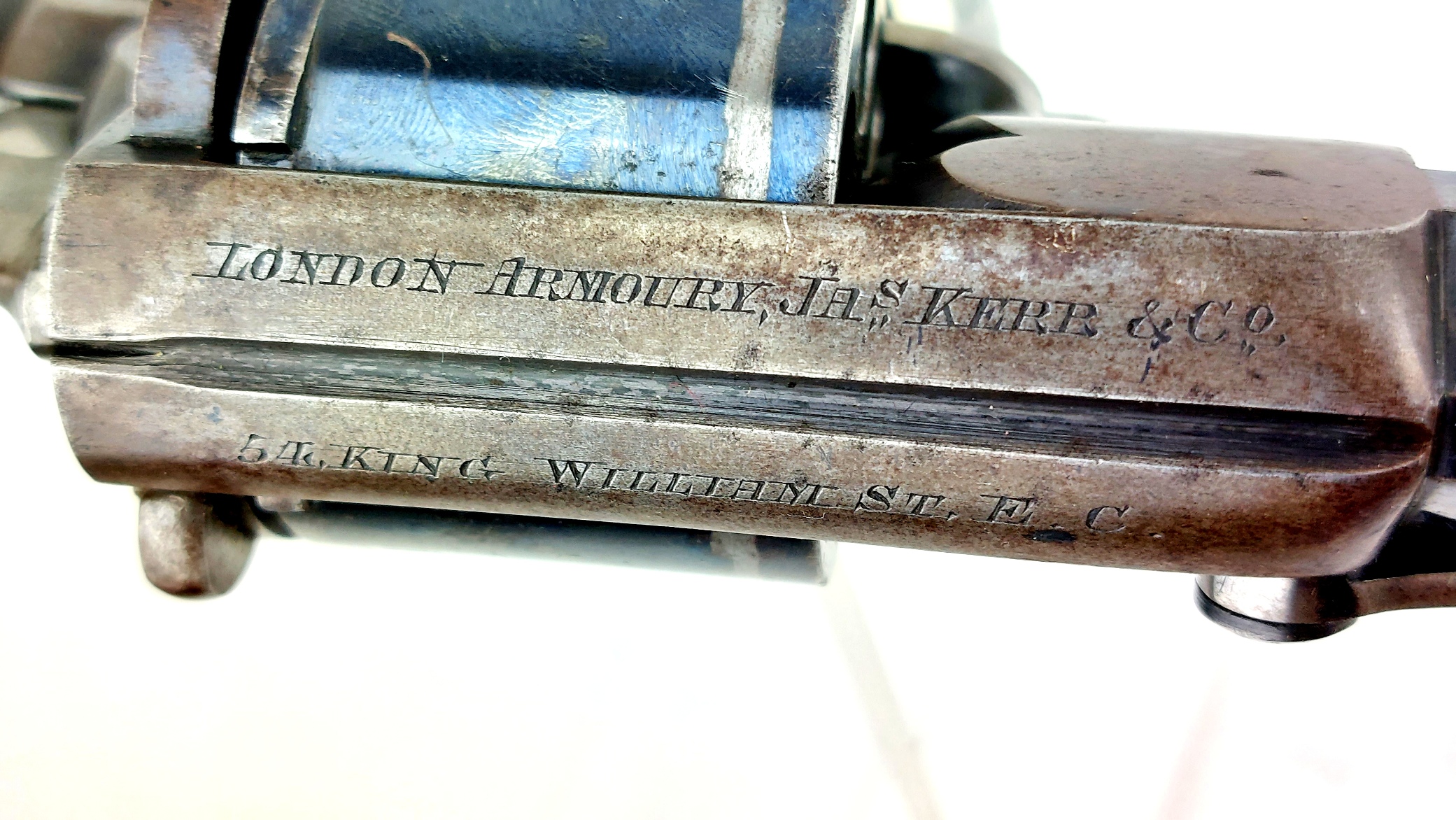
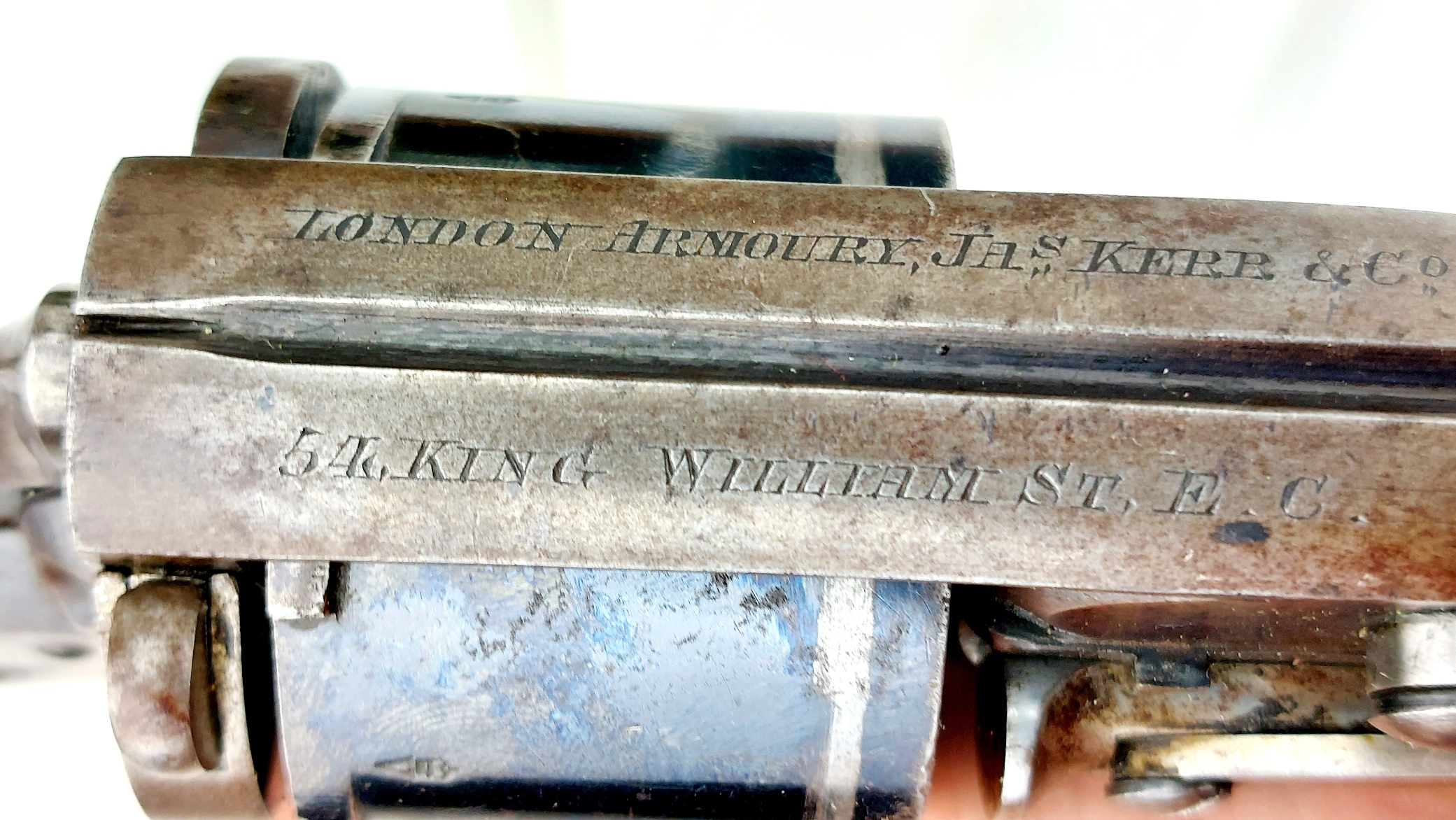
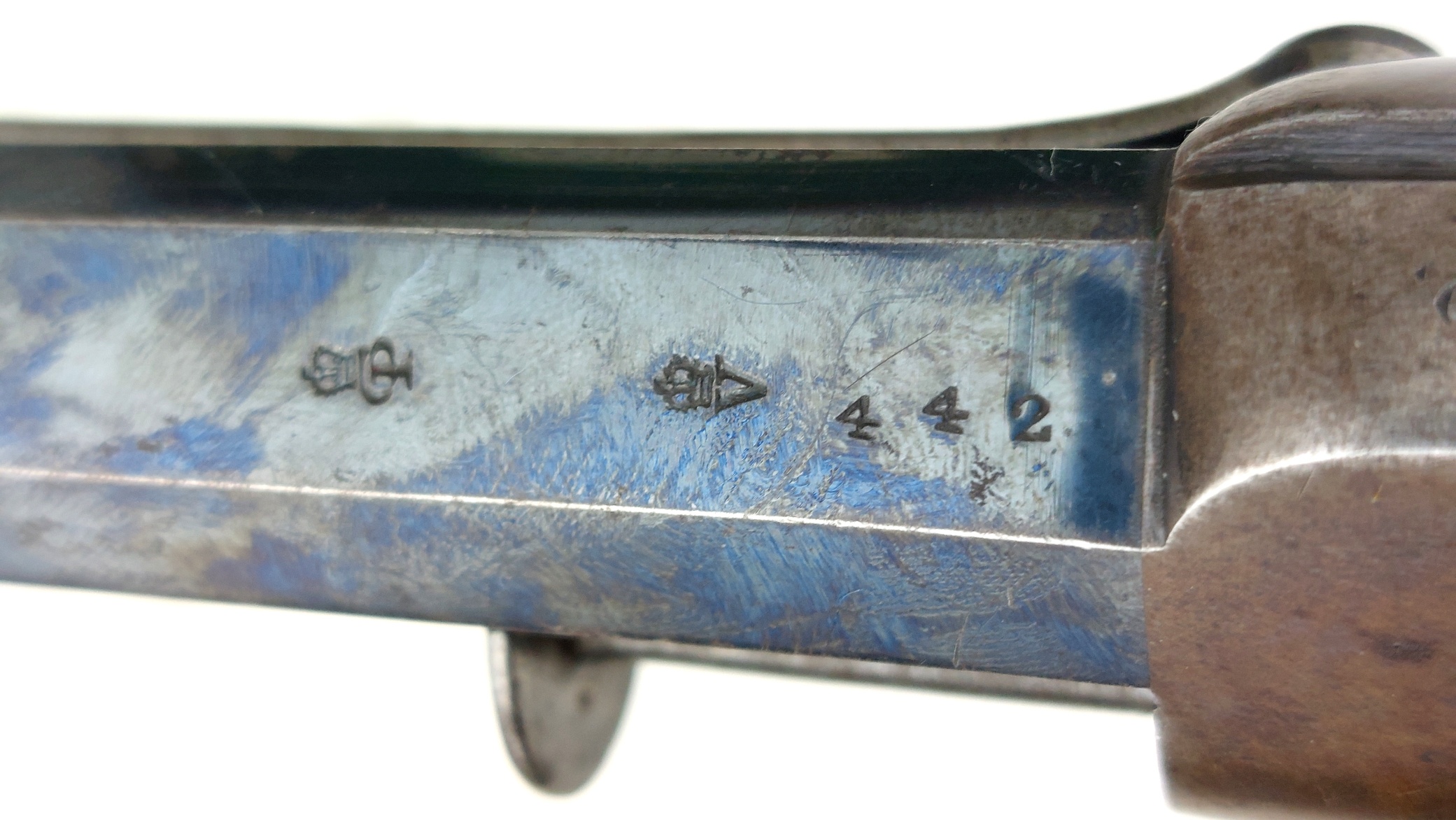
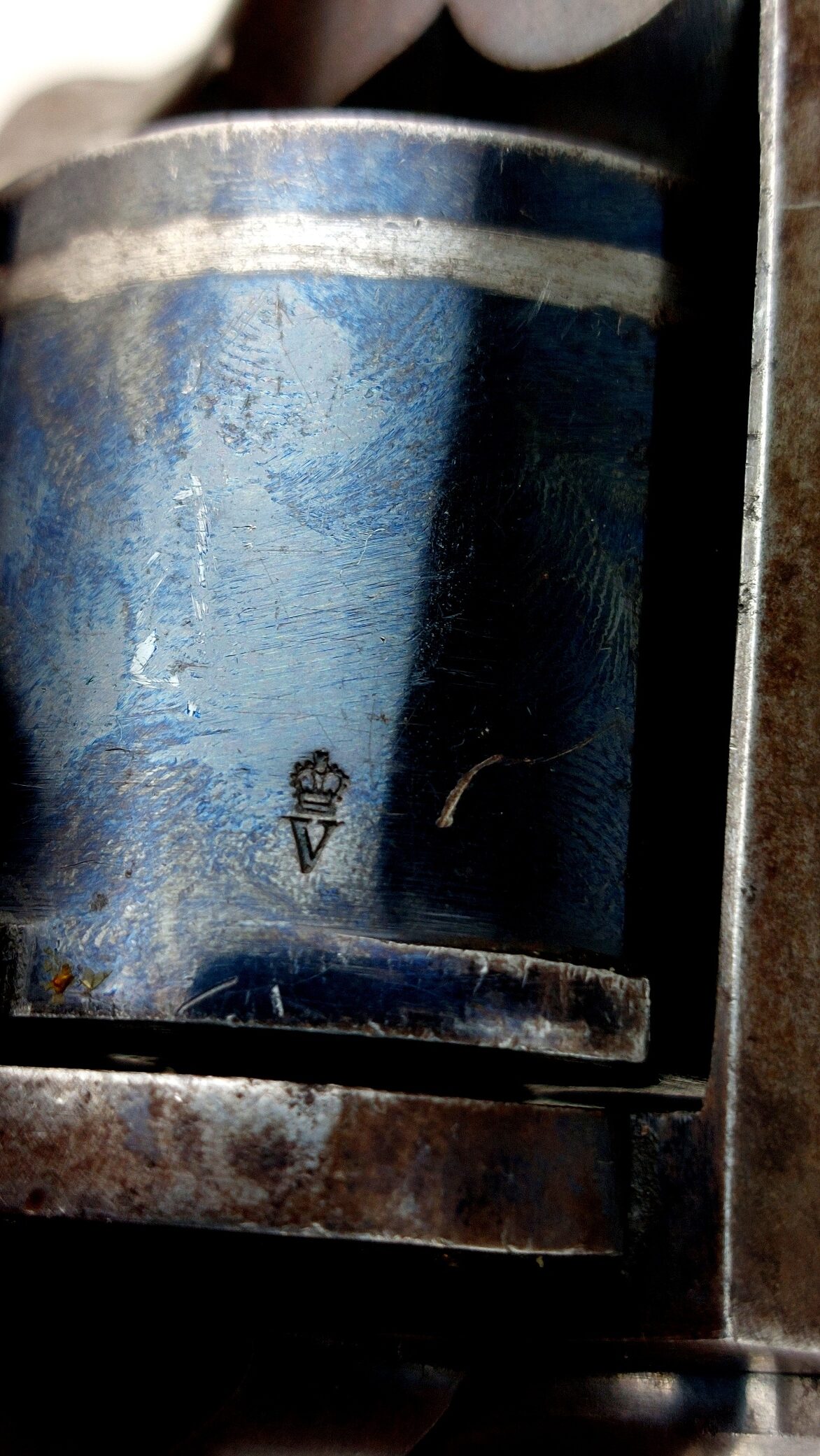
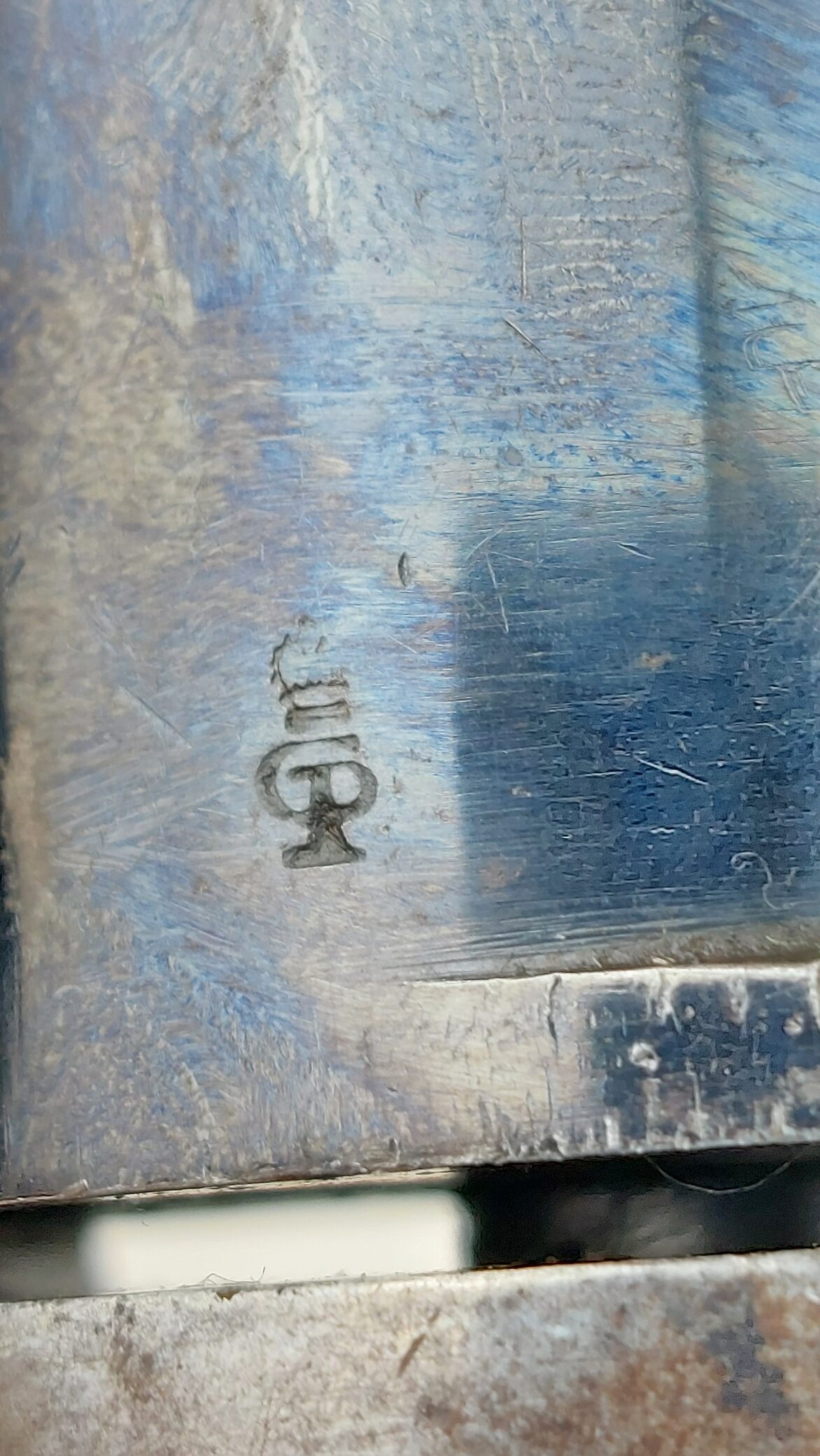
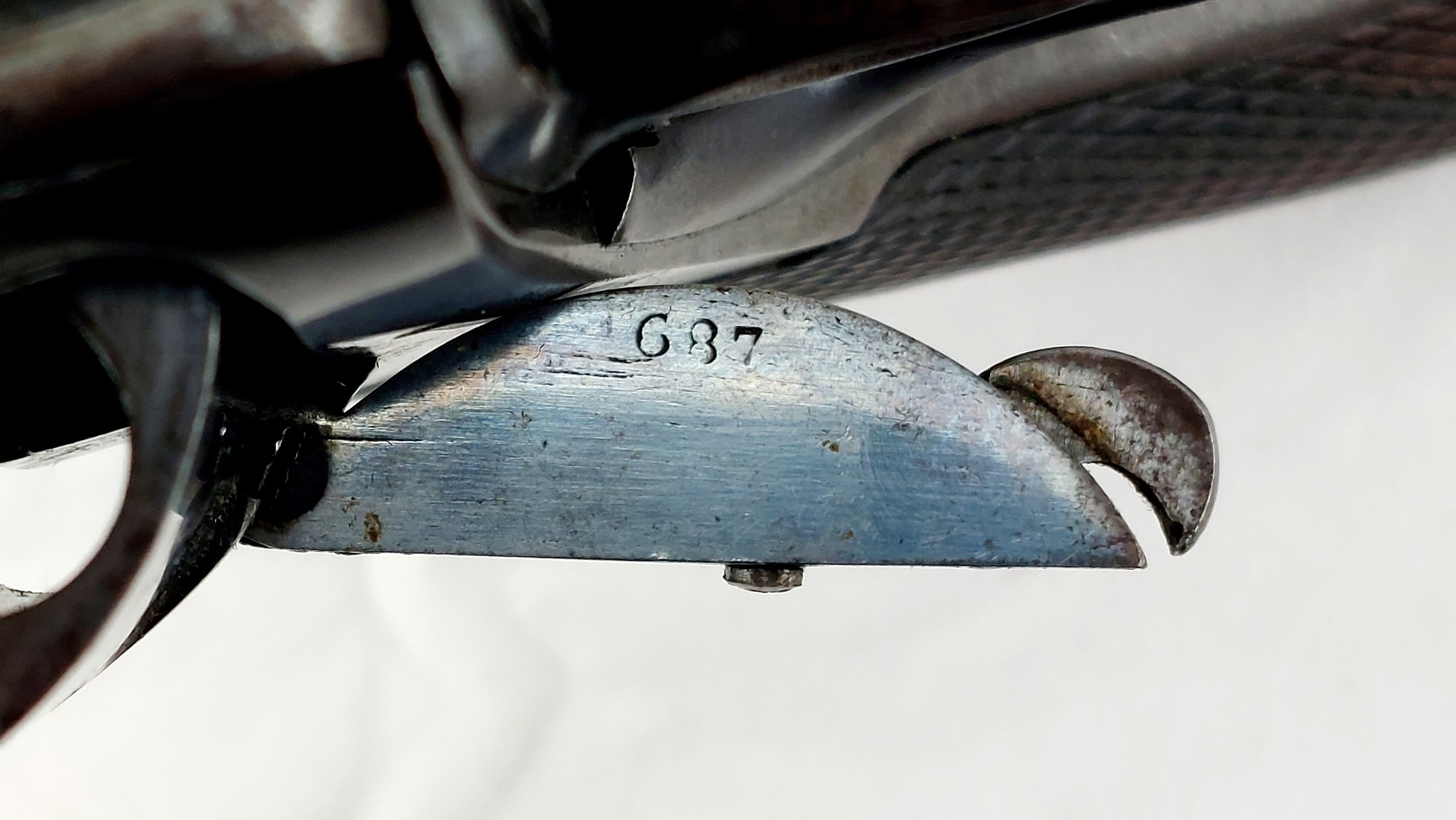
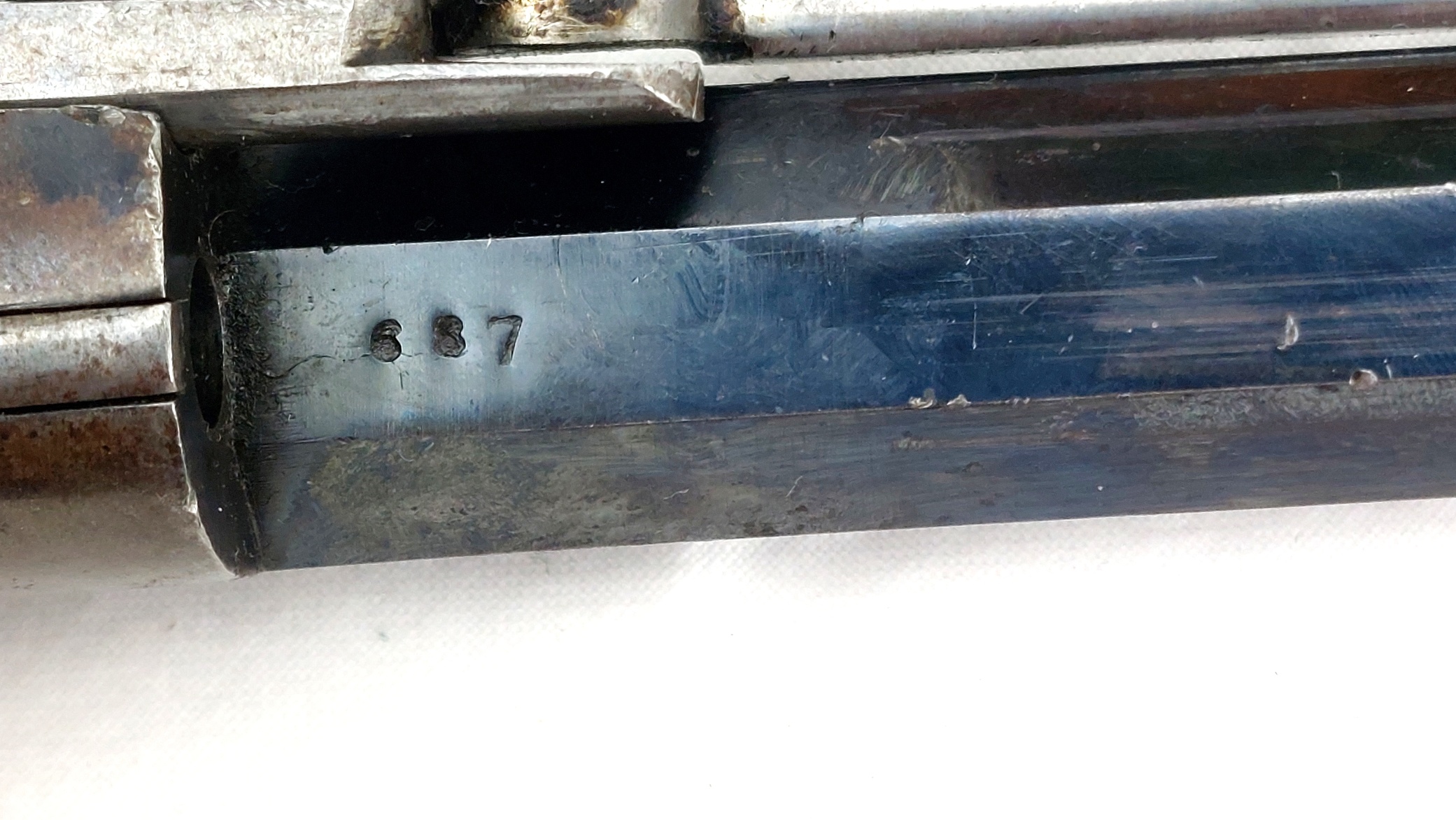
The top strap is engraved “London Armoury – Jas. Kerr & Co.” with the address “54 King William St. E.C.” beneath. The revolver bears the assembly or serial number 687, repeated to the cylinder/chamber face, loading-lever components, and associated parts, indicating a coherent factory-assembled example. London commercial proof marks are present on the barrel and on the chamber, Crown over GP and Crown over V, together with the calibre designation “442” on the barrel.
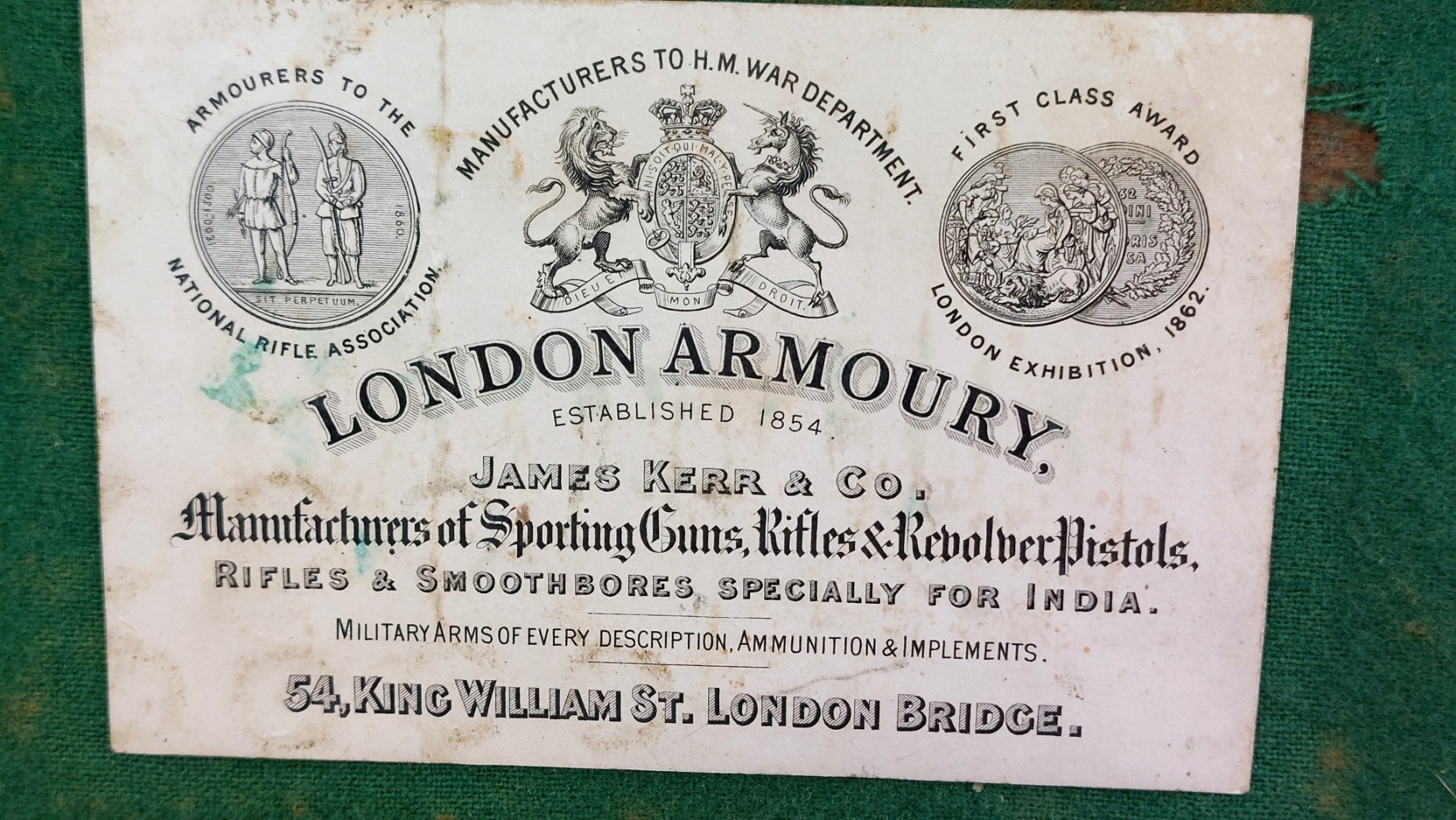
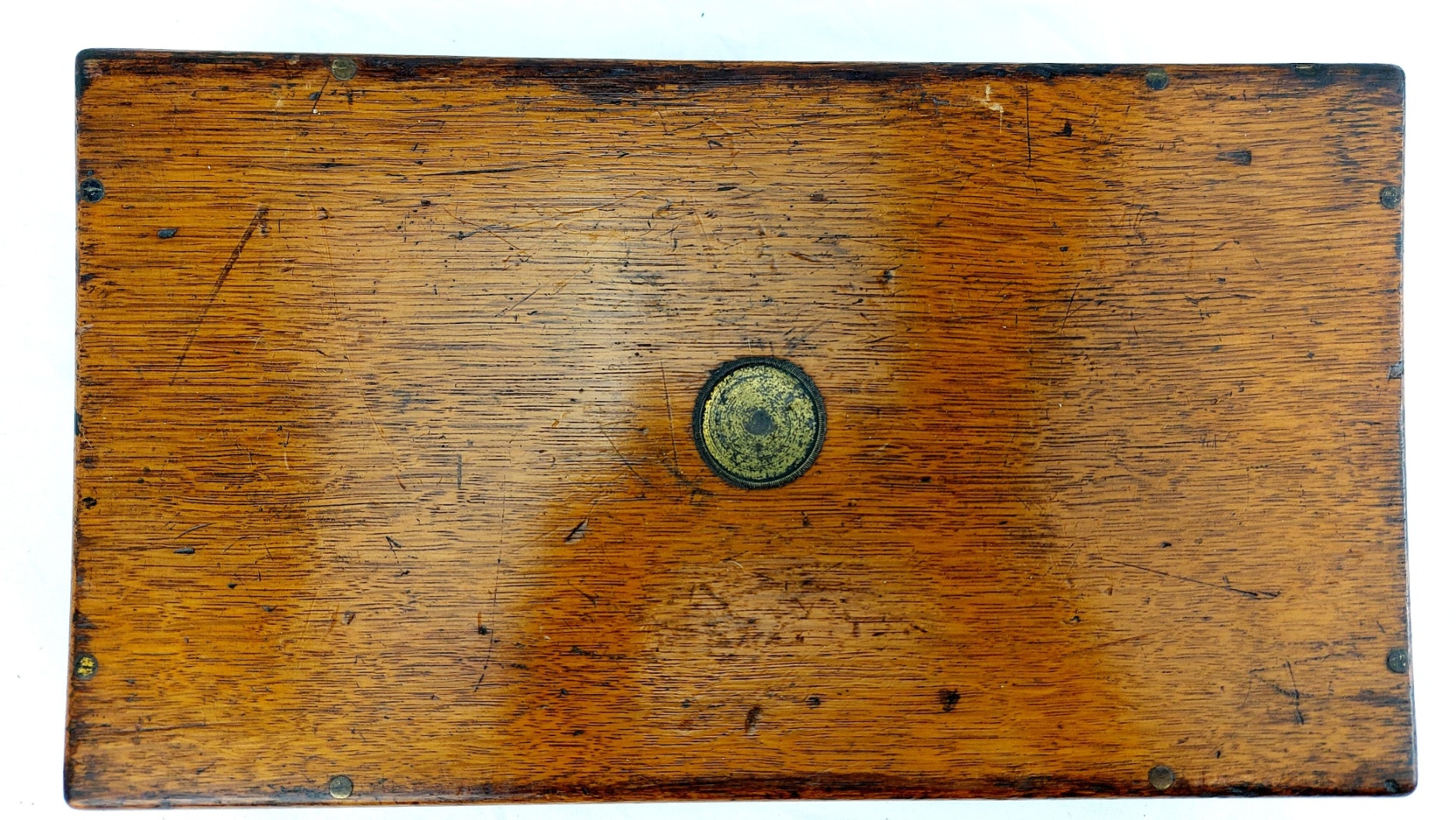
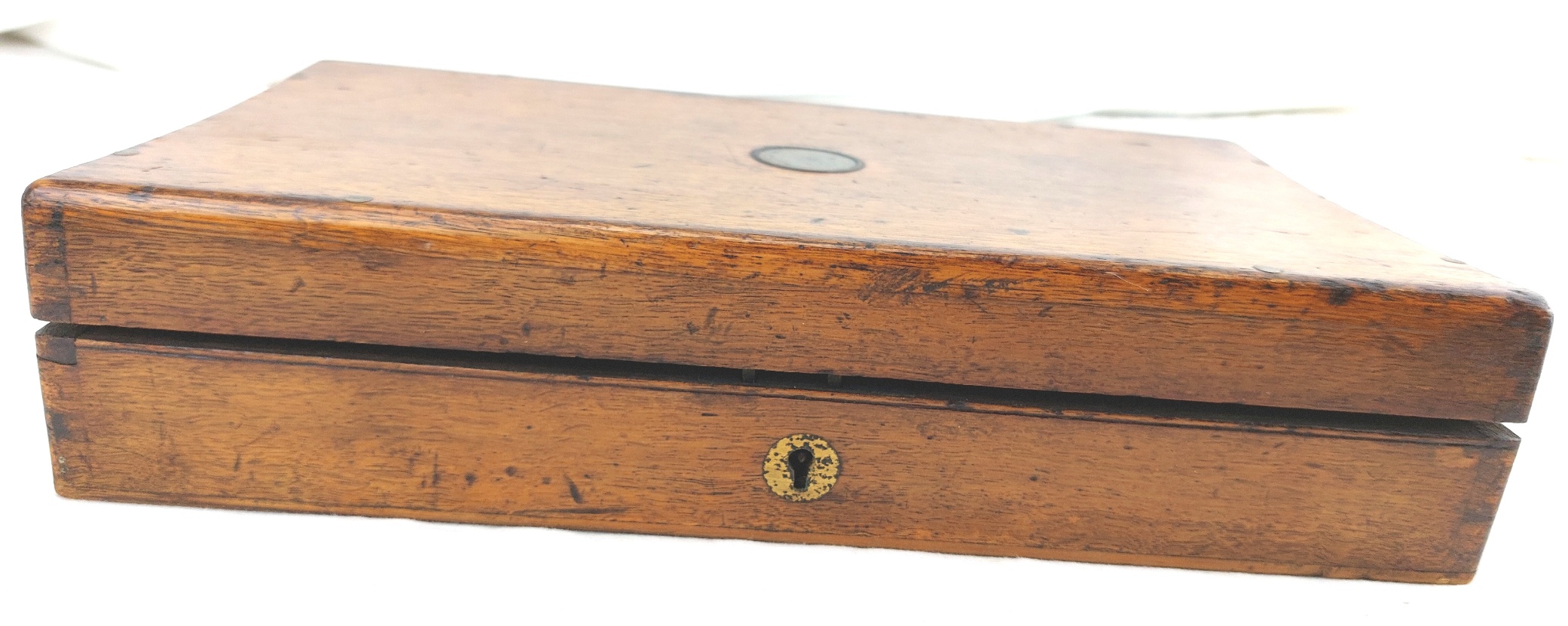
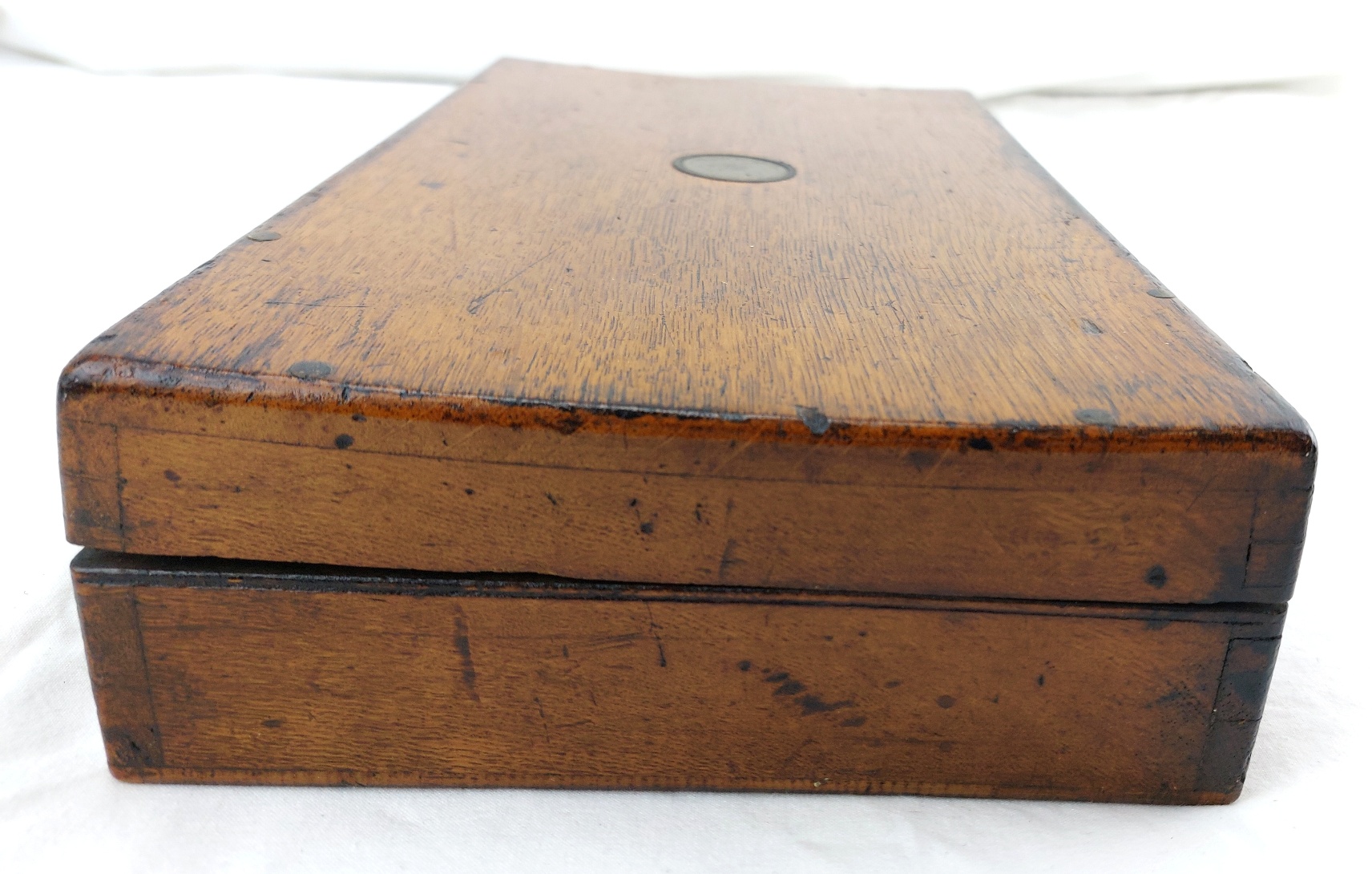
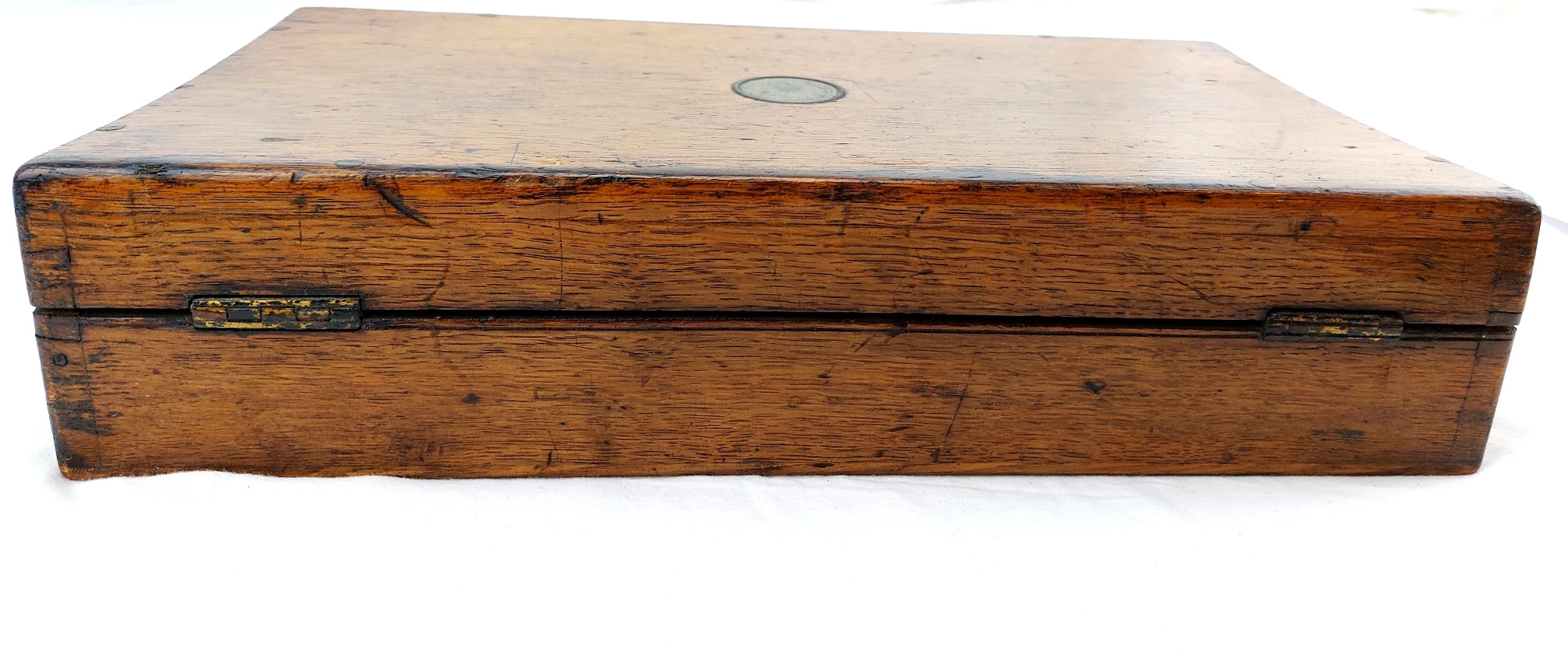
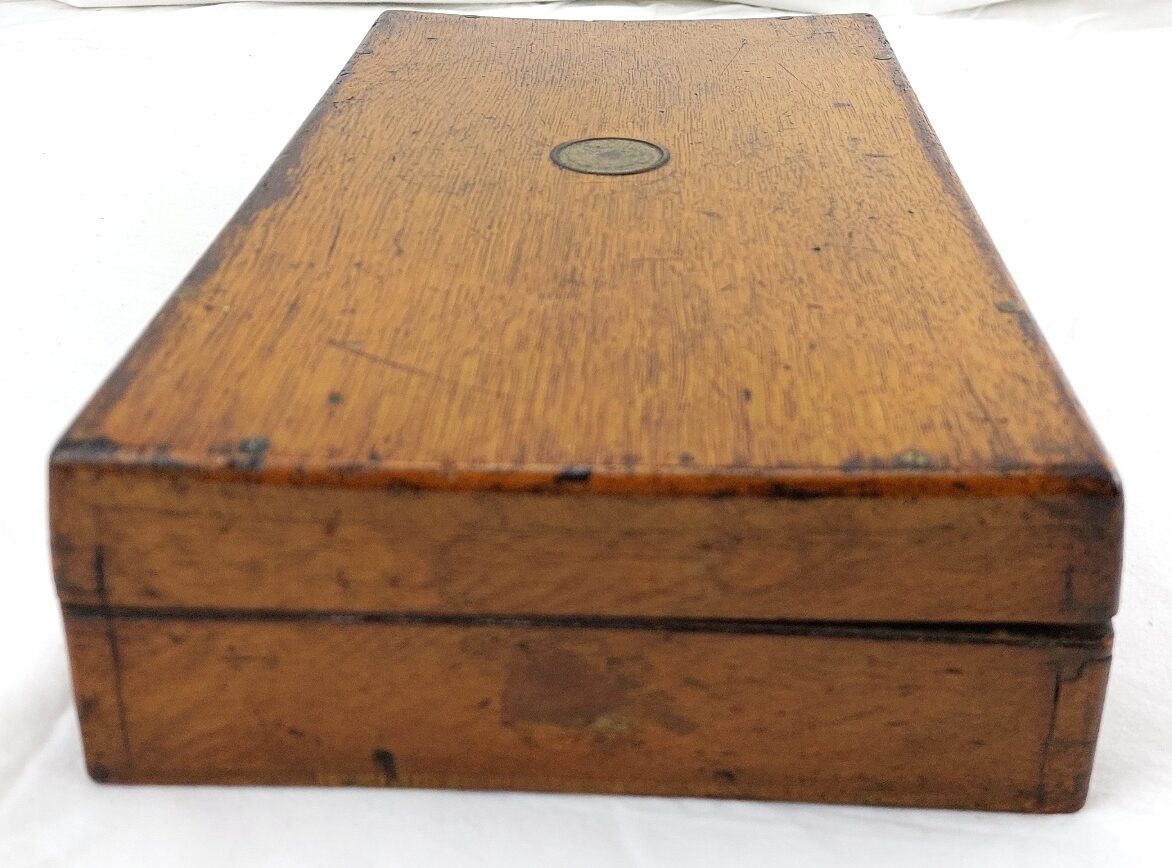
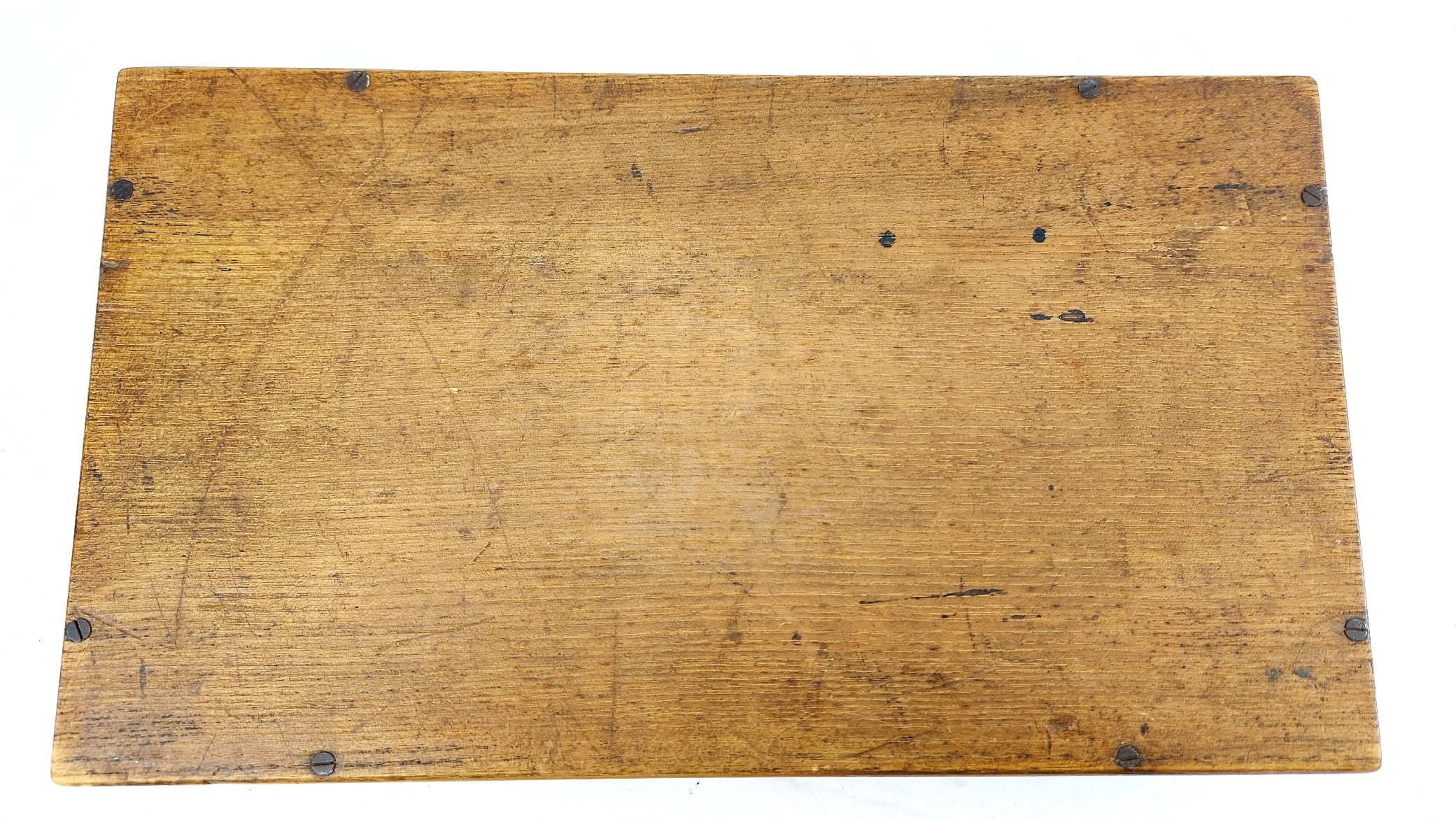
The revolver is housed in its original fitted wooden case, lined in green baize and retaining the London Armoury trade label to the inside of the lid.
Accessories:
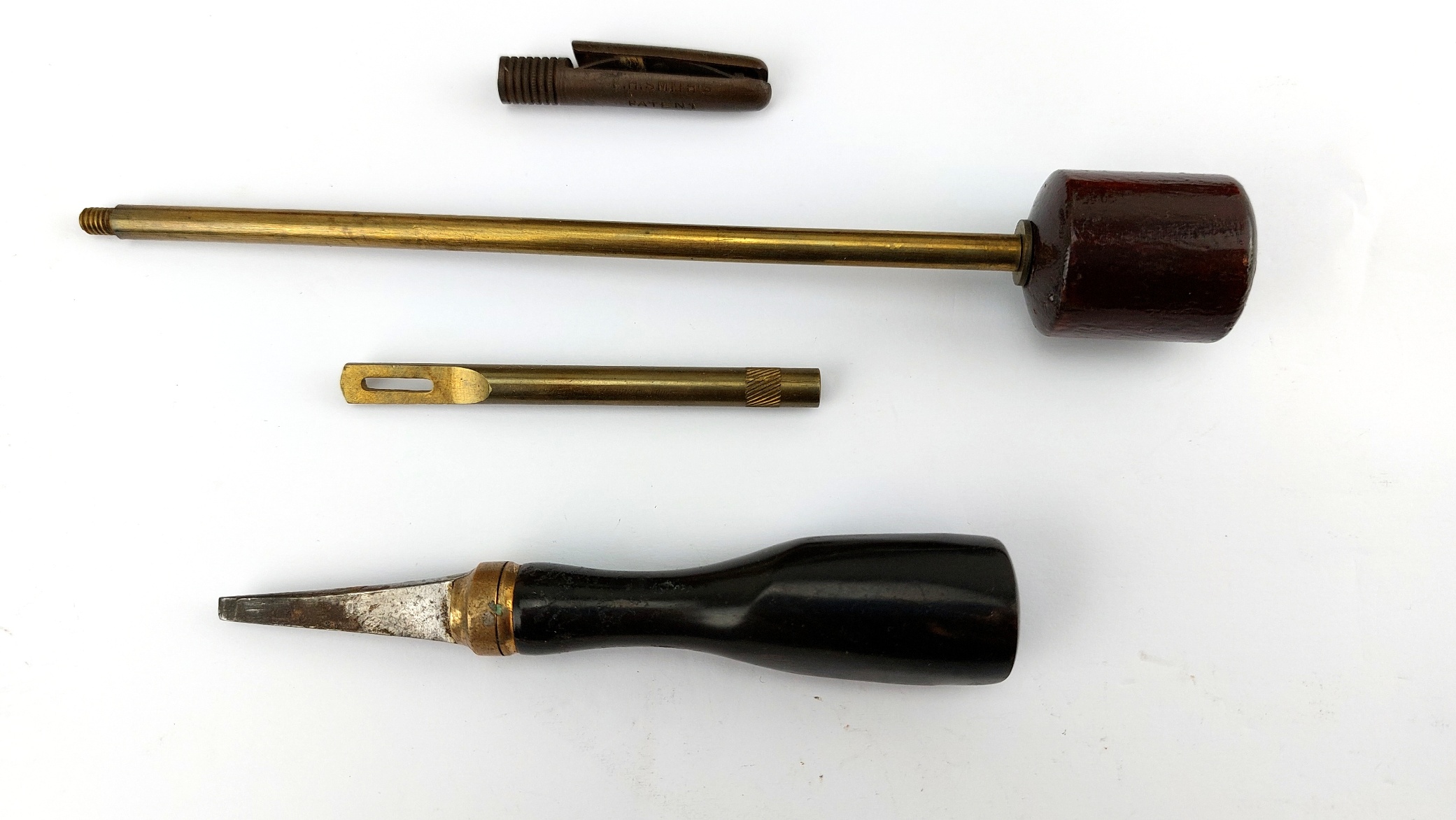
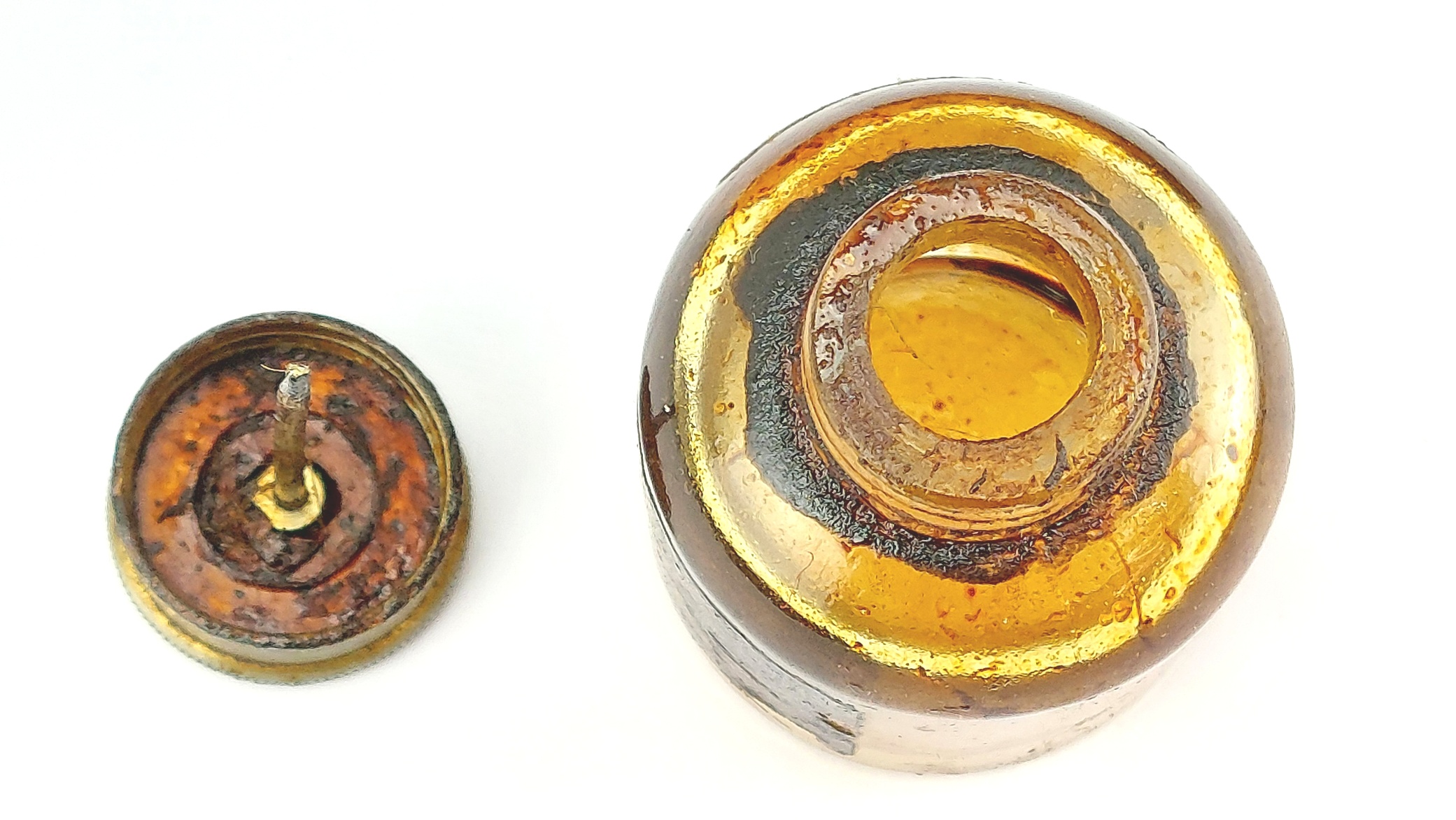
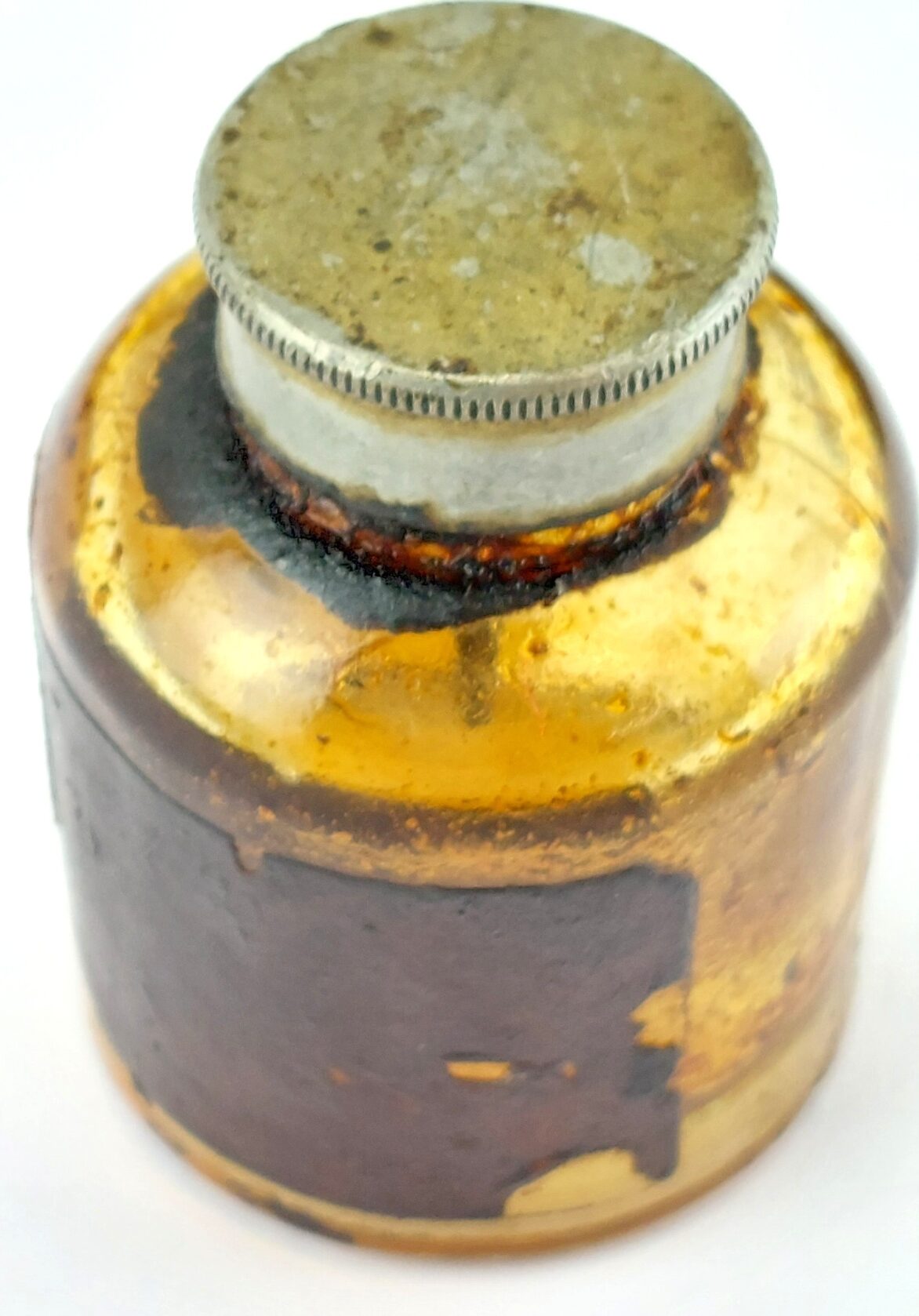
The case contains a good selection of original and period accessories, including:
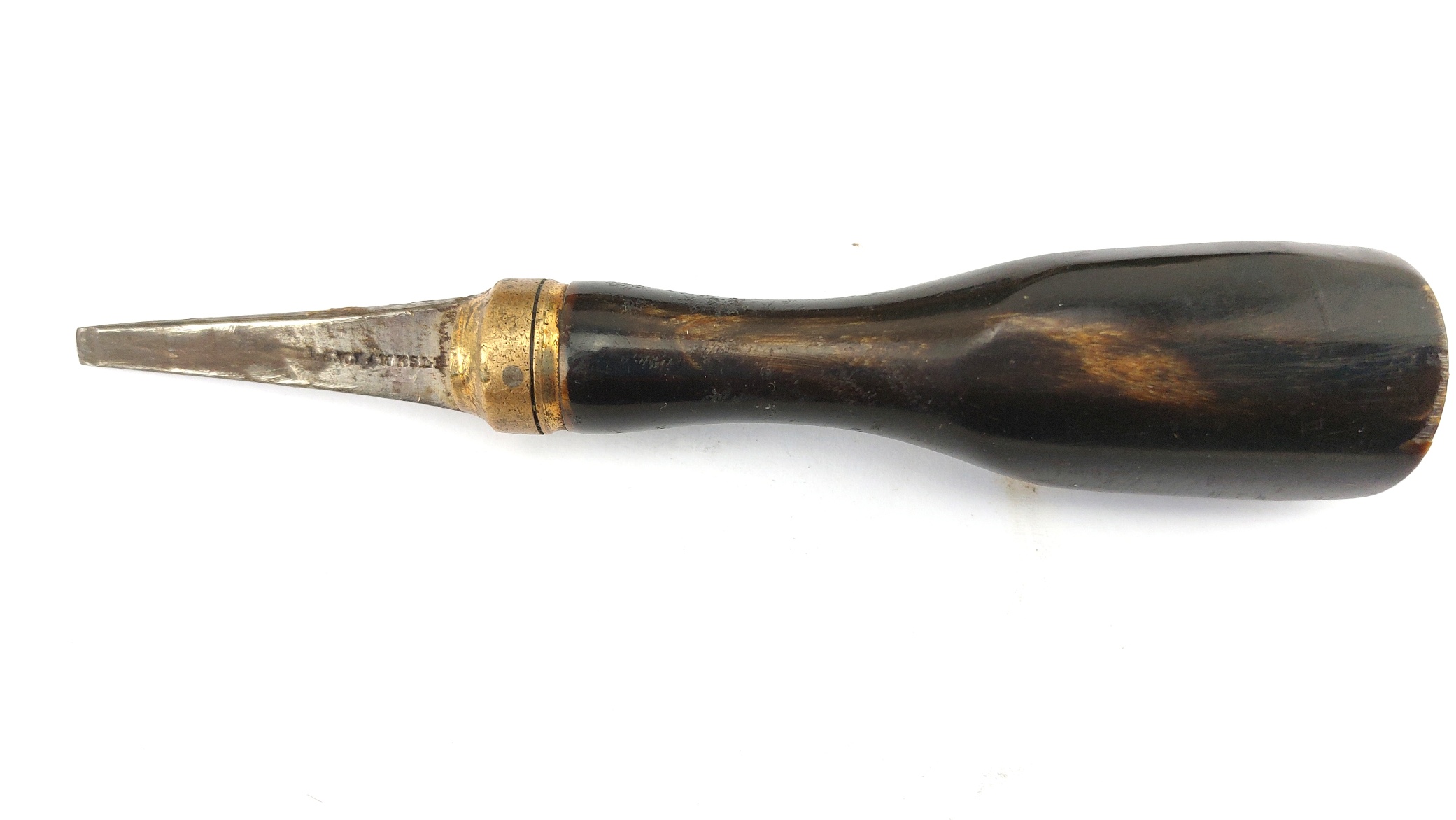
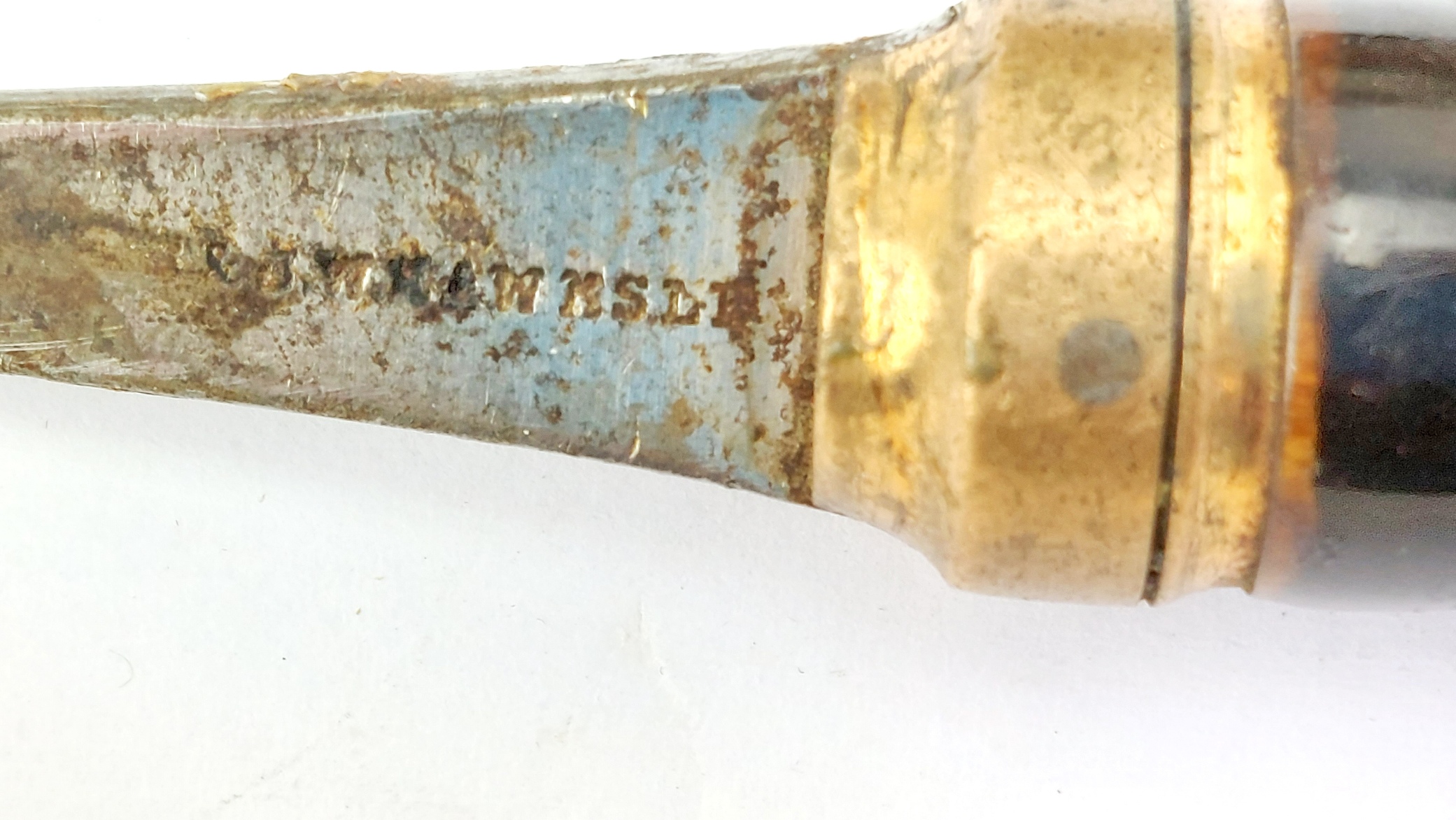
– A steel screwdriver tool marked “G. & J. W. Hawksley” (as observed),
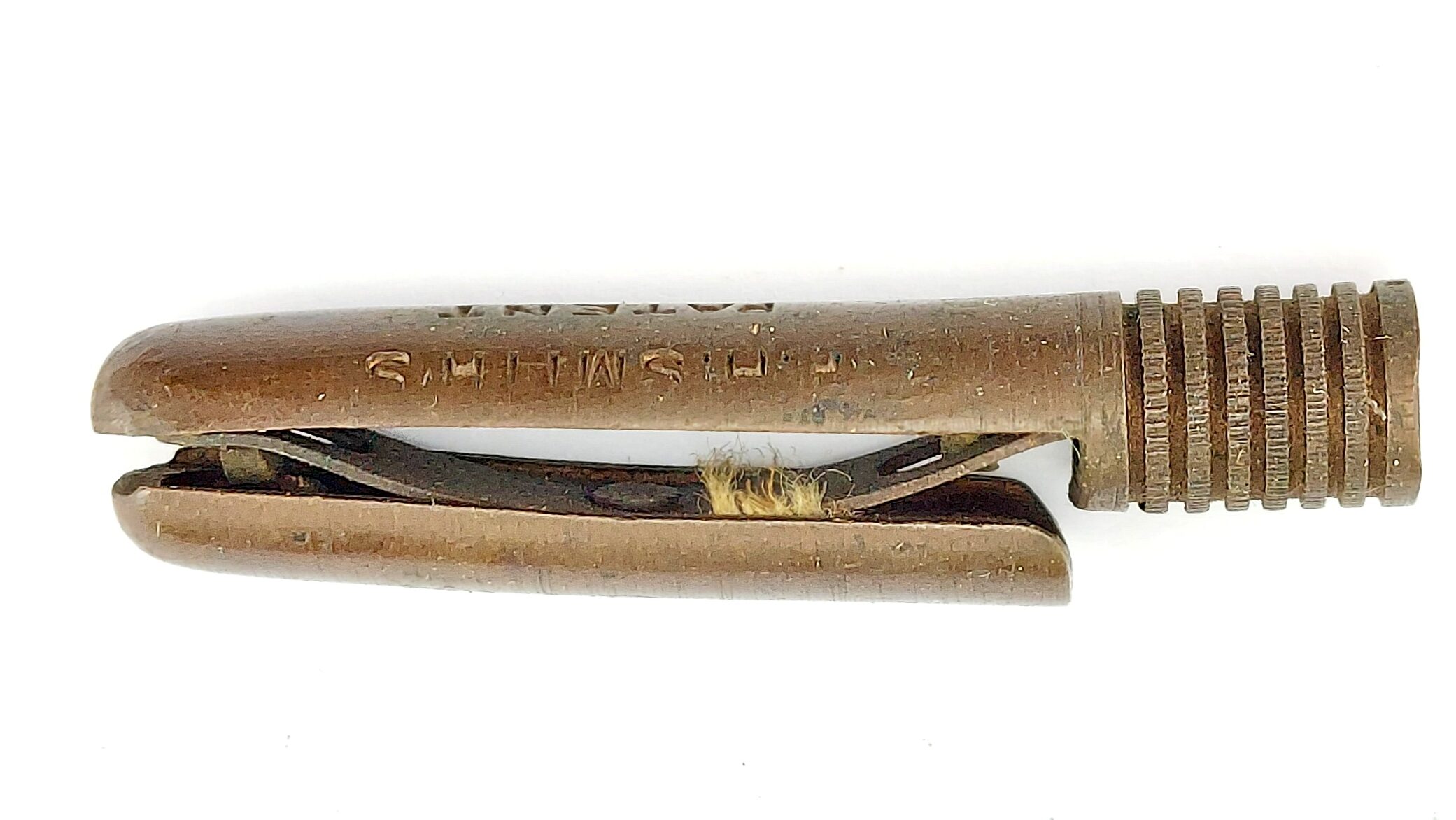
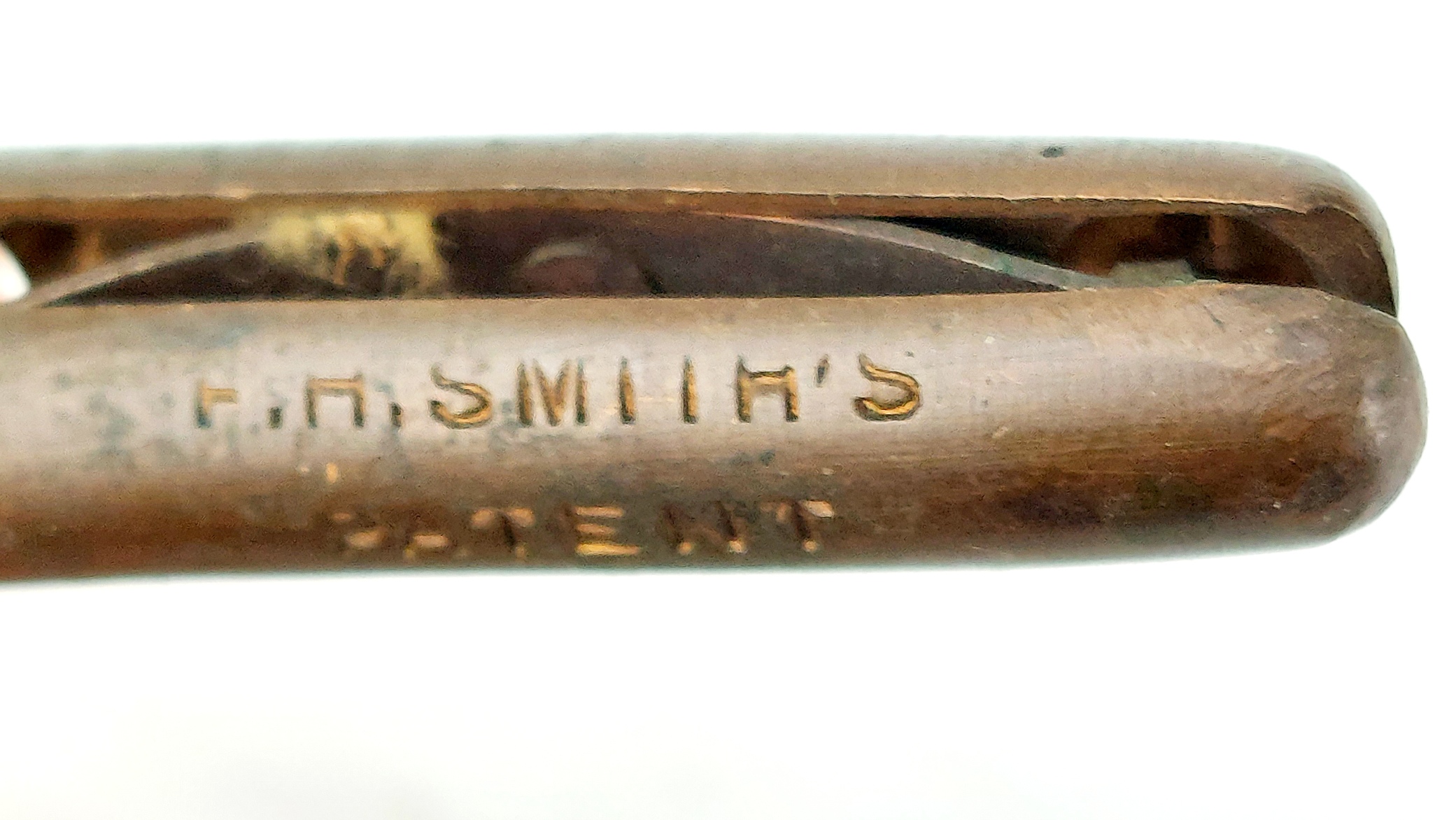
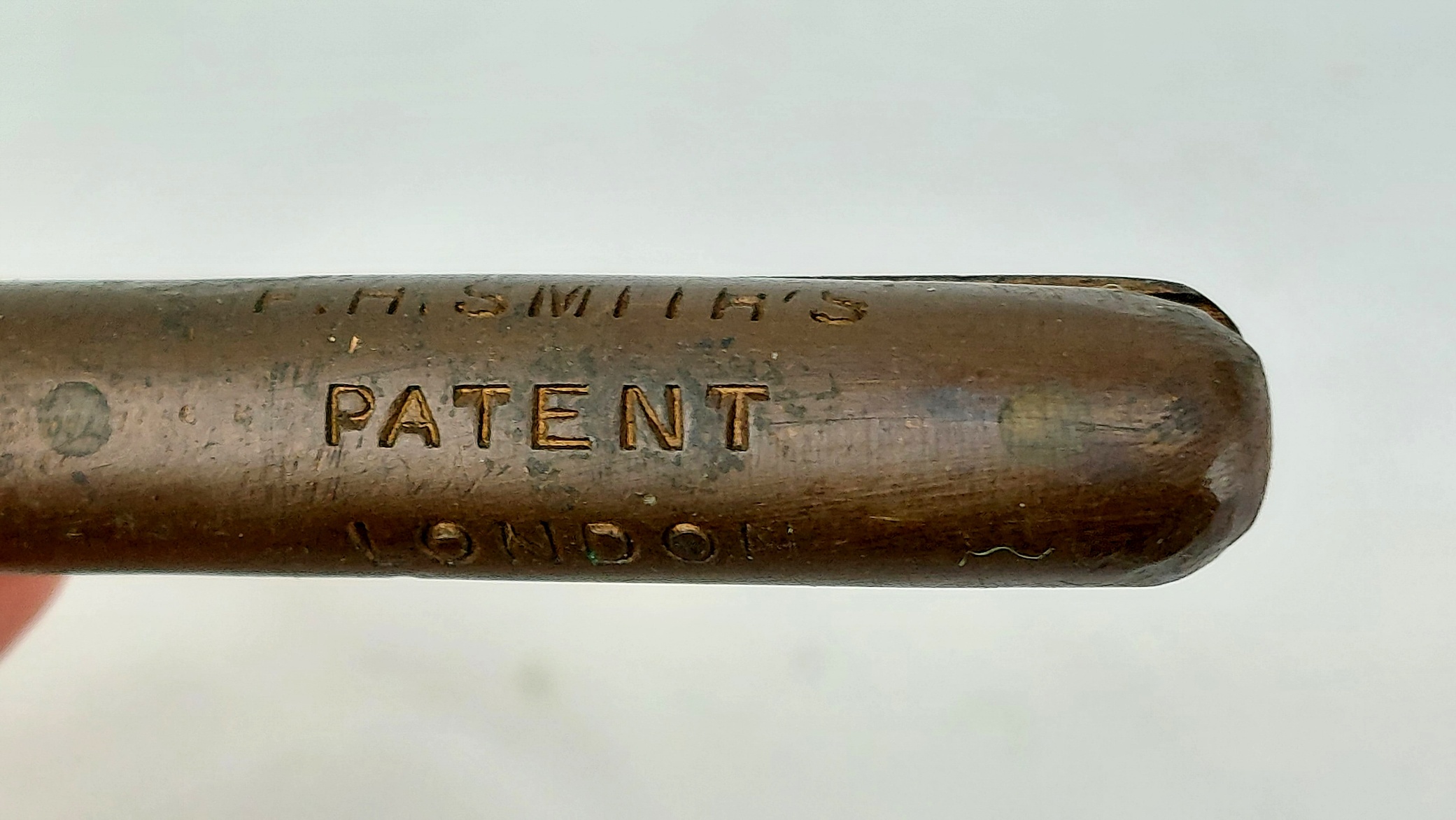
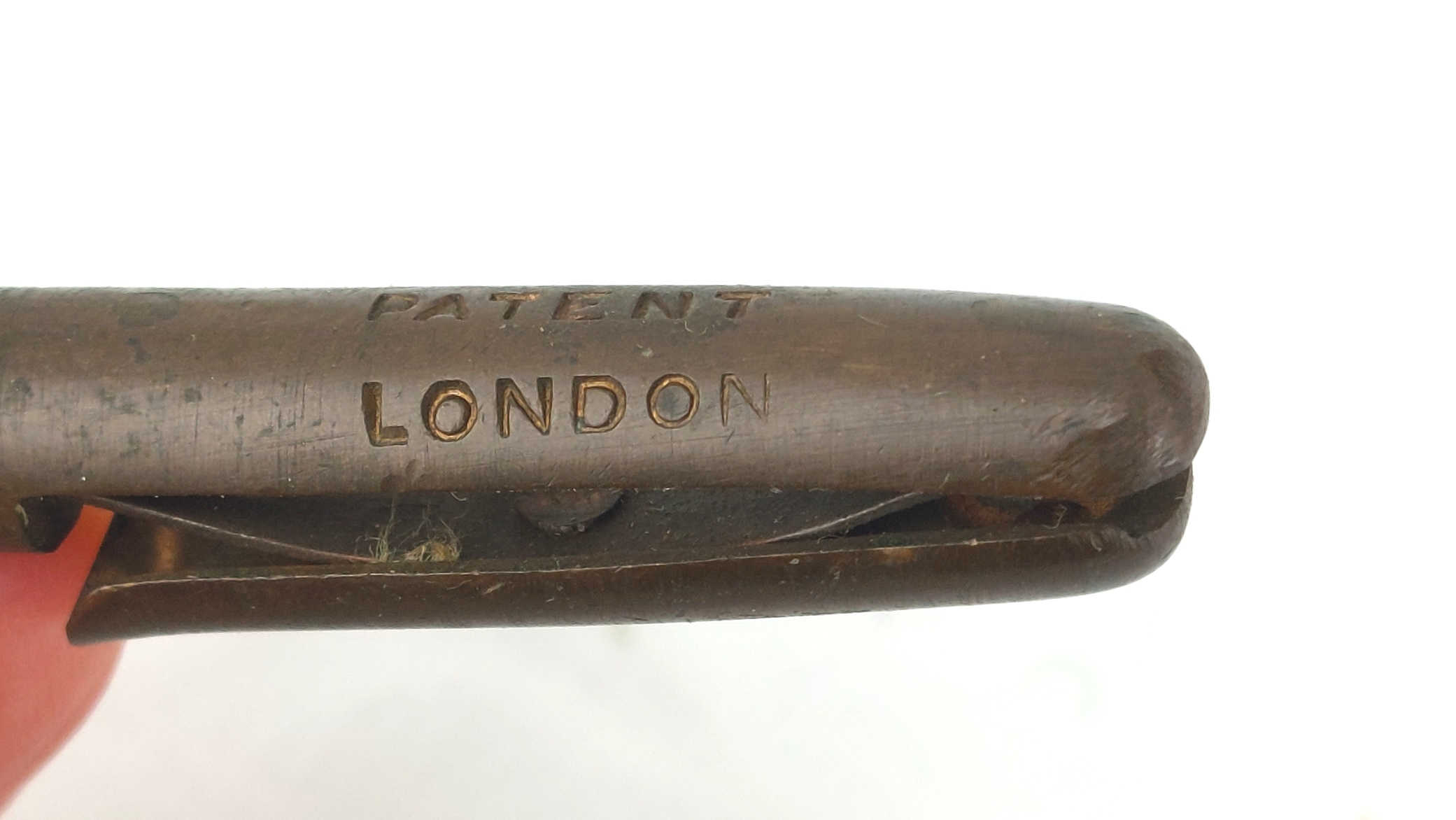
– A brass tool marked “P. H. Smith’s, Patent, London”,
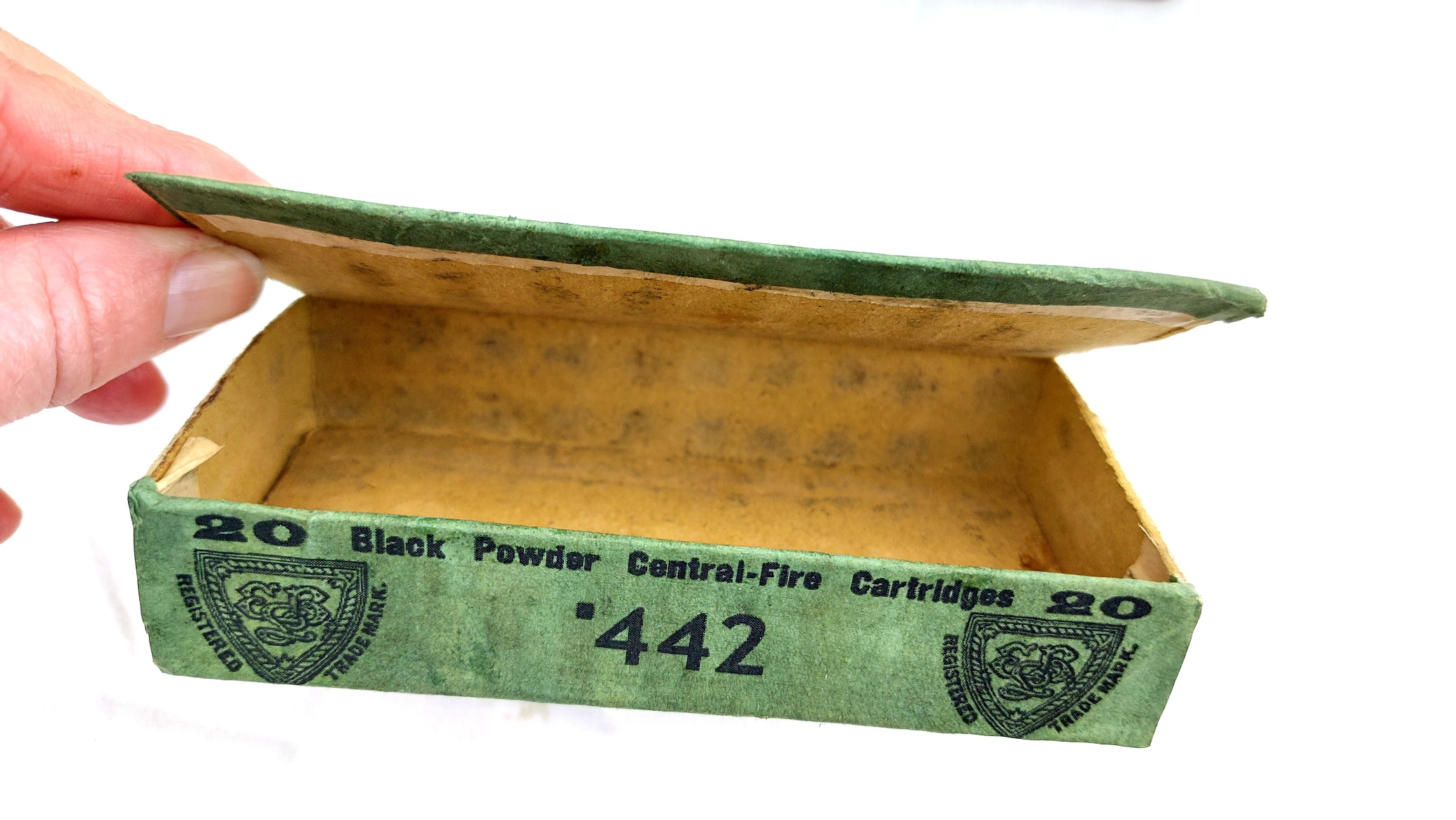
– Additional period loading and maintenance implements, consistent with late-Victorian British revolver sets.
The fitted interior appears complete for the type, with compartments correctly arranged for the revolver and accessories. Further detailed photographs of the accessories are available.
Historical Note – The Revolver:
During the 1870s, British gunmakers and retailers offered a wide range of solid-frame metallic-cartridge revolvers, reflecting the rapid transition away from percussion systems. Revolvers of .442 (54-bore) calibre remained popular, carrying over from the earlier Beaumont-Adams tradition while incorporating modern rim-fire and centre-fire cartridges. The design and mechanical layout of this example closely follow Webley-developed solid-frame cartridge patterns, although many such revolvers were supplied to the trade unmarked and retailed under the name of prominent London firms.
Examples retailed by London Armoury during this period are typically commercial arms intended for the civilian, officer, and colonial market, combining proven British revolver ergonomics with contemporary cartridge technology.
Historical Note – London Armoury & James Kerr:
The London Armoury Company was founded in 1856 and became one of Britain’s most significant private arms manufacturers of the mid-19th century. Closely associated with James Kerr and his cousin Robert Adams, the company initially produced rifles and percussion revolvers, including Adams- and Beaumont-Adams–pattern arms. During the American Civil War, London Armoury emerged as a major supplier of weapons to the Confederate States, exporting tens of thousands of rifles and revolvers.
Following the collapse of wartime contracts, the original manufacturing concern was wound up in 1866, with many former employees going on to form the London Small Arms Co. Ltd. Despite this, the London Armoury name retained considerable prestige. In the post-war period, Jas. Kerr & Co. continued to trade using the London Armoury name as a retail and branding identity, selling quality commercial arms sourced from Birmingham and London trade makers from their King William Street address.
This revolver represents that later, post-percussion phase of London Armoury activity and should not be confused with the earlier Beaumont-Adams percussion revolvers of the 1850s–60s, despite sharing the traditional .442 calibre.
*Condition*
Coks and dryfires, double action. Metal surfaces show age-related wear, patination, and scattered oxidation. Bore with wear consistent with age. Grips sound with good chequering. Case complete with original label and fitted interior, showing wear and staining commensurate with age. Accessories present as described. Please see photographs as part of the condition report.
RQMBOOOXCIEO_6245228494