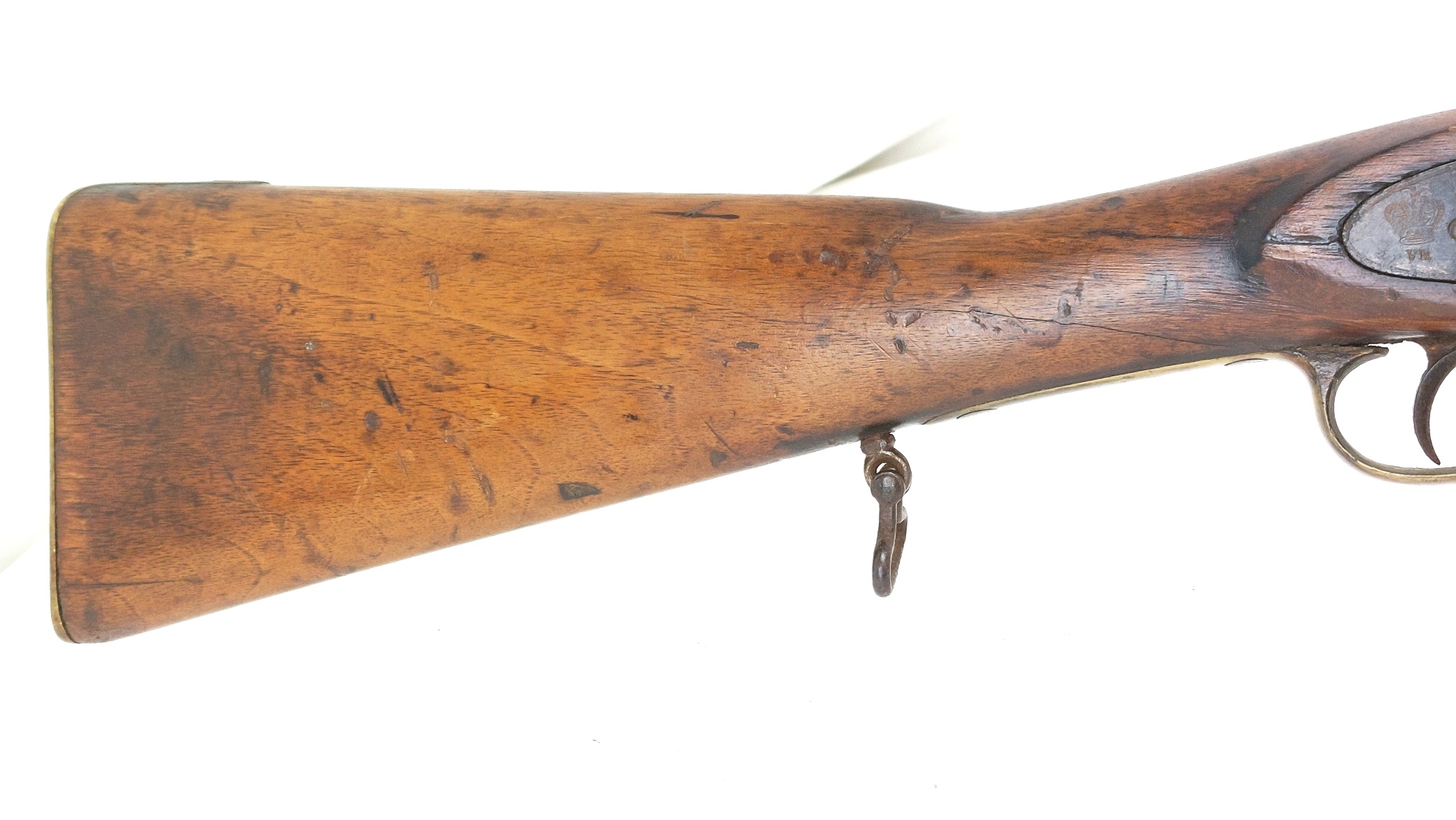
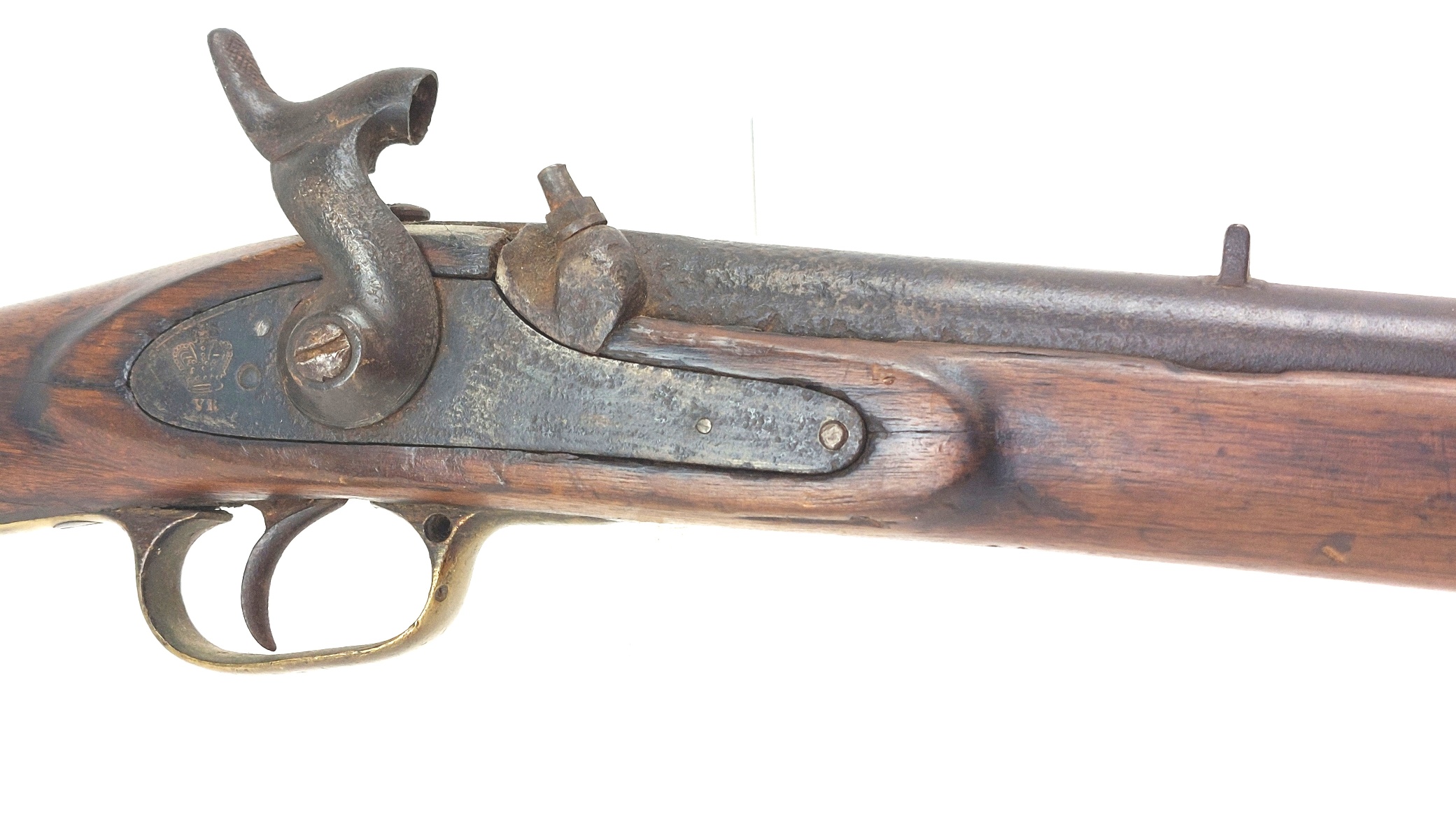
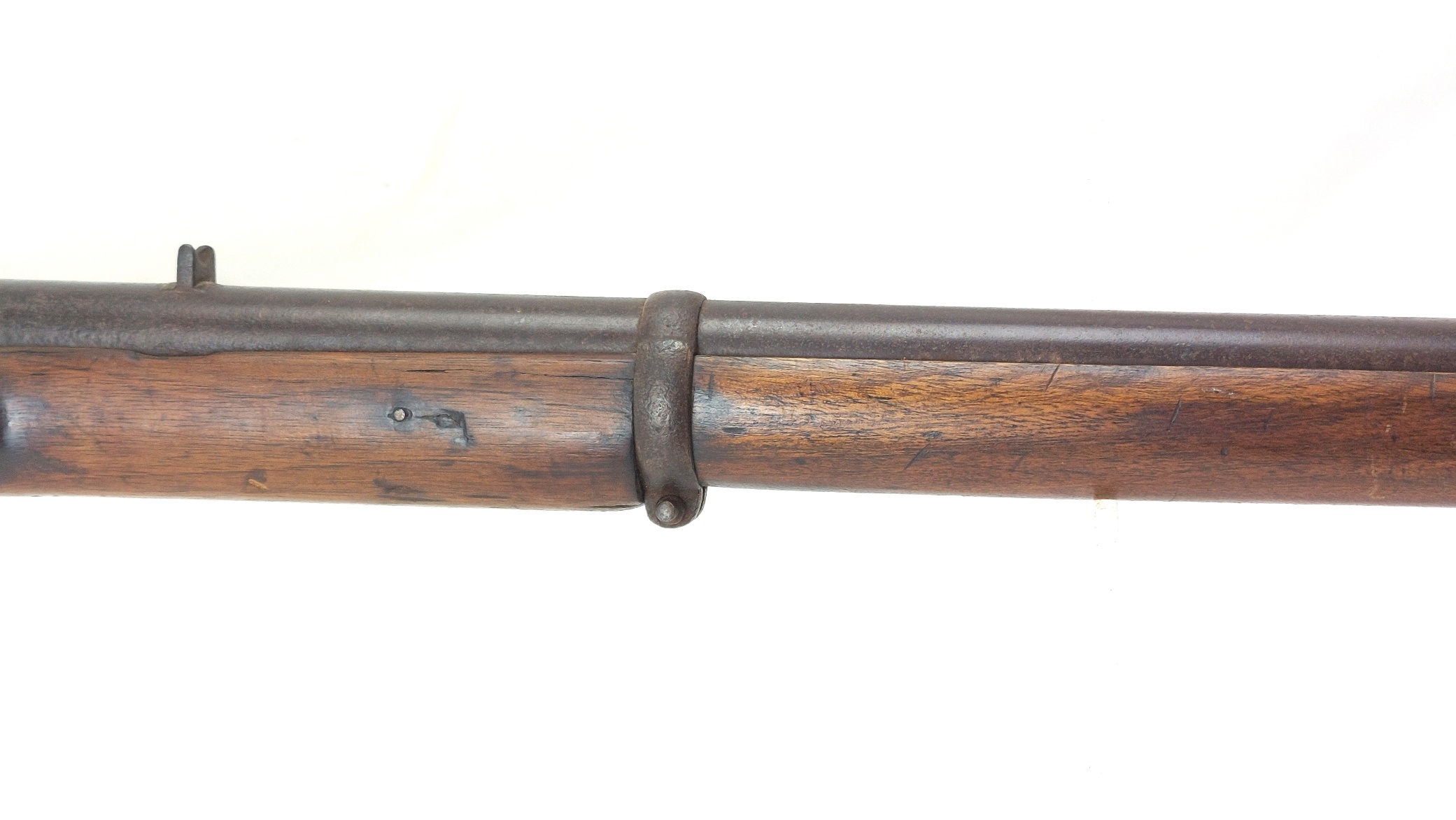
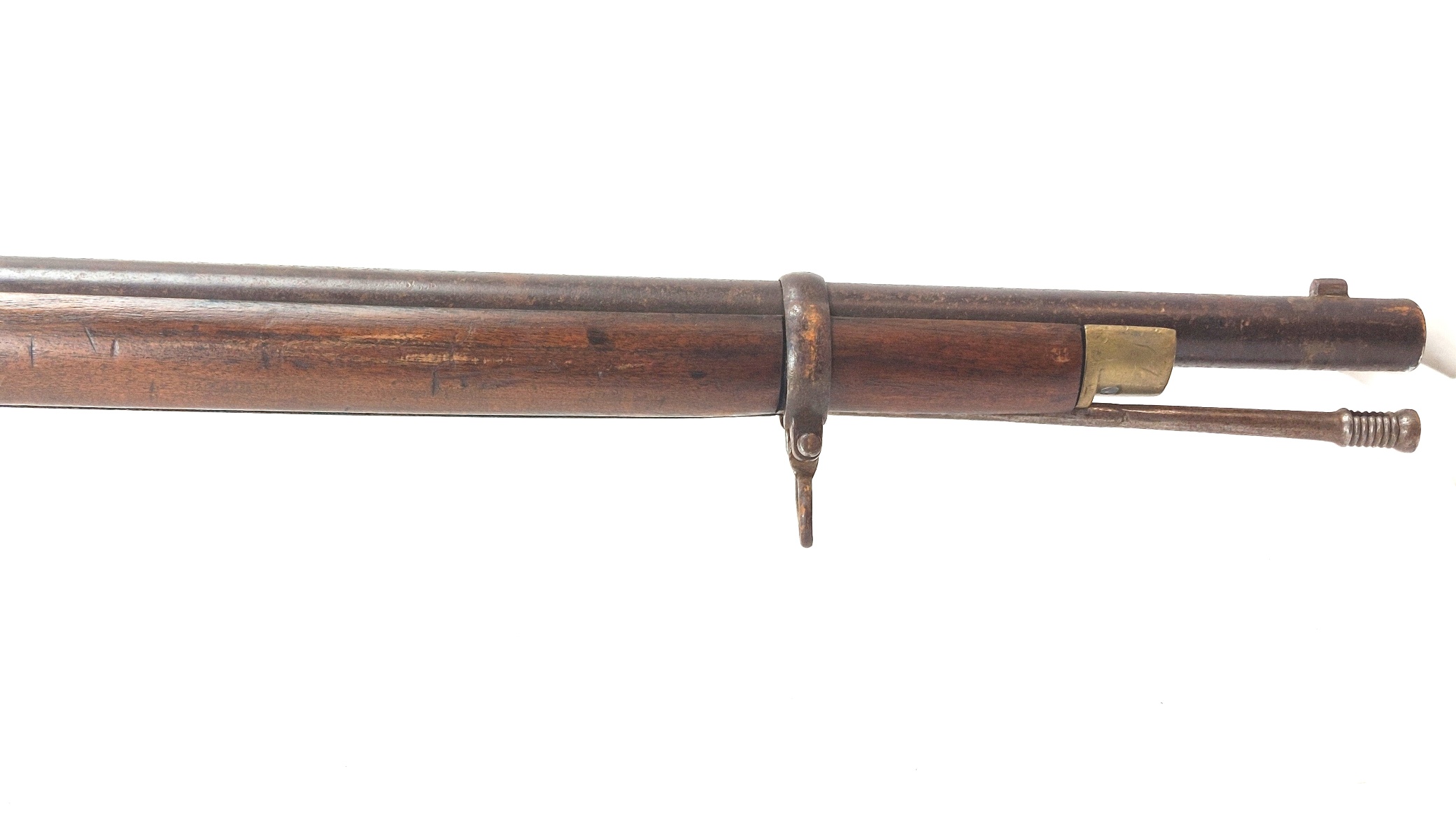
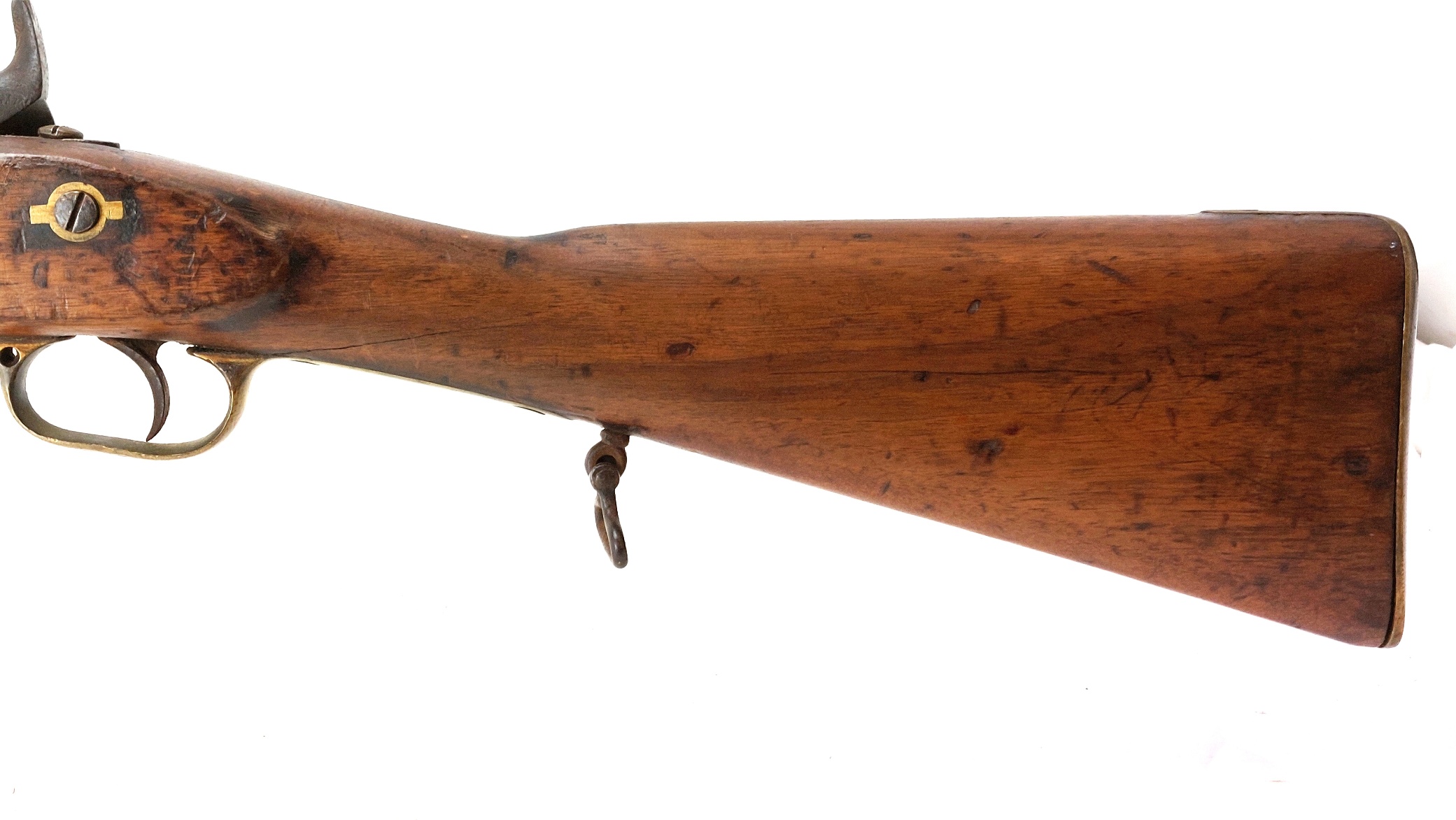
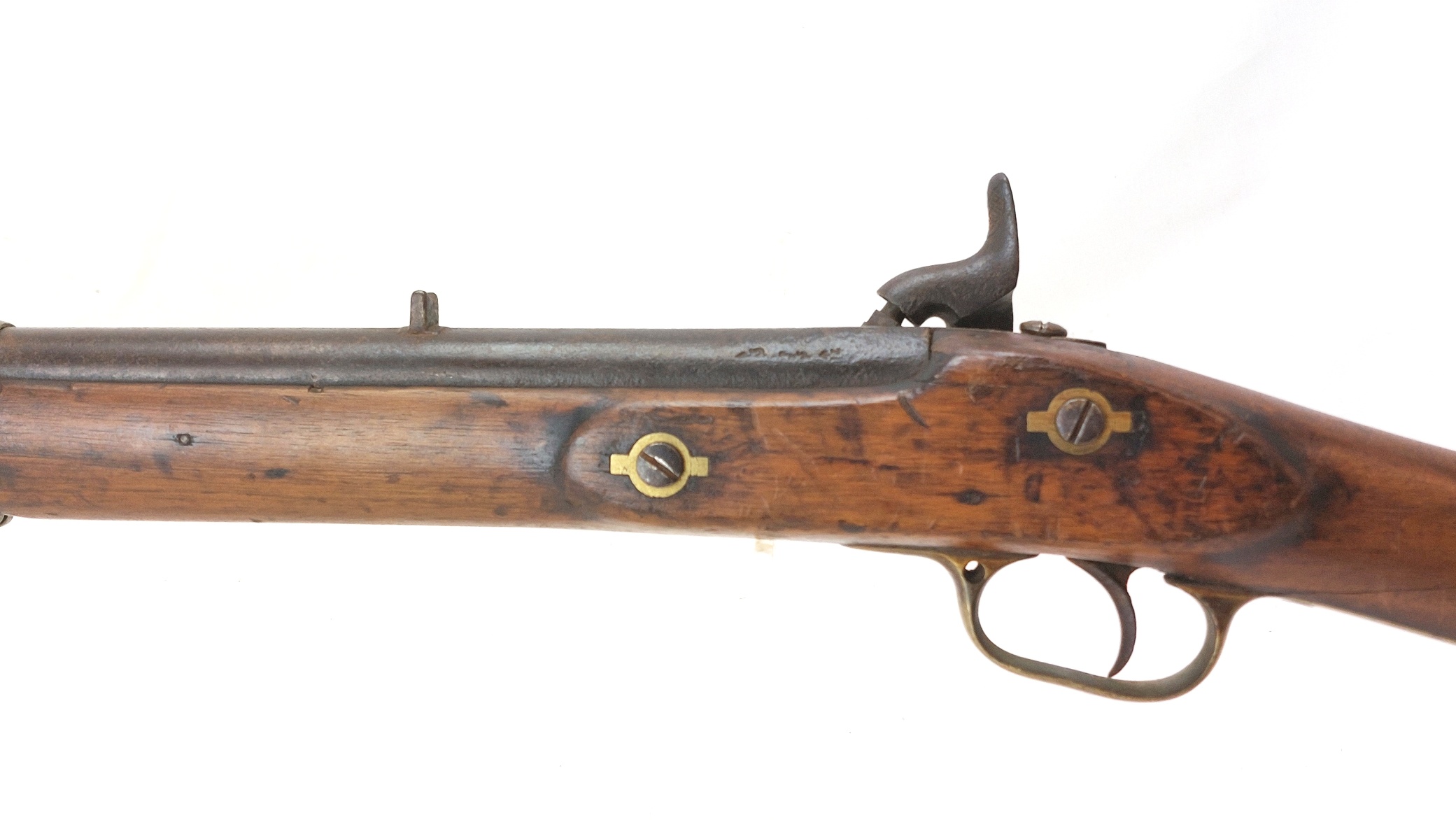
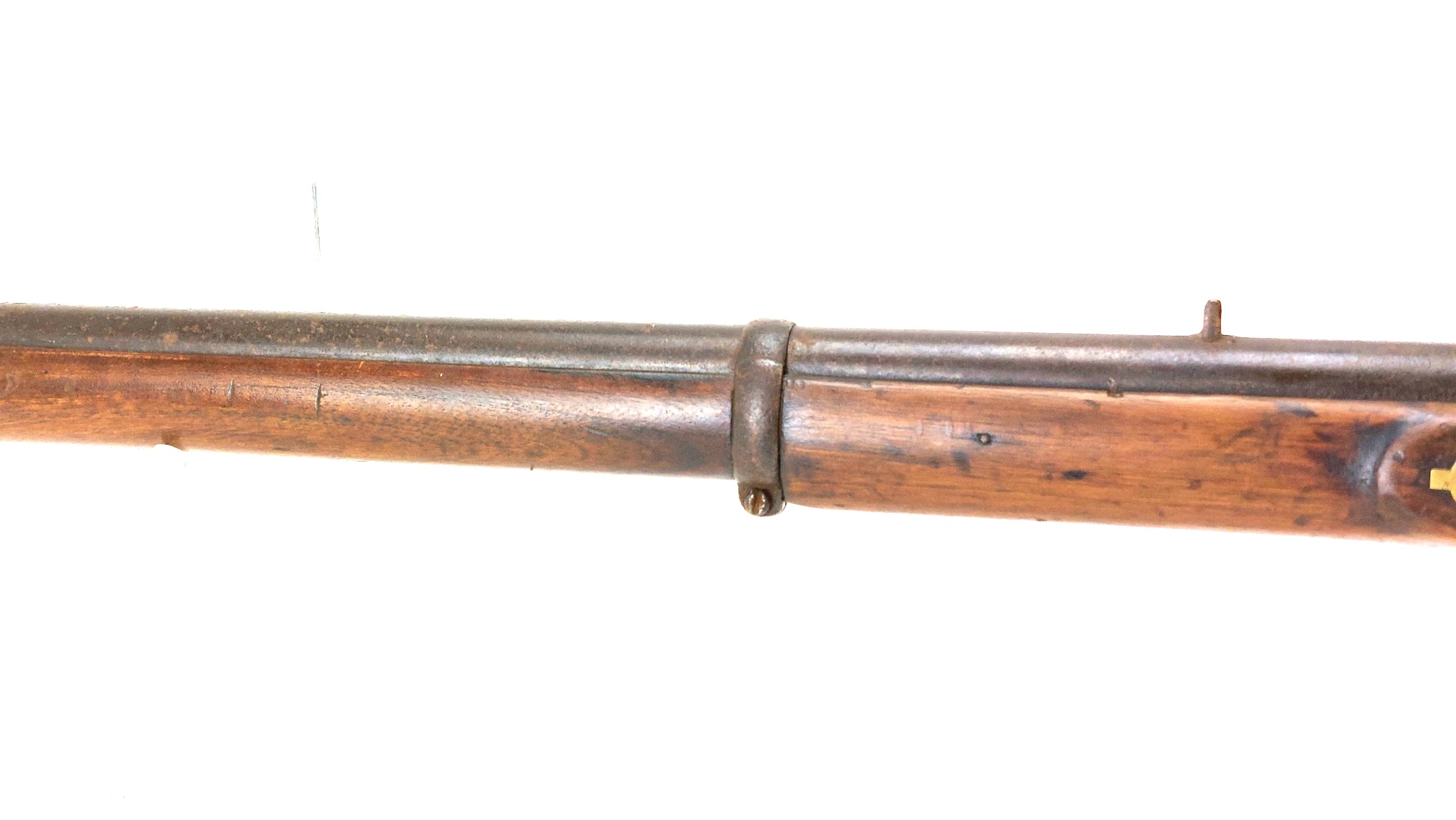
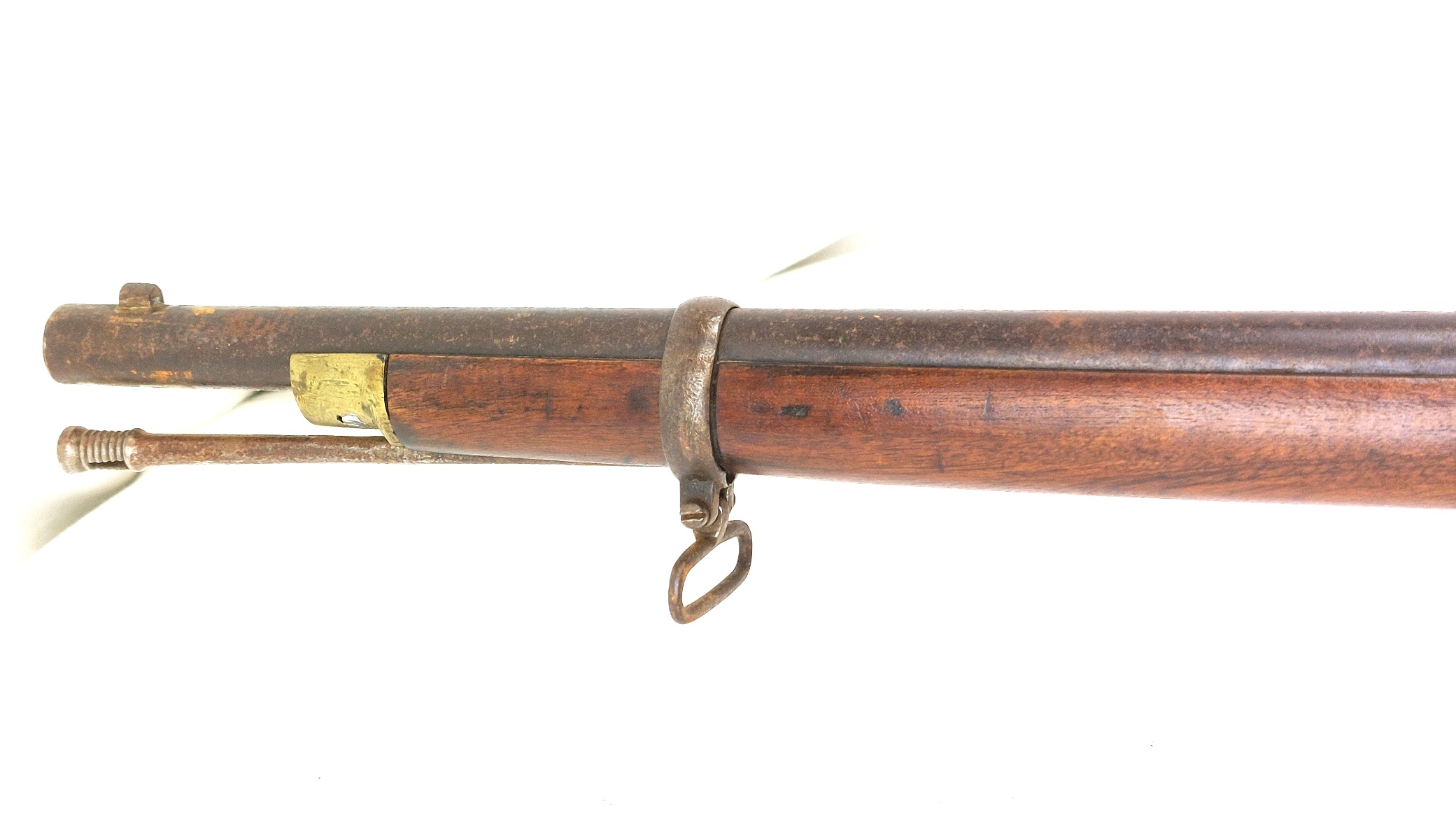
*British, c.1858–1863, Enfield-Pattern 2-Band Smoothbore Percussion Musket, War Department Issue, Attributed to James Millward & Co., Birmingham*
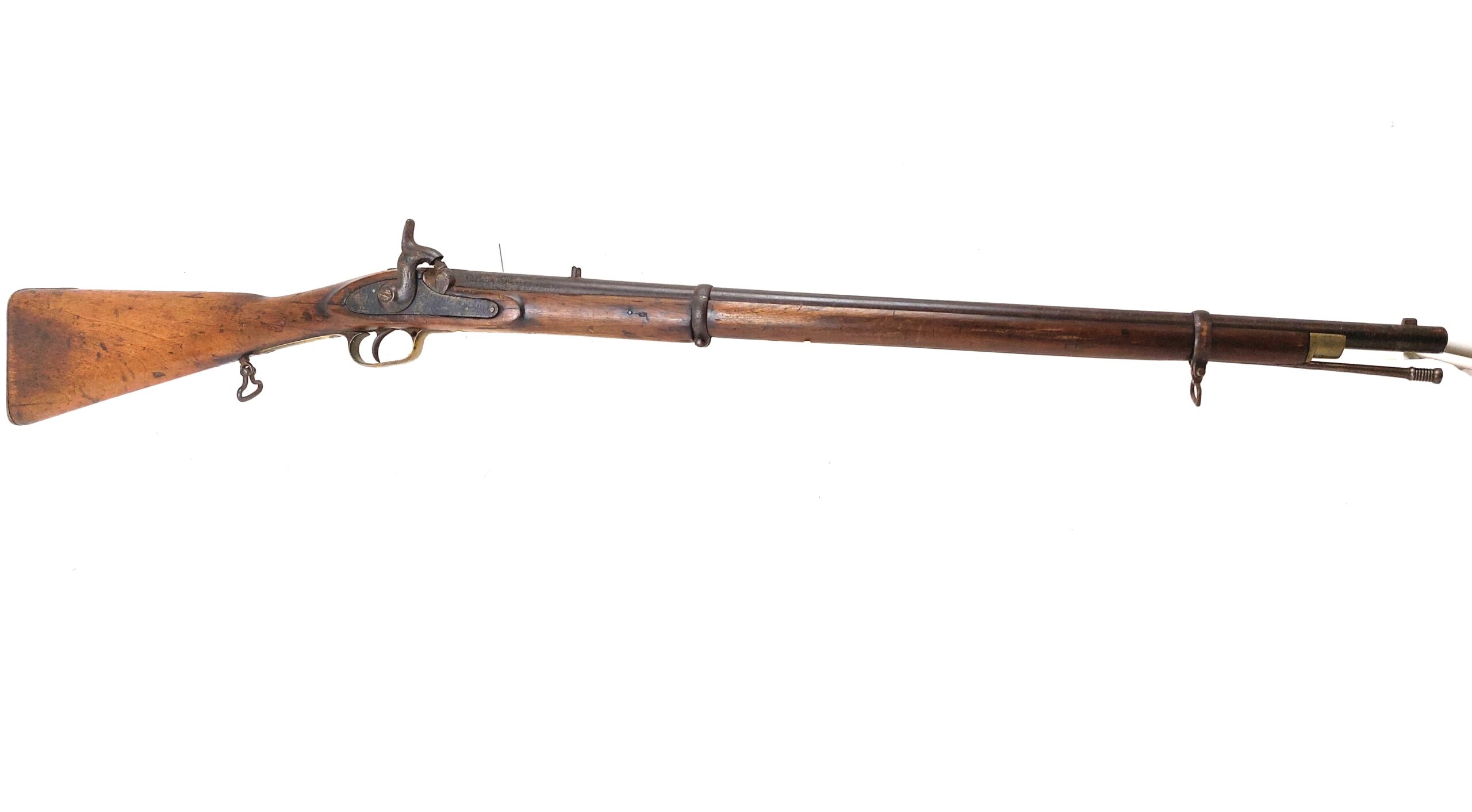
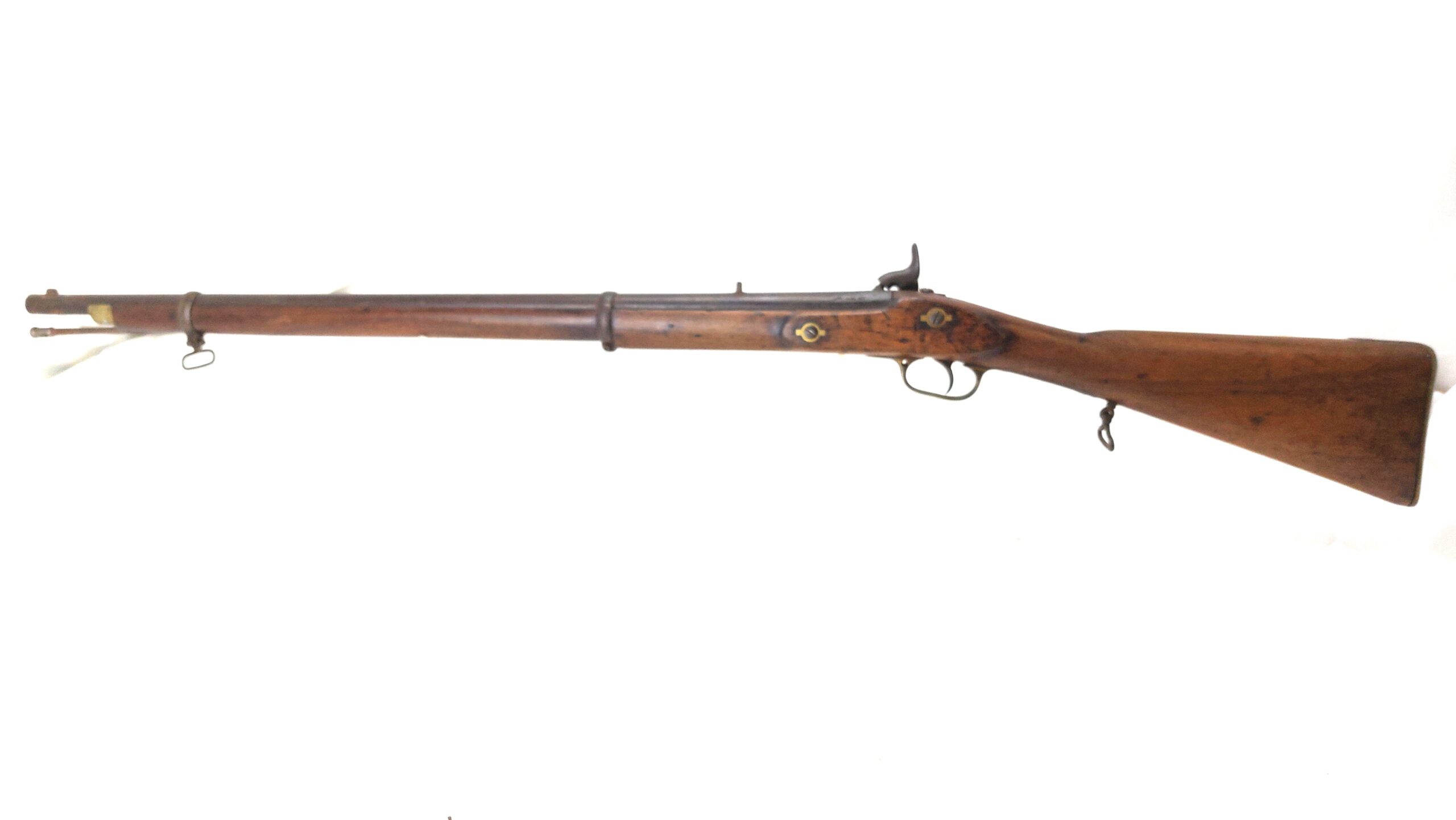
A mid-Victorian British two-band smoothbore percussion musket of Enfield-pattern form, War Department accepted and bearing a contractor’s stamp attributable to James Millward & Co. of Birmingham. This example falls within the post-Indian Mutiny period when smoothbore Enfield-pattern arms were produced for colonial and secondary service.
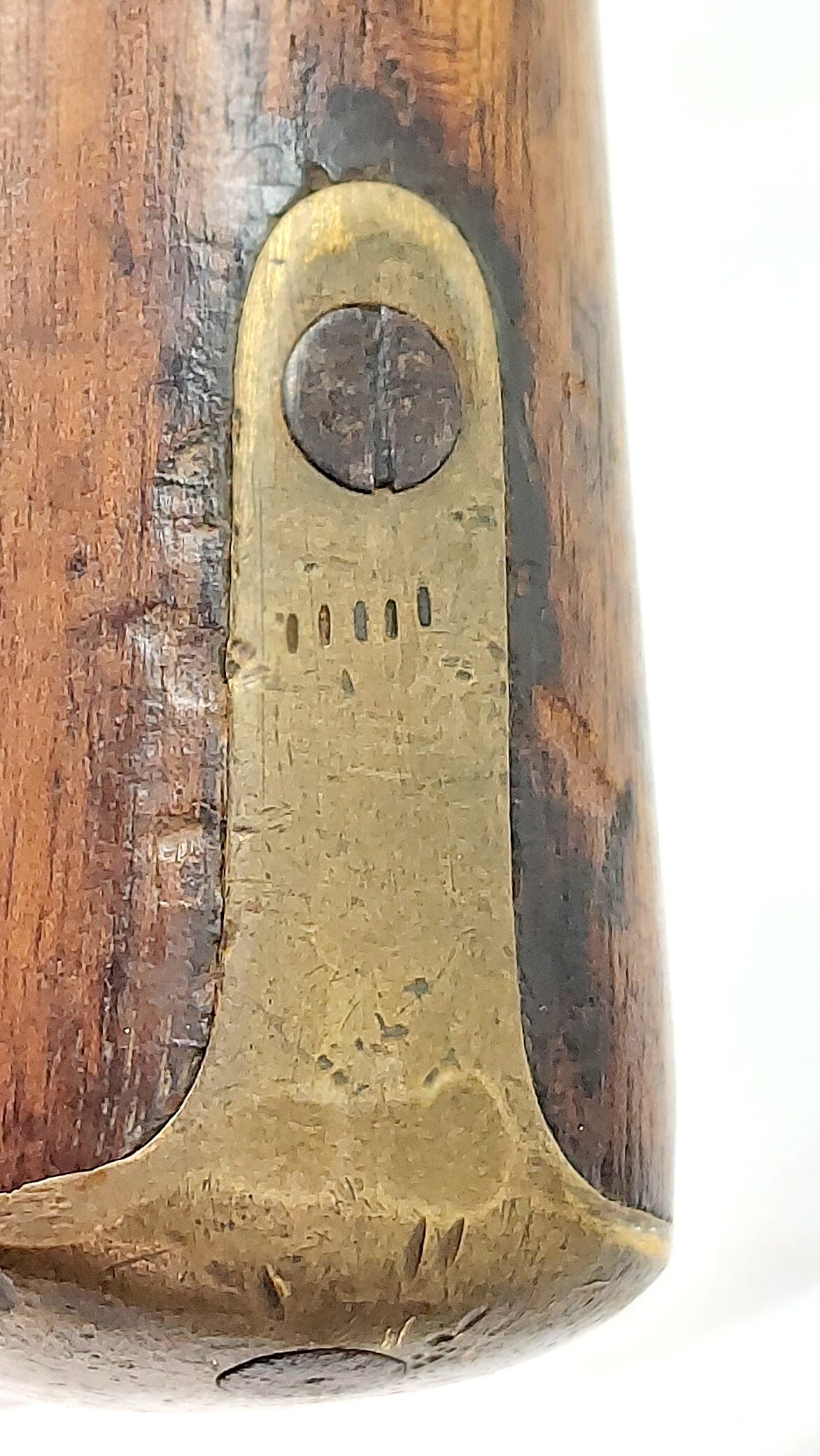
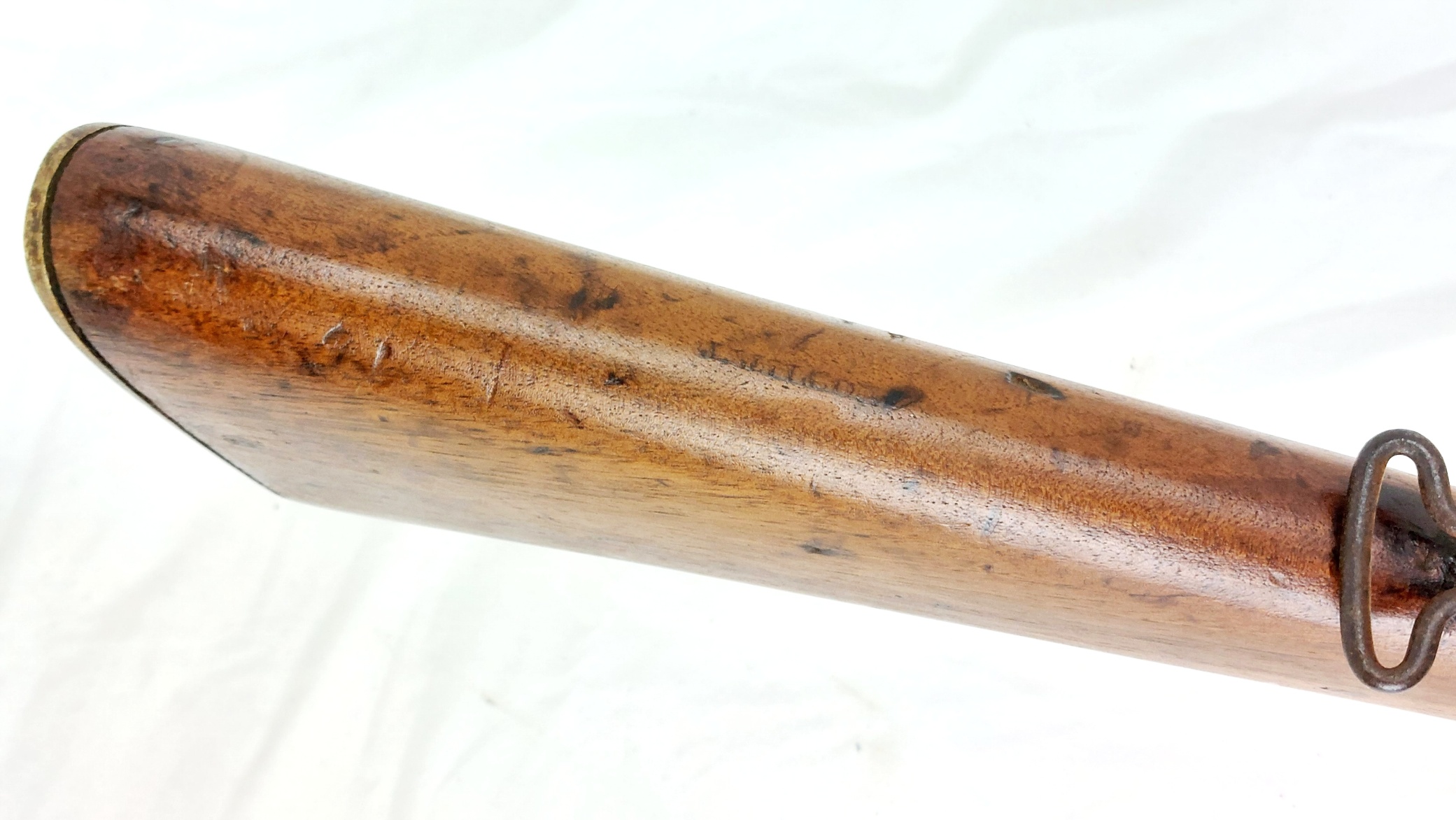
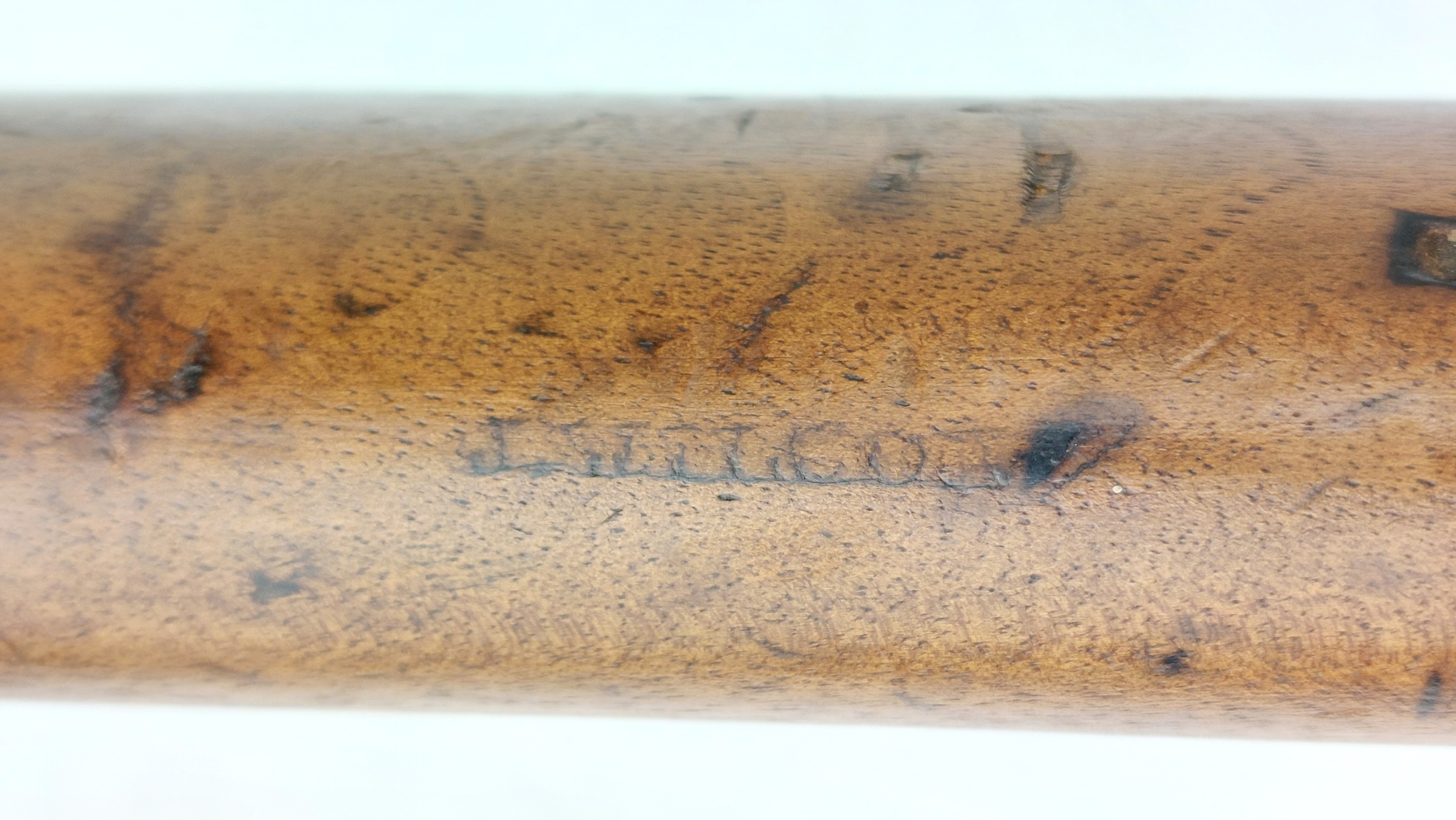
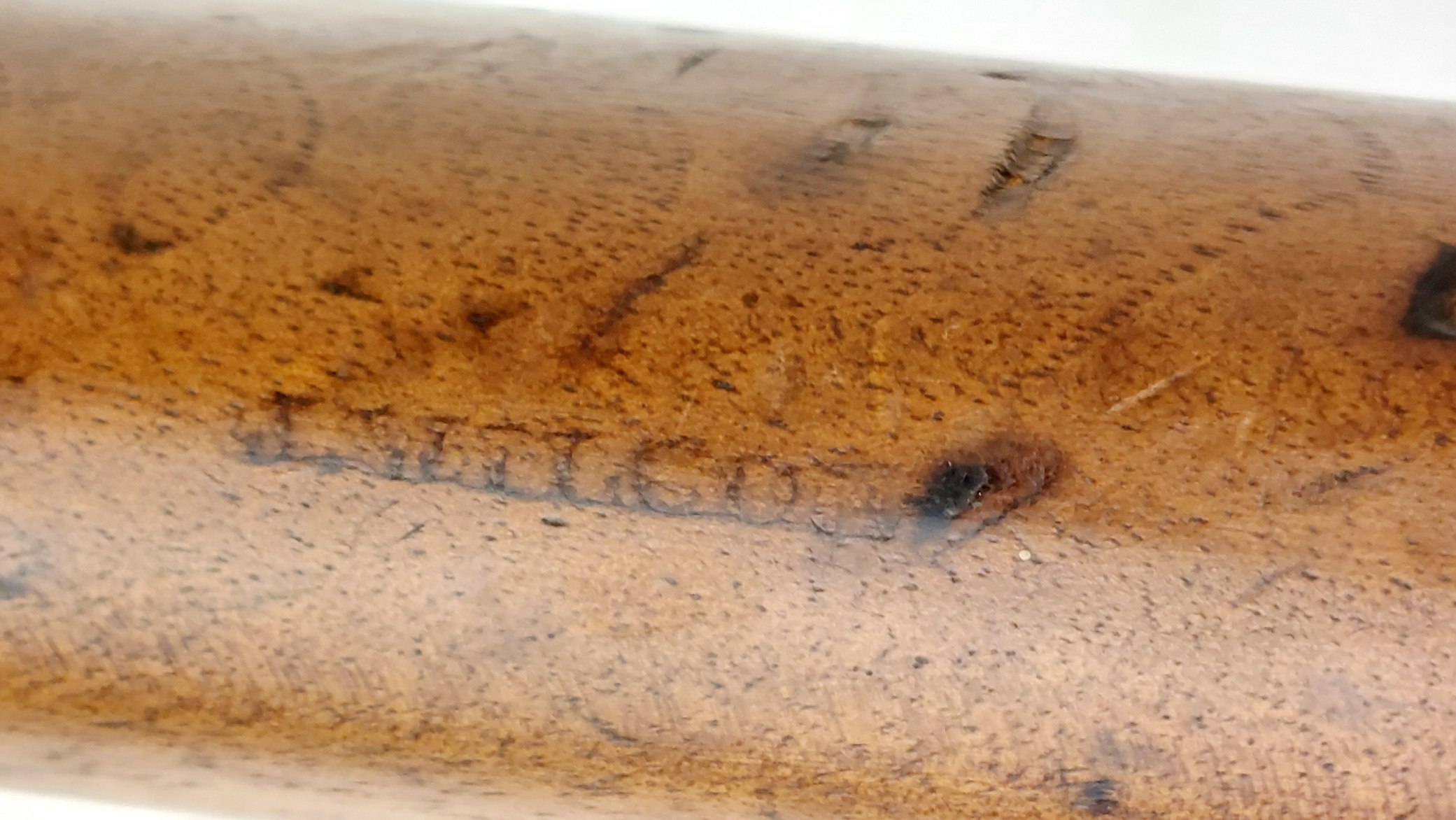
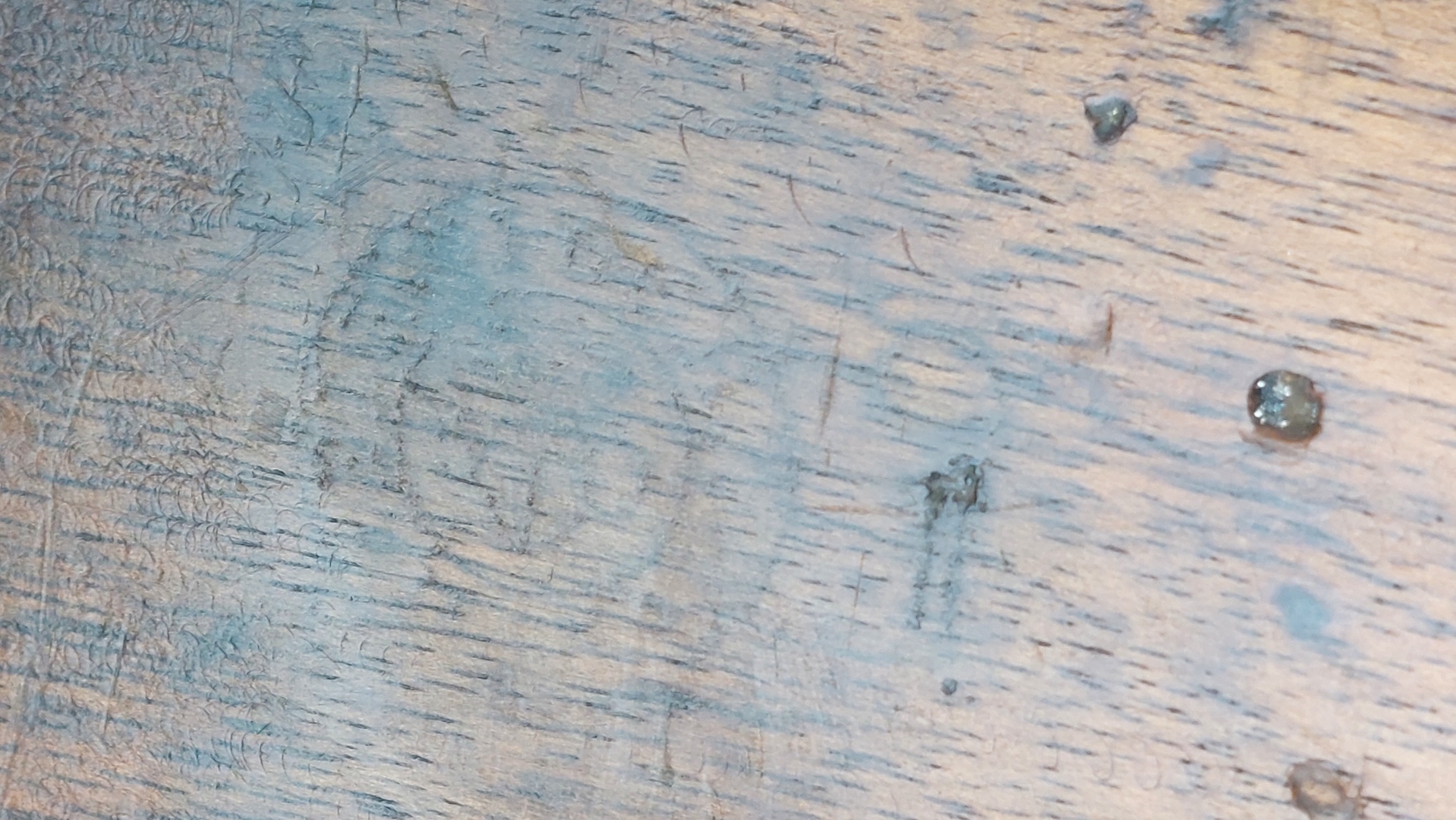
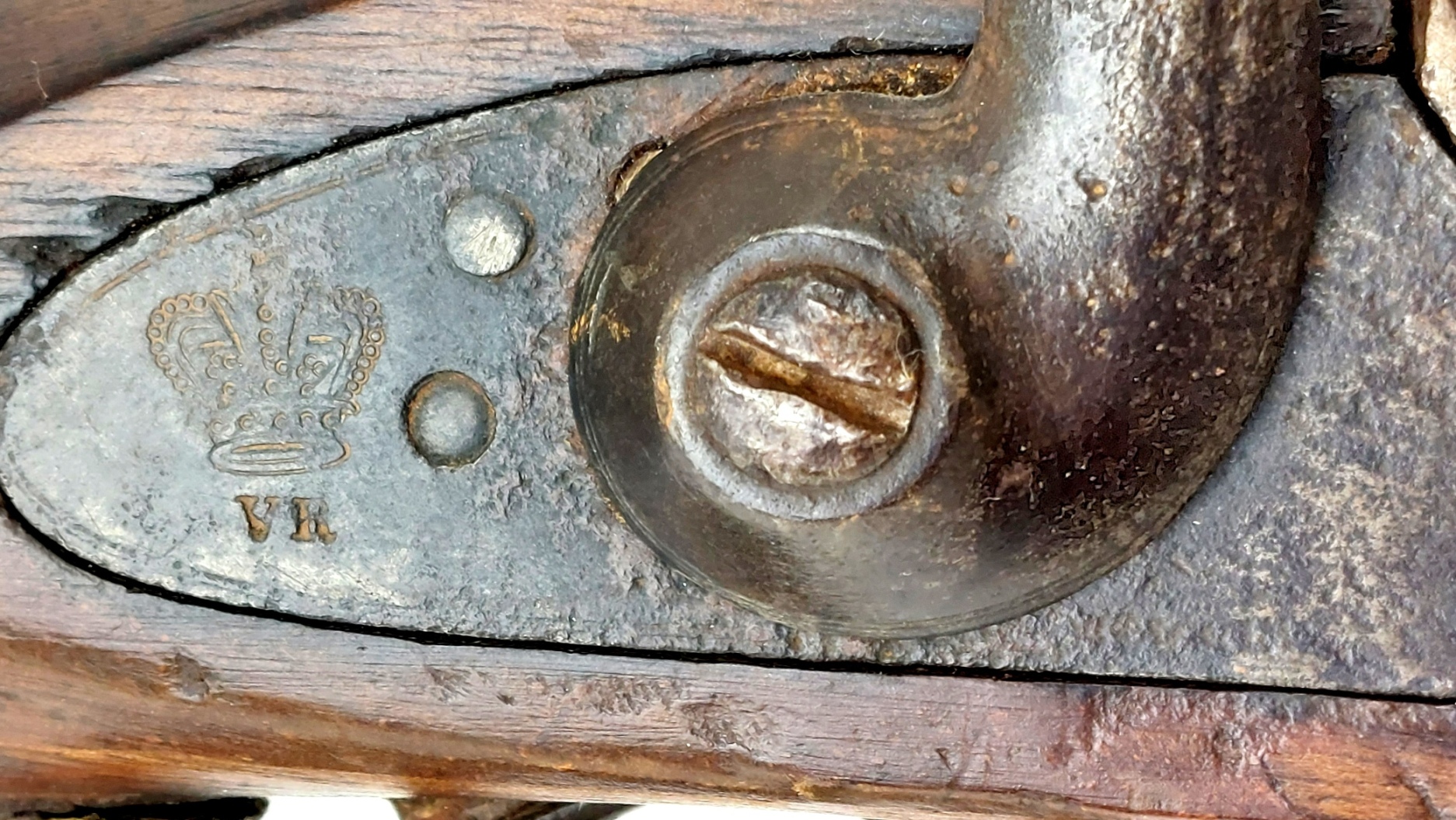
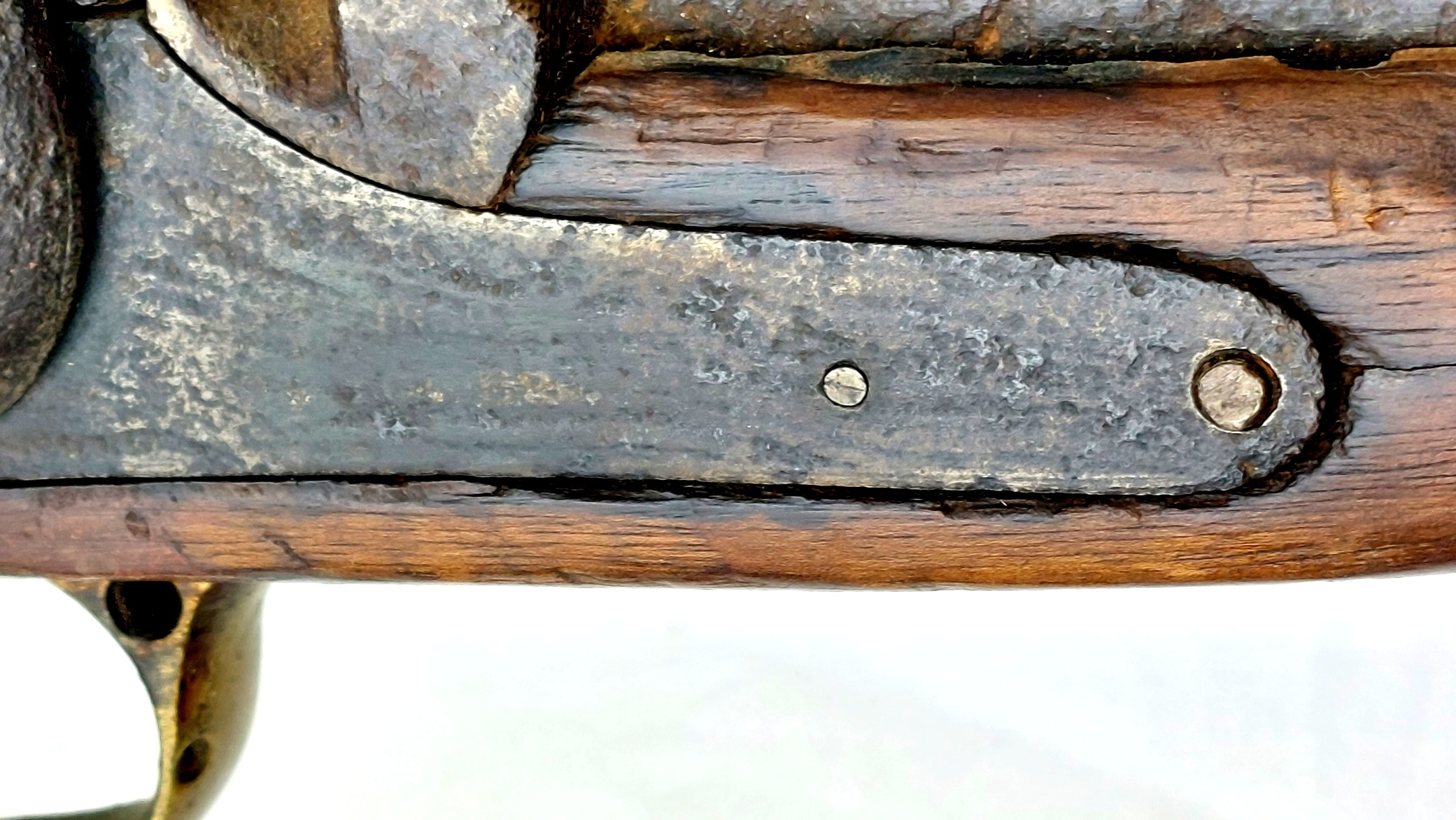
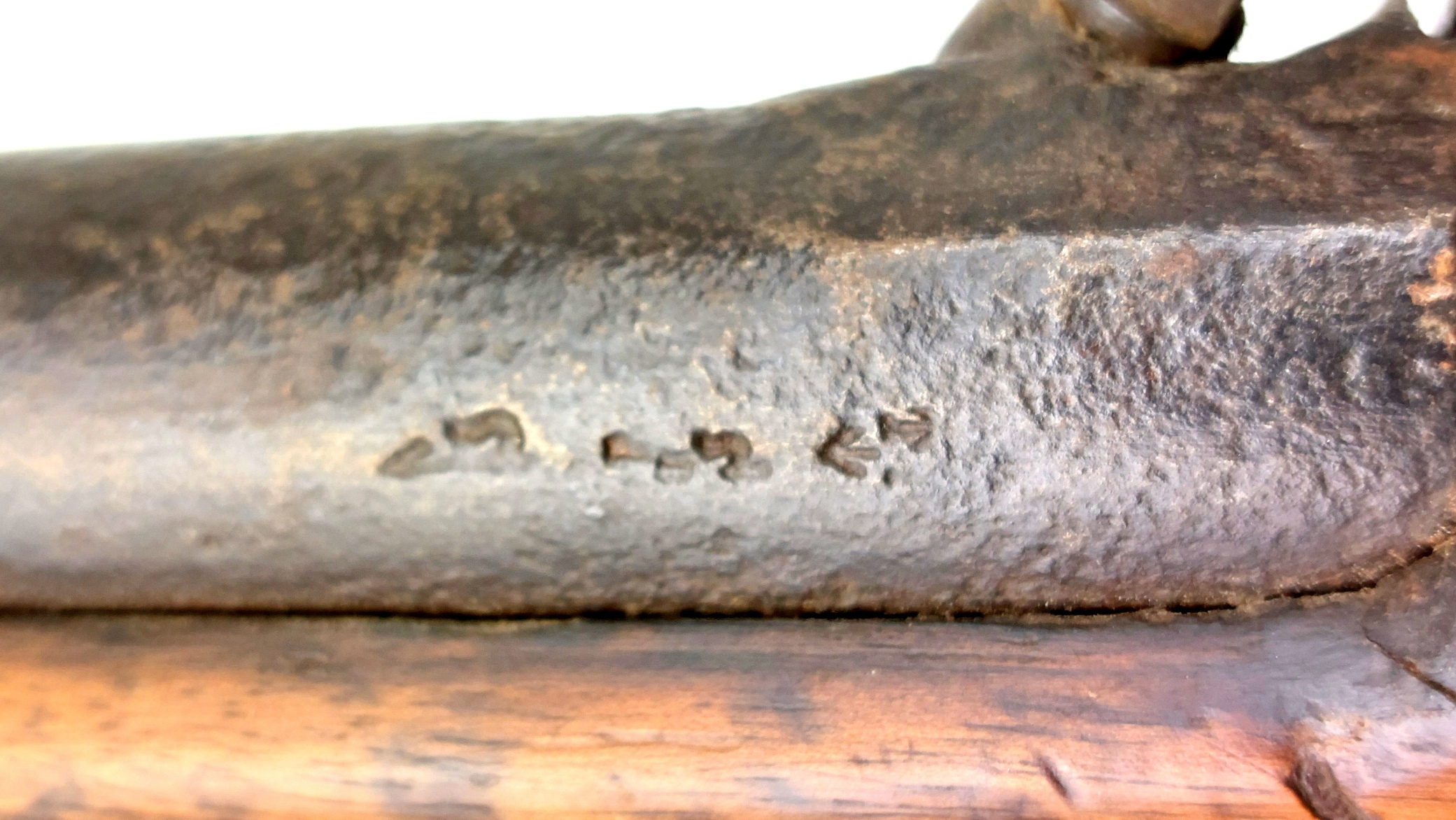
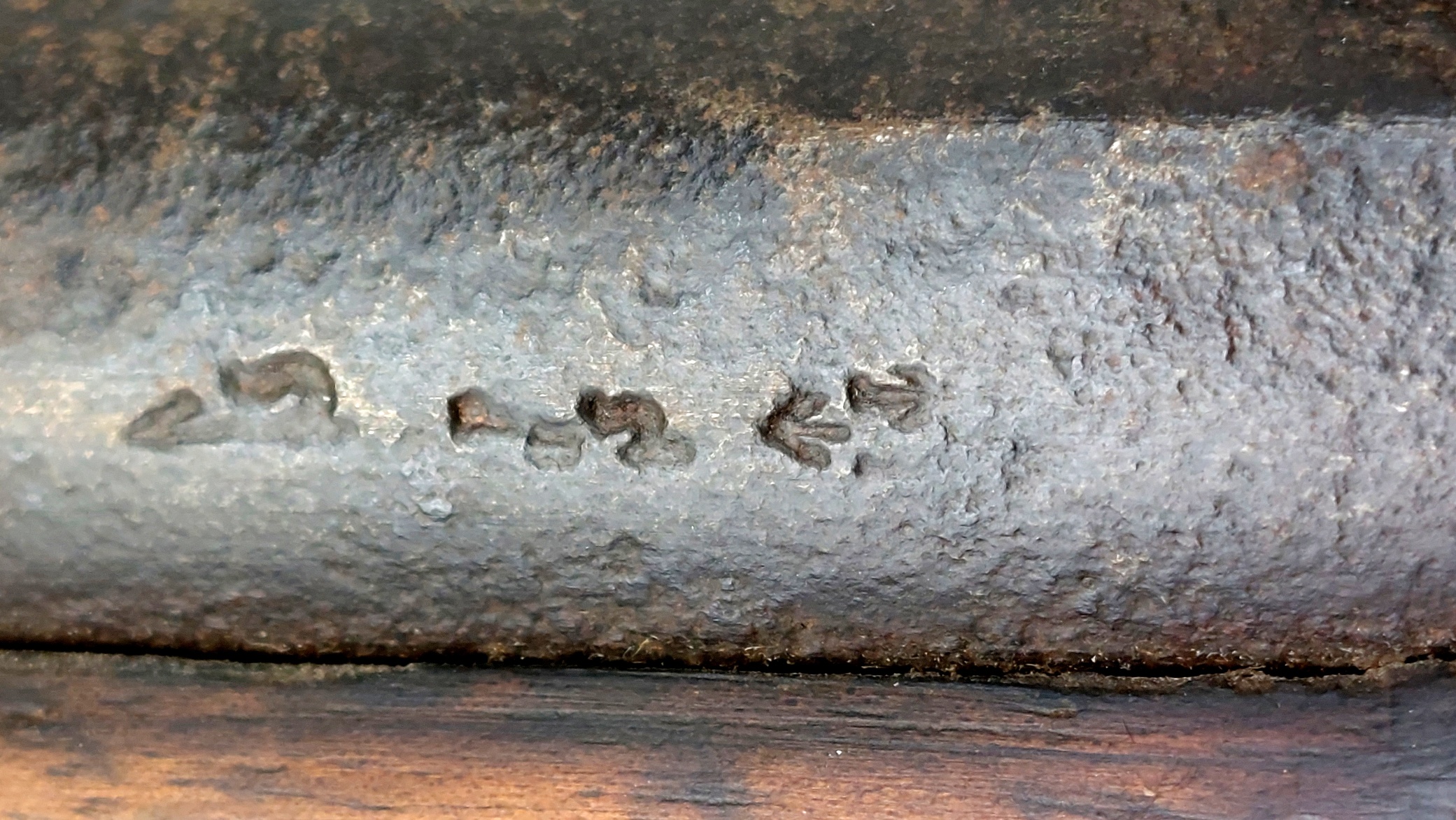
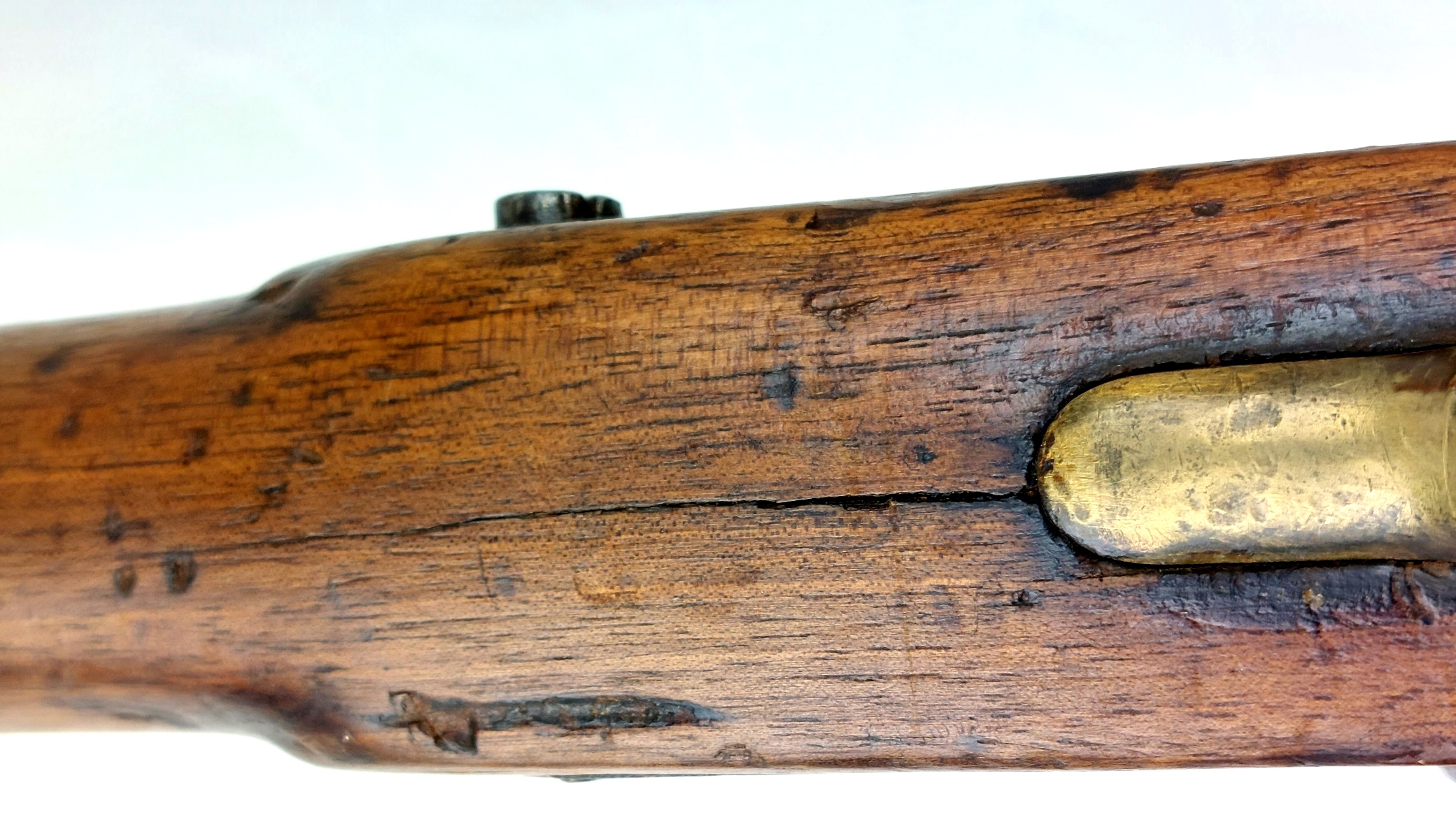
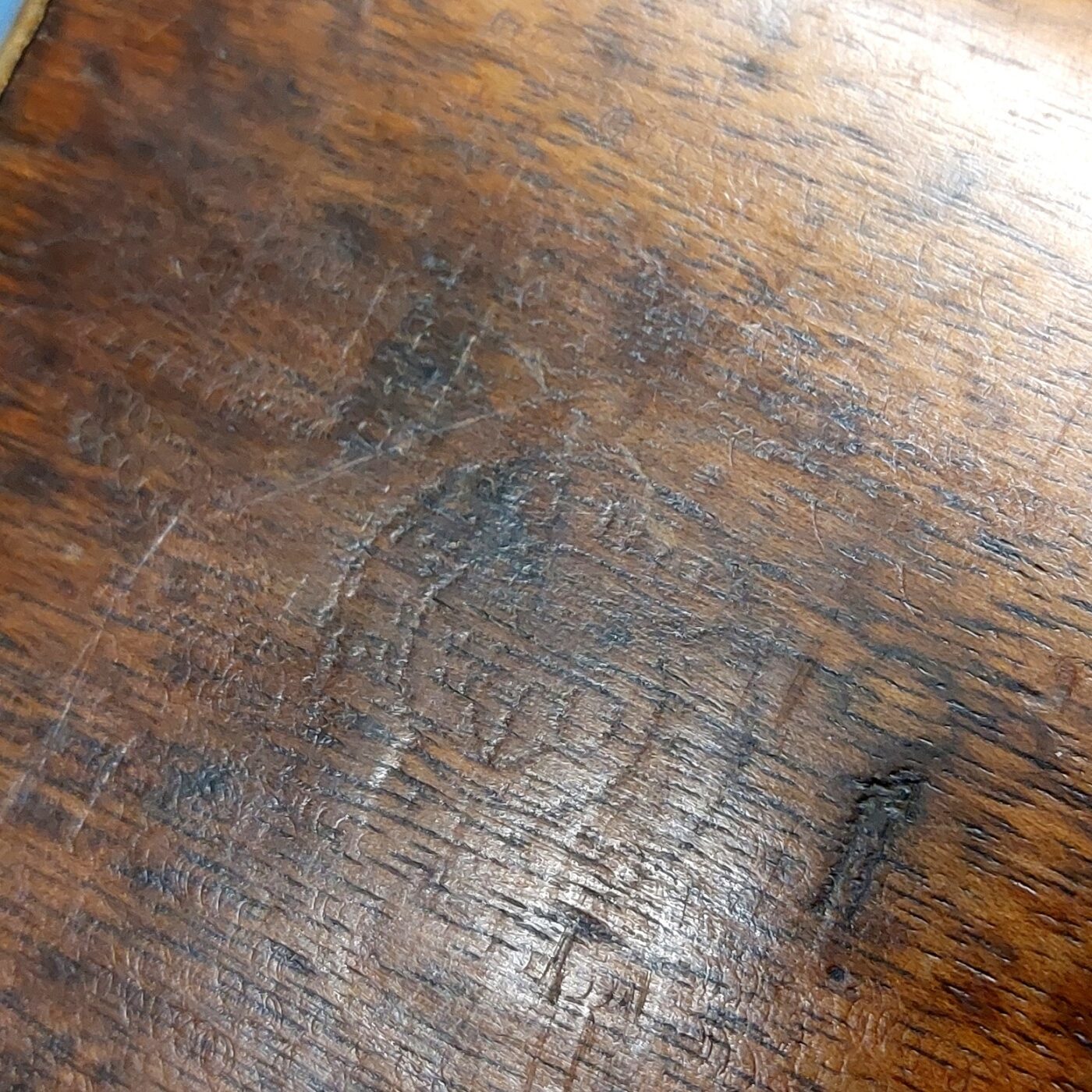
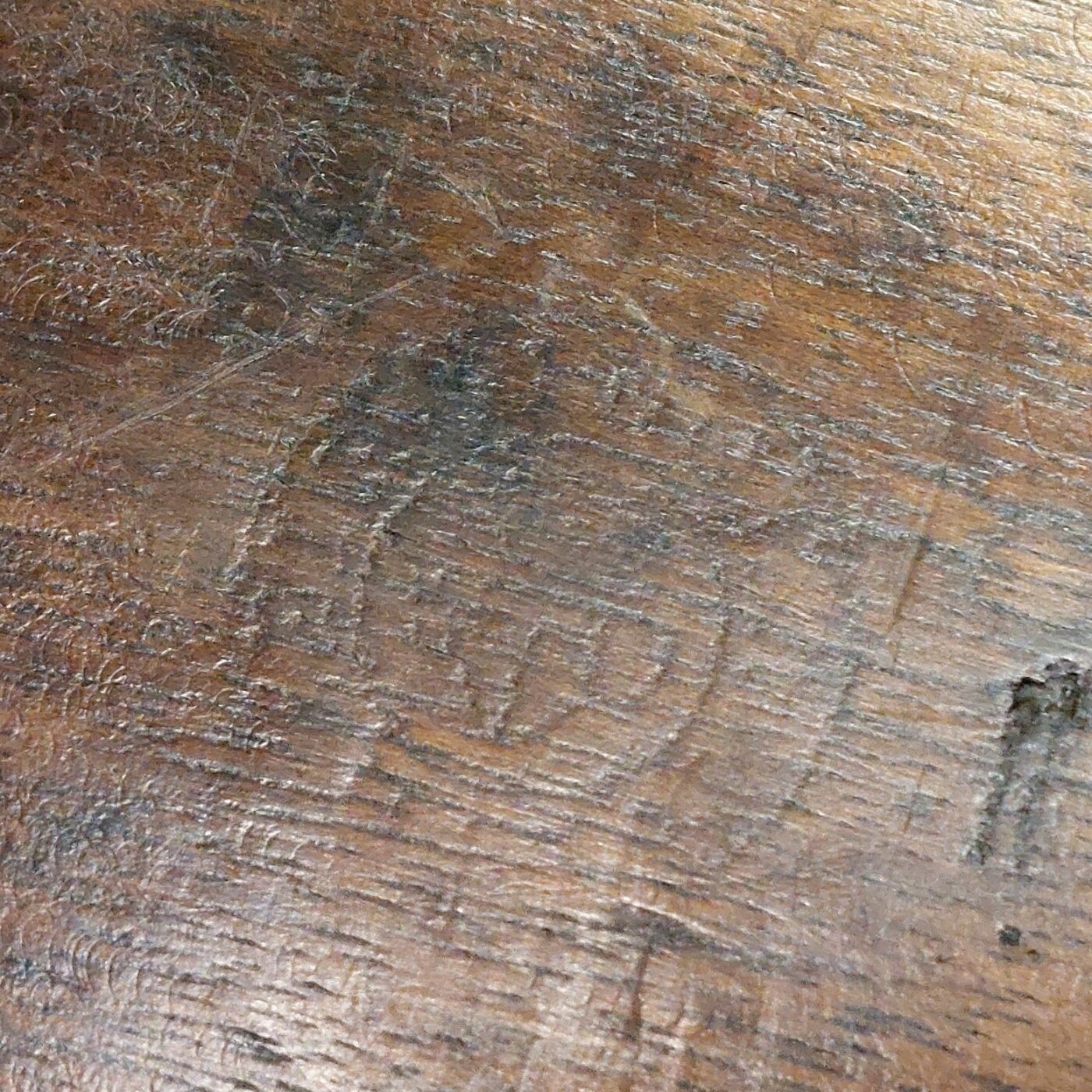
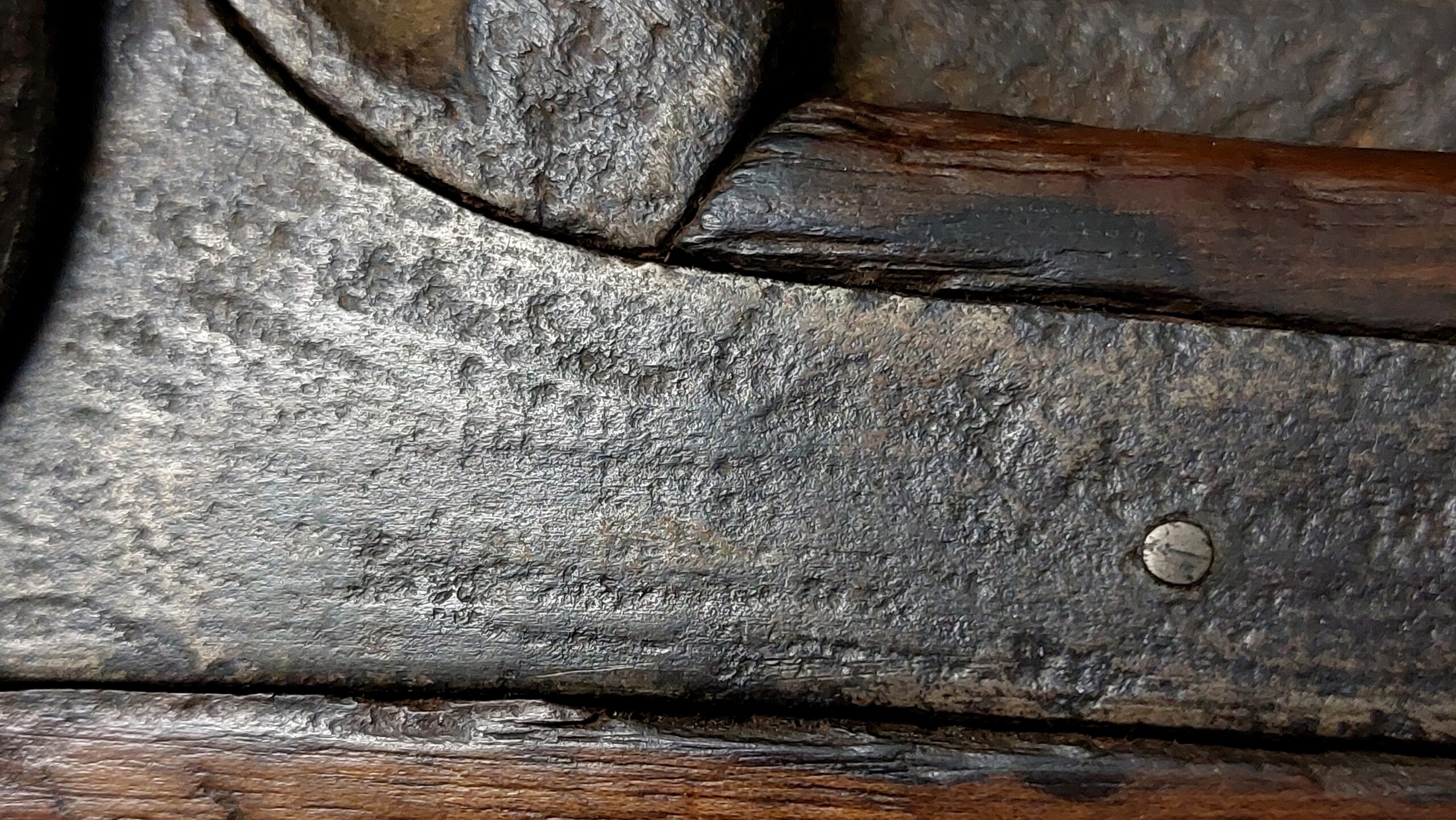
The lock plate is stamped with the crowned “VR” (Victoria Regina), denoting government ownership during the reign of Queen Victoria. The format is consistent with late 1850s–early 1860s Birmingham contract locks. The right-hand side of the stock retains a very faint circular War Department roundel with Broad Arrow clearly visible at centre, confirming official acceptance into British Government stores. The underside of the stock is stamped “J. MIL. CO.” — an abbreviated contractor’s mark consistent with Birmingham trade practice and attributable to James Millward & Co., established in 1853 in Birmingham’s Gun Quarter and active through the 1860s supplying trade and contract military arms.
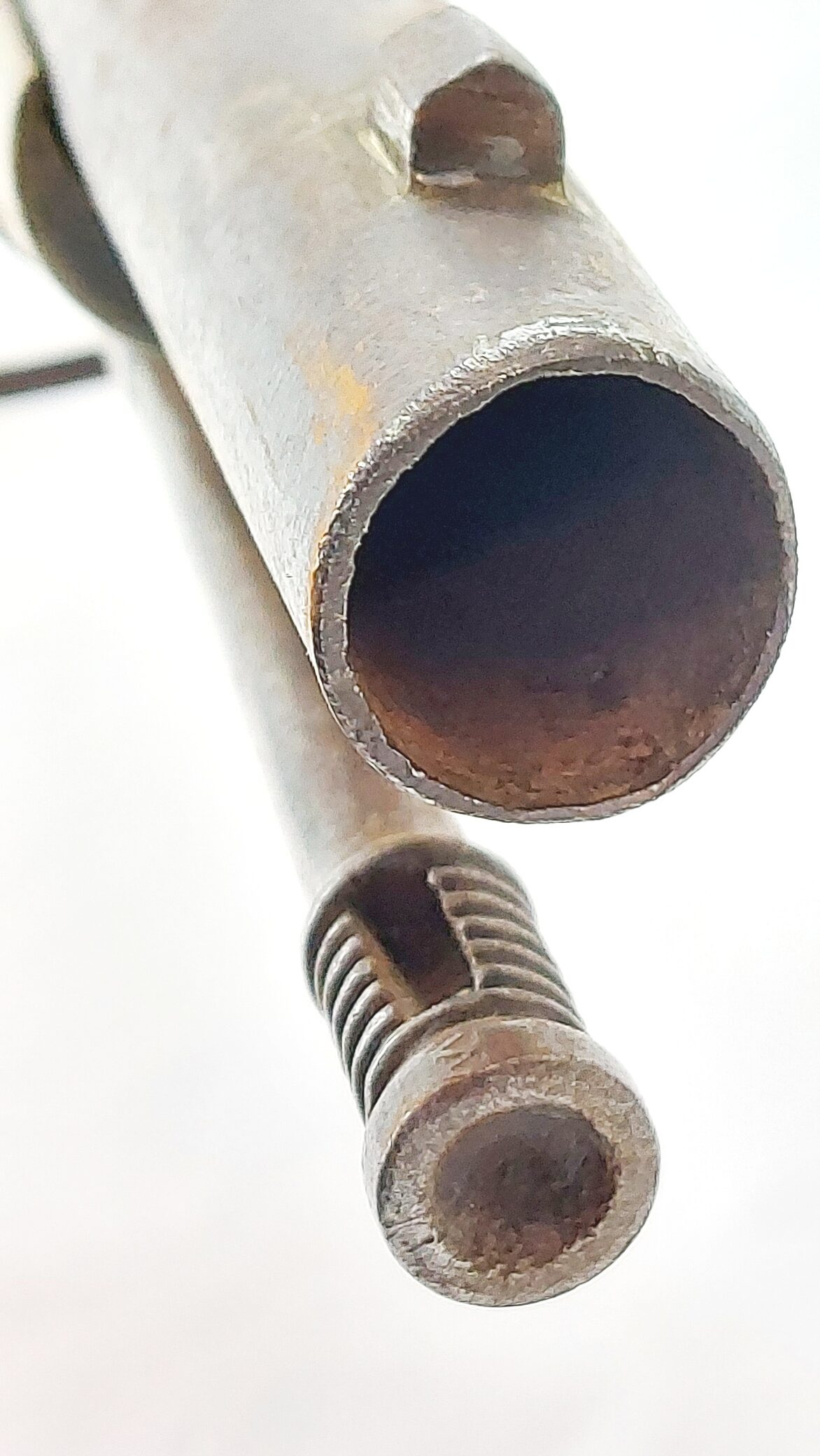
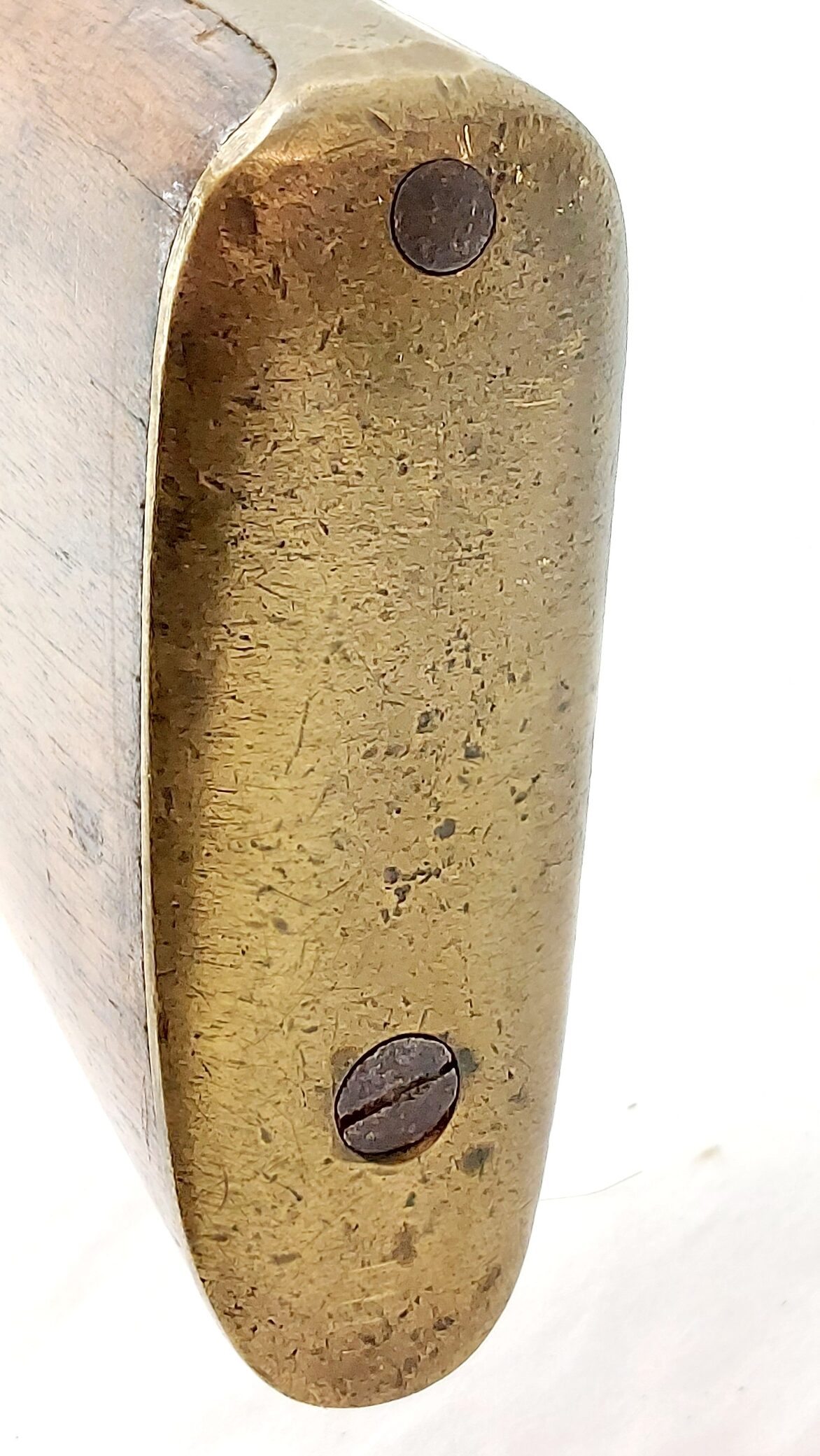
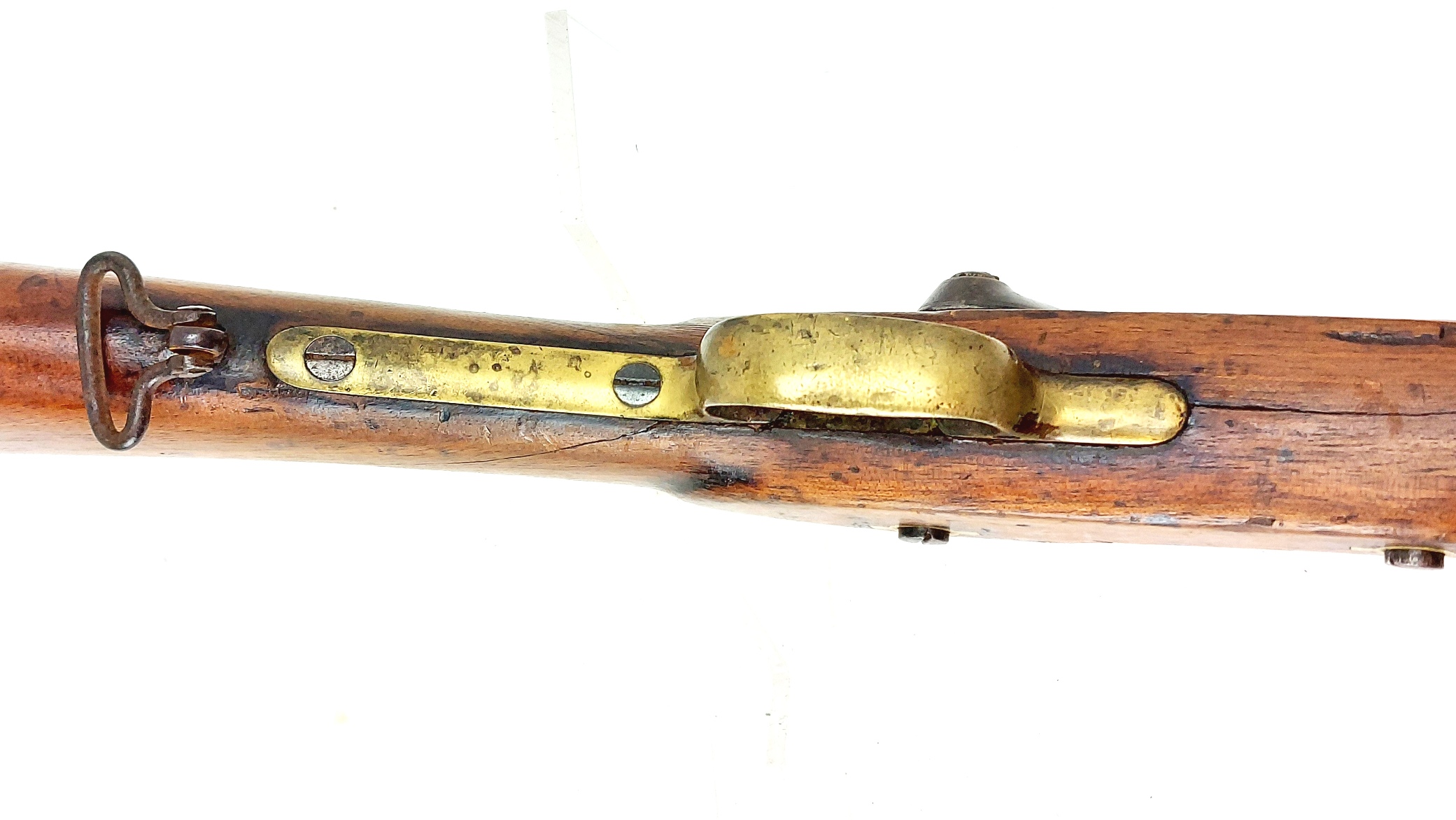
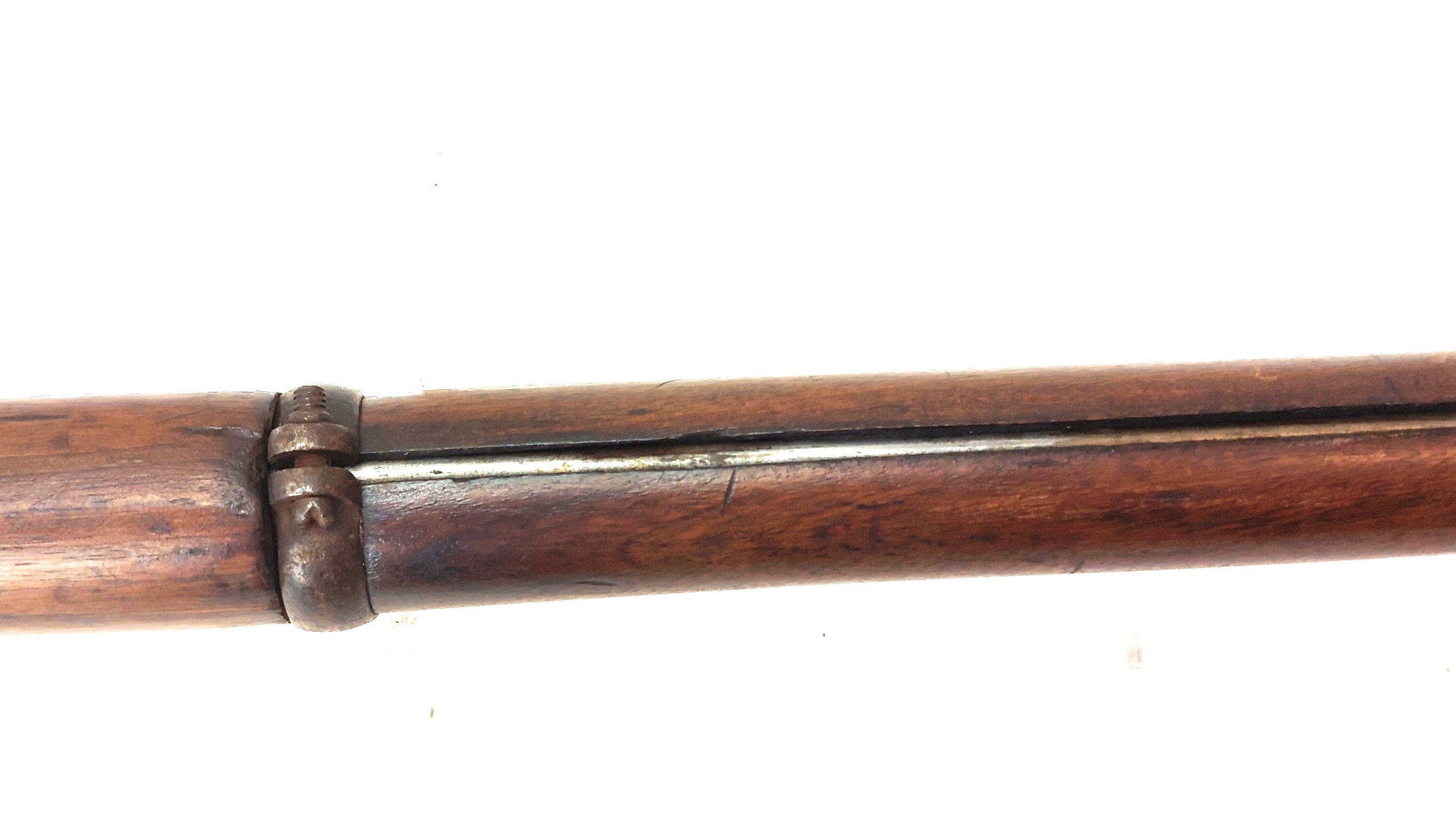
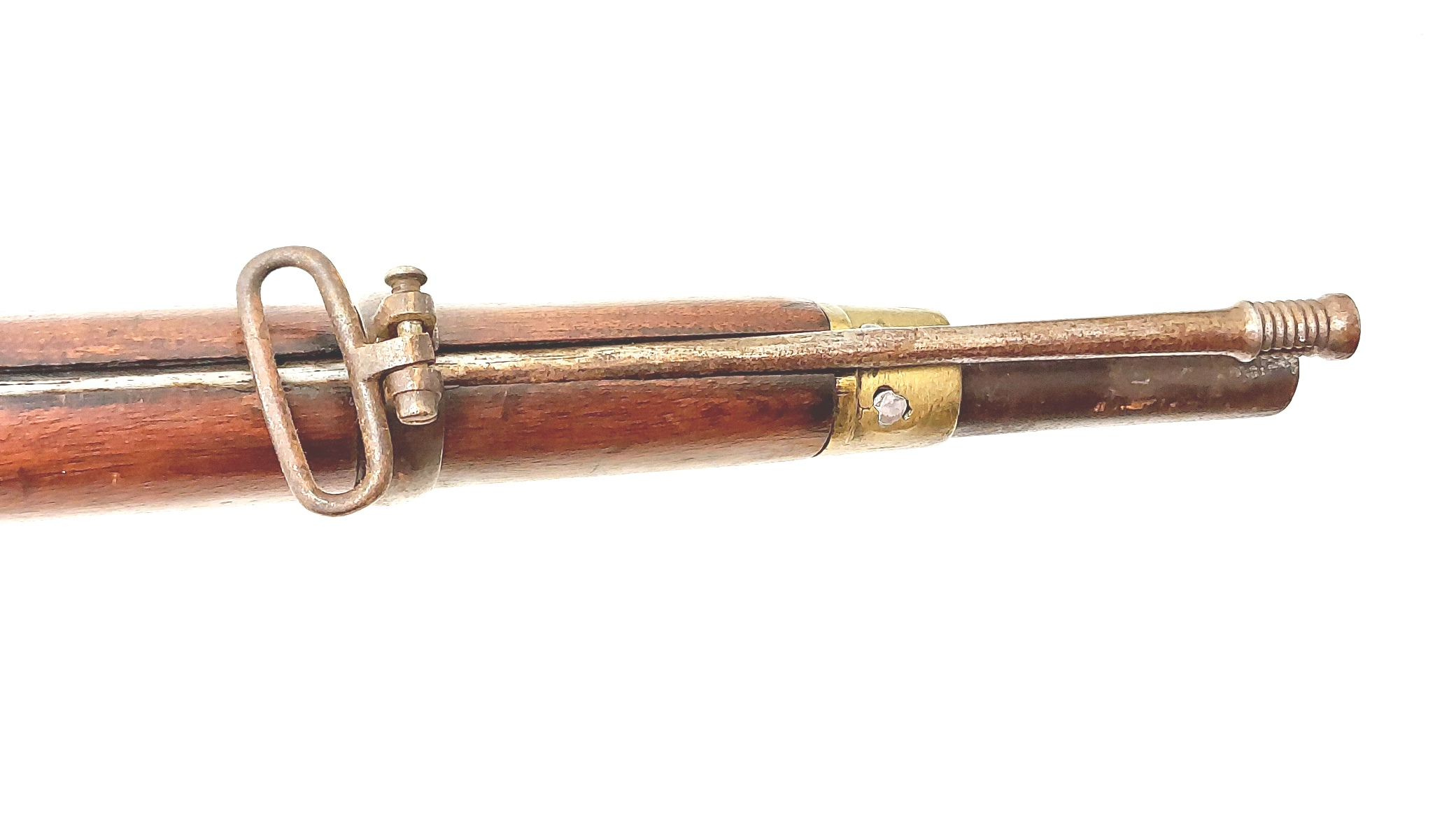
The musket is fitted with two iron barrel bands, iron sling swivels, brass nose cap, brass butt plate, and retains its iron ramrod. The overall profile follows the Enfield family pattern, though the barrel remains smoothbore, typical of colonial or secondary-issue arms of the period. The bore is smooth and of obsolete calibre.
Approx. Measurements – Barrel length: 69.7 cm. Overall length: 119.8 cm.
Historical Note:
Following the events of 1857, British armament policy increasingly differentiated between front-line rifled issue and smoothbore arms supplied for colonial and secondary service. During this period, Birmingham contractors produced large numbers of Enfield-pattern percussion arms under War Department contract, supplementing production from the Royal Small Arms Factory.
Two-band smoothbore Enfield-pattern muskets of this type are comparable in form to documented Pattern 1858 Native Sergeants’ examples, though this piece bears no specific unit or Indian departmental markings to confirm that precise designation. The configuration and contractor marking place it firmly within the late 1850s to early 1860s procurement surge.
James Millward & Co., trading from Whittall Street, Birmingham, operated during precisely this period within the Gun Quarter trade system, supplying military-pattern arms for government and colonial use.
*Condition*
Cocks and dry-fires. Metal surfaces display consistent age patination with scattered pitting to the lock and barrel commensurate with service use. The crowned VR marking remains visible. The stock shows honest service wear with minor surface marks and age-related shrinkage near the nose cap. The War Department roundel on the right-hand side is very faint but discernible, with the Broad Arrow clearly present. Brass furniture retains an attractive aged tone. The ramrod appears correct and present. The bore shows age-related wear consistent with smoothbore percussion arms of the period. Please see photographs as part of the condition report.
RQMAOOXCOO_9146230964