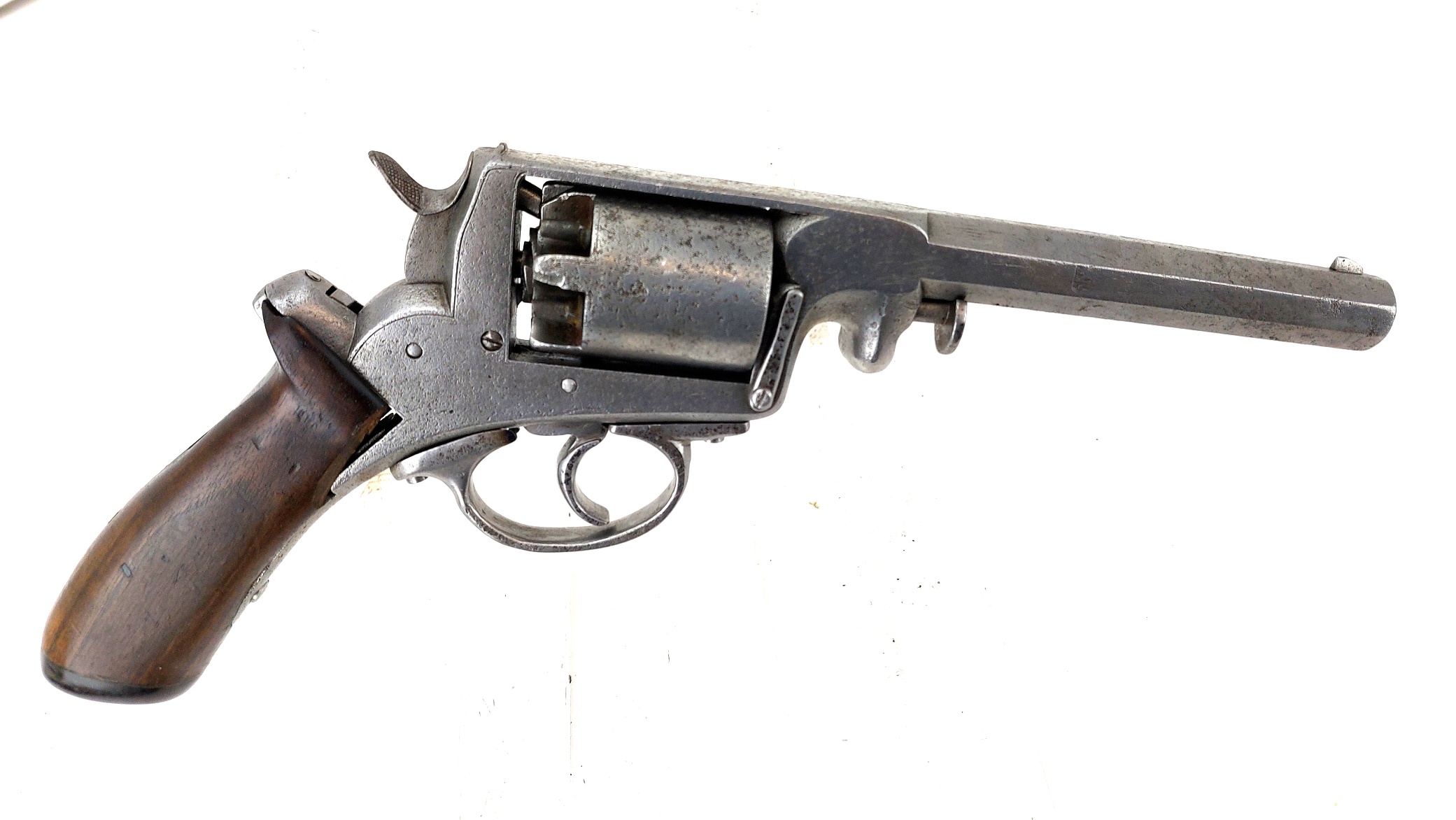
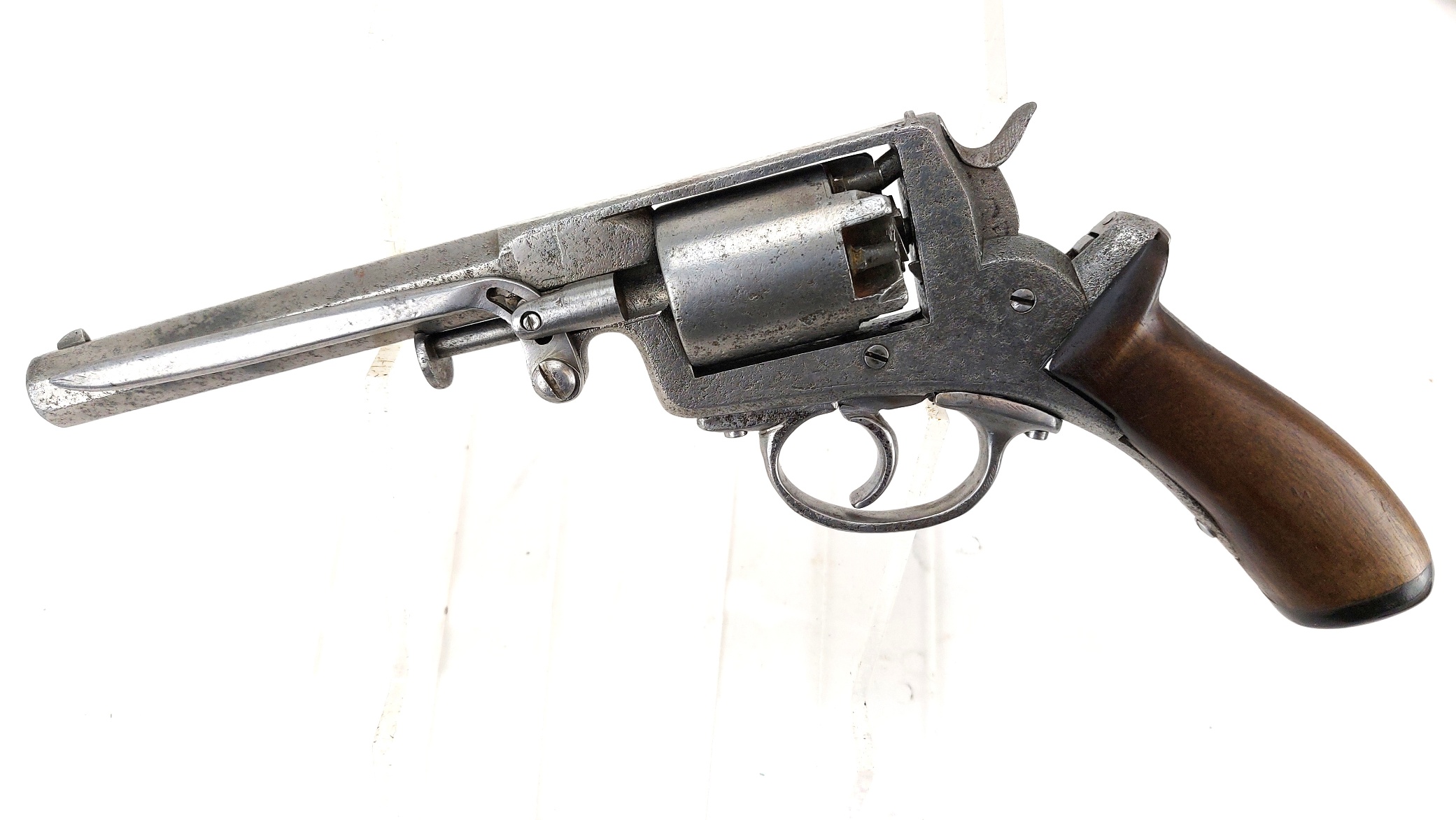
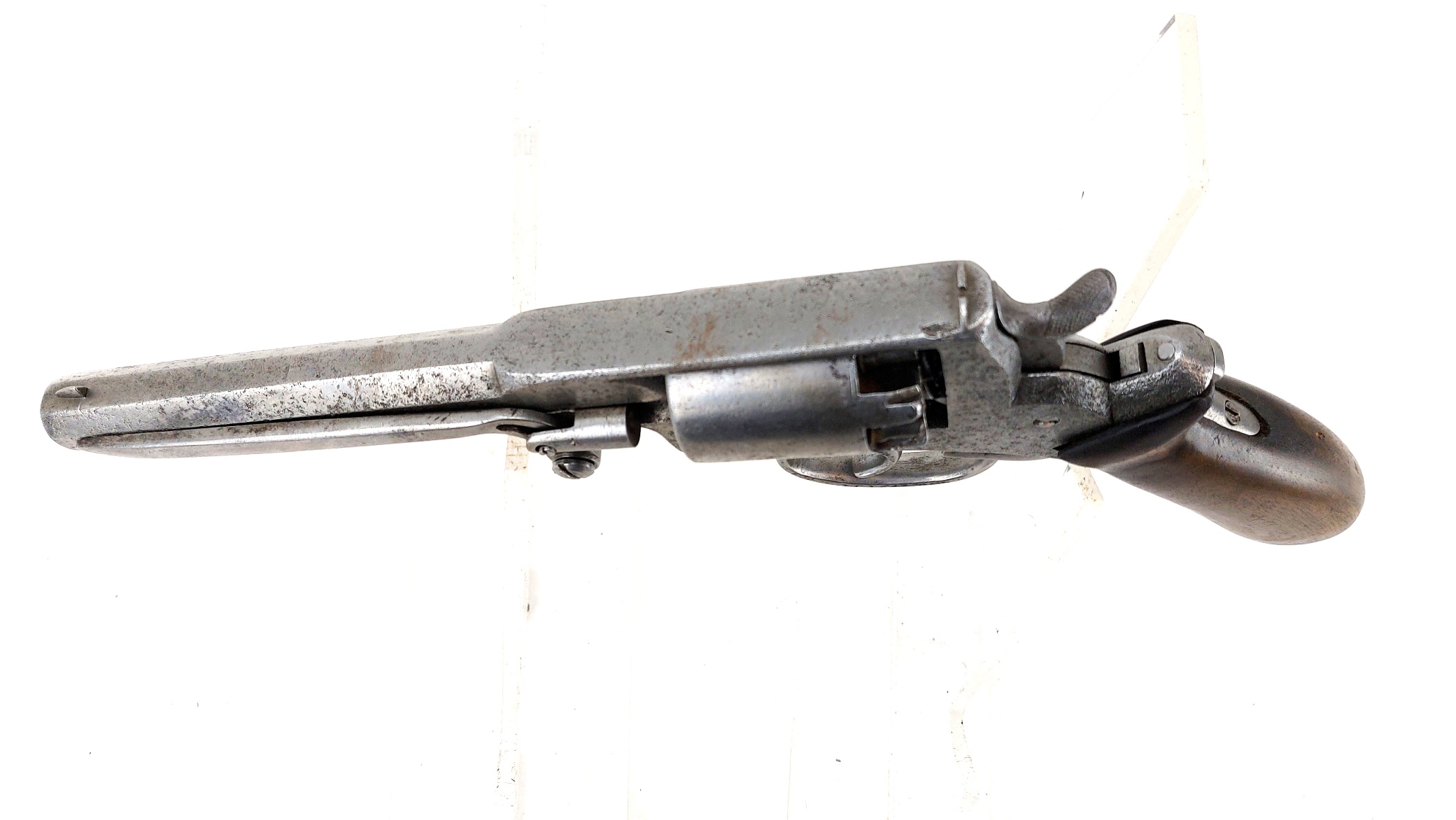
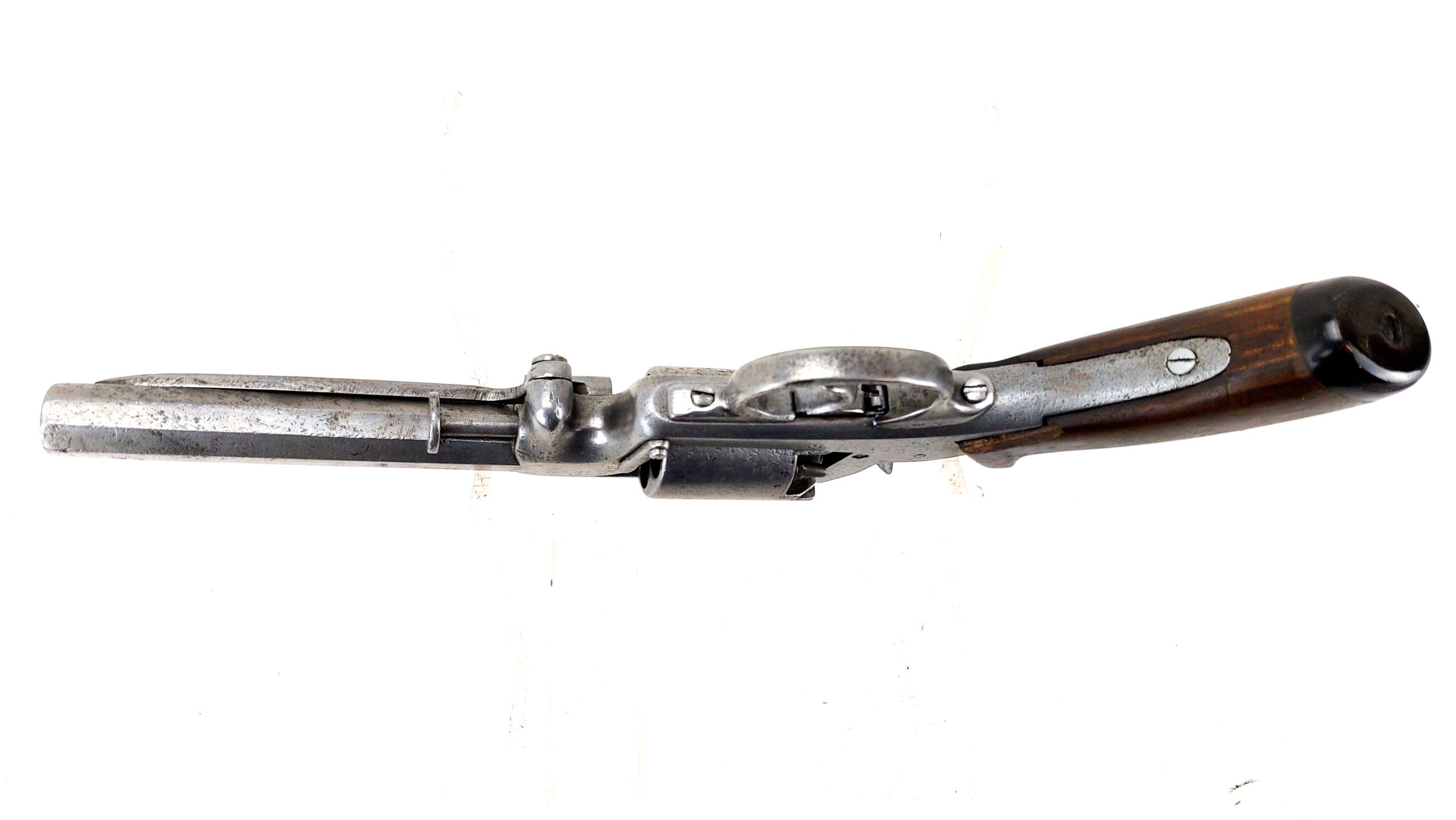
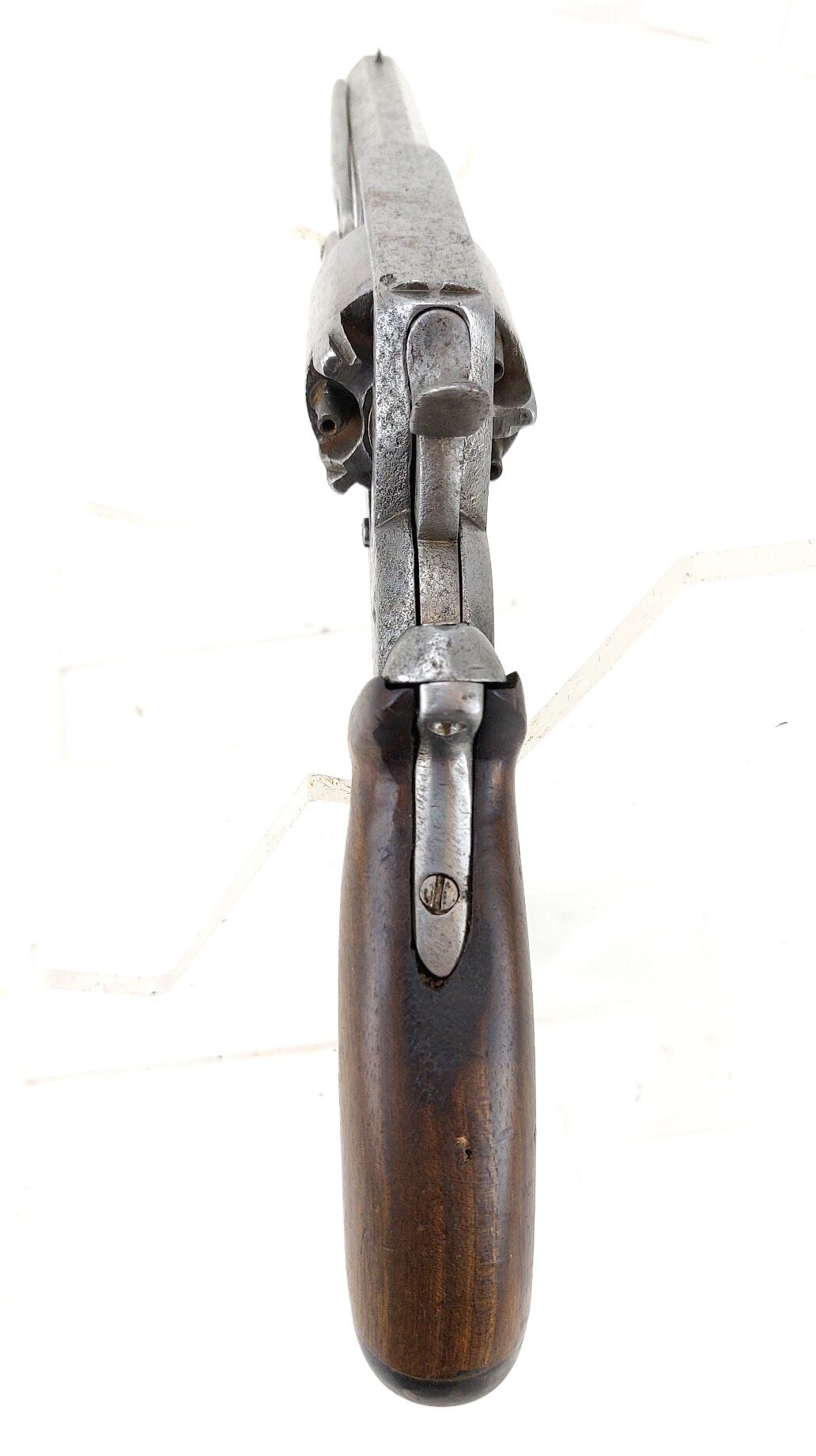
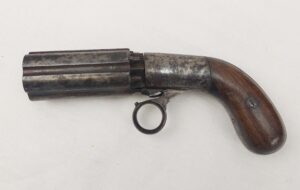
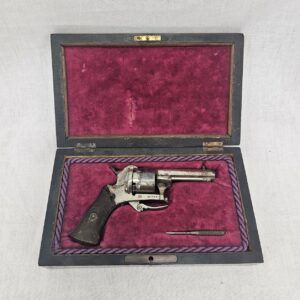
*British, c.1856–1865, Beaumont–Adams Percussion Revolver, .442 Calibre (52-Bore), Five-Shot, Double-Action Only, Obsolete Calibre*
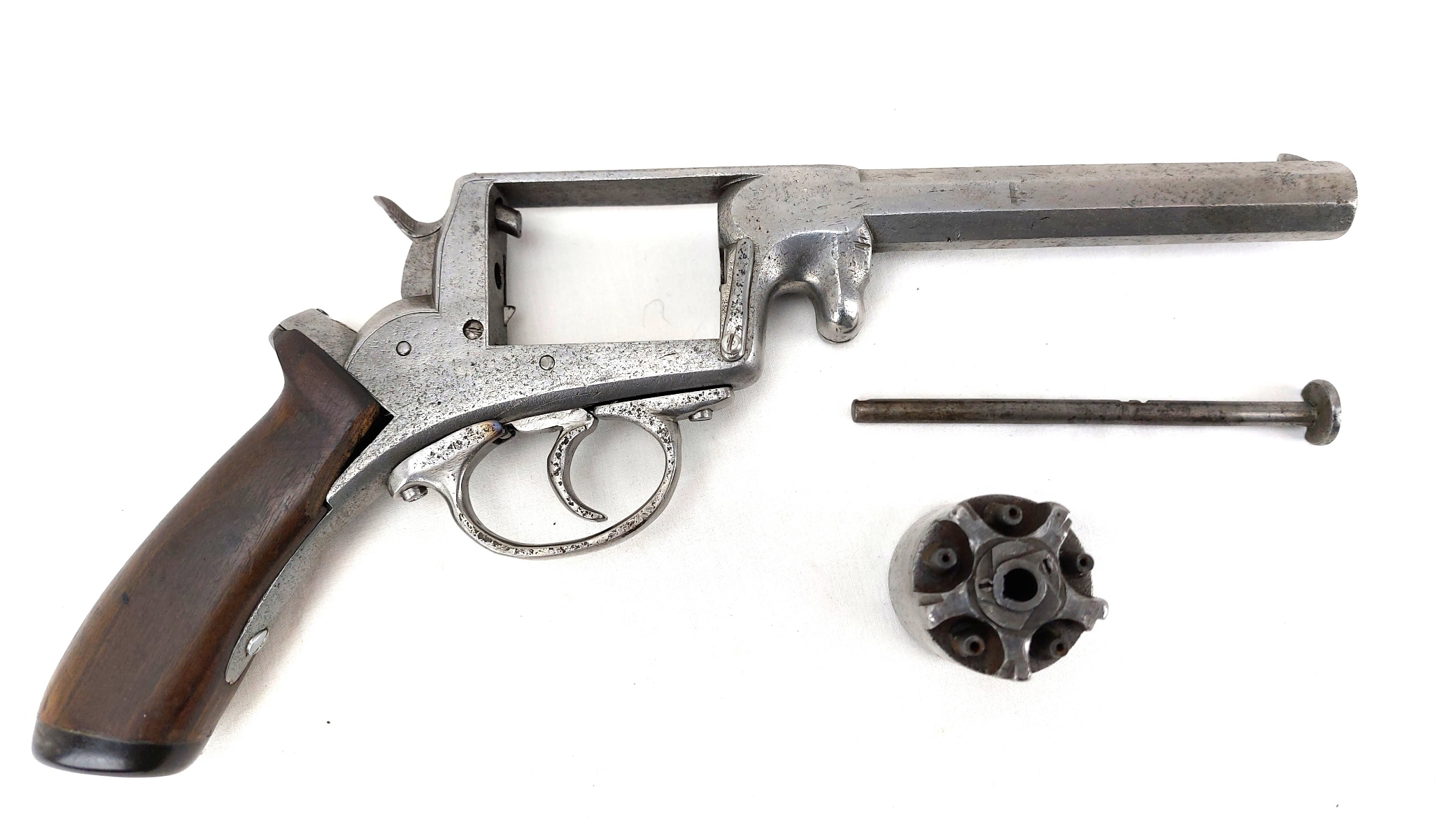
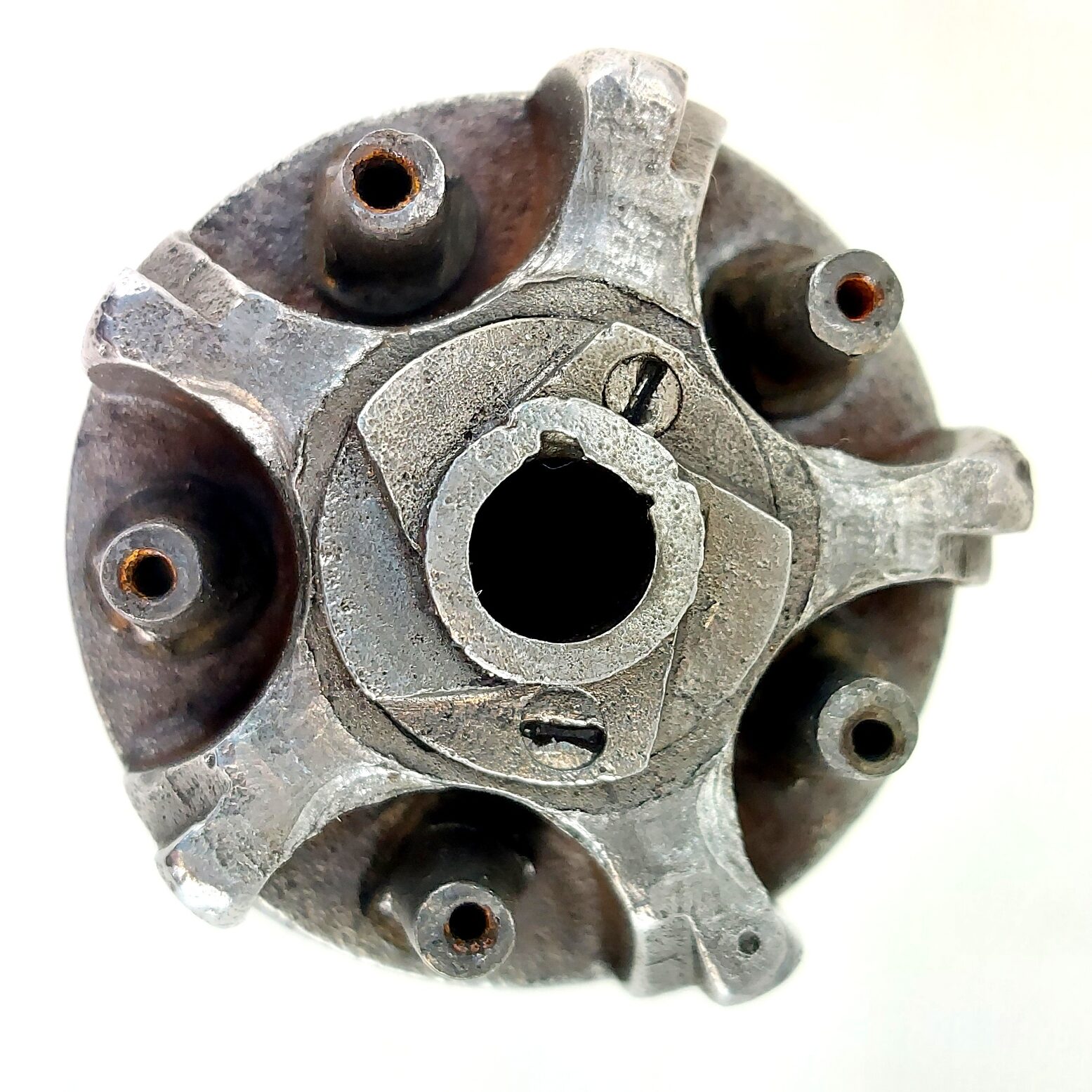
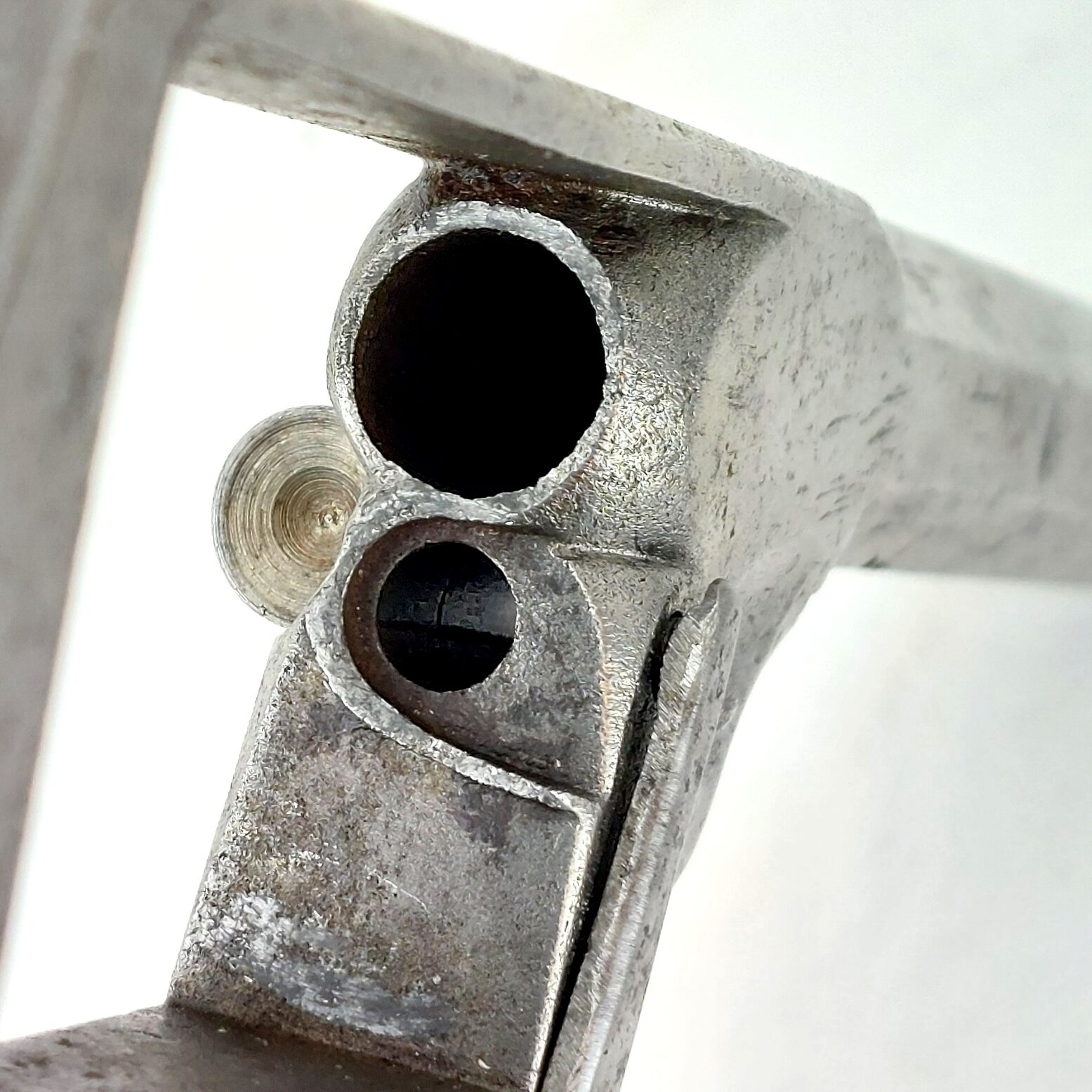
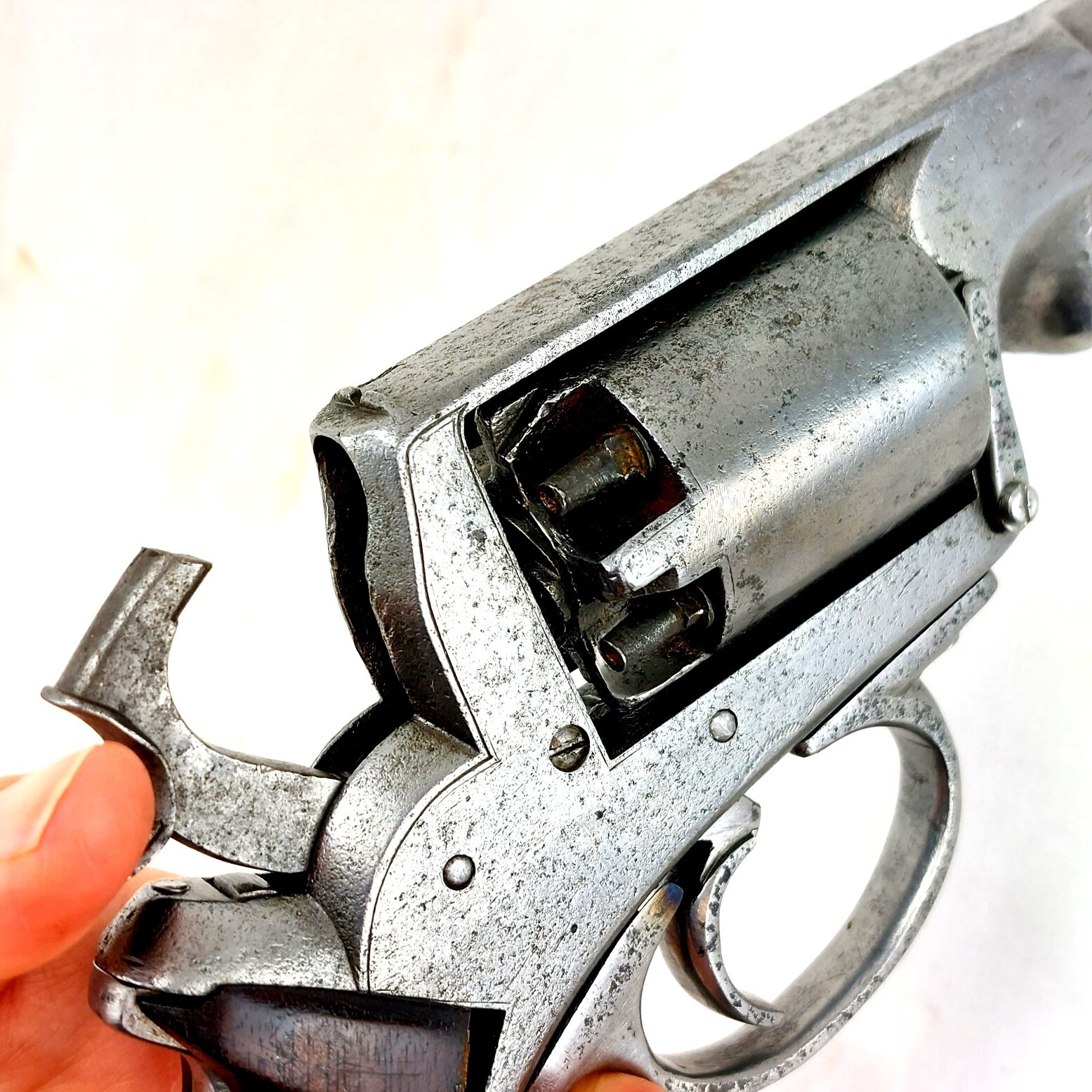
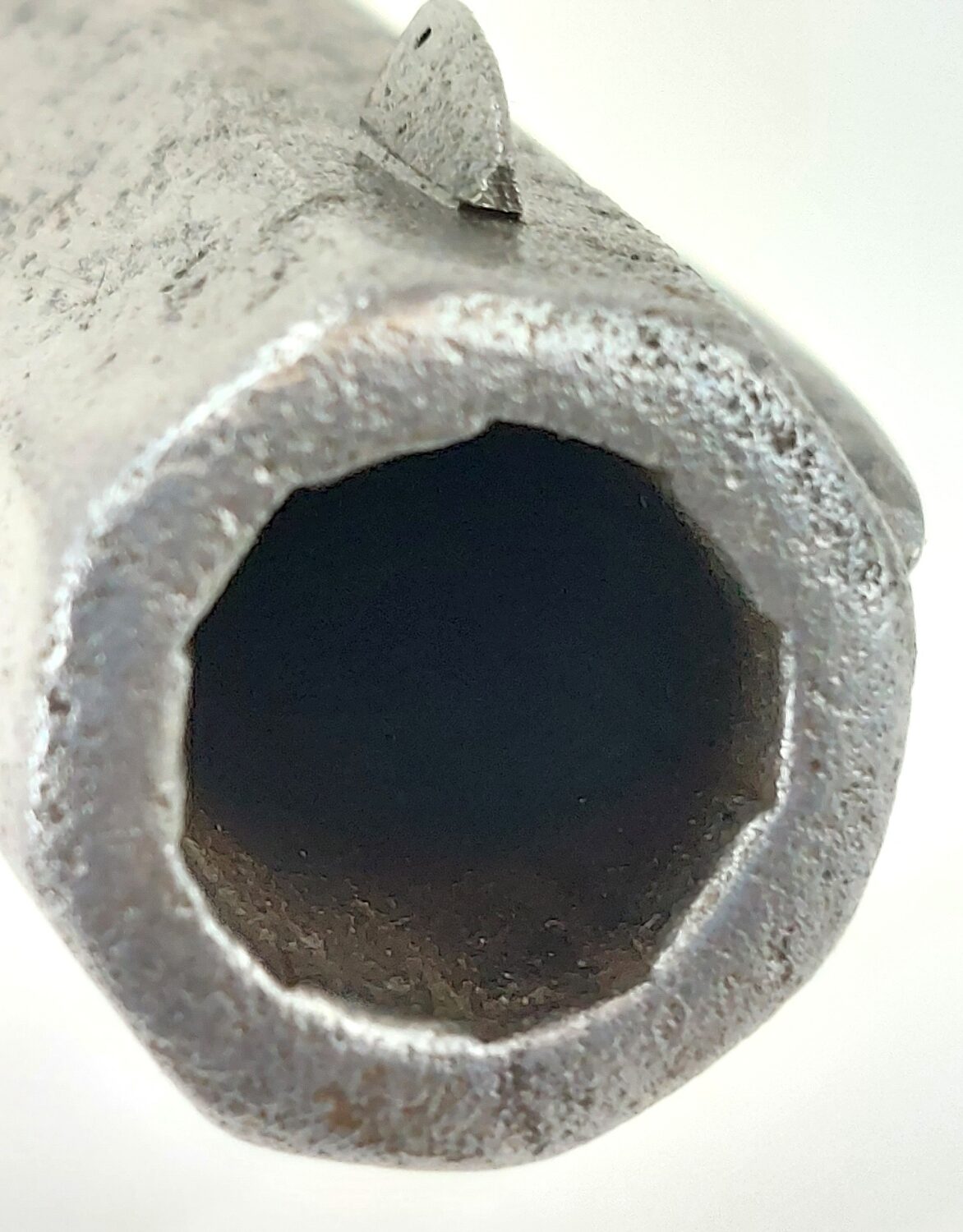
A fine mid-Victorian Beaumont–Adams percussion revolver, retaining its original five-shot cylinder and solid-frame construction. This example is of Beaumont–Adams pattern, incorporating Lieutenant Frederick E. B. Beaumont’s 1856 patent improvement to the Adams system, and operates in double-action, the hammer being actuated by trigger pull rather than manual cocking. The revolver is fitted with a 4½-inch barrel, left-side Kerr-type loading rammer, and retains its original percussion nipples throughout.
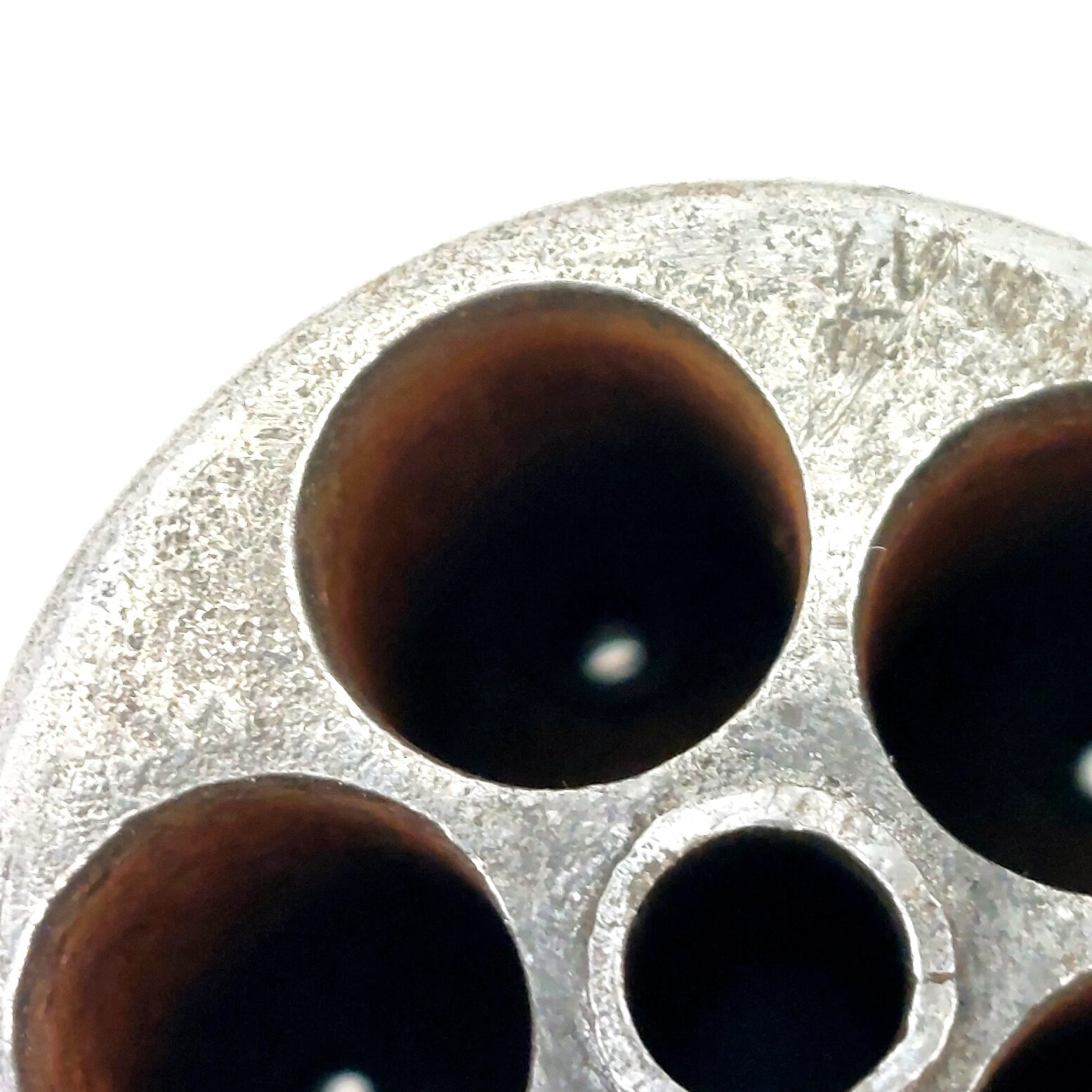
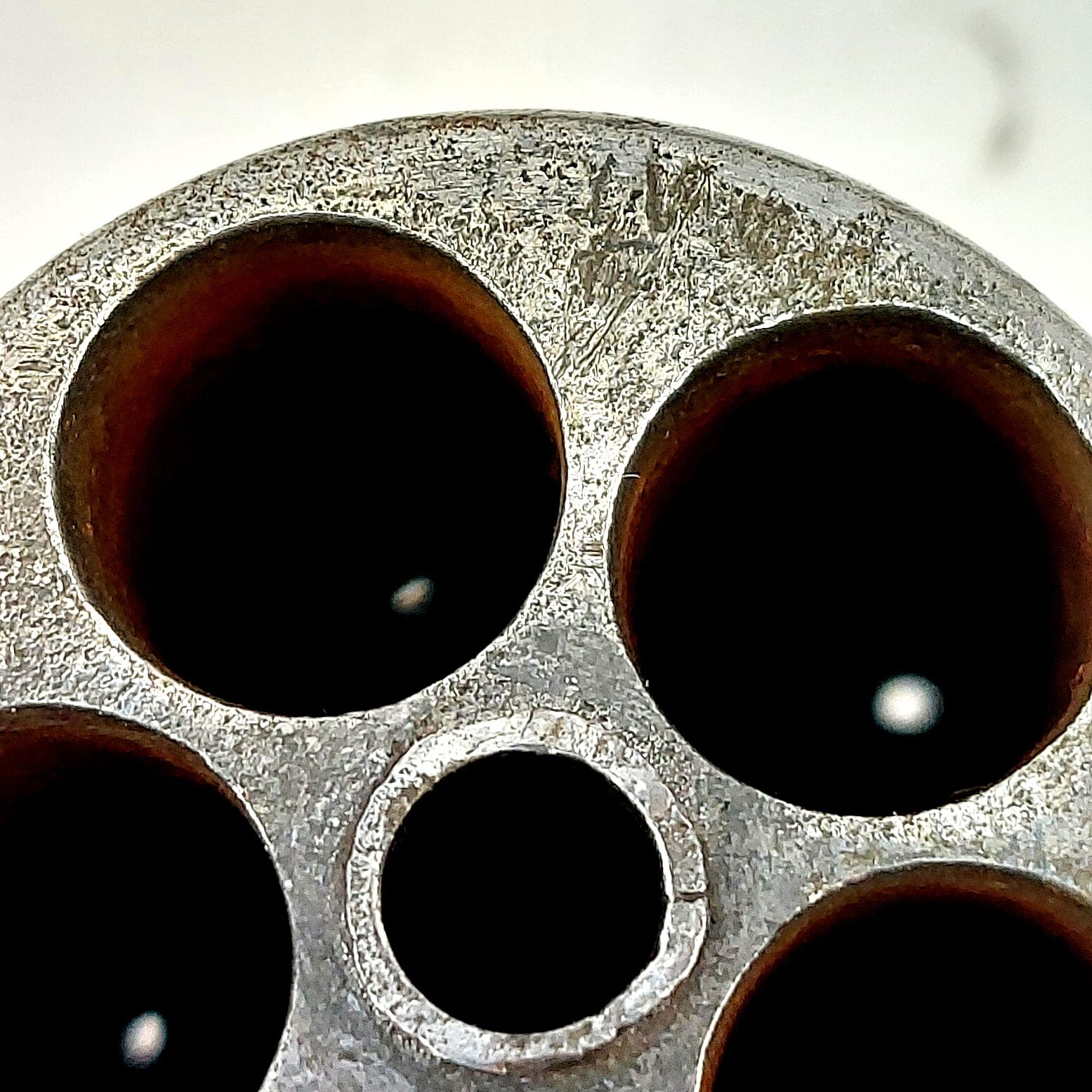
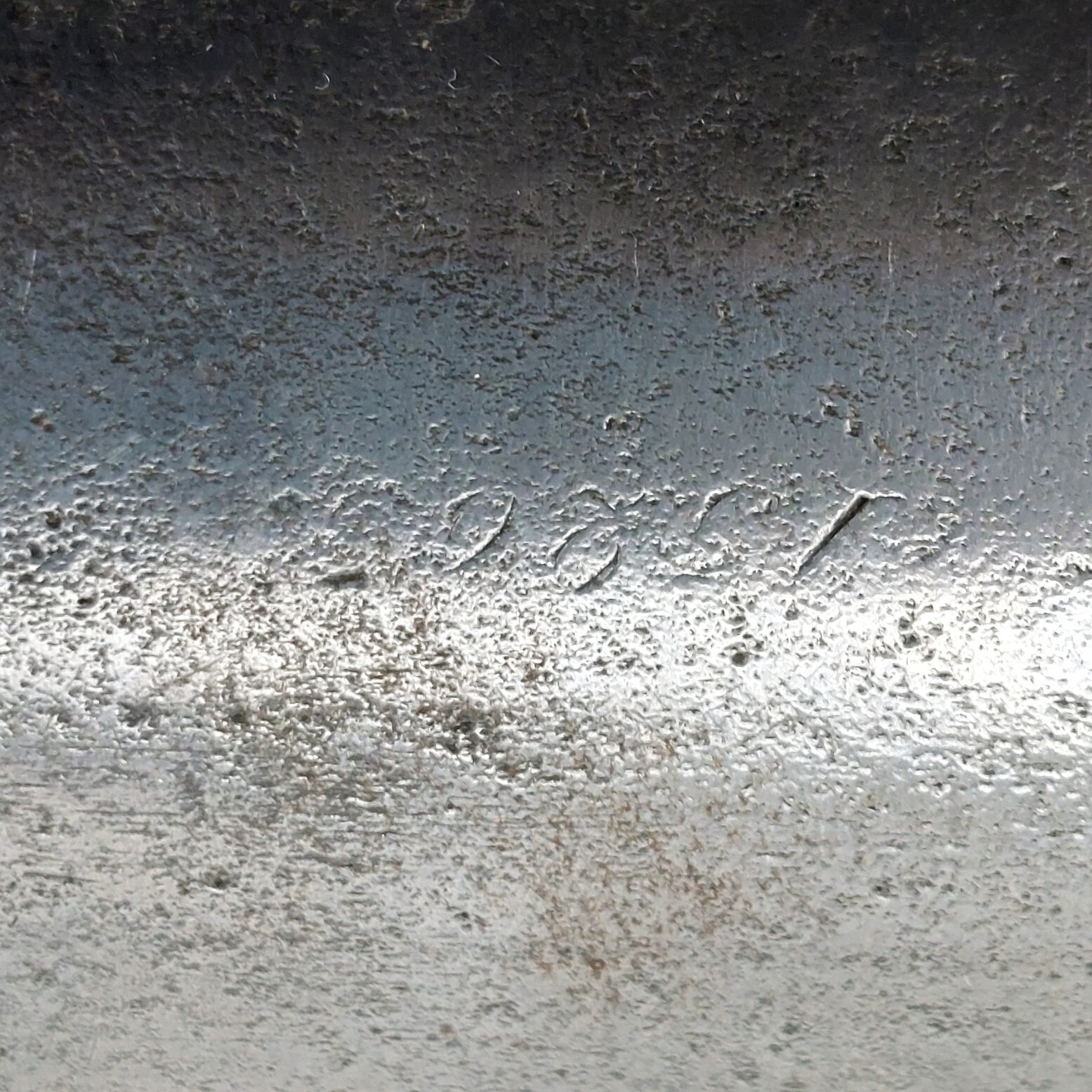
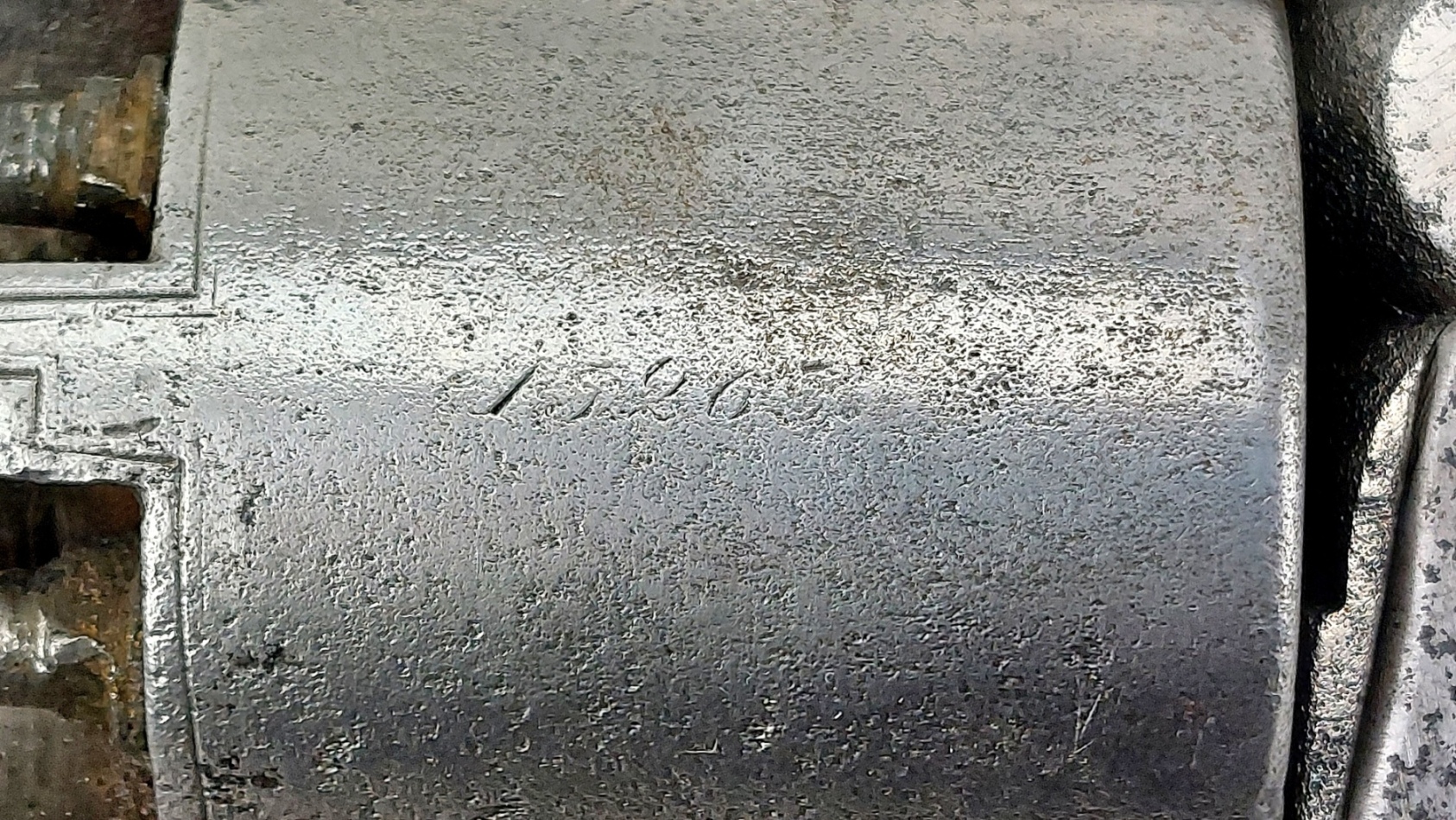
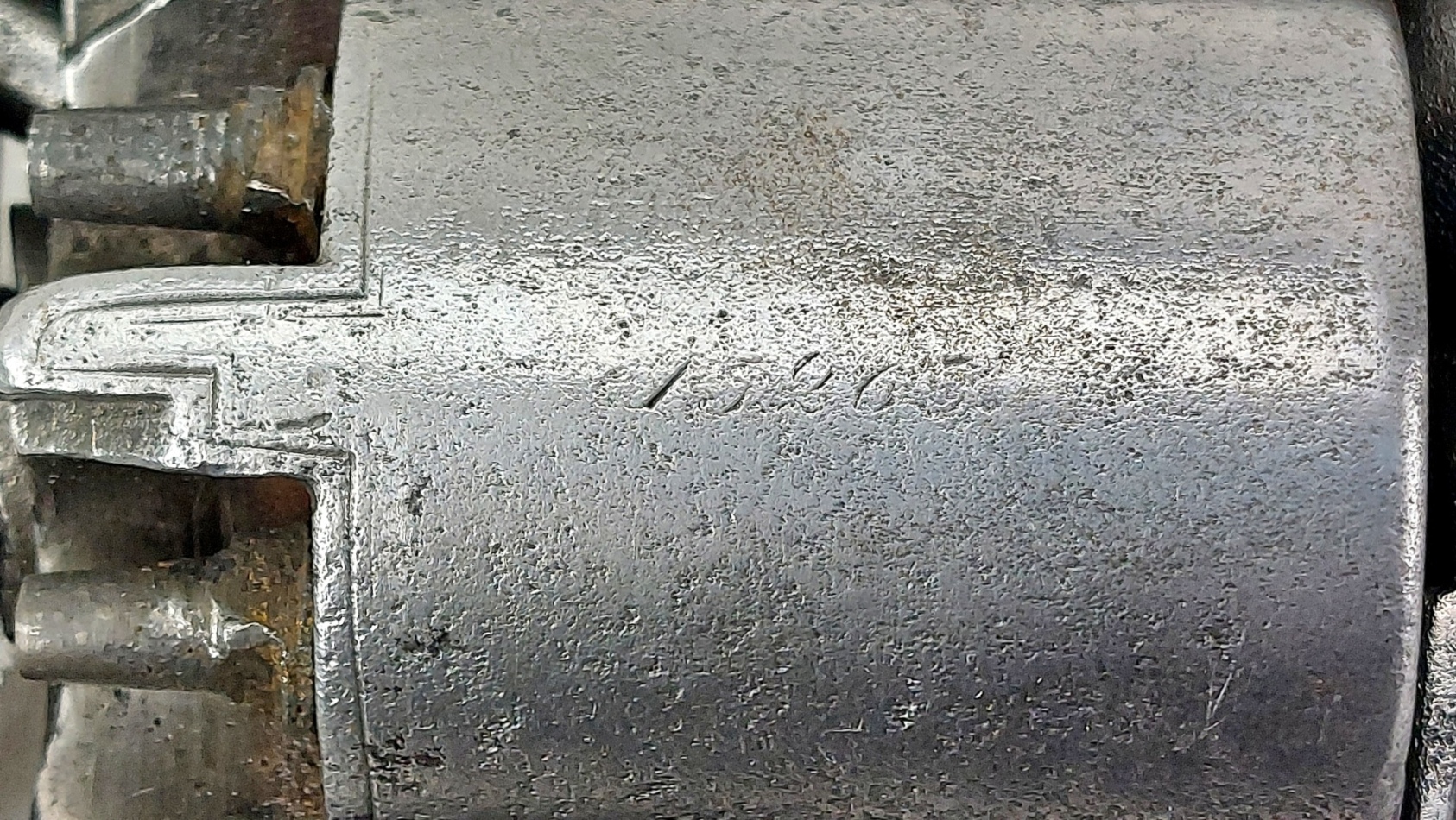
The revolver remains in its original cap-and-ball configuration, with no evidence of later cartridge conversion. The frame is externally plain, in keeping with private or officer purchase, as was common with Adams revolvers of this period. A faint serial number, appearing as 13265, is visible on the barrel. No distinct maker’s or proof marks are discernible, consistent with Birmingham-assembled examples that have seen long service.
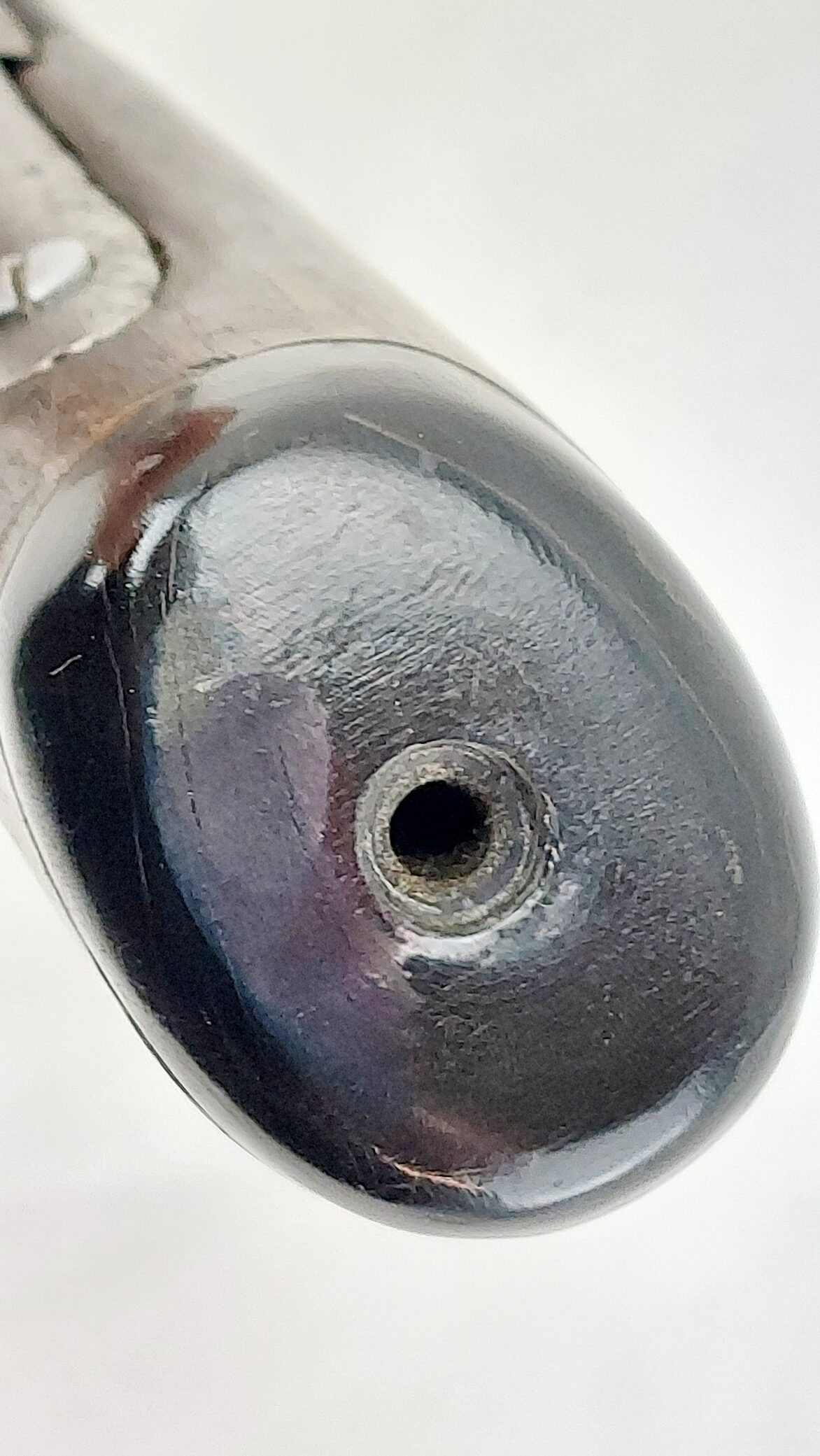
The revolver retains its original walnut grip, correctly shaped and fitted, with the lanyard ring now absent from the butt recess. Overall, this is an honest and well-preserved example of a British service-type sidearm from the Crimean War and early colonial period, retaining strong period character throughout.
Approx. Measurements – Overall length: 30 cm. Barrel length: 11.5 cm.
Historical Note:
The Beaumont–Adams revolver represents one of the most important developments in mid-19th-century British military handguns. Robert Adams’ original revolver of 1851 was double-action only, valued for its speed but criticised for its heavy trigger pull. In 1856, Lieutenant Frederick E. B. Beaumont of the Royal Engineers patented an improvement allowing the revolver to be fired in either single- or double-action, significantly improving accuracy and control.
The Beaumont–Adams was officially adopted by the British Army in .442 calibre (54-bore) in 1856 and saw extensive service during the later stages of the Crimean War, the Indian Mutiny, and subsequent colonial campaigns. Its heavy calibre and rapid trigger-cocking action gave it a clear advantage over contemporary Colt revolvers, contributing to the closure of Colt’s London factory in the late 1850s.
Production was undertaken by Deane, Adams & Deane and later the London Armoury Company, with additional licensed manufacture in Birmingham and Liège. Original percussion examples such as this increasingly survive only in small numbers, many having been converted to cartridge during the late 1860s and 1870s.
*Condition*
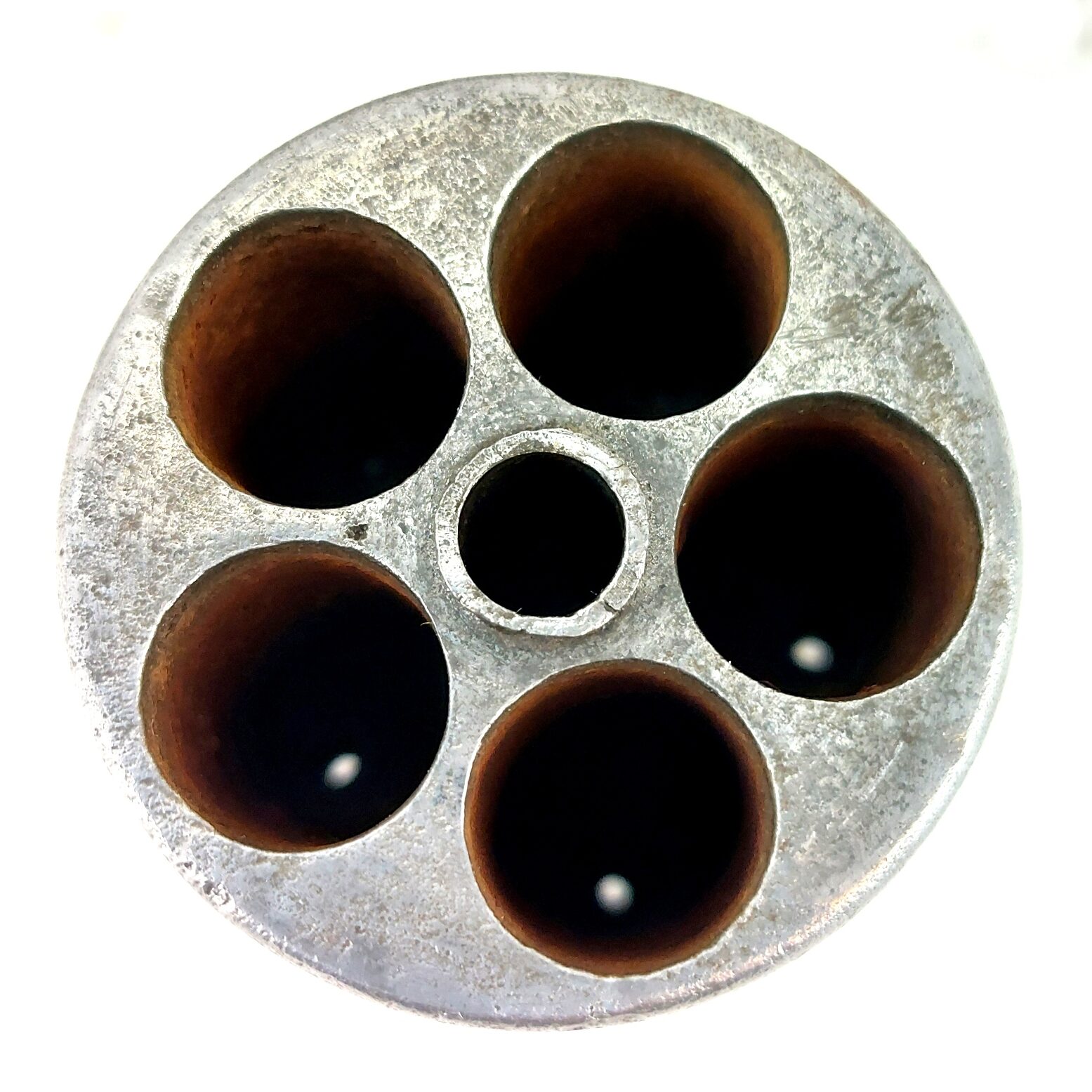
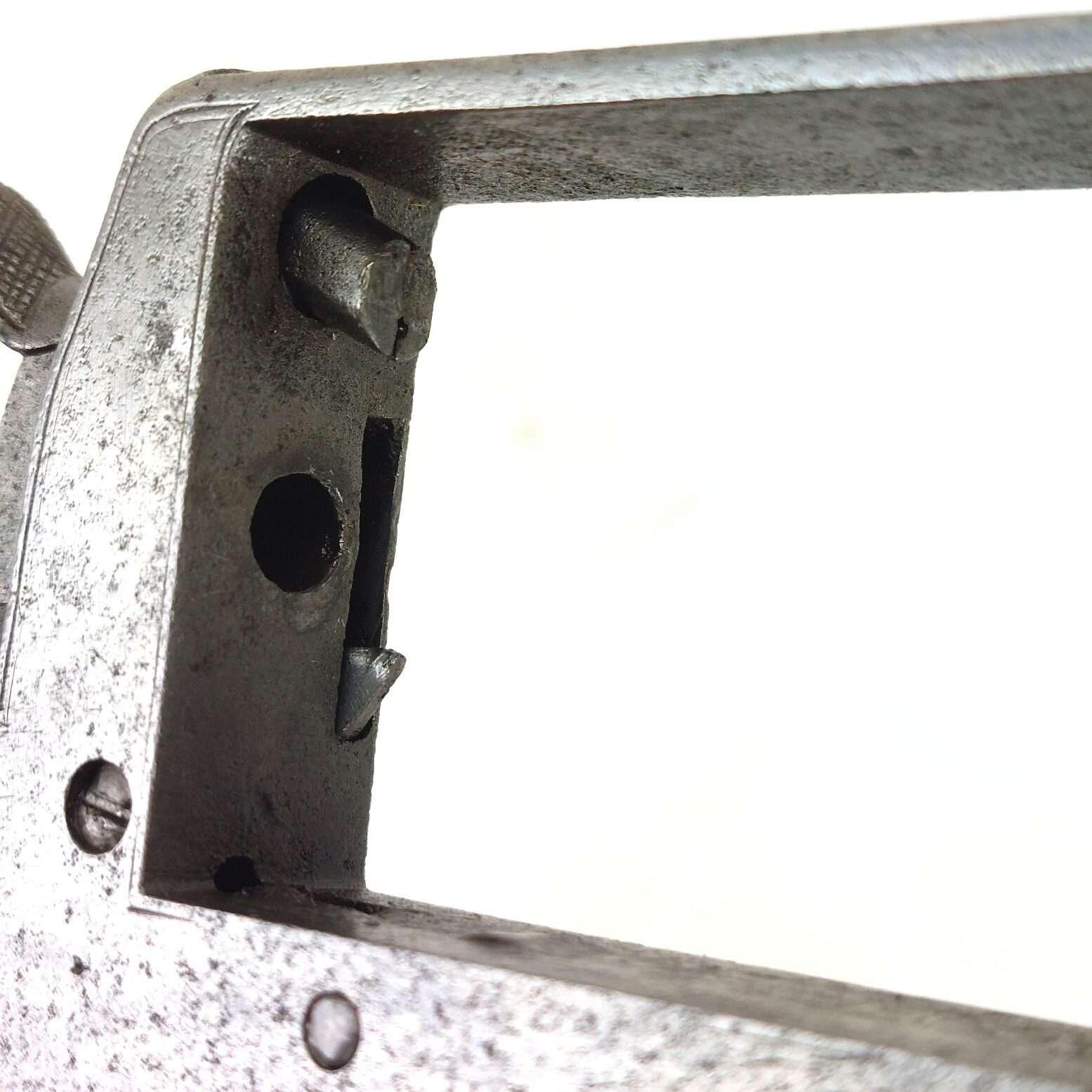
The metal surfaces display an even, untouched age patina throughout, with scattered areas of light pitting and oxidation consistent with mid-19th-century black-powder use. The cylinder chambers and bore show expected darkening and surface wear, with no evidence of later modification or modern interference. The action functions, with the trigger operating and the cylinder rotating on dry-fire (not tested with percussion caps). The revolver dismantles correctly, with the cylinder and arbor removing as intended. The loading rammer is present and intact. The walnut grip shows honest age-related wear and minor handling marks, with the lanyard ring absent from the butt. Overall, a sound and original example retaining good period character. Please see photographs as part of the condition report.
JAQEOOXAEOO_281508052025