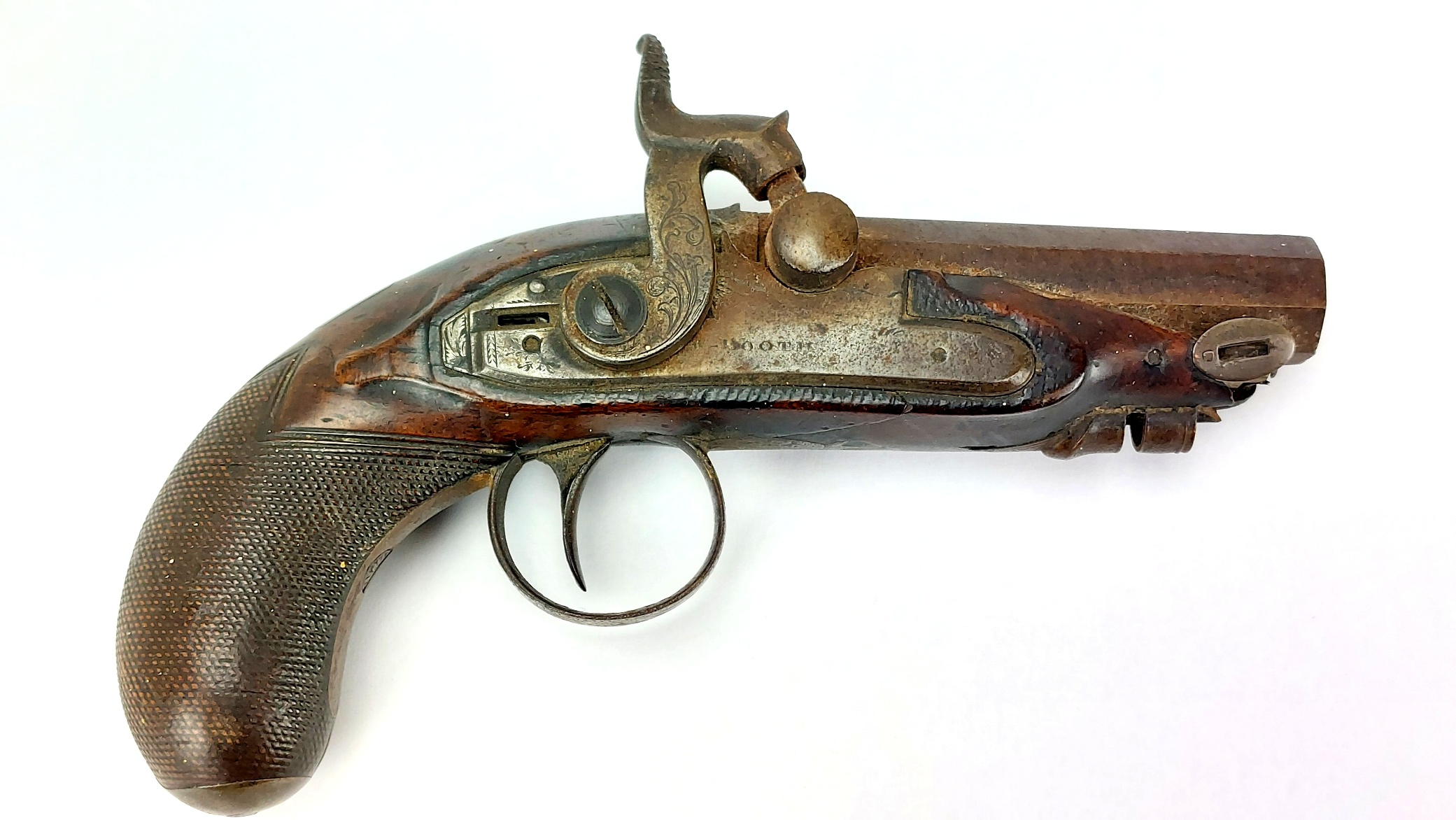
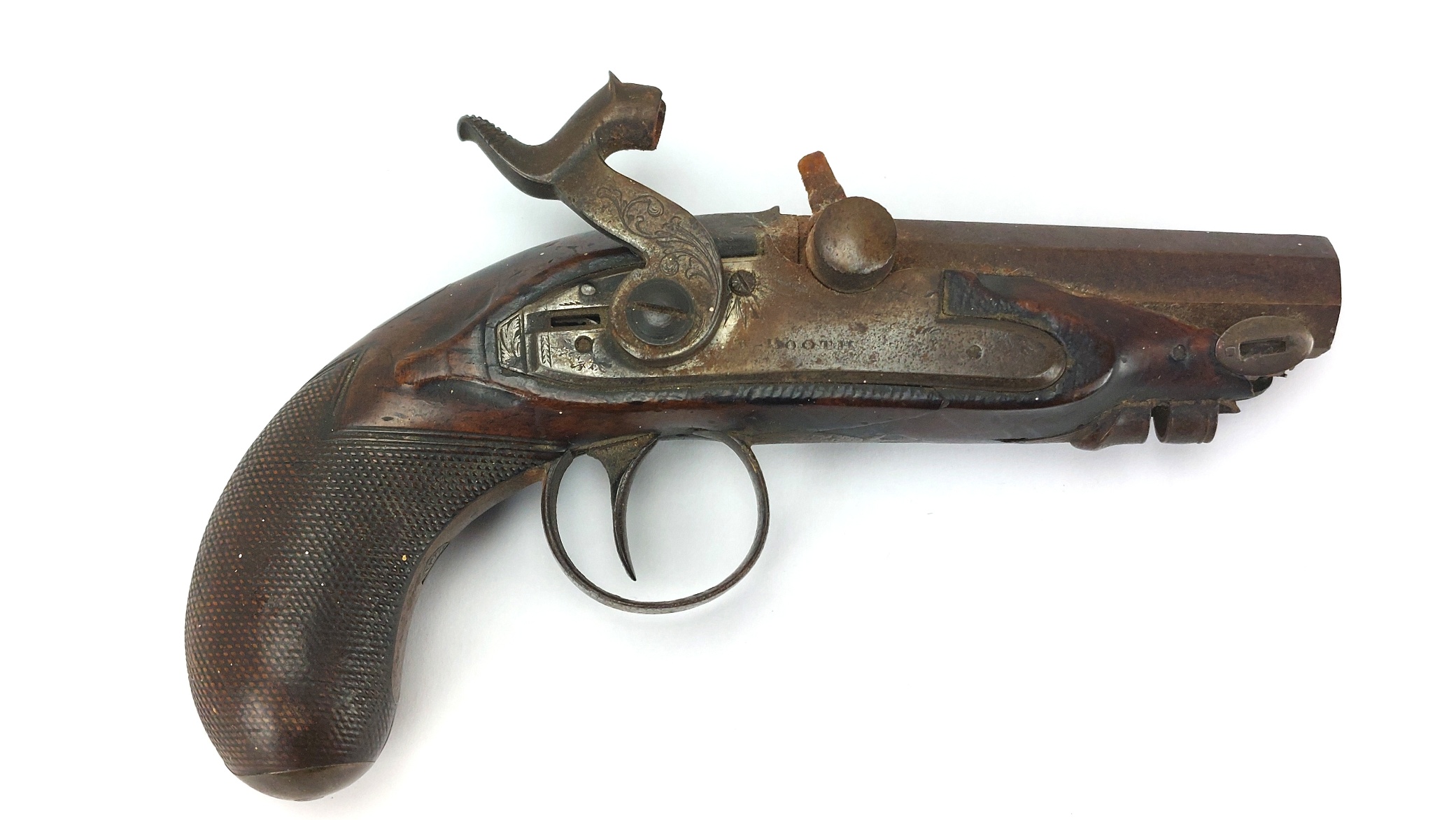
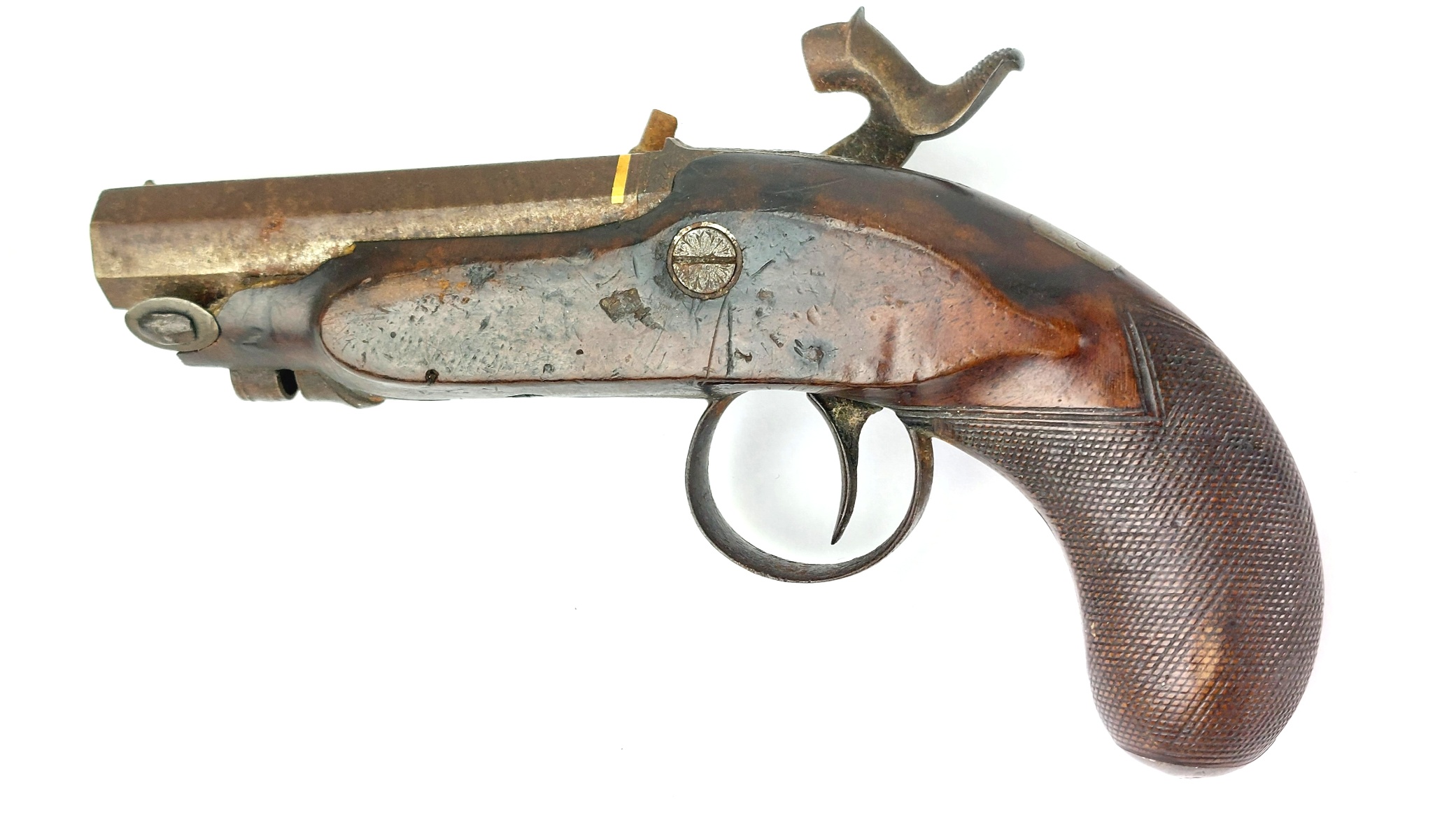
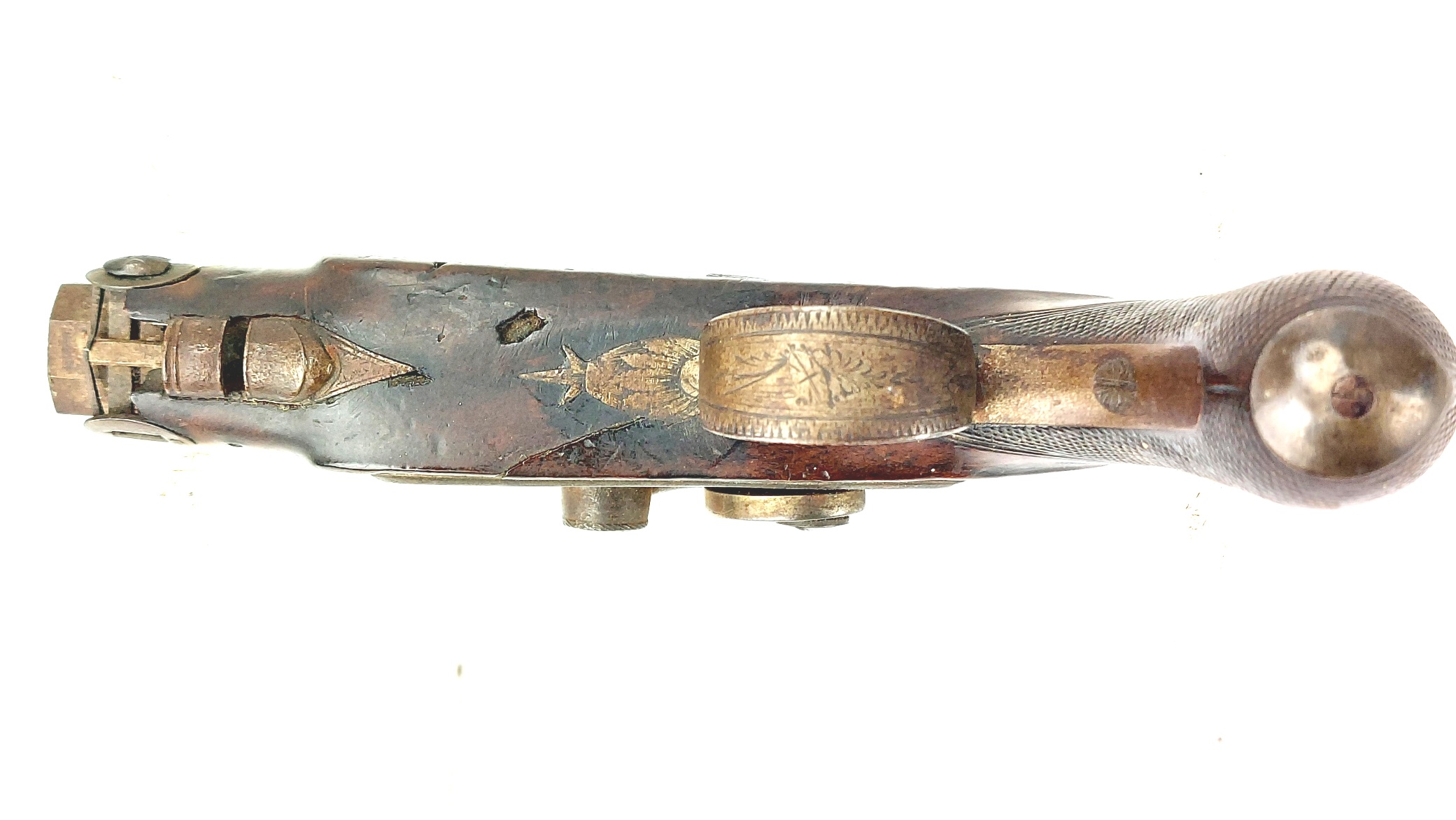
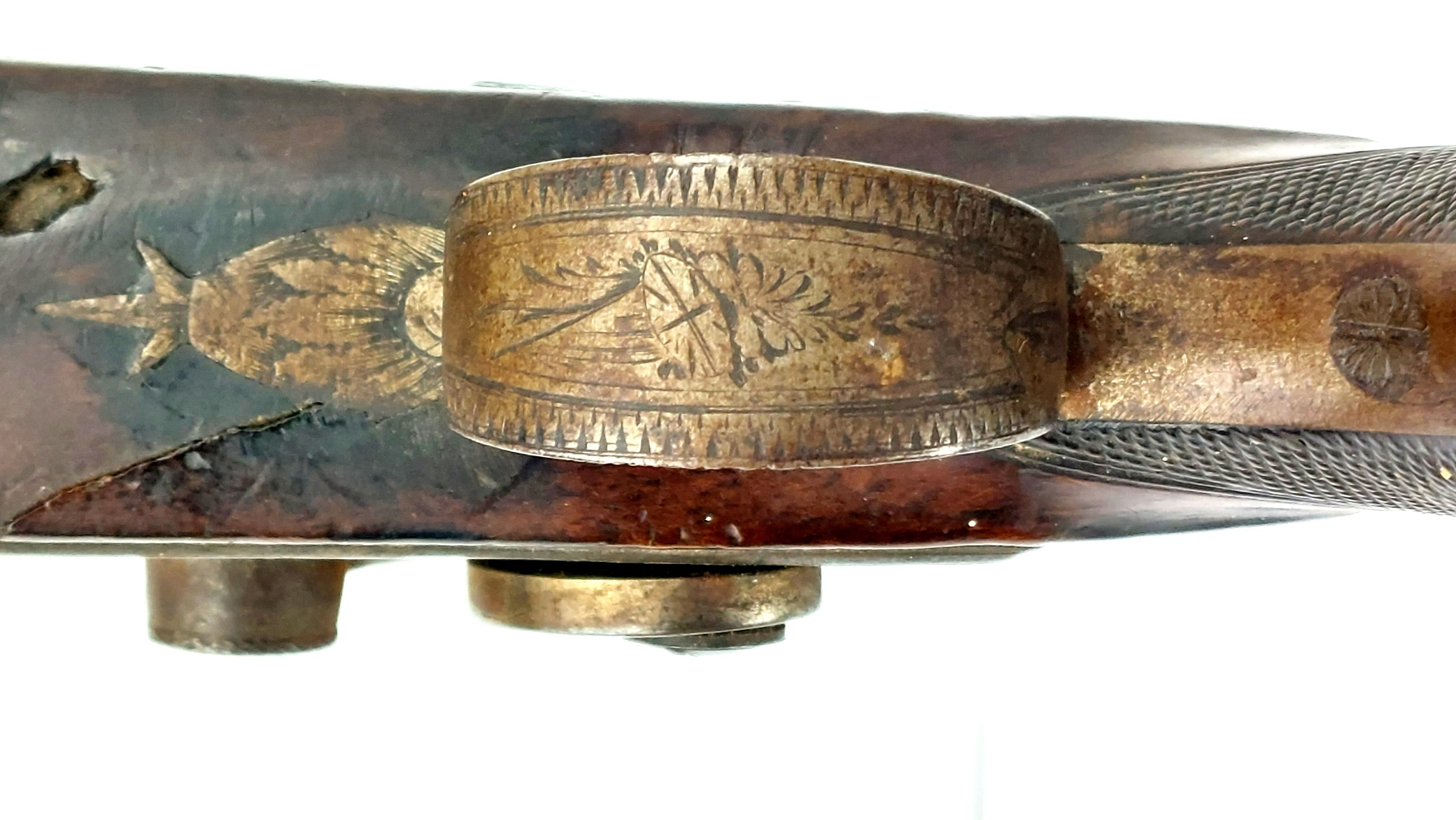
*British, c.1830–1845 Percussion Pocket Pistol (Derringer Size), by W. Booth, Converted Flintlock, Obsolete Calibre*
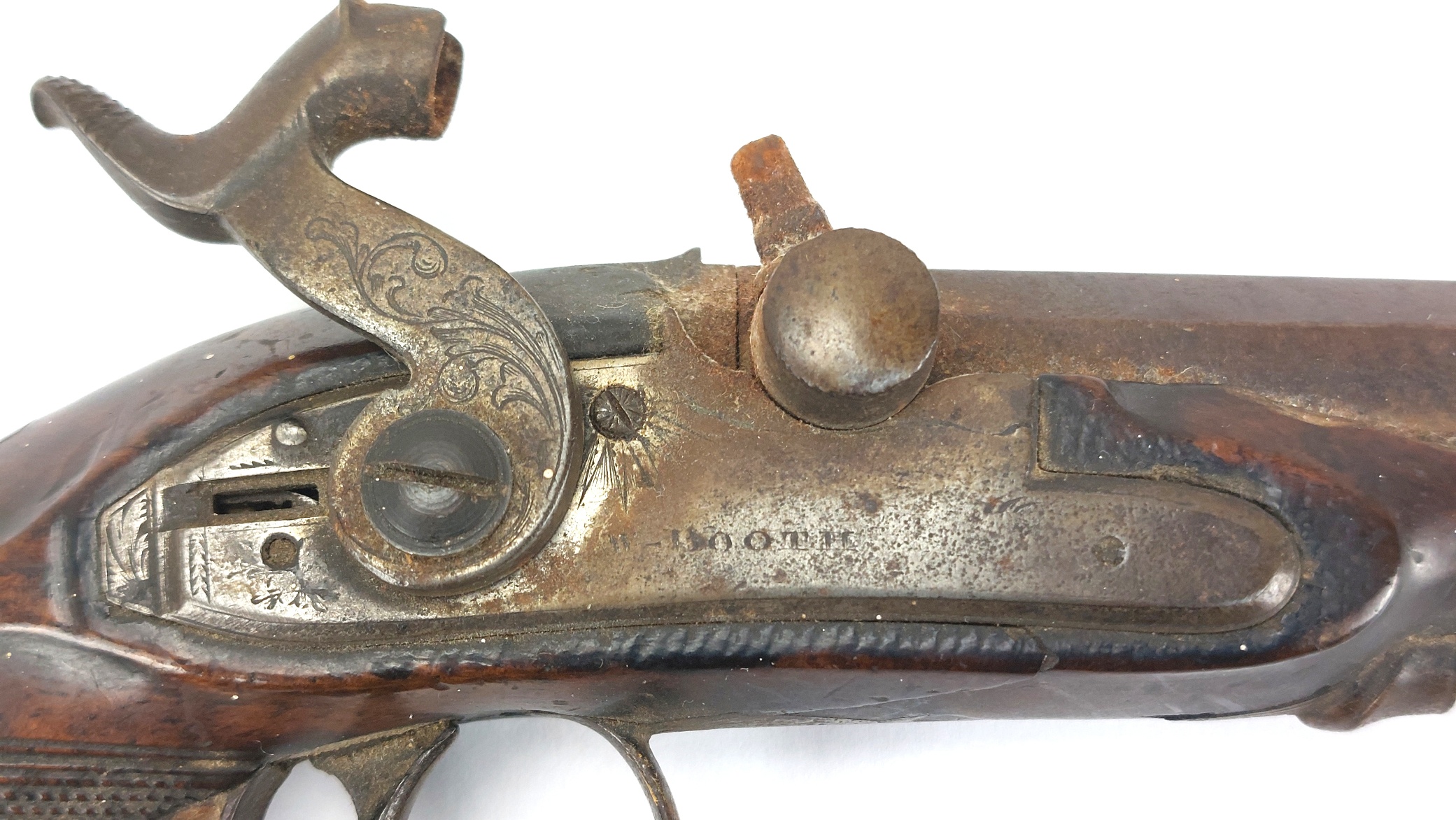
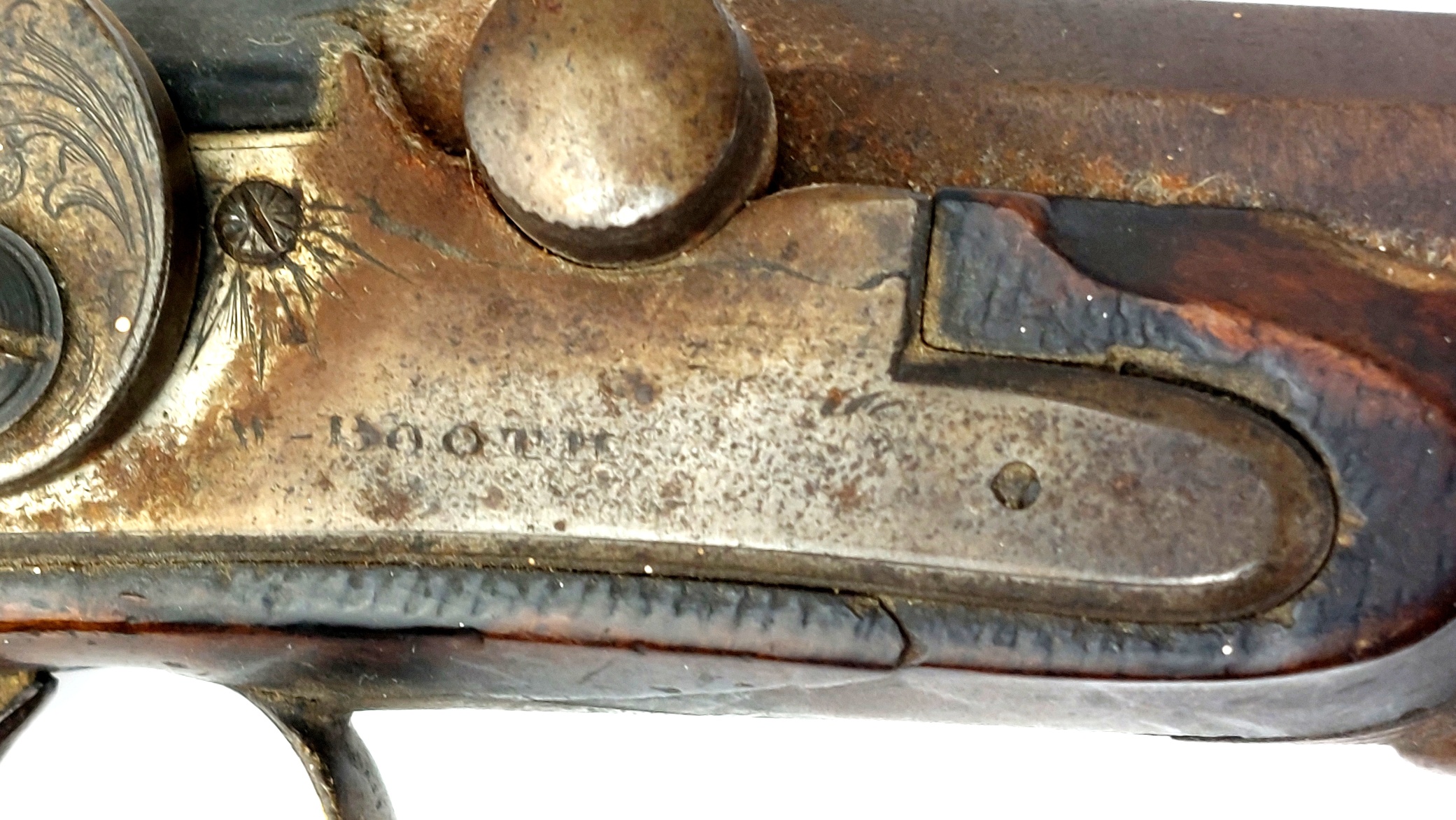
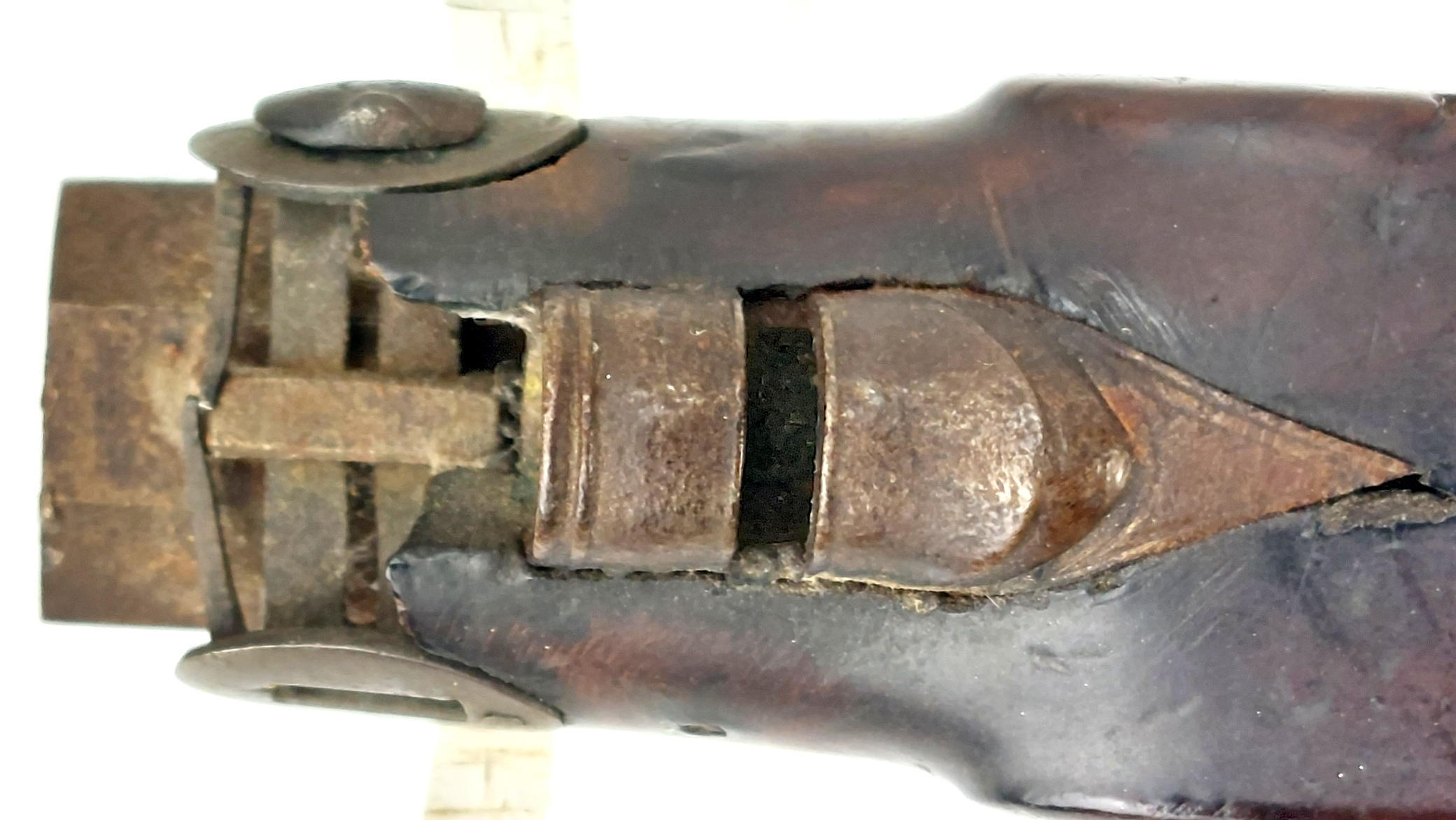
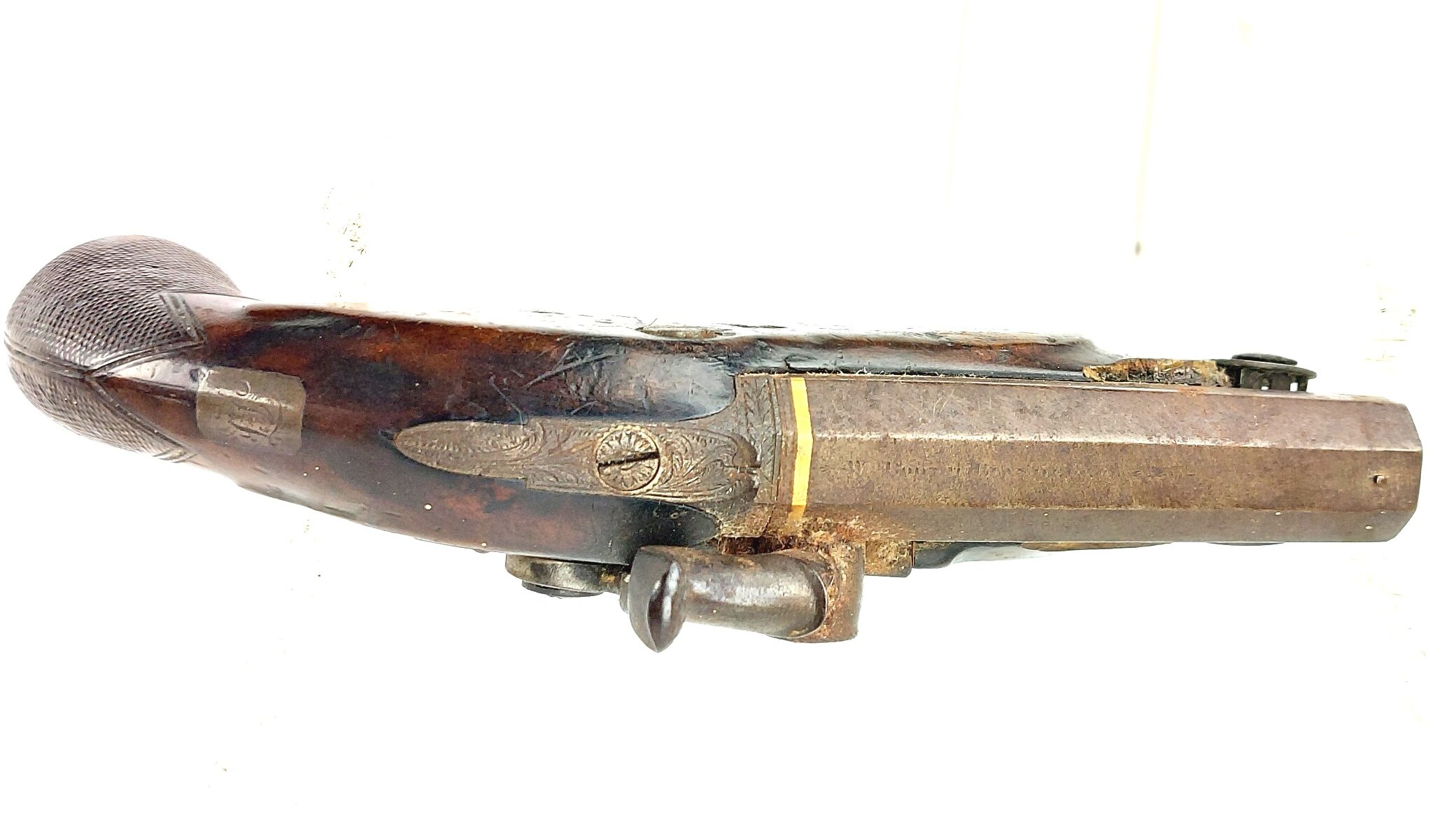
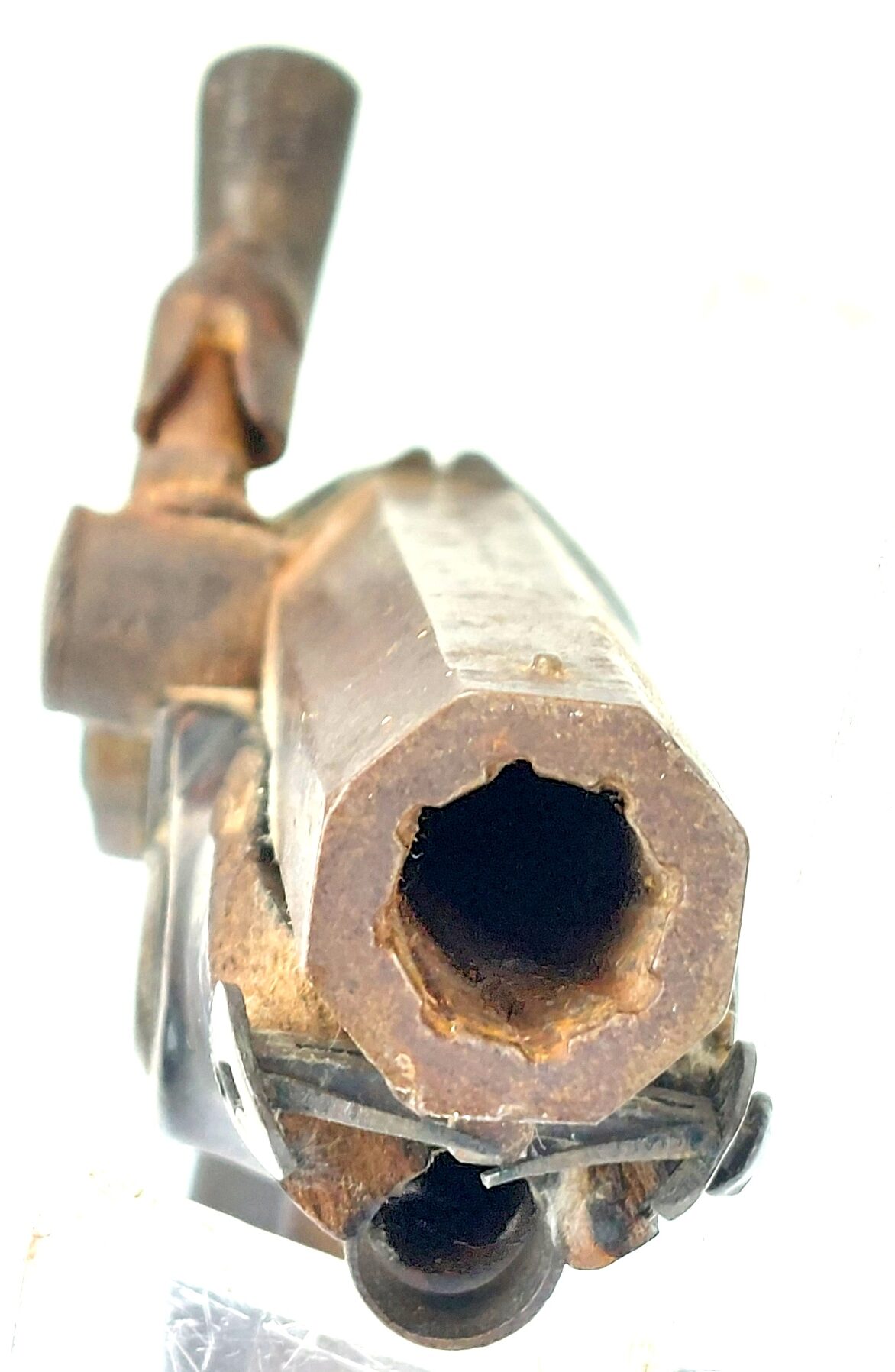
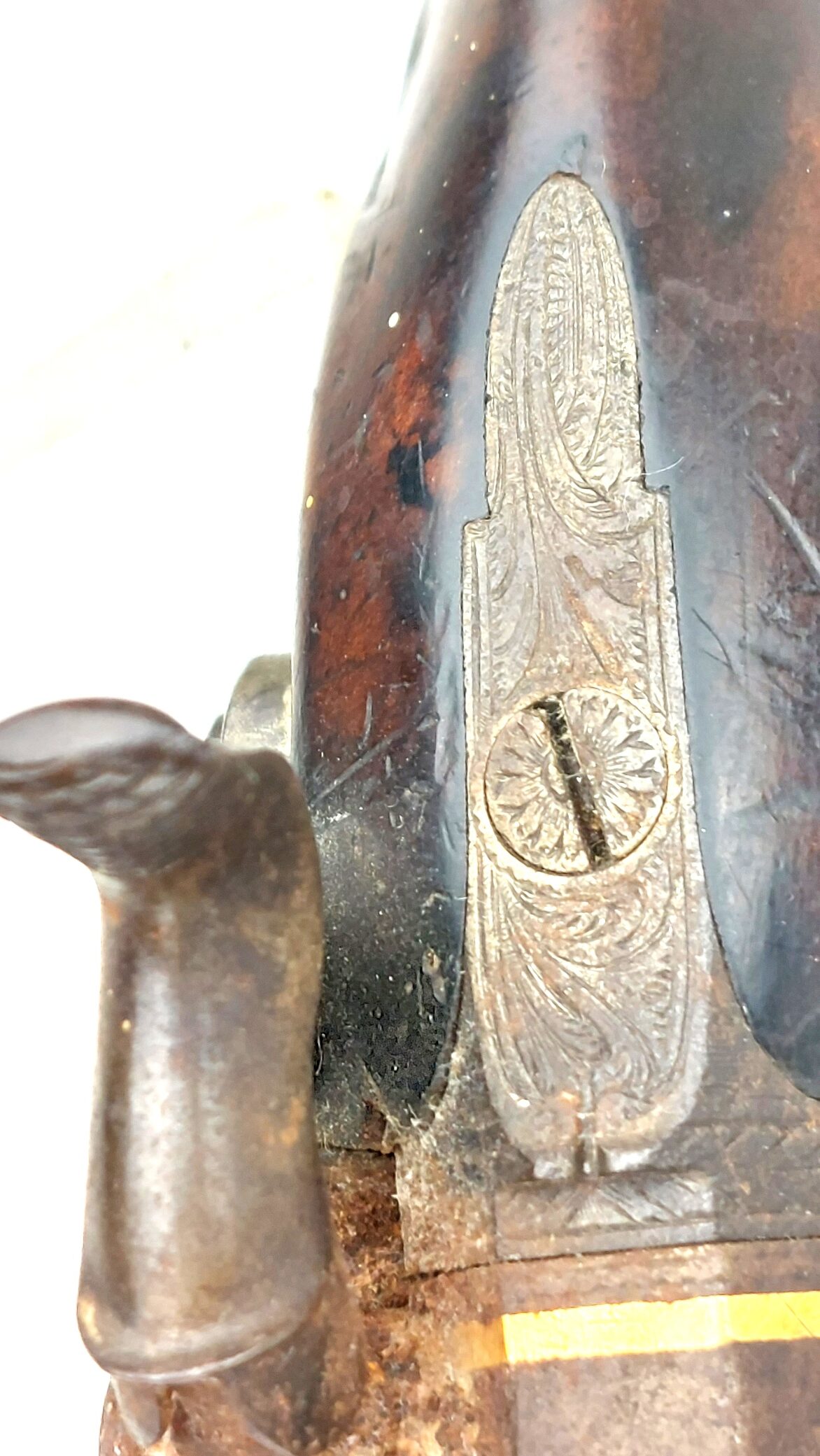
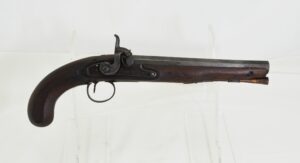
A compact British percussion pocket pistol of derringer size, fitted with a 3-inch octagonal rifled barrel and measuring approximately 16 cm overall. The pistol is of small-frame construction and was originally manufactured as a flintlock before being professionally converted to percussion during the early Victorian period. The barrel is of octagonal form and rifled, indicating an intention for improved accuracy despite the pistol’s diminutive scale. The lock is neatly marked “Booth”, and the pistol retains its original side-mounted percussion drum and nipple conversion. The integral swivel ramrod, originally fitted beneath the barrel, is now absent, as is commonly encountered on pistols of this type.
Approx. Measurements – Barrel length: 7.5 cm. Overall length: 16 cm.
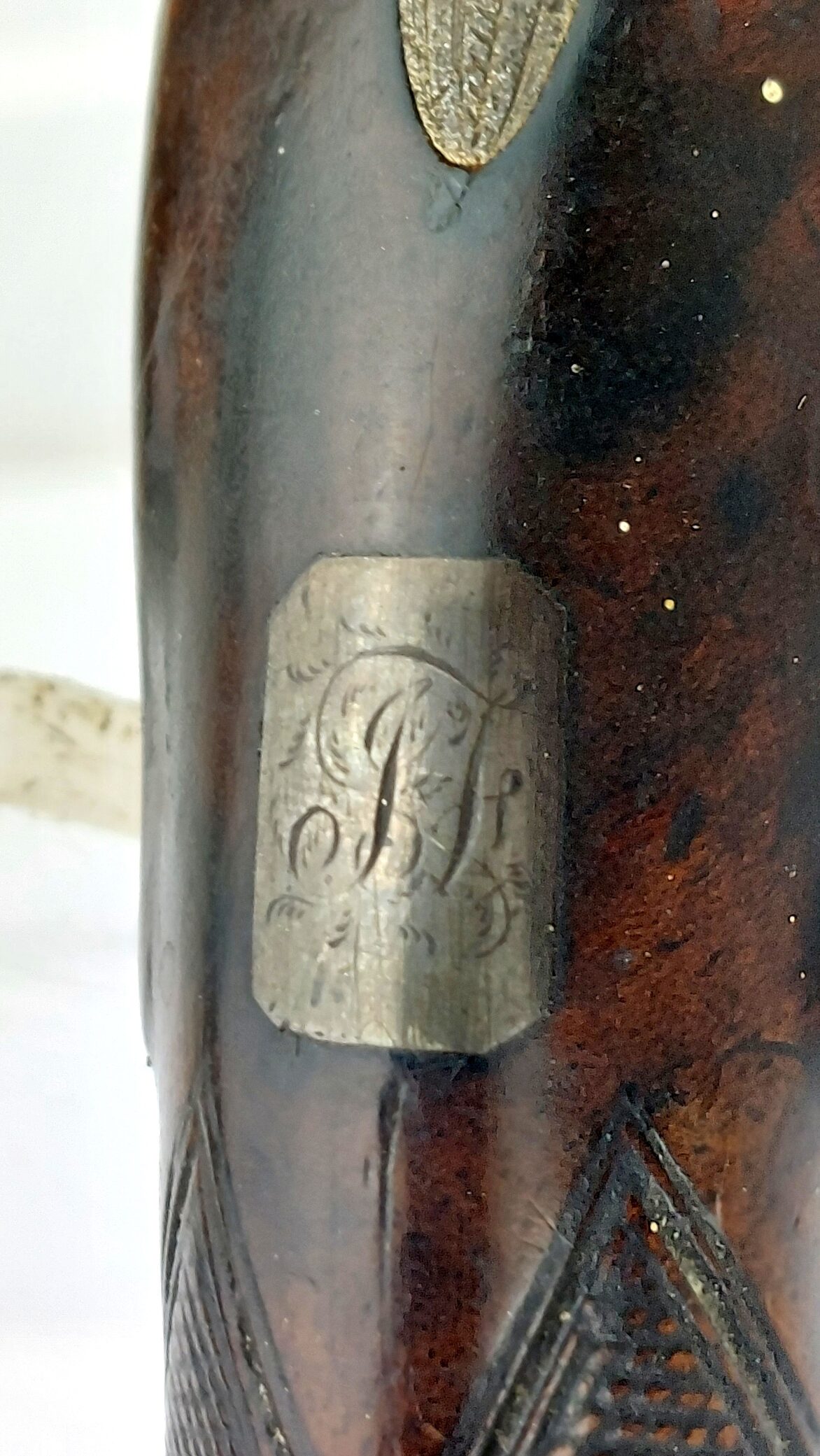
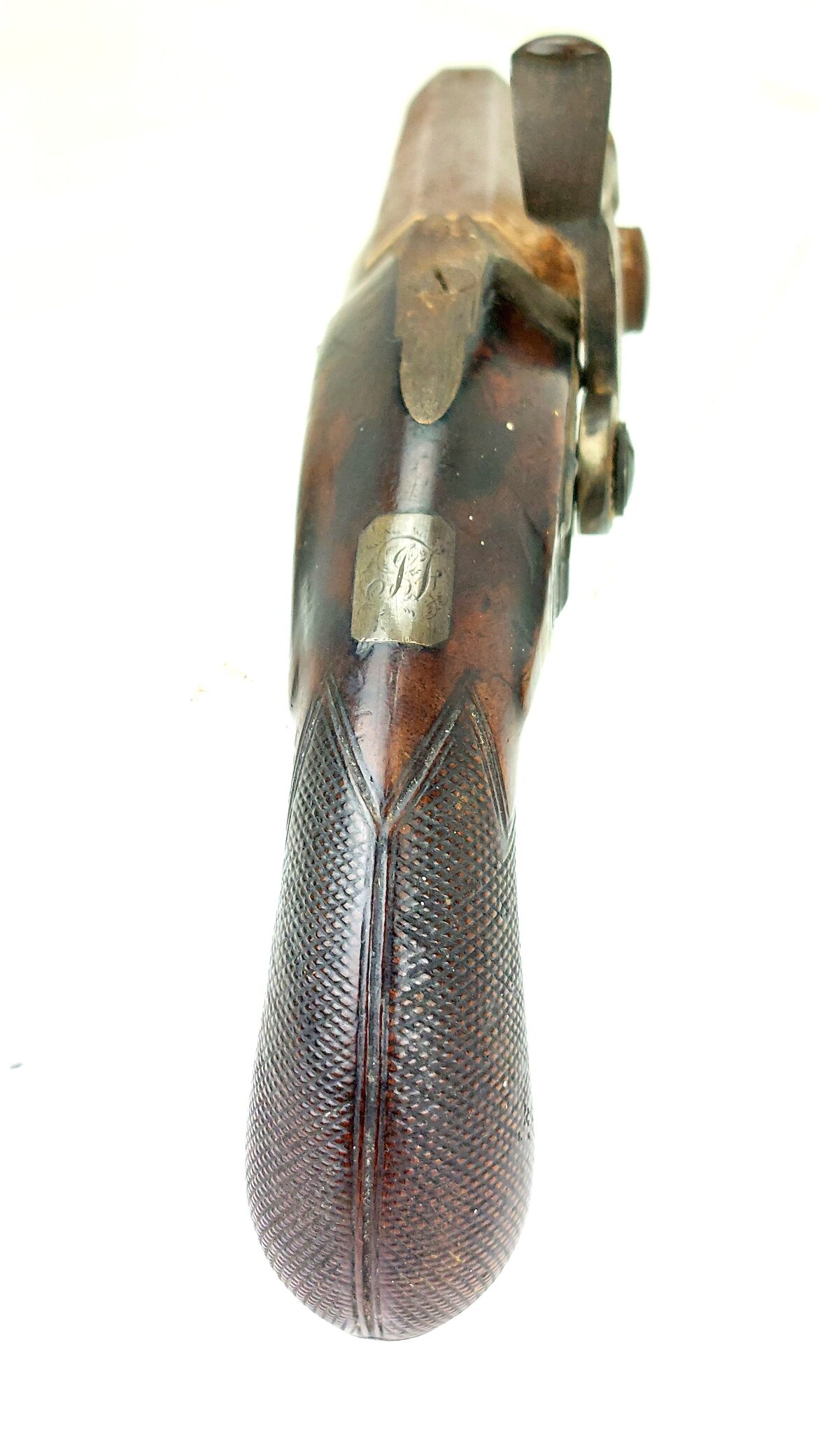
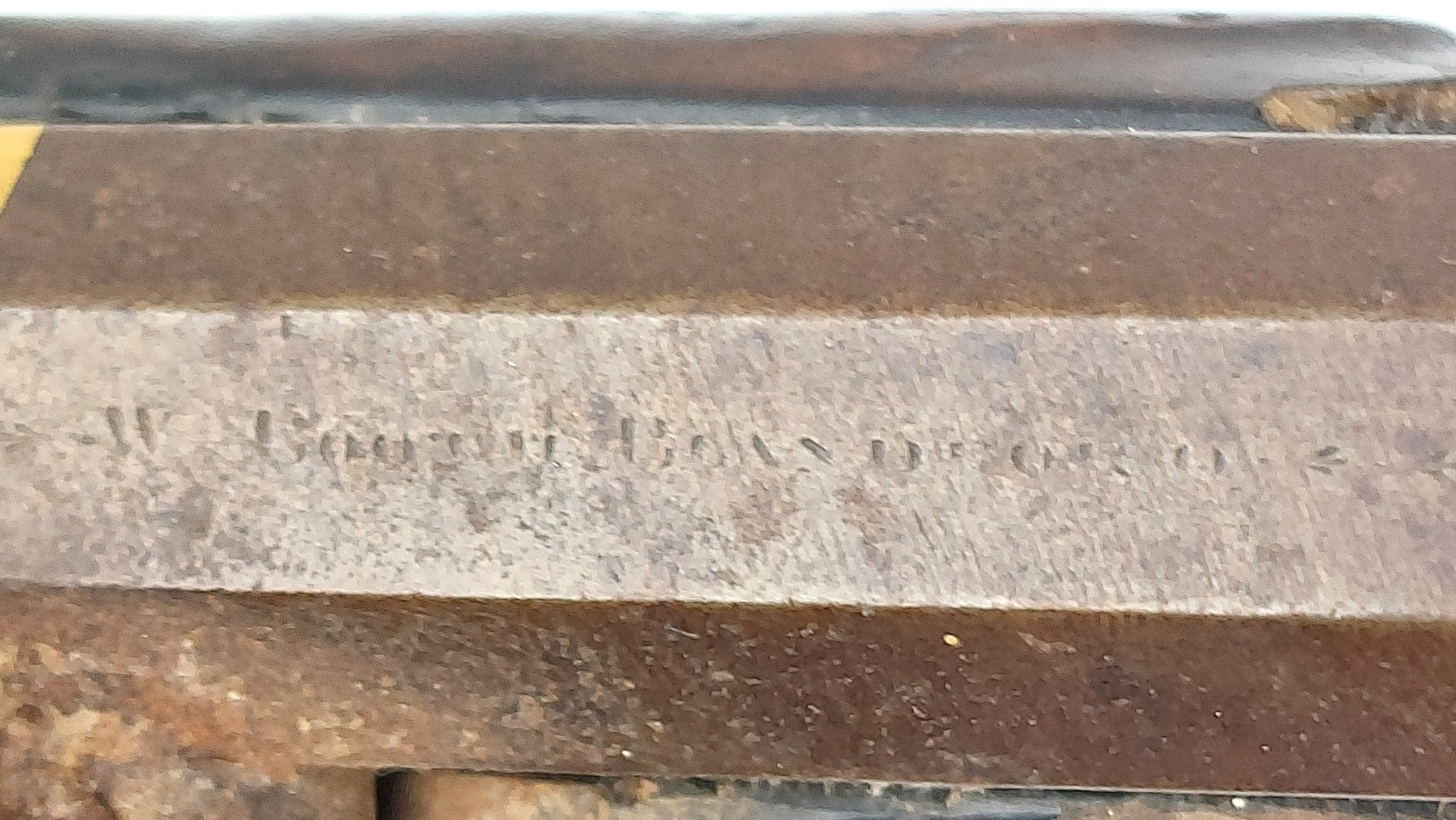
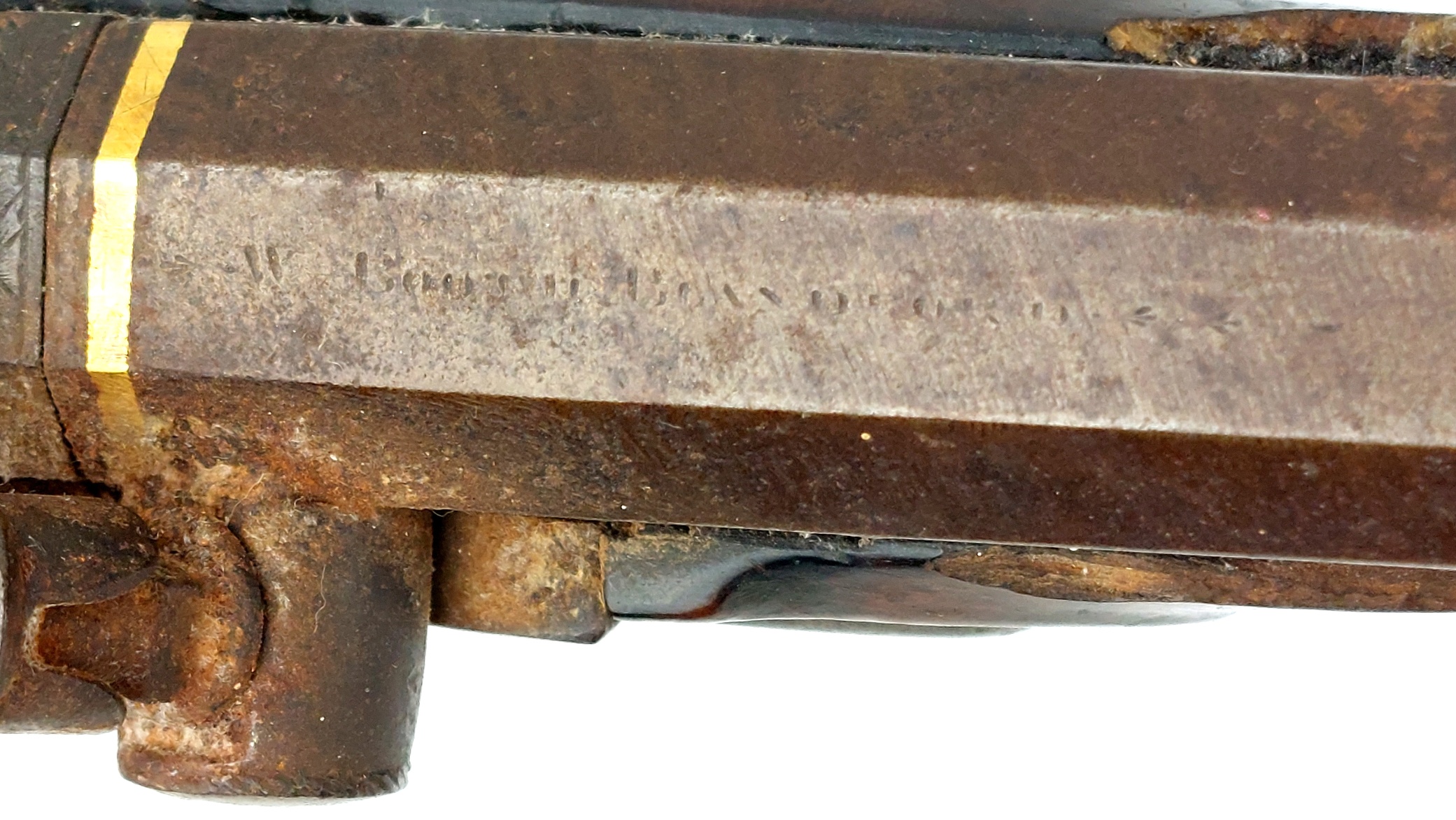
The top flat of the barrel is stamped “W. BOOTH – BIRM (indistinct)”, indicating manufacture or retail by William Booth of Birmingham. The barrel further retains an inset lozenge-shaped white-metal (German silver) cartouche engraved with intertwined script initials, almost certainly the private mark of a Birmingham barrel maker or finisher, a typical feature of Birmingham trade pistols. The lock plate is signed “Booth”. No visible proof marks are present externally, which is not uncommon on small-calibre pocket pistols of this period.
Historical Note: Gunmakers bearing the surname Booth were active across several British centres during the late 18th and 19th centuries, including London and the North-East of England. In addition, the Birmingham Gun Quarter hosted numerous small-scale makers and outworkers of the same name. The abbreviated town marking, appears to read “BIRM”, together with the Birmingham-style barrel maker’s cartouche and the pistol’s overall construction, strongly suggests manufacture or retail within the Birmingham gunmaking trade. Flint-to-percussion conversion became widespread from the late 1820s onwards, extending the service life of earlier flintlock pistols at modest cost, and examples such as this illustrate the continued civilian demand for compact personal defence arms during the early Victorian period.
There is a certain historical irony in a derringer-size pistol bearing the name “W. Booth”, in light of the later notoriety of John Wilkes Booth and his use of a derringer-type pistol in 1865; however, the similarity of surname is purely coincidental and entirely unrelated.
*Condition* Good antique condition overall, with an even, untouched surface patina throughout. The barrel retains clear form and rifling, with softened but legible top-flat markings. The lock marking remains visible. The percussion conversion appears period and undisturbed. The integral swivel ramrod is absent. Minor age-related wear, surface marks, and handling wear consistent with age and use. Please see photographs as part of the condition report.
*In order to complete the online purchase we will require a picture/scan of a photo ID (Driving Licence, Passport or an official document with a recent picture). If you don't posses any such document please call to buy. If we consider that the proof of ID is incorect or insuficient, we reserve the right to cancel the transaction.
*We also reserve the right to cancel the transaction with a full refund if there is any suspicion that the provided item will be used in any way contrary to the laws and legislation of UK.