British, Boer War Period, Named “Official Copy” Soldier’s Holy Bible – Private Albert Edward Scott, No. 5550, 13th Hussars (L Troop), Norwich – Second Boer War Veteran
Named Boer War soldier’s pocket Bible belonging to Private Albert Edward Scott (No. 5550), 13th Hussars, a cavalry trooper who served in South Africa and received the Queen’s South Africa Medal with four clasps.
*British, Boer War Period, Named “Official Copy” Soldier’s Holy Bible – Private Albert Edward Scott, No. 5550, 13th Hussars (L Troop), Norwich – Second Boer War Veteran*
A scarce and historically interesting British soldier’s “Official Copy” Holy Bible, clearly named in period ink to Private A. E. Scott, service number 5550, 13th Hussars, L Troop, Norwich, a cavalry trooper who served with distinction during the Second Boer War (1899–1902). Compact devotional Bibles of this type were commonly carried by British soldiers in the late Victorian and Edwardian era and were intended to provide spiritual guidance and comfort during active service. Surviving examples that retain clear personal inscriptions and can be linked to identifiable soldiers are considerably less common, particularly when supported by surviving military records.
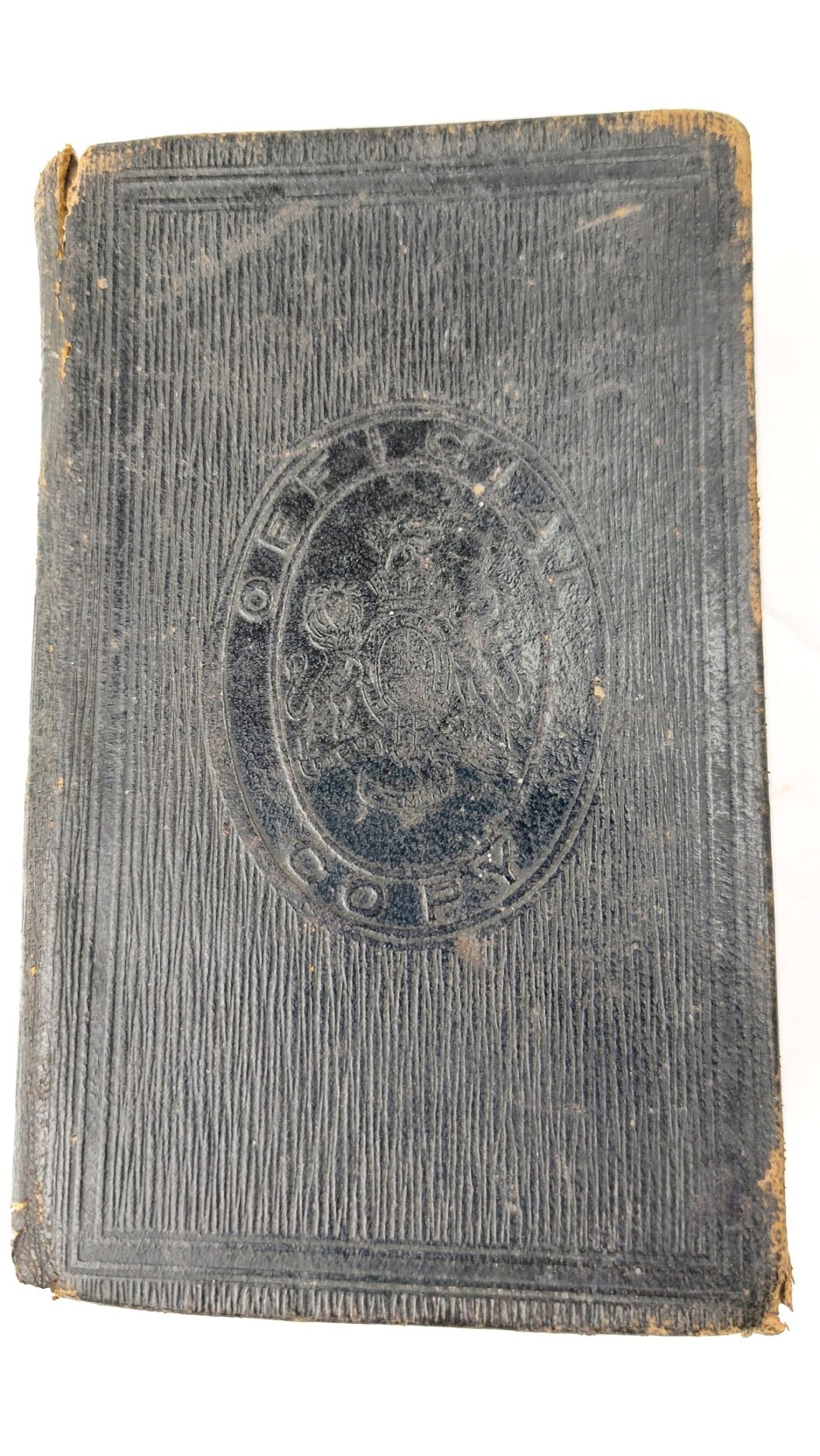
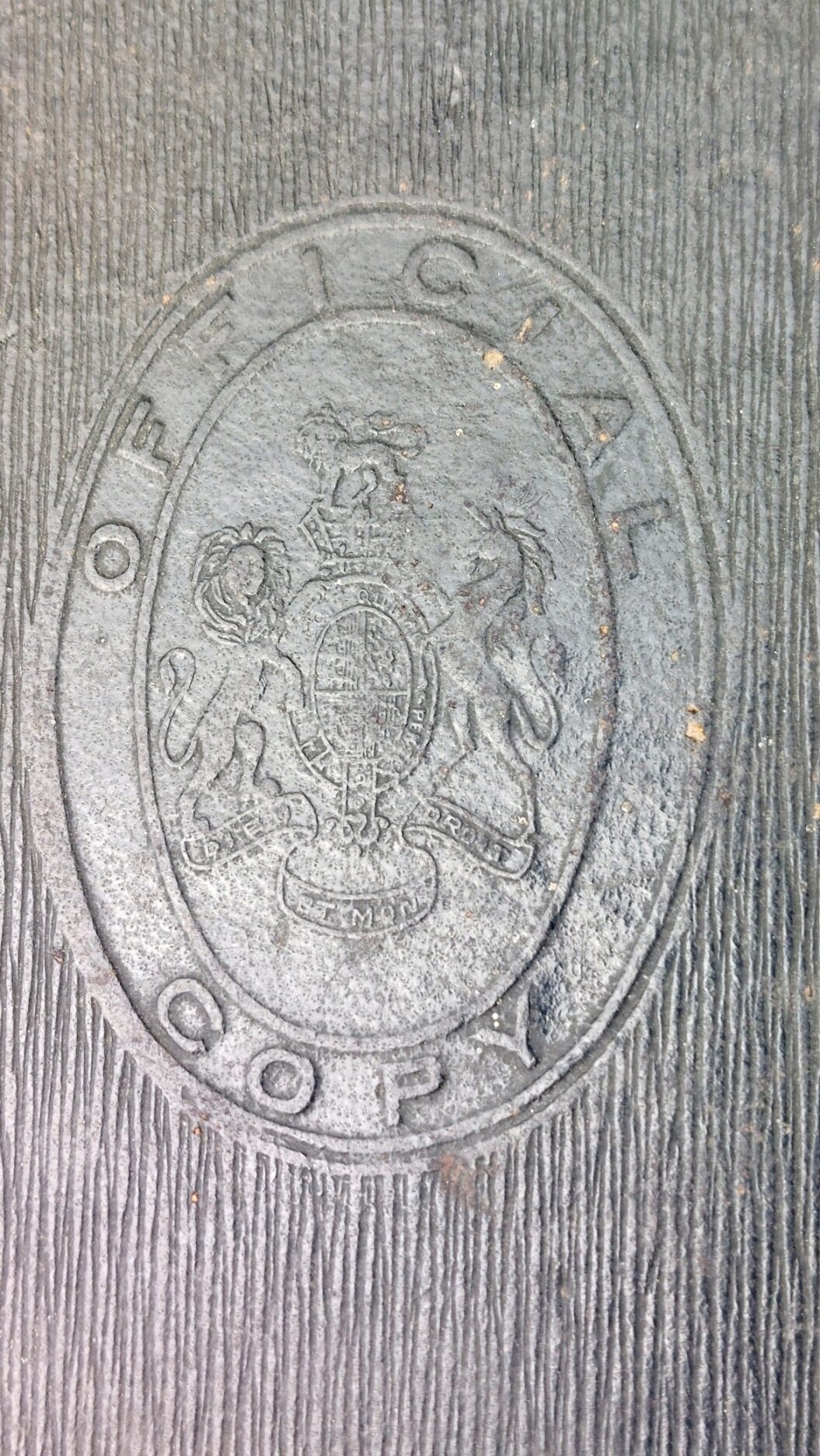
The Bible is bound in black leather with a textured finish and features an embossed oval panel to the centre of both covers bearing the Royal Coat of Arms with the wording “Official Copy”, a style typical of small-format military devotional Bibles issued around the turn of the twentieth century. The spine is titled “Holy Bible” in gilt lettering. Internally the volume contains the Authorised King James Version, the Bible begins at page 5 with the dedication page “To the Most High and Mighty Prince James”, indicating that the original title page and publisher’s imprint leaves are no longer present. and runs to approximately 800 pages of scripture printed in a compact format designed for portability. These small editions were intended to fit easily within a tunic pocket, cavalry kit, or saddlebag and were widely carried by British soldiers serving overseas.
The front endpaper contains a neatly written contemporary inscription which reads: “Pte A. E. Scott / No 5550 / 13 Hussars / L Troop / Norwich.” This inscription corresponds directly with the documented military service of Private Albert Edward Scott of the 13th Hussars, confirming the Bible’s ownership and establishing an attractive piece of personal provenance linking the book to a cavalryman who served during the Boer War. The reference to Norwich aligns with the presence of cavalry barracks in the city where the regiment was stationed during the period.
Approx. Measurements – Height: 14.2 cm. Width: 9 cm. Depth: 2.8 cm.
History Note:
Private Albert Edward Scott was born in Aylmerton, Norfolk, and enlisted in the British Army at Norwich on 28 May 1900 at the age of twenty-one. His service papers, preserved within the Royal Hospital Chelsea pension records (WO 97), describe him physically as a young cavalry recruit standing 5 feet 4½ inches in height and weighing approximately 125 pounds, with grey eyes, brown hair, and a sallow complexion. His religion is recorded as Church of England, which aligns with the possession of a personal Bible of this type.
Scott joined the 13th Hussars (Prince of Wales’s Own), a long-established British light cavalry regiment that had served in numerous imperial campaigns during the nineteenth century. At the time of his enlistment Britain was heavily engaged in the Second Boer War, a major colonial conflict fought between the British Empire and the Boer republics of the Orange Free State and the South African Republic (Transvaal). By 1900 the war had evolved from large conventional battles into a prolonged guerrilla struggle across the South African veldt. During this phase British cavalry regiments played a crucial role in the campaign, conducting mounted patrols, reconnaissance operations, convoy escorts, and pursuit of mobile Boer commandos.
Private Scott served with the regiment in South Africa and his entitlement to the Queen’s South Africa Medal confirms his participation in these operations. His medal carried the clasps Orange Free State, Transvaal, South Africa 1901, and South Africa 1902, indicating prolonged service during the later and often most demanding stages of the war. The Orange Free State clasp reflects service in the Boer republic between February 1900 and May 1902, while the Transvaal clasp denotes operations in the South African Republic where the British Army conducted extensive mounted sweeps against Boer guerrilla forces. The additional date clasps for 1901 and 1902 confirm that Scott remained on campaign during the final years of the conflict until the war’s conclusion with the Treaty of Vereeniging in June 1902.
Following the end of the war Scott continued to serve with the regiment for several more years. His service papers record the normal routine disciplinary entries typical of soldiers of the period, including minor reprimands or short periods of confinement to barracks for breaches of regimental discipline. These entries were extremely common within Victorian and Edwardian service records and reflect the strict day-to-day regulation of cavalry life rather than serious misconduct. Having completed his period of engagement, he was eventually discharged from the army on 17 November 1905.
Small devotional Bibles such as this were widely distributed within the British Army through chaplains, religious societies, and charitable organisations, particularly during campaigns overseas. They were intended to provide moral guidance and personal comfort to soldiers serving far from home. Because they were often carried during active service, many were heavily worn or discarded, and relatively few examples survive today with clear inscriptions linking them to identifiable soldiers. When such inscriptions can be matched to surviving service records and medal rolls, they offer a valuable and evocative insight into the personal lives of ordinary soldiers who served during Britain’s imperial conflicts.
This example therefore represents not only a period military devotional book but also a tangible personal relic connected to a Boer War cavalryman of the 13th Hussars, supported by documentary evidence of his service in South Africa.
*Condition*
The Bible remains complete as a physical volume but shows clear signs of age and long-term handling consistent with field or pocket use. The black leather binding is worn and rubbed throughout, particularly along the edges and corners, with some loss to the leather at the spine ends and extremities. The embossed “Official Copy” Royal Arms on the covers remain visible but are softened through wear. The spine is weakened and the text block is partially detached from the covers, with the internal binding cloth and stitching exposed at the hinge. The first surviving printed page begins at page 5 with the dedication “To the Most High and Mighty Prince James”, indicating that the original title page and publisher’s imprint leaves are no longer present. This is a common condition issue with small soldier’s Bibles that saw prolonged use. Internally the pages are generally intact with typical age toning and scattered light marks. The paper edges are browned and slightly worn, particularly at the fore-edge of the text block. The handwritten ownership inscription to the front endpaper remains clear and legible. Overall the Bible presents as a well-used but historically intact example with strong period wear consistent with a personal devotional book carried by a serving soldier. Please see photographs as part of the condition report.