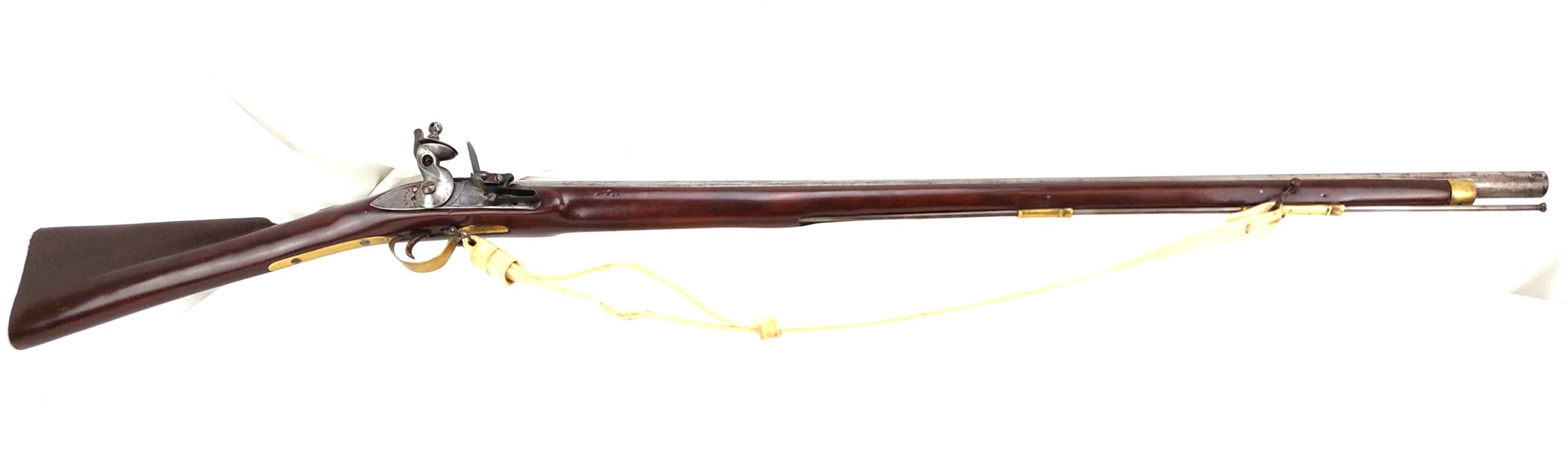
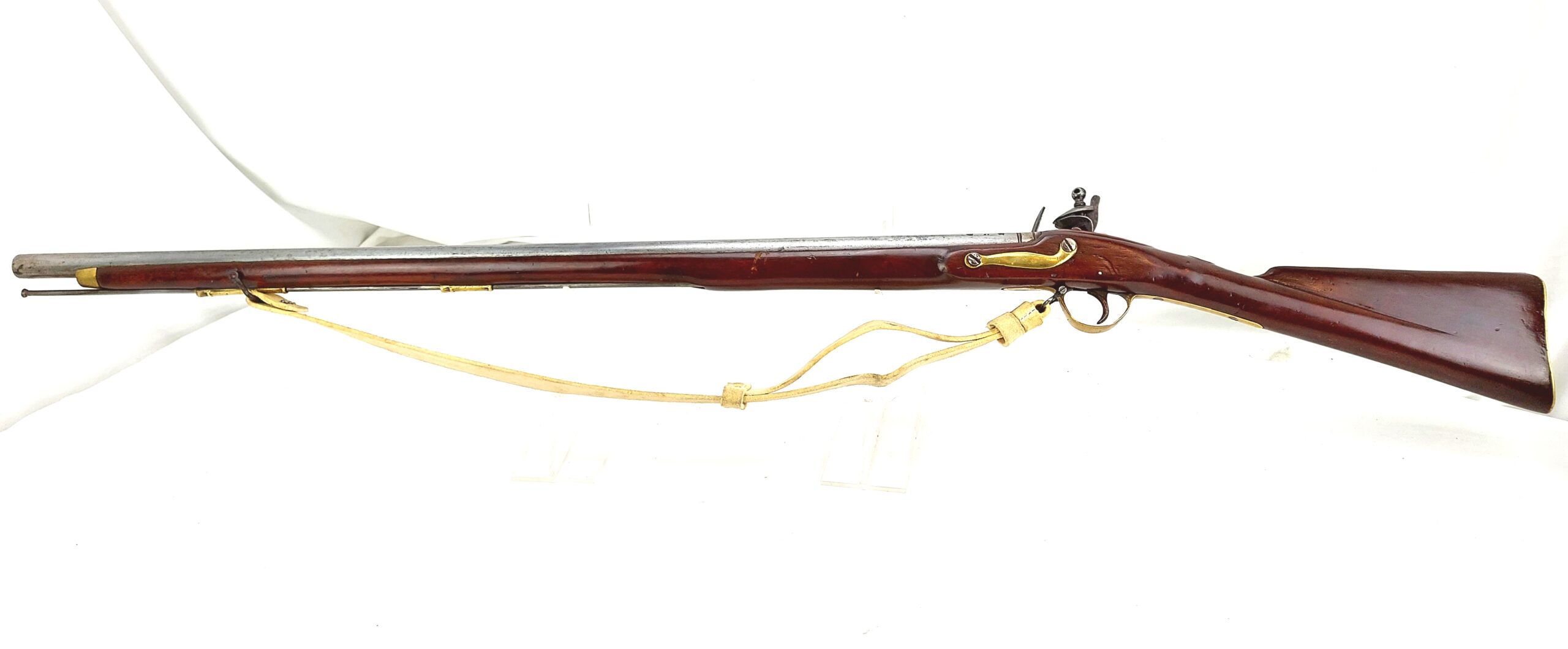
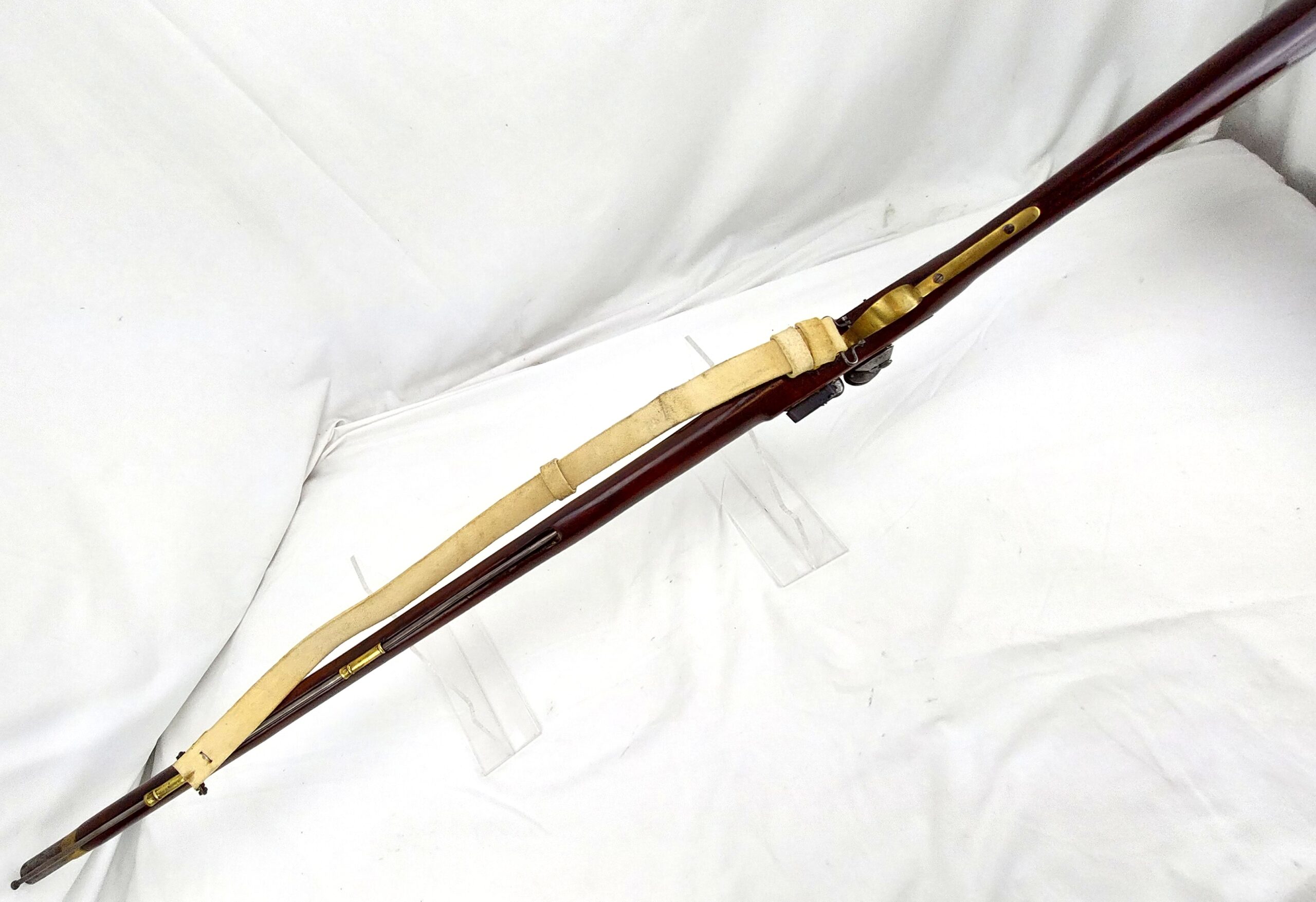
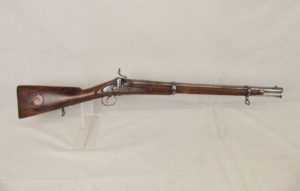
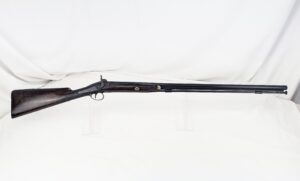
*British, 19th Century, Royal African Company Brown Bess Tower Musket, with Elephant Lock and Sling*
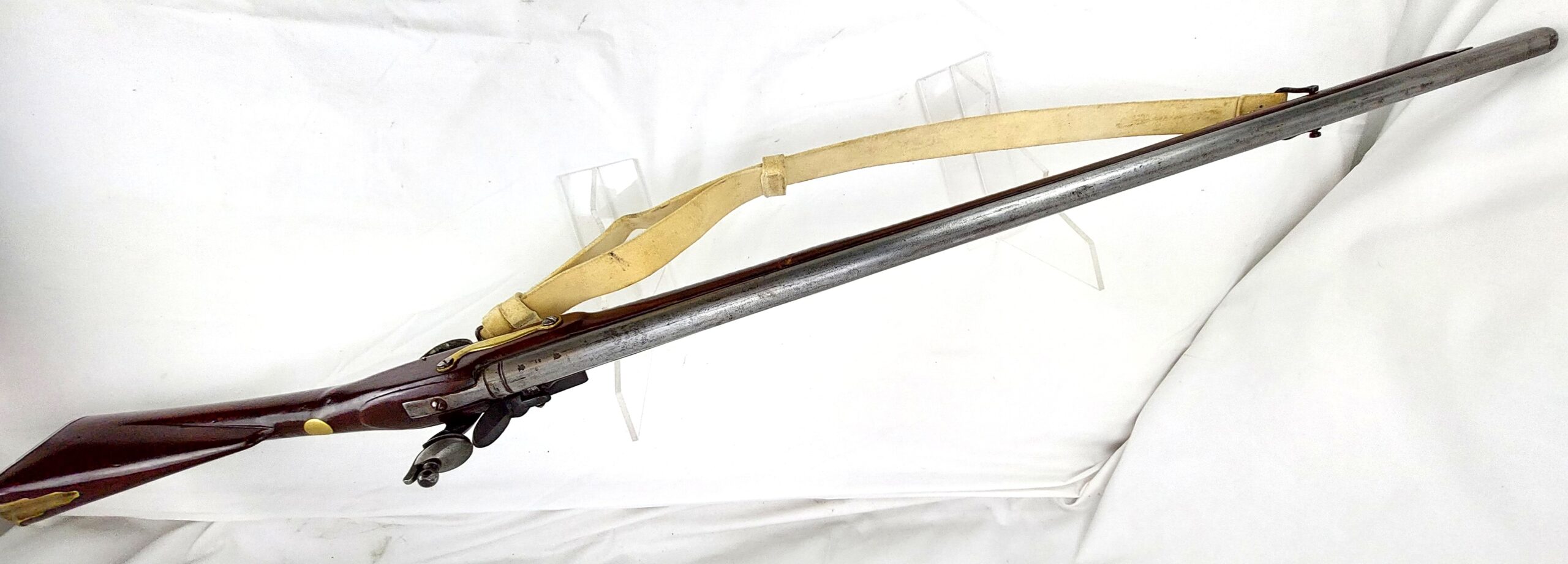
Barrel measures approx just over 37" or 95cm, 53" or 135cm overall.
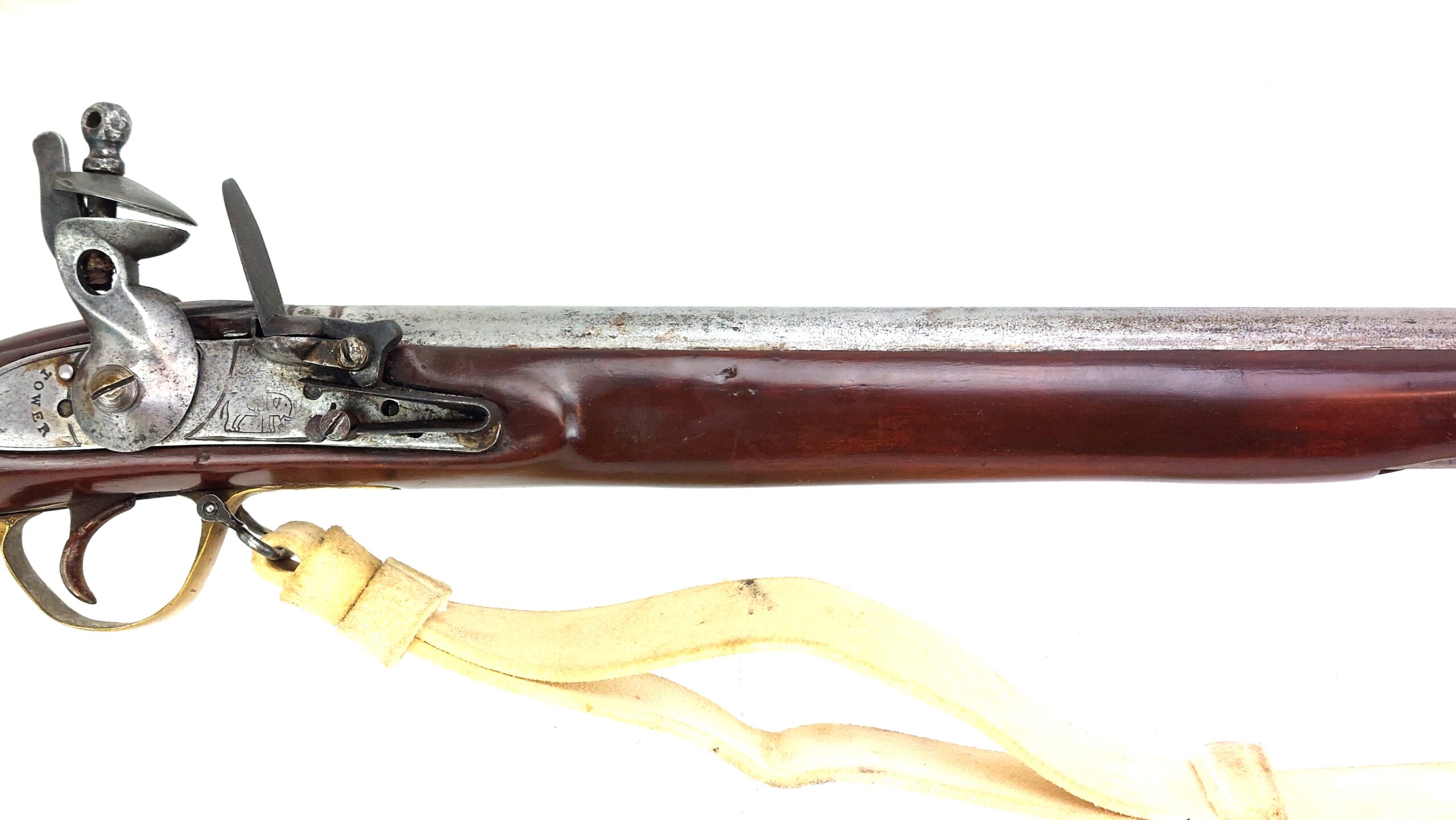
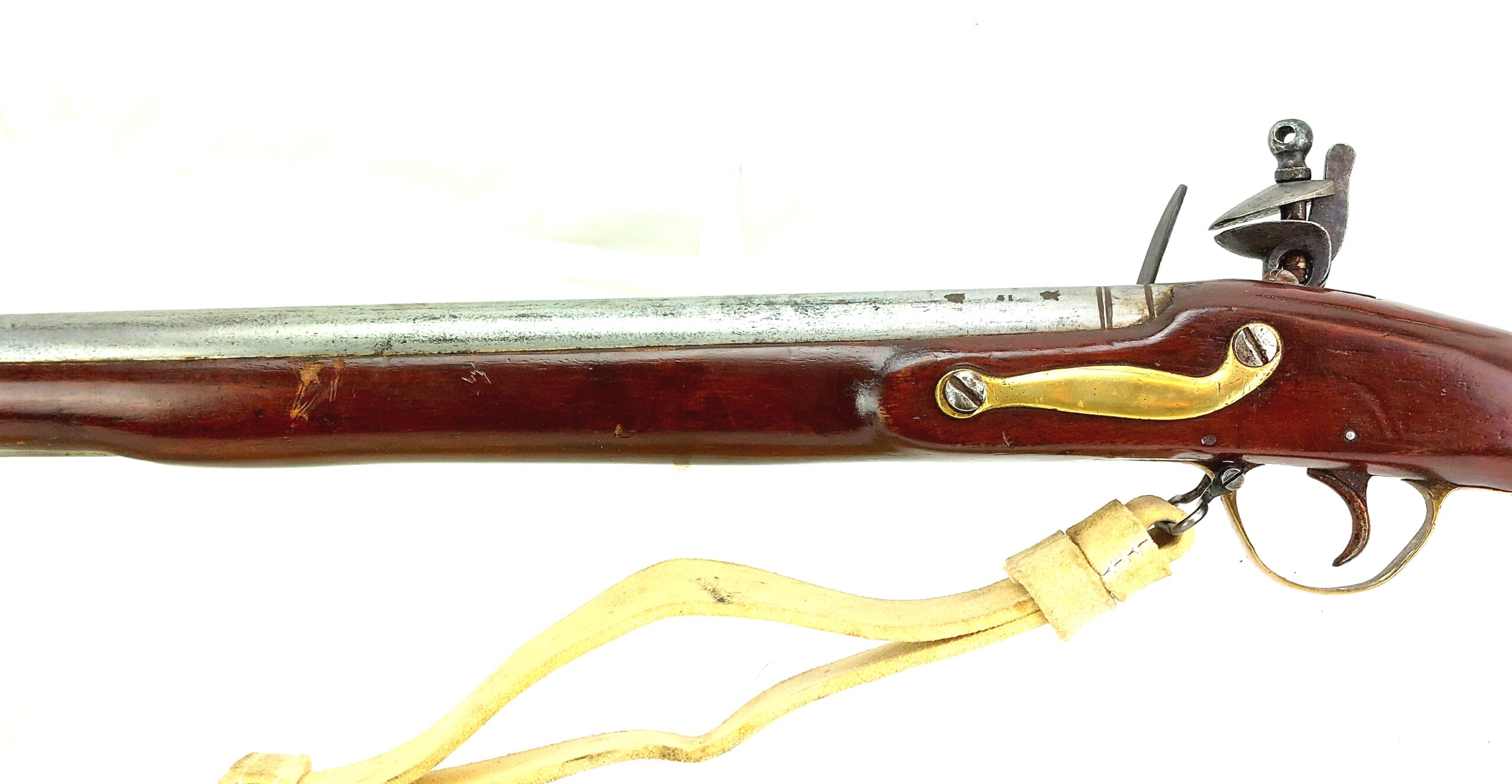
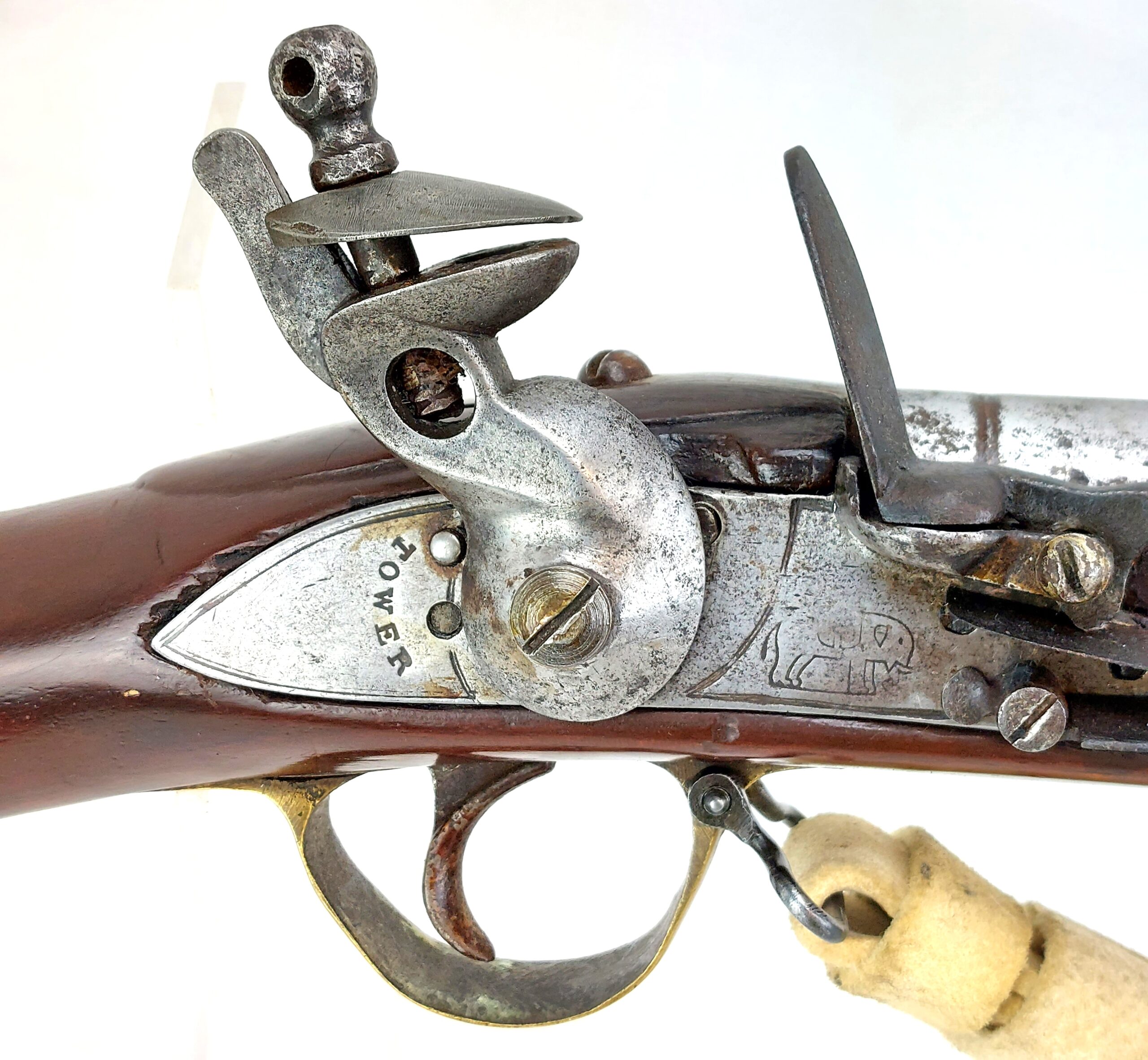
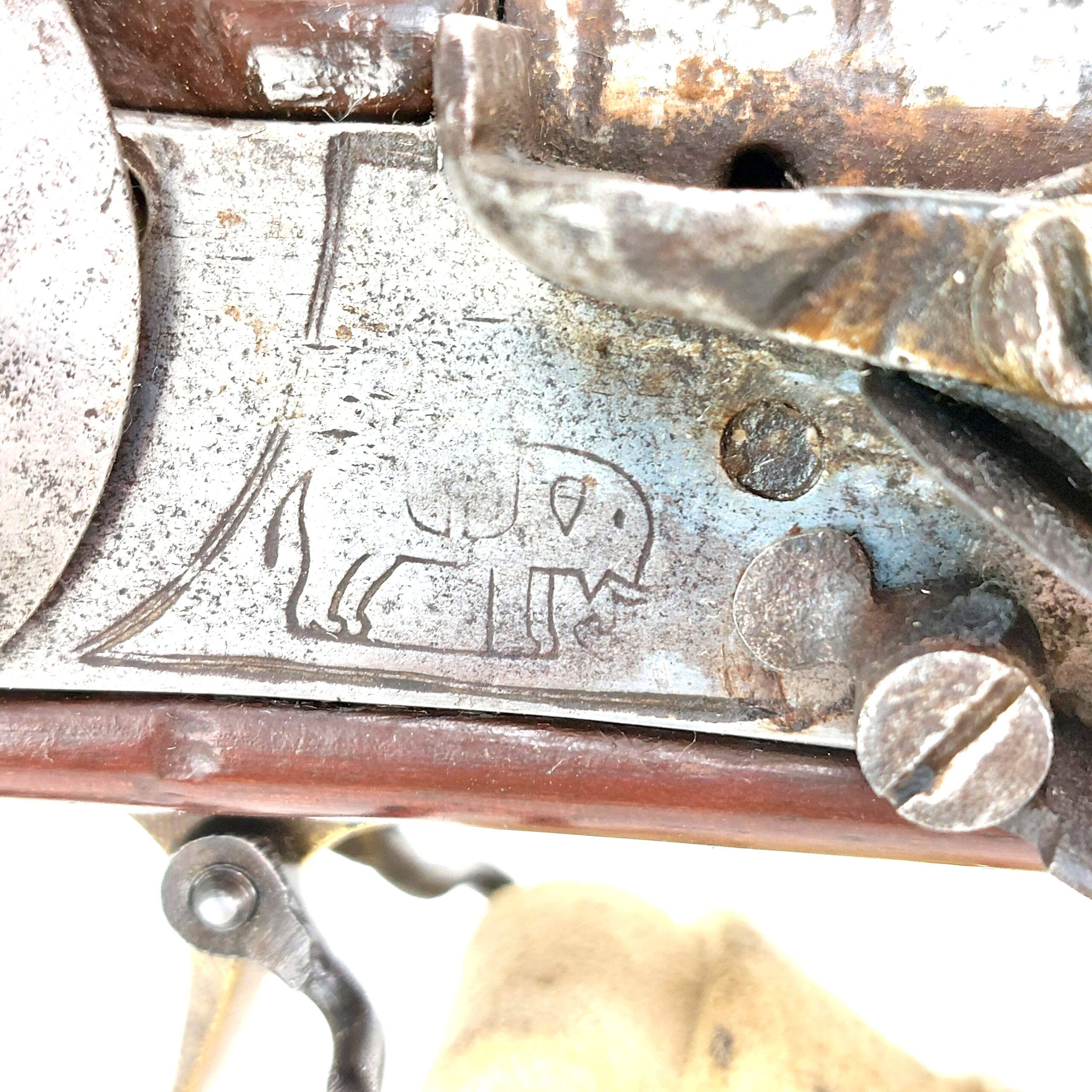
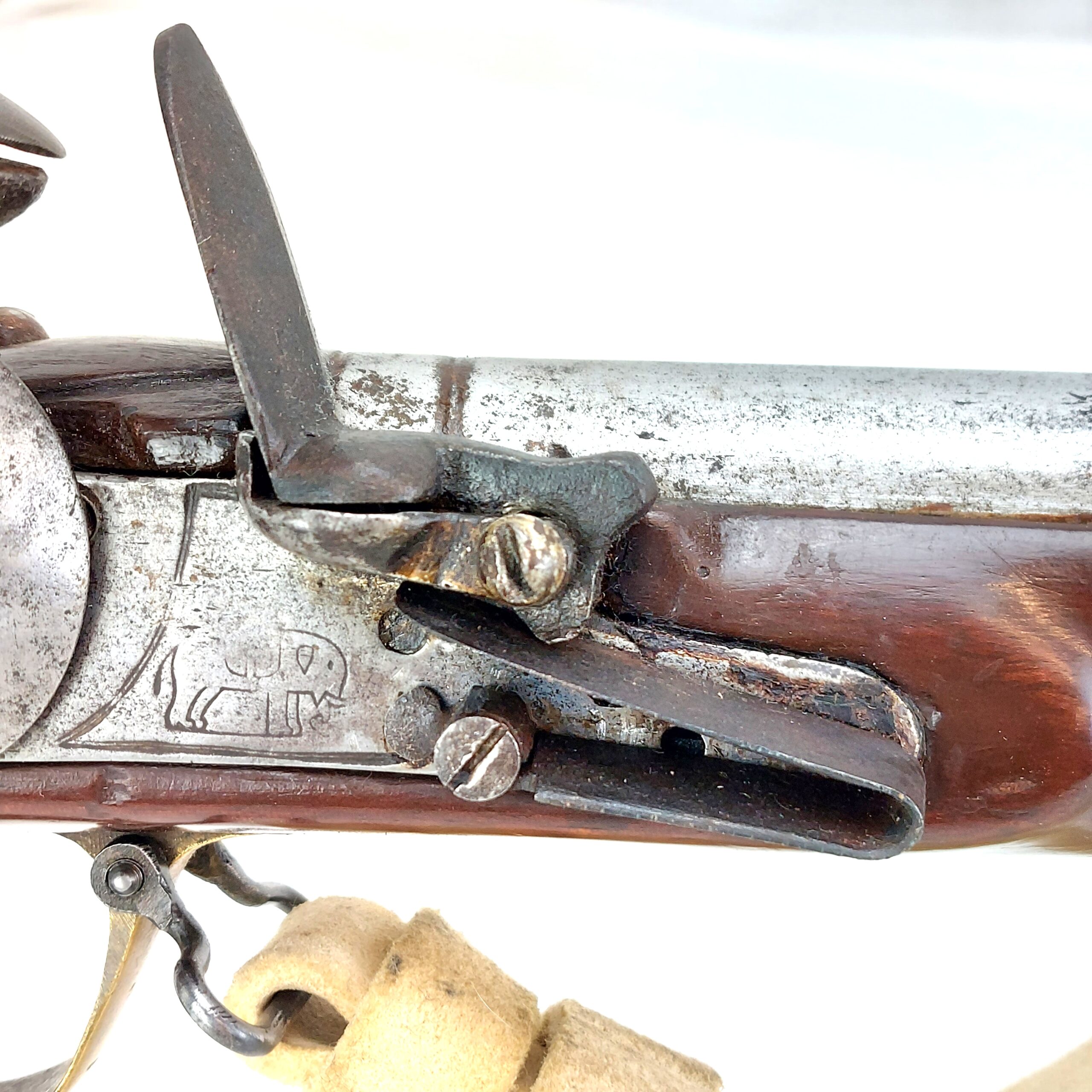
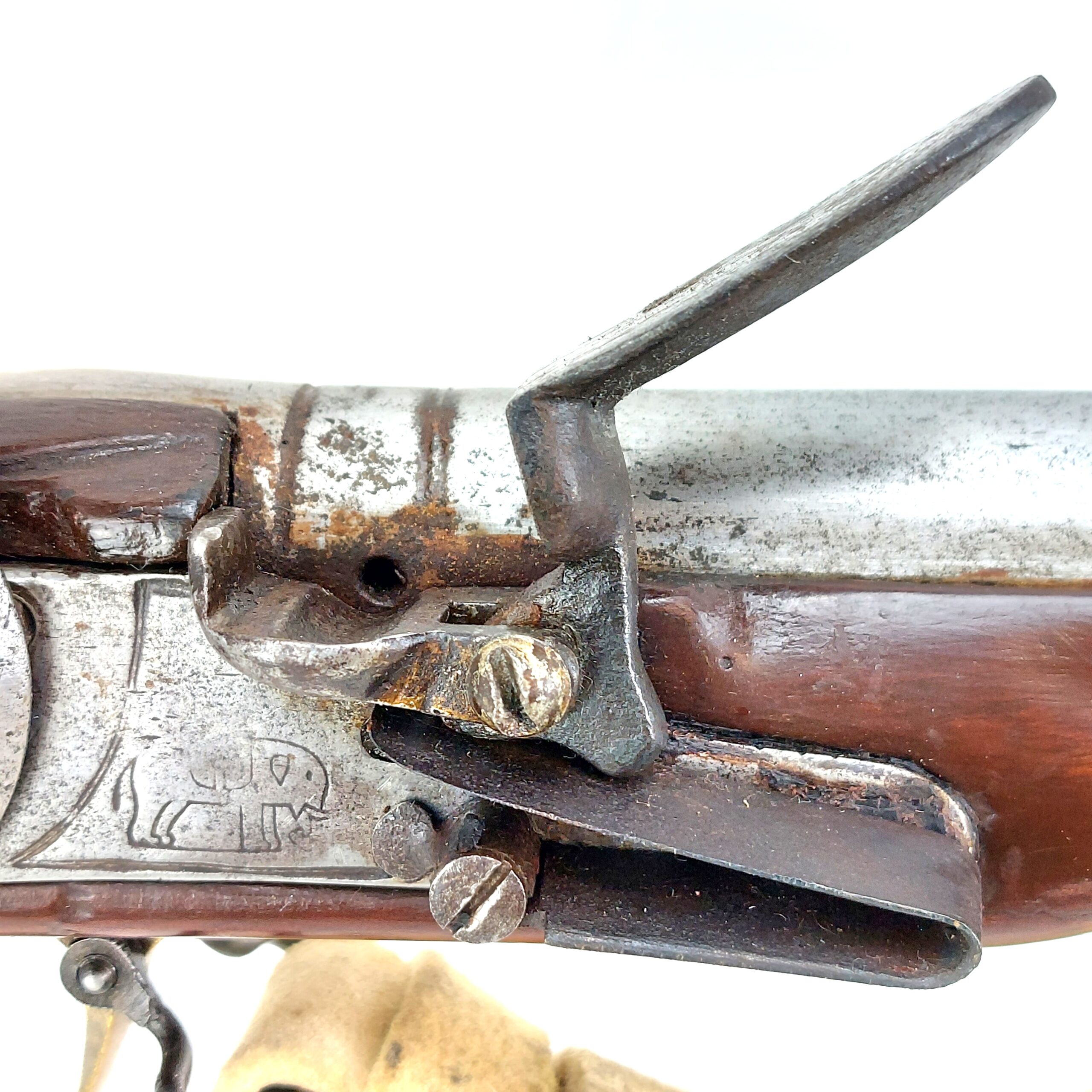
This is a truly magnificent example of a British Brown Bess. It was the standard musket of during 1815, the time of the Battle of Waterloo. With a long barrel, and the flintlock based on the India pattern Brown Bess musket lock, it is struck with the company mark of the Elephant & Castle of the Royal African Company. The Royal African Company, established in the late 17th century, supplied muskets to the continent and the East India Company to Southeast Asia. (However, a similar marking was also used by the Danish Order of the Elephant and Brown Bess muskets are known with Danish markings on them.)
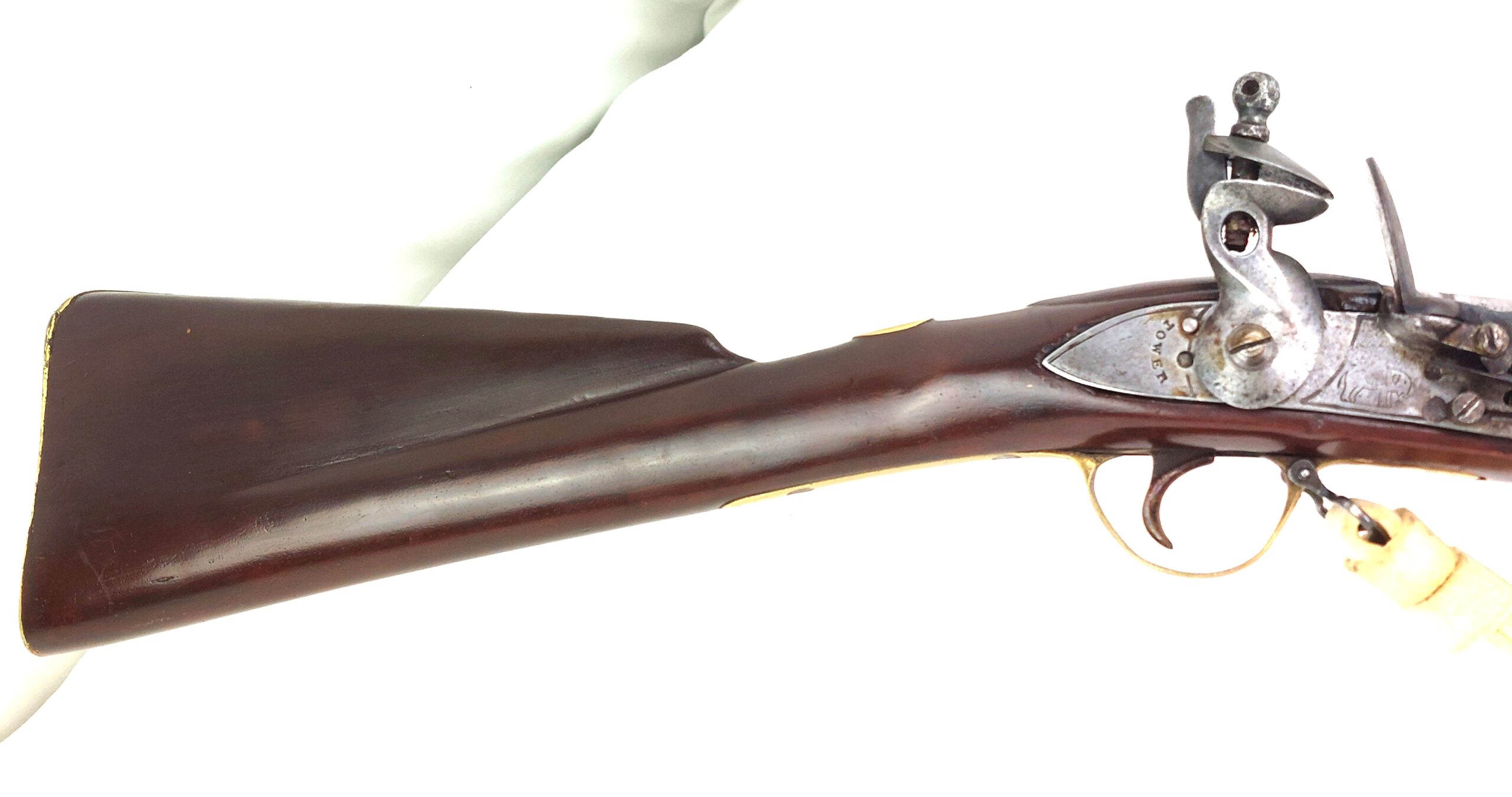
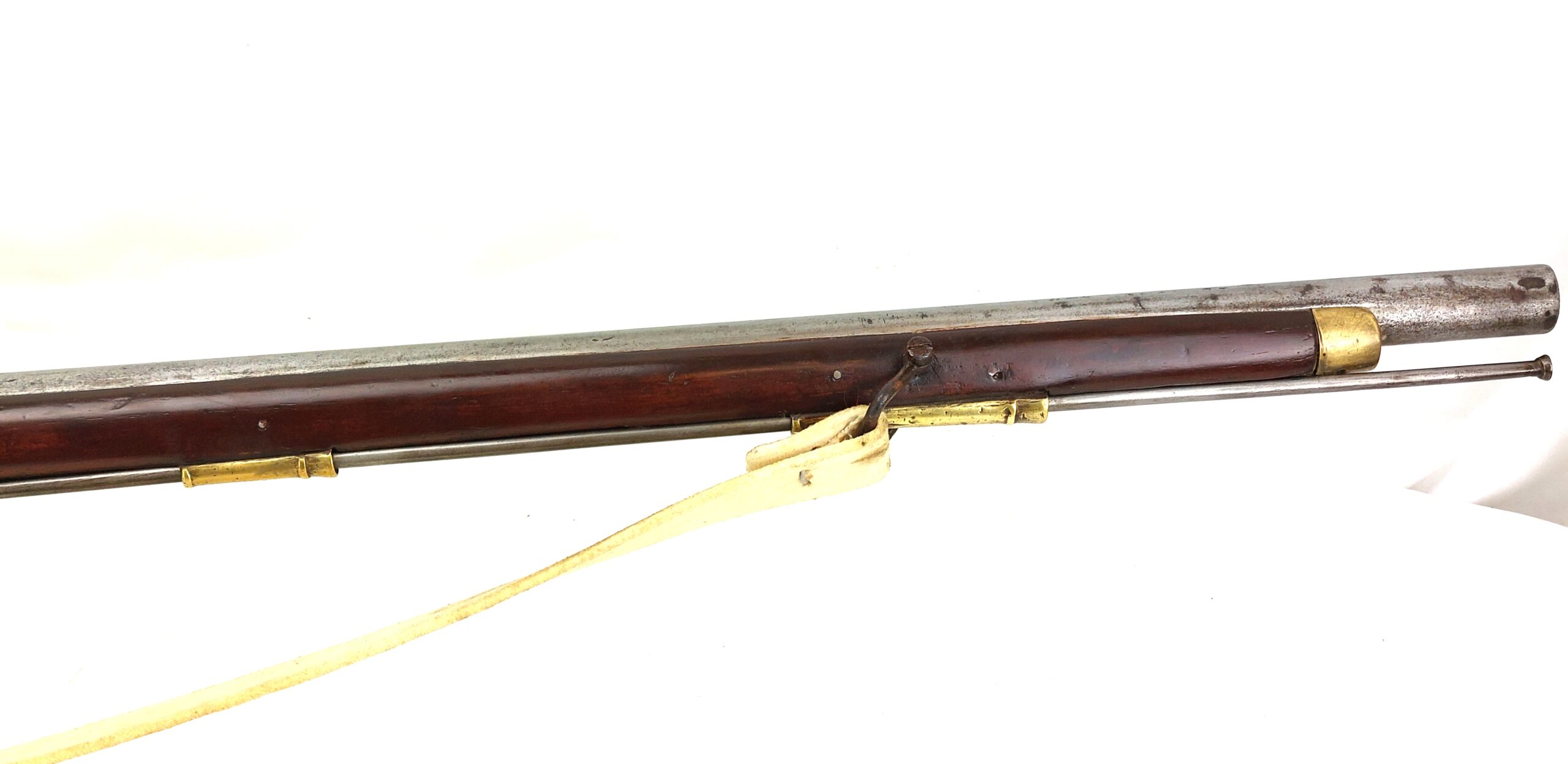
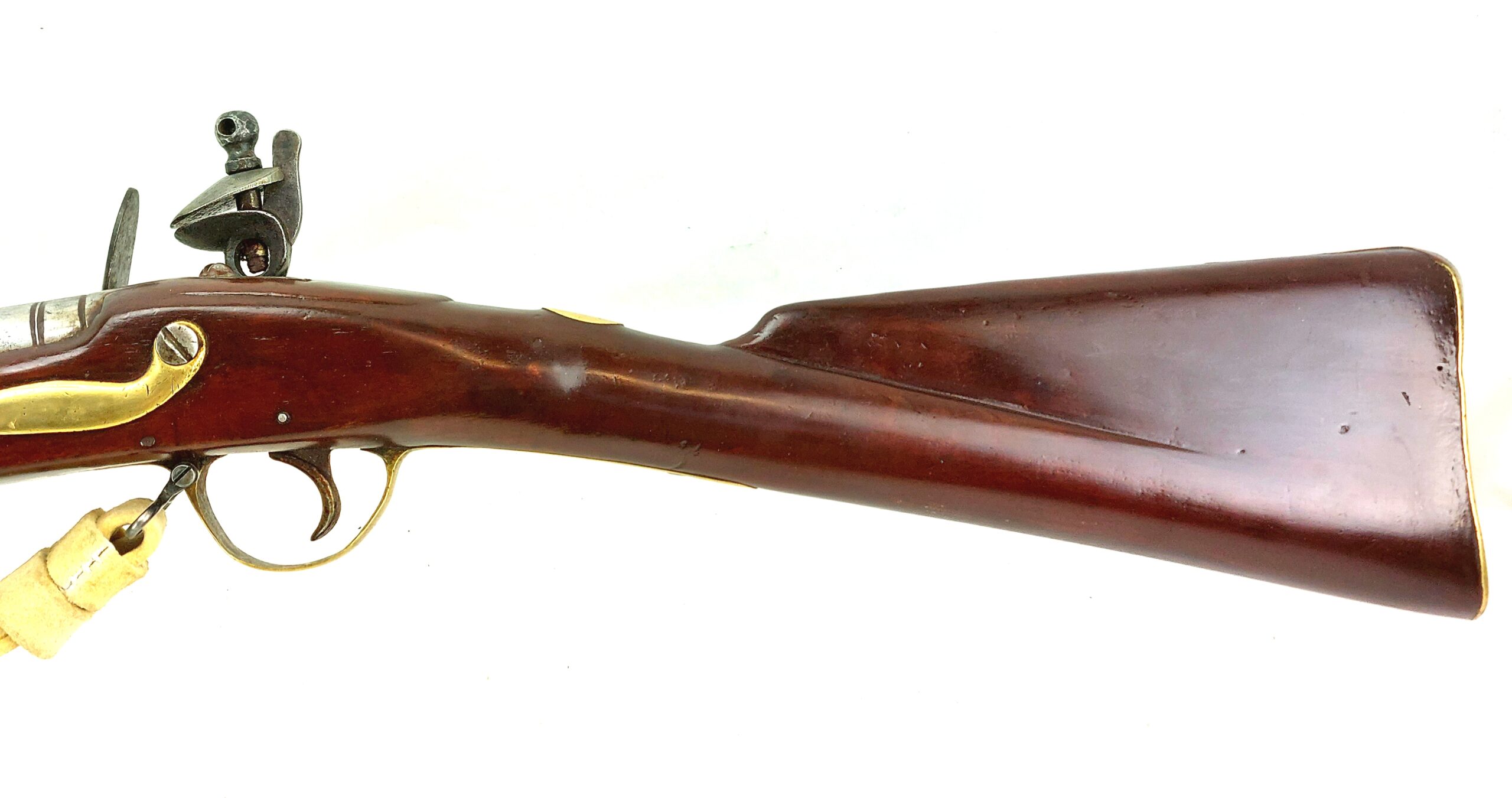
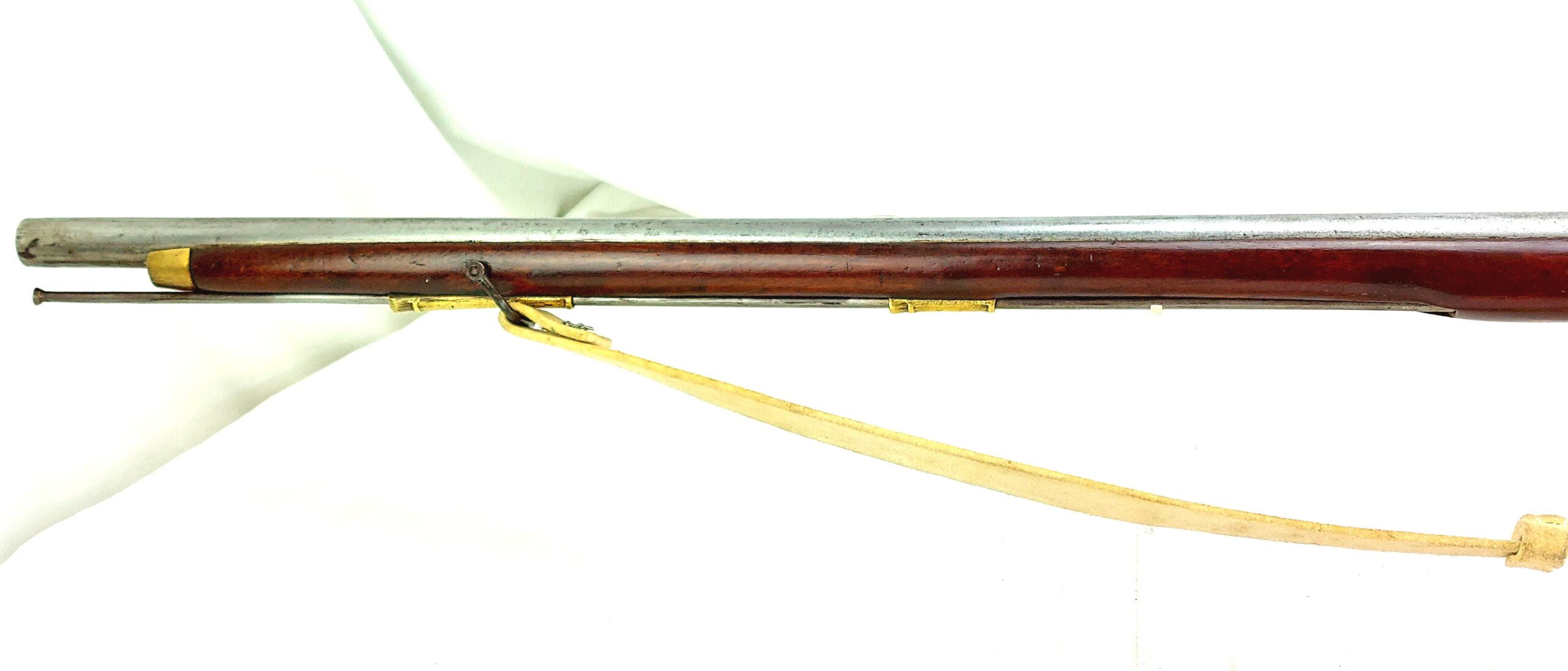
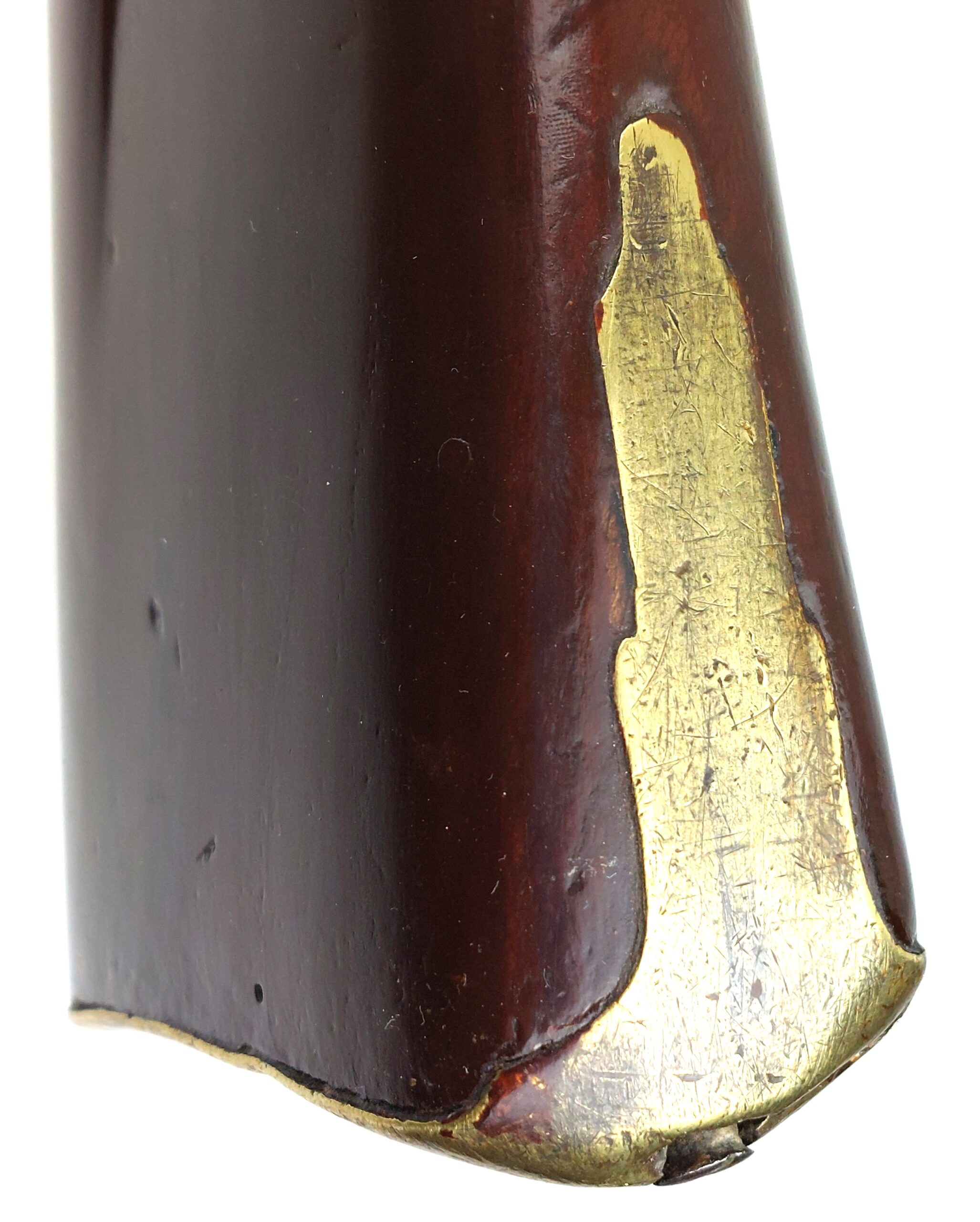
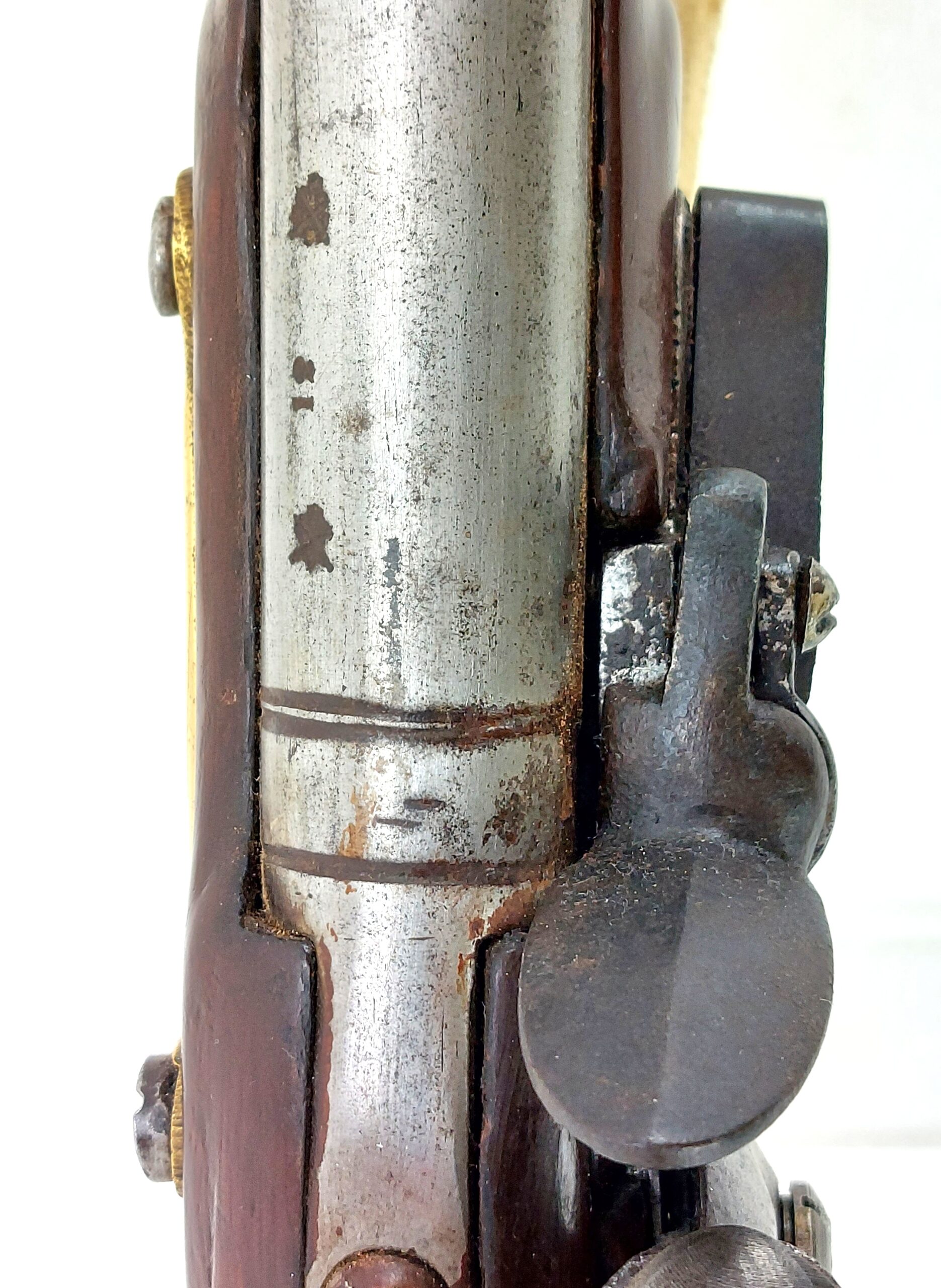
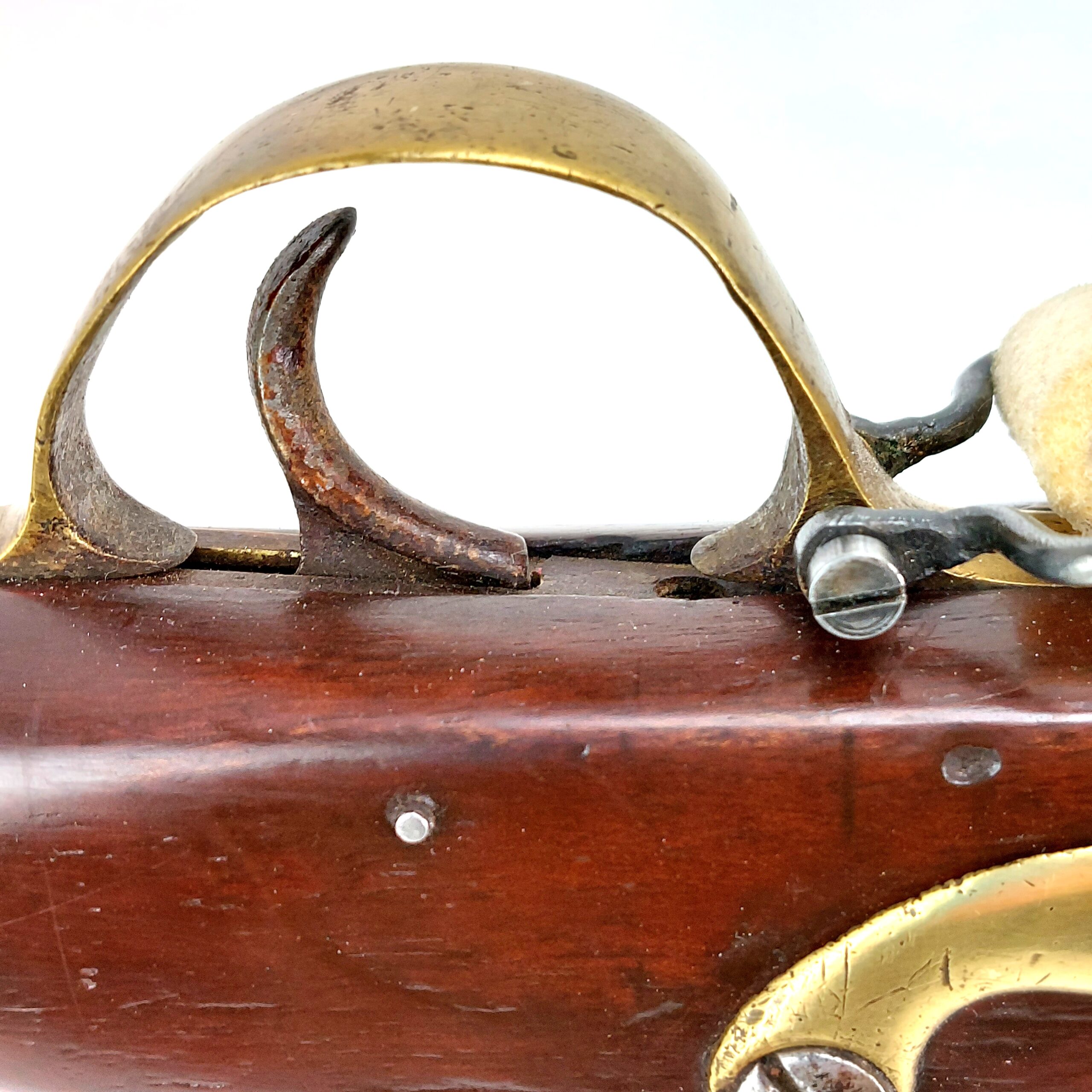
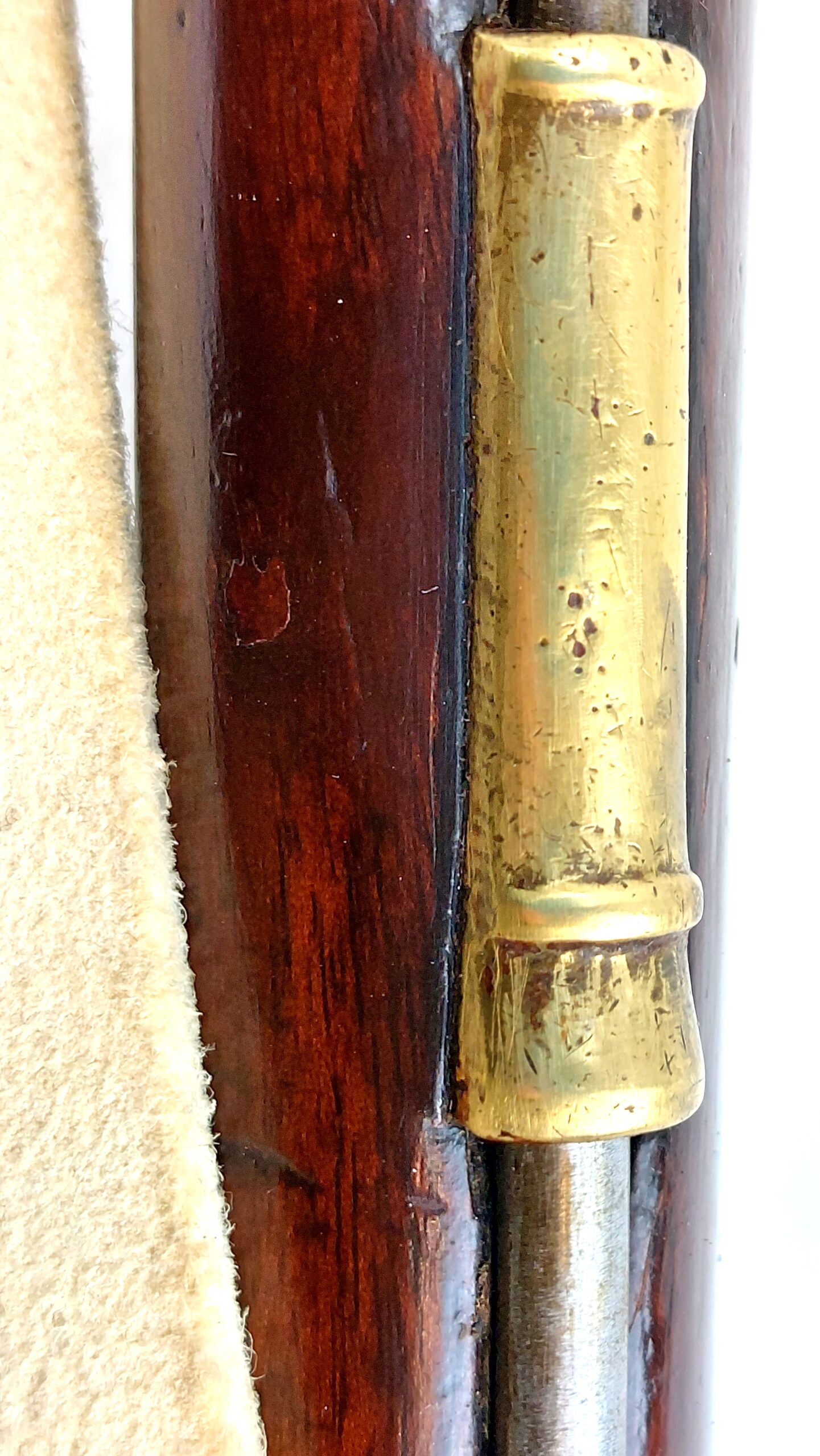
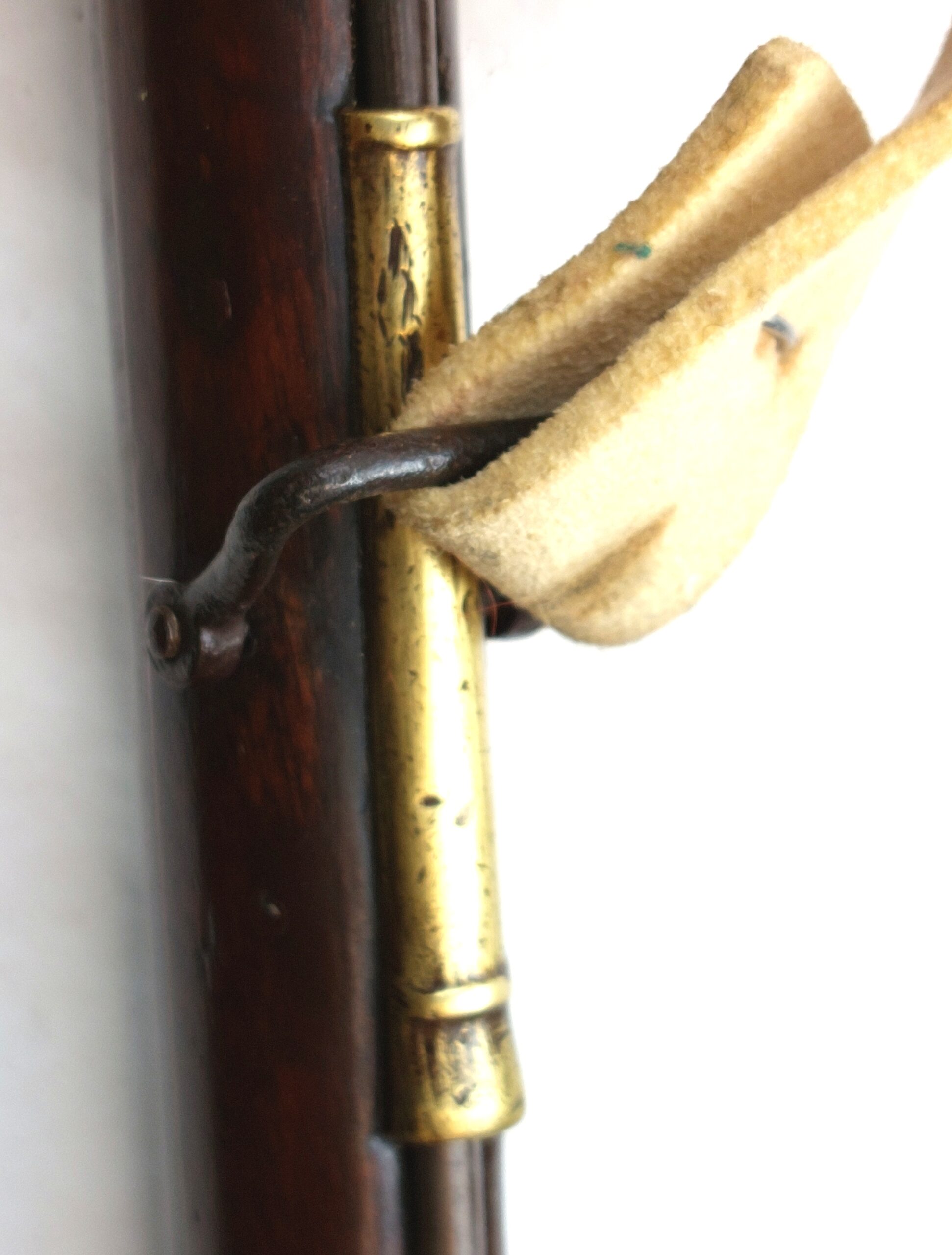
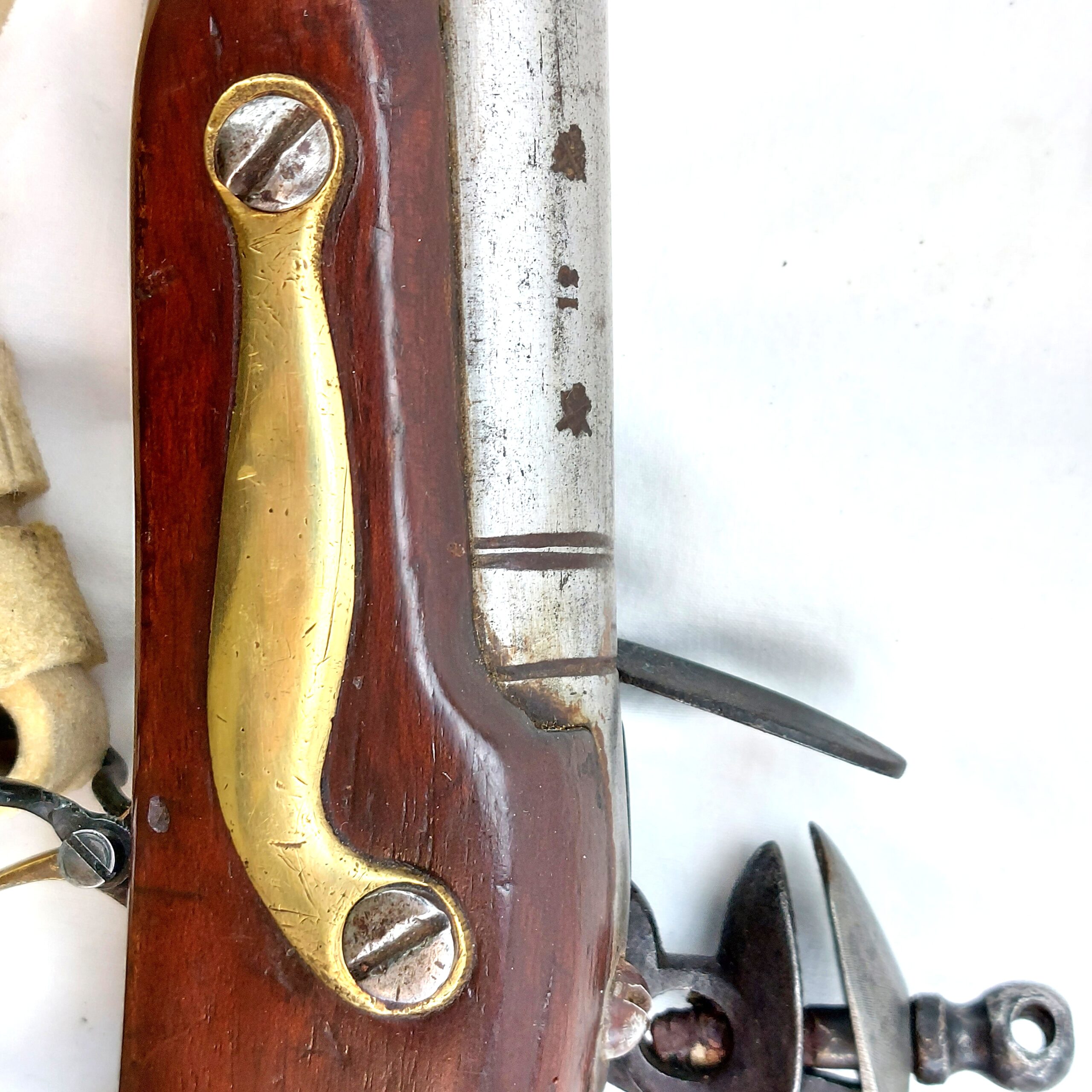
This example has a lovely stock, which still retains the "bannister rail" butt stock, a feature that was basically done away with after 1807.The lock plate is marked Tower and has an an elephant with a howdah or castle on its back on the lock. The barrel bears a pair of proof marks and possibly the number 12. It has all regulation brass furniture, together with correct issue iron ramrod.
Originally known as the Company of Royal Adventurers Trading into Africa. The Royal African Company (RAC) was an English mercantile (trading) company set up in 1660 by the royal Stuart family and City of London merchants to trade along the west coast of Africa. It was led by the Duke of York, who was the brother of Charles II and later took the throne as James II. It shipped more more goods to the Americas than any other company and had strong ties to the slave trade. The Company of Merchants trading to Africa ended its operations in the slave trade in 1821.
"Tower" mark: For most of the flintlock and percussion periods, the Tower of London served as a storehouse for arms, but no arms were actually made there. Contractors made the various parts, and brought them to the Tower for inspection. Locks were delivered assembled but with the lockplate soft and "in the white". The lock would be inspected, then disassembled and the parts inspected. If accepted, the lockplate would be stamped with the word "Tower" before hardening it. Once all the parts were finished, the lock was reassembled, inspected again, and placed in stock. Tower workers assembled muskets as needed from stocks of parts. If there was no immediate need for arms, parts were stored for future assembly, which could often be years later.
*Condition*
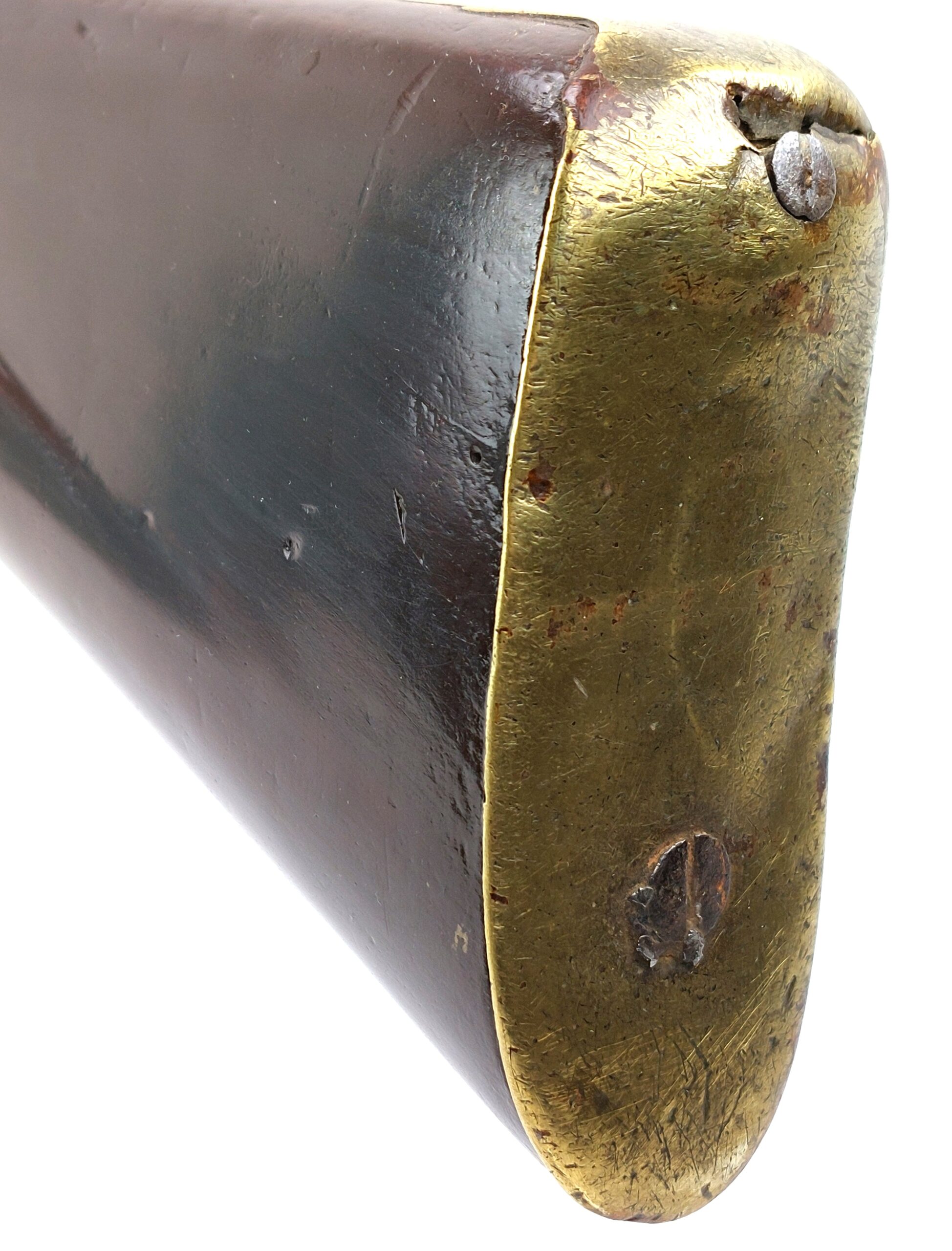
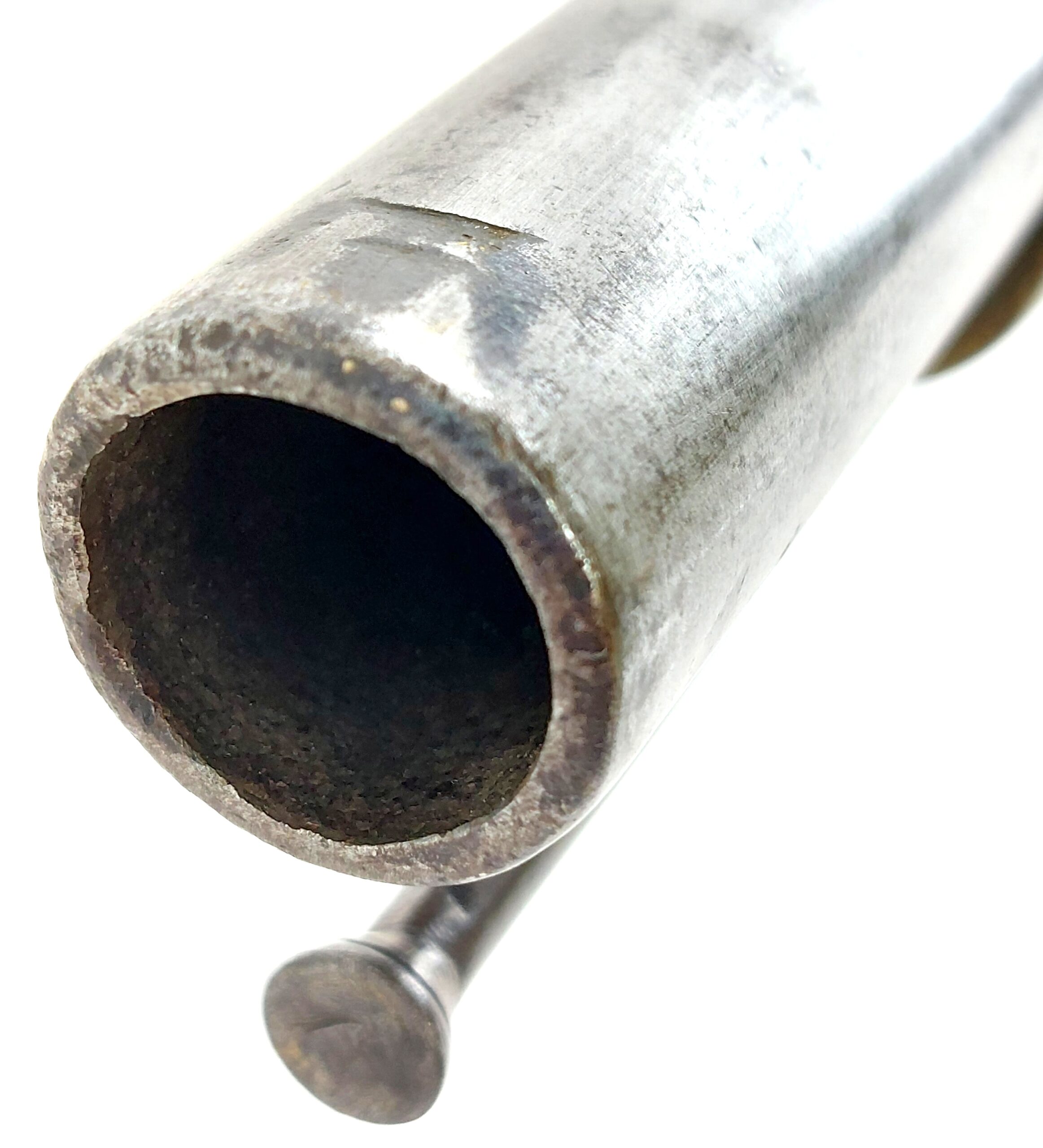
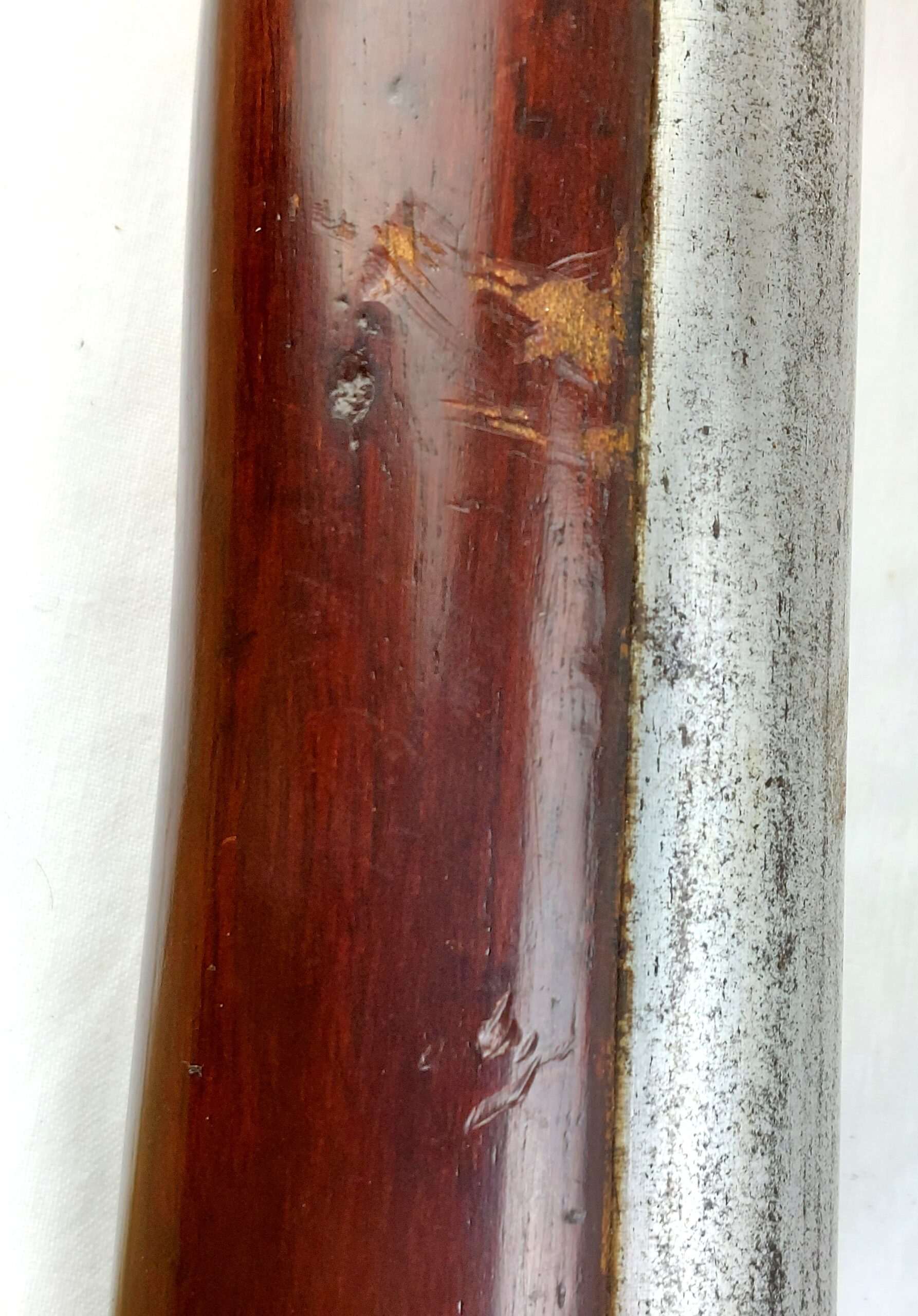
The action is firm and cocks and dryfires. The barrel is aged as you'd expect and has some pitting and discolouration. The stock has a dent/tear by the top pin. Please see photographs as part of the condition report.
*In order to complete the online purchase we will require a picture/scan of a photo ID (Driving Licence, Passport or an official document with a recent picture). If you don't posses any such document please call to buy. If we consider that the proof of ID is incorect or insuficient, we reserve the right to cancel the transaction.
*We also reserve the right to cancel the transaction with a full refund if there is any suspicion that the provided item will be used in any way contrary to the laws and legislation of UK.