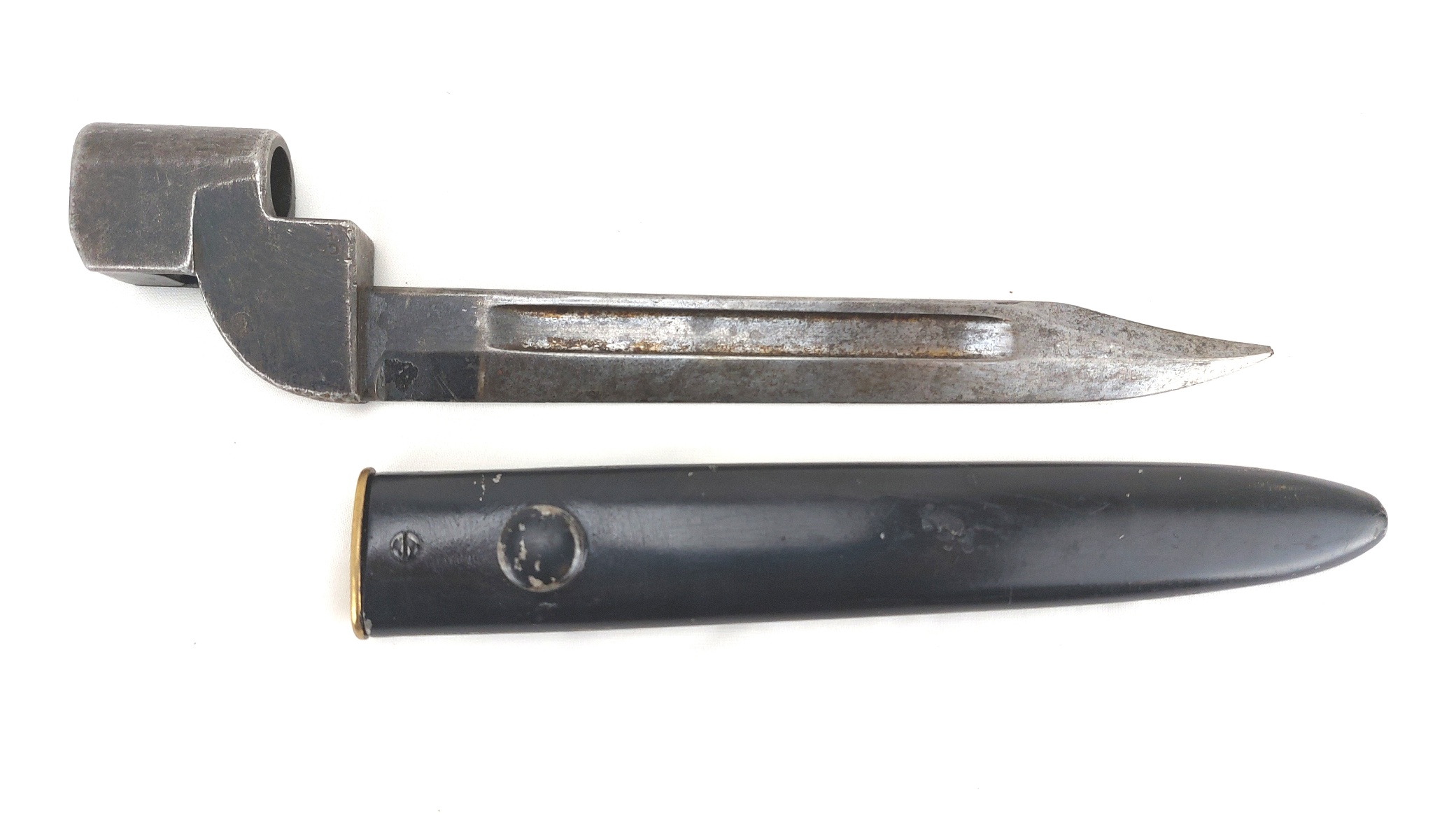
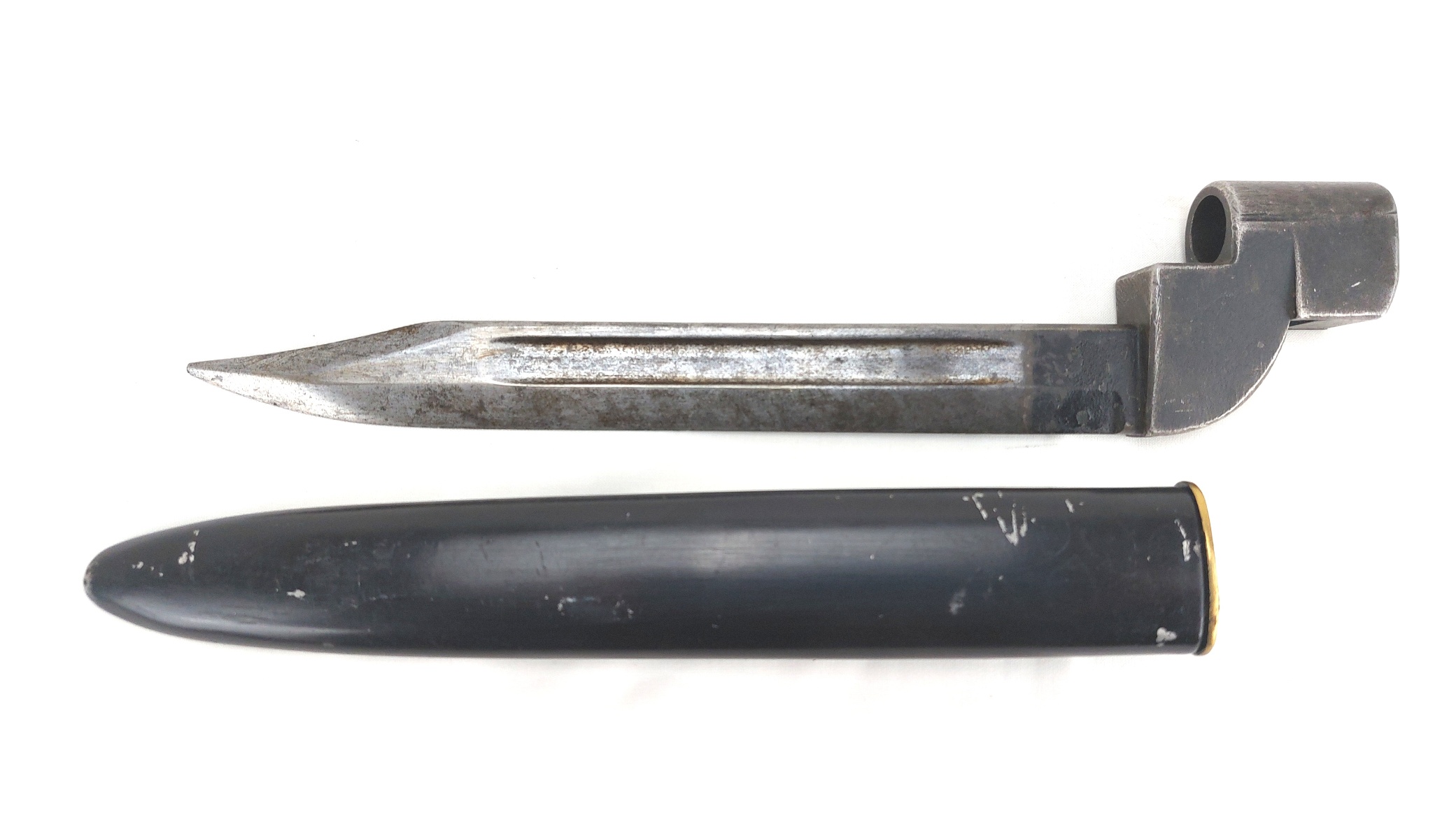
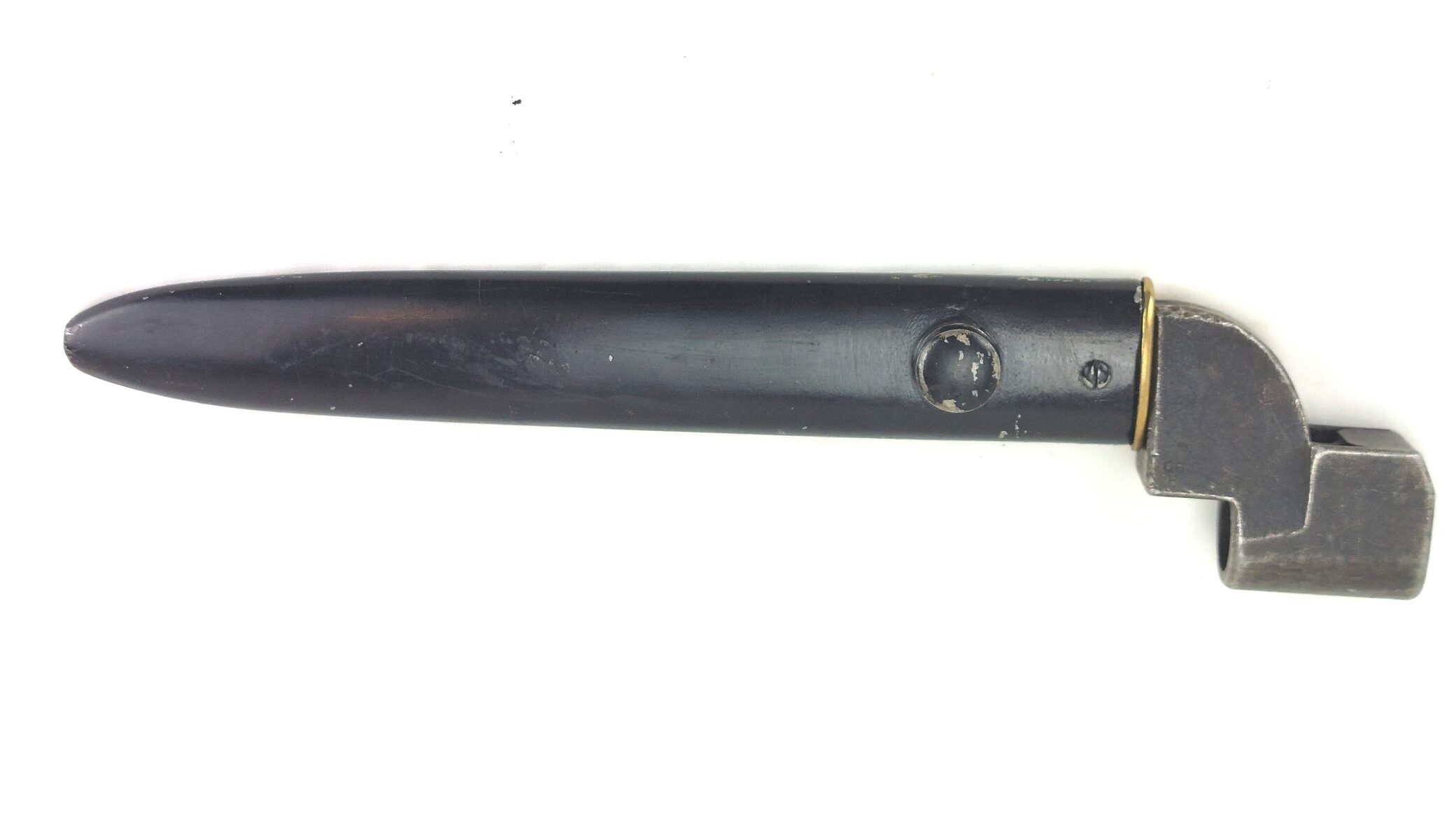
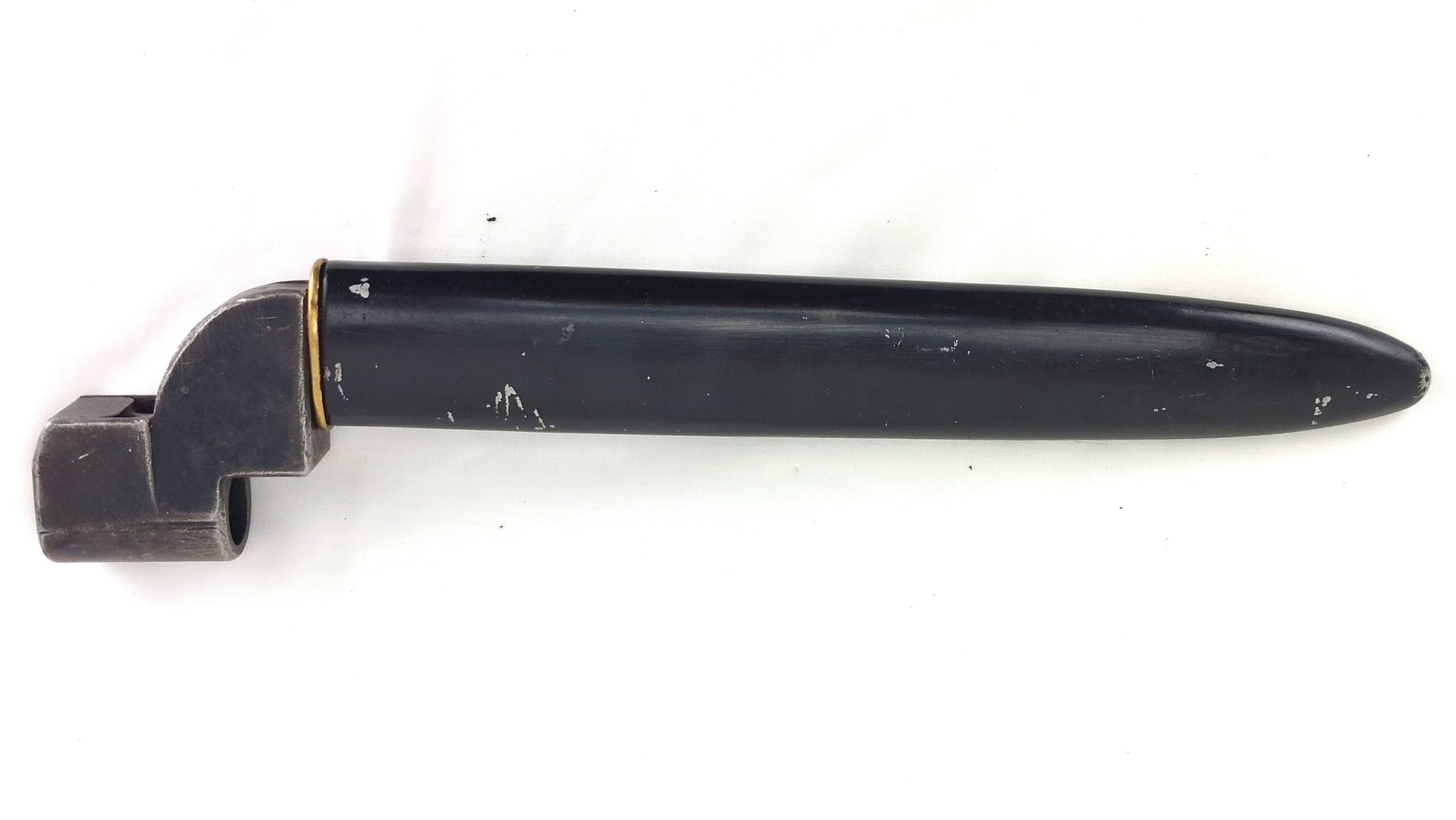
*British, 1949, No. 9 Mk I Bayonet & Scabbard for the Lee-Enfield No. 4 Rifle, ROF Poole Manufacture, Dated 1949*
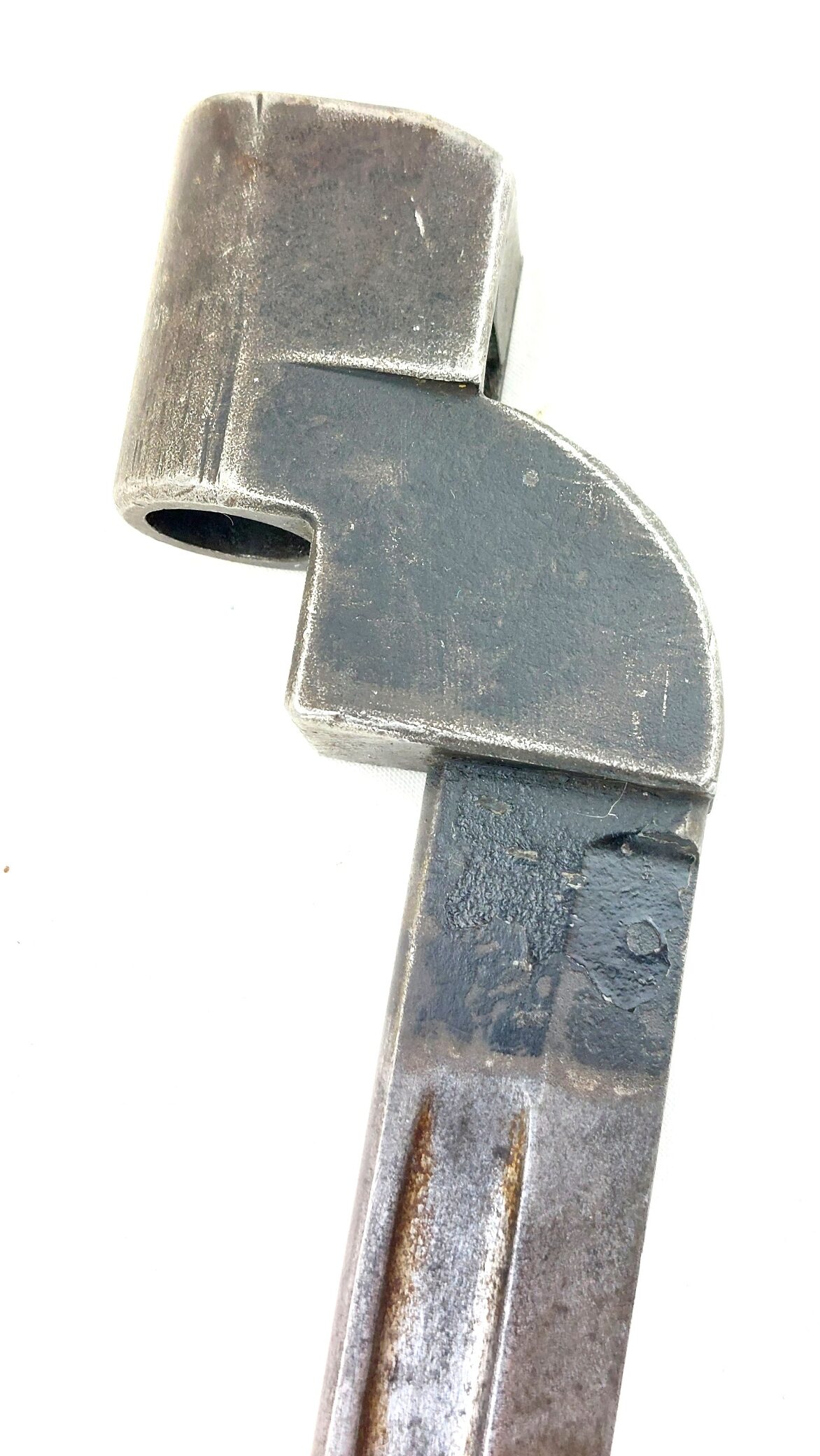
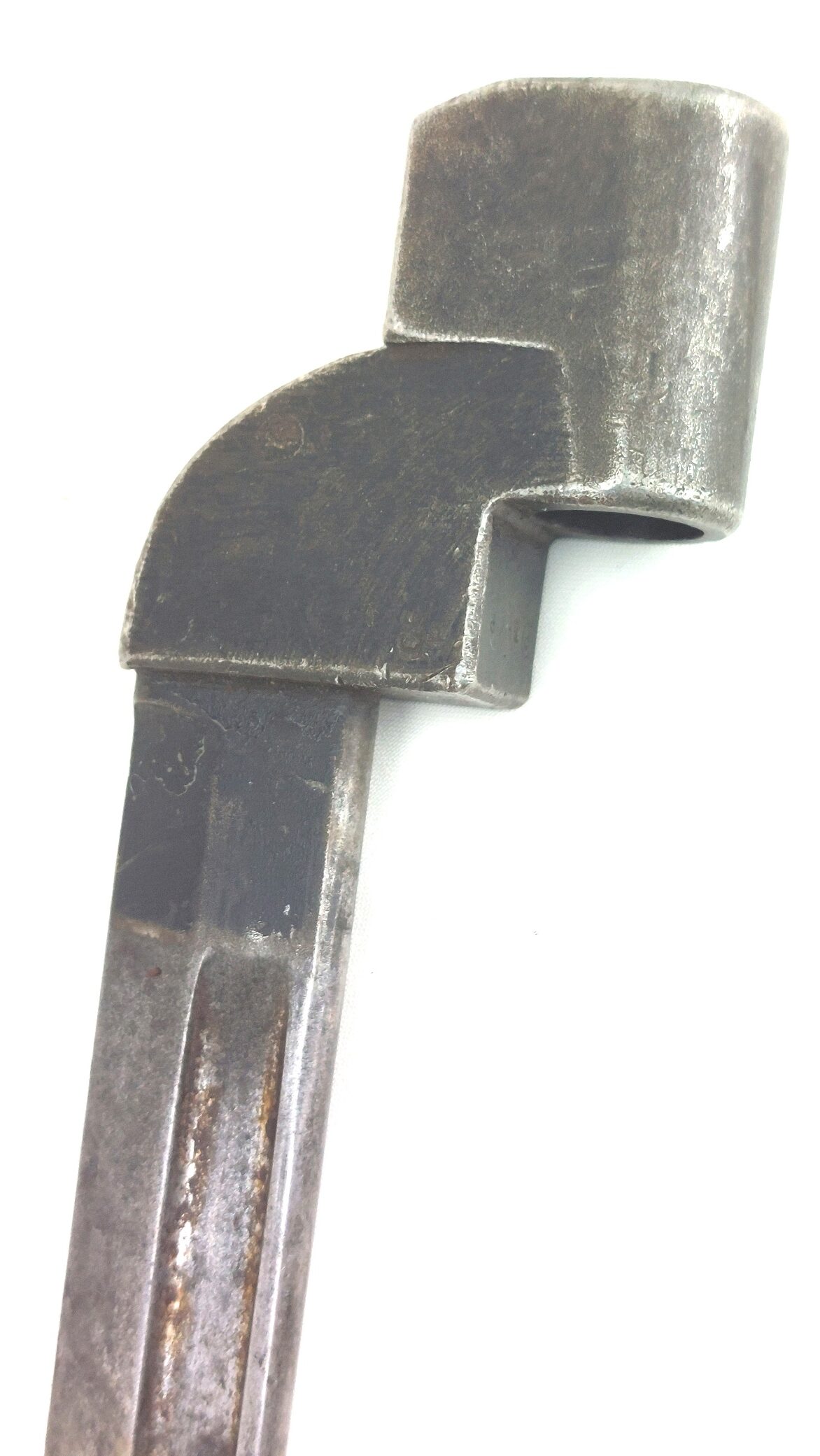
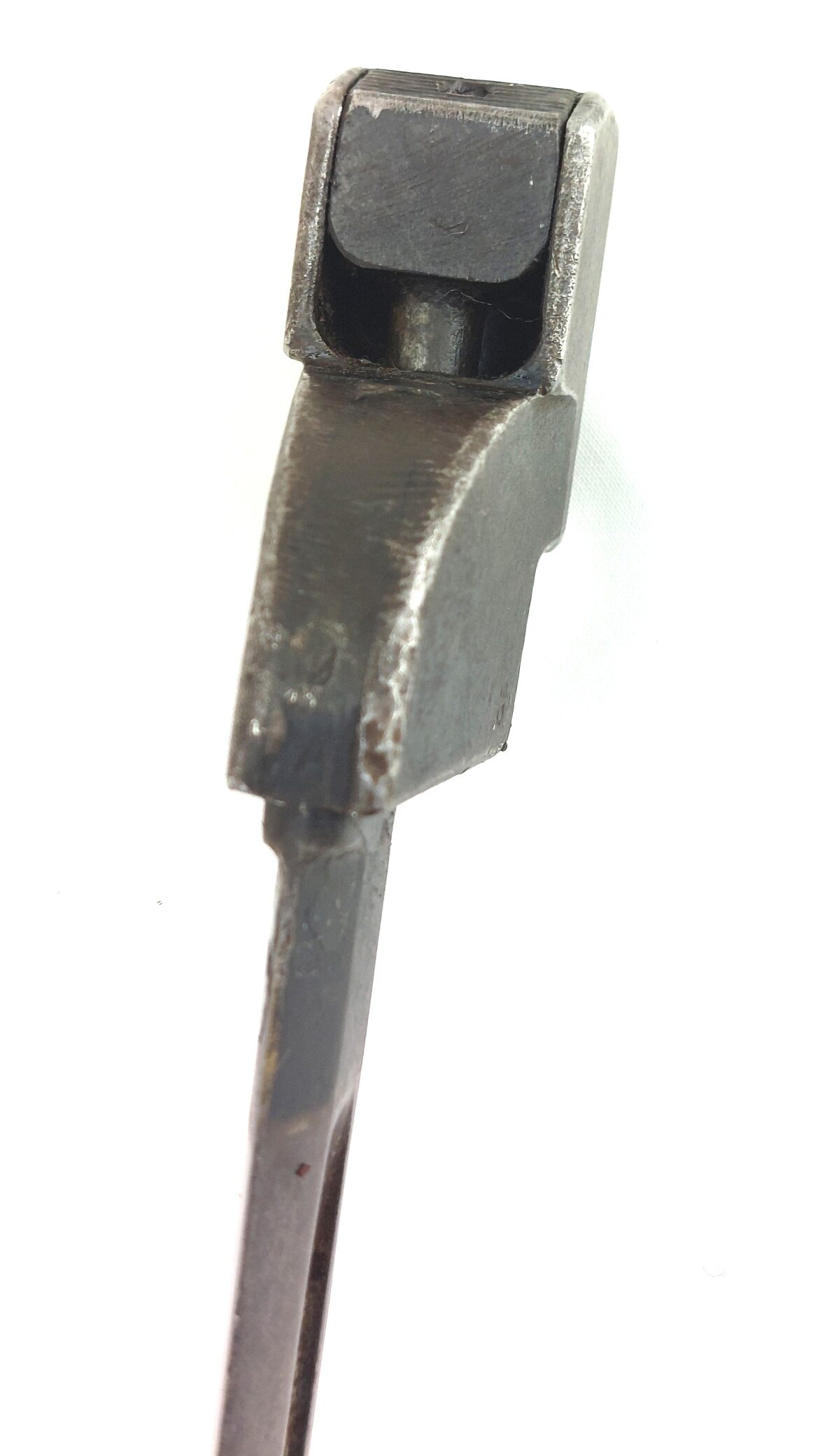
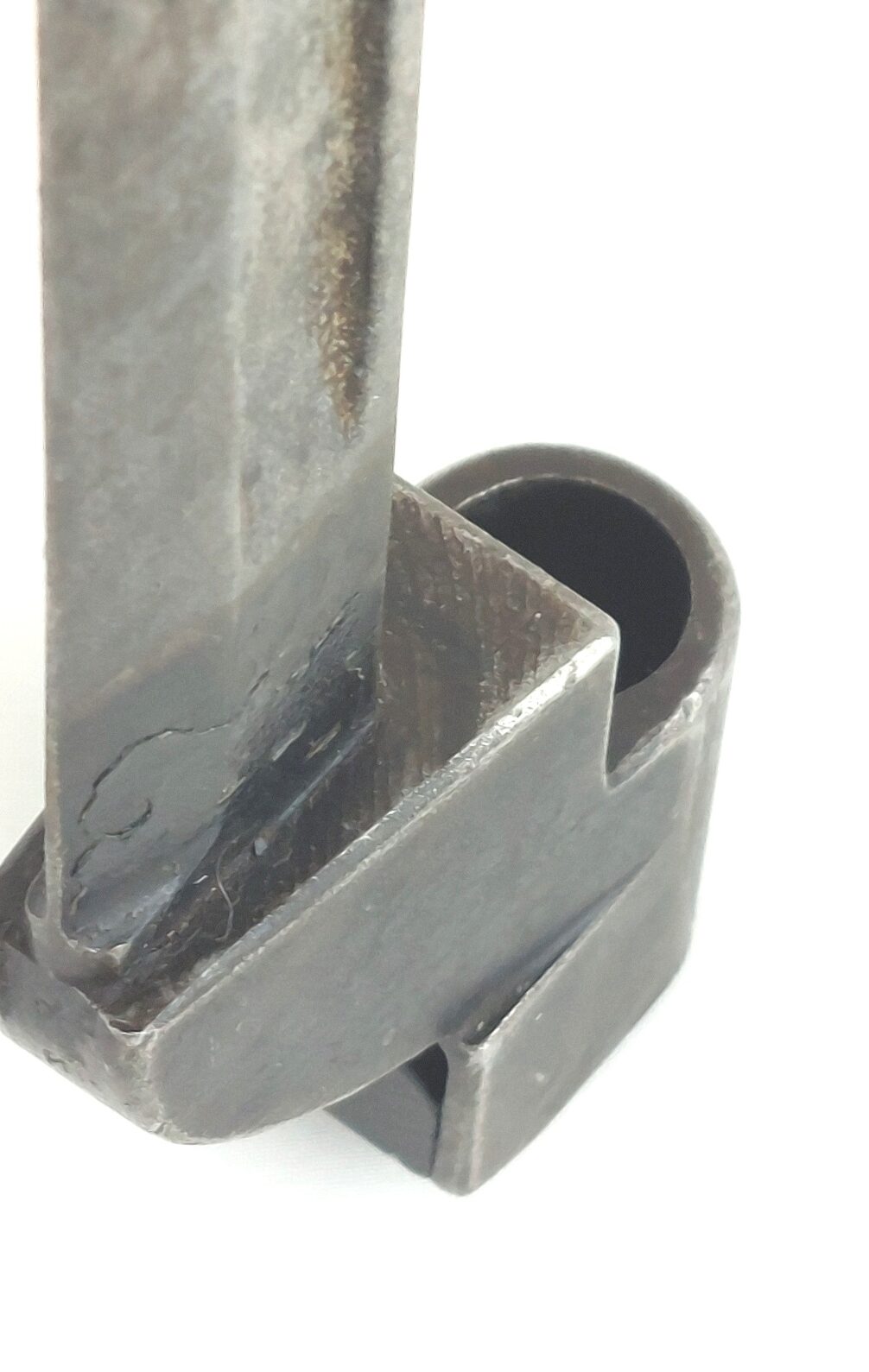
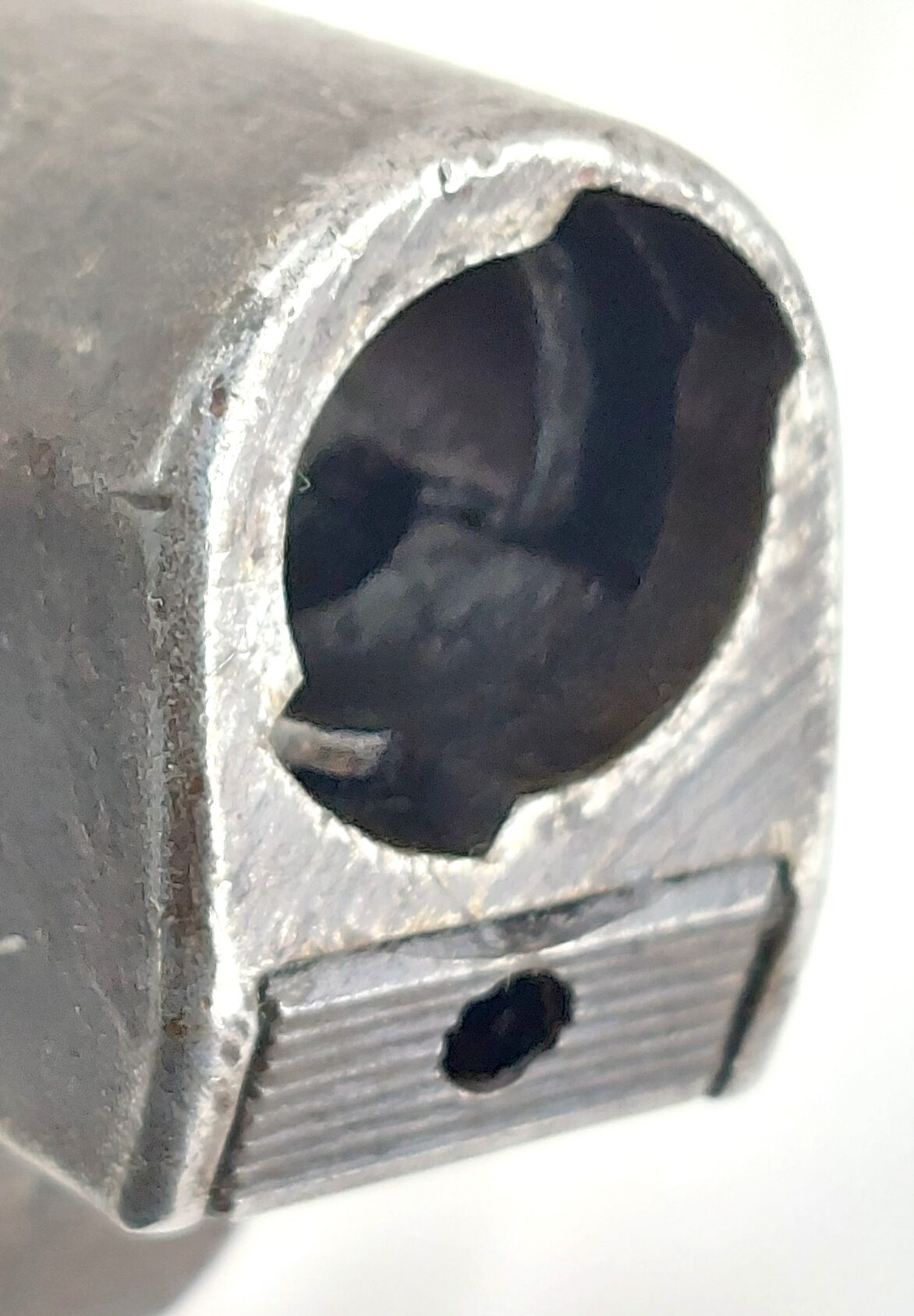
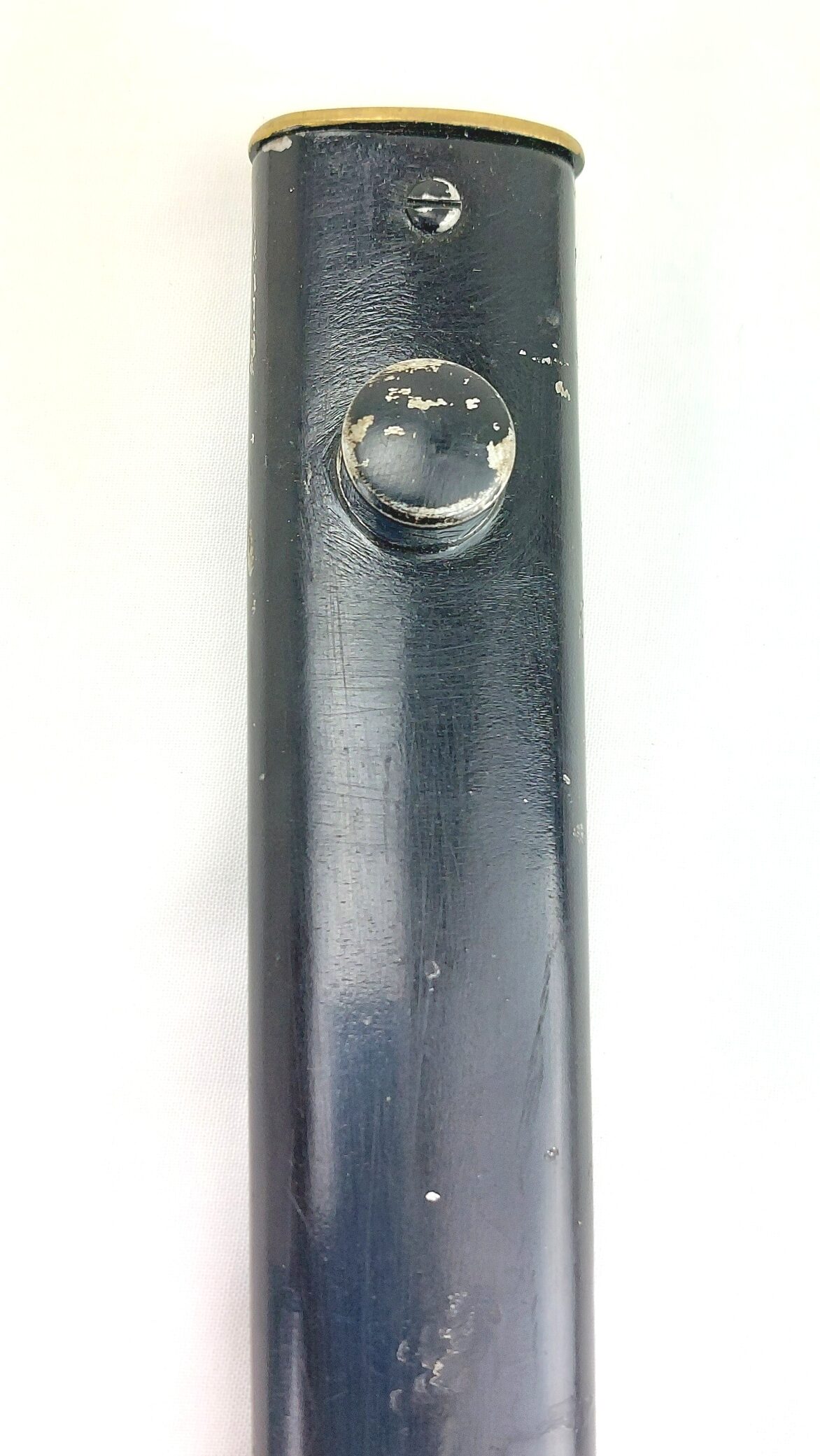
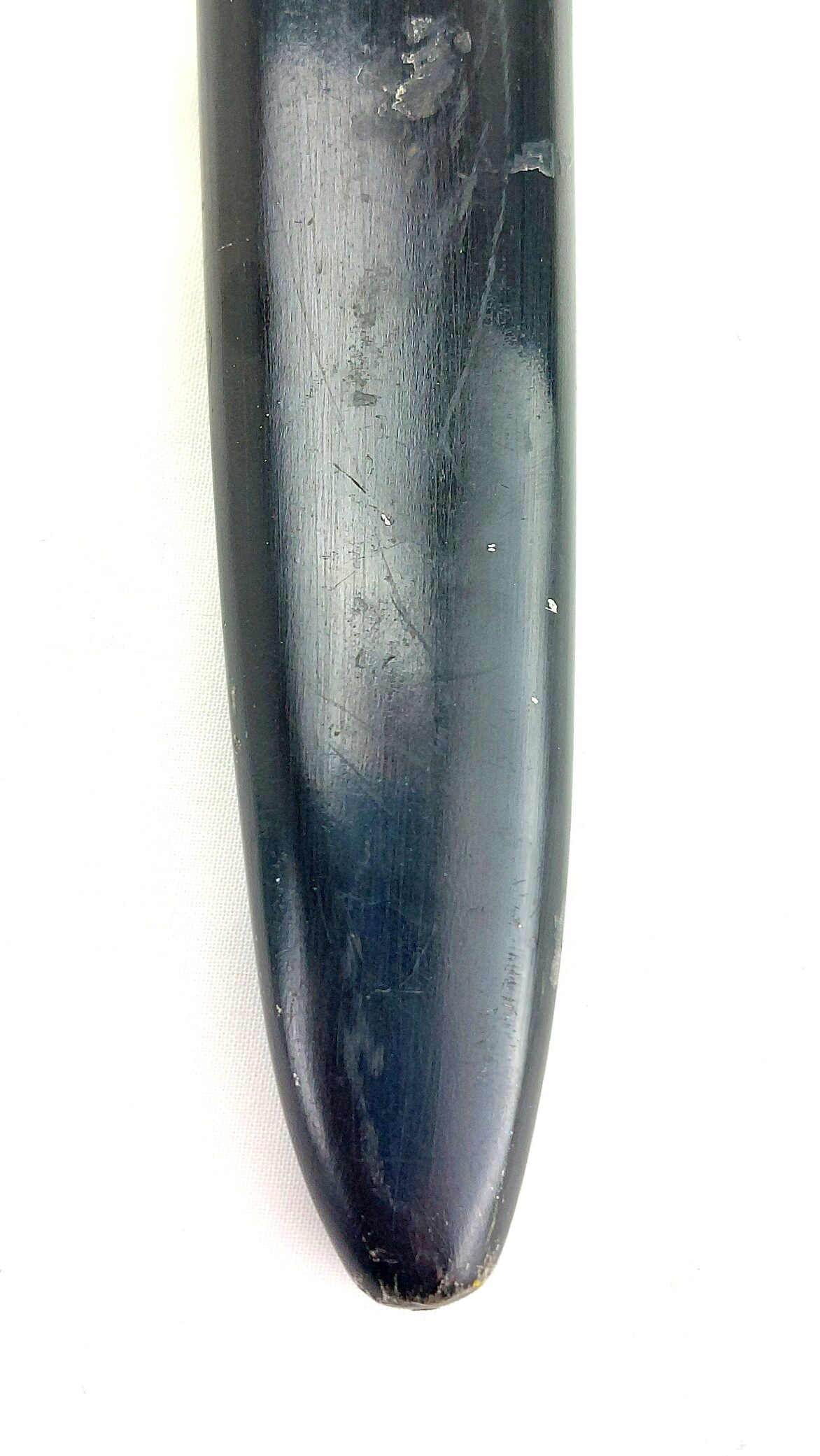
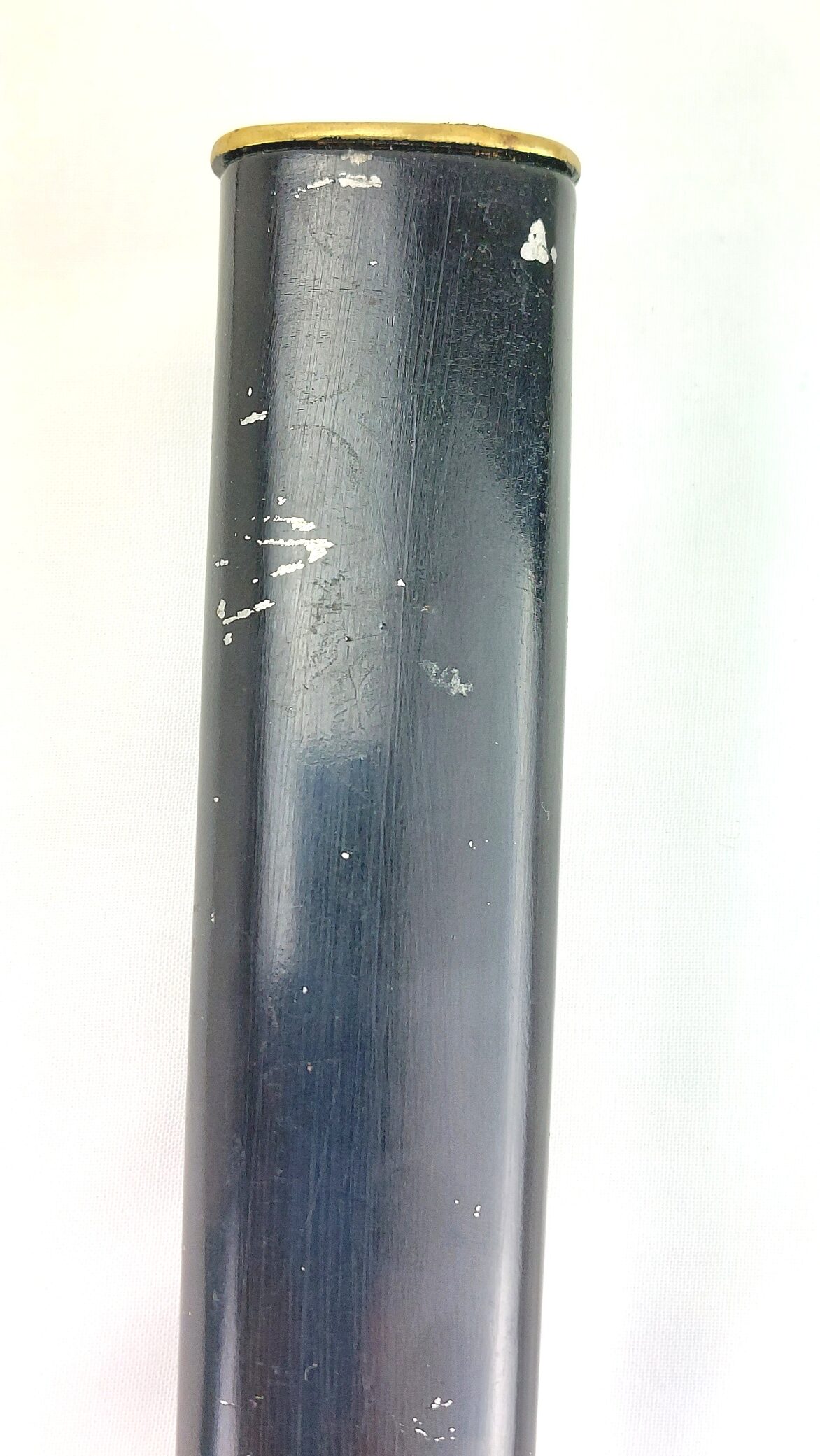
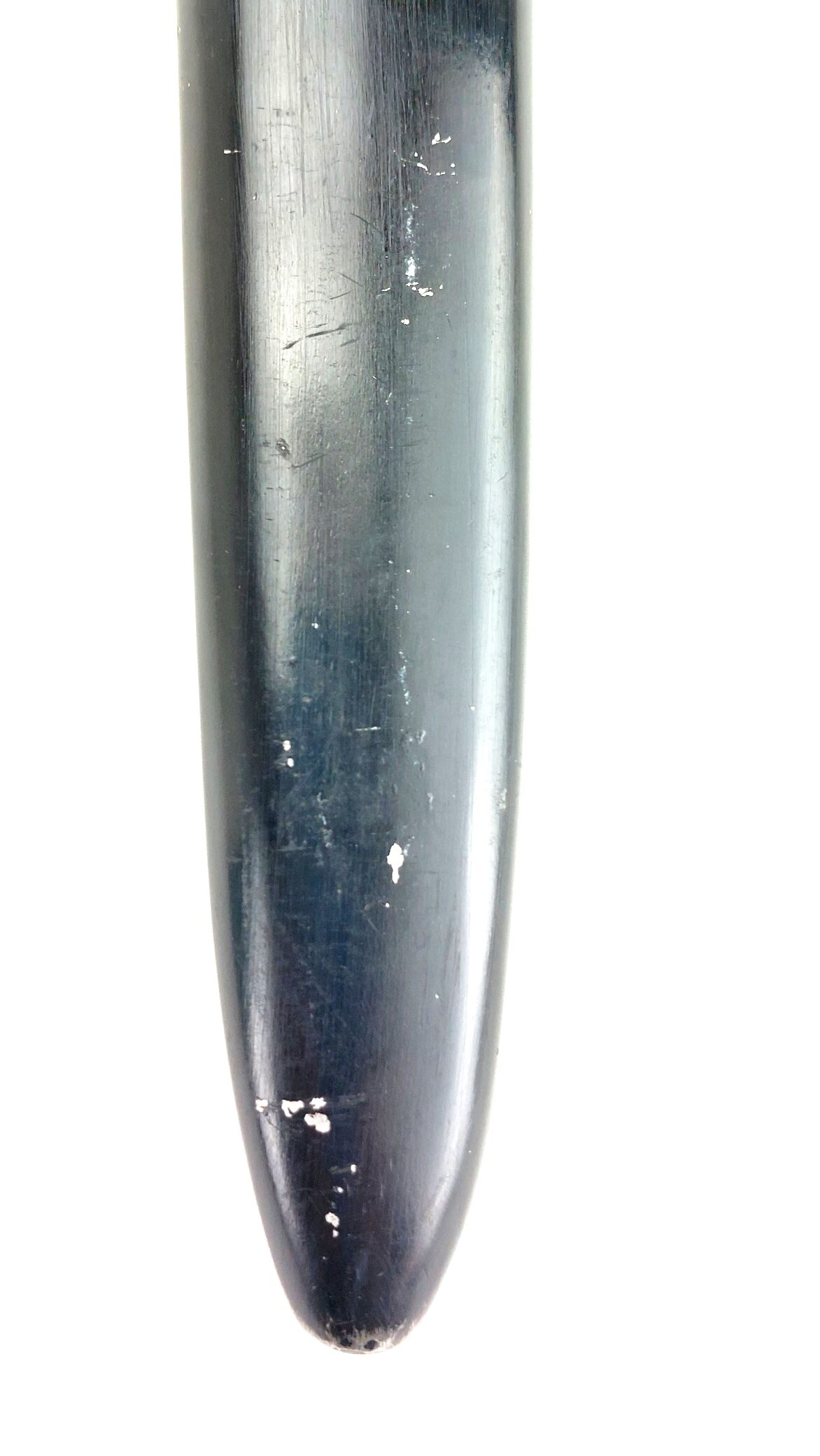
A genuine post-Second World War British No. 9 Mk I socket bayonet, produced at the Royal Ordnance Factory, Poole, in 1949 for use with the Lee-Enfield No. 4 rifle. This example retains its correct clip-point blade and heavy socket construction, together with the appropriate post-war steel scabbard fitted with a substantial brass throat.
The No. 9 Mk I was developed as a robust and practical replacement for the No. 4 spike bayonet, combining the reach and cutting ability of a knife blade with the proven socket mounting system. The blade profile closely follows that of the No. 5 Mk I “Jungle Carbine” bayonet, allowing continued use of the established No. 5 pattern scabbard.
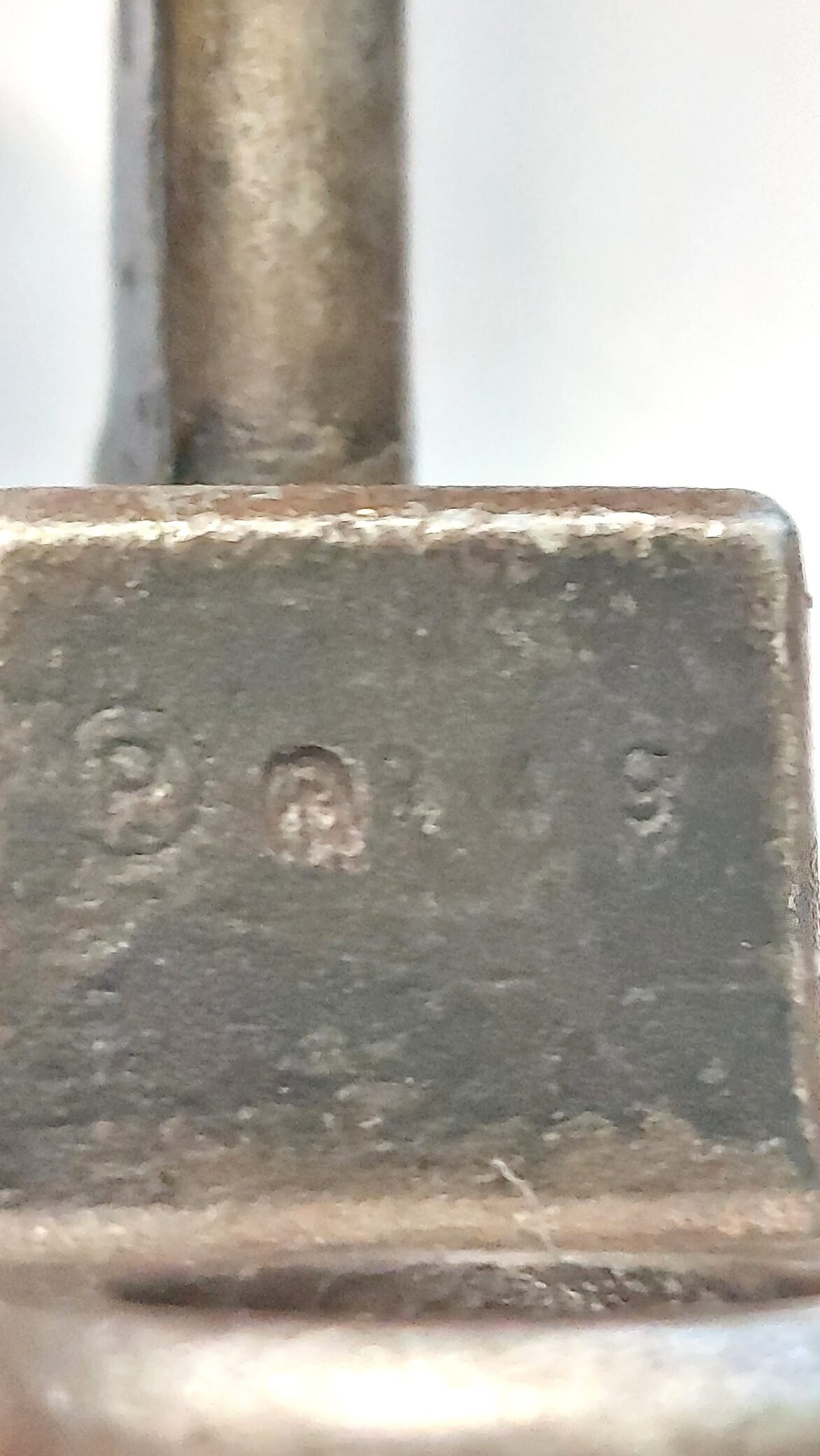
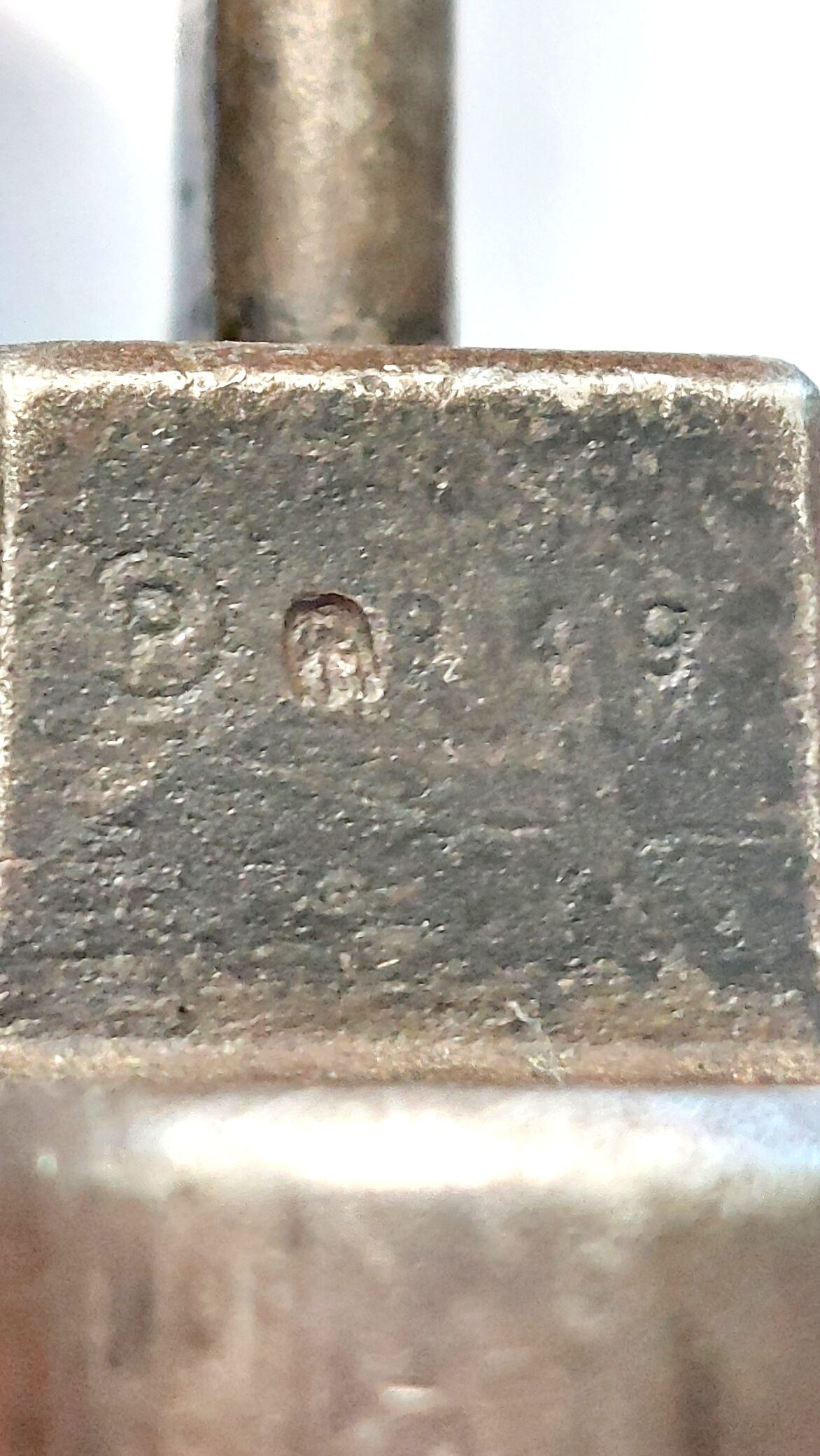
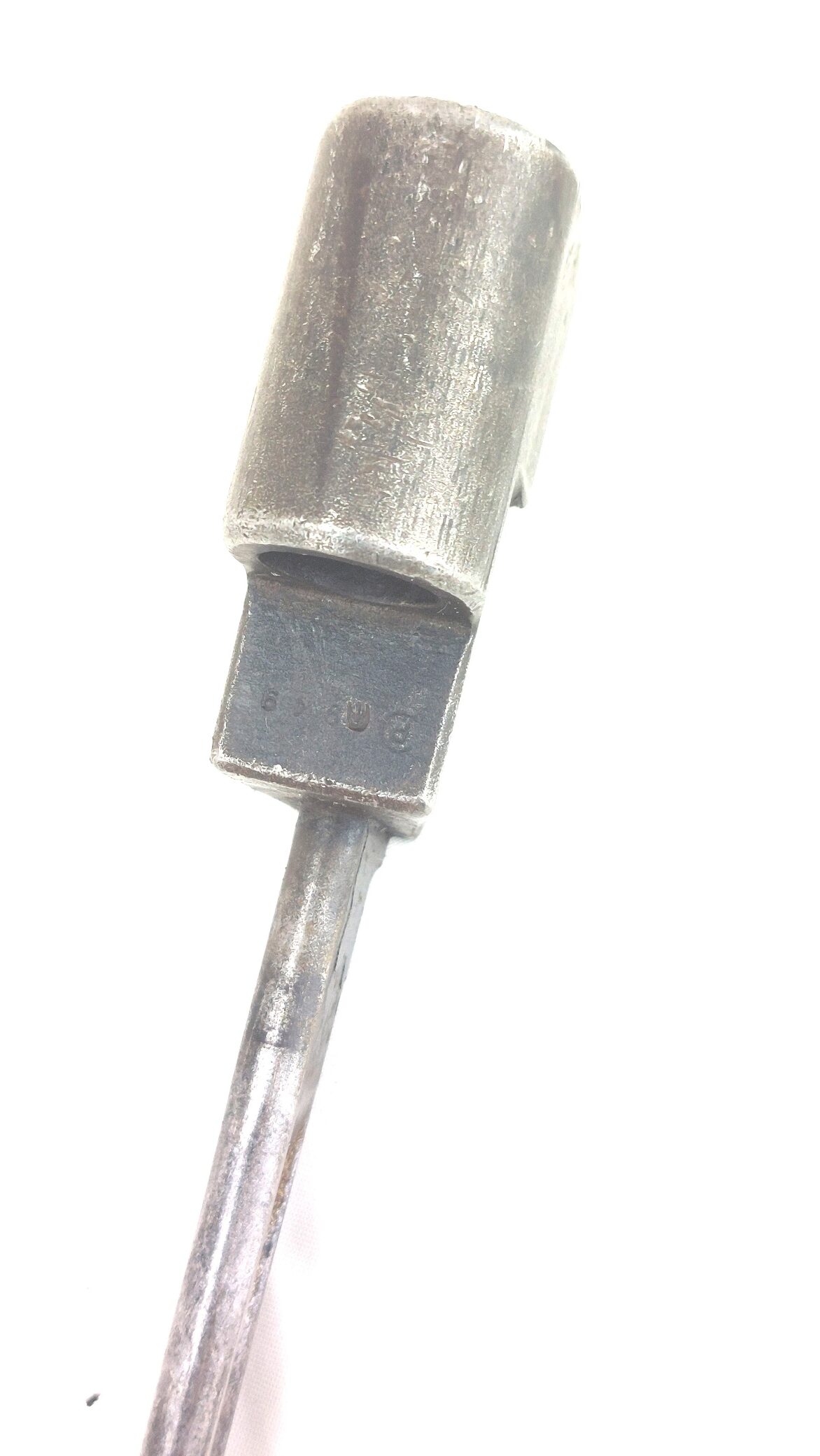
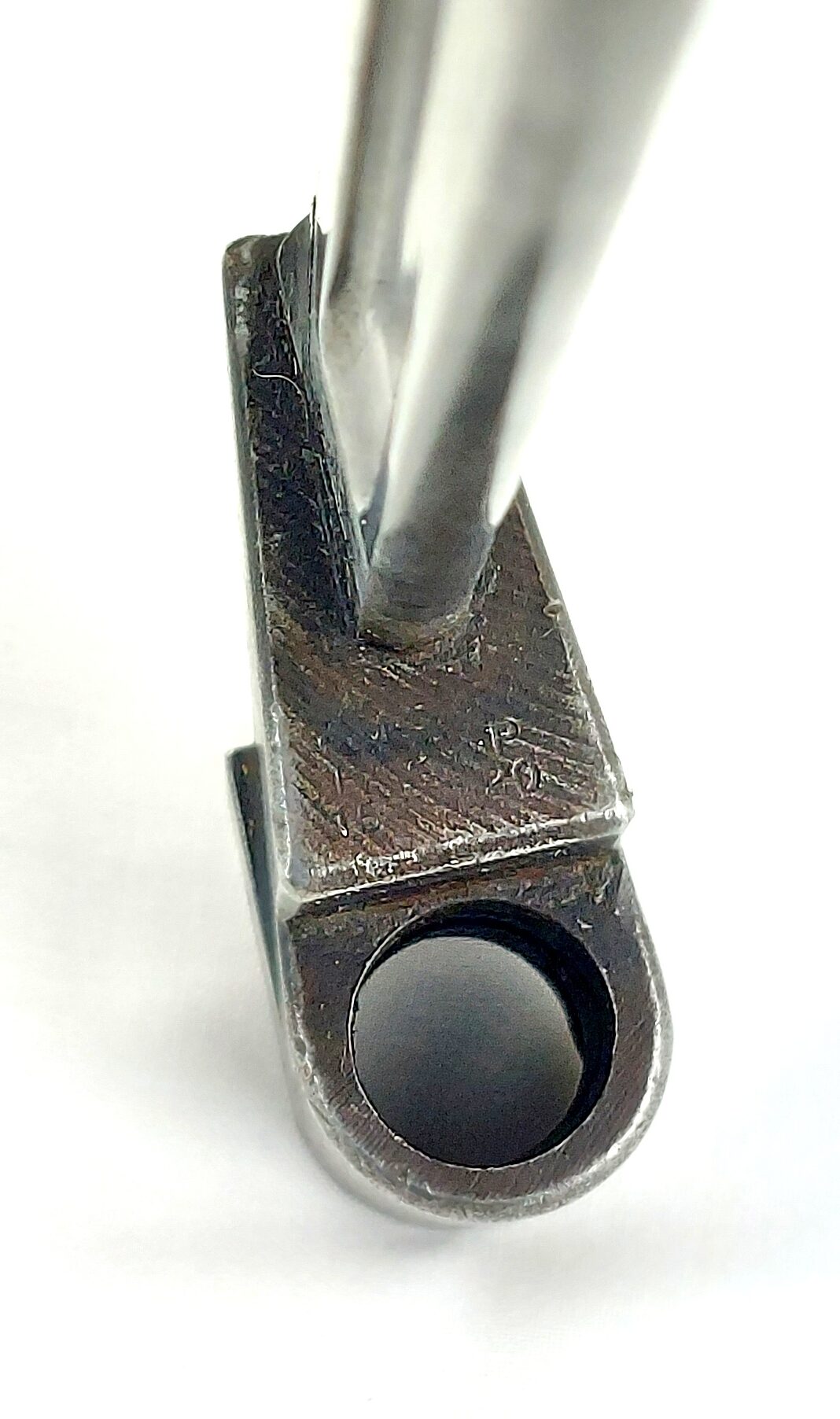
The bayonet is clearly dated and marked for ROF Poole manufacture, with a combination of factory, inspection, and batch stamps consistent with late-1940s British ordnance production.
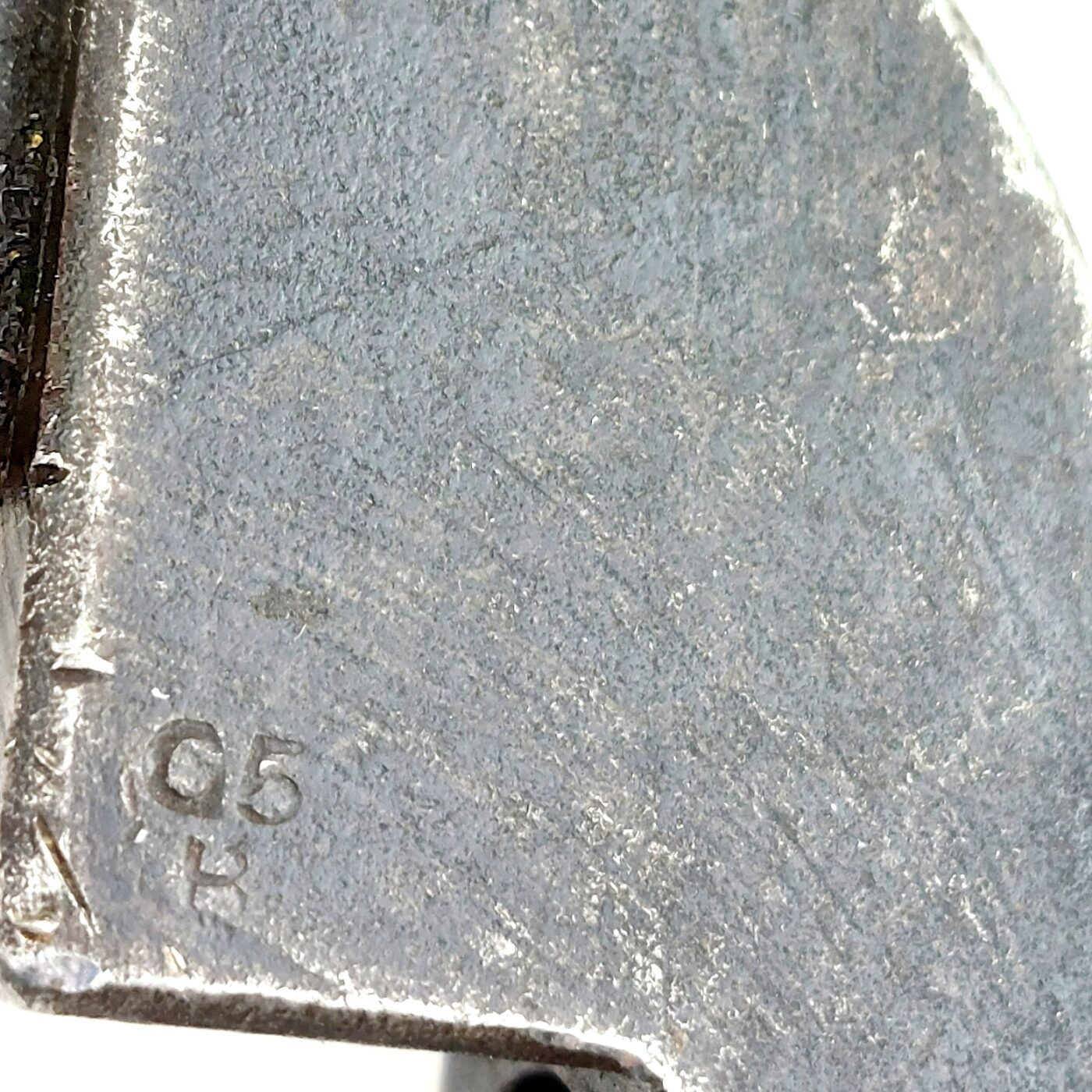
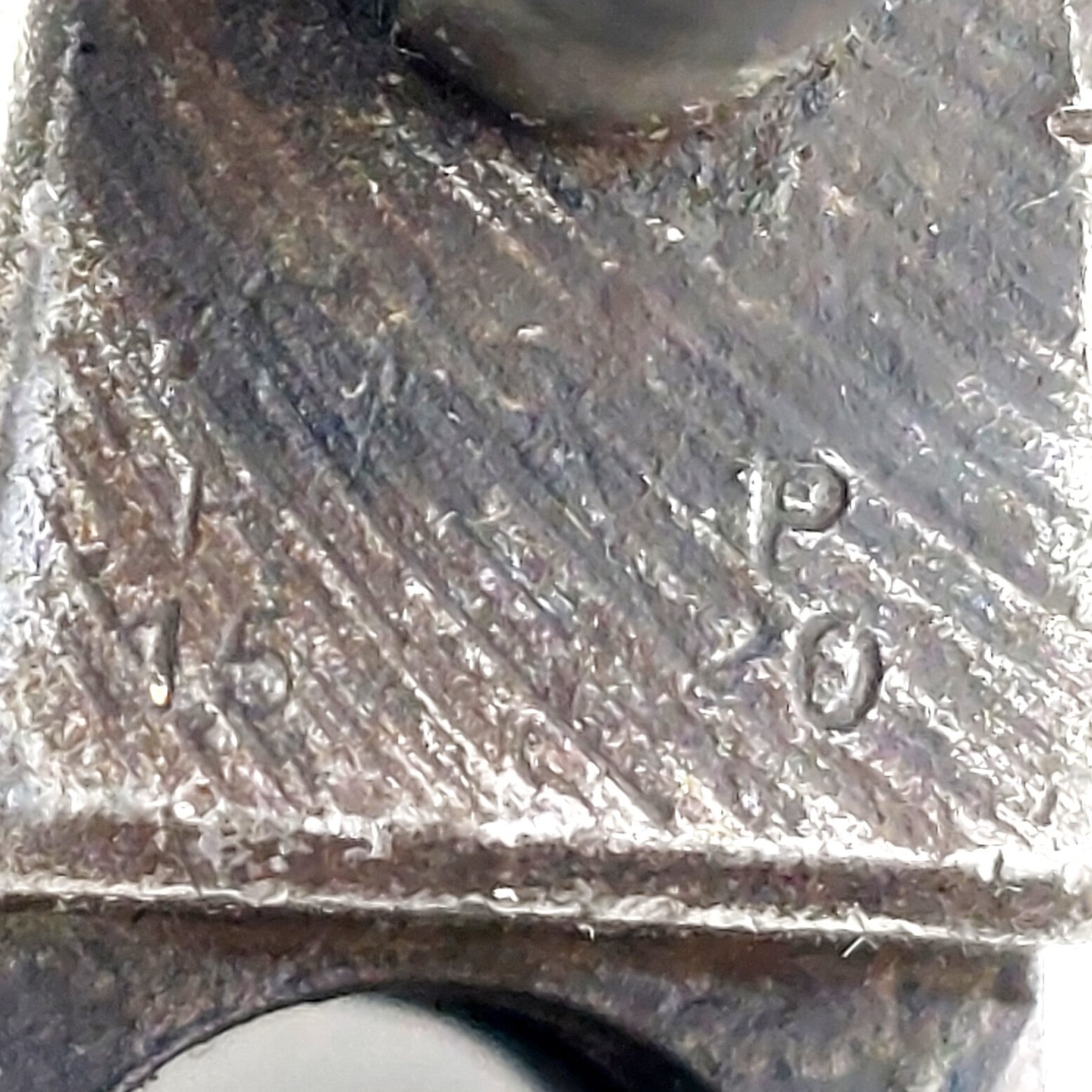
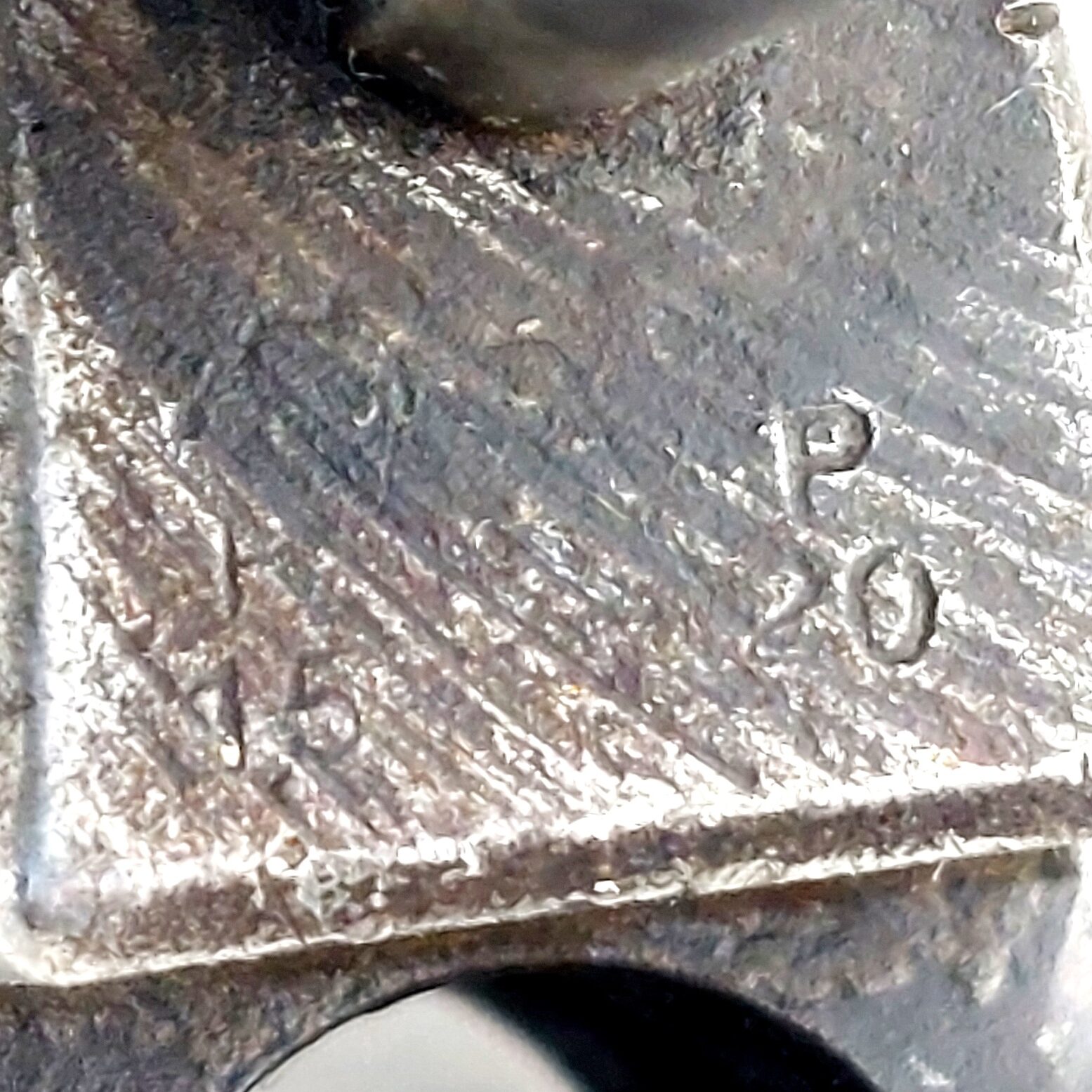
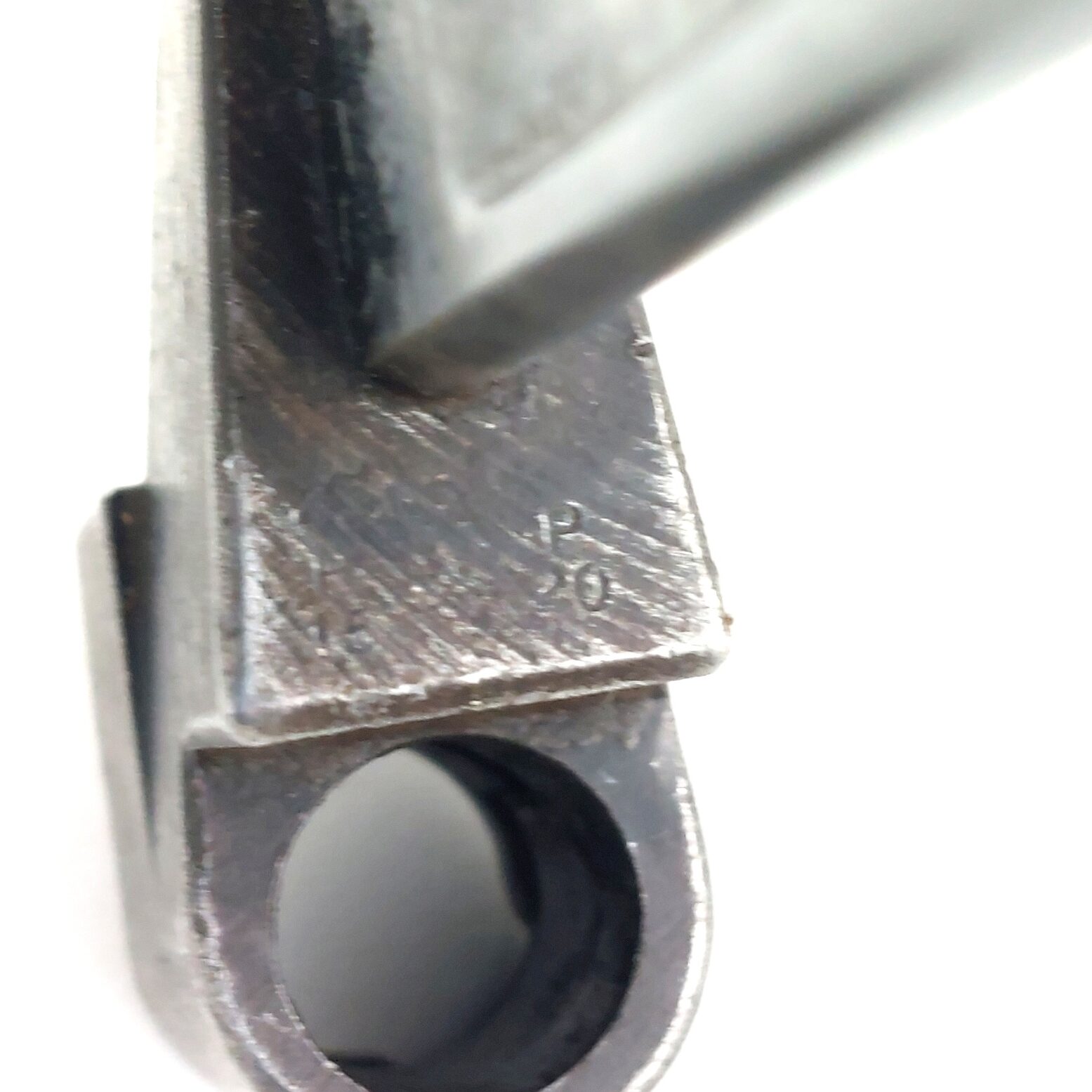
The socket block displays a series of correct British Poole inspection and production marks, including:
- P within a circle, 1949 – definitive ROF Poole maker’s mark and year of manufacture - G5 over P – assembly or batch code associated with ROF Poole production - P over 15 and P over 20 – Poole inspectors mark
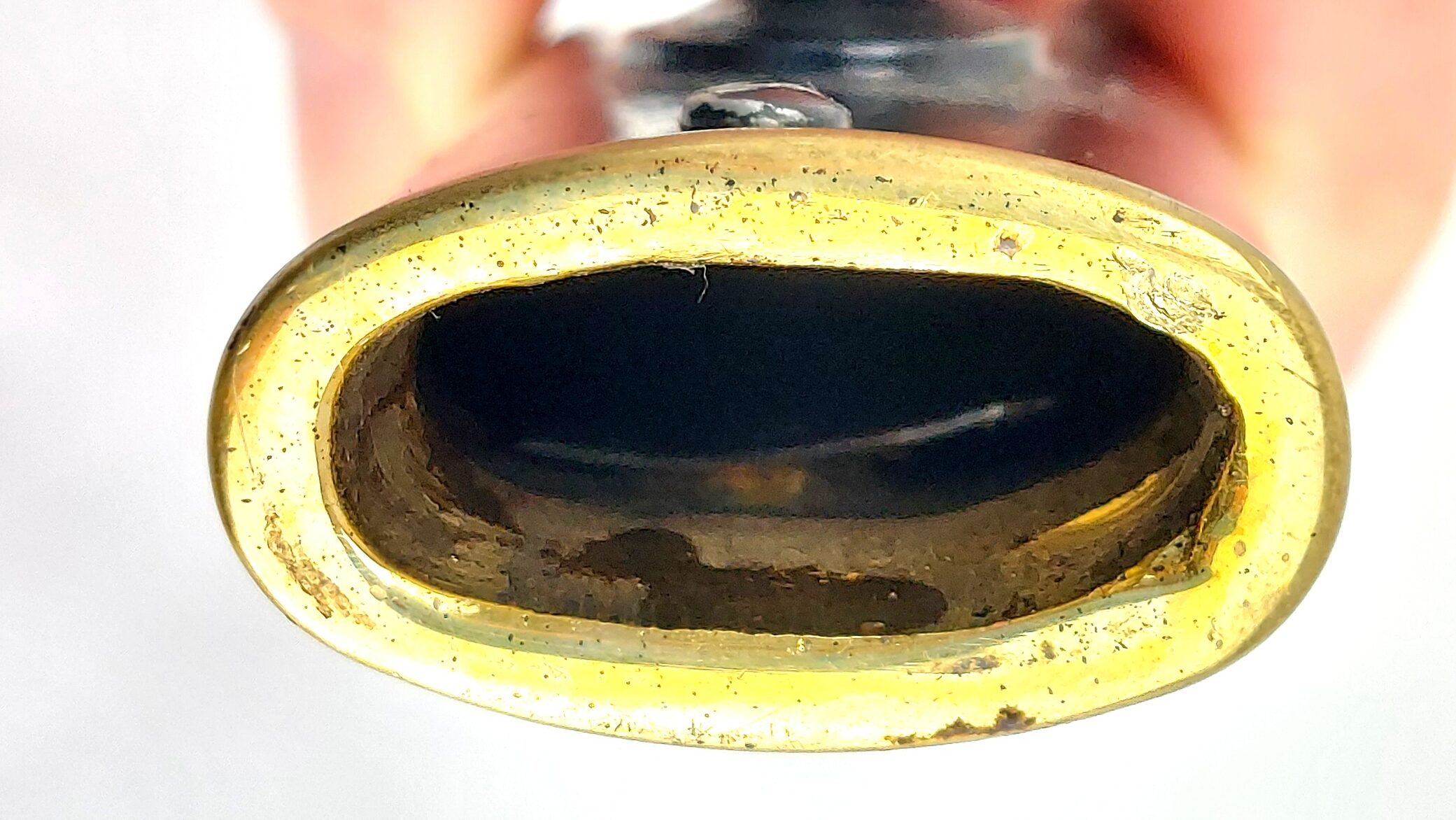
The scabbard is the correct post-war steel body with heavy brass throat, retained for No. 9 use due to the shared blade form with the No. 5 Mk I bayonet.
Approx. Measurements – Blade length: 19.7 cm. Overall length: 25.5 cm.
Historical Note:
The No. 9 Mk I bayonet represents the final British attempt to replace the much-criticised No. 4 spike bayonet. Following the rejection of the more complex No. 7 Mk I/L for general issue, the War Department pursued a simpler and more economical solution. By mating a socket assembly to a modified No. 5 Mk I blade, the No. 9 Mk I provided a practical cutting bayonet while retaining compatibility with existing scabbards. Production commenced as early as 1947—prior to formal approval—demonstrating the urgency to move away from the spike design.
Royal Ordnance Factory, Poole, was responsible for the earliest and most significant production run, manufacturing approximately 200,000 examples between 1947 and 1949. Indigenous production later took place in Pakistan and South Africa, making British Poole-made bayonets the earliest and most desirable examples of the pattern.
*Condition*
The bayonet remains in honest service condition, showing expected age-related wear, light surface oxidation, and handling marks consistent with post-war storage and issue. The blade retains a clear profile with no major damage or abuse. Socket fitment is solid, with legible markings throughout. The scabbard shows typical scuffs and finish wear, with the brass throat intact and firmly seated. Overall, a sound and original example displaying well. Please see photographs as part of the condition report.
£595.00Original price was: £595.00.£495.00Current price is: £495.00.
Important!
*In order to complete the online purchase we will require a picture/scan of a photo ID (Driving Licence, Passport or an official document with a recent picture). If you don't posses any such document please call to buy. If we consider that the proof of ID is incorect or insuficient, we reserve the right to cancel the transaction.
*We also reserve the right to cancel the transaction with a full refund if there is any suspicion that the provided item will be used in any way contrary to the laws and legislation of UK.