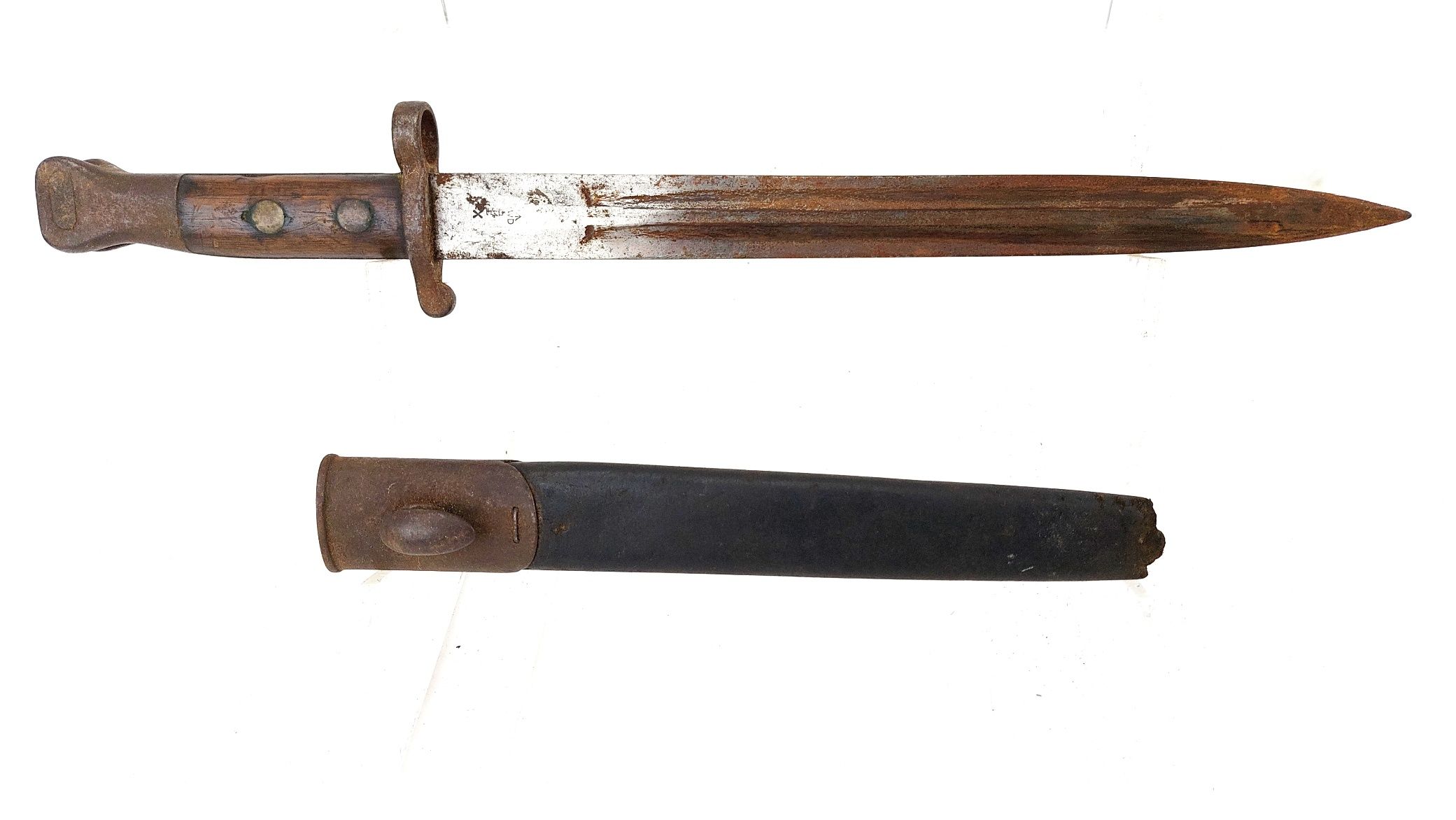
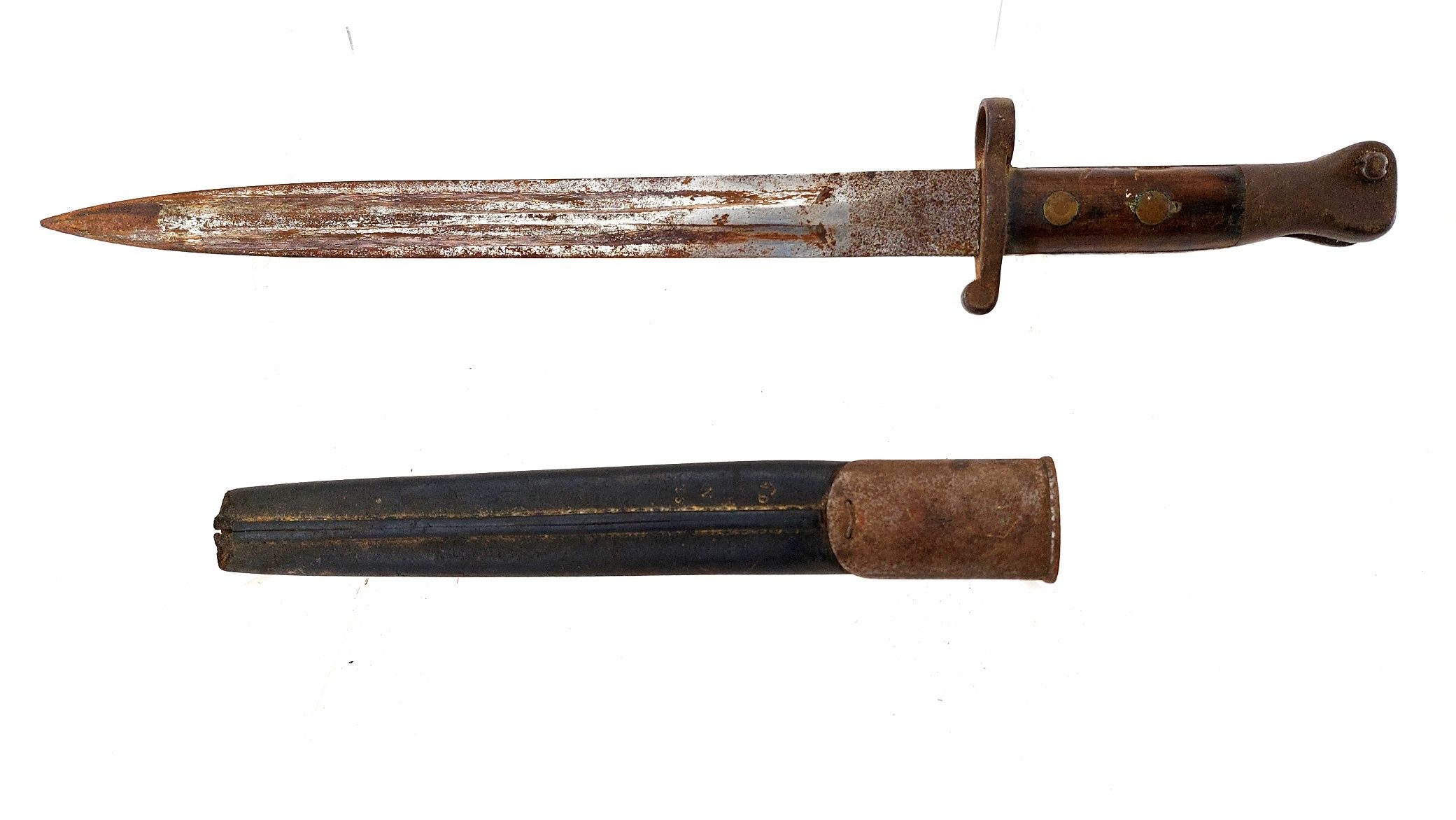
*British, 1888 Pattern Mk I Type 2 Enfield-Made Bayonet with Leather Scabbard – WD Marked, Dated 1895*
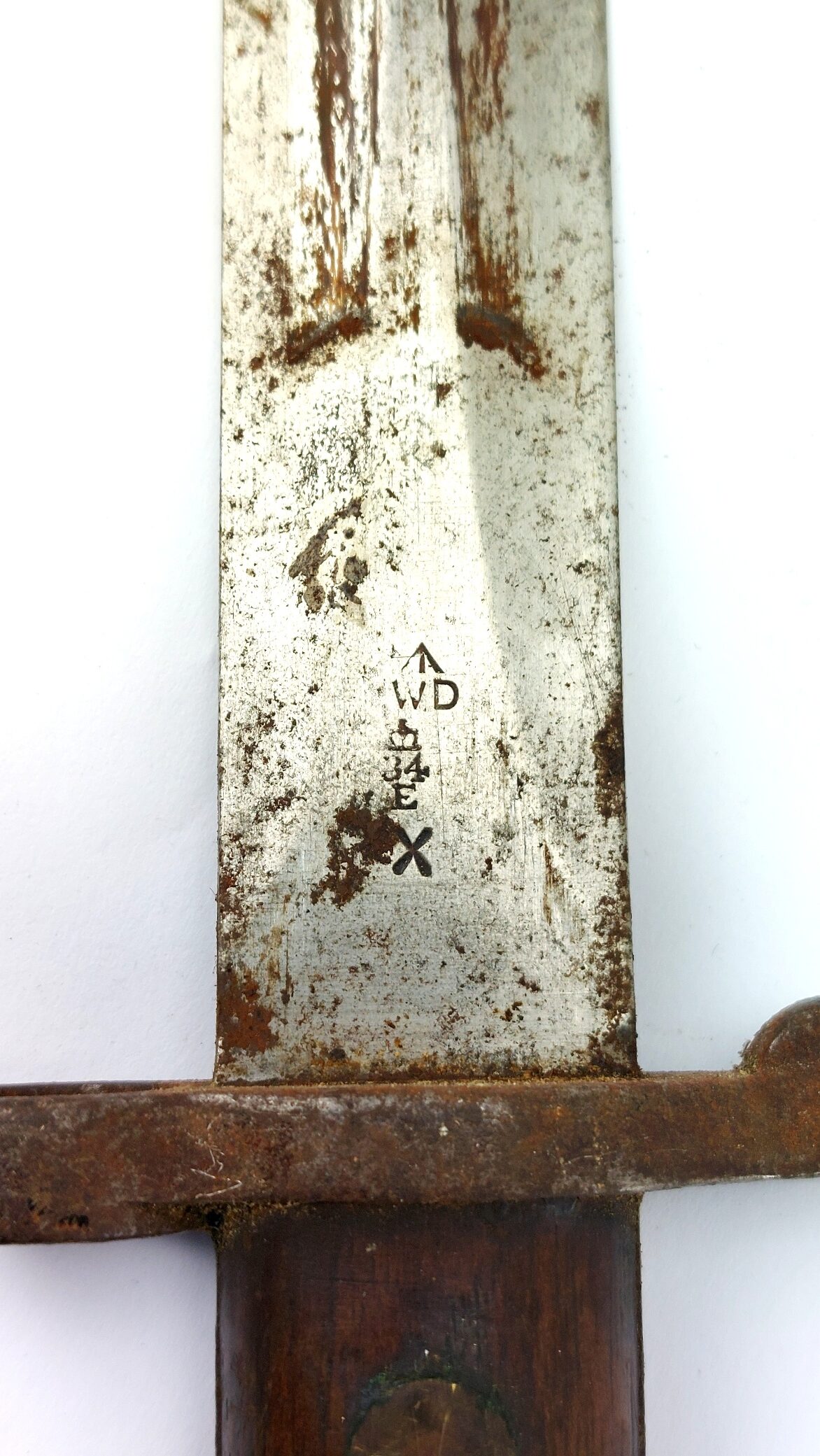
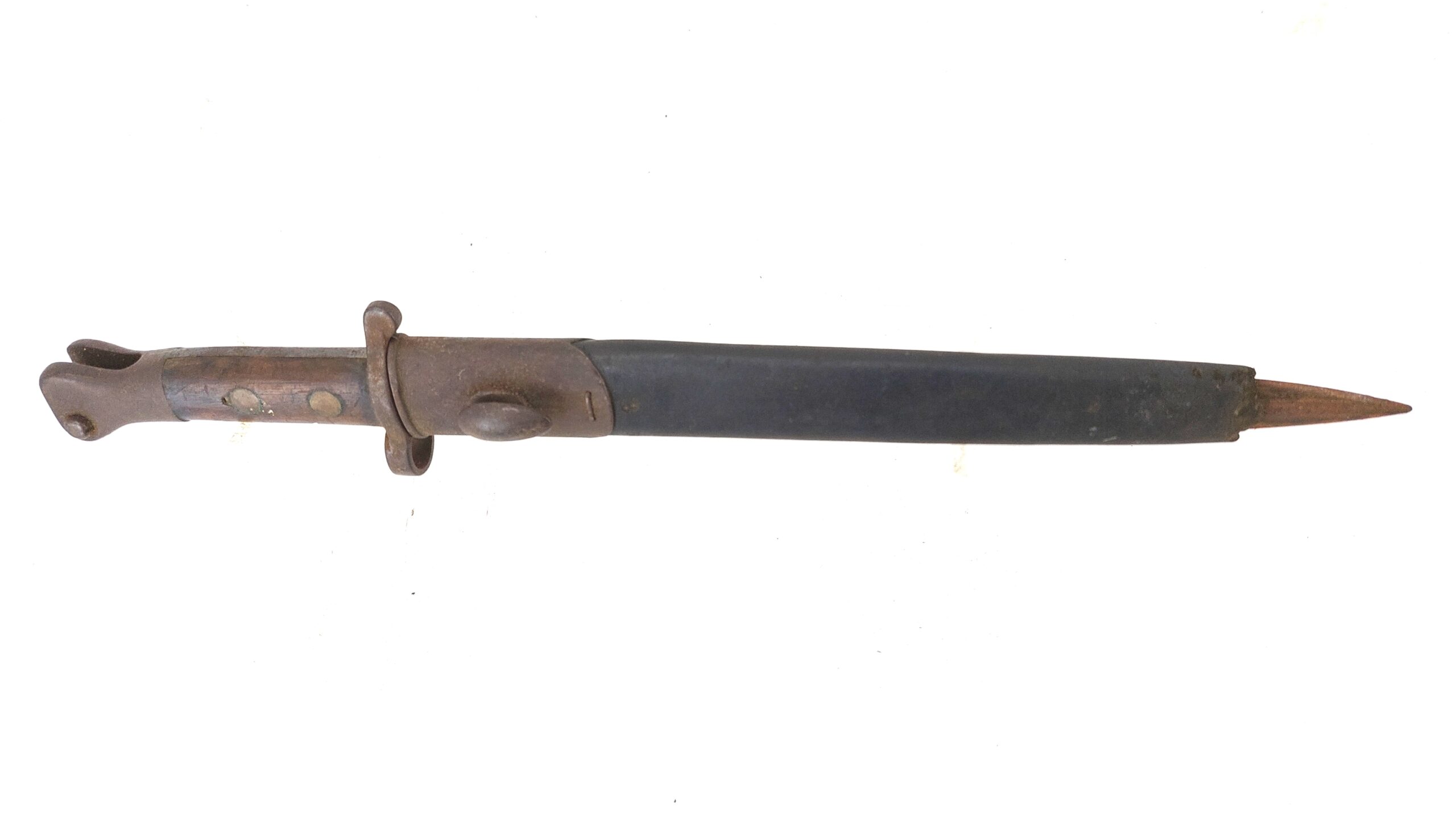
A British Pattern 1888 Mk I, Type 2 knife bayonet, manufactured at the Royal Small Arms Factory, Enfield. Designed for the .303 calibre Lee-Metford and Long Lee-Enfield rifles, this example features a double-edged spear-point blade measuring 30 cm (42.2 cm overall) with twin narrow fullers. The blade is stamped with the War Department broad arrow over “WD,” Enfield inspector’s mark “E” over the number “34,” and the customary bend-test “X.”
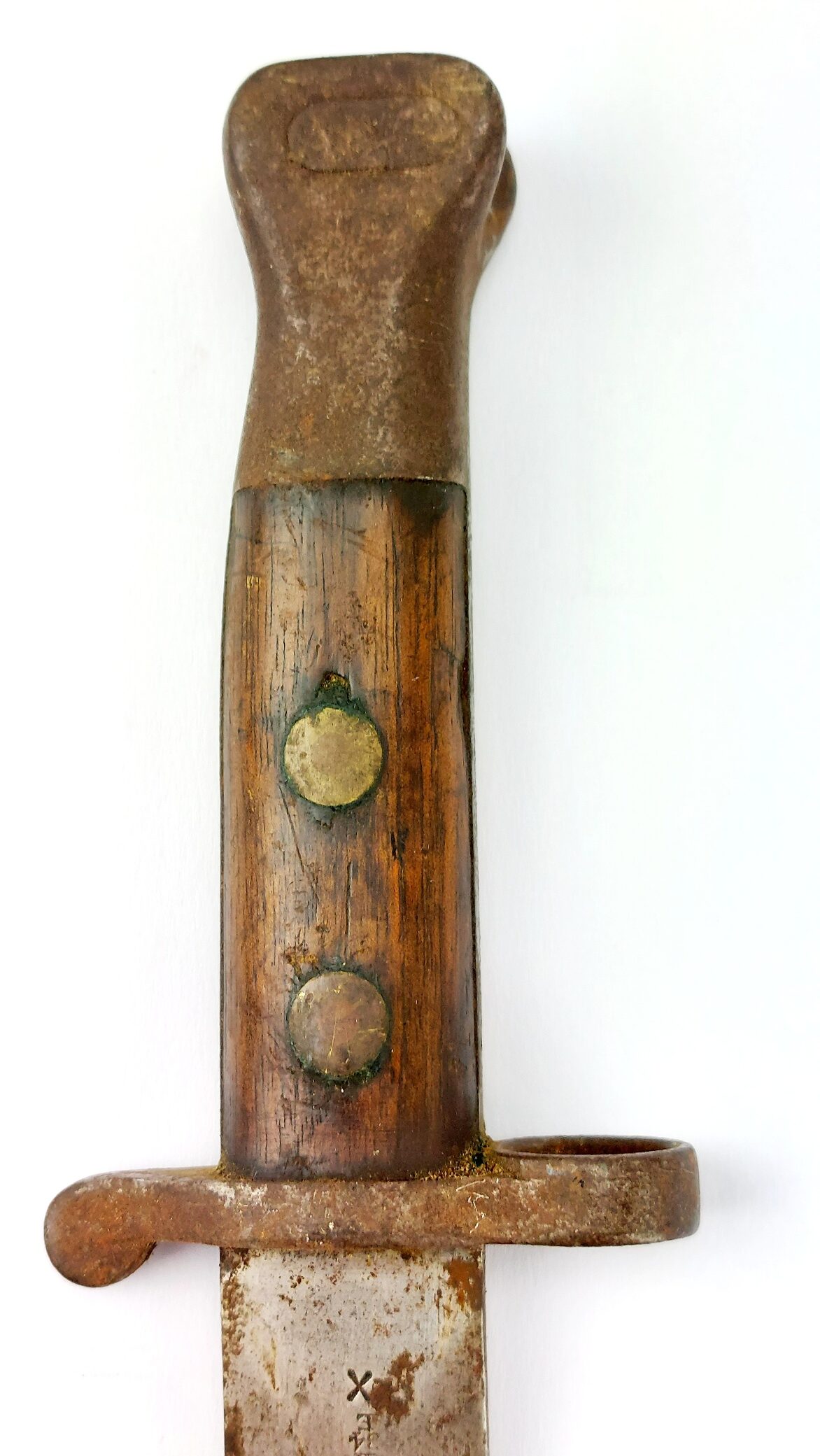
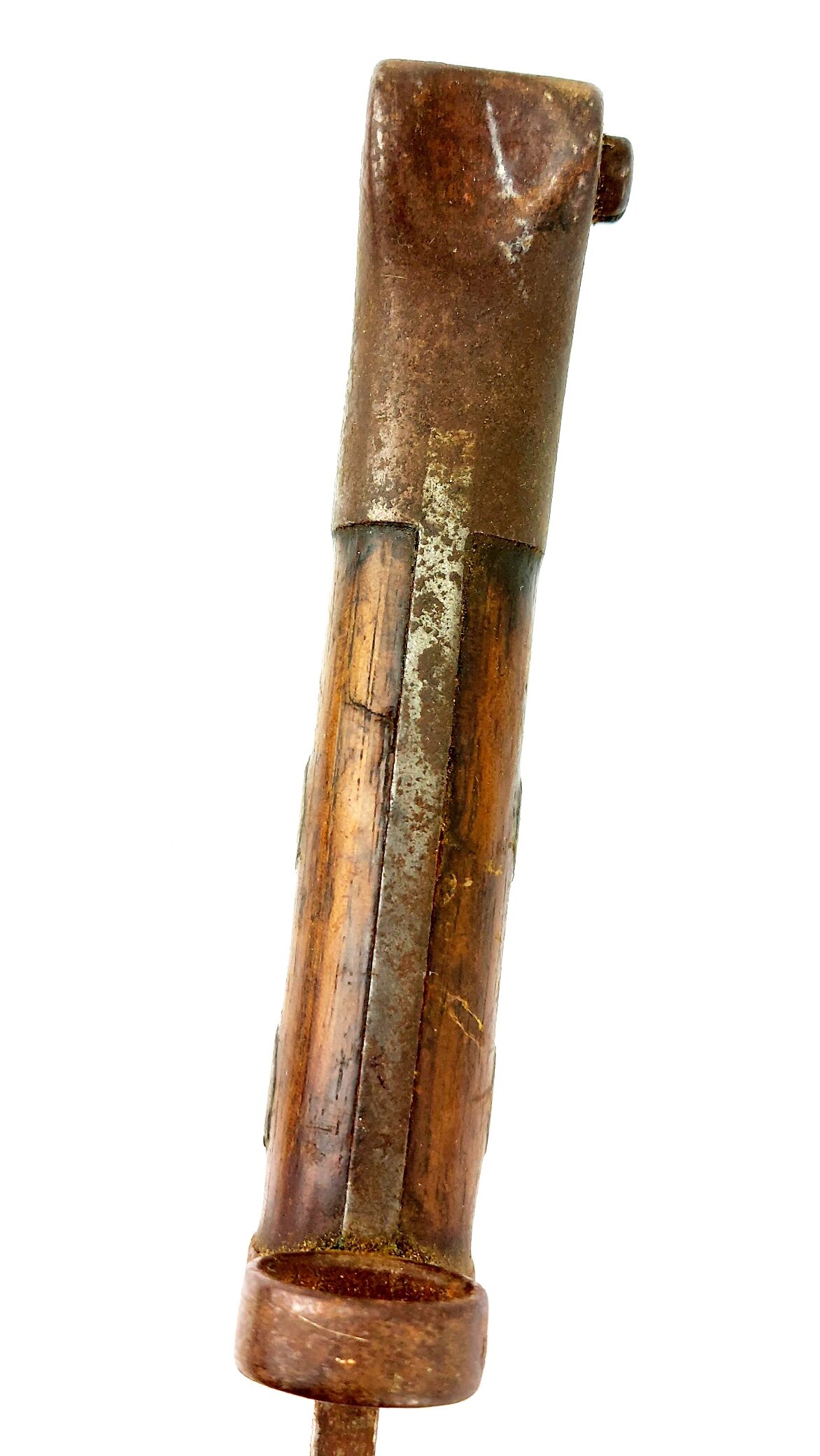
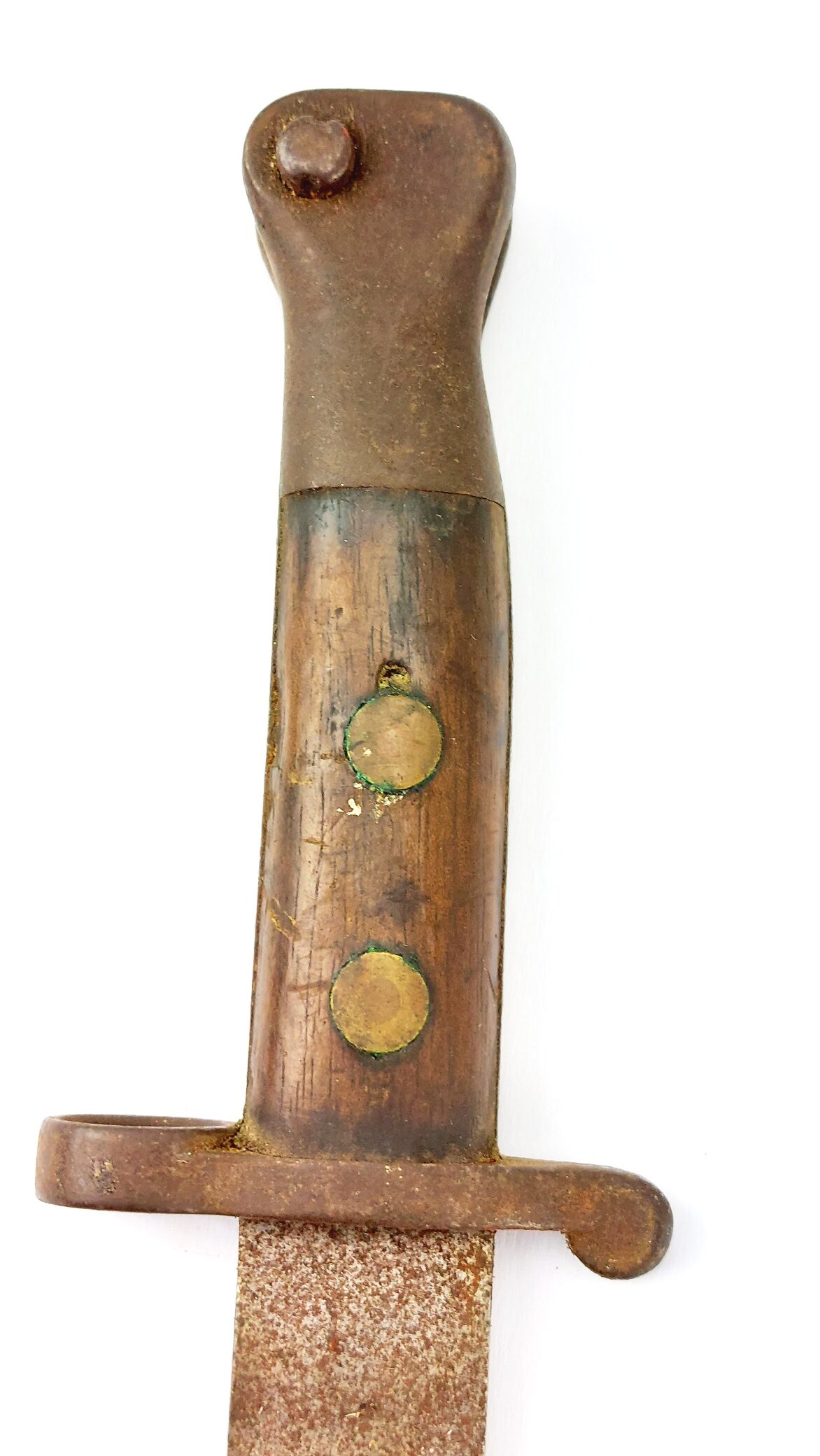
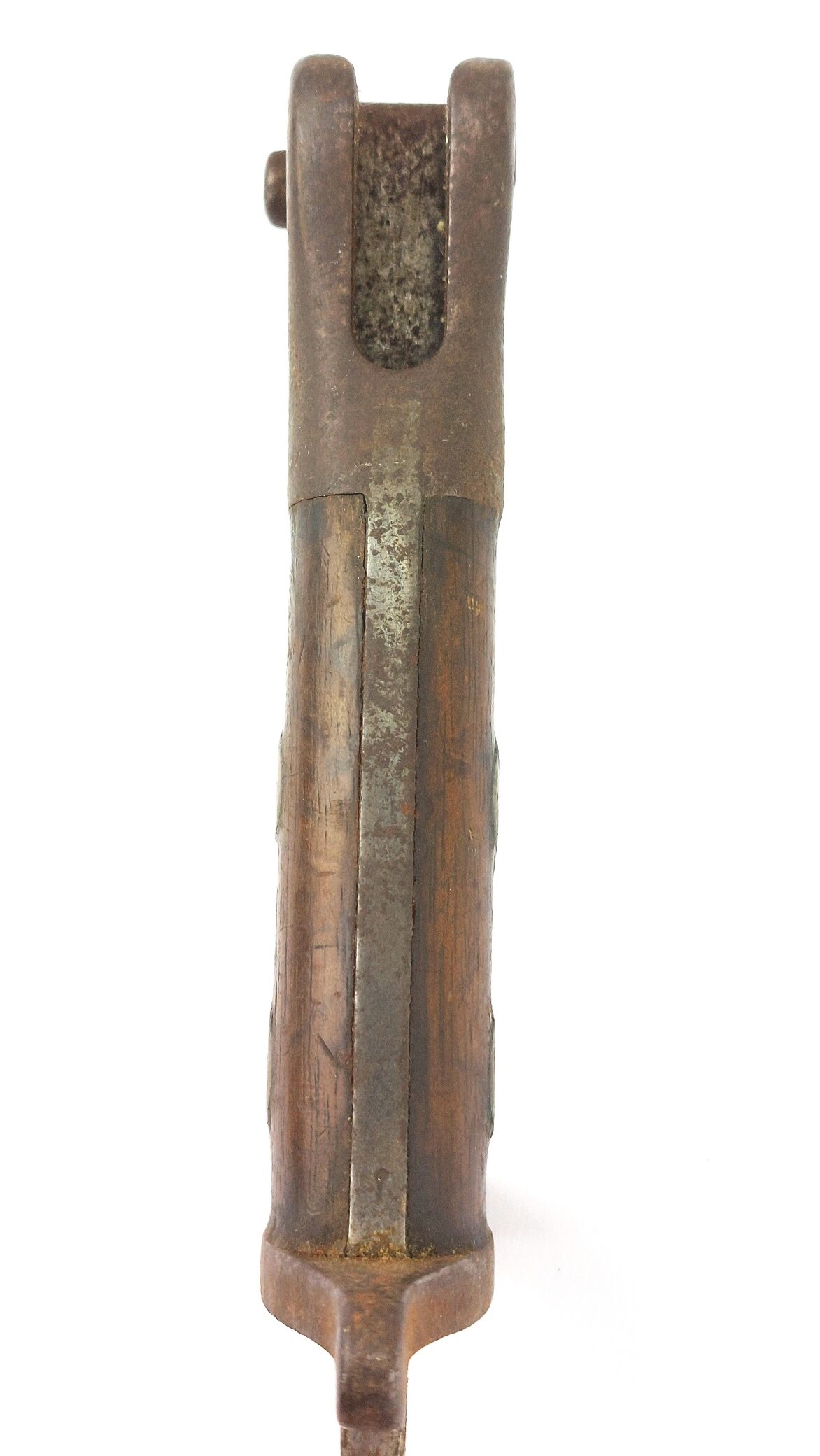
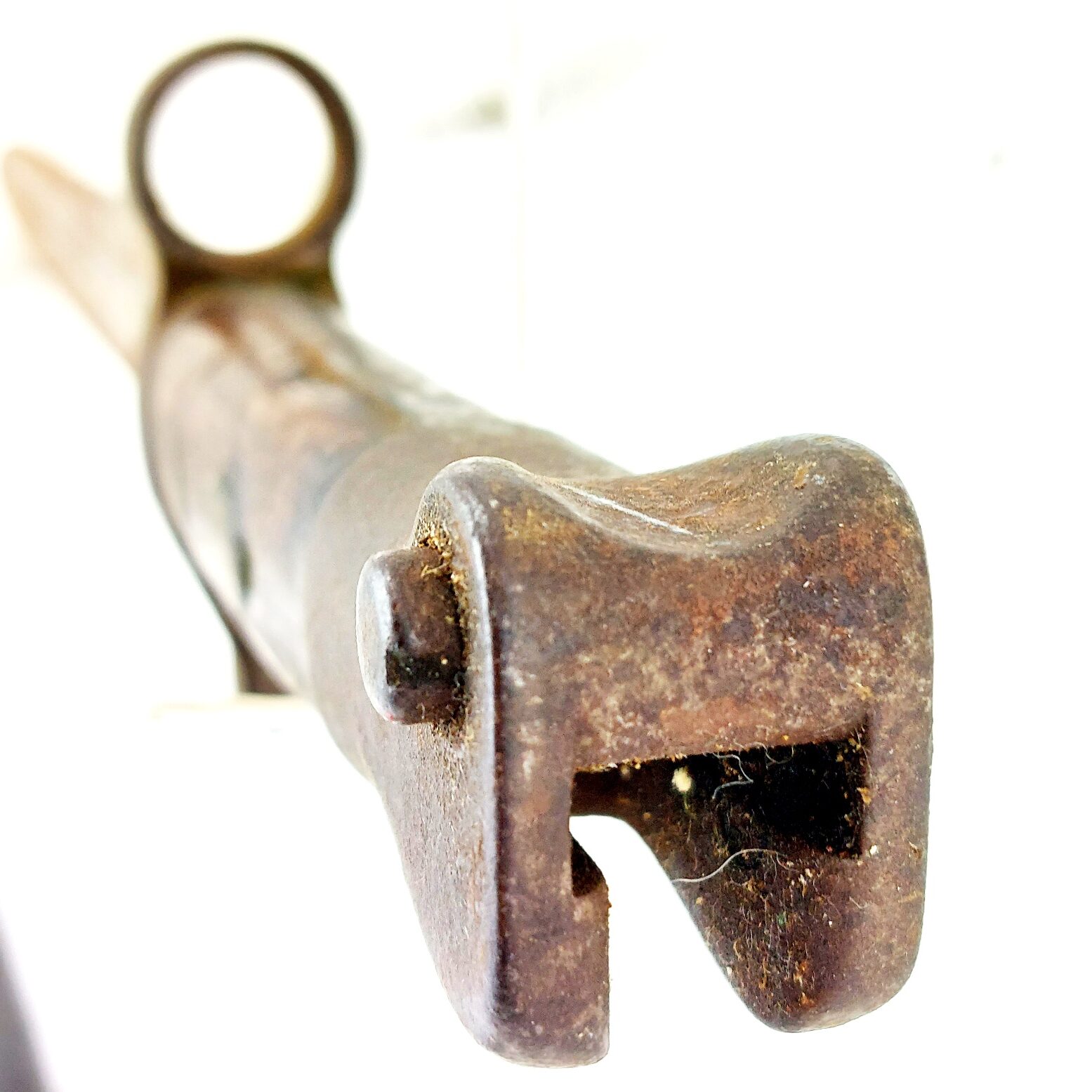
The hilt is fitted with two-piece wooden grips, secured by two large brass rivets with steel washers, and includes the oil hole in the grip (now congested). The steel pommel incorporates the mortise slot and locking catch for rifle fitting.
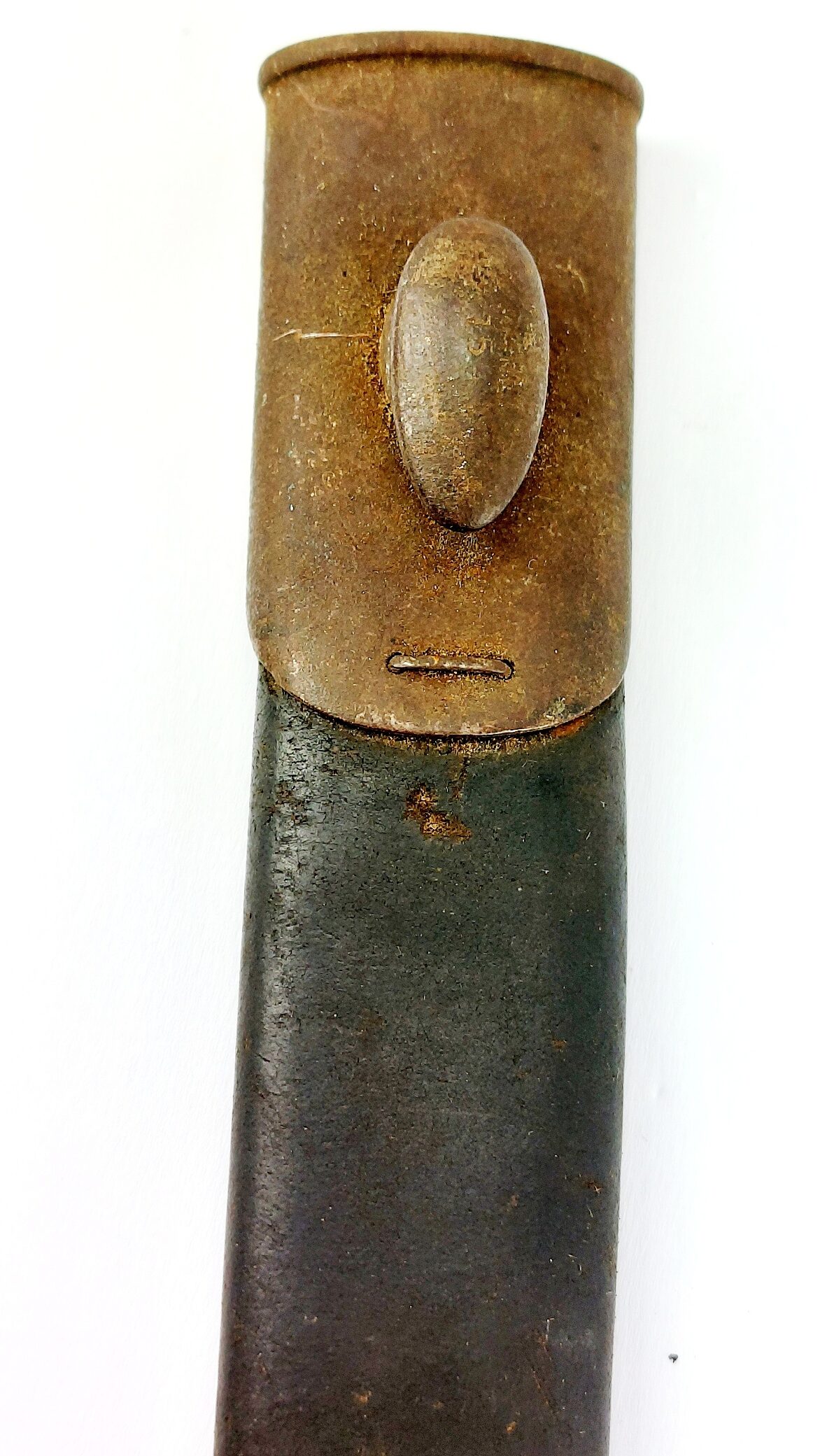
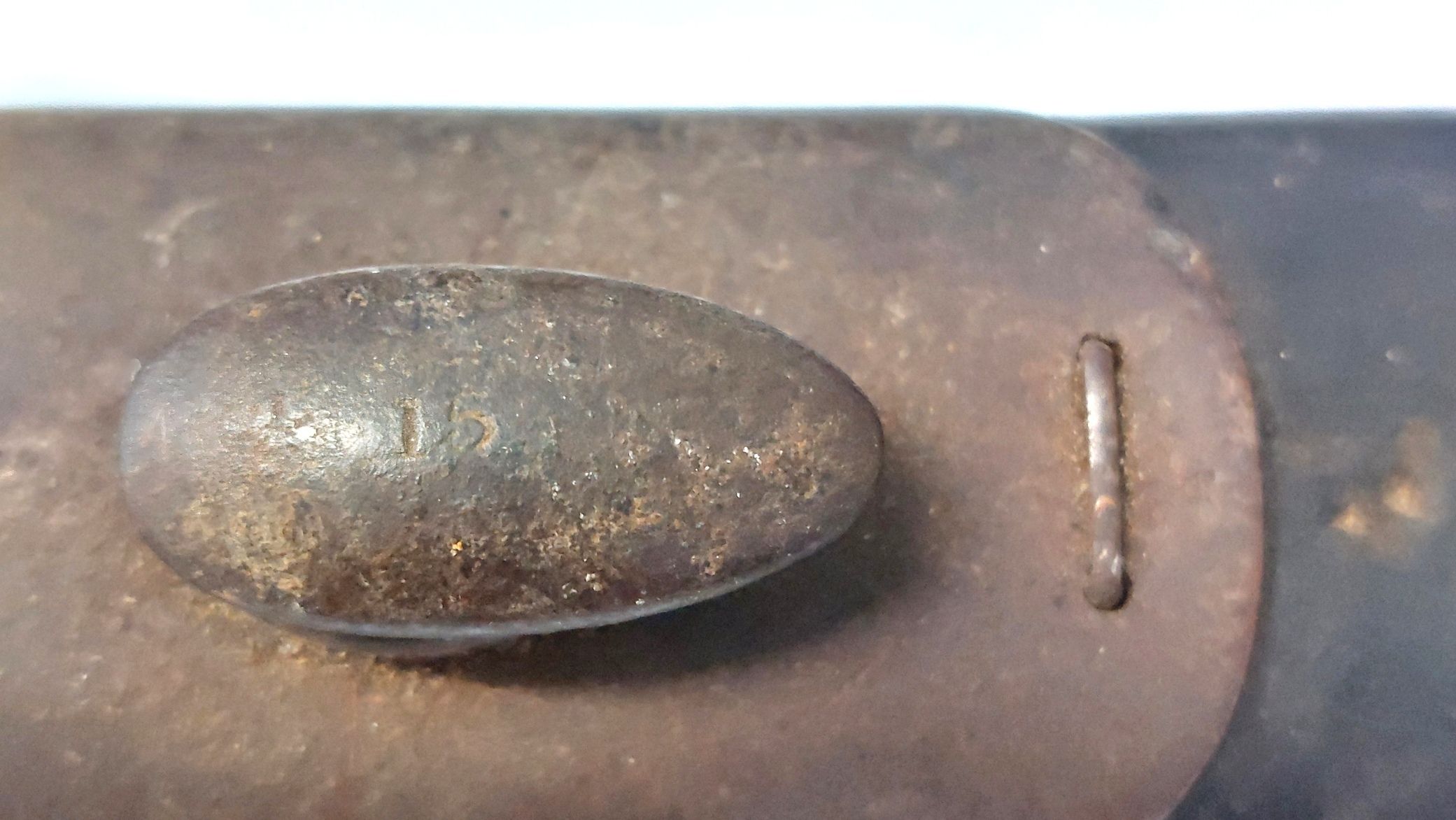
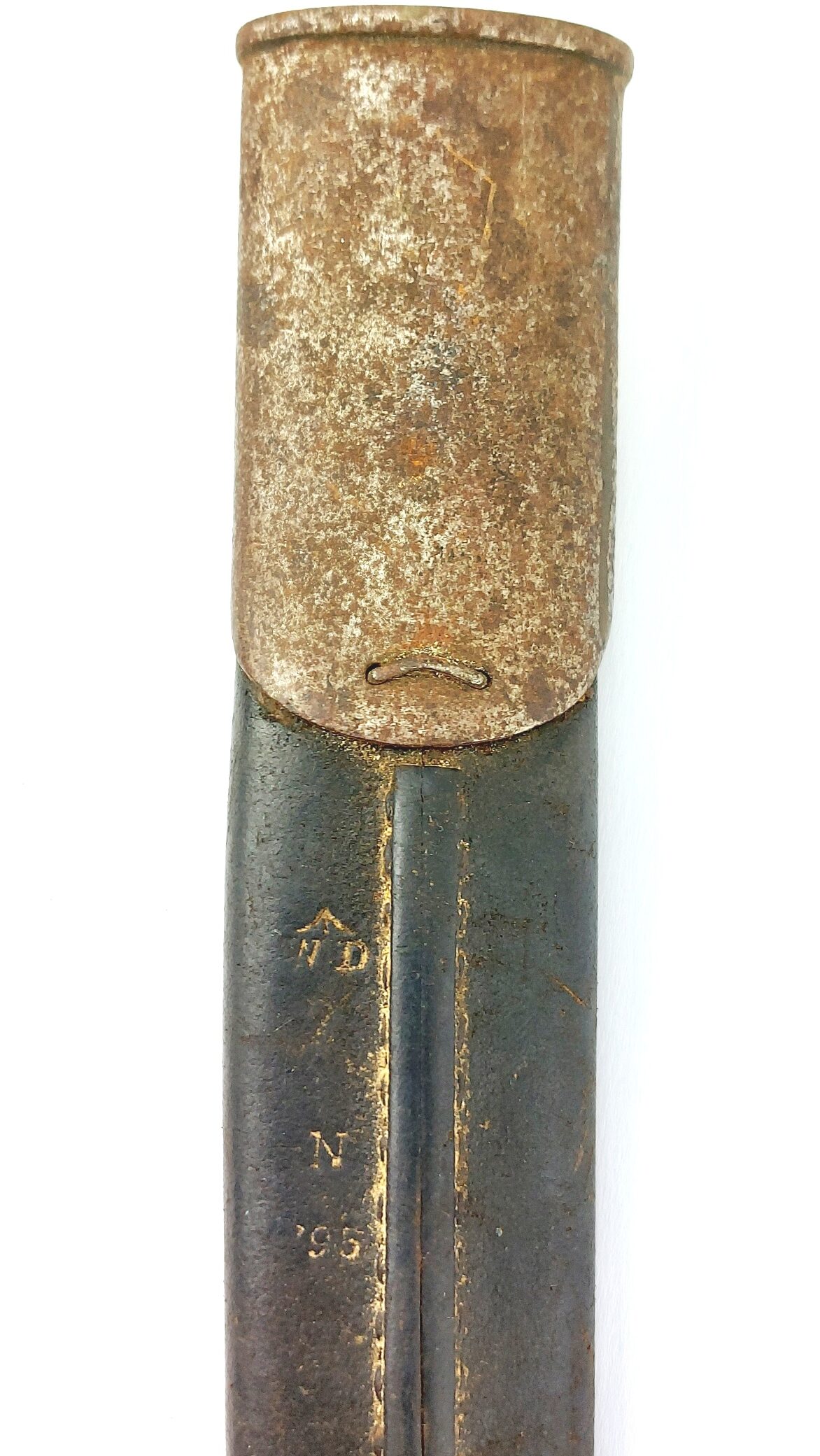
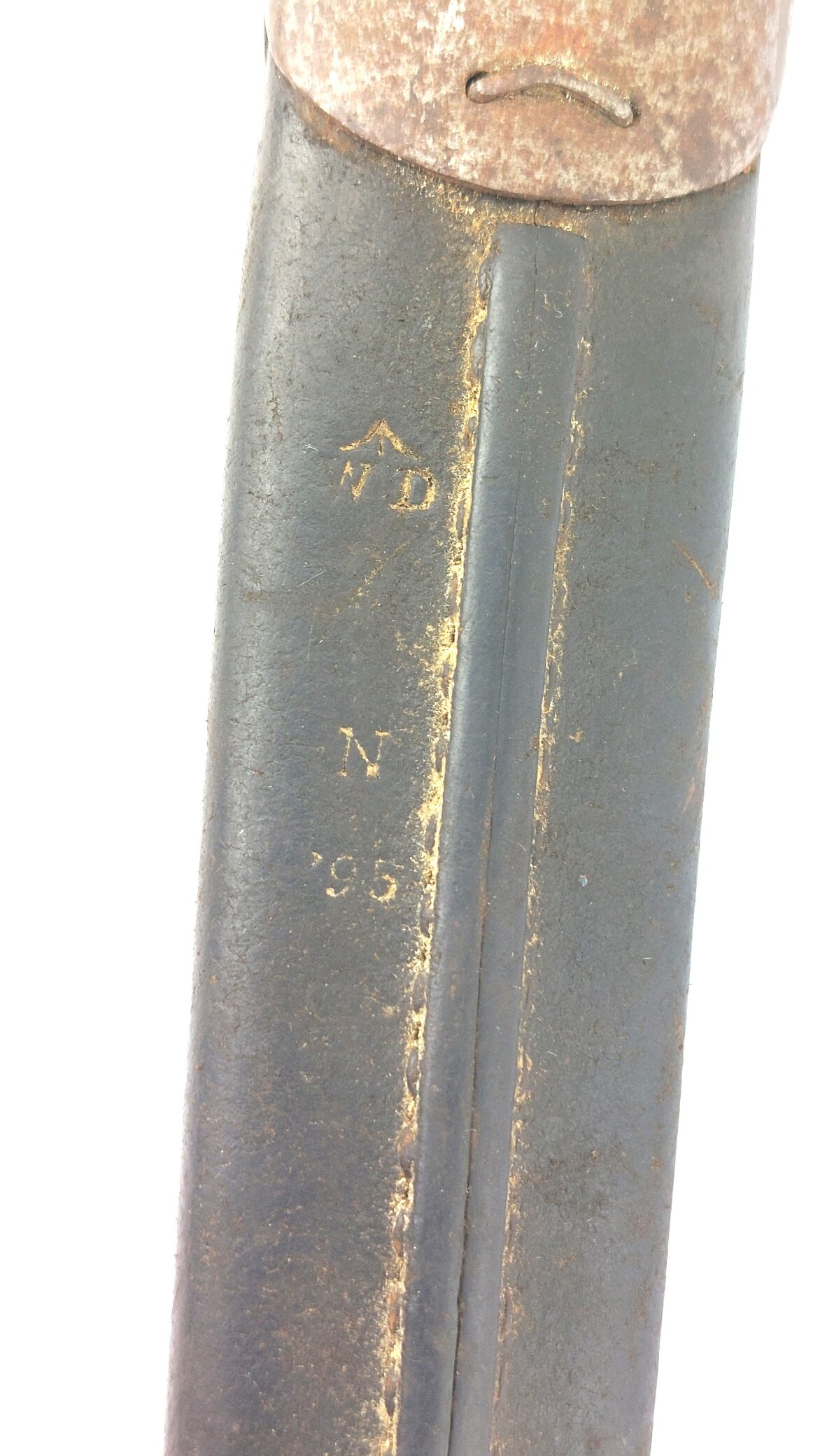
Accompanied by its original 1888 pattern leather scabbard, dated 1895, stamped with broad arrow over “WD,” inspector’s initial “N,” and the date “’95.” The teardrop frog stud is regimentally numbered “15xx,” confirming official issue. This is a classic late-Victorian bayonet, carried into action in the Second Anglo-Boer War (1899–1902).
Historical Note:
The Pattern 1888 bayonet was the first true “knife bayonet” adopted by the British Army, replacing the longer sword bayonets. It was intended for use with the .303 calibre Lee-Metford and Long Lee-Enfield rifles. Four distinct subtypes were produced:
- Mk I, 1st Type – grips secured by one large and two small brass rivets.
- Mk I, 2nd Type – grips secured by two large rivets (as here).
- Mk II – eliminated the cleaning rod channel and moved the clean-out hole to the pommel.
- Mk III – grips secured with screwbolts.
Production was centred at the Royal Small Arms Factory, Enfield, with government contracts also issued to Robert Mole & Sons, Sanderson Bros. & Newbould Ltd., and Wilkinson Sword Co. Commercial versions were also made for volunteer units.
This example, made at RSAF Enfield and accepted into service in the mid-1890s, would have been in frontline issue at the outbreak of the Second Anglo-Boer War. British troops carried the Long Lee-Enfield rifle with this bayonet throughout the conflict, from the early set-piece battles of 1899 through to the guerrilla campaigns of 1901–02. Surviving dated examples with numbered scabbards offer direct links to this key turning point in British colonial warfare.
*Condition*
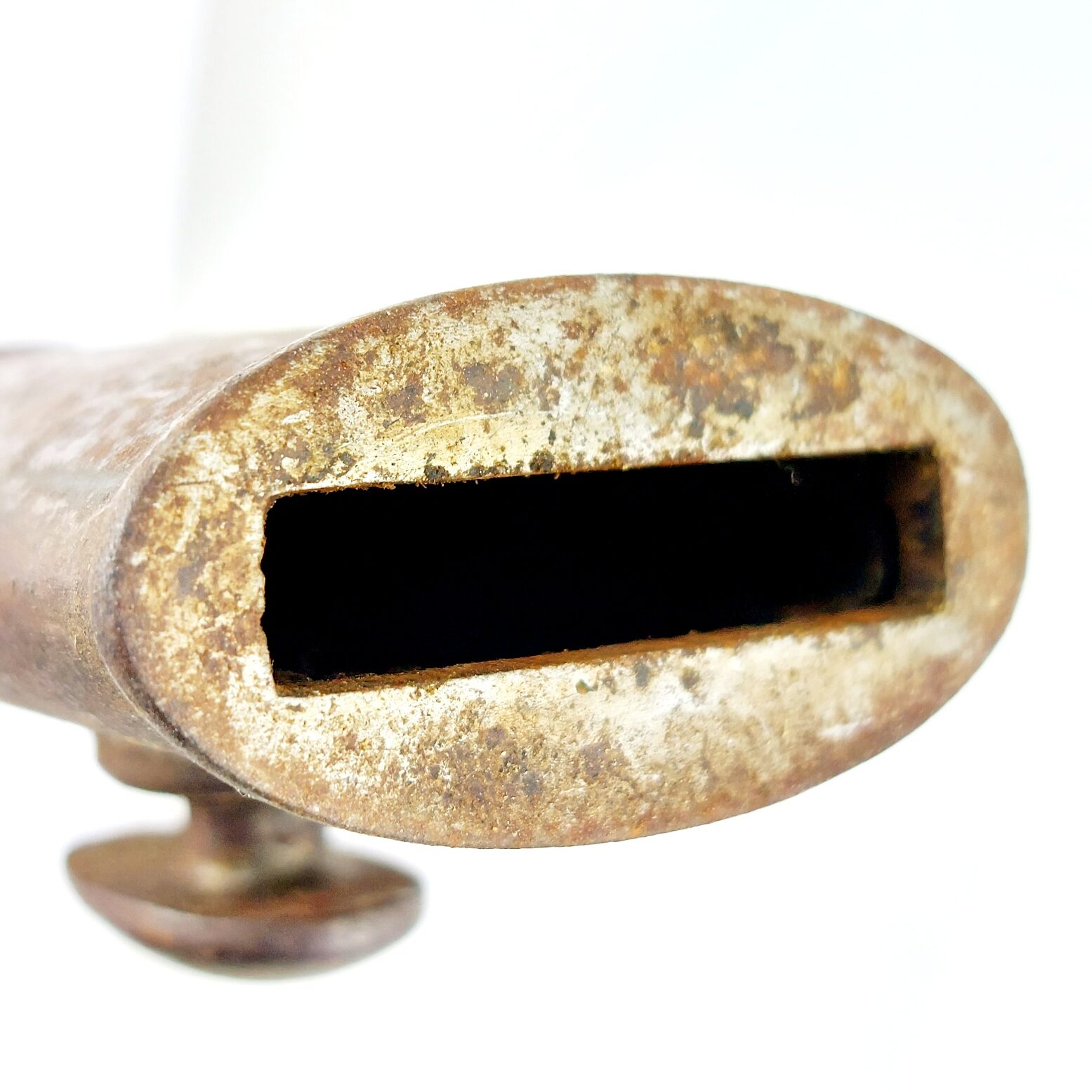
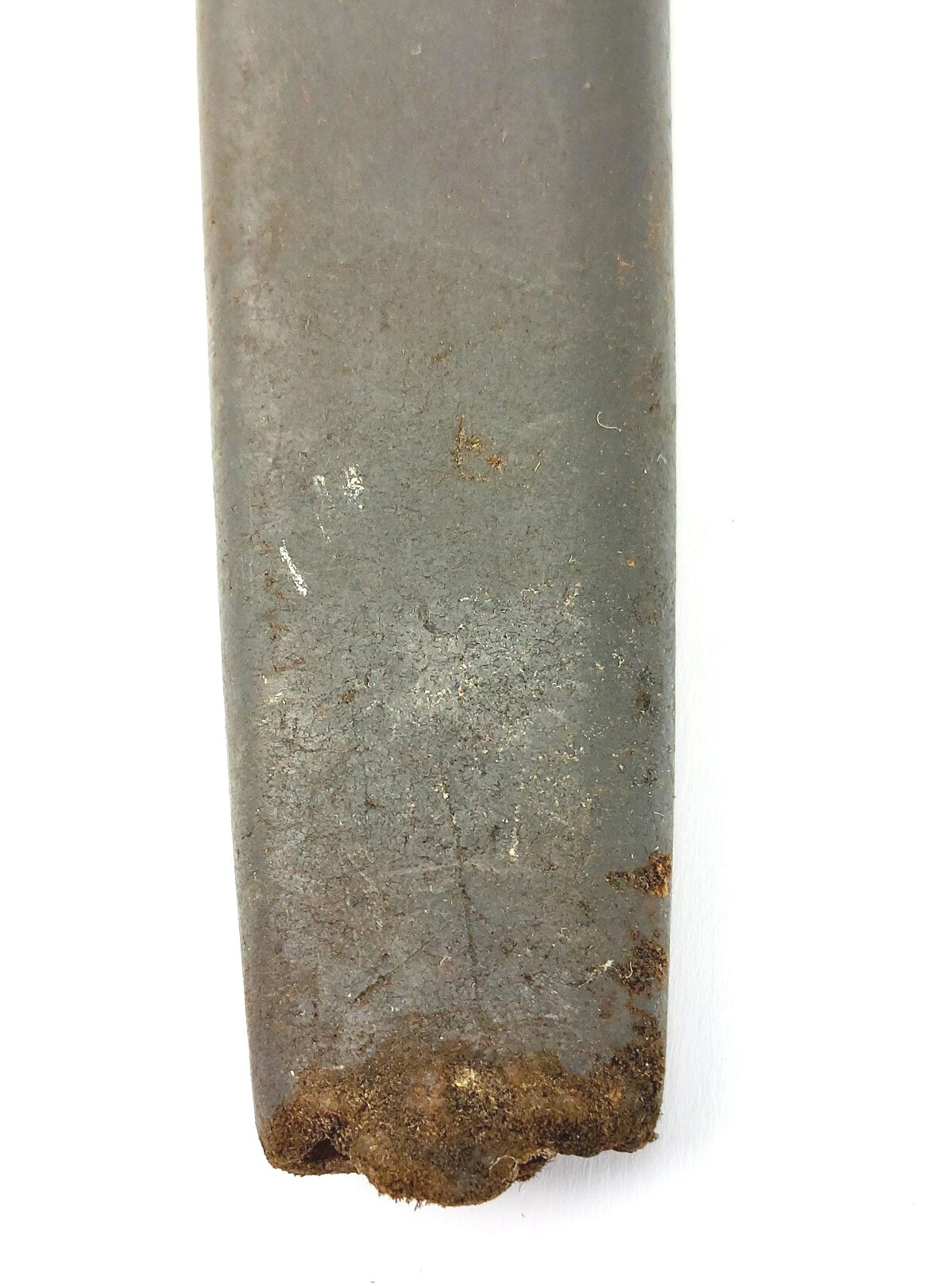
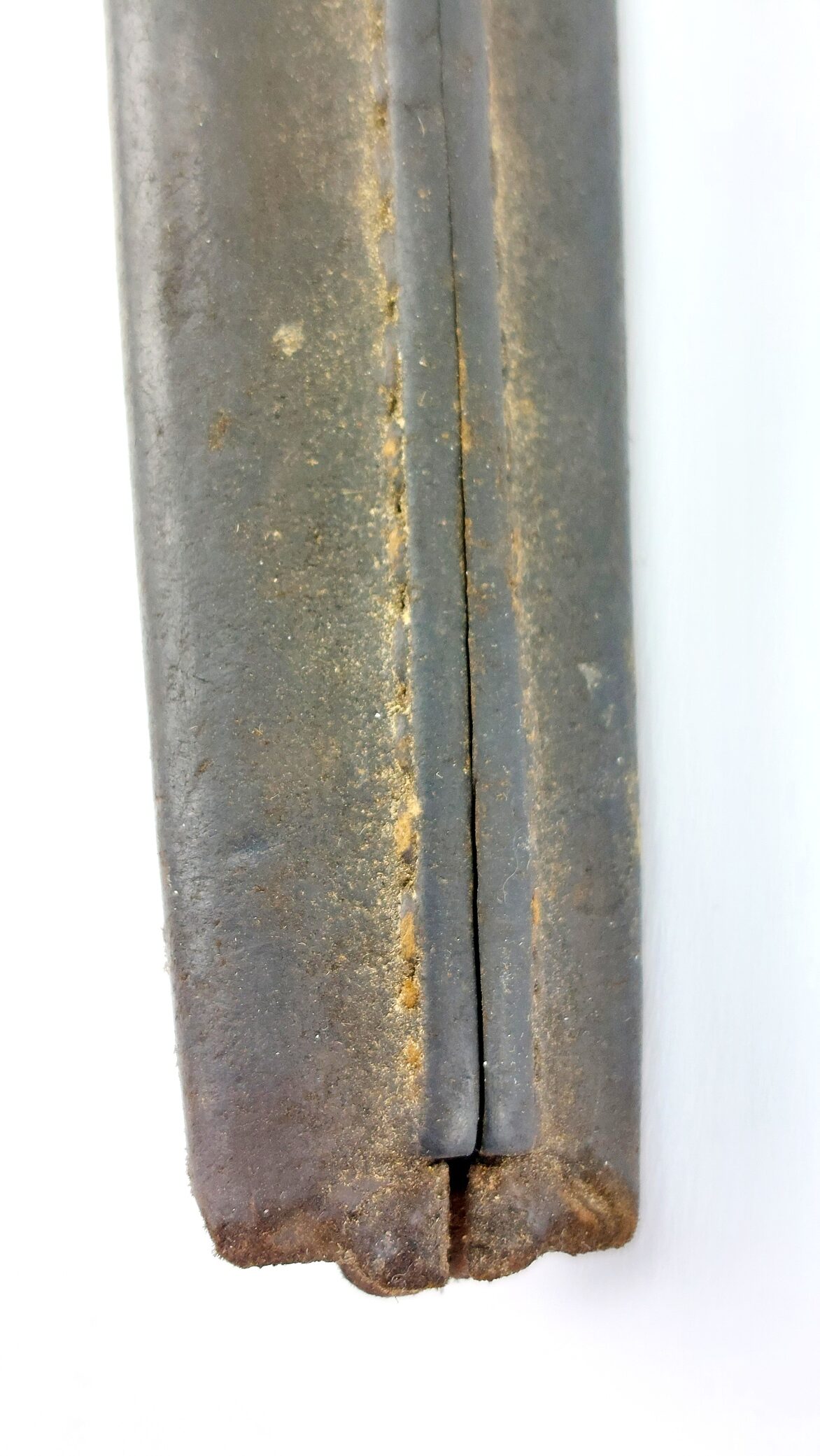
The bayonet is in fair, untouched condition, showing age and service wear. The blade exhibits surface rust, patina, and pitting but remains full length with the tip intact. Markings are legible. The wooden grips are worn with scratches, staining, and verdigris around the rivets, but remain solid. The oil hole is present but congested. Steel fittings show oxidation consistent with age. The leather scabbard retains good form, though with heavy wear and loss to the lower chape where the seam has split, exposing the leather tip. The locket is intact and legibly stamped, with the frog stud showing the regimental issue number. Leather is dry, with surface cracking, but structurally complete for display. Please see photographs as part of the condition report.
RQMFOXAOO_9145213533