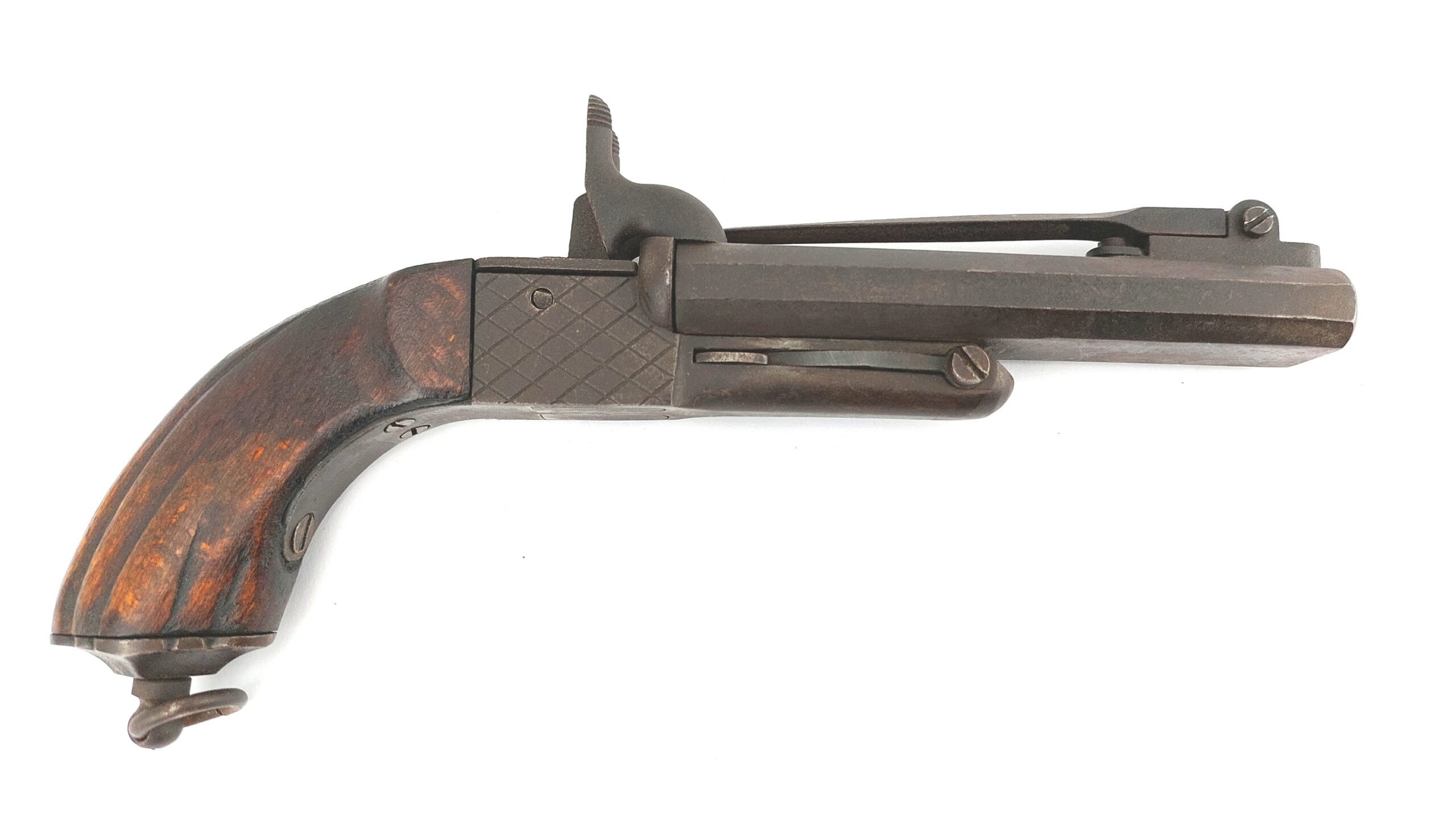
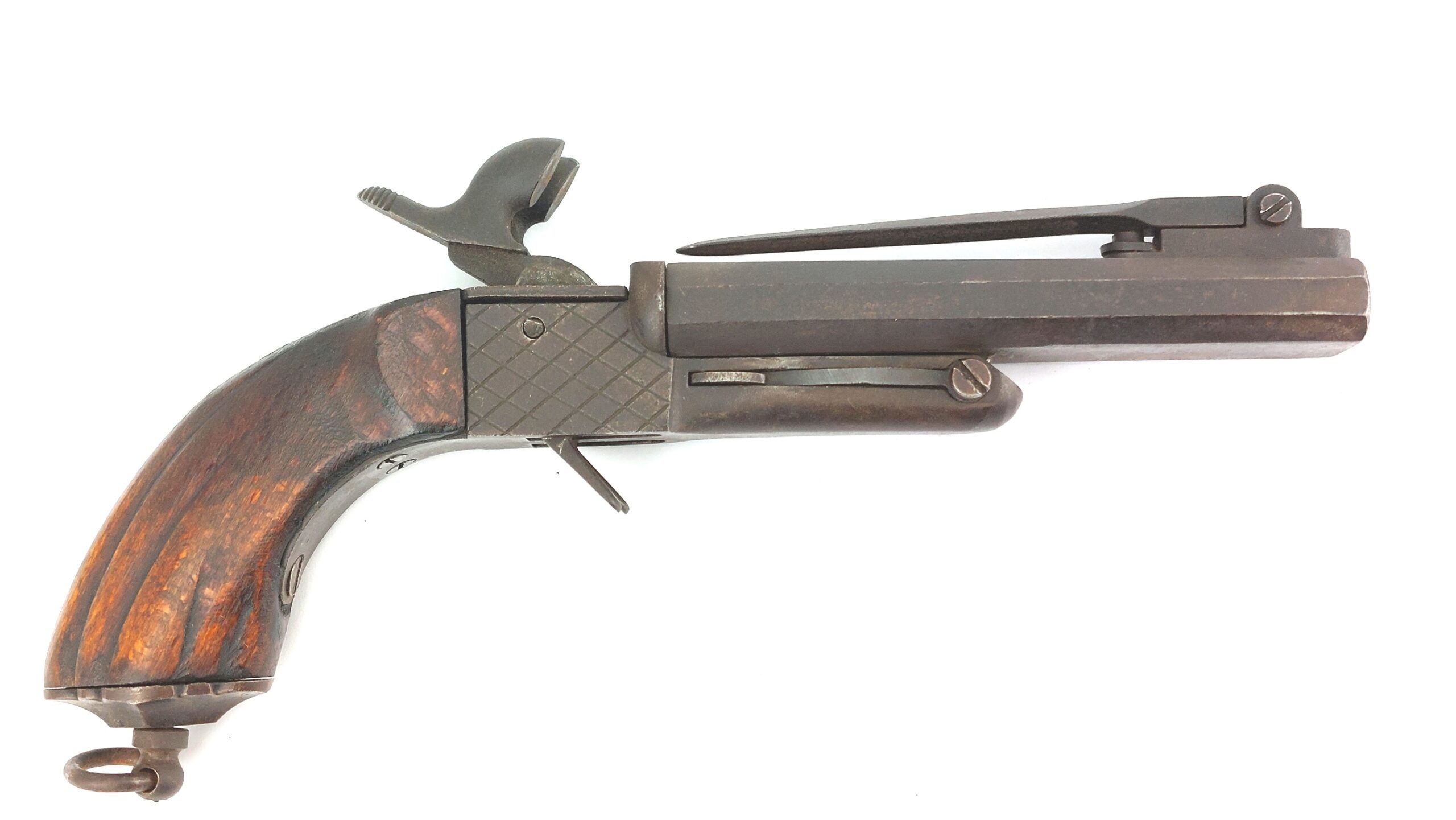
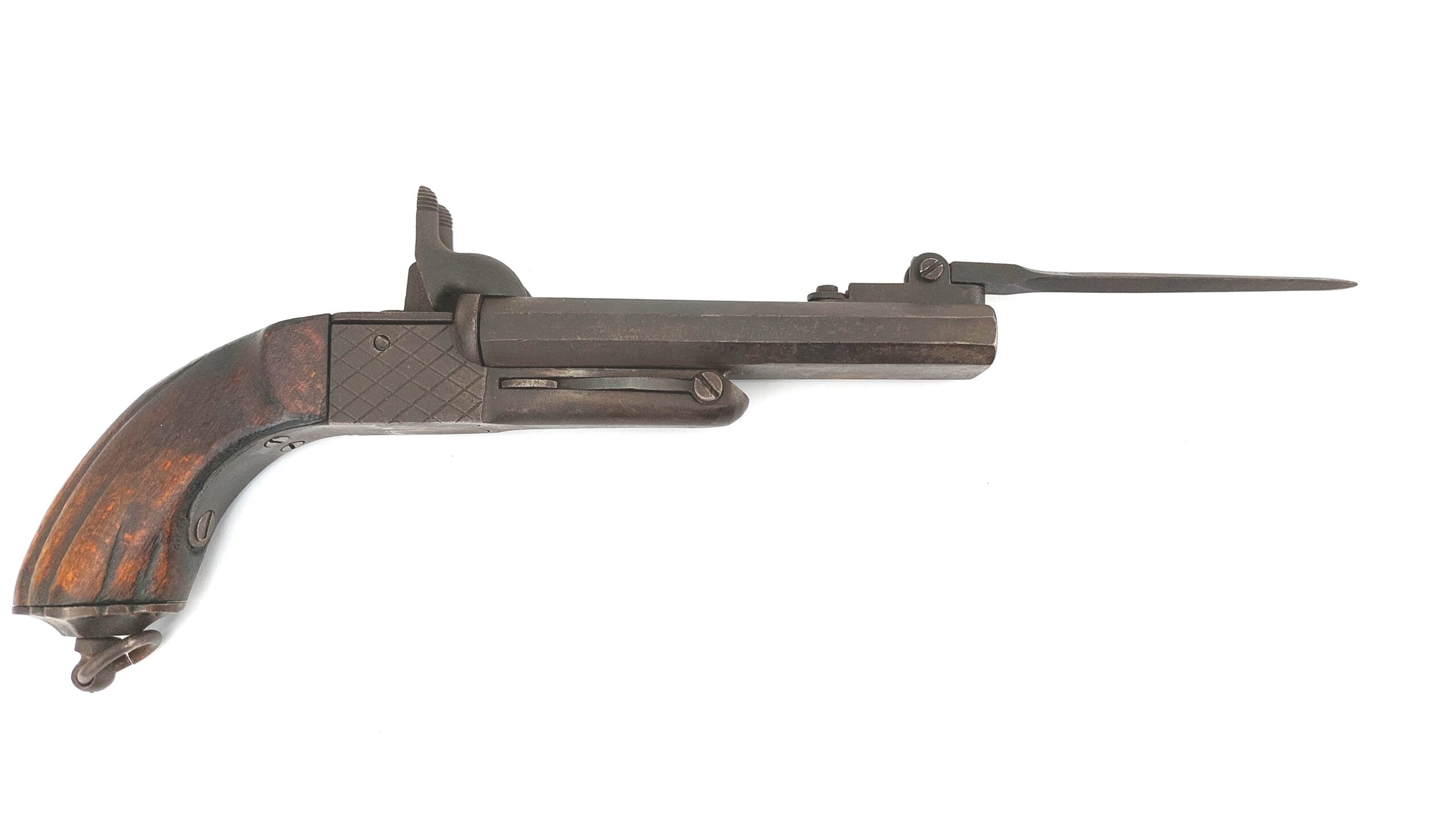
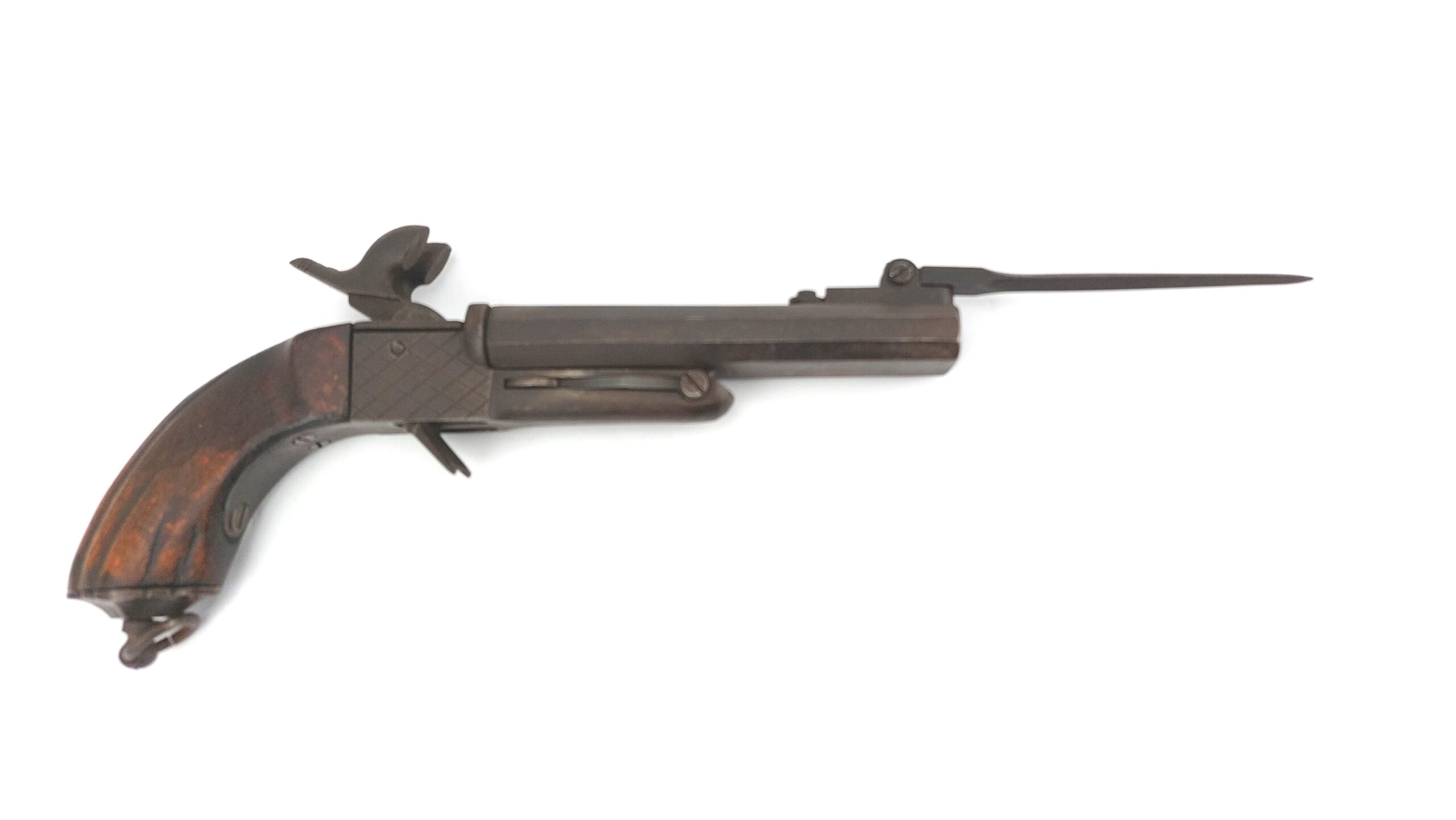
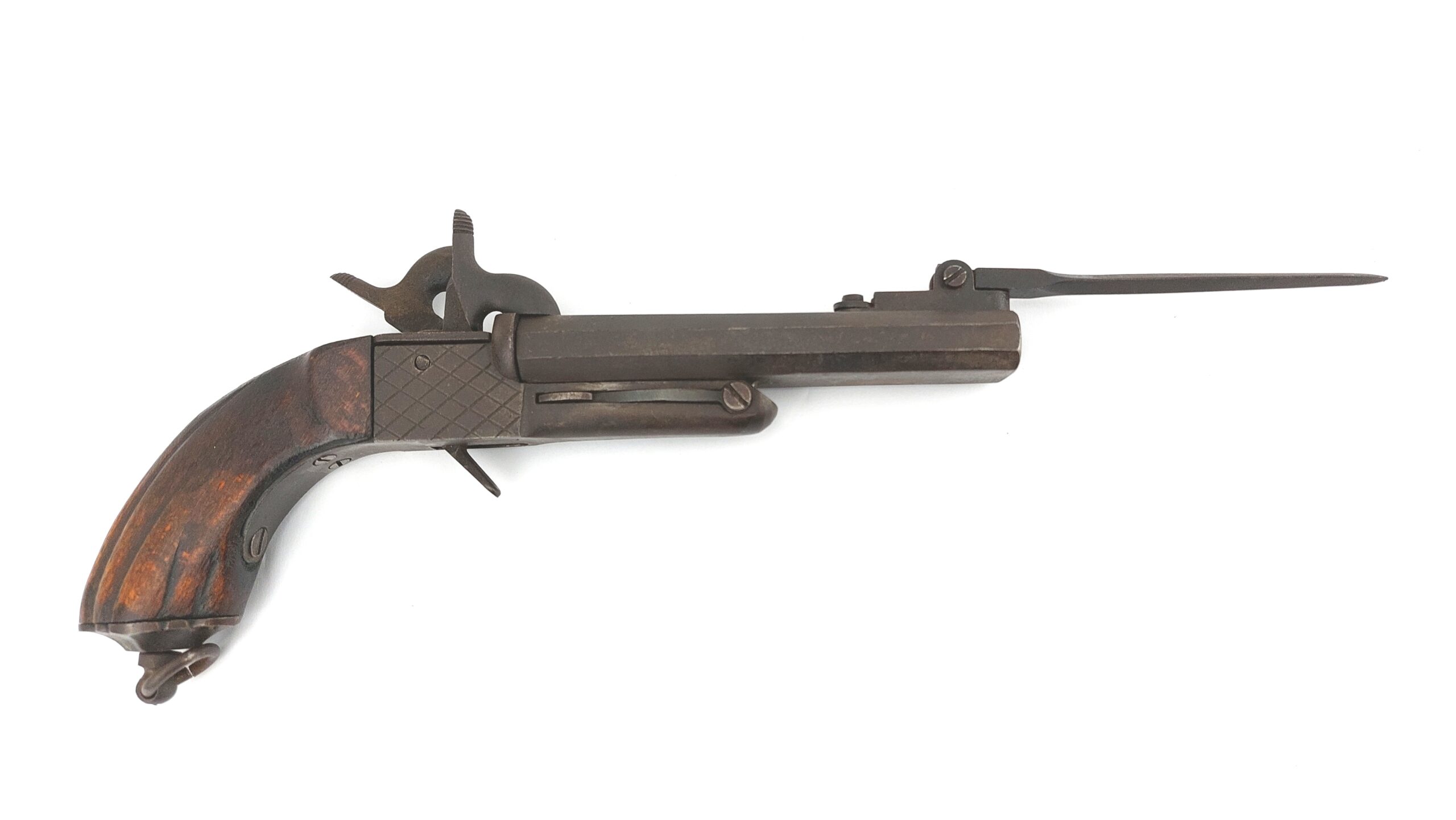
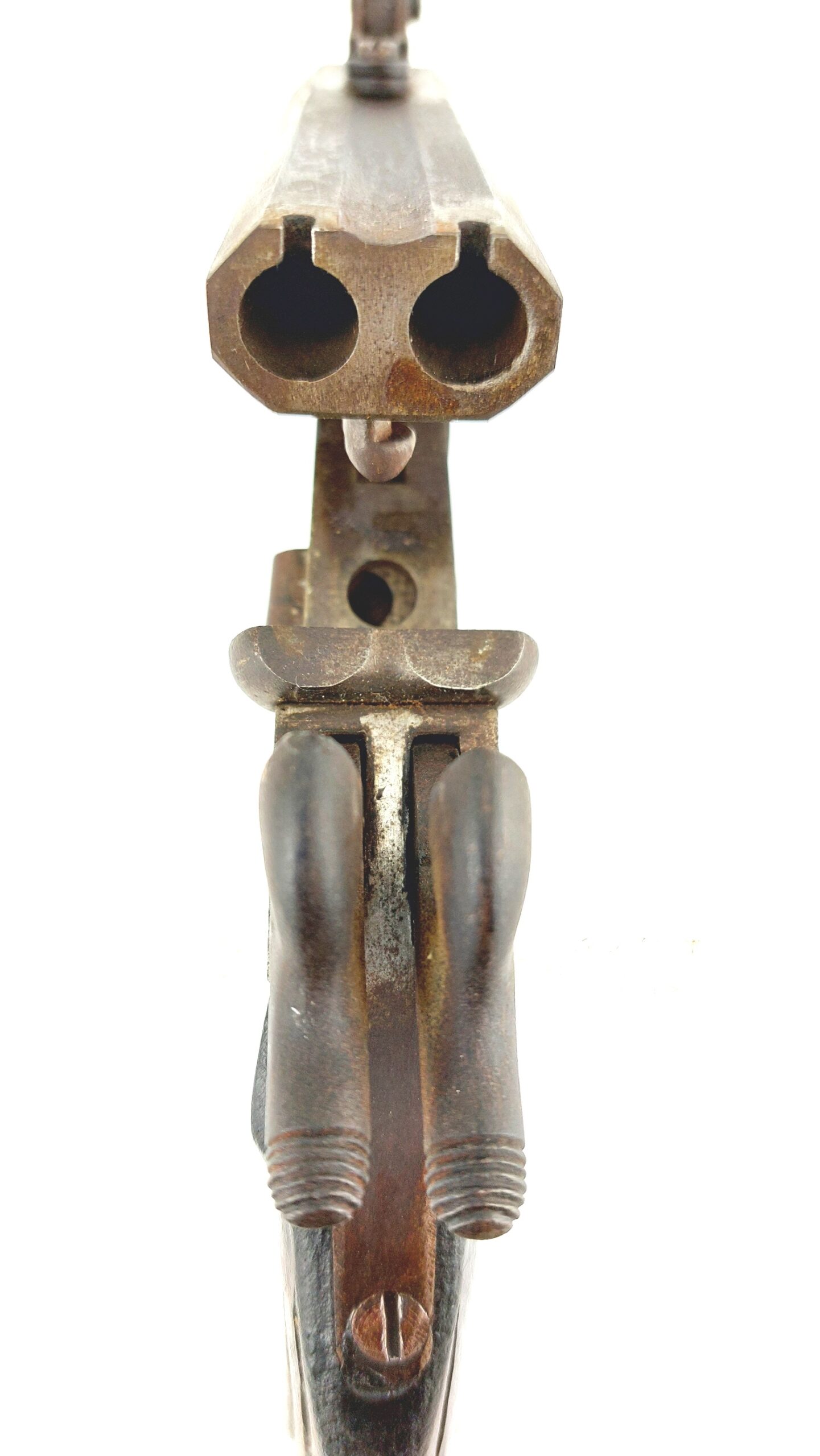
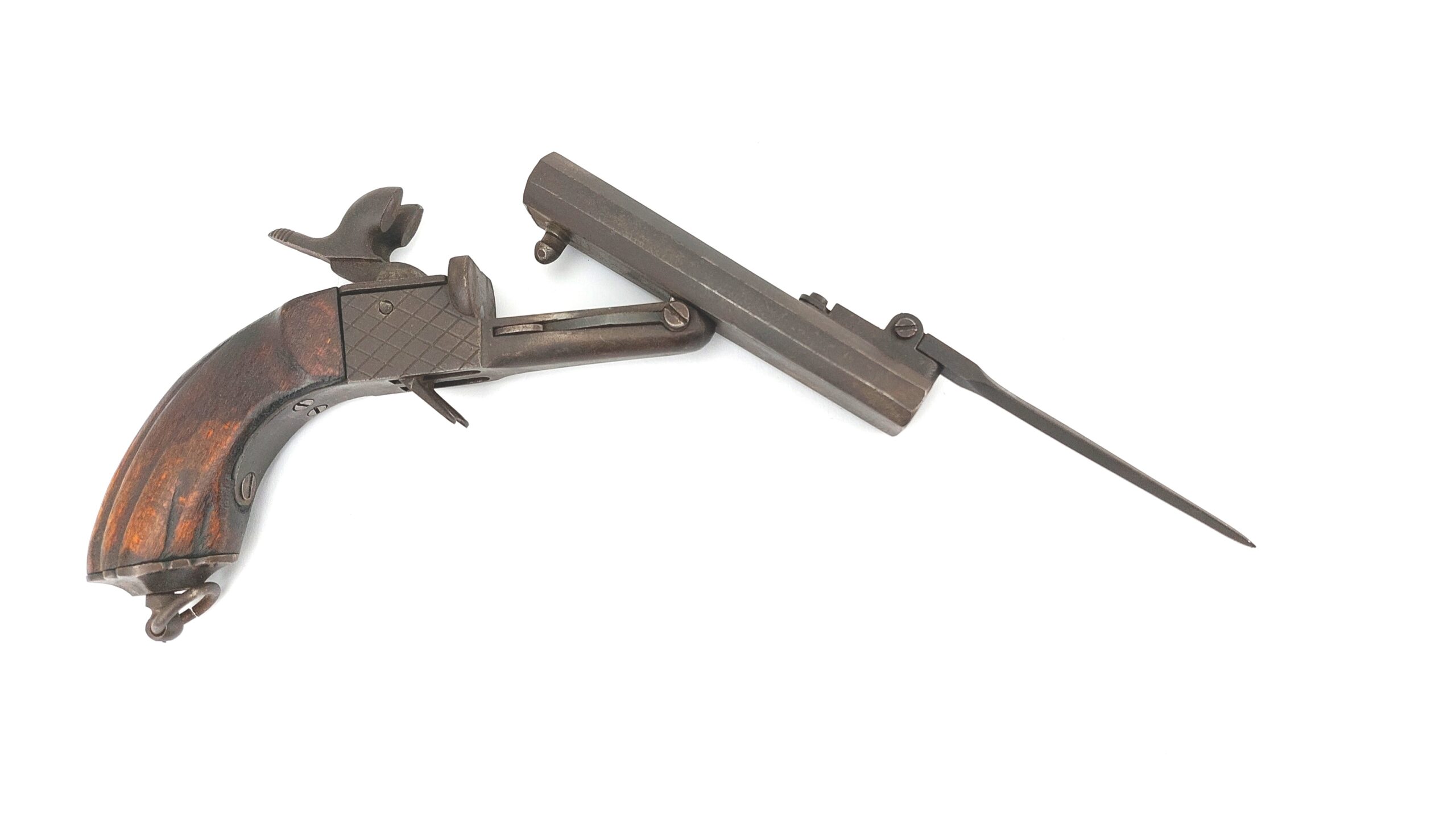
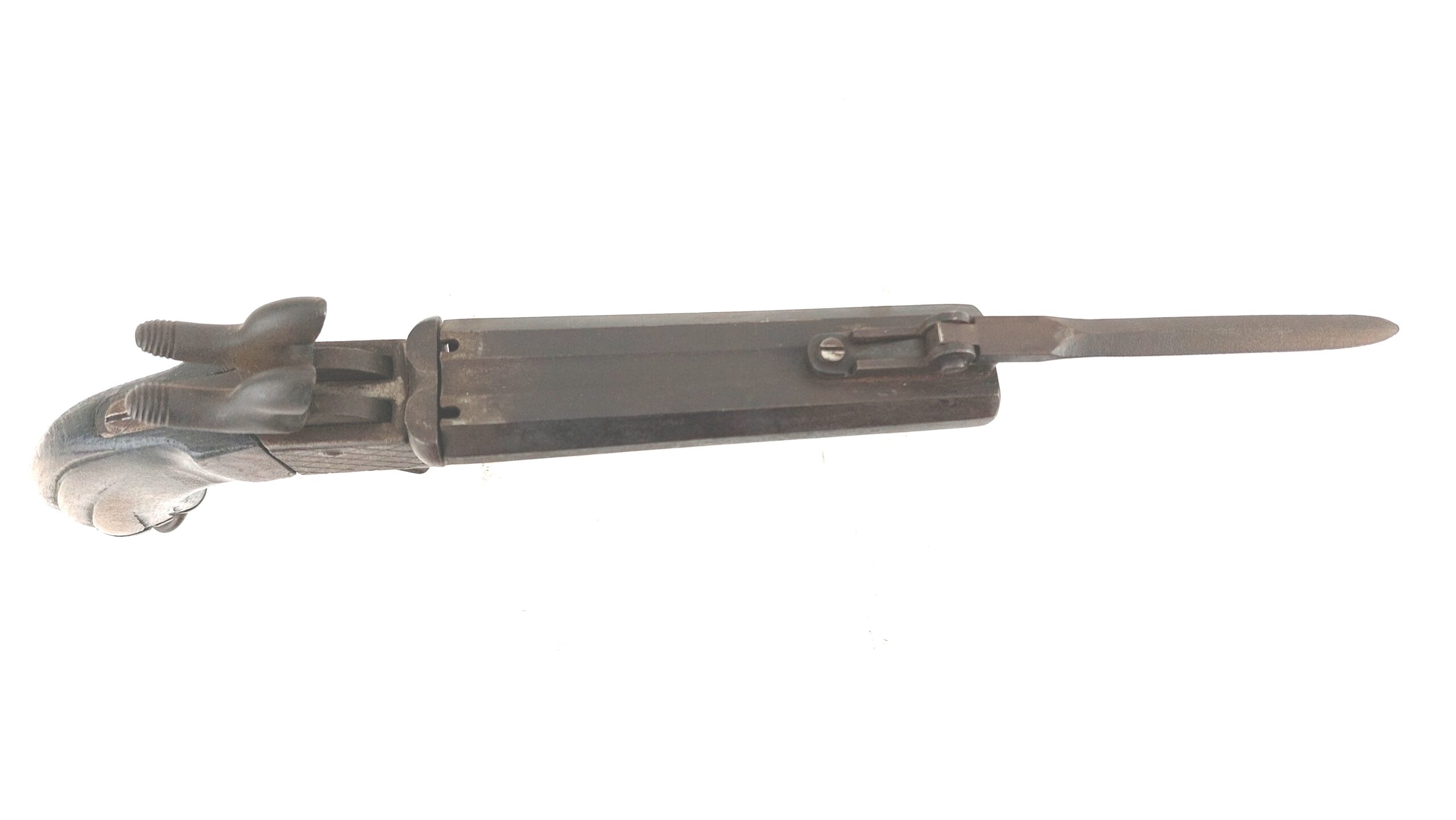
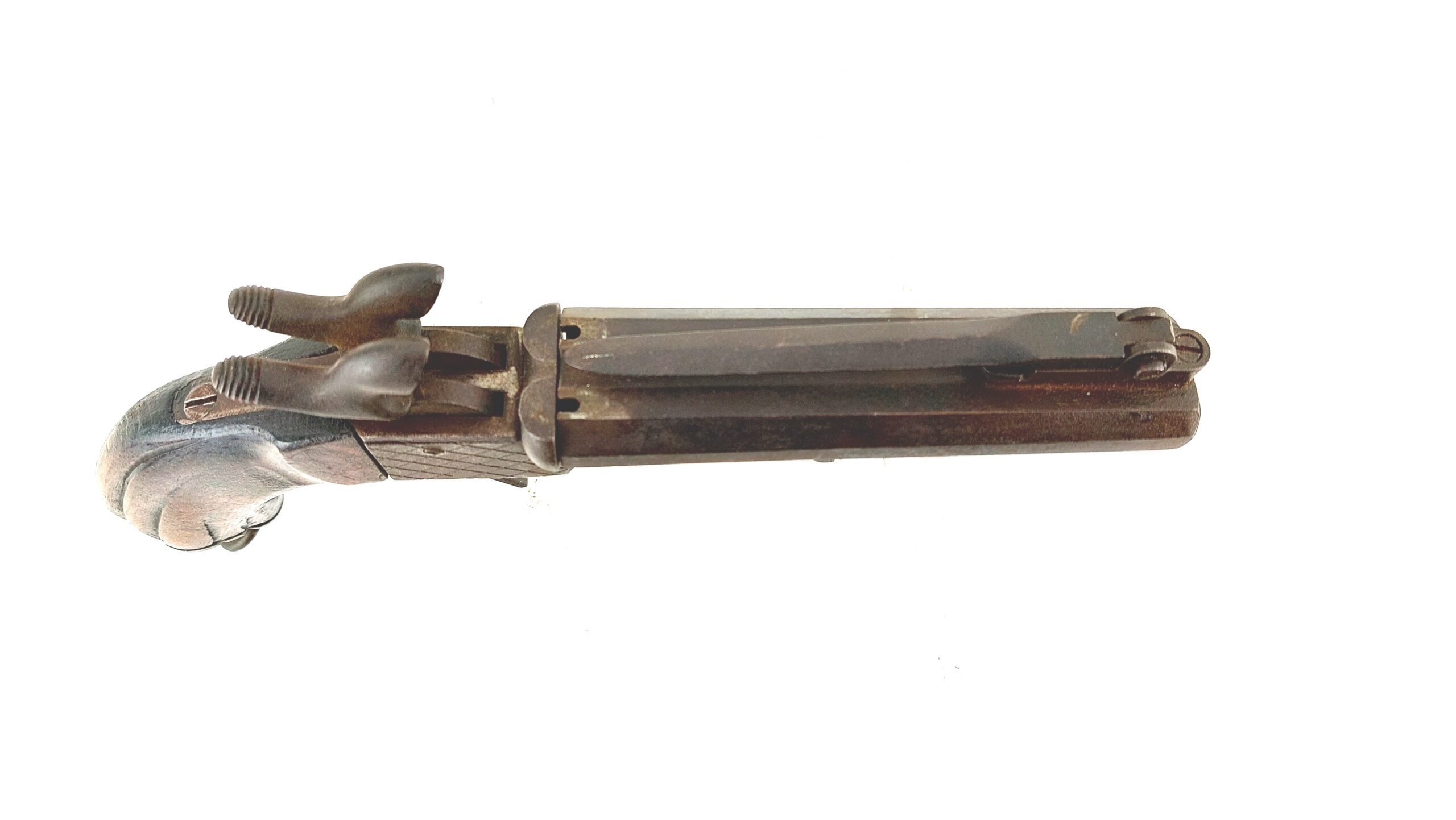
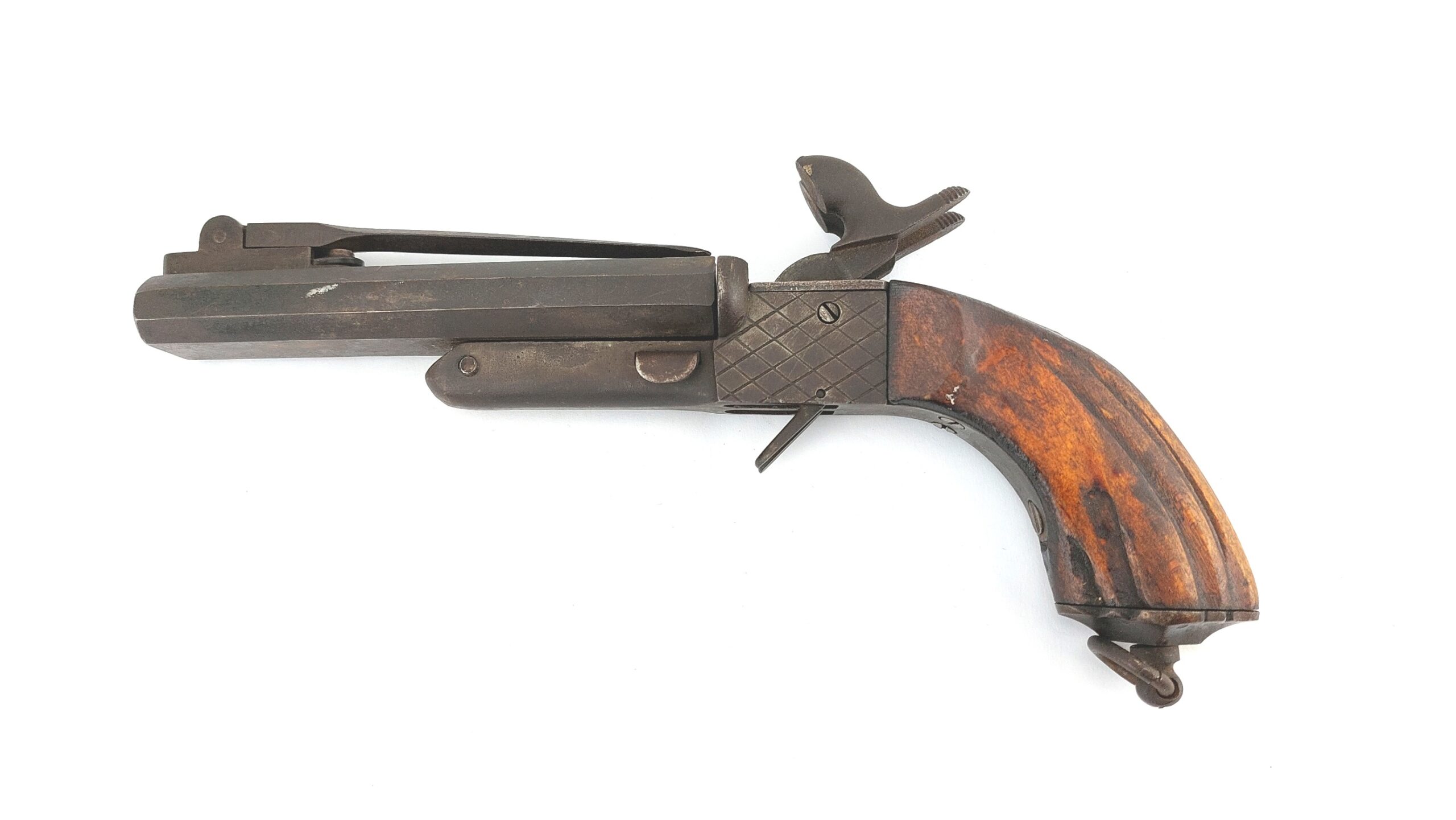
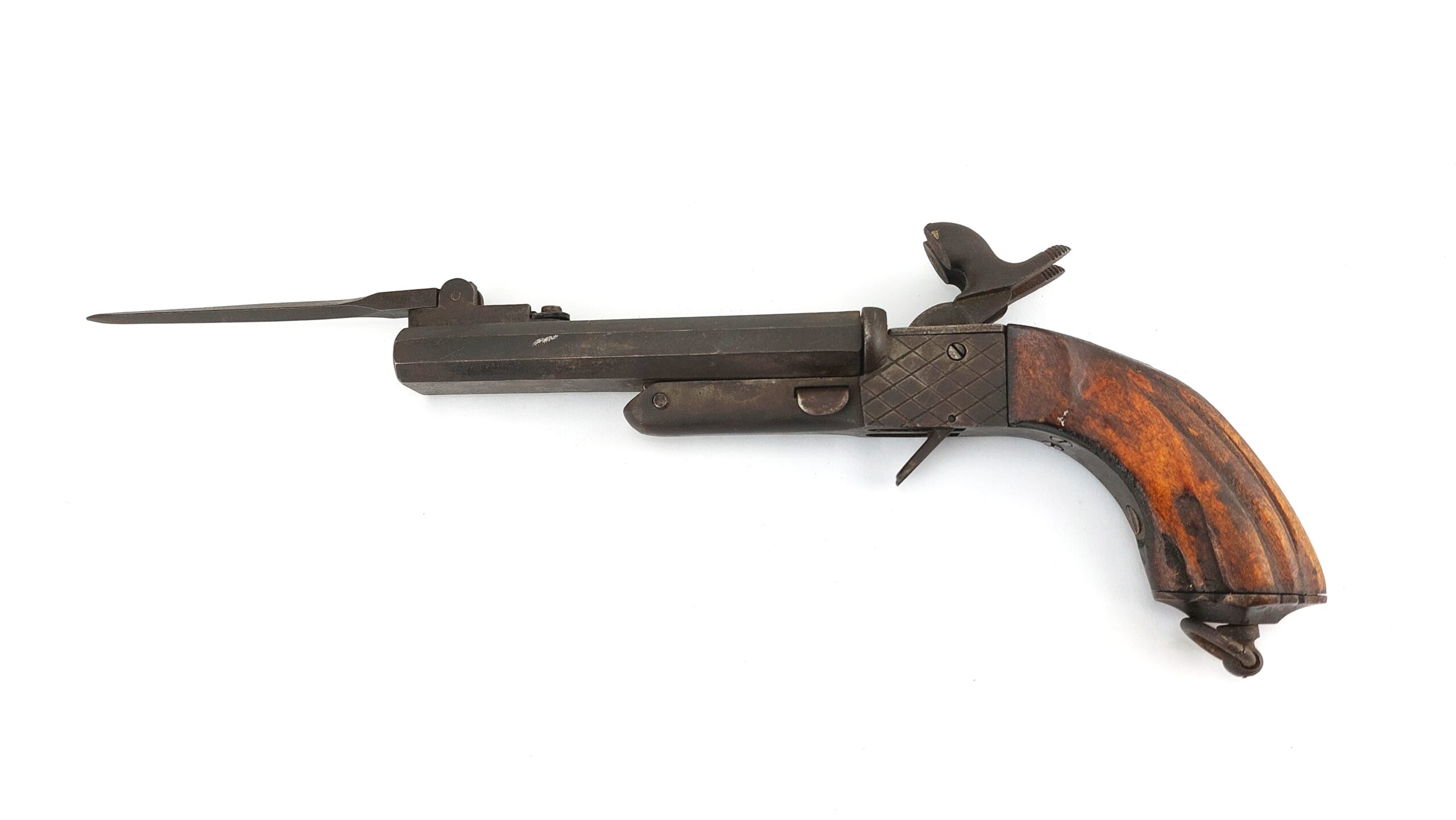
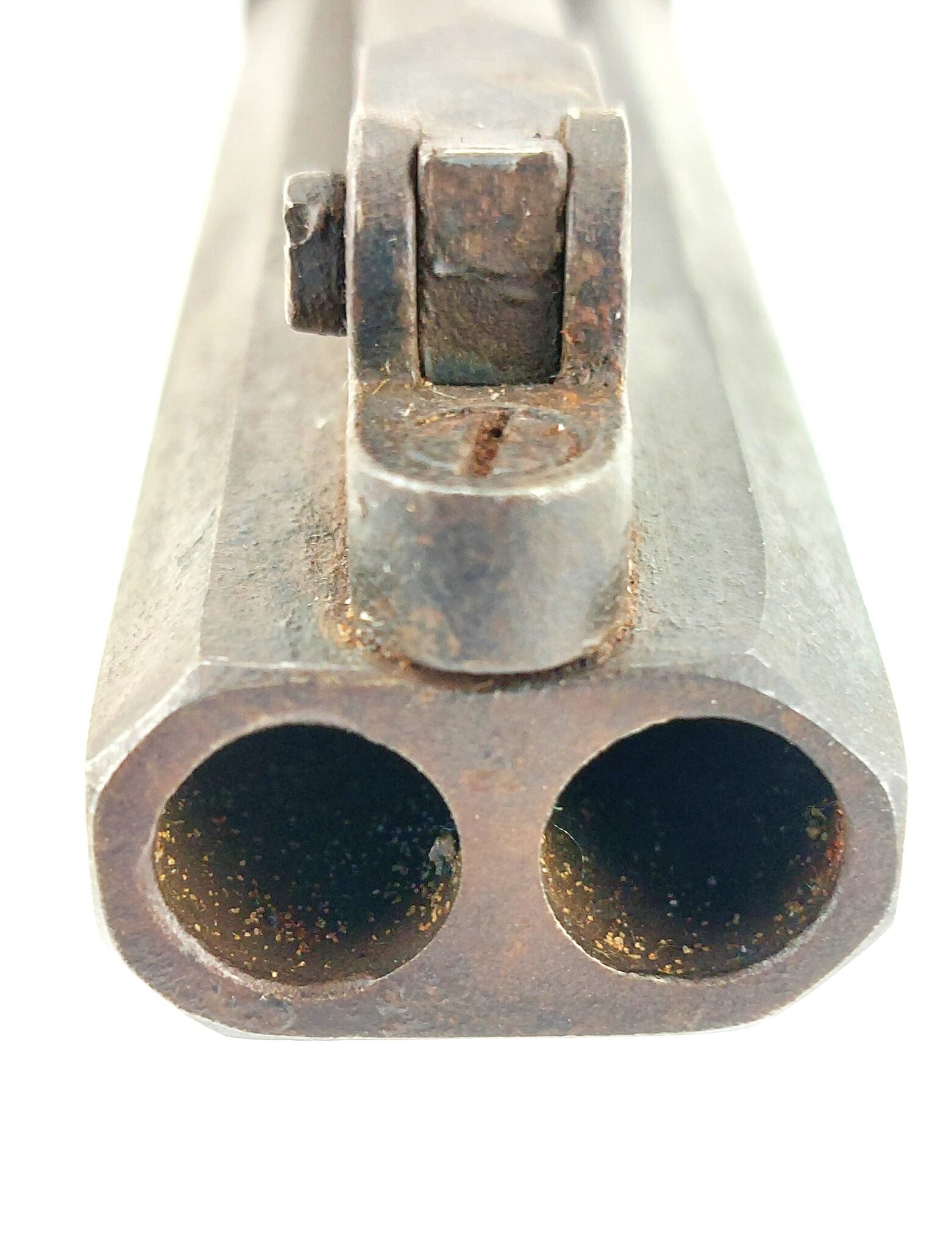
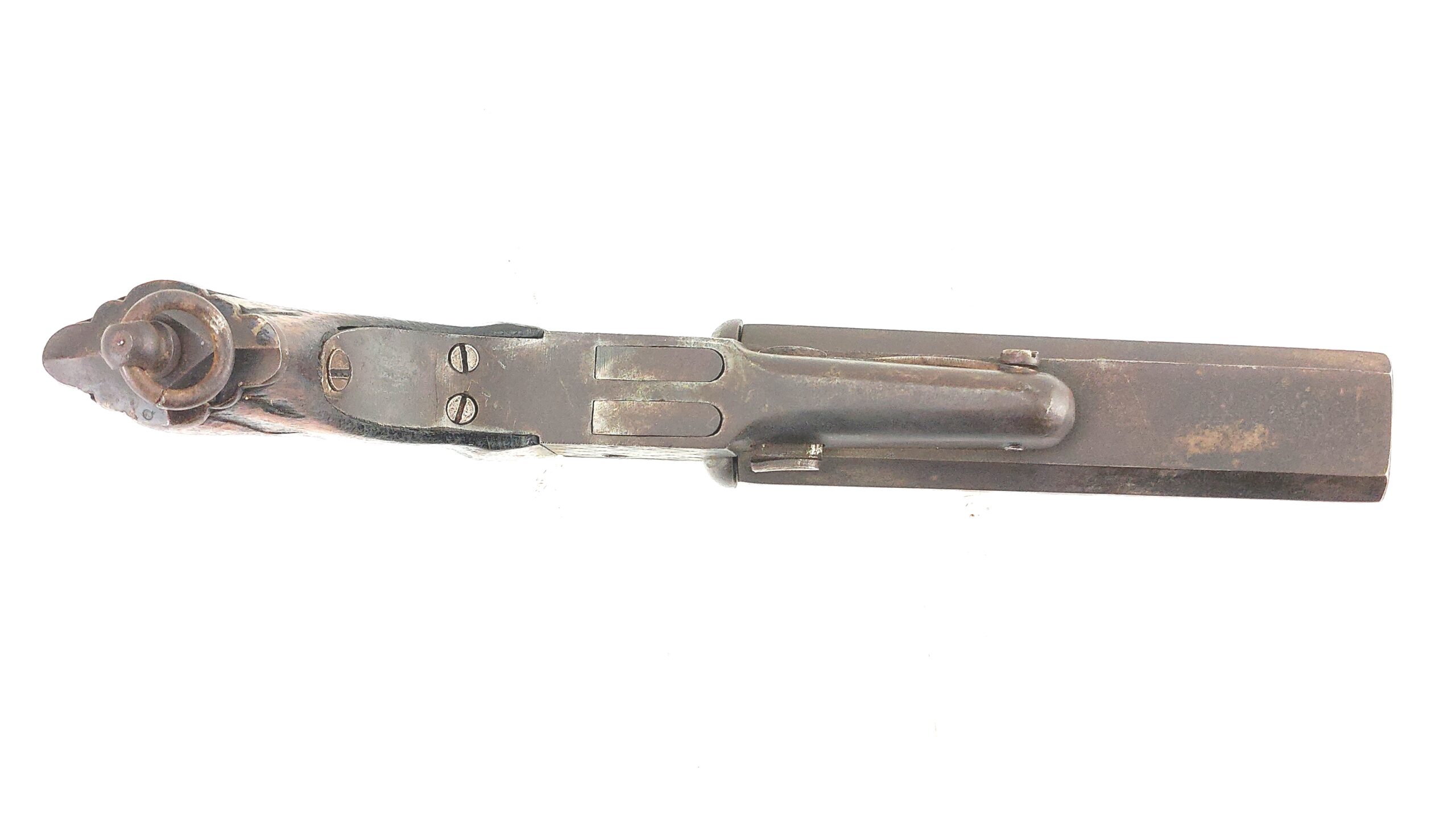
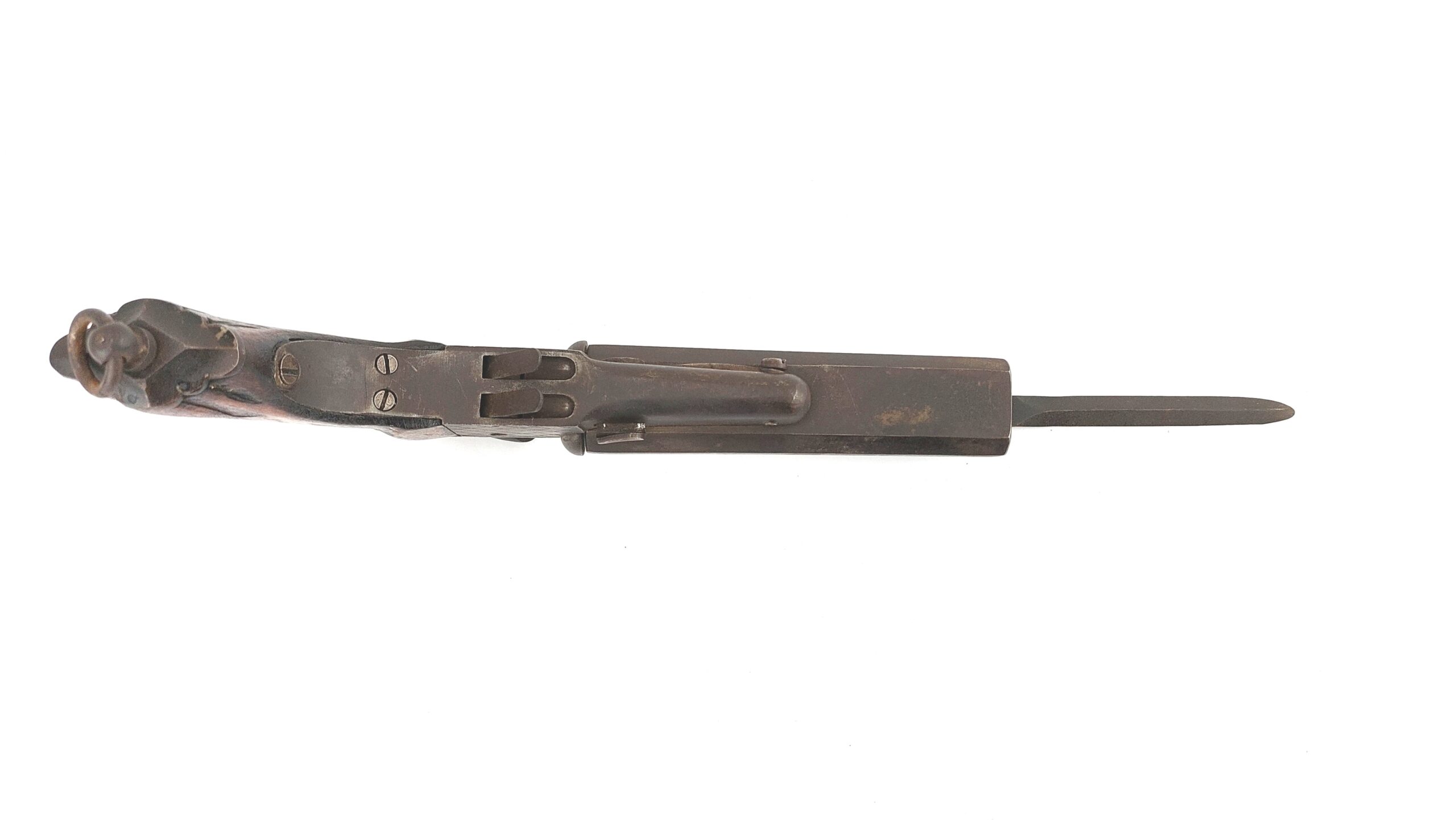
A scarce 19th-century double-barrel pinfire pocket pistol of classic Continental “traveller’s” or personal-defence form, fitted with a folding bayonet.
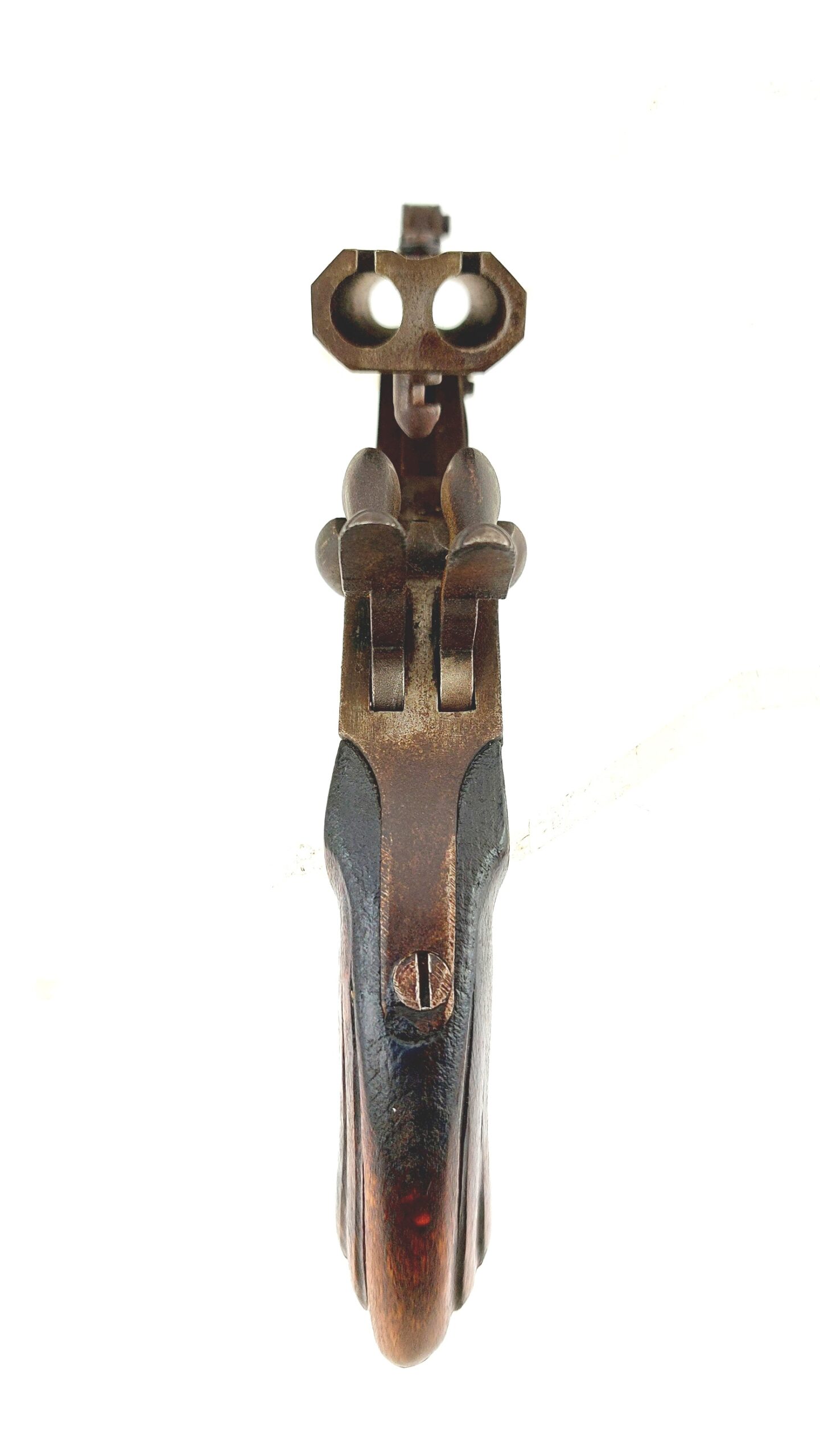
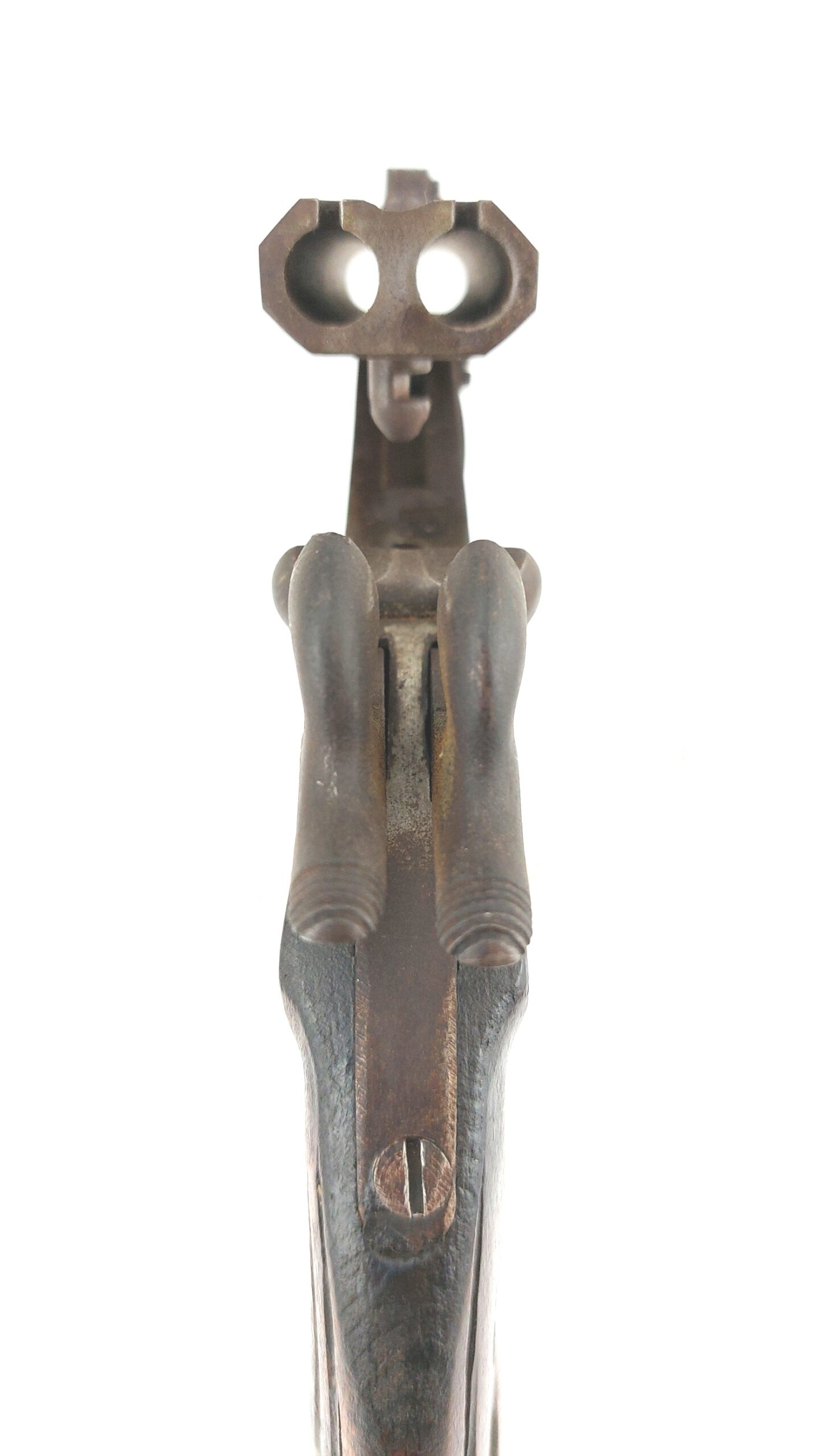
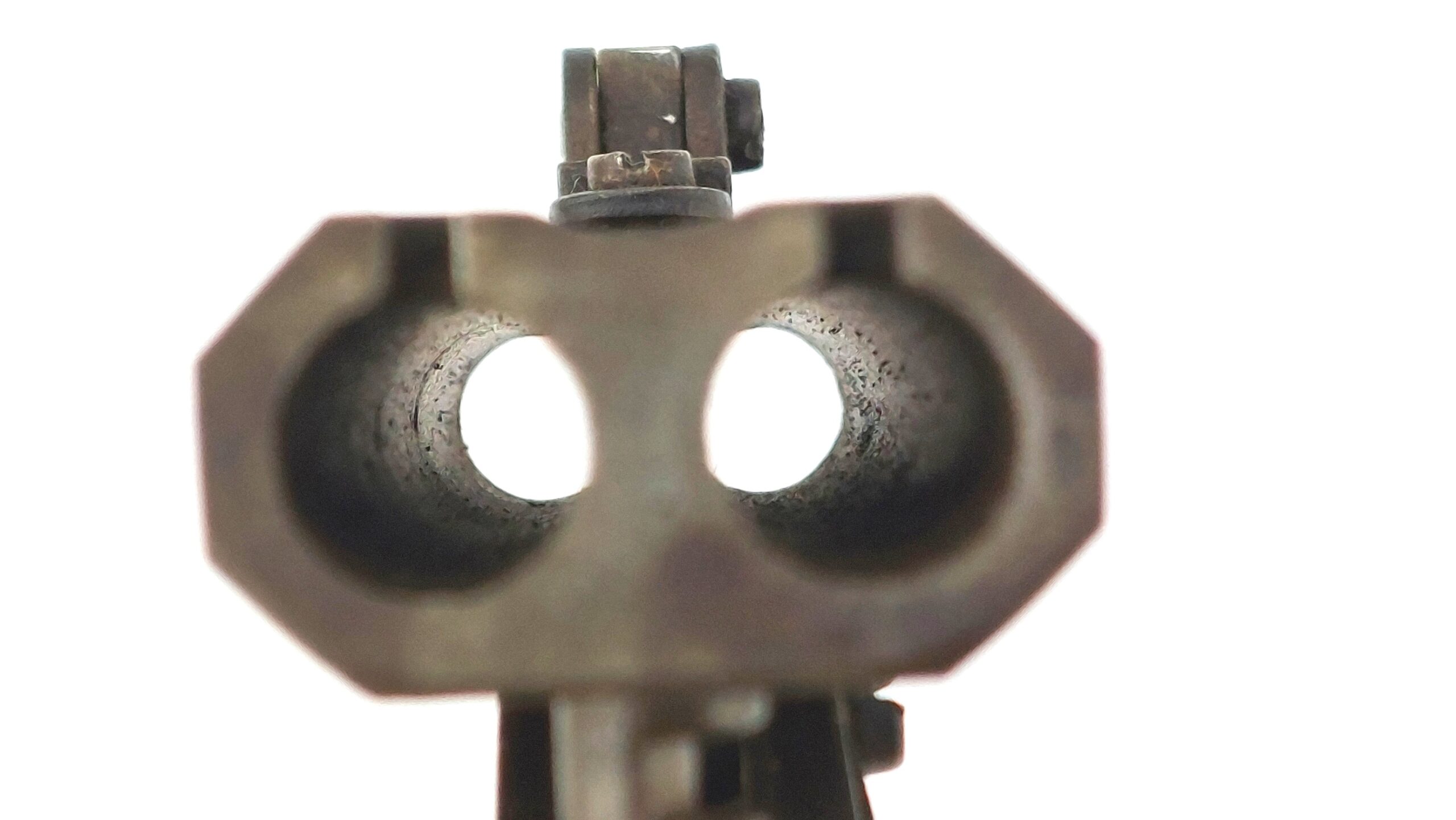
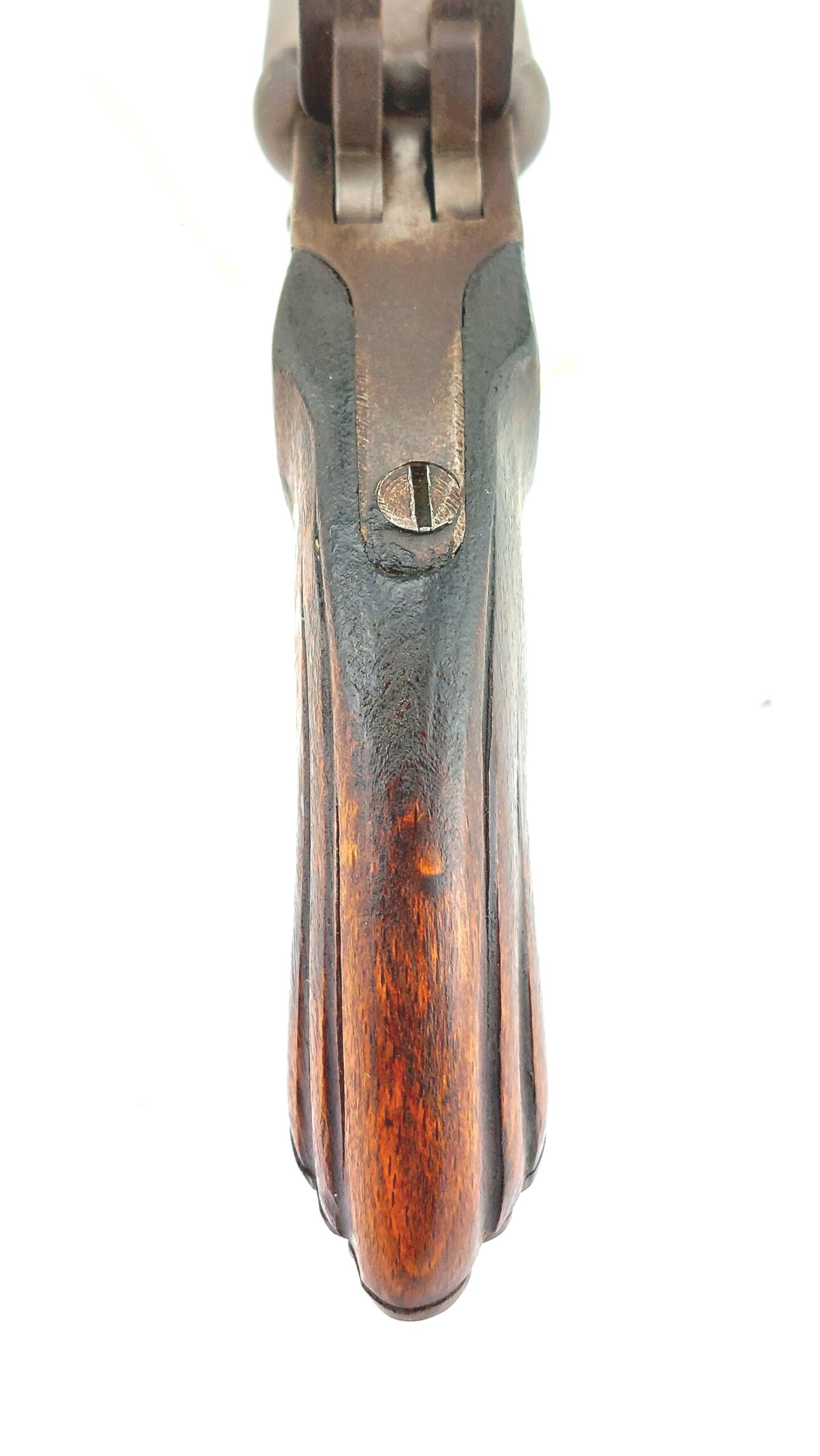
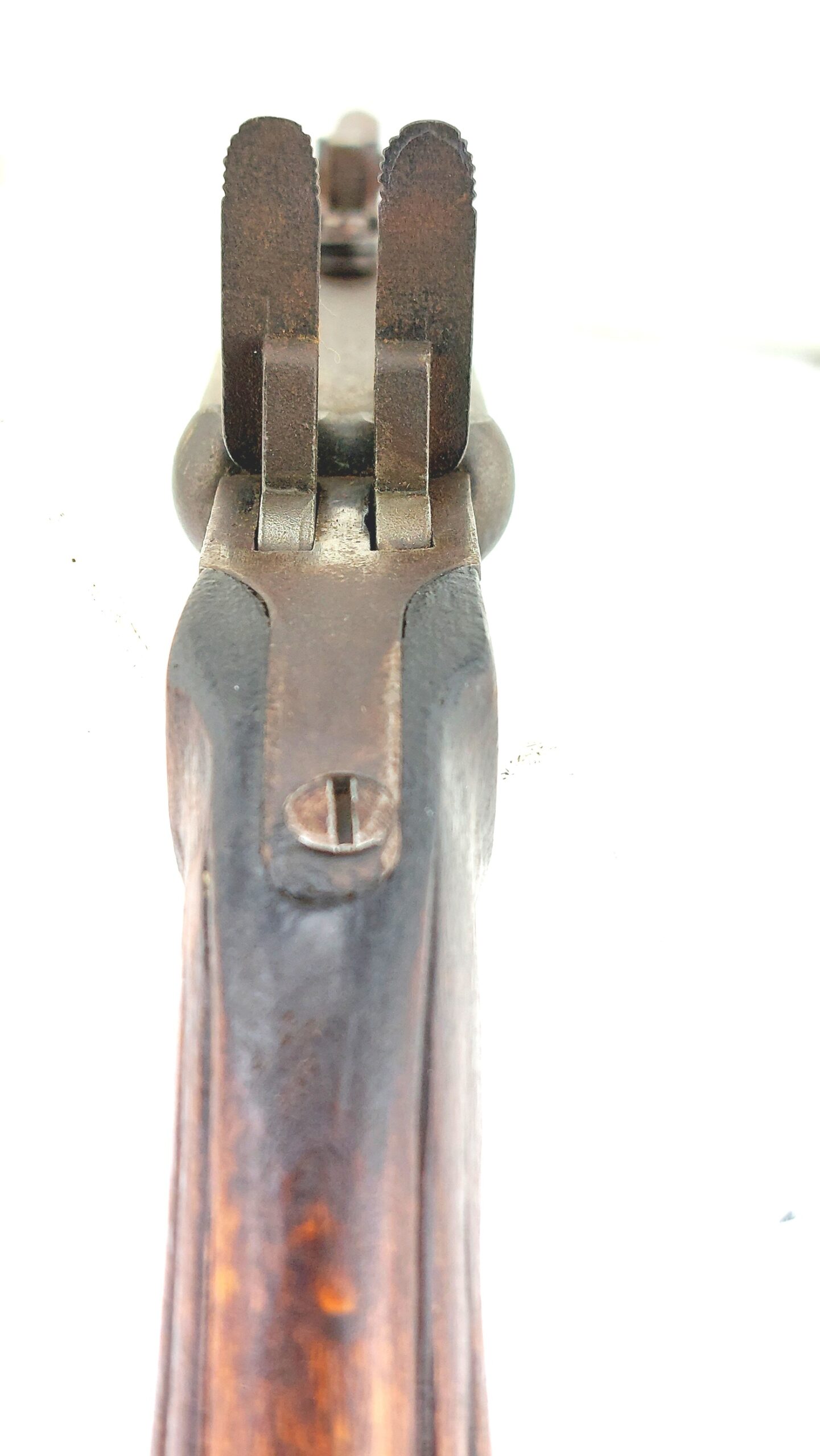
The pistol is constructed with two side-by-side octagonal barrels and a box-lock style action, retaining its twin exposed hammers and twin folding triggers which deploy when cocked. The frame shows the typical chequered side panels seen on mid-Victorian Belgian trade pistols. The grip is of fluted walnut with a rounded butt and integral lanyard ring.
A prominent feature is the hinged folding bayonet mounted along the top of the barrels. The blade is of narrow spear form and locks into the extended position, intended as a last-resort defensive measure once the two shots were expended.
The pistol operates on the pinfire system, in which the hammer strikes the exposed cartridge pin to ignite the primer. Both mechanisms cock and dry-fire correctly.
The overall form, construction and finish are entirely consistent with mid-19th-century Belgian or Liège-trade manufacture. As is common with export pocket pistols of this type, the piece is unmarked.
Approx. Measurements – Barrel length: 11.3 cm. Overall length: 21.5 cm (with bayonet folded). Bayonet blade length: 9.7 cm.
Historical Note:
Double-barrel pinfire pocket pistols of this type were widely produced in Liège, Belgium, during the period c.1855–1875, when the Lefaucheux pinfire cartridge dominated the European civilian handgun market. Liège functioned as the principal manufacturing hub for affordable export revolvers and pocket pistols, supplying large quantities to Britain, France, and the United States. Many were produced by small workshops and sold through trade distributors, which explains the frequent absence of maker’s marks.
Combination pistols incorporating folding or “flick” bayonets represent a distinct Victorian fascination with multi-purpose defensive weapons. Intended for travellers, merchants, and private citizens, these compact arms provided two immediate shots with the reassurance of a blade should the mechanism fail or the user be confronted at very close quarters.
Such pieces were never military issue but form part of the broader category of 19th-century civilian self-defence arms, reflecting the transitional period between percussion ignition and the widespread adoption of centre-fire metallic cartridges.
*Condition*
Overall condition is good for a mid-19th-century pocket pistol. The metal surfaces retain an even aged patina with light surface marking and scattered areas of minor oxidation consistent with age. The barrels show expected internal residue. The folding bayonet operates correctly and locks into position. Both hammers cock and release, and the twin folding triggers deploy and return as intended. The walnut grip remains sound with attractive period wear and handling marks, and the lanyard ring is intact. The pistol is unmarked, which is typical for Liège trade examples. Please see photographs as part of the condition report.
*In order to complete the online purchase we will require a picture/scan of a photo ID (Driving Licence, Passport or an official document with a recent picture). If you don't posses any such document please call to buy. If we consider that the proof of ID is incorect or insuficient, we reserve the right to cancel the transaction.
*We also reserve the right to cancel the transaction with a full refund if there is any suspicion that the provided item will be used in any way contrary to the laws and legislation of UK.