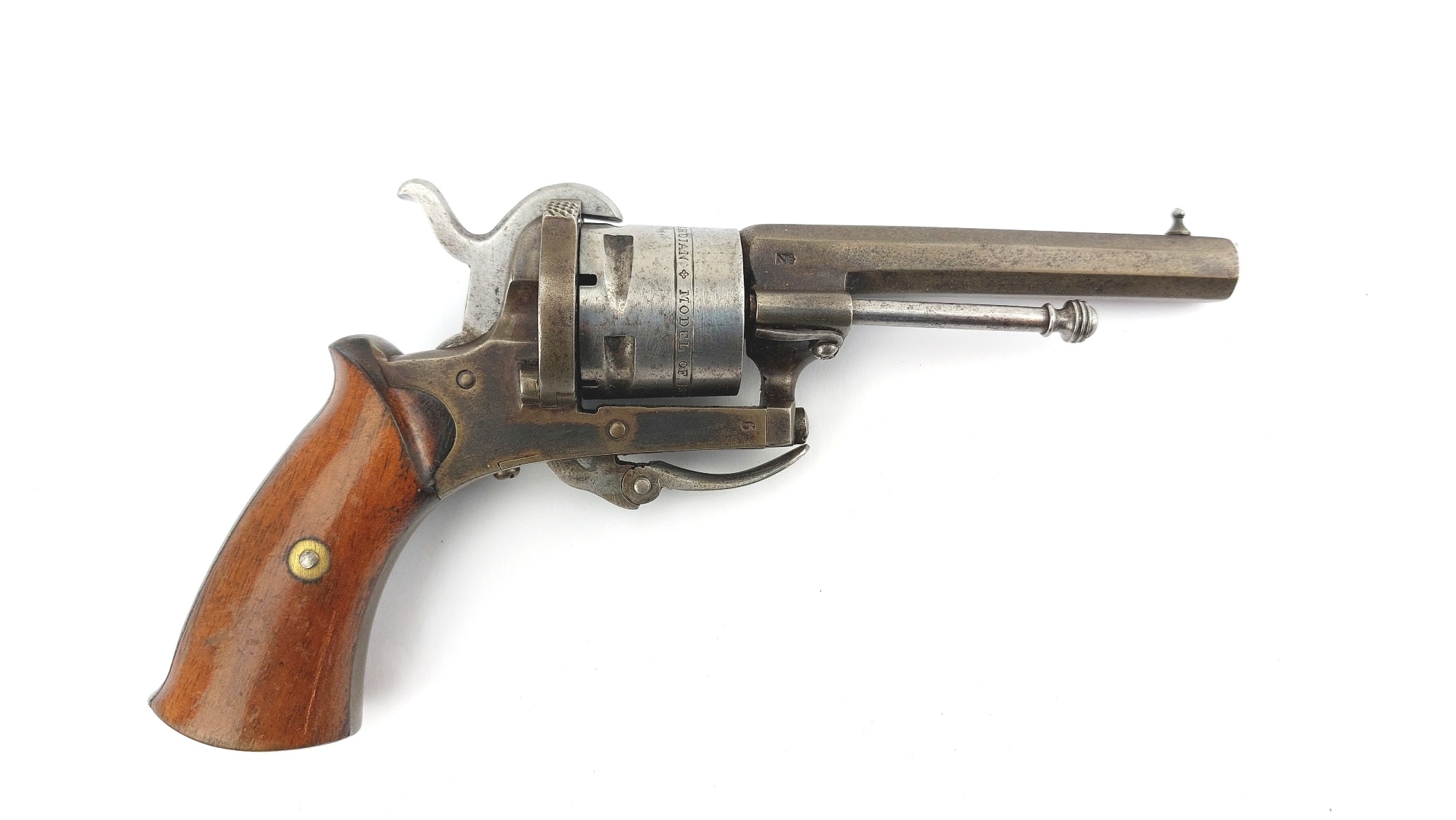
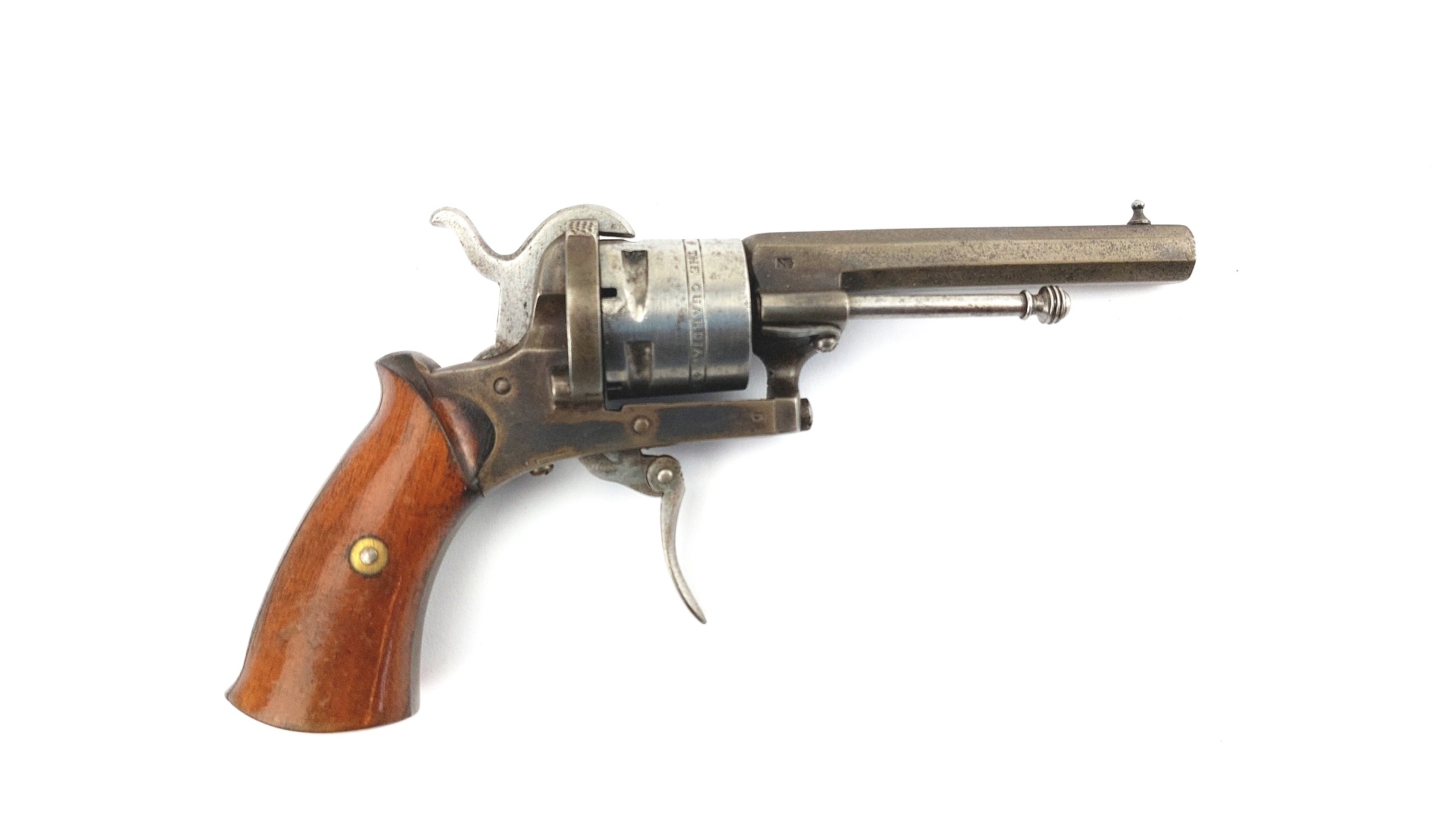
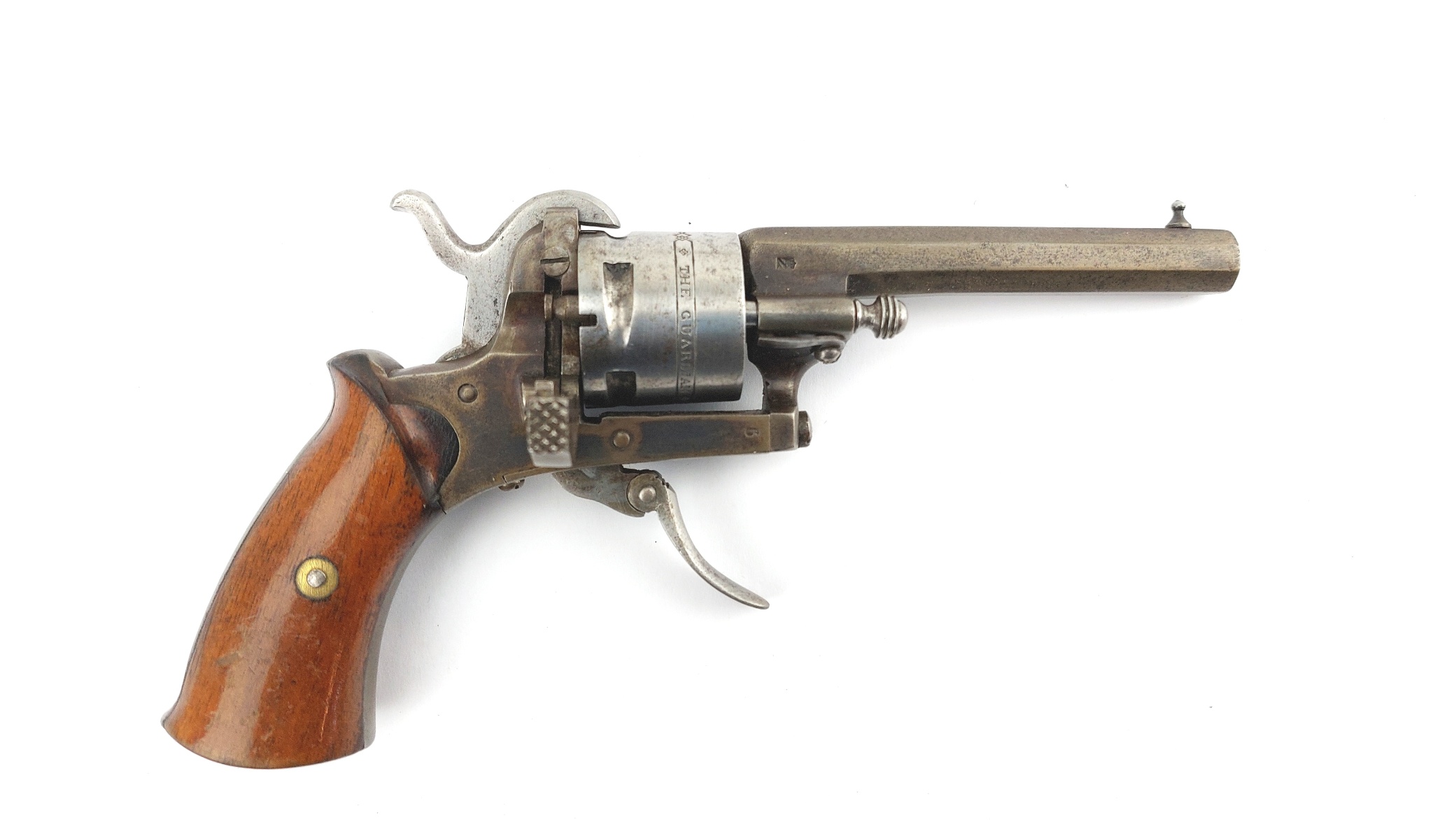
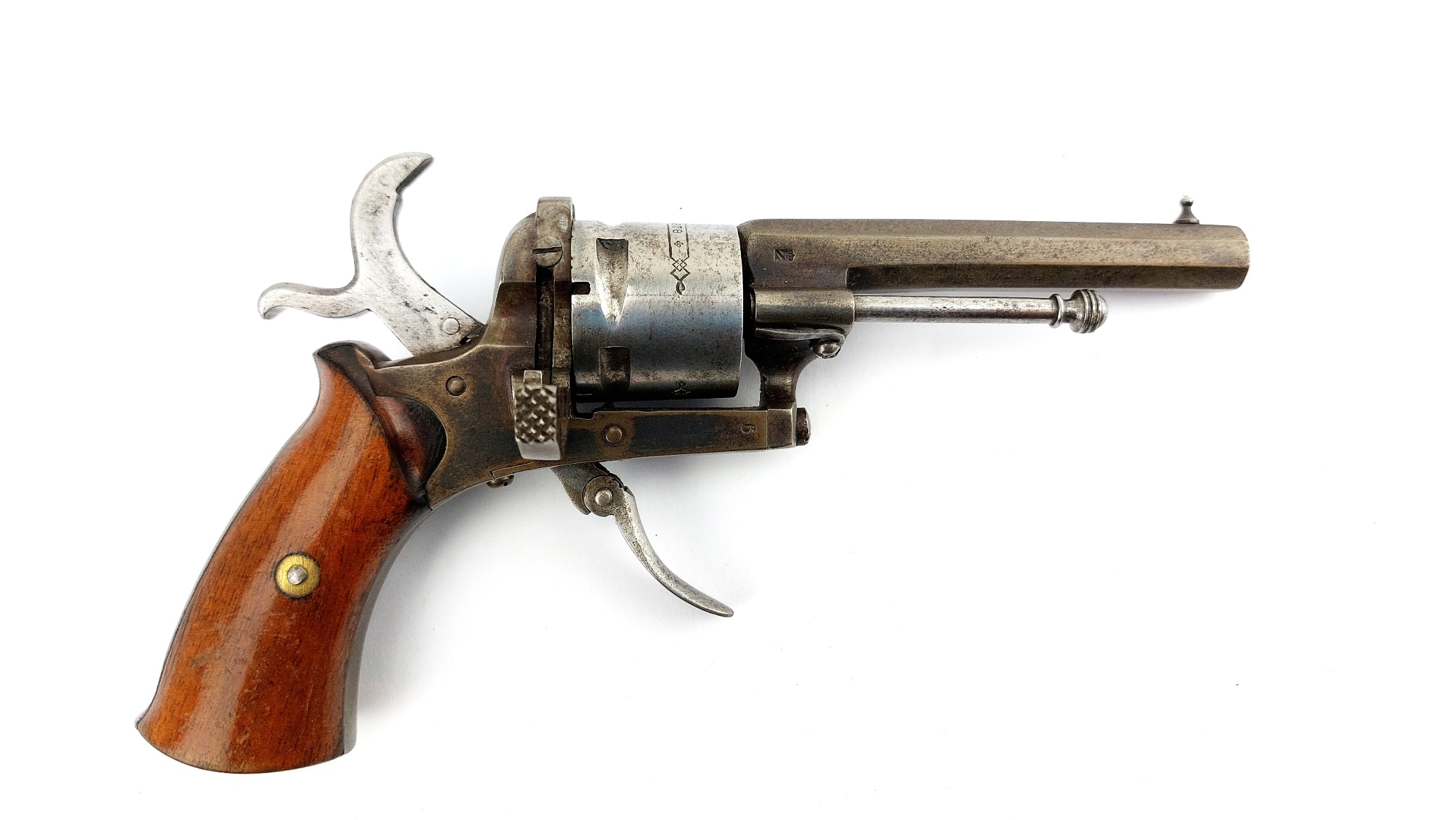
*Belgian, c.1880–1883, Fagnus & Clément (F&C) “The Guardian Model of 1878” Lefaucheux Pattern 5-Shot Pinfire Revolver, Folding Trigger, by Michel Jamar (MJ), Obsolete Calibre*
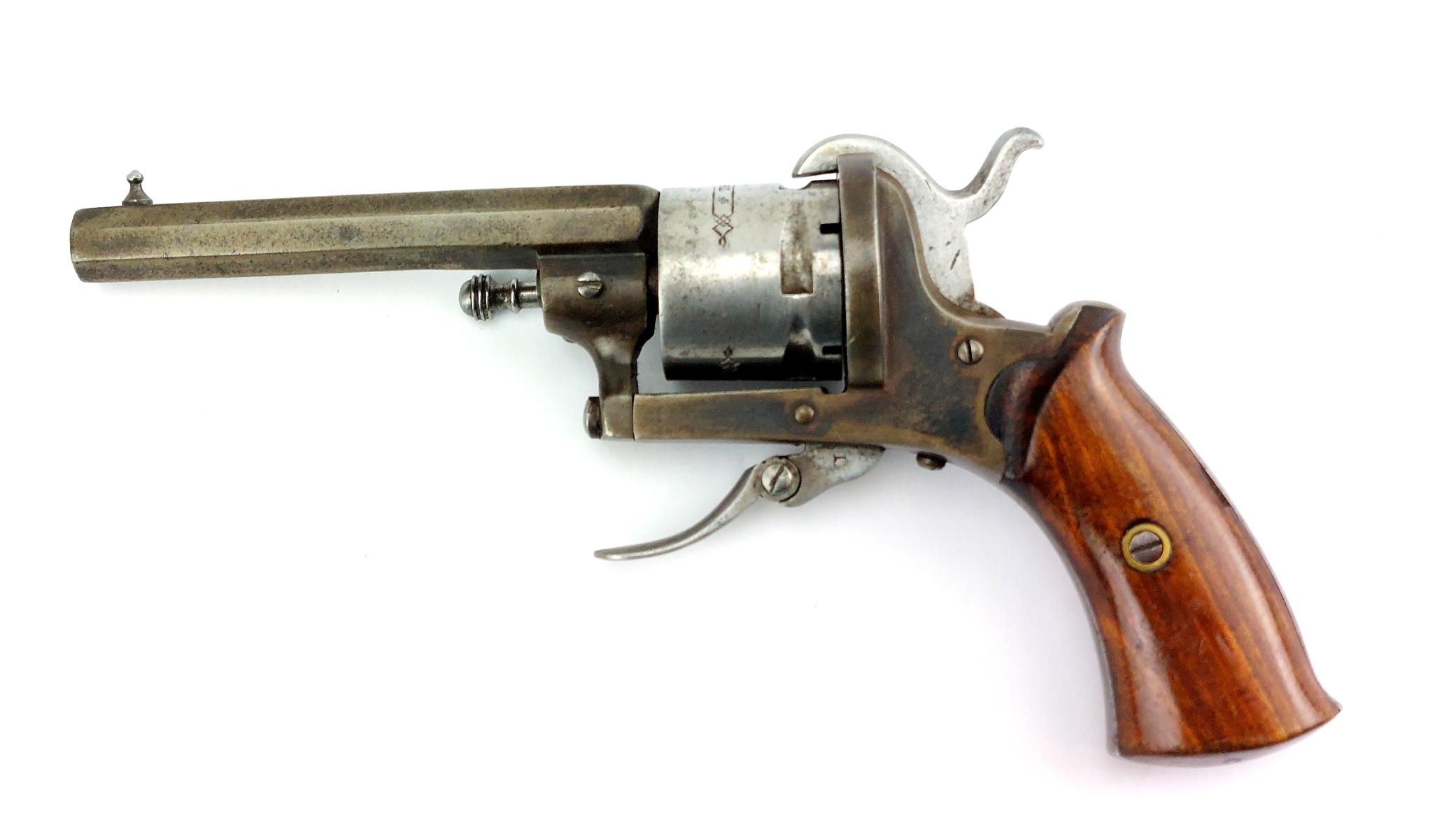
A scarce Belgian Liège trade Lefaucheux-pattern five-shot pinfire revolver, produced for the Fagnus & Clément (F&C) “Guardian” export line and manufactured by Michel Jamar (MJ), retaining its original folding trigger, clearly marked cylinder legend, and full suite of Liège proof marks.
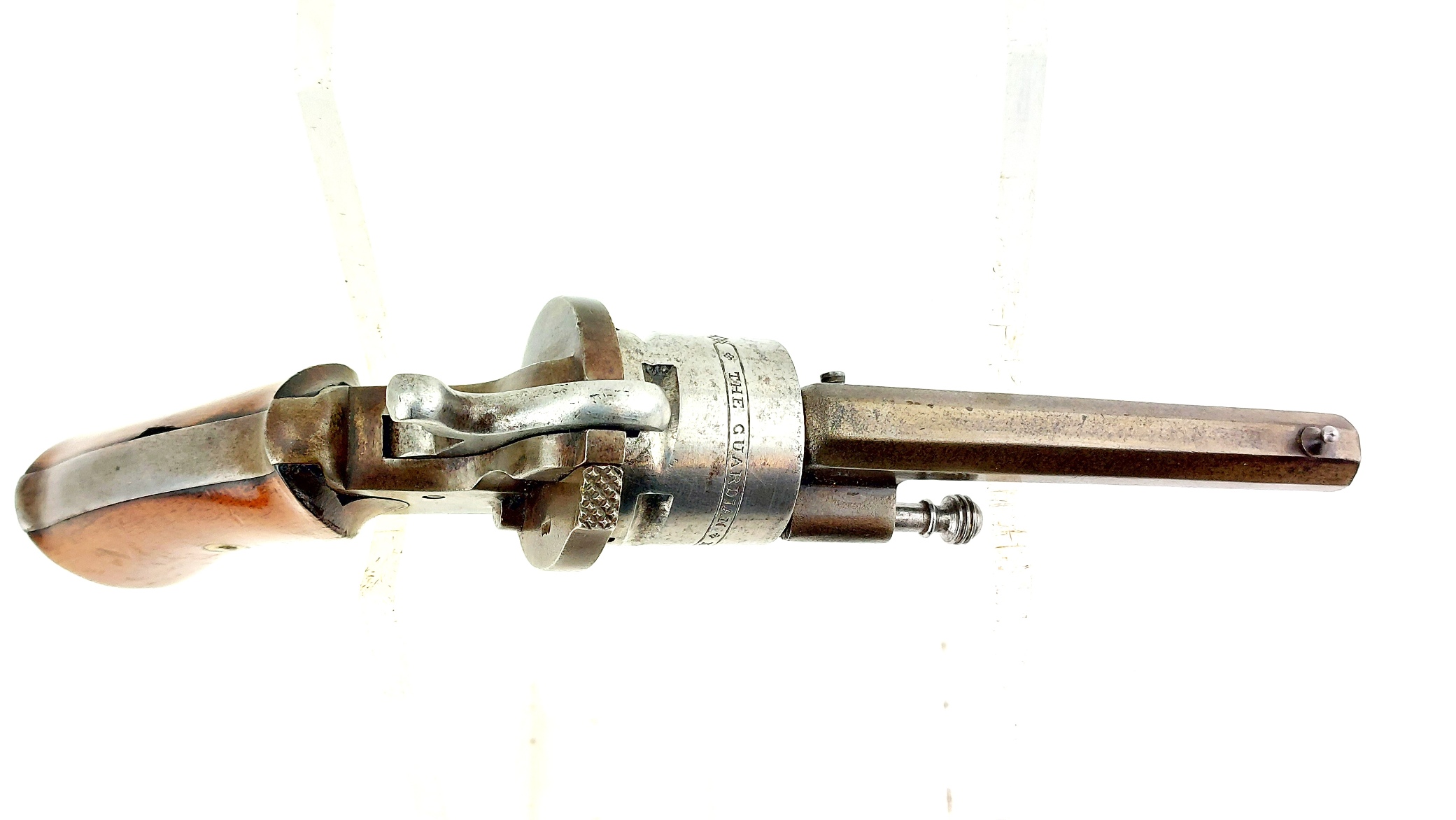
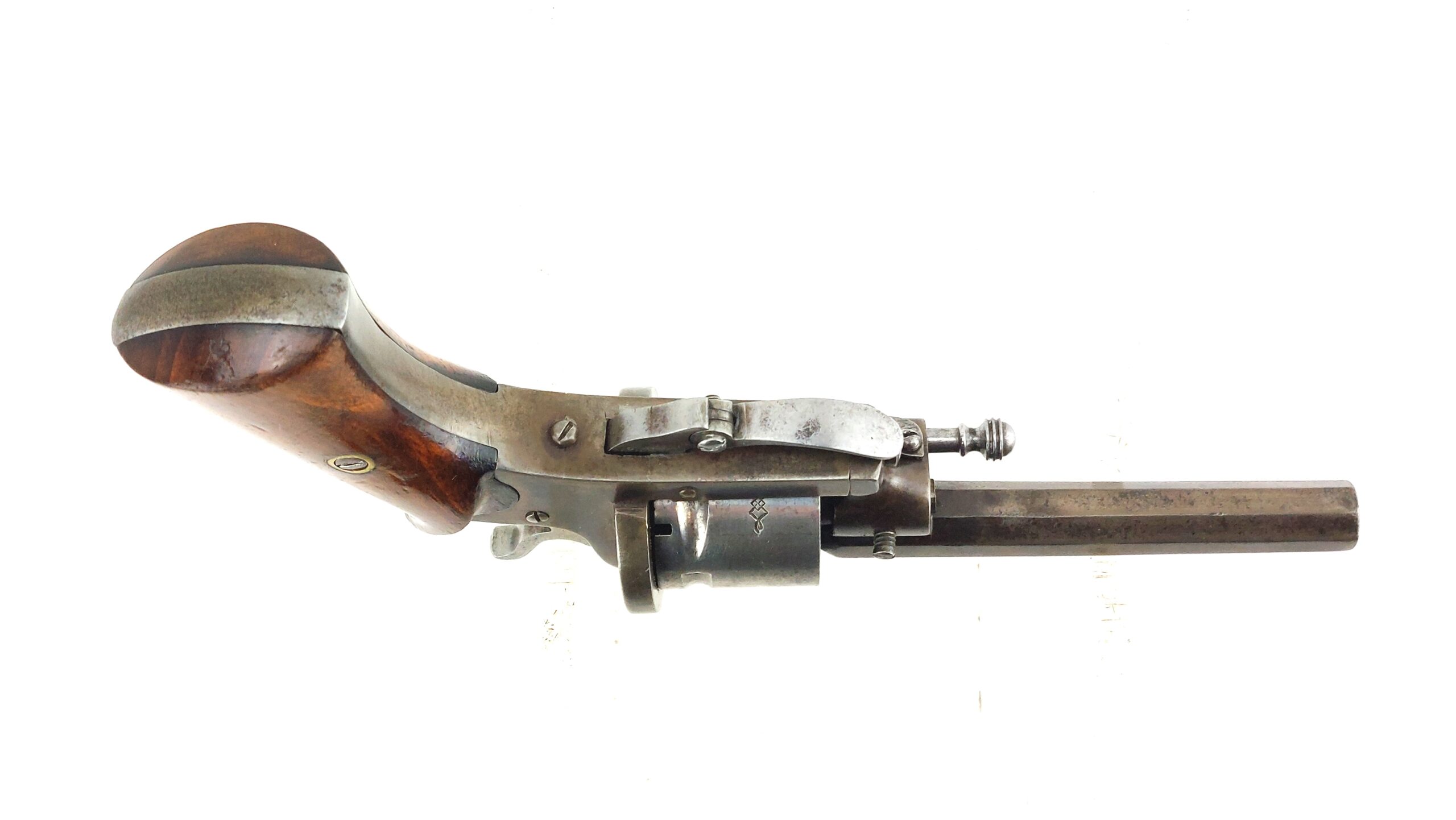
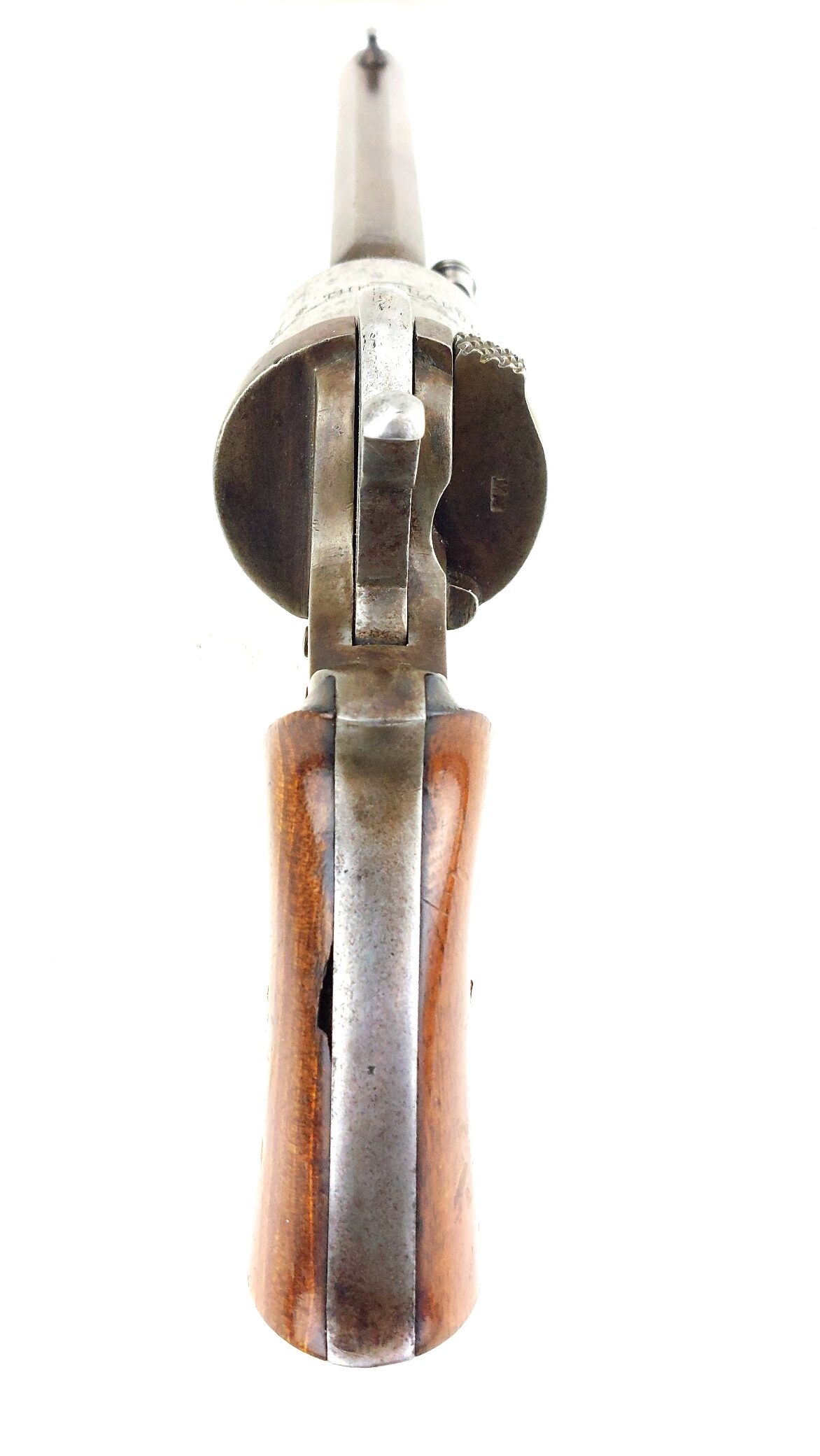
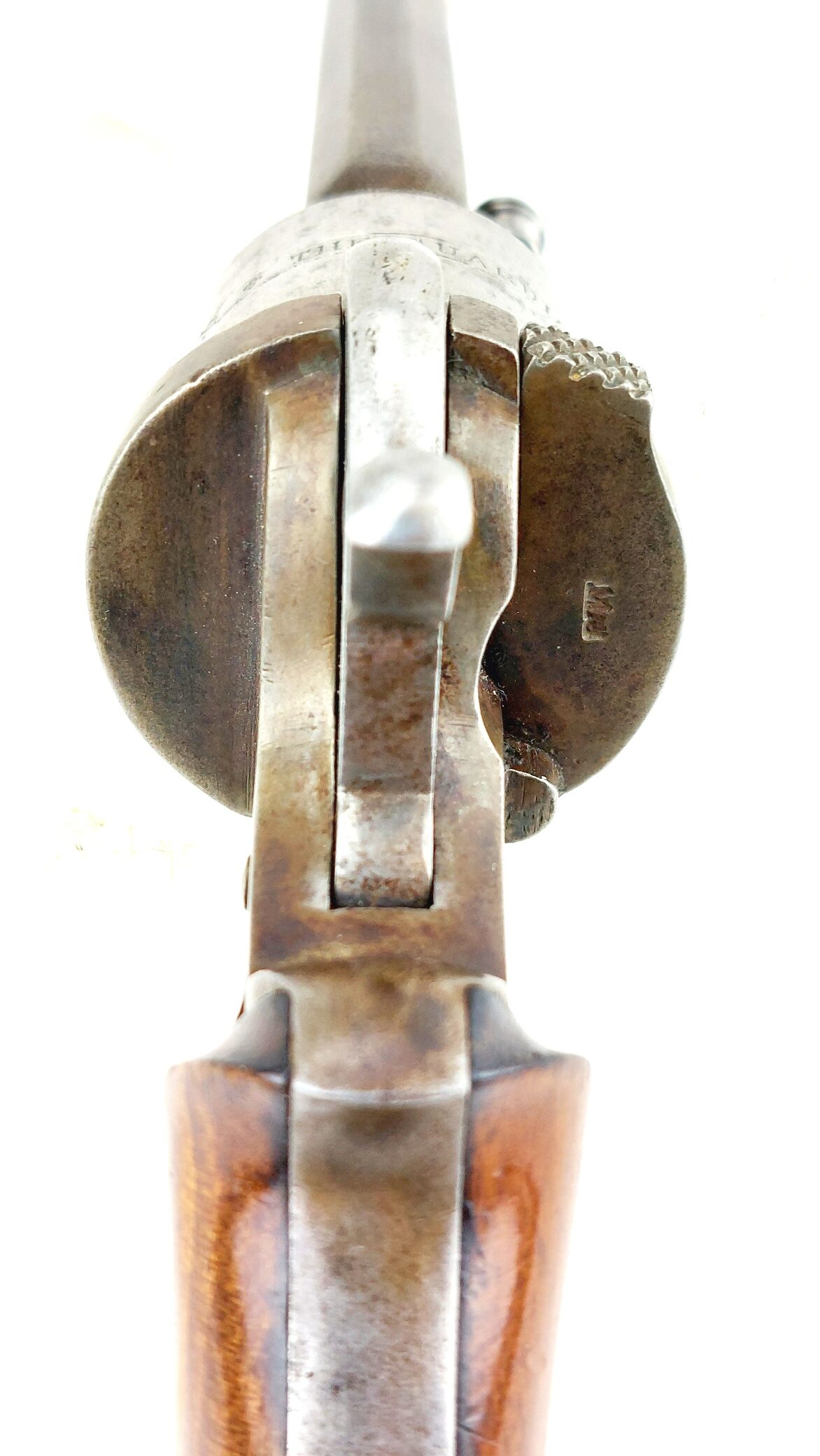
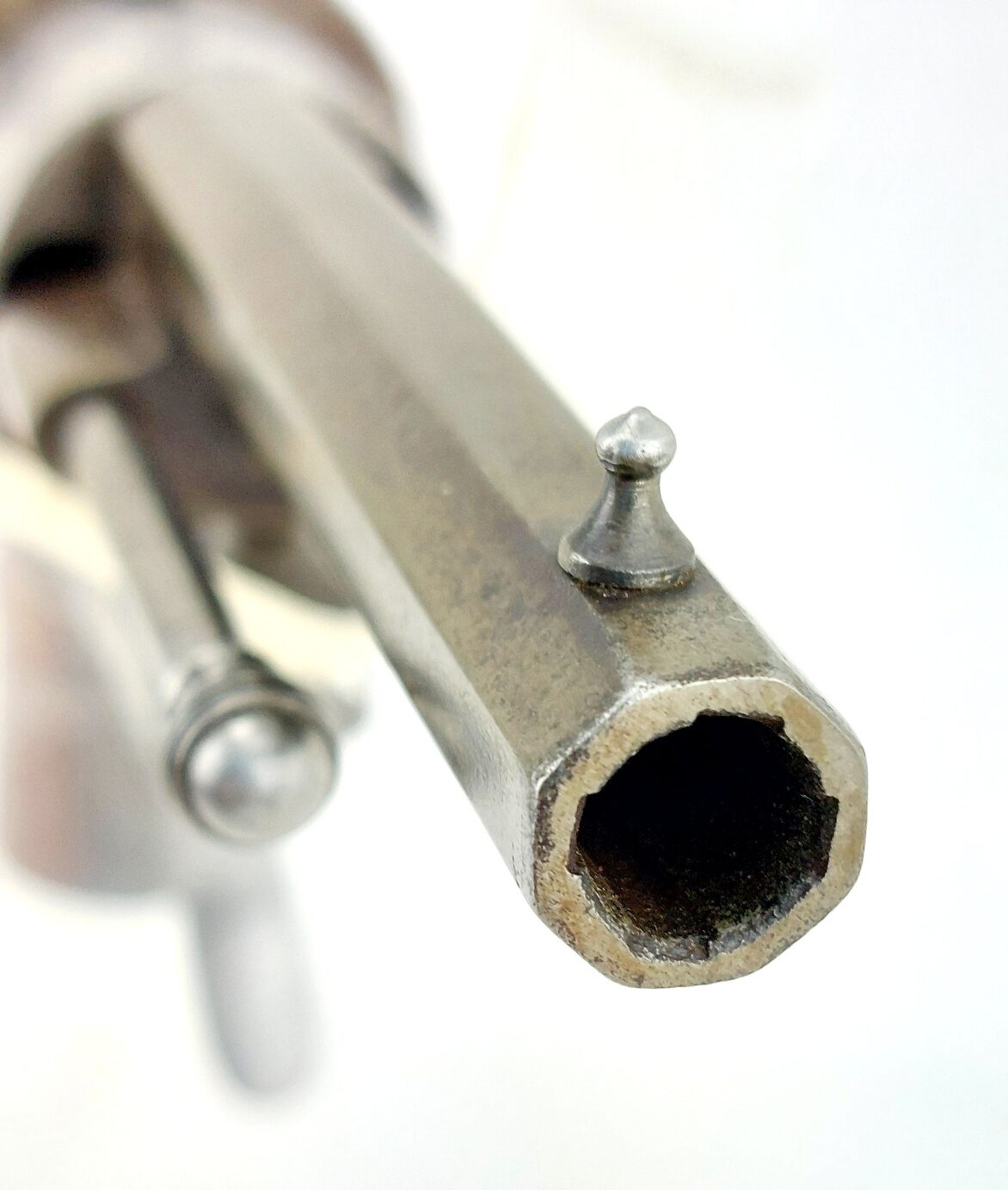
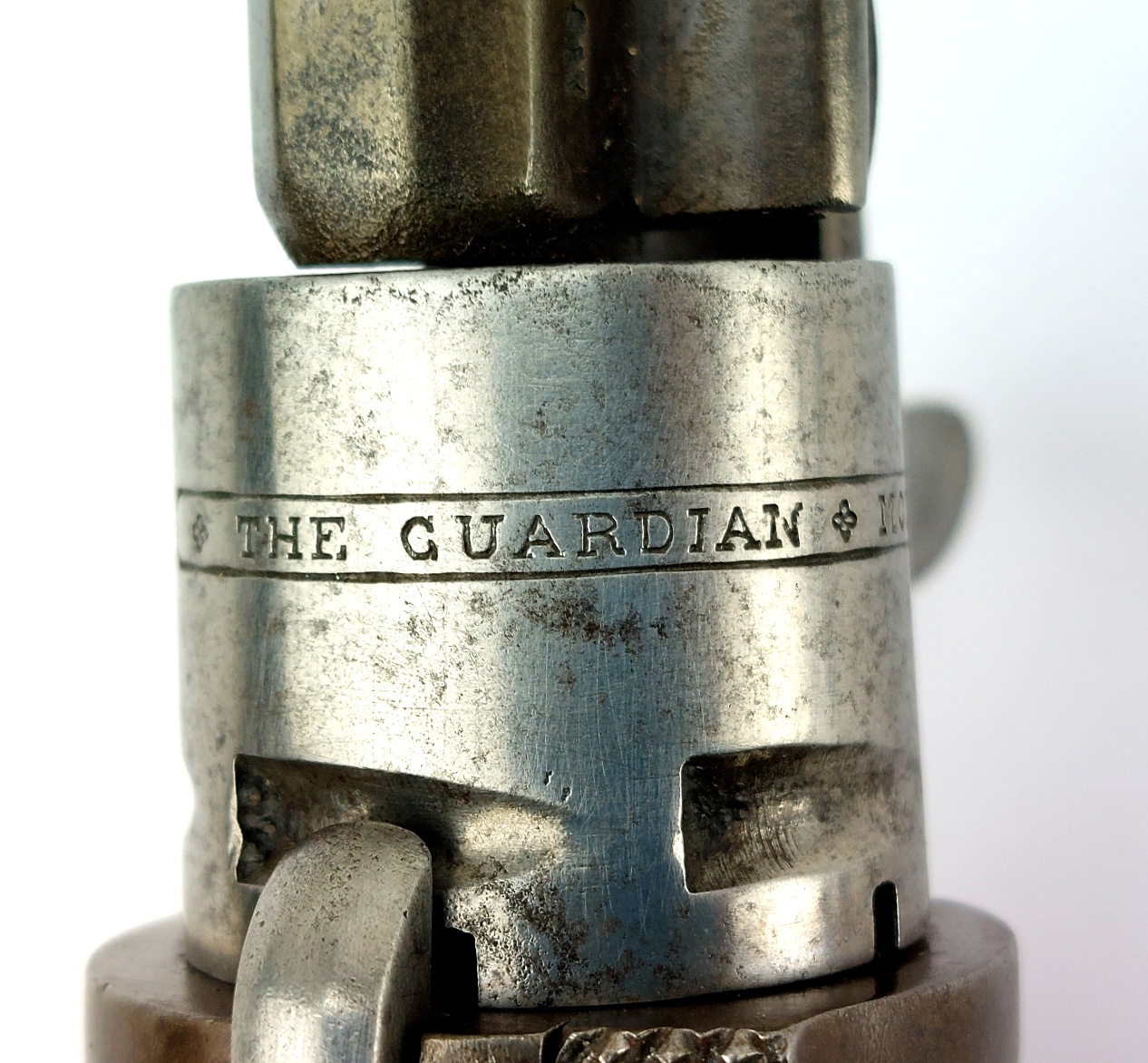
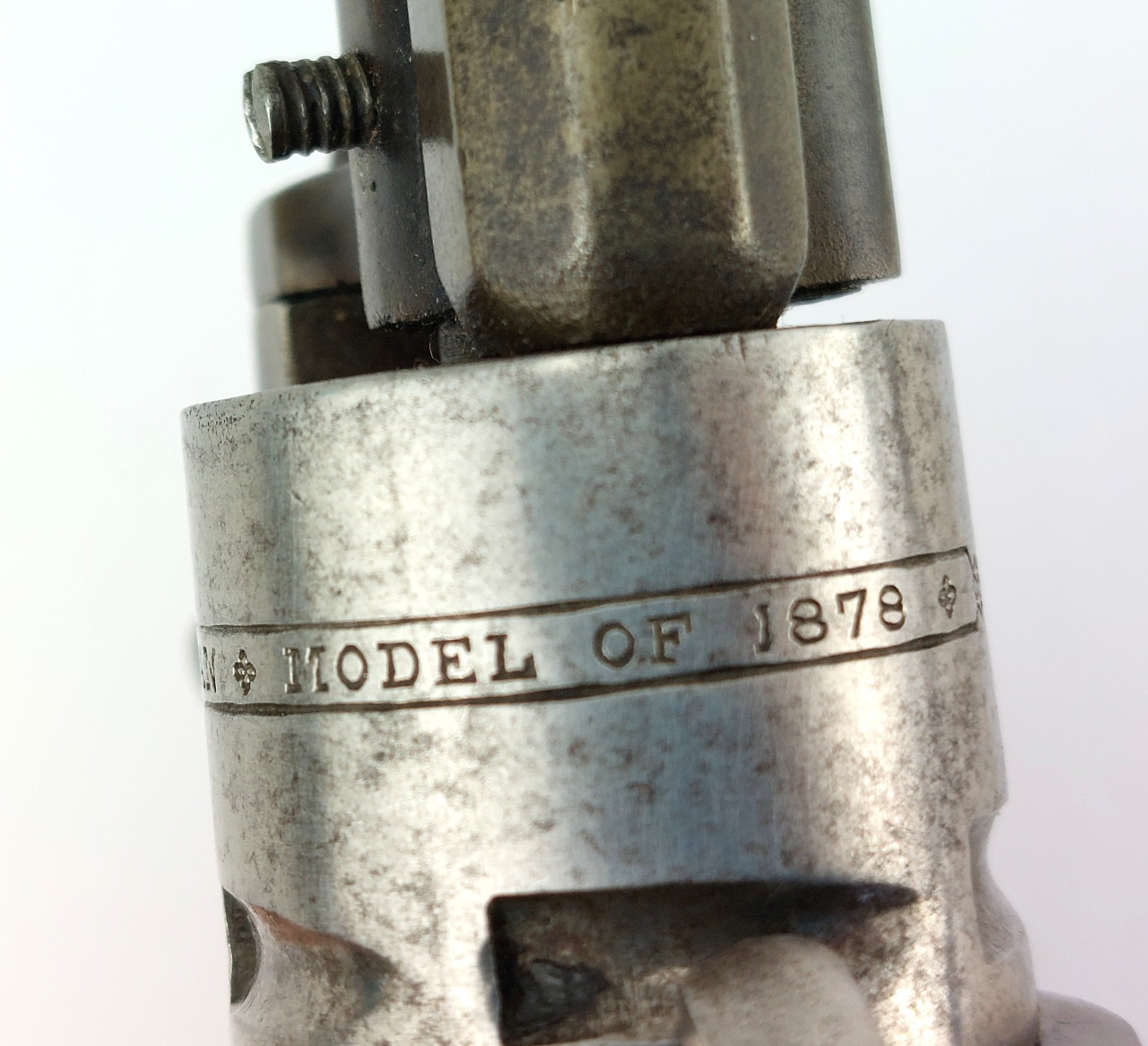
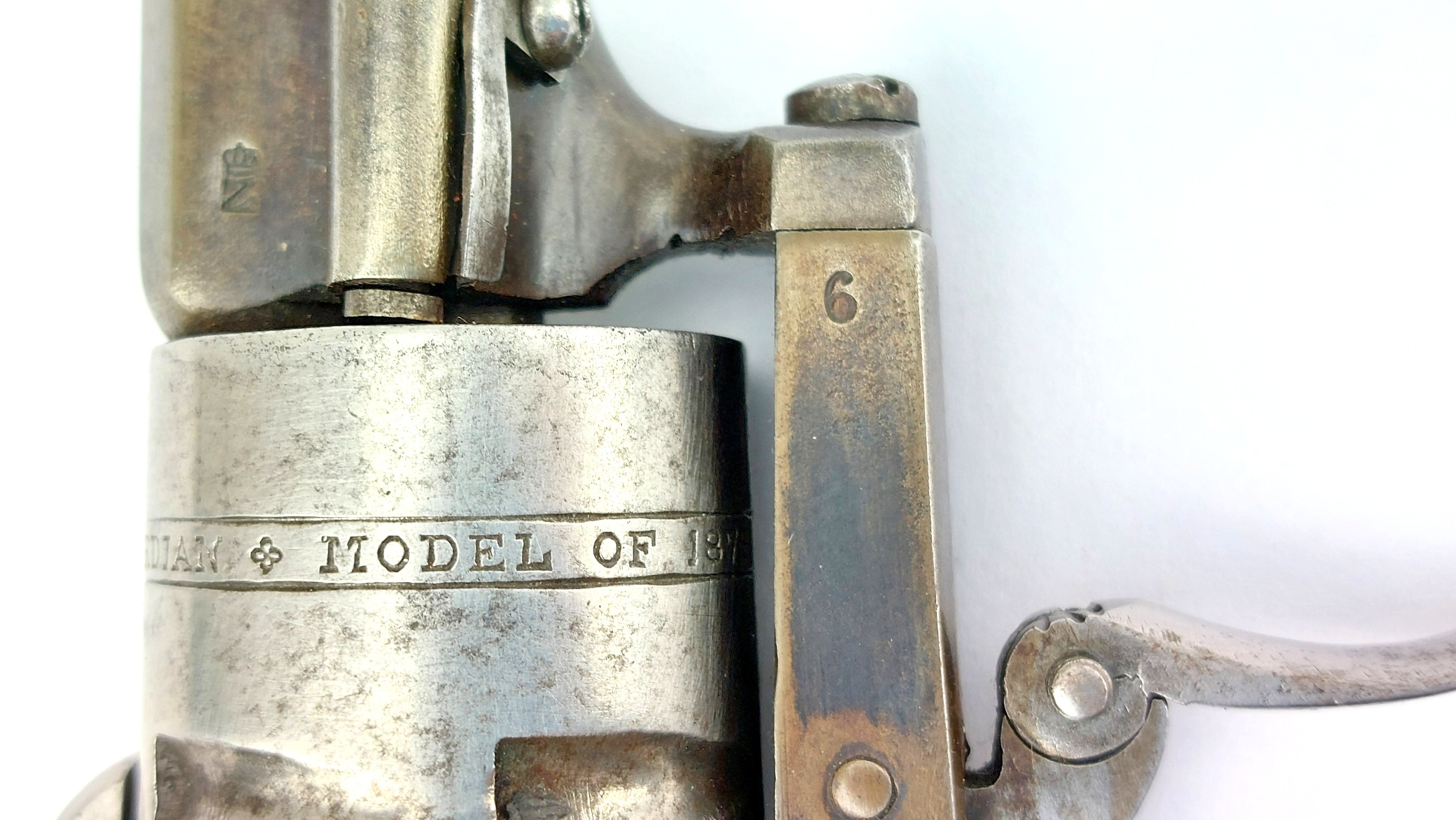
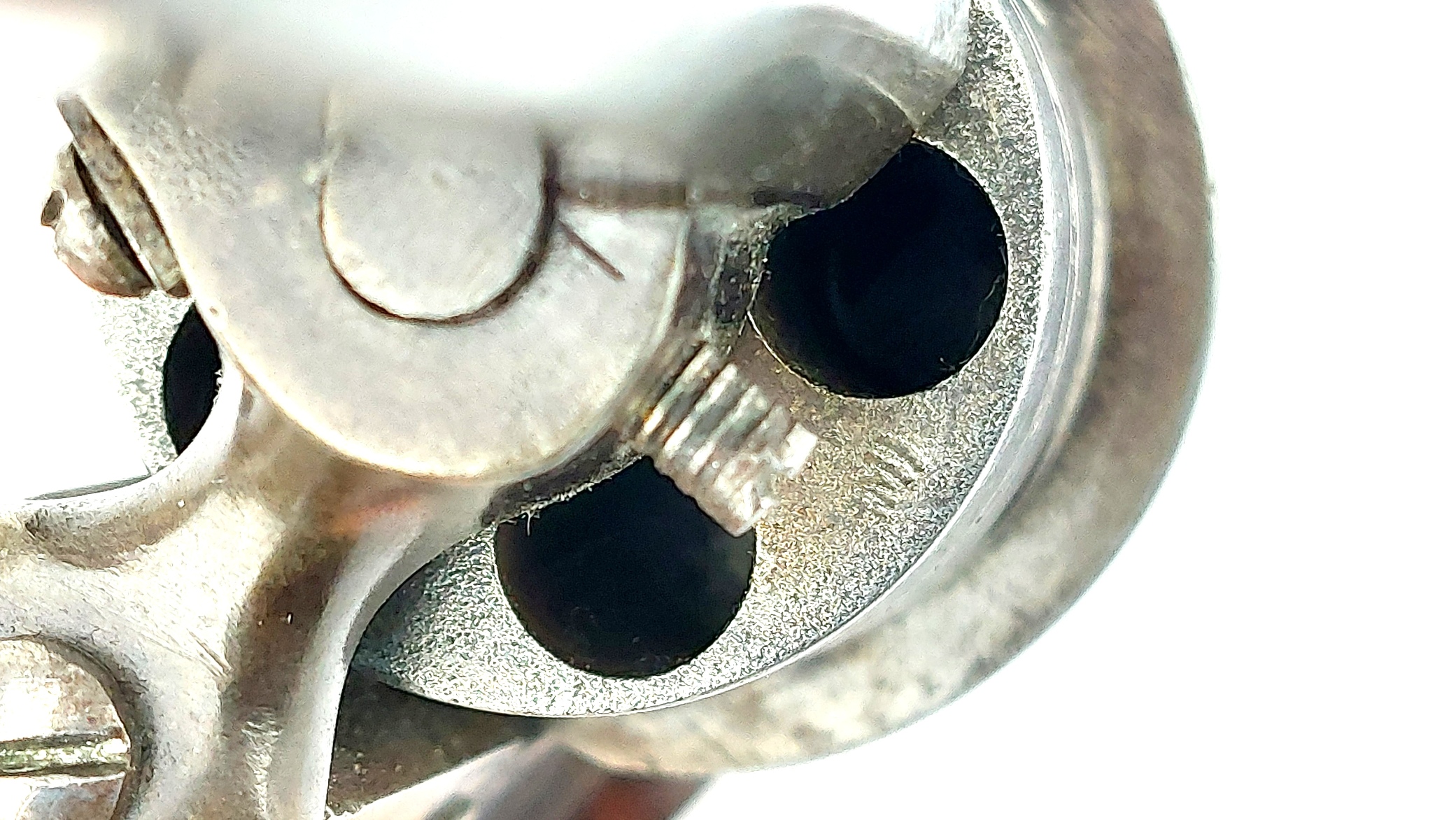
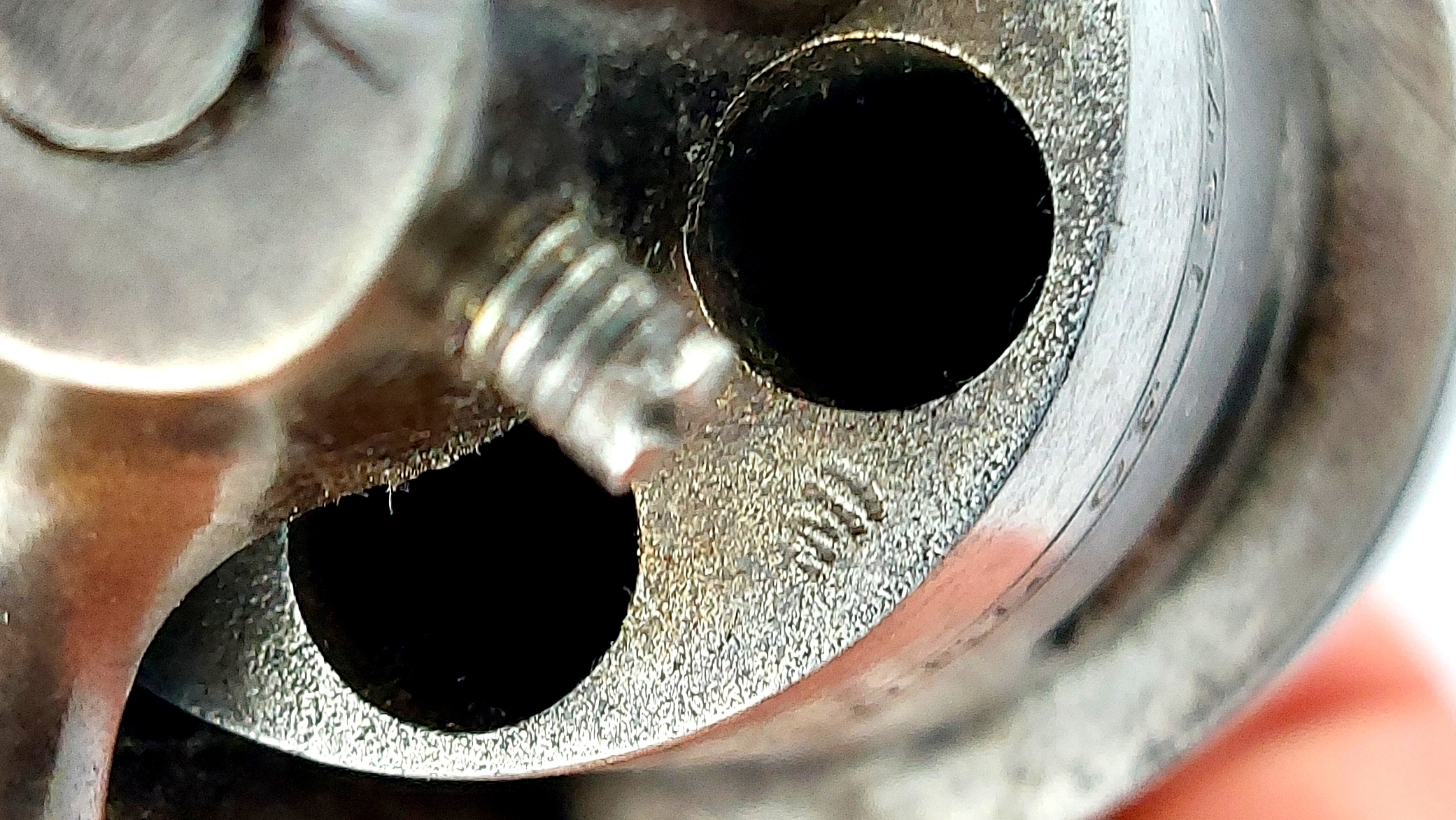
The revolver is of compact “Bulldog” or “Puppy” form with round-butt walnut grip, short octagonal barrel, and under-mounted ejector rod. The five-shot cylinder is engraved within a band with the legends:
“THE GUARDIAN” and “MODEL OF 1878.”
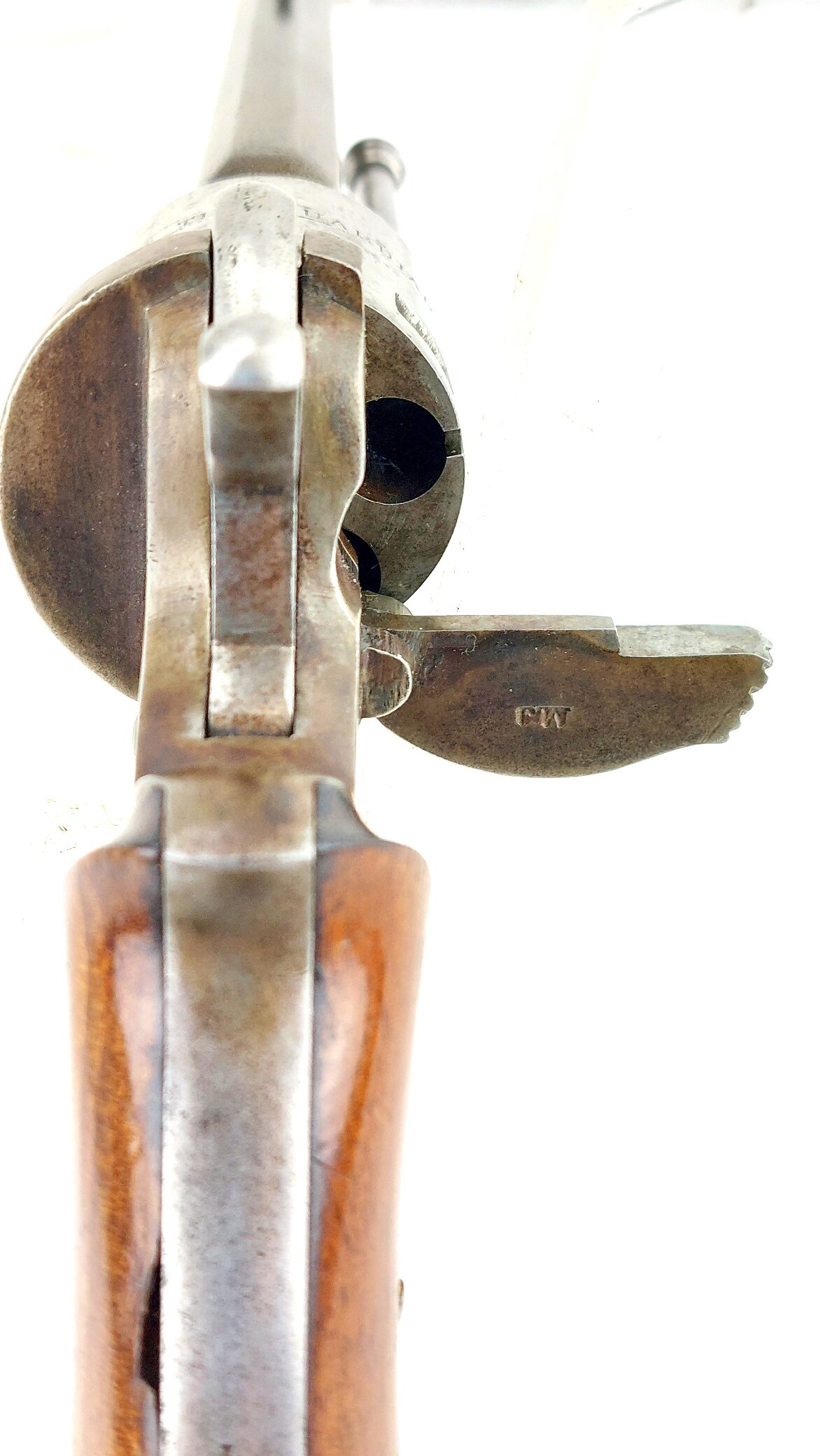
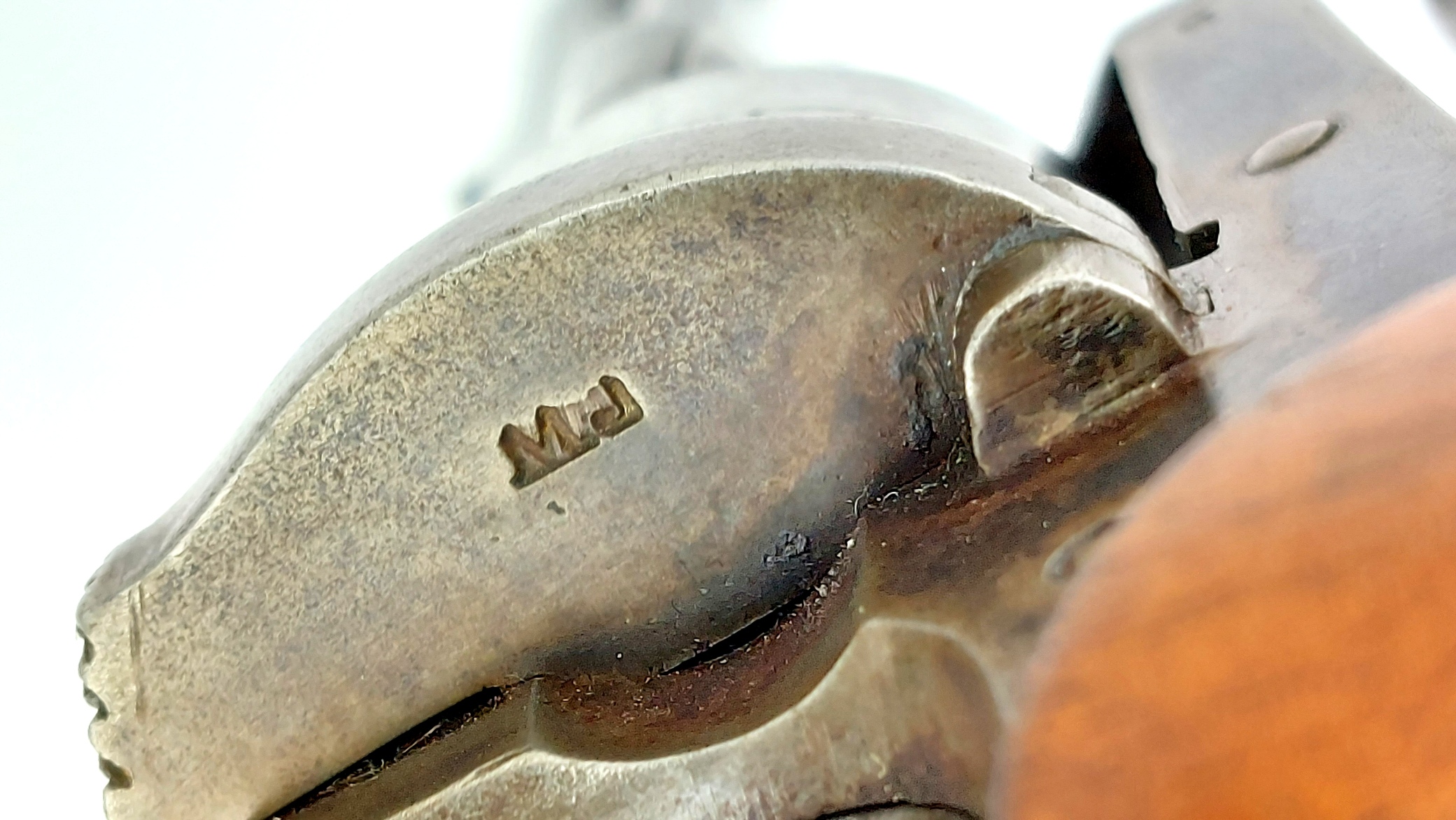
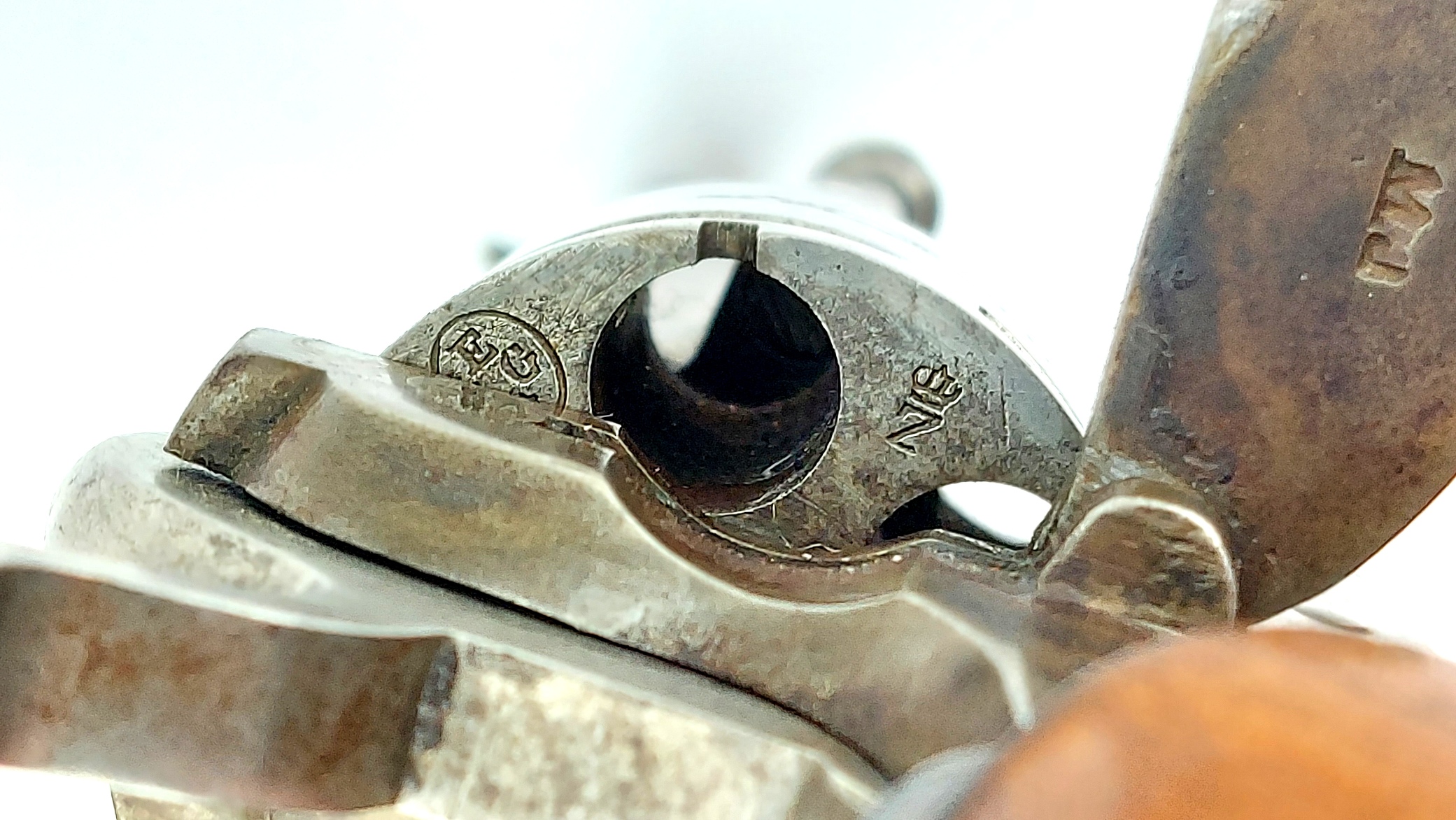
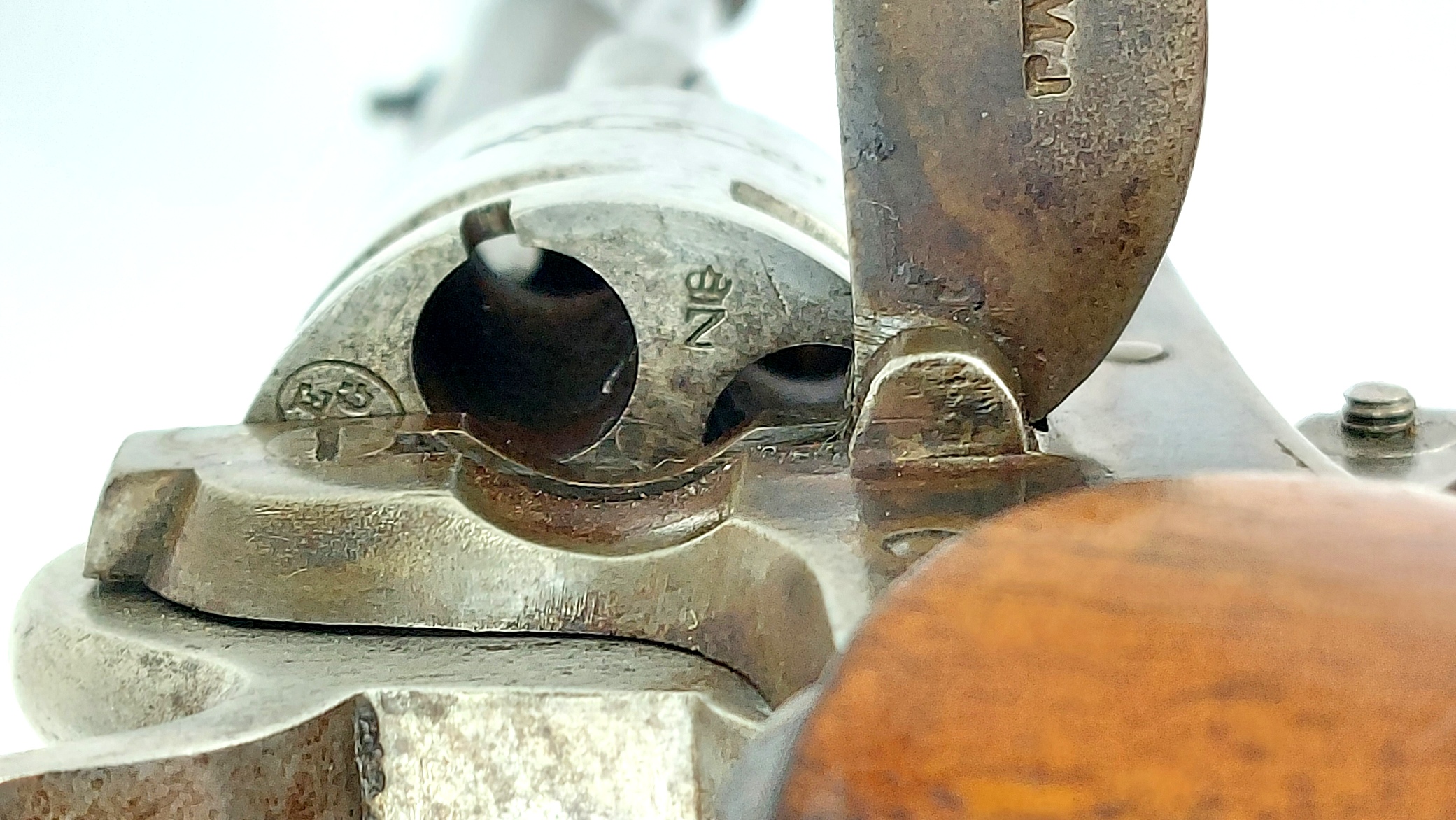
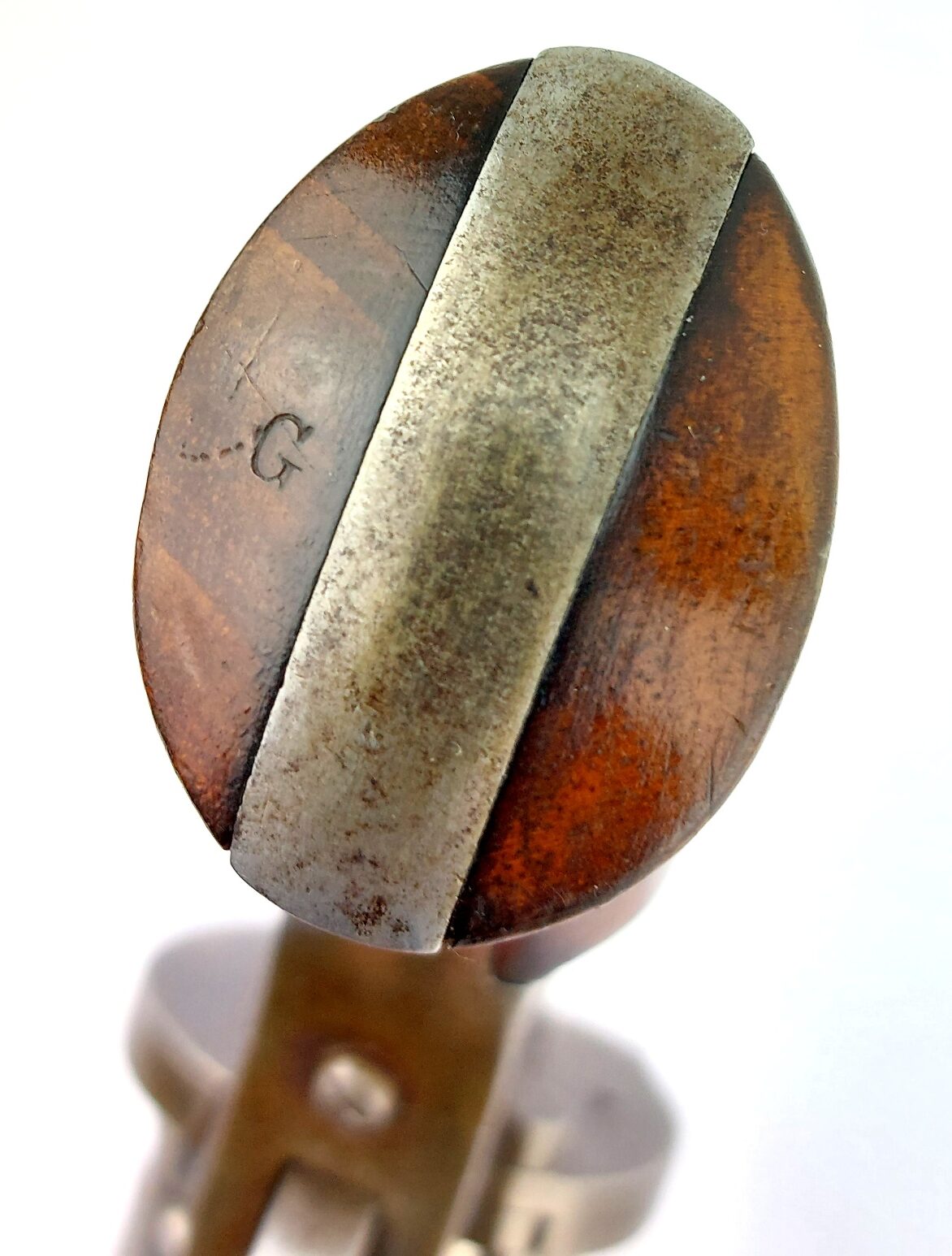
The frame retains its original folding trigger mechanism, typical of late-19th-century continental pocket revolvers intended for discreet civilian carry. The loading gate is stamped “MJ”, identifying manufacture by the Liège gunsmith Michel Jamar, while the right side of the frame is stamped “6” with additional assembly or inspector’s letters including “G” to the butt.
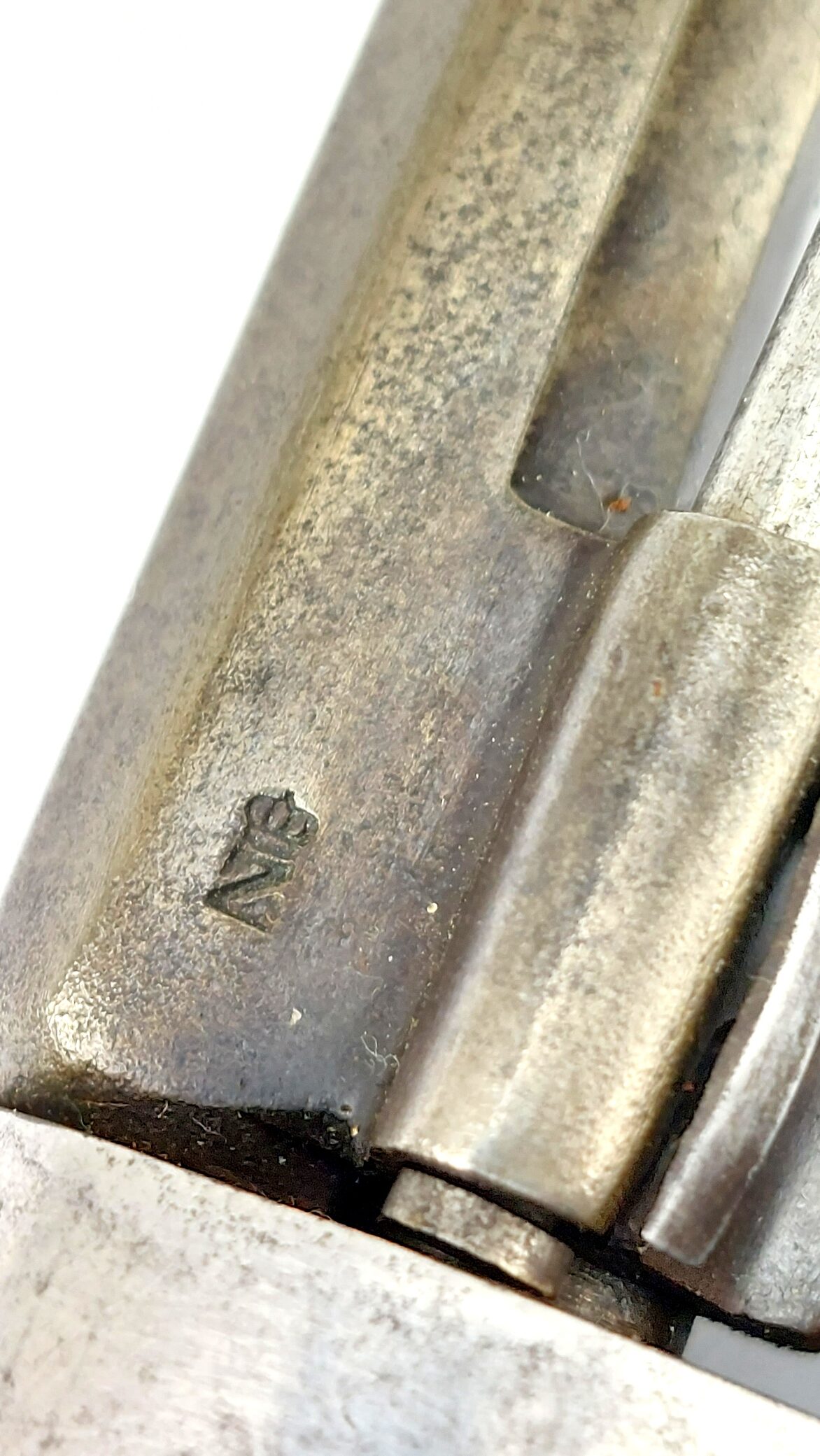
Belgian proof and inspection marks are present and include:
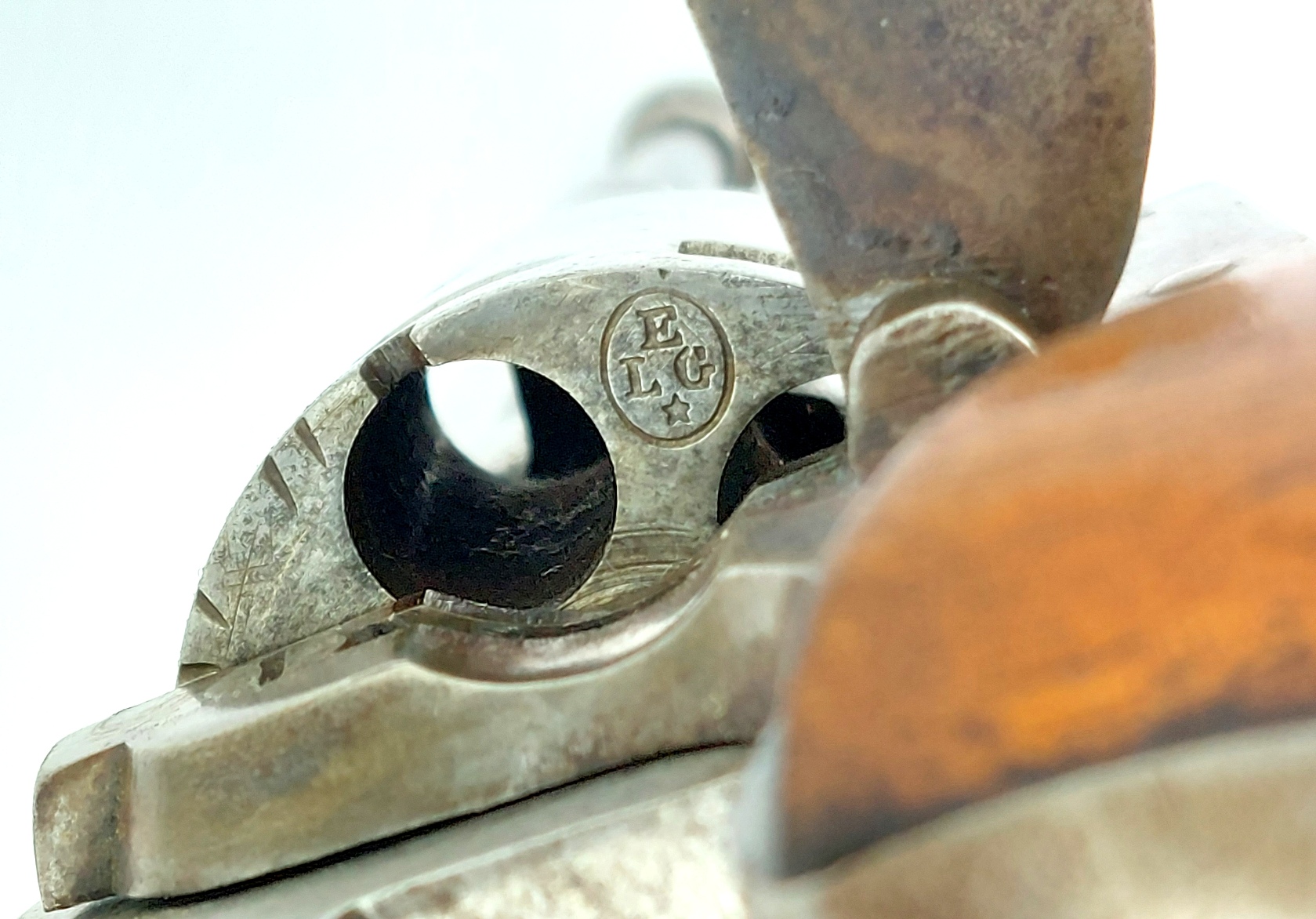
- ELG within an oval surmounted by a star — Liège definitive proof
- Crown over Z controller’s countermark
- Additional small trade and inspection marks to the barrel, frame, and cylinder
The overall configuration follows the established Lefaucheux pinfire system, widely produced in Liège for export and civilian markets during the late 19th century. Revolvers of this size were most commonly chambered for 7mm pinfire cartridges.
Approx. Measurements – Barrel length: 8.7 cm. Overall length: 18 cm.
Historical Note:
This revolver belongs to the Liège trade series marketed under the trademark “The Guardian American Model of 1878,” registered on 27 December 1880 by the partnership of Alexandre Fagnus and Charles Clément (Fagnus & Clément), operating from Rue Chéri in Liège between approximately 1879 and 1883.
The collaboration combined the inventive work of Alexandre Fagnus, an established Liège designer of revolver mechanisms, with the commercial and industrial backing of Charles Philibert Joseph Clément, who would later become a prolific patent holder and a prominent political figure, eventually serving as a Belgian senator. Although relatively short-lived, the partnership was active during a period when Liège was one of the world’s principal centres of small-arms manufacture, producing large quantities of revolvers for export to Europe, Britain, and overseas civilian markets.
The “American Model” designation formed part of a deliberate marketing strategy intended to capitalise on the strong international reputation of American revolvers such as those produced by Colt and Smith & Wesson, despite the arms themselves being entirely Belgian in origin.
Production within the Liège arms industry typically operated through a highly collaborative structure in which a firm owned the trademark or design while manufacture was subcontracted to specialist workshops. The “MJ” stamp on the loading gate identifies this example as the work of Michel Jamar, an established Liège arms maker recorded at Boulevard d’Avroy and later Rue Saint-Jean. Jamar is known to have produced revolvers both under his own name and on contract for larger commercial firms, and is associated with a number of patents relating to revolver mechanisms and safety features.
Although not manufactured by the Lefaucheux company itself, the revolver is built on the Lefaucheux pinfire system, derived from the mid-19th-century patents of Casimir and Eugène Lefaucheux. By the 1870s–1880s this mechanism had become the standard pattern for inexpensive European pocket revolvers, particularly those produced in Liège for international civilian markets.
Examples retaining the full “Guardian” cylinder legend are encountered less frequently than unbranded Liège trade revolvers, and the presence of both the Fagnus & Clément trademark and the Michel Jamar maker’s mark allows this example to be dated with reasonable confidence to the narrow 1880–1883 production window during the active partnership.
*Condition*
The revolver retains a good, honest age patina throughout, with scattered surface wear and light oxidation consistent with period use and long storage. The cylinder legend remains clear and legible, and the Belgian proof and inspector’s marks are still visible. The metal surfaces show expected handling marks and minor freckling but no obvious modern refinishing. The folding trigger mechanism is present and appears complete, and the walnut grips remain sound with typical age-related wear and small handling marks. Cocks and dry-fires with a smooth, positive double-action. Please see photographs as part of the condition report.
JAQWB_CCH_9297228614