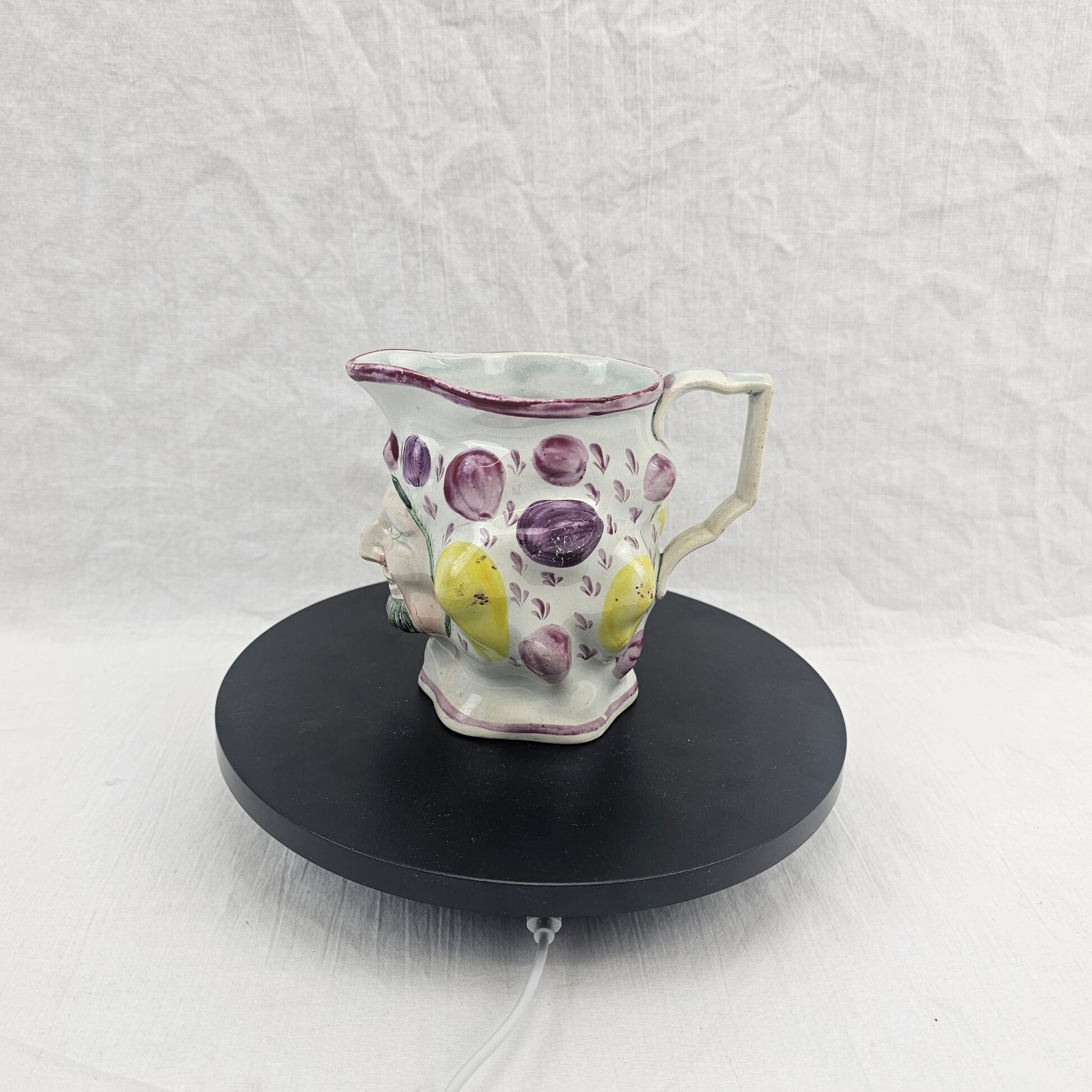
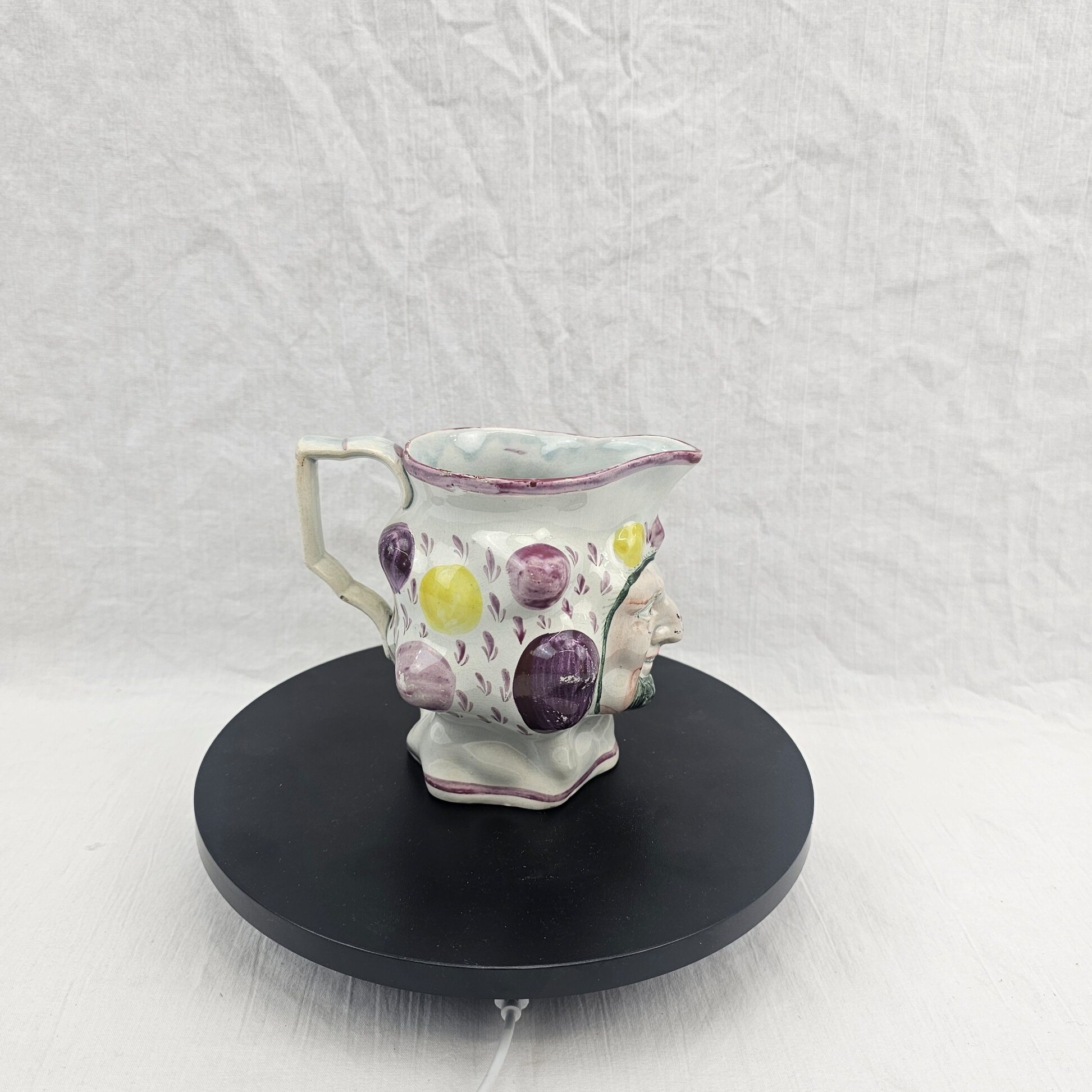
~ Early Staffordshire Pearlware Jug in the Form of a Bearded Jester, c.1800–1825 ~
An appealing and characterful early Staffordshire pearlware jug modelled as a bearded jester's mask, with vivid overglaze enamel decoration of purple spots and yellow fruits - a lively and unusual piece from the most collectable period of Staffordshire pottery production.
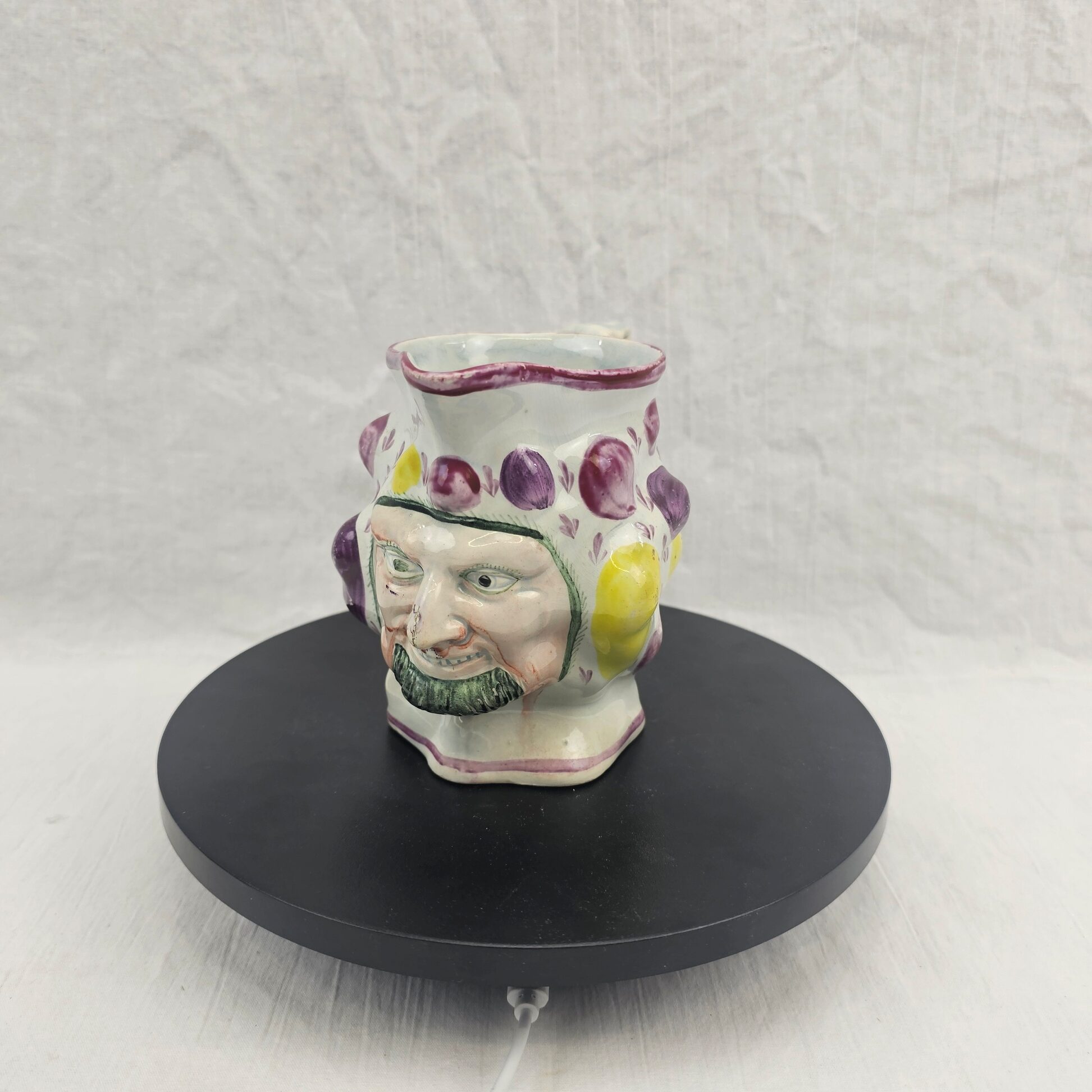
This entertaining small jug is a fine example of early Staffordshire pearlware at its most inventive and playful. The body of the jug is modelled with a bearded jester's face on the front — a grinning, lively countenance with painted green beard and characteristic jester's features, emerging from and merging into the rounded form of the jug itself. The face is painted with a rosy complexion, bright eyes, and the knowing expression associated with the Fool or Jester figure of British folk and theatrical tradition.
The body of the jug is decorated with bold overglaze enamel purple and yellow spots scattered across a white ground, interspersed with small painted purple leaf or sprig motifs. The purple spots may evoke the bobbles of a jester's costume, the fruits of a harvest, or simply the exuberant, colour-forward aesthetic that characterises the best early Staffordshire painting - the ambiguity is part of the charm. The yellow forms suggest plums, pears, or lemons, adding warmth and variety to the palette. The rim and base edge are outlined in a characteristic manganese/purple pink line, adding crispness to the form.
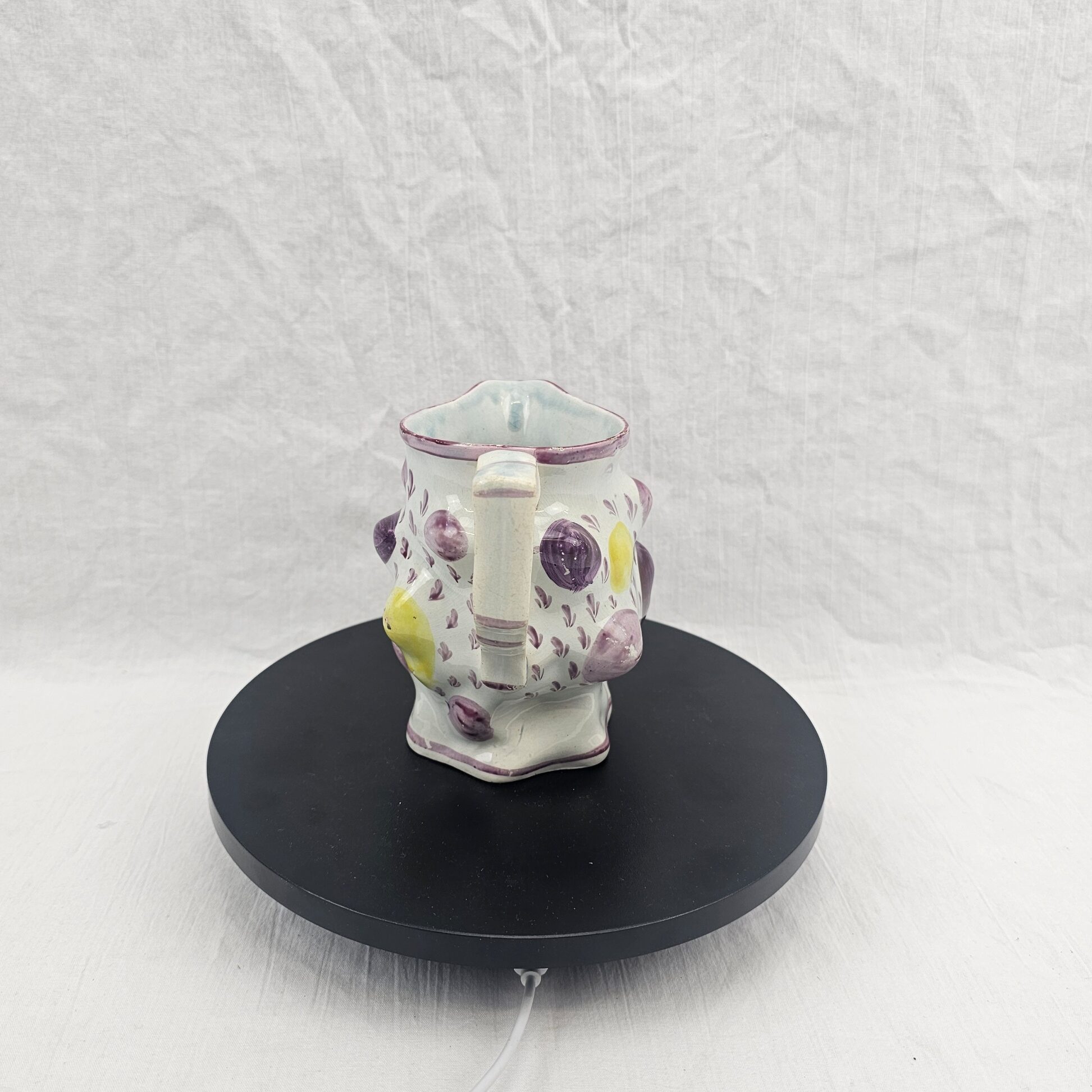
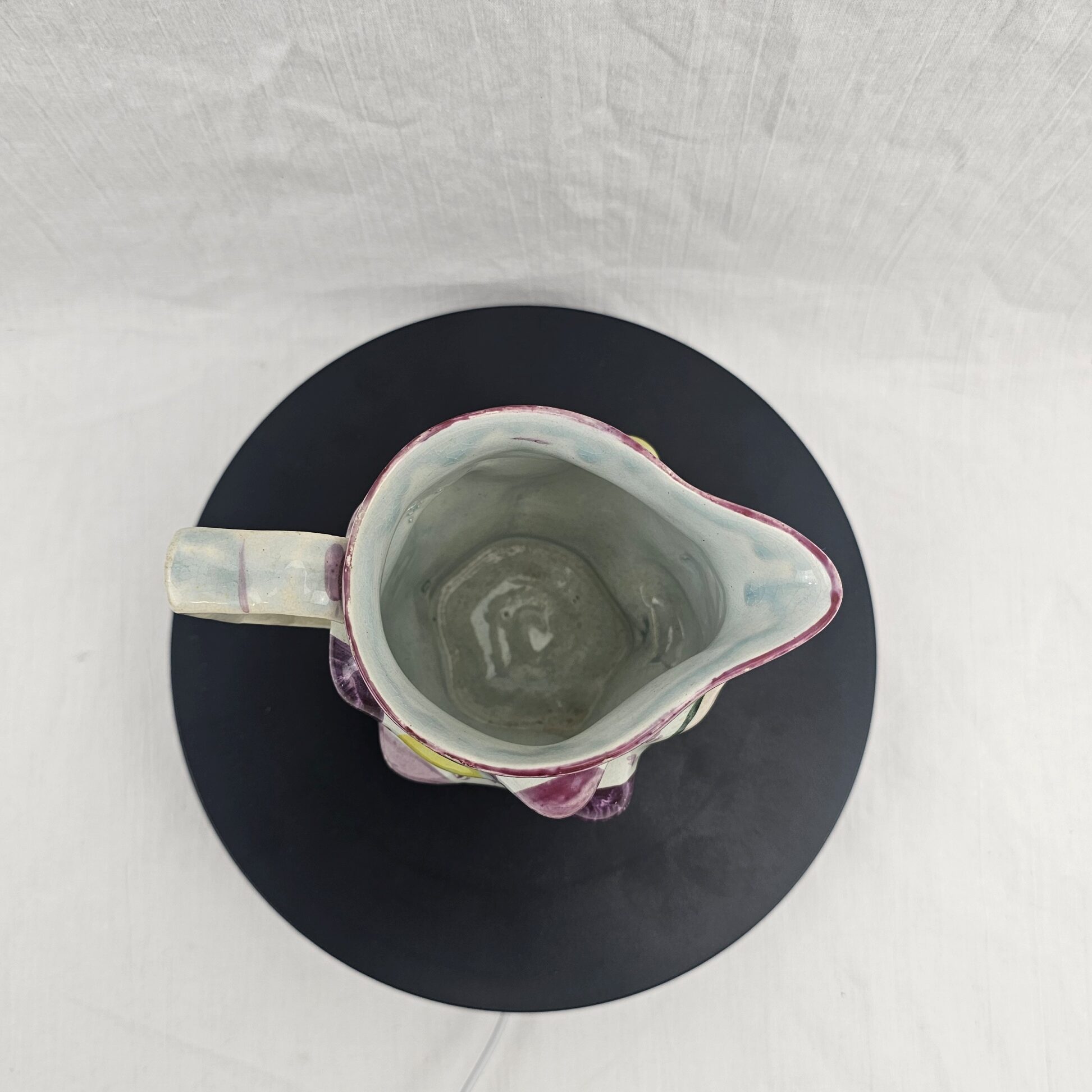
The jug has a simple, sturdy rectangular-section handle (image 3), and the overall form is a squat, bulbous body rising to a shaped pouring lip — the whole set on a neat lobed octagonal base that lends it a refined quality unexpected in what is otherwise a robustly popular piece. The interior (image 5) reveals the characteristic blue-grey/green tint of the pearlware glaze, pooling gently at the base - one of the surest indicators of the genuine early pearlware body that distinguishes pieces of this period from later Victorian earthenware.
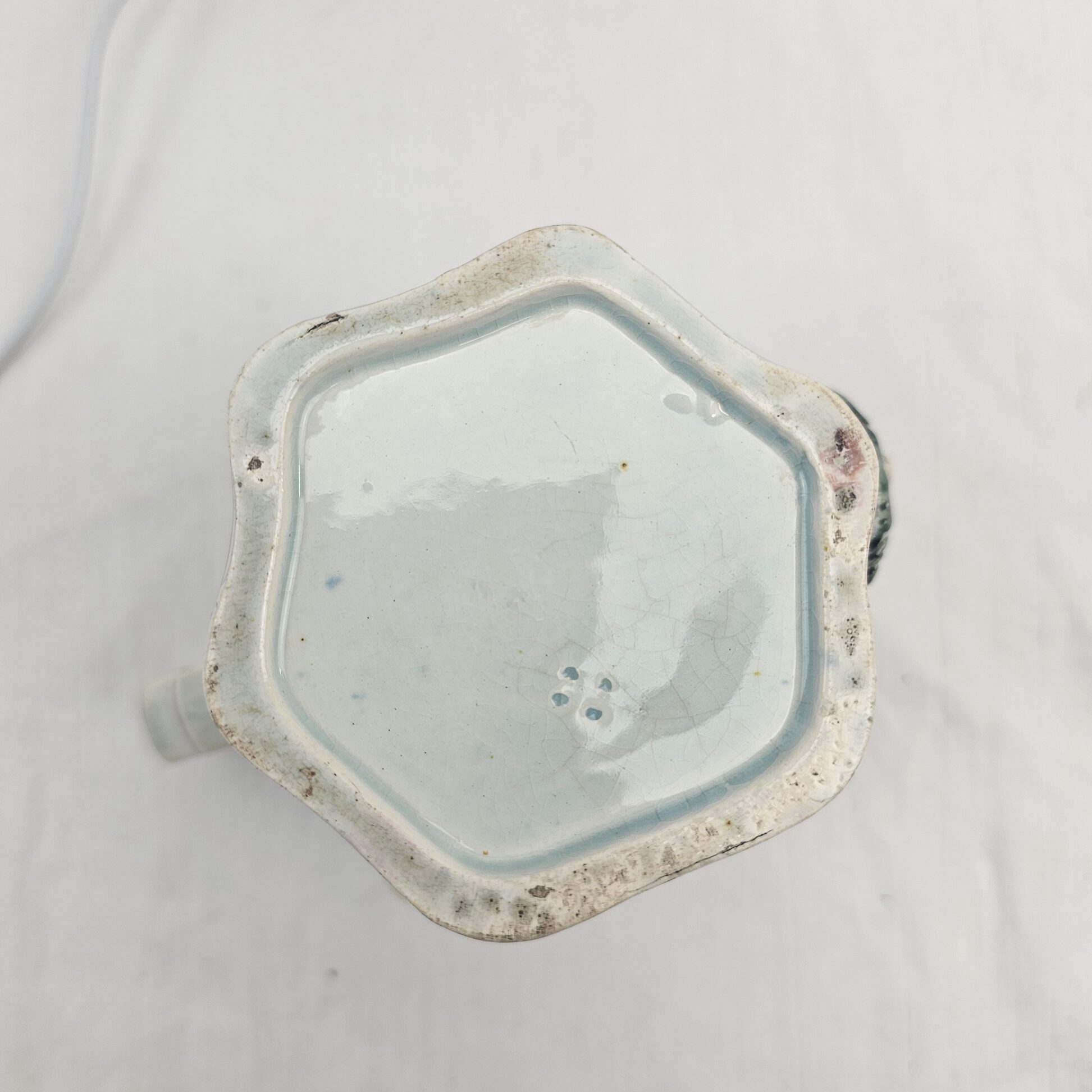
The base (image 6) is fully glazed and shows the same characteristic blue-tinted glaze with fine overall crazing. No maker's mark is present, entirely typical of Staffordshire pieces of this period. A small cluster of four impressed dots is visible, consistent with kiln furniture marks or a potter's private tally mark.
~ Historical Context ~
Pearlware — a refined earthenware with a distinctive bluish-white glaze achieved by adding a small quantity of cobalt to the lead glaze - was developed by Josiah Wedgwood around 1779 but rapidly adopted by the Staffordshire potteries as a vehicle for their figurative and decorative wares from the 1780s onward. The blue tint of the glaze is its defining characteristic and the most reliable indicator of the type. Pearlware production at its most vigorous spanned roughly 1780-1840, with the finest decorative pieces concentrated in the period 1790–1825.
Jester or Fool mask jugs of this type draw on a very long tradition of face jugs in British ceramics, stretching back through delftware and slipware to medieval pottery. The Fool or Jester - a figure of misrule, wit, and inversion — was a popular subject for the early Staffordshire potters, who produced mask jugs, Toby jug variants, and figural groups exploring theatrical and folk character types. The decorated ground of purple and yellow spots on white places this jug comfortably within the Prattware and early pearlware tradition of overglaze high-temperature colour - the palette of purple, yellow, and green being a signature of the most collectable early Staffordshire output.
Pieces of this type are increasingly sought after by collectors of pre-Victorian English pottery, a field that continues to generate strong specialist interest.
~ Dimensions ~
The jug measures approximately 5 ½ inches (14cmcm) from spout to handle, 4 inches (10cm) wide and 4 ½ inches (11.5cm) high. It weighs 280g.
~ Condition ~
The jug is in good condition. There has been some wear to the paintwork in places. There is a knocking crack to the jesters nose. It is free from cracks.