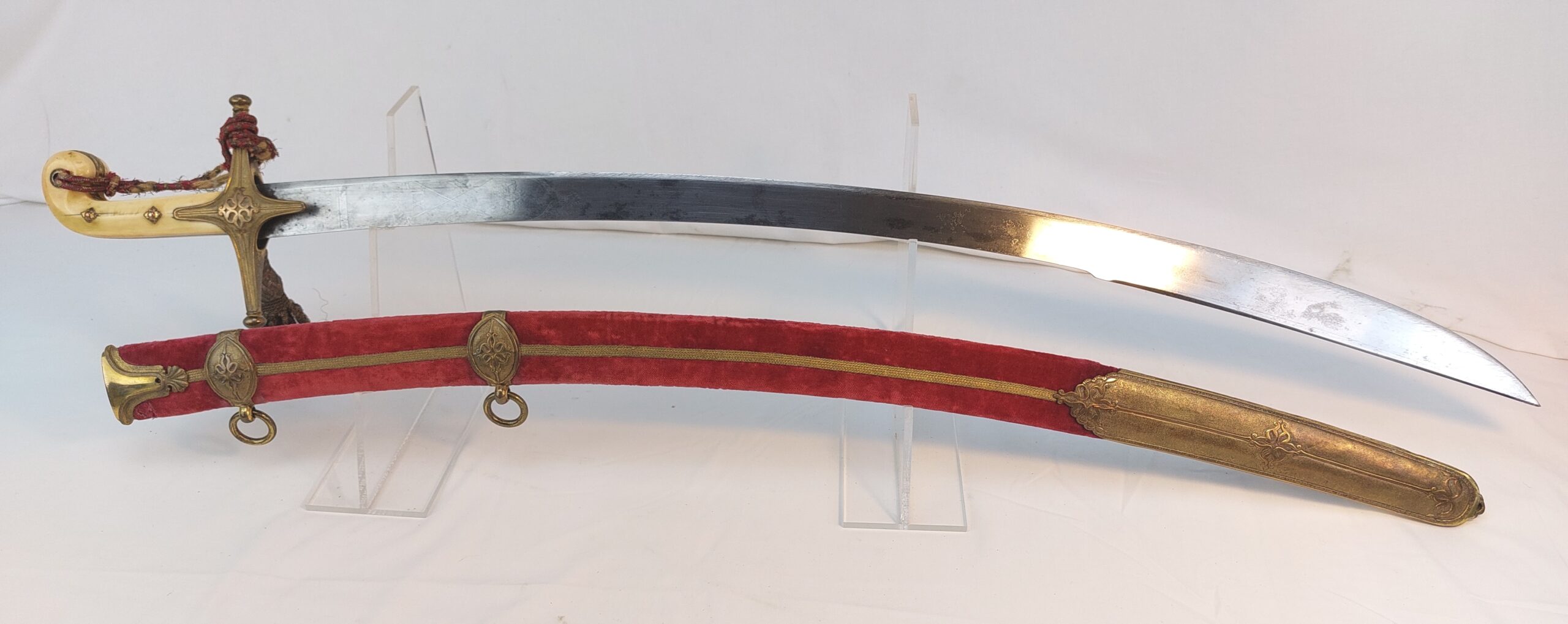
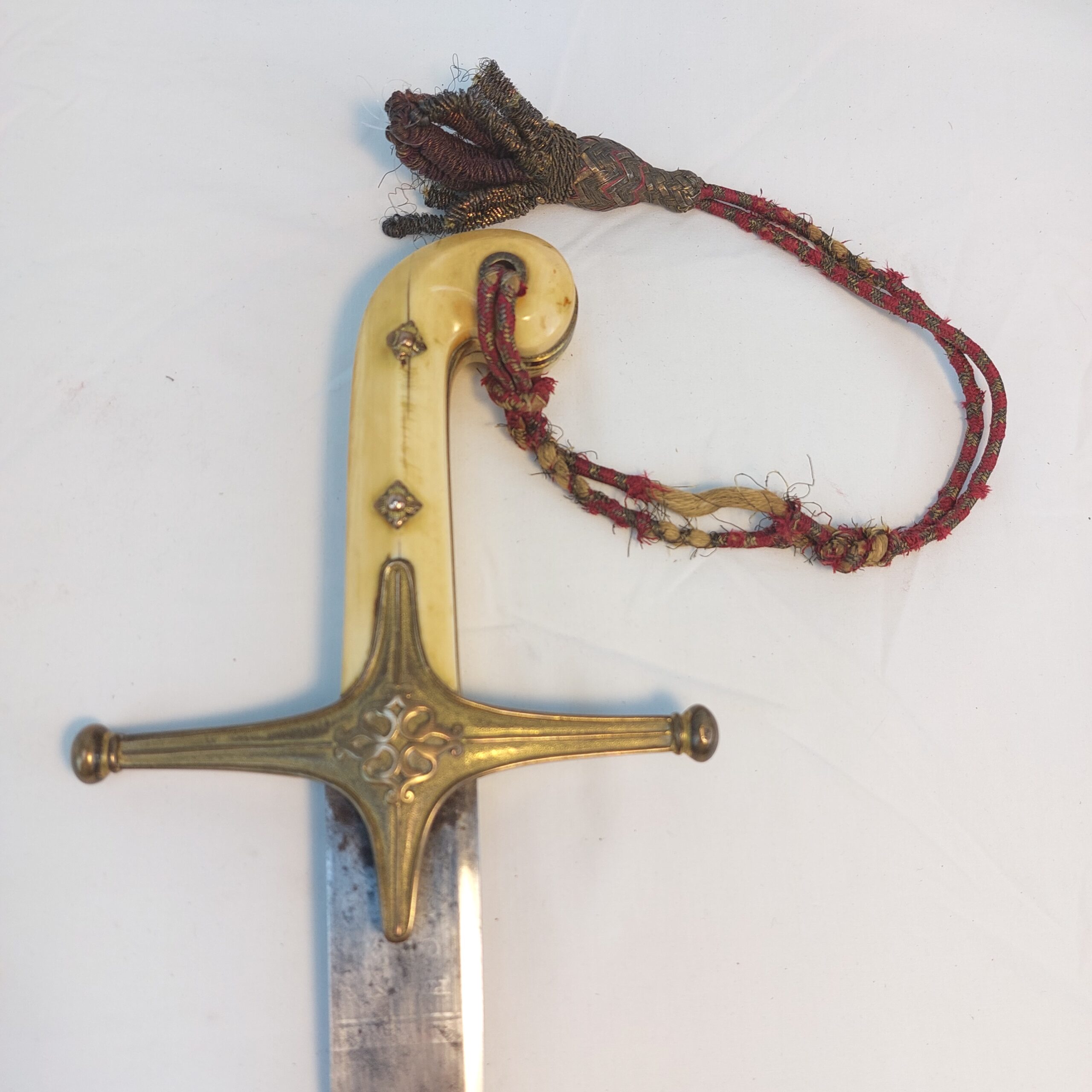
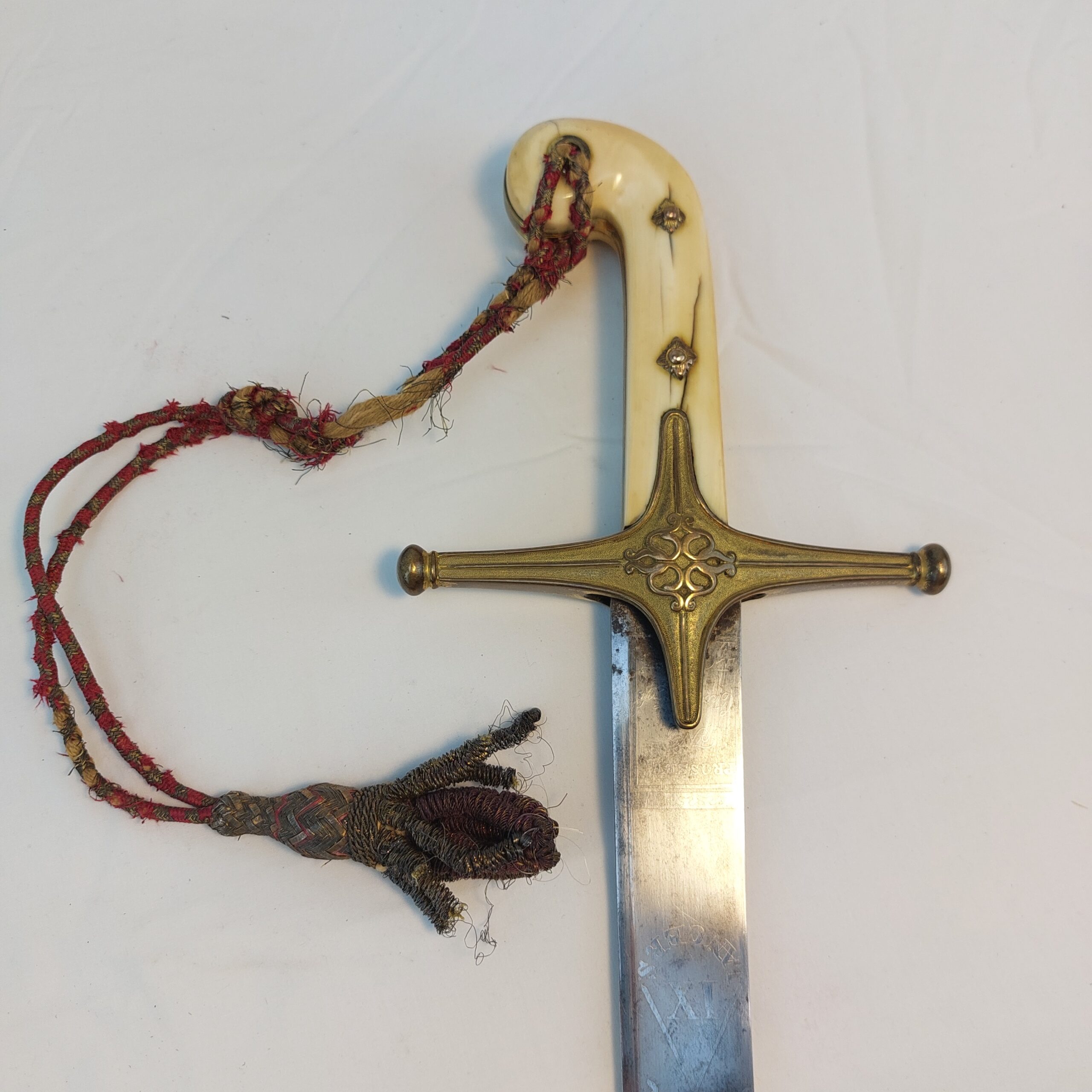
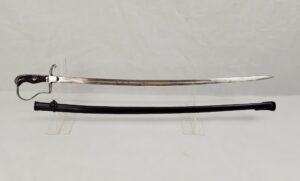
*A IXth Lancer's Officers 1822 Pattern Mameluke Sword and Scabbard by Prosser*
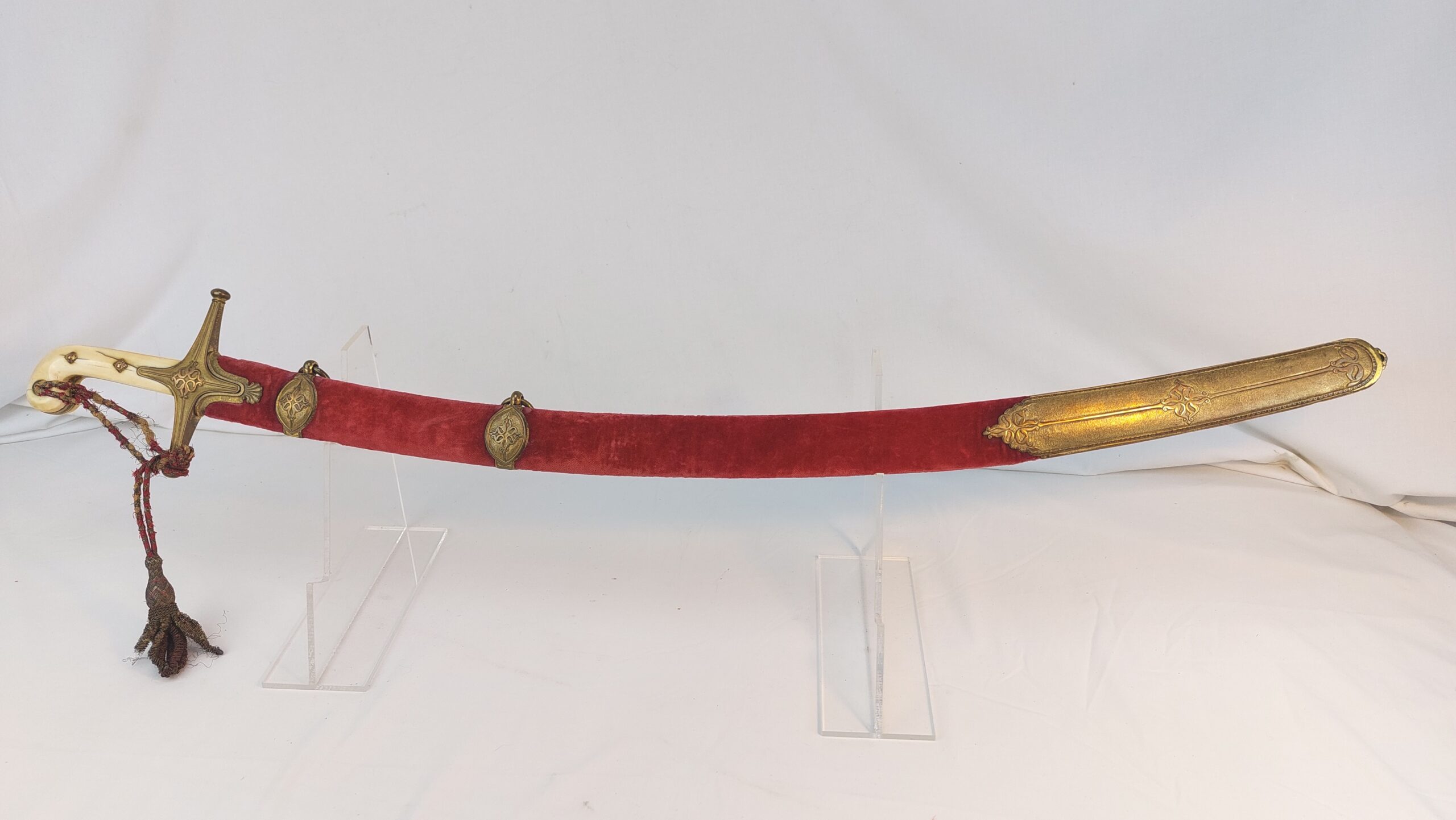
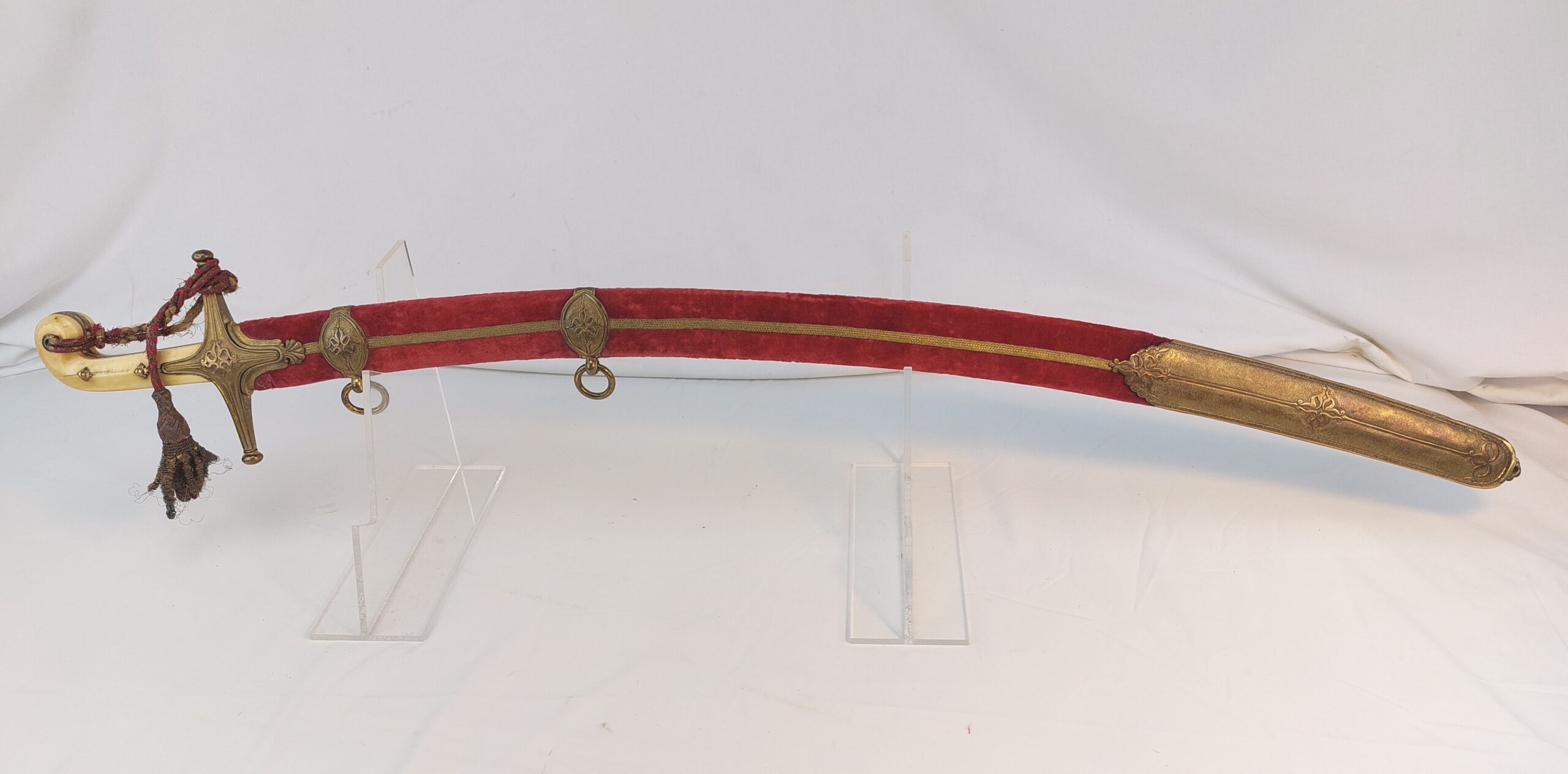
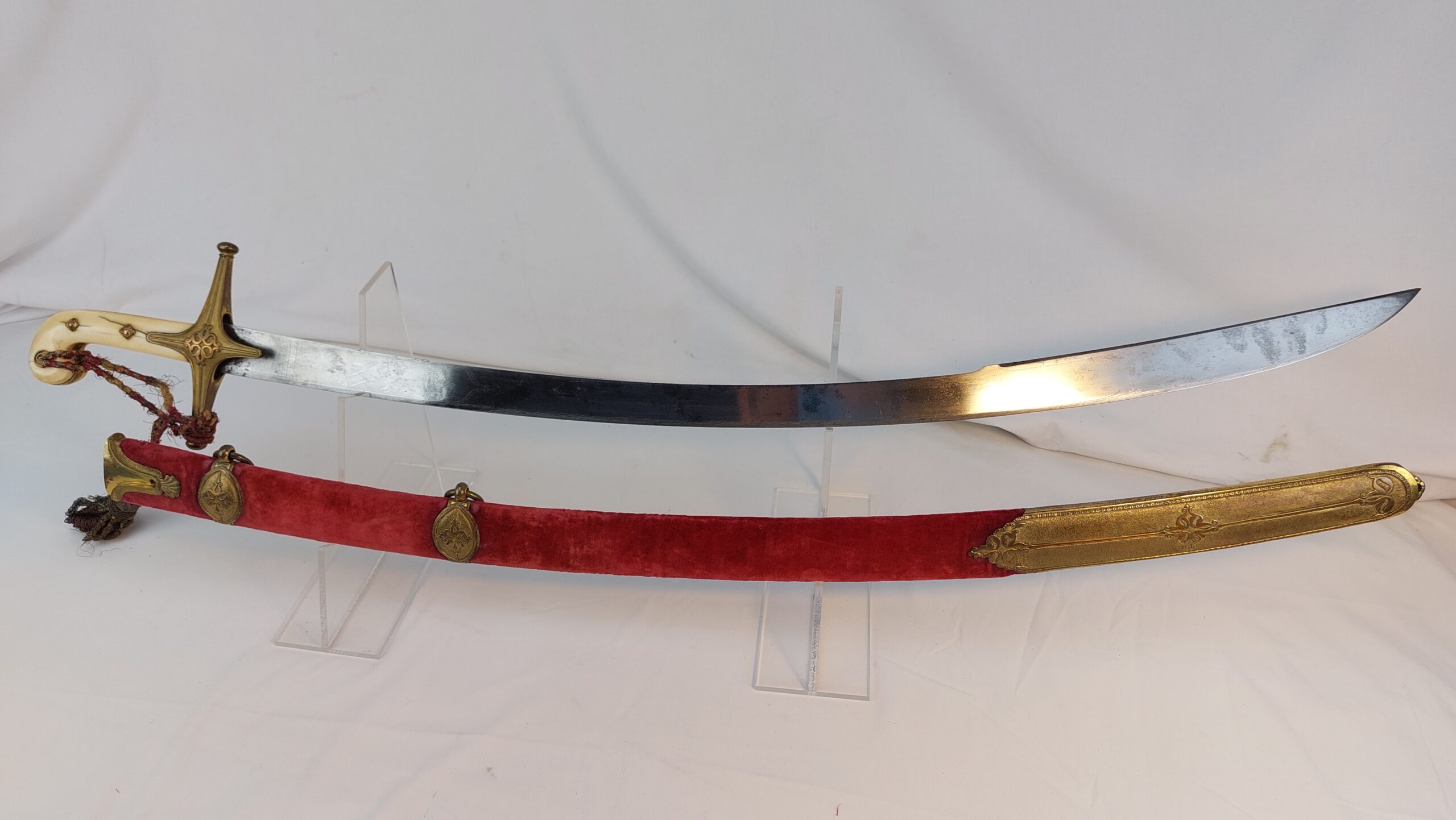
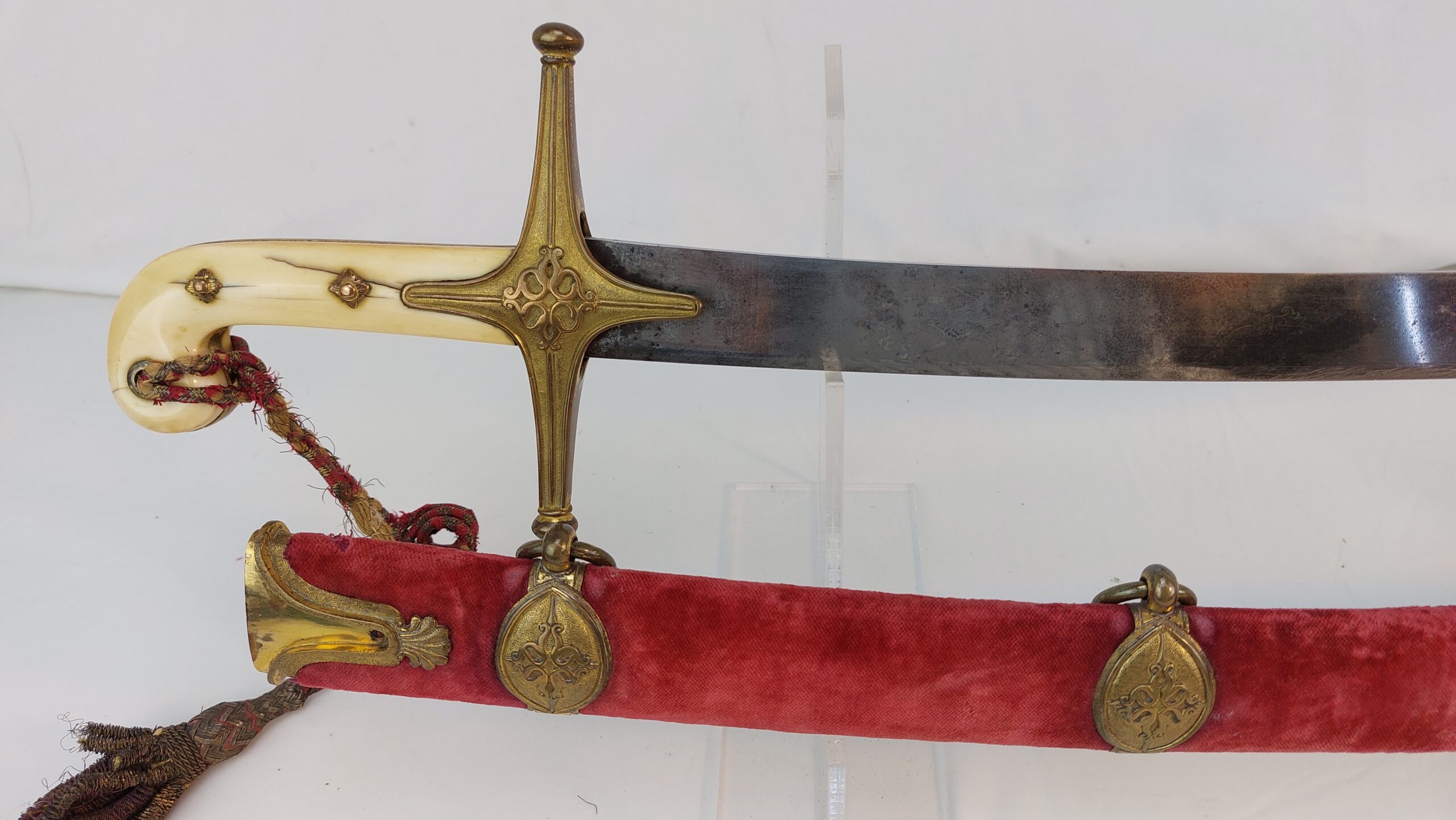
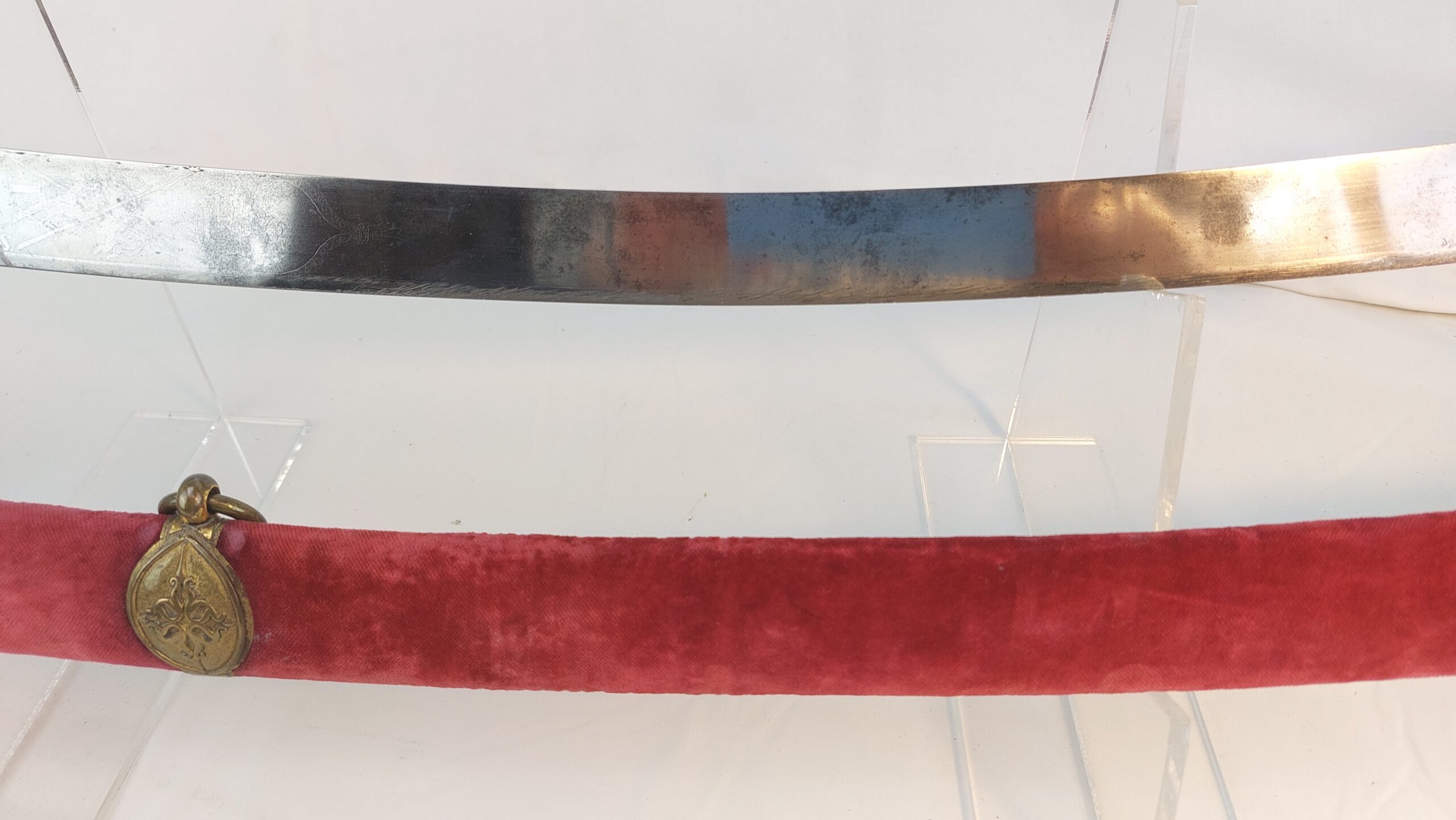
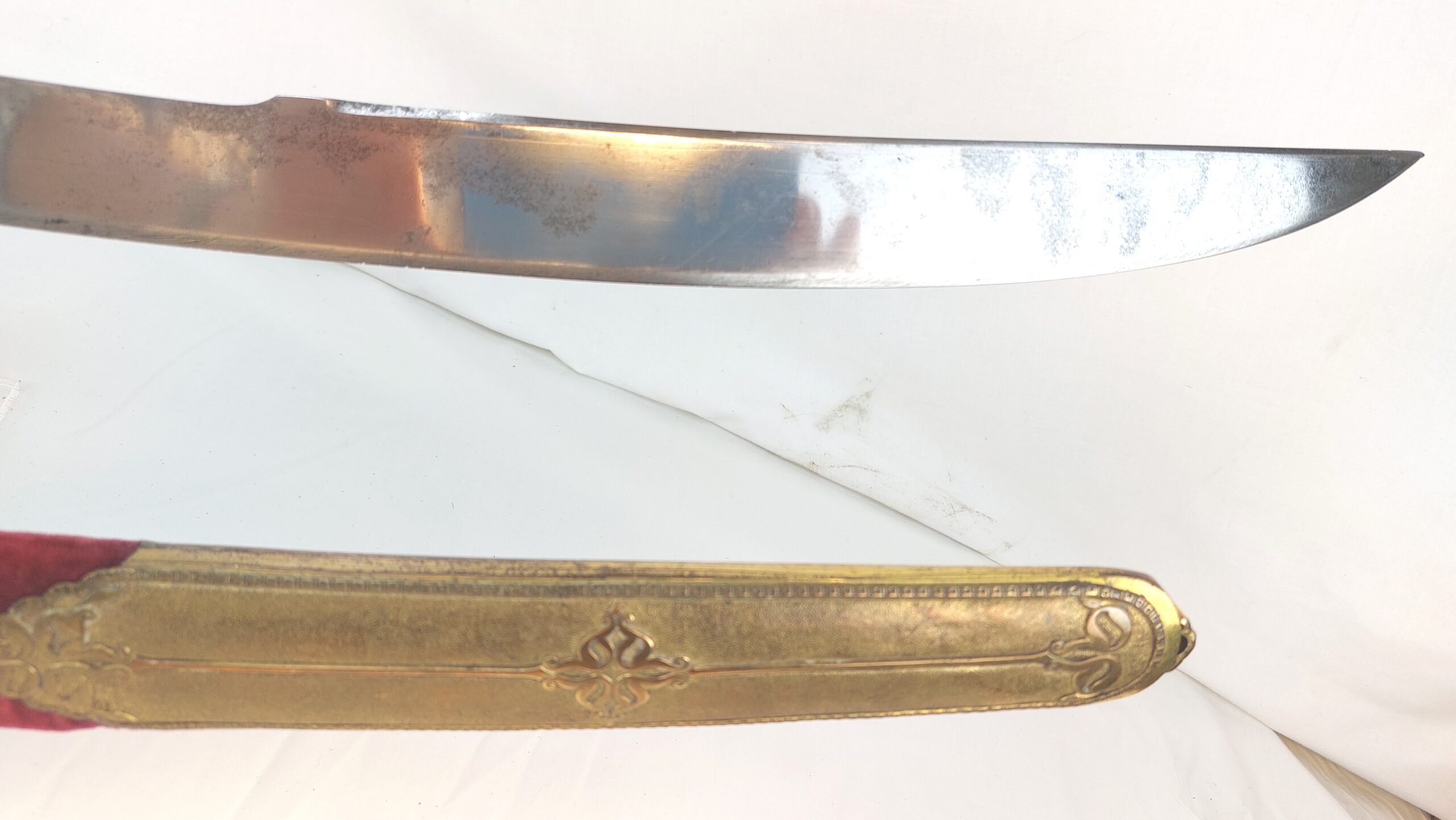
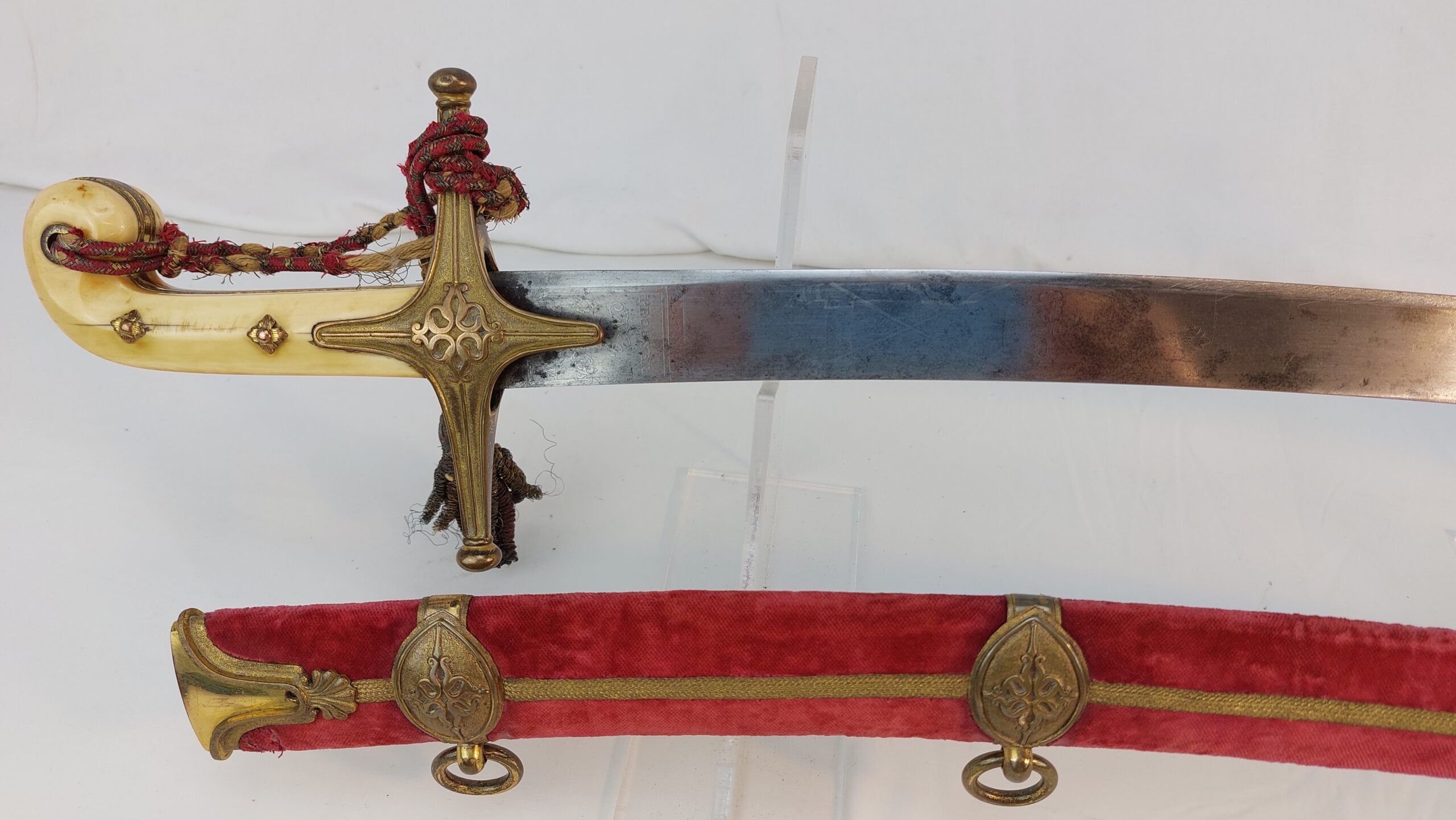
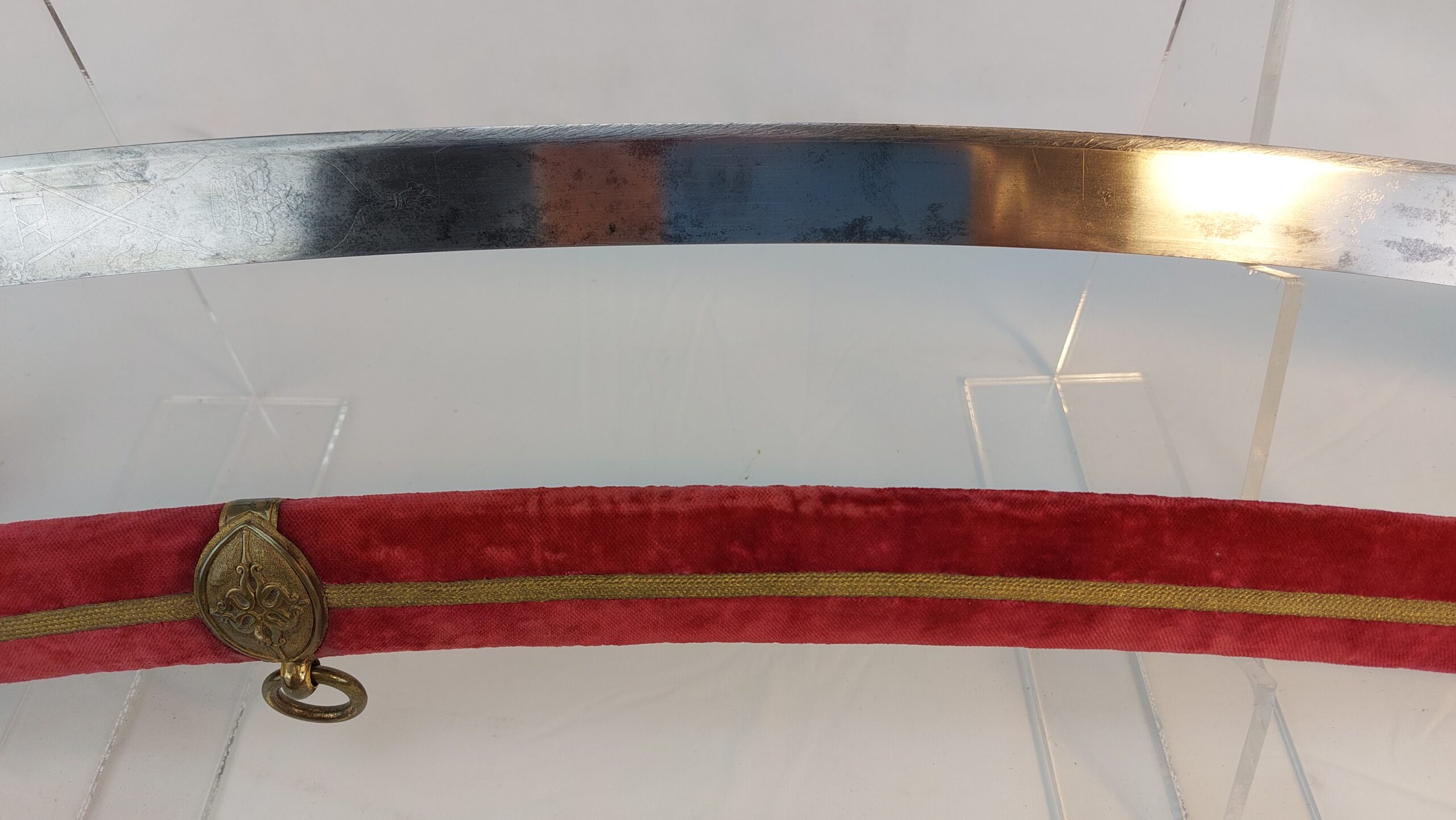
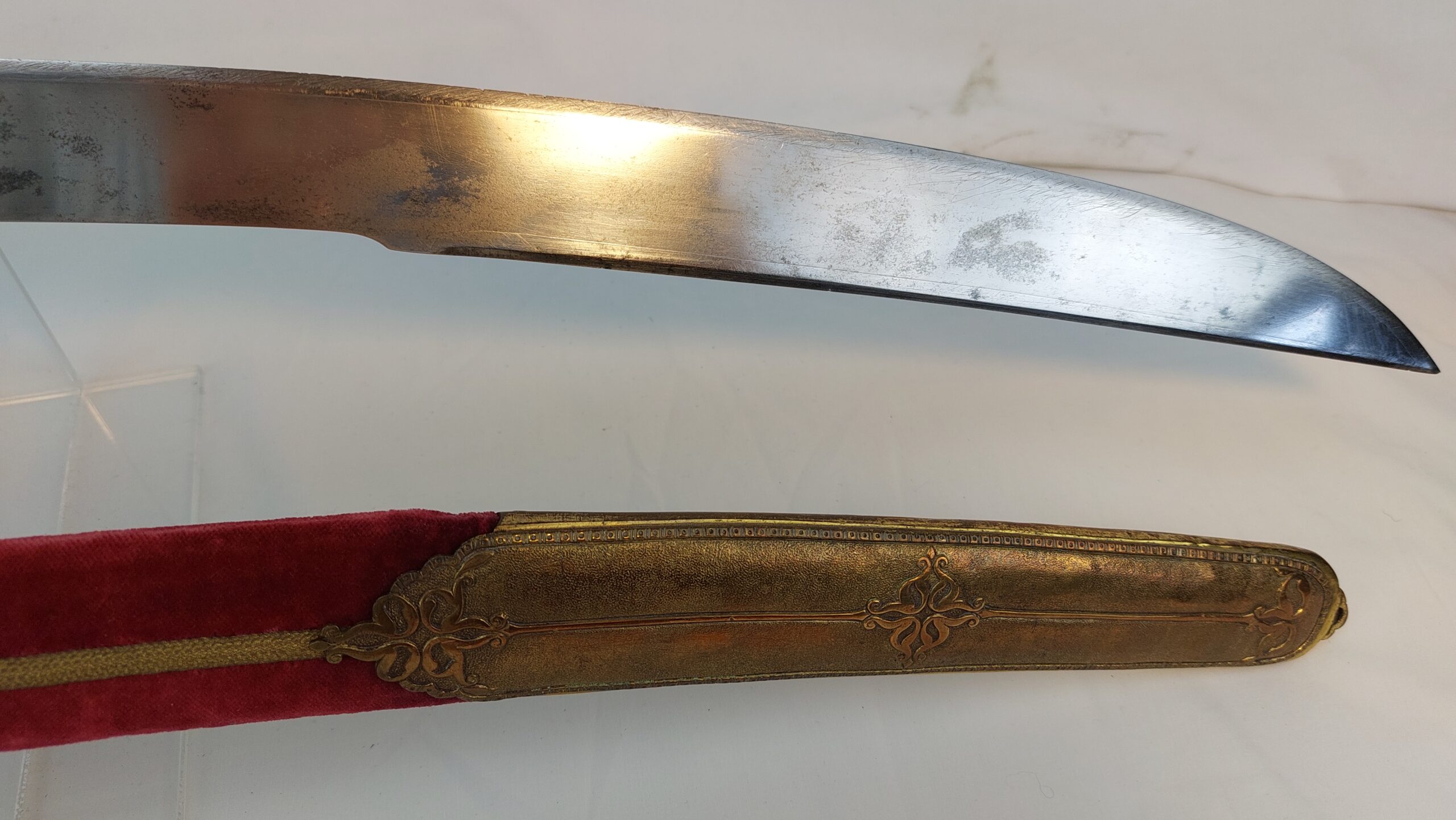
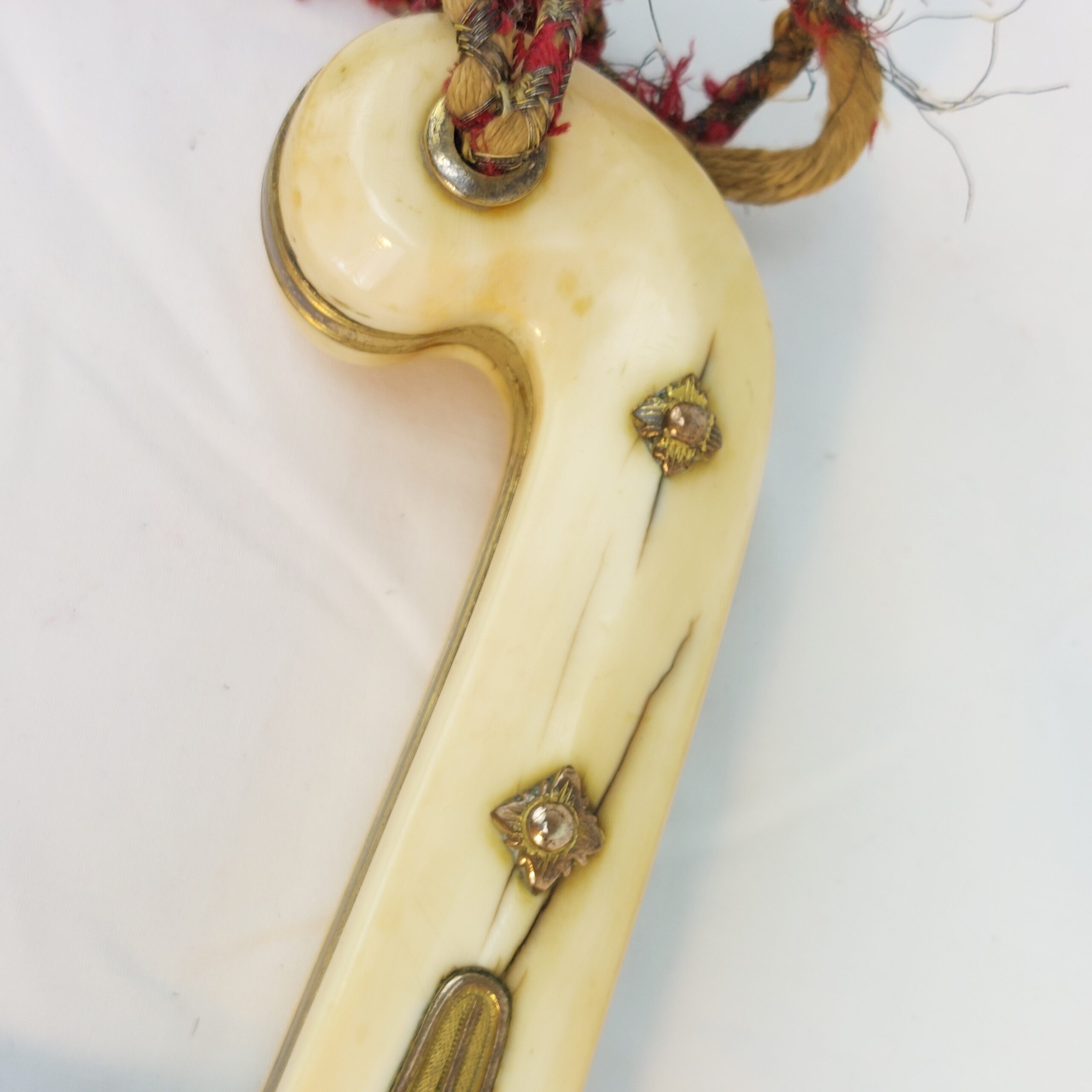
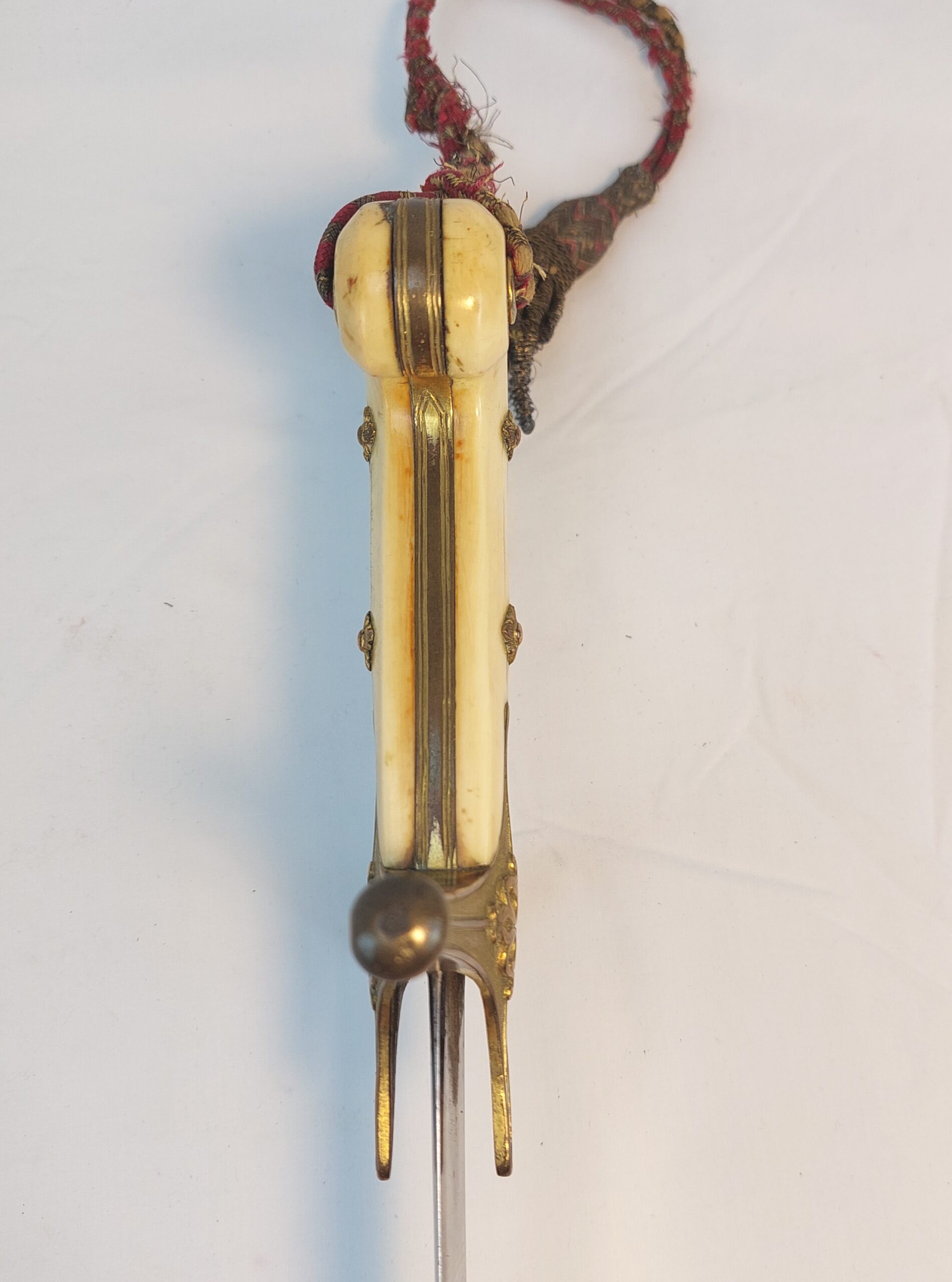
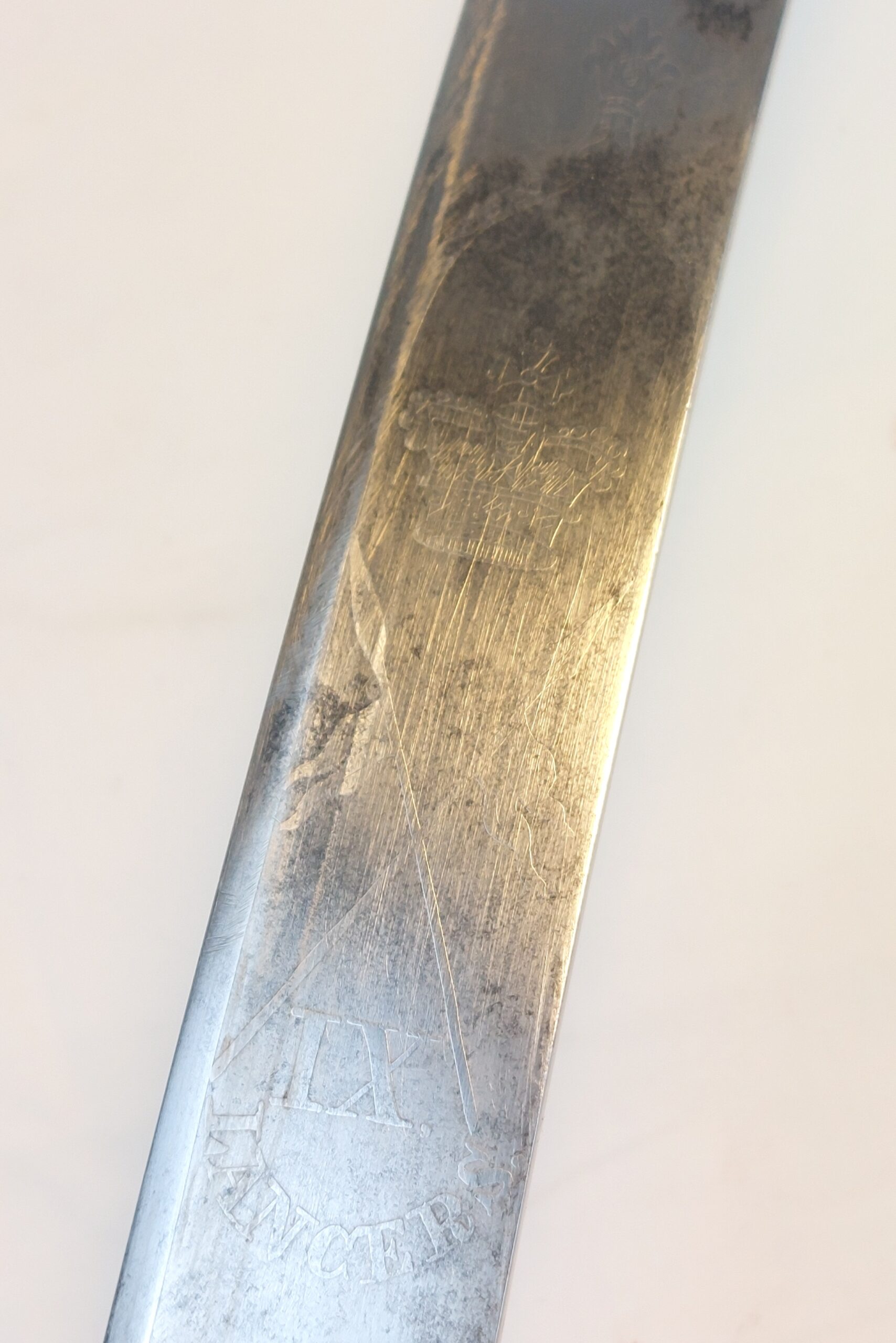
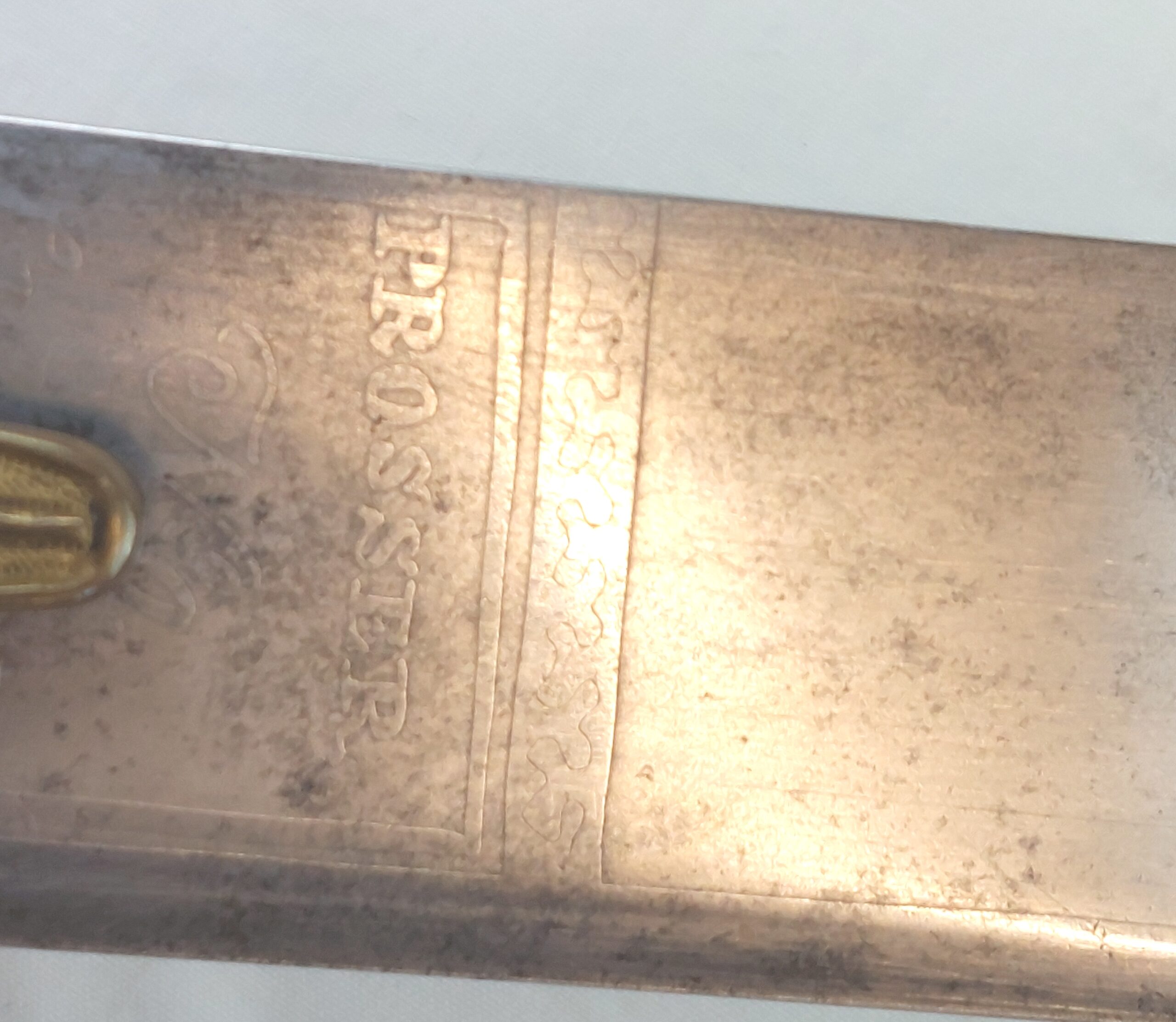
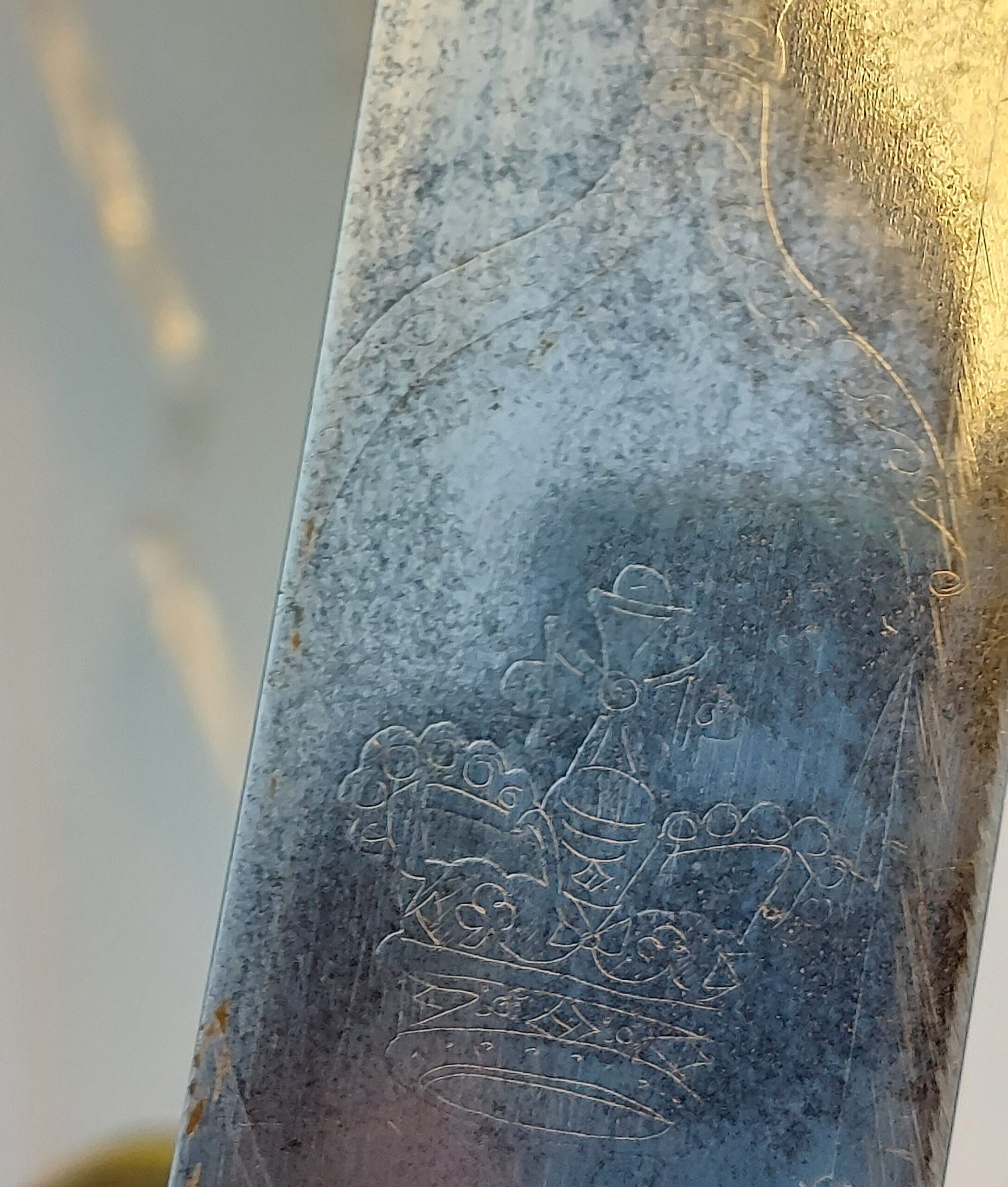
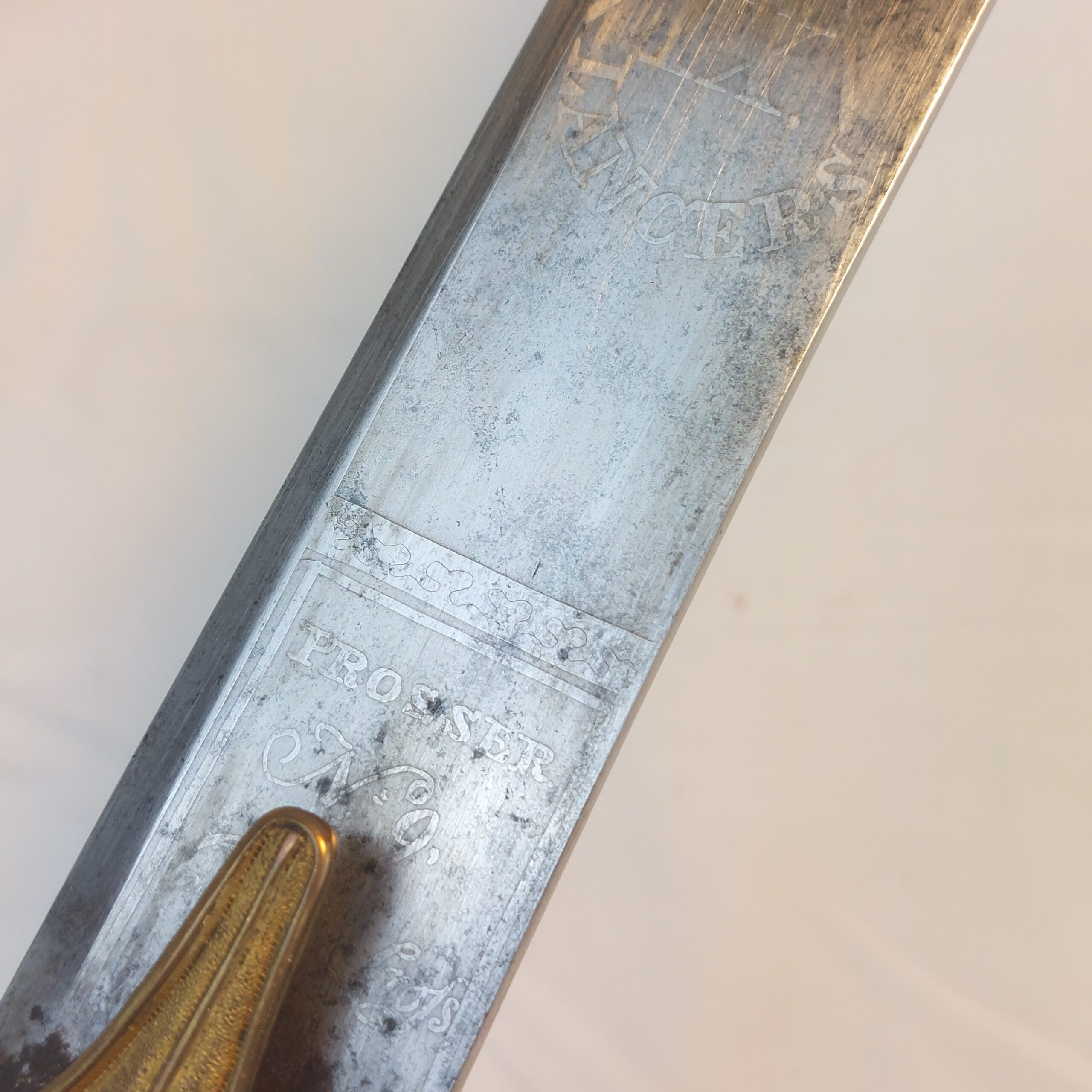
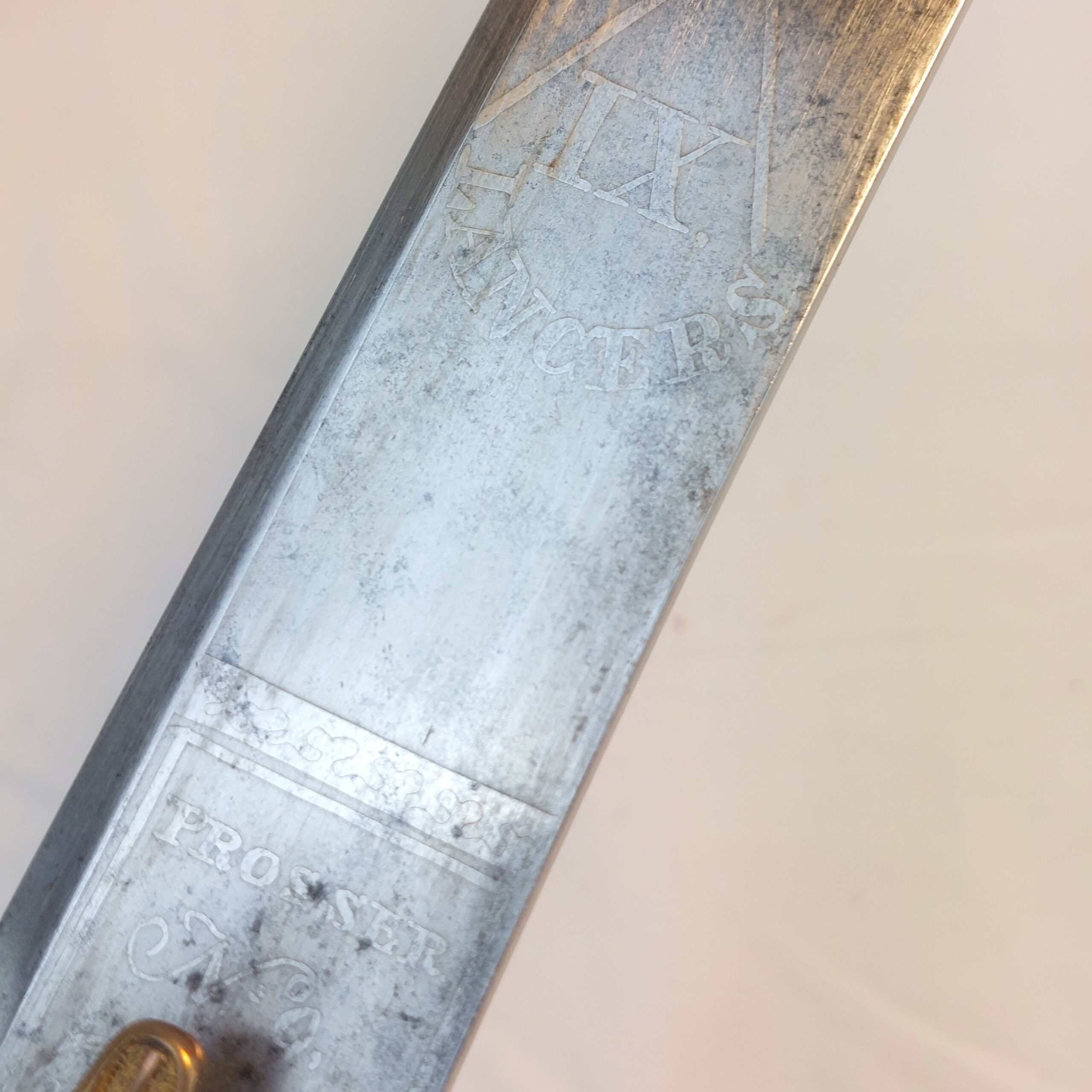
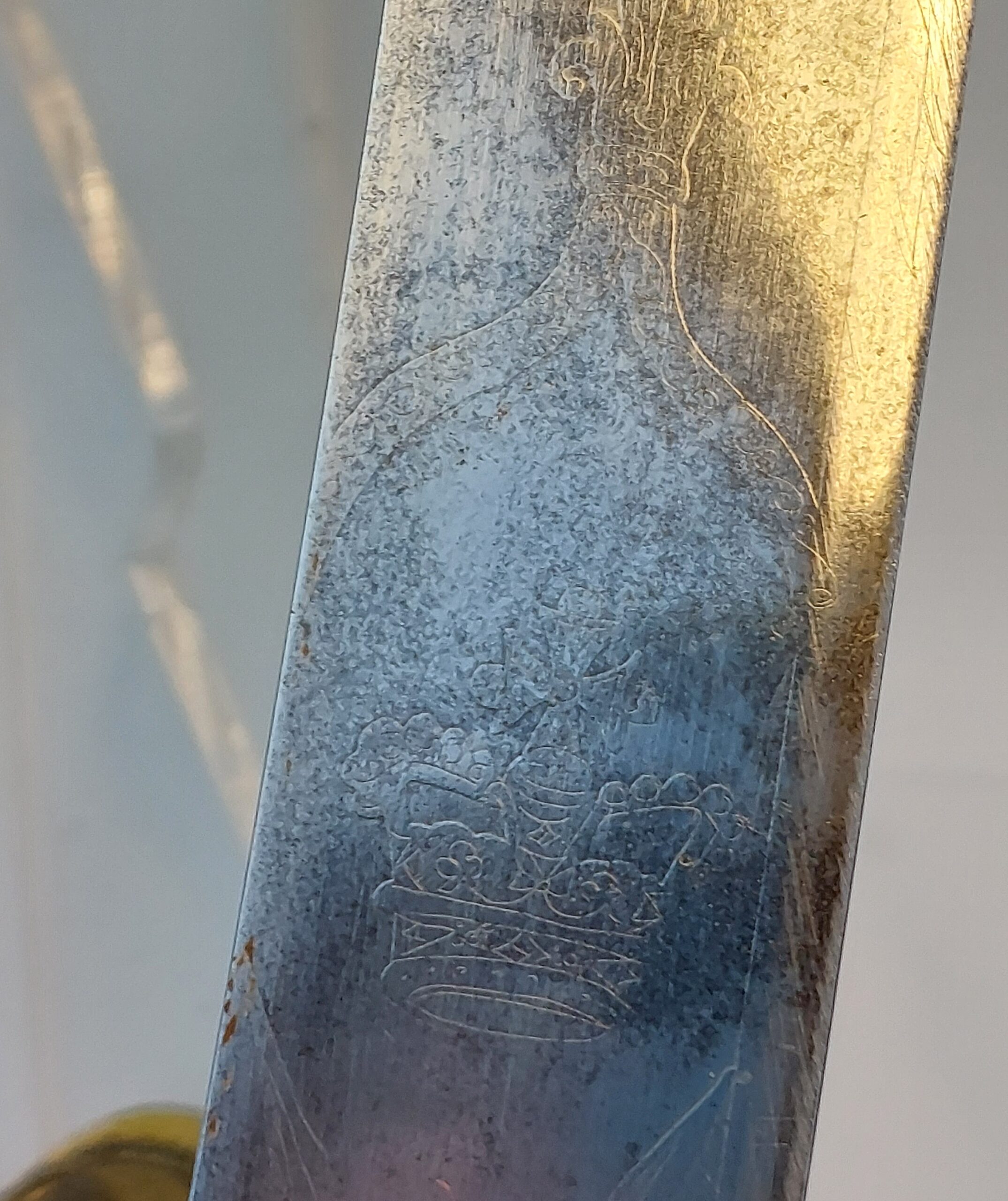
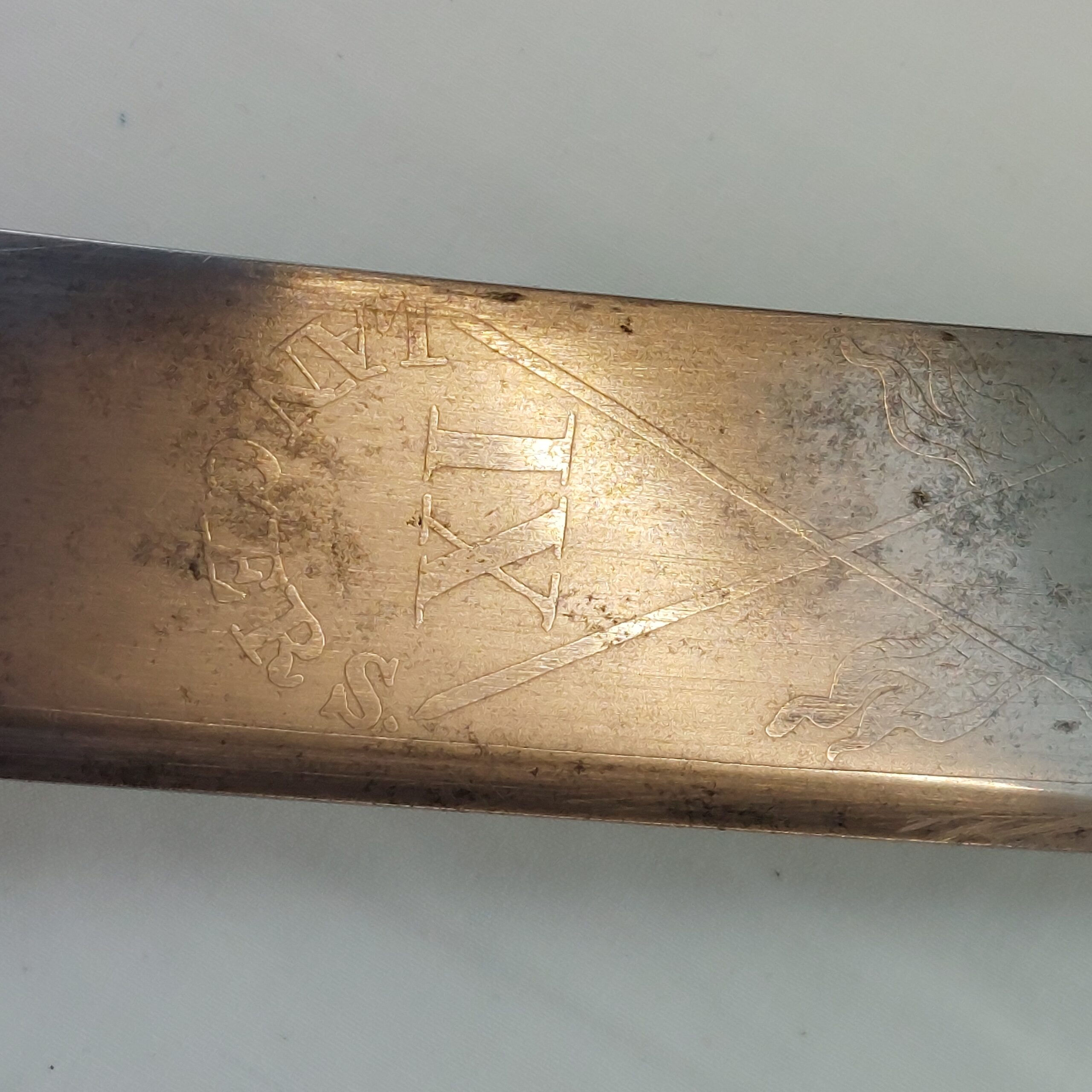
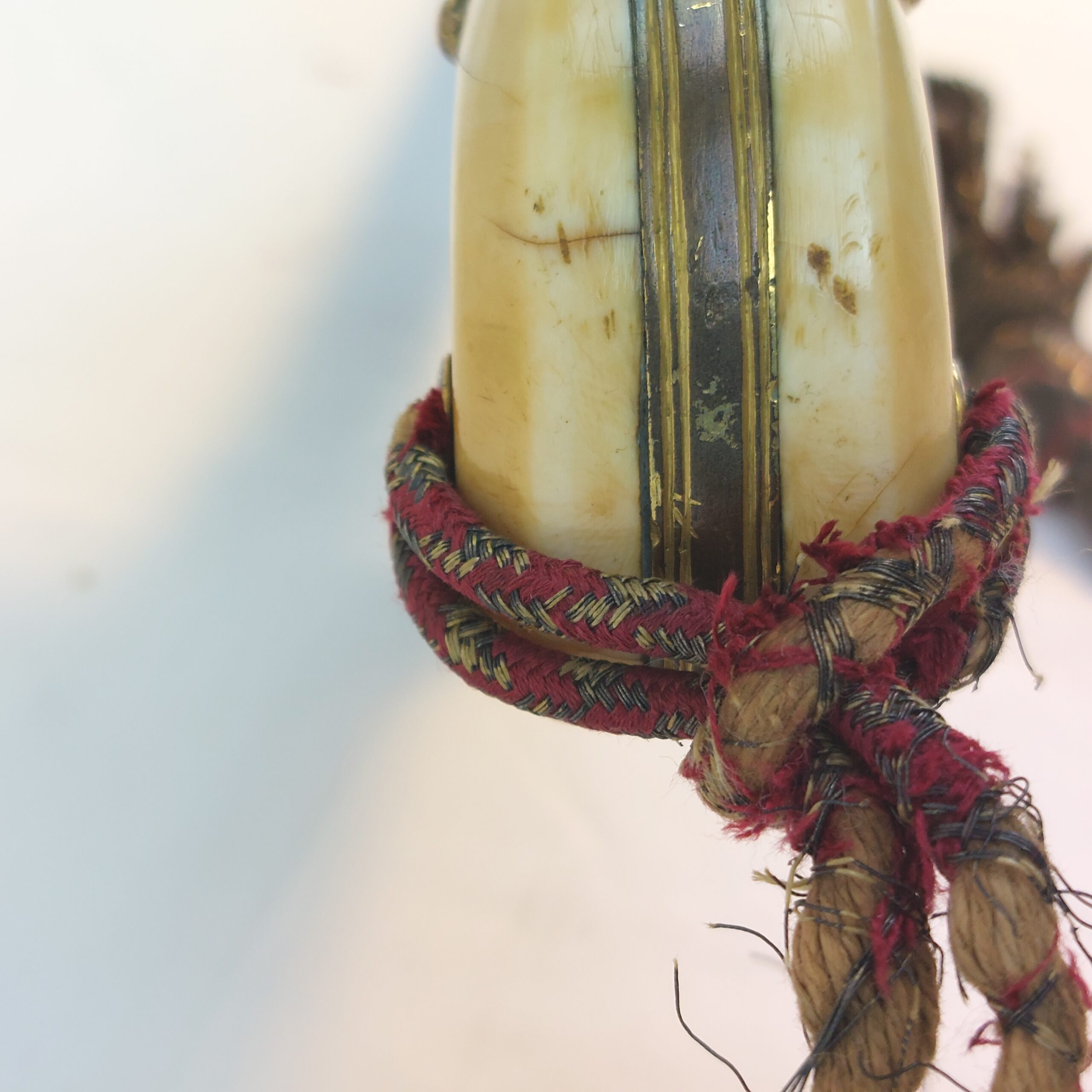
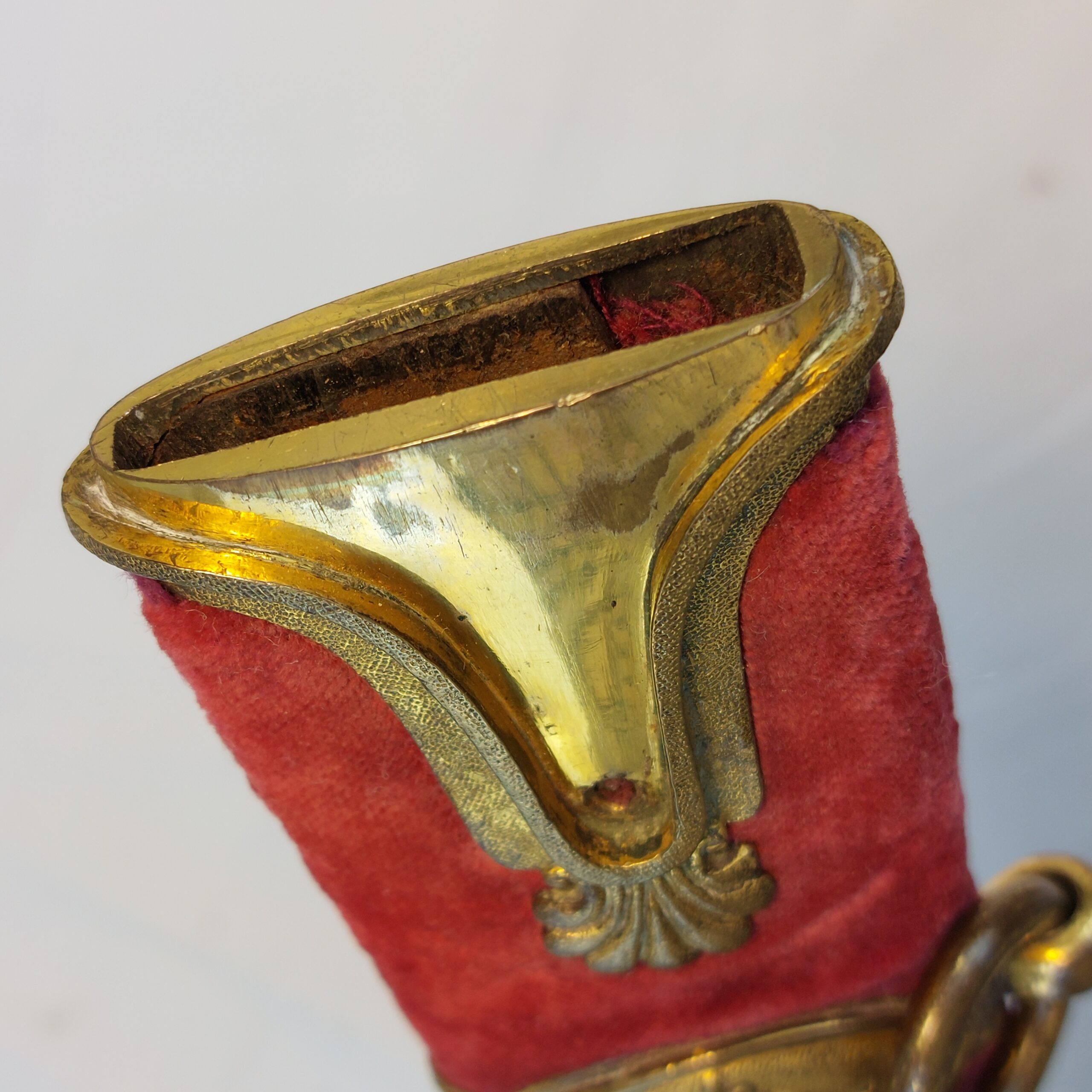
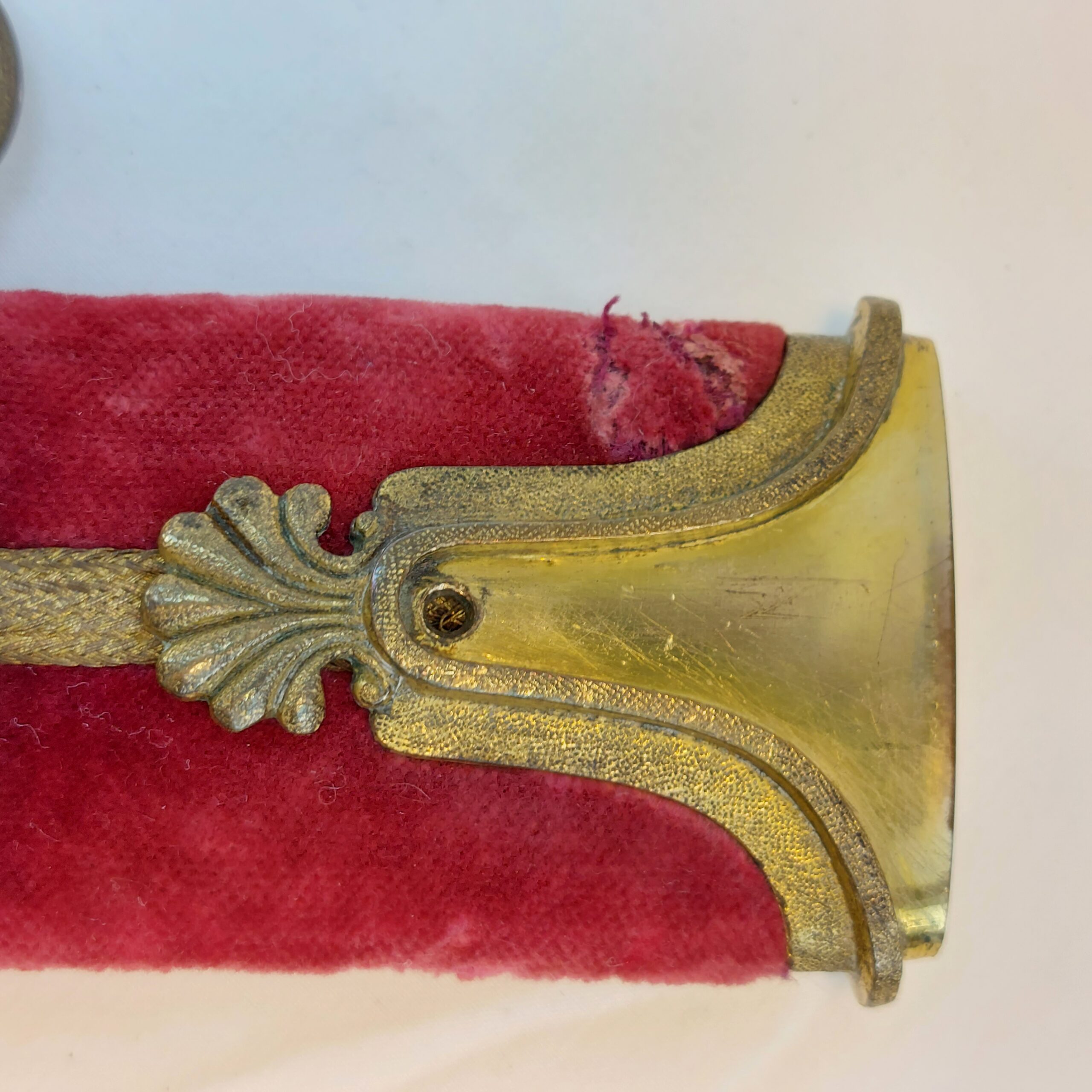
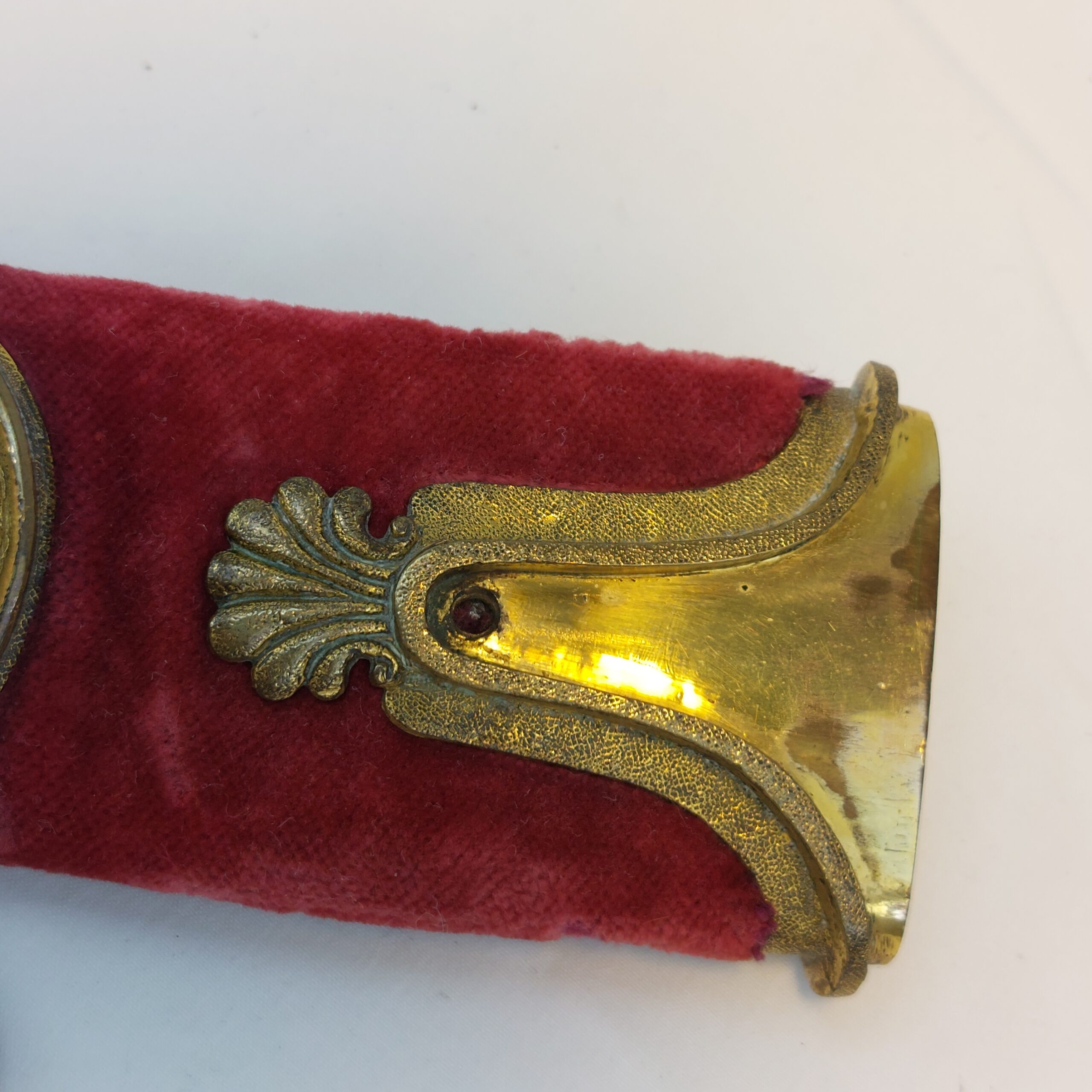
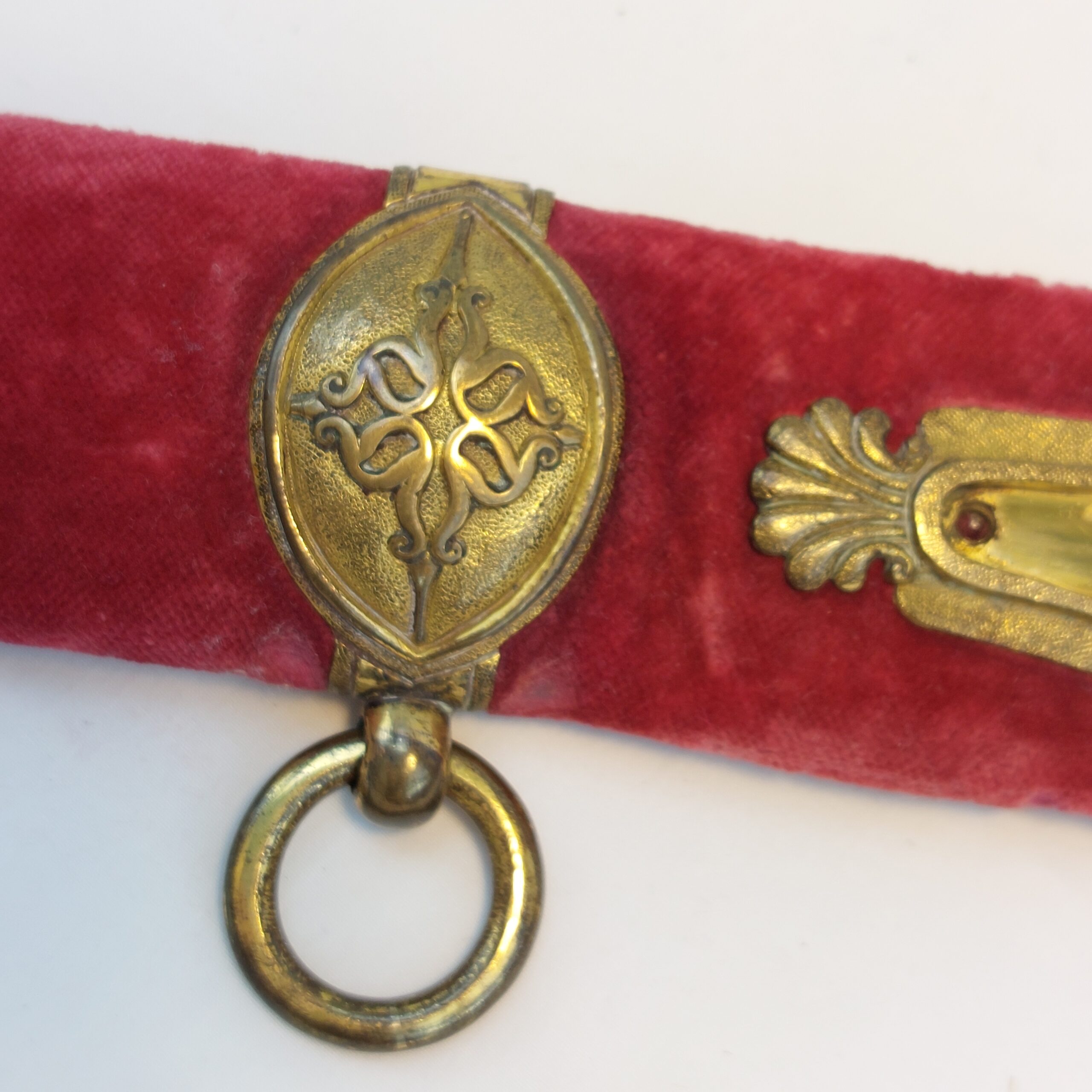
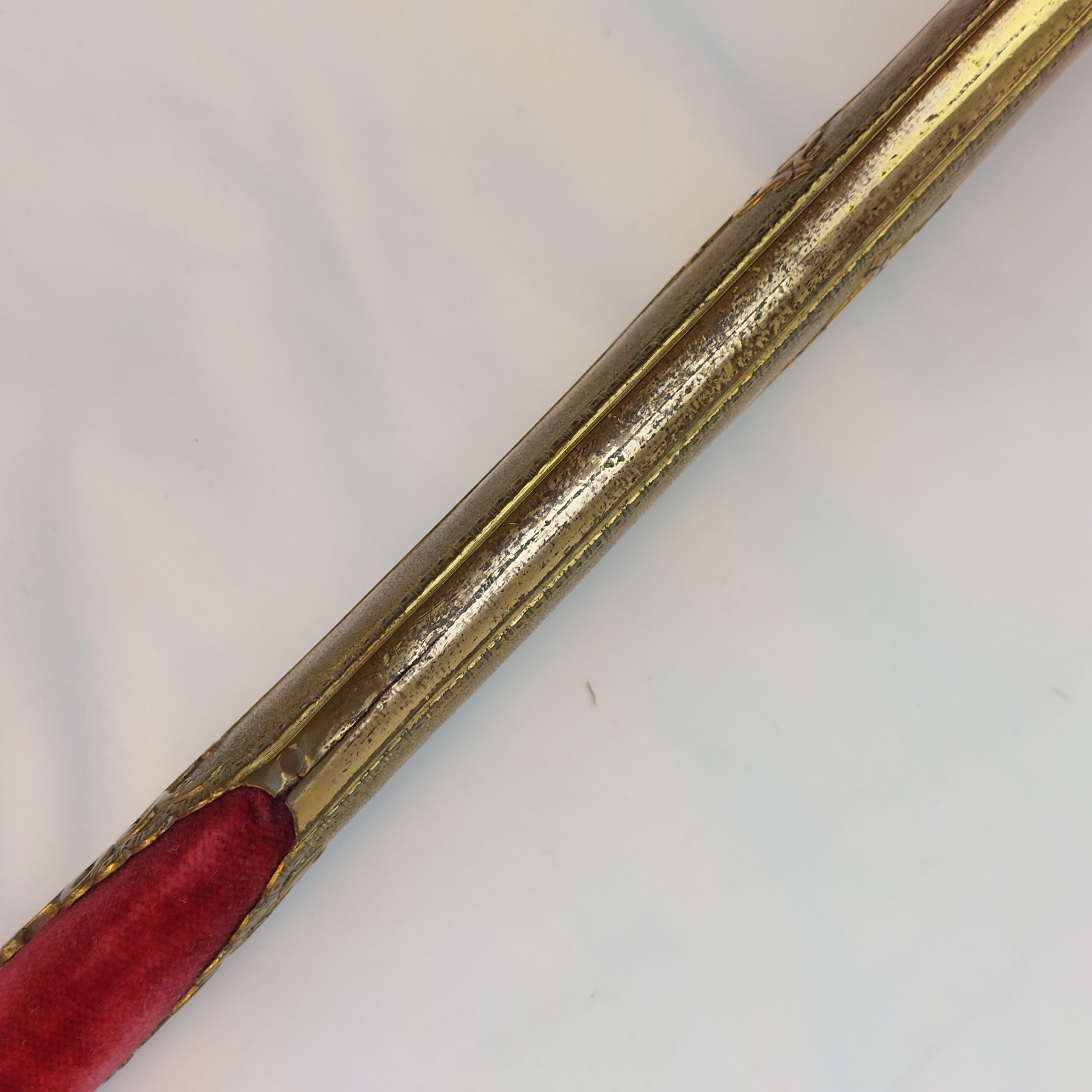
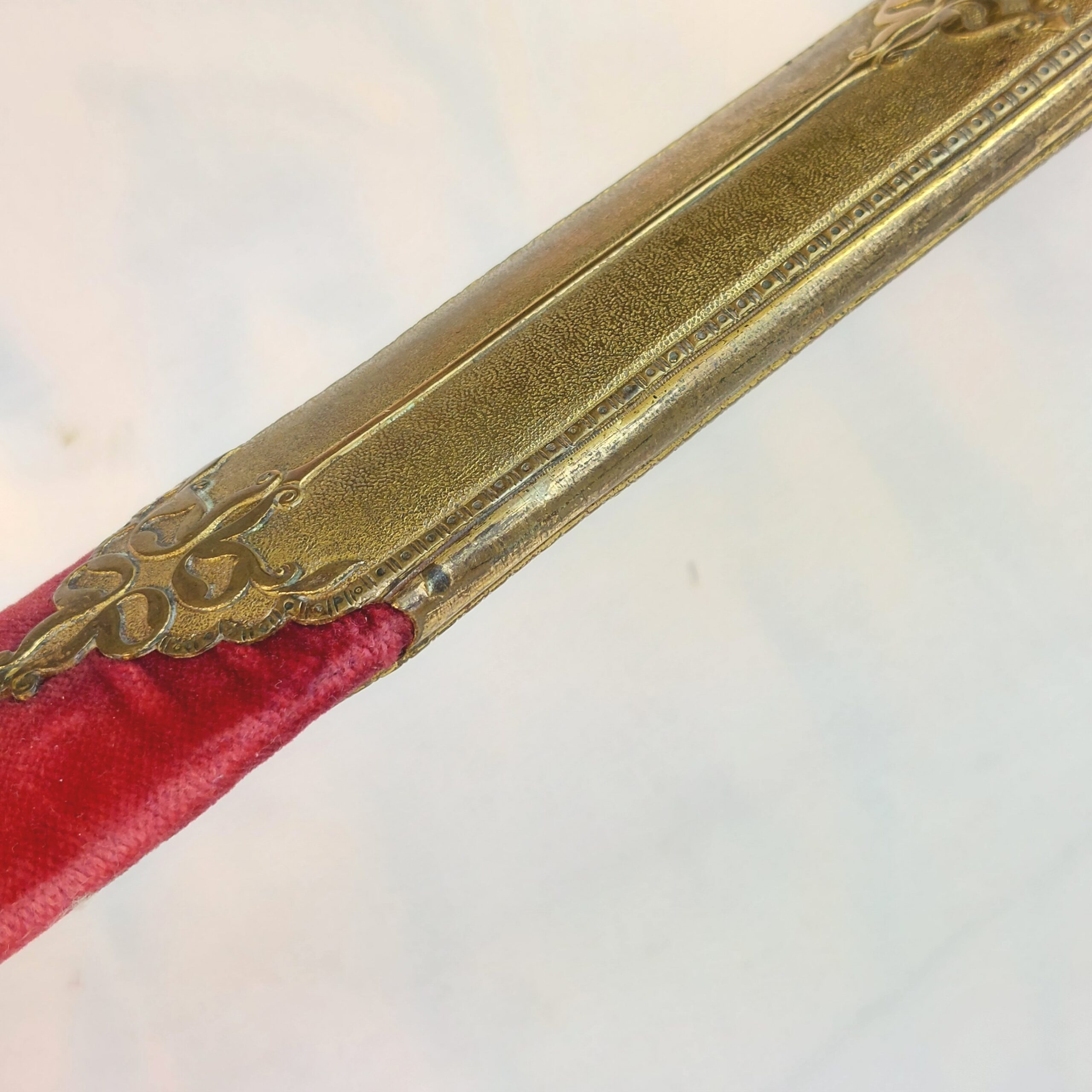
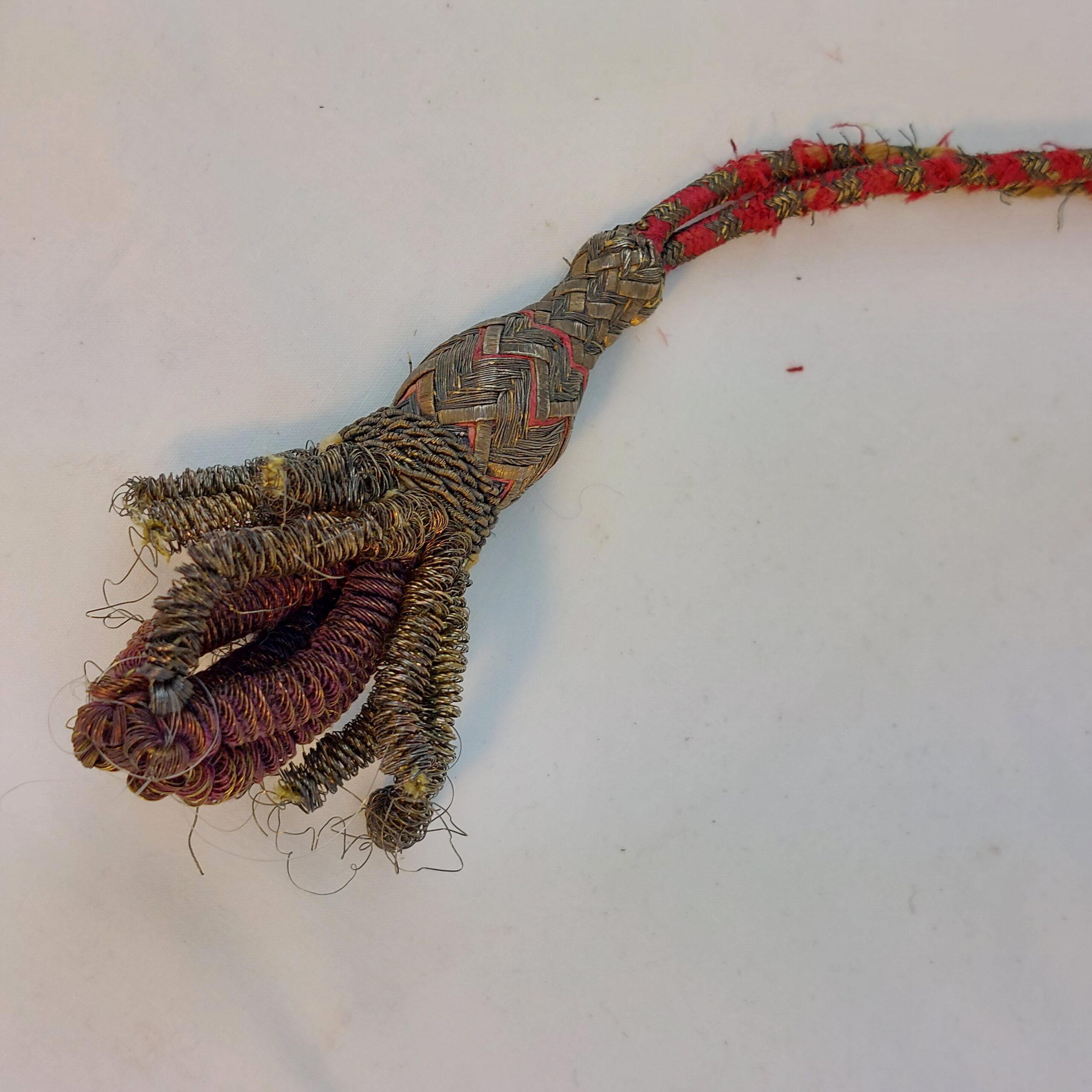
A Ninth Lancer's Officers Mameluke by Prosser, 79cm curved unfullered blade, double edged at the tip, with large clipped-back point, etched with crowned crossed lances and IX LANCERS to either side and with maker's panels PROSSER NO. 9 CHARING CROSS LONDON, regulation copper gilt hilt with two piece riveted ivory grips, contained in its stippled gilt mounted red velvet wrapped wooden scabbard with woven gold seam complete with two suspension rings and original dress knot.
A Mameluke sword /ˈmæməluːk/ is a cross-hilted, curved, scimitar-like sword historically derived from sabres used by Mameluk warriors of Mameluk Egypt after whom the sword is named. The hilt and blade retain many features of the Turkish kilij from which it was derived. These include the cross-guard with two opposing langets and the down curving 'pistol-grip' shaped pommel; the blade retains the yelman false-edge and the step to the back of the blade (latchet) close to it. The blade is slab-sided and of a 'V' shaped cross-section, it is double-edged for its last 11 inches (the yelman) and comes to a relatively acute asymmetric point.
*Condition*
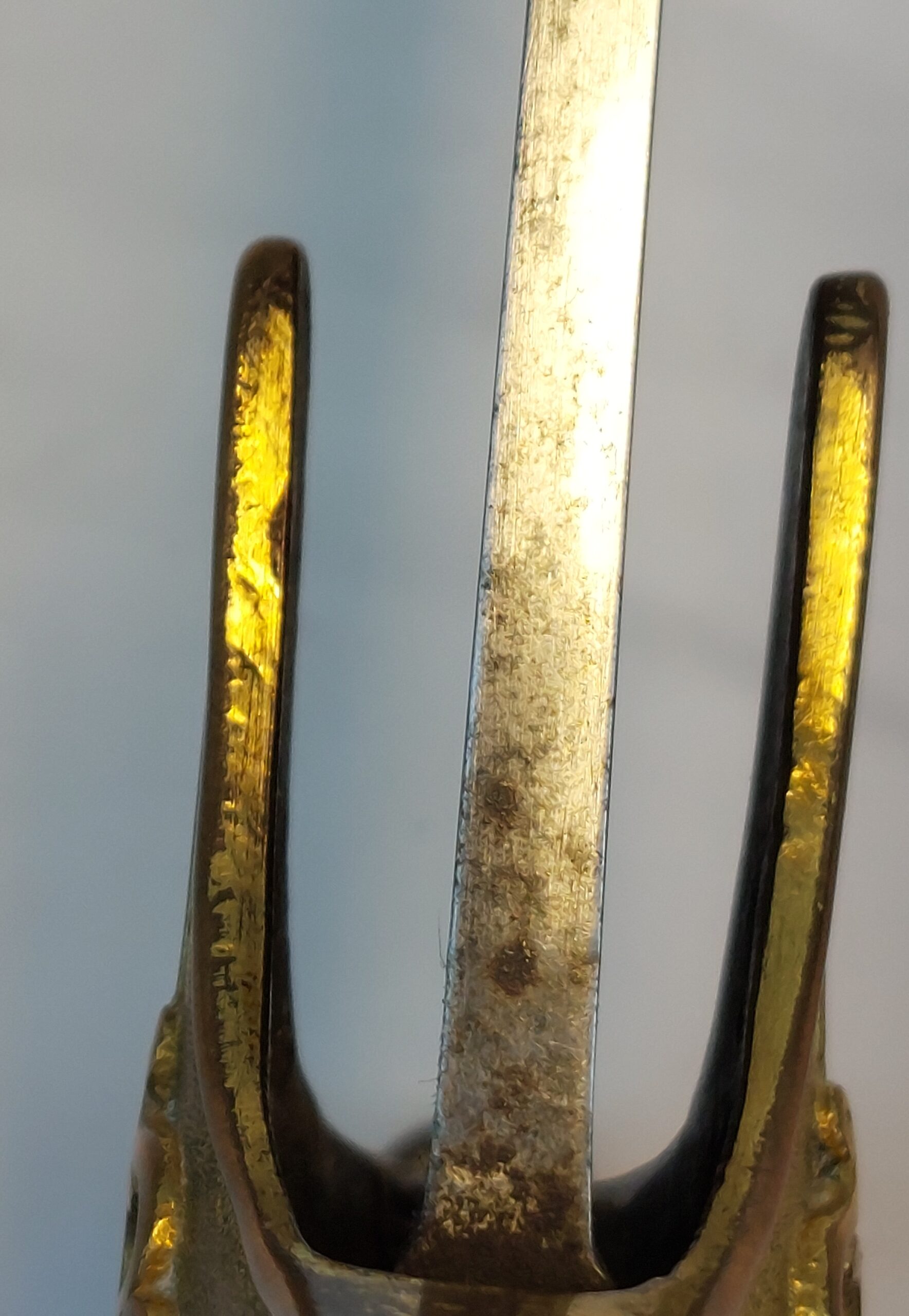
This mameluke is in very good condition with some fading to the engraving and light tarnishing to the blade and a few minor nicks, the grip is in good condition with hairline cracks in the ivory. The dress knot is in worn condition. The scabbard fits snugly and is in good condition, missing one rivet at the top. Please see photographs as part of the condition report.
~ Regimental History during the 19th century ~
The 9th (or Queen's Royal) Lancers was named as such in honour of Queen Adelaide in 1830.
The regiment was posted to India in 1842. It saw action at the Battle of Punniar in December 1843 during the Gwalior campaign. It also fought at the Battle of Sobraon in February 1846 during the First Anglo-Sikh War and undertook a successful charge at the Battle of Gujrat in February 1849 during the Second Anglo-Sikh War. The regiment then fought at the siege and capture of Delhi and the relief of Lucknow in summer 1857, as well as the capture of Lucknow in spring 1858 during the Indian Rebellion: the regiment, which was described by the rebels as "the Delhi Spearmen", was awarded twelve Victoria Crosses.
The regiment was posted to Afghanistan in 1878 and marched through the Khyber Pass in March 1879 as part of the cavalry brigade led by General Hugh Henry Gough. Following the murder of the British ambassador and his guards at Kabul in September 1879, the regiment saw action at the Battle of Charasiab in October 1879 during the Second Anglo-Afghan War. The commanding officer of the regiment, Lieutenant-Colonel Robert Cleland, was killed while leading a charge at the Battle of Killa Kazi in December 1879.
During the Second Boer War, the regiment took part in the Battle of Belmont and the Battle of Modder River in November 1899, as well as the Battle of Magersfontein in December 1899, Relief of Kimberley in February 1900 and the subsequent Battle of Paardeberg which resulted in Piet Cronjé's surrender.
*In order to complete the online purchase we will require a picture/scan of a photo ID (Driving Licence, Passport or an official document with a recent picture). If you don't posses any such document please call to buy. If we consider that the proof of ID is incorect or insuficient, we reserve the right to cancel the transaction.
*We also reserve the right to cancel the transaction with a full refund if there is any suspicion that the provided item will be used in any way contrary to the laws and legislation of UK.