~ Victorian Staffordshire Earthenware Figural Spill Vase, Seated Youth in Pastoral Costume with Rake, circa 1850–1875 ~
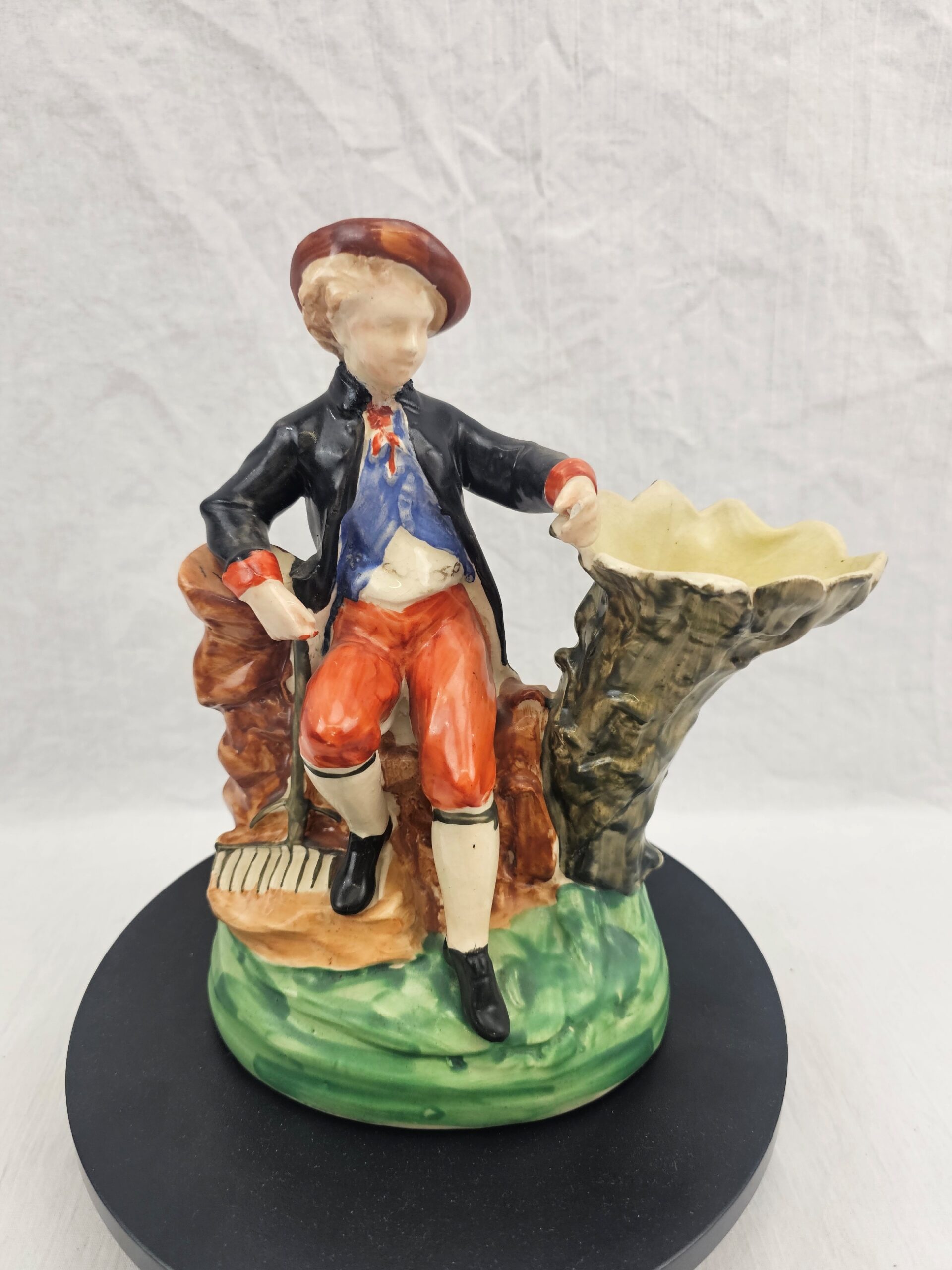
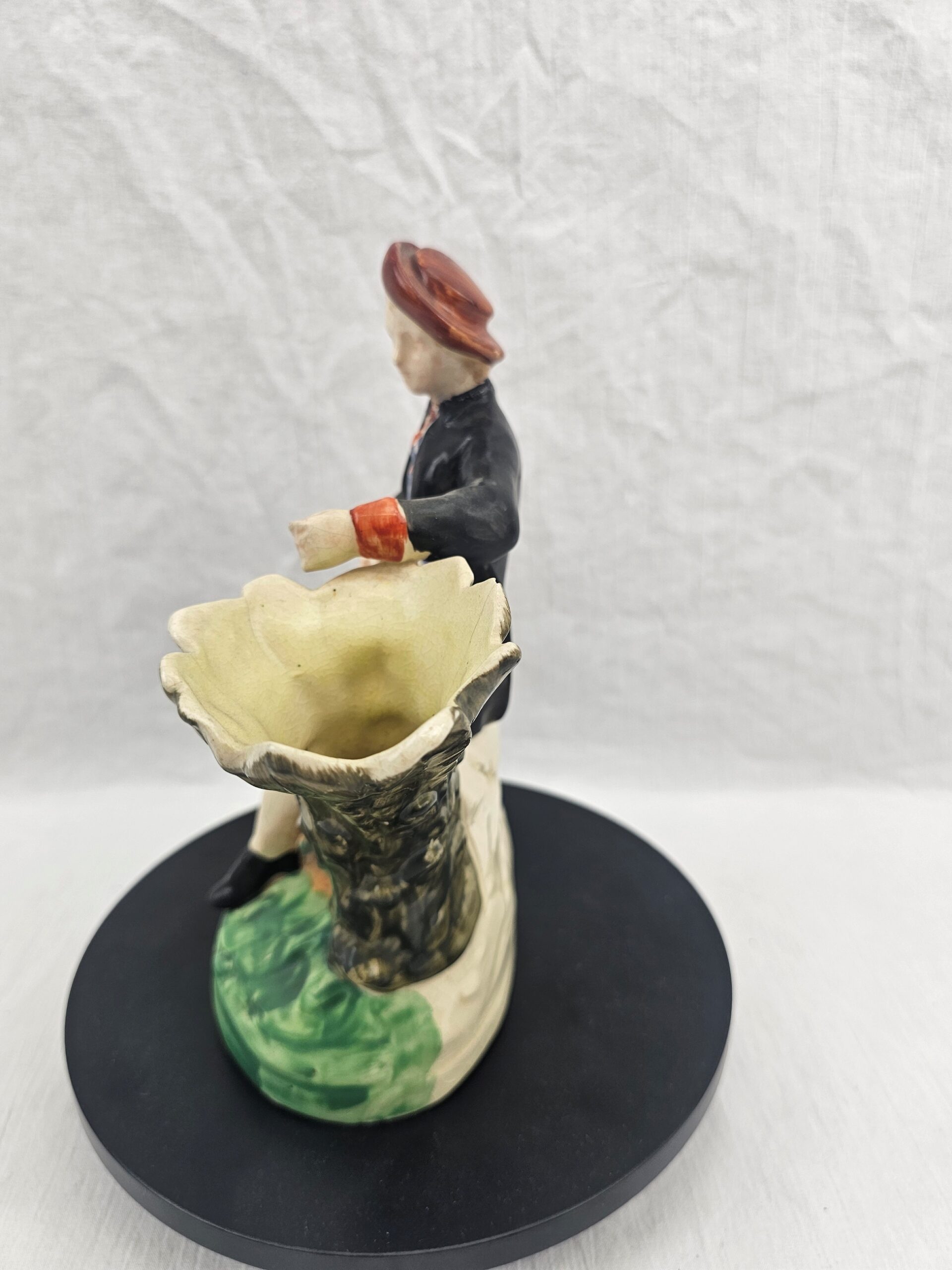
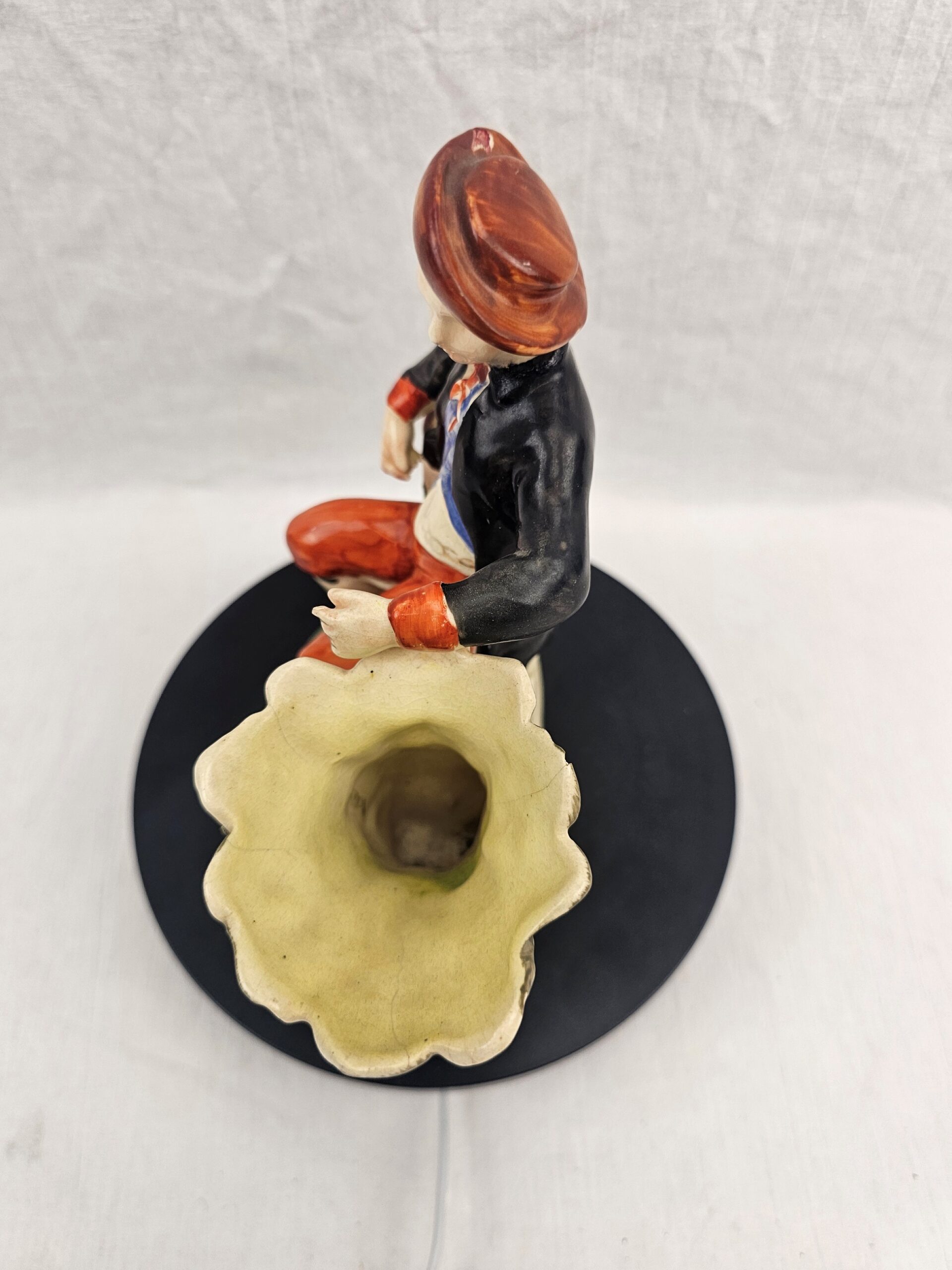
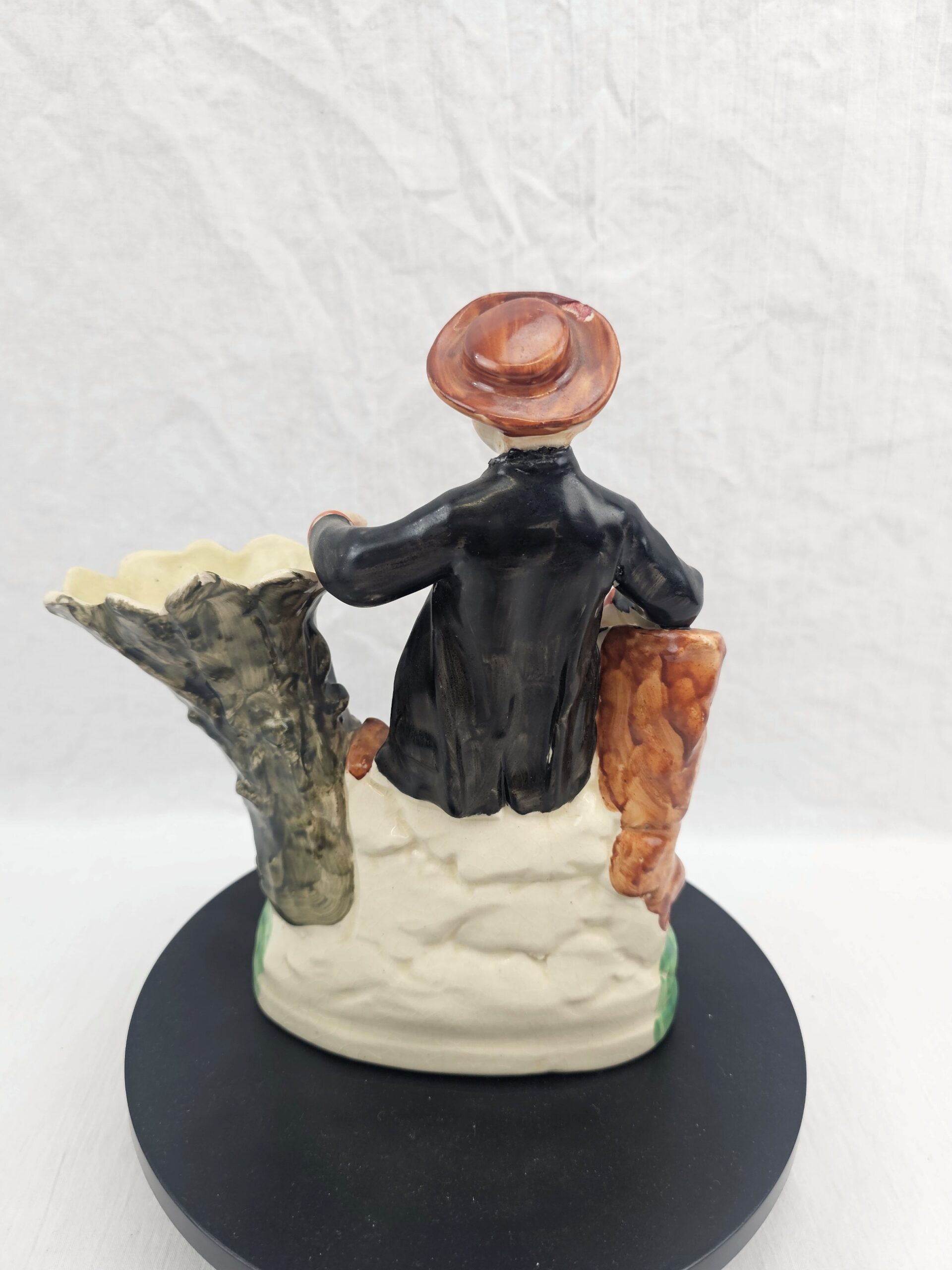
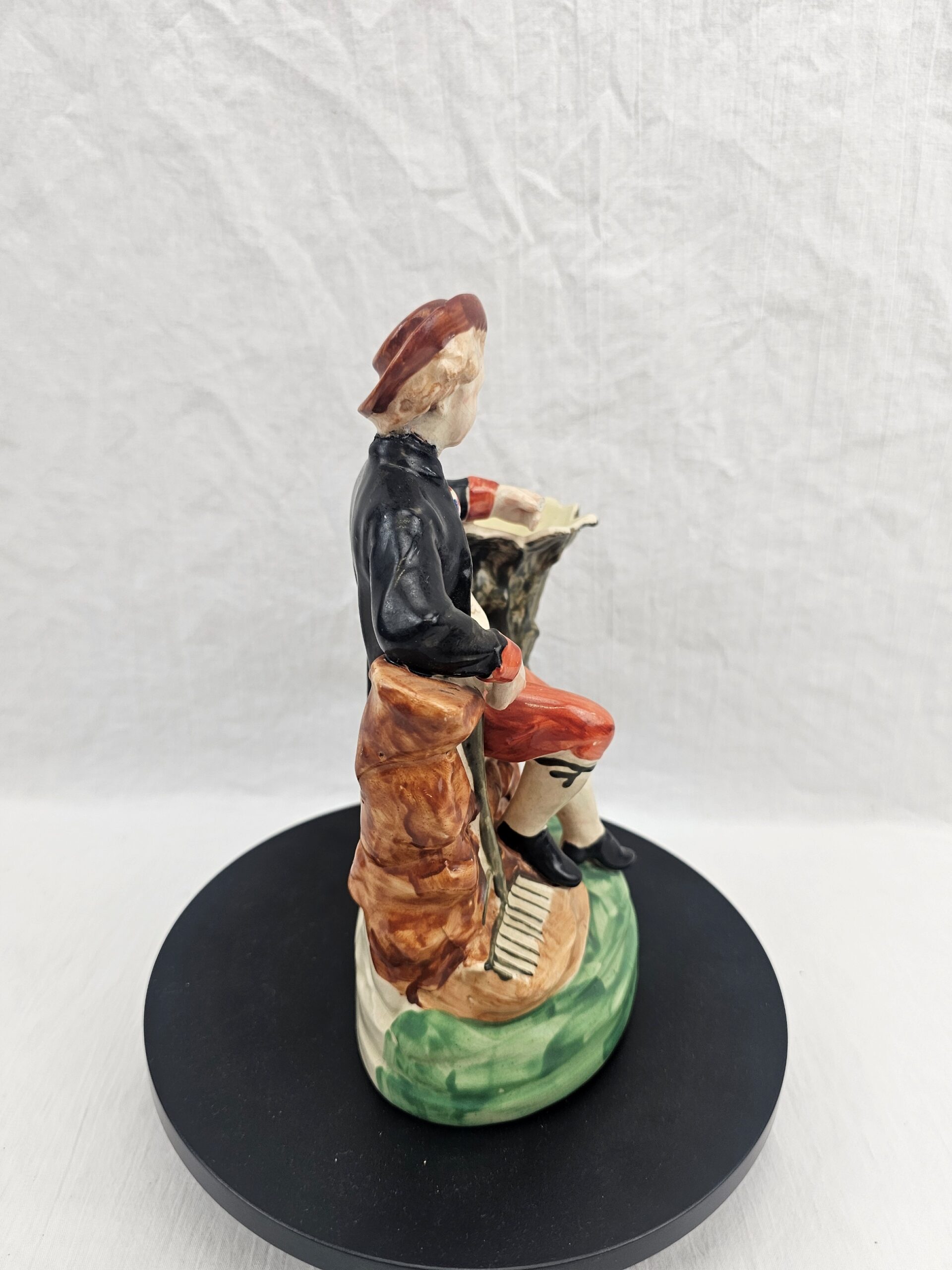
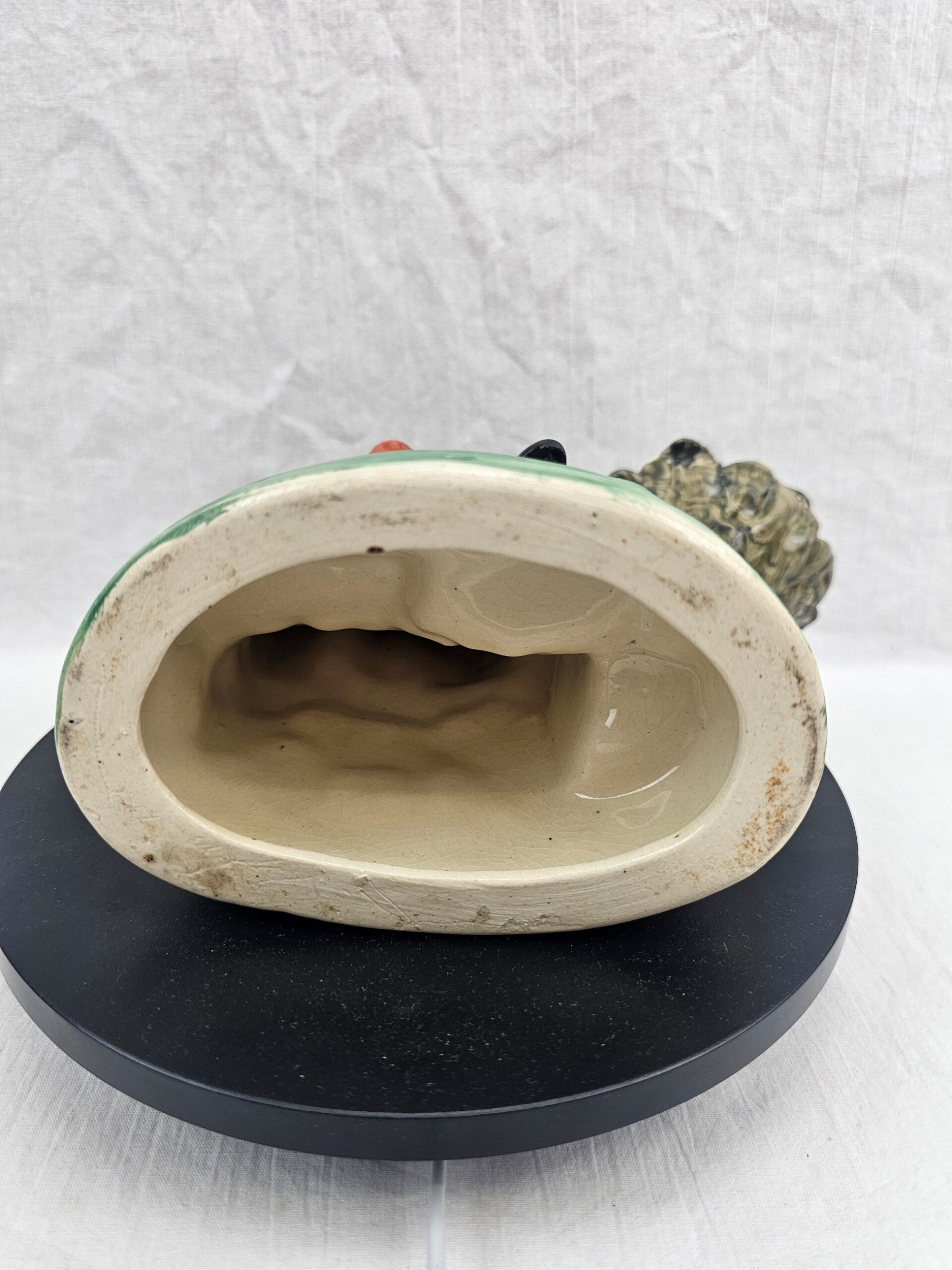
A boldly painted and well-modelled Victorian Staffordshire earthenware figural spill vase depicting a seated young man or youth in stylised 18th-century pastoral dress. The figure sits perched on a naturalistic rocky or fence-rail support, with a brown hay bale or log mound behind him and a garden rake laid at his feet, clearly associating him with rural or agricultural life. He wears a wide-brimmed brown hat, a black coat with red cuffs, a blue waistcoat, vivid orange-red knee breeches, white stockings and black shoes, all picked out in strong, confident enamel overglaze colours. His curly light-coloured hair is visible beneath the brim. To his right stands the integral tree-stump spill vase, naturalistically modelled in dark green-brown bark texture with a cream-yellow glazed interior of scalloped form. The figure is modelled substantially in the round, with a detailed back (images confirm this is not a flatback), and stands on a green-glazed oval grass mound base. A handwritten or painted "50" is visible on the front of the figure's torso, likely an old dealer or collection price marking rather than a factory number. The underside reveals the large hollow oval base construction typical of mid-Victorian Staffordshire earthenware; no maker's mark is present.
~ Historical Context ~
Figural spill vases, in which a decorative tree-stump or cornucopia aperture is integrated into a figure group, were one of the most consistently produced formats in Victorian Staffordshire and related English potteries from the 1840s through to the 1880s. The most popular forms were figures with animals, figures alone, spill vases, watch stands, and pastille burner cottages, and the seated rural youth beside a tree stump was among the most enduring compositional types. The combination of a rake, outdoor setting, and 18th-century-style dress is characteristic of pastoral subject matter that evoked an idealised English countryside, appealing to an urban audience in a period of rapid industrialisation. The specific subject of this piece, a youth in black coat, blue waistcoat and orange breeches, may represent a generic haymaker or harvester, or may derive from a specific theatrical character popular at the time; Staffordshire figures frequently depicted theatrical figures, royal subjects, and rural archetypes, most bearing no maker's marks. Without a title inscription or definitive comparison to a known printed source, the specific subject cannot be confirmed with certainty. The bold enamel palette, particularly the orange-red breeches, cobalt blue waistcoat, and solid black coat, is wholly characteristic of Staffordshire earthenware production from the 1850s–1870s. Unmarked, as was standard for the overwhelming majority of this type.
~ Condition ~
Overall: Good antique condition; the piece is structurally sound and displays strongly.
Figure: Modelling intact throughout, hat, face, coat, rake, hands, and boots all complete with no observed chips or losses.
Enamel: Well-preserved with strong colour retention; the orange-red, black, blue, and green all remain vivid. Minor surface marks and light crazing consistent with age.
Spill vase: Intact with no chips to the scalloped rim; the cream-yellow interior glaze shows crazing, visible in the top-down photographs.
Base (exterior): Green grass mound intact; no chips observed.
Base (underside): Large hollow oval base; unglazed/lightly glazed interior showing the sandy cream earthenware body; some surface grime and age marks to the foot rim. No maker's mark.
"50" marking: A painted or scratched numeral "50" is present on the front torso of the figure, consistent with an old price or collection marking from a previous owner. This is clearly visible in the photographs and is disclosed accordingly.