German, WWII, 6 June 1943, "Новое Слово" (Novoe Slovo / Neues Wort) Russian-Language Propaganda Newspaper – Berlin Published – Alfred Rosenberg / Occupied Eastern Territories Issue – 8 Pages
£120.00
An original June 1943 Russian-language Berlin propaganda newspaper packed with occupation policy, anti-Soviet narratives, Churchill caricatures, collaborationist themes and rare Russian émigré wartime content.
*German, WWII, 6 June 1943, "Новое Слово" (Novoe Slovo / Neues Wort) Russian-Language Propaganda Newspaper – Berlin Published – Alfred Rosenberg / Occupied Eastern Territories Issue – 8 Pages*
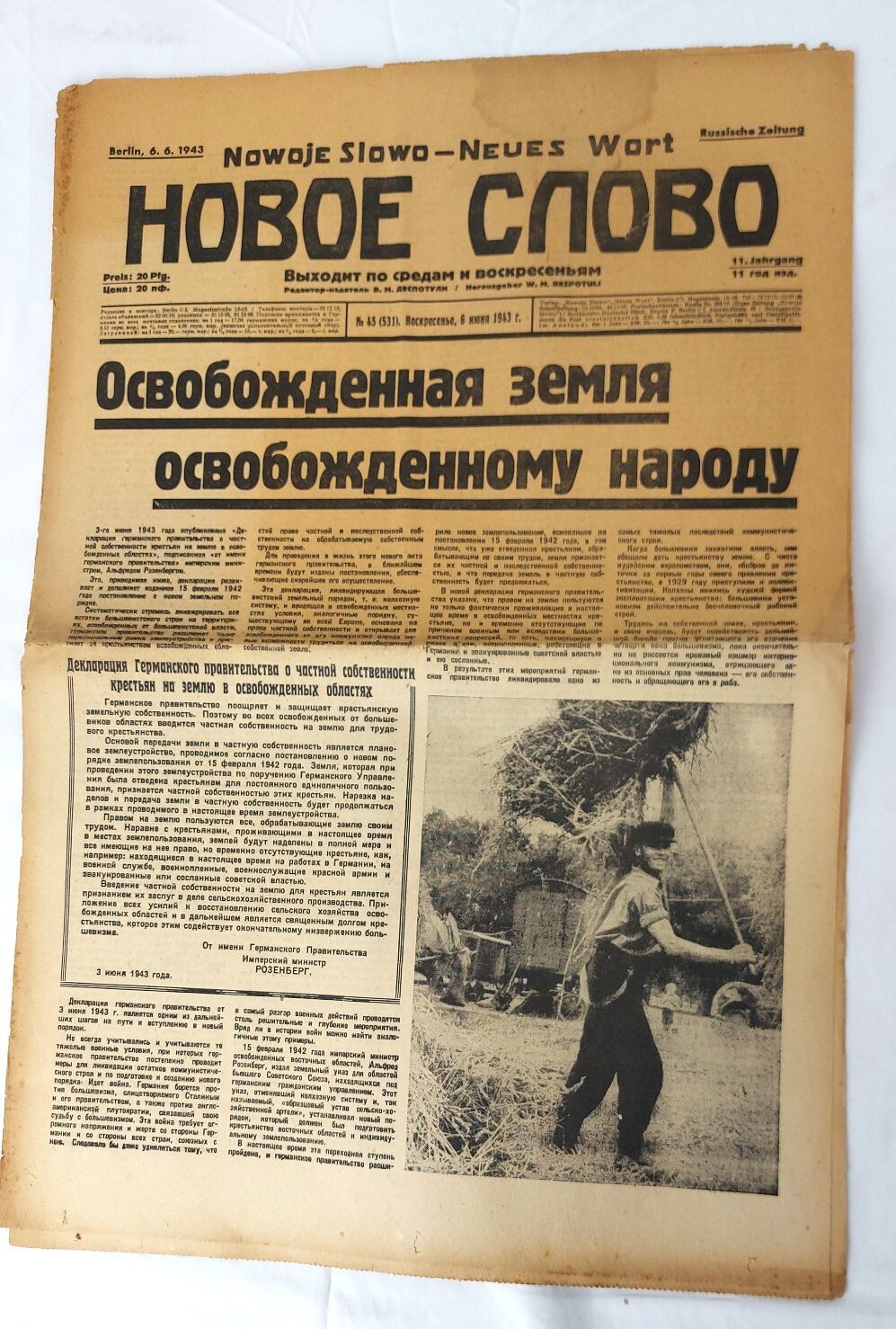
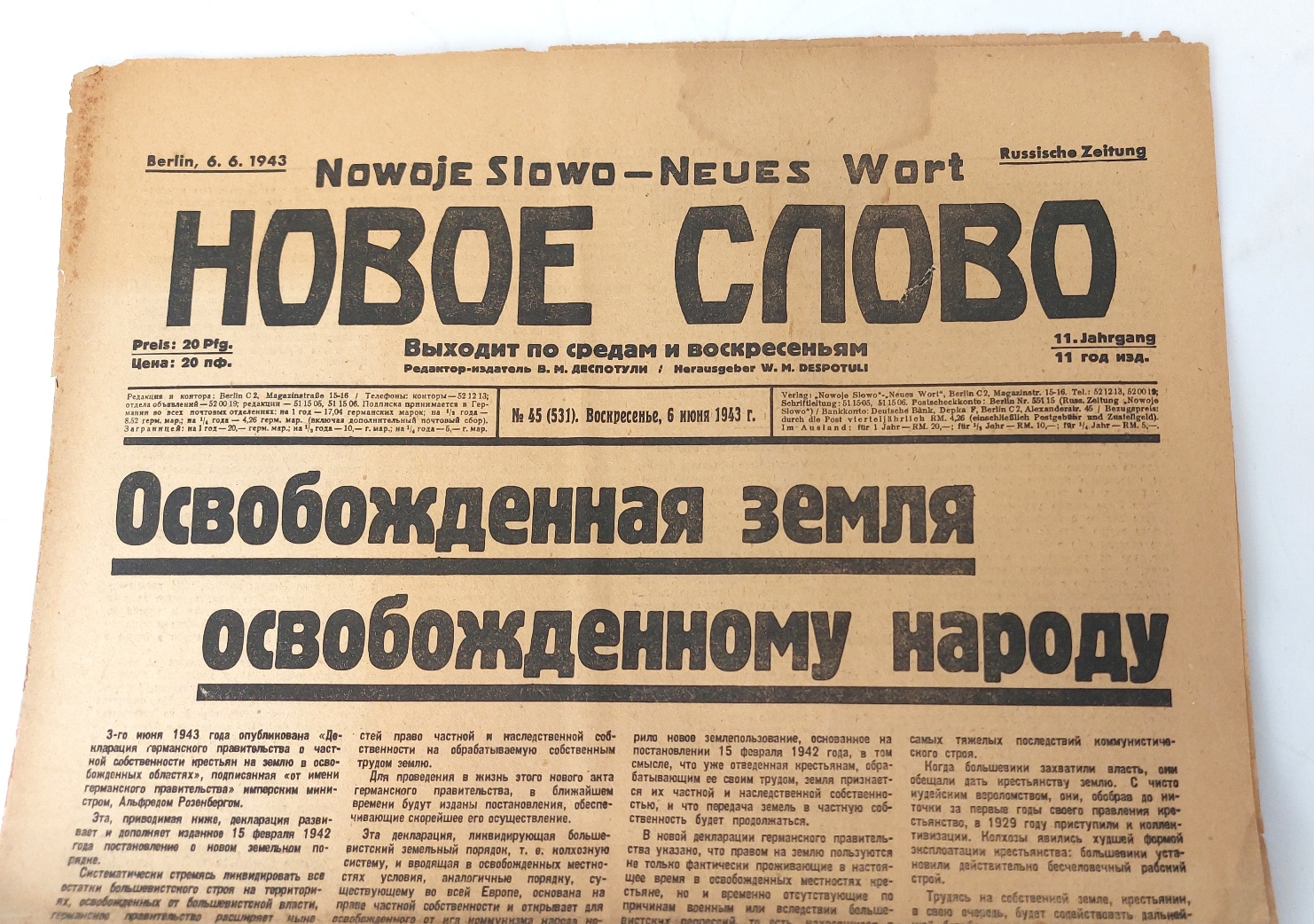
A fascinating and increasingly scarce original World War II Russian-language newspaper issue of Новое Слово (Novoe Slovo / Neues Wort / New Word), published in Berlin on Sunday, 6 June 1943, issue No. 45 (531). Produced for Russian-speaking audiences under German control, this newspaper represents a striking example of wartime psychological warfare and collaborationist propaganda aimed at Soviet prisoners, émigrés, and populations living within German-occupied Eastern territories.
Founded by Russian émigrés in May 1933, Novoe Slovo gradually fell under direct National Socialist influence and eventually became a propaganda publication operating under Anti-Comintern and Ministry of Propaganda oversight. By mid-1943, following the catastrophic German defeat at Stalingrad, publications such as this formed part of Germany's intensified efforts to maintain influence among Russian-speaking populations and present the occupation regime as a political alternative to Soviet authority.
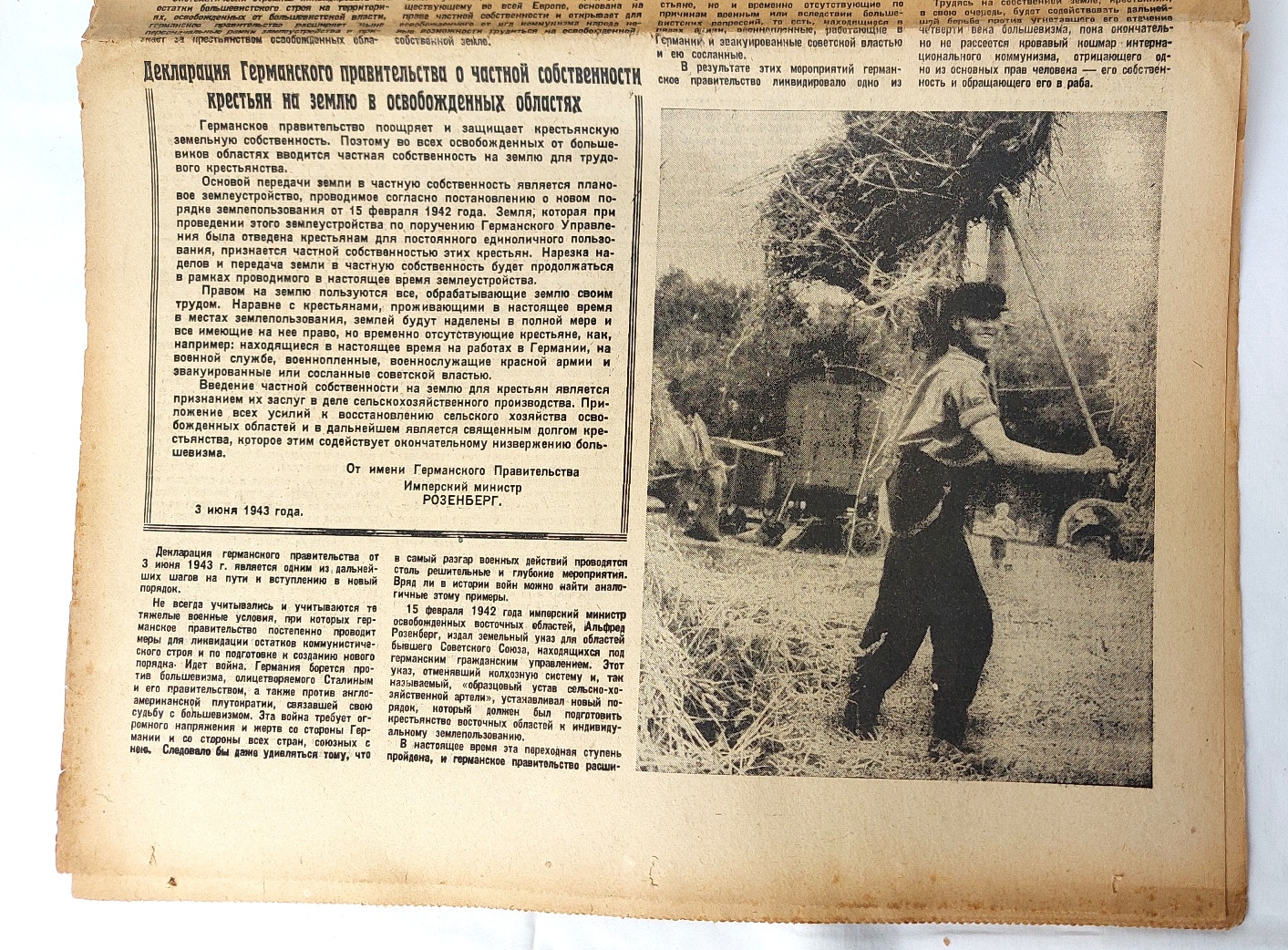
The dramatic front-page headline reads: "Освобожденная земля освобожденному народу" ("Liberated land for a liberated people"). The front page is devoted to German promises regarding the future of agriculture and land ownership in occupied Soviet regions. A declaration appearing in the name of Alfred Rosenberg, Reich Minister for the Occupied Eastern Territories (RMfdbO), advocates the abolition of Soviet collectivisation and the restoration of private land ownership. The article presents Germany as a liberating force for rural populations while attempting to distance occupation policy from Bolshevik agricultural systems. The large agricultural image depicting a peasant working beside horse-drawn equipment reinforces an idealised image of peaceful prosperity under German administration.
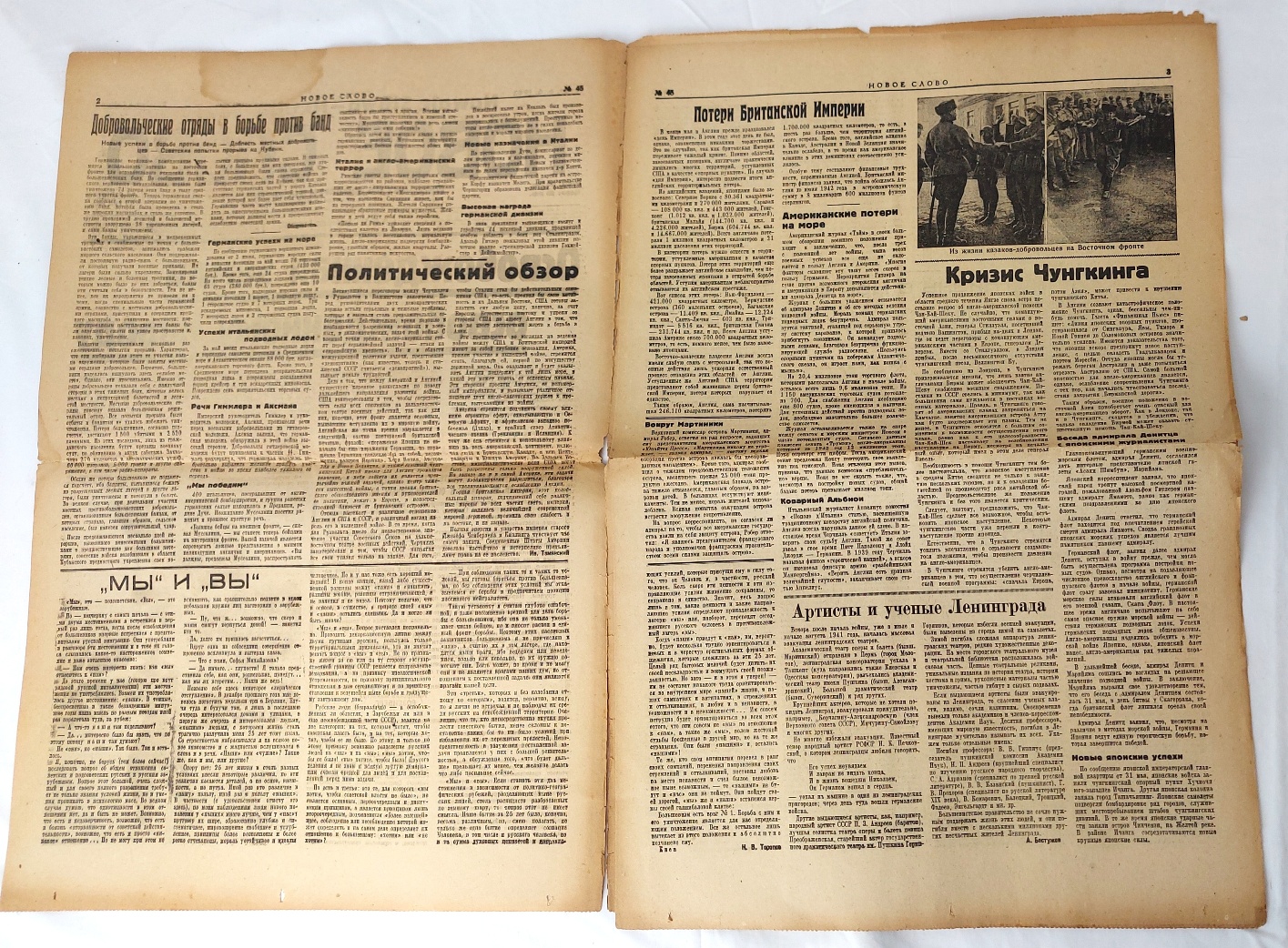
The interior pages reveal an exceptionally broad range of wartime political themes and propaganda narratives:
- Articles discussing volunteer anti-Bolshevik units, encouraging collaboration against the Soviet Union.
- A substantial report titled "Losses of the British Empire", presenting highly politicised interpretations of Allied wartime losses.
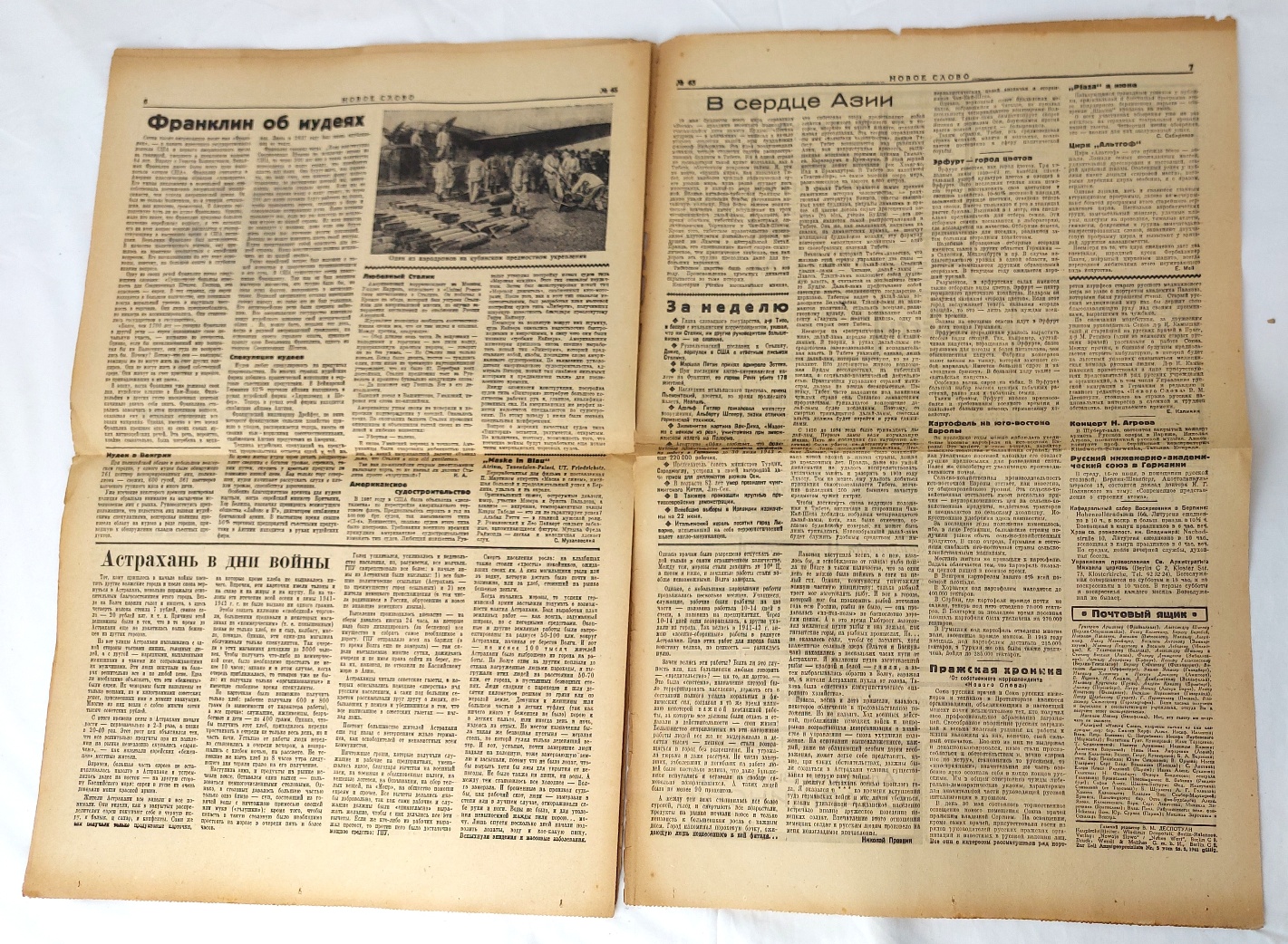
- A photographic feature depicting Cossack volunteers serving on the Eastern Front, promoting Russian participation alongside German forces.
- Coverage of the political situation in Chungking (Chongqing) and East Asia from an Axis perspective.
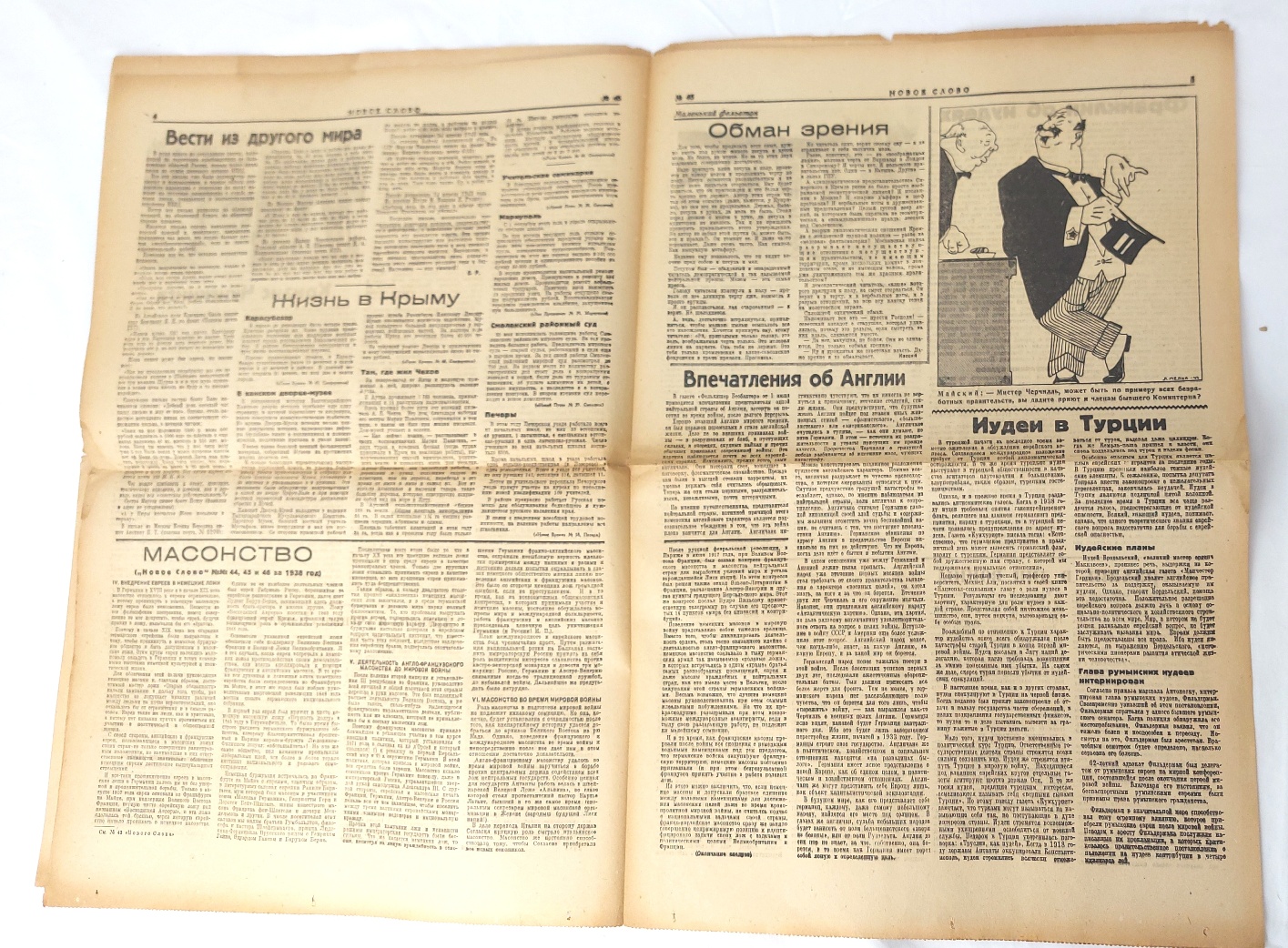
- Articles concerning daily life in Crimea ("Жизнь в Крыму"), presenting occupation narratives and administration.
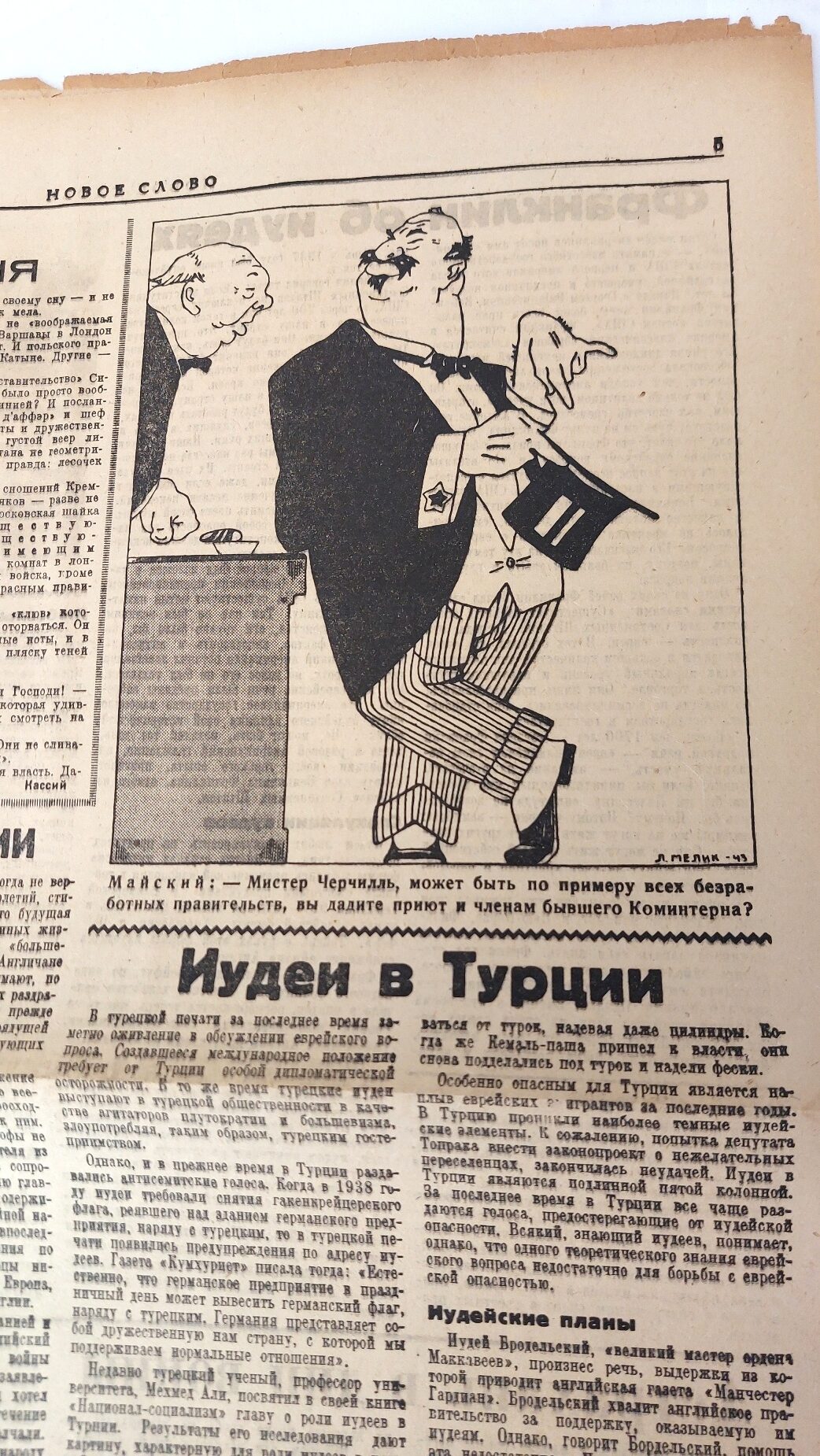
- A large satirical caricature attacking Winston Churchill and Allied leadership.
Several overtly antisemitic pieces including "Jews in Turkey" and "Franklin about Jews." Material of this type often drew upon fabricated ideological narratives such as the notorious "Franklin Prophecy," a forged antisemitic text falsely attributed to Benjamin Franklin and widely used within Nazi propaganda circles. Such content illustrates the broader campaign of organised disinformation and racial propaganda present throughout wartime publications of this nature.
An article concerning Freemasonry ("Масонство"), continuing familiar conspiracy themes heavily exploited within National Socialist propaganda.
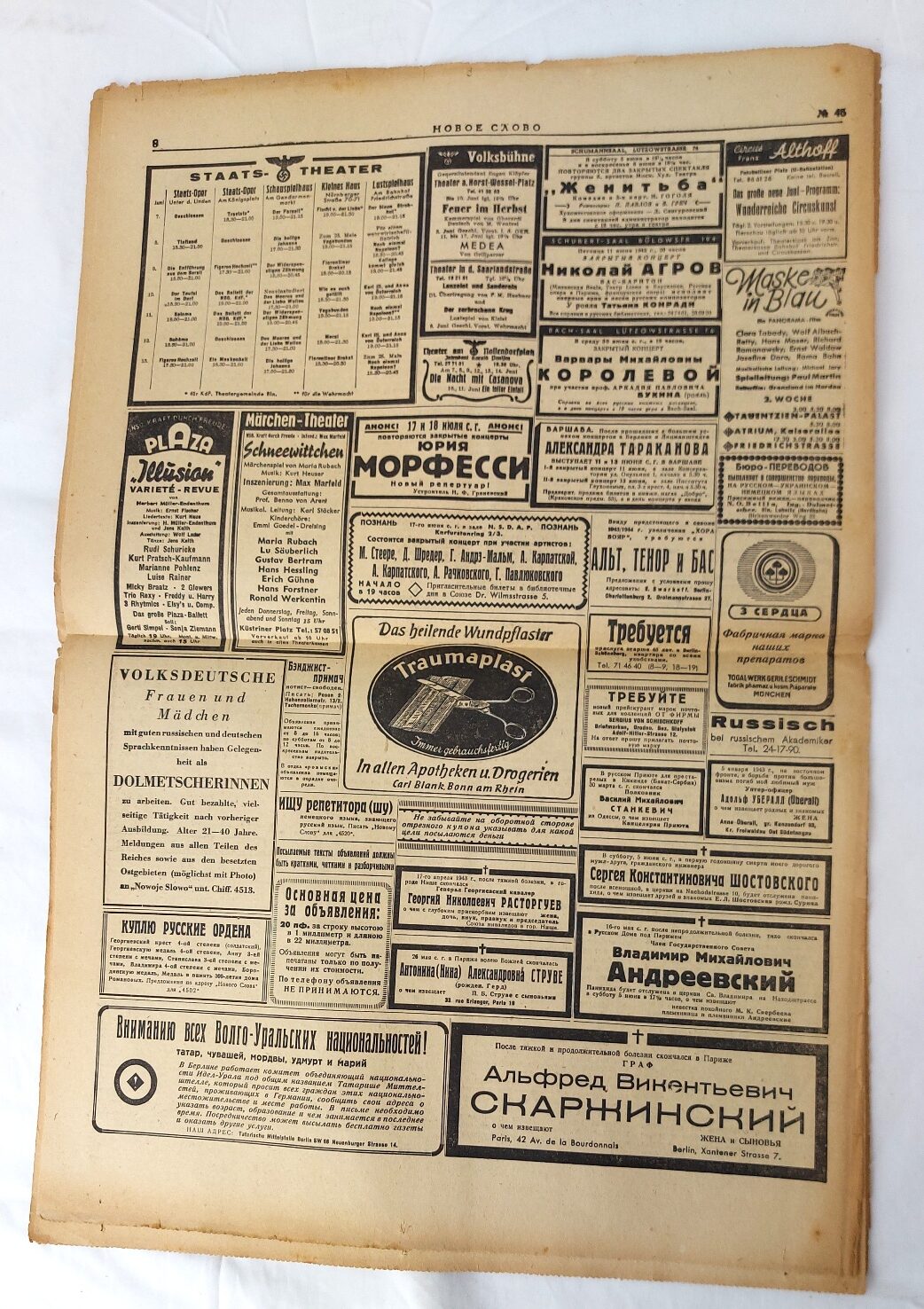
Particularly interesting is the final page, which provides a remarkable social snapshot of wartime Russian émigré life in Berlin. Alongside theatre advertisements and entertainment listings are obituary notices, employment advertisements, interpreter recruitment notices, Russian-language services and community announcements. These social pages are often overlooked but can provide significant research value for collectors and historians studying Russian émigré communities during the war.
Unlike standard civilian newspapers, publications of this type were printed on fragile wartime paper and intended to be discarded after reading. Survival rates are consequently low, particularly for complete examples retaining all pages and illustrations.
Approx. Measurements – 43.4cm x 30cm. Language: Russian (Cyrillic).
History Note: Russian-language newspapers issued under German supervision offer a unique perspective into the information war fought across the Eastern Front. Rather than merely reporting events, they sought to reshape public opinion through promises of reform, anti-Soviet narratives, anti-Allied messaging and ideological campaigns directed toward occupied populations. Published only months after Stalingrad and shortly before the Battle of Kursk, this issue captures Germany's increasingly complex attempts to maintain influence during a critical turning point in the war.
*Condition* Complete 8-page issue. Edge tears, foxing, staining and age-related wear throughout. Marginal chipping and fold wear present with small losses around some edges consistent with wartime paper quality and handling. Paper remains stable and text is fully legible despite age-related wear. Please see photographs as part of the condition report.