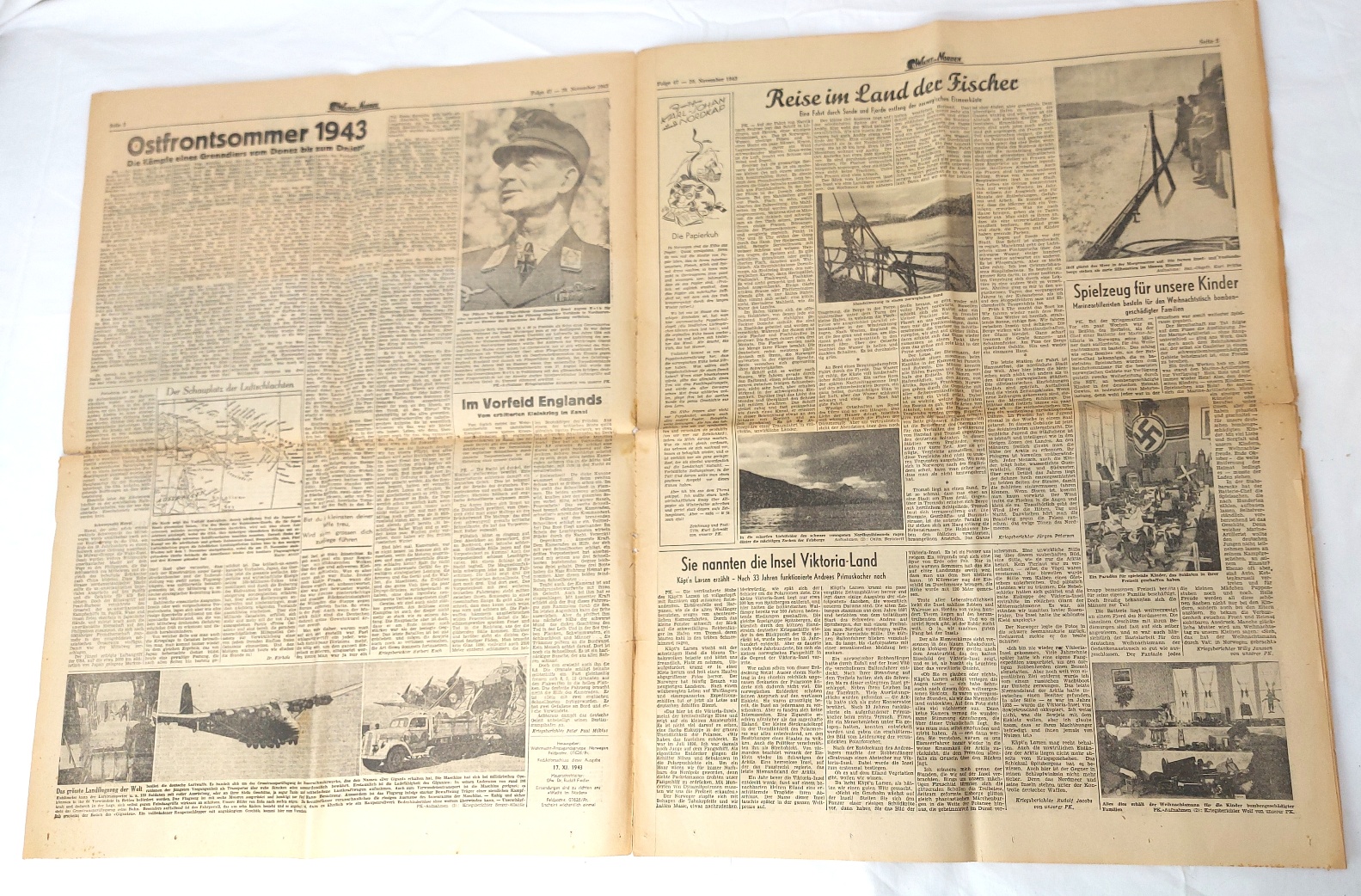
German, WWII, 20 November 1943, Wacht im Norden Wehrmacht Front Newspaper – Norway & Northern Finland – 14 Pages – Lapland / Arctic Front
£65.00
A scarce and complete late-war Wehrmacht occupation newspaper for the Norway and Northern Finland theatre, packed with Arctic Front content, propaganda, social history and remarkable insights into German troop life on the remote northern front.
*German, WWII, 20 November 1943, Wacht im Norden Wehrmacht Front Newspaper – Norway & Northern Finland – 14 Pages – Lapland / Arctic Front*
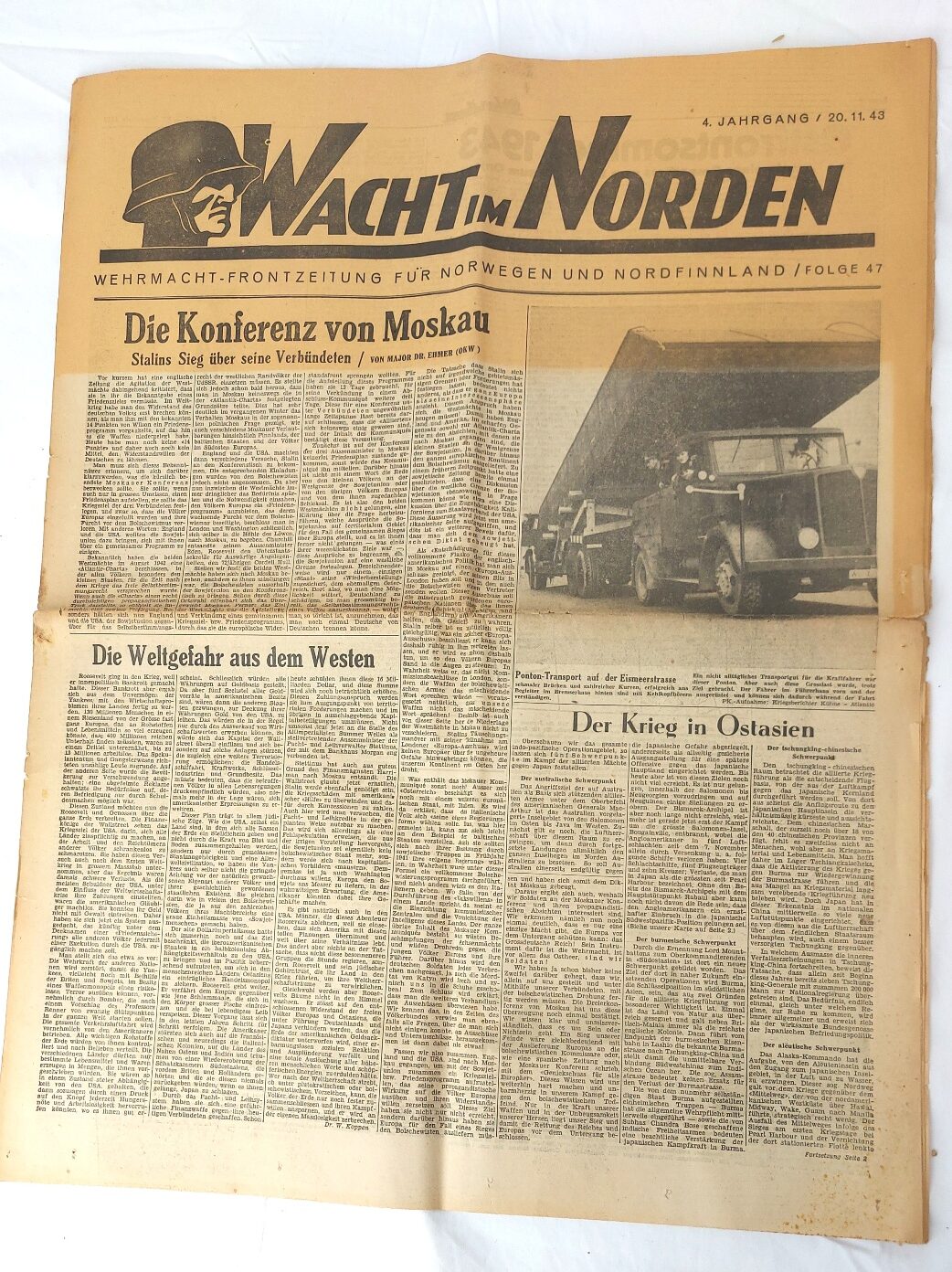
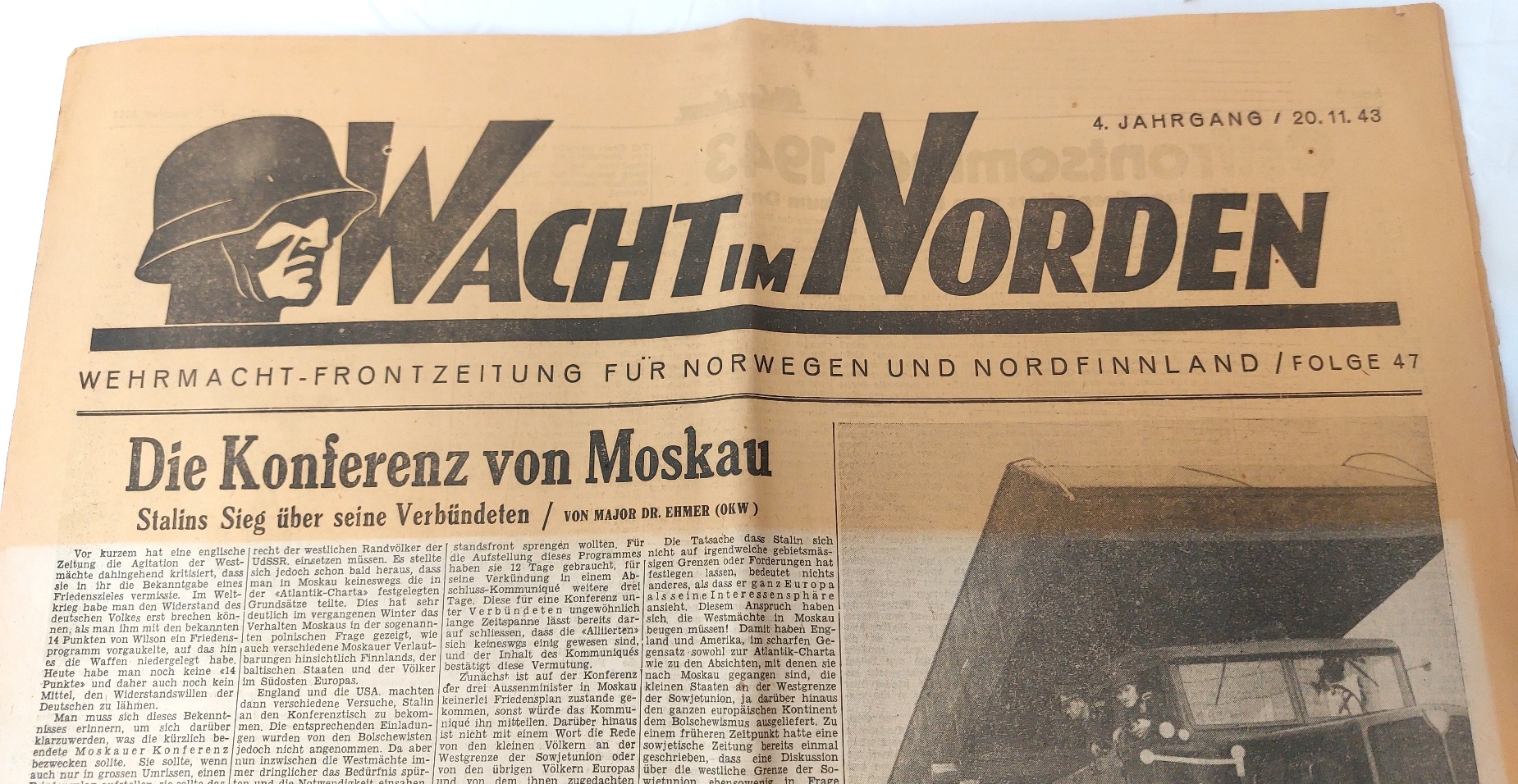
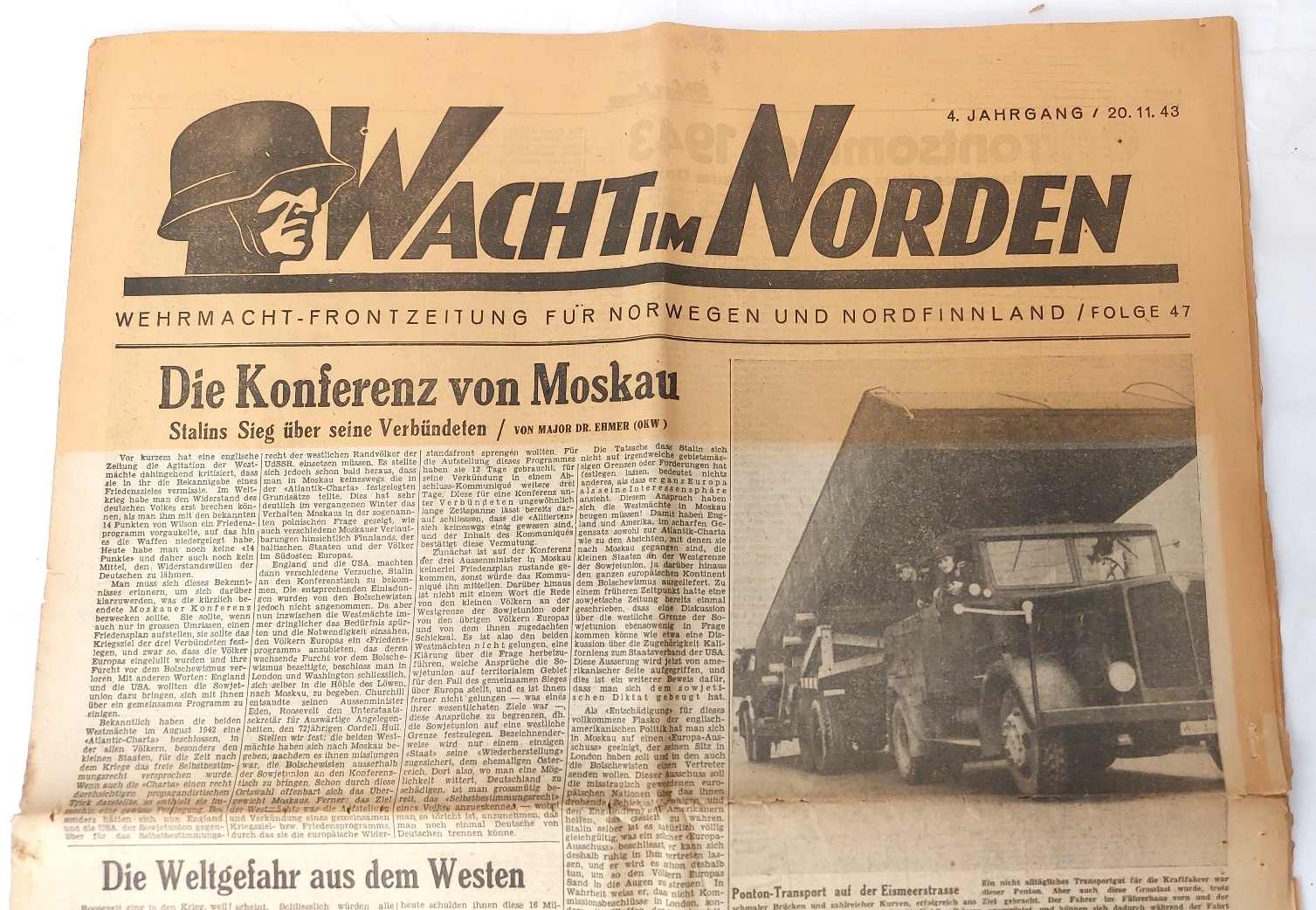
An original World War II German Wehrmacht field newspaper titled Wacht im Norden ("Watch in the North"), Issue 47, dated 20 November 1943 (4. Jahrgang), produced as a Wehrmacht-Frontzeitung specifically for German occupation forces serving in Norway and Northern Finland. Printed for troops stationed on the isolated Arctic and Lapland fronts, these newspapers combined military reporting, propaganda, entertainment and practical soldier information, providing a fascinating surviving insight into everyday life among German forces in one of the war’s most remote theatres.
This complete 14-page issue was published during a pivotal stage of the war, only months after the catastrophic reverses of 1943 and during a period when German military newspapers increasingly shifted from celebrating battlefield victories toward themes of endurance, sacrifice and ideological struggle. The striking front-page headline, "Die Konferenz von Moskau – Stalins Sieg über seine Verbündeten" ("The Moscow Conference – Stalin's victory over his allies"), attempts to portray Allied diplomacy as evidence of growing Soviet dominance over Britain and America, demonstrating the increasingly defensive tone of late-war propaganda.
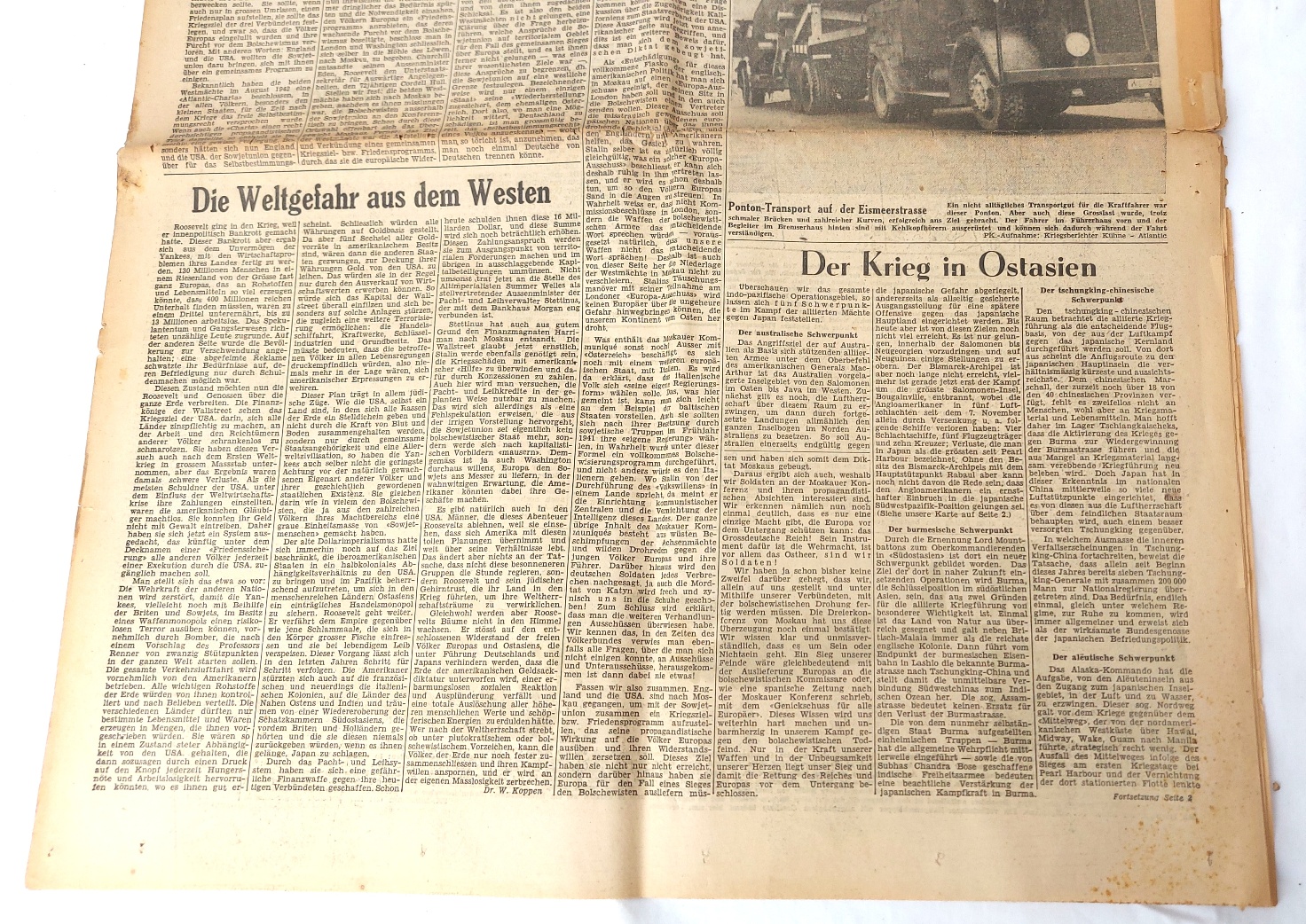
The issue contains a wide variety of military and social content. Front-page articles include "Die Weltgefahr aus dem Westen" ("The World Danger from the West") and "Der Krieg in Ostasien" ("The War in East Asia"), while a prominent photograph titled "Ponton-Transport auf der Eismeerstraße" depicts heavy transport operations on Arctic supply routes. Such images are particularly interesting as they relate directly to the logistics network supporting German forces operating in the far north and around the Murmansk theatre.
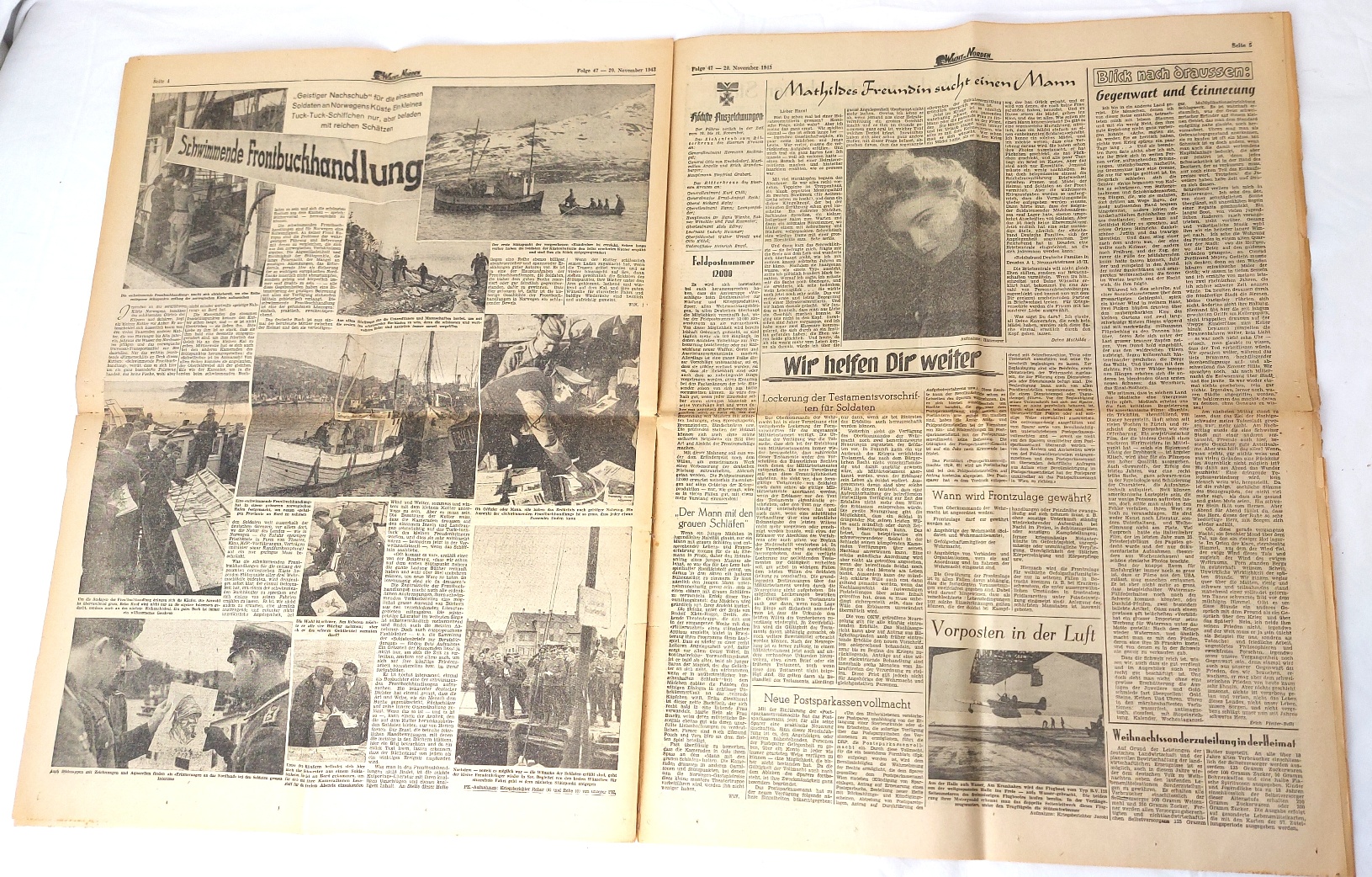
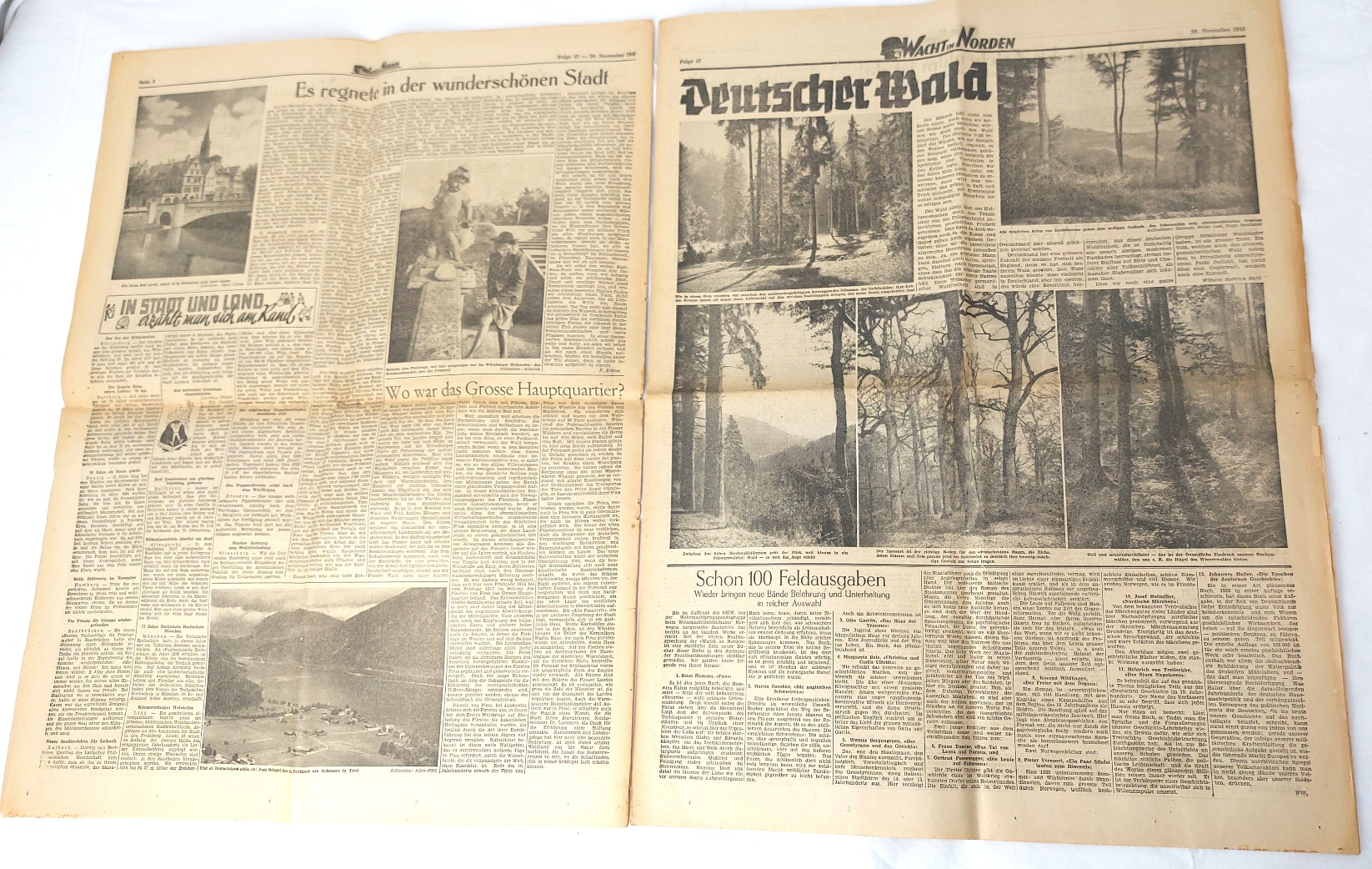
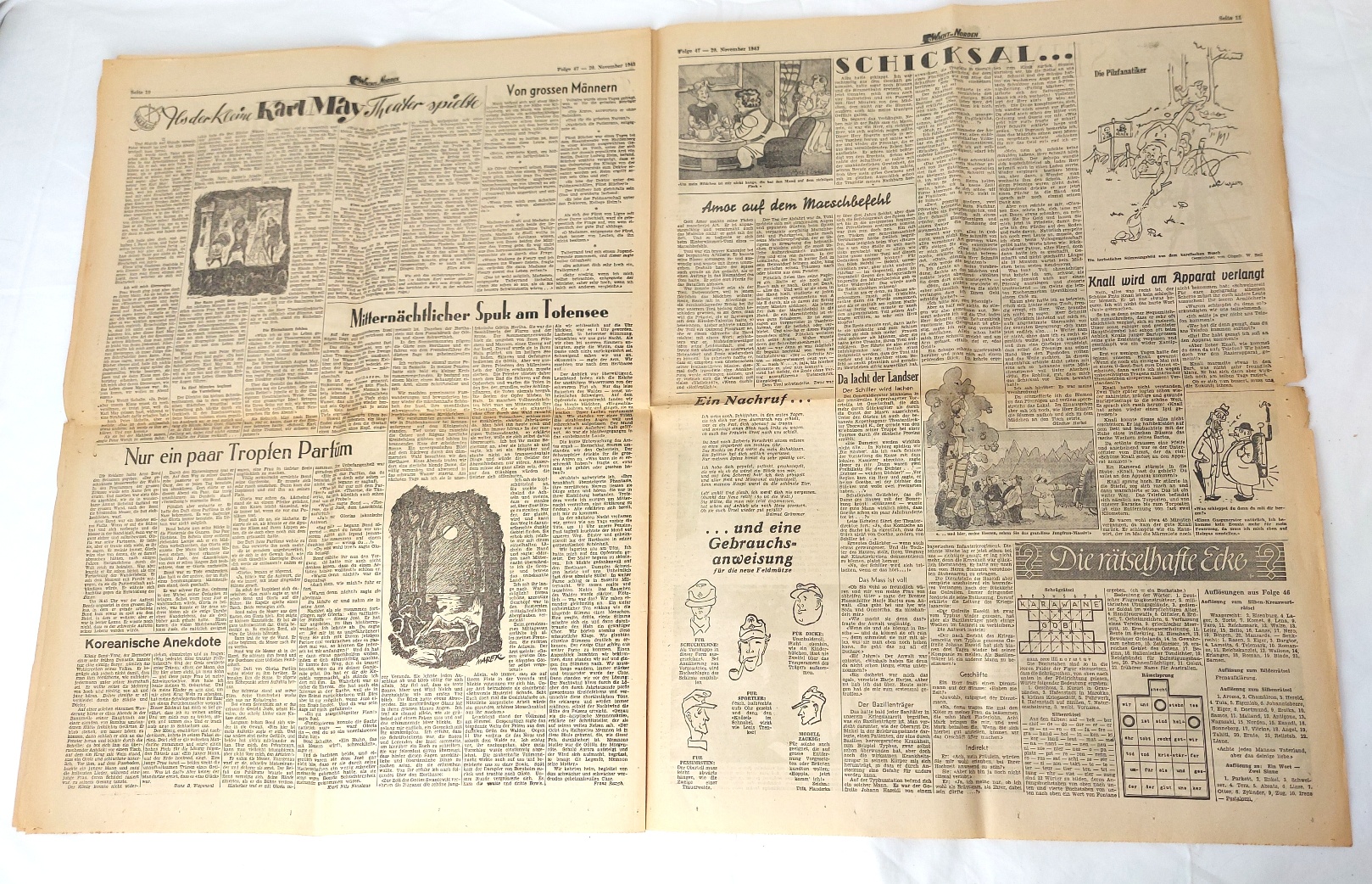
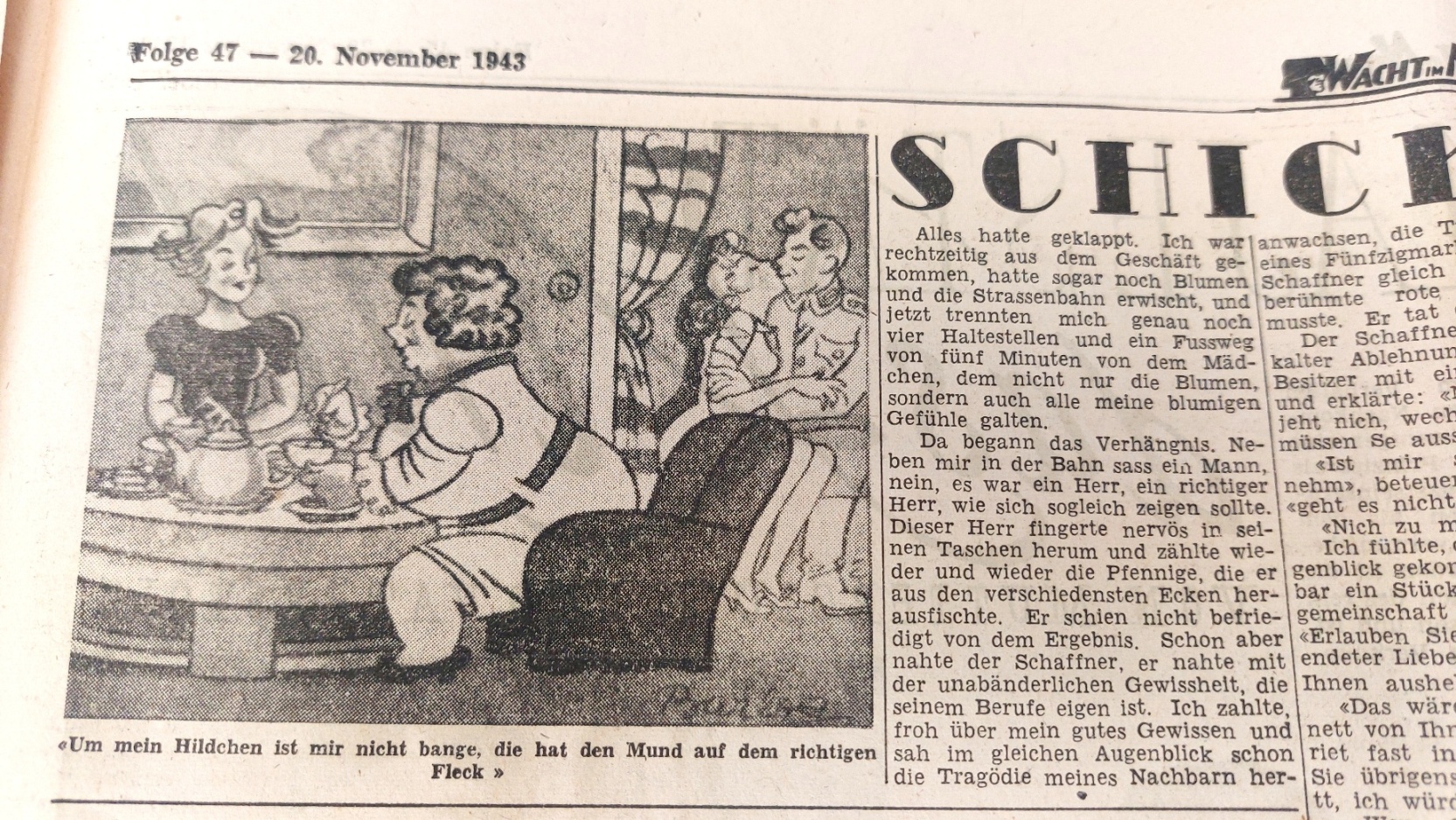
Inside are numerous highly interesting articles reflecting both military and everyday life. A particularly notable feature, "Schwimmende Frontbuchhandlung" ("Floating Front Bookshop"), documents mobile library services established to combat isolation among troops stationed in remote areas. Other content includes travel articles concerning Scandinavian landscapes and fishing communities, family-oriented features, practical soldier advice concerning legal matters and correspondence, humour pages, cartoons, puzzles and poetry.
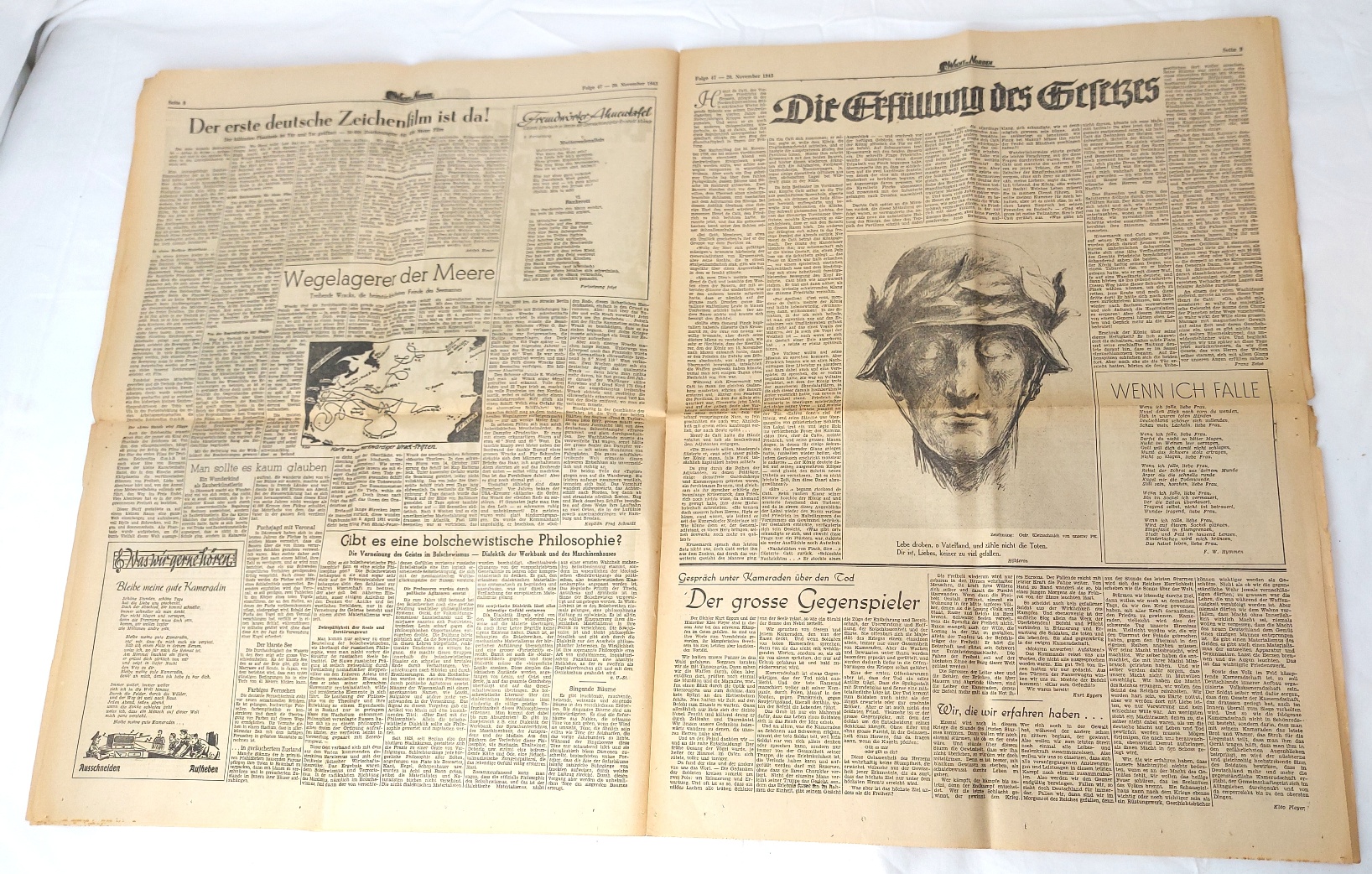
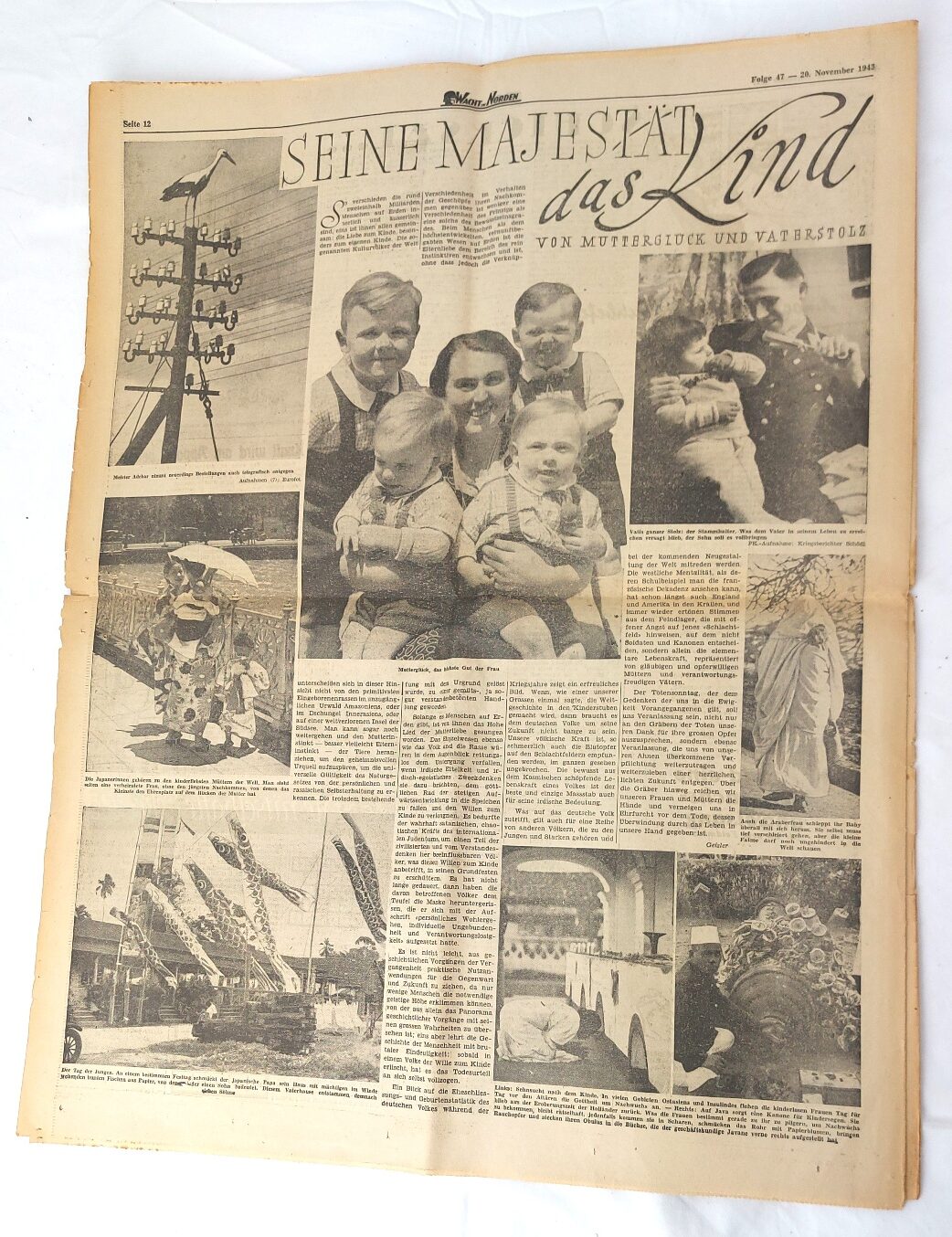
One of the strongest visual pages is "Die Erfüllung des Gesetzes", featuring a dramatic large illustration of a helmeted soldier accompanied by themes of duty and sacrifice, reflecting the increasingly sombre mood of Germany in late 1943. The final page feature, "Seine Majestät das Kind" ("His Majesty, the Child"), shifts toward themes of family and future generations, a common morale emphasis in later wartime publications.
Historically this issue represents a fascinating transition in wartime propaganda. Earlier Wehrmacht newspapers from 1939–1941 often celebrated conquest and military success; by late 1943 publications increasingly focused on perseverance, home life and maintaining morale as Germany's strategic position deteriorated. Occupation newspapers printed specifically for Norway and Northern Finland survive in significantly smaller numbers than standard civilian newspapers and provide valuable primary-source material for collectors of Arctic Front, Lapland and Wehrmacht history.
History Note: Wacht im Norden was produced for German troops stationed in occupied Norway and northern Finland, including units serving along the Arctic and Lapland sectors. Newspapers of this type formed part of the Wehrmacht morale system and now provide an unusually detailed record of soldier life beyond battlefield reports alone.
*Condition*
Torn across the middle through approximately one-third of the front page with associated fold separation; remainder generally survives well with age-related discolouration, foxing, edge wear and handling marks expected of wartime low-grade paper. Complete 14-page issue. Please see photographs as part of the condition report.