~ Victorian Staffordshire Figural Group of a Flautist and Flower Seller, c.1850–1870 ~
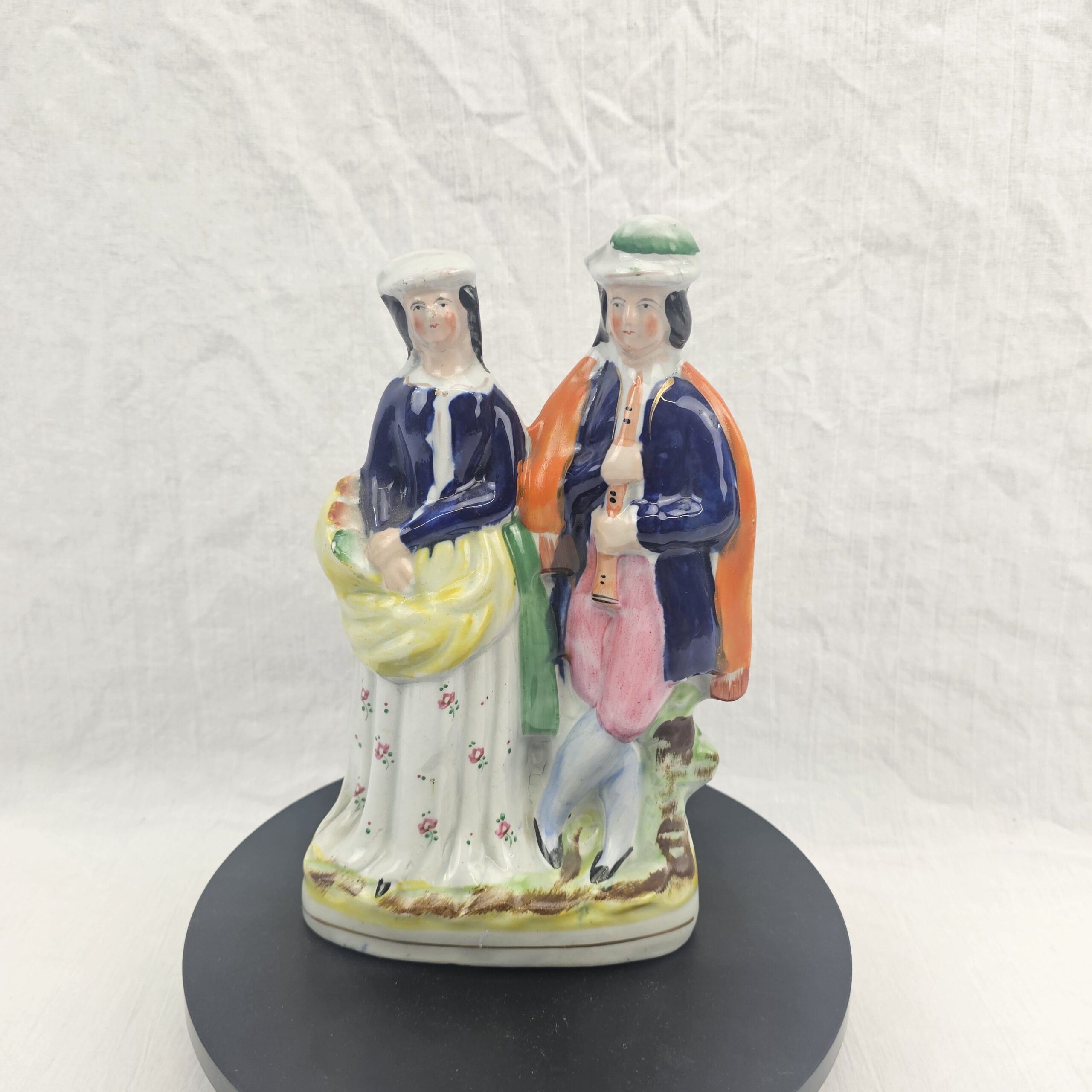
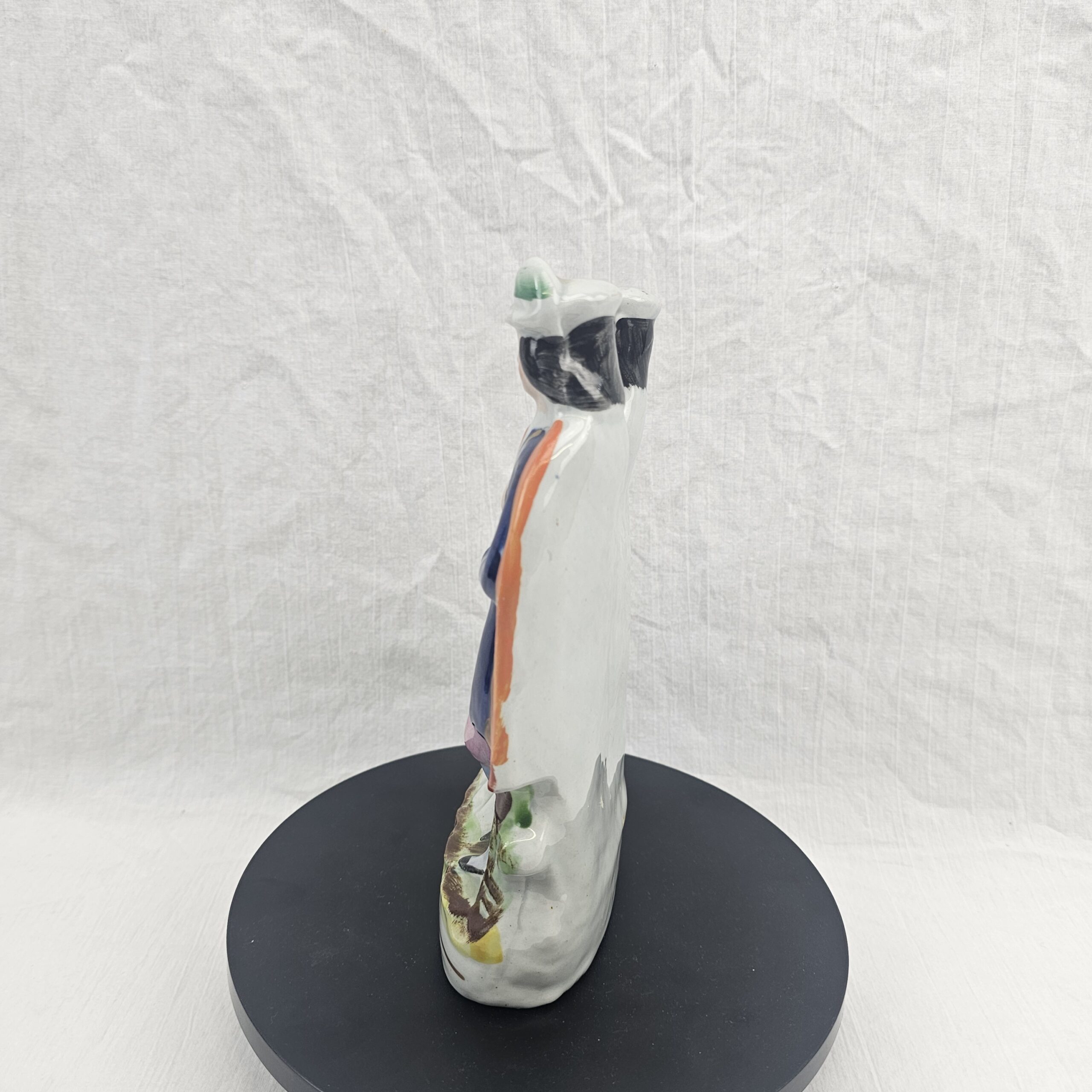
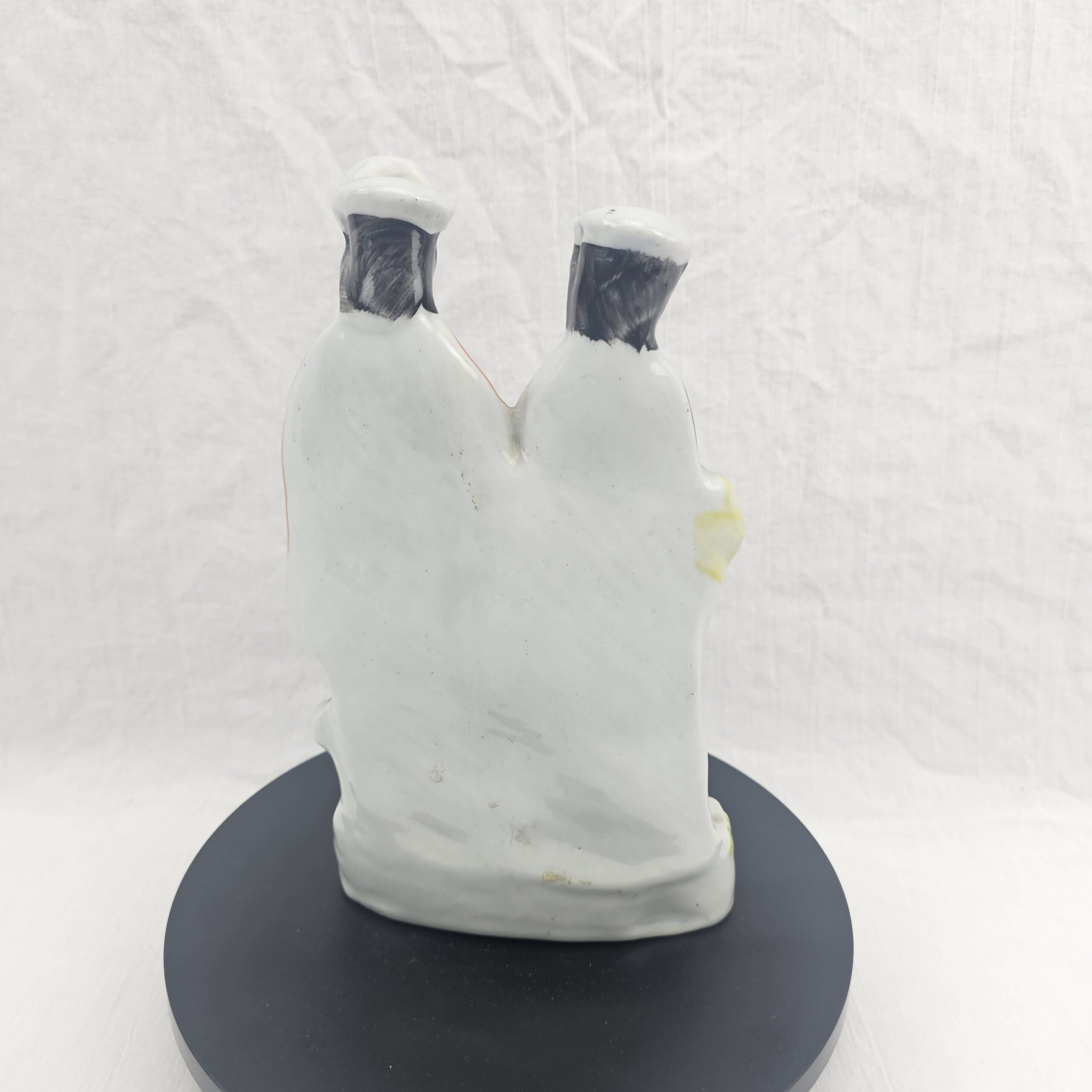
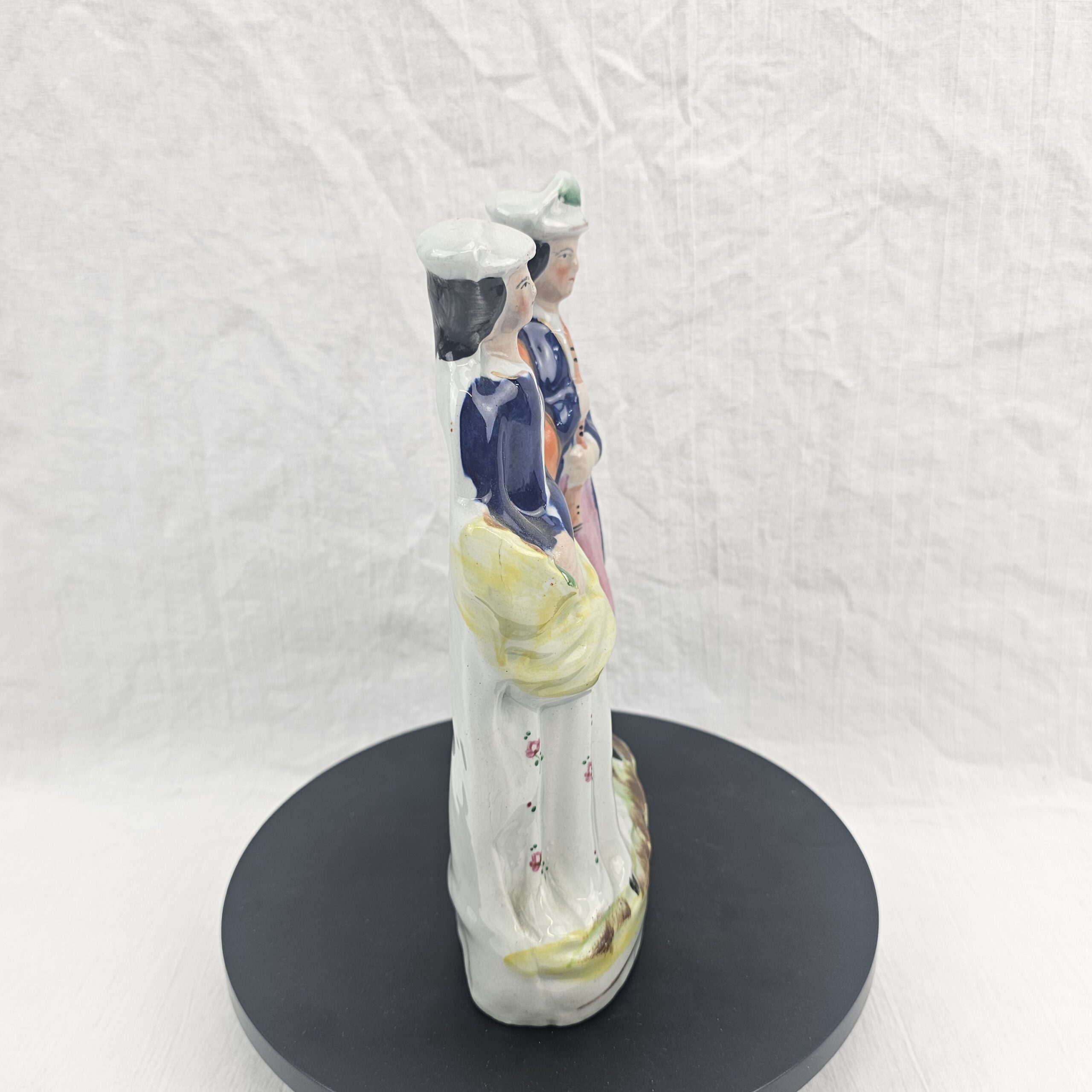
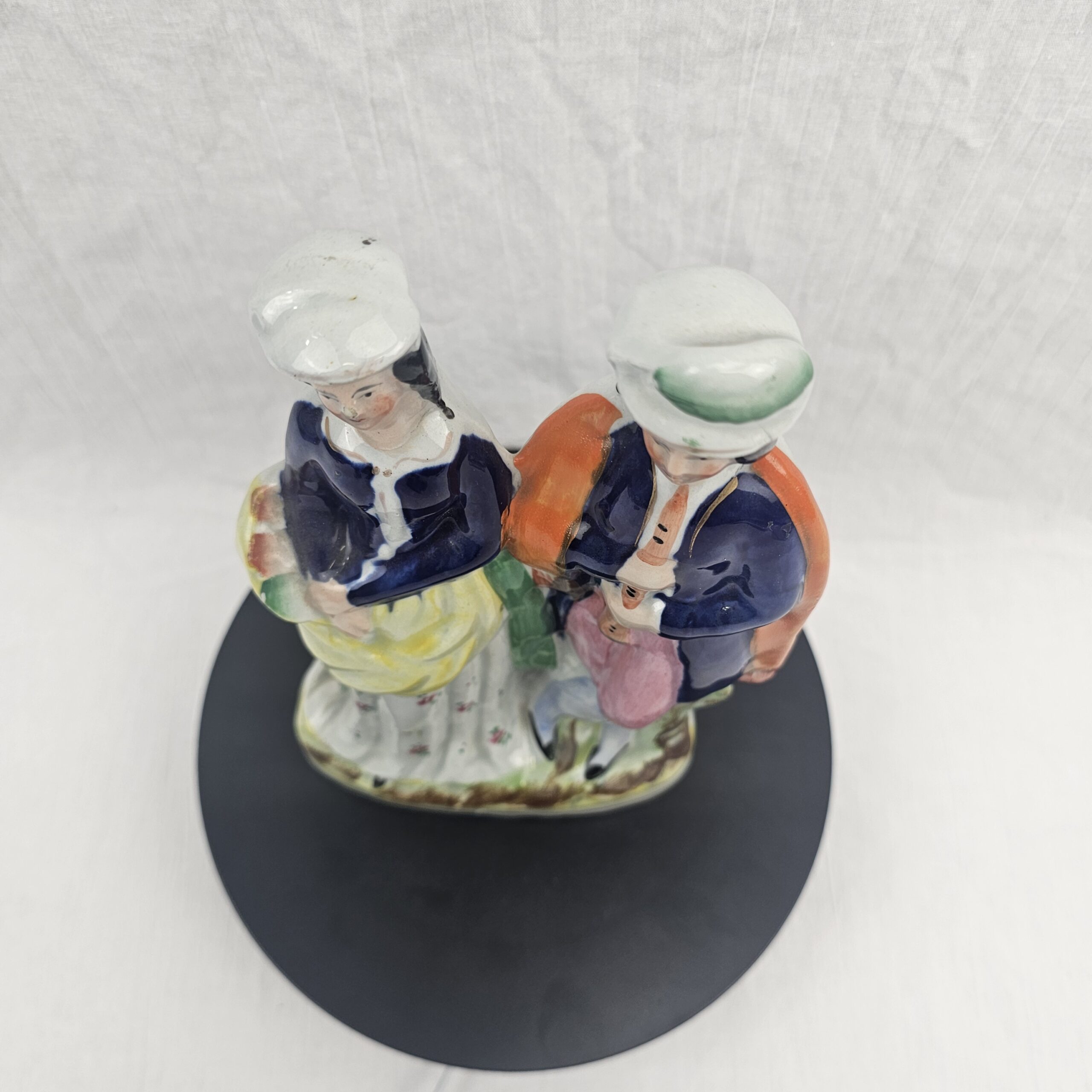
A vividly hand-painted Victorian Staffordshire flatback figural group depicting two standing figures — a female flower seller and a male flautist — on a naturalistic green and brown mound base with a flat oval plinth edged with a gilt line. The flower seller (left) wears a white bonnet, cobalt blue bodice and jacket, green skirt, and a long white dress decorated with hand-painted pink rose sprigs; she carries a large yellow straw hat or flower basket over her arm. The flautist (right) wears a white hat with green crown, a cobalt blue coat with bold orange facing or waistcoat, pink knee breeches, and pale blue stockings; he holds a flute or recorder vertically against his body. The two figures stand close together, the piece modelled in the round on the front and sides. The rear is plain white — the characteristic Staffordshire flatback treatment. The base is unglazed and unmarked, as expected for this ware type. Approximate height 18–20 cm.
~ Historical Context ~
Figural groups depicting pastoral or musical couples were among the most widely produced subjects in Victorian Staffordshire cottage-ware, drawing on a long tradition of Rococo and Neoclassical figure groups from the Continental porcelain factories — Meissen, Sèvres, and Nymphenburg — which the Staffordshire potteries democratised into affordable earthenware for the mass market. Victorian Staffordshire figurines were produced to imitate the much more expensive Continental porcelain figures found in upper-class homes, bringing colourful decorative ornaments within reach of the middle-class Victorian household, where such pieces were proudly displayed on fireplace mantels alongside transferware and other ornamental ceramics.
The pairing of a musician with a female companion — frequently a flower seller, shepherdess, or harvest worker — was a standard compositional formula derived from popular prints and theatrical imagery of the period. The cobalt blue, orange and pink palette seen here is characteristic of confident, well-resourced production in the mid-Victorian Staffordshire tradition, c.1850–1870, when the demand for brightly coloured figural groups was at its peak. The flute-playing figure adds a pleasingly specific musical identity to what might otherwise be a generic pastoral group, and the quality of the moulding and the delicacy of the floral-sprig decoration on the woman's dress both speak to a competent, attentive producer within the Staffordshire cottage-ware hierarchy.
~ Condition ~
The piece presents in very good condition, with no significant defects to disclose.
Front and sides (Images 1, 4): Excellent colour throughout. The cobalt blue, orange, pink breeches, pale blue stockings, green hat trim, yellow basket and white floral-sprig dress are all well-preserved with good enamel adhesion and no obvious rubbing or loss.
Faces (Images 1 & 5): Both figures are well-painted with clear features and good skin tones.
Rear (Image 3): Plain white flatback in good condition. A very minor orange paint splash is visible between the two heads — this is superficial overspray, not structural damage. No cracks, chips or repairs apparent.
Left side (Image 4): Intact. Good profile view of the flower basket and floral-sprig dress.
Overhead (Image 5): No damage visible from above.
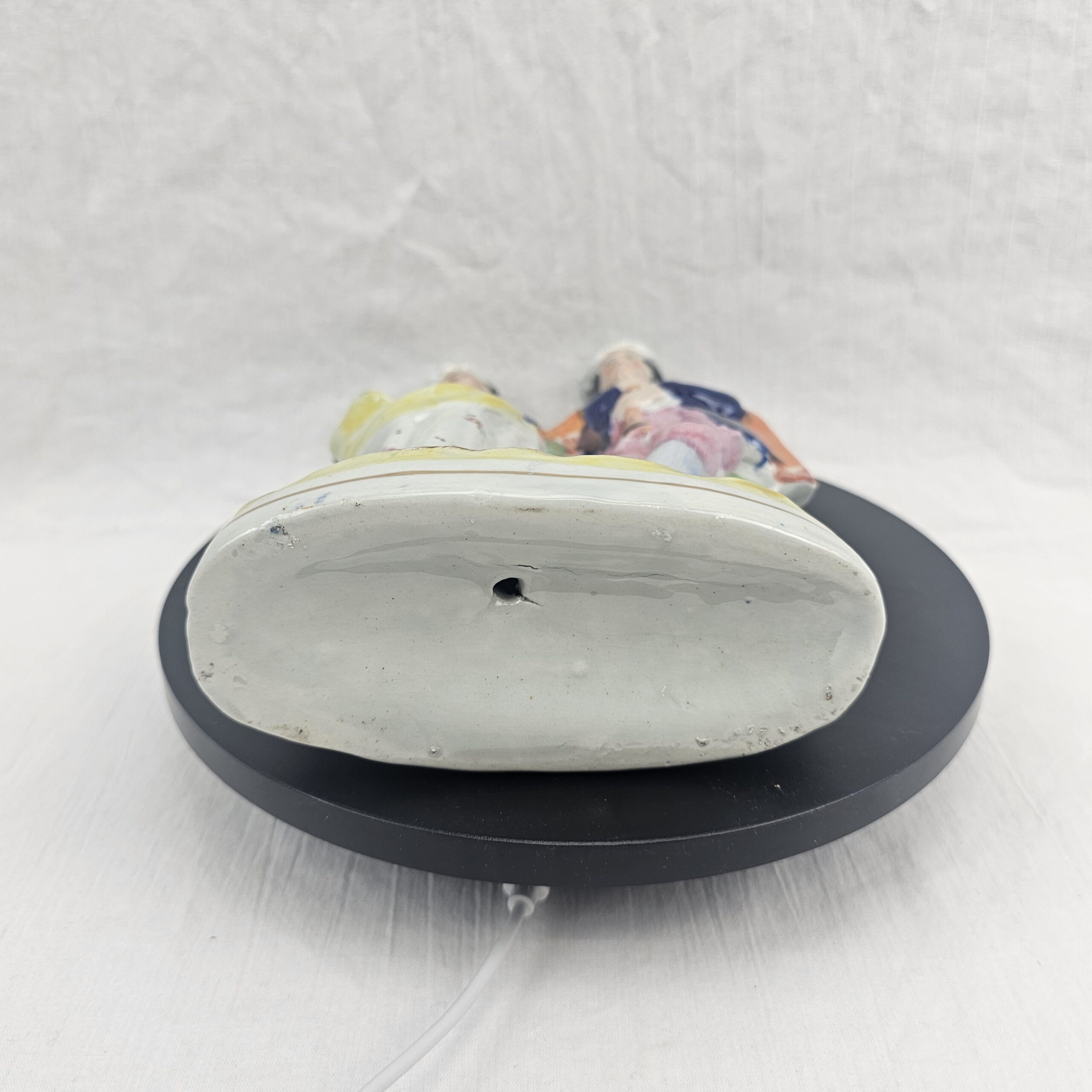
Underside (Image 6): The unglazed oval base is intact with no cracks visible. A single kiln vent hole is present — a standard production feature. Age grime to the foot rim, as expected.
Buyers are encouraged to review all images carefully before purchasing.