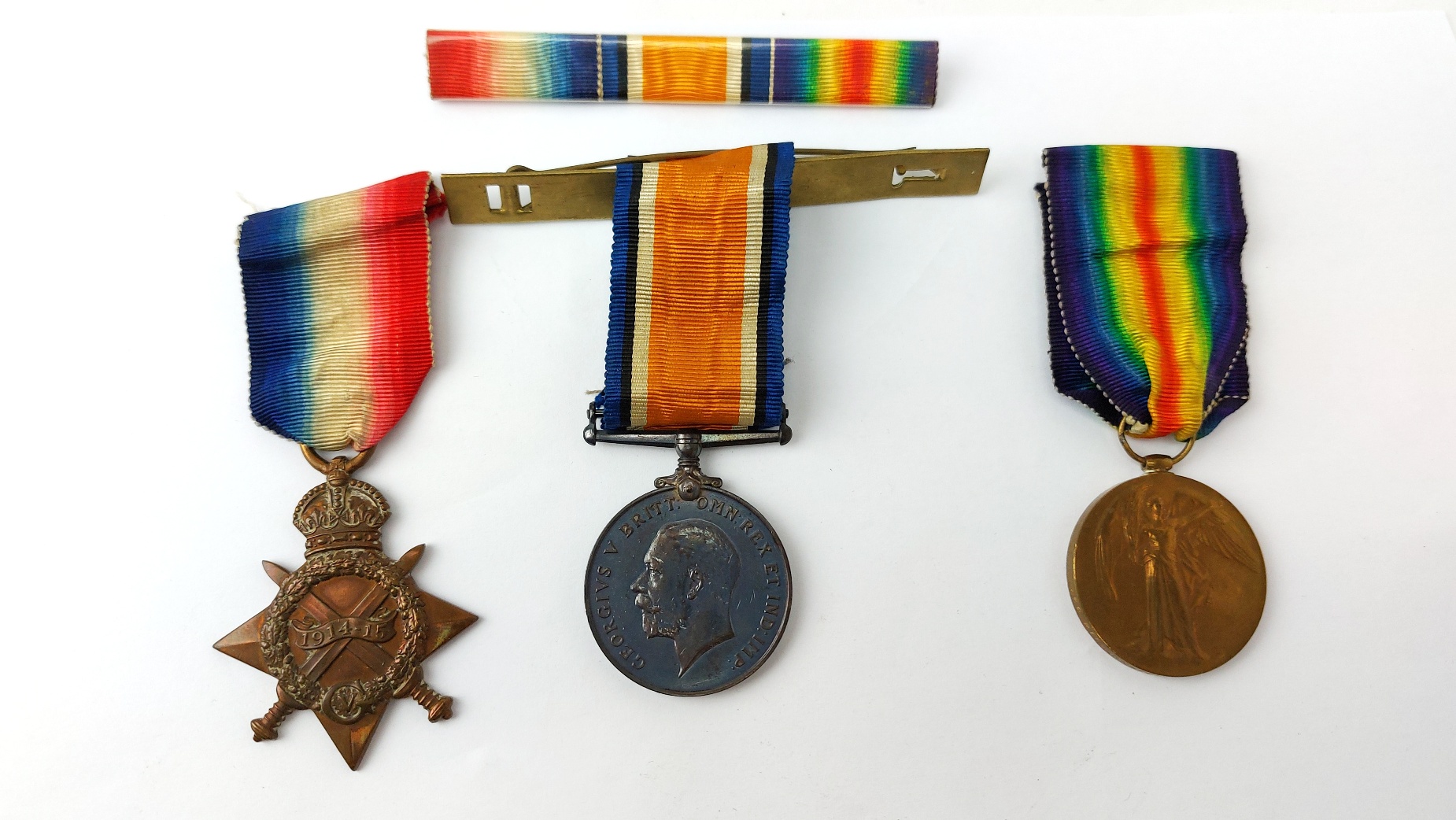
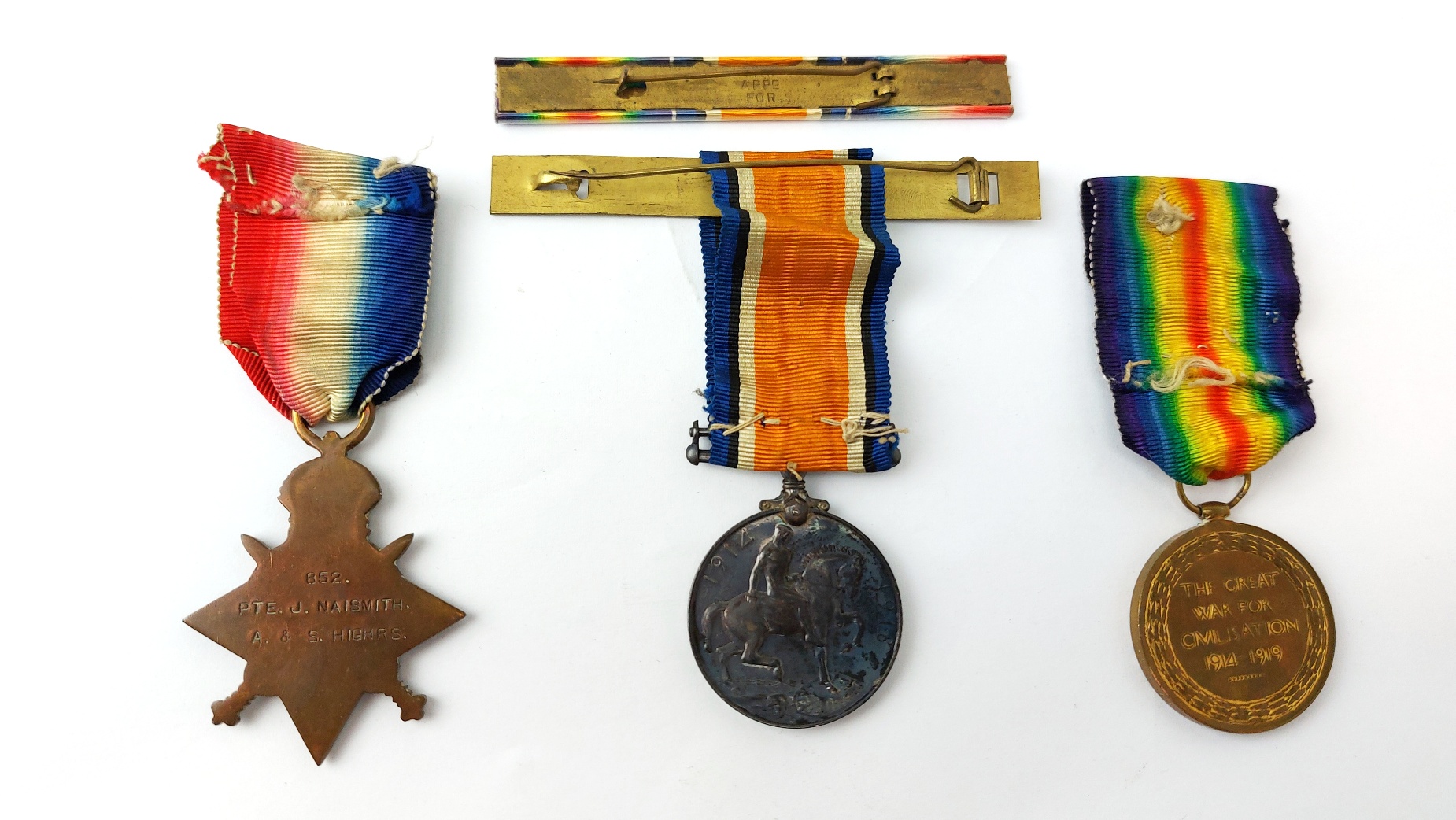
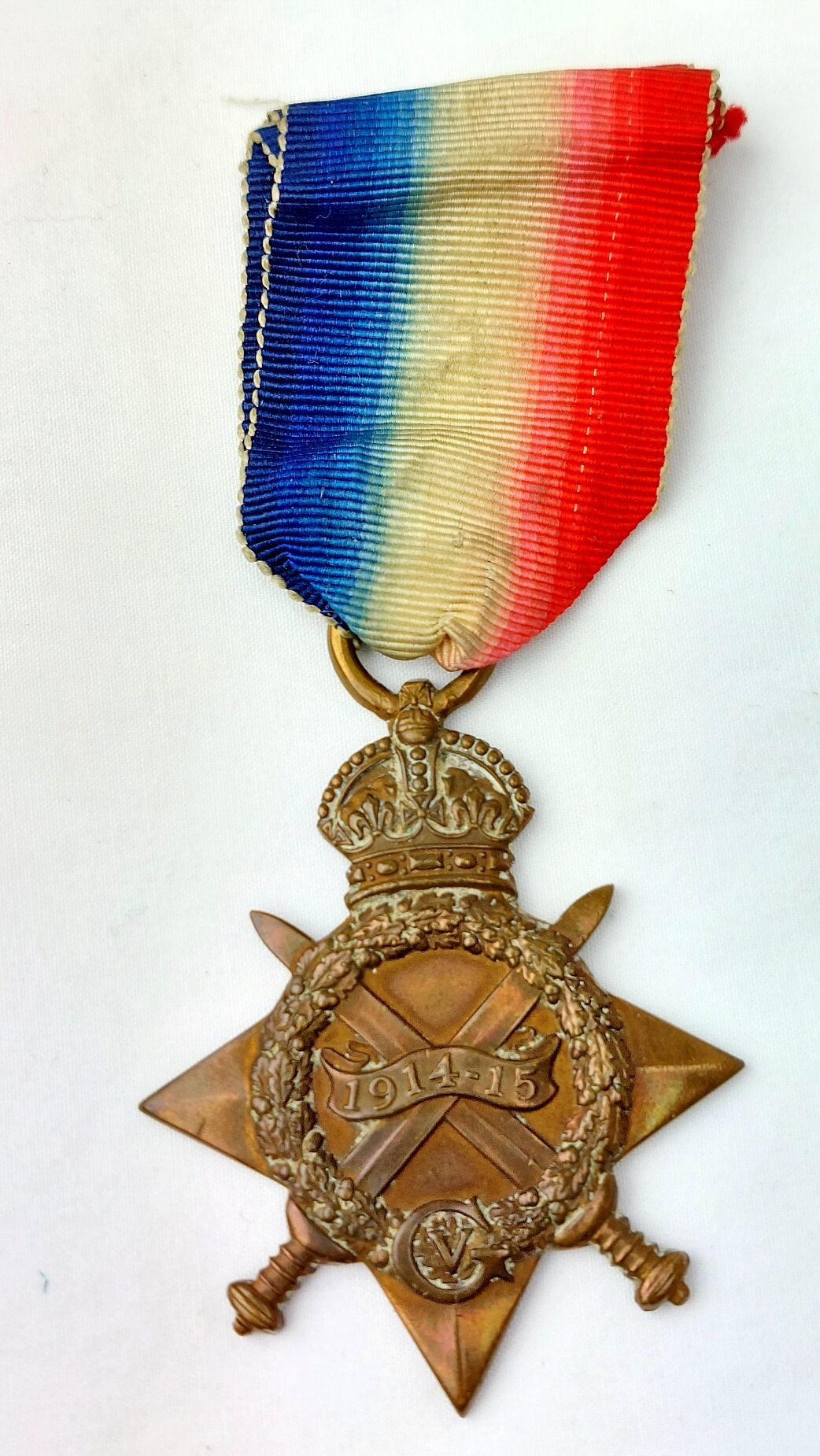
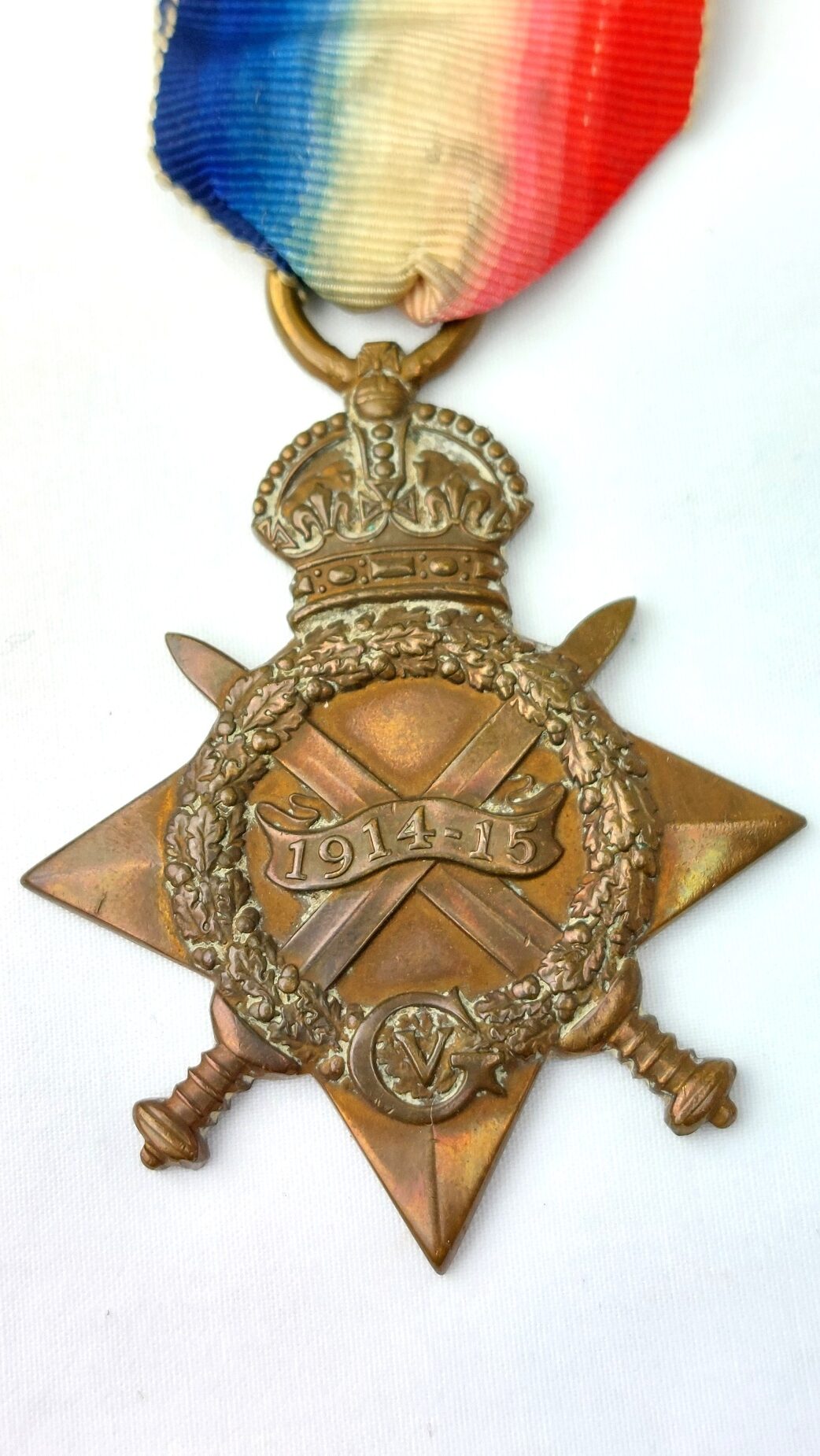
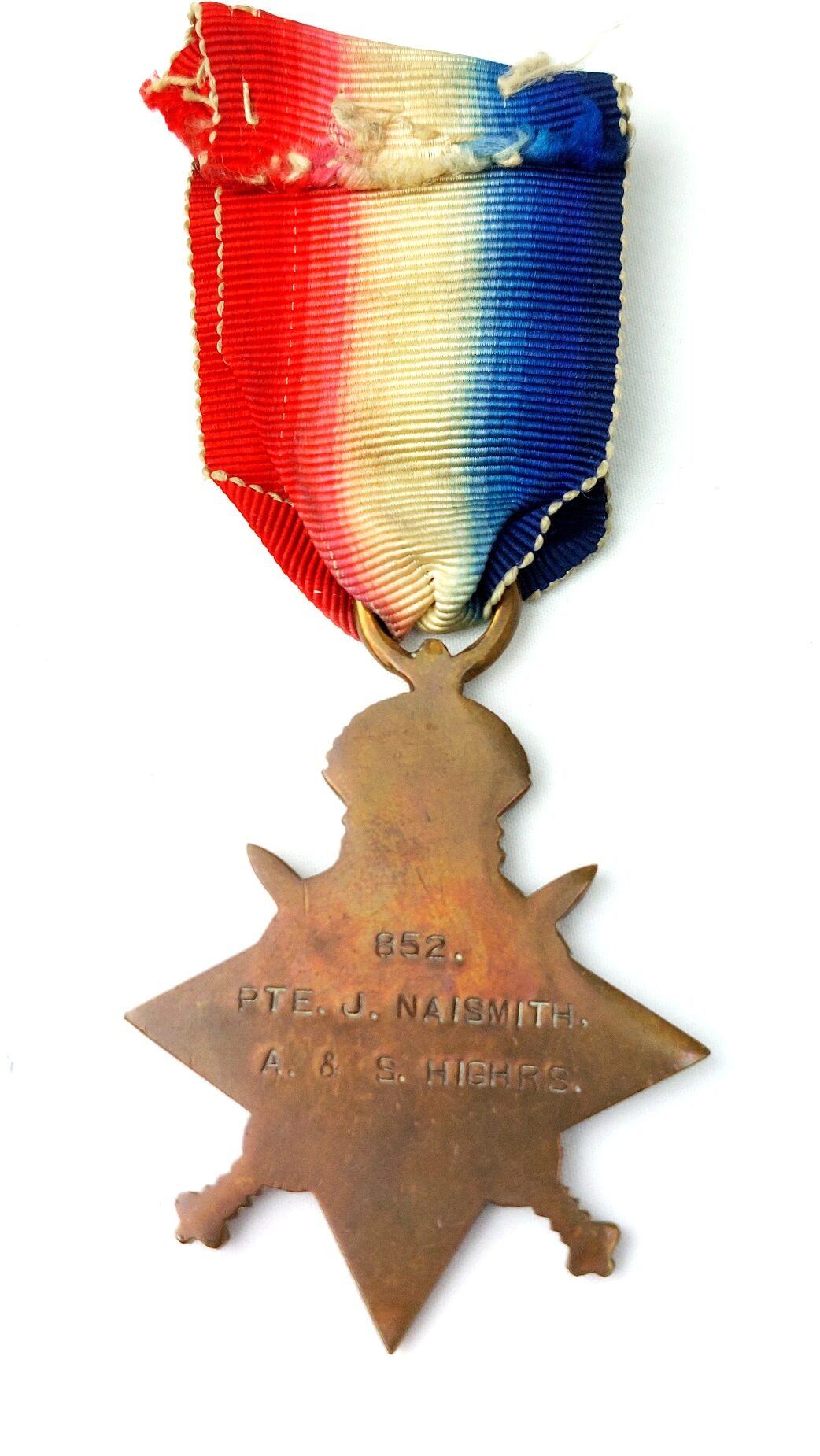
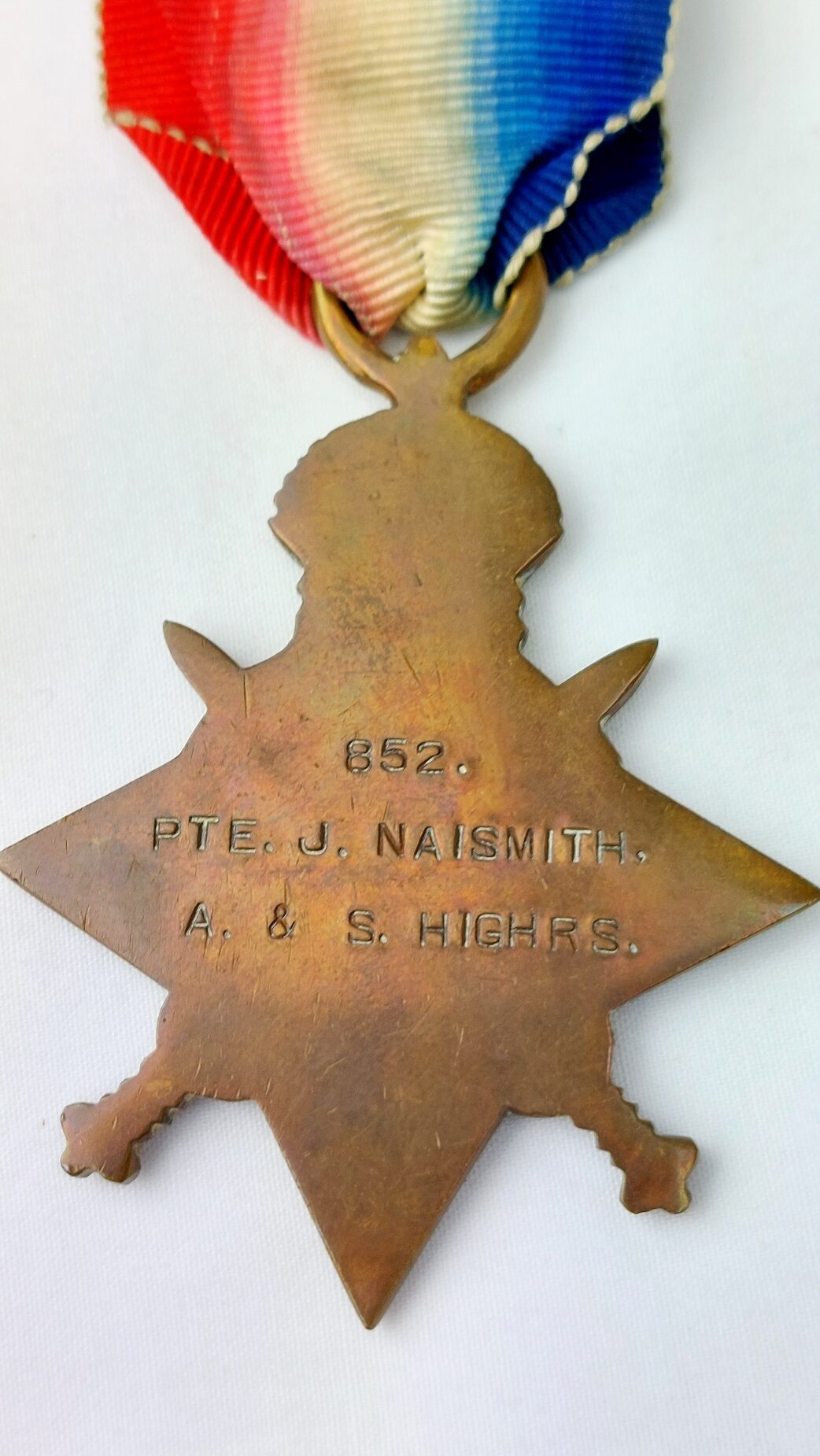
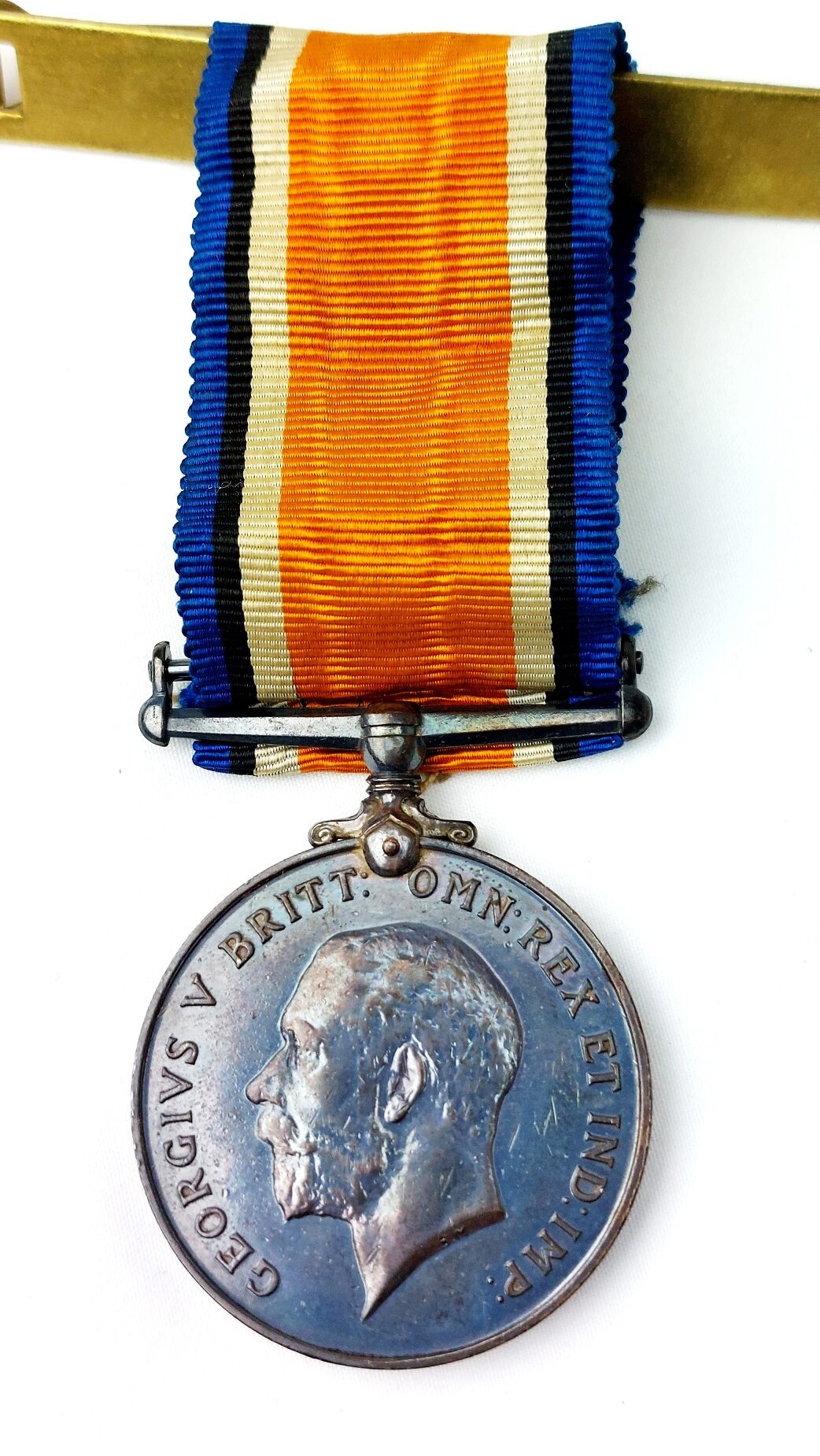
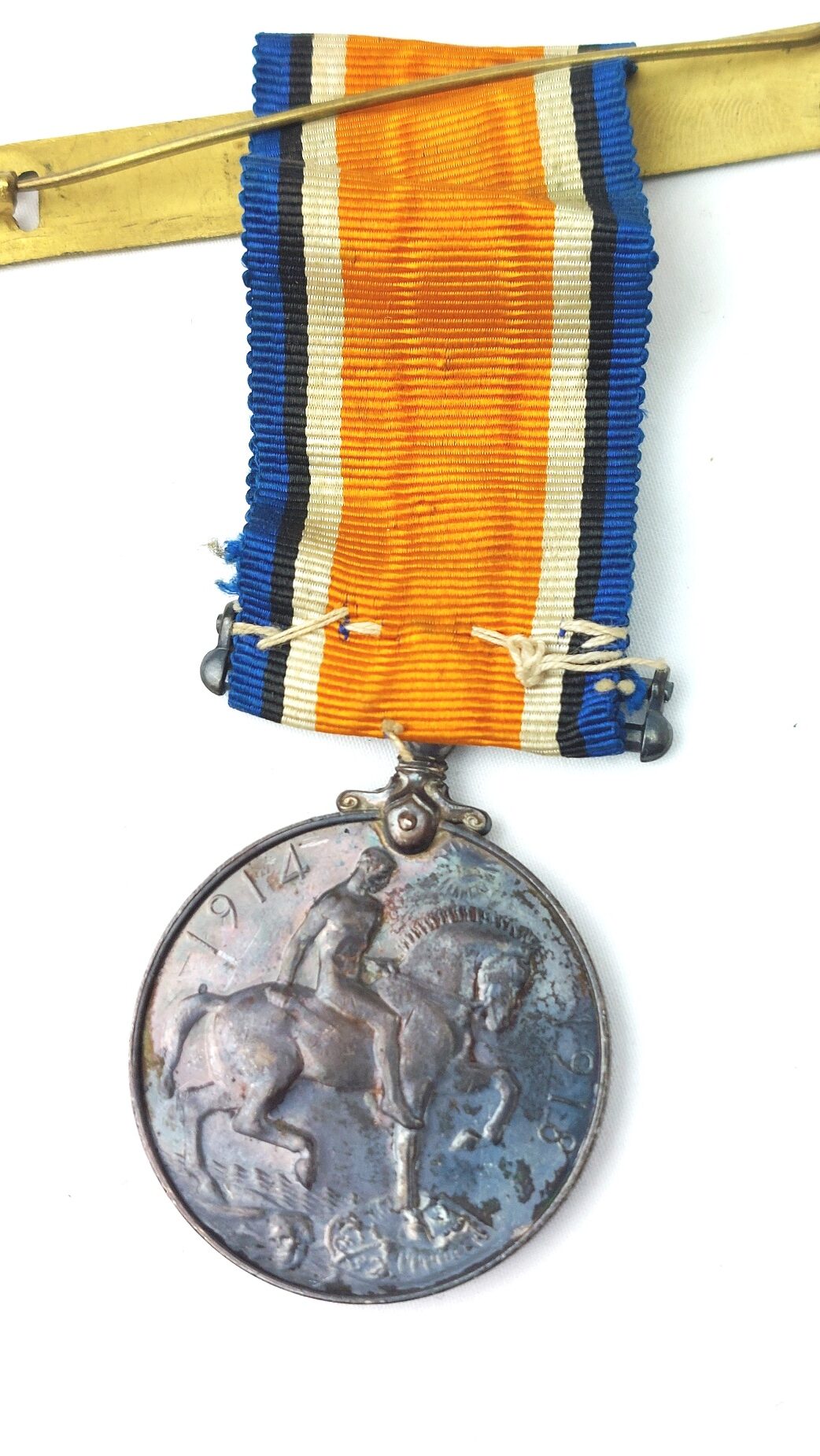
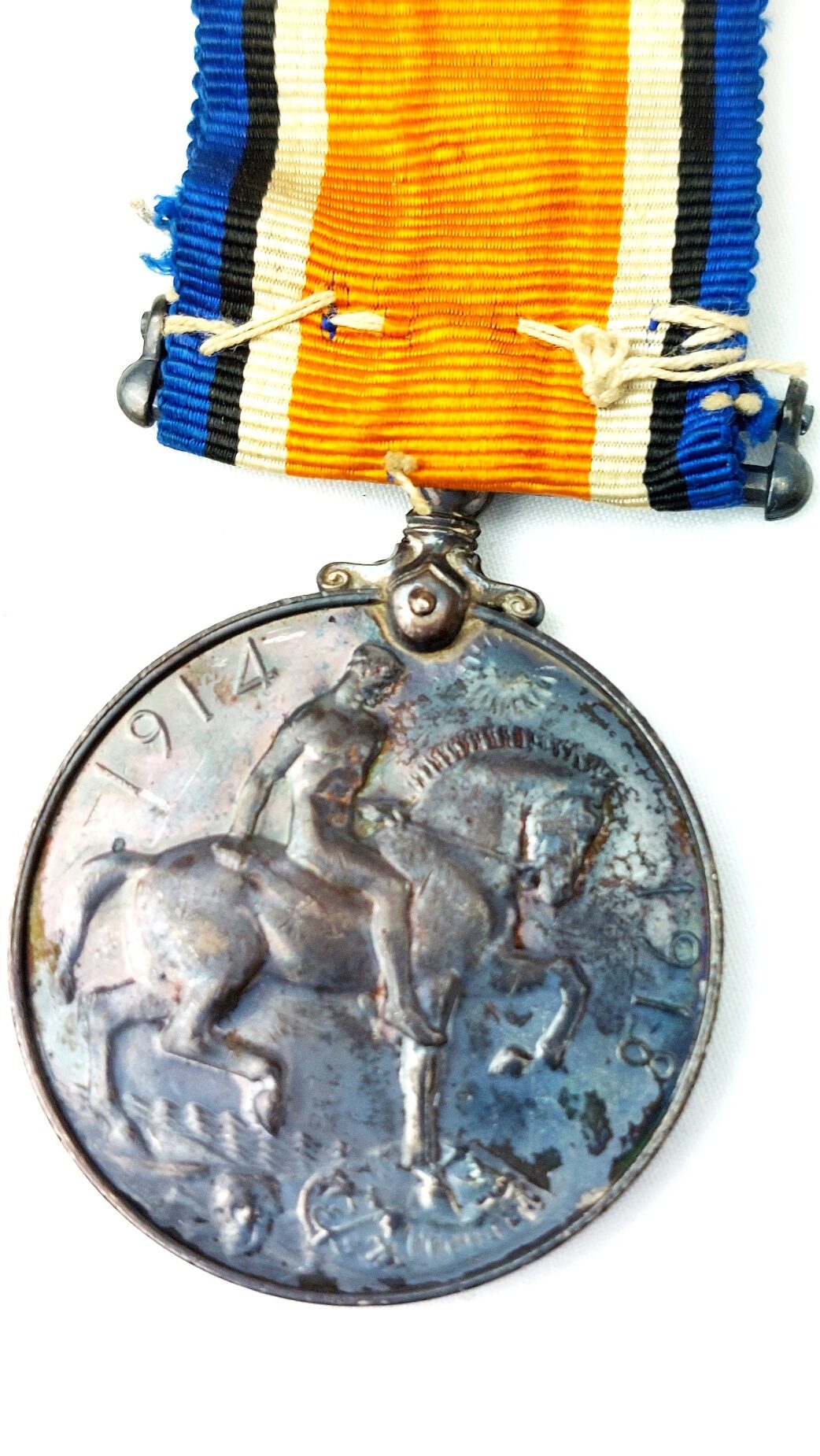
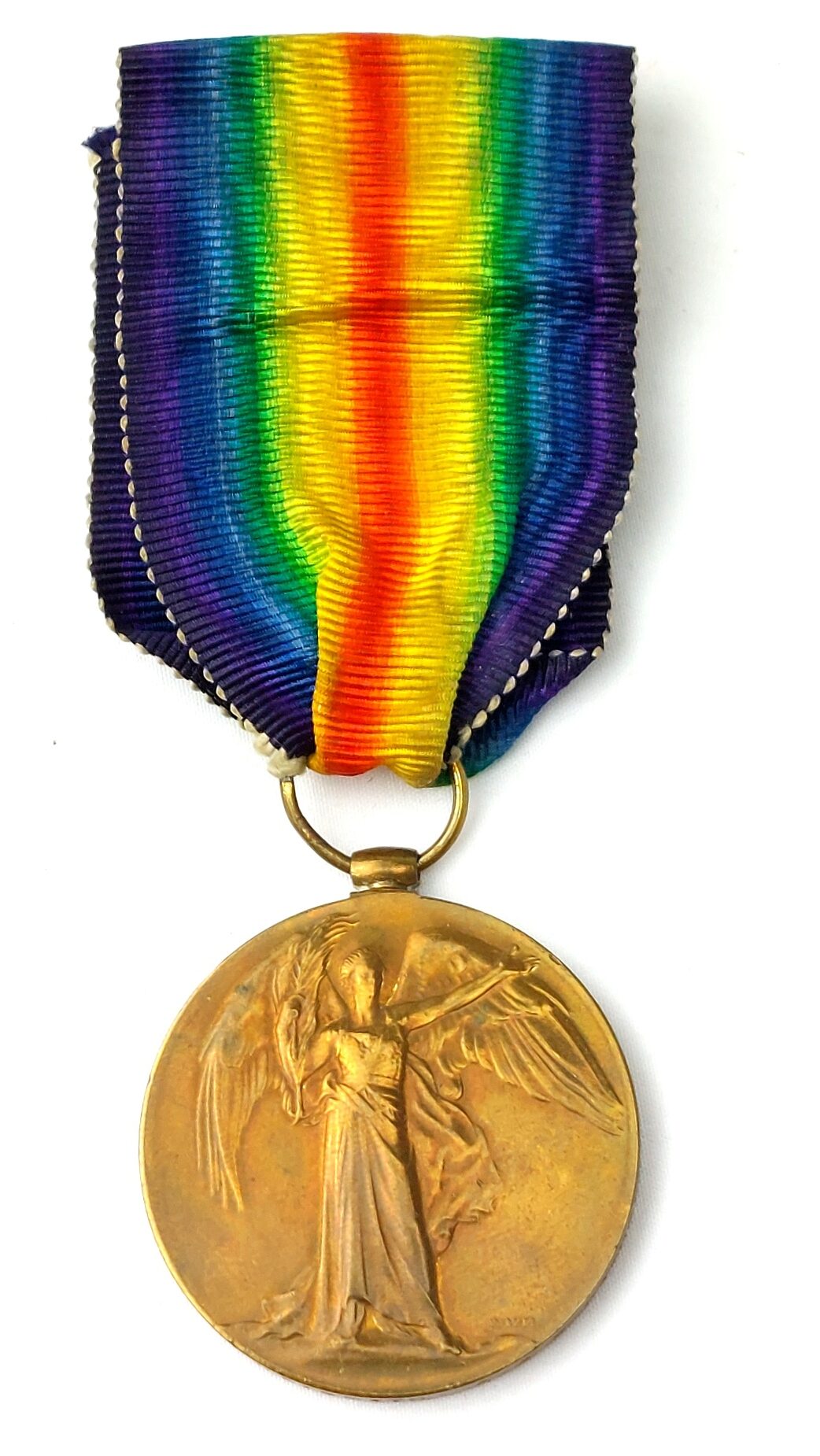
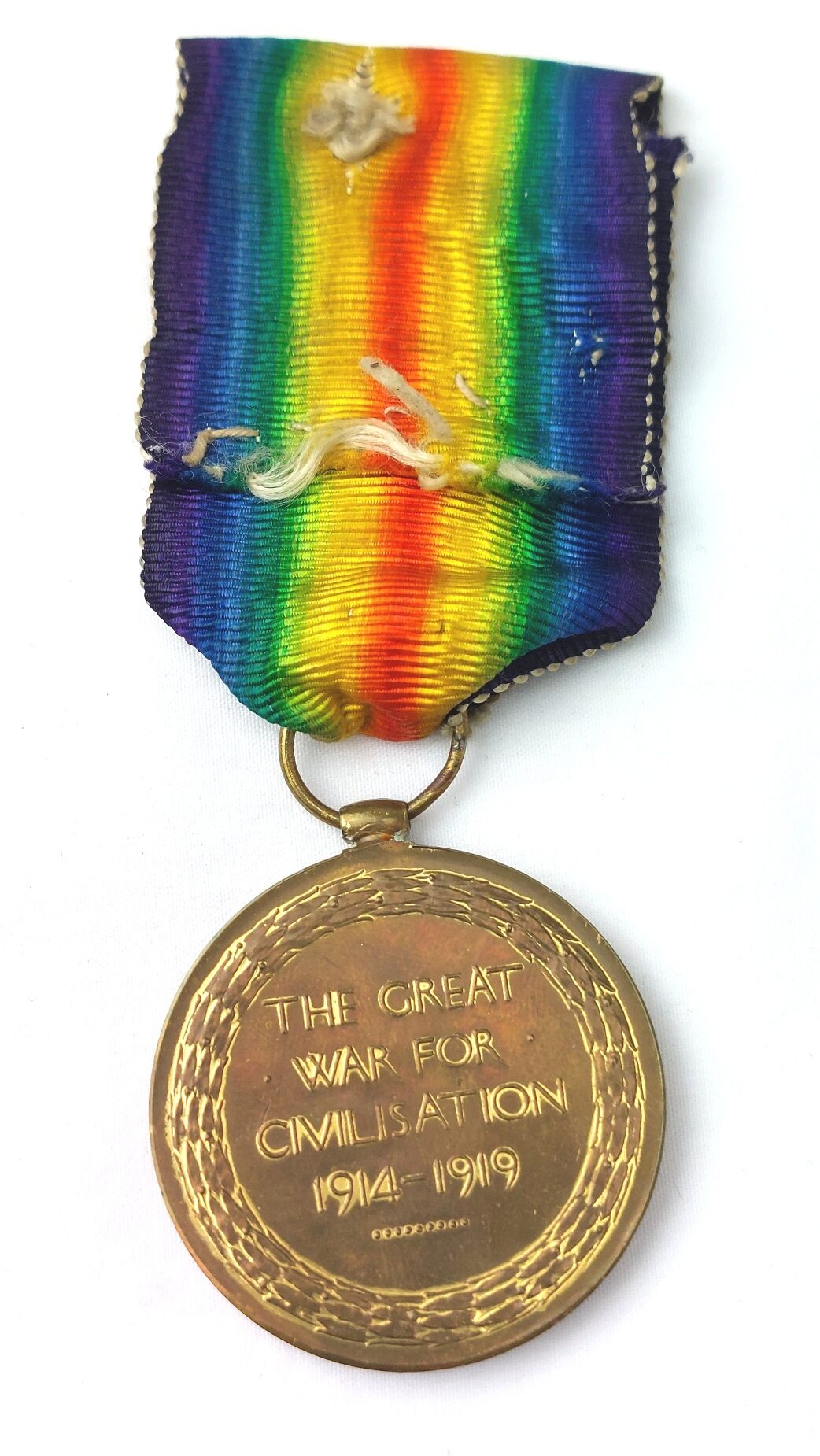
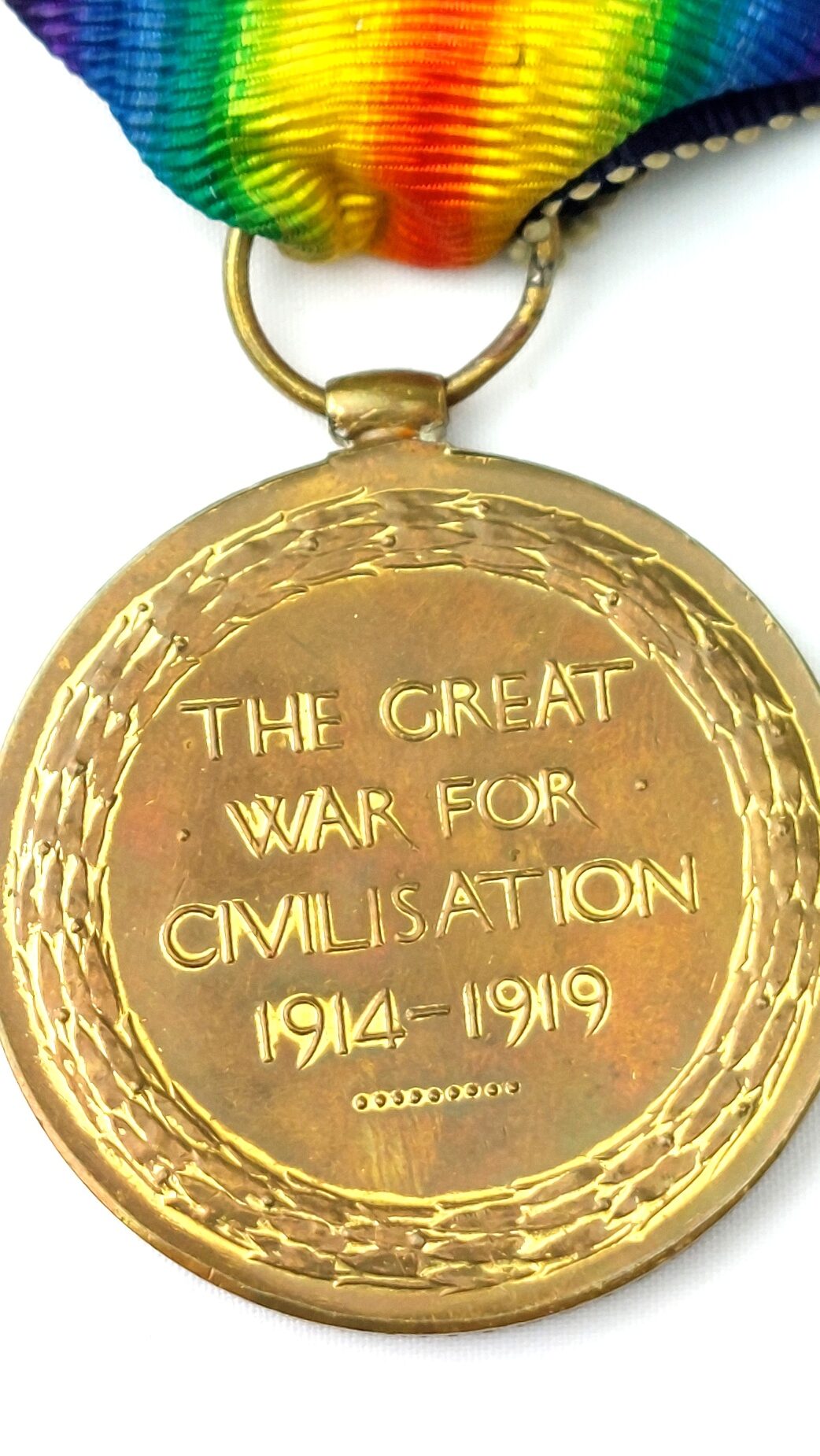
*British, WW1, Named 1914–15 Star Trio Medal Group to 852 Pte James Naismith, Argyll & Sutherland Highlanders – Wounded Soldier – Ribbon Bar & Case*
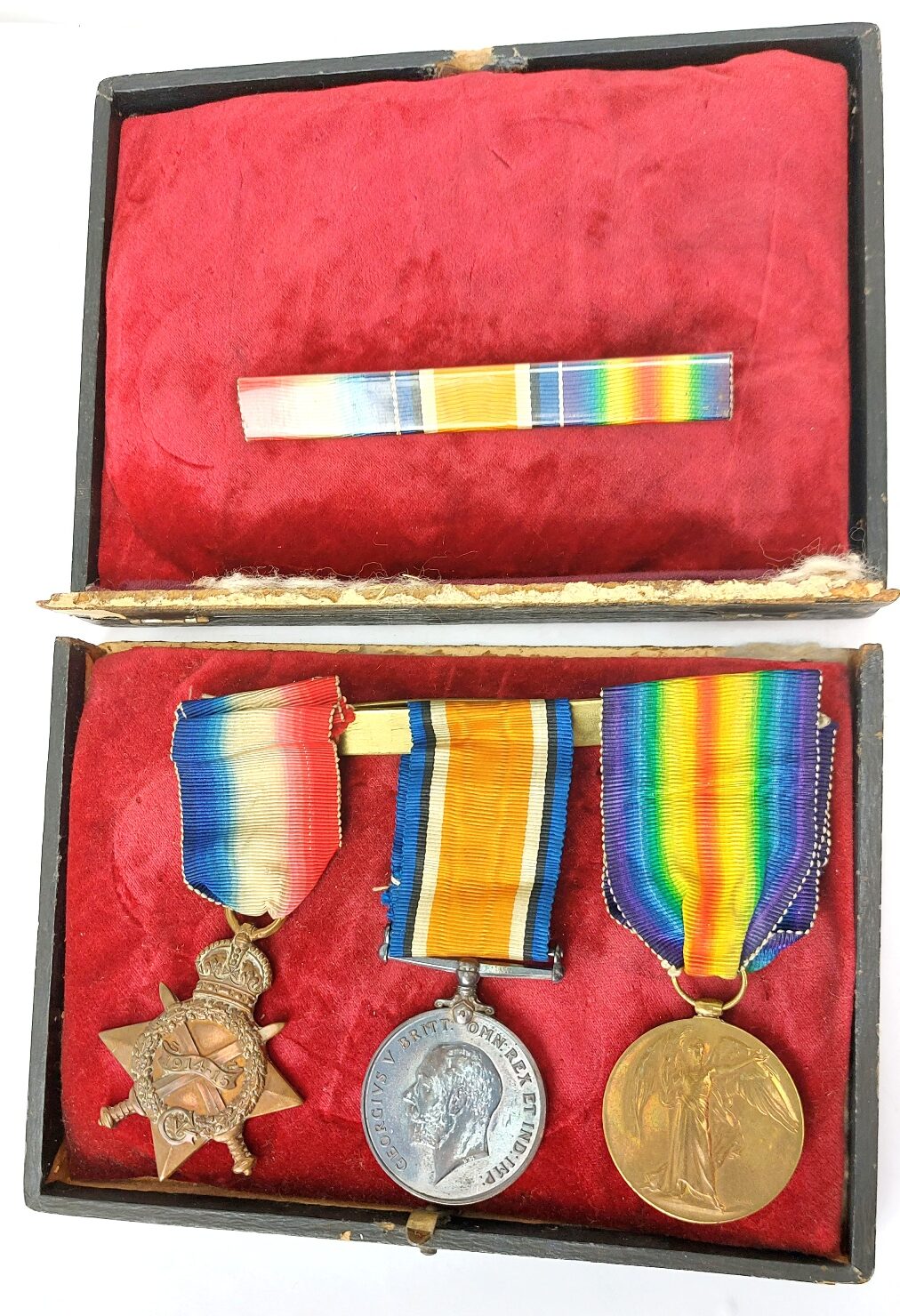
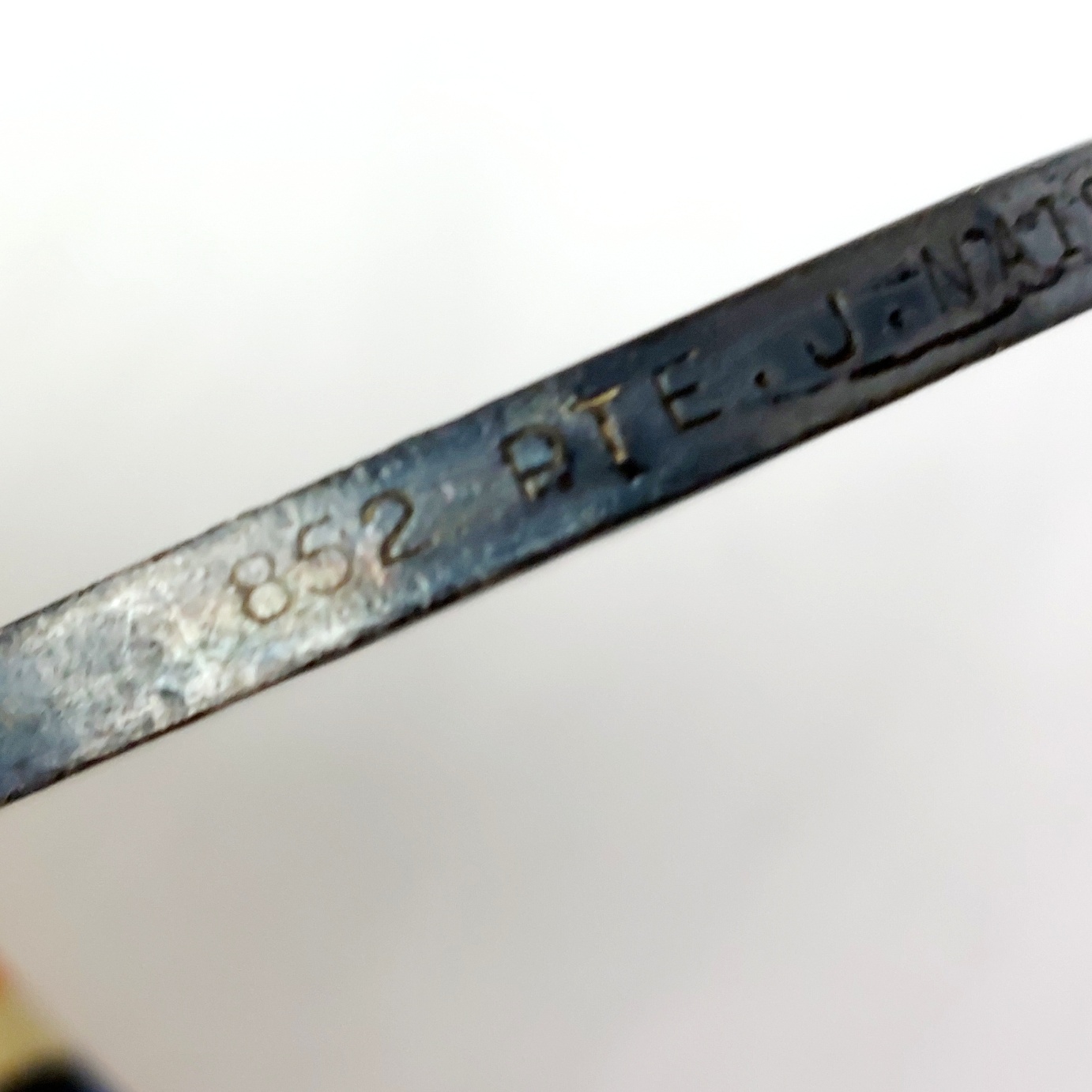
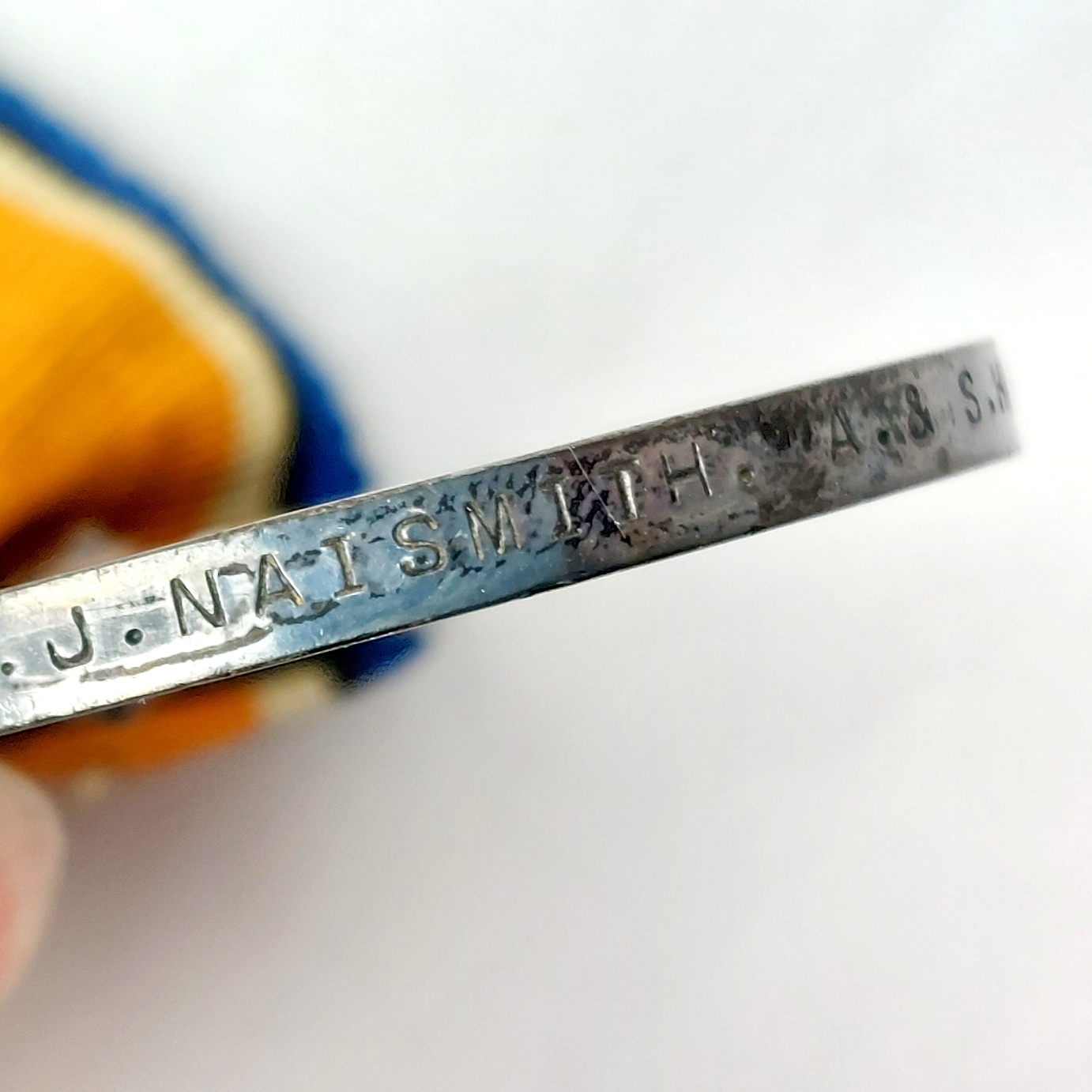
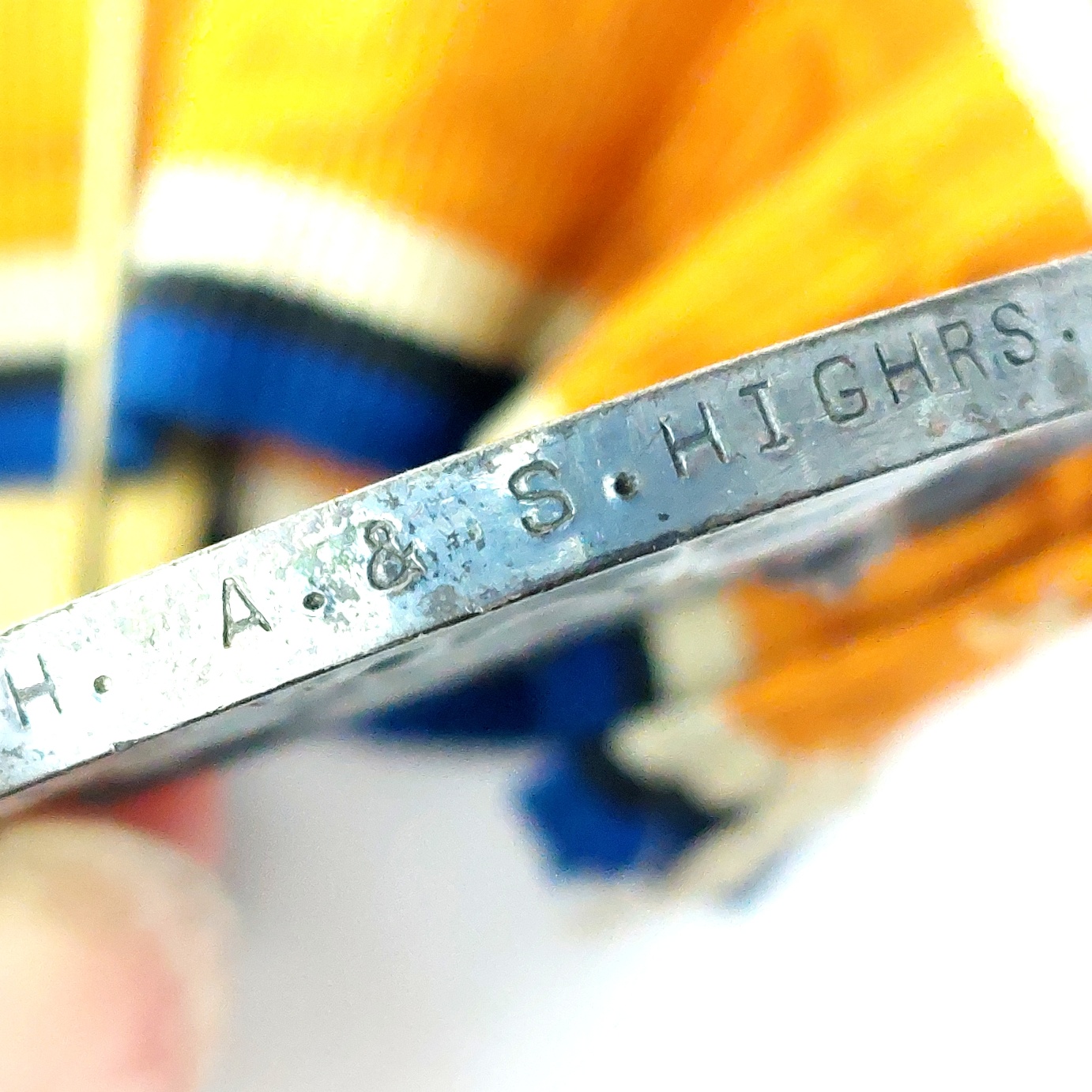
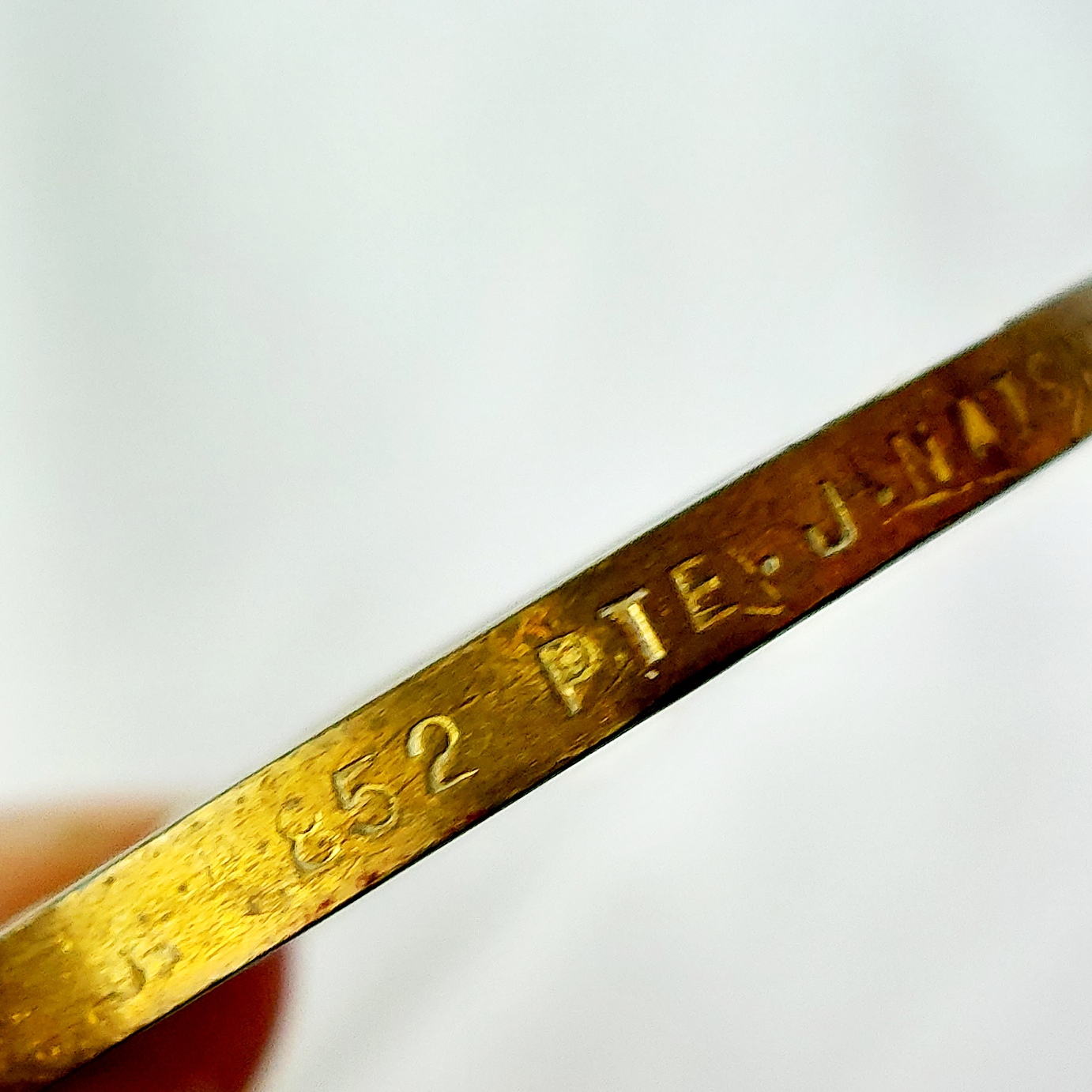
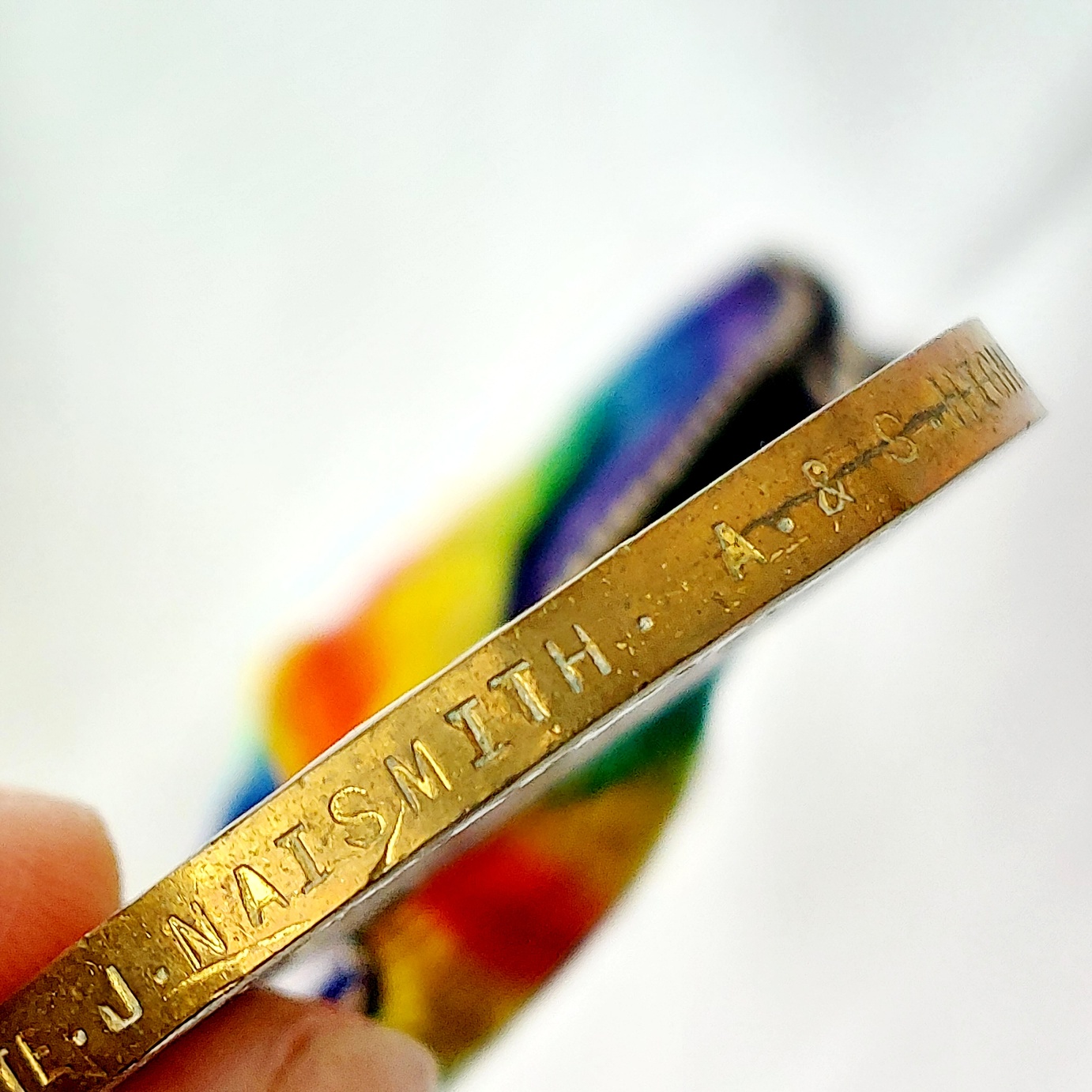
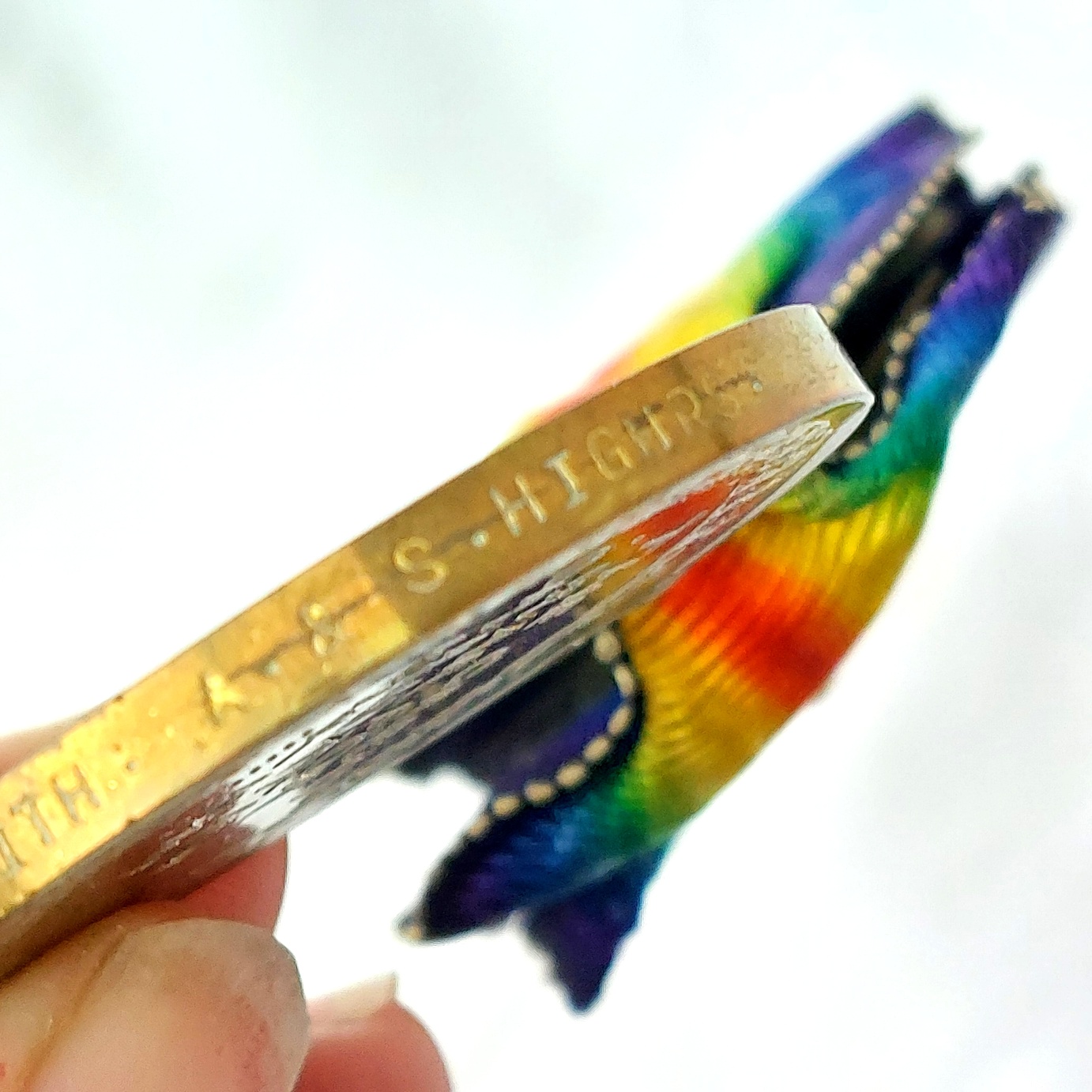
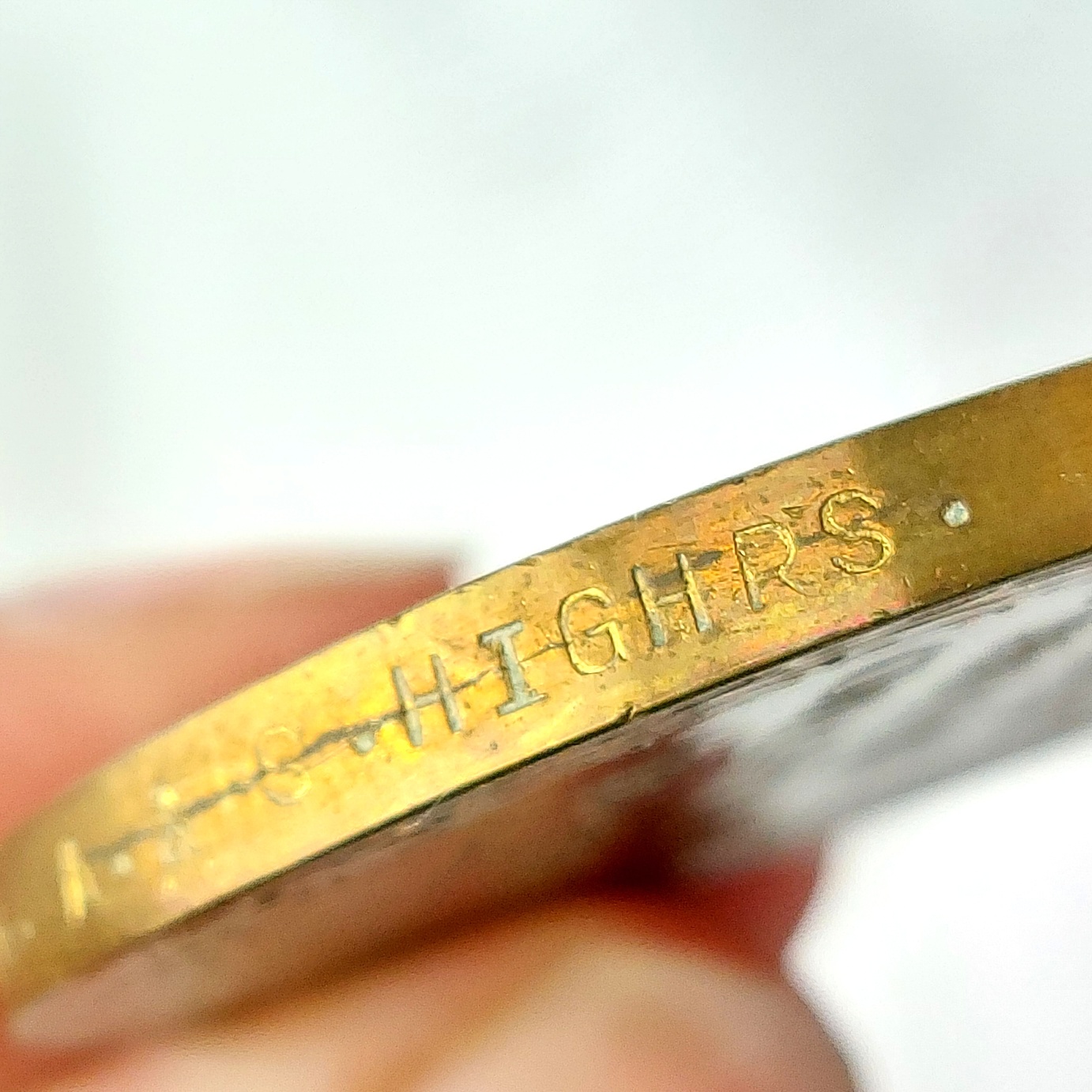
An original and complete First World War medal trio awarded to 852 Private James Naismith of the Argyll & Sutherland Highlanders, comprising the 1914–15 Star, British War Medal, and Victory Medal, accompanied by its matching tunic ribbon bar and period fitted storage case. The medals are officially impressed: "852 PTE. J. NAISMITH. A. & S. HIGHRS."
The entitlement confirms overseas service during the early stages of the Great War, with the 1914–15 Star awarded only to personnel who served in a theatre of war between 5 August 1914 and 31 December 1915. Naismith's low service number 852 suggests early service within the regiment and likely reflects enlistment before the large wartime expansion of Army numbering systems.
Research identifies the recipient as James Naismith of the Argyll & Sutherland Highlanders, with medal entitlement recorded under National Archives reference WO 372/14/174030, confirming award of the 1914–15 Star, British War Medal and Victory Medal under service number 852. Entitlement to the 1914–15 Star confirms overseas service during the early stages of the Great War and places Naismith among the earlier wartime contingents serving abroad before the later expansion of the Army.
War Office casualty records show James Naismith later appeared as wounded. Daily List No. 5639, dated 9 August 1918, records "Naysmith, J.", service number 852, Argyll & Sutherland Highlanders, listed as wounded and entitled to wear a Wound Stripe under Army Order 204 of 6 July 1916. The spelling variation between Naismith and Naysmith is entirely typical of First World War administration and the matching service number leaves little doubt that this refers to the same soldier named on the medal group.
Surviving post-war pension claimant records continue to identify James Naismith, service number 852, A. & S. Highrs., together with his widow E. M. Naismith. The claimant record, dated 21 January 1935, gives an address at 8 Cranham Road, Romford, Essex and confirms that James Naismith had died by early 1935, while providing a firm documentary link between the named medal recipient and his later family history. His early death underscores the tragic, lifelong physical toll endured by those who fought through the early, brutal stages of the Great War.
The medal group remains with its original style mounting bar and matching tunic ribbon bar beneath a protective cover. Such associated pieces considerably improve display appeal and indicate the medals remained together for many years.
History Note:
James Naismith’s entitlement to the 1914–15 Star confirms overseas service during the early phase of the Great War, placing him among the earlier wartime contingents rather than later conscription-era soldiers. The Argyll & Sutherland Highlanders were heavily committed from the opening stages of the conflict, with battalions serving on the Western Front, at Gallipoli, in the Middle East, and across other theatres of war.
The regiment took part in some of the conflict’s major early actions, including fighting around Ypres, Loos, and later the large-scale offensives on the Somme and beyond. The Argyll & Sutherland Highlanders served across numerous theatres and endured heavy casualties throughout the war, with battalions repeatedly committed to frontline operations during some of the conflict’s most costly fighting. James Naismith himself later appeared in official casualty records as wounded, with Daily List No. 5639 recording service number 852 and entitlement to wear a Wound Stripe. This confirms that the recipient experienced active front-line service and injury during the Great War.
*Condition*
Good untouched condition displaying honest age wear and patination throughout. Medals remain correctly named and retain attractive age toning. Ribbons display age wear, fraying and light deterioration consistent with age and storage. Only the British War Medal remains fixed to the mounting bar, with the remaining medals detached but present. The fitted case displays age wear and damage and is fully broken along the hinge side. Matching ribbon bar present. Please see photographs as part of the condition report.
RQMAOOXAHO_7454241567