~ Victorian Staffordshire Pottery 'Neighbours' Pastille Burner, c.1840–1860 ~
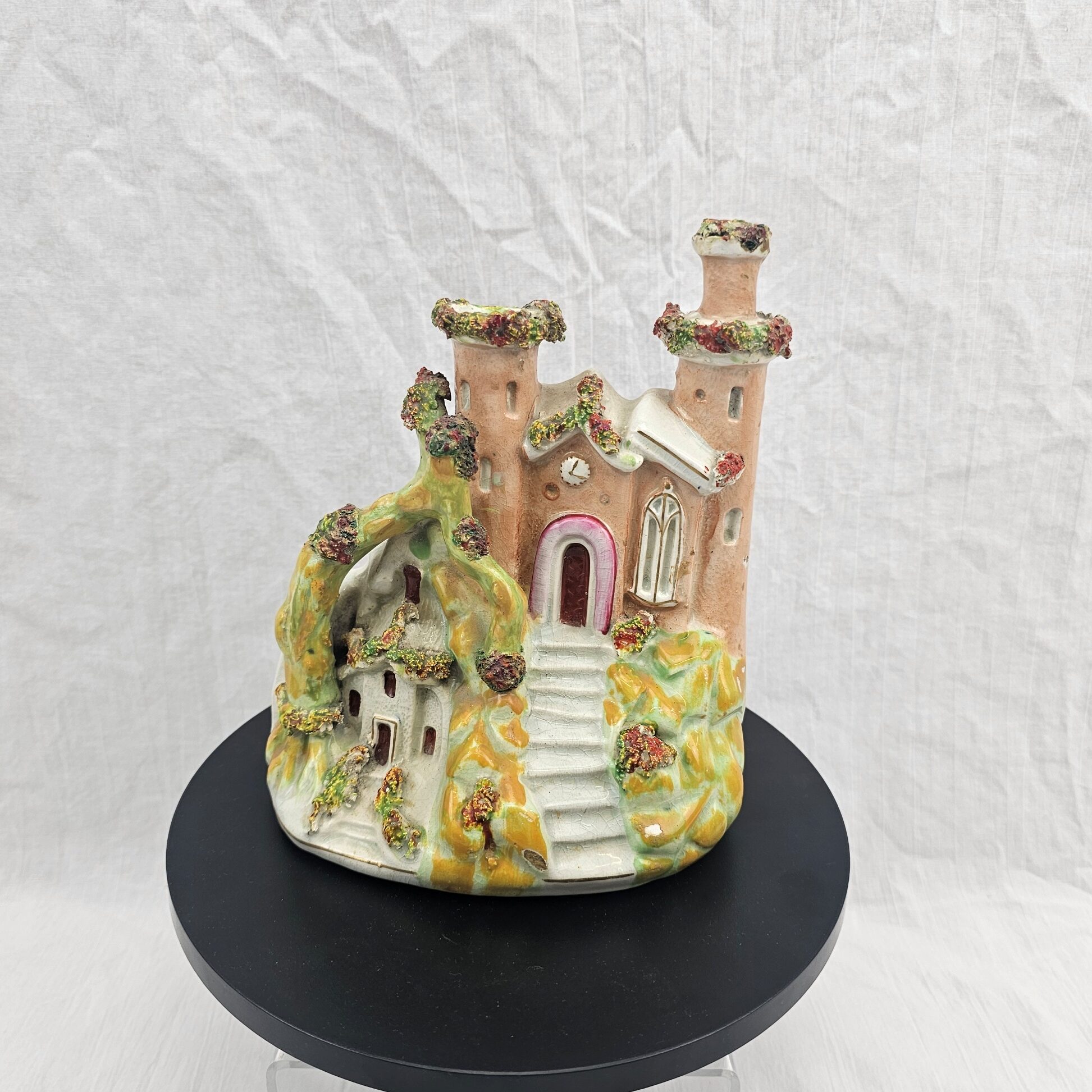
A charming and characterful example of Victorian Staffordshire architectural pottery, depicting the popular 'Neighbours' subject - a grand Gothic castle alongside a rustic cottage nestled into the rocks — in its original function as a pastille burner.
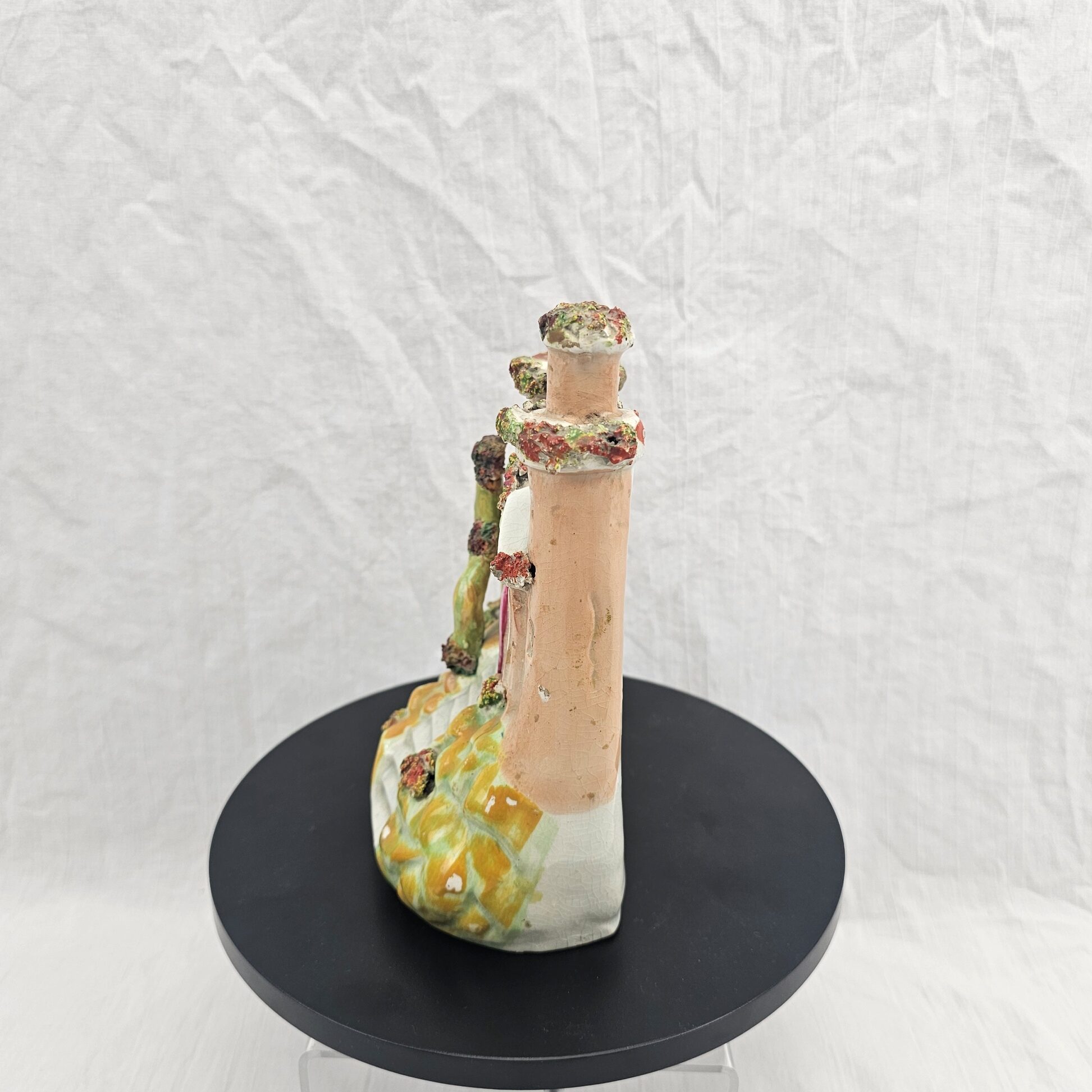
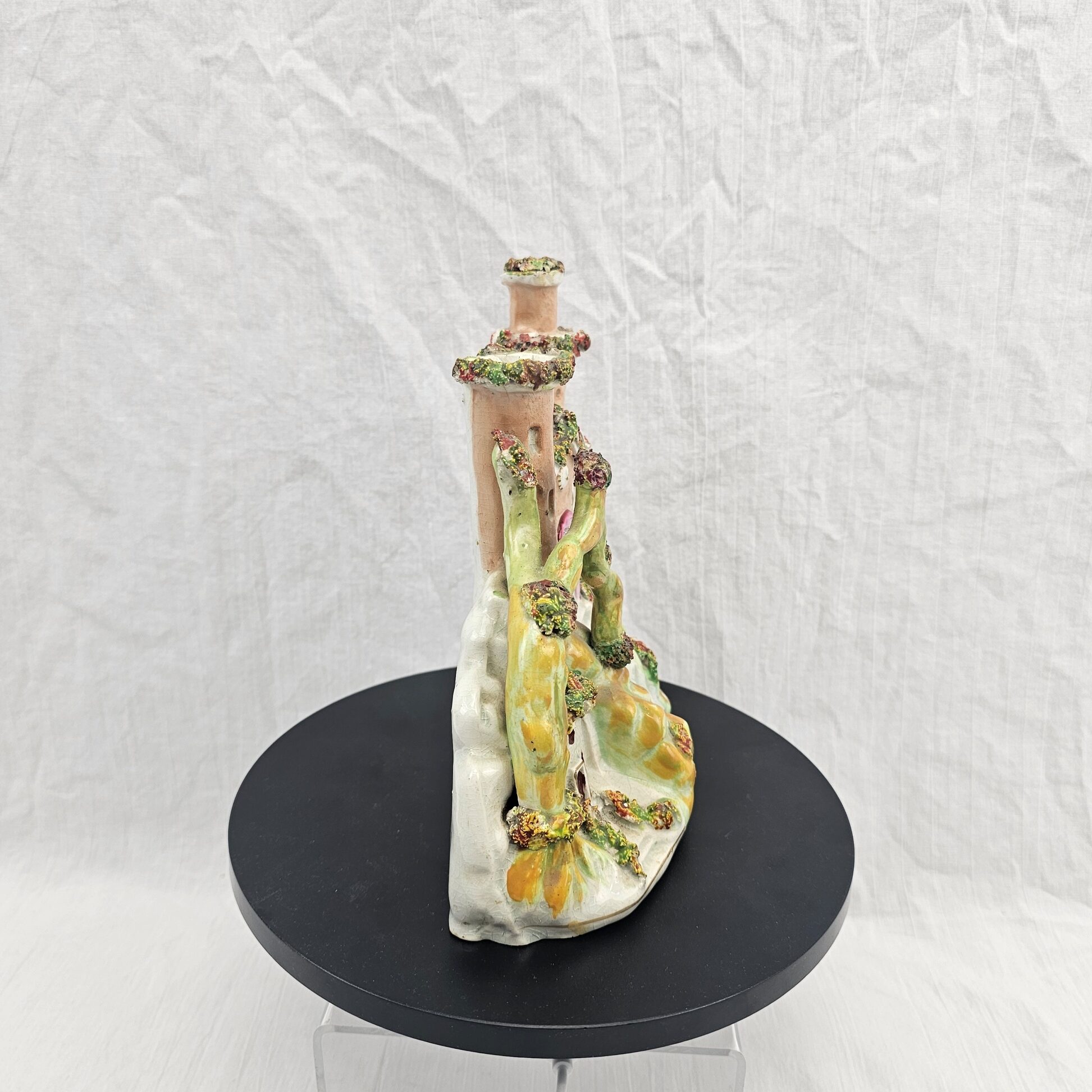
This delightful piece is a classic Victorian Staffordshire pastille burner in the well-known 'Neighbours' composition — so named for the pairing of two contrasting dwellings in a single, unified scene. On the right rises a romantic Gothic Revival castle with two round towers, a pointed arched doorway picked out in pink and red, a Gothic lancet window, and a charming clock face detail to the facade. A flight of steps leads up to the entrance, evoking the picturesque Romantic landscape tradition. To the left, built naturally into rugged yellow and green-glazed rockwork, sits a much humbler rustic cottage or mill house, its smaller windows and earthbound form providing a delightful visual contrast with its grander neighbour.
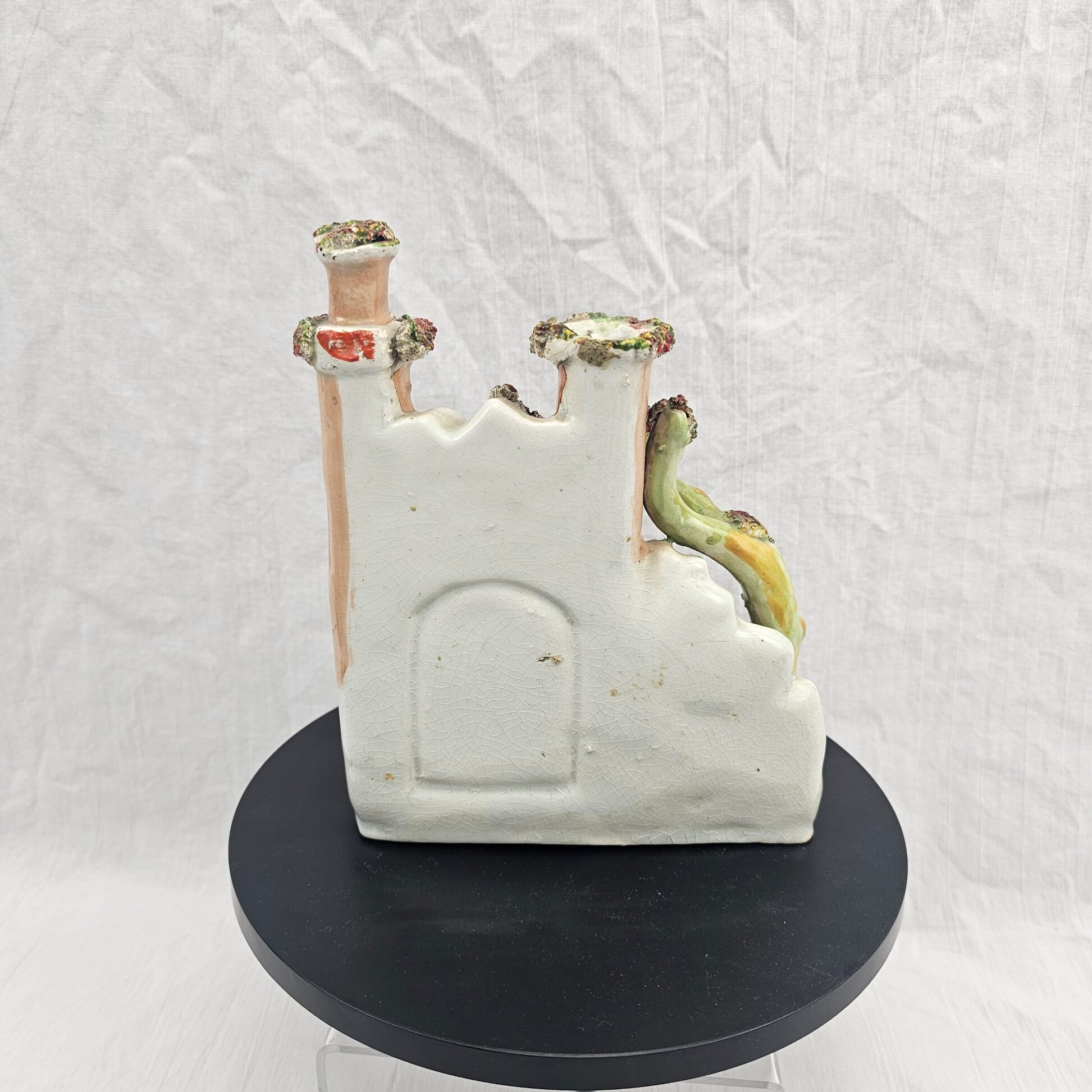
The entire composition is enriched with the characteristic Staffordshire bocage decoration - applied clay trees and trailing foliage in green and yellow, and distinctive encrusted floral clusters in red, green, and gold applied liberally to the chimney tops, rooflines, tower battlements, and rockwork. This exuberant applied ornament is one of the most immediately recognisable features of mid-Victorian Staffordshire pottery and gives the piece its vivid, almost theatrical energy.
The towers are glazed in a warm salmon-pink, the walls in white, and the ground in a loose, free-painted palette of yellow and green - all applied with the confident informality that characterises the best Staffordshire pottery of this period.
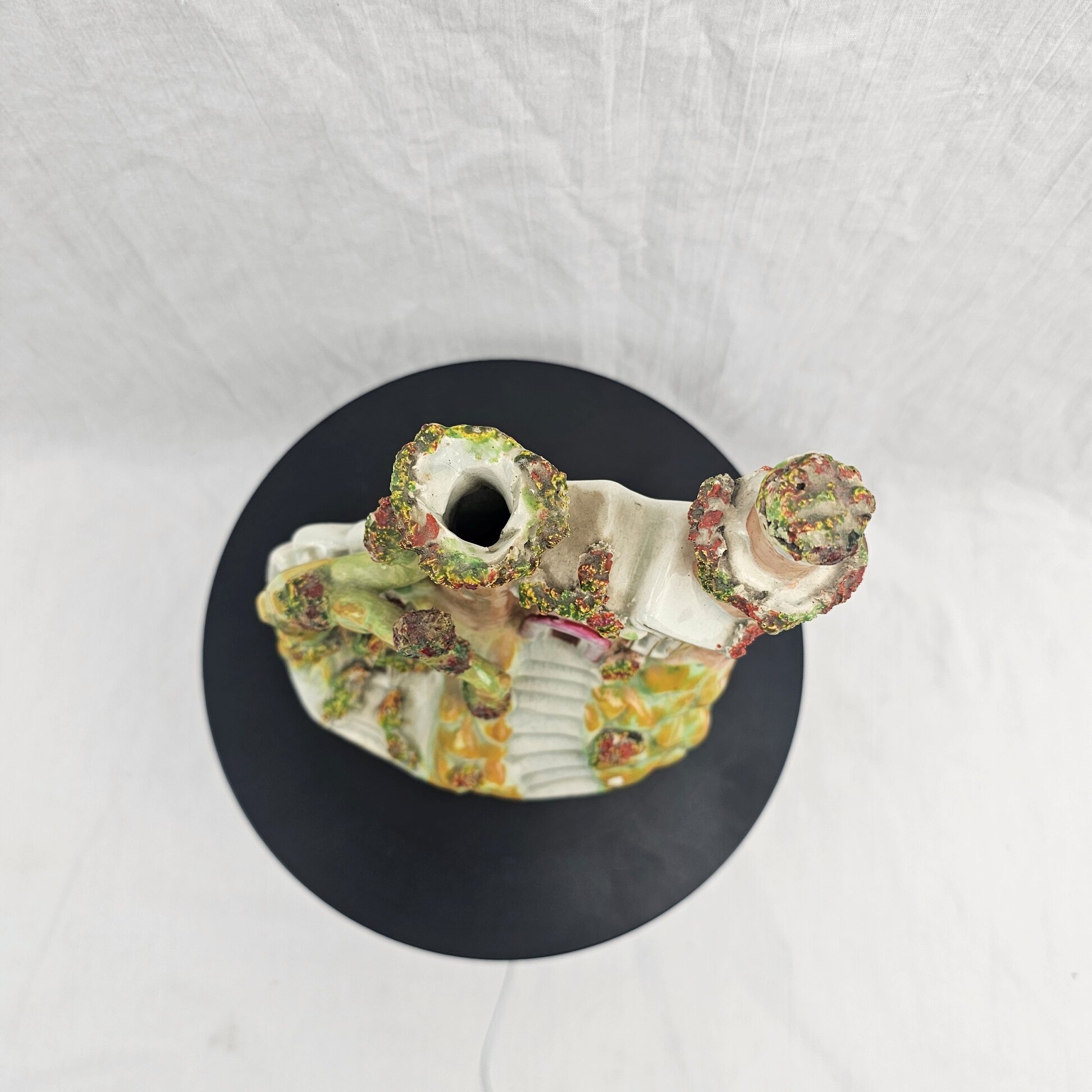
The top of the piece (image 5) confirms its function: one of the chimneys is hollow, designed to allow scented smoke from a burning aromatic pastille placed inside to escape through the opening, freshening the air of a Victorian parlour. The reverse (image 3) is characteristically left largely undecorated - a standard feature of Staffordshire flatback-tradition pieces designed for mantelpiece display.
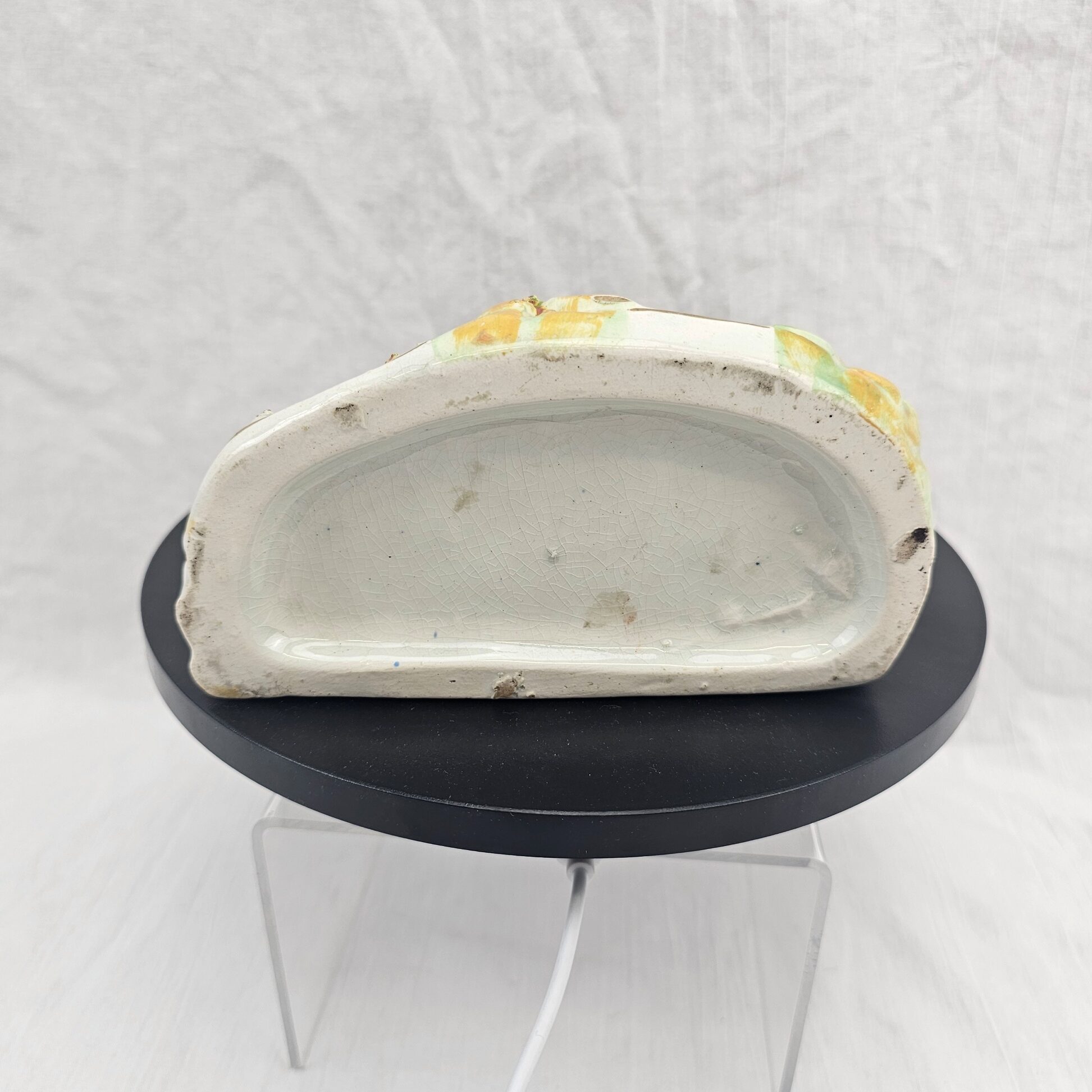
The base is unglazed and bears the characteristic flat, slightly recessed oval form typical of the period, with fine crazing across the glazed interior.
~ Historical Context ~
Staffordshire pastille burners were produced in large numbers from approximately 1820 through to the 1870s, reaching the peak of their popularity in the 1830s–1850s during the reigns of William IV and Victoria. They served a genuinely practical purpose in an era before modern sanitation and ventilation: aromatic pastilles - compressed mixtures of charcoal, benzoin, fragrant resins, and dried flowers — were placed inside the ceramic form and lit, their scented smoke emerging through the chimney openings to mask household odours.
The forms chosen for these burners reflect the great enthusiasms of the Romantic and early Victorian era: Gothic castles and picturesque cottages drew on the landscape tradition popularised by painters such as Constable and Turner, and on the broader cultural fascination with the medieval and the rustic that characterised the period. The 'Neighbours' theme — pairing the grand with the humble — was especially popular, and examples vary considerably in their modelling quality, size, and decoration, from simple factory pieces to more elaborate productions.
These pieces were produced throughout the Potteries region of Staffordshire, often by smaller workshops that operated without marked attribution, which is why the vast majority of pastille burners are unmarked. They were sold through china dealers, market stalls, and travelling vendors, finding their way into parlours and mantelpieces across Victorian Britain.
Today they are keenly collected, both for their decorative appeal and as vivid material records of everyday Victorian domestic life.
~ Condition ~
The piece presents with the honest, warm character of an object that has been genuinely used and displayed across its long life. Specific observations:
Left tower (image 2): The body of the taller tower on the right side of the composition shows significant areas of glaze and surface decoration loss, with the bare ceramic body exposed. This is the most notable condition issue and is clearly visible in the photographs.
Chimney tops (image 5): Viewed from above, some loss and wear to the encrusted bocage decoration on the chimney surrounds is visible, consistent with age and the fragile nature of applied clay decoration.
Base (image 6): The unglazed base shows age-related dirt accumulation, a small chip/loss to the edge, and a firing hole typical of manufacture. The inner glazed base shows fine crazing throughout — entirely period-appropriate.
Overall: The front-facing decoration, arched doorway, Gothic window, staircase, and rockwork are all well-preserved and colourful. The bocage trees and floral clusters, while showing the expected wear, remain largely intact and give the piece its characteristic visual richness.
No restoration is apparent.
Buyers are encouraged to examine all photographs closely before purchasing.