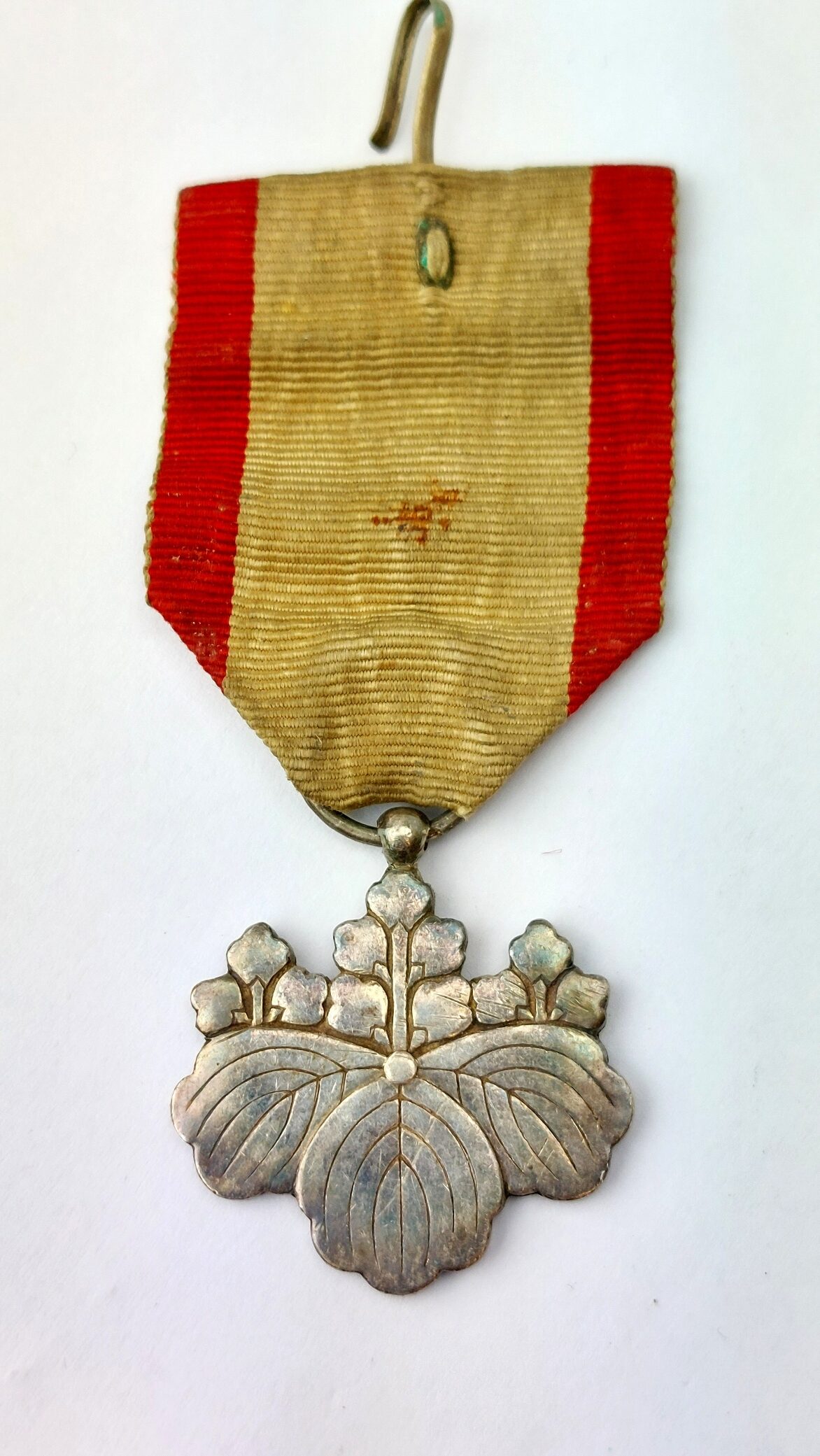
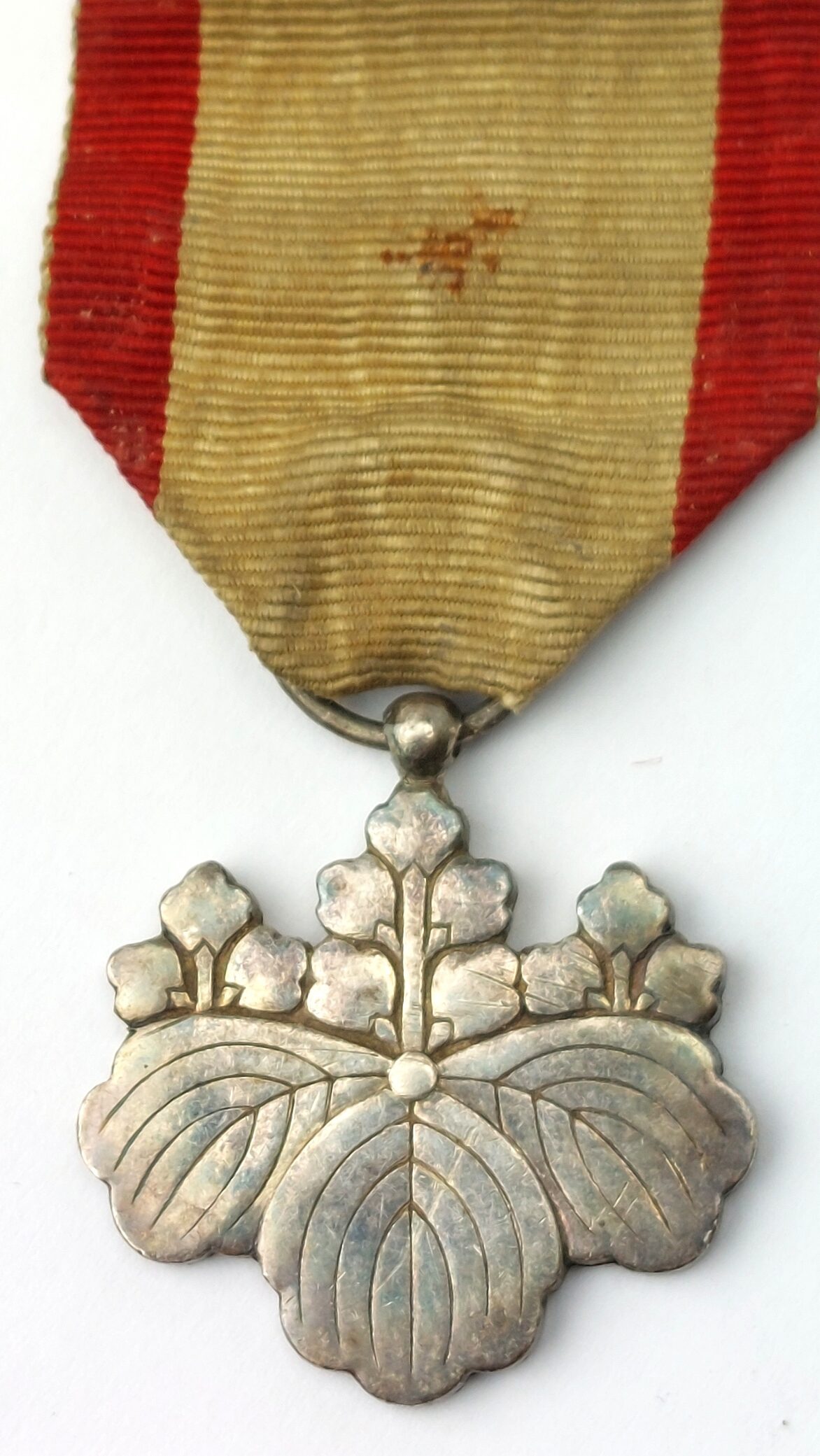
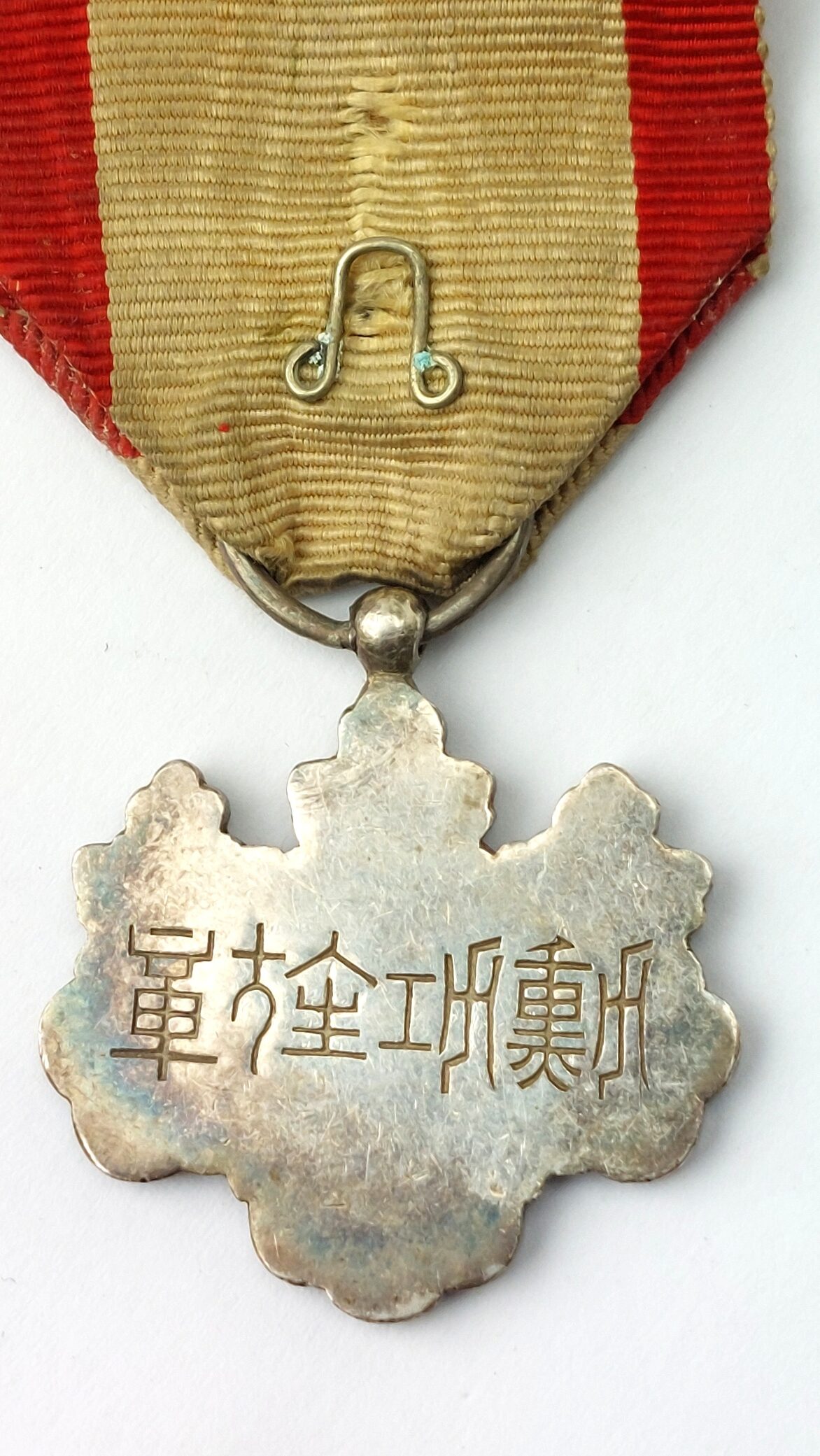
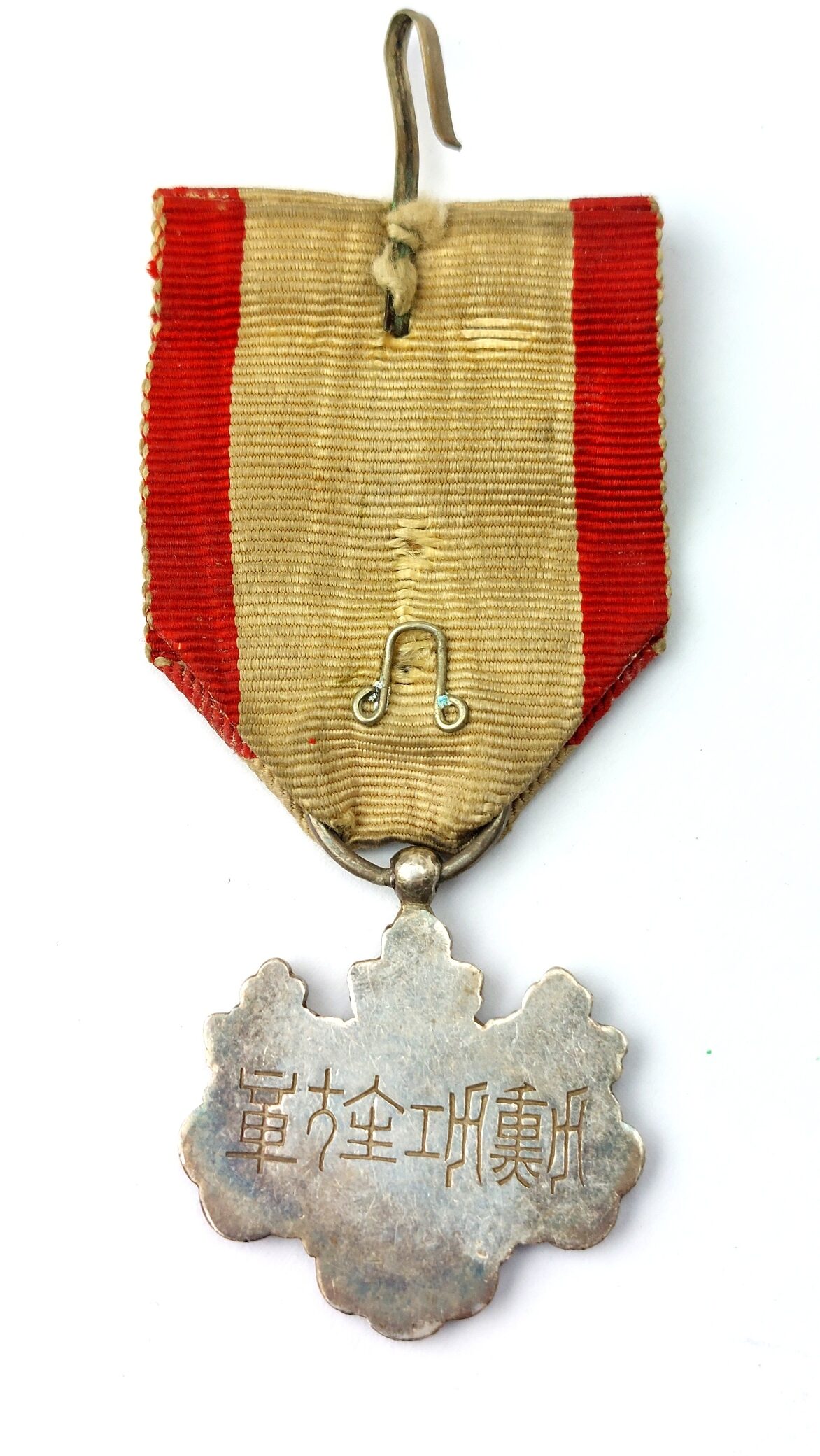
*Imperial Japan, WW1 era c.1890 – 1930 Meiji–Shōwa Period, Medal for Meritorious Service (Kunkō Seishō – 勲功旌章), Silver Paulownia Leaves Decoration*
An Imperial Japanese decoration known as the Medal for Meritorious Service (勲功旌章 – Kunkō Seishō), issued during the late Meiji to early Shōwa period. This is much raren than the Order of the Rising Sun (8th Class), the more common similar medal.
The medal is formed in silver in the stylised shape of three paulownia leaves and blossoms, a traditional emblem associated with the Japanese government and the Imperial state. The obverse displays the detailed paulownia leaf motif radiating from a central boss, while the reverse is engraved with four kanji characters reading 勲功旌章, translating to “Badge for Meritorious Service.”
The medal is suspended from its original cream silk ribbon with red edge stripes, attached by a simple ring and hook suspension typical of Imperial Japanese decorations of the late 19th and early 20th century.
Approx. Measurements – Medal width: approx. 3.6 cm. Height of medal: approx. 2.8 cm. Overall height including ribbon: approx. 7.5 cm.
History Note The Kunkō Seishō (Medal for Meritorious Service) was established during the Meiji period, a time when Japan was rapidly modernising its military and administrative institutions. Decorations of this type were issued to recognise faithful or meritorious service to the state, both in military and civil capacities.
The design incorporates the paulownia crest (kiri), an important symbol in Japanese heraldry historically associated with the Imperial government and later used in various official decorations and state emblems. Awards bearing this motif were commonly presented during the late 19th and early 20th centuries, particularly around the period of Japan’s expanding military activity, including the Russo-Japanese War (1904–1905) and into the early Shōwa era.
While less elaborate than the higher Imperial orders such as the Order of the Rising Sun, medals such as this formed an important part of Japan’s honours system, recognising loyal service by soldiers, officials, and individuals contributing to the functioning of the modern Japanese state.
*Condition* The medal remains in good original condition, showing light wear and natural toning consistent with age. The silver surfaces retain good detail to the paulownia leaf design and the reverse inscription remains clear. The original silk ribbon is present, though it shows age toning, light staining and minor wear from service. Suspension ring and hook appear intact and period. Please see photographs as part of the condition report.