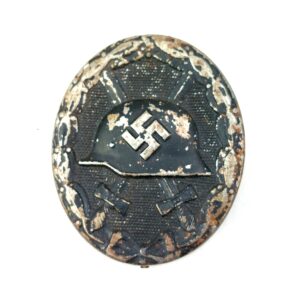
*German, WW2, Iron Cross 2nd Class 1939 (Eisernes Kreuz II Klasse) with Original Ribbon, VGC*
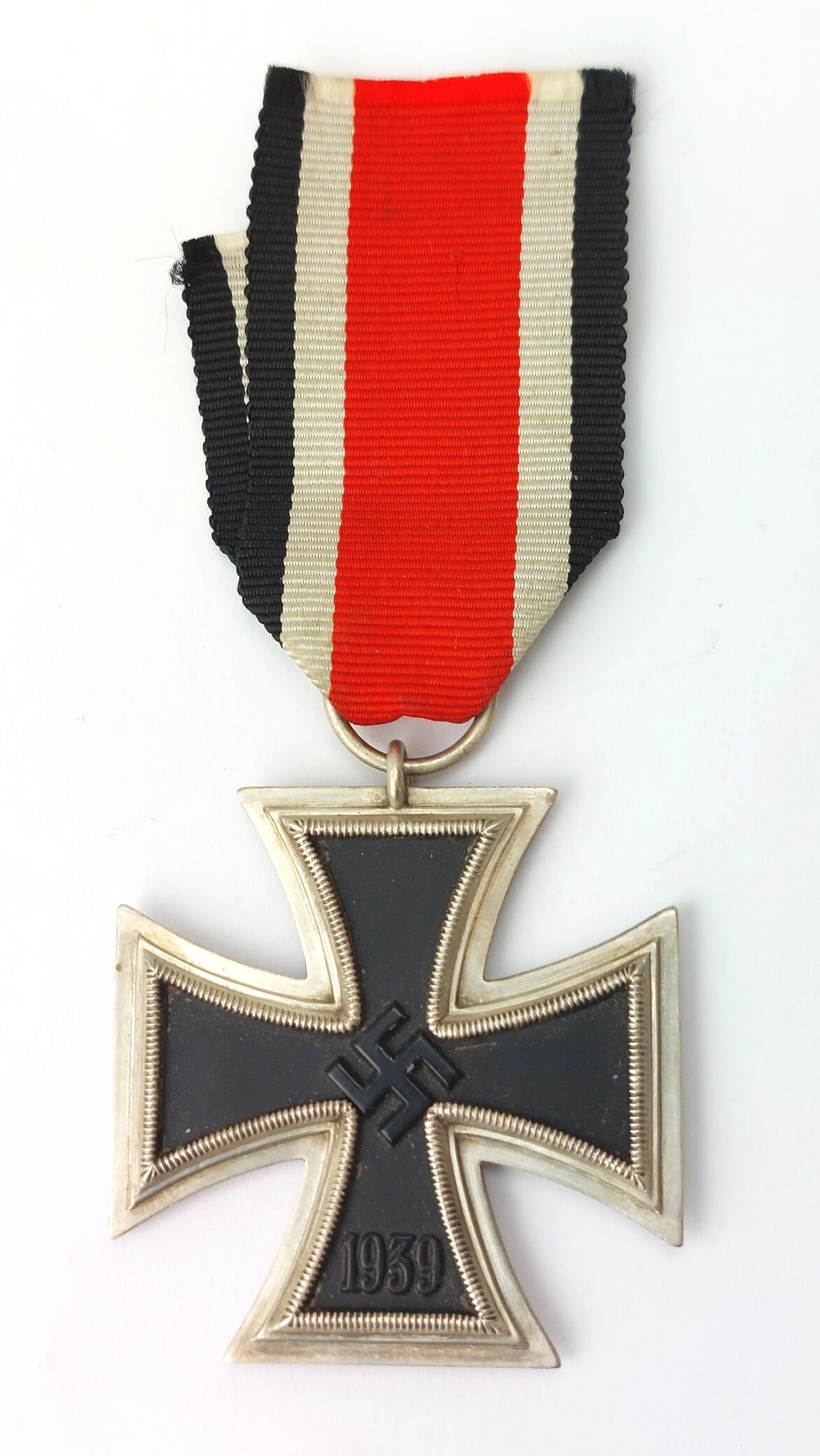
A German Iron Cross 2nd Class (Eisernes Kreuz II. Klasse) of the 1939 pattern, awarded for acts of bravery in combat or for distinguished military leadership during the Second World War.
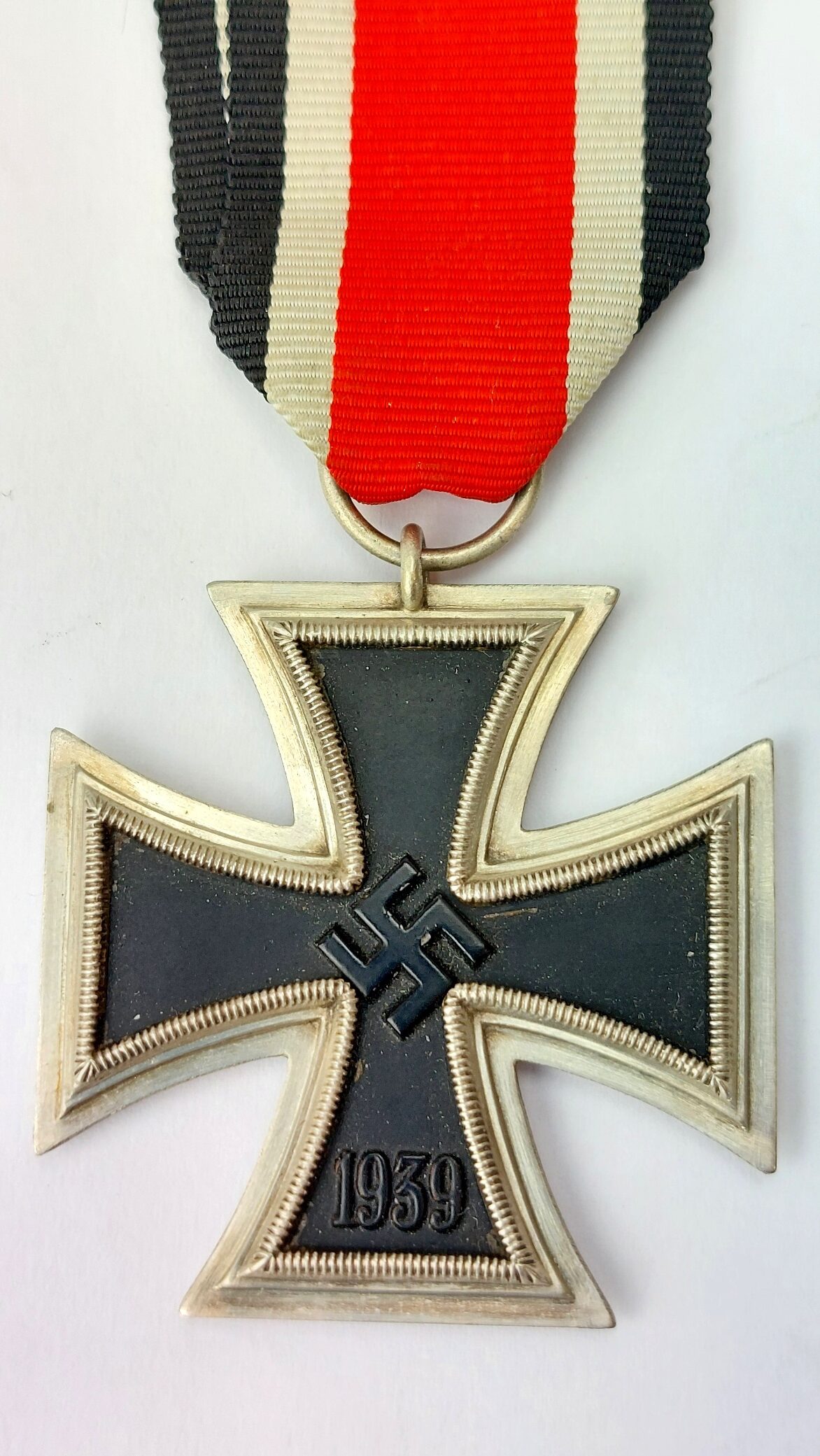
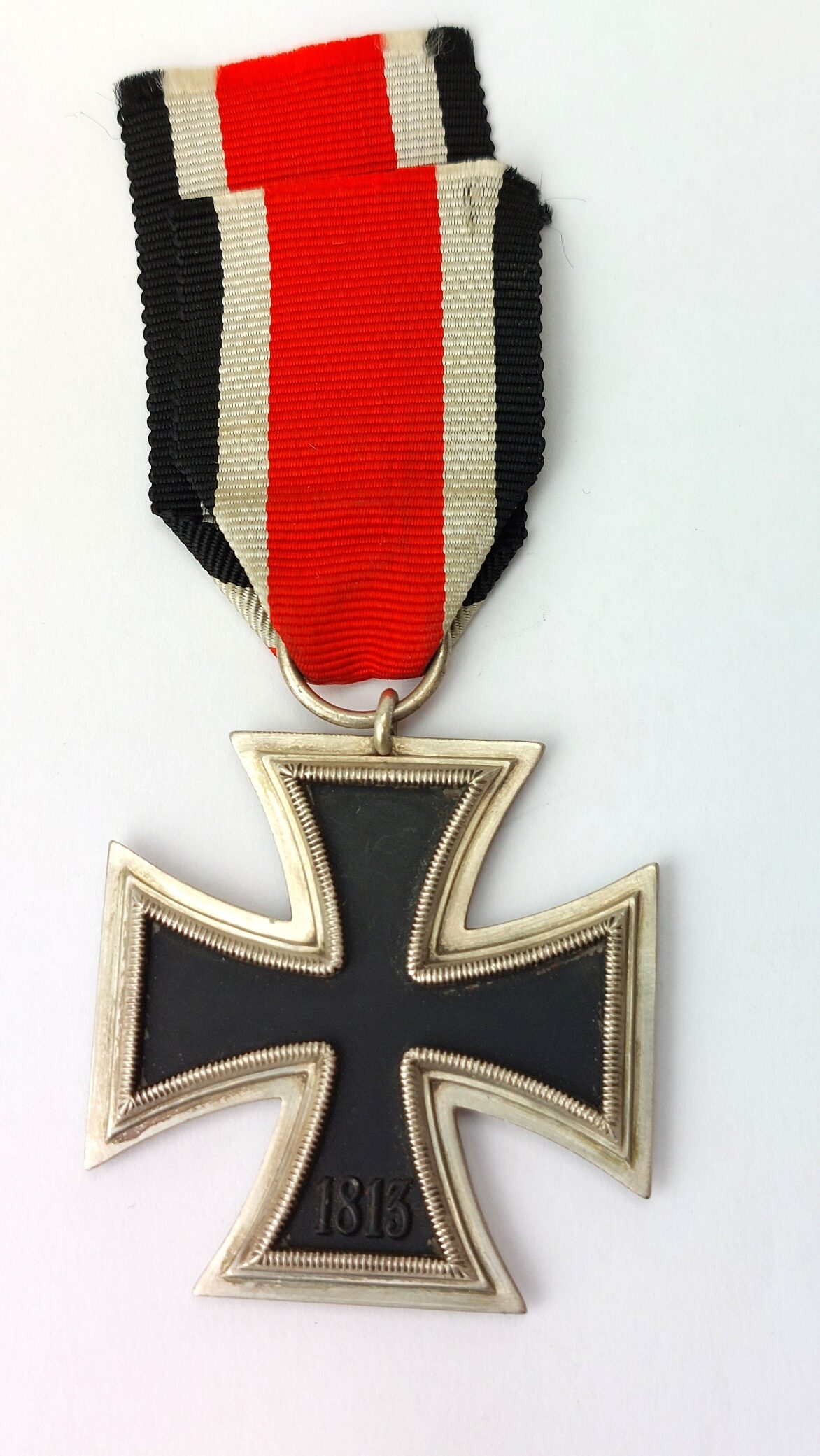
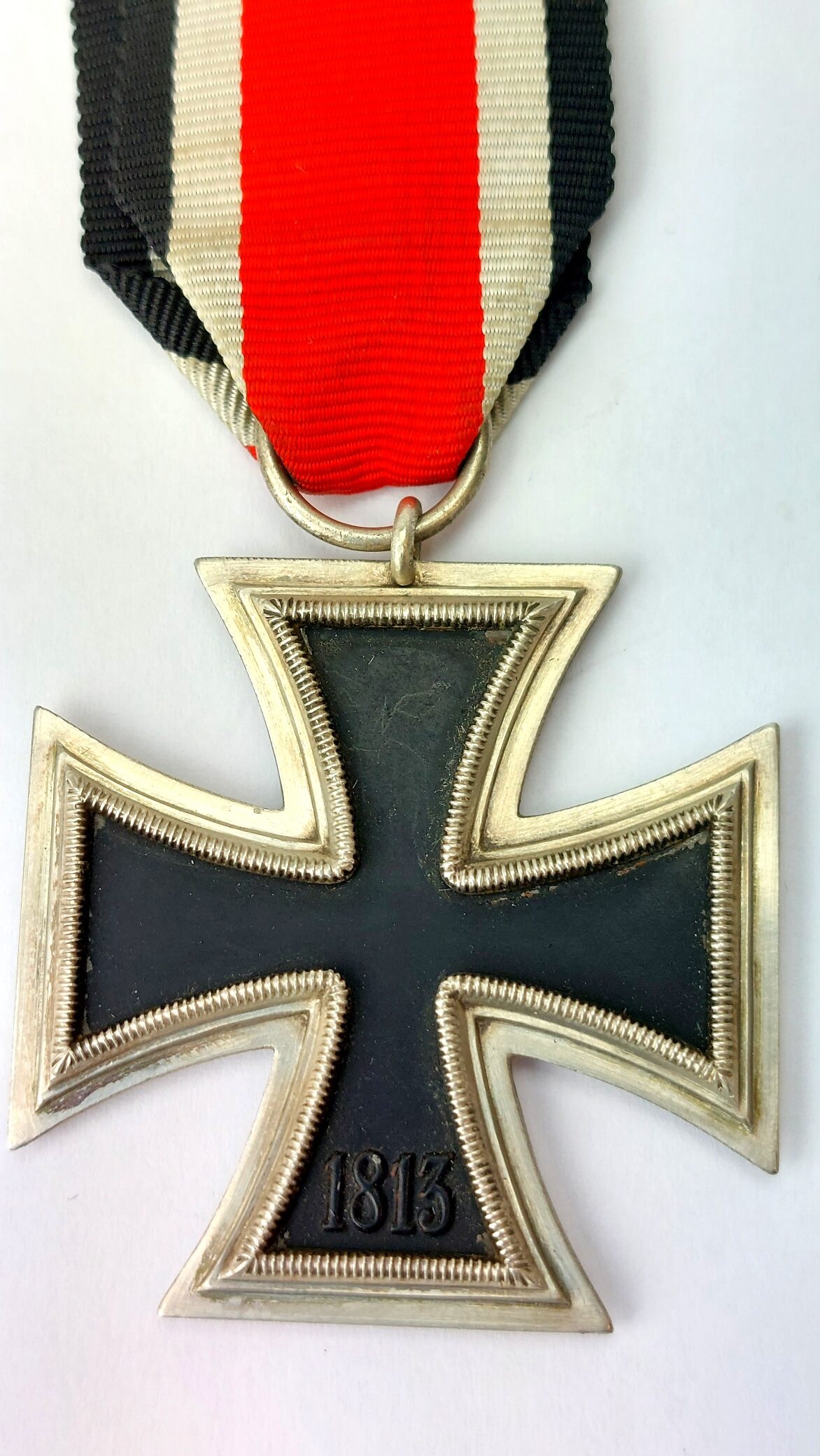
The cross retains its classic three-piece construction, comprising a magnetic iron core finished in black paint and surrounded by a separate silvered frame with finely beaded inner border. The obverse features a central swastika with the date “1939” on the lower arm, signifying the re-institution of the award by Adolf Hitler at the outbreak of World War II. The reverse bears the earlier date “1813”, commemorating the original creation of the Iron Cross by King Frederick William III of Prussia during the Napoleonic Wars.
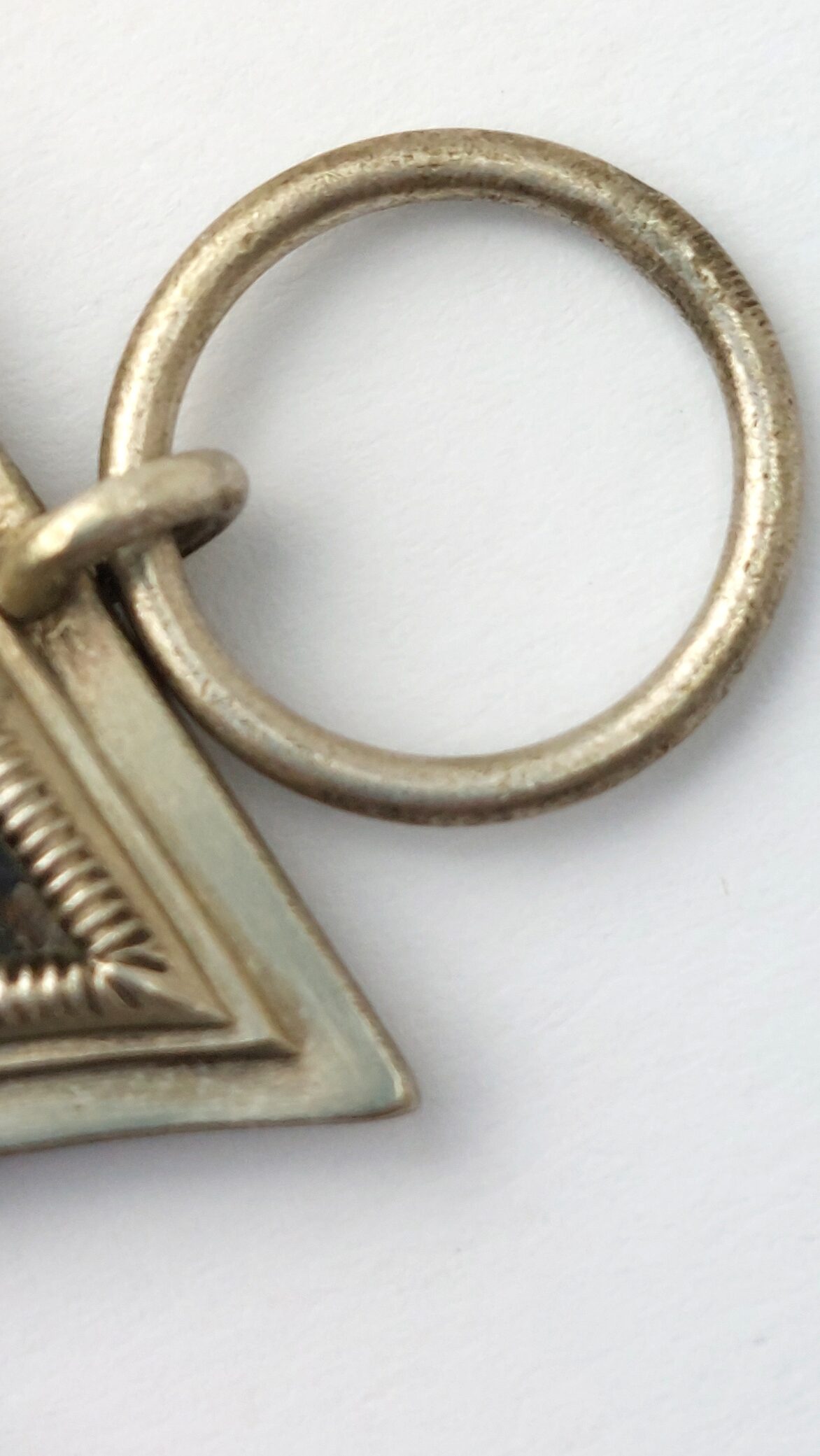
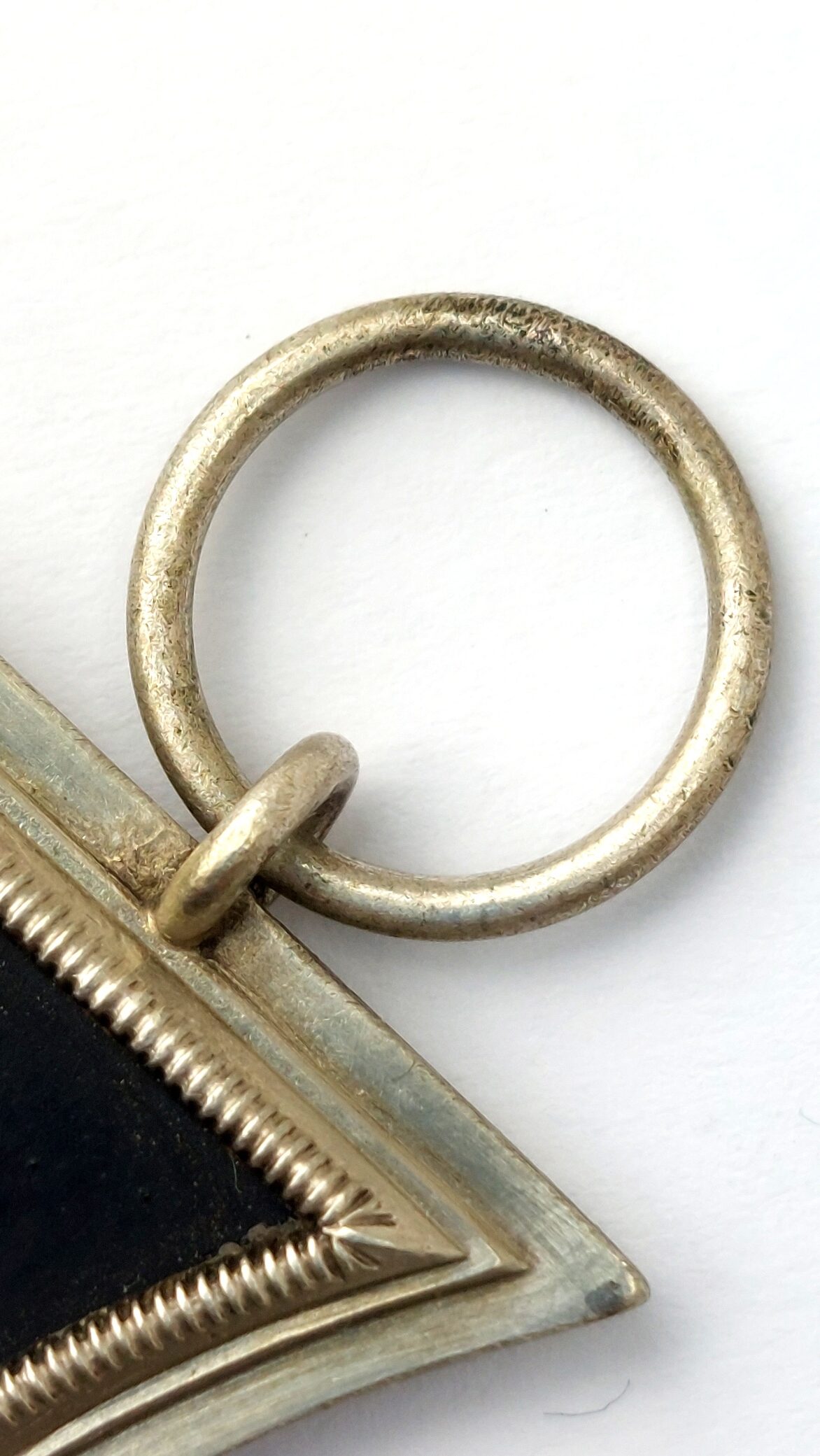
The cross is suspended from its original black, white and red ribbon, representing the colours of the German Reich. The suspension ring appears unmarked, which is not uncommon, as many wartime examples were produced without maker marks.
The piece remains magnetic, confirming the presence of the iron core typical of genuine wartime manufacture.
Overall a well-preserved example of one of the most recognisable German decorations of the Second World War.
Approx. Measurements – Width: 44 mm.
History Note:
The Iron Cross was first established in 1813 by King Frederick William III of Prussia during the Wars of Liberation against Napoleon. Designed by architect Karl Friedrich Schinkel, the cross pattée form with black iron core quickly became one of the most distinctive and enduring military decorations in Europe.
The award was revived during major conflicts involving Germany, including the Franco-Prussian War (1870) and the First World War (1914). With the outbreak of the Second World War, Adolf Hitler reinstated the decoration on 1 September 1939, adding the swastika to the centre and the date “1939” to distinguish the new issue. The Iron Cross 2nd Class was the most commonly awarded grade of the decoration and was typically presented for individual acts of bravery, leadership, or battlefield merit. Recipients initially wore the ribbon through the second buttonhole of their tunic, while the cross itself was usually worn only on formal occasions.
During the war, millions of Iron Crosses were produced by numerous German manufacturers using the traditional three-part construction of an iron core and silvered frame. Maker marks were sometimes stamped on the suspension ring, though many wartime examples remain unmarked. Today, the Iron Cross remains one of the most recognisable military decorations of the 20th century and is widely collected as a historical artefact of the Second World War.
*Condition*
Very good overall condition. The black core retains most of its original finish with only light age wear. The silvered frame shows mild toning and handling marks consistent with age. Suspension ring unmarked. Ribbon present and in good condition with minor fraying to the edges. The core remains magnetic. Please see photographs as part of the condition report.