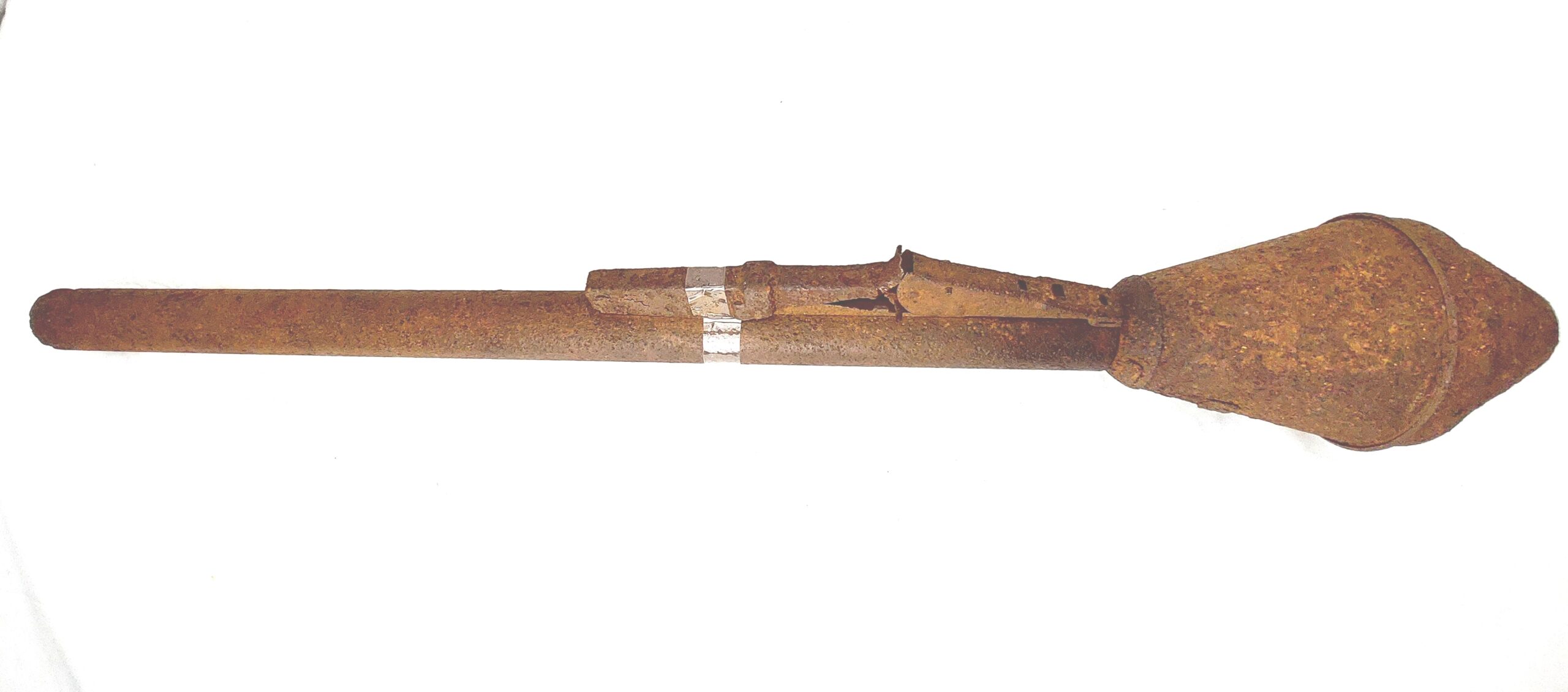
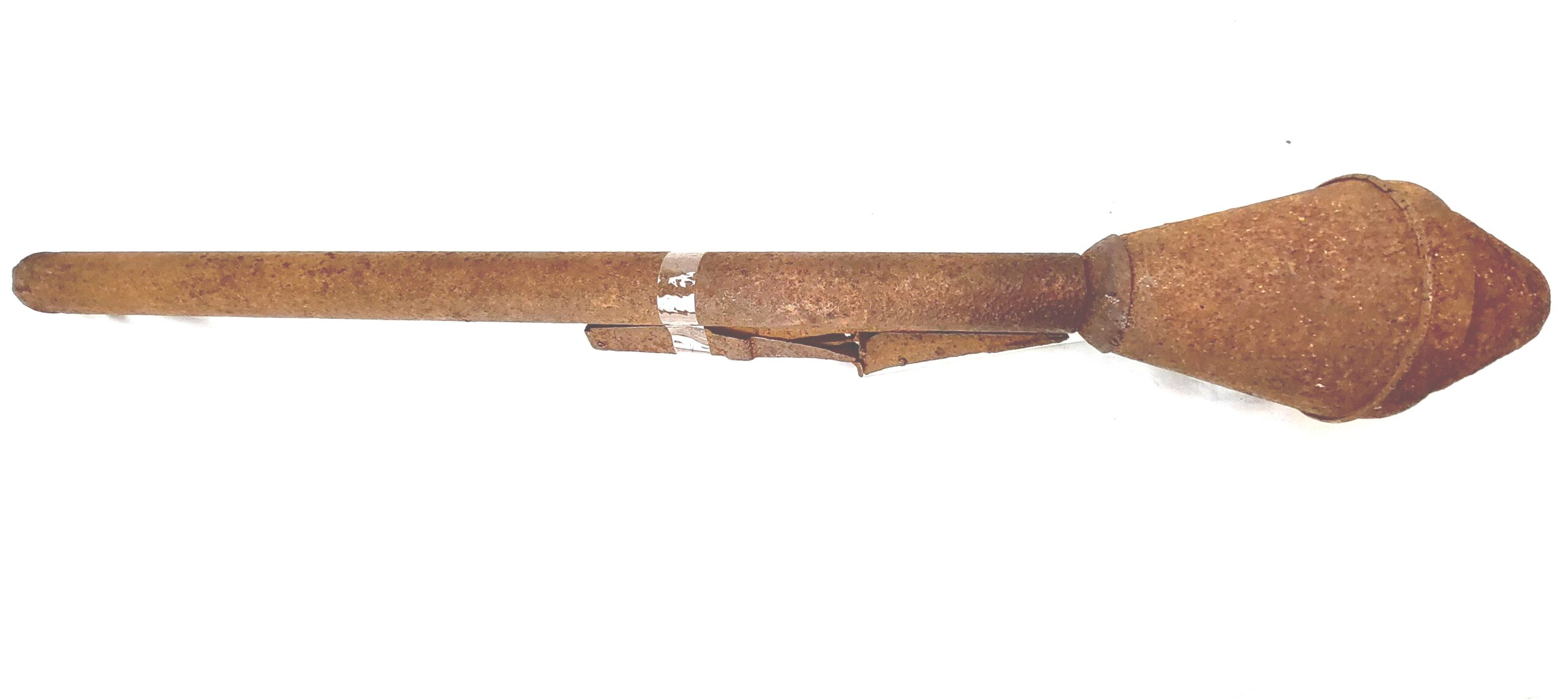
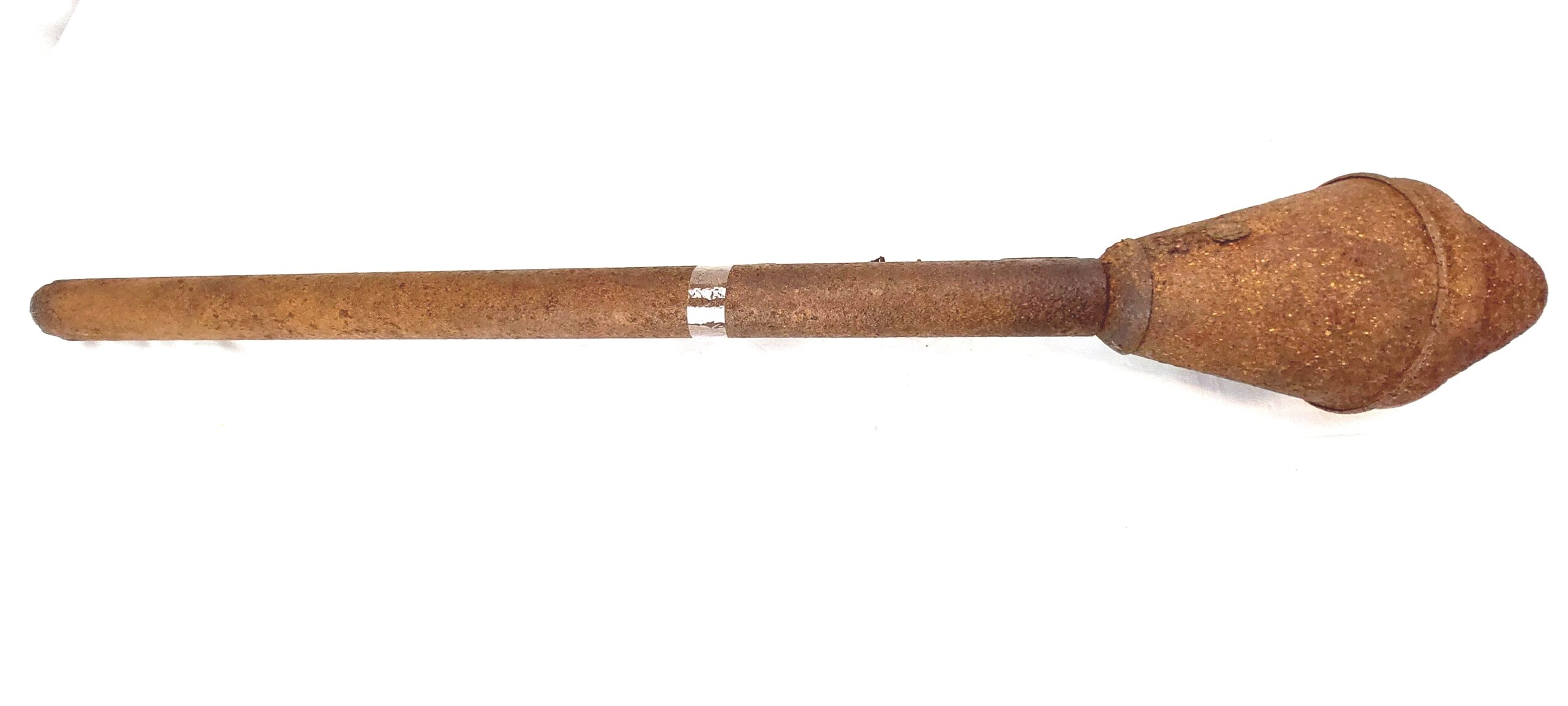
*German, WW2, Panzerfaust 60 Anti-Tank Launcher, Inert Battlefield Relic*
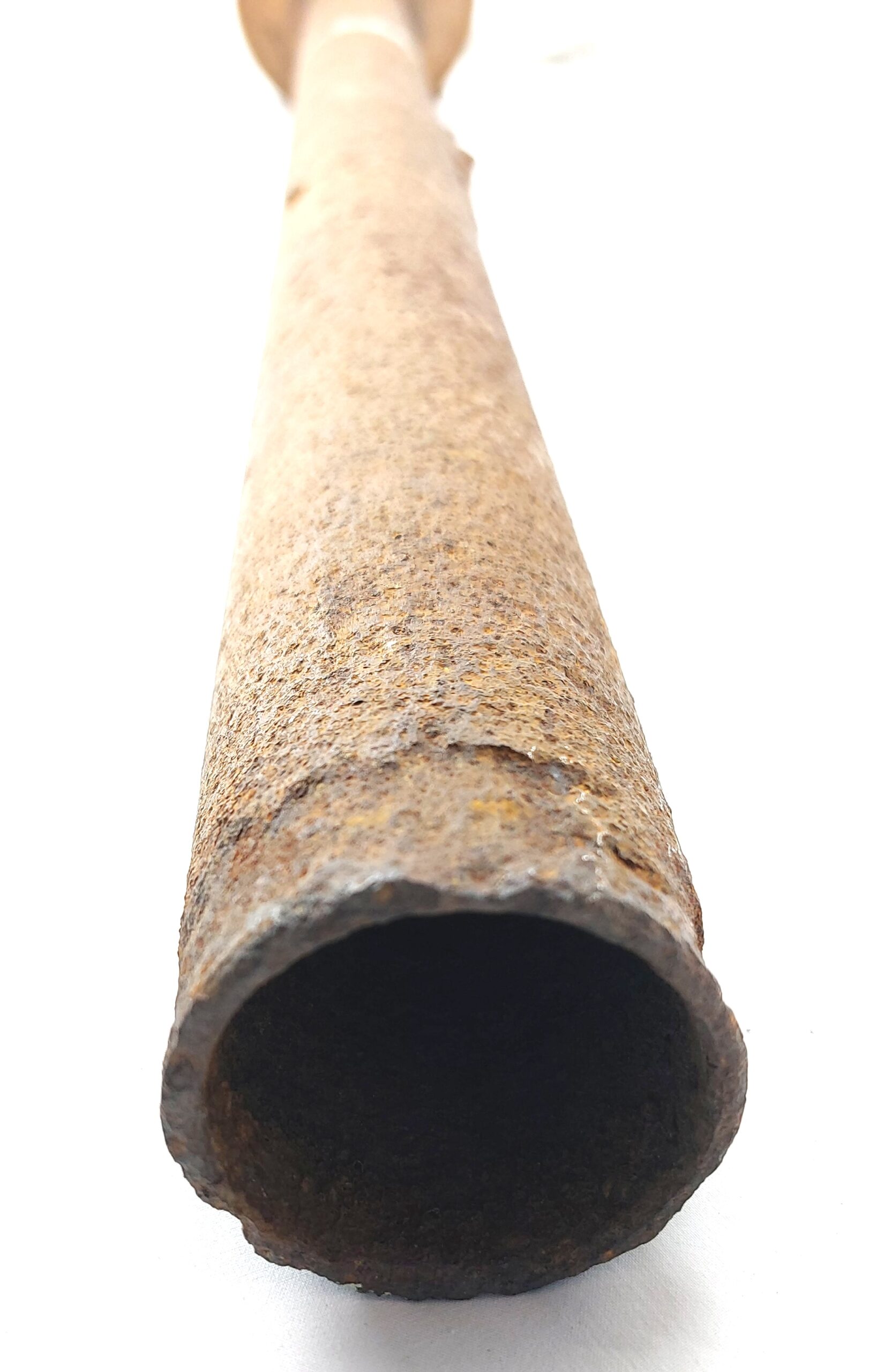
An original German Second World War Panzerfaust 60 anti-tank launcher, presented in inert battlefield-recovered condition and retaining its characteristic launch tube, bulbous shaped-charge warhead and remnants of the folding sight and trigger assembly. This iconic infantry anti-tank weapon was one of the most widely produced and recognisable weapons of the final years of the war and remains a highly sought-after relic display piece.
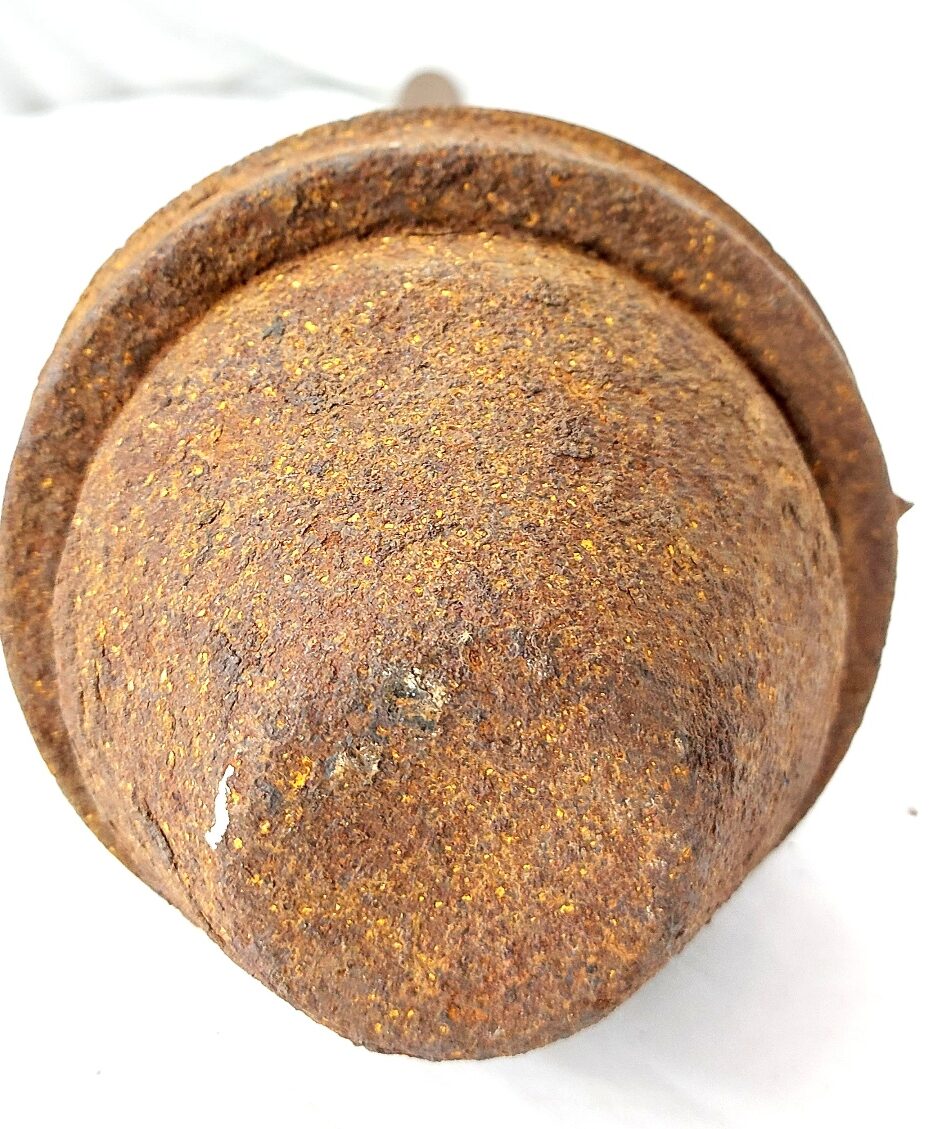
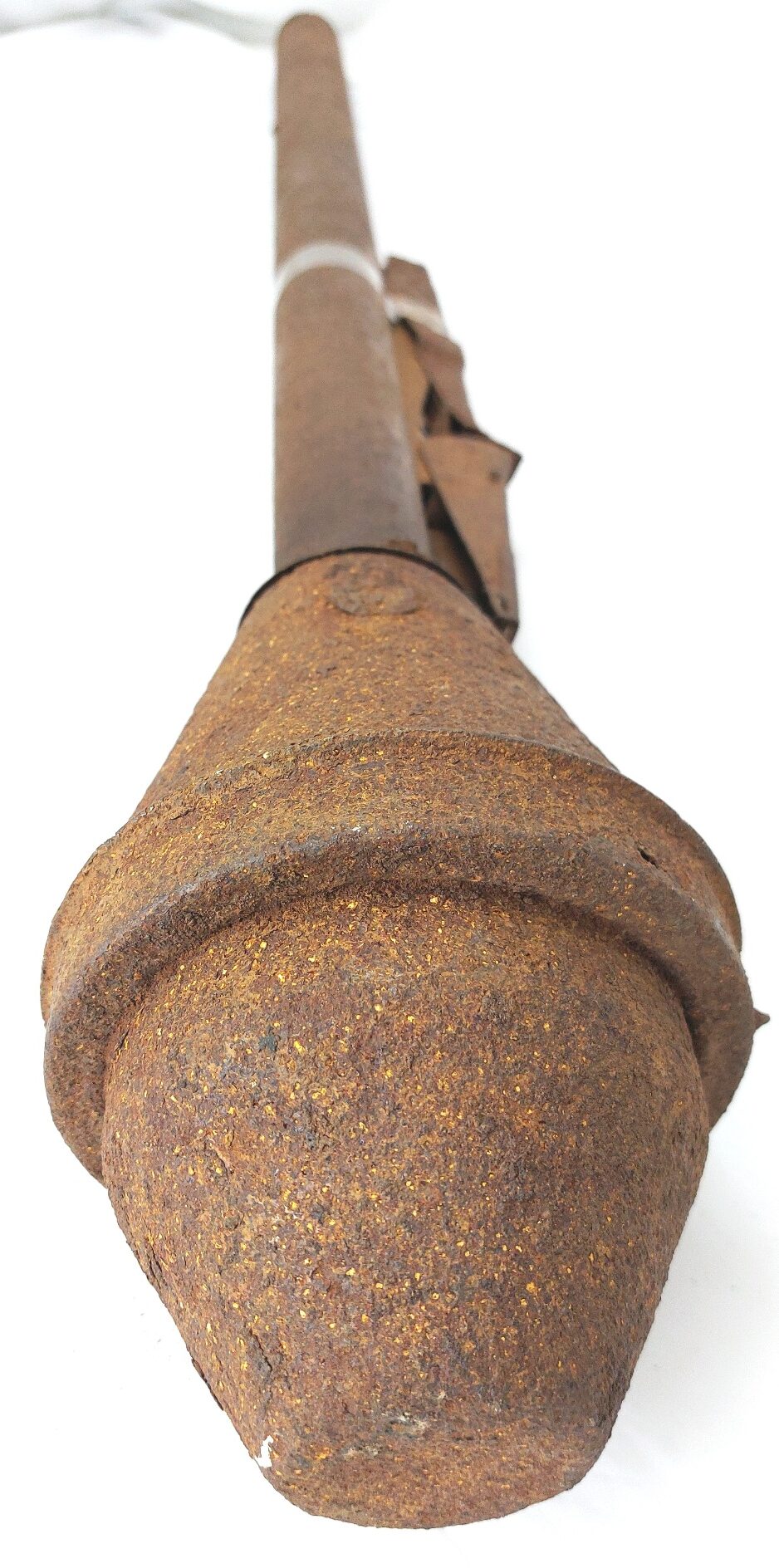
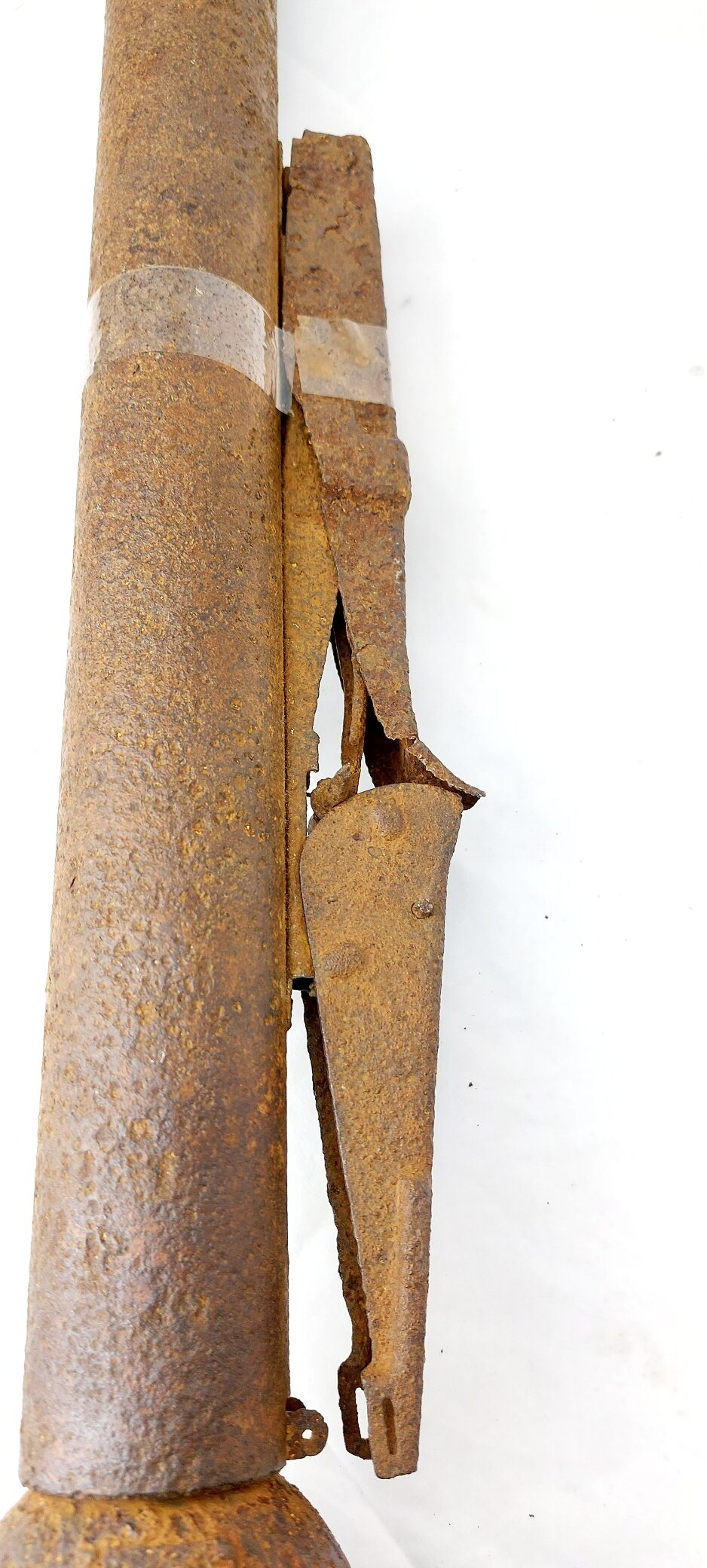
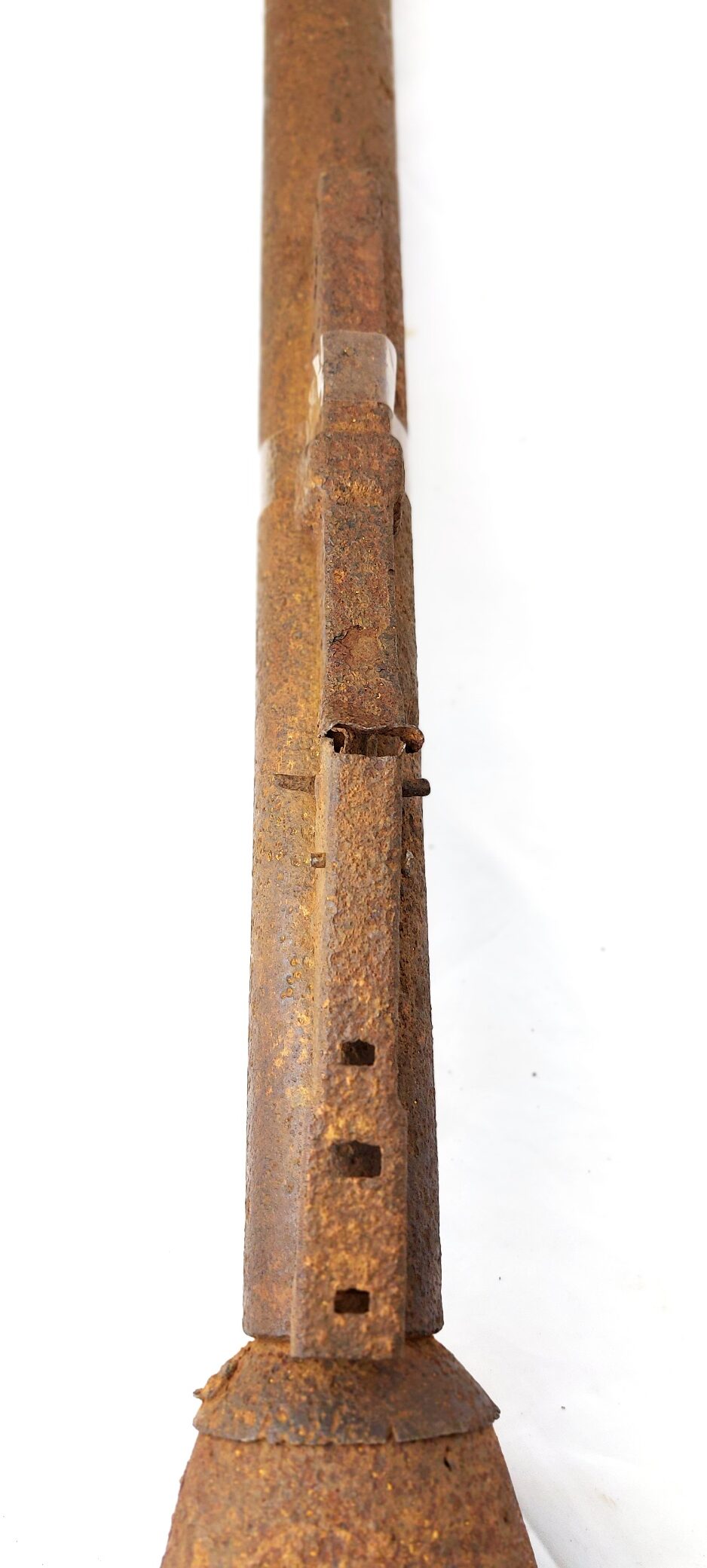
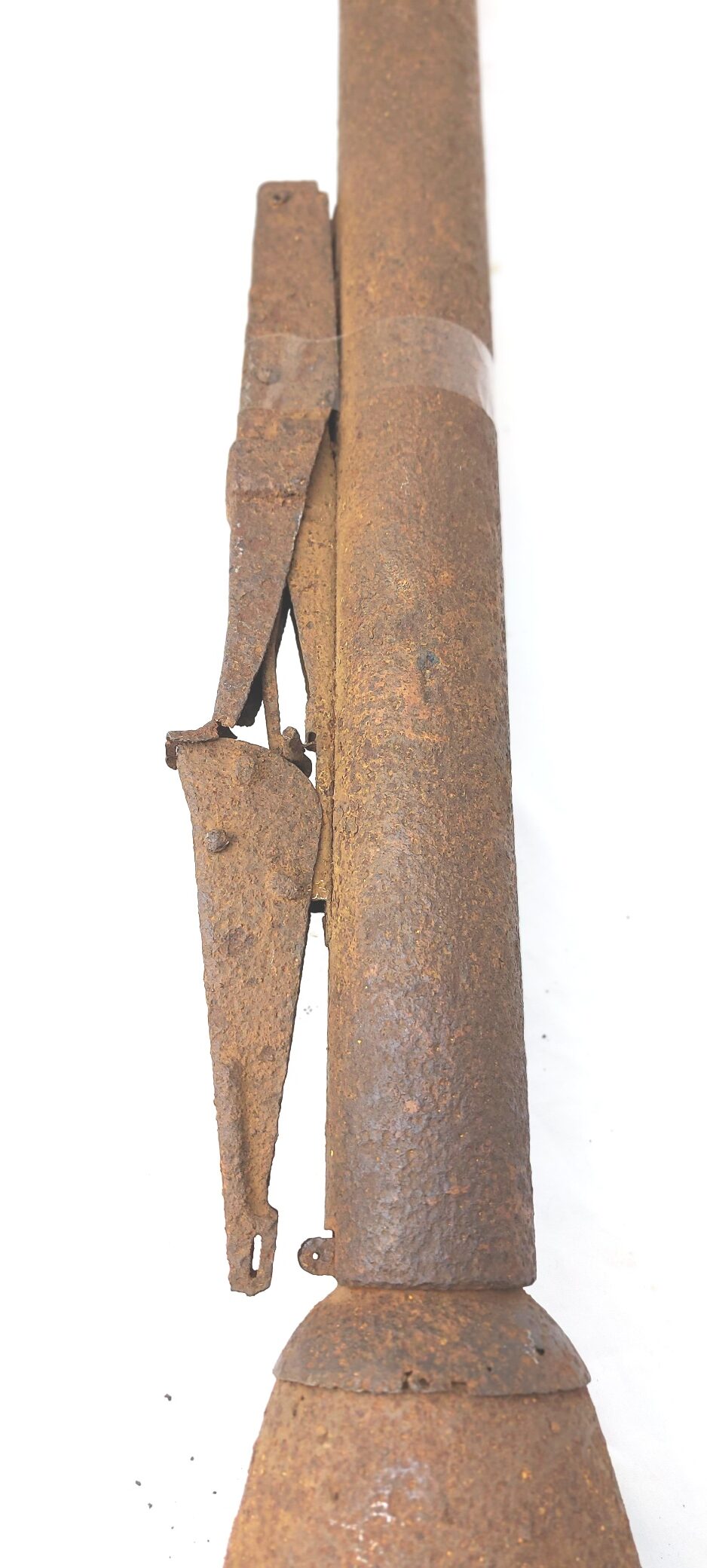
The launcher consists of the original thin-steel disposable launch tube fitted with the distinctive large bulbous warhead at the front. The proportions and overall length correspond closely with the Panzerfaust 60 pattern, introduced in late 1944 and the most common variant encountered today. The warhead retains its characteristic ogival nose and flanged base where it joins the tube, while the tube itself still displays the remains of the flip-up sight housing and trigger bar assembly mounted along the upper side of the launcher.
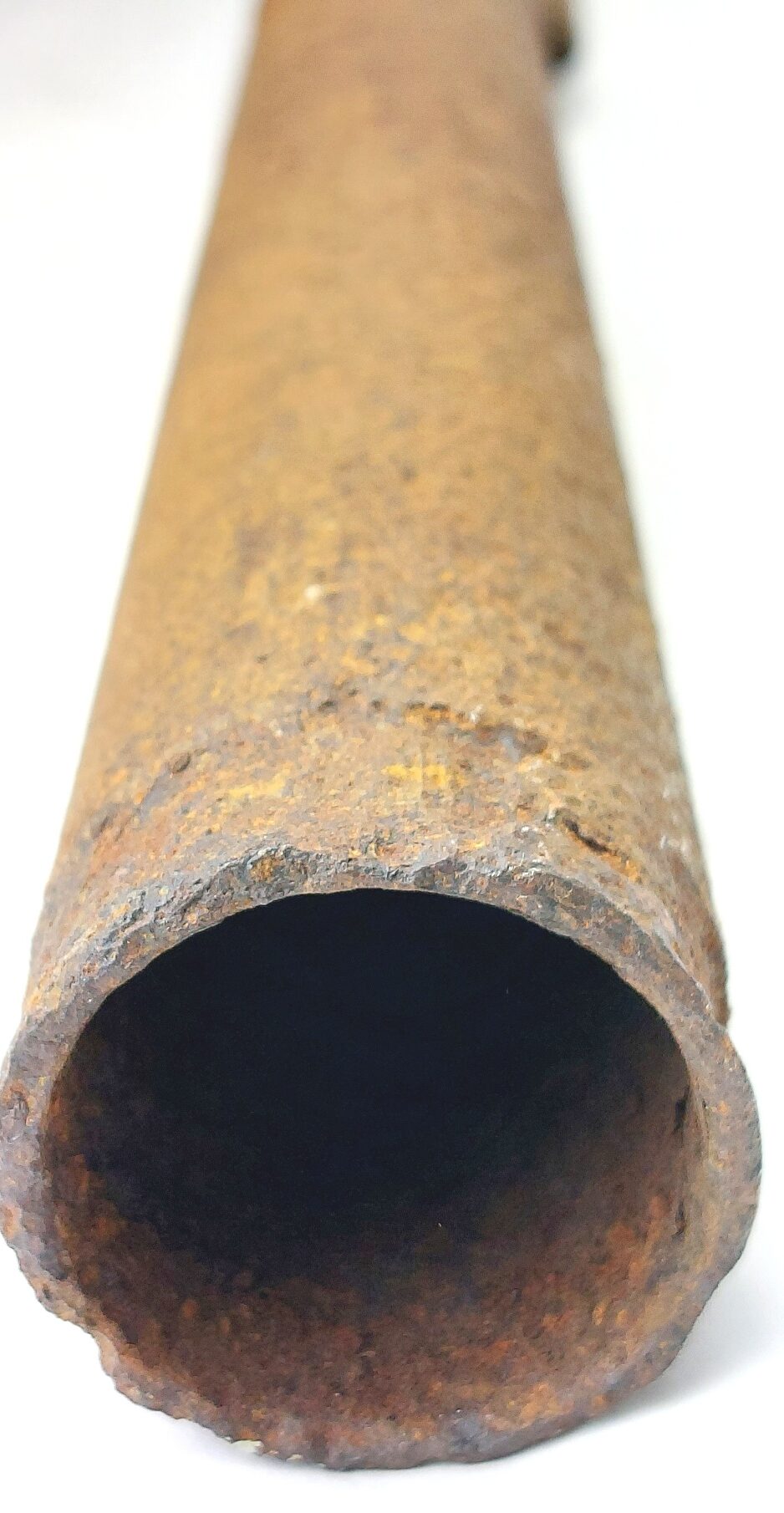
Although heavily oxidised from long burial, the weapon still displays the typical structural layout of the Panzerfaust system. The rectangular sight plate with range apertures remains partially present, together with the hinged metal firing bar and associated mounting brackets. The rear of the tube remains open as expected for this type of disposable recoilless launcher. The piece survives today as an evocative battlefield relic illustrating the simple but effective construction of late-war German infantry anti-tank weapons.
Approx. Measurements – Overall length: 104 cm. Warhead width: approx. 16 cm.
Historical Note:
The Panzerfaust (“armour fist” or “tank fist”) was developed by Germany in 1943 as a cheap and extremely effective infantry anti-tank weapon. Unlike earlier reusable launchers, the Panzerfaust was designed as a single-use disposable system, consisting of a simple steel launch tube fitted with a large high-explosive anti-tank (HEAT) warhead.
The Panzerfaust 60, introduced in September 1944, was the most widely issued version. It had an effective combat range of approximately 60 metres, which gave the weapon its designation. Despite its simple construction, the shaped-charge warhead was capable of penetrating over 200 mm of armour, allowing infantry to destroy even heavily armoured Allied tanks.
Because the weapon was inexpensive and required minimal training, it was issued in huge numbers to German infantry units and later to the Volkssturm militia during the final months of the war. Millions were produced, and the Panzerfaust became a defining weapon of the close-range urban fighting seen across Europe in 1944–45.
*Condition*
Battlefield recovered relic condition with heavy overall oxidation consistent with prolonged burial. The launch tube and warhead remain intact. The side-mounted firing and sight mechanism is partially present but heavily corroded, with the trigger housing having broken away from the tube; it is currently loosely held in place for display purposes. The folding sight plate and elements of the firing lever remain visible, although incomplete. The rear of the launch tube remains open as expected for this disposable weapon. No internal components remain and the launcher is completely inert. Please see photographs as part of the condition report.
RQMCOOXFEO_2378234897