*Chinese, Late Qing Dynasty (19th Century), Shuang Jian Pair of Short Double-Edged Swords & Scabbard*
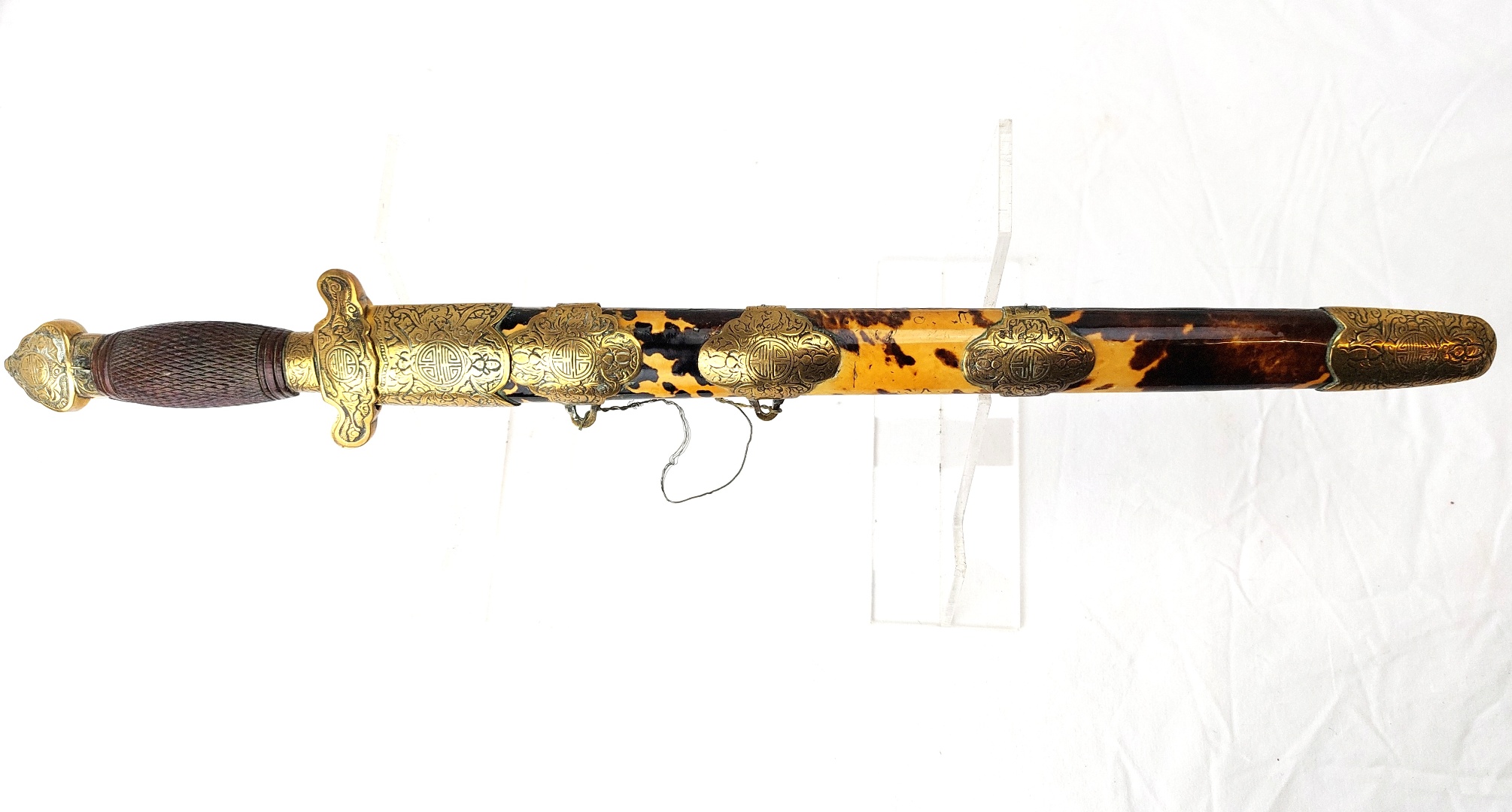
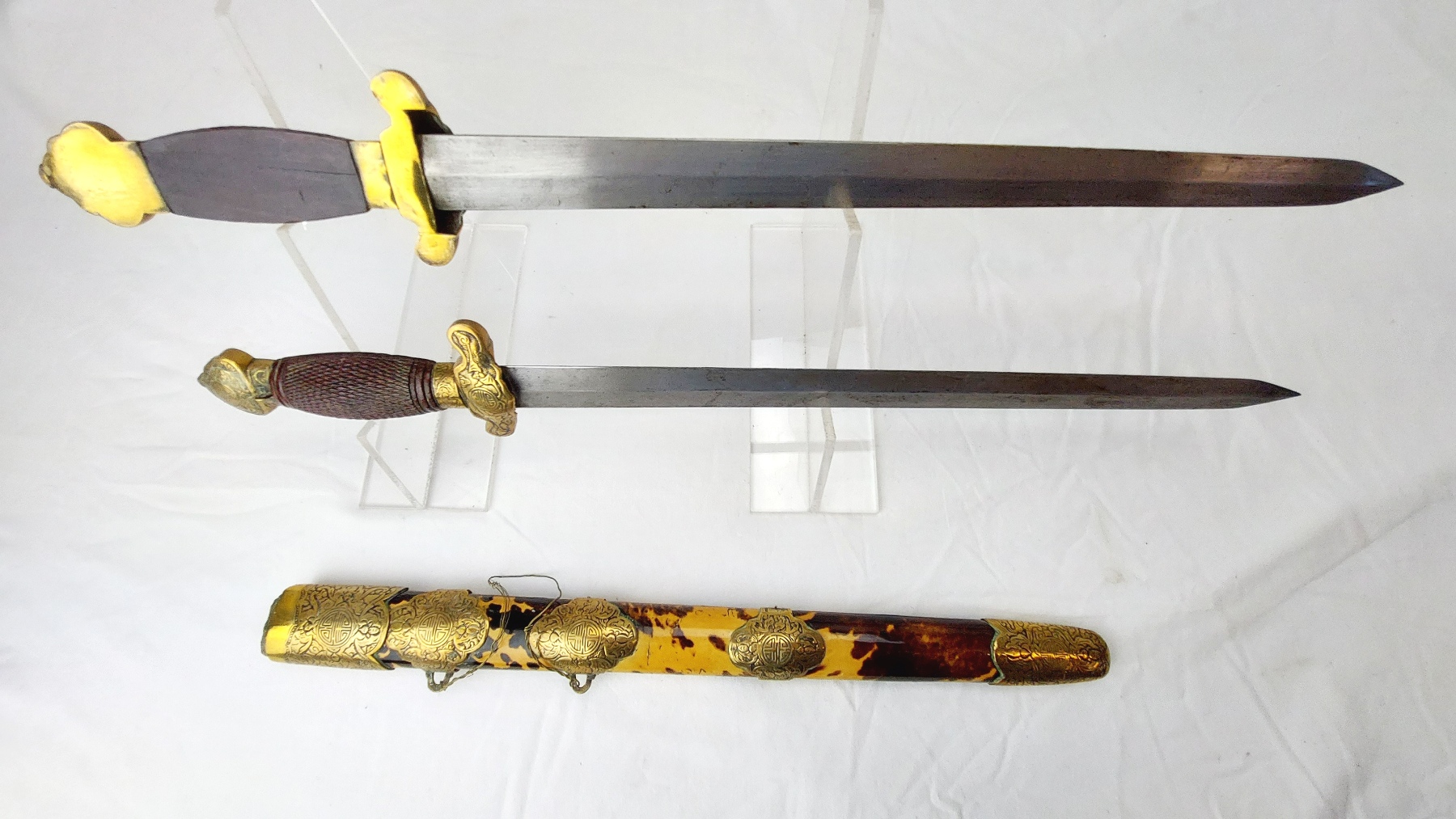
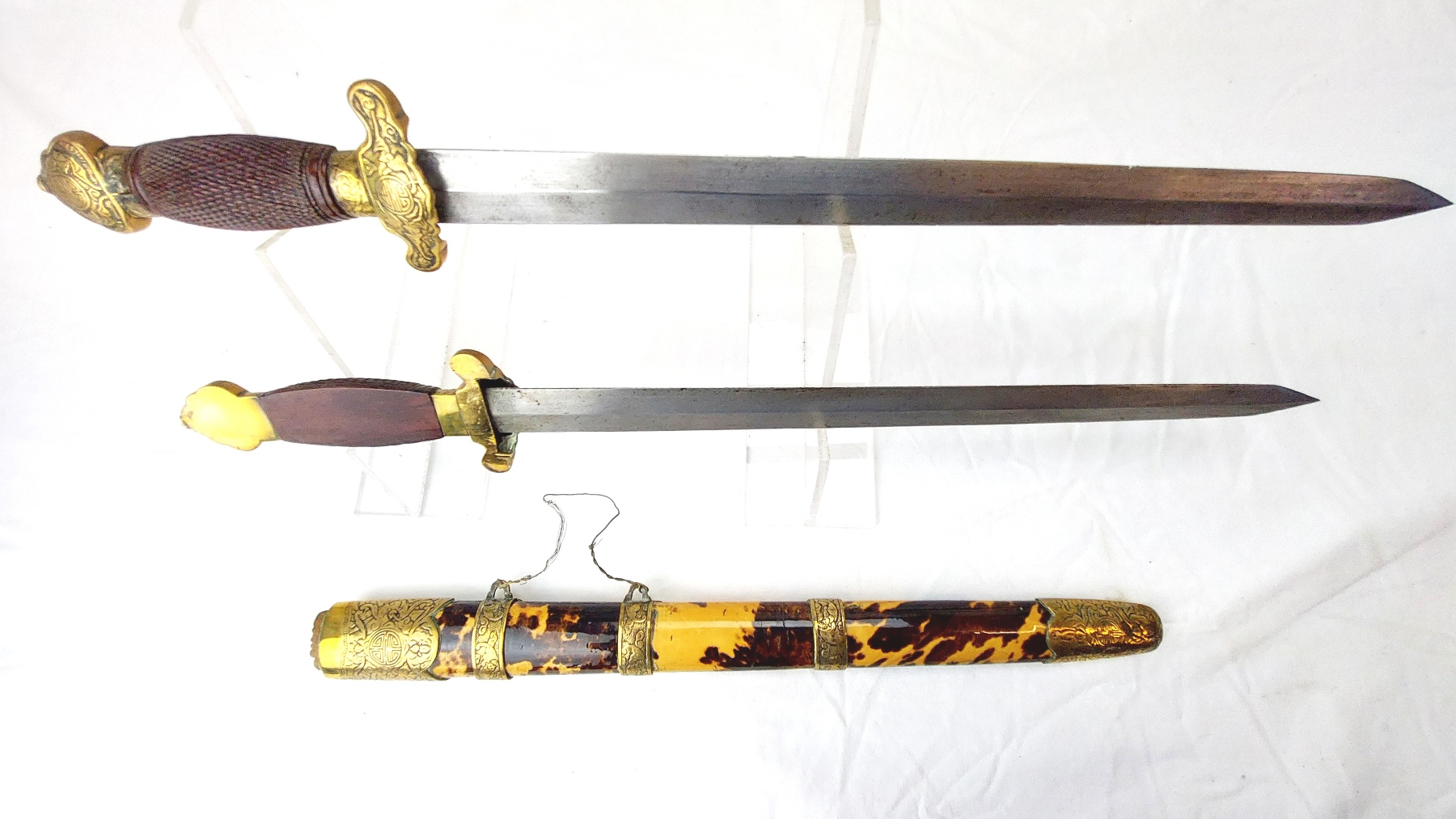
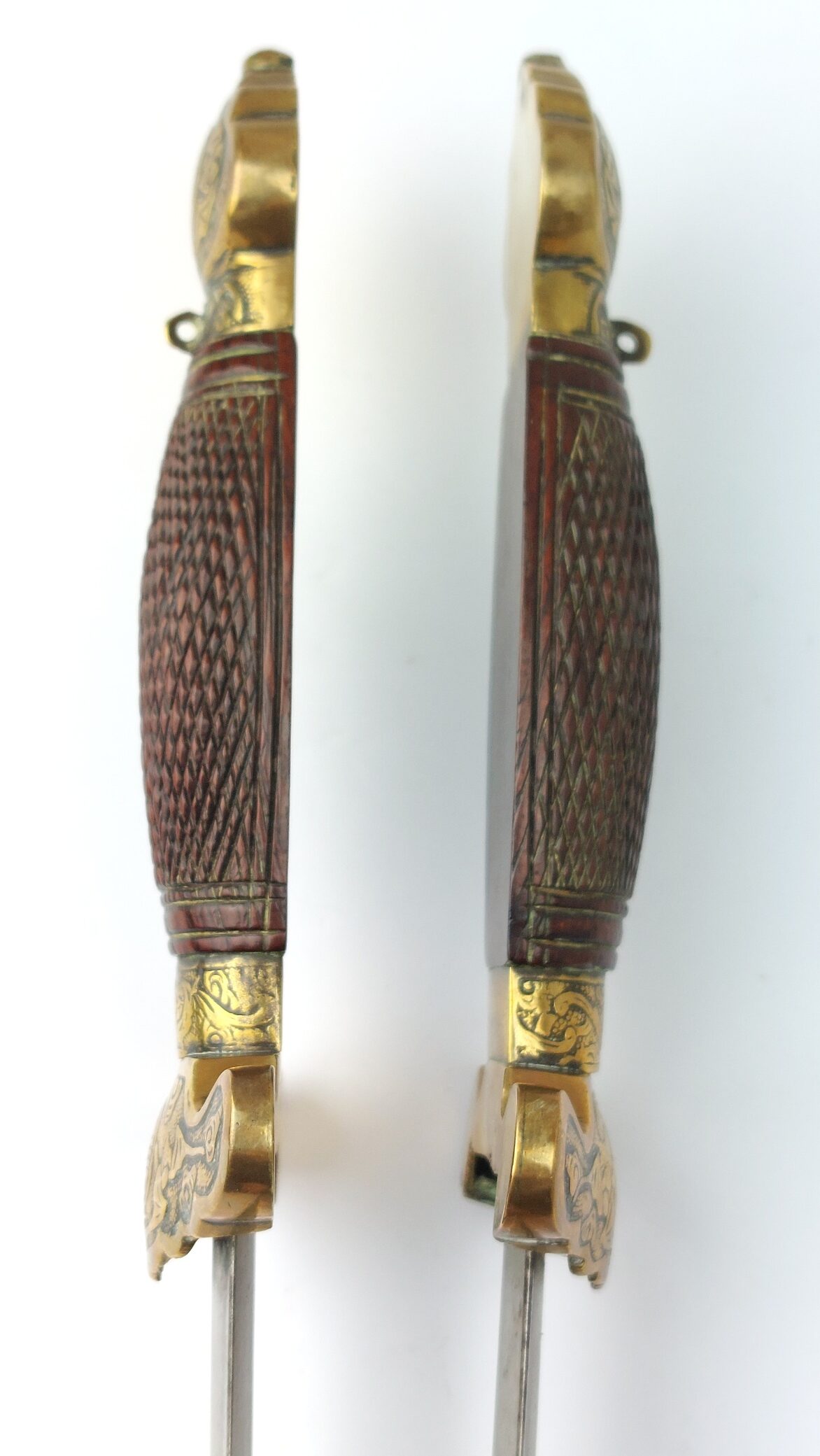
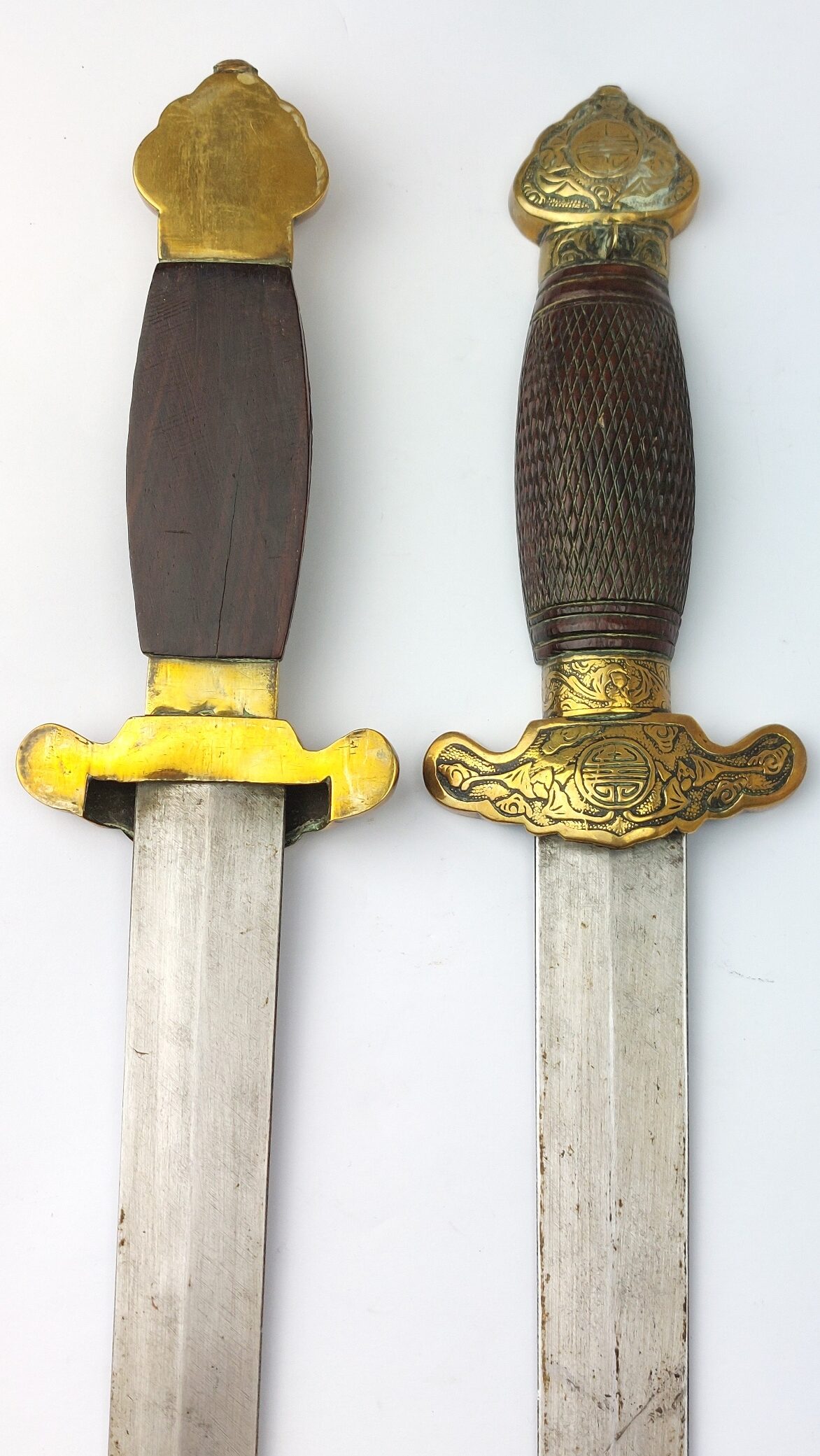
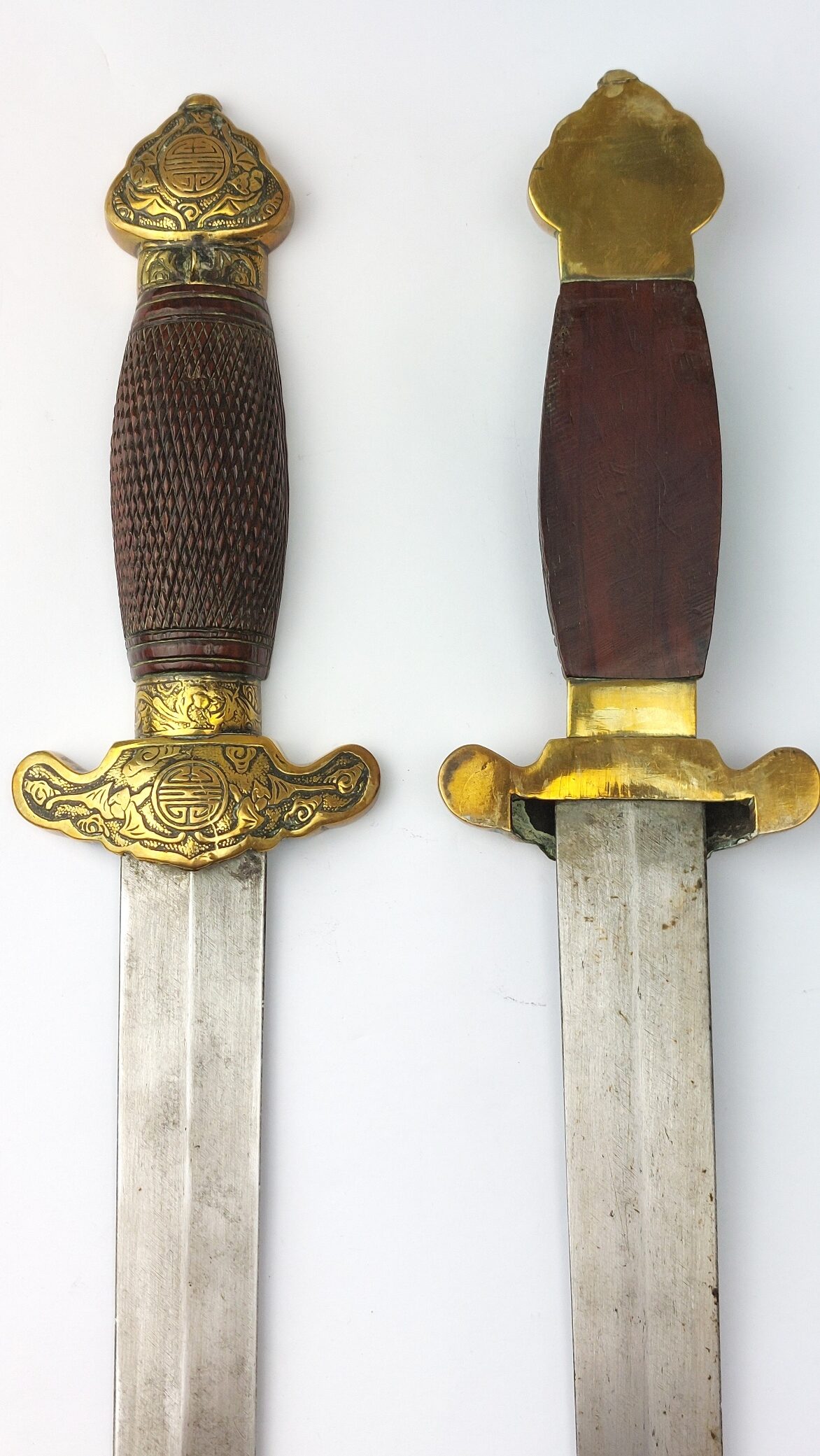
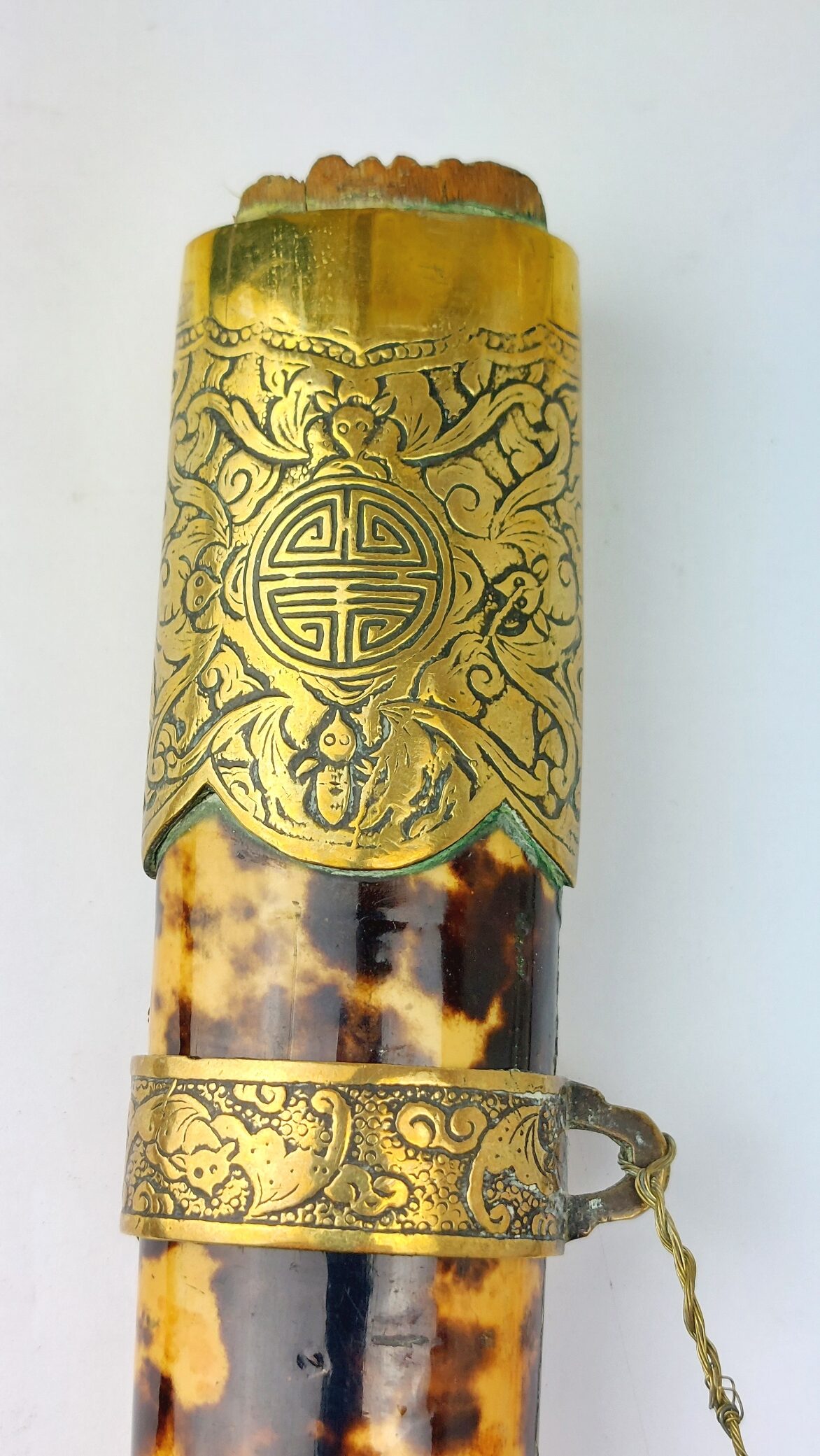
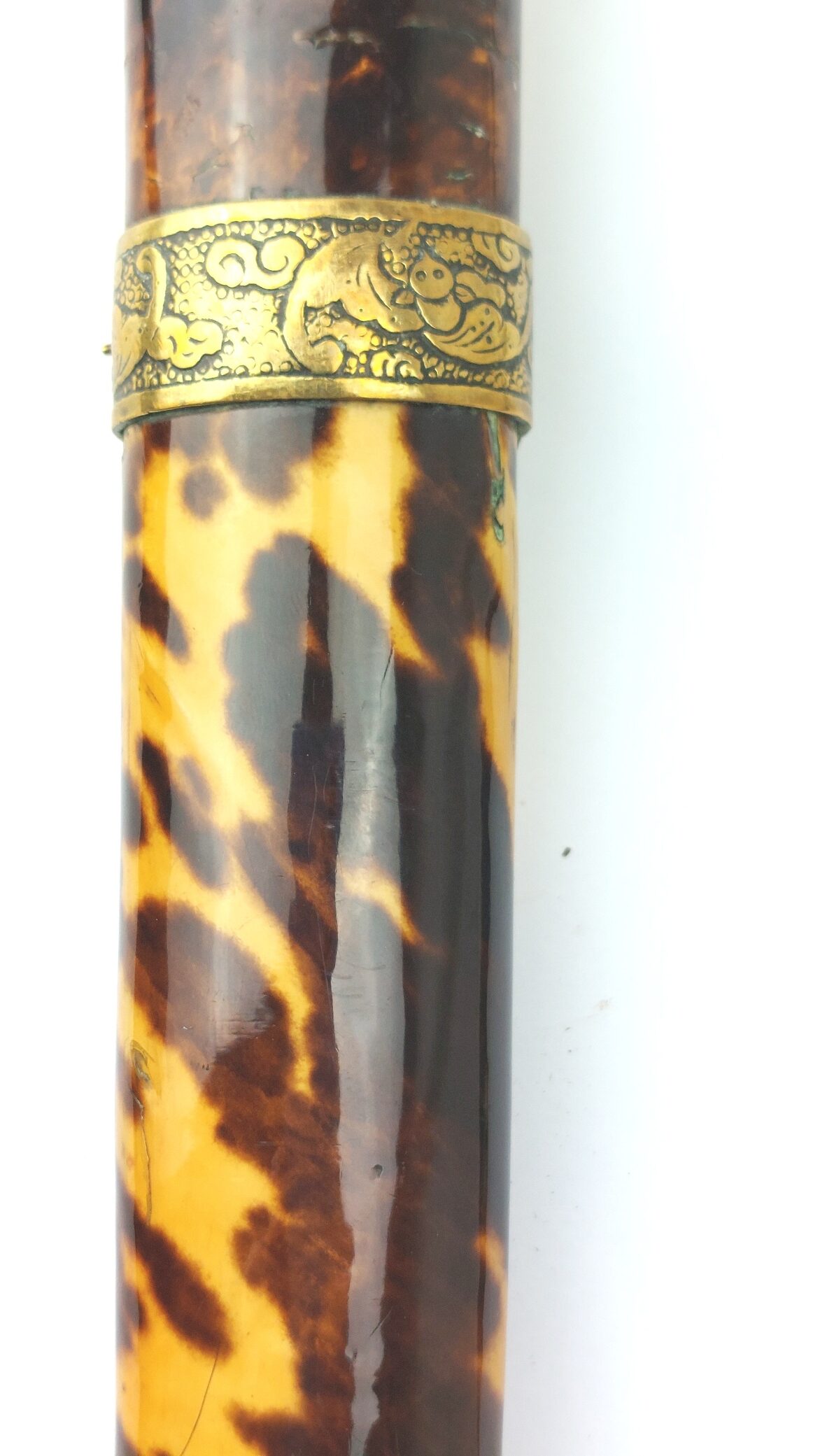
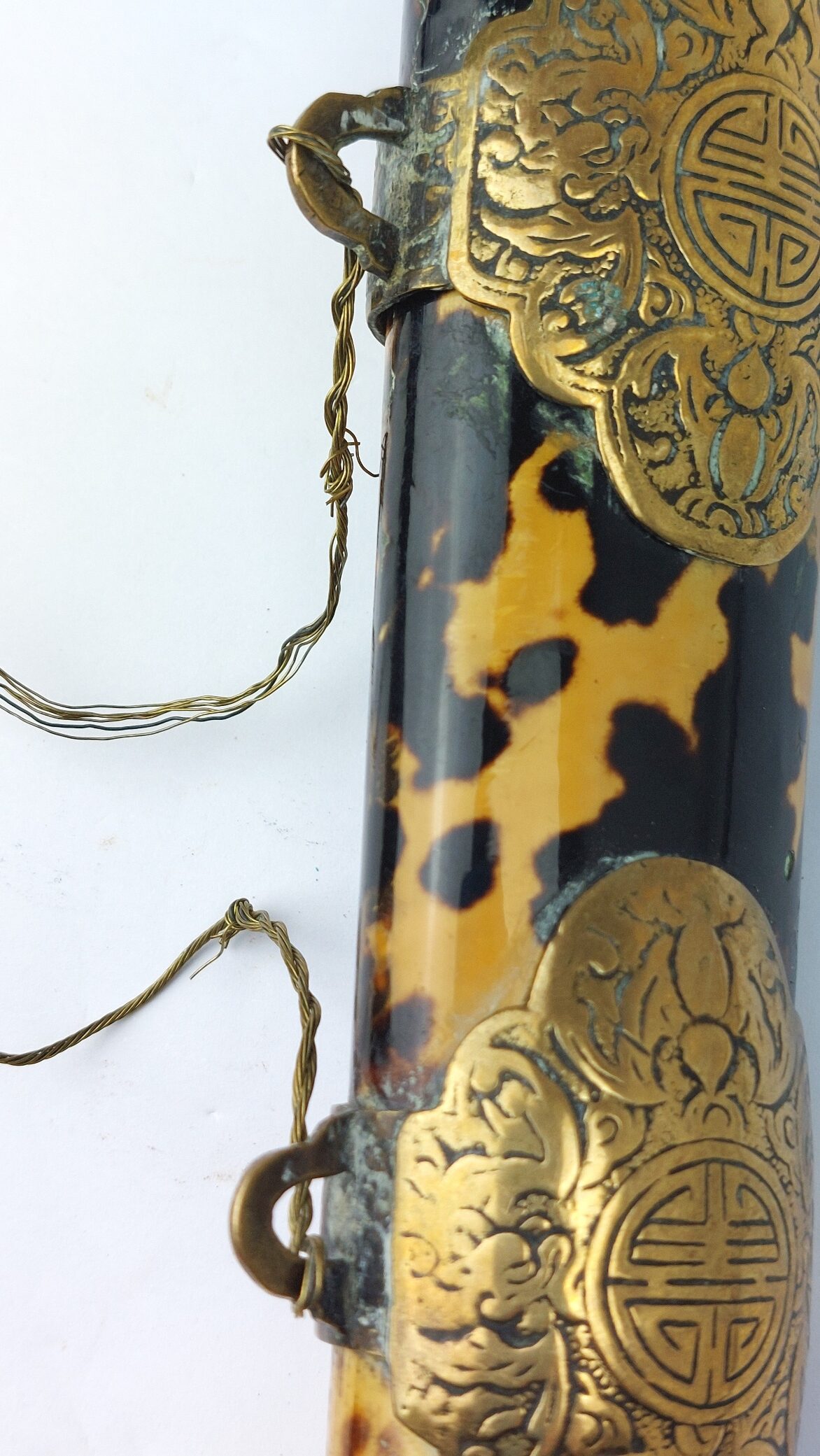
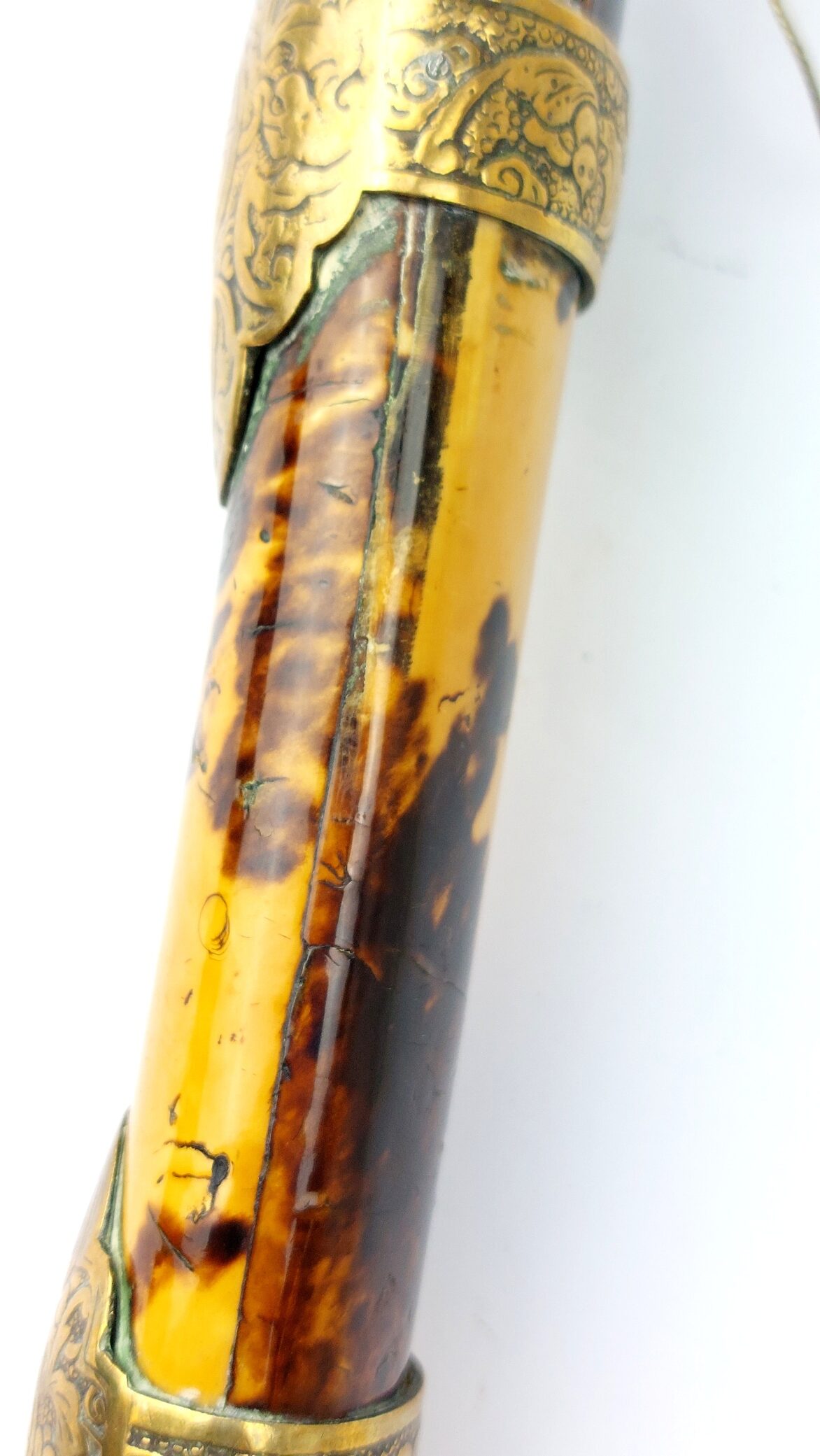
A highly decorative and visually striking Chinese shuang jian (paired straight swords) dating to the late Qing Dynasty (19th century), mounted in an elaborate shared scabbard which appears to be covered in tortoiseshell.
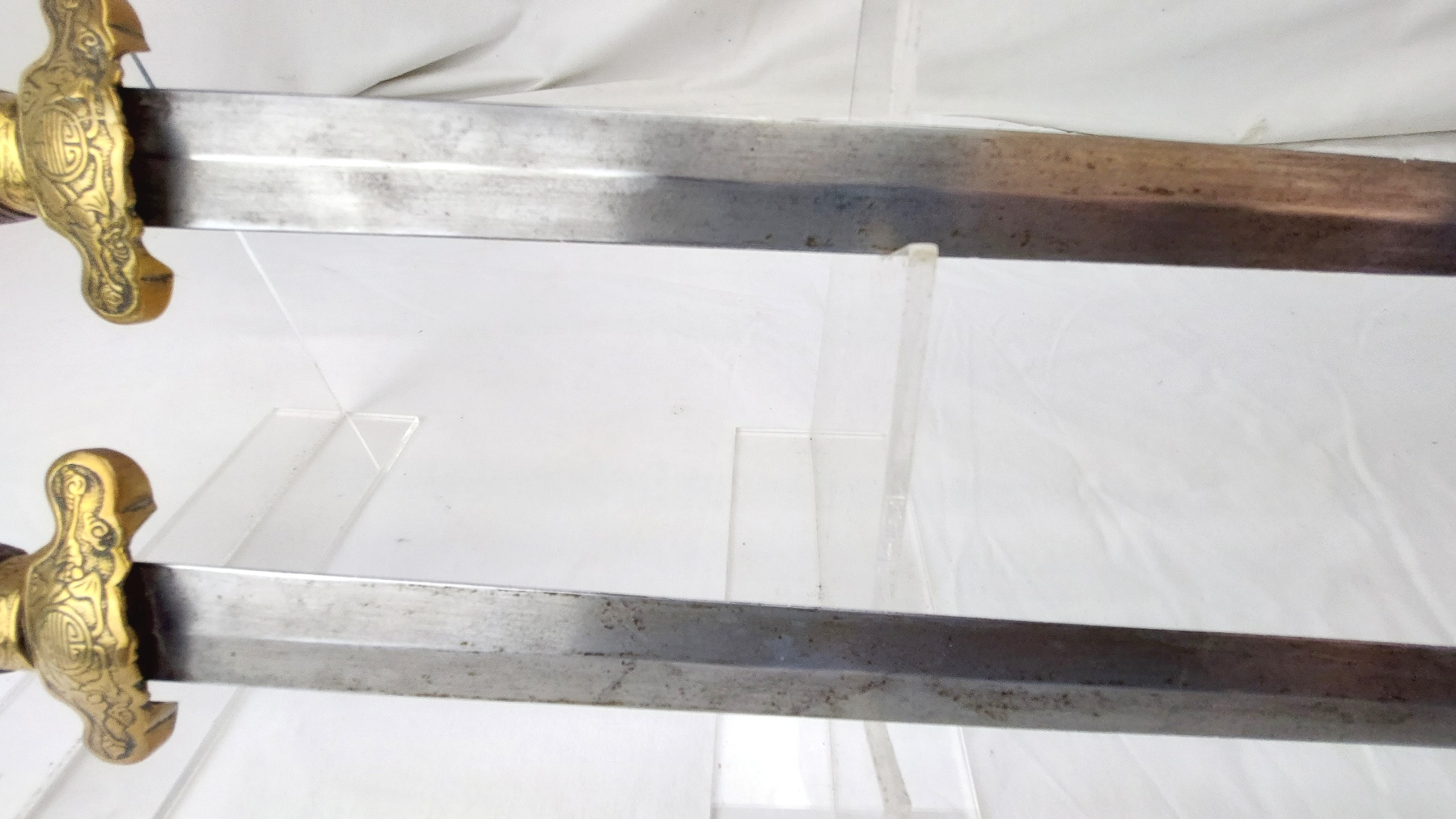
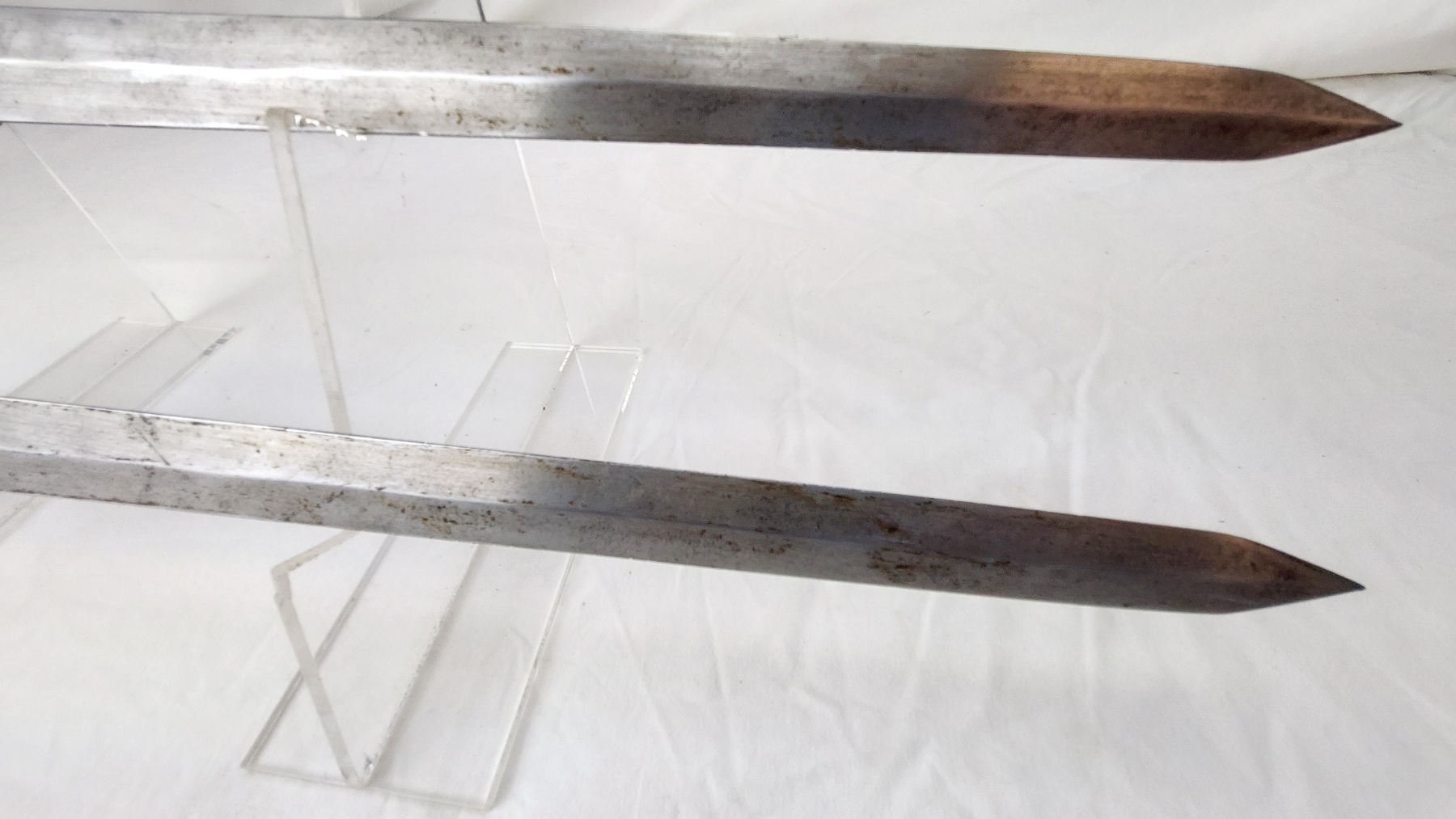
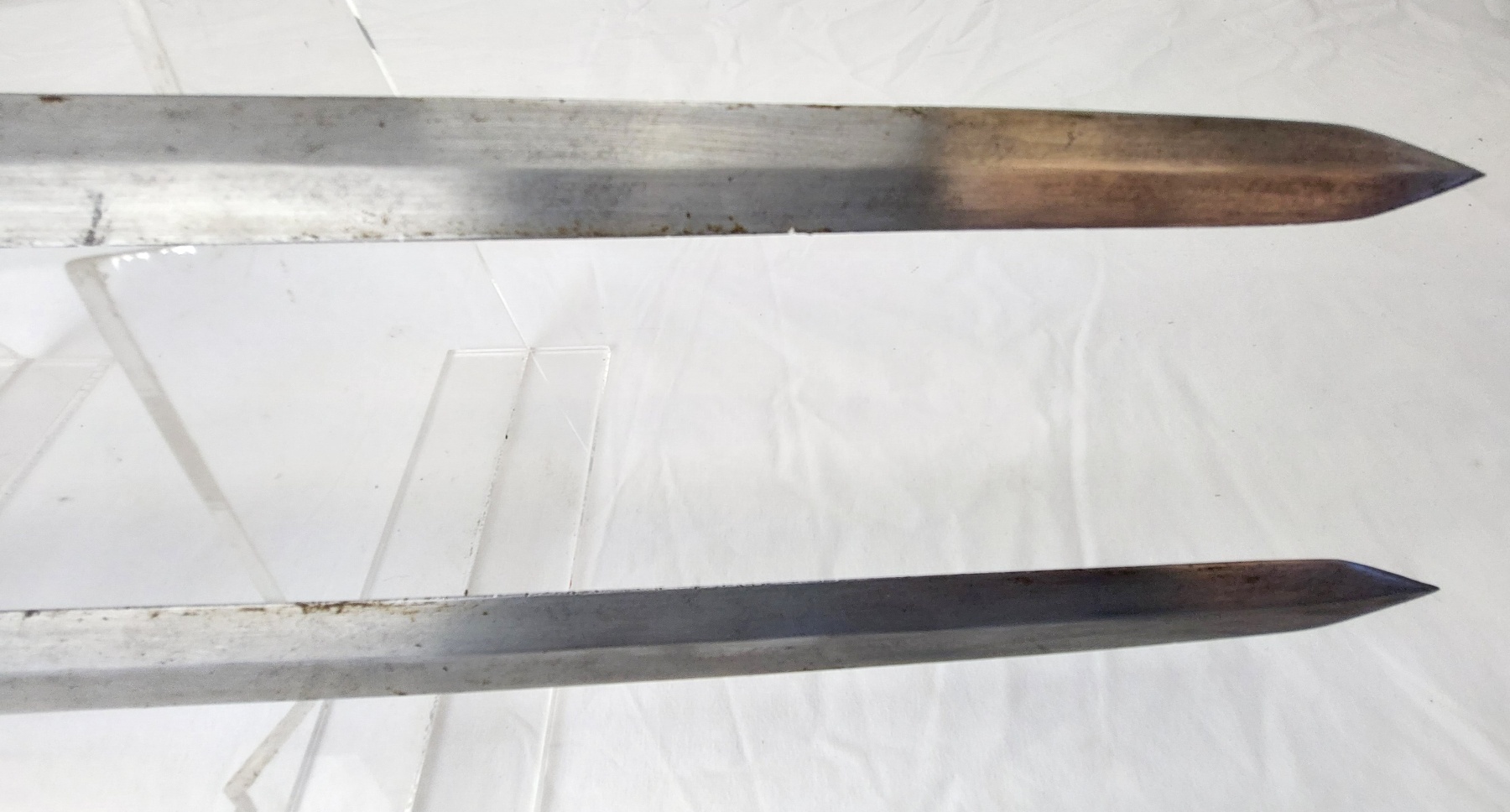
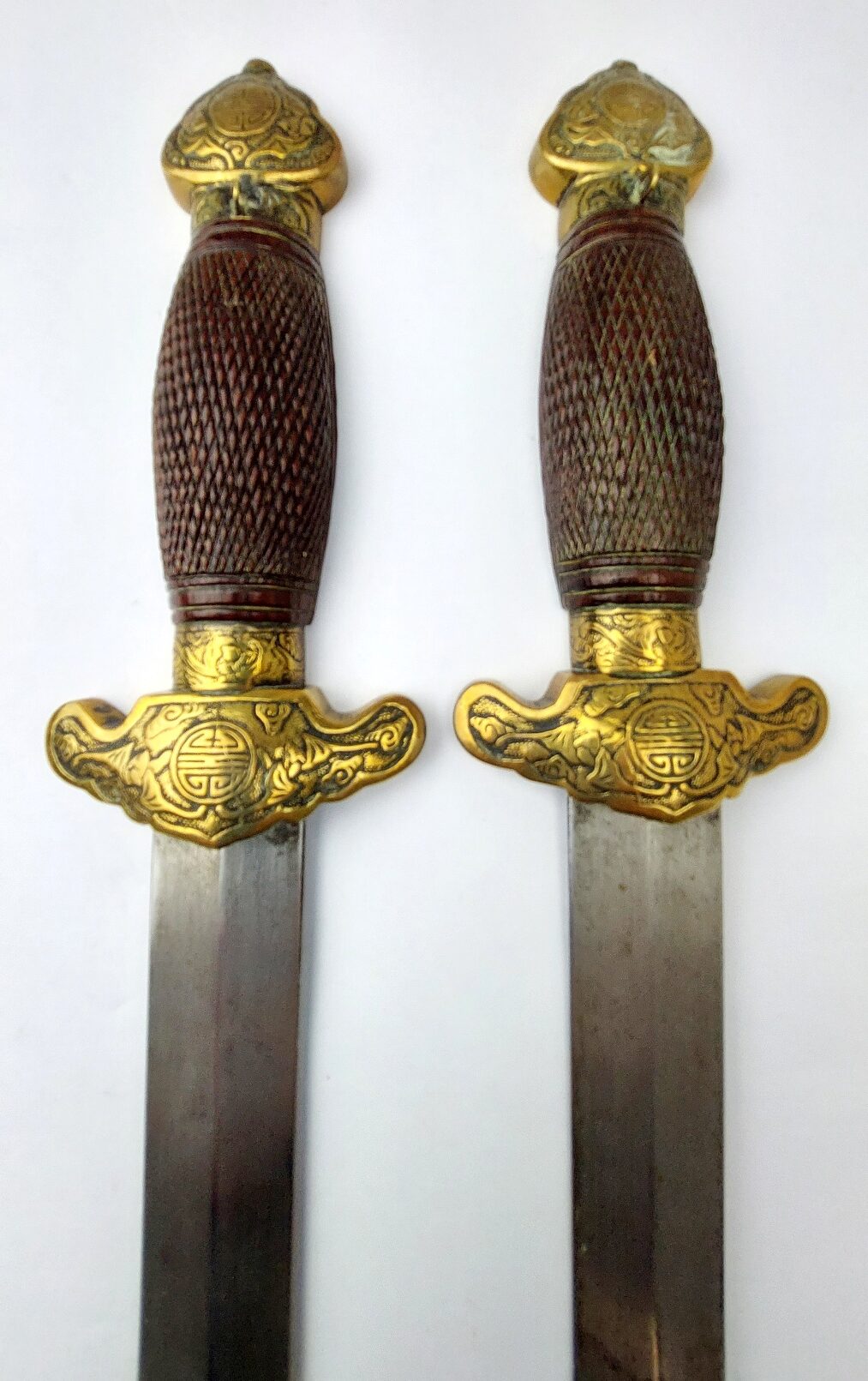
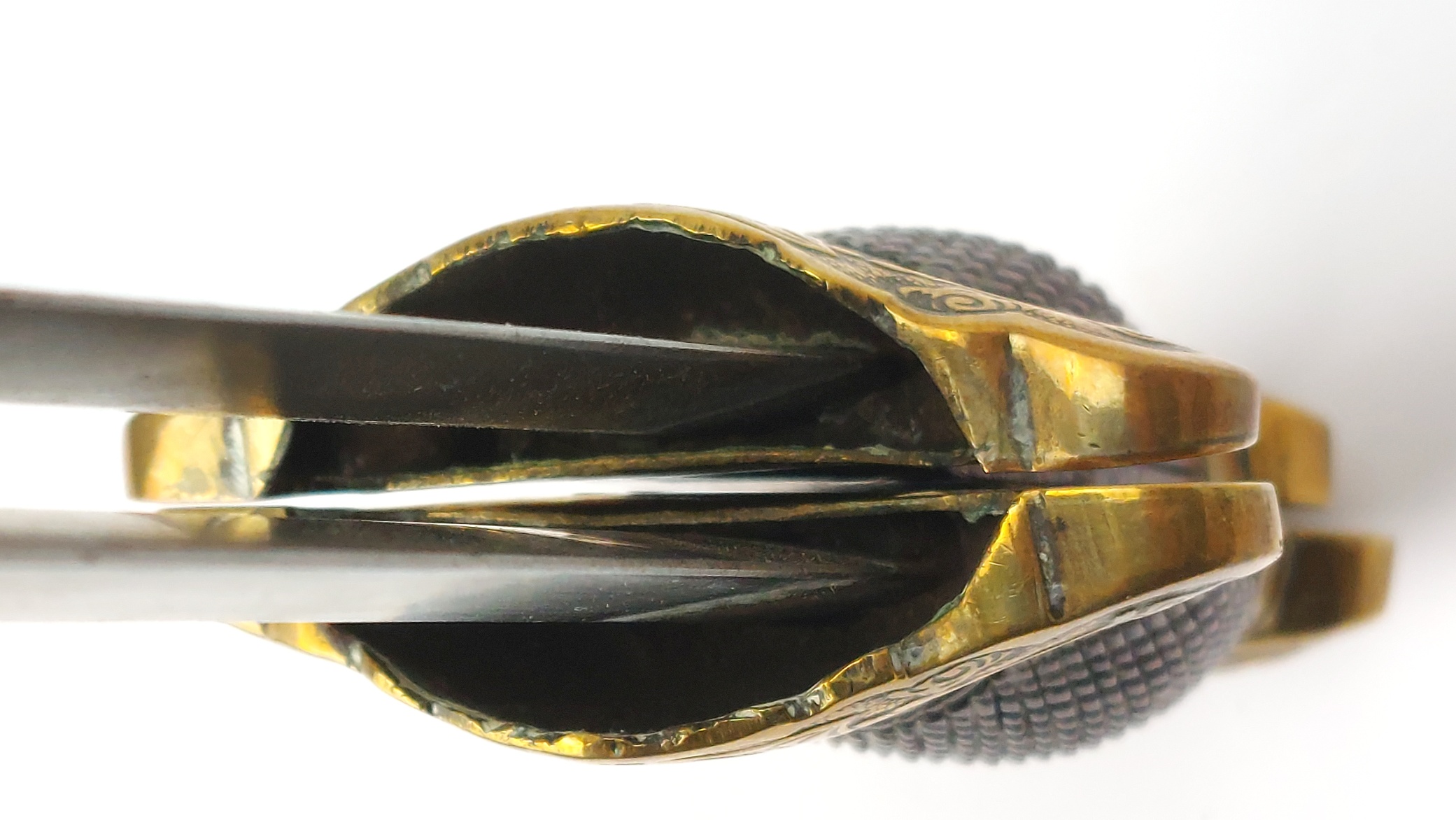
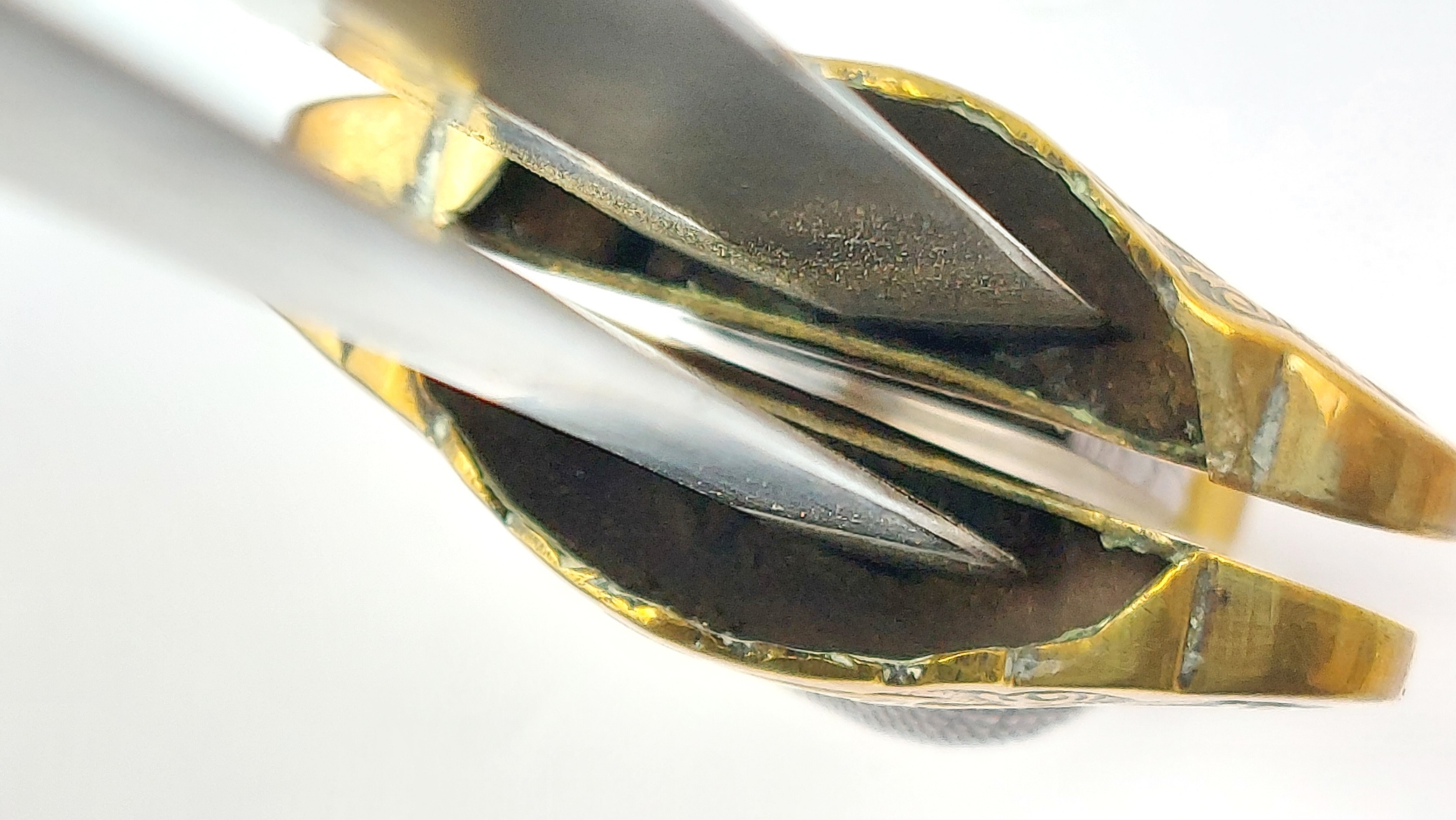
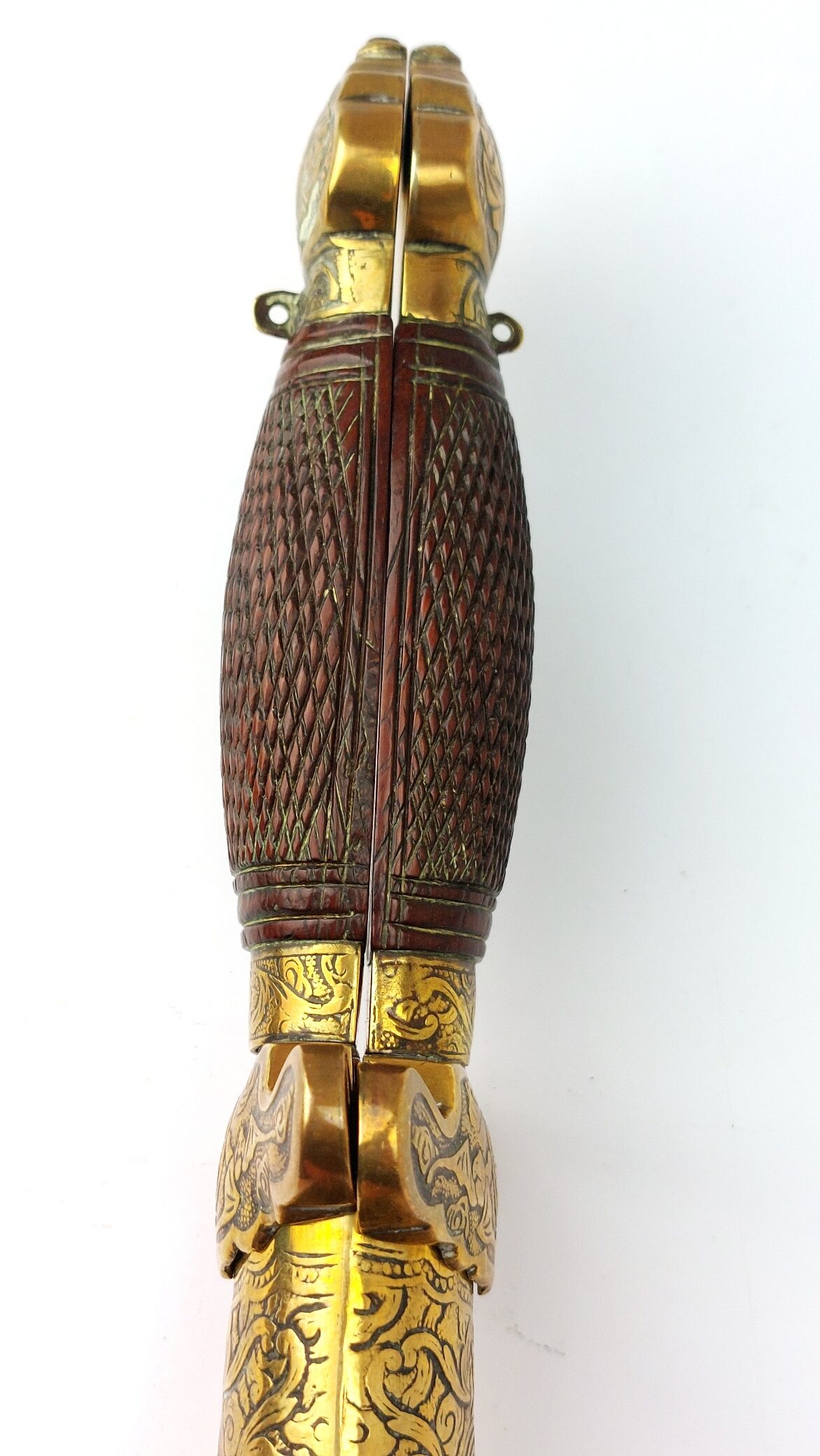
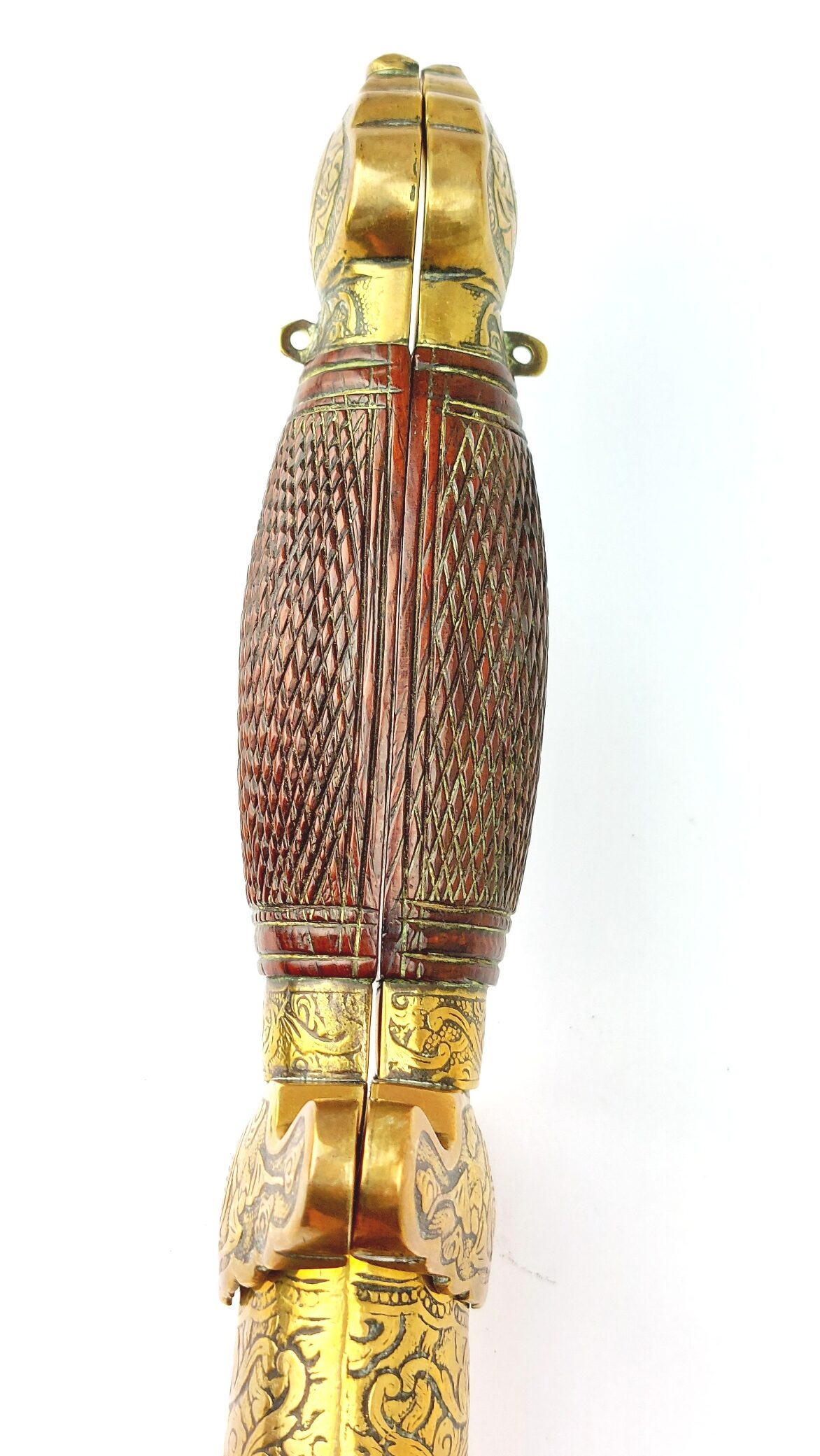
Each sword is double-edged with a spear-point blade and designed in the traditional “half-hilt” configuration, allowing the two to nest back-to-back within a single scabbard. When sheathed, the pair presents as a single sword — a clever and elegant Qing-period design associated with civilian martial practice and status display.
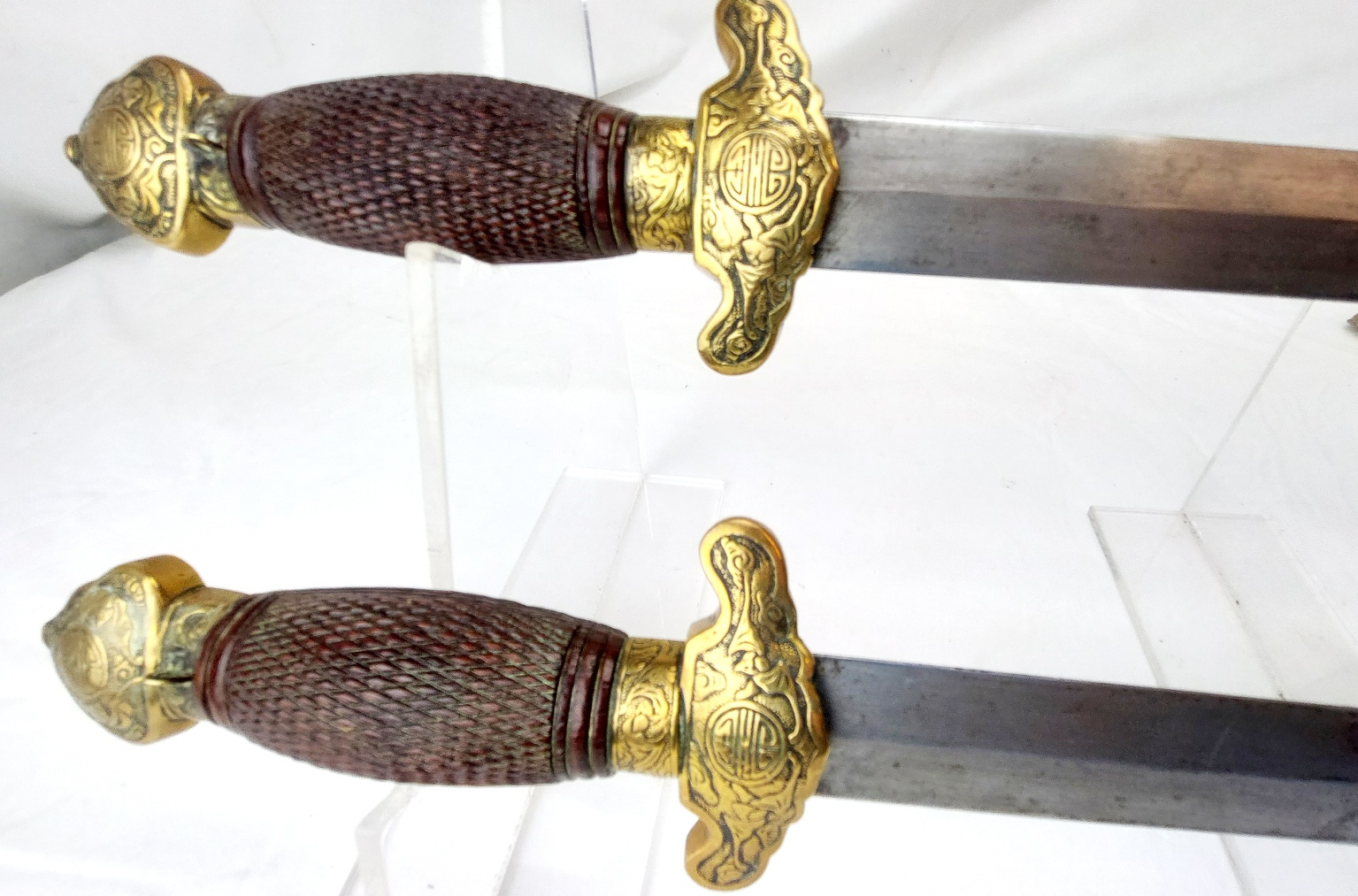
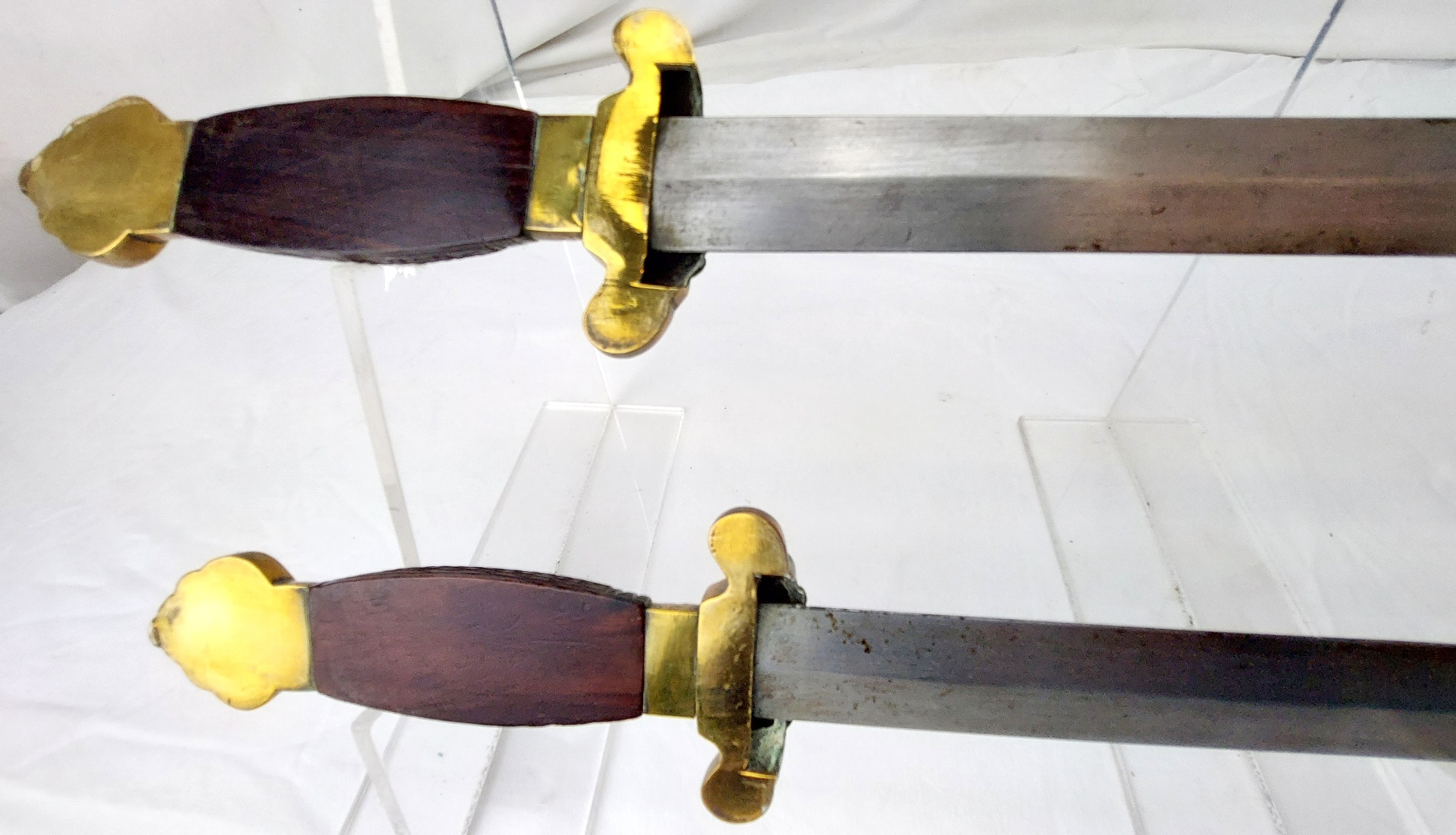
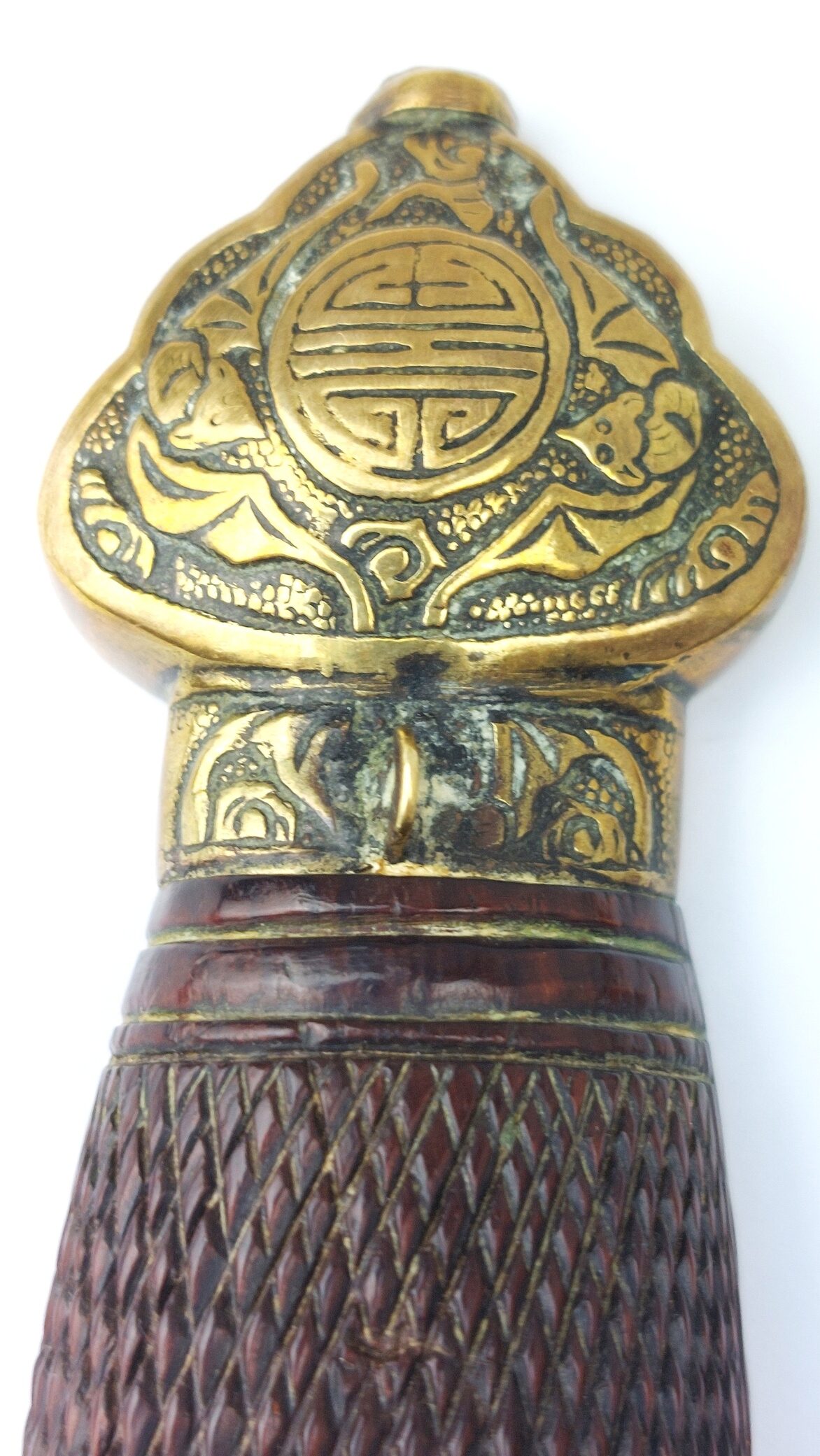
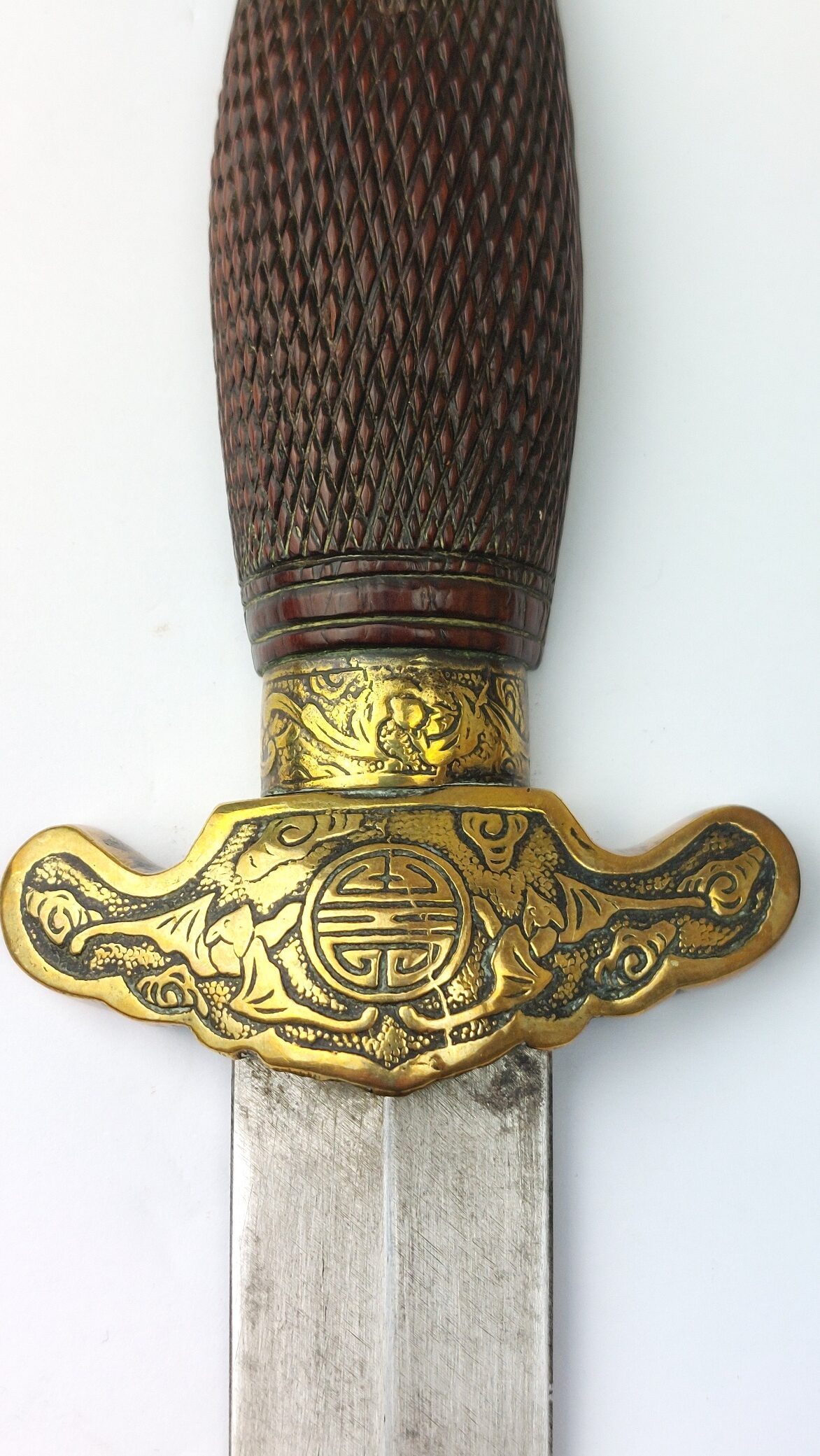
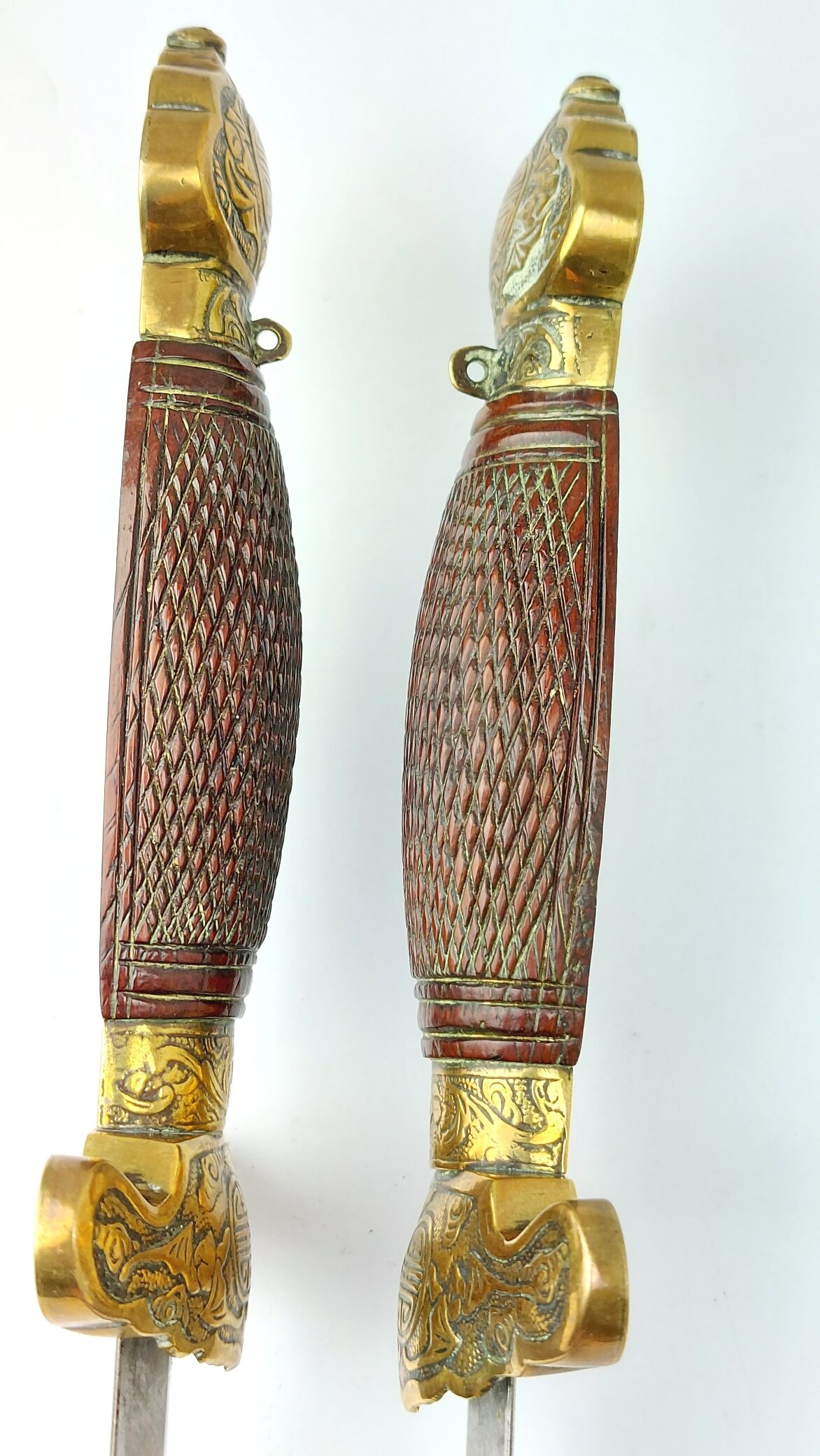
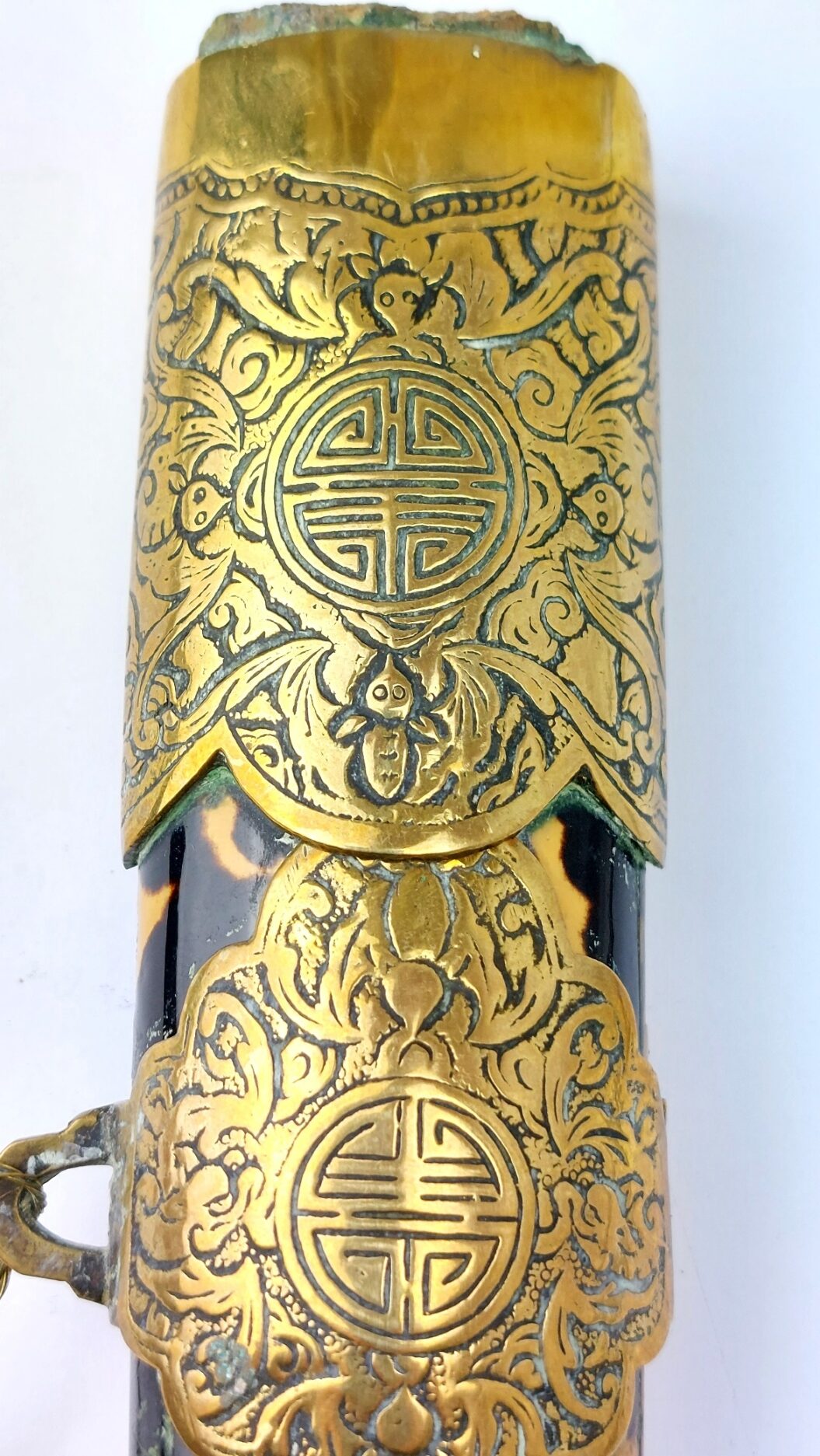
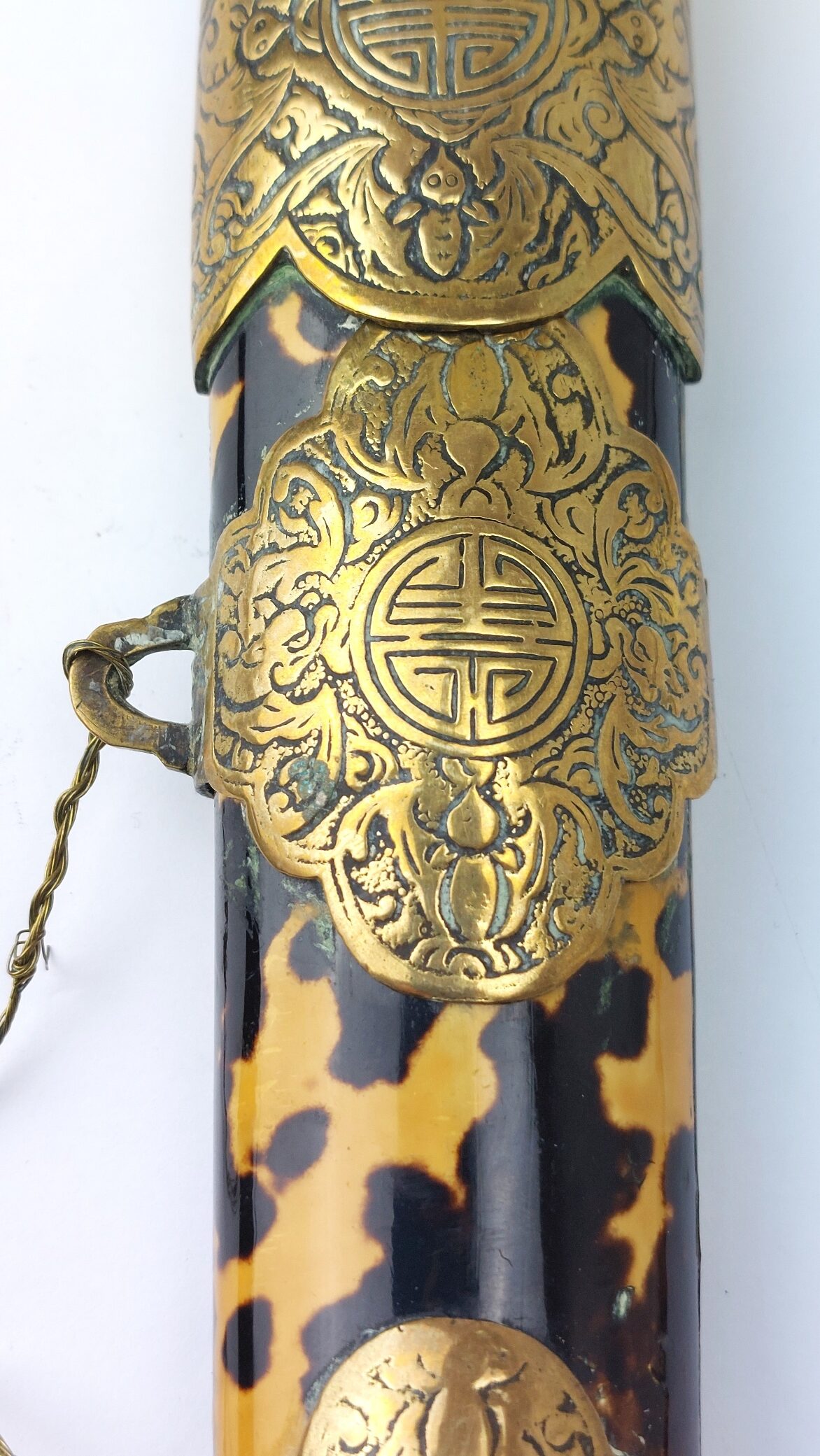
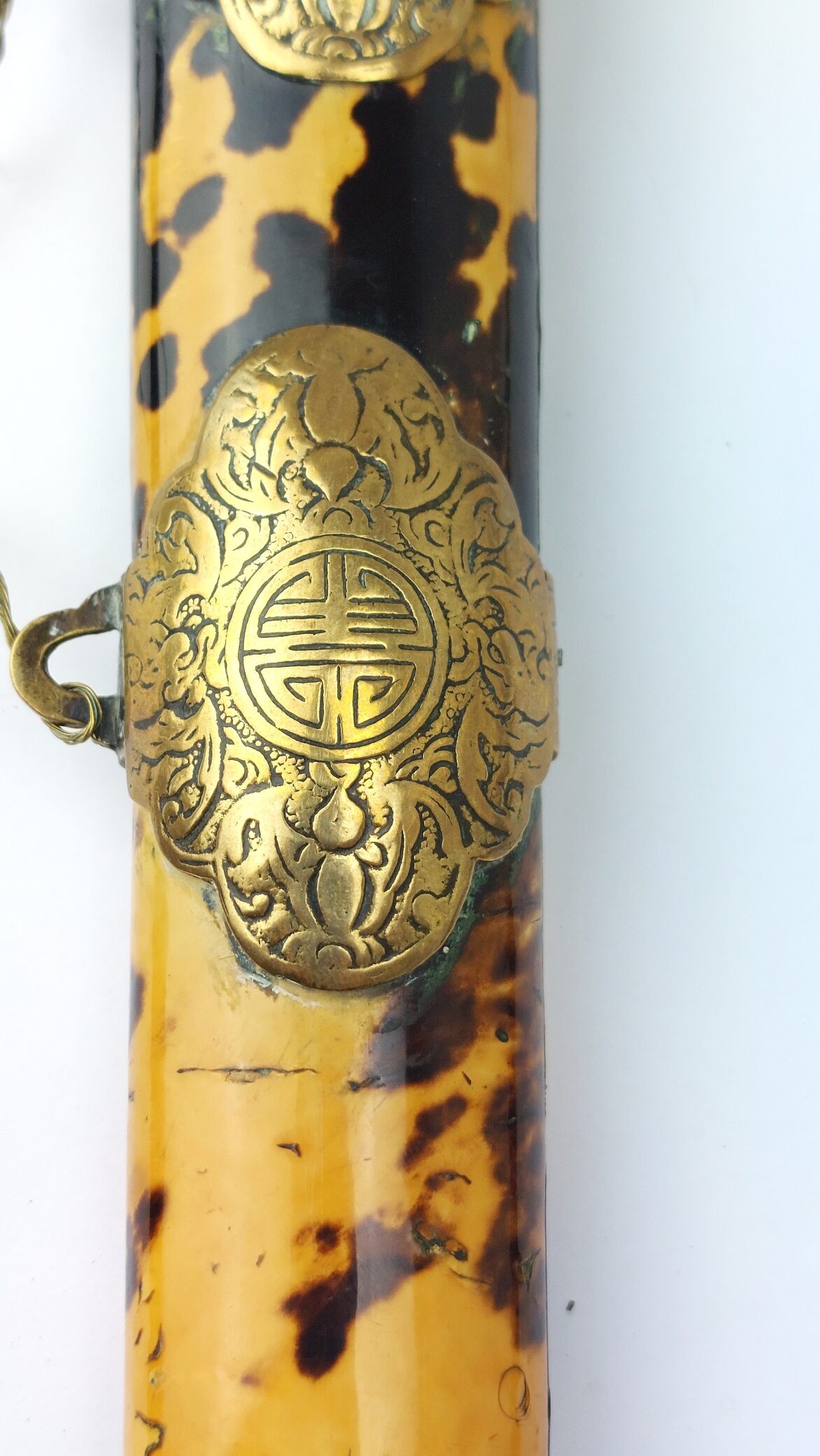
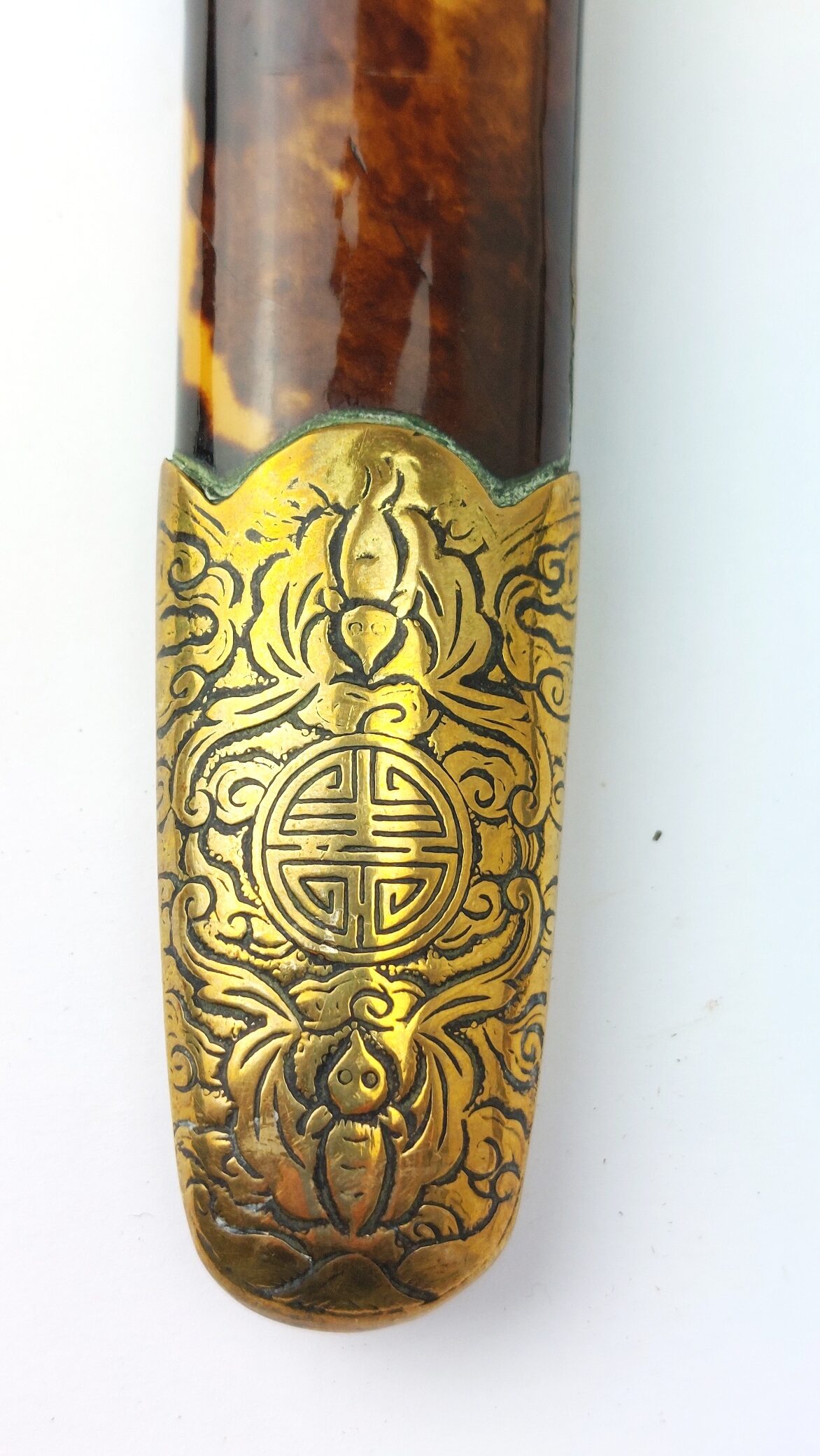
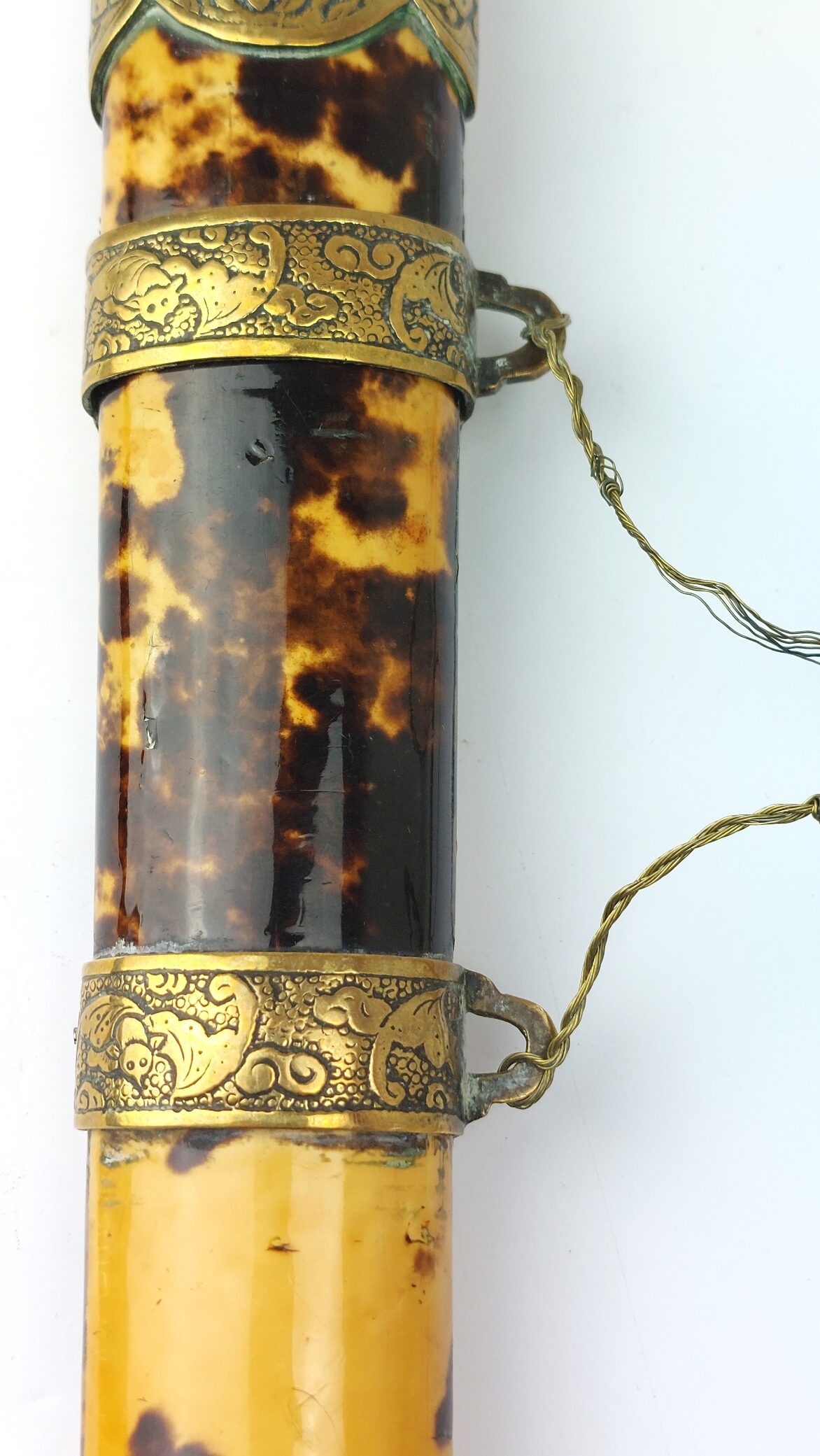
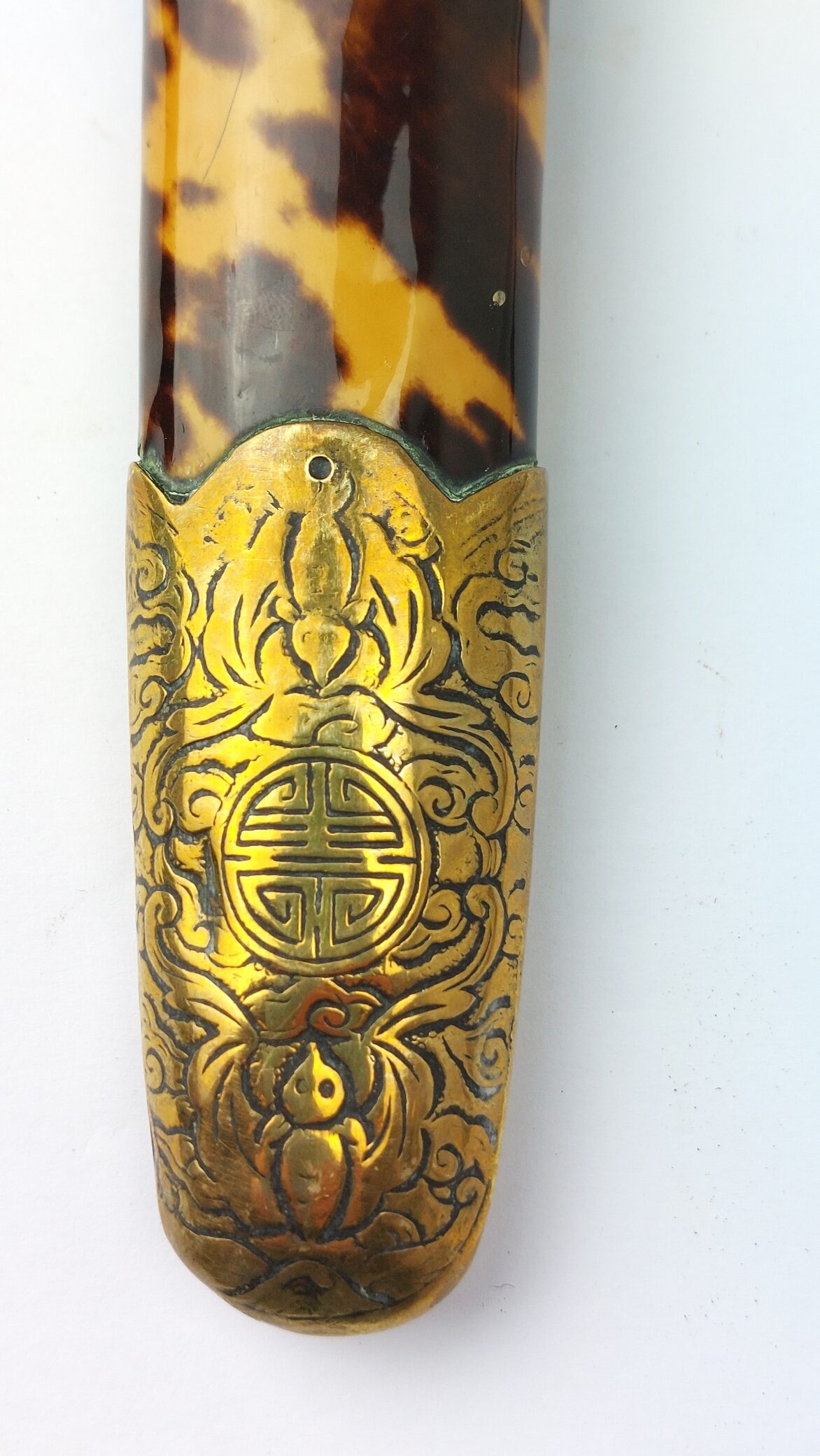
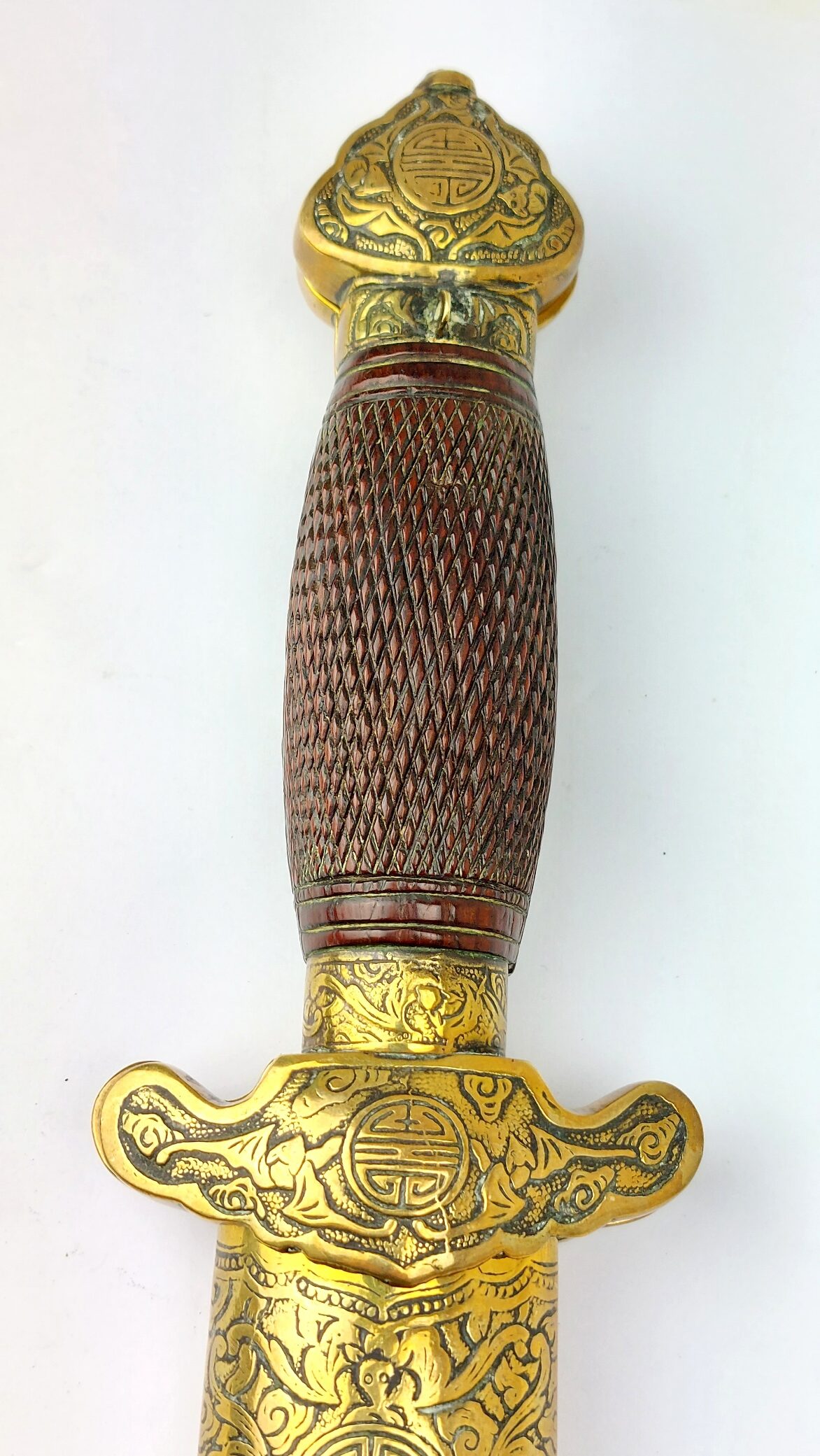
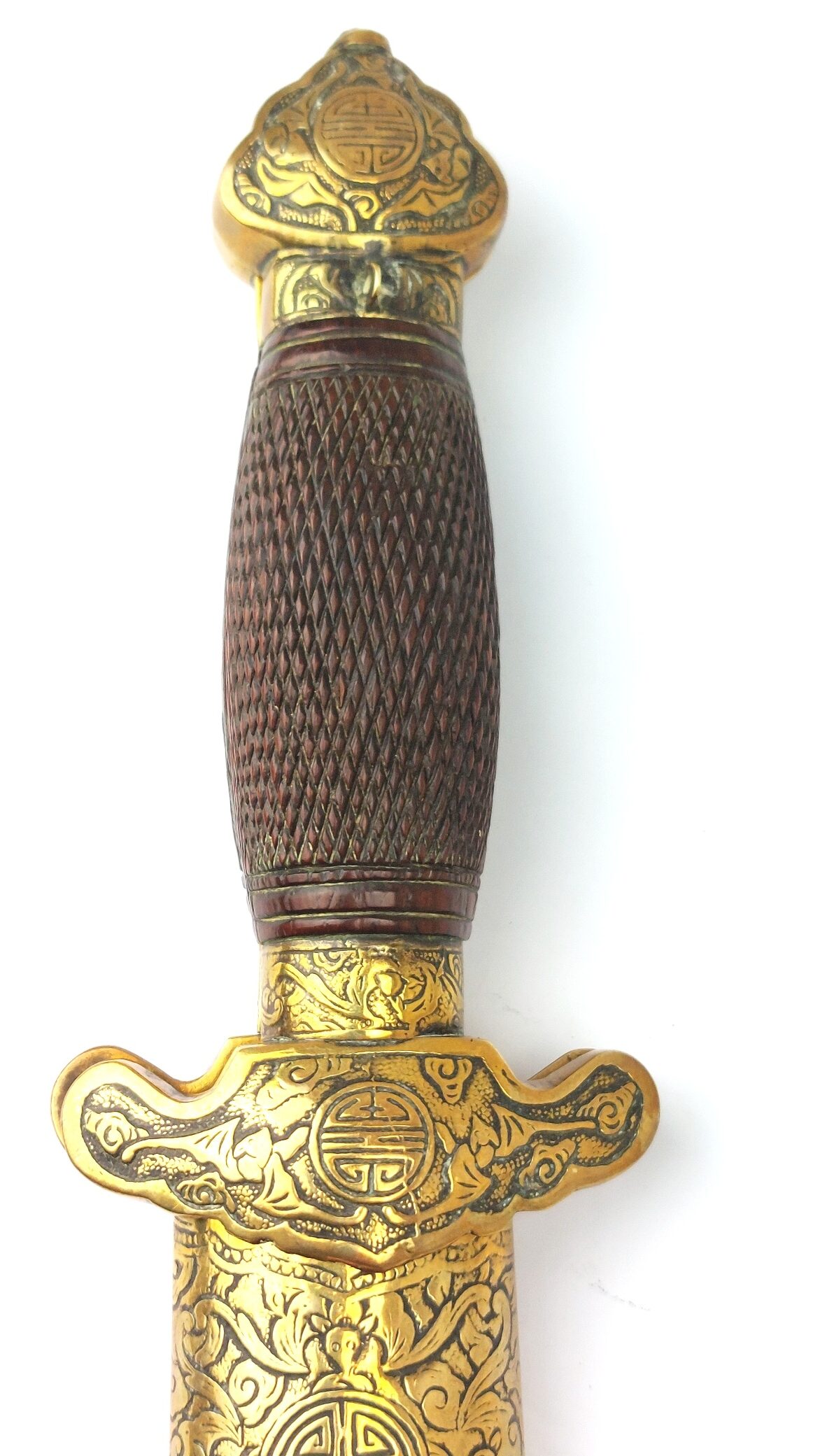
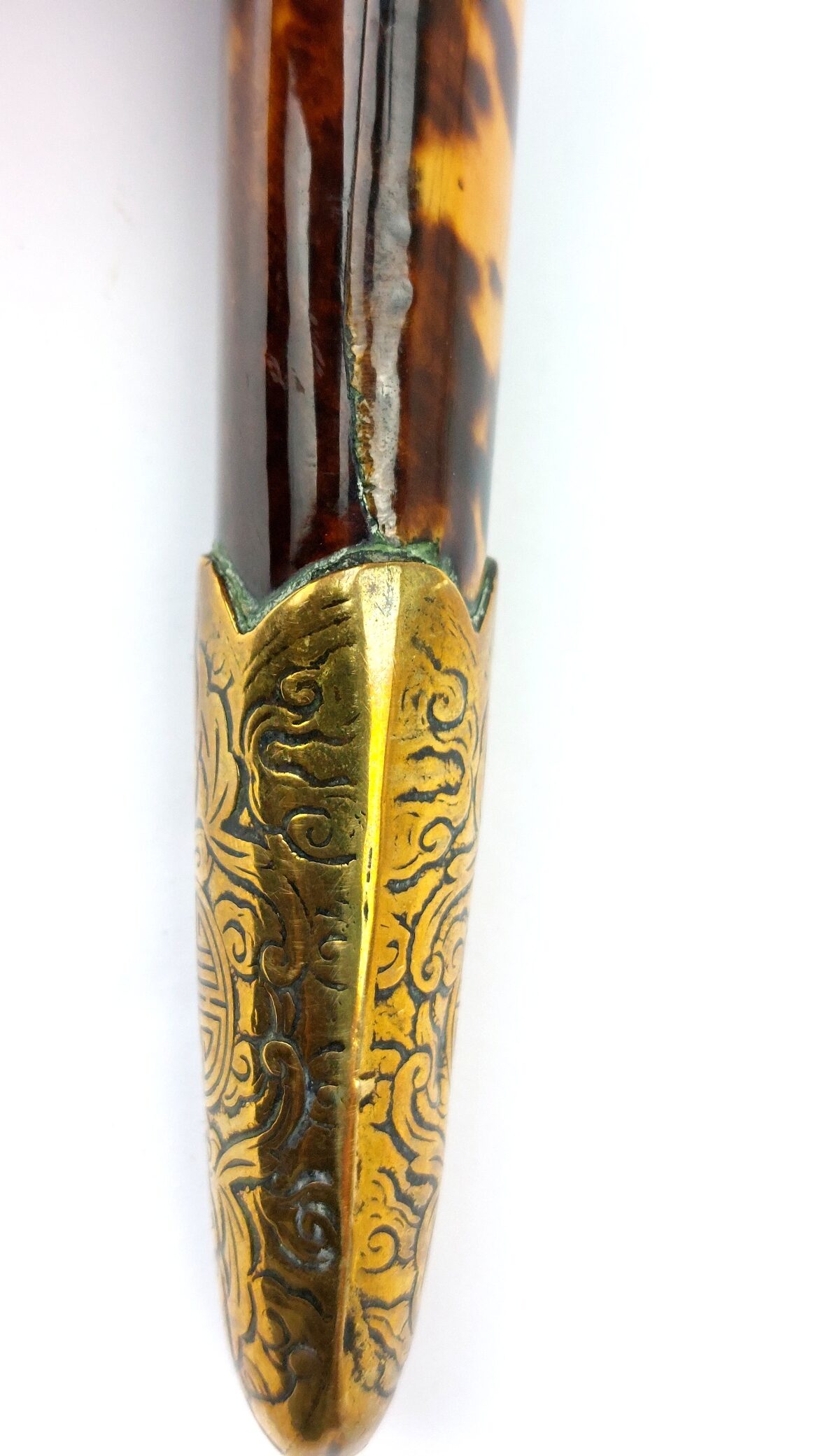
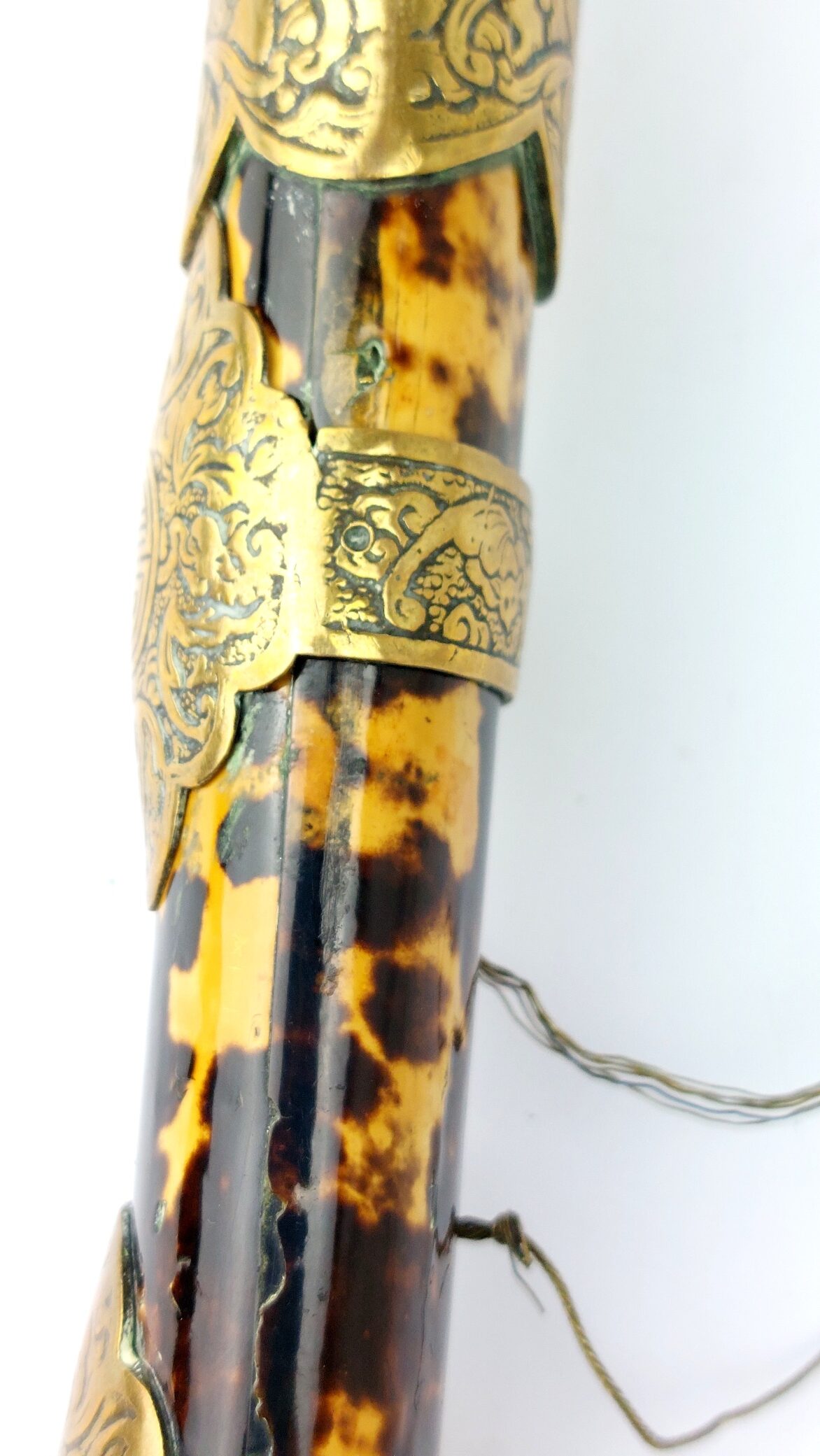
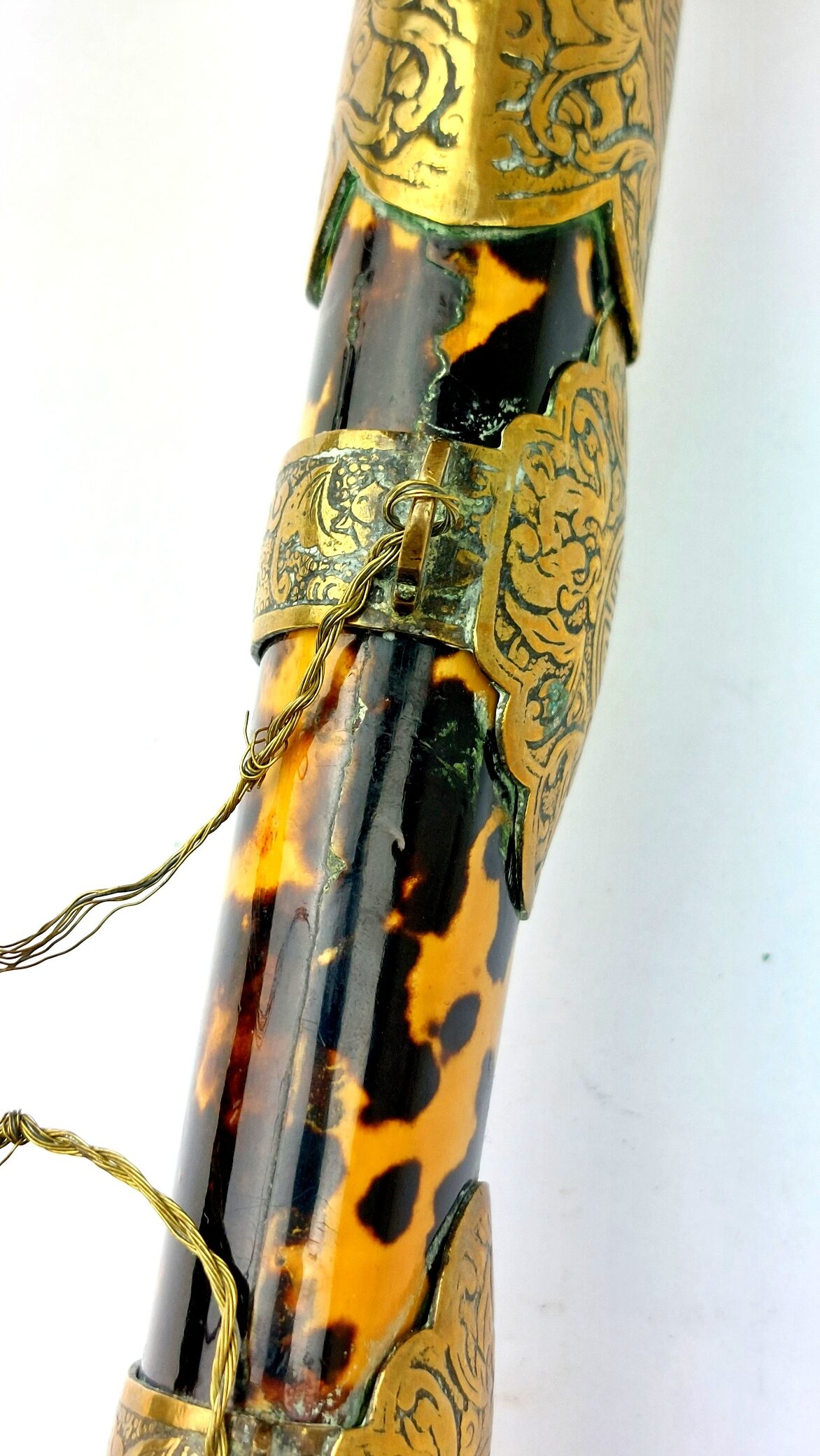
The gilt-brass mounts are deeply engraved and decorated with repeated circular “Shou” (longevity) roundels surrounded by scrolling foliage and auspicious motifs. The engraving remains crisp and well-defined, with attractive age toning in the recesses.
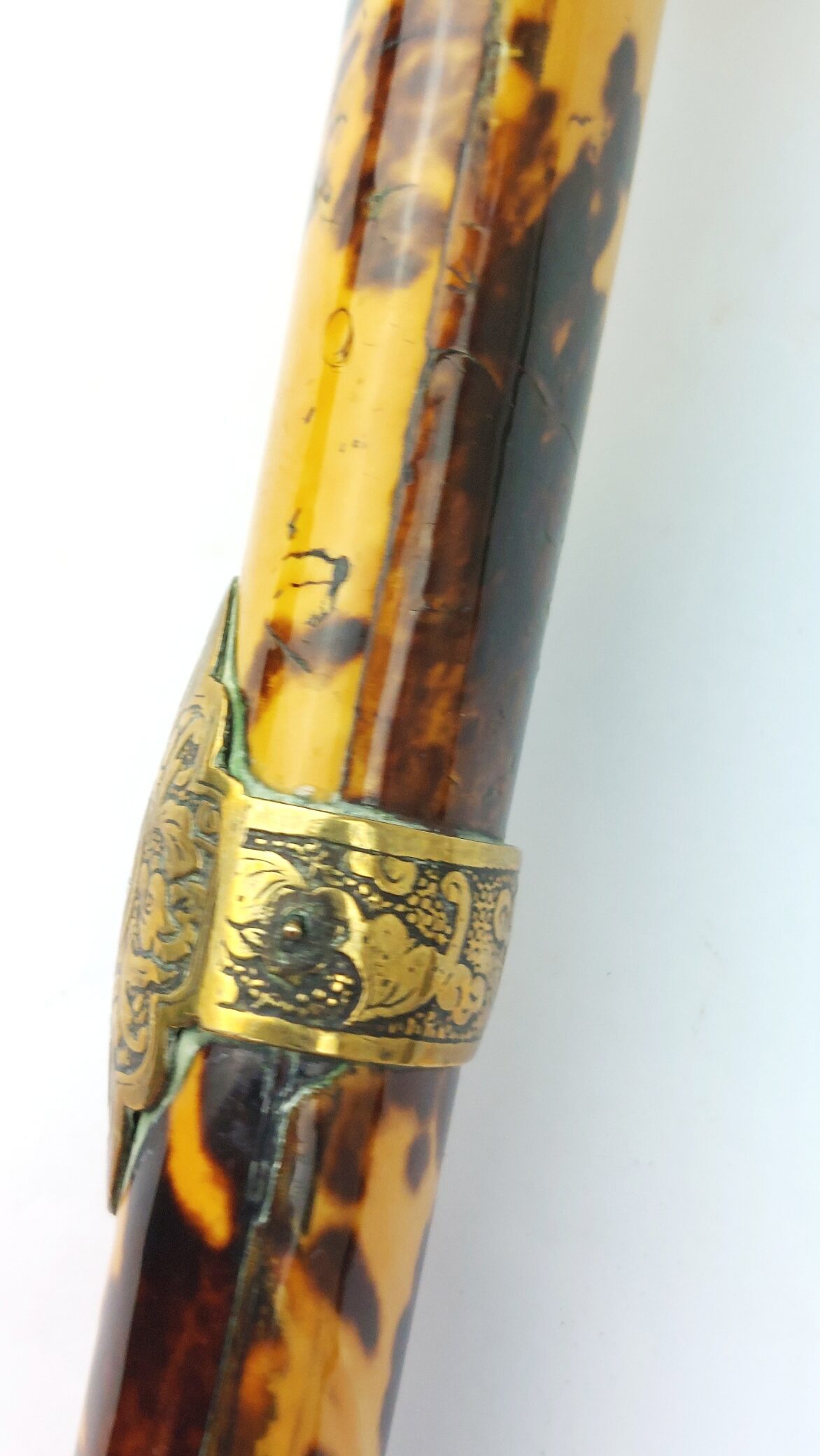
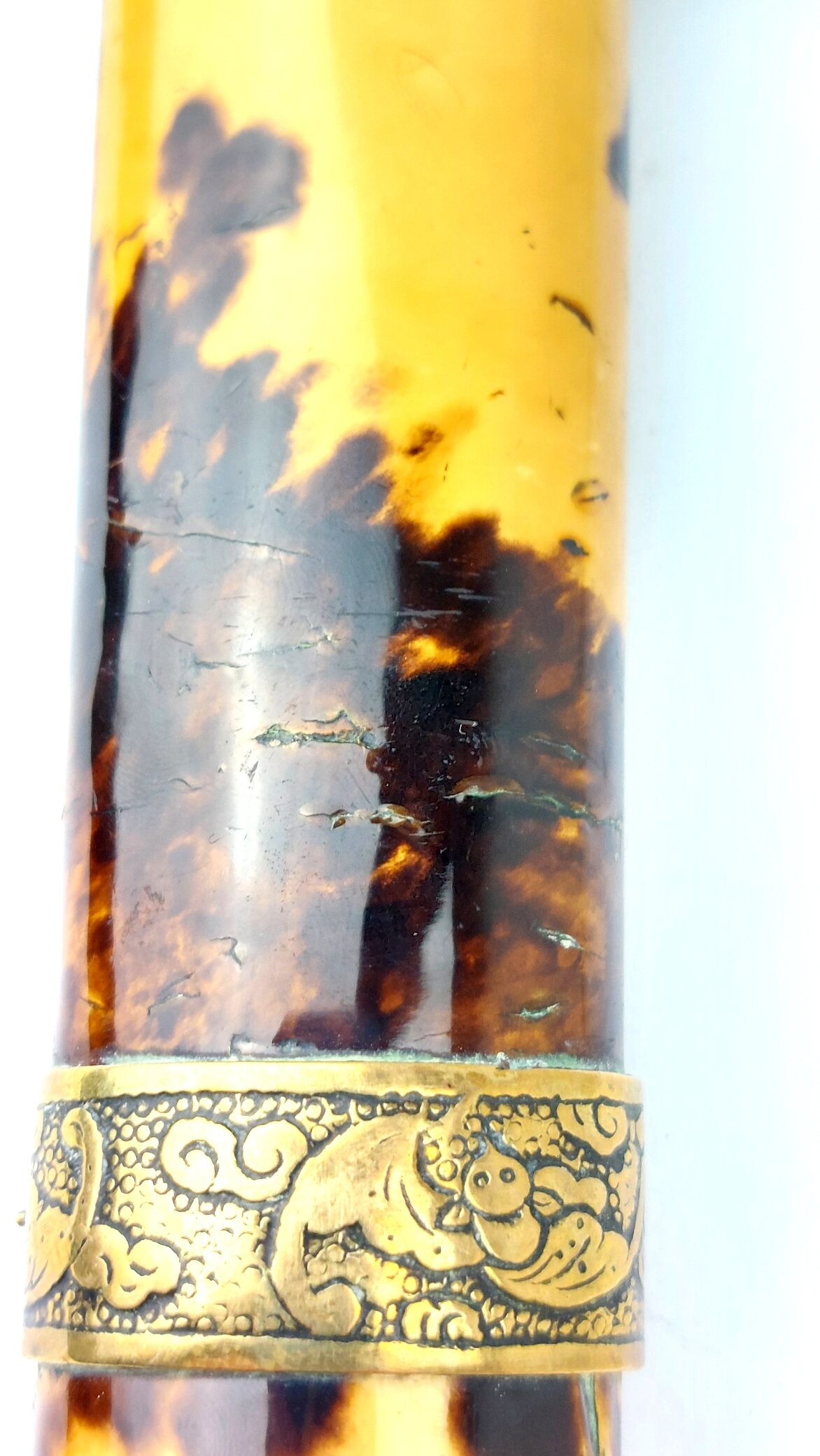
The scabbard covering displays the characteristic amber and dark mottled pattern associated with tortoiseshell and shows natural translucency in areas of lighter colour. The mounts retain their suspension rings and decorative bands, complementing the luxurious appearance of the piece.
The grips are of dark hardwood; carved with a pronounced diamond cross-hatched pattern andeach fitted with a side ring for tassel attachment — a common Qing feature.
Approx. Measurements – Blade length: 39.2 cm. Overall length: 55 cm.
Historical Note:
The jian, often referred to as “The Gentleman of Weapons,” has over two millennia of history in China. By the 19th century, during the Qing Dynasty, the jian had largely transitioned from a battlefield weapon to a symbol of refinement, scholarship, and martial accomplishment.
The paired form, or shuang jian, became popular in the Qing period among civilian martial artists and well-to-do individuals. The ability to draw two blades from a single scabbard offered both practical and theatrical advantages. Dual-wielding techniques were particularly valued in southern martial traditions.
The repeated “Shou” character (壽) represents longevity and was a common auspicious symbol in Qing decorative arts. When combined with other motifs such as bats and scrolling foliage, the overall design conveys blessings of long life and good fortune.
Luxury examples were sometimes mounted with exotic materials such as tortoiseshell, prized for its beauty and translucency.
*Condition*
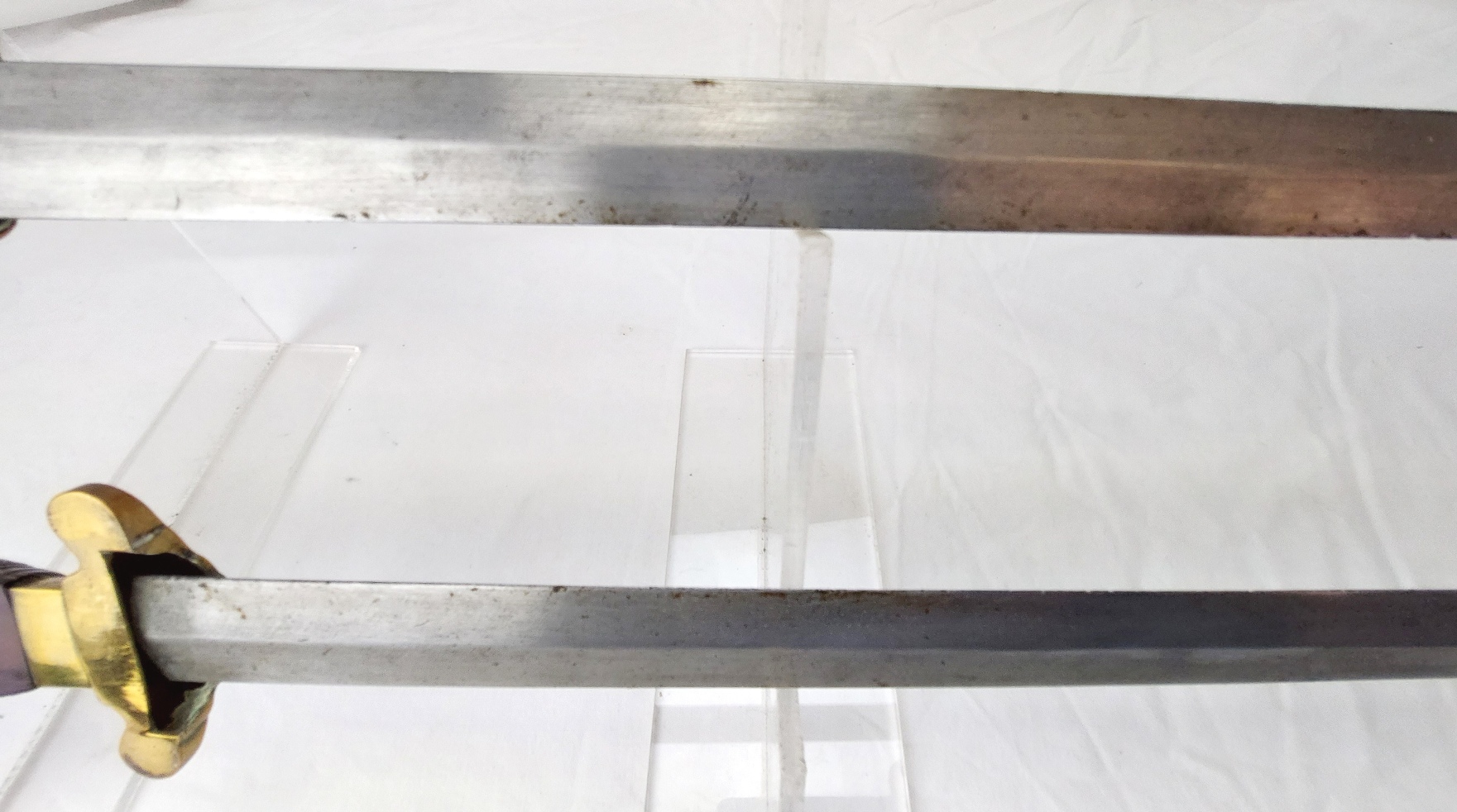
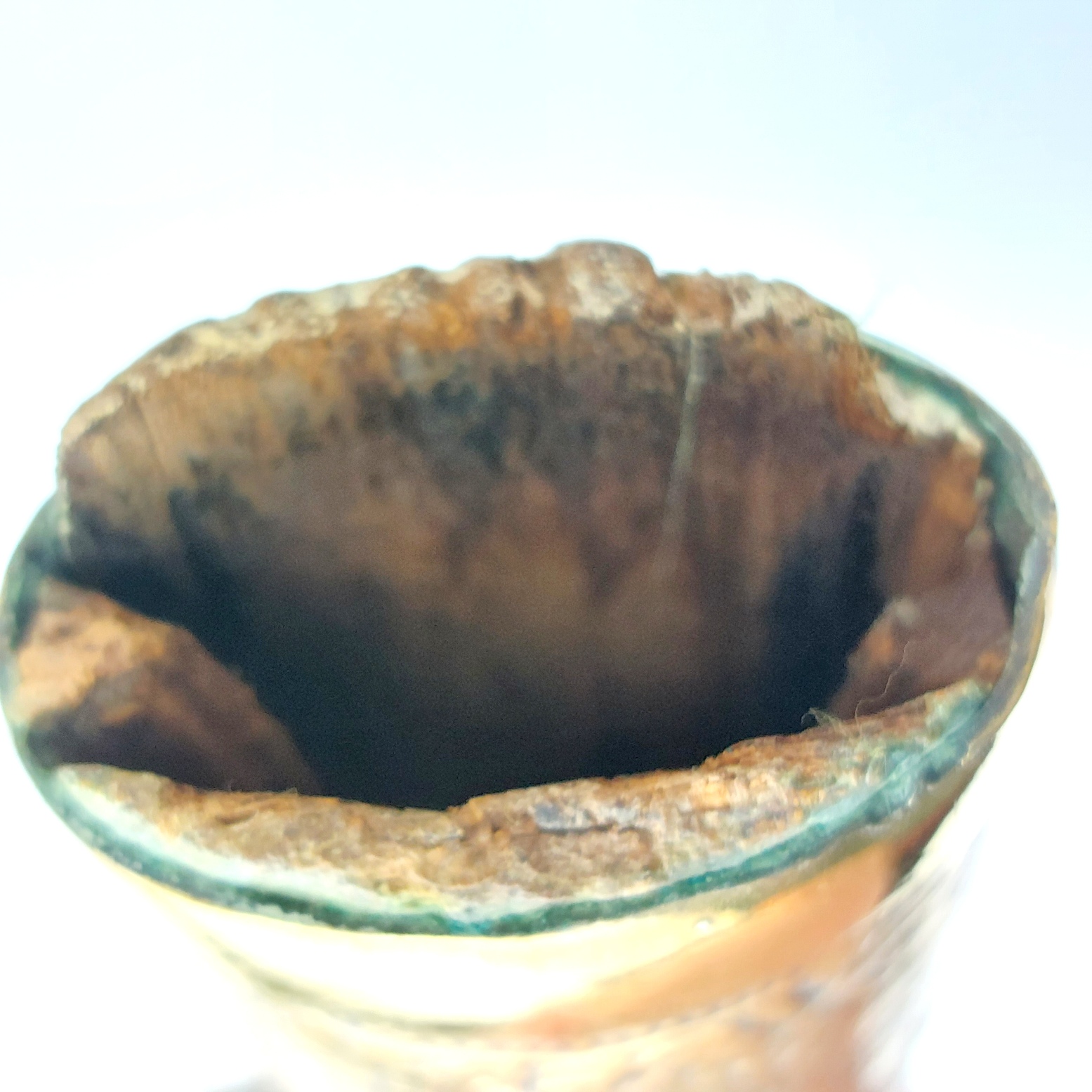
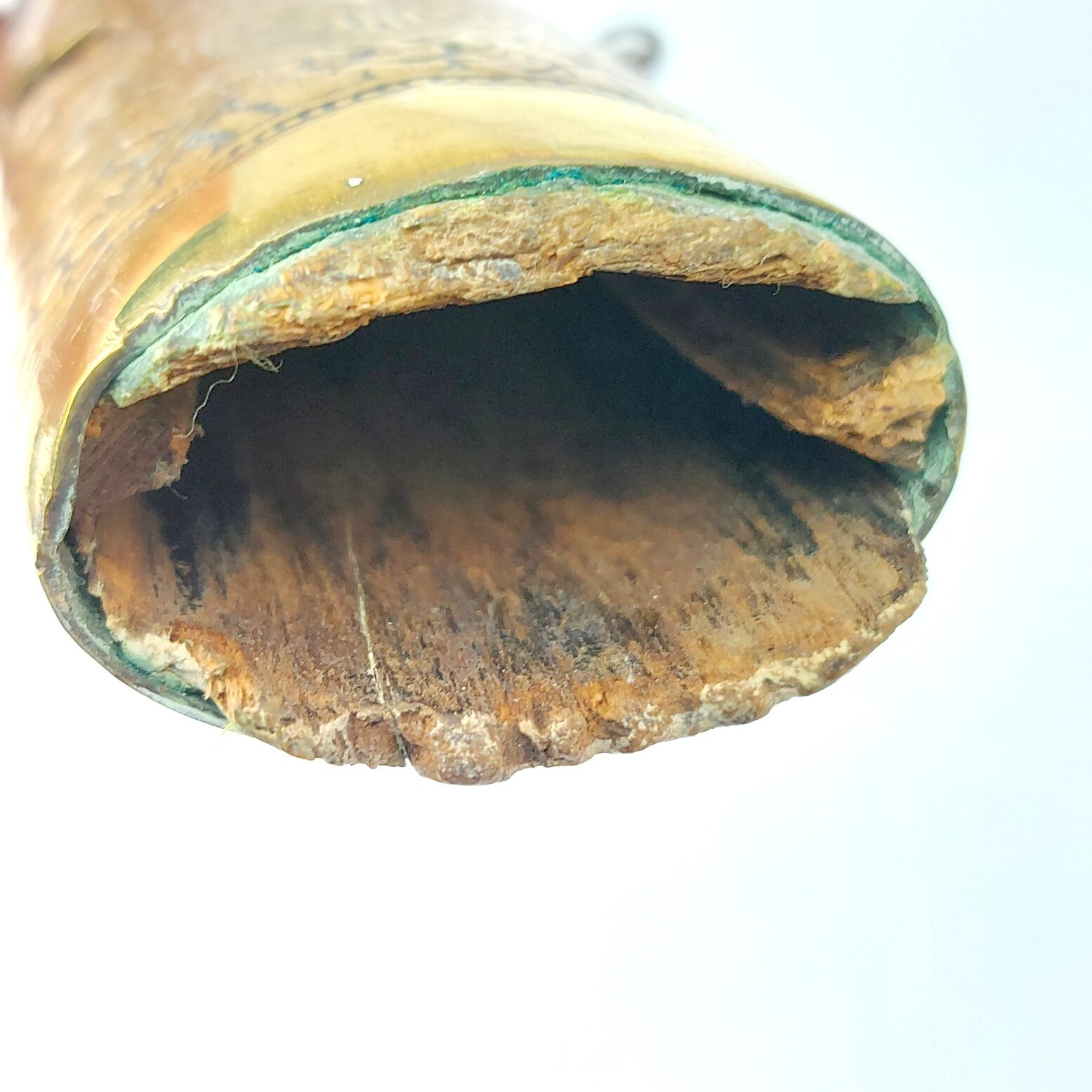
Overall, the pair presents in very good condition for the period. The blades are very good with minor age-related surface staining and light oxidation consistent with 19th century manufacture, but retain clear definition to the edges and well-formed spear points. The gilt-brass mounts remain sharp and attractive, with minor surface wear and areas of verdigris at joins consistent with age. The scabbard covering, which appears to be tortoiseshell, displays natural age shrinkage and some minor longitudinal seam separation, along with minor surface cracking. These features are typical of organic materials of this age and do not detract significantly from overall presentation. The wooden core is visible at the throat. Structurally sound and visually impressive. Please see photographs as part of the condition report.
*In order to complete the online purchase we will require a picture/scan of a photo ID (Driving Licence, Passport or an official document with a recent picture). If you don't posses any such document please call to buy. If we consider that the proof of ID is incorect or insuficient, we reserve the right to cancel the transaction.
*We also reserve the right to cancel the transaction with a full refund if there is any suspicion that the provided item will be used in any way contrary to the laws and legislation of UK.