German, WWII – The Tramm Brothers of Lucka: Archive of Three-Brothers On The Eastern Front (Extensive Feldpost & Official Documents, 2 Black Wound Badges & Period Photograph), Two KIA, One MIA, 1944–45
*German, WWII – The Tramm Brothers of Lucka: Archive of Three-Brothers On The Eastern Front (Extensive Feldpost & Official Documents, 2 Black Wound Badges & Period Photograph), Two KIA, One MIA, 1944–45*
A rare and deeply human Second World War German family archive documenting the service and fate of three brothers from Lucka, Thüringen — Hans (b. 1922), Herbert (b. 1924) and Helmut (b. 1926) Tramm — all of whom served on the Eastern Front in the final year of the war. Within ten months the family lost all three sons.
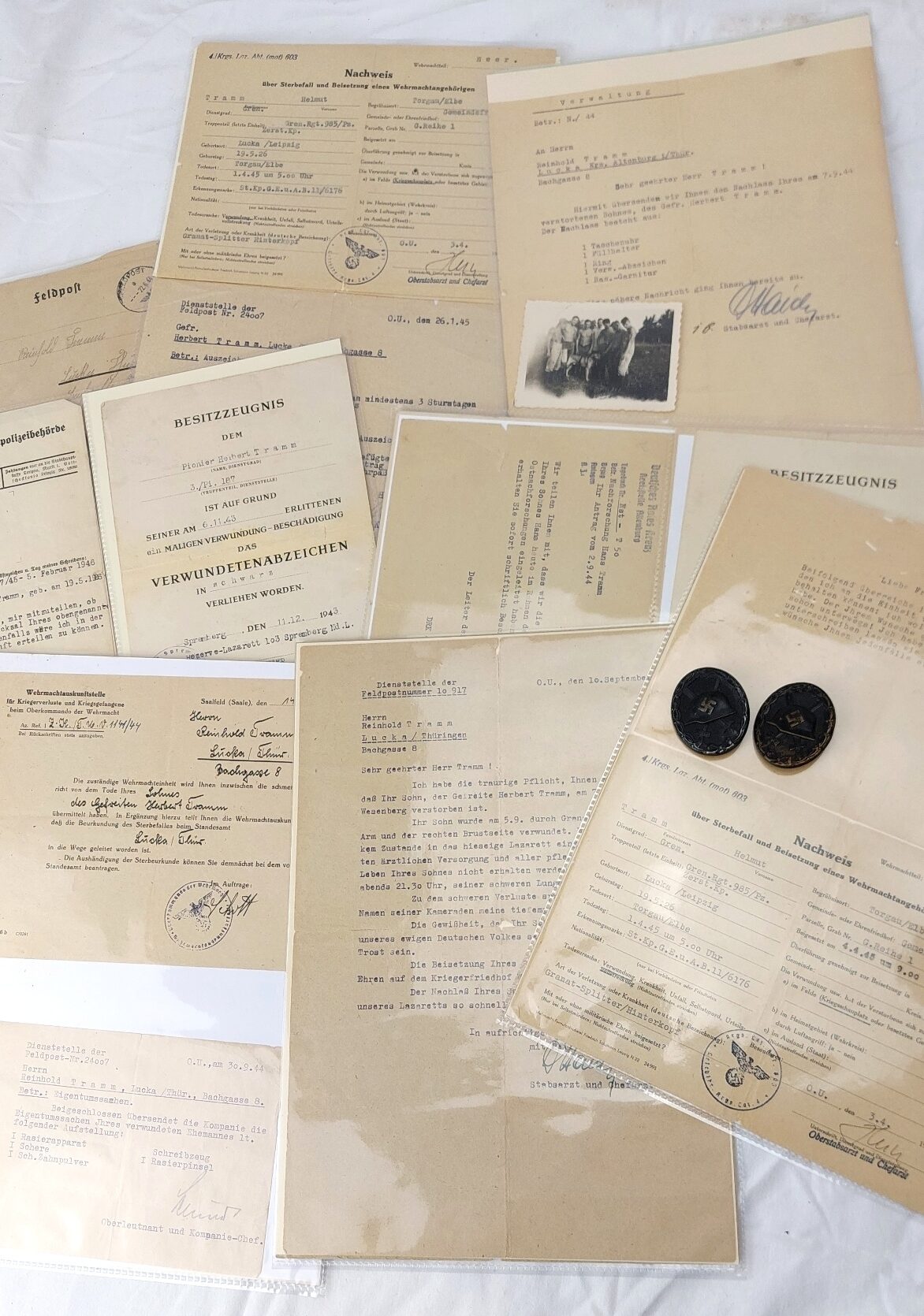
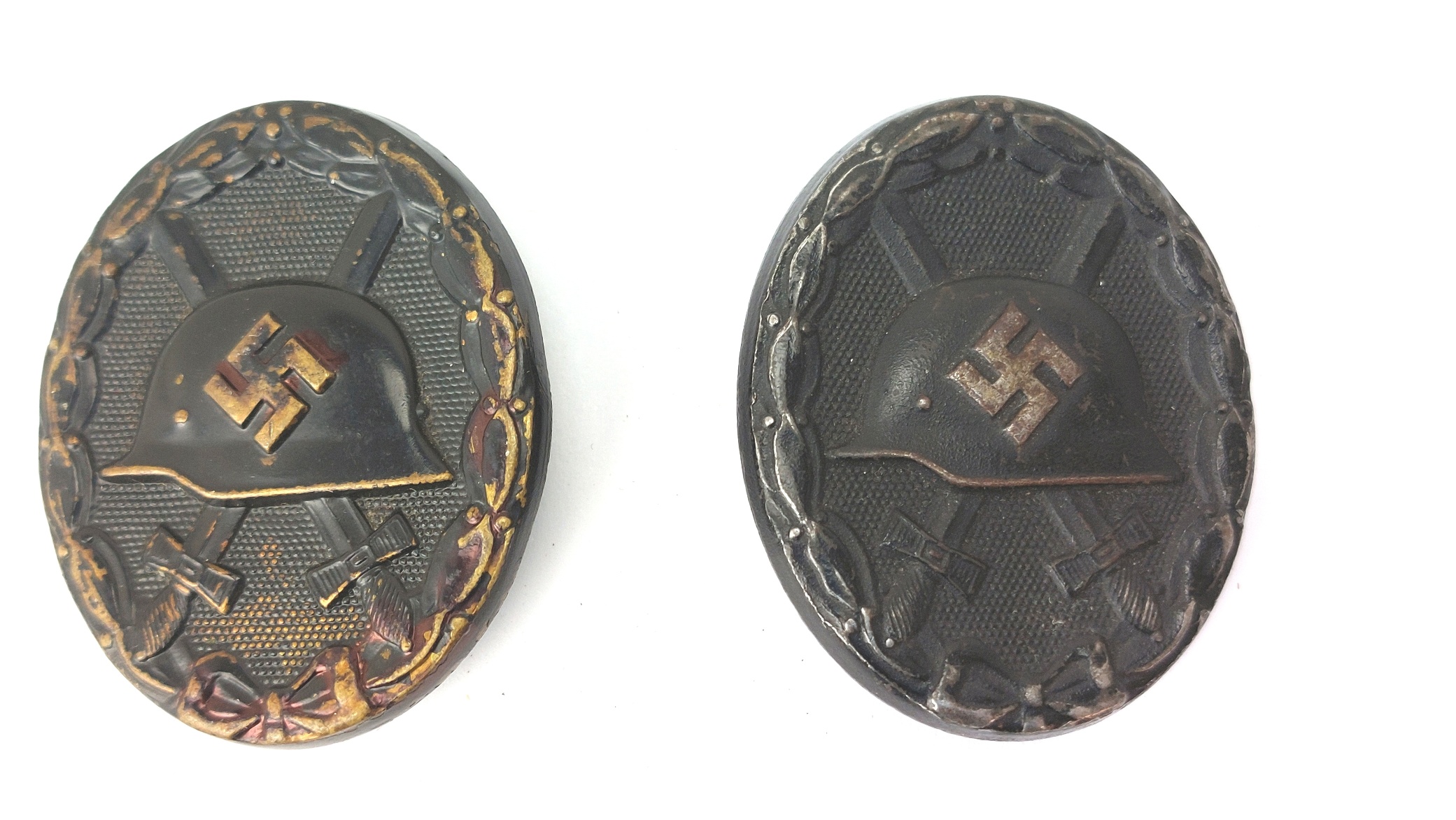
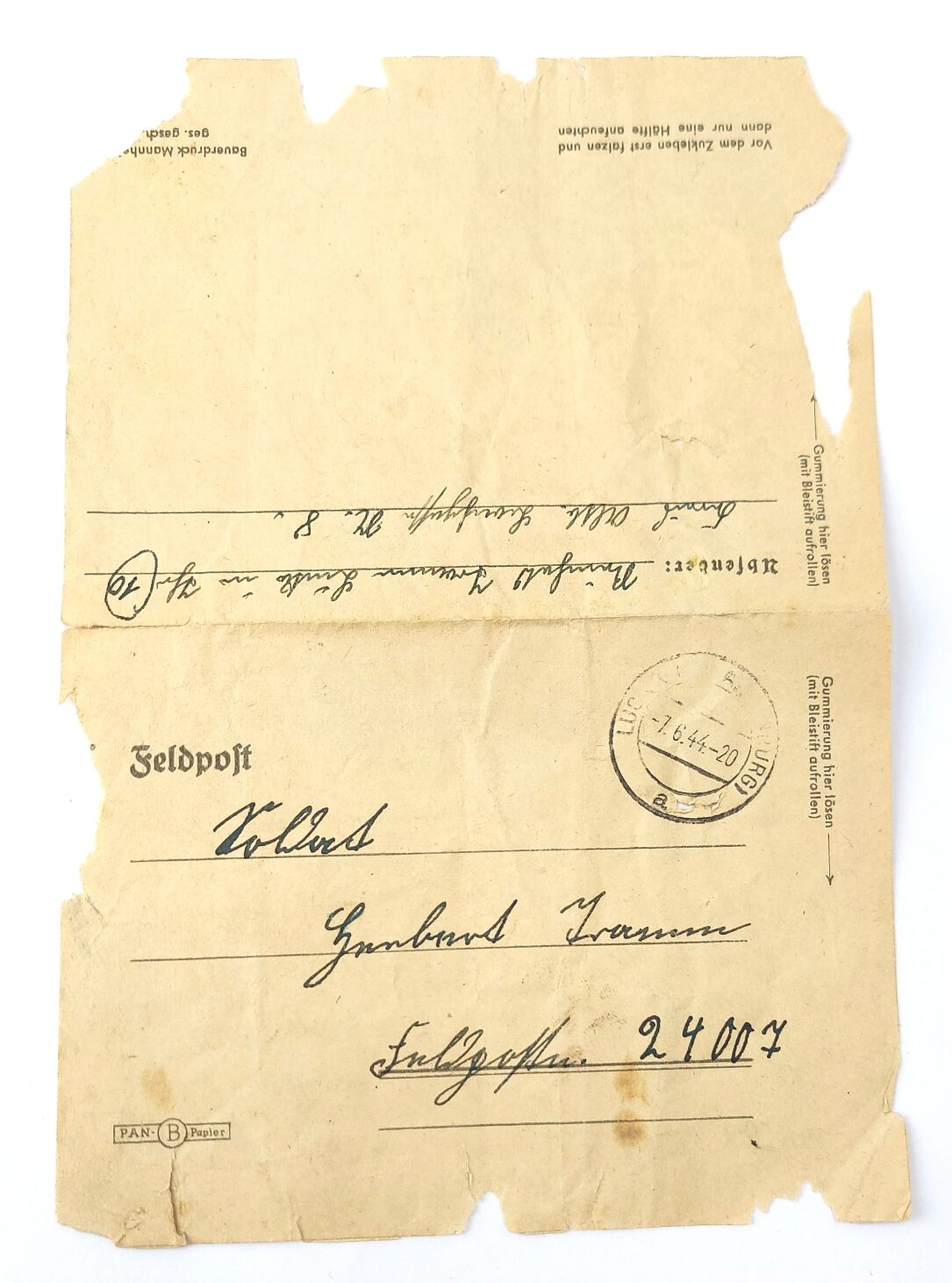
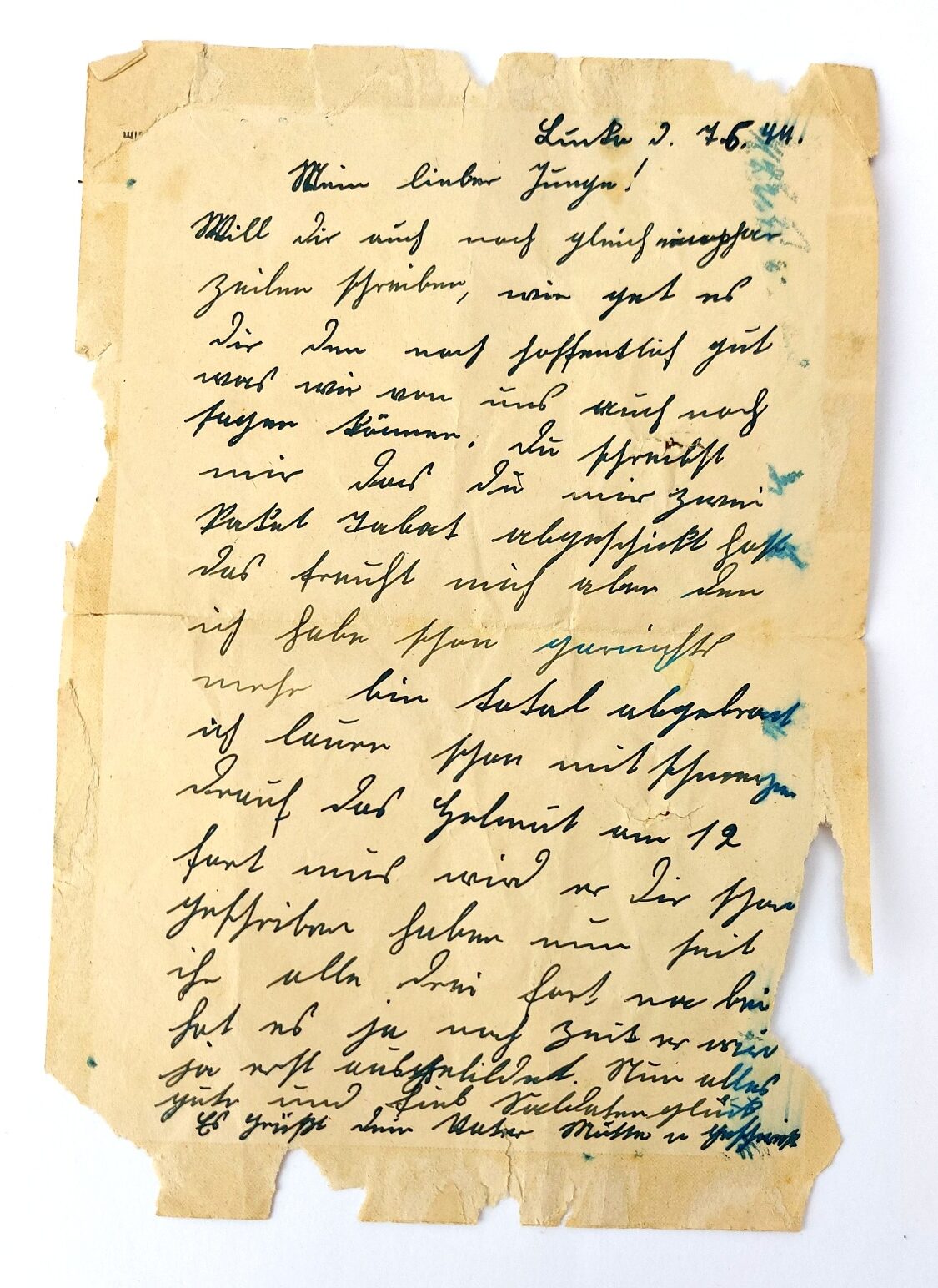
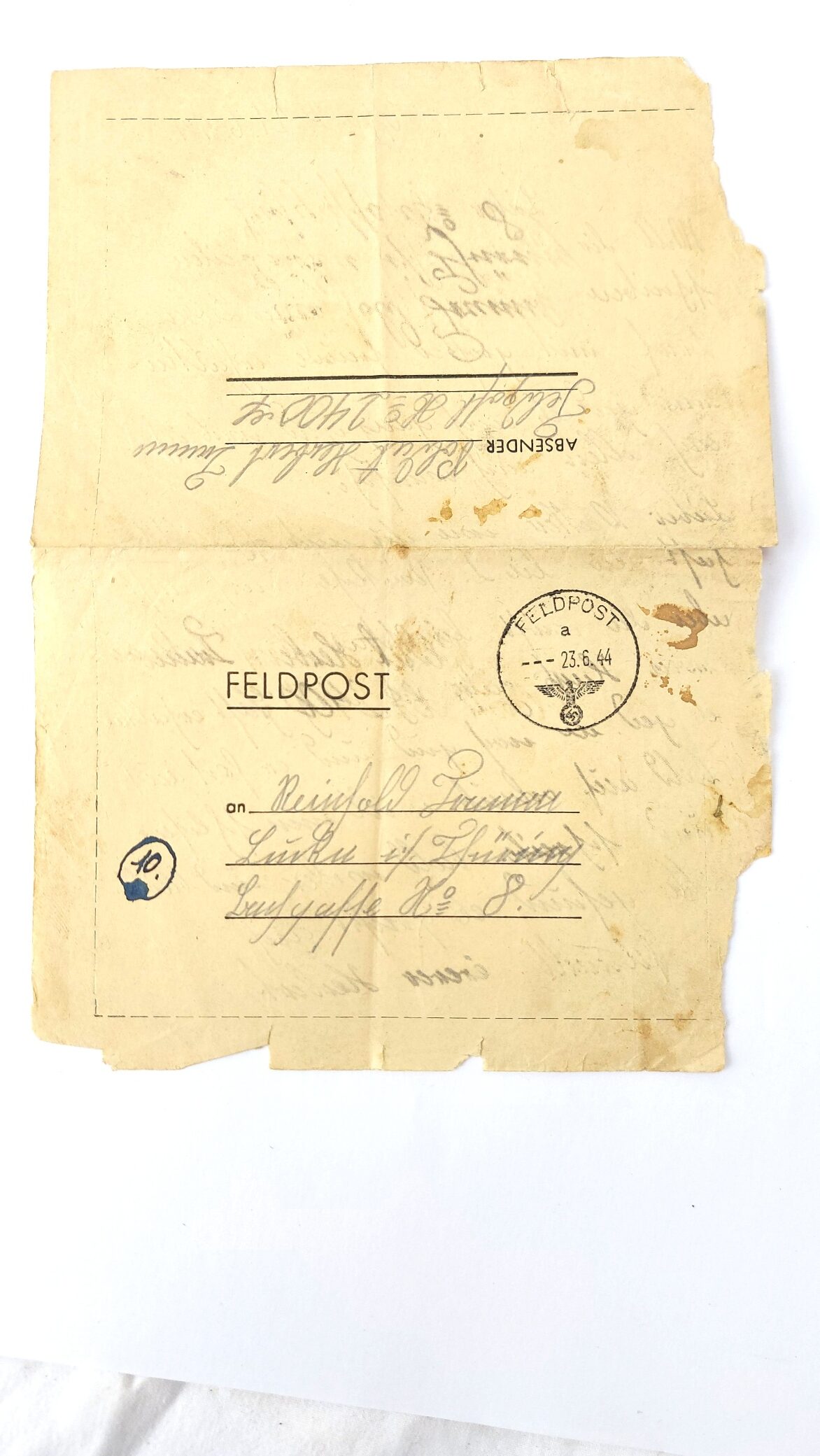
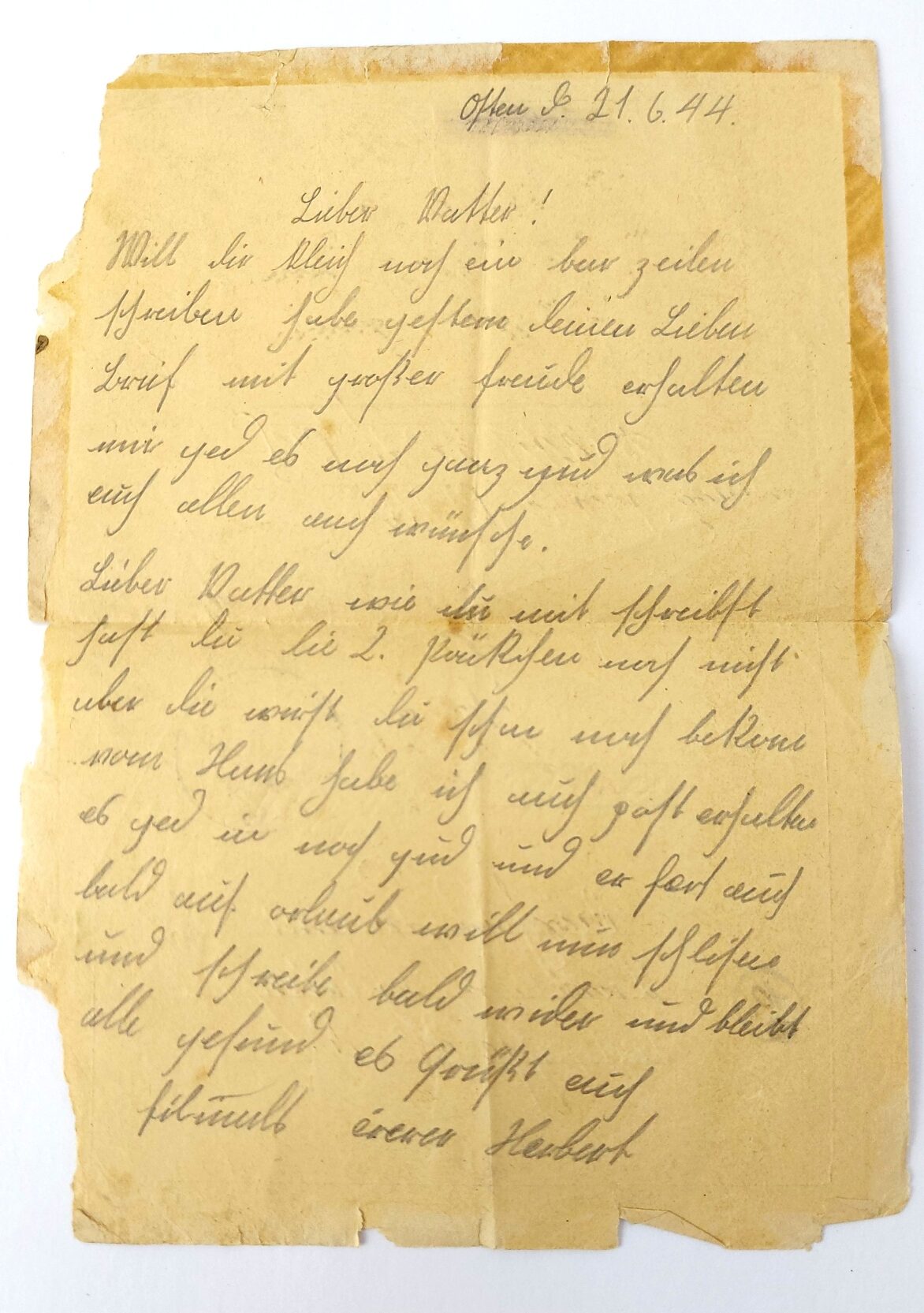
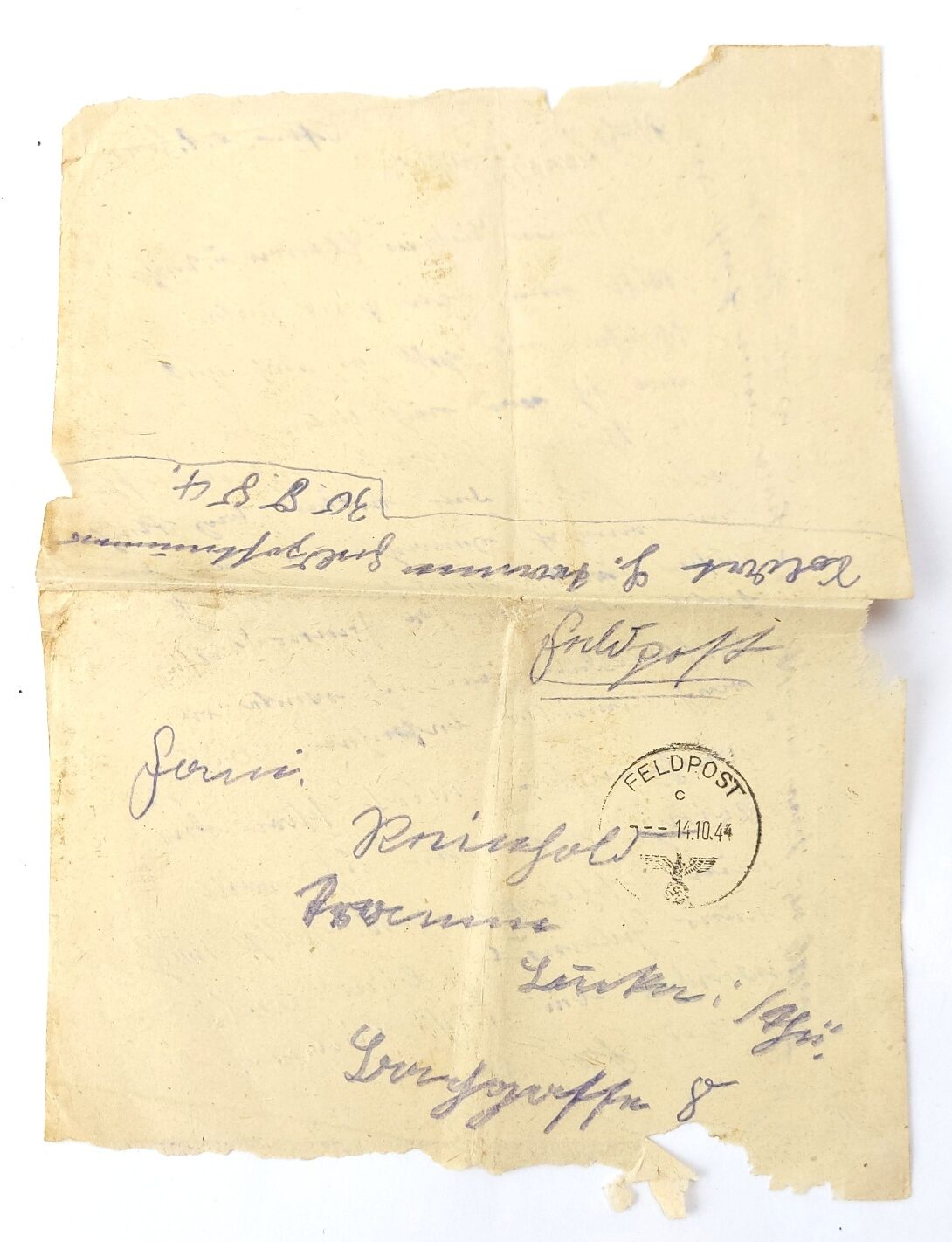
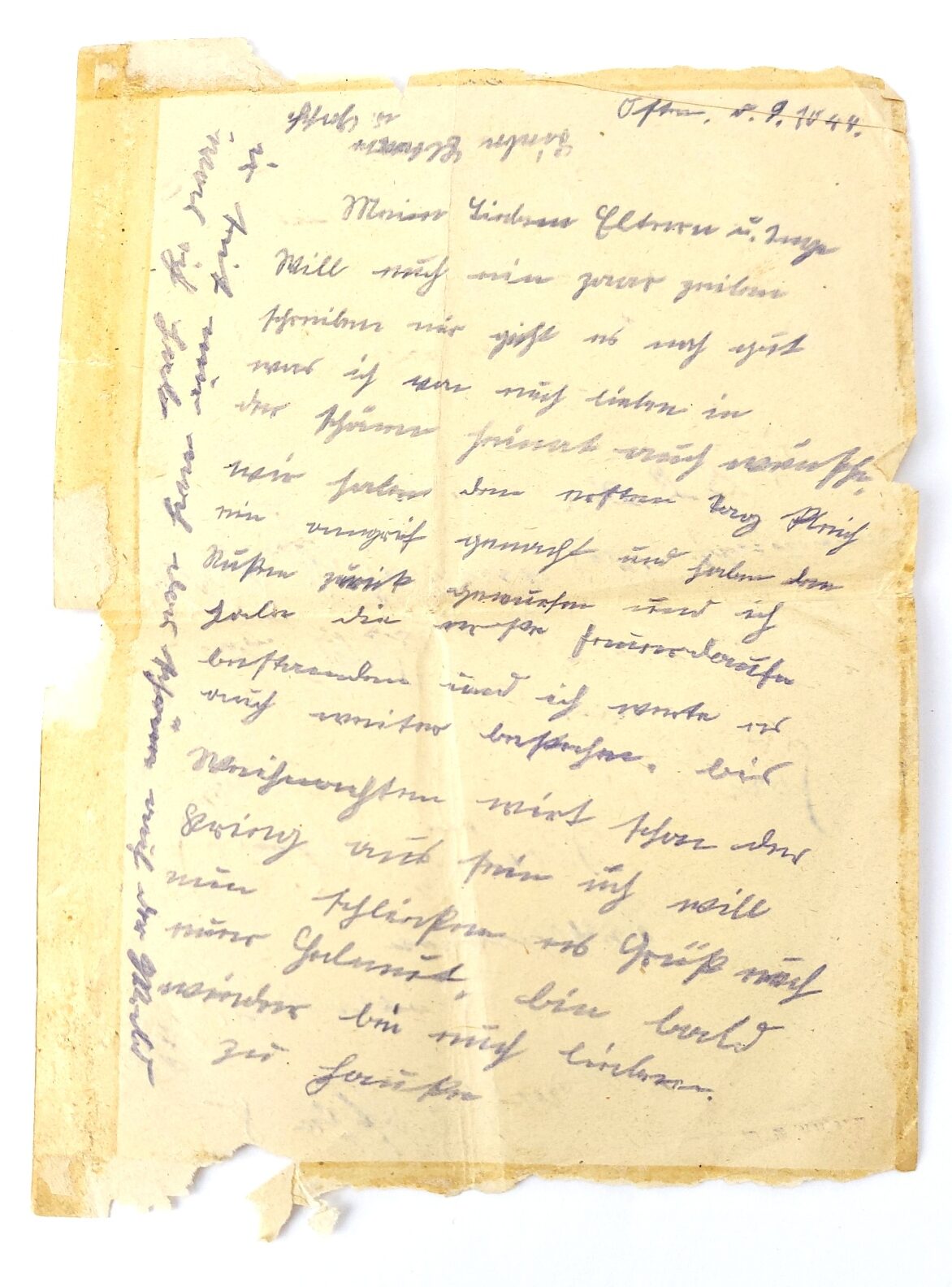
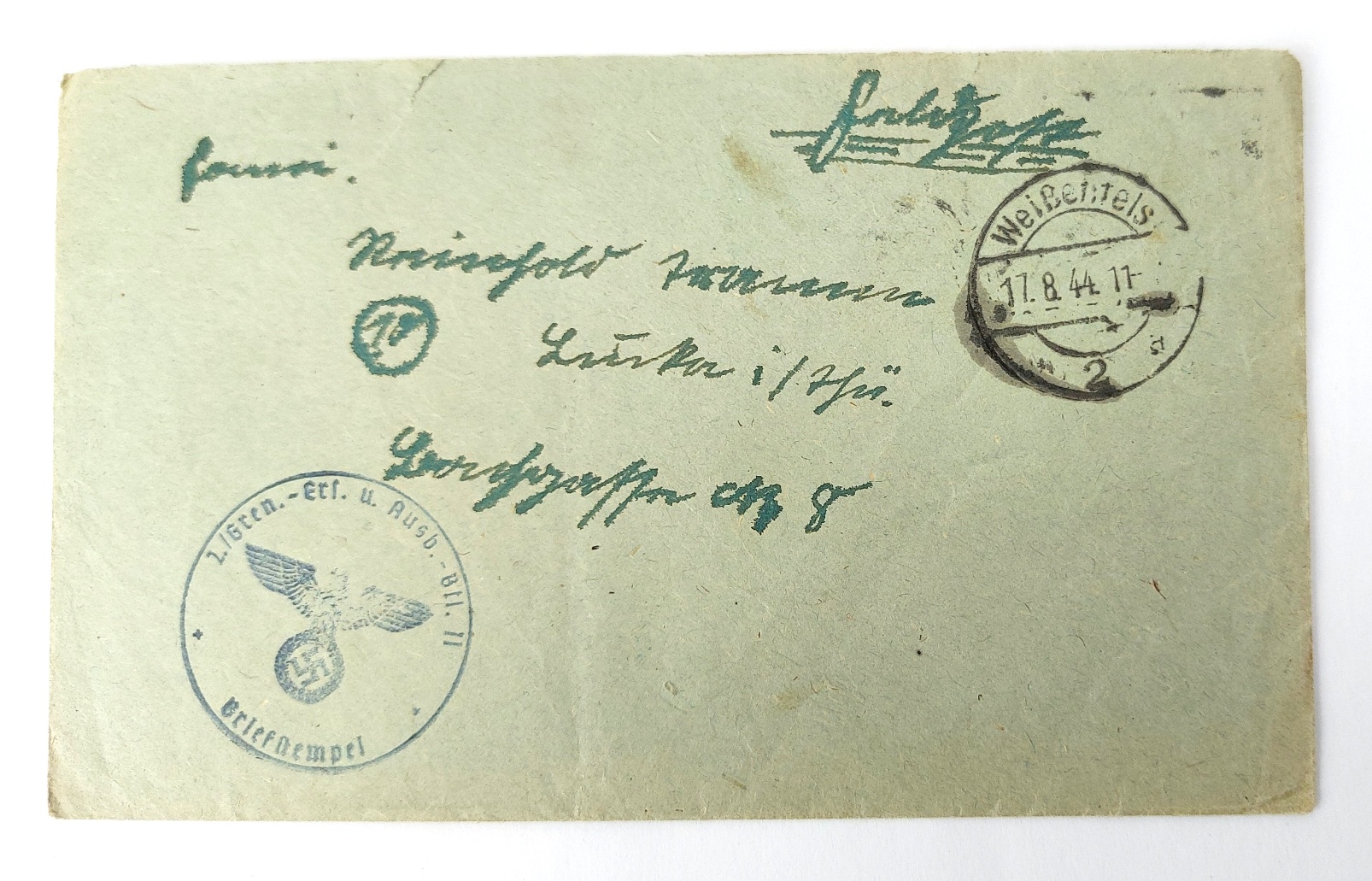
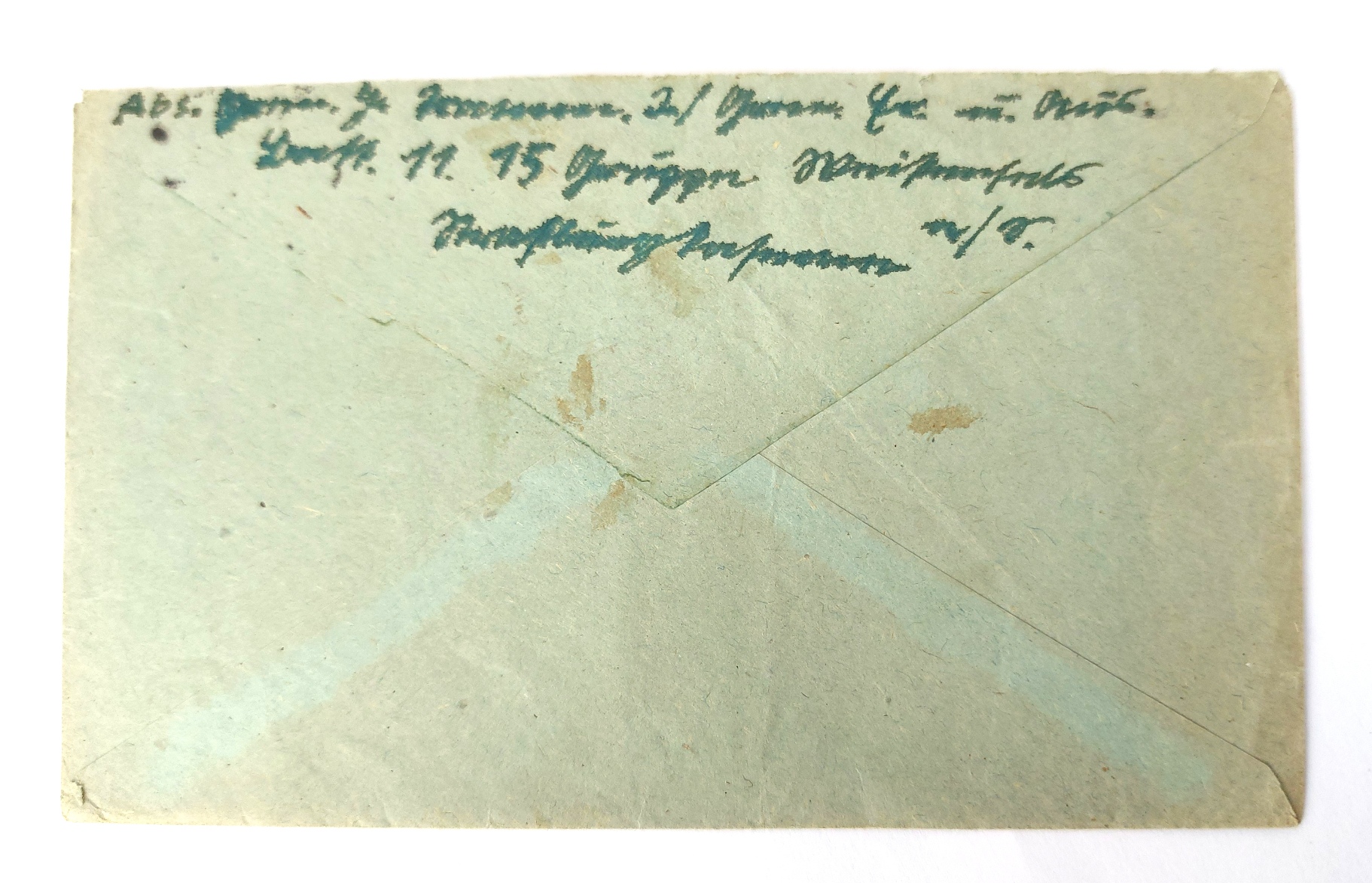
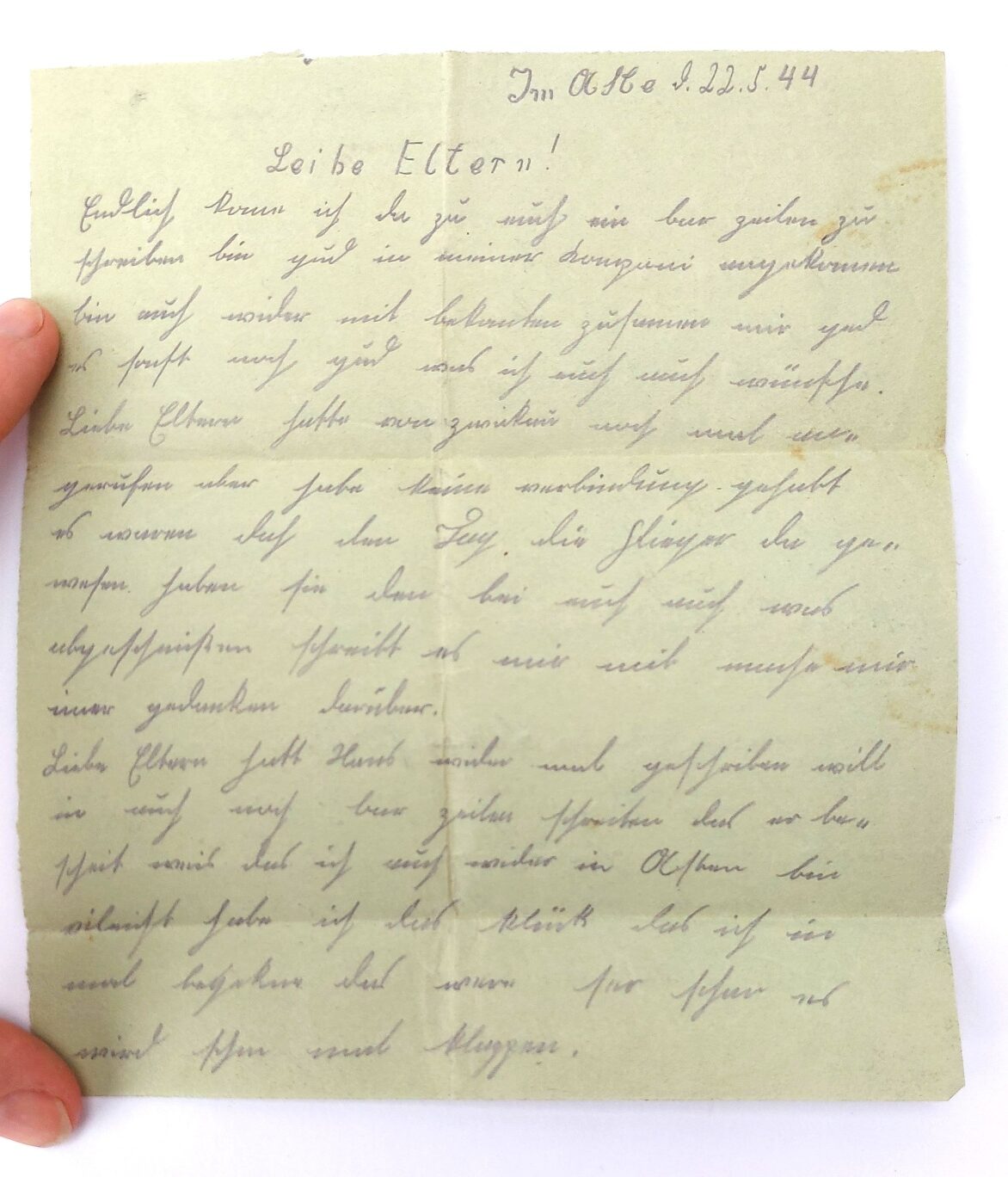
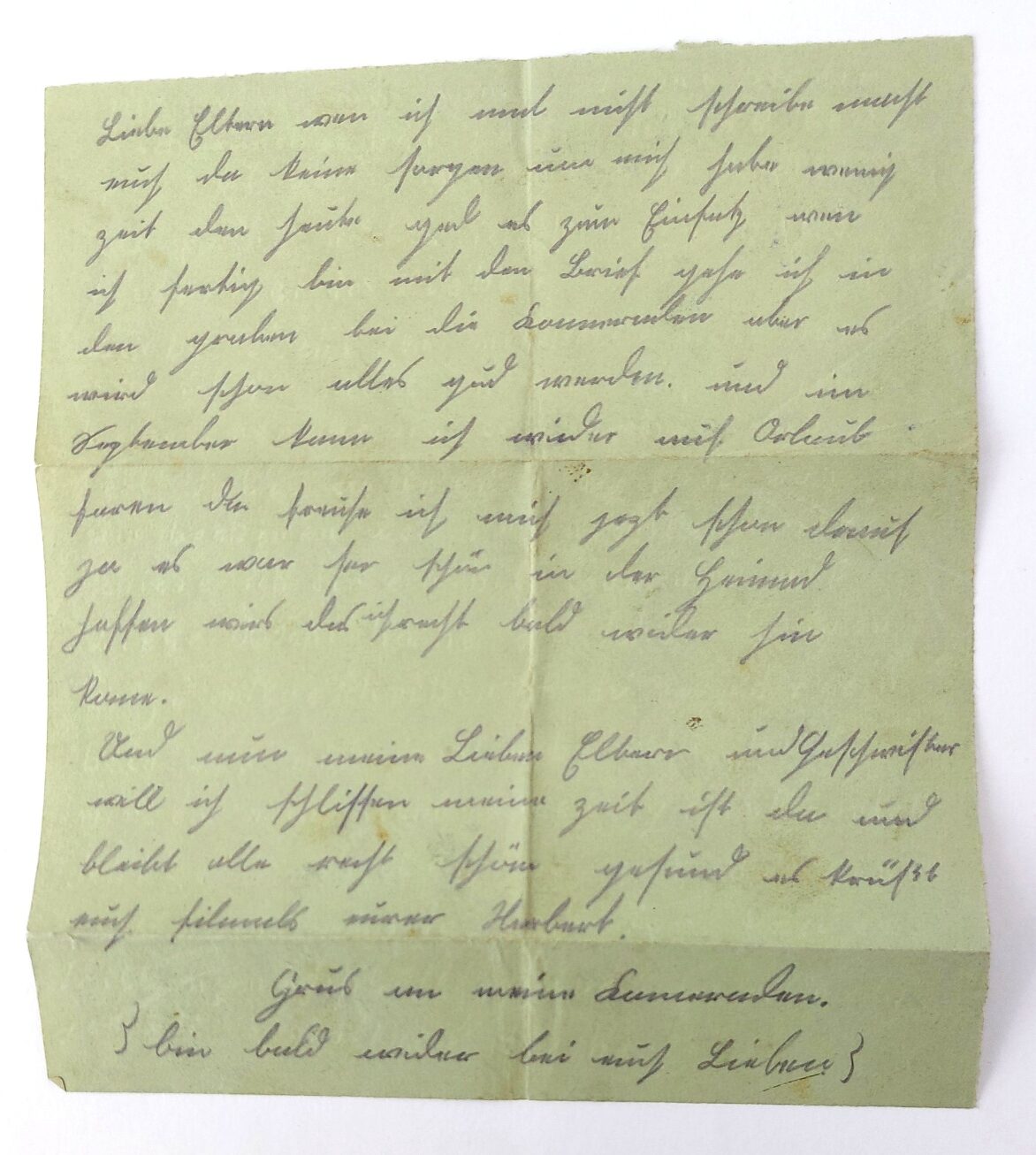
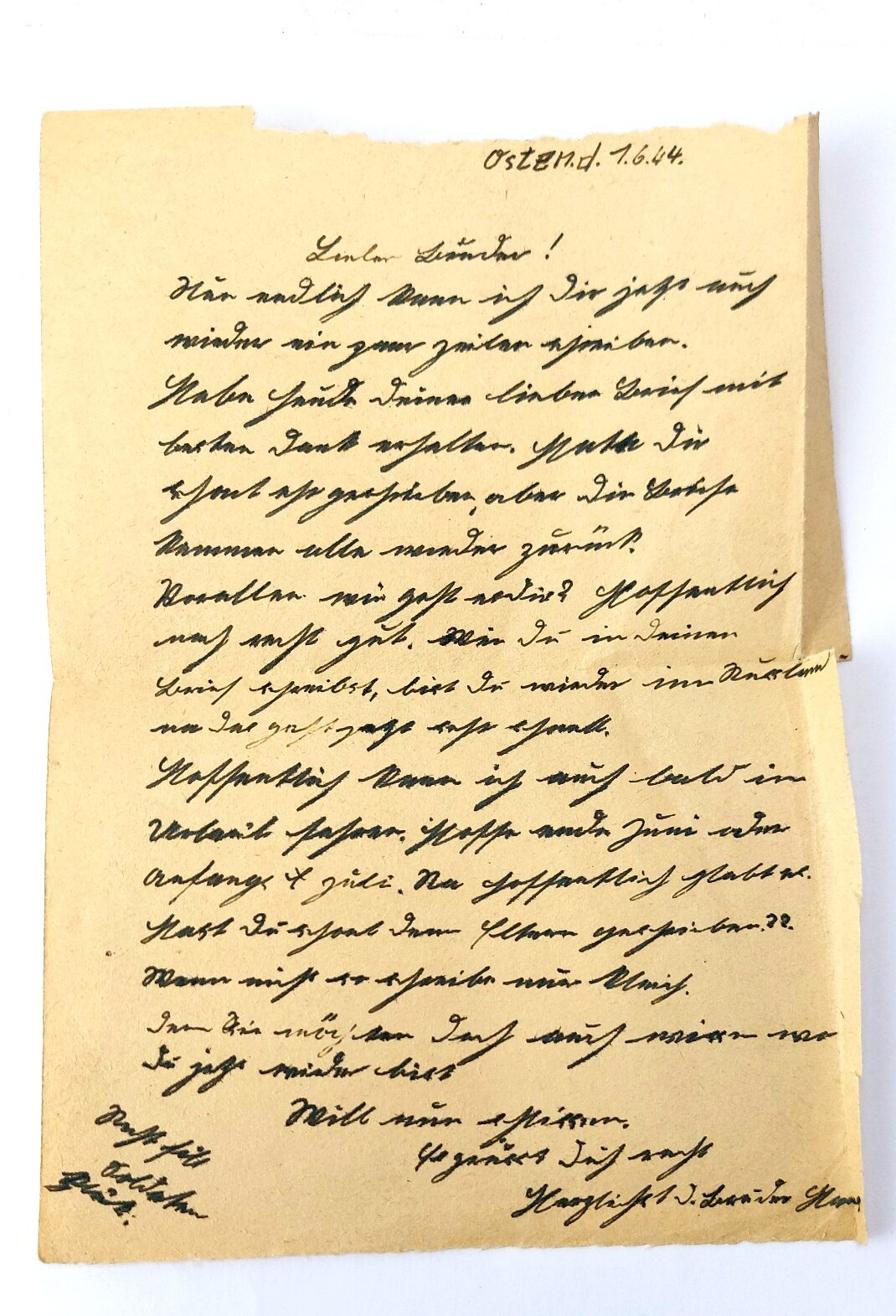
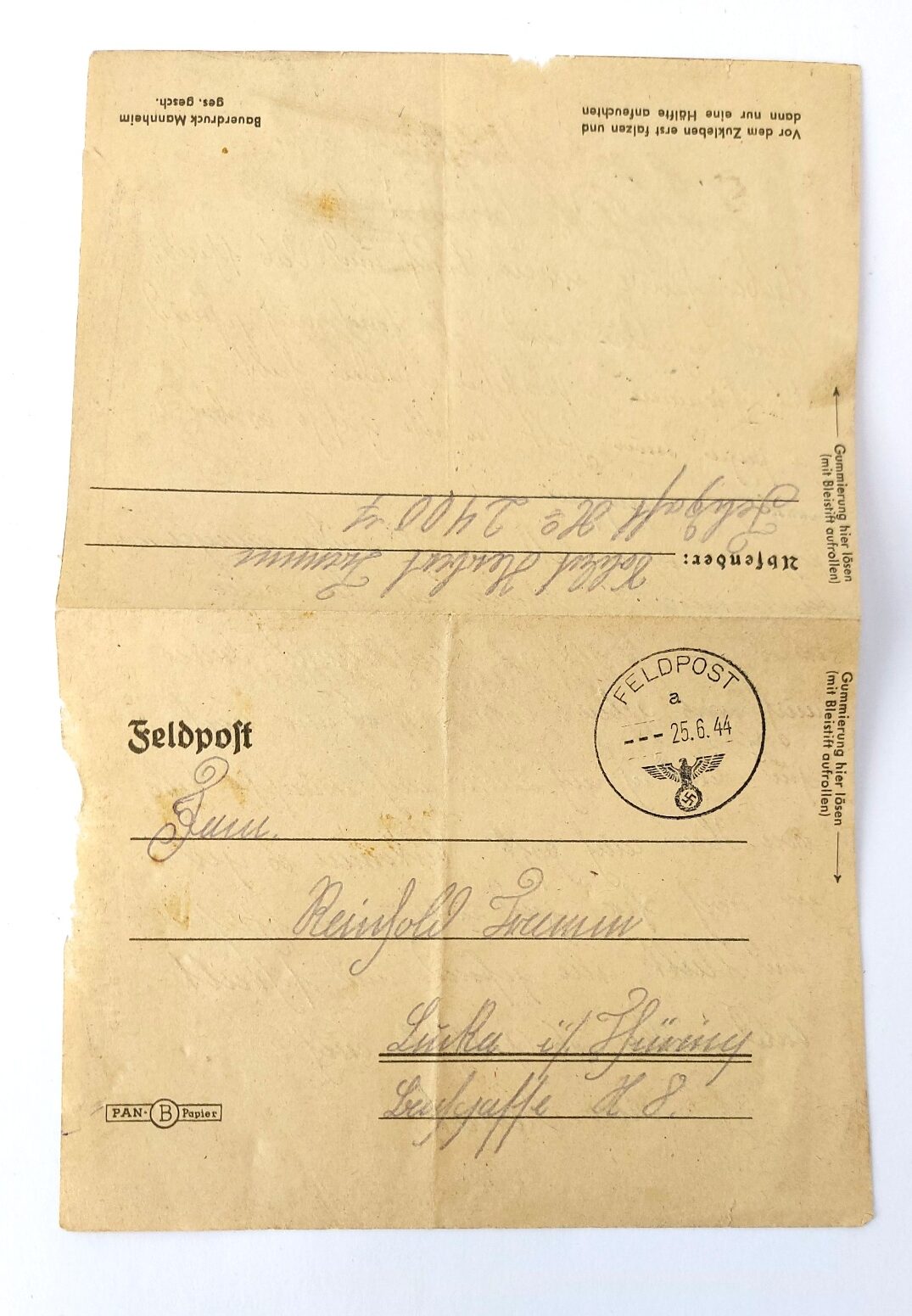
The grouping comprises approx 32 original documents including handwritten Feldpost letters, official casualty notifications, award certificates, burial confirmations, Red Cross tracing correspondence, the formal OKH investigation closure letter, two original Black Wound Badges, and a period photograph of young soldiers in relaxed rural setting. The archive remains intact to the family home at Bachgasse No. 8, preserving not only official record but the personal voices of three young men writing home during the collapse of the Reich.
This is not simply a casualty grouping. It is the documented erasure of a household. Three brothers called up. Three sent East. One missing in the destruction of an army group. One killed in Estonia. One killed in the final weeks of the war. The letters begin with “Liebe Eltern” (“Dear parents”). They end with official notifications. The OKH writes that it cannot provide “tröstende Gewißheit” (“consoling certainty”). The final administrative letter crosses out “Heil Hitler.” Between those lines lies the collapse of a regime — and the loss of three sons.
Where They Served:
• Hans – Panzerjäger-Abteilung 134 – Bobruisk sector (Army Group Centre collapse, June 1944)
• Herbert – Pionier-Bataillon 187 – Baltic fighting, Estonia (September 1944)
• Helmut – Grenadier-Regiment 985 – Final Reich defence, Torgau/Elbe (April 1945)
The archive spans three major phases of the Eastern Front’s collapse:
Operation Bagration (June 1944), the Baltic retreat (September 1944), and the final battles inside Germany (April 1945).
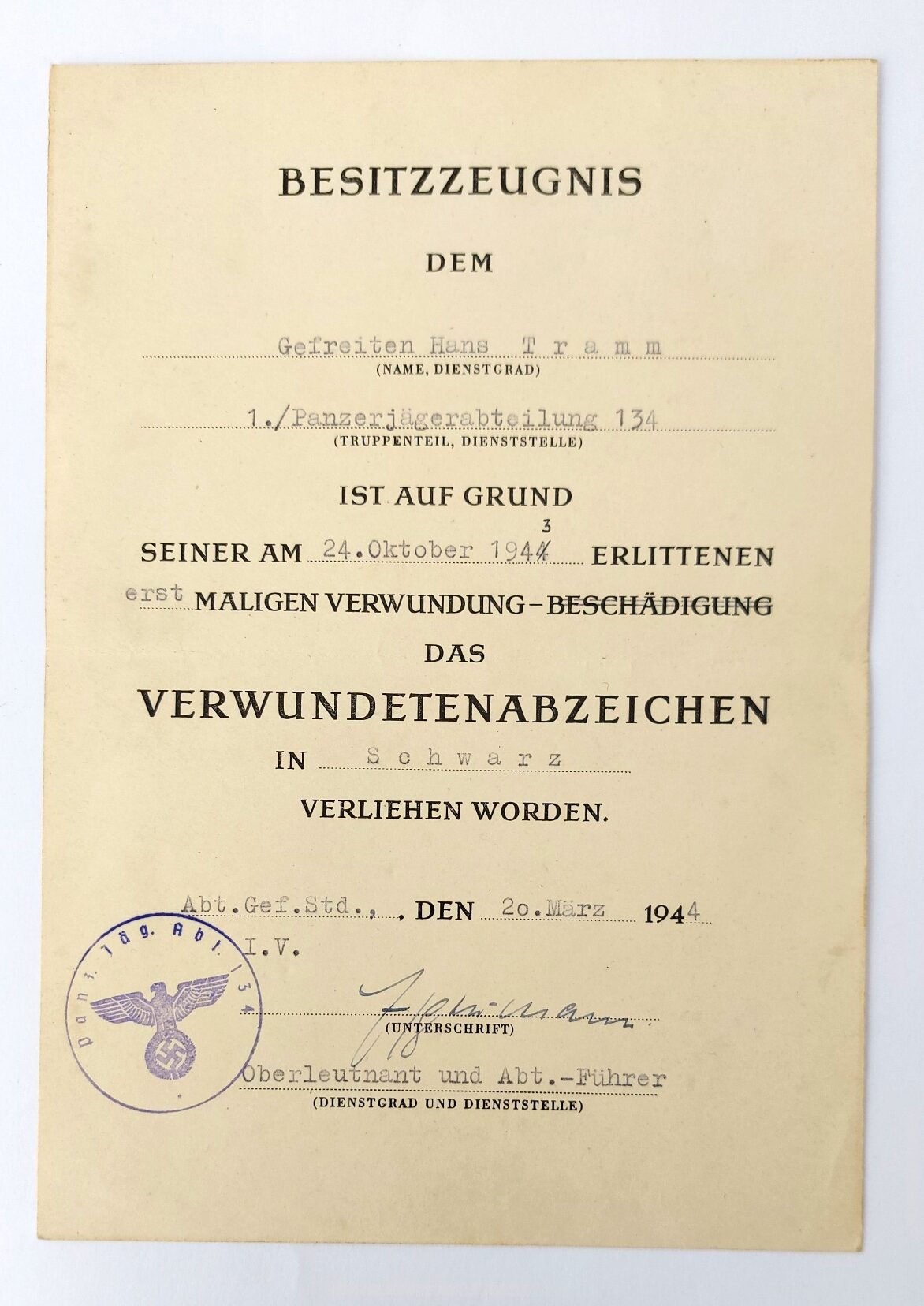
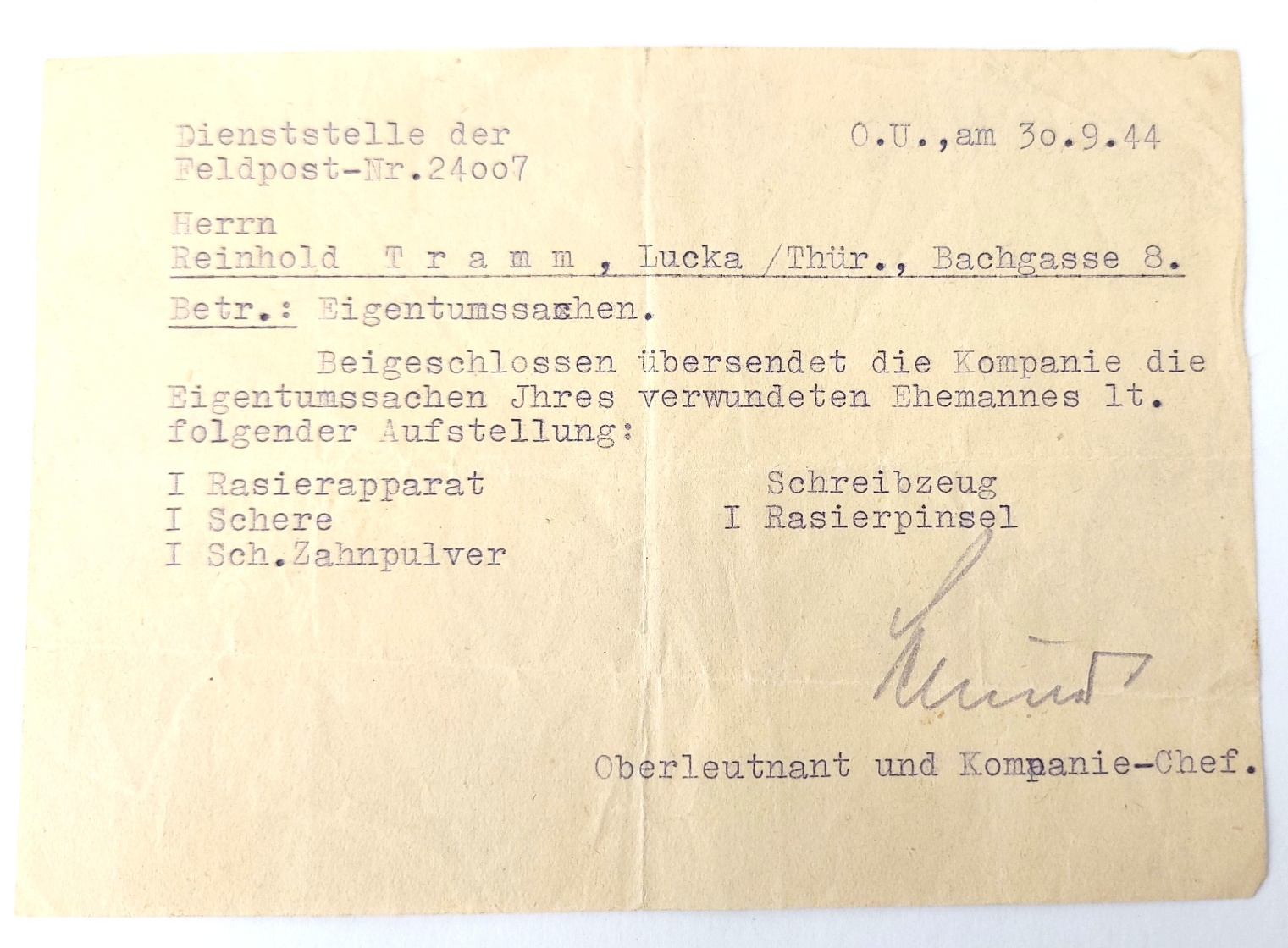
Hans Tramm (1922 – Missing in Action, June 1944): Hans was born on 4 February 1922 in Lucka and served with 1./Panzerjäger-Abteilung 134 (Feldpost number 58 417), an anti-tank unit tasked with halting Soviet armour. He had already been wounded in October 1943 and awarded the Black Wound Badge — his original badge is included in this grouping. By June 1944 he was fighting in the Bobruisk sector of Belarus during Operation Bagration, the massive Soviet offensive that destroyed German Army Group Centre and marked one of the most catastrophic defeats in German military history.
Between 24–30 June 1944, during the encirclement and collapse of the German 9th Army, Hans disappeared. Anti-tank units such as his were often deployed in forward blocking positions or thrown into desperate rearguard actions during breakout attempts. Entire companies were overrun or dissolved in the forests and marshlands east of the Berezina River. Many soldiers were killed without record; others were captured and never returned.
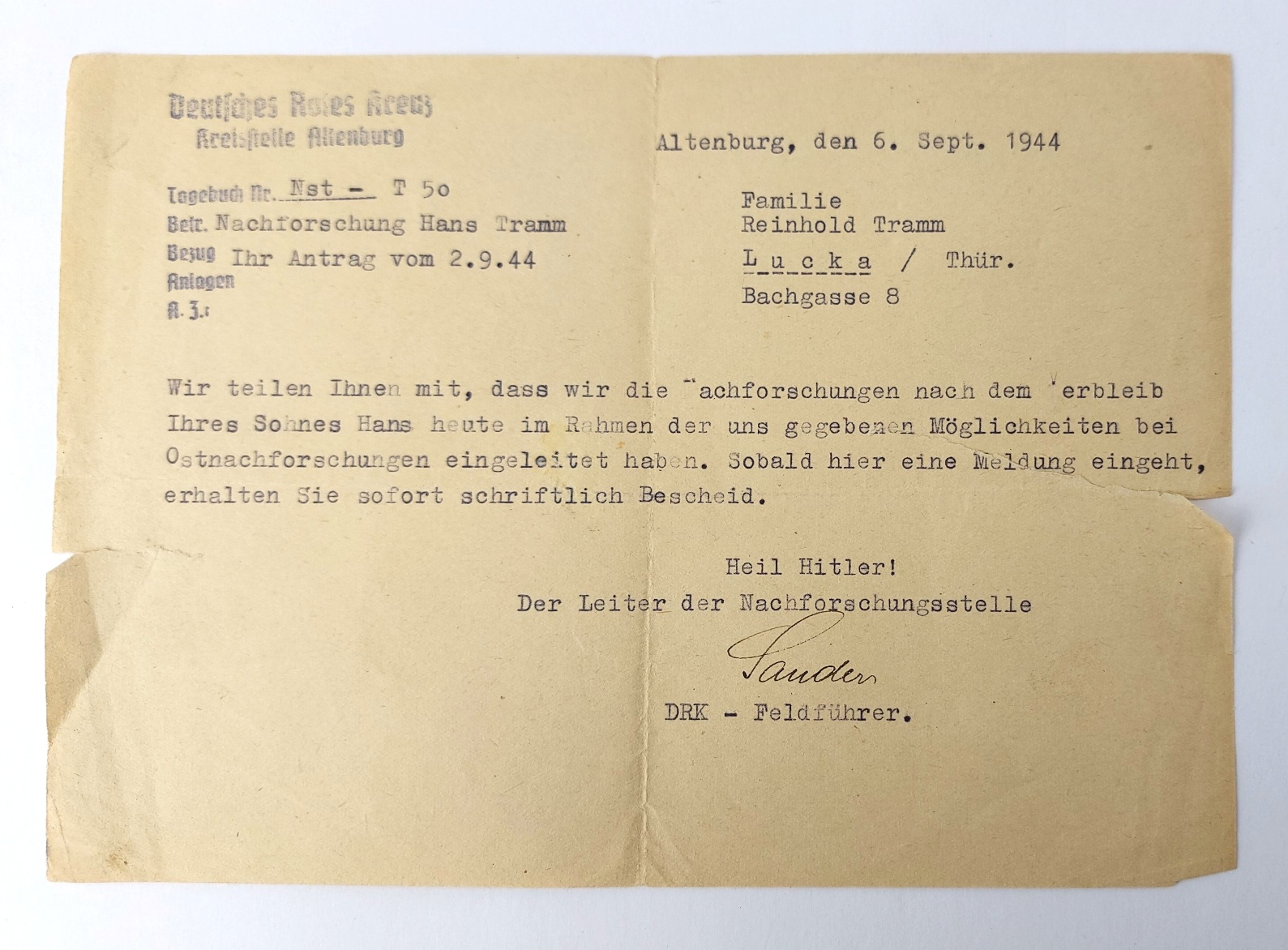
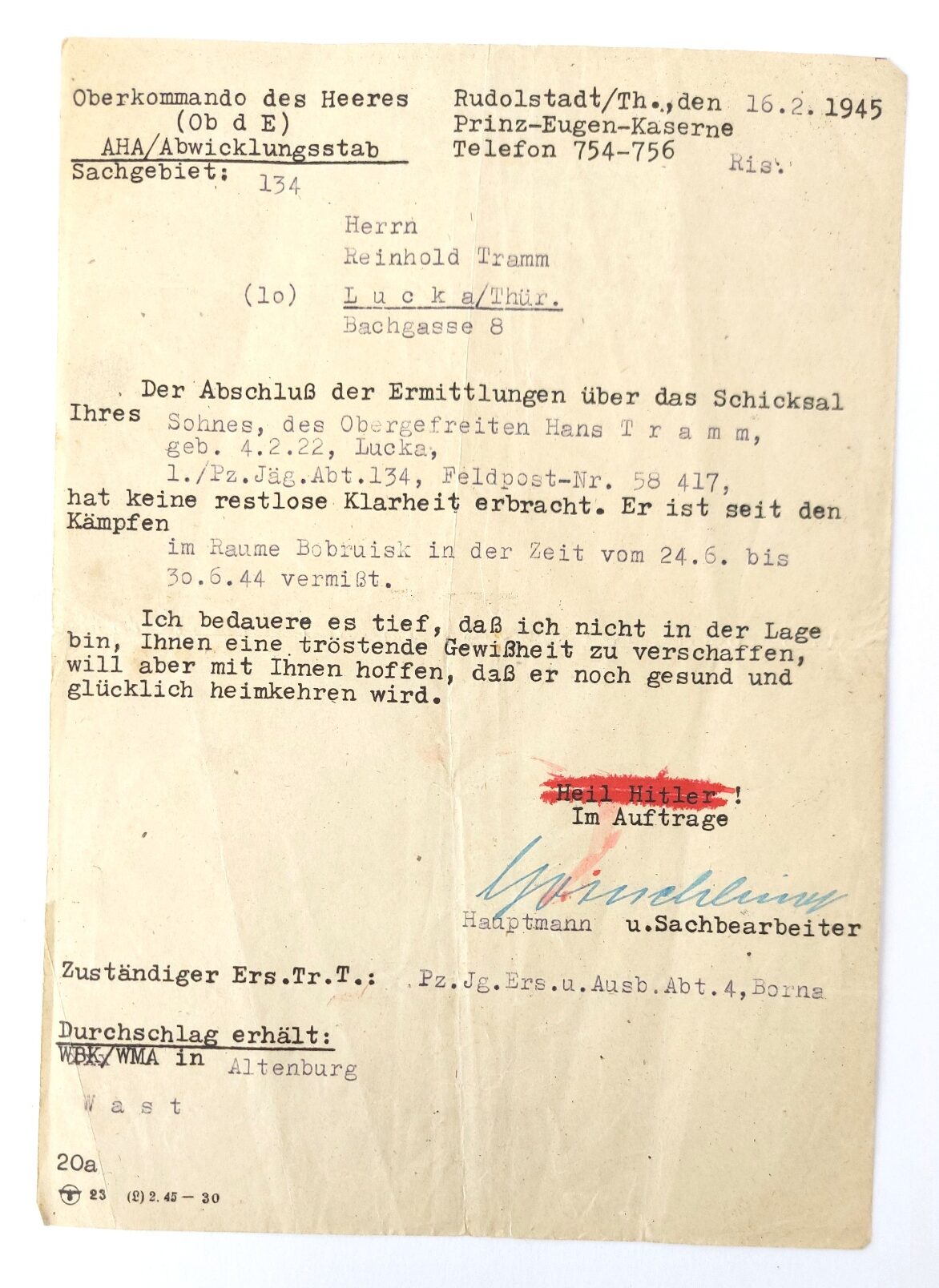
The most powerful document relating to Hans is the official OKH letter dated 16 February 1945 from Rudolstadt. It states: “Der Abschluß der Ermittlungen … hat keine restlose Klarheit erbracht.” — “The conclusion of the investigations … has not brought complete clarity.” It continues: “Er ist seit den Kämpfen im Raume Bobruisk … vermißt.” — “He has been missing since the fighting in the Bobruisk area.” Most poignantly, the letter admits: “Ich bedaure es tief, daß ich nicht in der Lage bin, Ihnen eine tröstende Gewißheit zu verschaffen…” — “I deeply regret that I am not in a position to provide you with consoling certainty…” It closes with the hope that he might yet return home safely. The printed salutation “Heil Hitler!” at the foot of the letter has been manually struck through in red ink. Dated February 1945, this visible erasure of the regime’s formula speaks volumes: the ideological certainty is crossed out, yet the family’s uncertainty remains. Hans’ story does not end with a burial place or a death certificate. It ends with an official file closed “without clarity.” He was twenty-two years old.
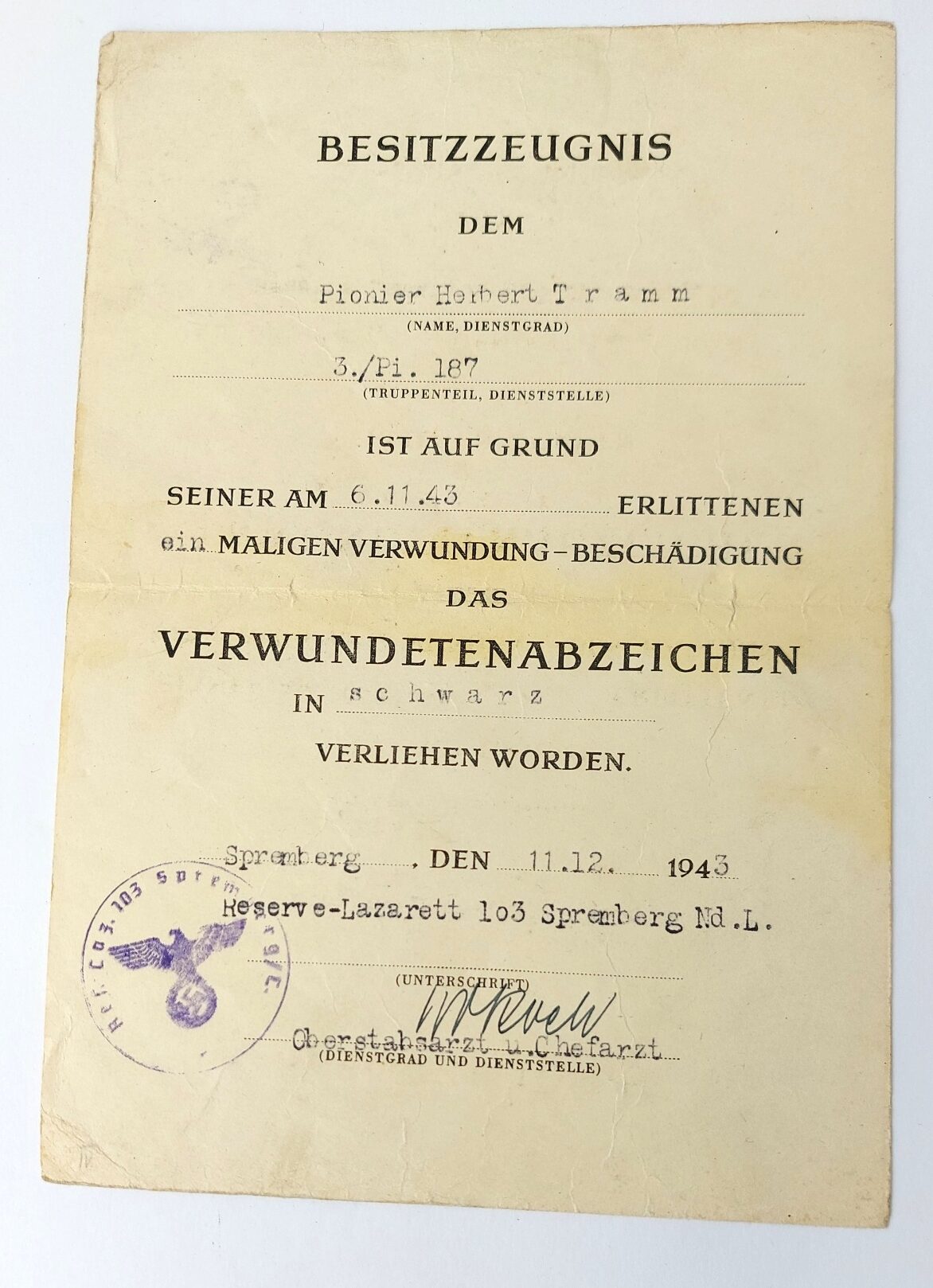
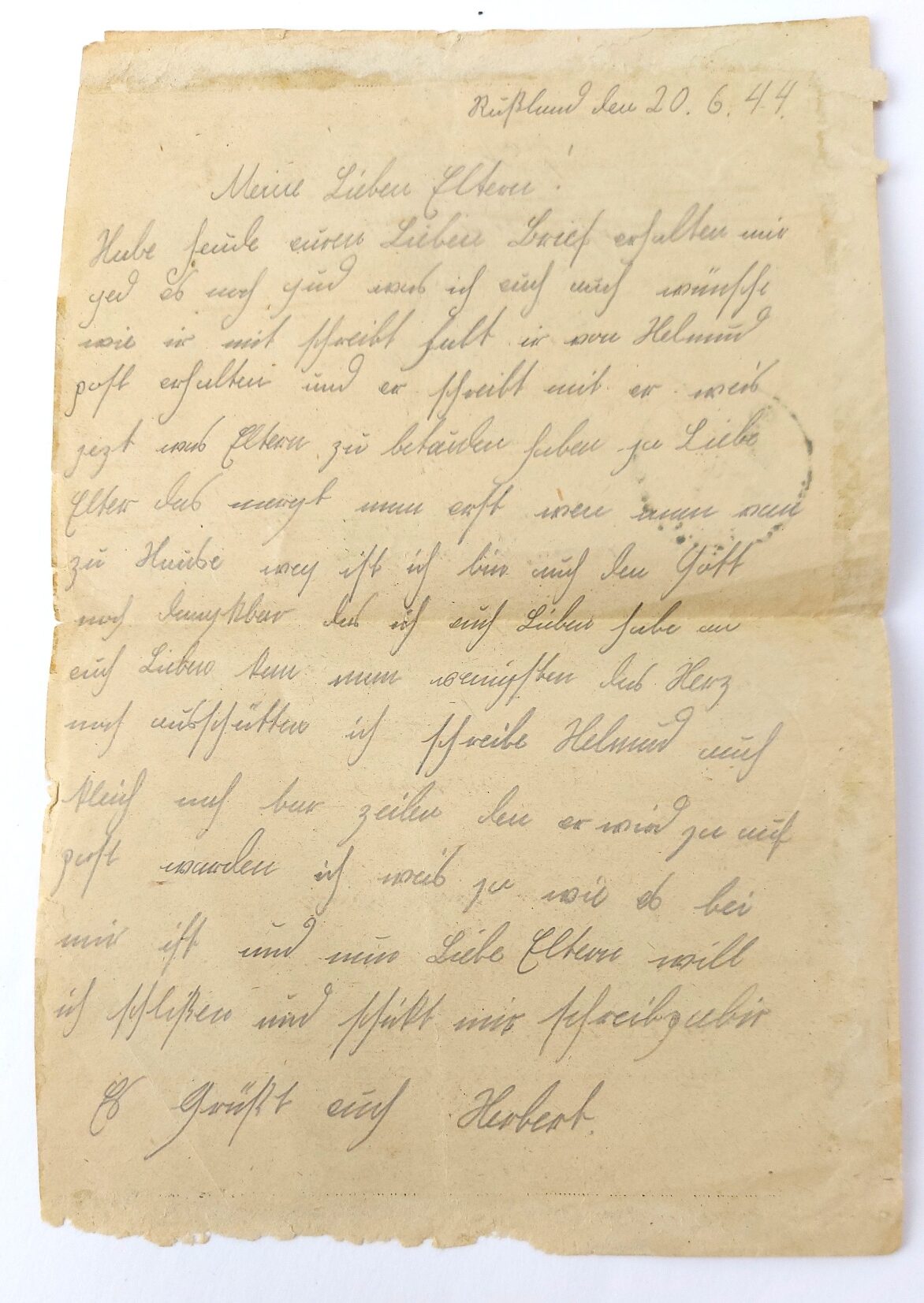
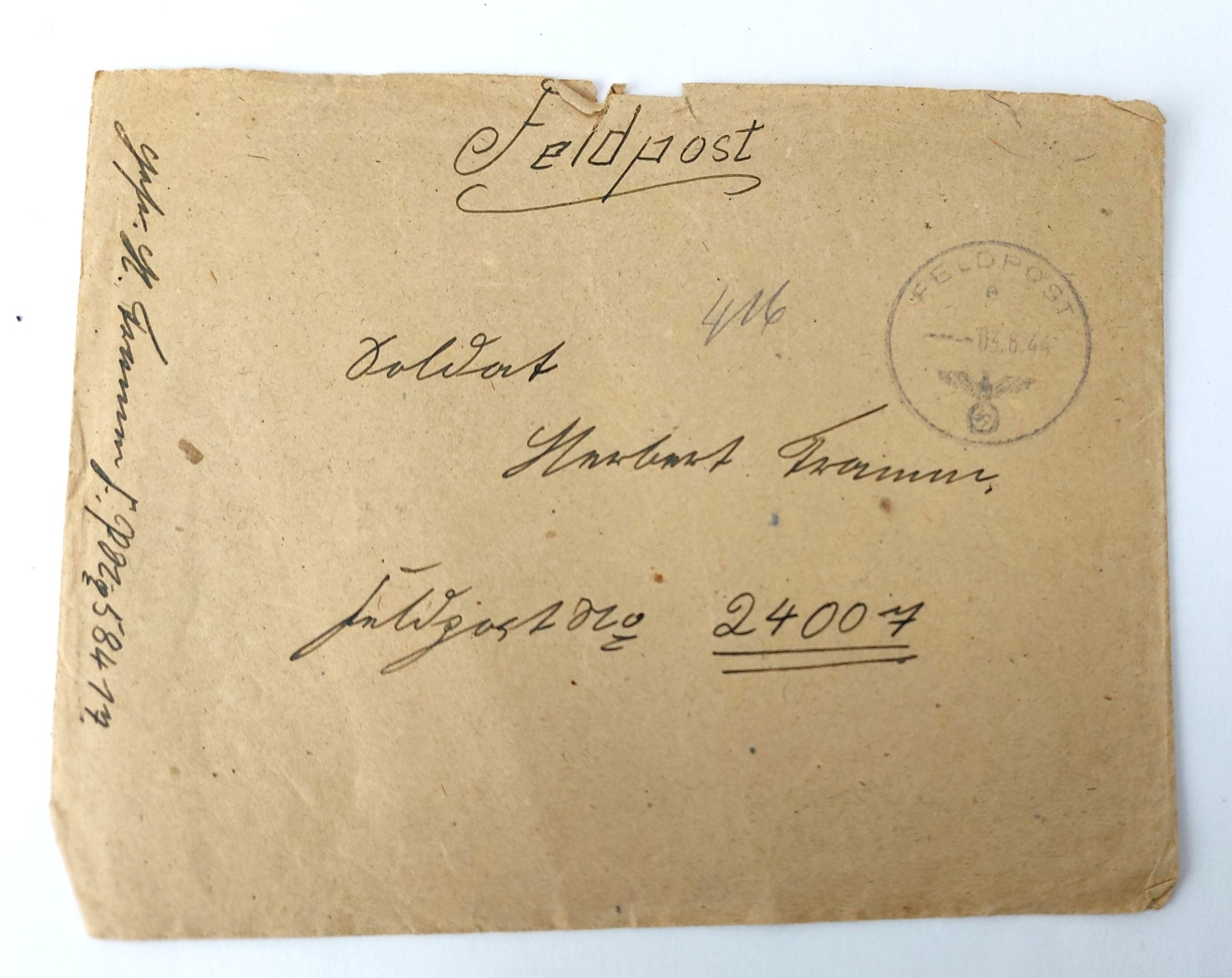
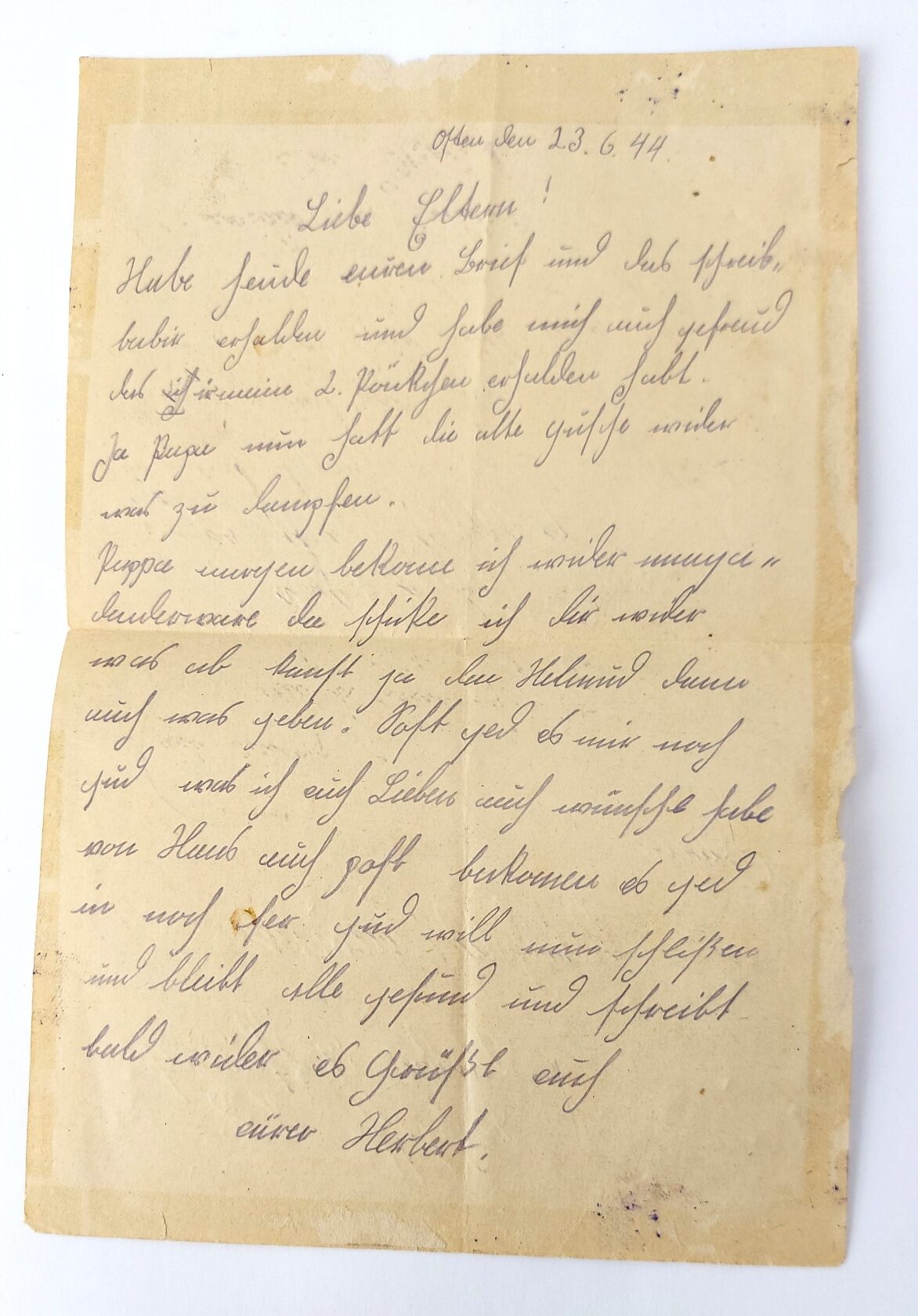
Herbert Tramm (1924 – Killed in Action, September 1944): Herbert, born 20 November 1924, served with Pionier-Bataillon 187, a combat engineer unit responsible for demolitions, bridge work and, in retreat conditions, front-line defensive fighting. His letters from May and June 1944 were written while the Eastern Front was beginning to unravel.
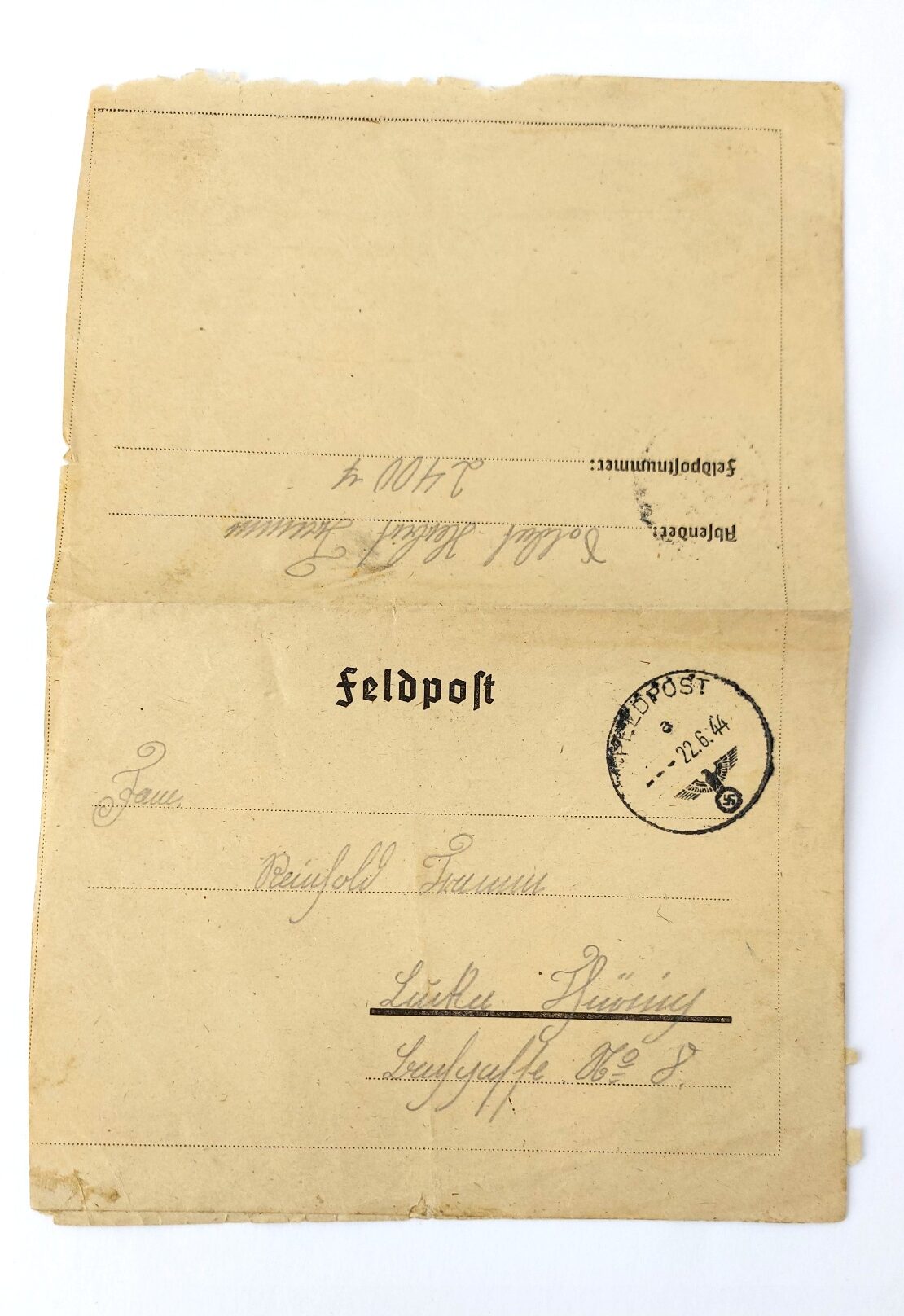
In a letter dated 23 June 1944 he writes: “Ja Papa nun geht die alte Grütze wieder nach zu kämpfen.” — “Yes Papa, now the old business goes back to fighting again.” The phrase is disarmingly casual, almost ironic, as if battle were routine. He consistently shields his parents from alarm, closing each letter: “Es grüßt euch euer Herbert.” — “Your Herbert sends his greetings.”
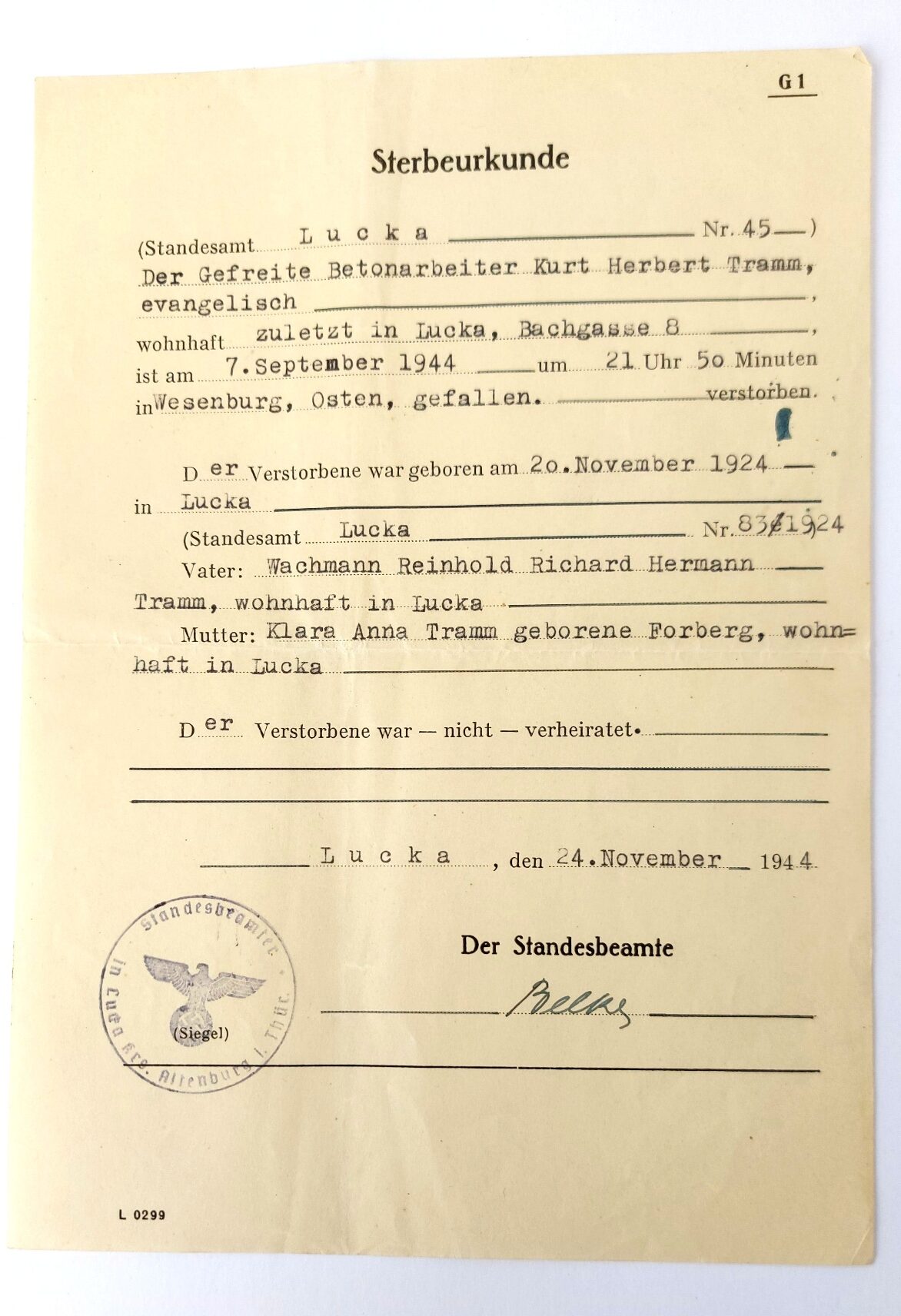
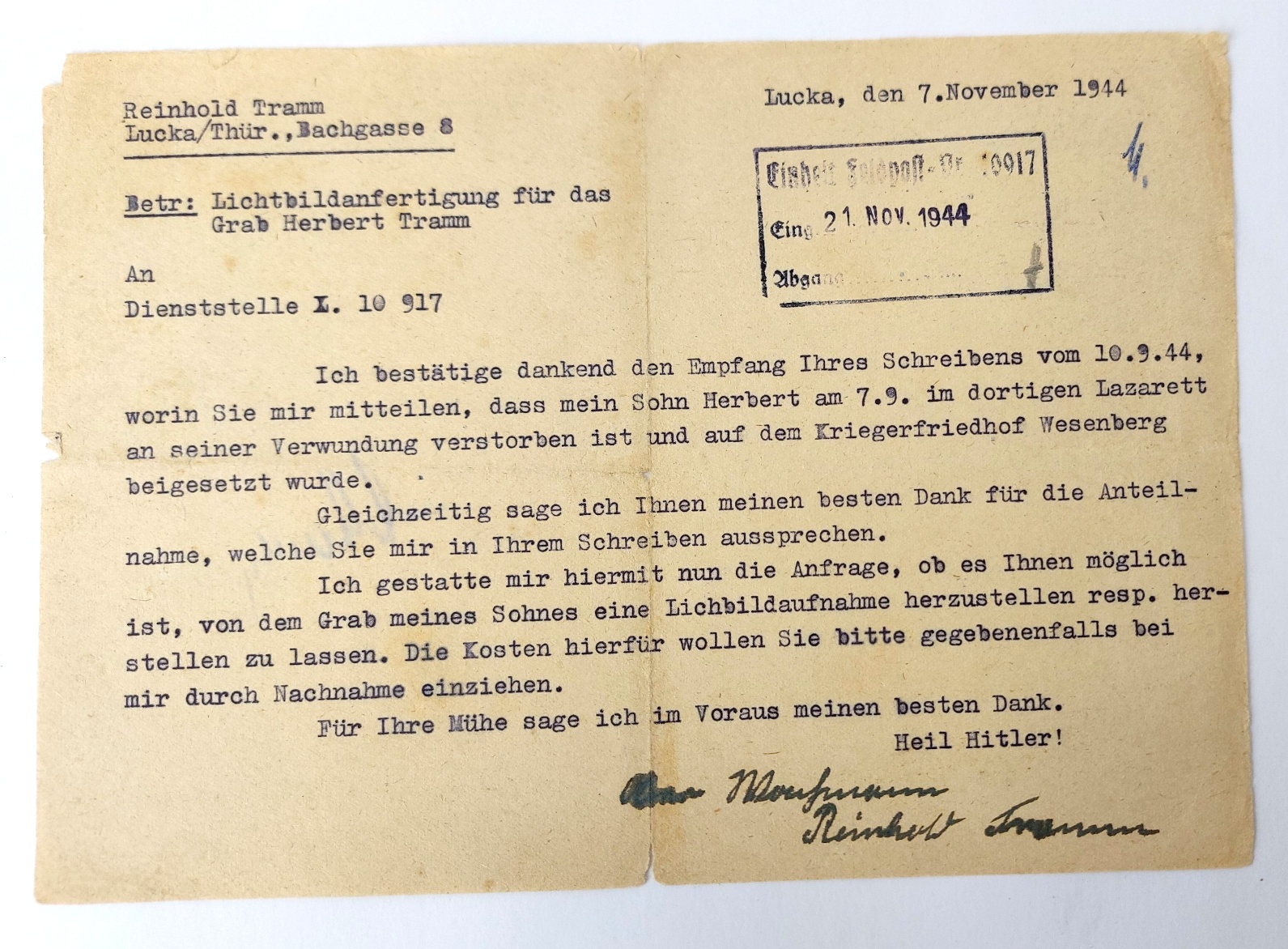
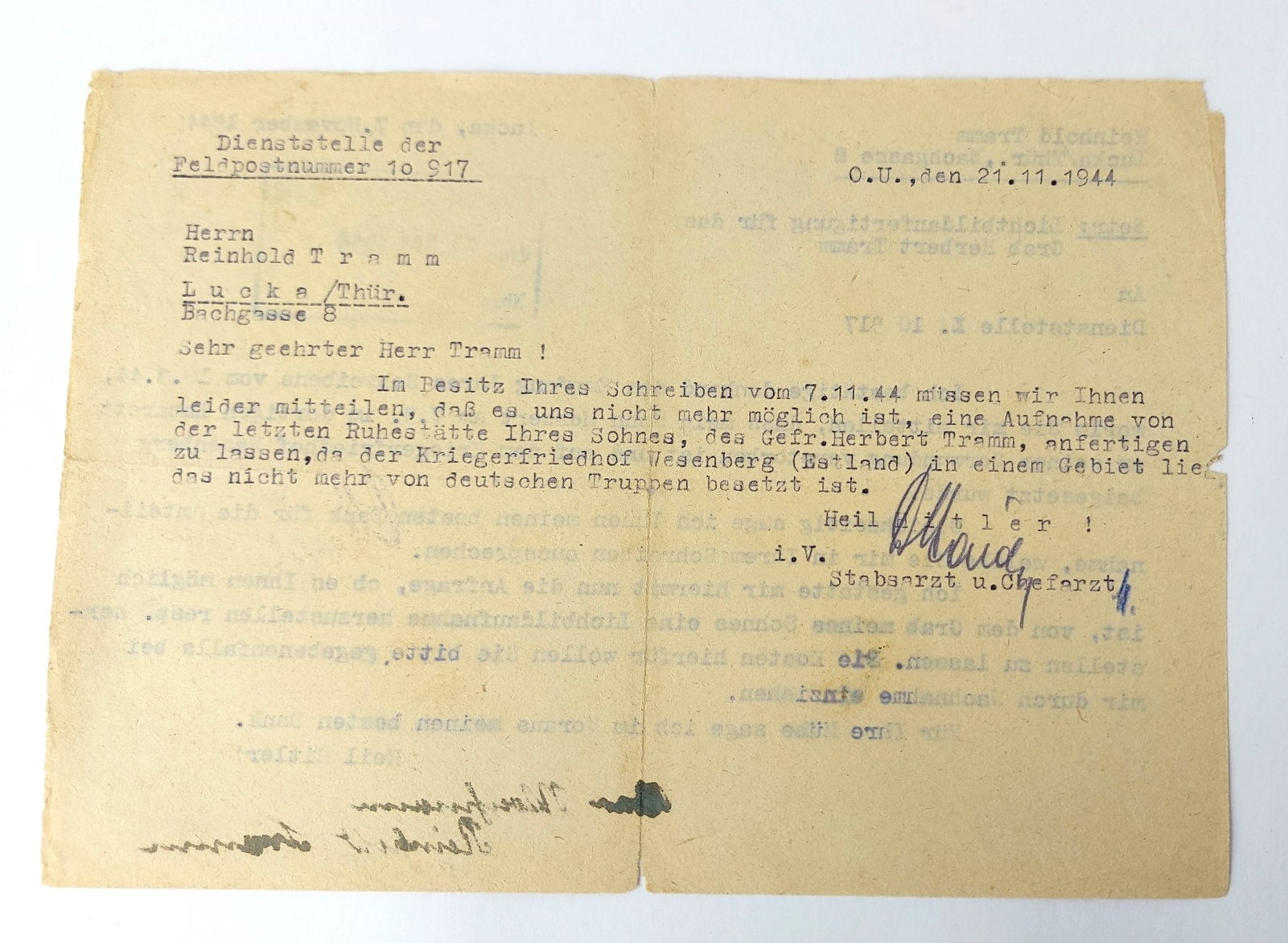
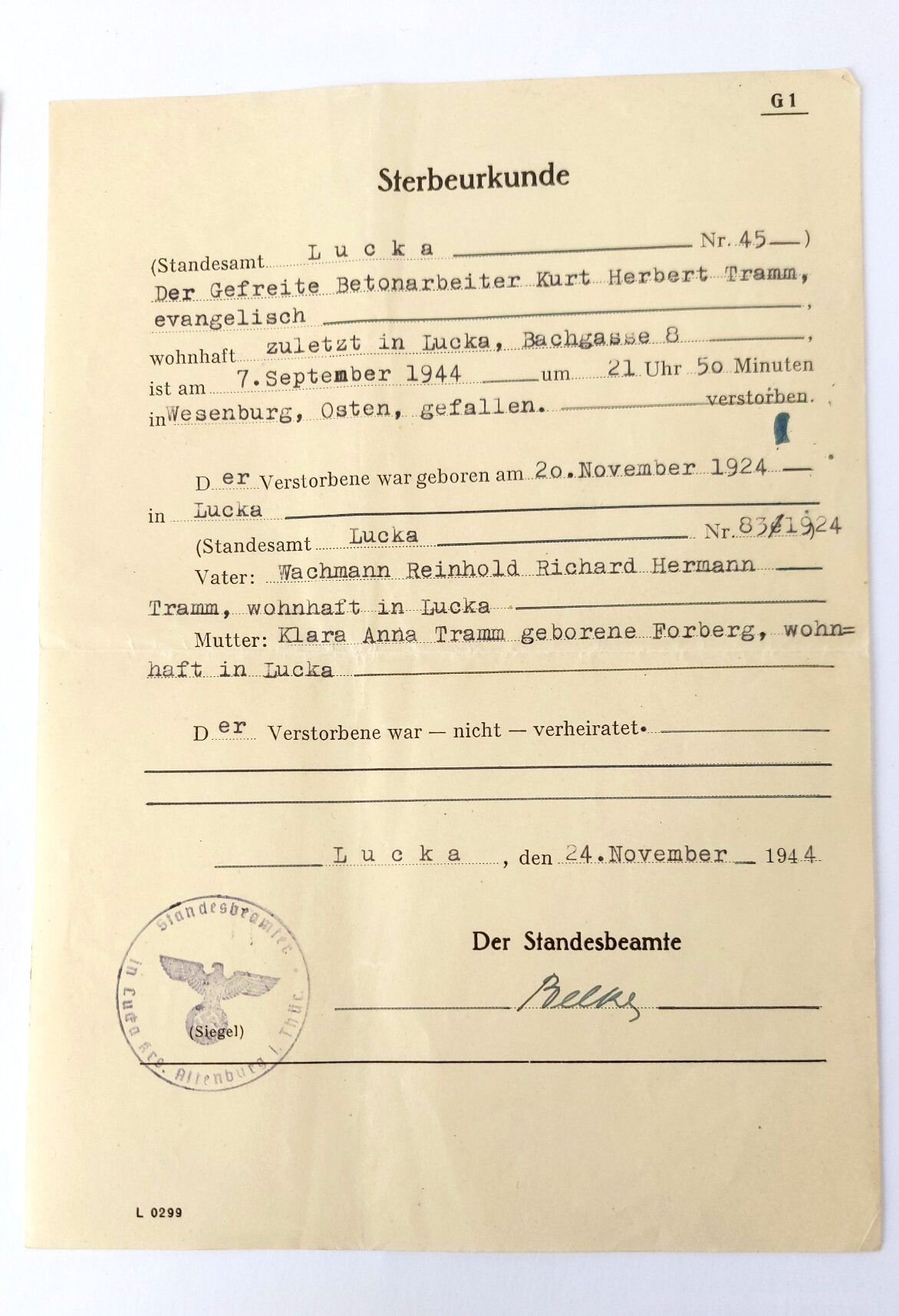
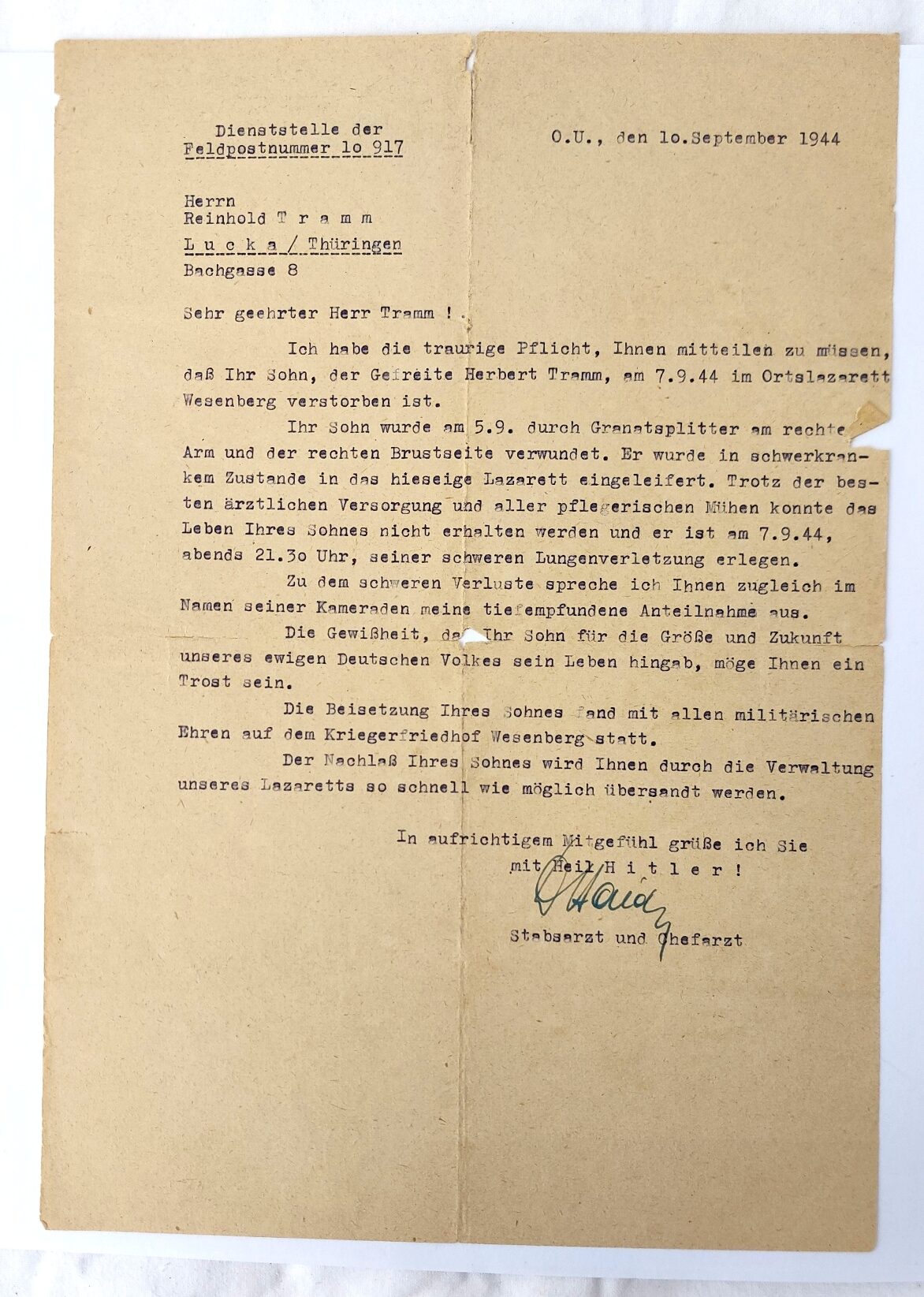
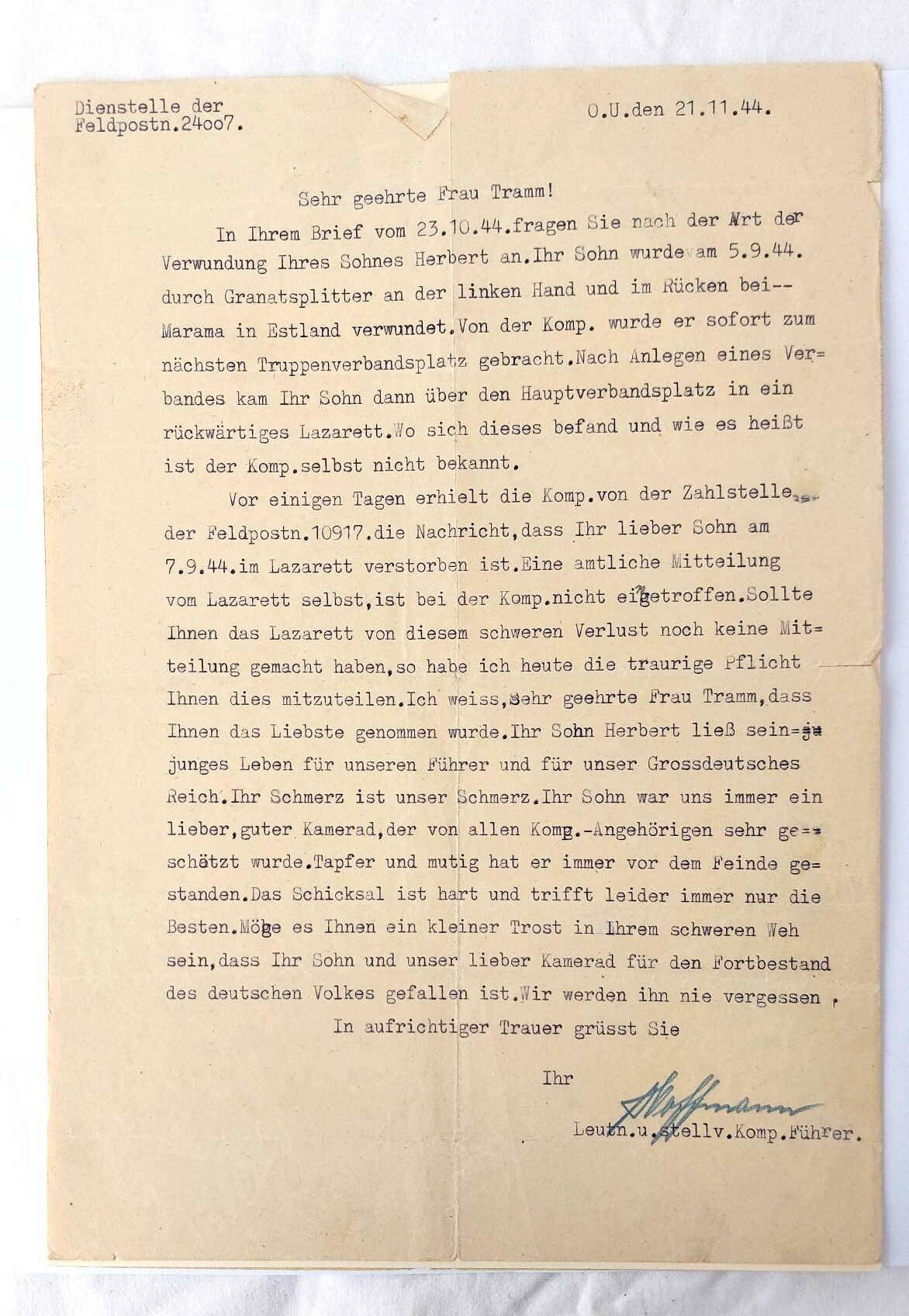
By early September 1944, German forces in Estonia were engaged in desperate rearguard actions during the Soviet Baltic Offensive. As Army Group North withdrew under intense pressure, pioneers were often used as emergency infantry, holding improvised defensive lines and destroying infrastructure behind retreating units. On 5 September 1944 Herbert was wounded by grenade splinters to the arm and chest near Wesenberg (Rakvere). He died two days later, on 7 September 1944, in the Ortslazarett.
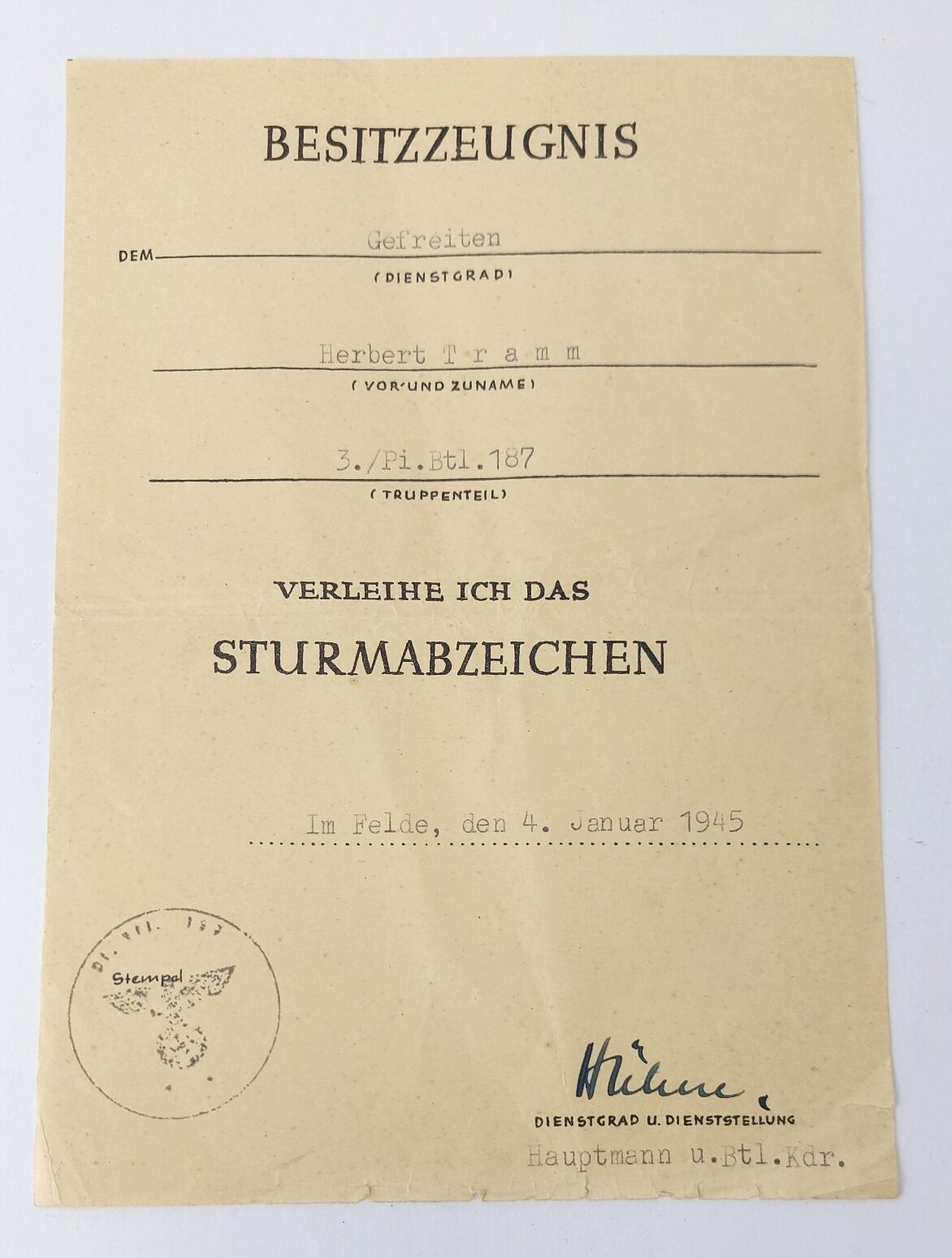
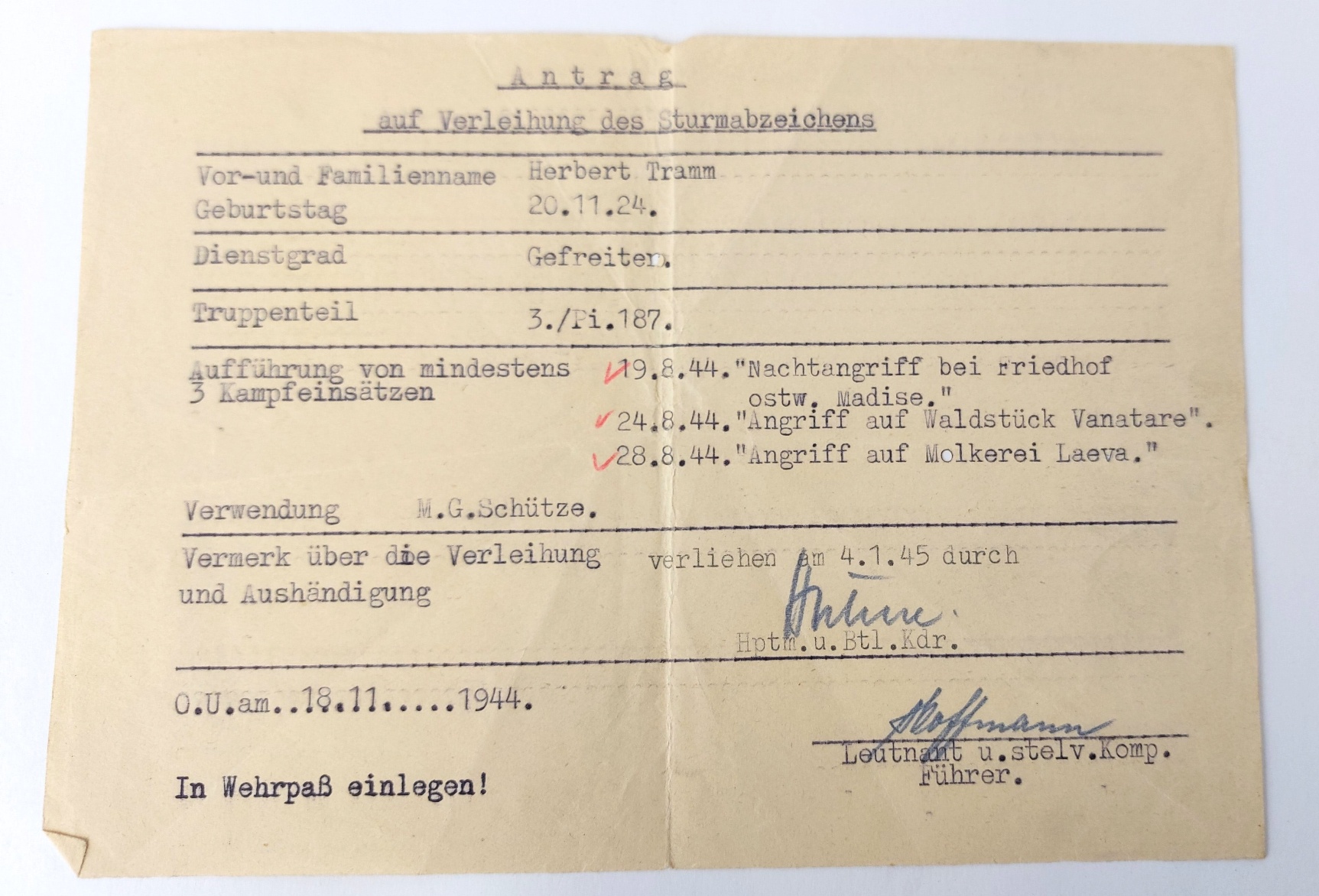
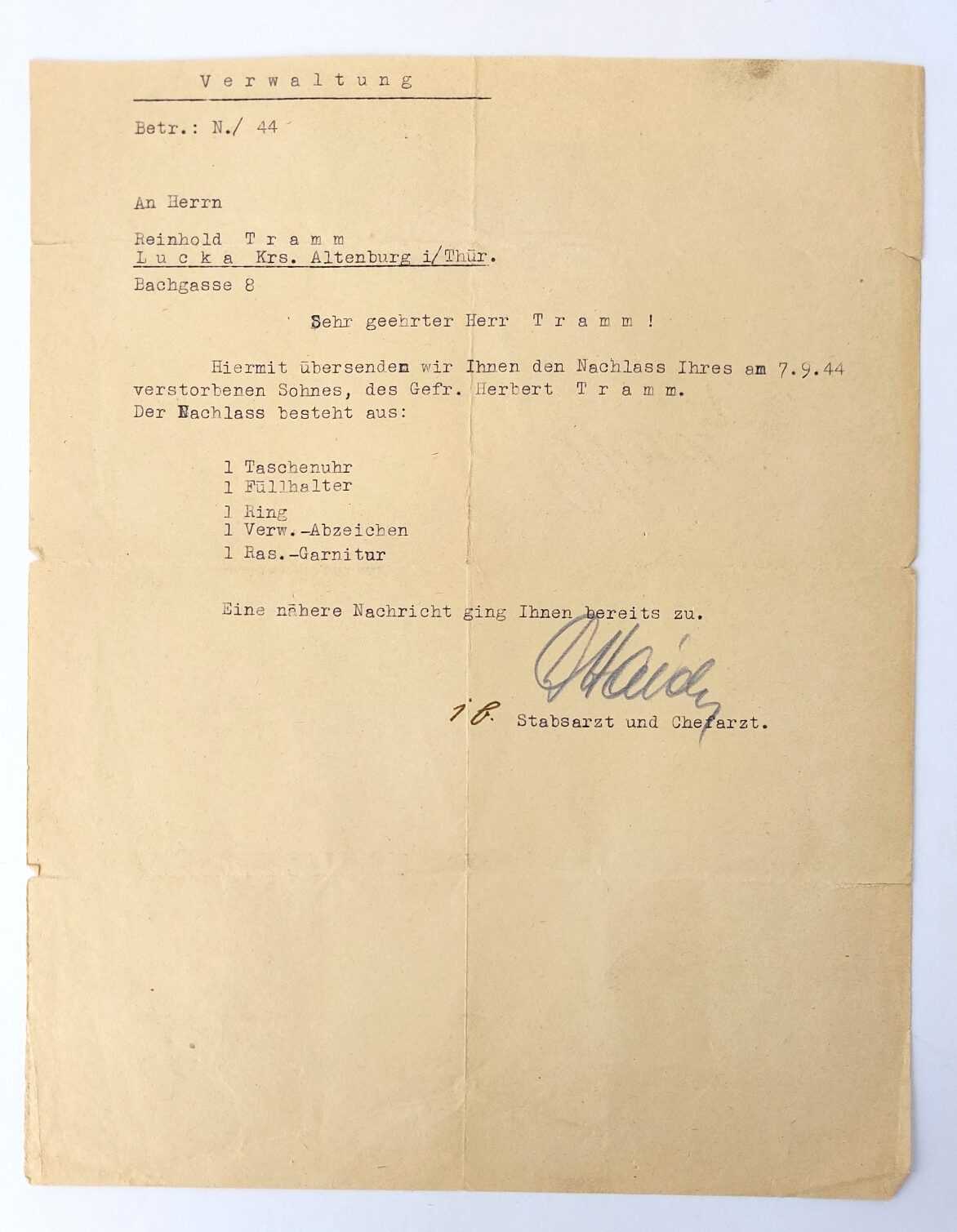
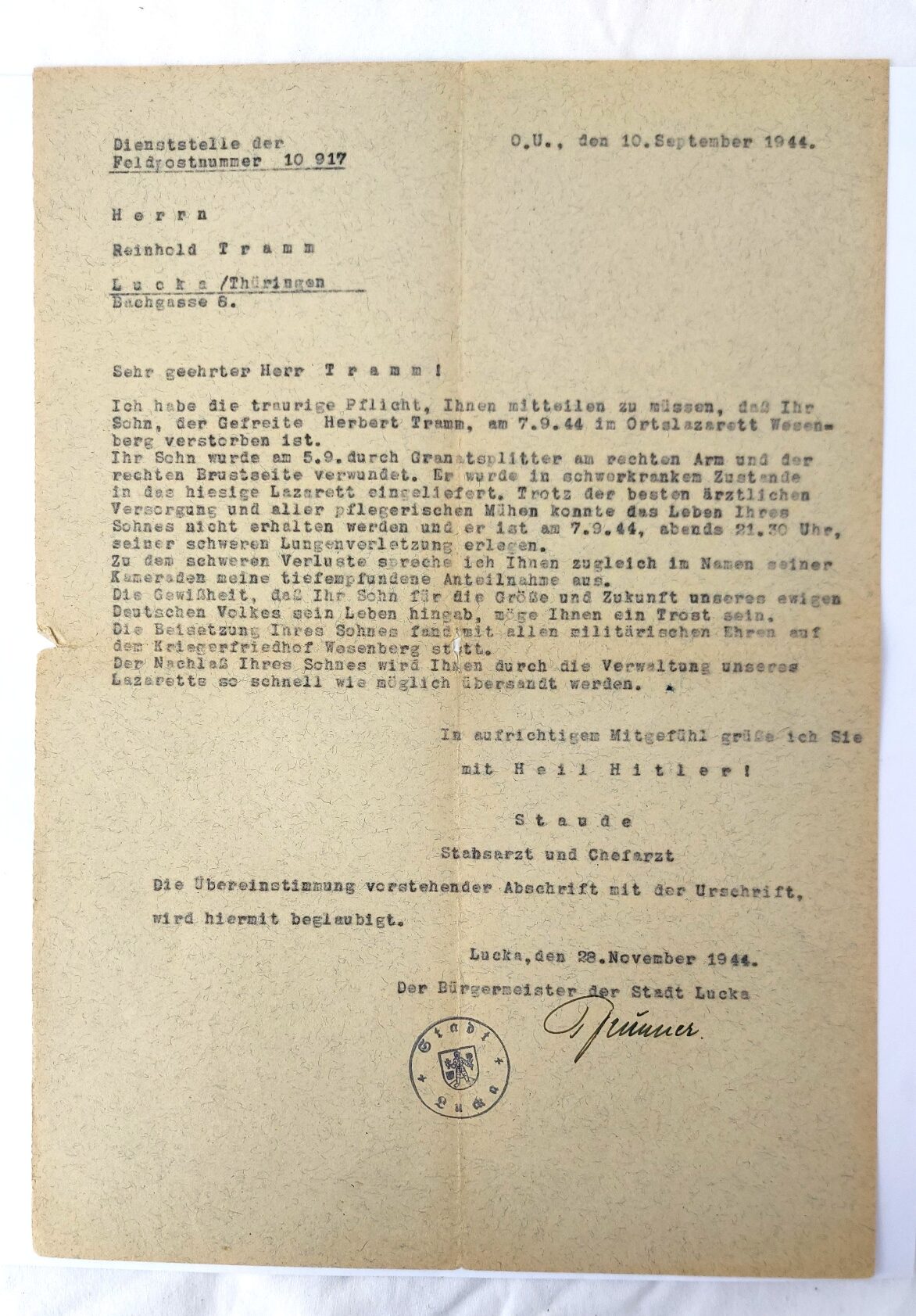
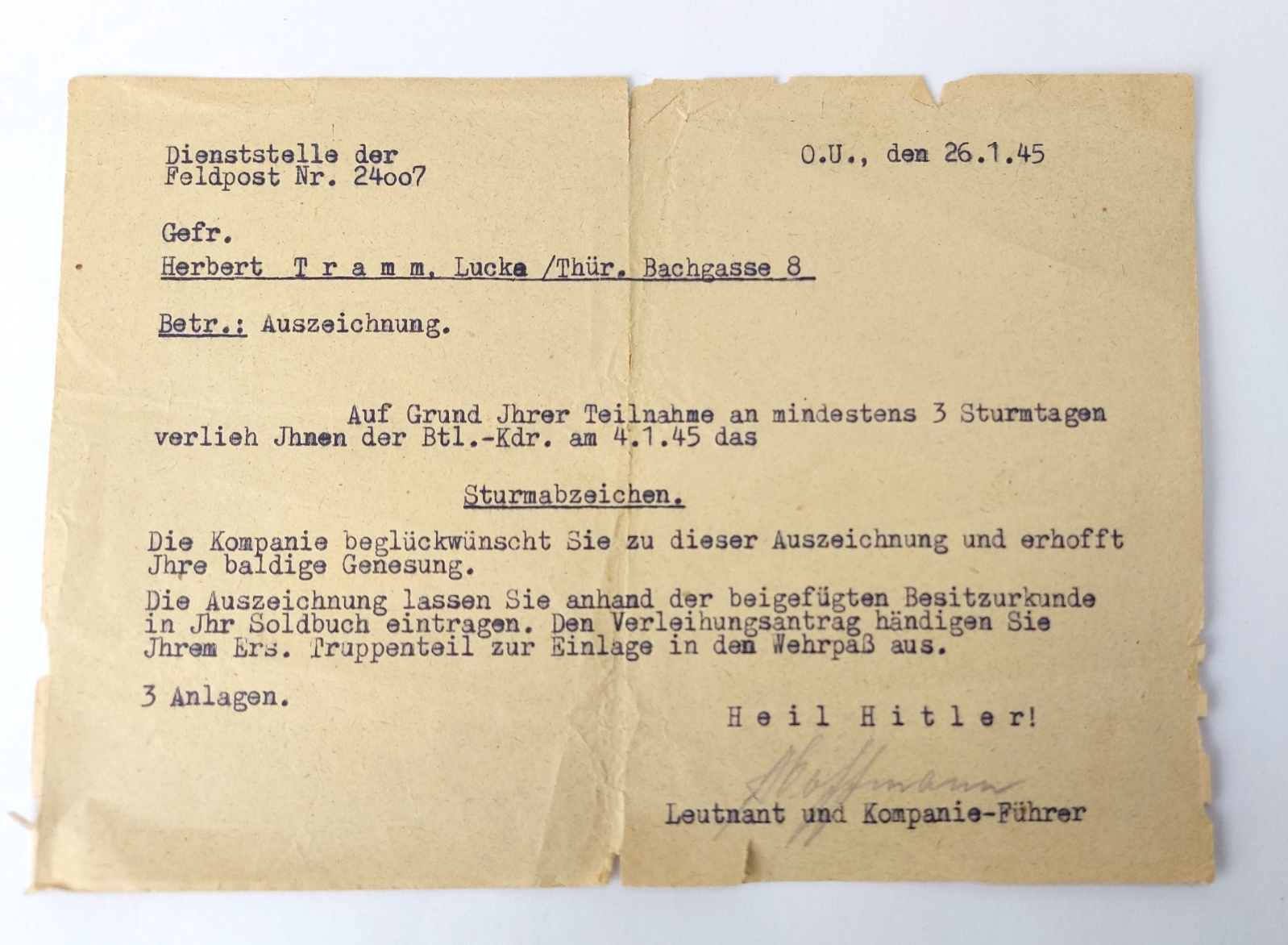
The archive includes the hospital notification confirming burial “mit militärischen Ehren” (“with military honours”), the municipal death registration, his Assault Badge award dated January 1945, his Black Wound Badge certificate and his original badge. The emotional shift from his handwritten “Liebe Eltern” (“Dear parents”) to the typed official language announcing his burial is stark. The letters of reassurance cease; the bureaucracy speaks instead. He was nineteen years old.
Helmut Tramm (1926 – Killed in Action, April 1945):
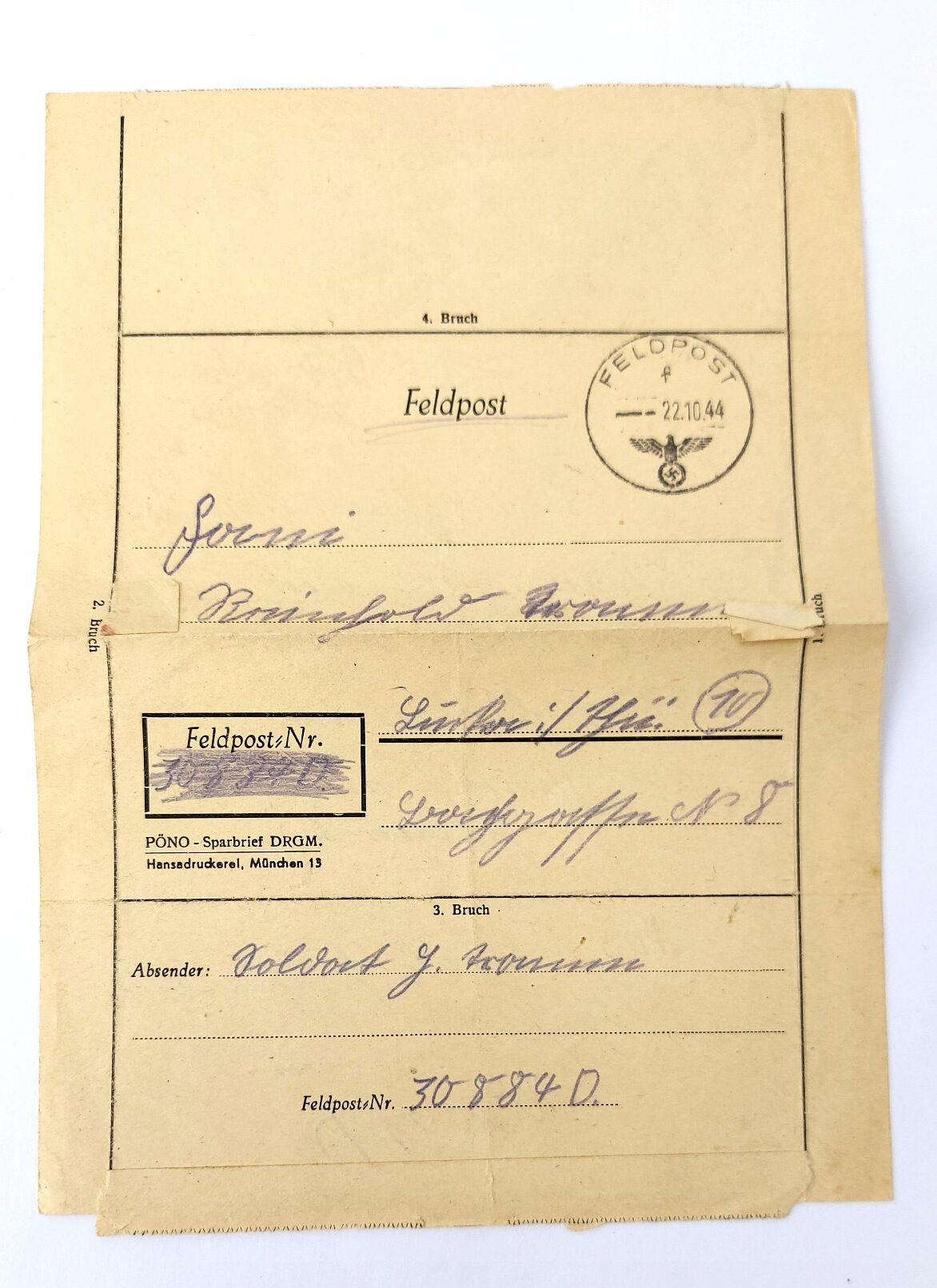
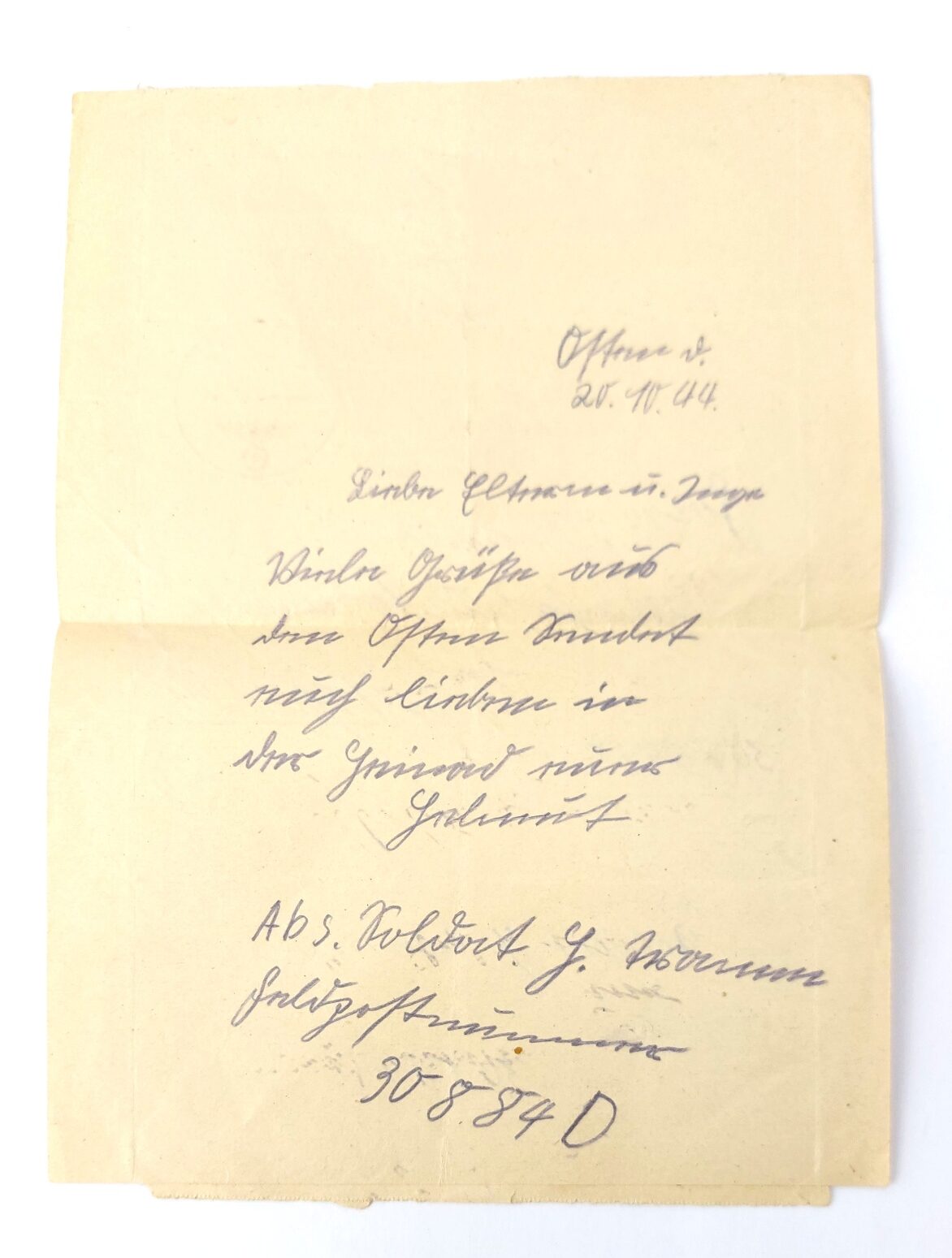
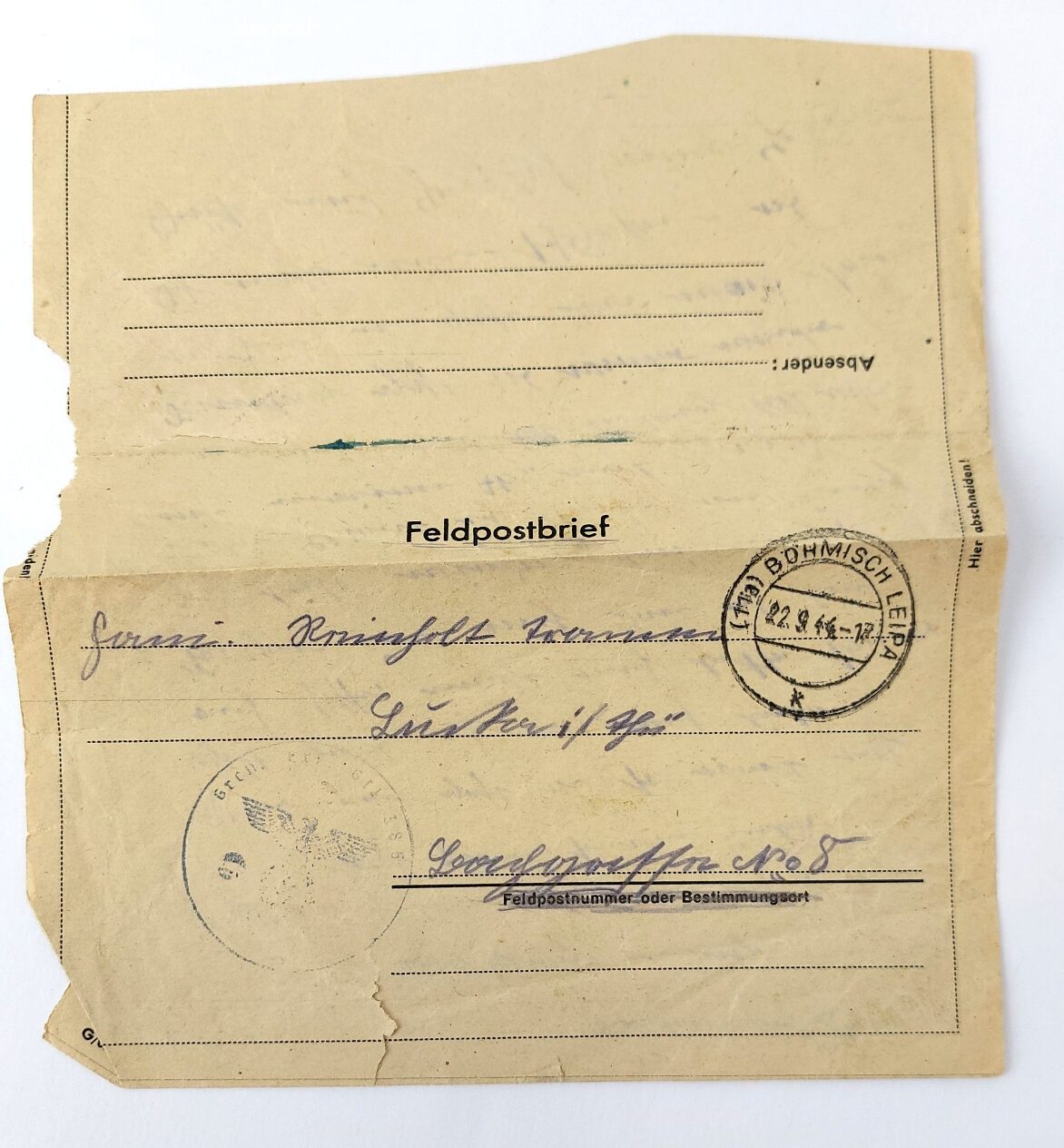
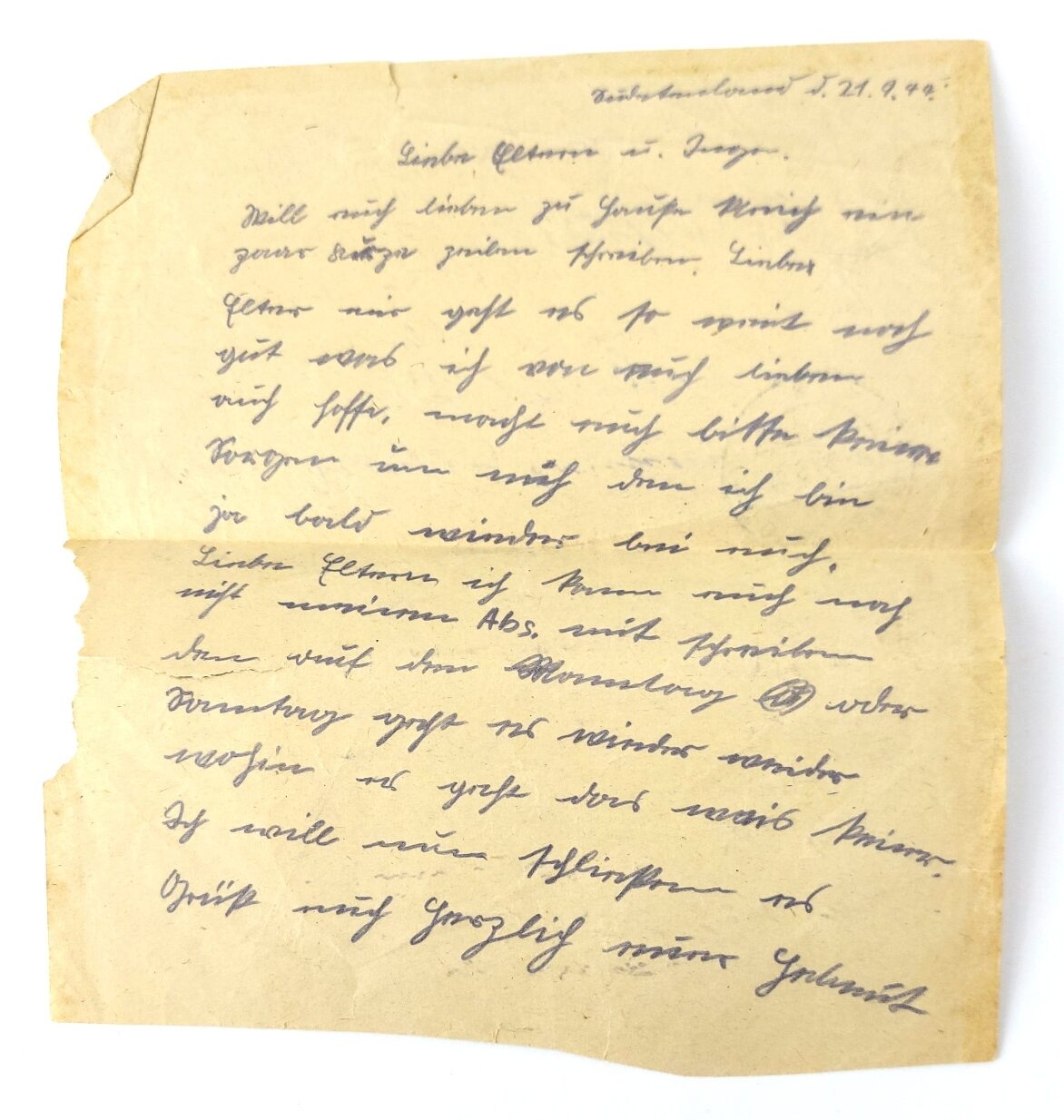
Helmut, born 19 May 1926, was the youngest. He served with Grenadier-Regiment 985 and appears first in training letters from Leitmeritz/Böhmisch Leipa in April 1944. His tone is dutiful and restrained. In October 1944, after Herbert’s death and Hans’ disappearance, he writes: “Wieder Grüße aus dem Osten sendet euch Helmut.” — “Once again greetings from the East sends you Helmut.” The line is simple, almost formulaic, yet it carries the weight of being the last remaining son still at the front.
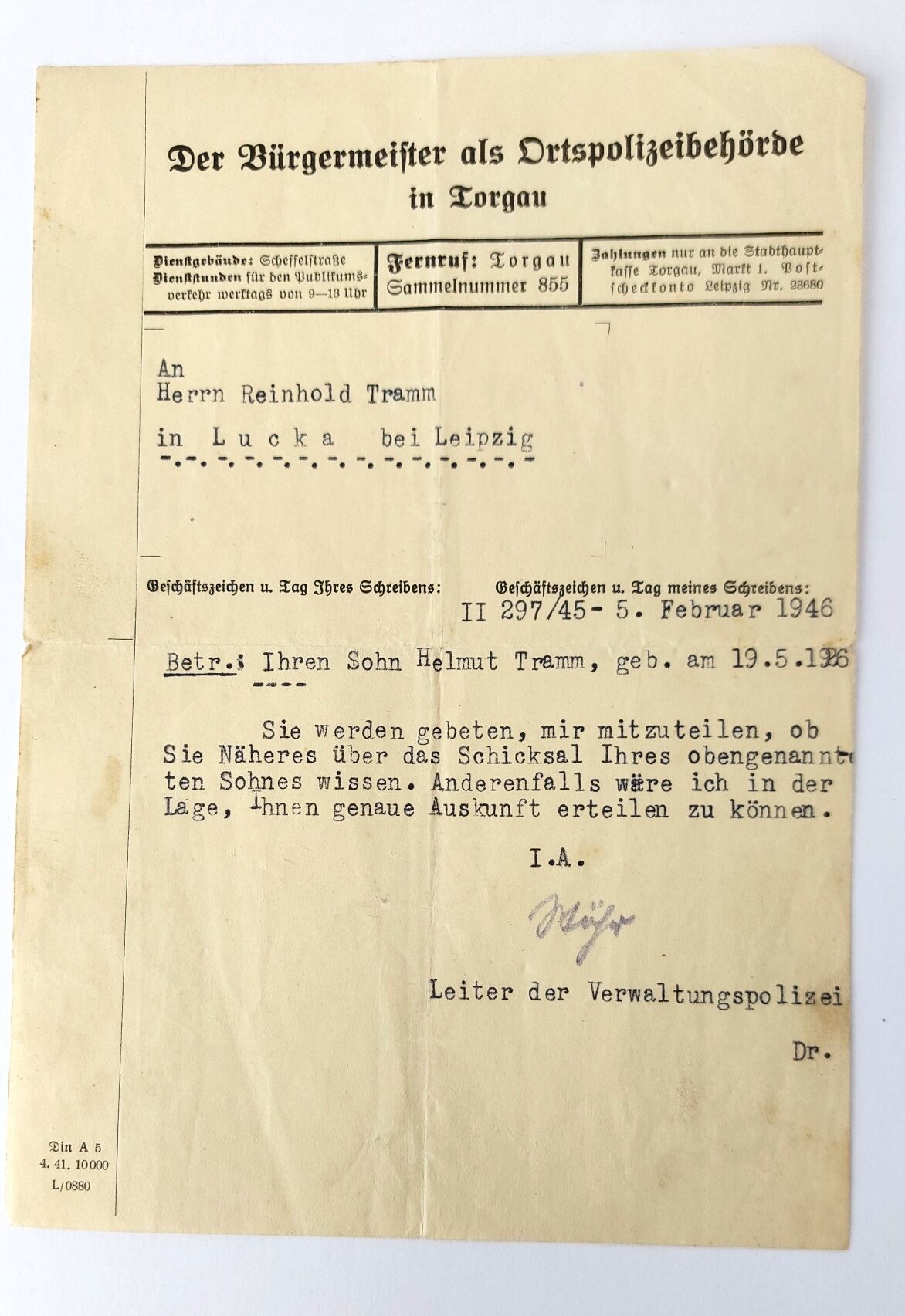
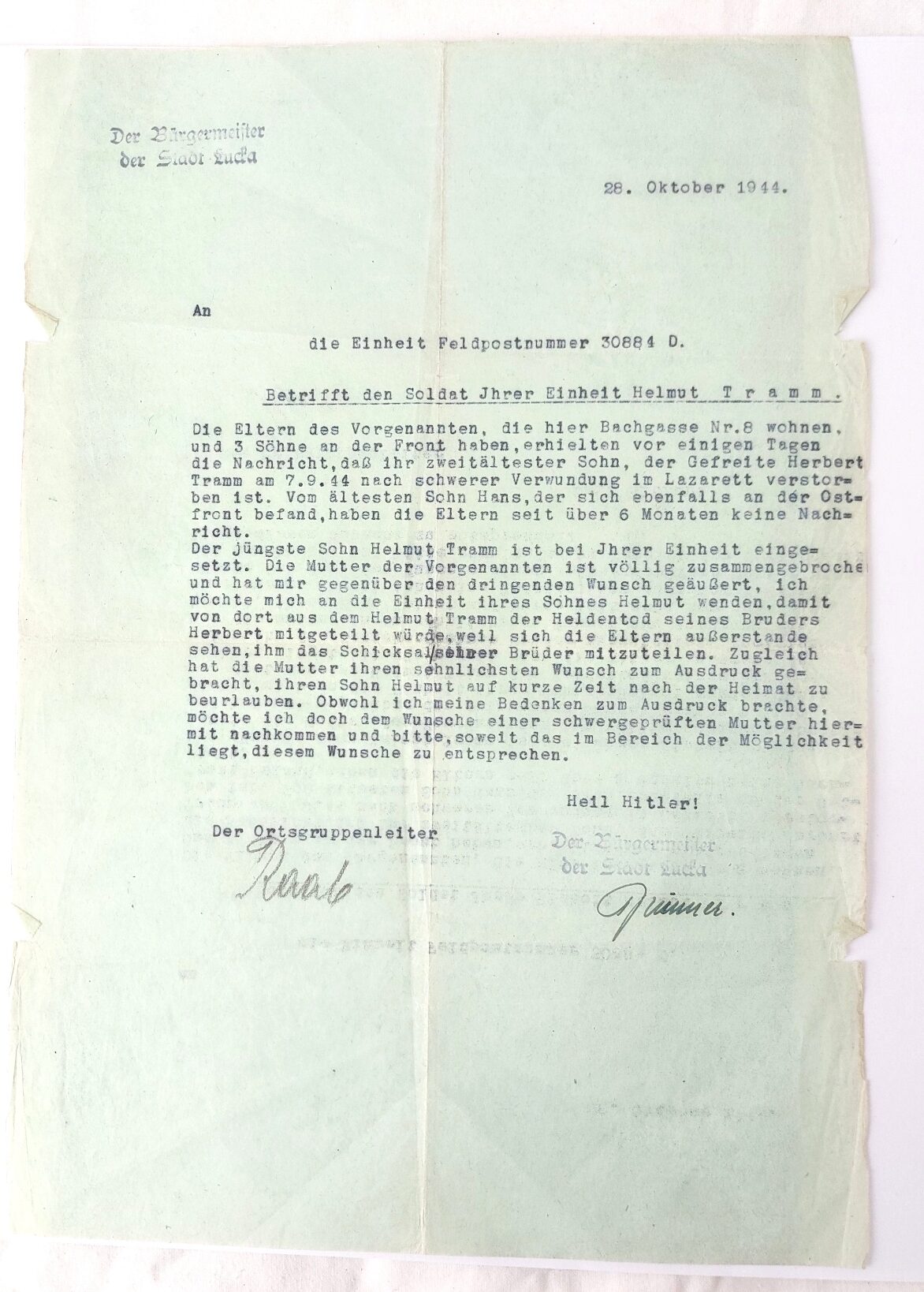
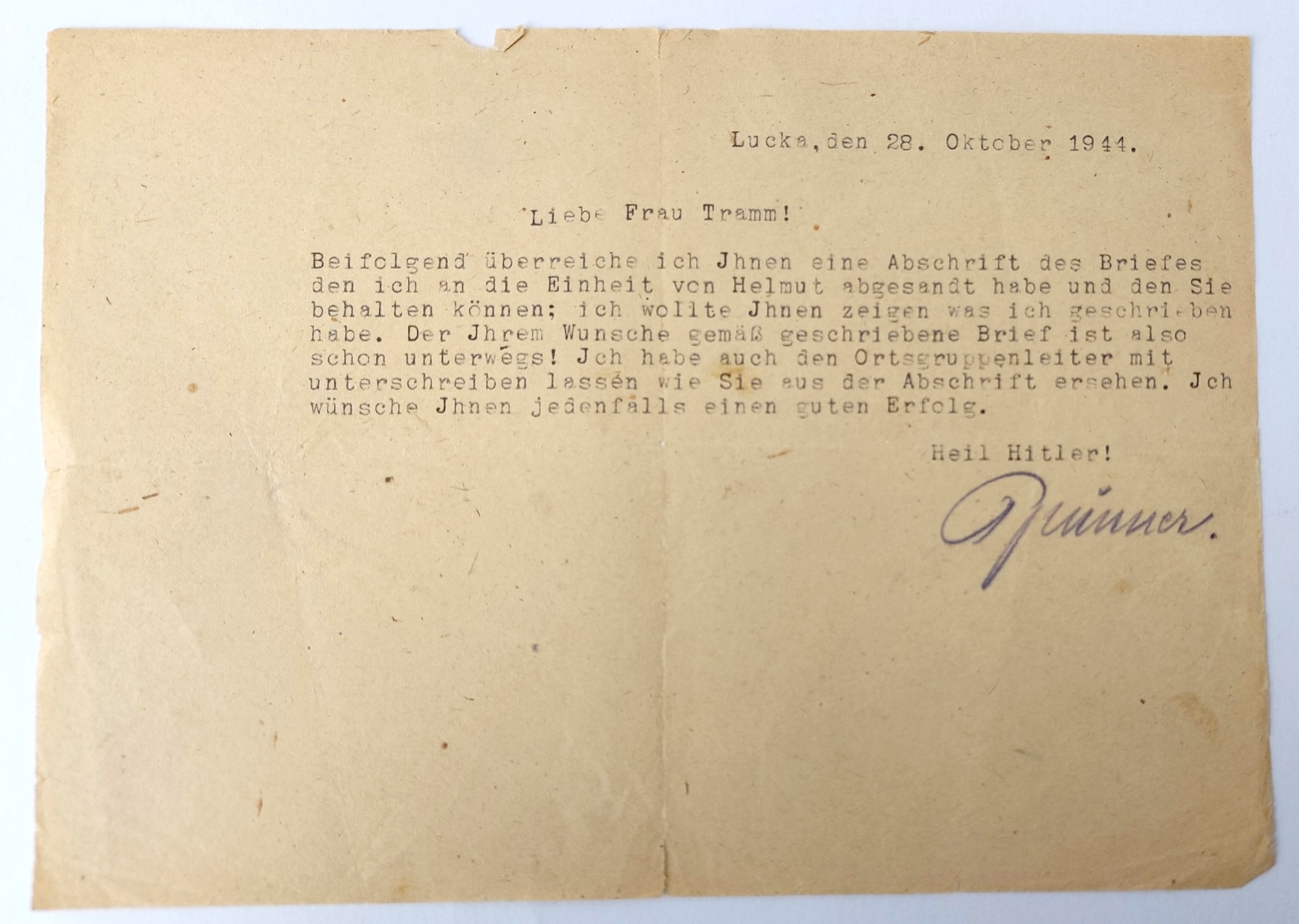
A letter dated 28 October 1944 from the Bürgermeister of Lucka to Helmut’s unit reveals the situation at home. It states: “Die Mutter ist durch den Tod ihres Sohnes Herbert und das Vermißtsein des ältesten Sohnes Hans seelisch schwer getroffen.” — “The mother is emotionally deeply affected by the death of her son Herbert and the missing status of her eldest son Hans.” The Bürgermeister appeals for Helmut to be informed personally and, if possible, granted leave. At that moment he was the only surviving brother.
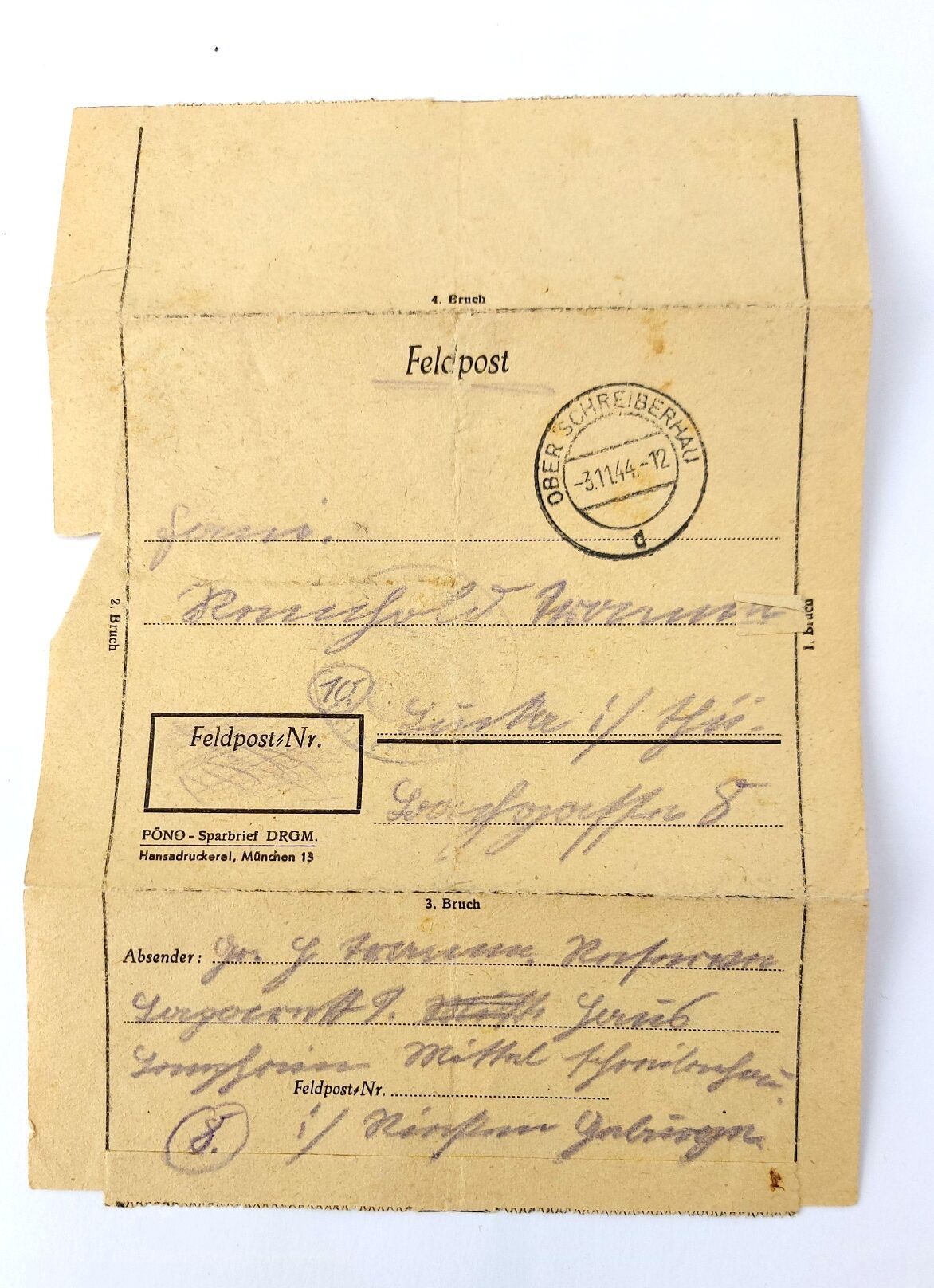
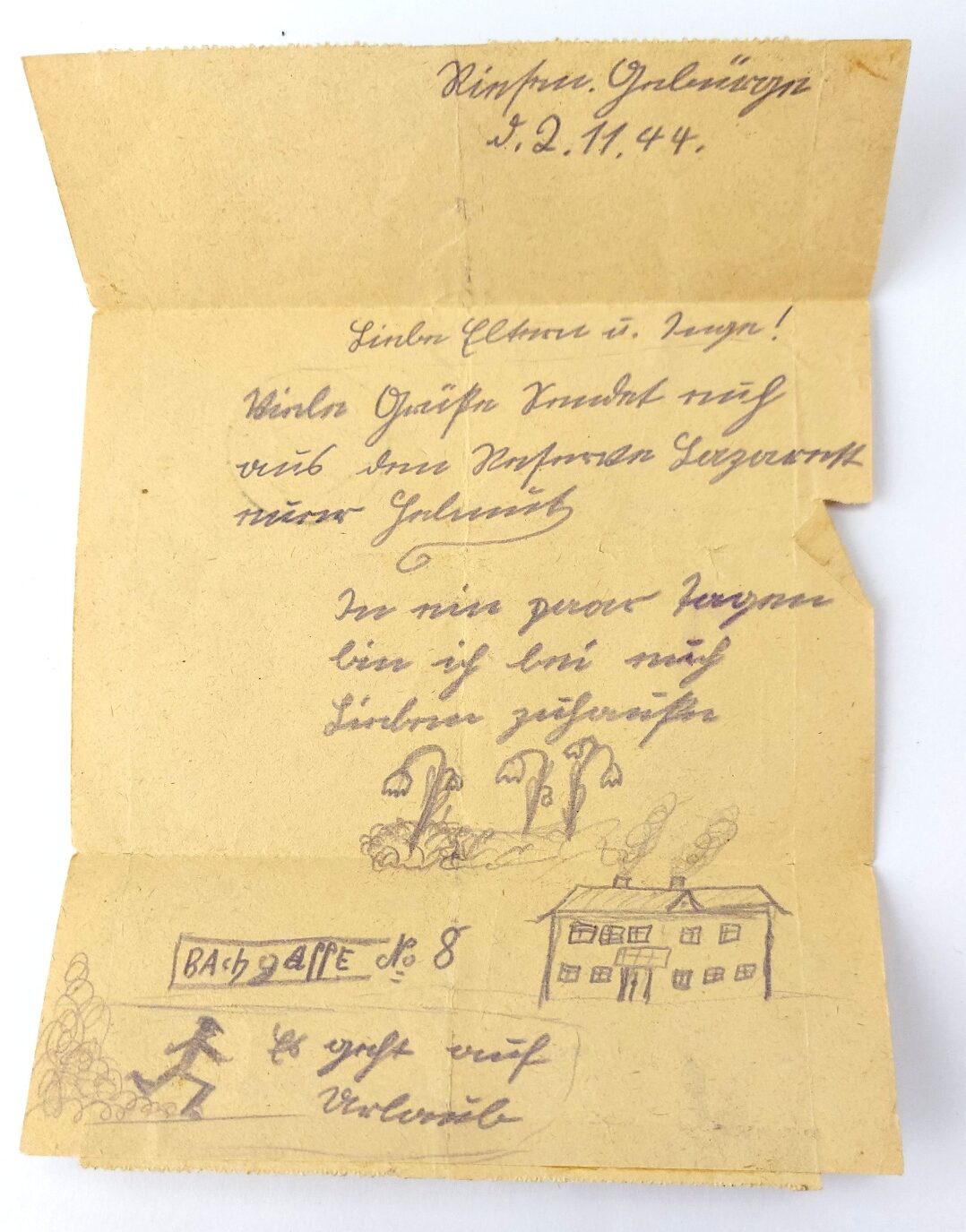
One letter dated November 1944 contains a small pencil sketch of a house labelled “Bachgasse No. 8,” the family home, together with a simple stick figure. The drawing, made after the loss of his siblings, offers a quiet glimpse of longing for home rather than any depiction of the war itself.
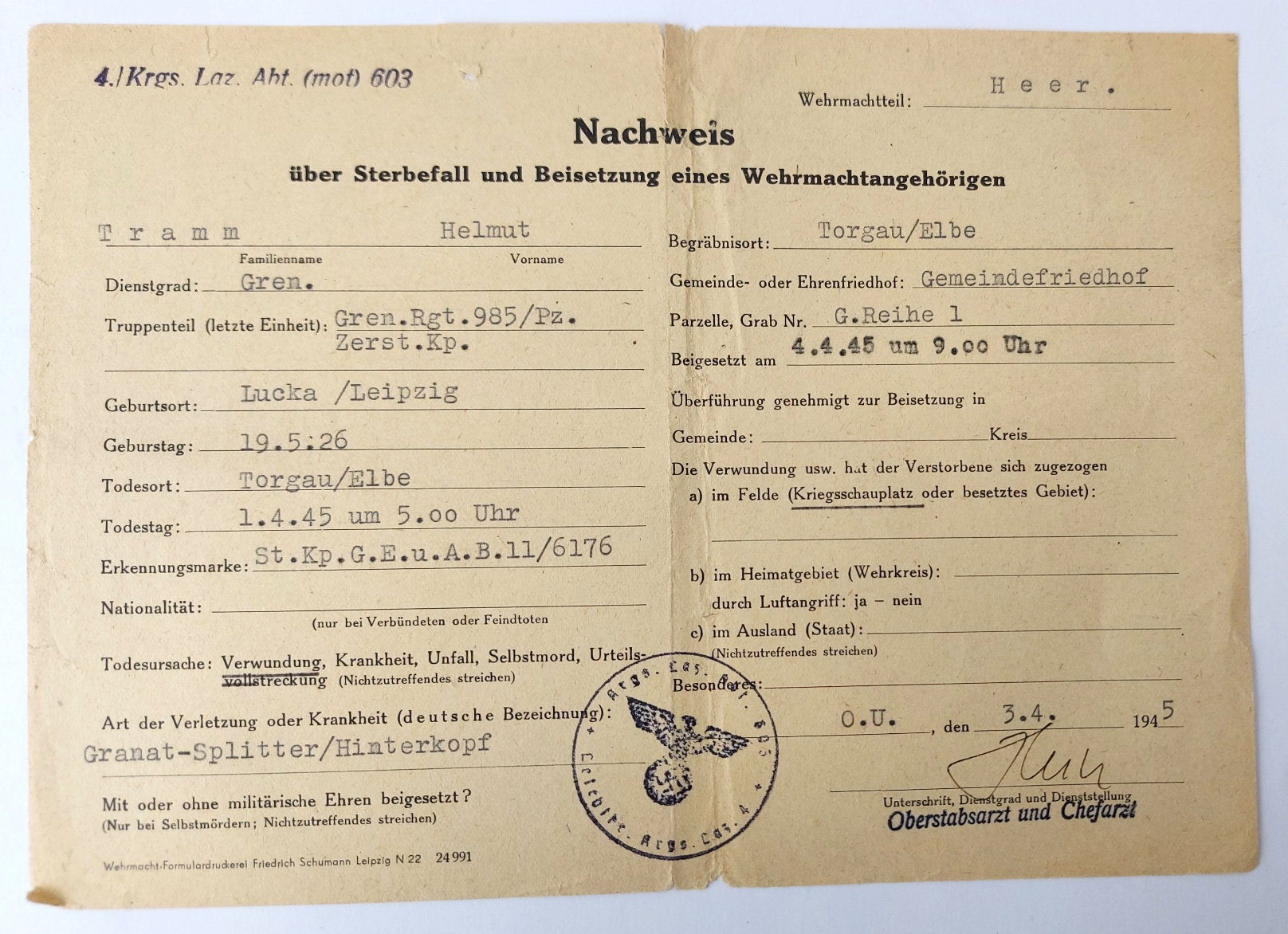
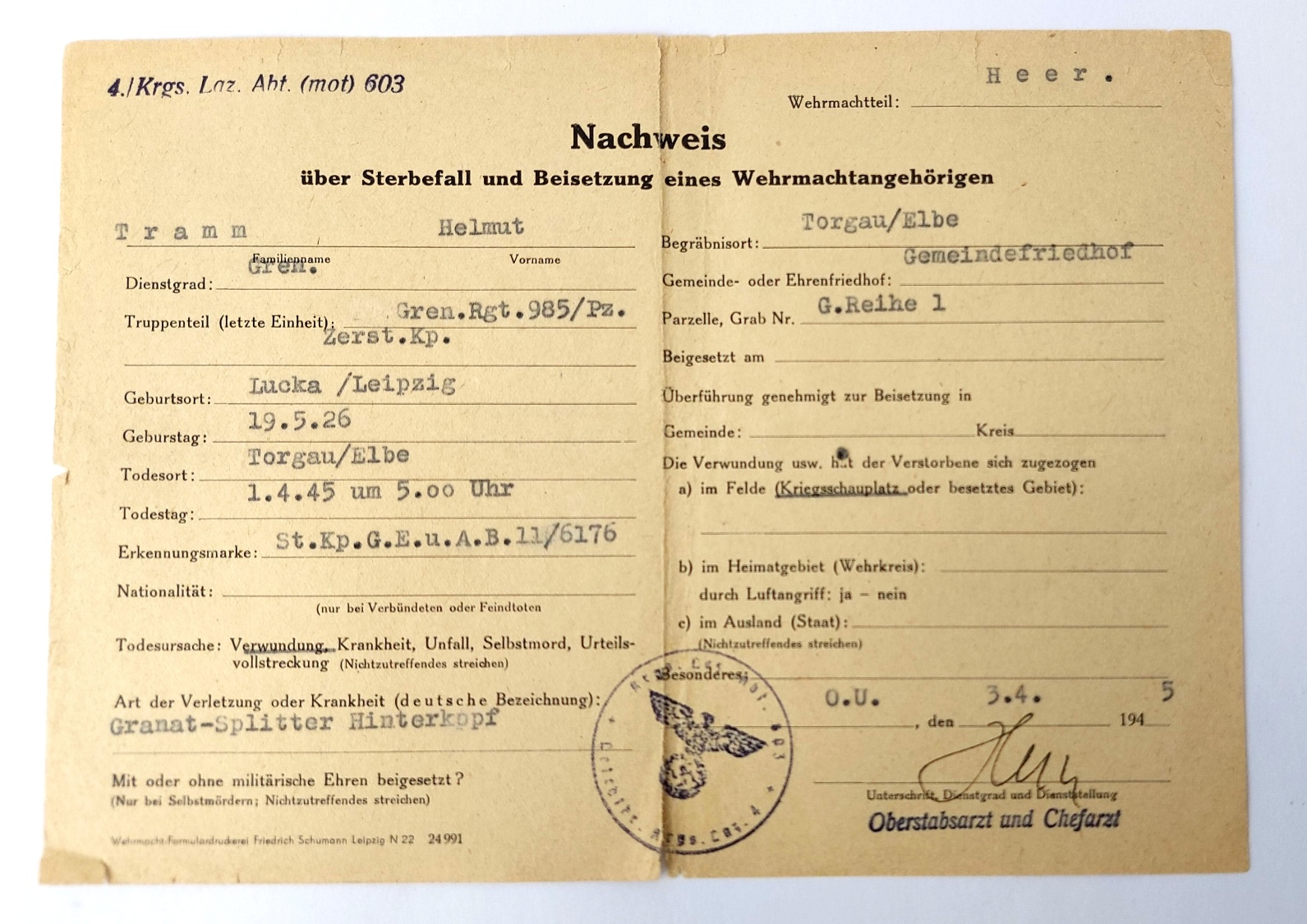
Within six months, during the final defensive battles along the Elbe, Helmut was struck by shrapnel to the back of the head and killed near Torgau on 1 April 1945. He was eighteen years old. His burial certificate is included in the archive.
The Bürgermeister’s letter was written in hope of preserving the last son. History records that hope was not fulfilled.
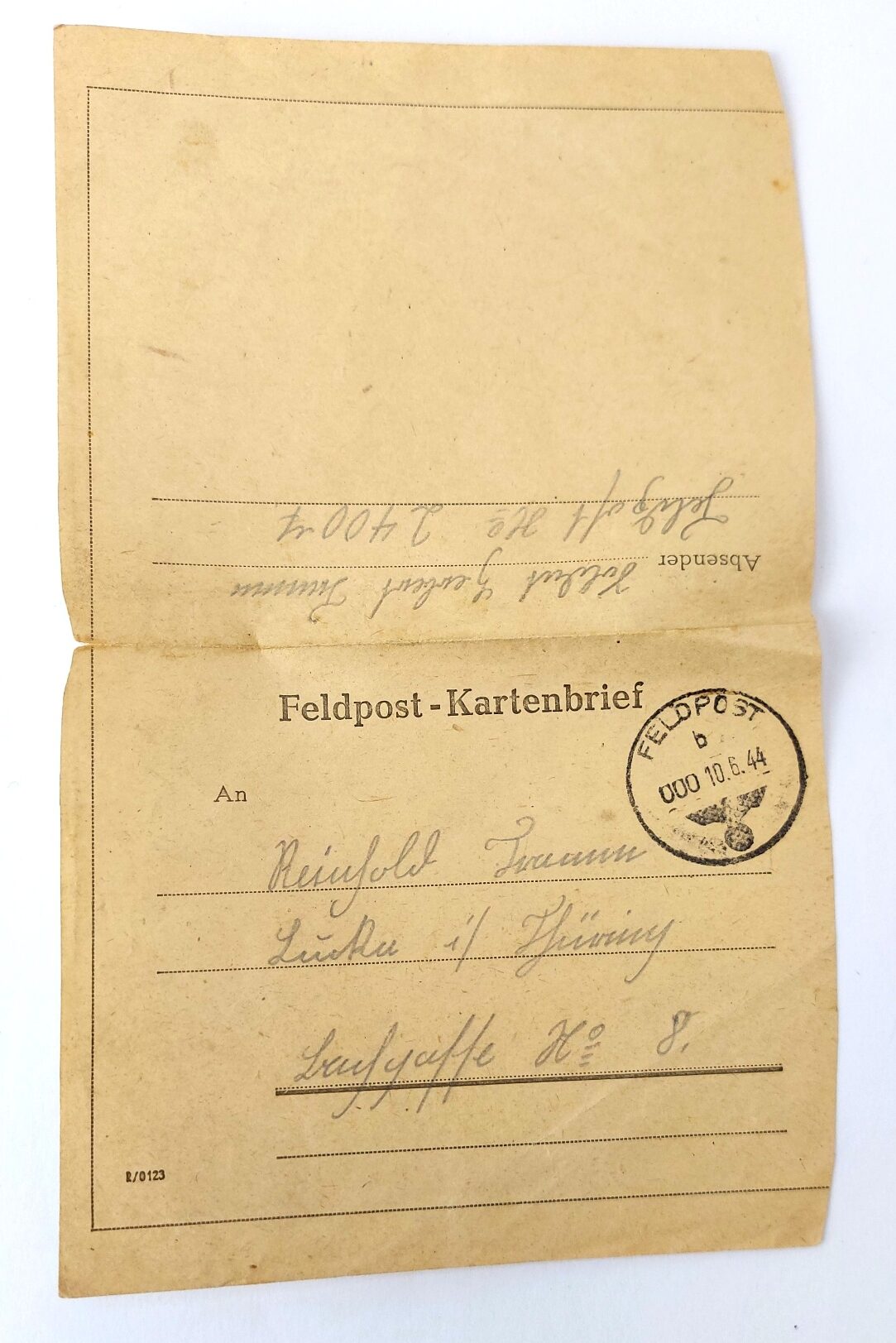
The Blank Feldpost Letter – Postmarked 10 June 1944: Included is a Feldpost-Kartenbrief postmarked 10.6.44. It passed officially through the military postal system, stamped and processed — but contains no written message. This date falls just days before Hans disappeared and during Herbert’s heavy engagement in the East. It is impossible to know why it was sent blank. It may have been prepared and never written. It may have been routine issue. Within the context of the archive, it reads almost like an absence made visible — a space where words might have been.
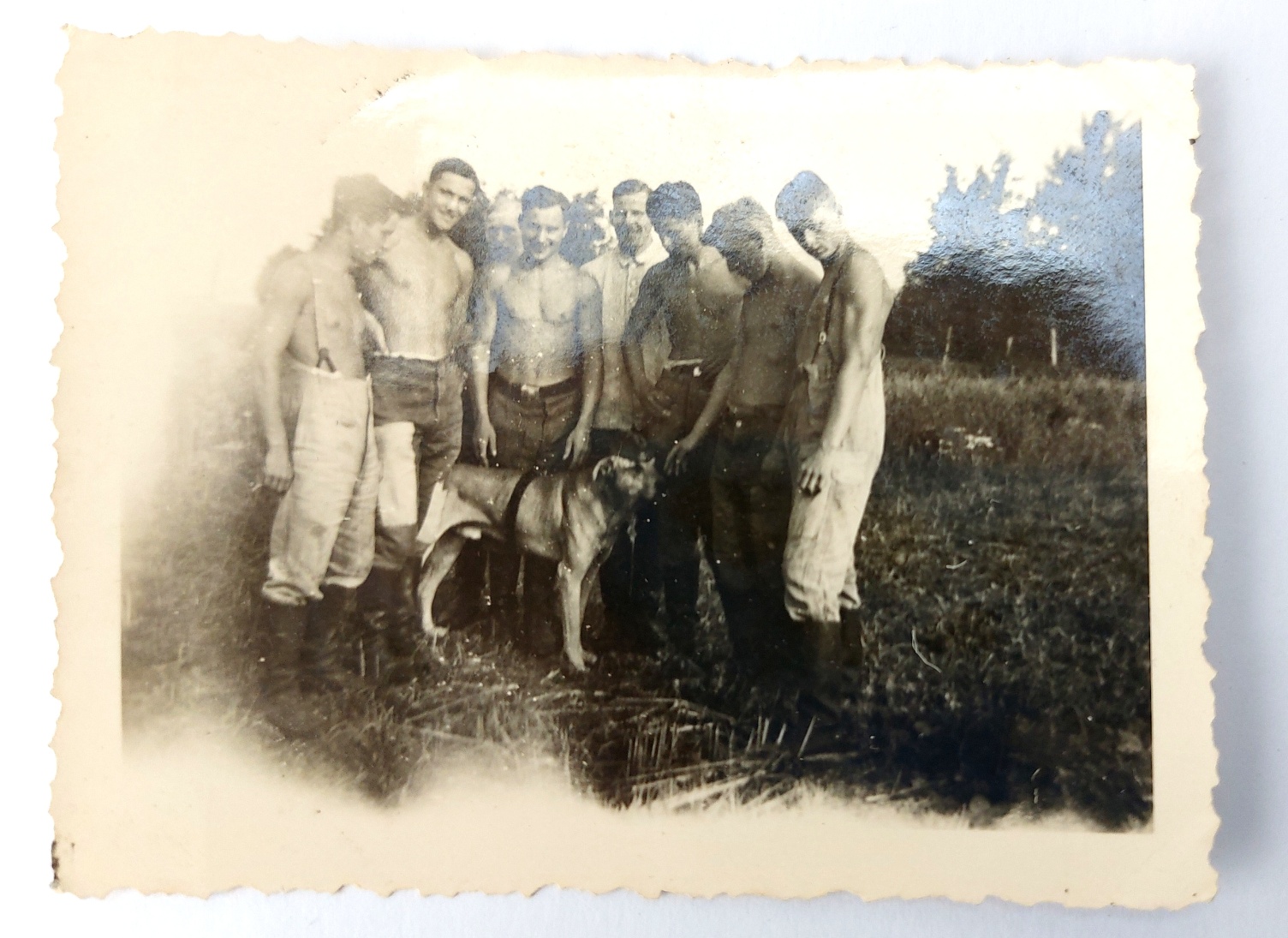
The Photograph: A period photograph shows a small group of young soldiers standing in a field beside a dog, sleeves rolled, relaxed and smiling. It is an ordinary, human image — youth, camaraderie, countryside. Within the arc of the archive, it feels like a moment before loss.
The Arc of Collapse: Taken together, the documents trace the final unraveling of Germany’s Eastern Front through the lives of one family. In June 1944, Hans disappeared in the destruction of the German 9th Army during Operation Bagration near Bobruisk — one of the greatest defeats in German military history. By September 1944, Herbert was killed in Estonia during the Soviet Baltic Offensive as German forces withdrew toward the coast in increasingly desperate rearguard actions. In April 1945, with the war already lost, Helmut was killed near Torgau on the Elbe during the final defensive battles inside Germany itself.
From Belarus to Estonia to Saxony, the geographical progression mirrors the strategic collapse of the Reich. The letters begin with reassurance — “Liebe Eltern” (“Dear parents”) and “Es grüßt euch euer Herbert” (“Your Herbert sends his greetings”) — and end in official notifications, burial confirmations, and an OKH letter that admits it cannot provide “tröstende Gewißheit” (“consoling certainty”). The printed “Heil Hitler” at the foot of that letter is struck through, a small but telling mark of a regime in retreat.
What remains is not rhetoric, but paper: a sequence of handwritten greetings, municipal appeals, casualty forms and unanswered investigations that record, with quiet precision, the loss of three brothers aged twenty-two, nineteen and eighteen within ten months. The archive does not dramatise the war; it documents it — and in doing so, preserves the human cost of its final year.
Contents:
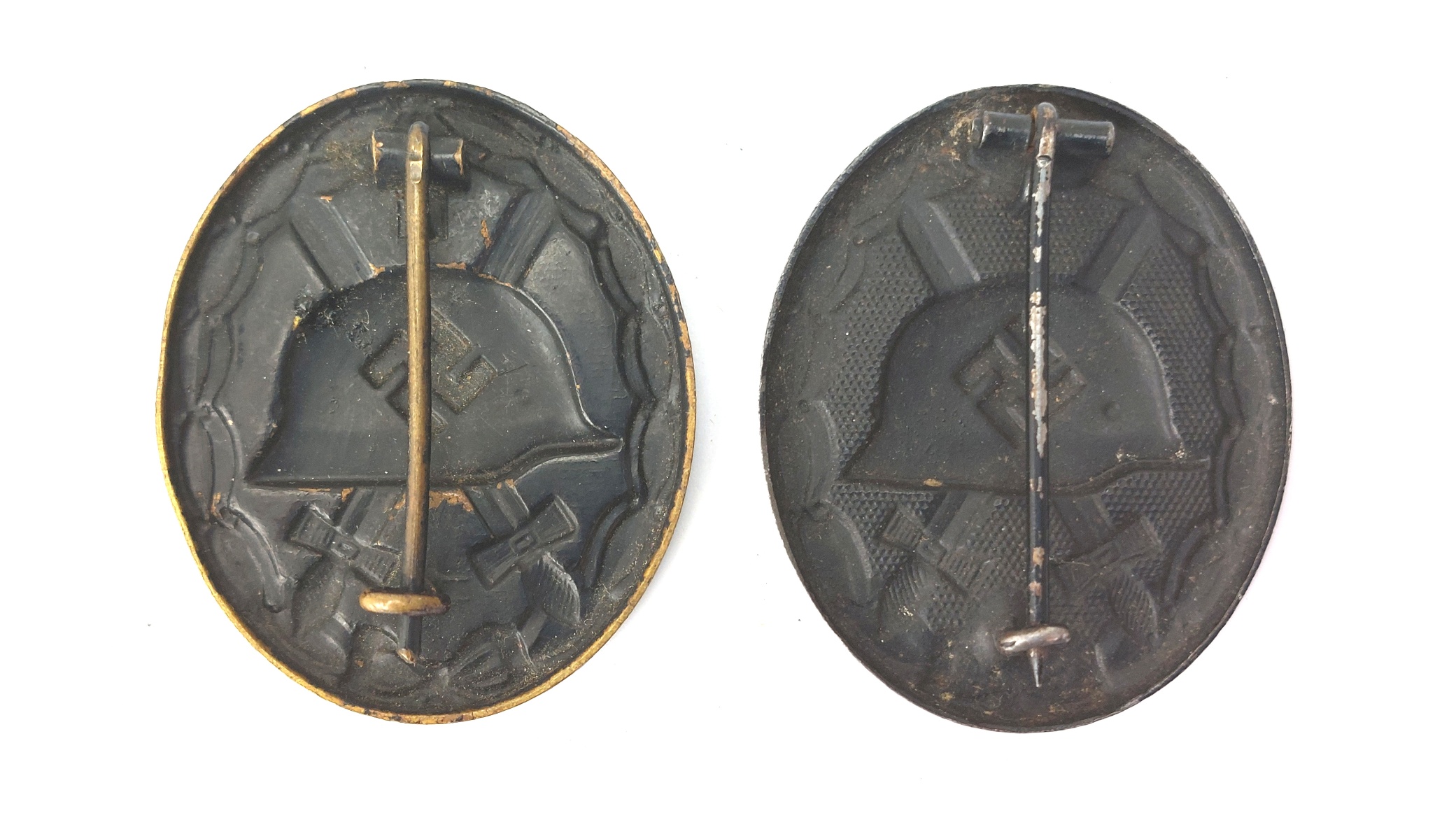
- Two original Black Wound Badges
- Small Period soldier photograph
Documents including:
- 11 Handwritten Feldpost letters (April–October 1944) including one blank Feldpost form (10 June 1944)
- Official OKH investigation closure letter (16 February 1945)
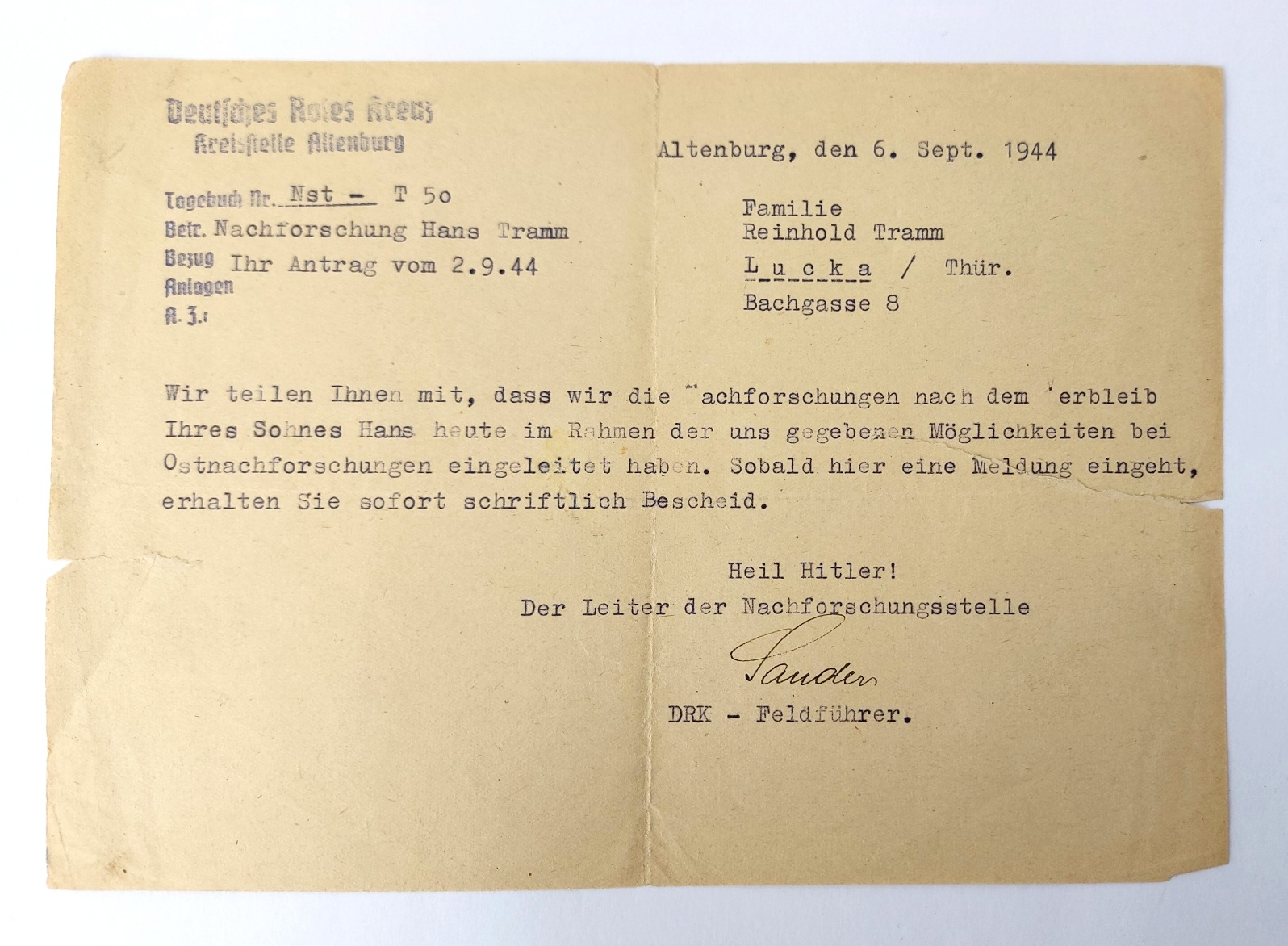
- Red Cross tracing correspondence
- Hospital death notification
- Municipal death registrations
- Burial confirmations
- Assault Badge award certificate
- Two Black Wound Badge certificates
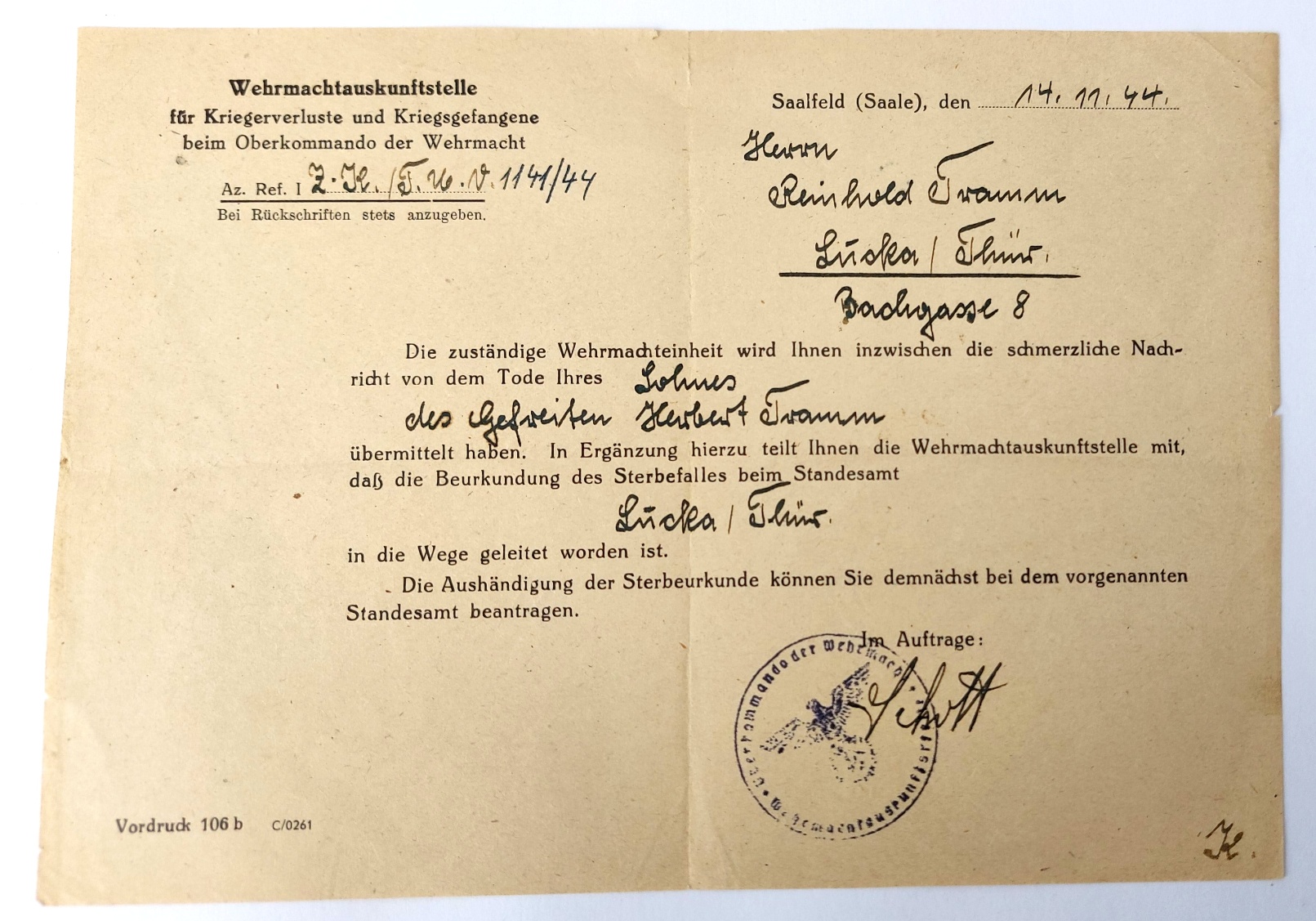
- Bürgermeister correspondence
All addressed to Reinhold Tramm, Lucka i/Thüringen, Bachgasse No. 8.
*Condition*
The archive is in overall good, honest wartime condition consistent with age and handling. The two Black Wound Badges show typical period wear. The period photograph shows surface wear and slight edge irregularities consistent with age, but image clarity remains good. Finish loss is consistent with age and handling; fittings appear intact as photographed. No later repair is evident.The handwritten Feldpost letters display expected horizontal and vertical fold lines from postal transmission, with light age toning throughout. Minor edge wear and occasional small tears are present to some envelopes, particularly along opening edges and flap seams. Ink remains legible across all correspondence, including pencil and fountain pen examples. Official documents retain clear stamps, seals and signatures. The OKH missing notification remains structurally sound, with the manually struck-through “Heil Hitler” clearly visible. Municipal death certificates and hospital notifications show standard archive fold creasing but no significant loss of text. The blank Feldpost-Kartenbrief is clean, with clear postal cancellation and no written interior content. Postal markings across envelopes remain readable, with normal wartime paper quality and light foxing in places. The grouping has been preserved together and remains a coherent family archive. There is no significant water damage, heavy staining, or modern alteration observed. Please see photographs as part of the condition report.