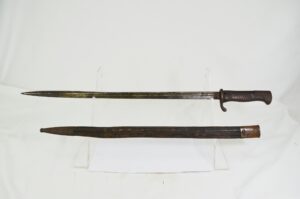
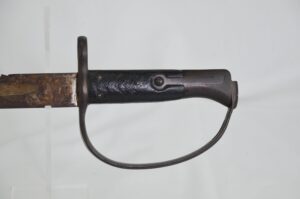
*British, Late WWII, No. 4 Mk. III Spike Bayonet (“Pigsticker”), by Joseph Lucas Ltd.*
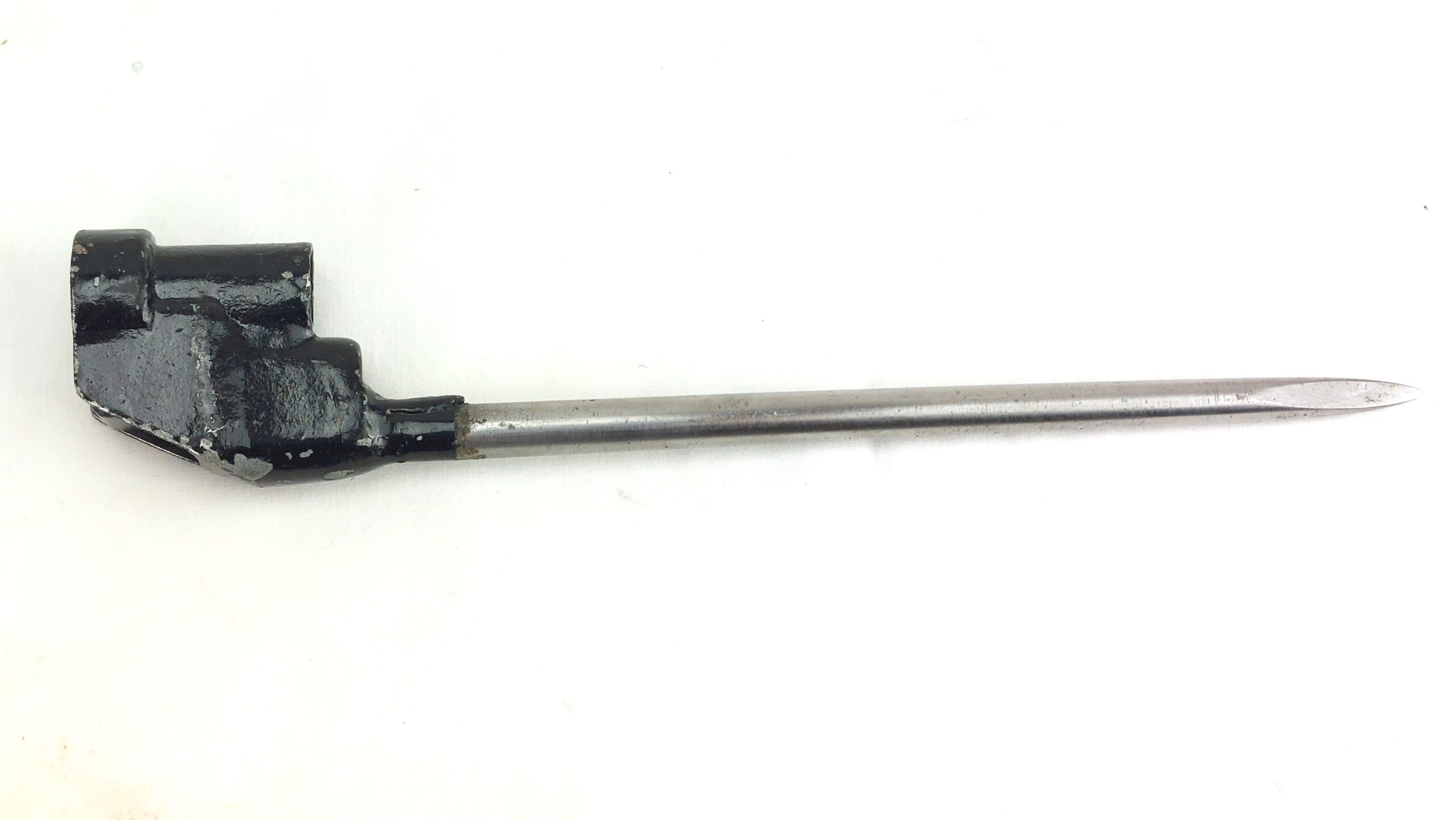
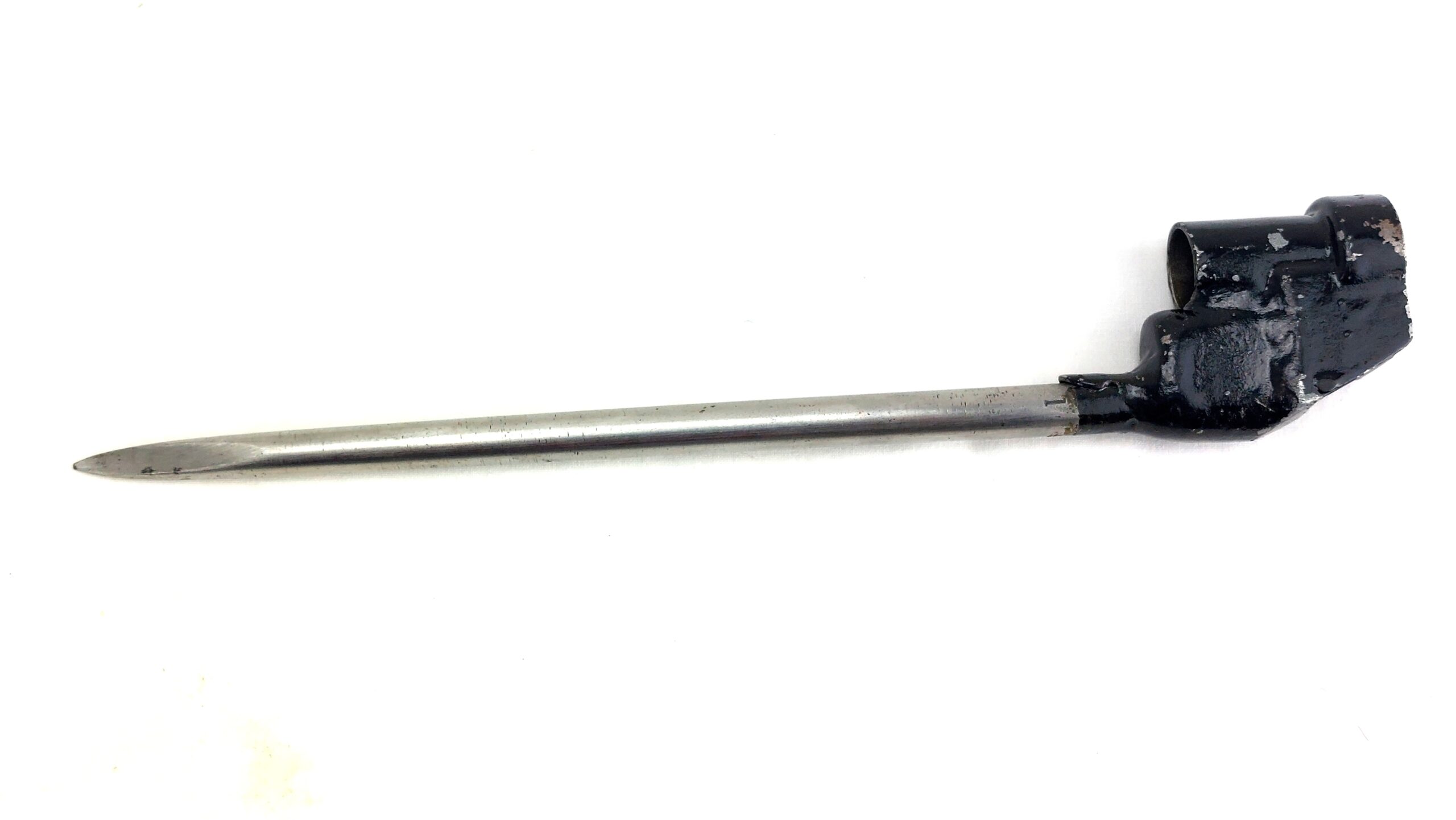
A scarce late–Second World War British No. 4 Mk. III spike bayonet, the final and most simplified development of the No. 4 “pigsticker” bayonet series for the Lee-Enfield No. 4 rifle.
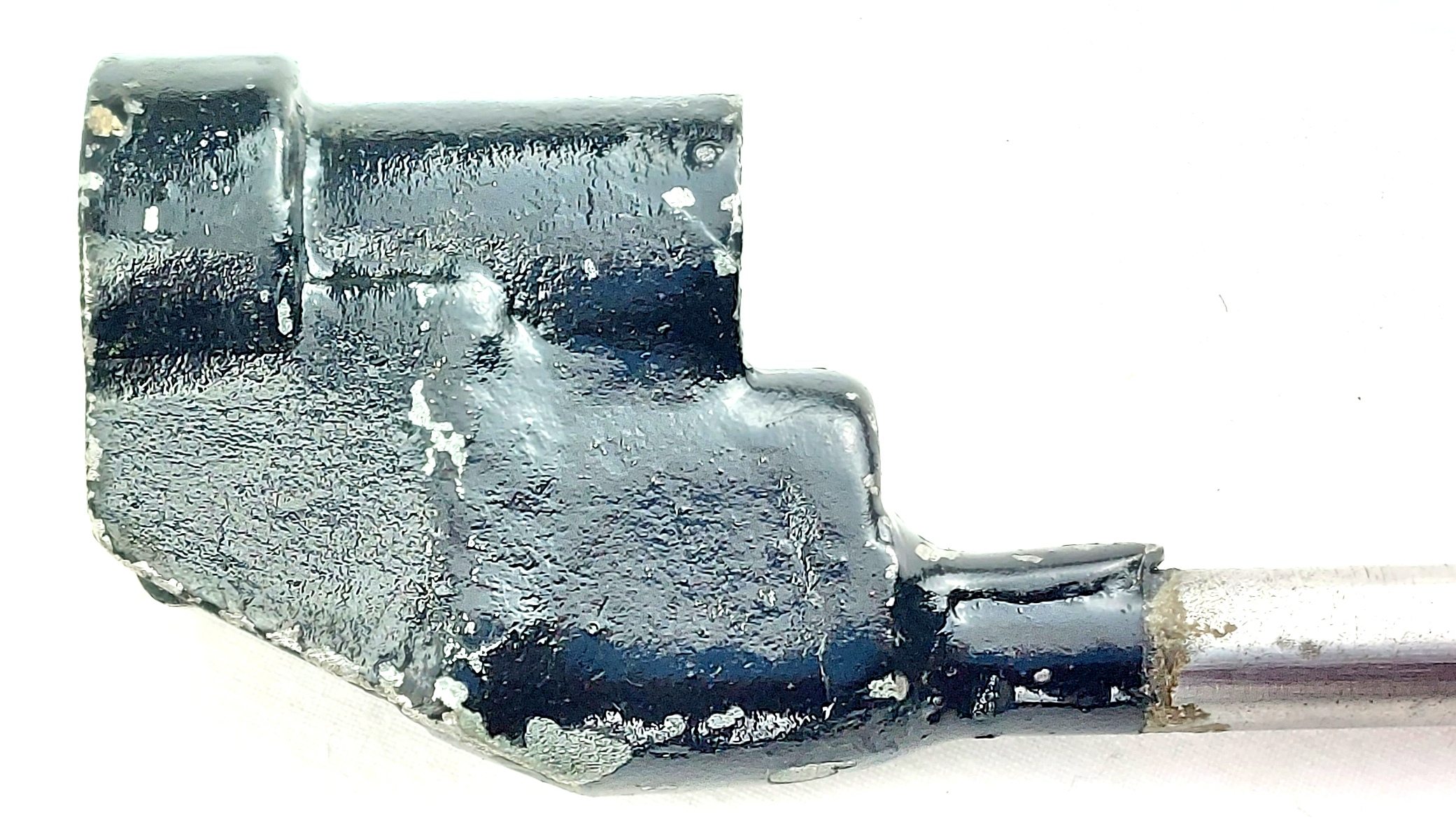
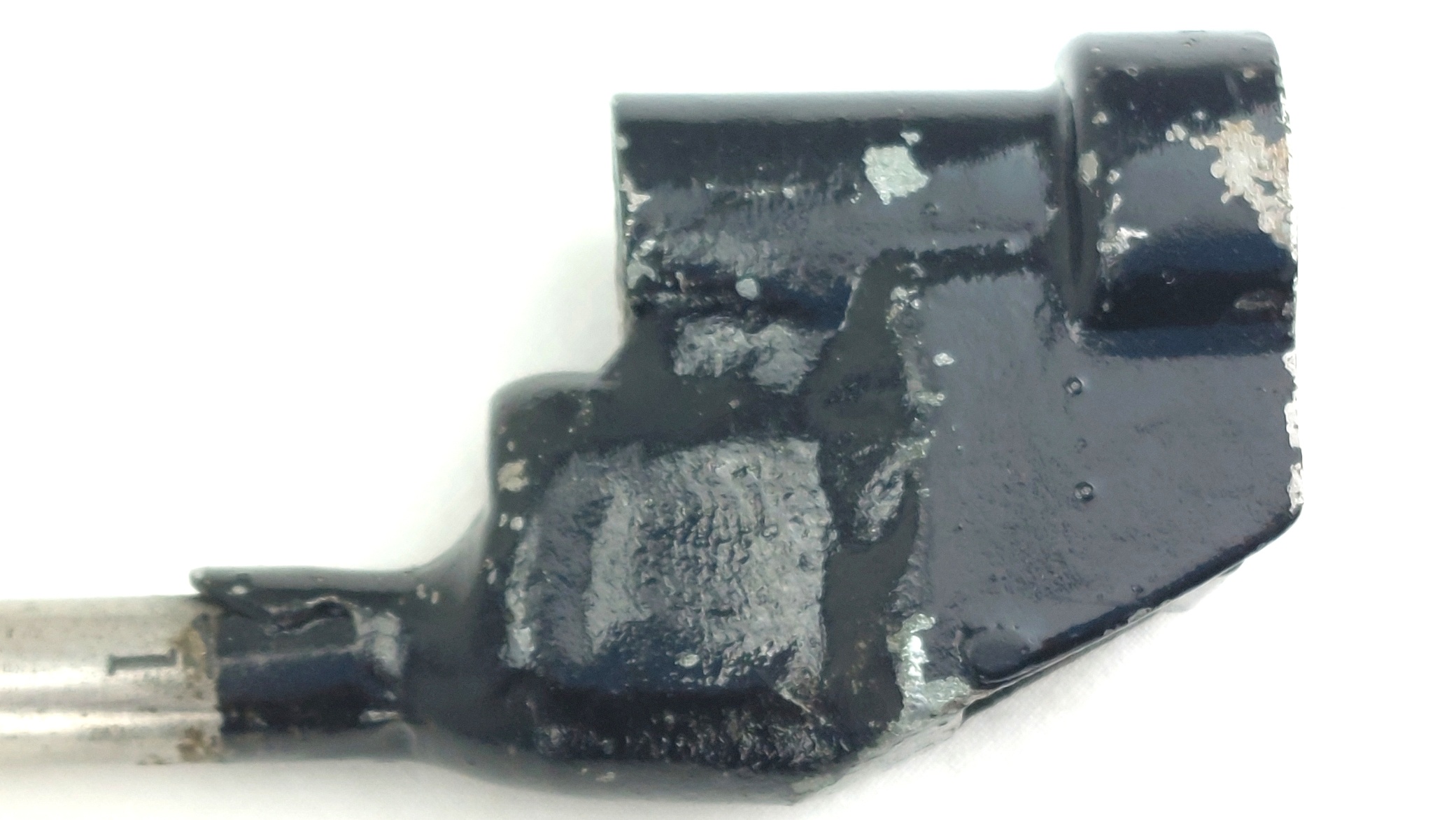
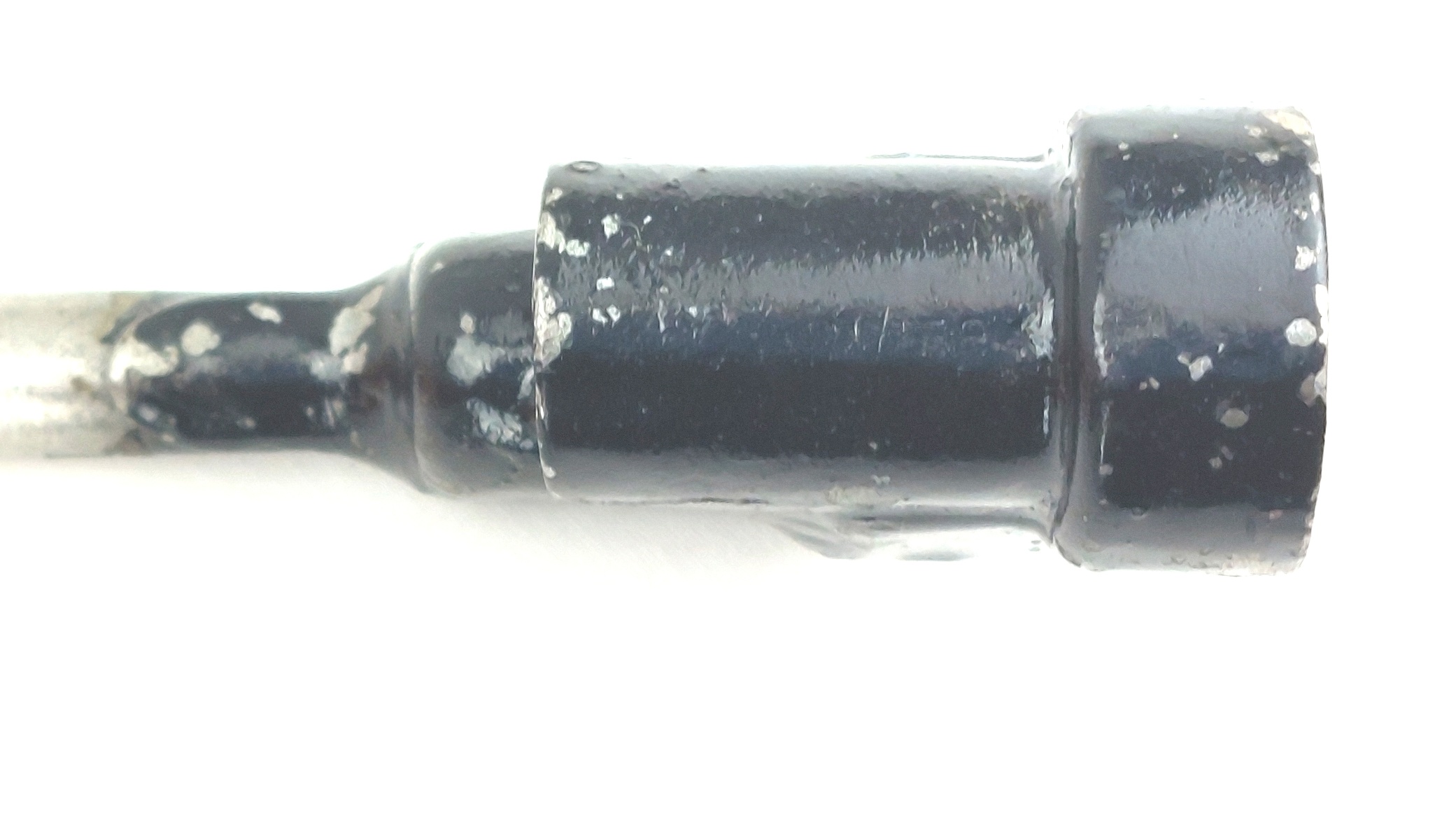
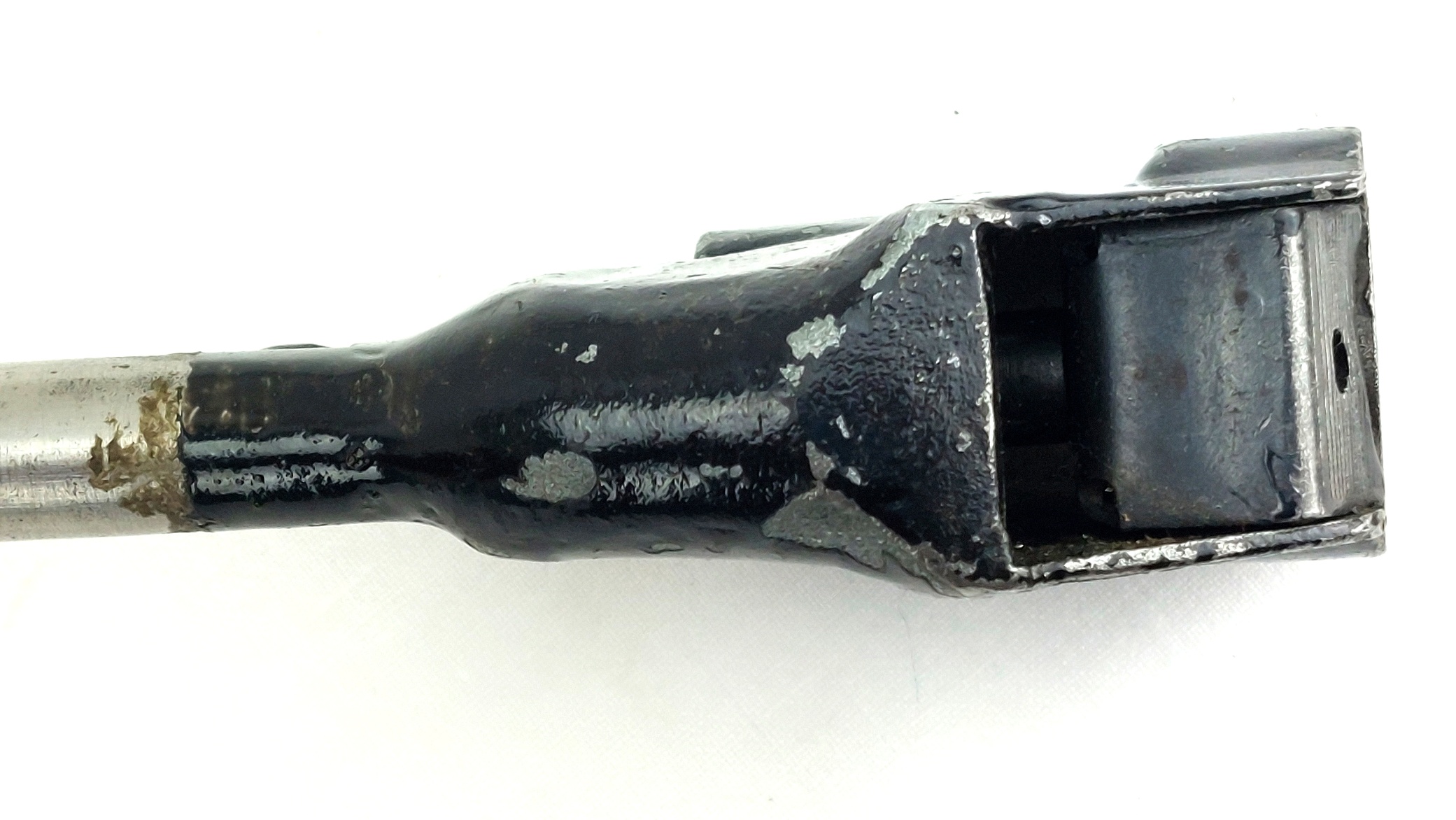
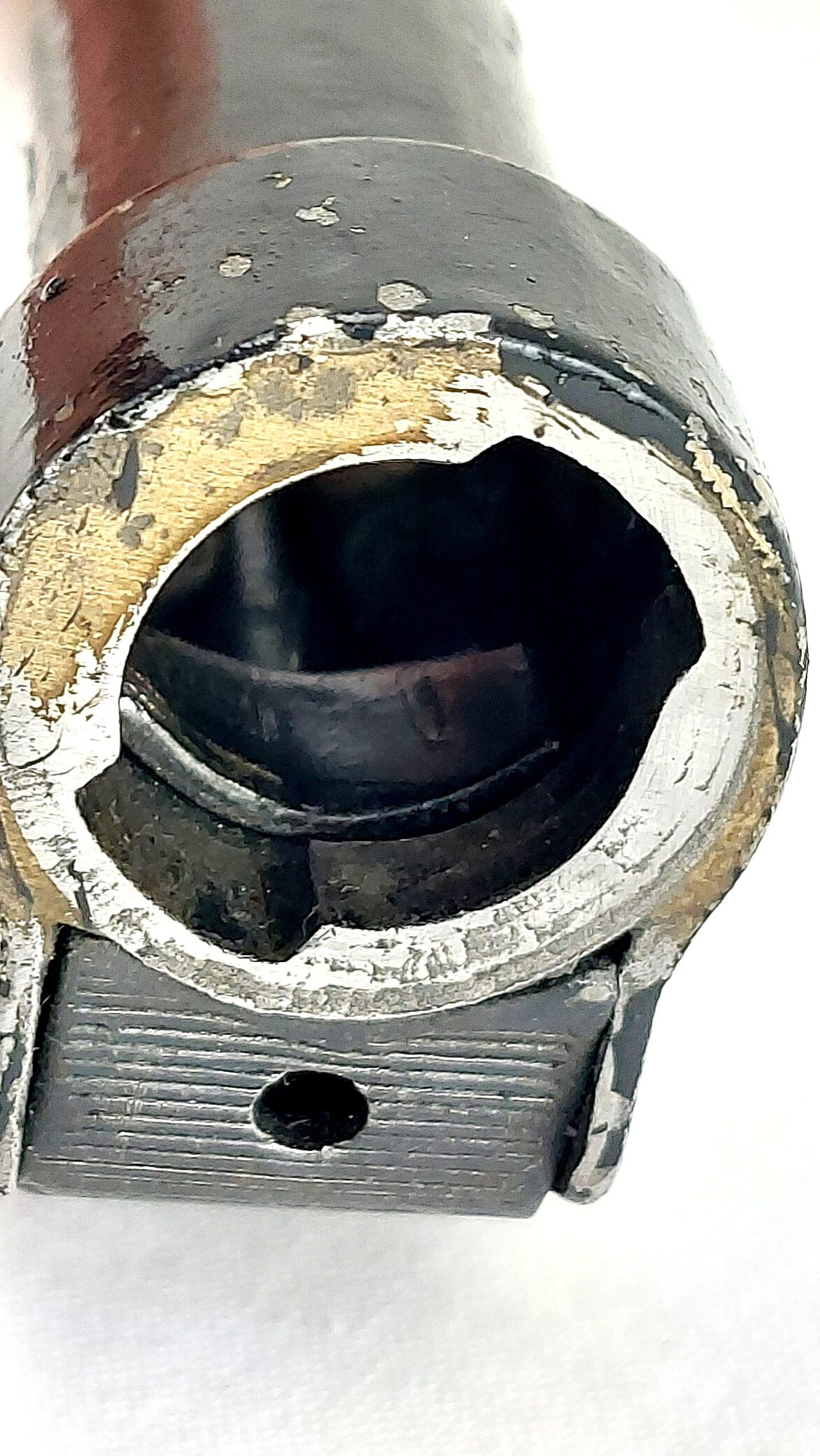
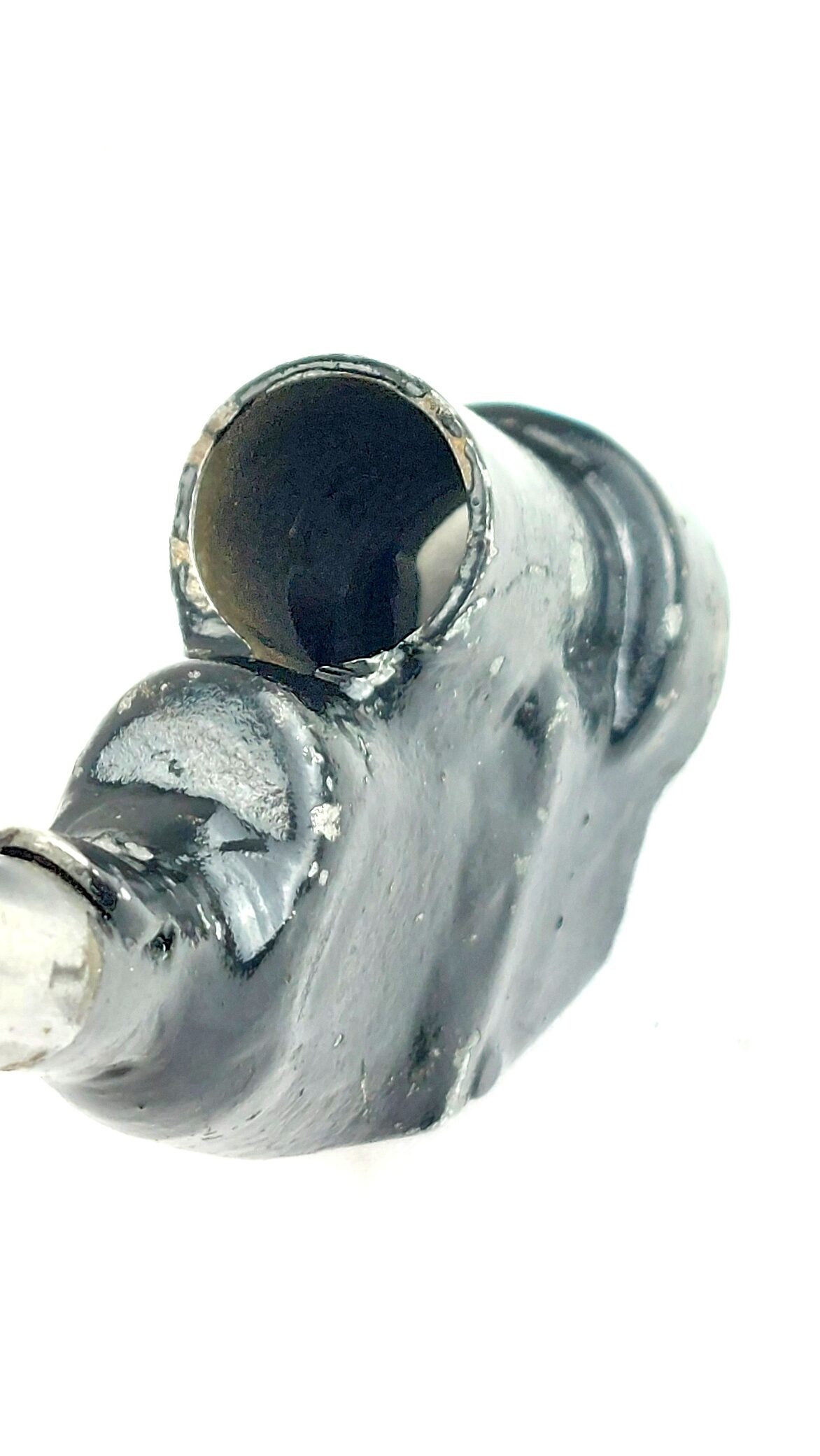
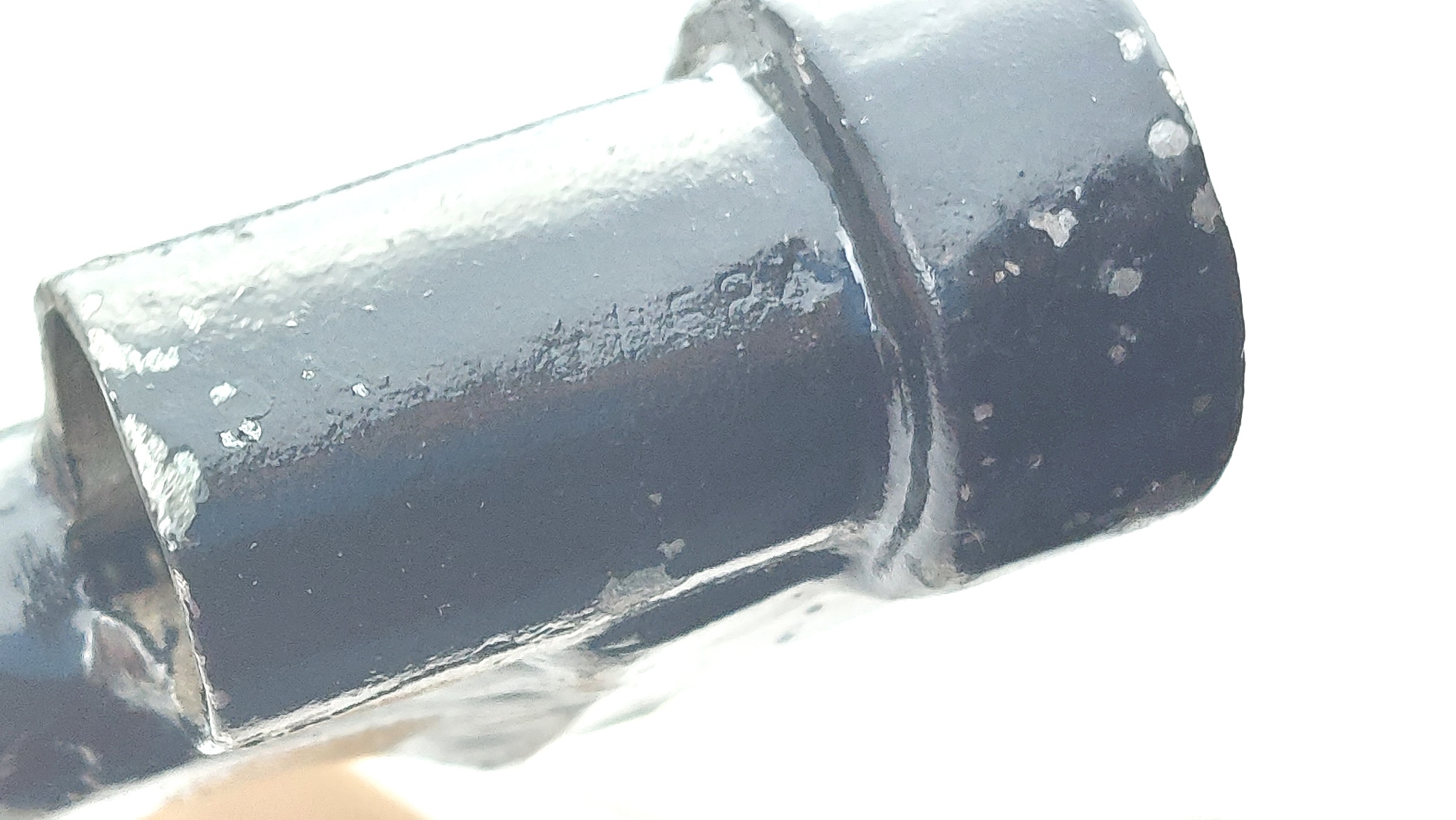
This example displays the characteristic round-section spike blade, with a plain, utilitarian finish consistent with late-war emergency production. The socket is of the Mk. III pattern, fabricated from seven welded sheet-steel stampings, eliminating the earlier forged socket entirely. Even the spring plunger was produced as a stamped component, illustrating the extreme material and labour-saving measures adopted during the final phase of wartime manufacture.
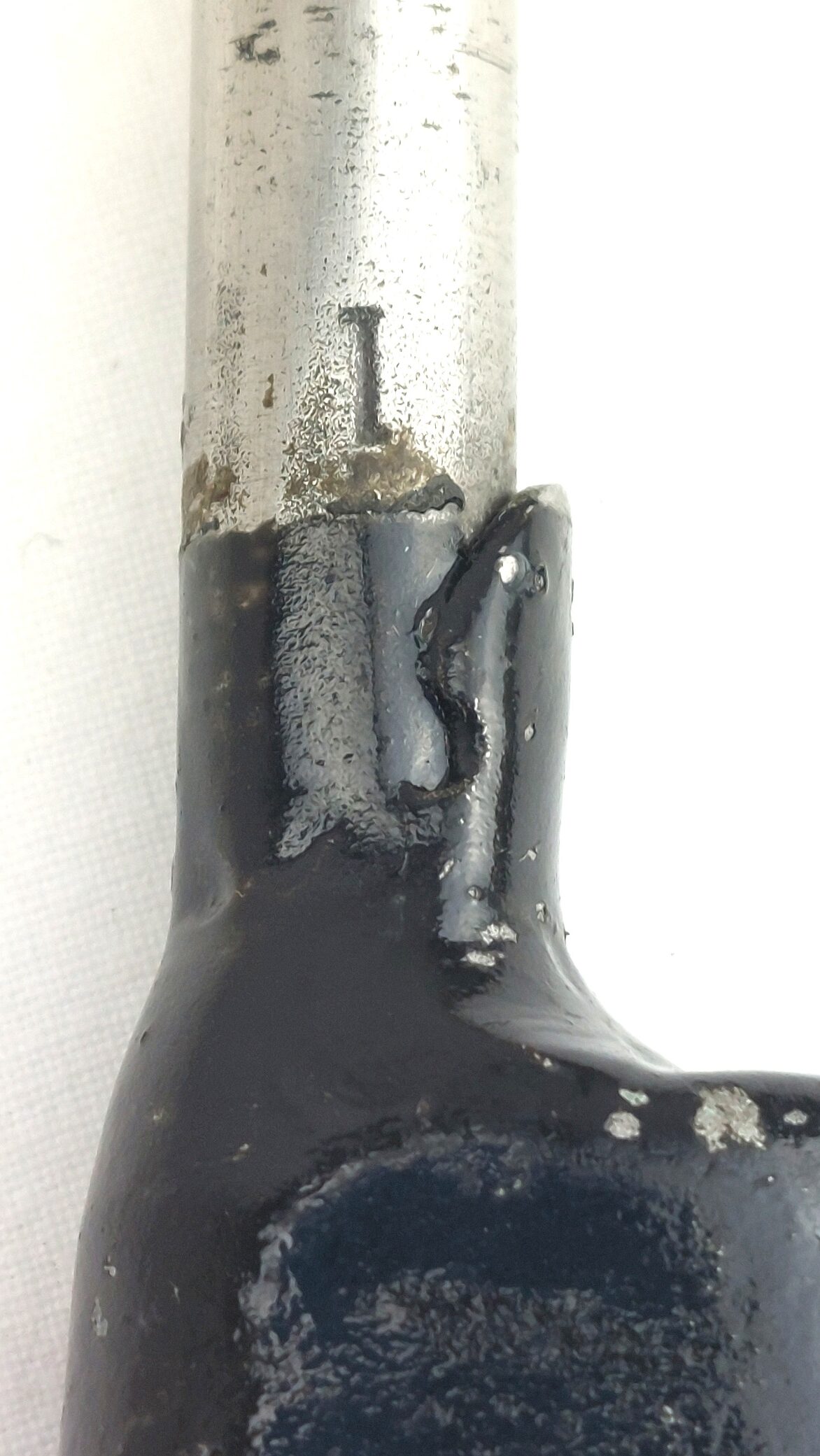
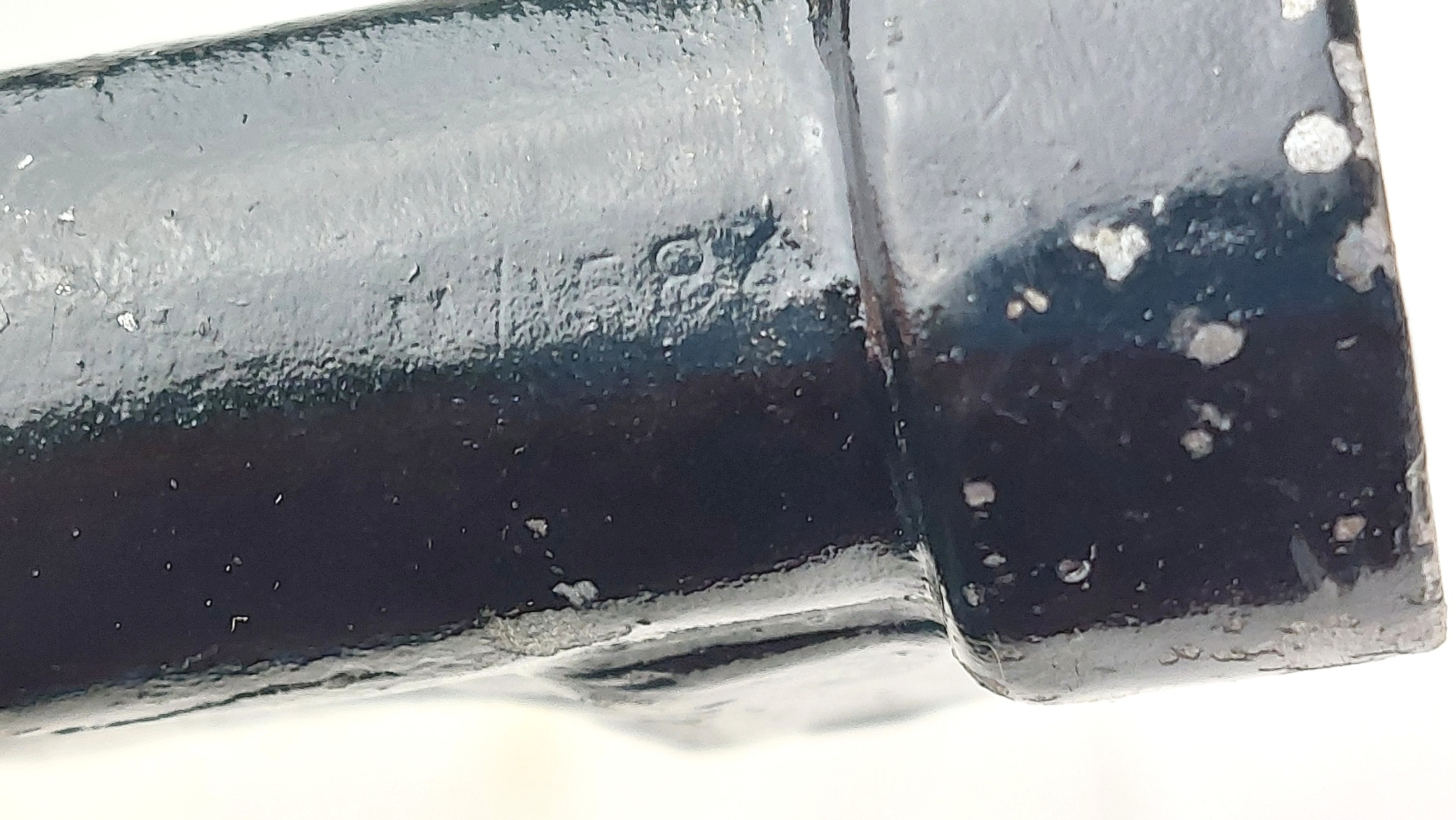
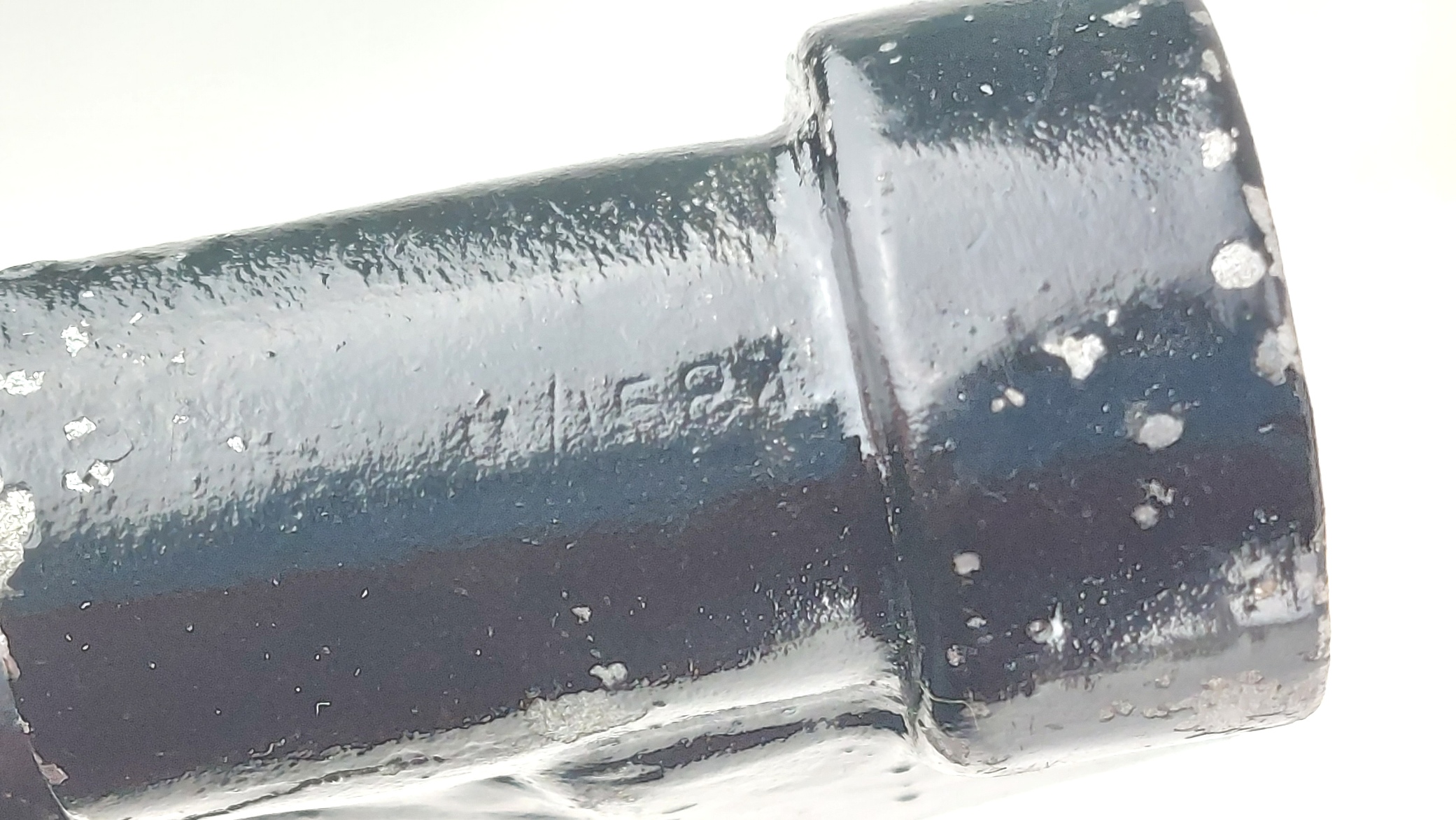
The top of the socket is very faintly stamped “M/158”, accompanied by a War Department broad arrow acceptance mark. A small “1” is present on the blade, as commonly encountered on these late-production examples.
Approx. Measurements – Blade length: 18.5 cm. Overall length: 25 cm.
Historical Note:
The No. 4 Mk. III represented the crudest and final evolution of the British spike bayonet programme. Introduced late in the Second World War, it was designed specifically to minimise machining time, skilled labour, and material use, reflecting the pressures on British industry by 1944–45.
Production of the Mk. III was limited to 196,200 examples, all manufactured by Joseph Lucas Ltd. at Chester Street, Birmingham. Lucas marked these bayonets with the dispersal code M158, stamped to the top of the socket, followed by a War Department acceptance arrow.
Despite its late introduction, the Mk. III saw only limited service and was declared obsolete in 1946, shortly after the end of the war. As a result, surviving examples are notably scarcer than earlier No. 4 Mk. II spike bayonets and are increasingly sought after by collectors of late-war British small-arms equipment.
*Condition*
Overall in good, honest service condition, consistent with late-war manufacture. The spike blade remains straight with a clean point, showing light surface wear and age toning. Socket retains much of its original dark finish with scattered losses, chipping, and wear, particularly around edges and high points. Stamps are present but very faint, as expected on Mk. III examples, with the M158 and broad arrow discernible under close inspection. No cracks or structural issues noted. Please see photographs as part of the condition report.
*In order to complete the online purchase we will require a picture/scan of a photo ID (Driving Licence, Passport or an official document with a recent picture). If you don't posses any such document please call to buy. If we consider that the proof of ID is incorect or insuficient, we reserve the right to cancel the transaction.
*We also reserve the right to cancel the transaction with a full refund if there is any suspicion that the provided item will be used in any way contrary to the laws and legislation of UK.