*British, Dated 1949, No. 9 Mk I Bayonet & Scabbard with P1937 Web Frog, ROF Poole Production*
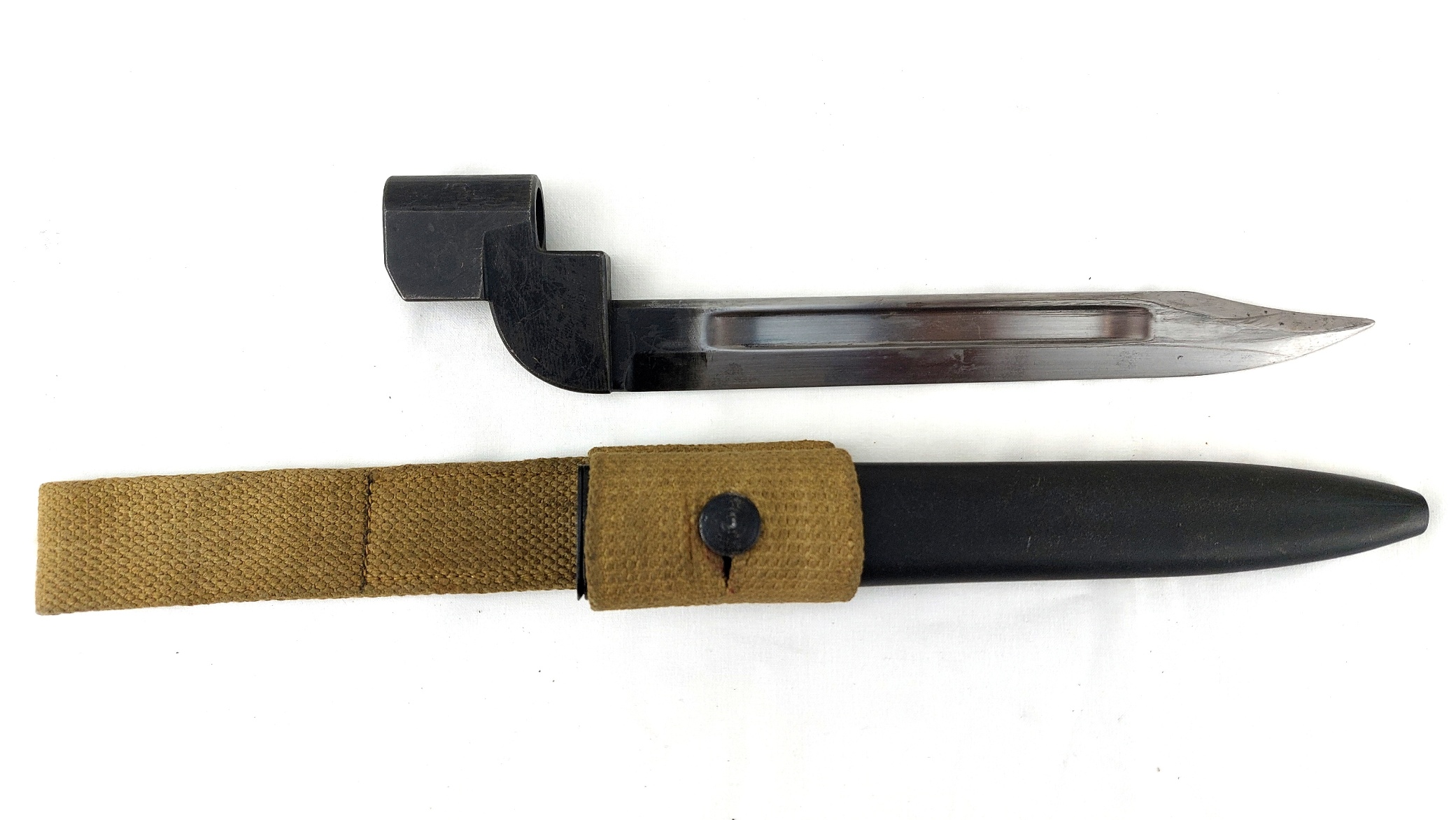
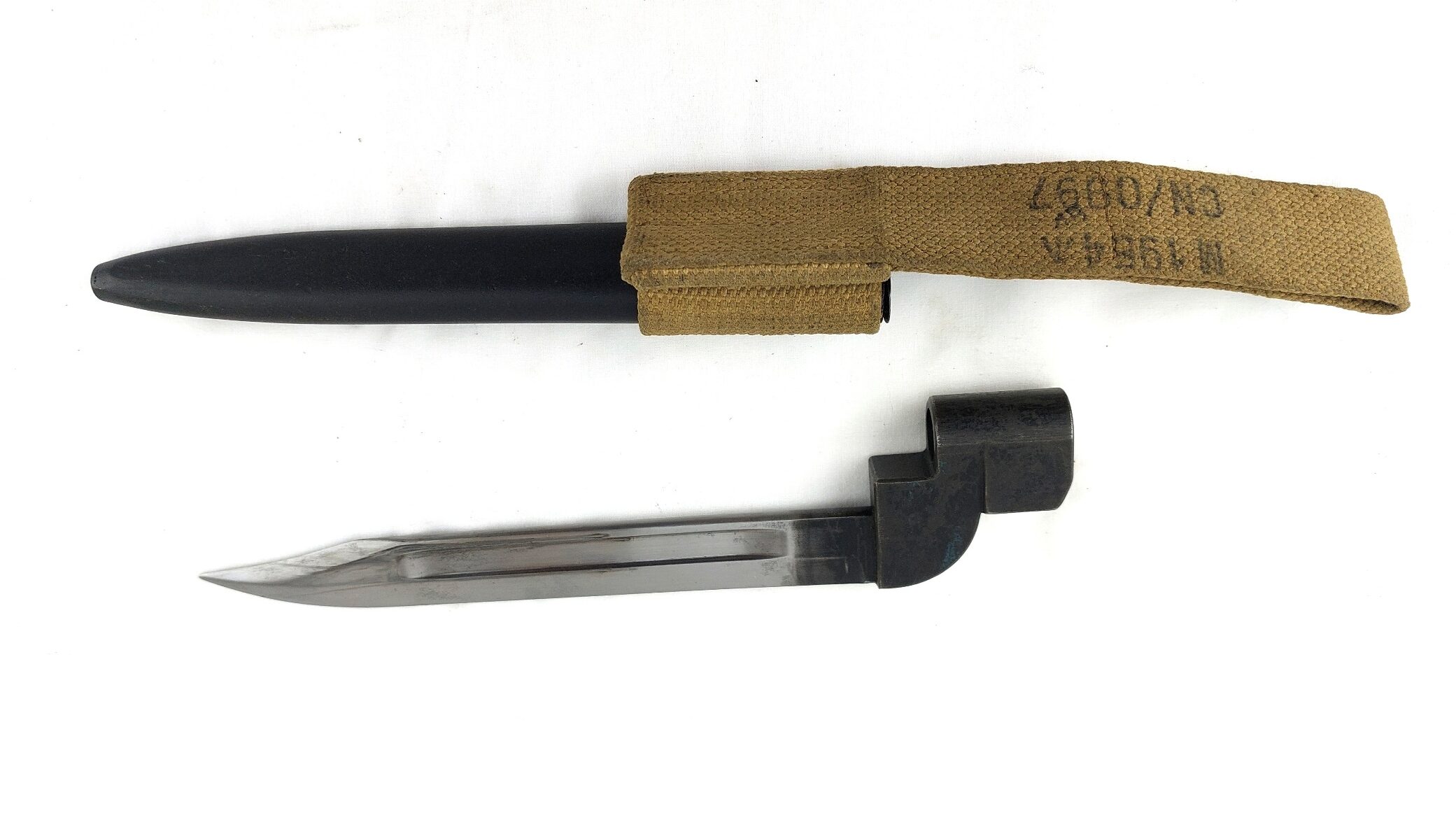
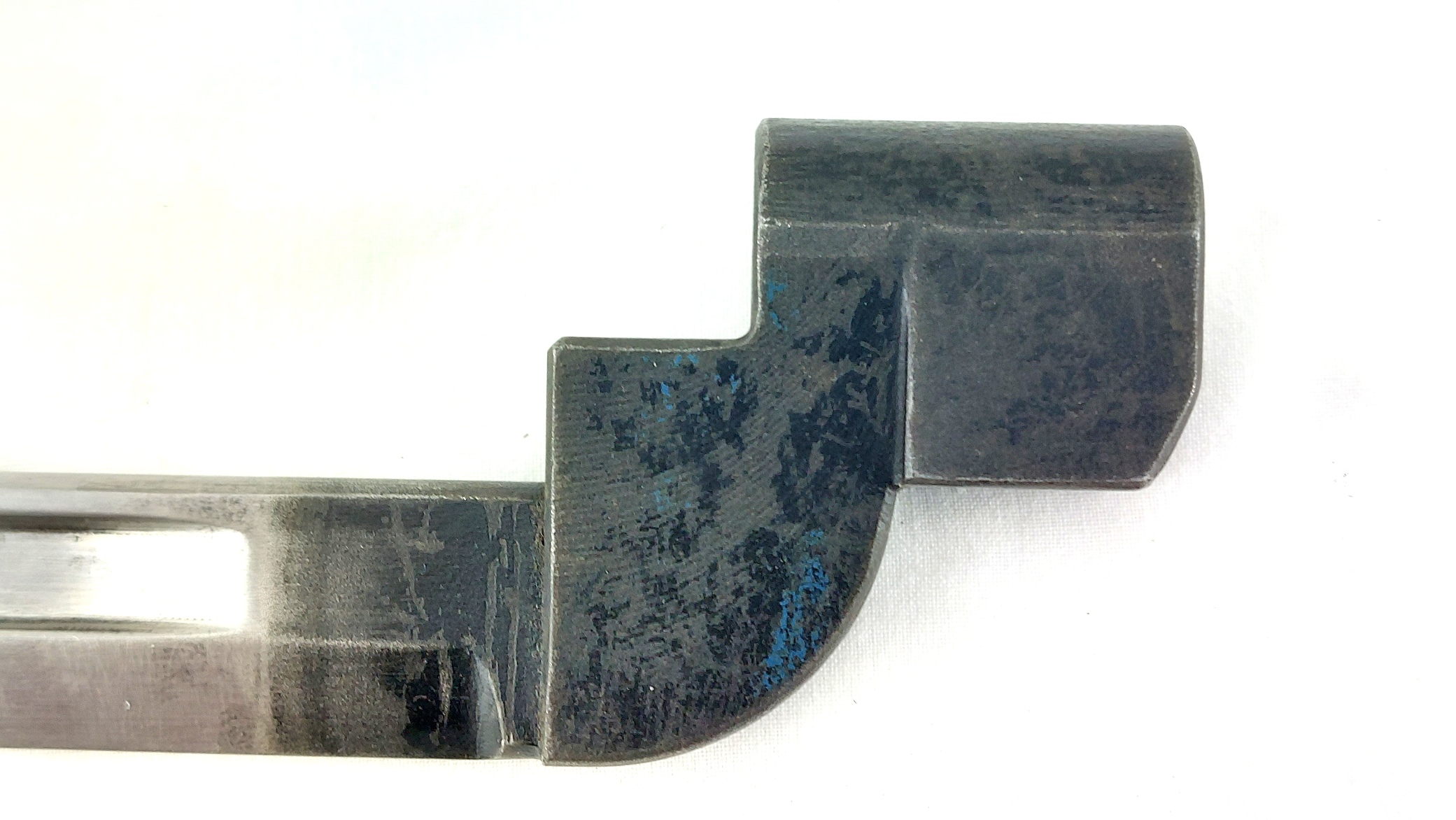
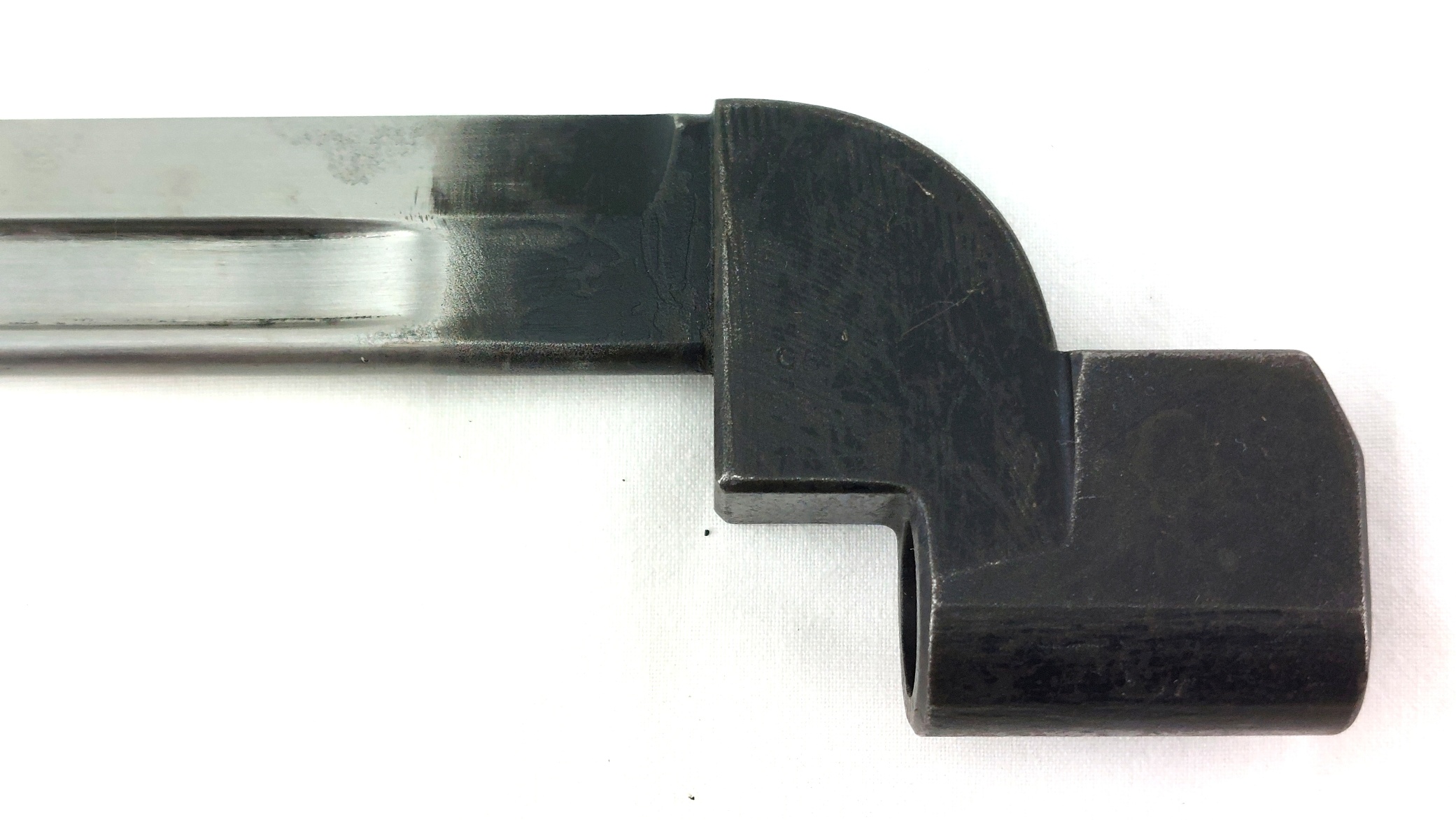
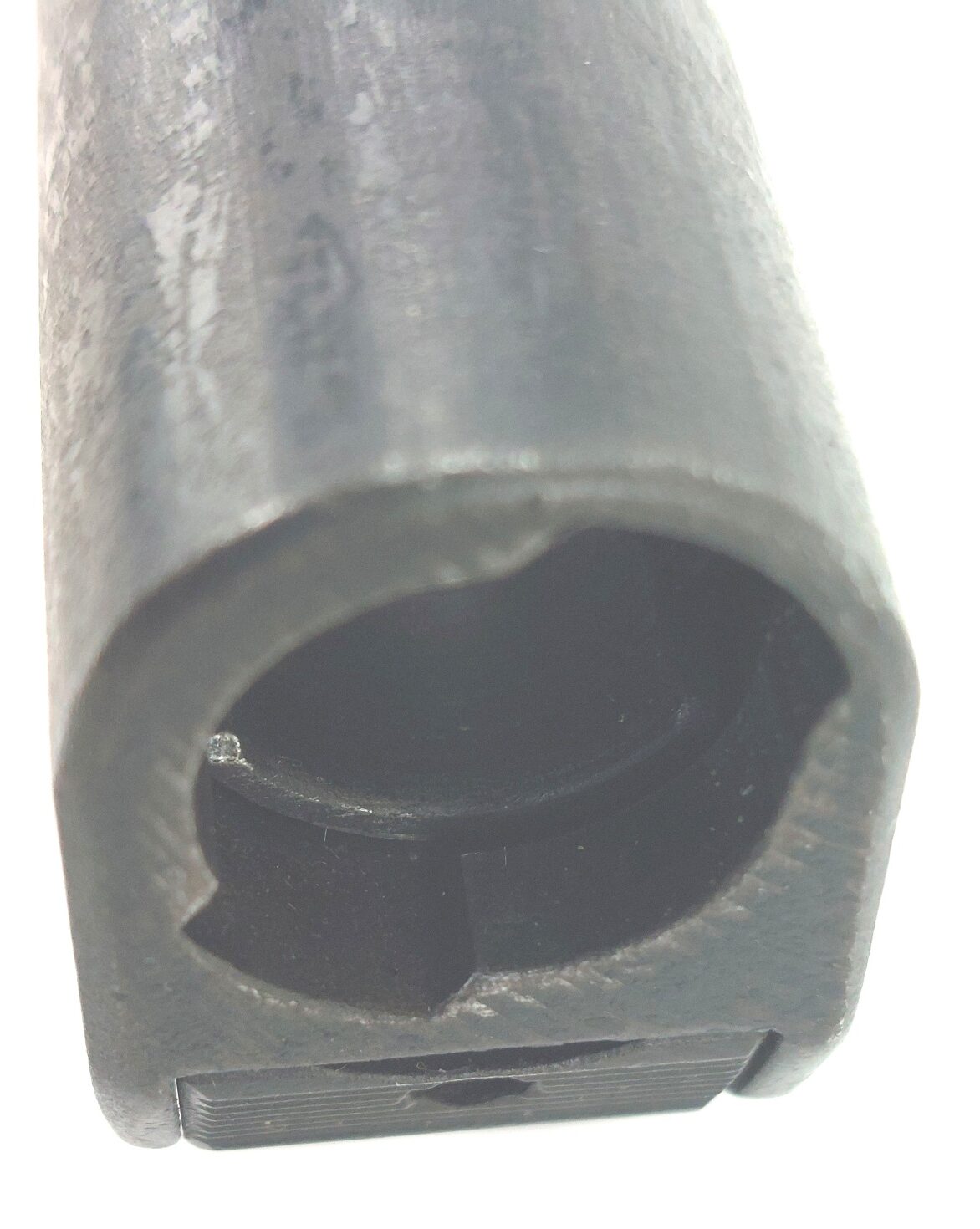
A genuine post-Second World War British No. 9 Mk I socket bayonet for the Lee-Enfield No. 4 rifle, of Royal Ordnance Factory, Poole, manufacture. This example retains its correct clip-point knife blade with broad fuller and heavy socket mounting, together with the appropriate post-war steel scabbard and British Pattern 1937 web bayonet frog.
The No. 9 Mk I was developed as a practical replacement for the much-criticised No. 4 spike bayonet, combining the cutting ability of a knife blade with the proven British socket mounting system. The blade profile closely follows that of the No. 5 Mk I “Jungle Carbine” bayonet, allowing continued use of the established No. 5 pattern scabbard and simplifying post-war supply.
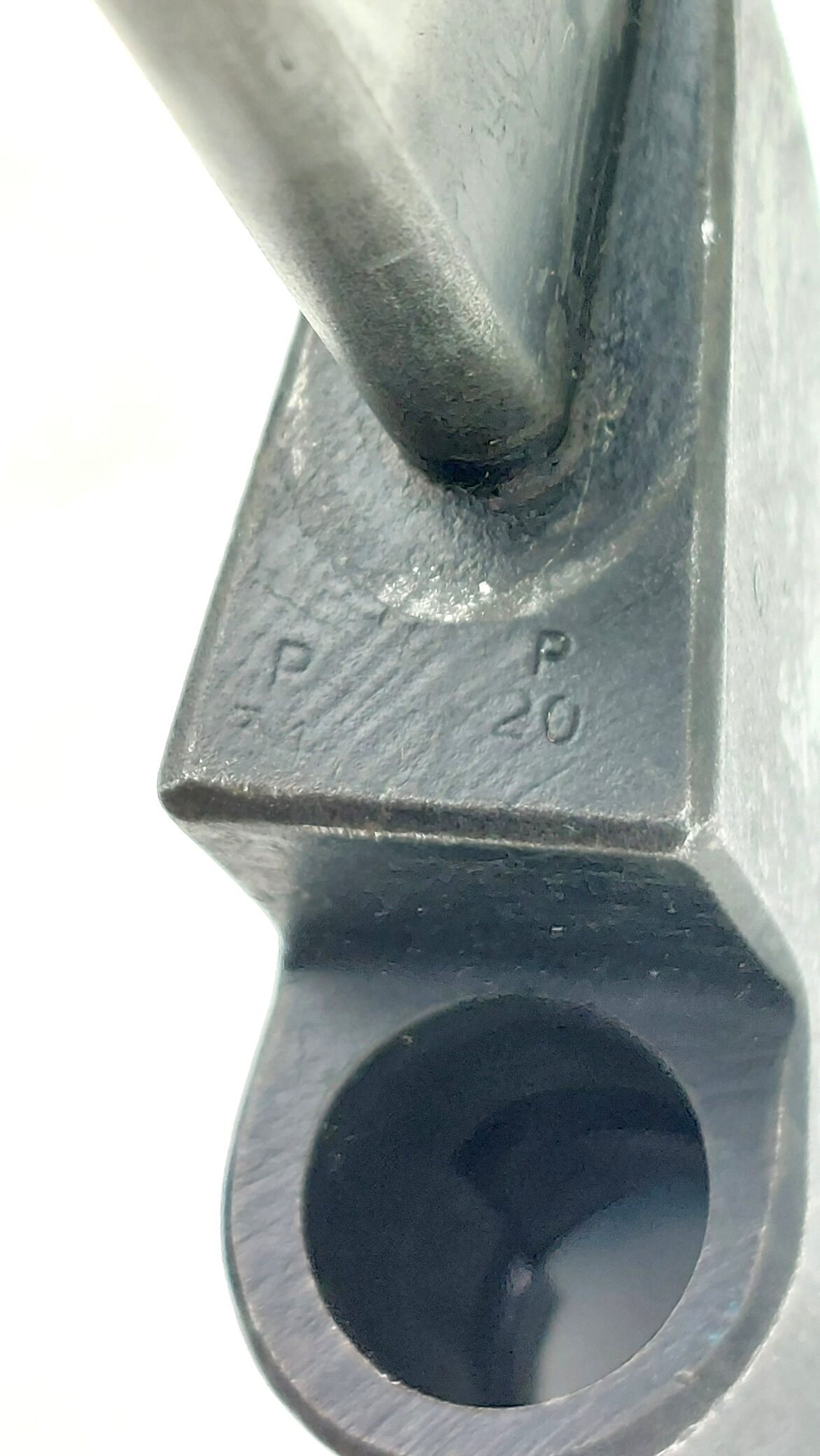
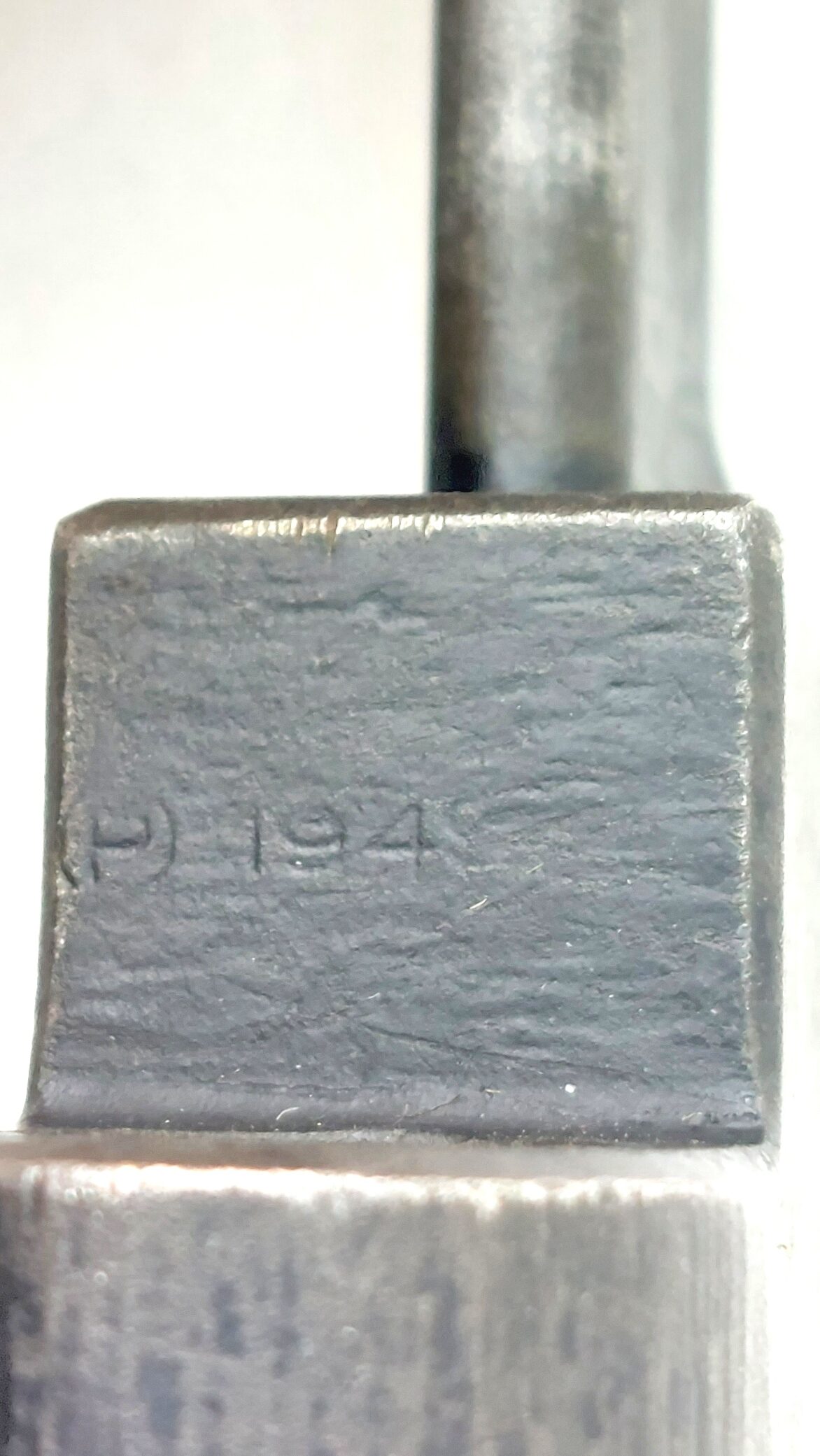
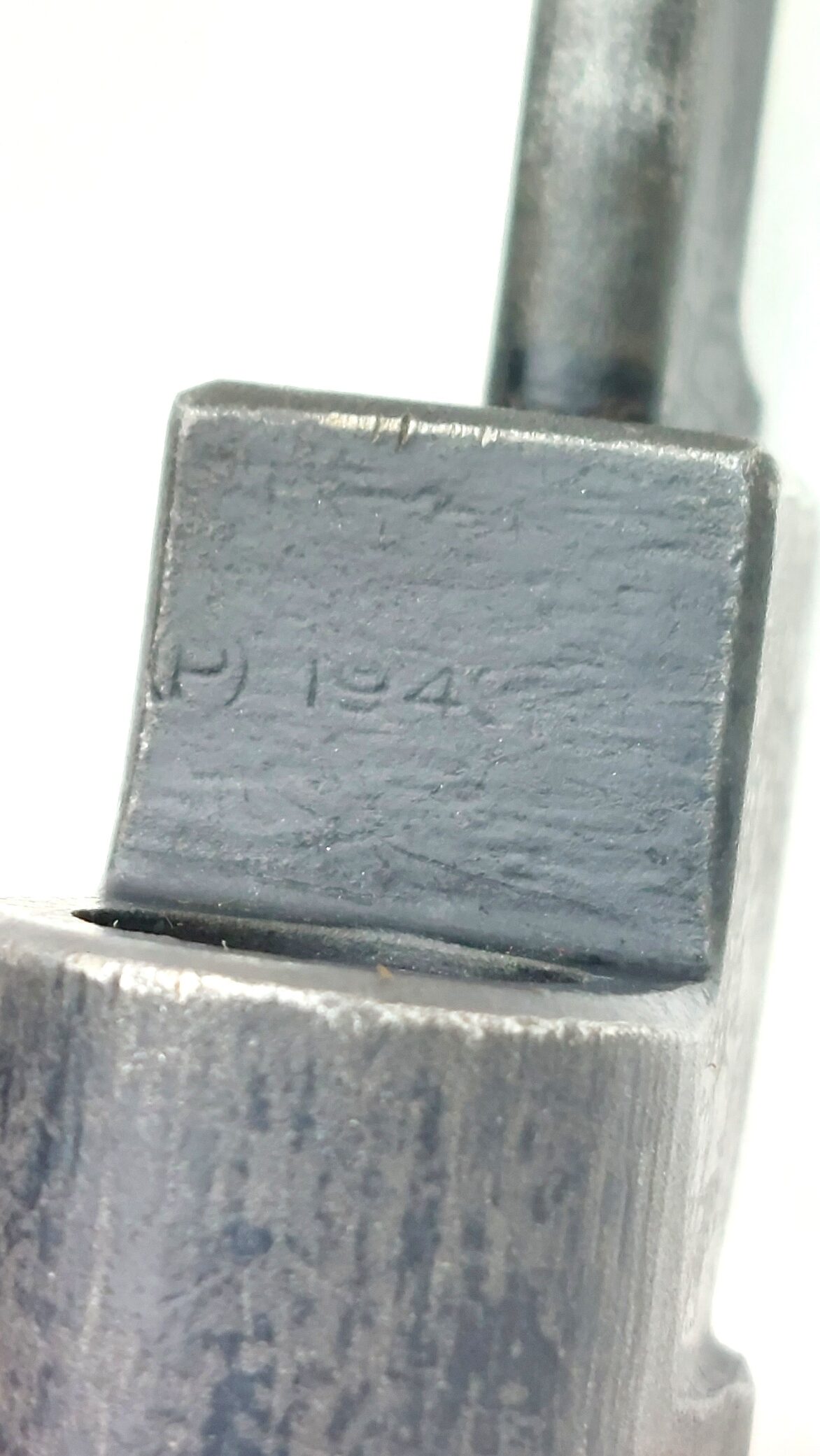
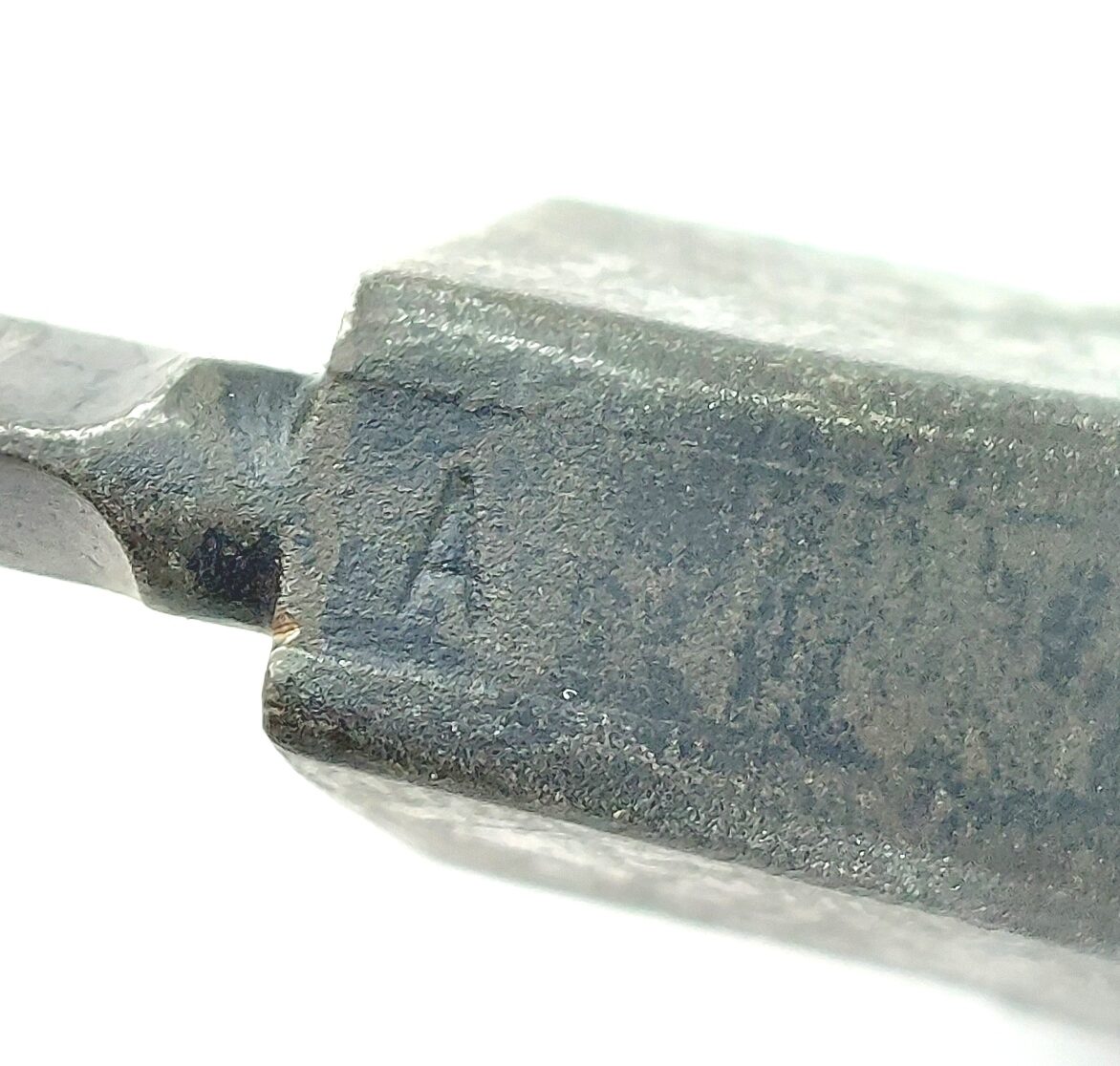
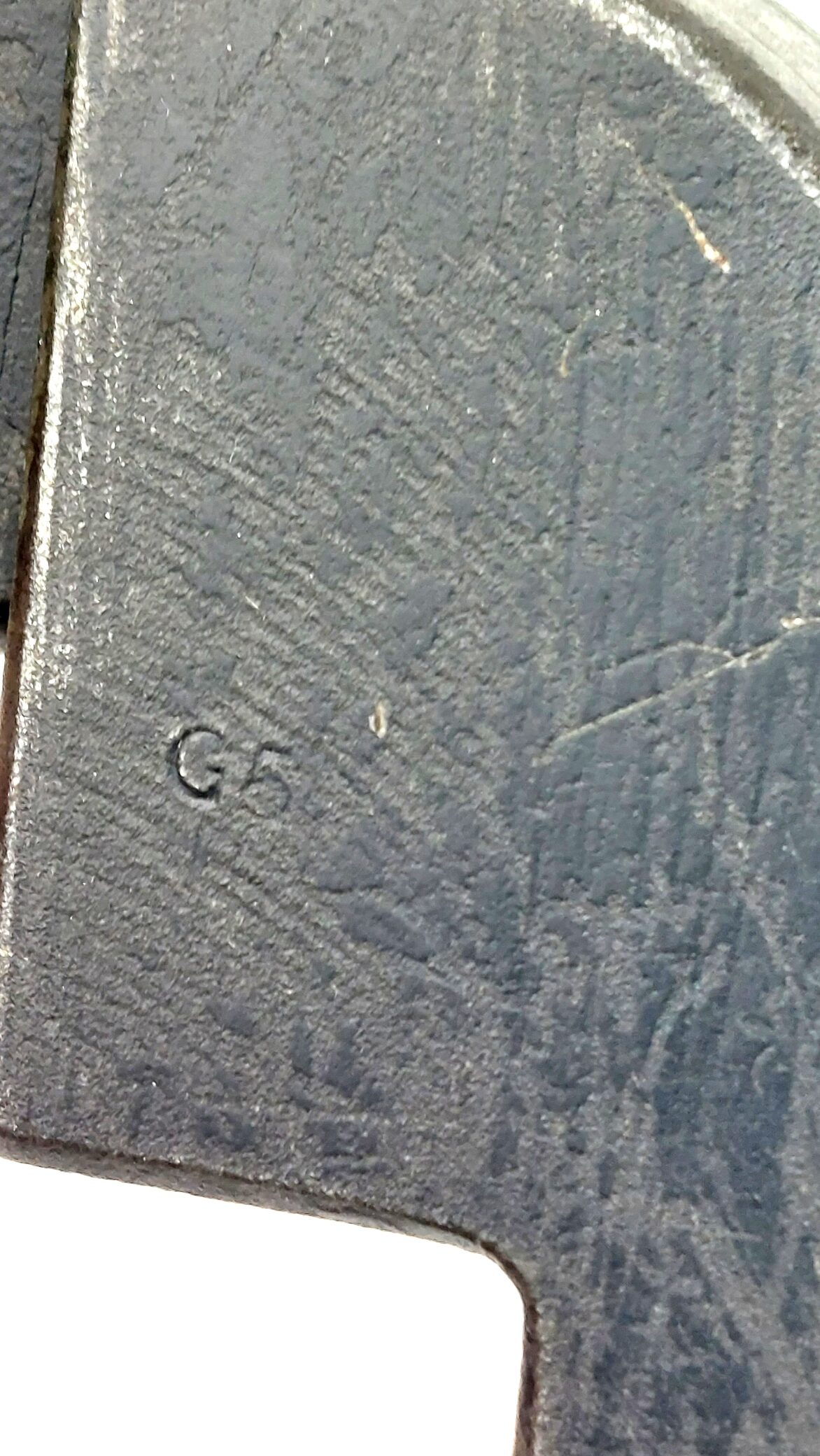
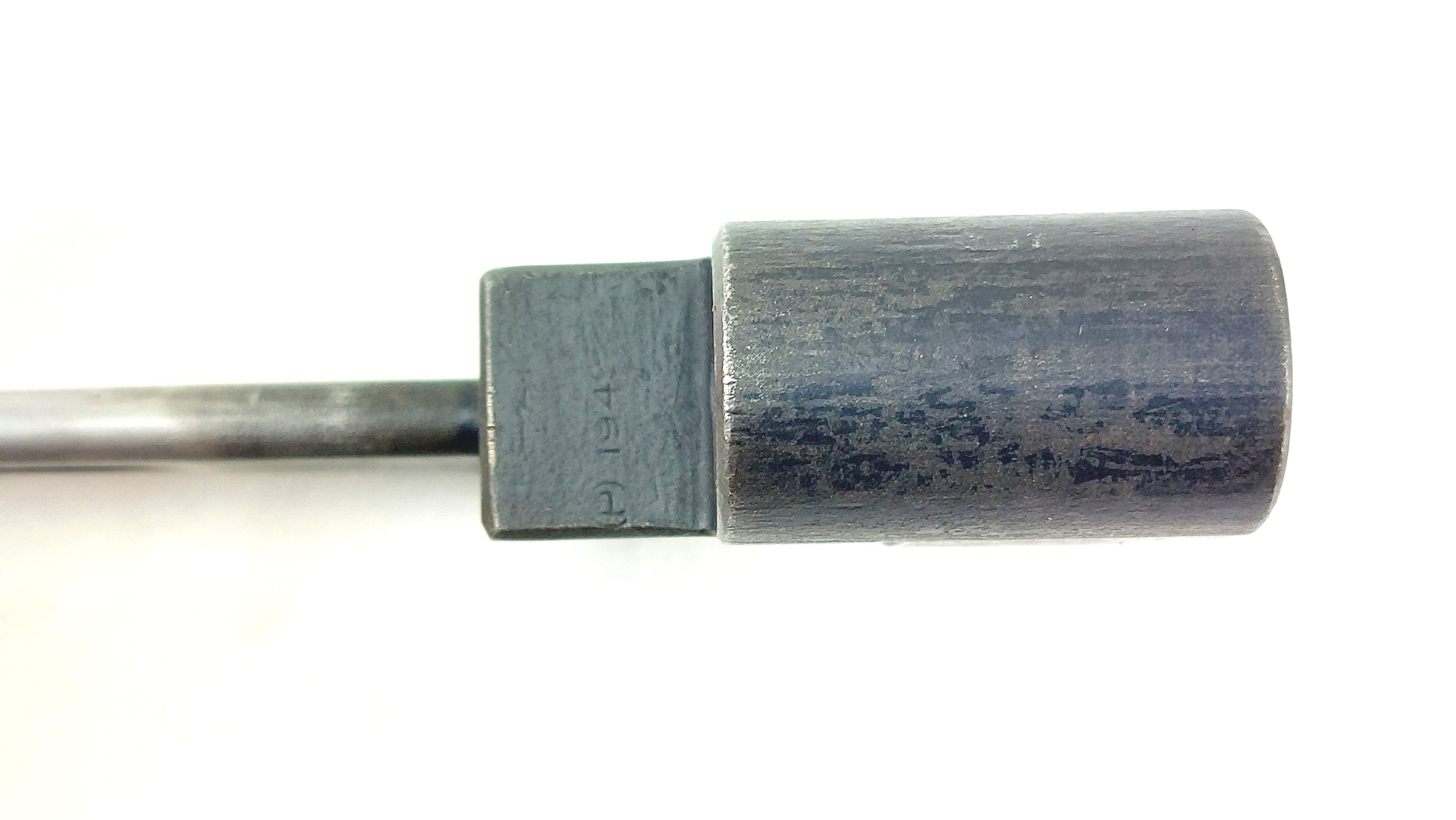
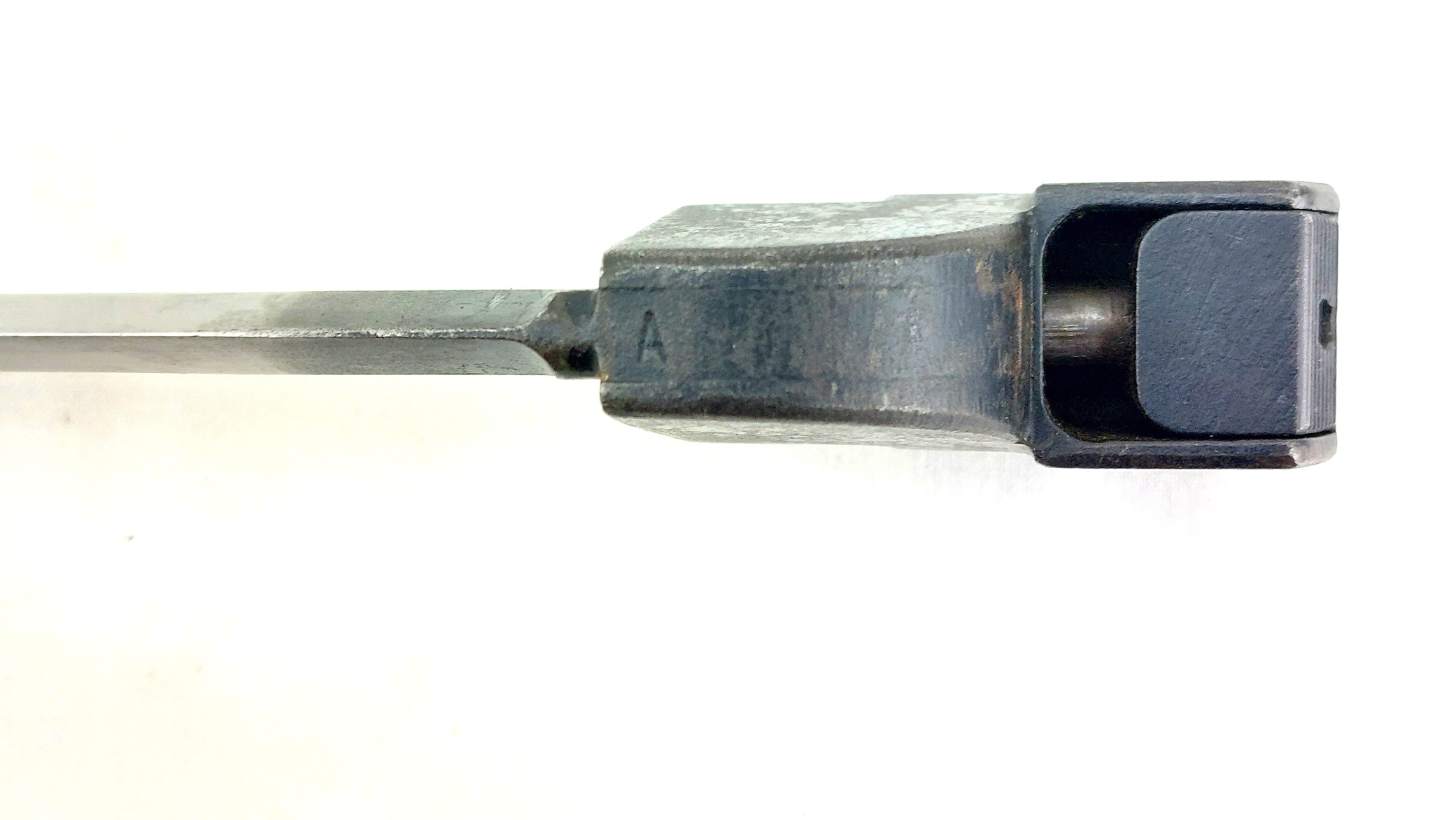
The socket block displays a correct and consistent group of British post-war inspection and production marks associated with Royal Ordnance Factory, Poole manufacture: P within a circle, 1949 – definitive Royal Ordnance Factory, Poole maker’s mark with year of manufacture; G5 – assembly or batch code, consistent with documented ROF Poole production practice; P over indistinct numeral and P over 20 – Poole inspection stamp typical of late-1940s British ordnance inspection and an additional “A” mark is present on the socket, consistent with British assembly or inspection identifiers applied during manufacture or acceptance. All markings are correctly positioned and of appropriate style for British No. 9 Mk I bayonets produced at ROF Poole.
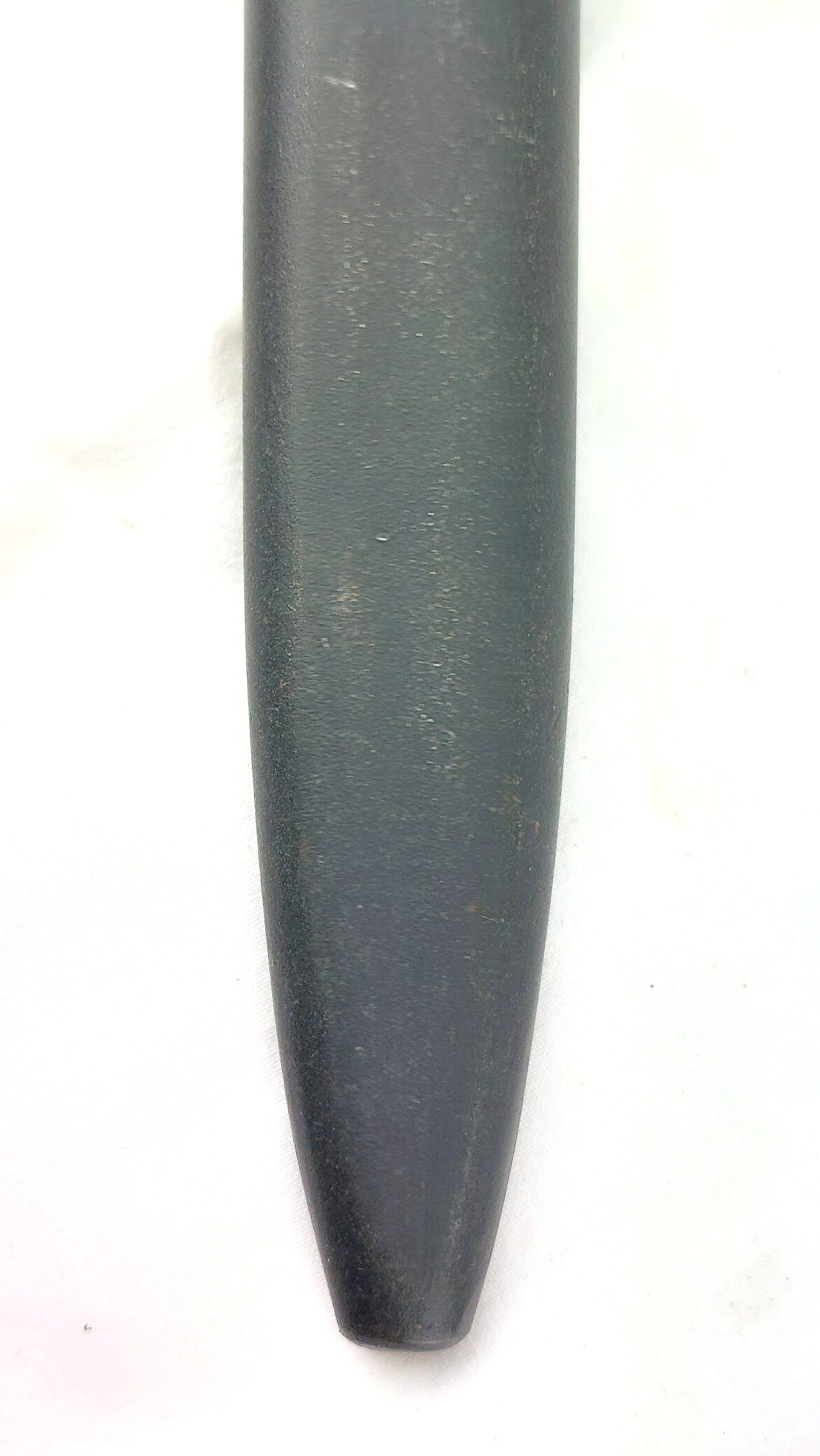
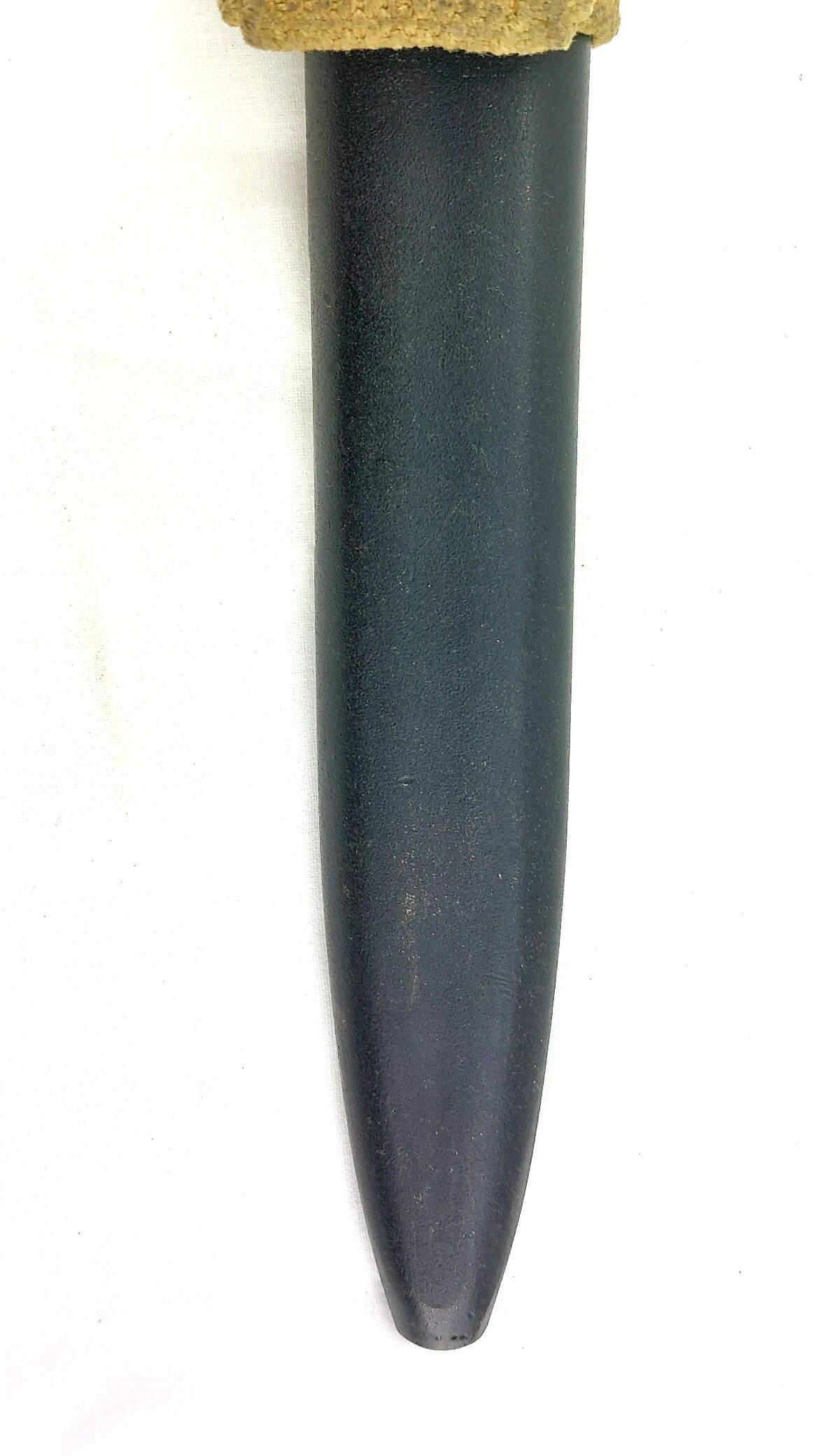
The bayonet is accompanied by its correct steel scabbard, finished in blackened paint, of the type retained for No. 9 service due to the shared blade form with the No. 5 Mk I bayonet.
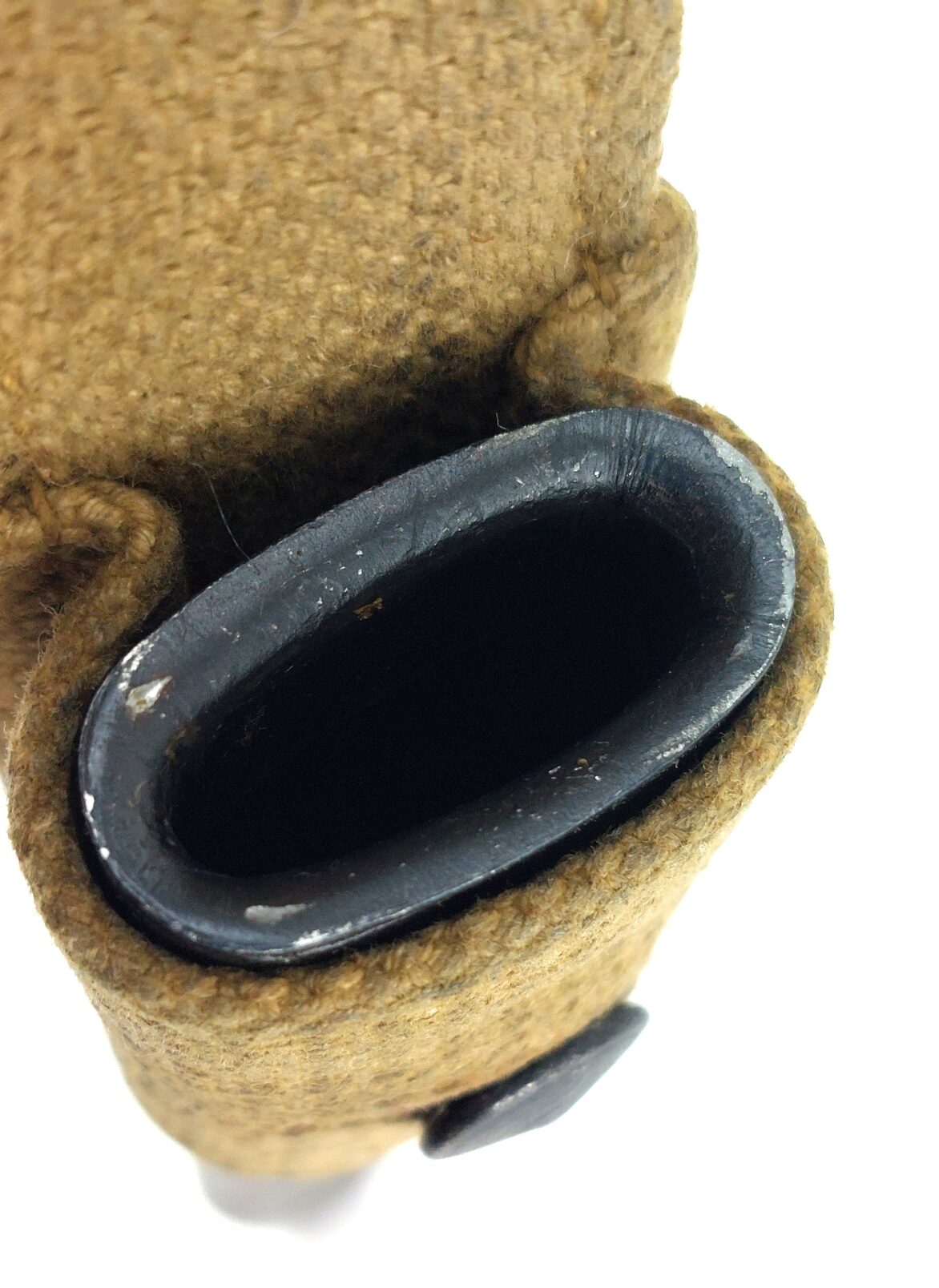
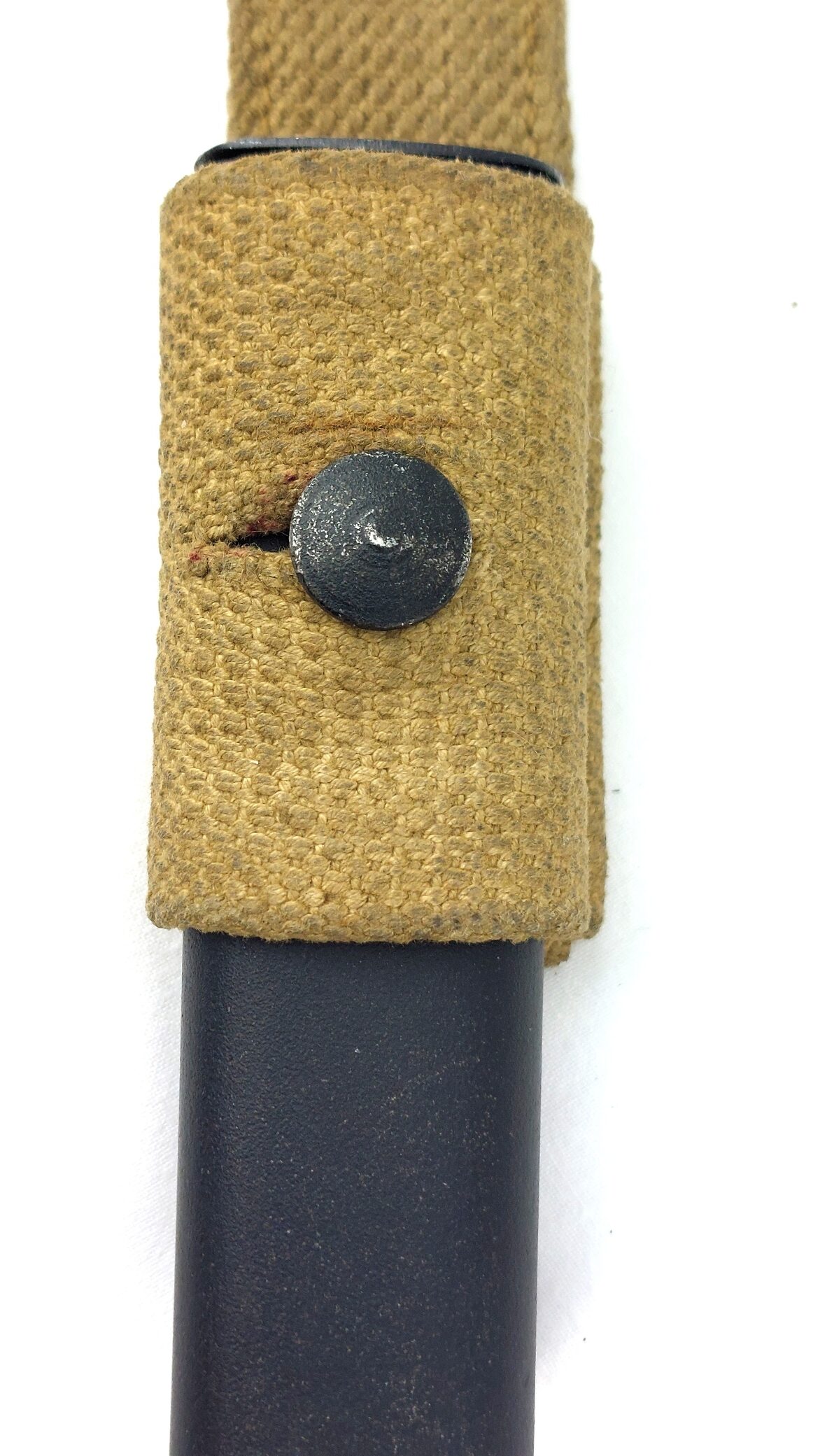
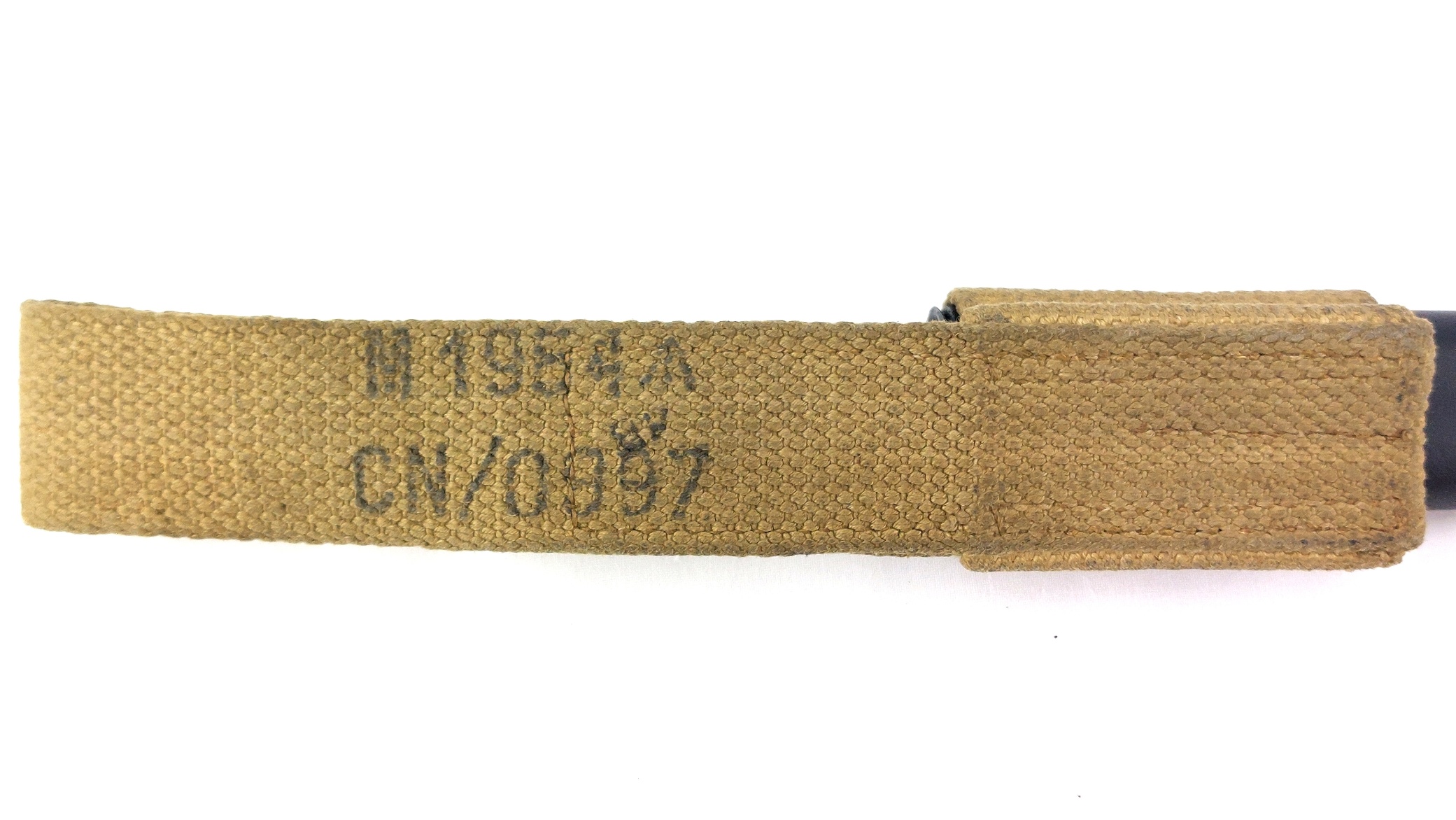
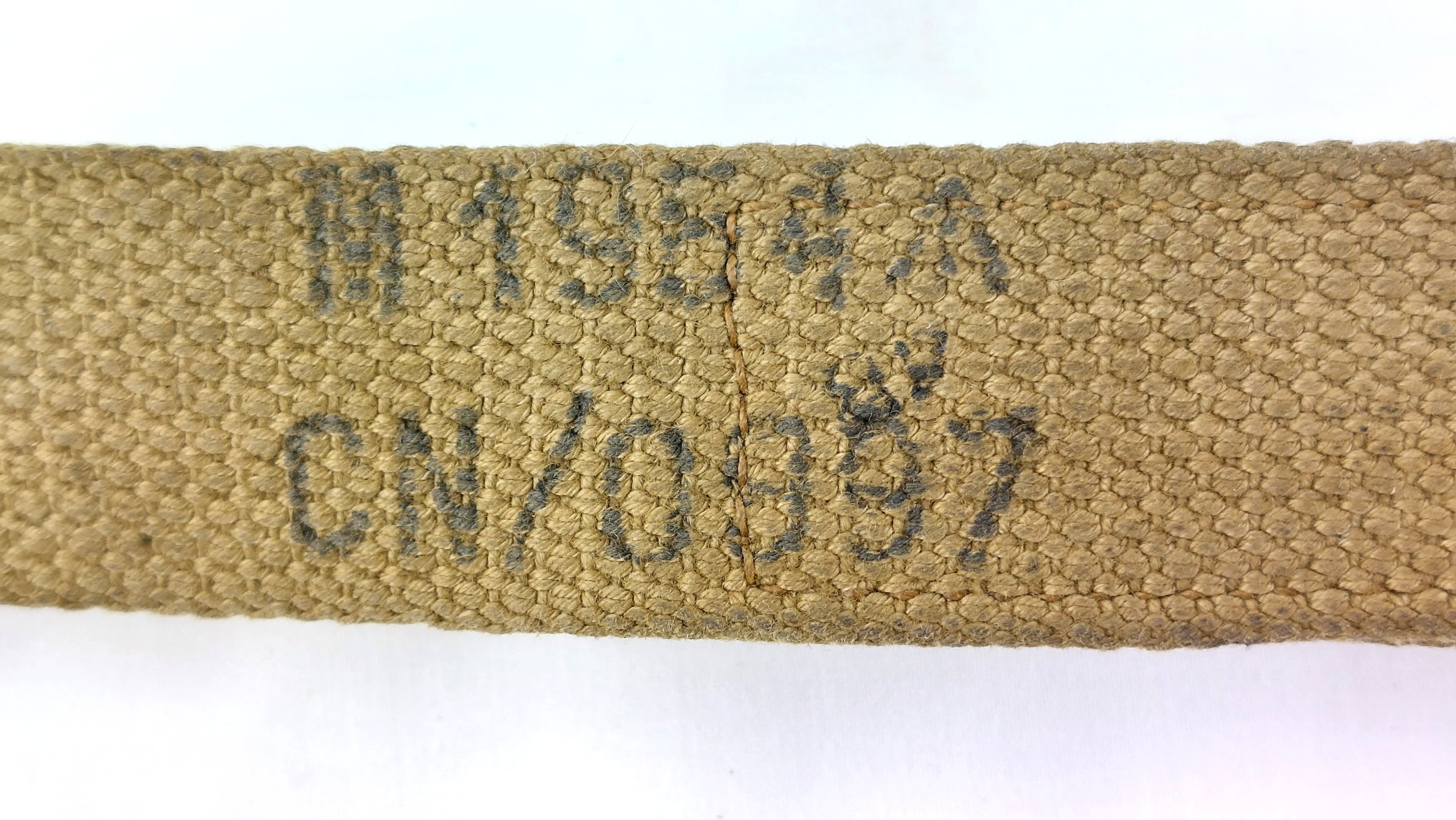
The frog is a British Pattern 1937 web bayonet frog, the later simplified pattern, featuring a single scabbard loop and woven buttonhole. This was the final bayonet frog design introduced for P1937 Web Equipment and was intended for use with both No. 4 and No. 5 pattern bayonet scabbards. The reverse is correctly stamped with the Stores Reference CN/0997, together with a broad arrow ownership mark, and dated M 1954, confirming post-war British service issue.
Approx. Measurements – Blade length: approx. 20 cm. Overall length: approx. 25.5 cm.
Historical Note: The No. 9 Mk I bayonet represents the final British solution to the long-standing dissatisfaction with the No. 4 spike bayonet. Following the limited and ultimately unsuccessful adoption of the more complex No. 7 Mk I/L, the War Department pursued a simpler, economical design that could be produced rapidly and make use of existing components. By mating a socket assembly to a modified No. 5 Mk I blade, the No. 9 Mk I provided an effective cutting bayonet while retaining compatibility with established scabbards.
Production began as early as 1947—prior to formal approval—highlighting the urgency to move away from the spike design. Royal Ordnance Factory, Poole, undertook the earliest and most significant production runs, with later manufacture carried out overseas. British-made examples, particularly those associated with ROF Poole production, are regarded as the earliest and most desirable variants of the pattern.
*Condition* The bayonet is in very good service condition overall. The blade remains straight, with a clean, even profile and clearly defined fuller, showing light surface wear and handling marks consistent with service use but no active corrosion or edge damage. The point remains intact and well-formed. The socket and elbow retain their original darkened finish with scattered rubbing and minor surface wear, and all inspection and assembly markings remain legible. The steel scabbard is sound and complete, retaining much of its original blackened finish, with expected scuffs, small losses, and handling wear from service use. No dents or structural damage are observed. The Pattern 1937 web bayonet frog is complete and original, of the later simplified pattern. The webbing shows honest service wear, softening, and light staining consistent with age, with no fraying or structural weakness. The woven buttonhole remains intact and functional. Stores reference markings, broad arrow, and 1954 date are present and readable. Please see photographs as part of the condition report.
Overall, a well-preserved and correct post-war set, displaying consistent wear across all components and remaining in honest, unmolested condition.
*In order to complete the online purchase we will require a picture/scan of a photo ID (Driving Licence, Passport or an official document with a recent picture). If you don't posses any such document please call to buy. If we consider that the proof of ID is incorect or insuficient, we reserve the right to cancel the transaction.
*We also reserve the right to cancel the transaction with a full refund if there is any suspicion that the provided item will be used in any way contrary to the laws and legislation of UK.