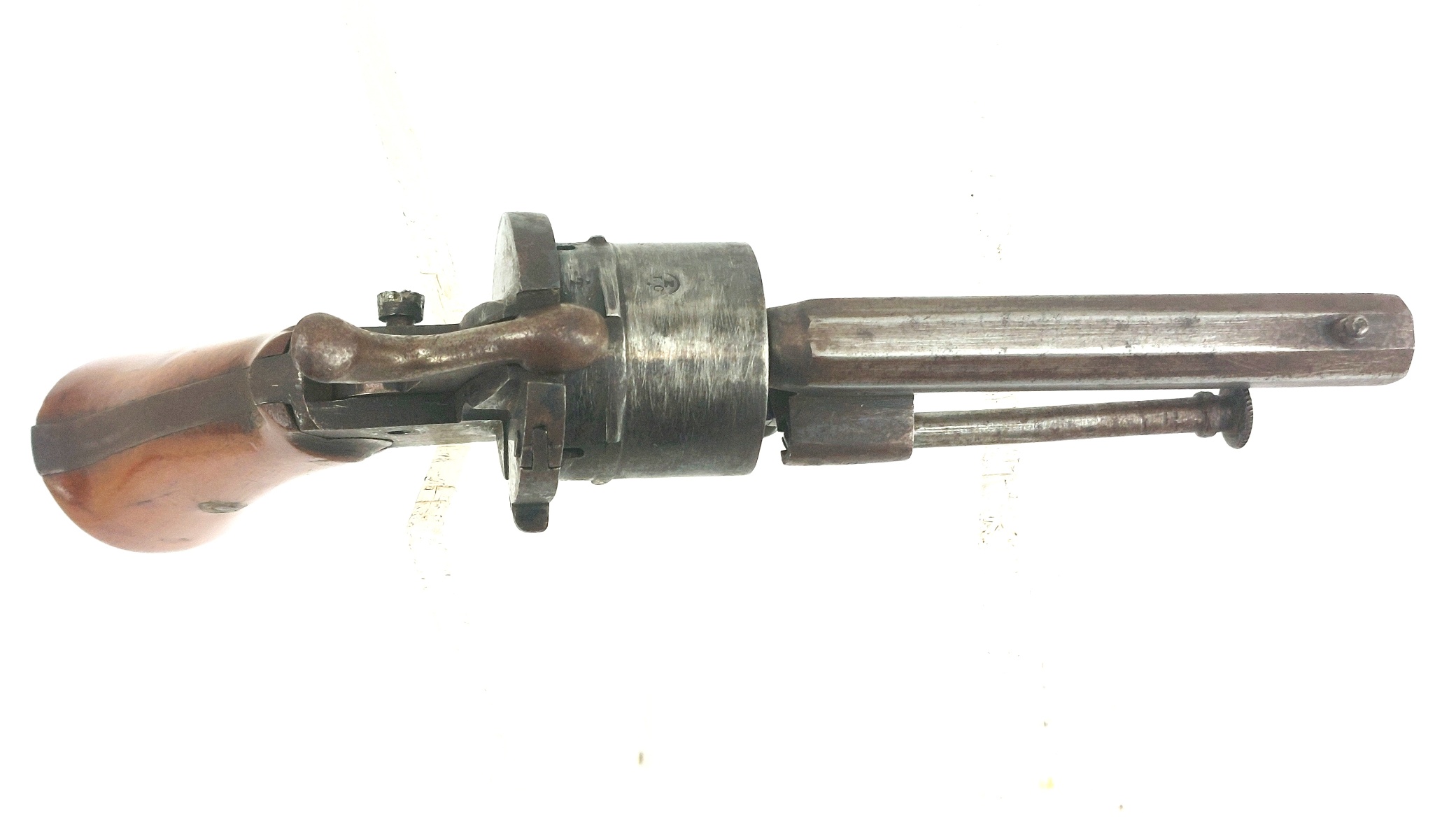
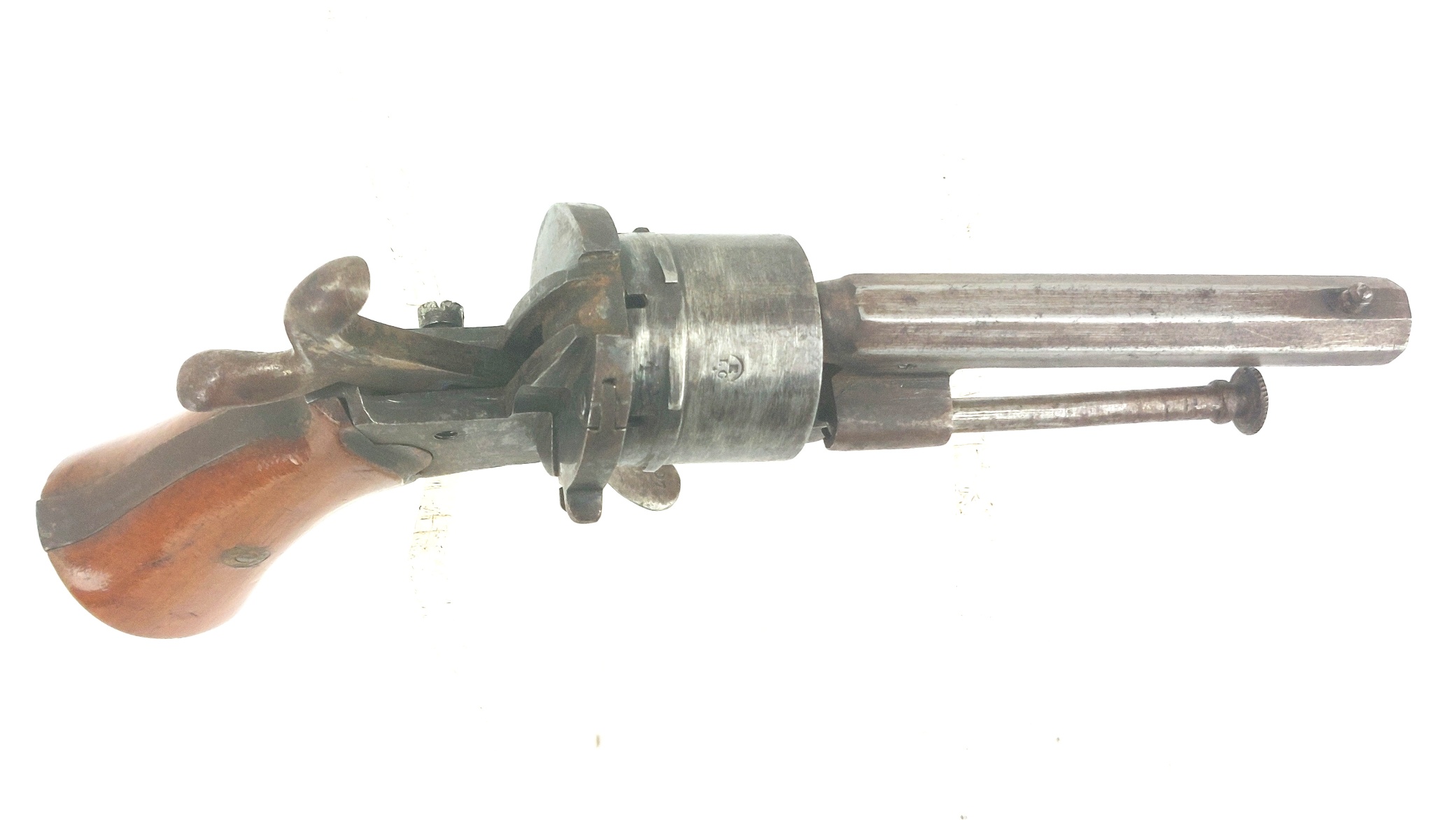
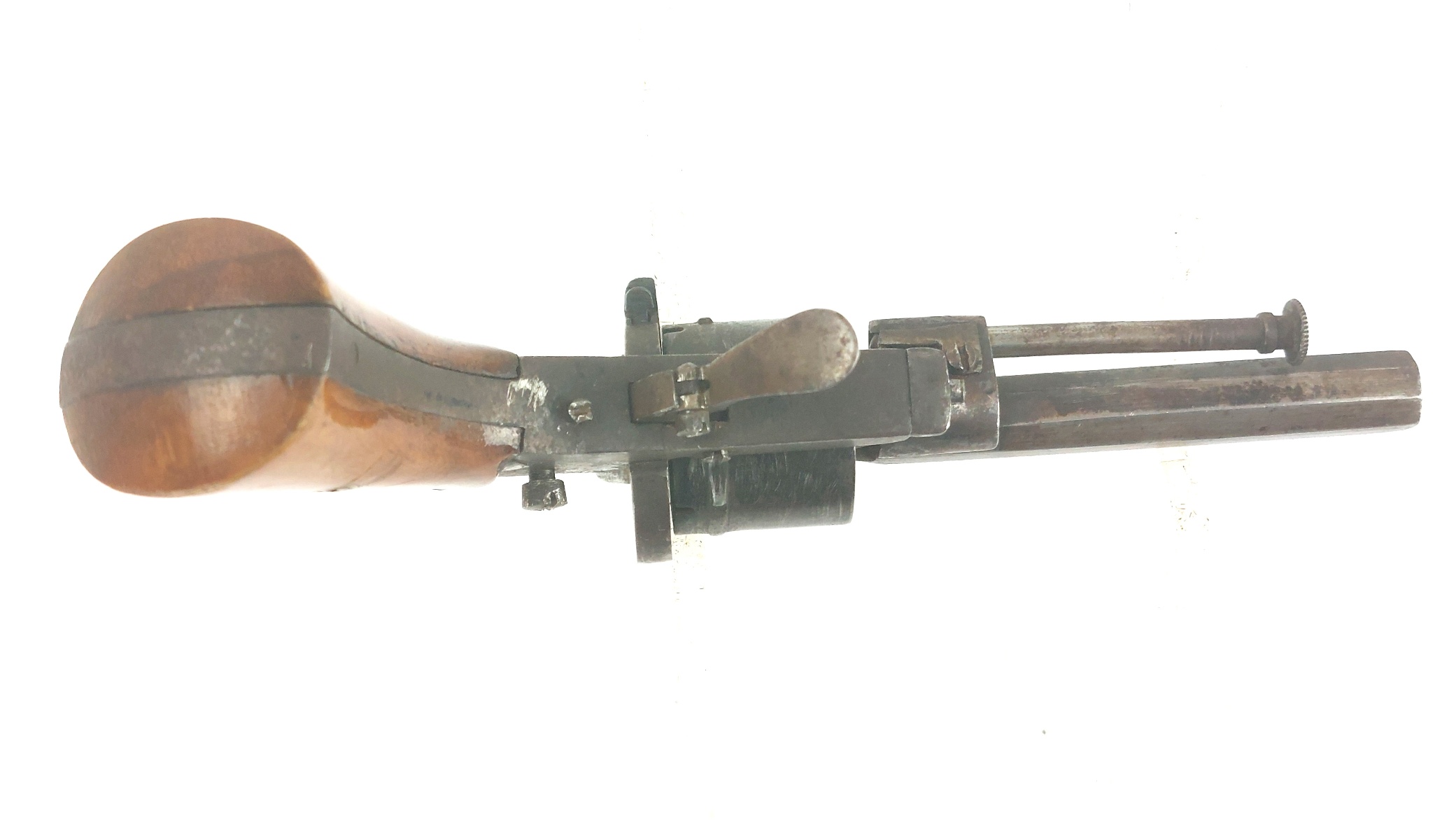
*Belgium, c.1860–1880 .380 Belgian Six-Shot Pinfire Pocket Revolver, With Original 1925 Portsmouth Firearms Act Summons (Named to This Revolver)*
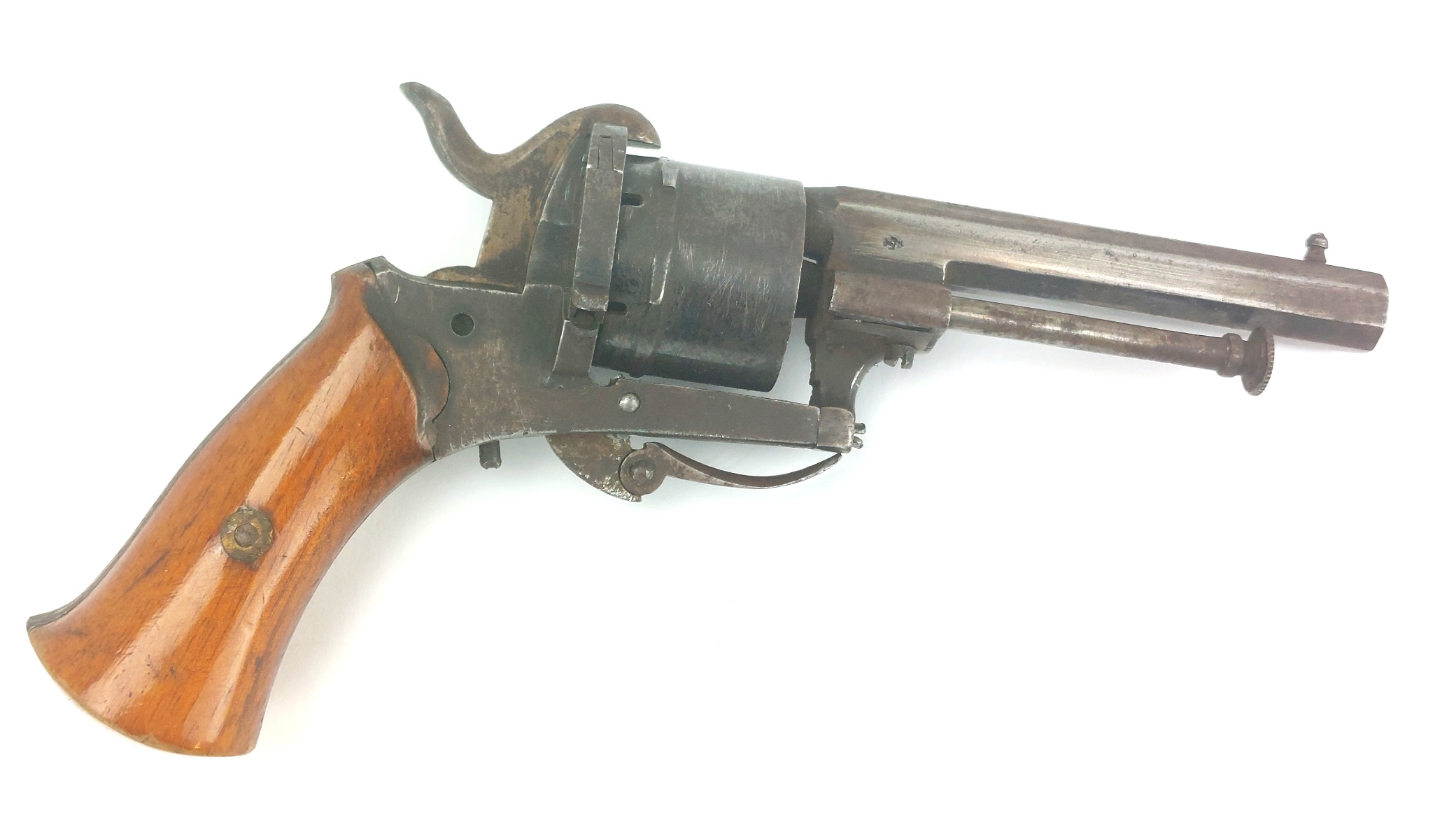
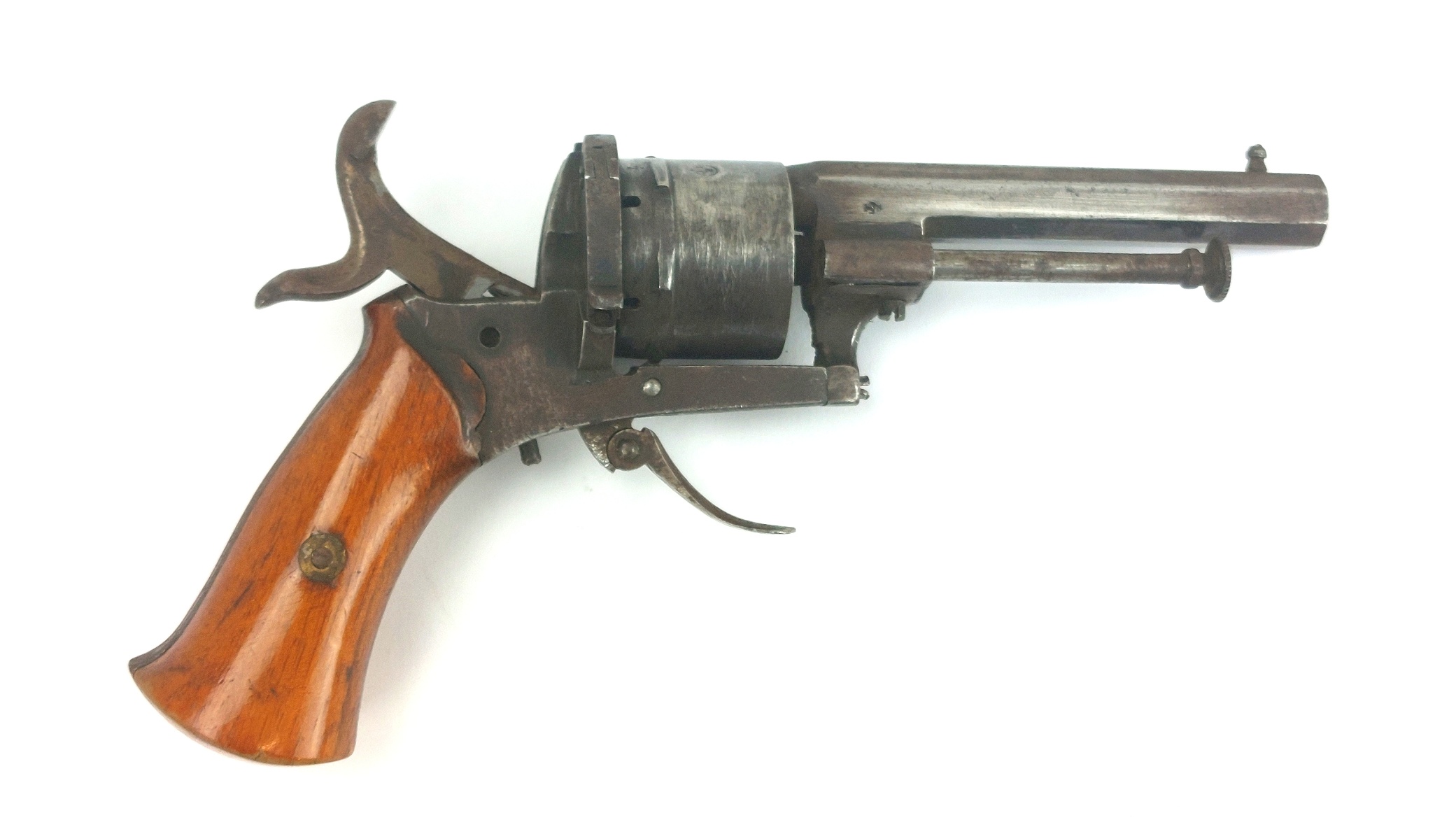
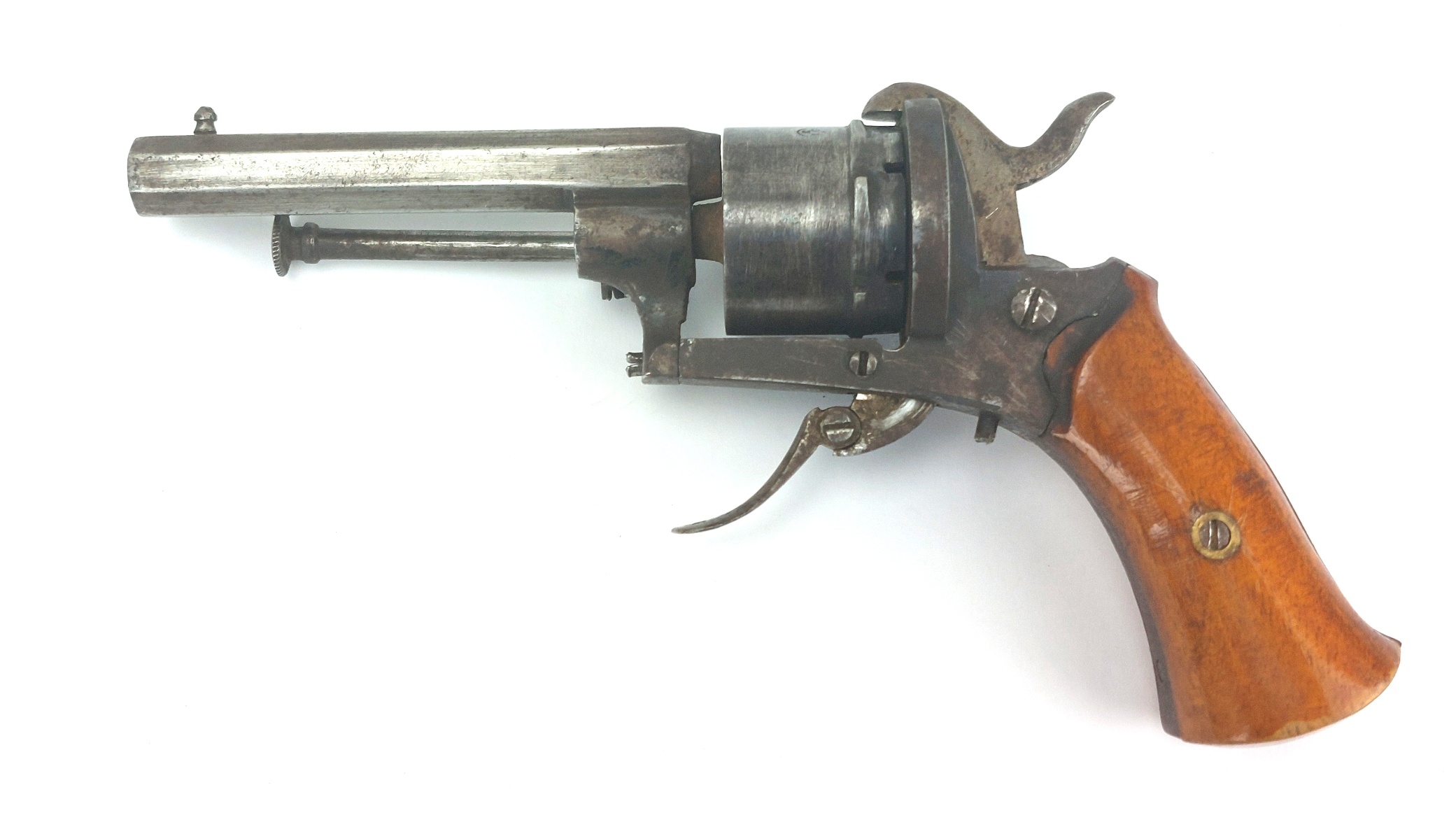
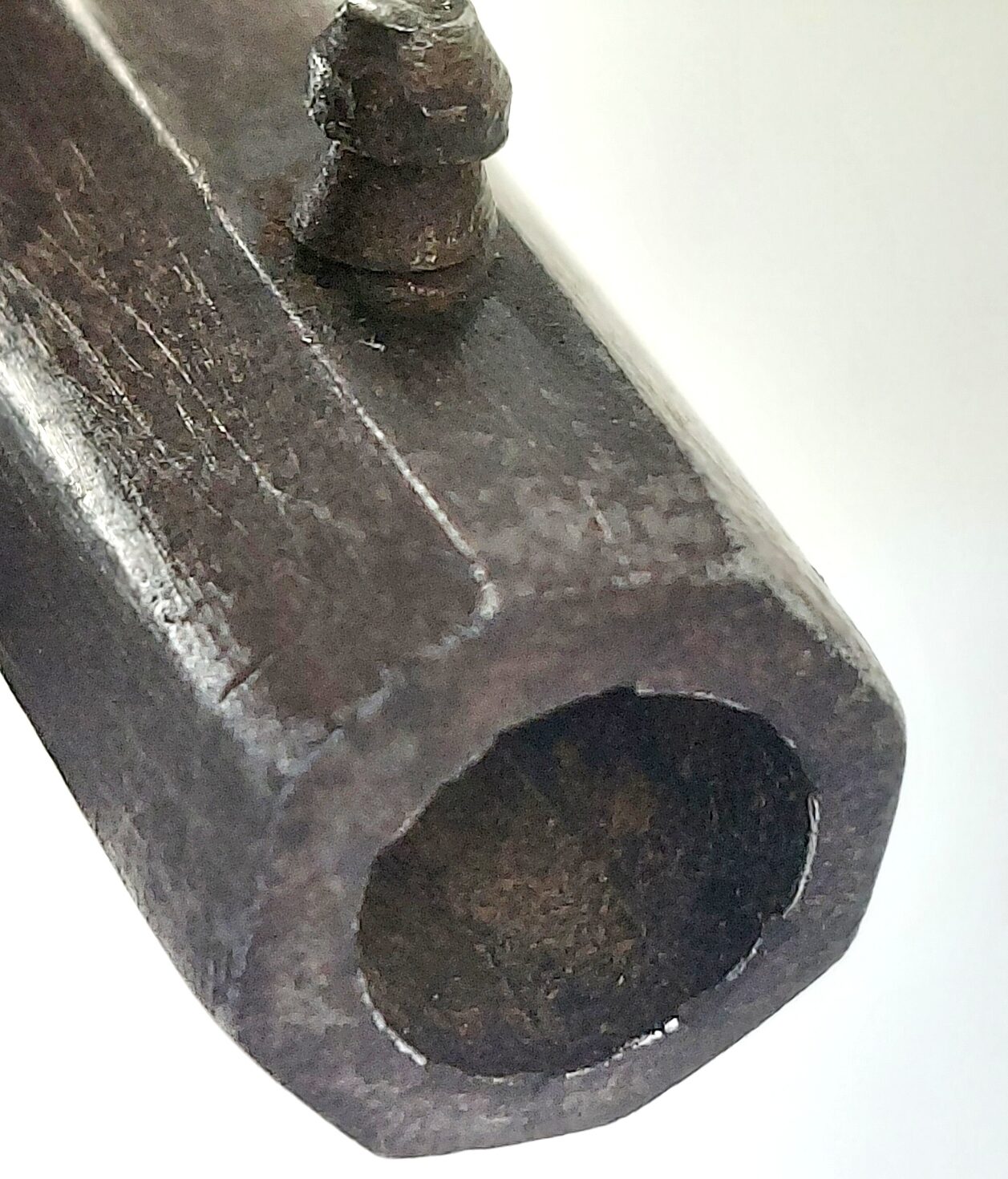
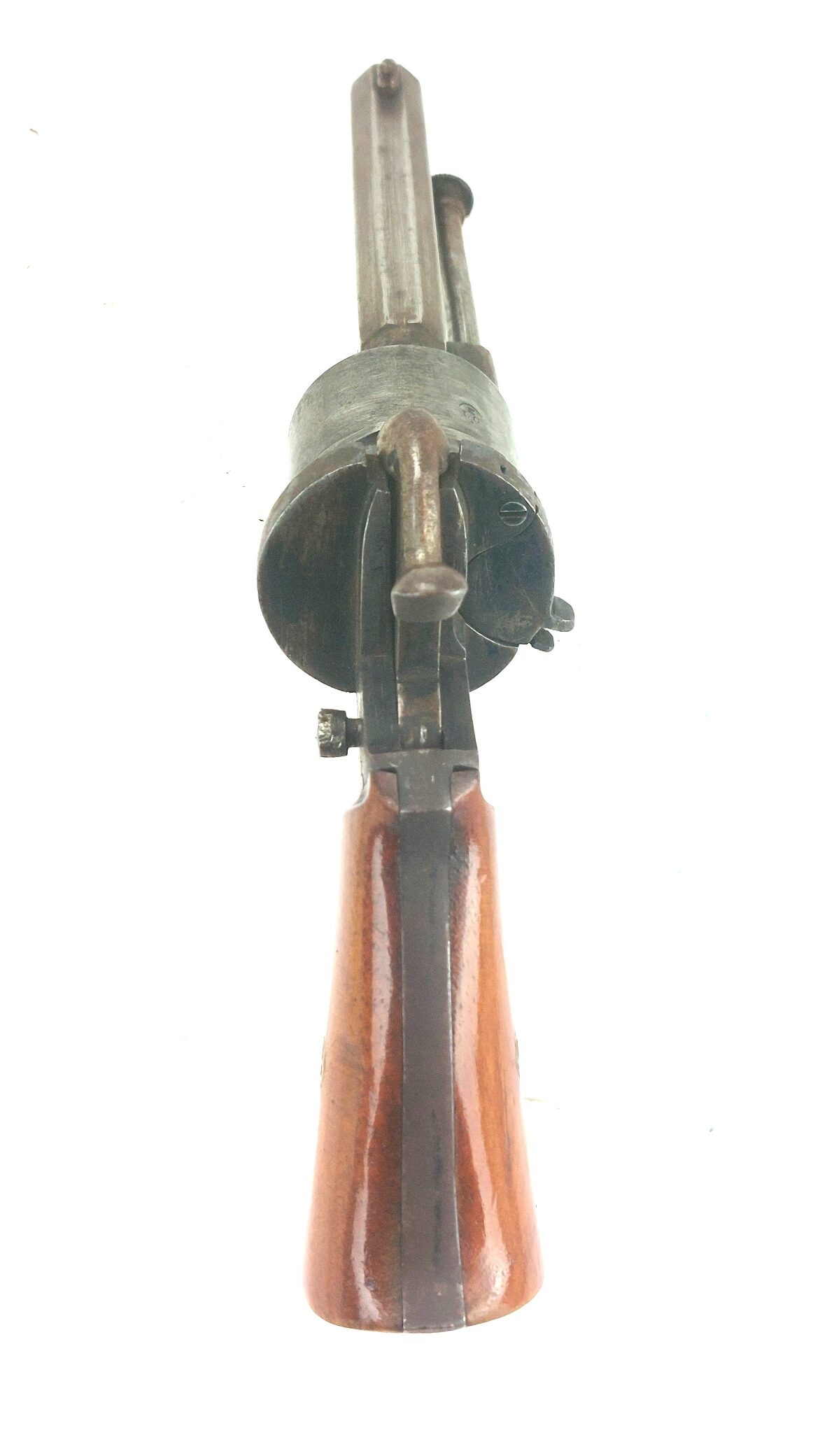
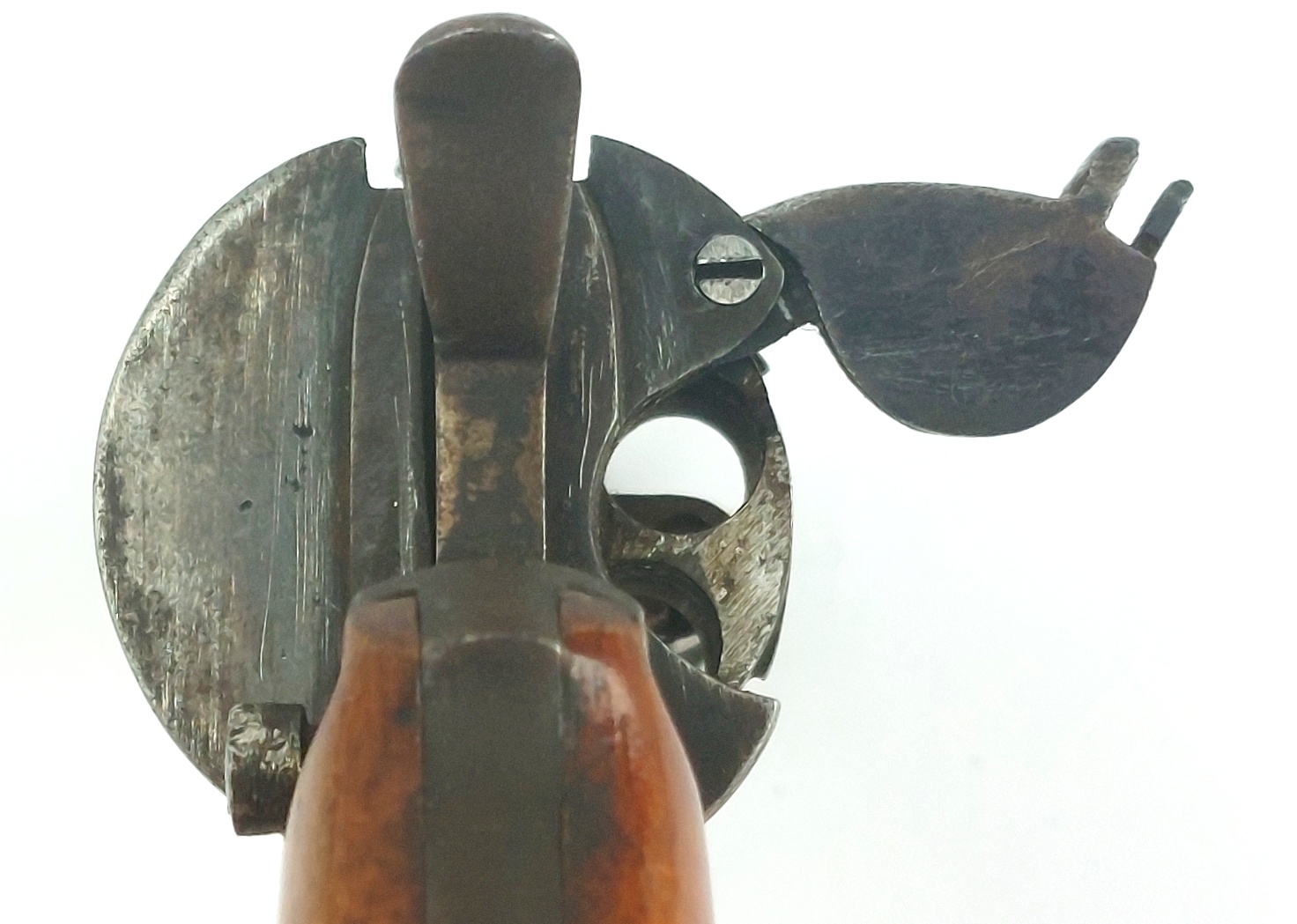
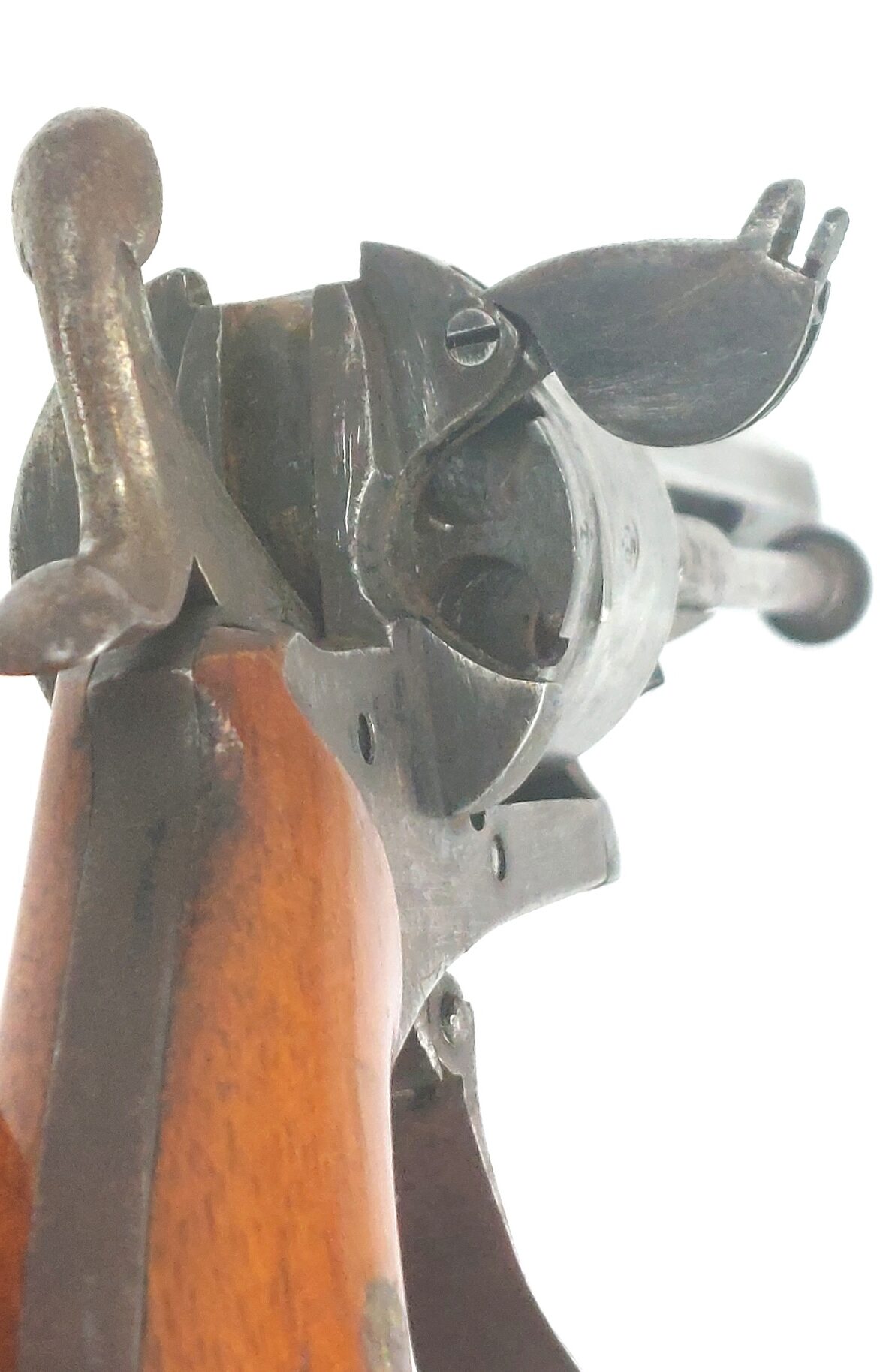
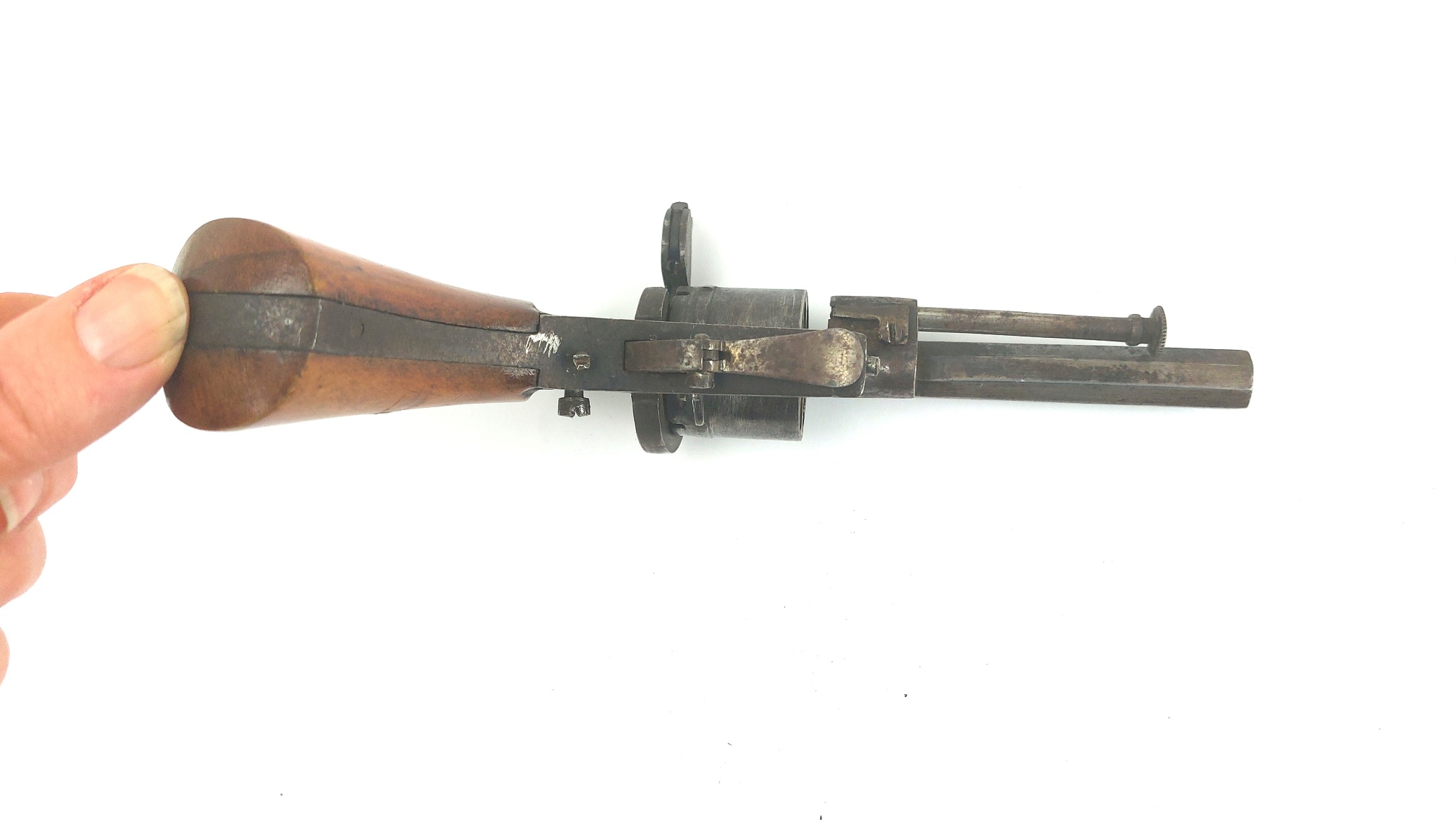
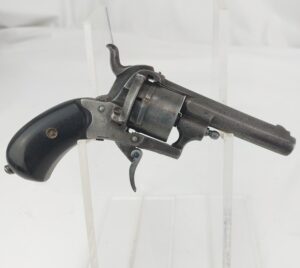
A Belgian-made solid-frame six-shot pinfire pocket revolver of obsolete .380 calibre, measuring approximately 17.3cm overall with an 8.4cm octagonal barrel. The revolver is constructed with a blued steel frame and cylinder, exposed hammer, folding trigger, and varnished hardwood grips secured by a single transverse screw.
The revolver operates on the pinfire ignition system, identifiable by the lateral firing pin and corresponding pin cut-outs in the cylinder, a system widely used in Europe from the mid-19th century before being superseded by rimfire and centre-fire designs. The pinfire system itself renders the revolver technologically obsolete, and suitable ammunition has long ceased to be commercially produced.
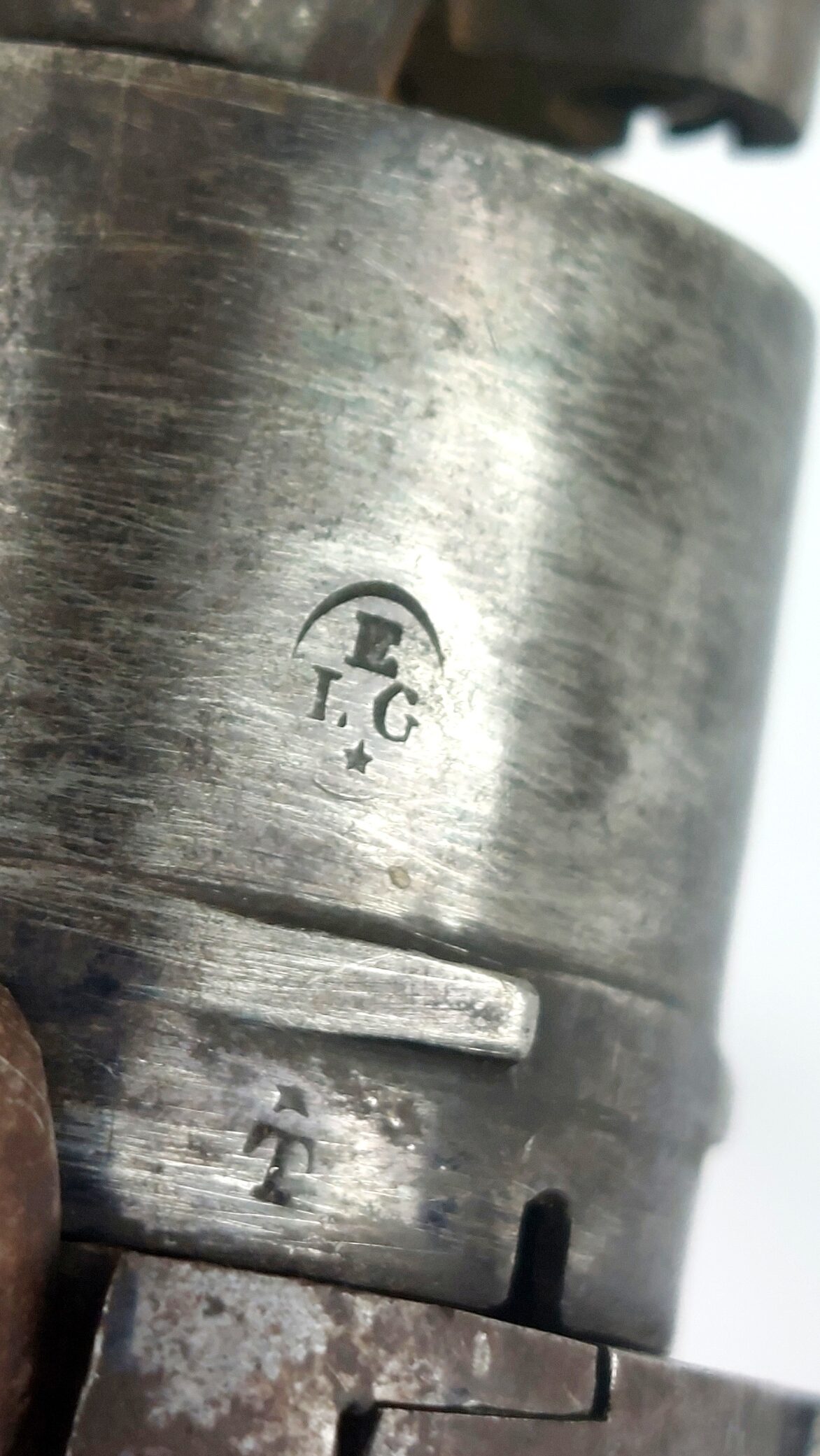
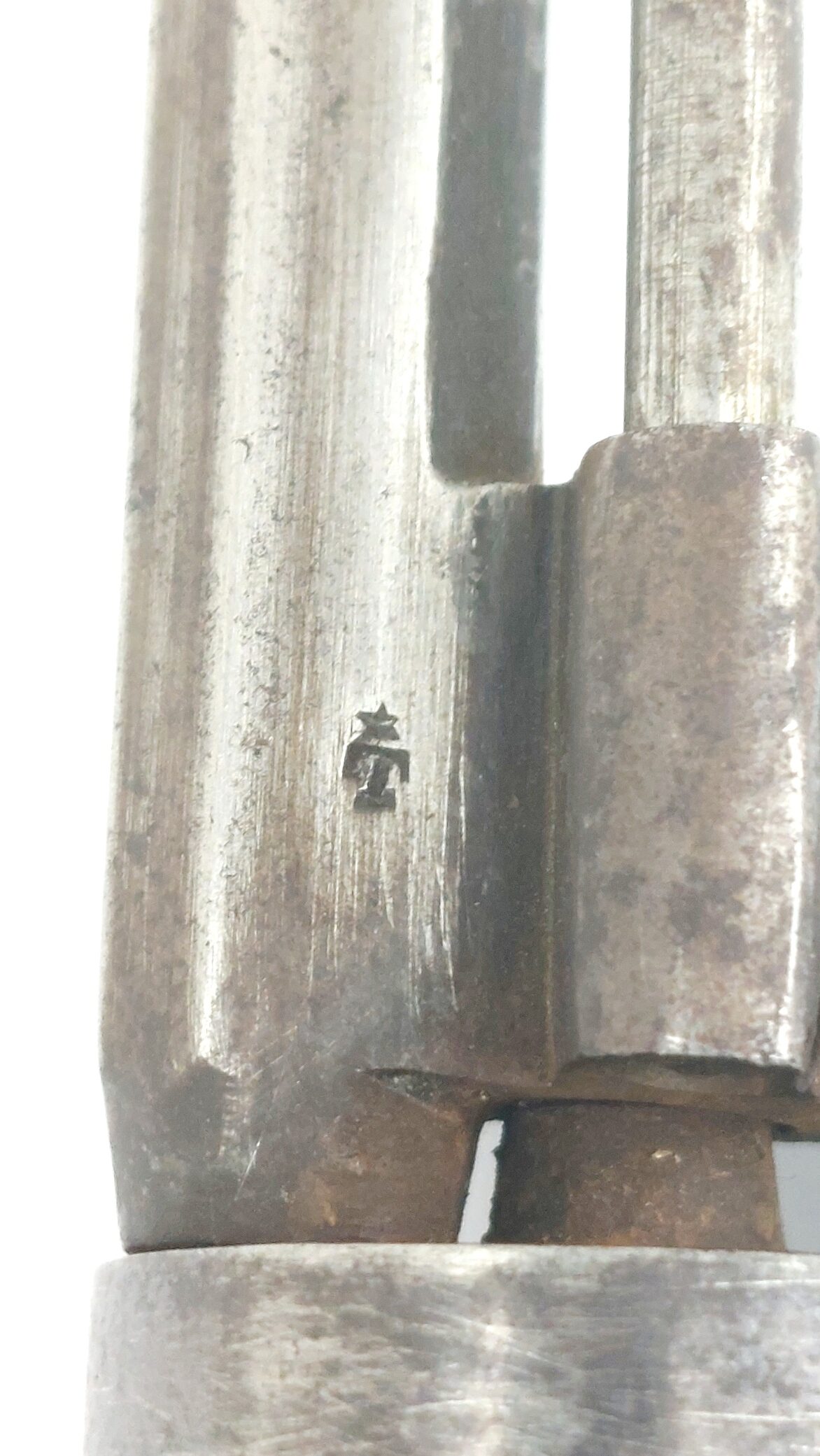
The revolver bears Belgian Liège proof marks, including the ELG oval definitive proof and star-over-letter inspector’s marks, confirming manufacture and proofing at Liège. These inexpensive but serviceable revolvers were mass-produced for civilian sale and export, including large numbers imported into Britain during the Victorian period.
Historical Note:
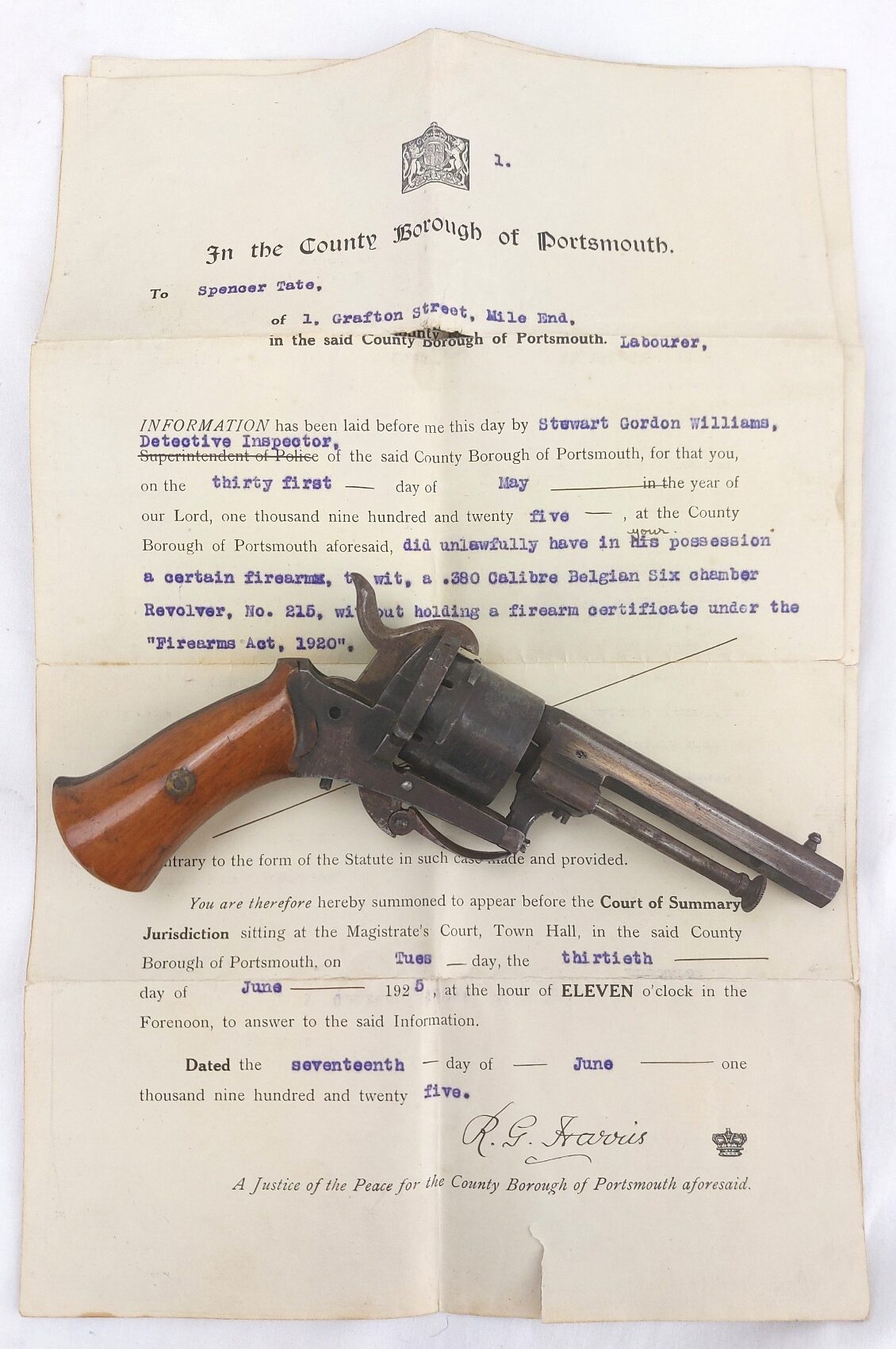
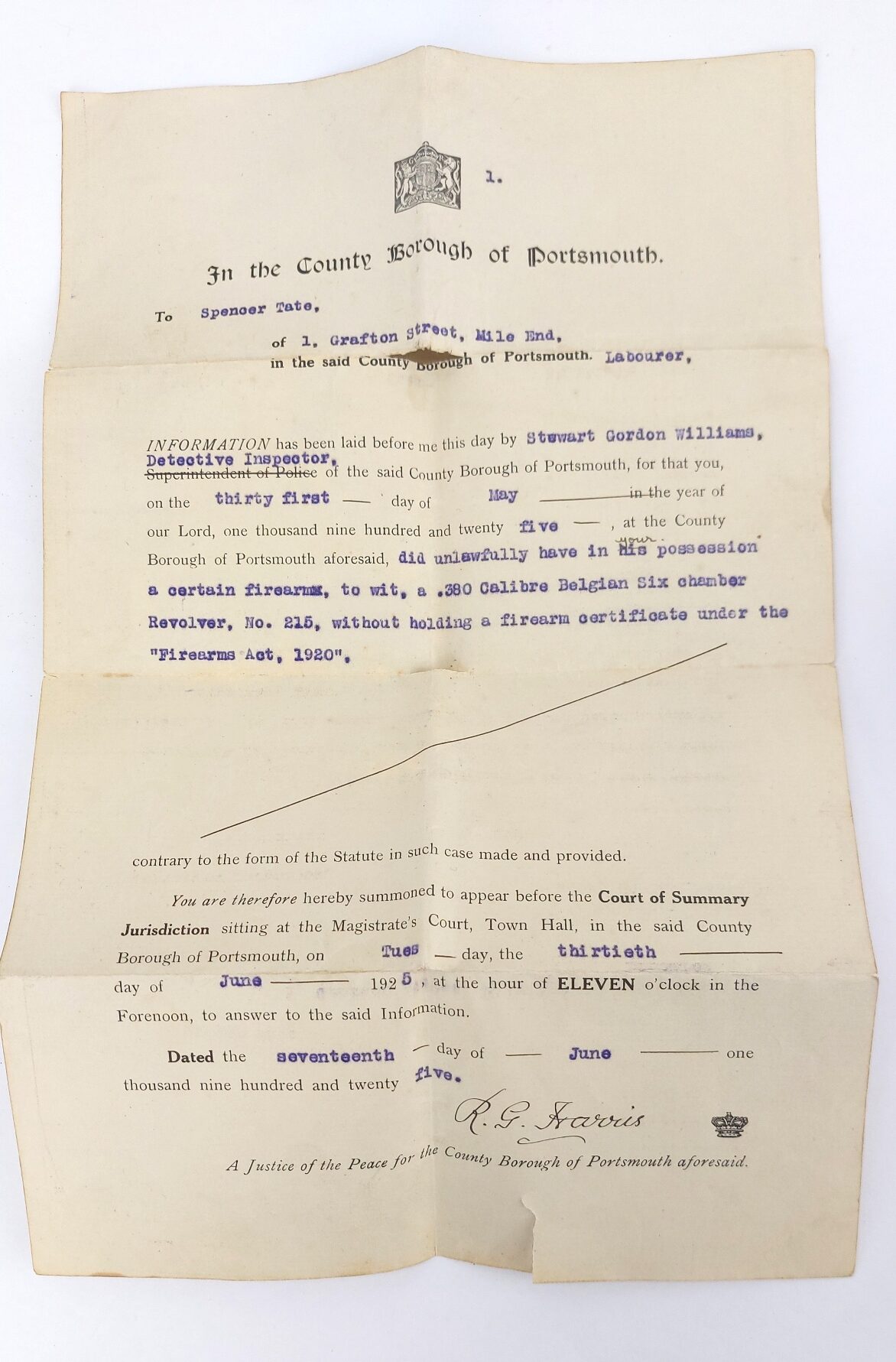
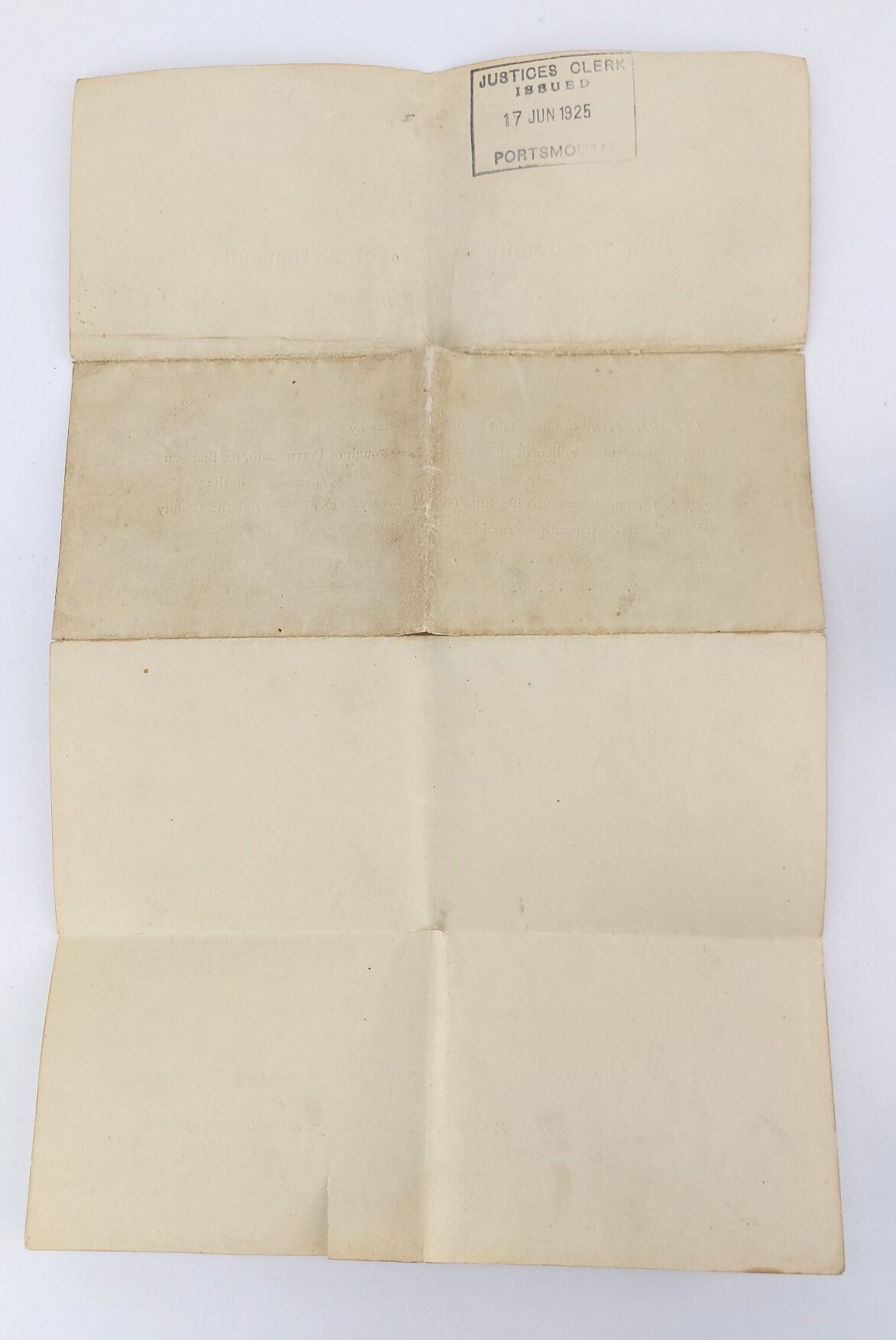
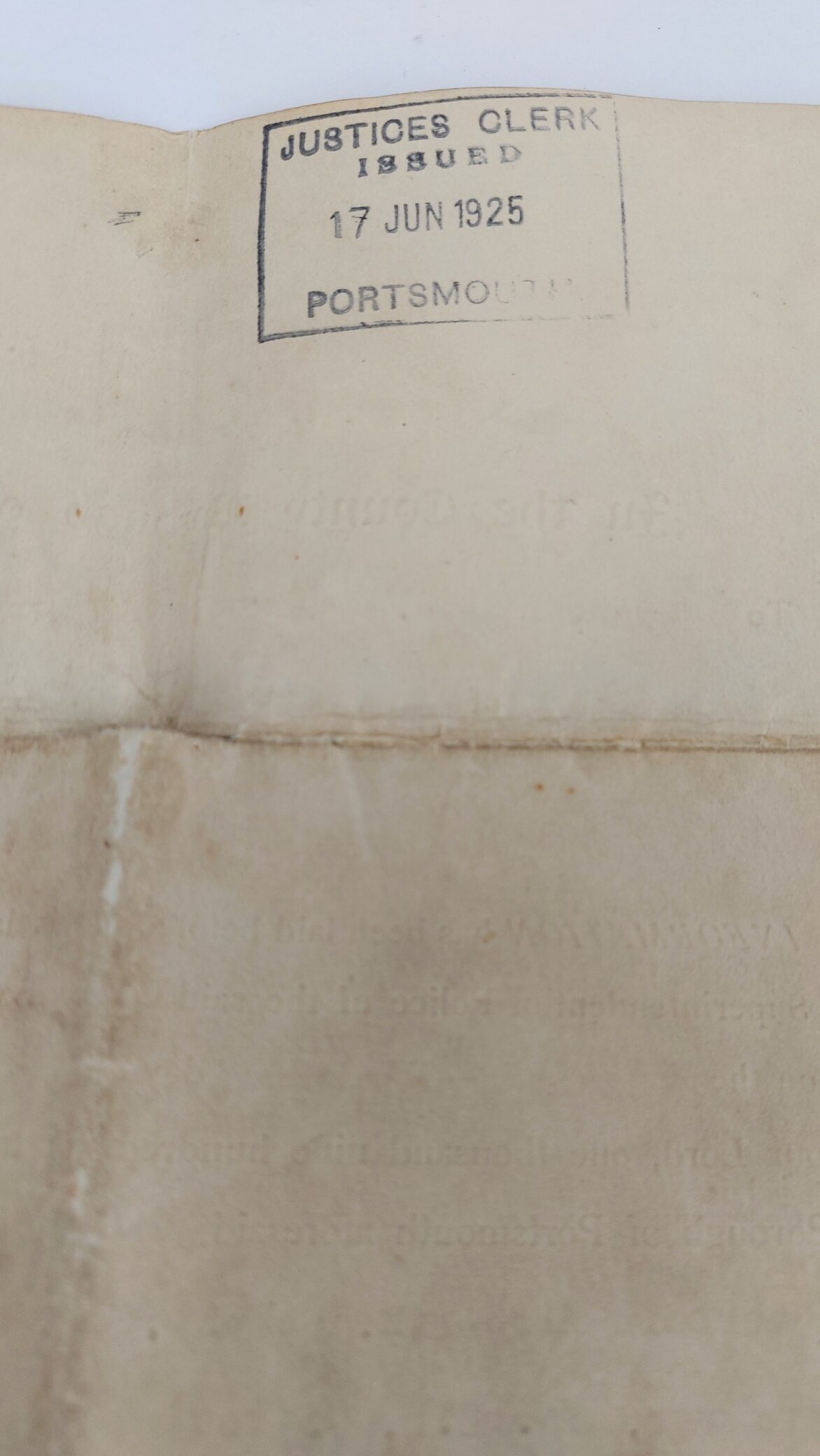
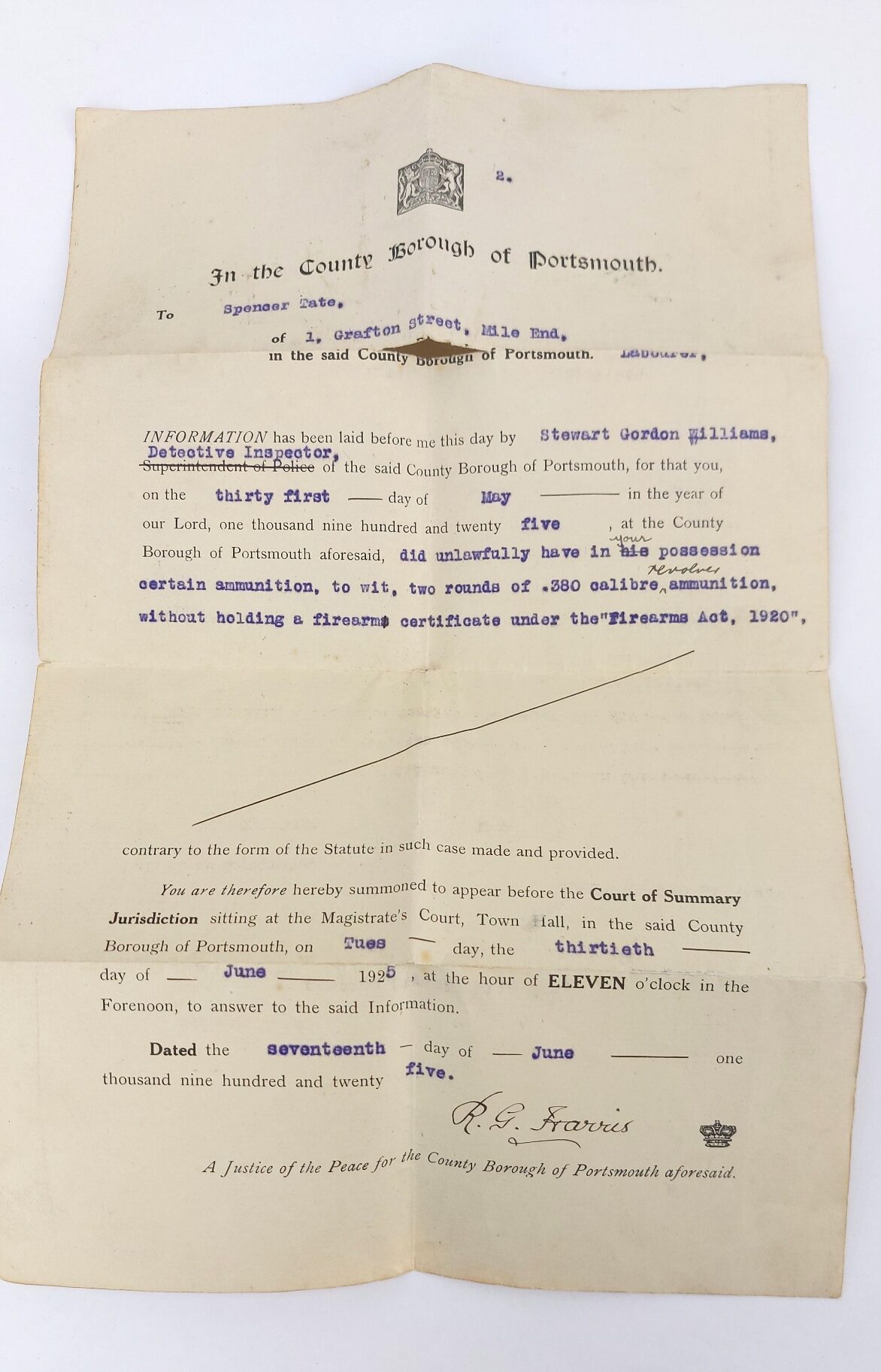
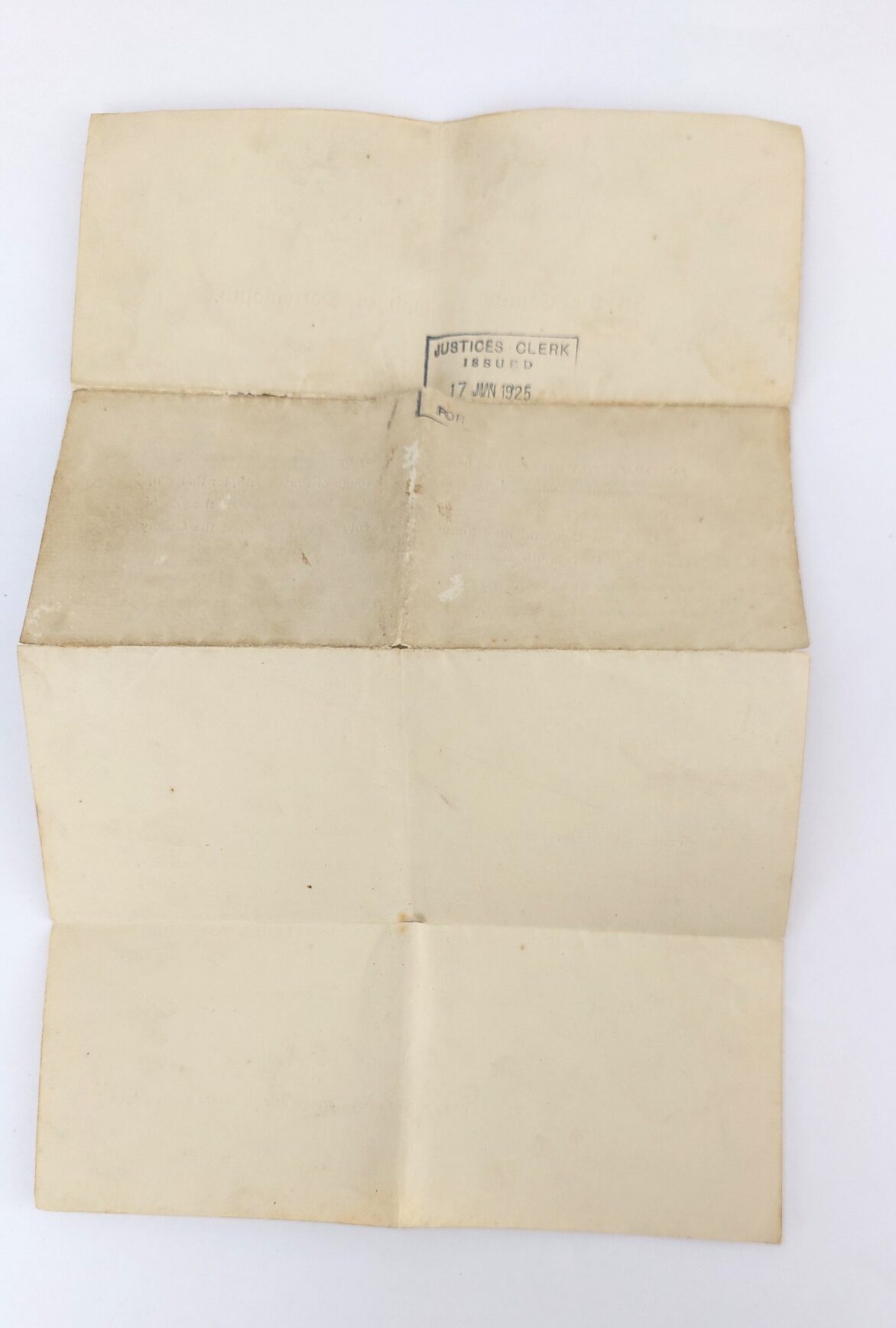
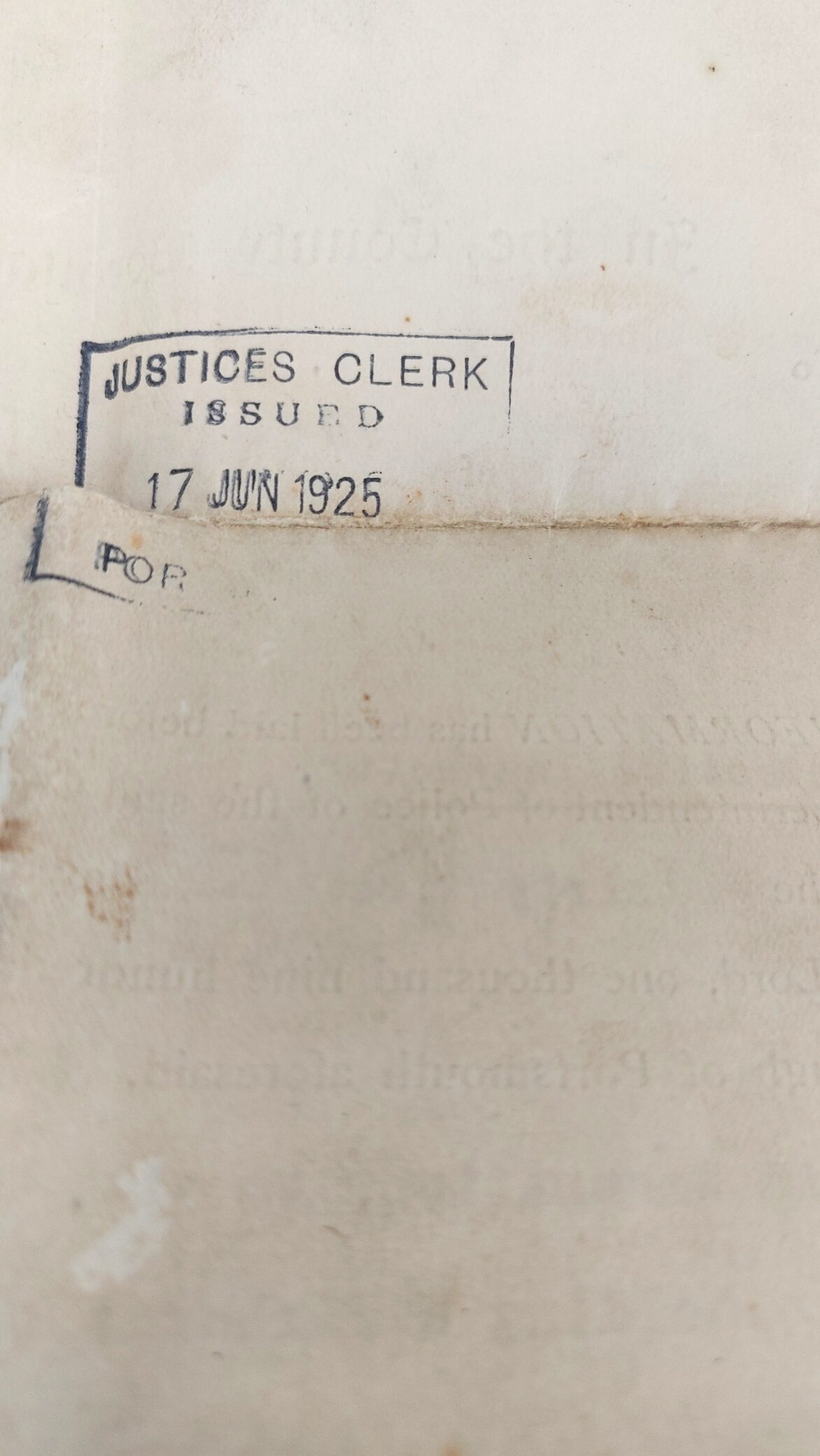
This revolver is accompanied by an original Court of Summary Jurisdiction summons, issued in Portsmouth on 17 June 1925, which directly identifies the weapon and its owner, providing an exceptionally rare documentary link. The summons names Spencer Tate of 1 Grafton Street, Mile End, Portsmouth, described as a labourer, and states that he unlawfully possessed: “a certain firearm, to wit, a .380 calibre Belgian six chamber revolver, No. 215, without holding a firearm certificate under the Firearms Act, 1920.” The information was laid by Detective Inspector Stewart Gordon Williams, and Tate was ordered to appear before the Magistrates’ Court on 30 June 1925. A separate summons relating to ammunition was also issued (no ammunition accompanies this lot). The reverse of the document carries the official “Justices Clerk – Issued – 17 Jun 1925 – Portsmouth” stamp and is signed by R. G. Harris, Justice of the Peace.
This pairing vividly illustrates the early enforcement of the Firearms Act 1920, which abruptly criminalised the possession of many long-obsolete firearms still retained as household curiosities. That a mid-19th-century pinfire revolver—already technologically redundant by 1925—could nevertheless result in prosecution highlights the sweeping nature of the legislation. Surviving firearms that can be directly matched to named prosecutions under the Act are exceptionally uncommon.
The pinfire system, developed in the 1830s by French inventor Casimir Lefaucheux, was one of the earliest successful metallic cartridge ignition systems and was widely used in Europe from the 1850s to the 1870s. Pinfire cartridges employed a small lateral pin protruding from the case, which, when struck by the hammer, ignited the priming compound. Belgian makers in Liège became major producers of pinfire revolvers, exporting large numbers of inexpensive civilian arms to Britain during the Victorian period. By the late 19th century the system was rendered obsolete by safer and more reliable rimfire and centre-fire designs, and pinfire ammunition soon ceased commercial production. The survival of a pinfire revolver into the inter-war period, and its prosecution under the Firearms Act 1920, illustrates how long-obsolete Victorian firearms continued to exist in British households well into the 20th century.
The revolver bears the Belgian ELG oval definitive proof together with a star-over-T inspector’s mark, both applied at the Liège proof house. The crowned ELG oval was used in its uncrowned form prior to 1893 and in its crowned form thereafter; in combination with the style of the star-over-letter controller’s mark and the pinfire ignition system, these proofs indicate manufacture in the mid-to-late 19th century, most plausibly circa 1860–1880. This dating aligns precisely with the widespread Belgian production of pinfire pocket revolvers for civilian export to Britain during the Victorian period.
*Condition*
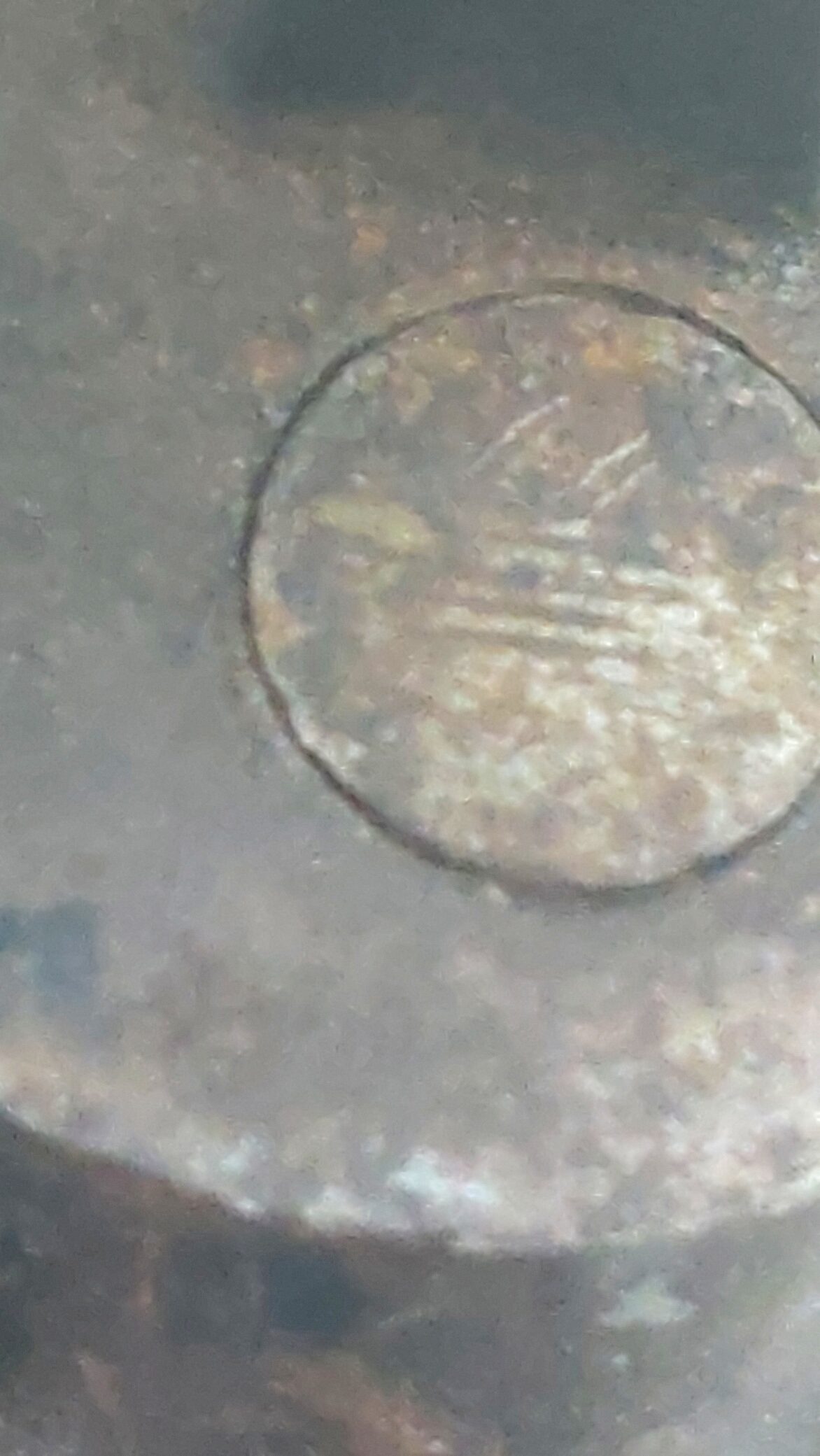
The revolver shows honest age-related wear, with surface oxidation, thinning finish, and patina consistent with long-term storage. The hardwood grips are intact with minor handling marks and no significant cracking. Mechanical movement is present, though no guarantee is given as to functionality. The bore shows corrosion consistent with age. The accompanying summons documents remains complete and legible, with fold lines, edge wear, and light staining commensurate with age, but no losses or restoration. Please see photographs as part of the condition report.
JAQFOXCDO_273719052025