*White Star Line Royal Mail Steamers – Three 19th-Century Promotional & Cabin Cards (Celtic, Atlantic & Saloon Fare Rates)*
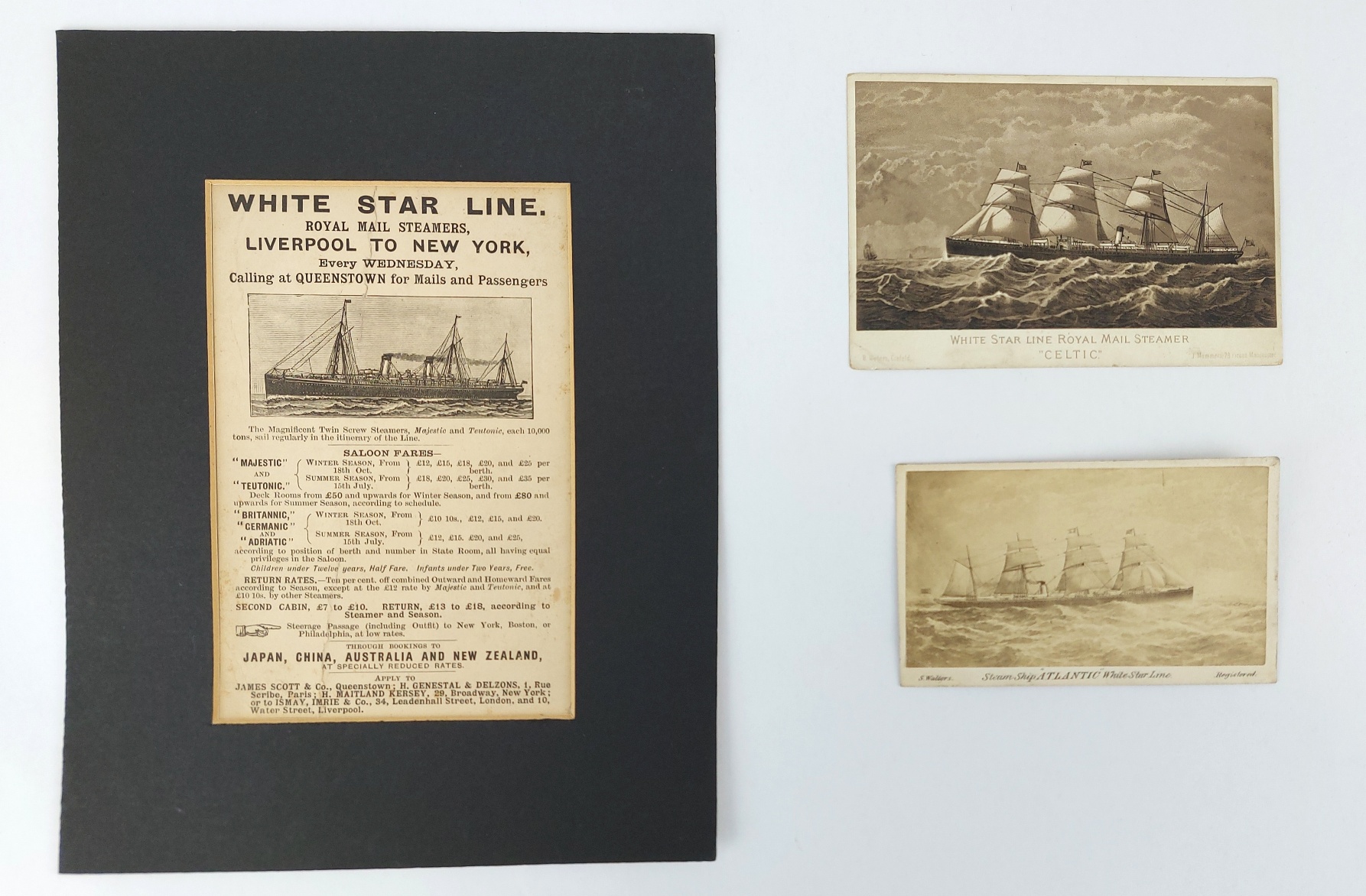
A compelling group of three late-19th-century White Star Line paper items, comprising two illustrated ship cabin cards for Atlantic and Celtic and a larger mounted fare notice, all relating to Royal Mail Steamers operating on the Liverpool–New York route during the height of Victorian transatlantic travel.
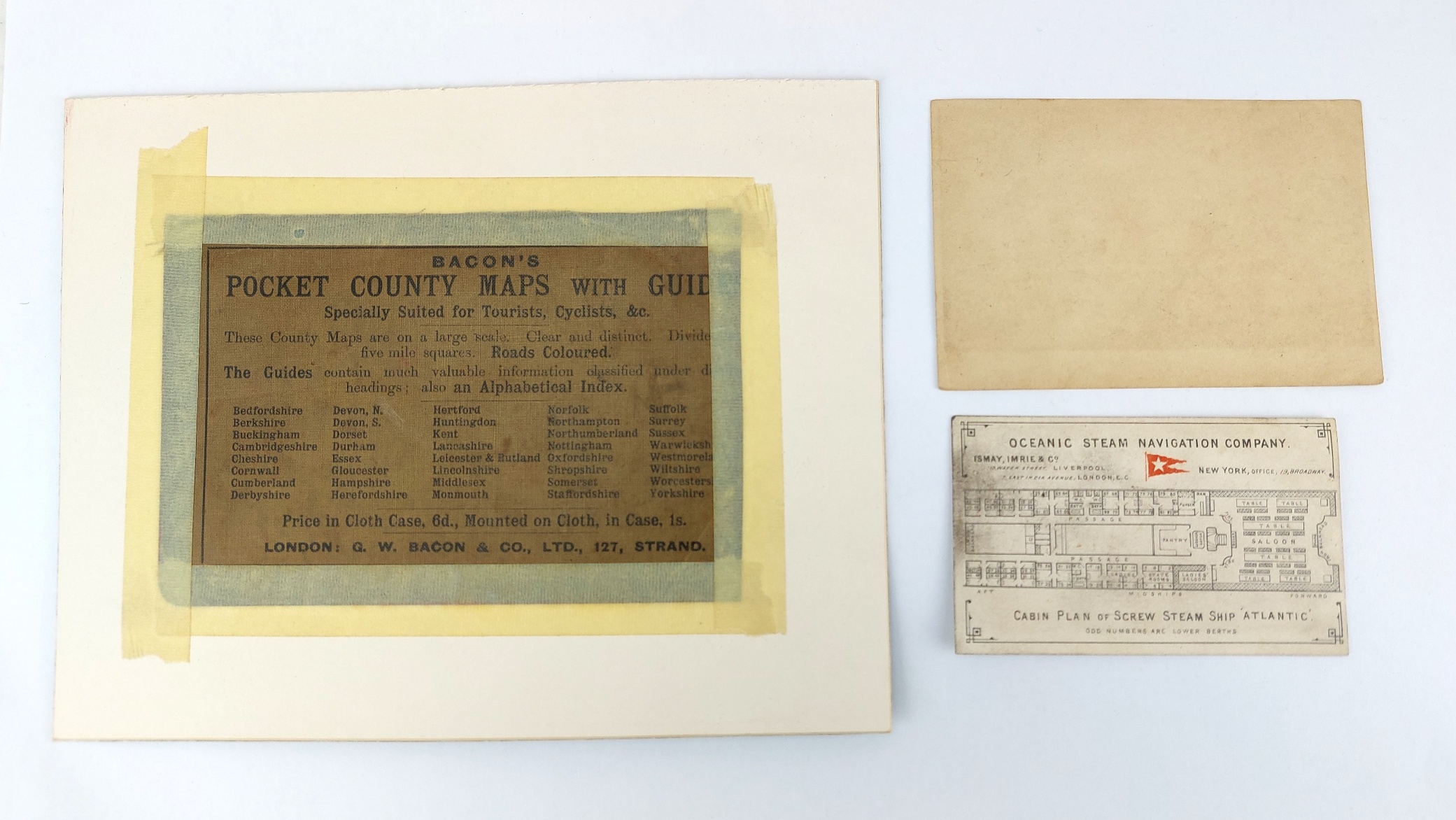
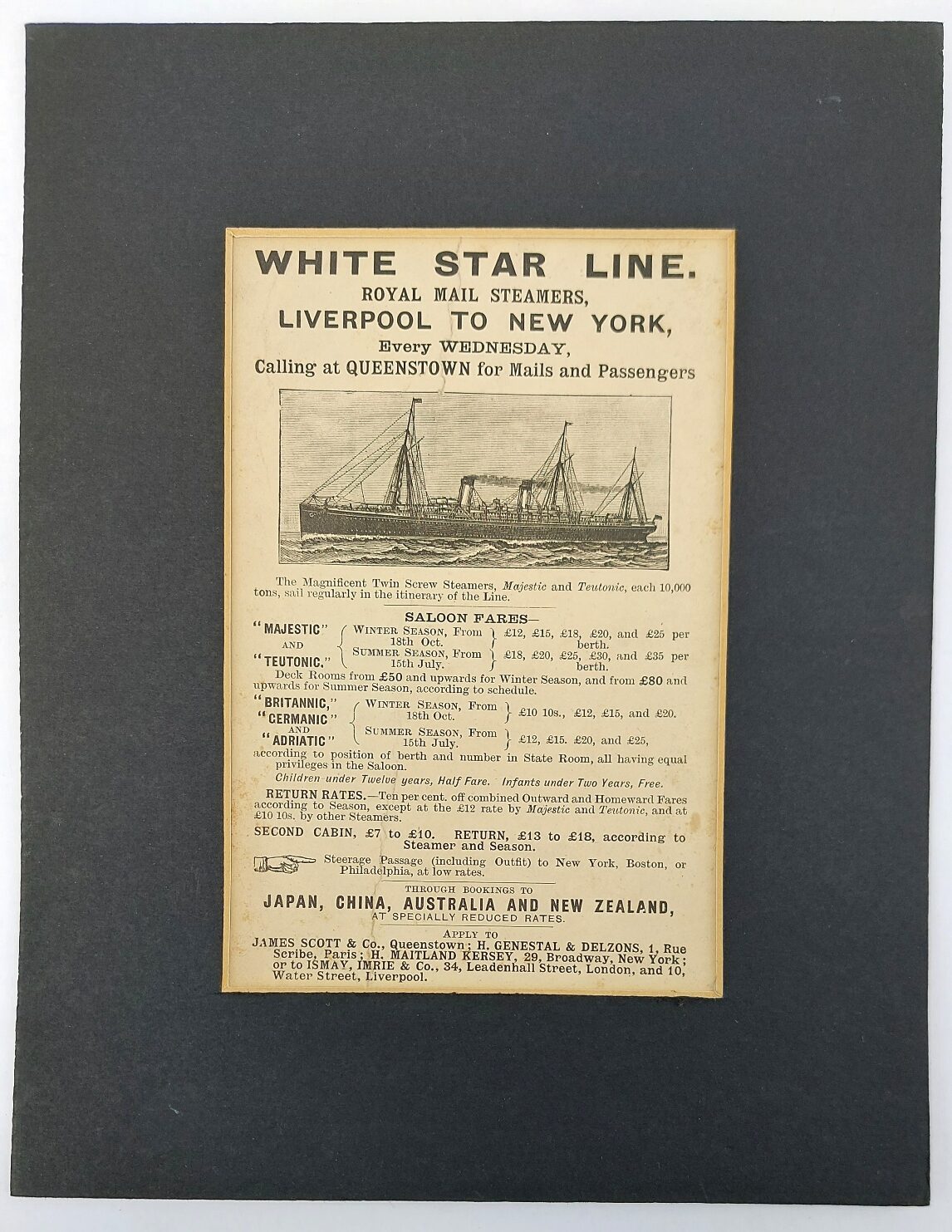
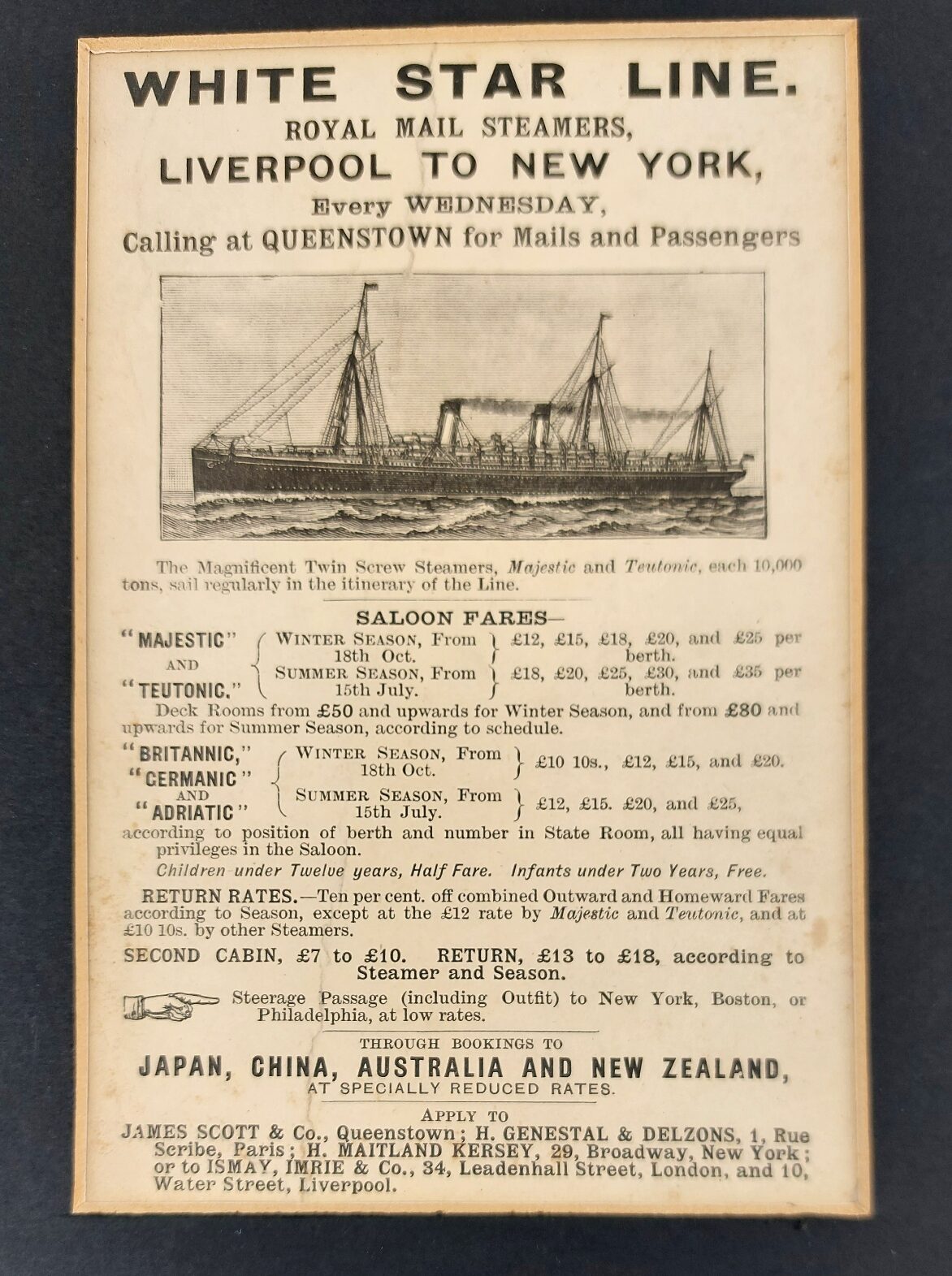
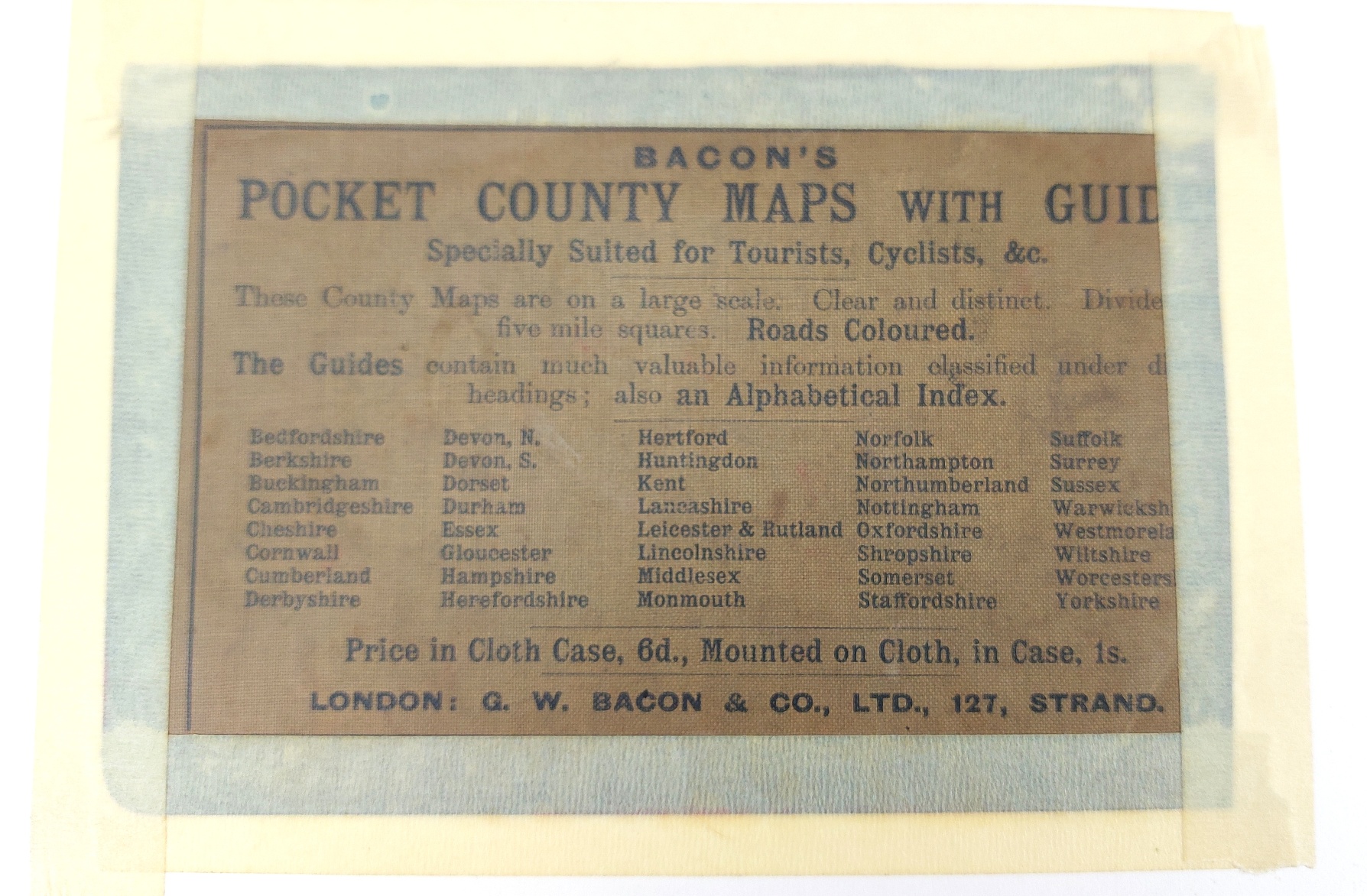
The mounted fare notice appears to be an original newspaper or periodical clipping, later mounted for preservation. The recto promotes weekly White Star Line sailings between Liverpool and New York, calling at Queenstown (now Cobh), while the reverse carries a contemporary advertisement for Bacon’s Pocket County Maps, confirming its origin from a late-Victorian illustrated publication. The advertisement names the Oceanic Steam Navigation Company and highlights the twin-screw steamers Majestic and Teutonic (each approx. 10,000 tons), alongside Britannic, Germanic, and Adriatic. Detailed saloon fares range from £10 10s to £35 depending on season and berth position, with Second Cabin fares at £7–£10 and steerage offered at reduced rates including outfit. International agents are listed in Queenstown, Paris, New York, Liverpool, and London, reflecting White Star Line’s global booking network in the late 1880s–early 1890s. Fare notice (mounted): 17.6 × 22.6 cm overall; 9.5 × 14.5 cm visible area.
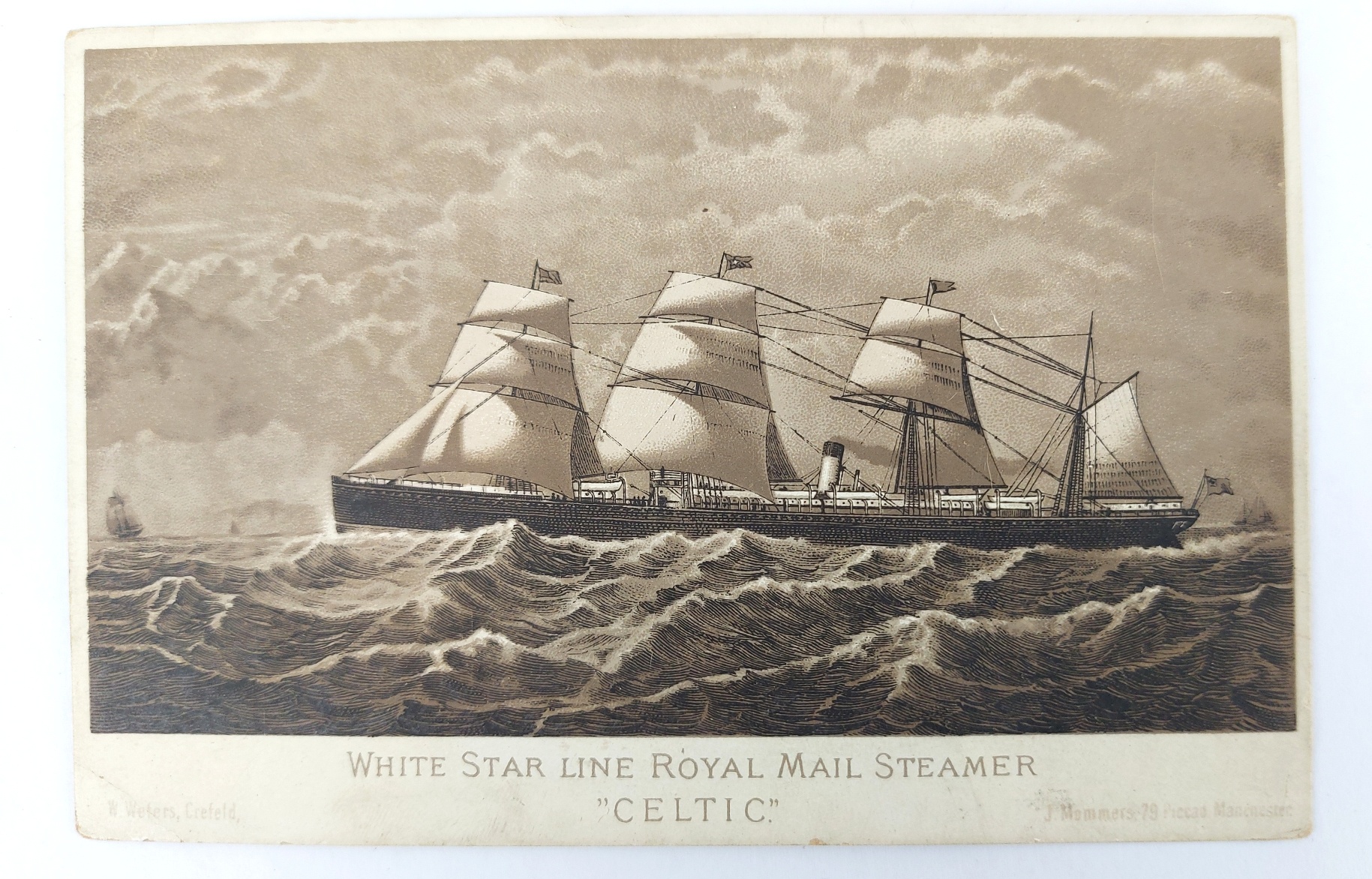
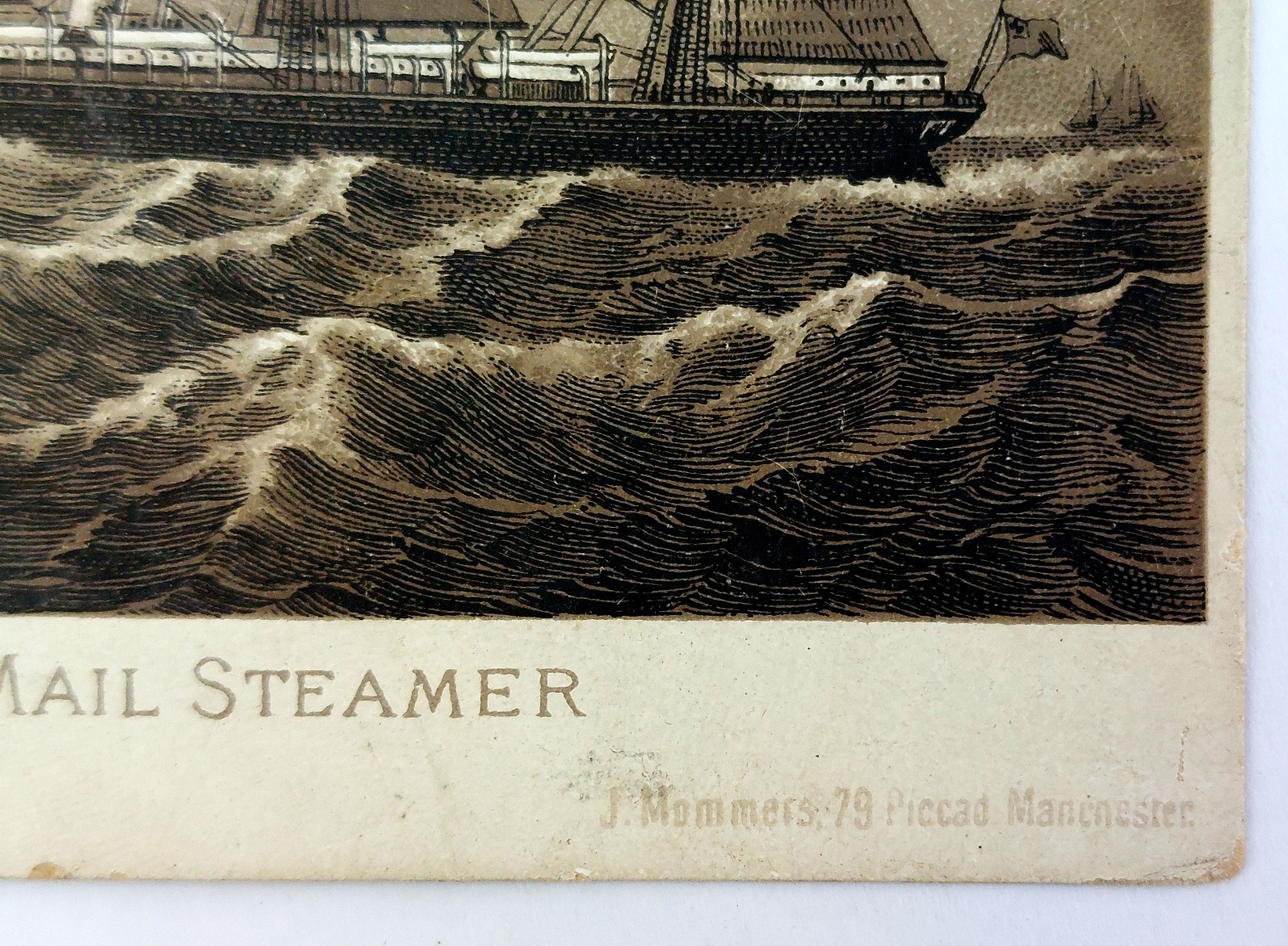
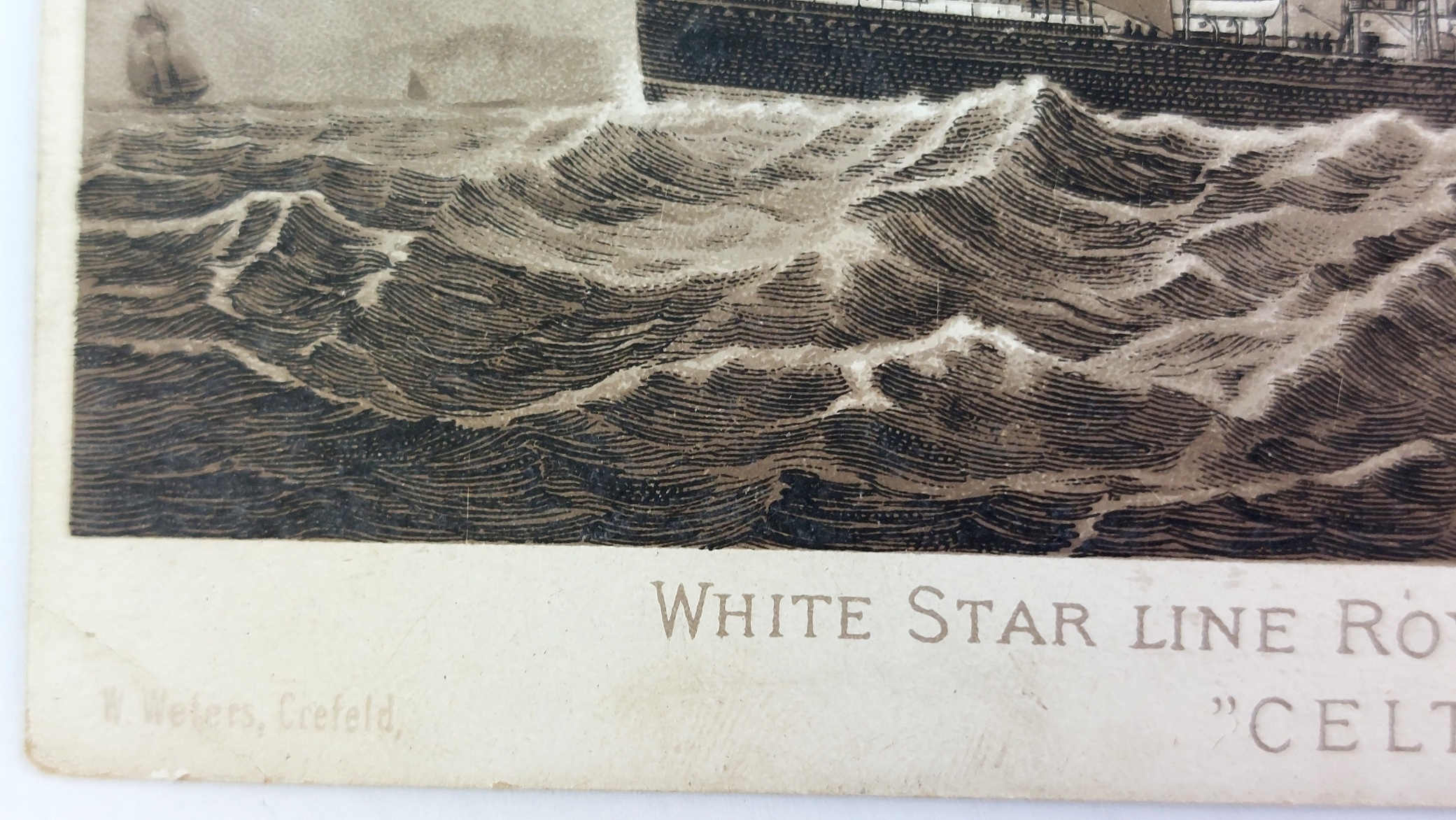
The first card depicts the Royal Mail Steamer Celtic, the first vessel of that name, an Oceanic-class liner completed in 1872. Shown underway combining steam propulsion with auxiliary sail, the image reflects the transitional design of early White Star Line ships. Executed in a restrained sepia palette typical of late-19th-century commercial marine printing, the card was produced for promotional or passenger reference use. The lower margin retains faint but legible trade imprints, including “W. Weters, Crefeld” and “J. Mommers, 79 Piccad, Manchester”, consistent with late-19th-century White Star Line commercial production. Celtic served on the Liverpool–New York route until 1895 and represents the generation of liners that established White Star Line’s reputation for comfort and reliability. Celtic card: 12.3 × 8.3 cm.
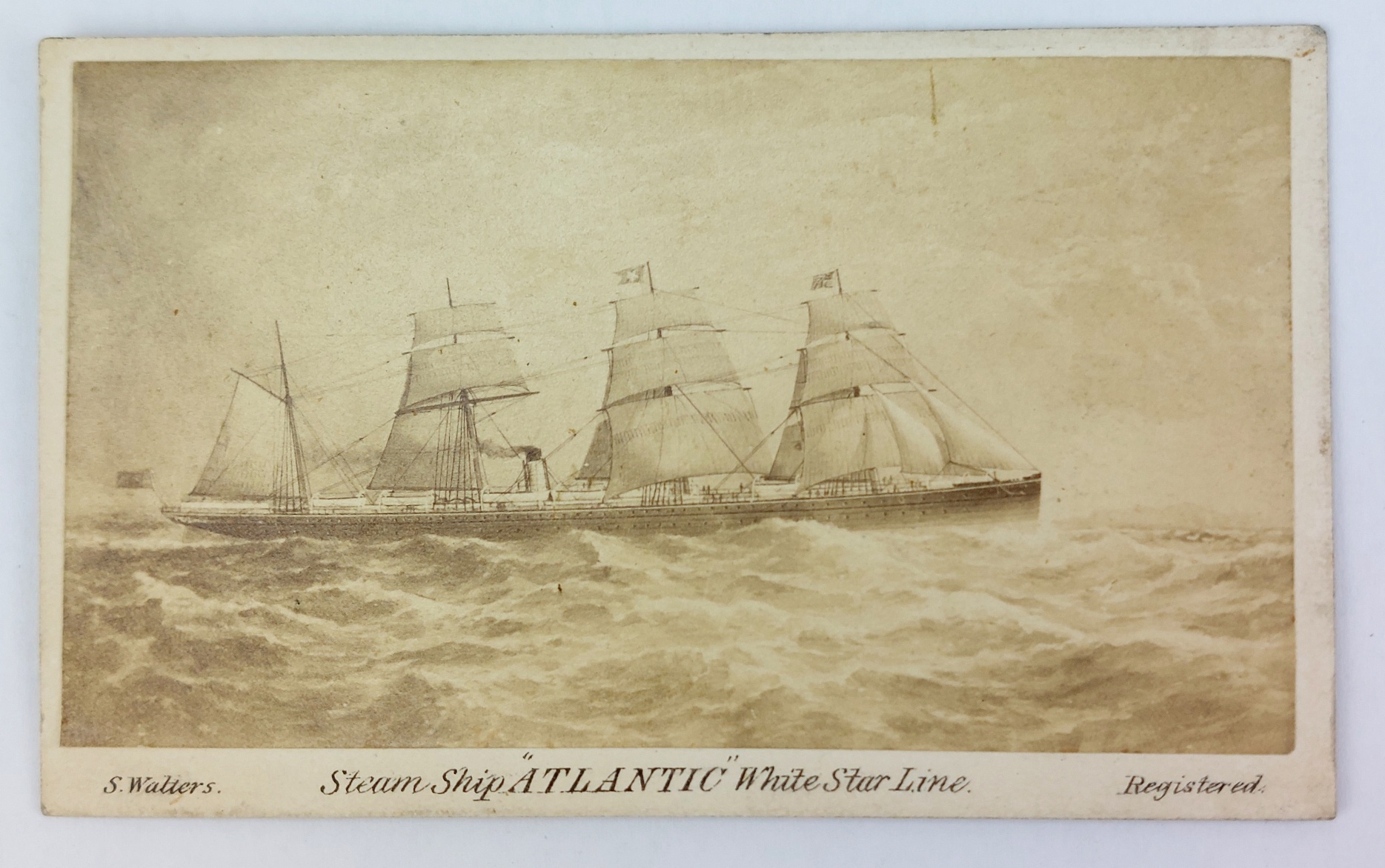
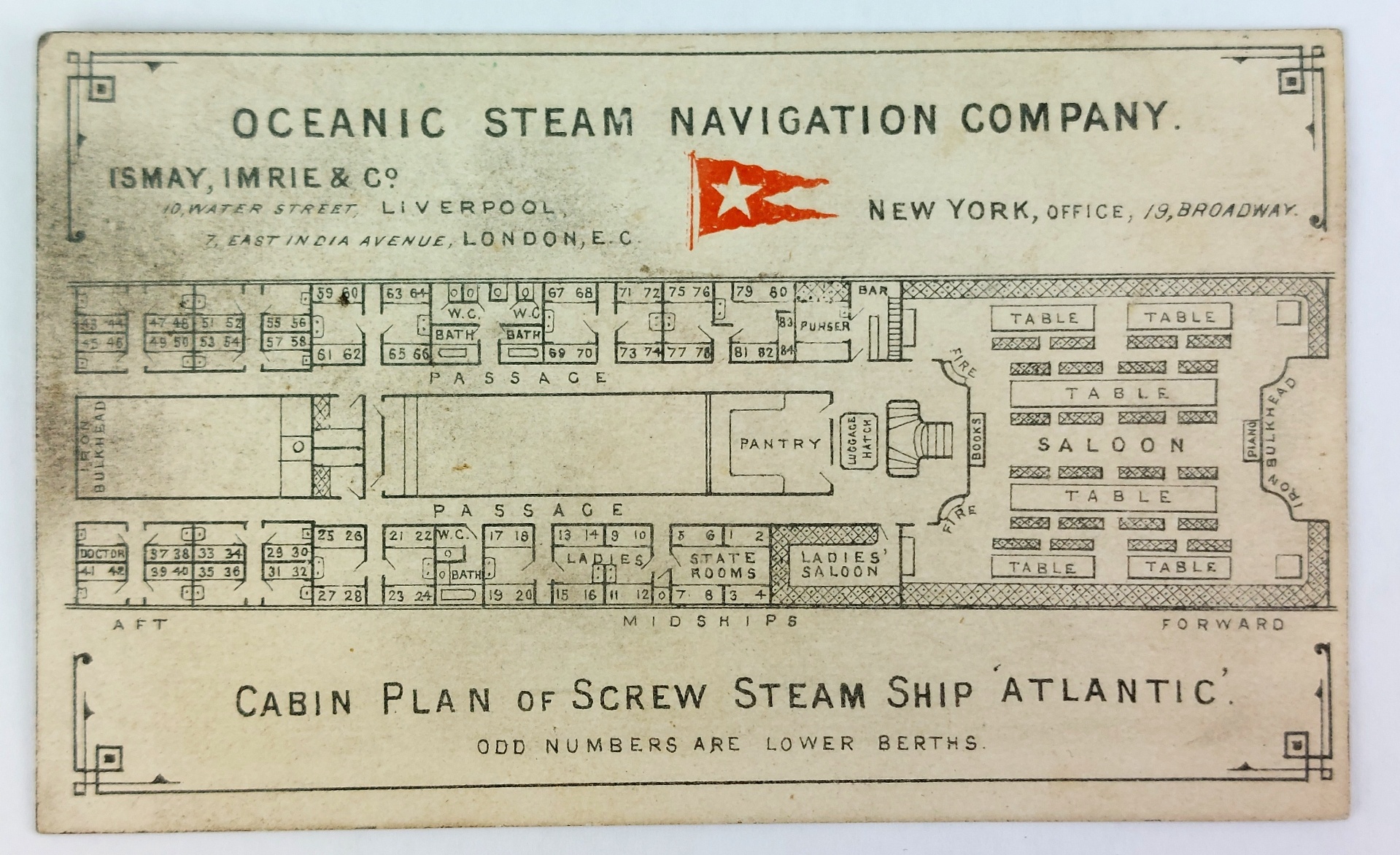
The second card depicts the SS Atlantic, the second Oceanic-class liner, launched in 1870 by Harland and Wolff. The artwork is by Samuel Walters (1811–1882), one of the foremost British marine artists of the 19th century and a leading figure of the Liverpool School of Marine Art, renowned for his technically precise ship portraits. The vessel is shown under steam with four masts set for sail, accurately reflecting her hybrid propulsion design. While the imagery shows the ship in service, Atlantic is historically notable for her loss in 1873, one of the most catastrophic civilian maritime disasters of the century. The reverse of the Atlantic card retains a detailed printed cabin plan, issued by the Oceanic Steam Navigation Company, showing the layout of saloons, state rooms, pantry, passageways, and numbered berths. Such practical reference plans were supplied to passengers and agents, and their survival intact significantly enhances the card’s documentary value. Atlantic card: 10.6 × 6.5 cm.
Printed ship cards and fare notices of this type were used aboard ship, in booking offices, and by agents, and are increasingly scarce, particularly when preserved together as a coherent group illustrating ship identity, accommodation, and fare structure circa 1870–1900.
Historical Note:
Founded in 1845 and reorganised under Thomas Henry Ismay as the Oceanic Steam Navigation Company, the White Star Line became one of the most important transatlantic shipping firms of the 19th century, operating Royal Mail Steamers between Liverpool and New York. Vessels such as Celtic and Atlantic belonged to the transitional generation that bridged sail and steam, combining auxiliary rigging with increasingly powerful engines, while reflecting White Star’s emphasis on comfort, safety, and reliability over outright speed.
The steamers Majestic and Teutonic, prominently featured in the fare notice, were revolutionary when introduced in the late 1880s, among the first major liners to dispense entirely with sails and rely solely on steam power, marking a decisive shift toward modern ocean liner design focused on stability and passenger amenities.
The illustrated card of SS Celtic represents the first Oceanic-class vessel of that name, launched in 1872 as one of six sister ships that followed White Star’s original quartet of liners. She served reliably on the Atlantic route until 1895, when she was sold for scrap, closing an early but formative chapter in the company’s history.
The SS Atlantic card depicts one of the most historically significant—and tragic—ships in White Star Line history. Launched in 1870 by Harland and Wolff, Atlantic was the second Oceanic-class liner, designed with steam propulsion and four masts rigged for sail. On her 19th voyage in April 1873 she struck submerged rocks near Mars Island, Nova Scotia, and sank with the loss of at least 535 lives, the worst civilian maritime disaster in the North Atlantic until the sinking of Titanic in 1912.
White Star Line’s later history is inseparable from Titanic, also built by Harland and Wolff, whose loss echoed earlier tragedies such as Atlantic. Together, these pieces form a concise snapshot of White Star Line’s Victorian-era operations, linking early Oceanic-class liners directly to the lineage that culminated in Olympic, Titanic, and Britannic.
*Condition*
All three items are original and unretouched. The ship cards show expected age toning, light surface wear, and softening to corners, consistent with late-19th-century paper ephemera. Printed detail remains clear and legible. The saloon fare notice shows sympathetic age toning and minor handling marks, but retains strong contrast and clarity of text. The period mount shows light wear commensurate with age. Please see photographs as part of the condition report.