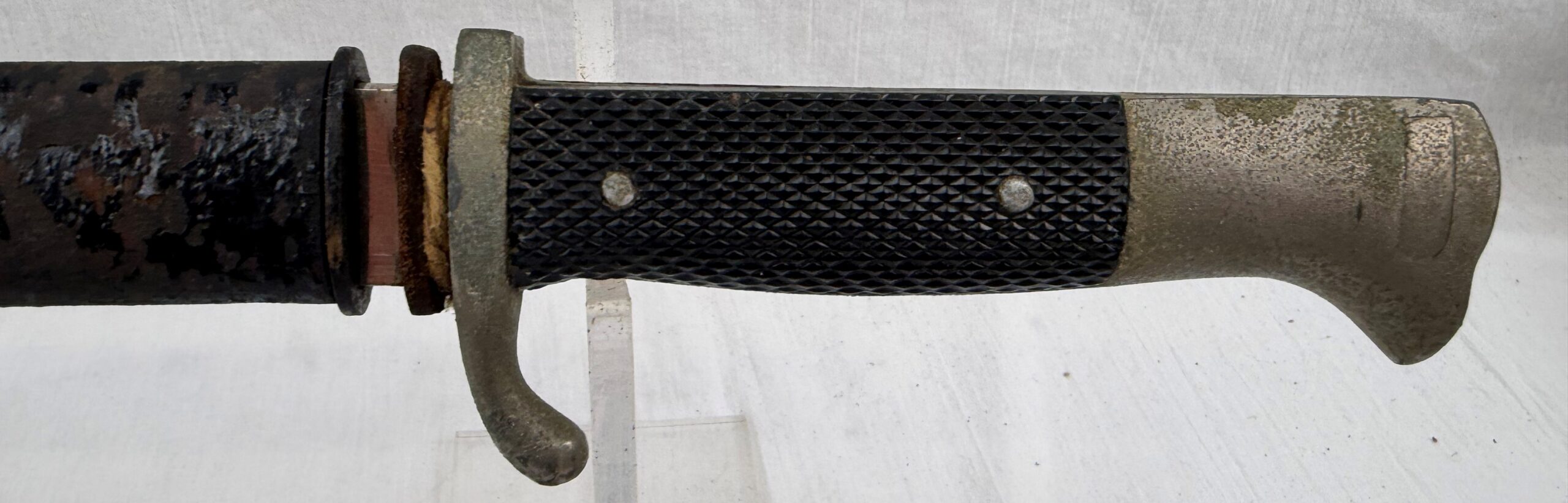
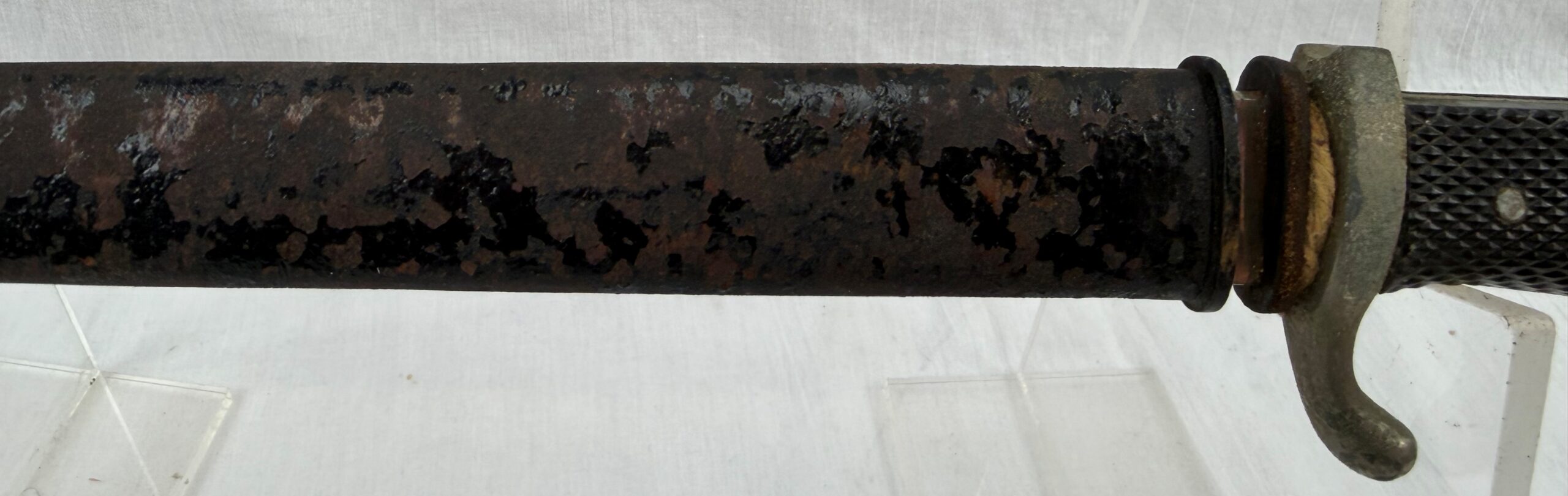
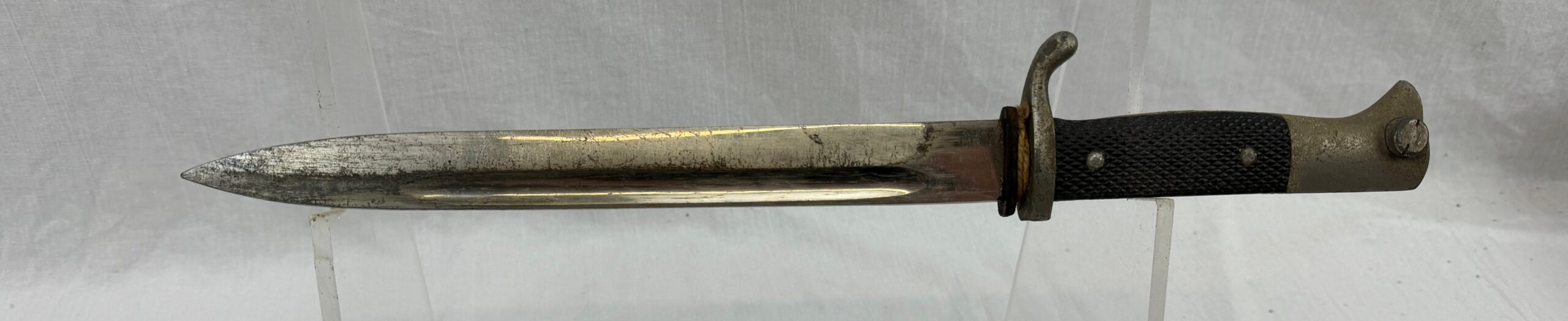
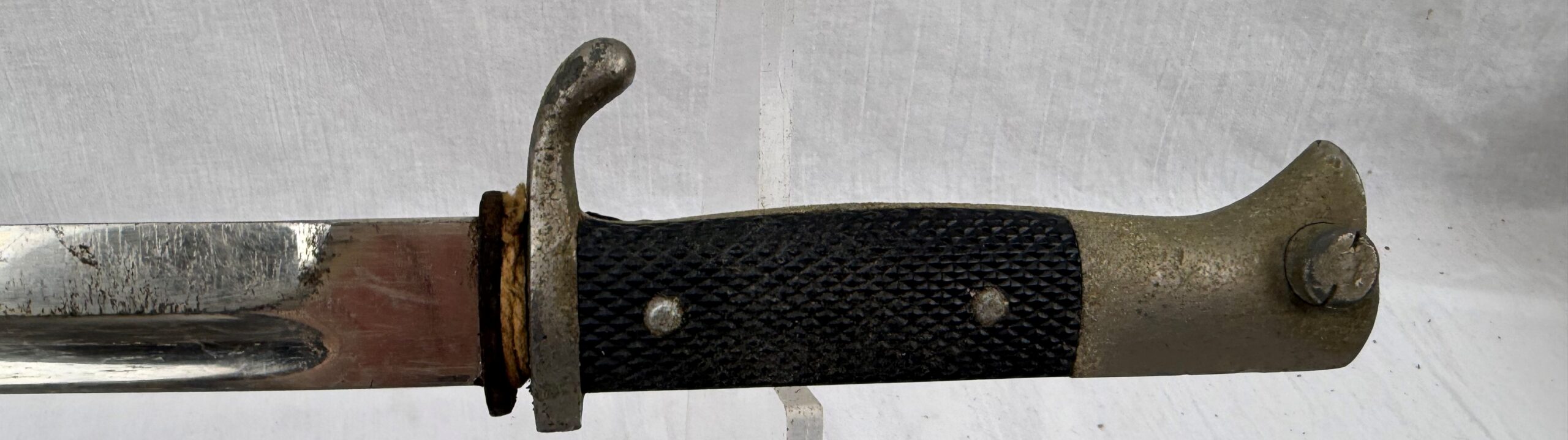
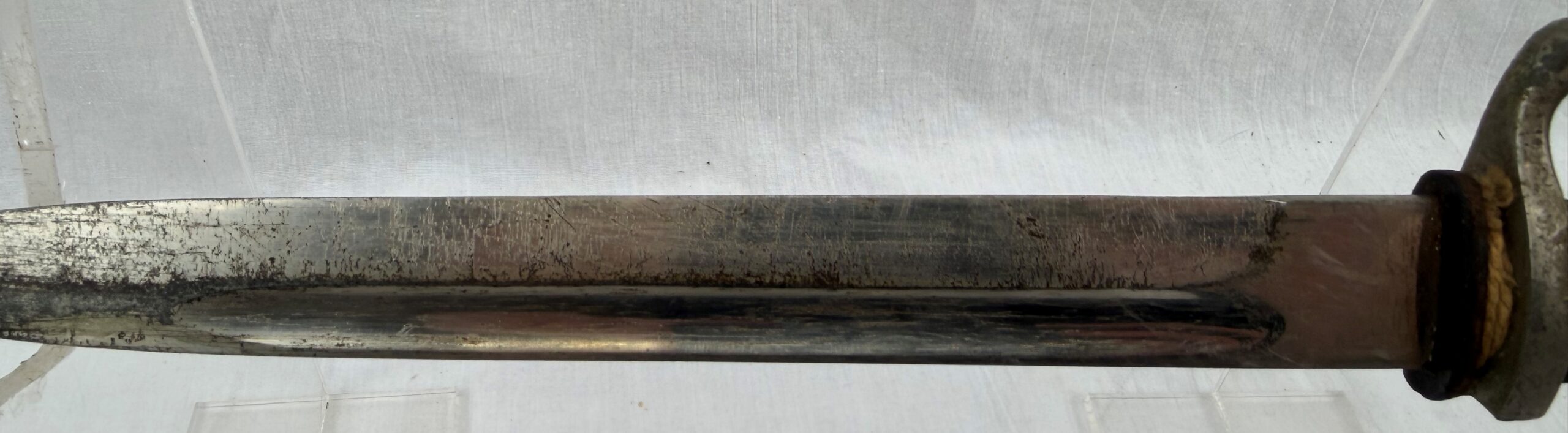
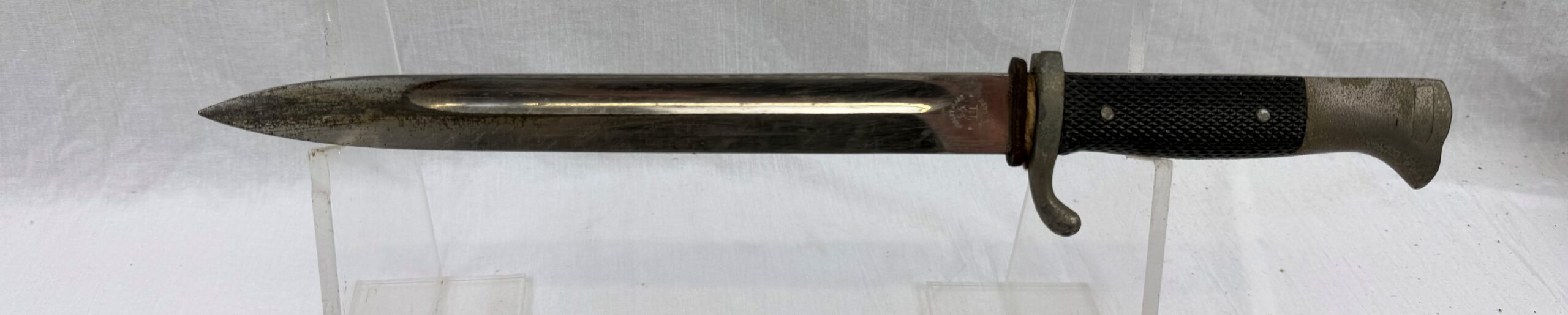
~ WW2 Era Nazi Germany Parade Short Bayonet & Scabbard ~
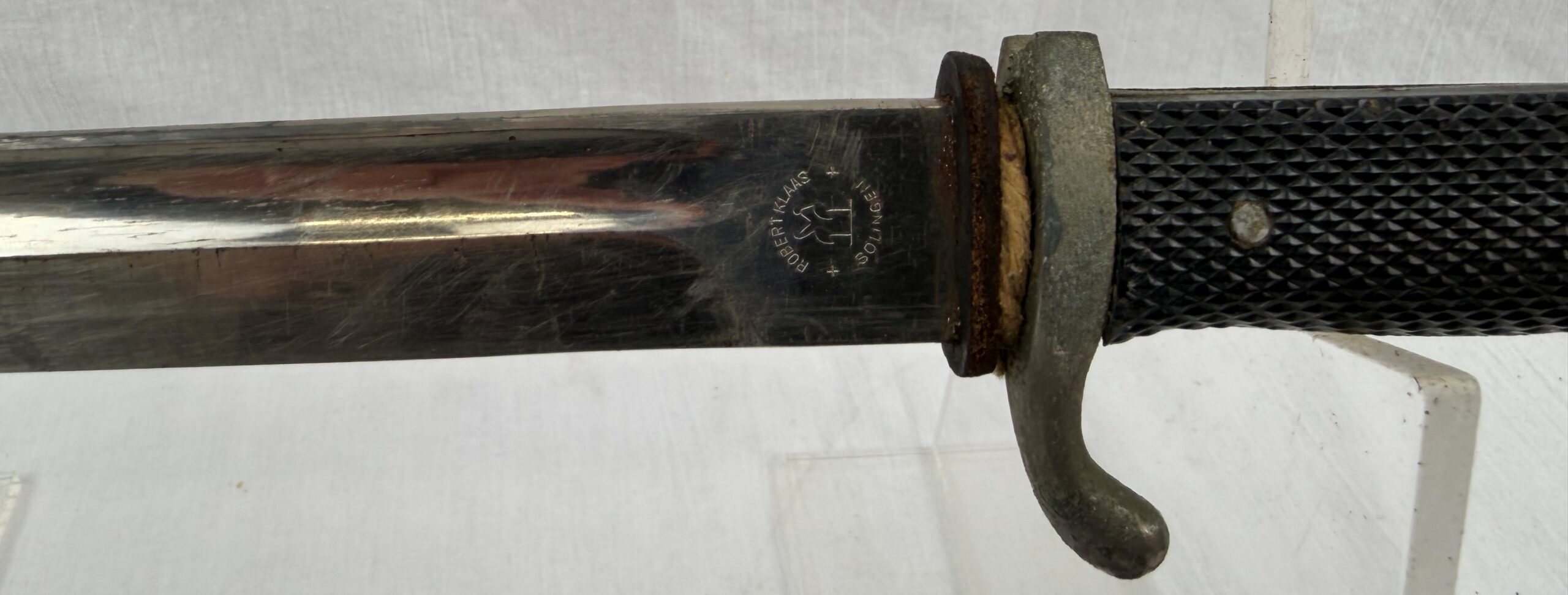
The WW2 Era Nazi Germany Parade Short Bayonet & Scabbard is a ceremonial weapon used primarily by soldiers and officers of Nazi Germany during parades, formal occasions, and inspections. These bayonets were not designed for combat use but instead were intended to complement the formal dress uniforms of the era, particularly for units such as the Wehrmacht, Luftwaffe, and SS. These bayonets became a symbol of military prestige and were often highly decorated.
~ Blade ~
The blade of a parade bayonet is typically shorter than a standard combat bayonet, usually measuring around 8-10 inches. The blade is single-edged, often with a straight, narrow design and sometimes a sharpened false edge near the tip. The blade is usually made from high-grade steel and polished to a bright finish, unlike the more utilitarian combat bayonets. The surface of the blade is highly reflective. Many examples have etchings or engravings on the blade, such as the maker's logo or more decorative designs that are typical of the ceremonial style.
~ Handle ~
The handle of the parade bayonet was often made of black Bakelite or plastic, designed to mimic wood. It was molded for a comfortable grip. Some handles had decorative inlays or the Nazi eagle and swastika emblem, reflecting the political symbols of the time. The pommel often featured a stylized eagle’s head or an otherwise decorative design, which distinguished these bayonets from the more functional military models. The crossguard was usually made of nickel-plated steel, forming a protective barrier between the hand and the blade. The crossguard might also be adorned with decorative elements.
~ Scabbard ~
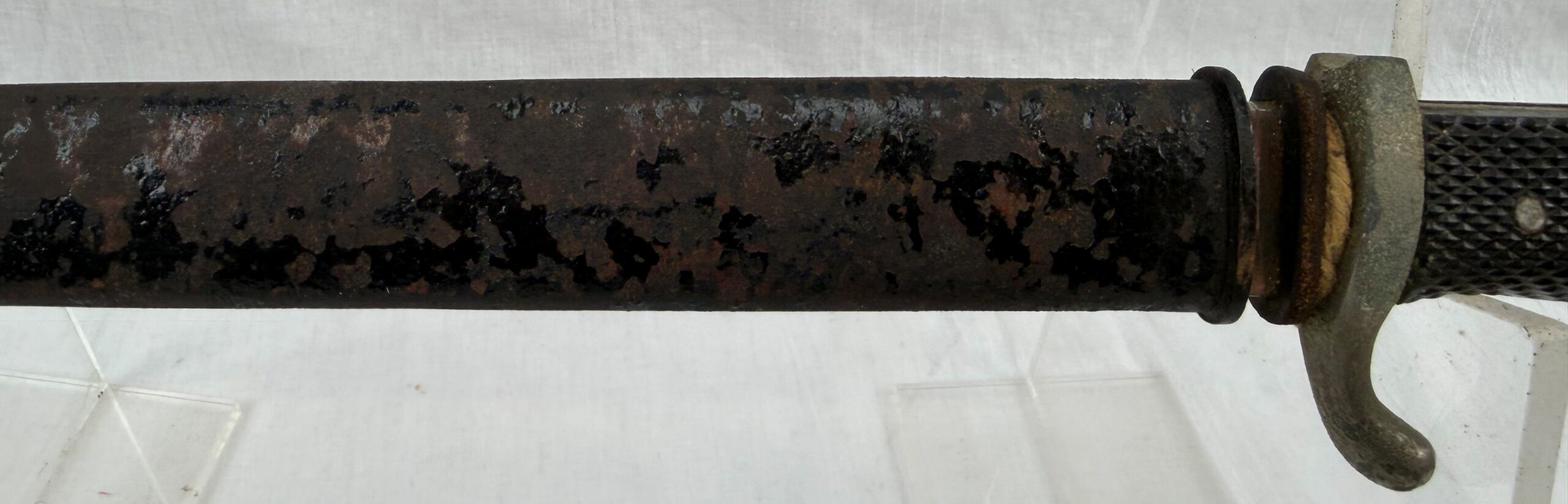
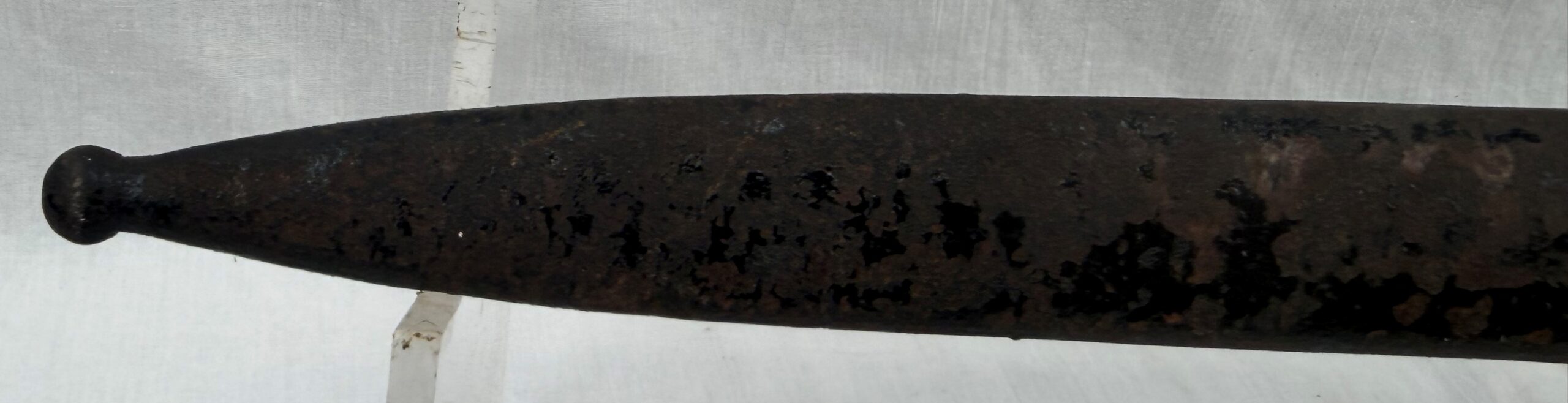
The scabbard was typically made from steel, painted in black or other colors, with a high-gloss or lacquered finish. This was designed for formal appearances, making the bayonet and scabbard look pristine during parades. Many scabbards had a frog attachment for mounting the bayonet onto a uniform belt. Some scabbards also featured metal fittings at the top and bottom, which could be nickel-plated or brass, adding to the ceremonial appearance of the weapon.
~ Mounting and Functionality ~
Although these parade bayonets could theoretically be mounted onto rifles (such as the Karabiner 98k), they were not intended for use in battle. The locking mechanism for attaching the bayonet to a rifle was often functional but decorative. Unlike combat bayonets, the blade was often unsharpened, designed purely for appearance rather than fighting.
~ Historical Context ~
The parade short bayonet was part of the formal uniform of Wehrmacht soldiers, SS members, and Luftwaffe personnel, particularly for non-commissioned officers (NCOs). These bayonets were introduced as part of the broader tradition of wearing ceremonial weapons during parades and official events, which had been common in military organizations worldwide. The design of the Nazi-era parade bayonets drew from earlier German military traditions but incorporated the political symbols of the Third Reich, such as the eagle and swastika motif. Parade bayonets were made by a variety of German manufacturers, including well-known firms like E. & F. Hörster, Carl Eickhorn, and Alcoso, all of which were prominent producers of military blades during the era.
*In order to complete the online purchase we will require a picture/scan of a photo ID (Driving Licence, Passport or an official document with a recent picture). If you don't posses any such document please call to buy. If we consider that the proof of ID is incorect or insuficient, we reserve the right to cancel the transaction.
*We also reserve the right to cancel the transaction with a full refund if there is any suspicion that the provided item will be used in any way contrary to the laws and legislation of UK.