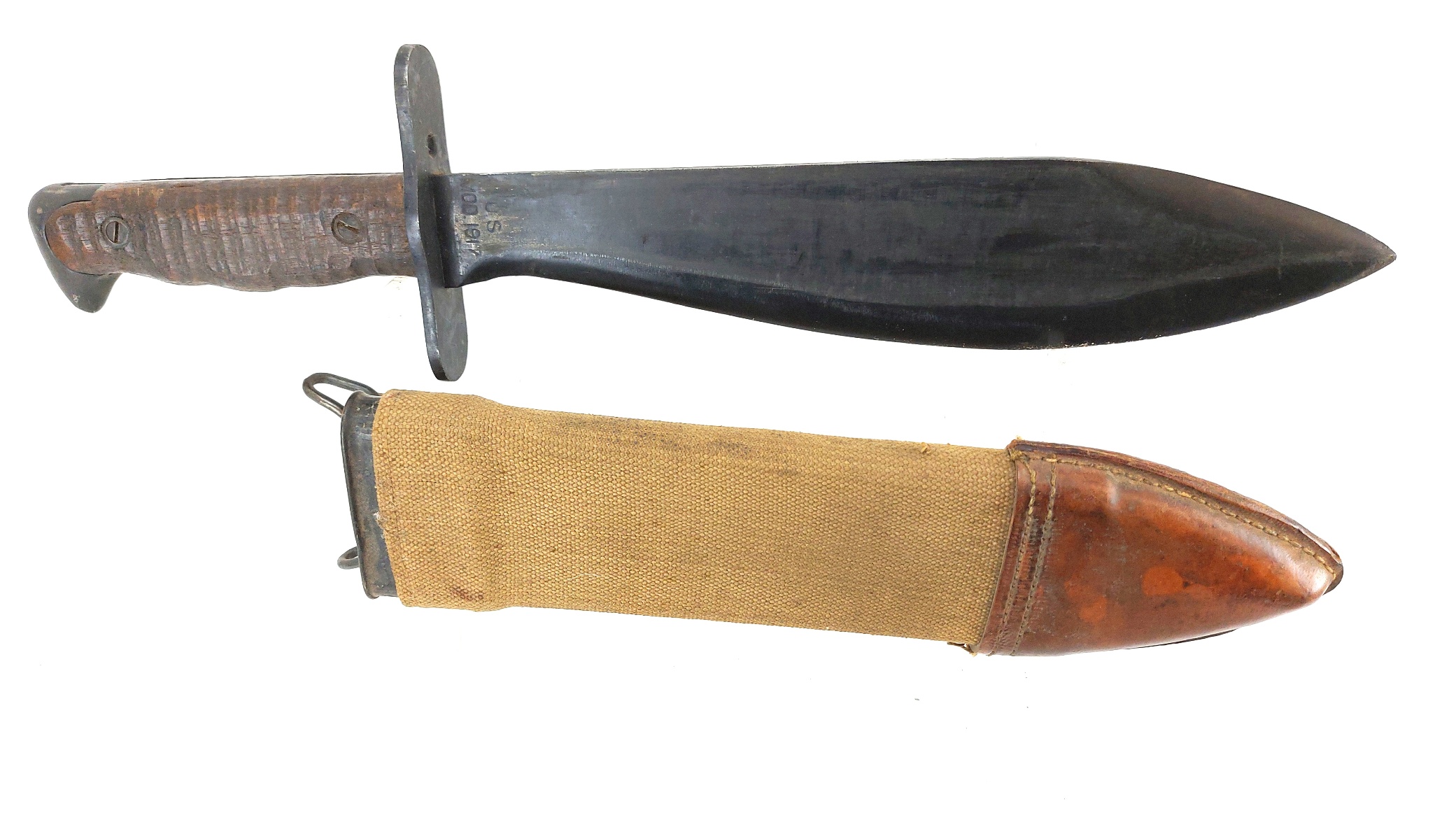
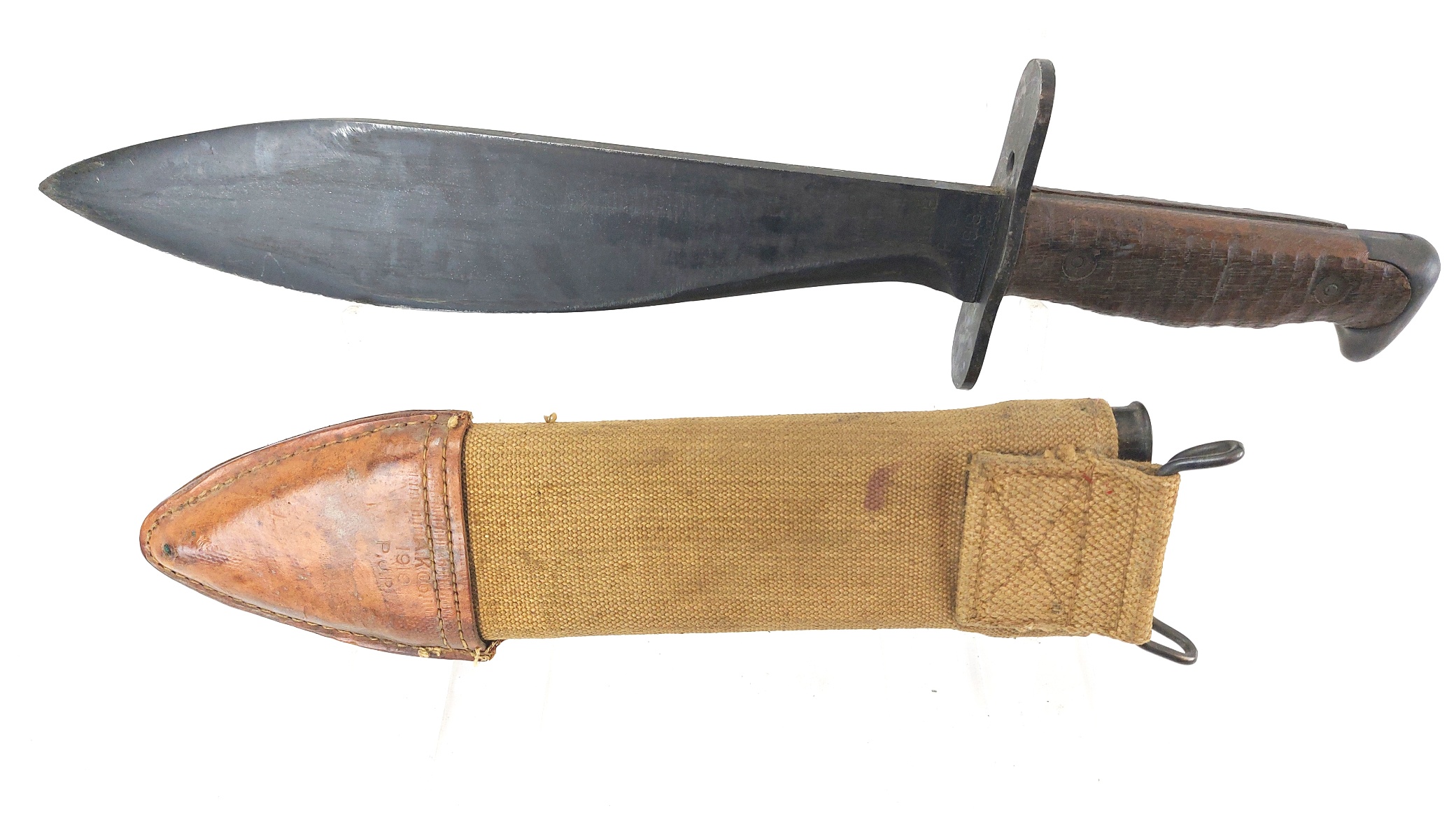
*USA, WW1, Model 1917 Machine Gunners Bolo Knife by Plumb, with Scabbard by A. Kenwood Company*
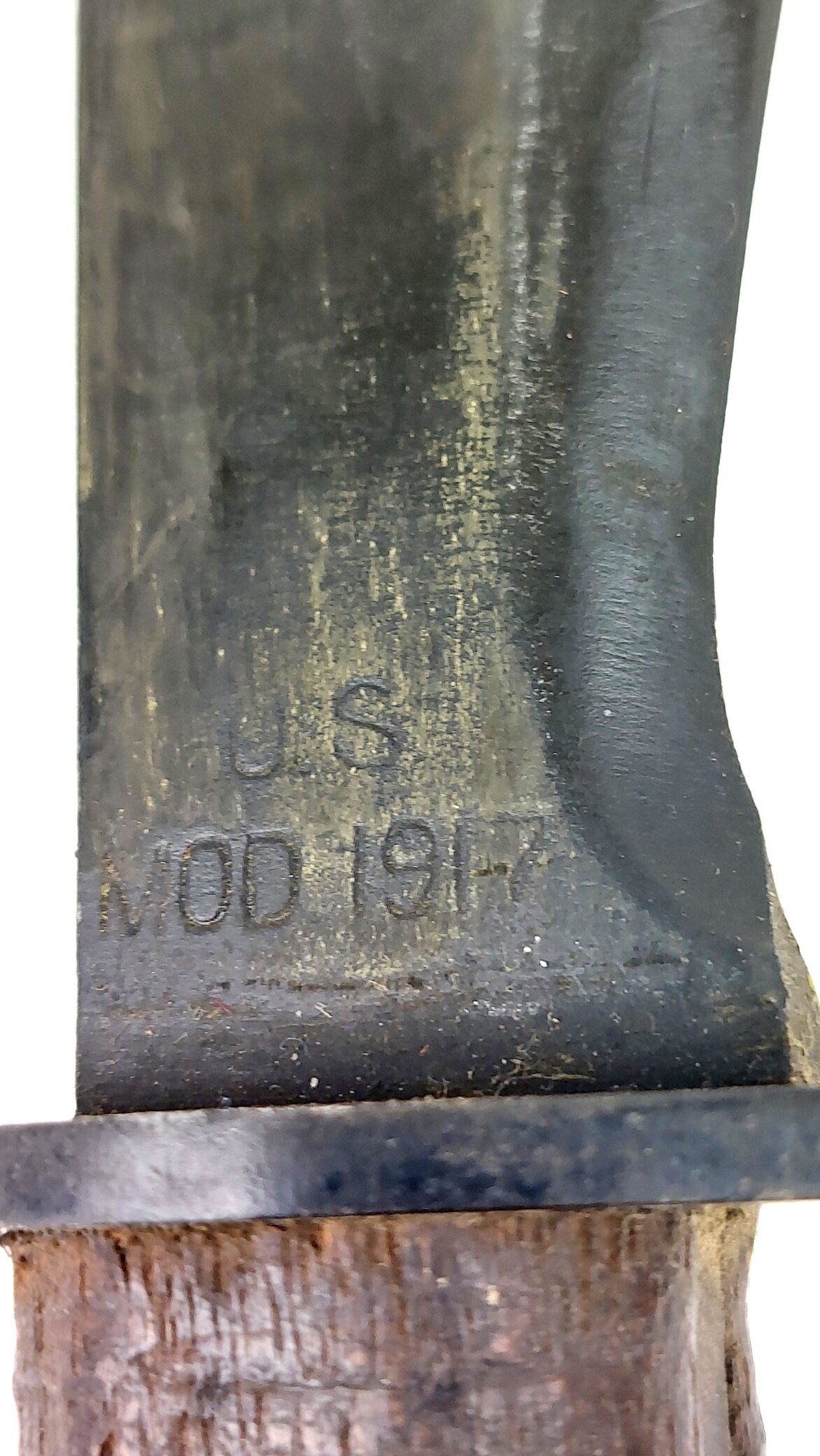
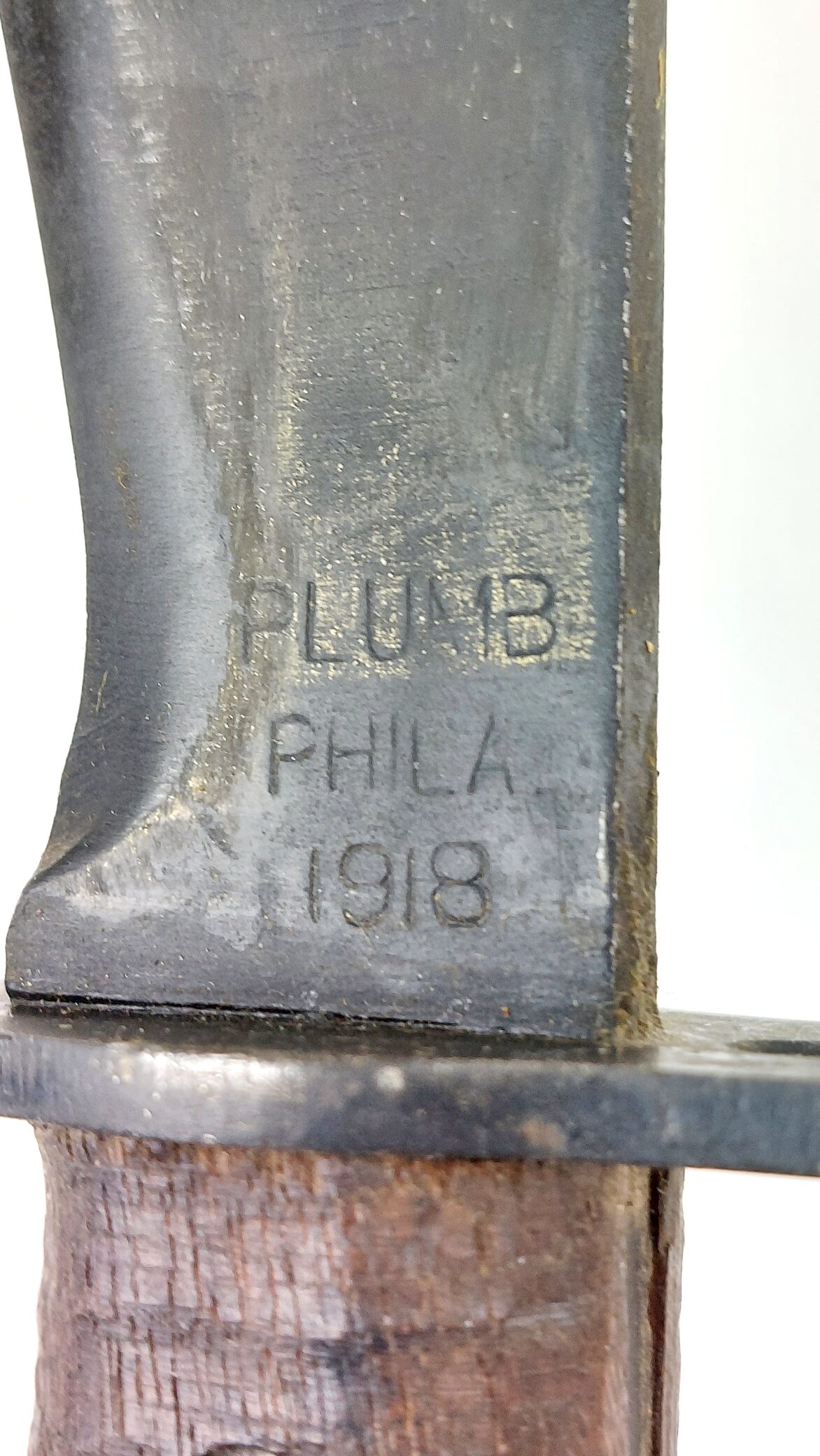
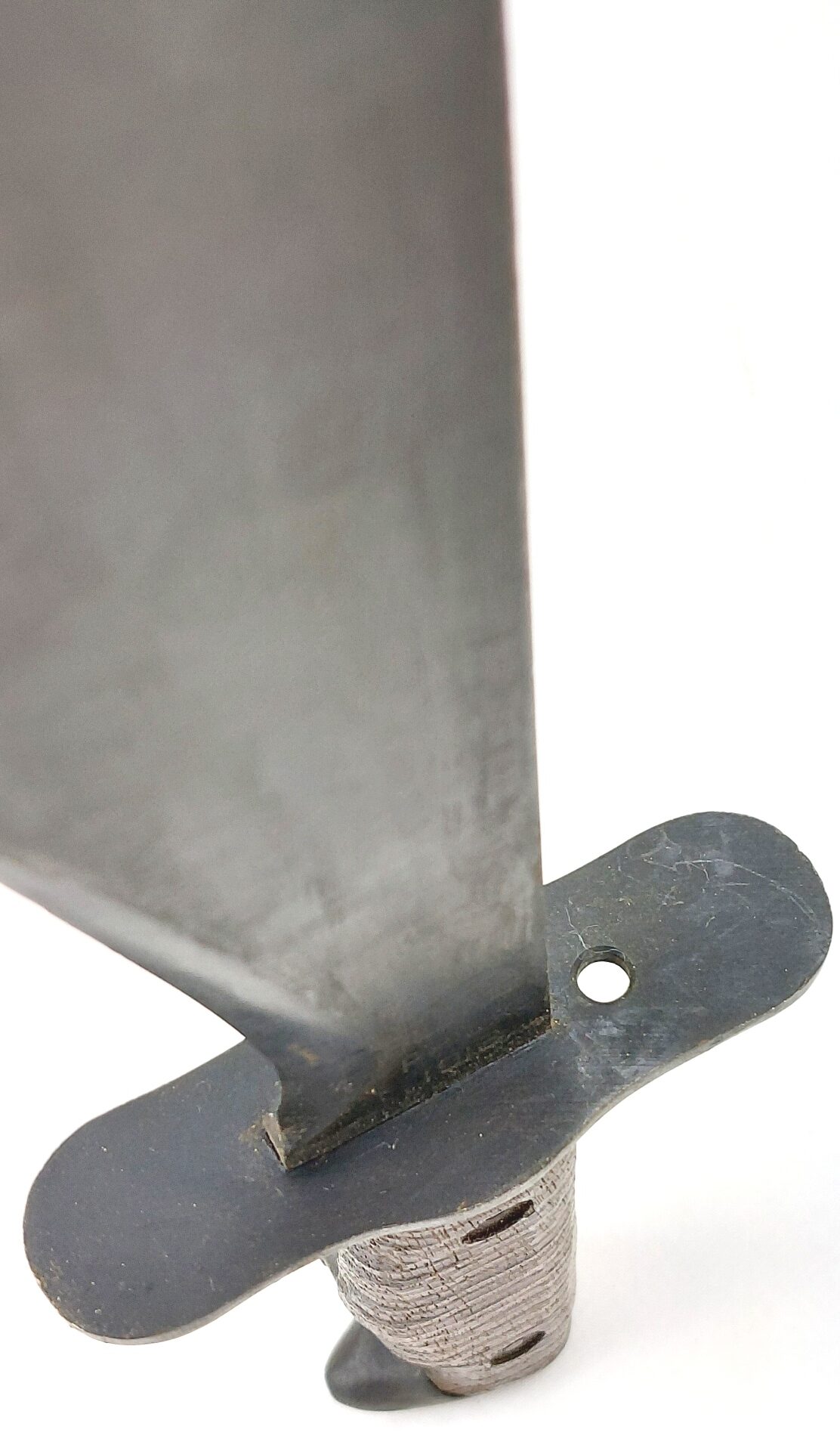
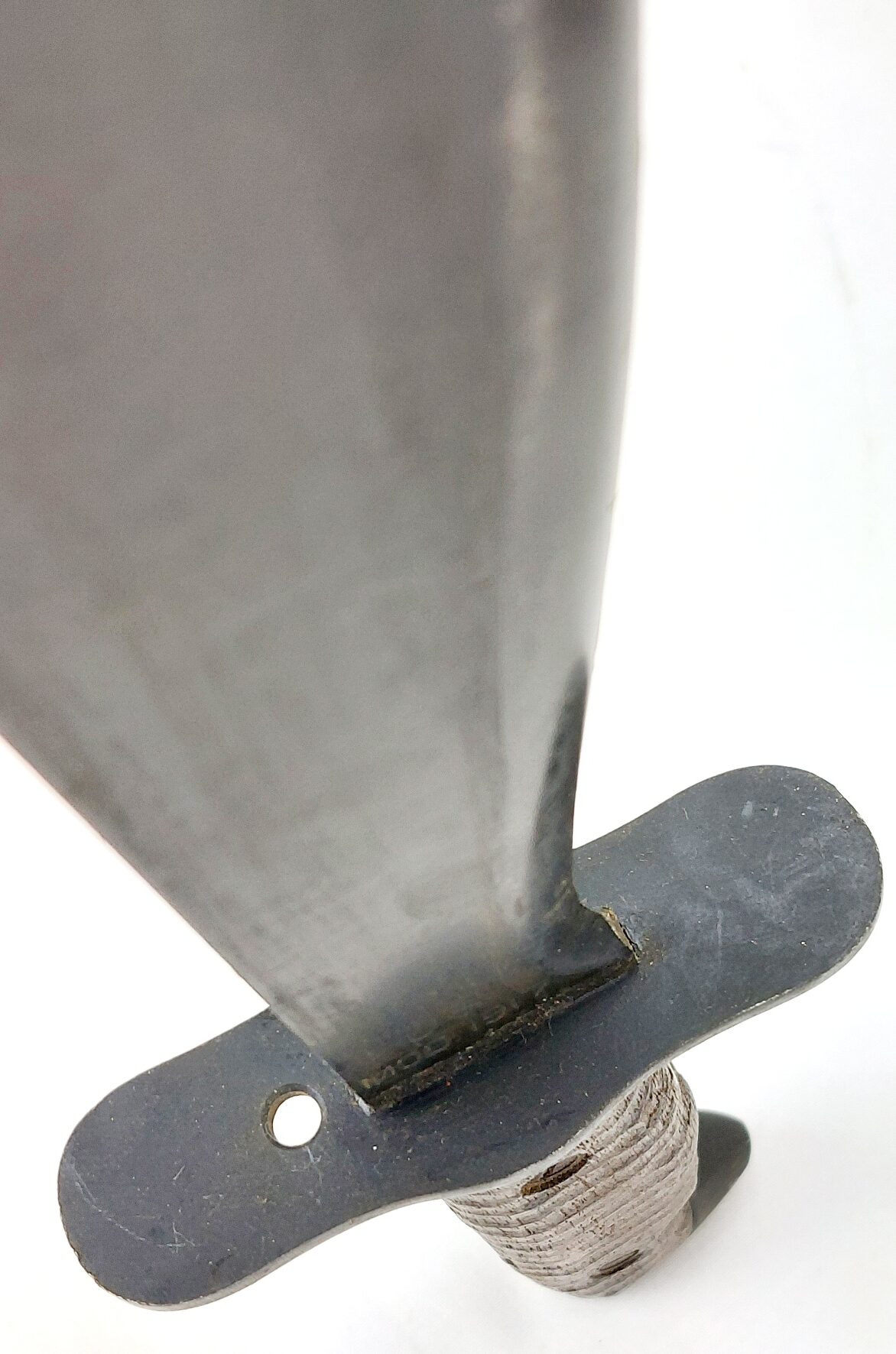
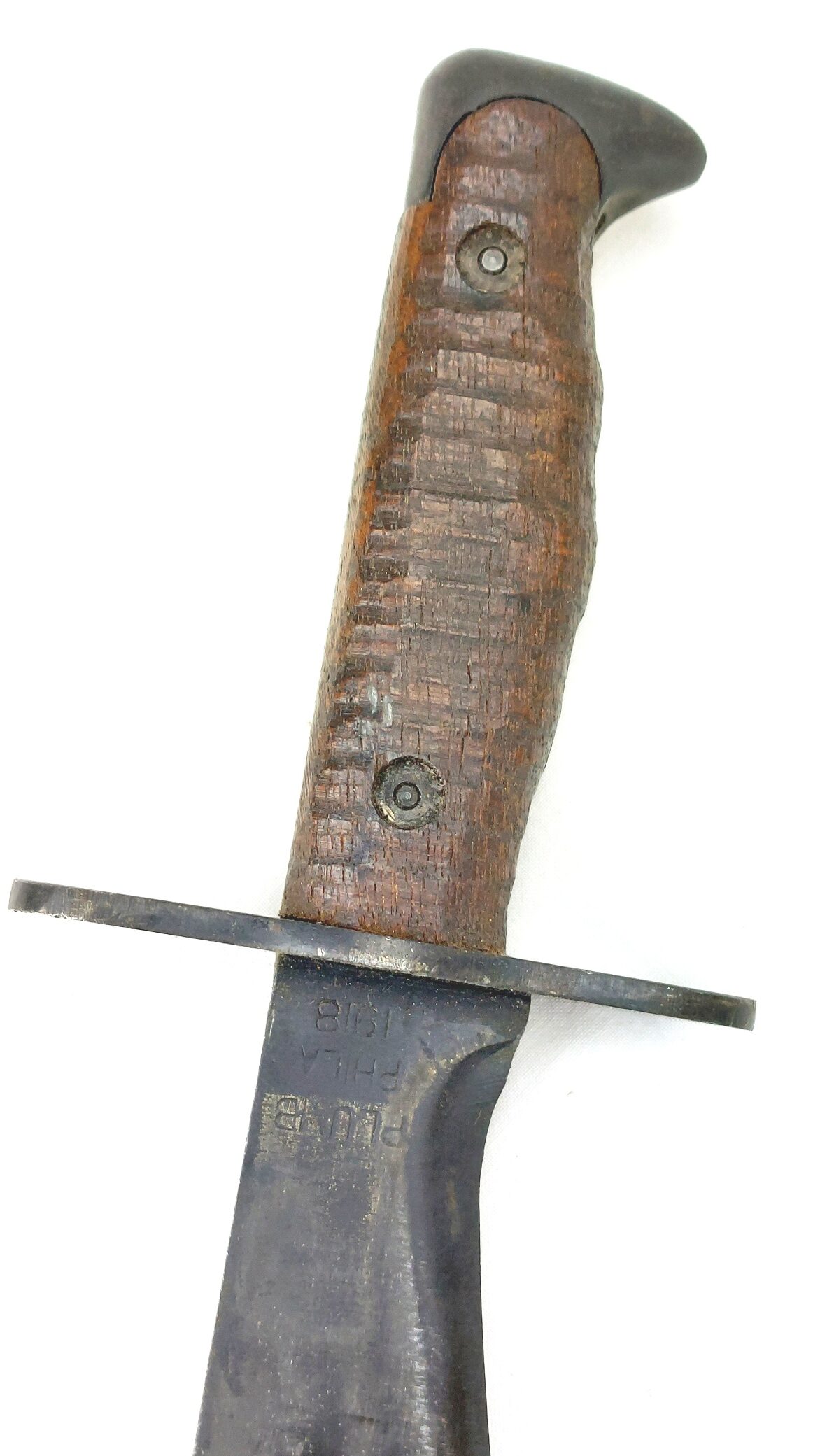
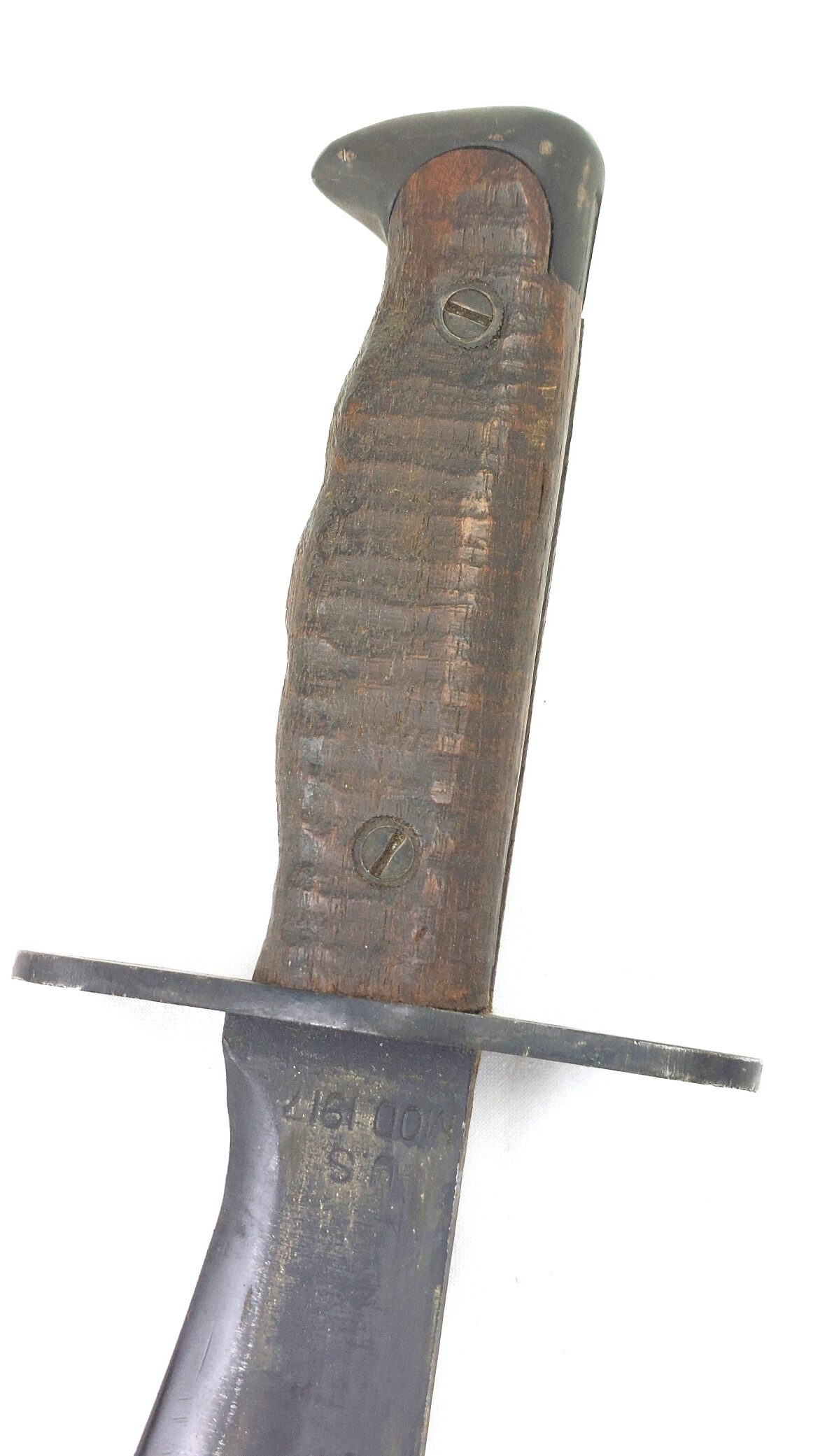
A fine and original U.S. Model 1917 Bolo Knife, manufactured by Fayette R. Plumb Co. of Philadelphia, and clearly stamped on the ricasso “U.S. / MOD 1917” to one side and “PLUMB / PHILA. / 1918” to the reverse. The heavy, forward-curved bolo blade measures approximately 26.5 cm (10.4 in) with an overall length of 38.4 cm (15.1 in) and a width of 5.5 cm (2.1 in). It retains its original blackened wartime finish and unsharpened ricasso, with clean bevels and a deep belly typical of the Plumb pattern.
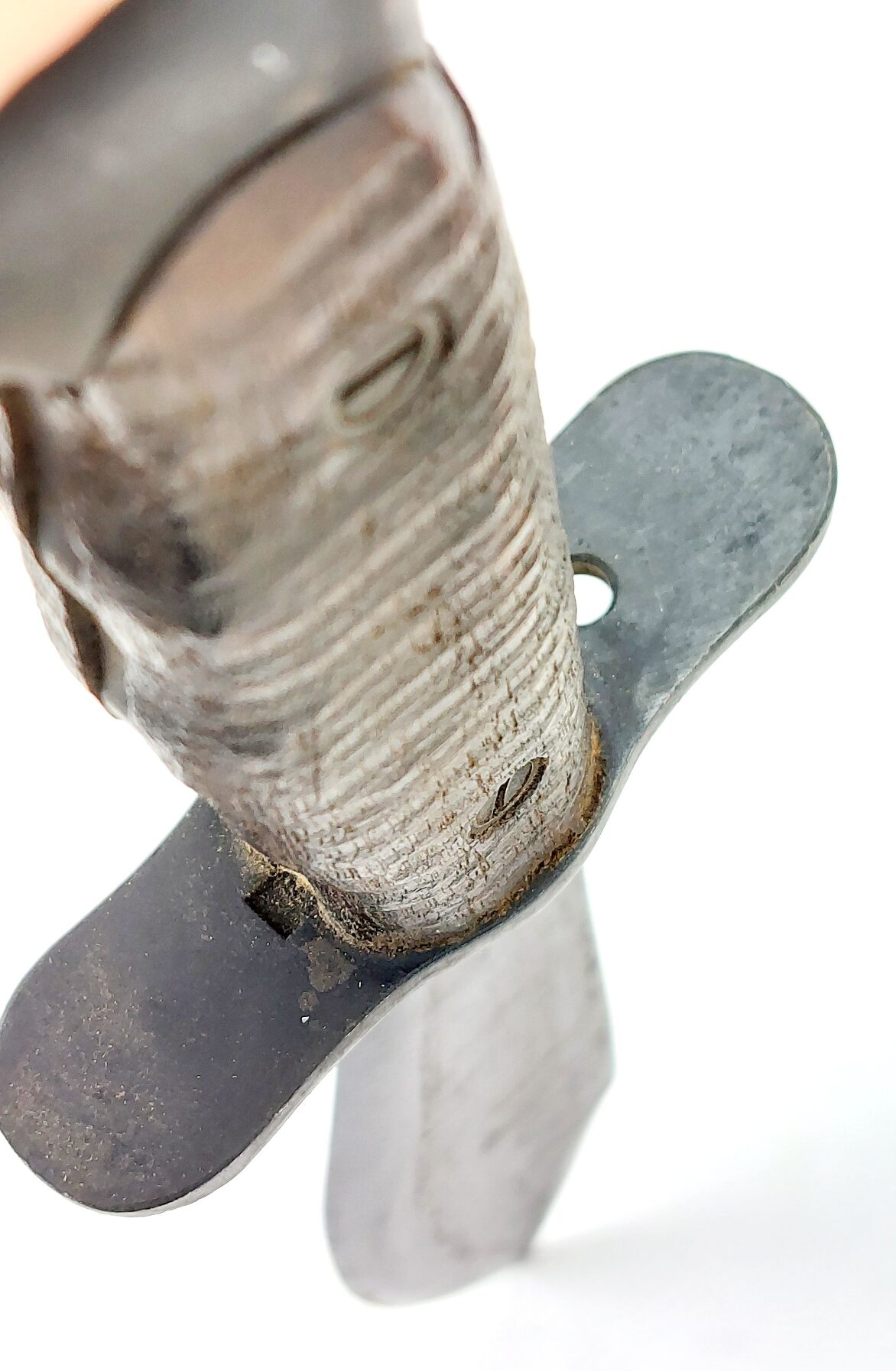
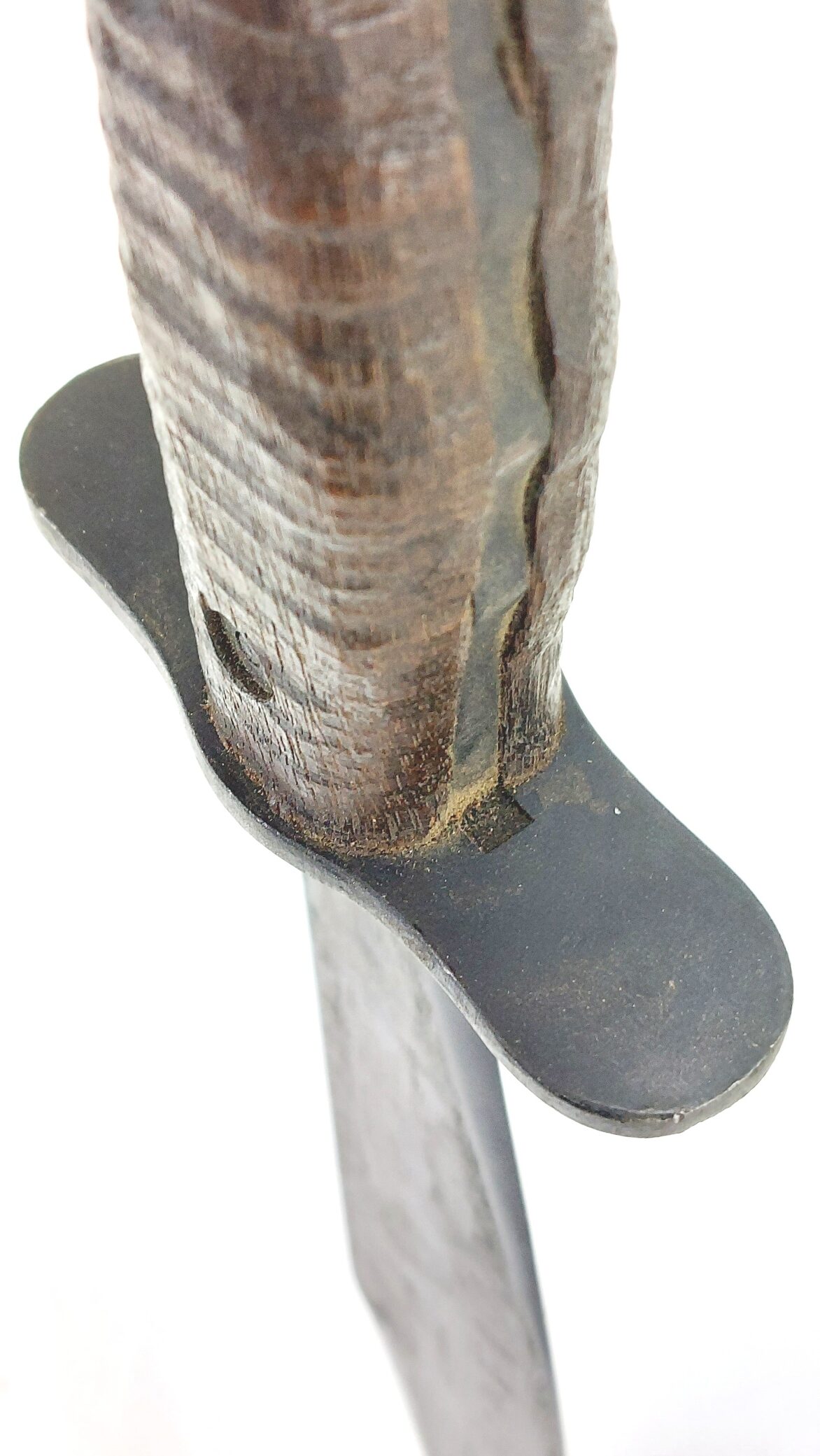
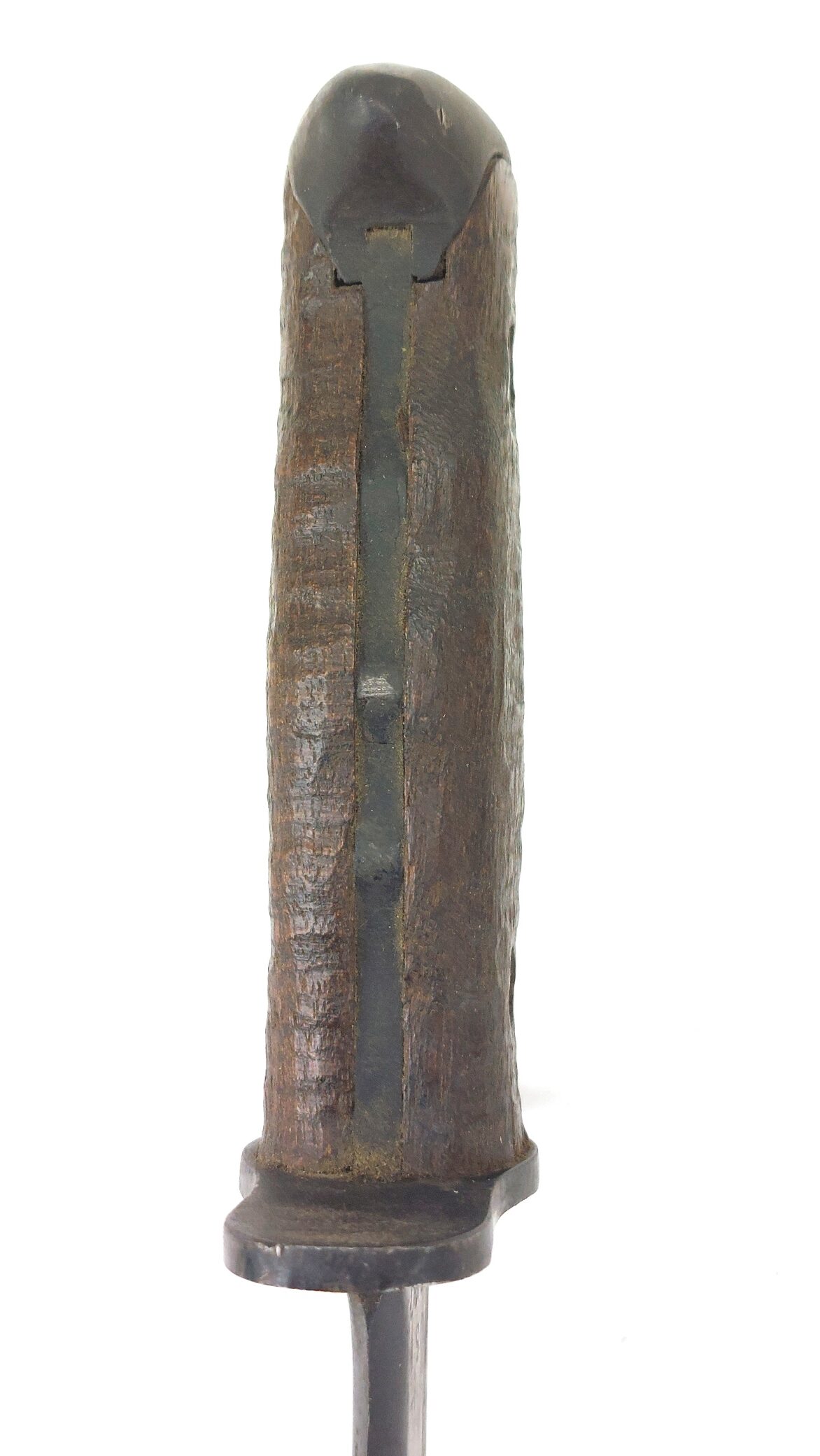
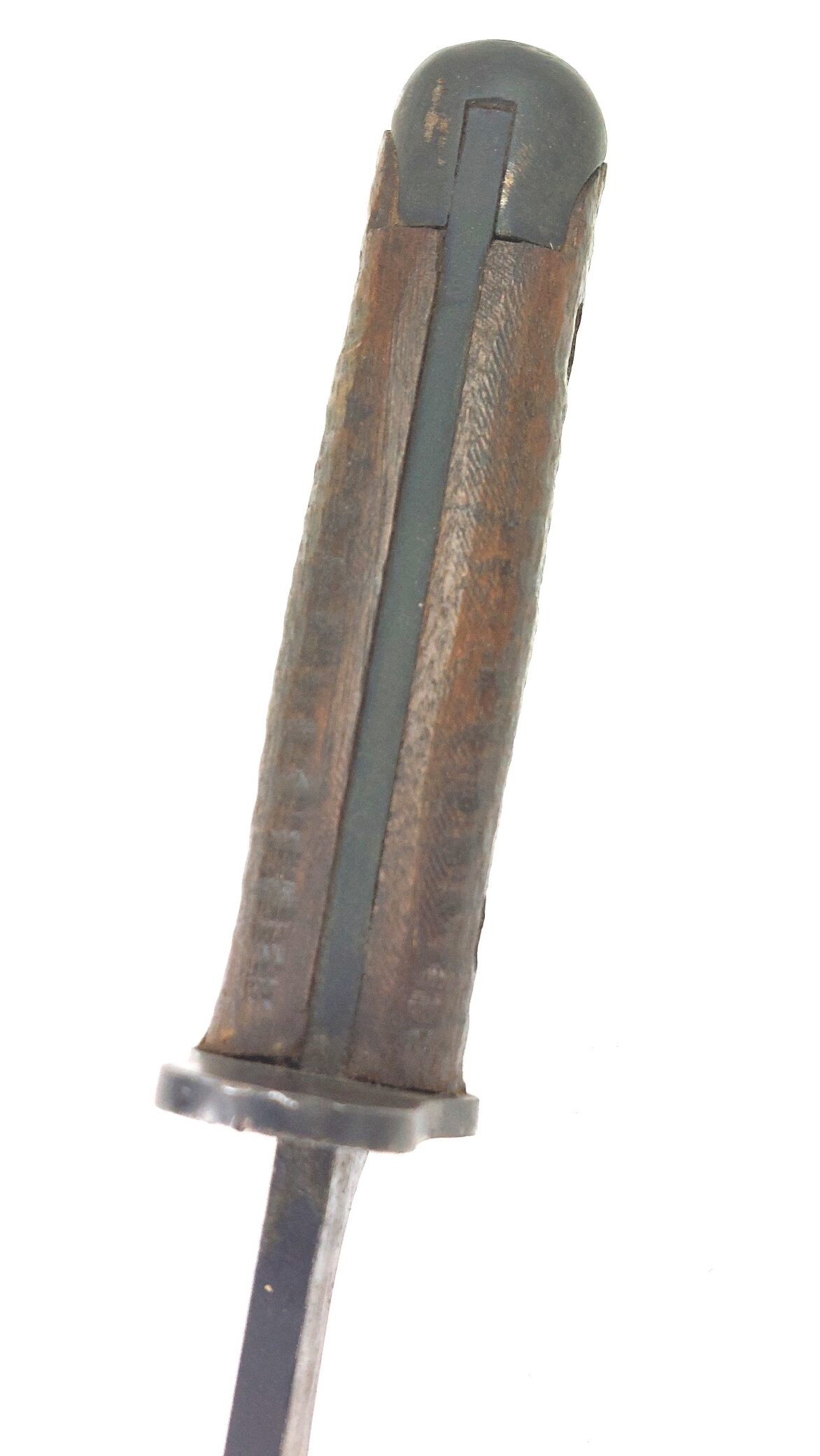
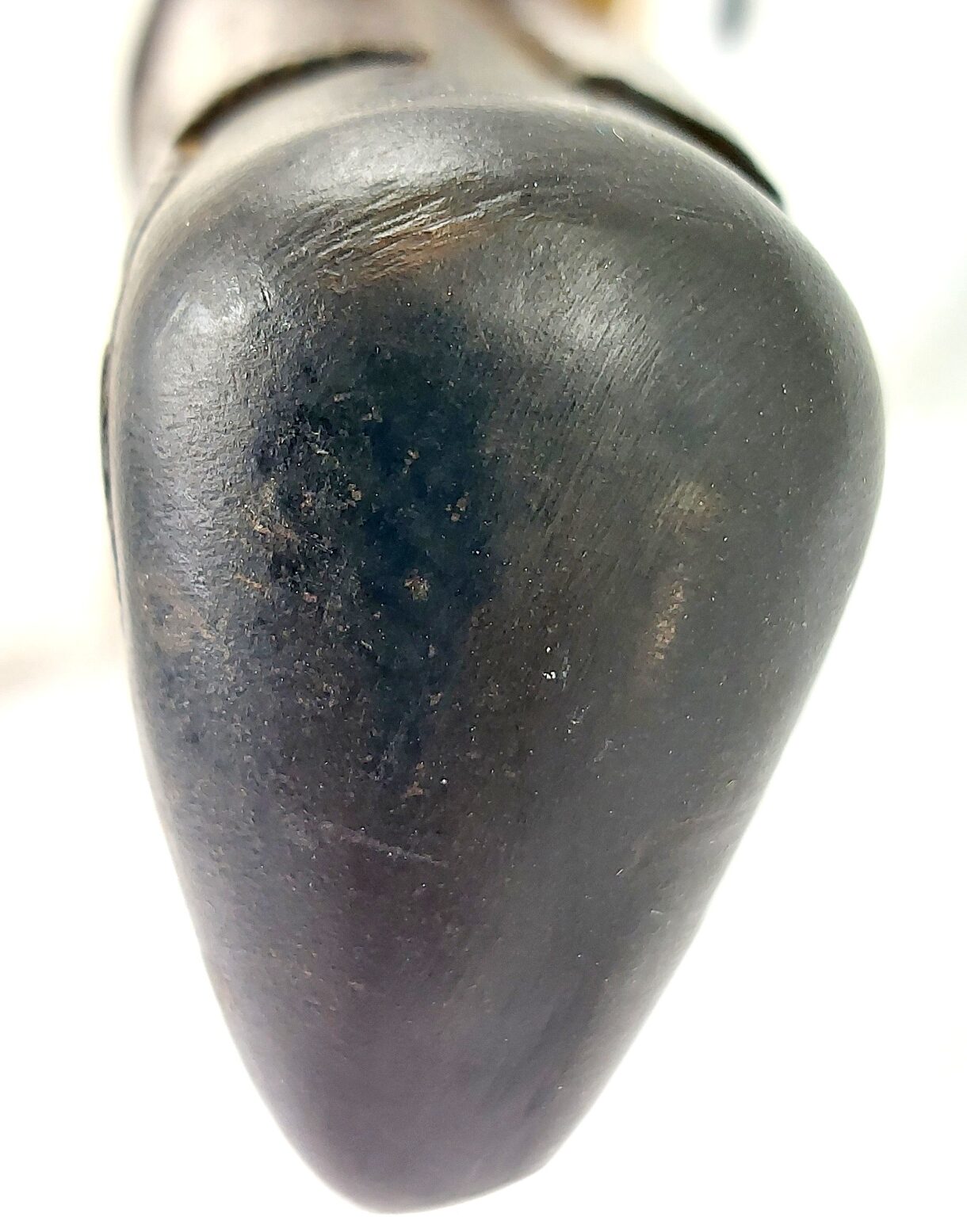
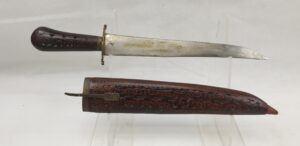
The hilt retains its original rough-hewn walnut grips, secured by two domed screws through a full tang terminating in a solid steel pommel with integral lanyard hole. The grips remain tight and show smooth handling wear with an attractive aged tone. All steel fittings display an even dark patina consistent with period service.
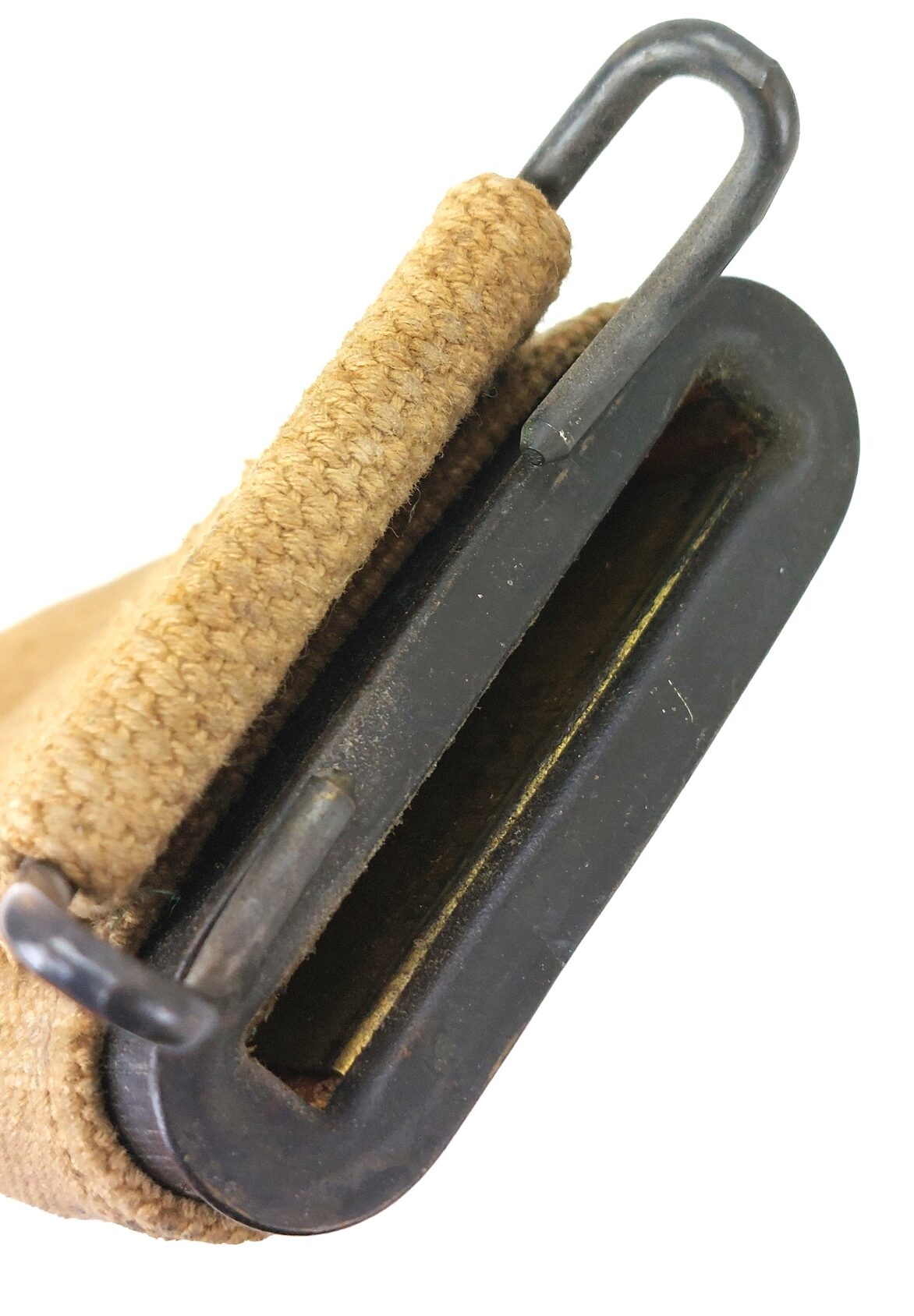
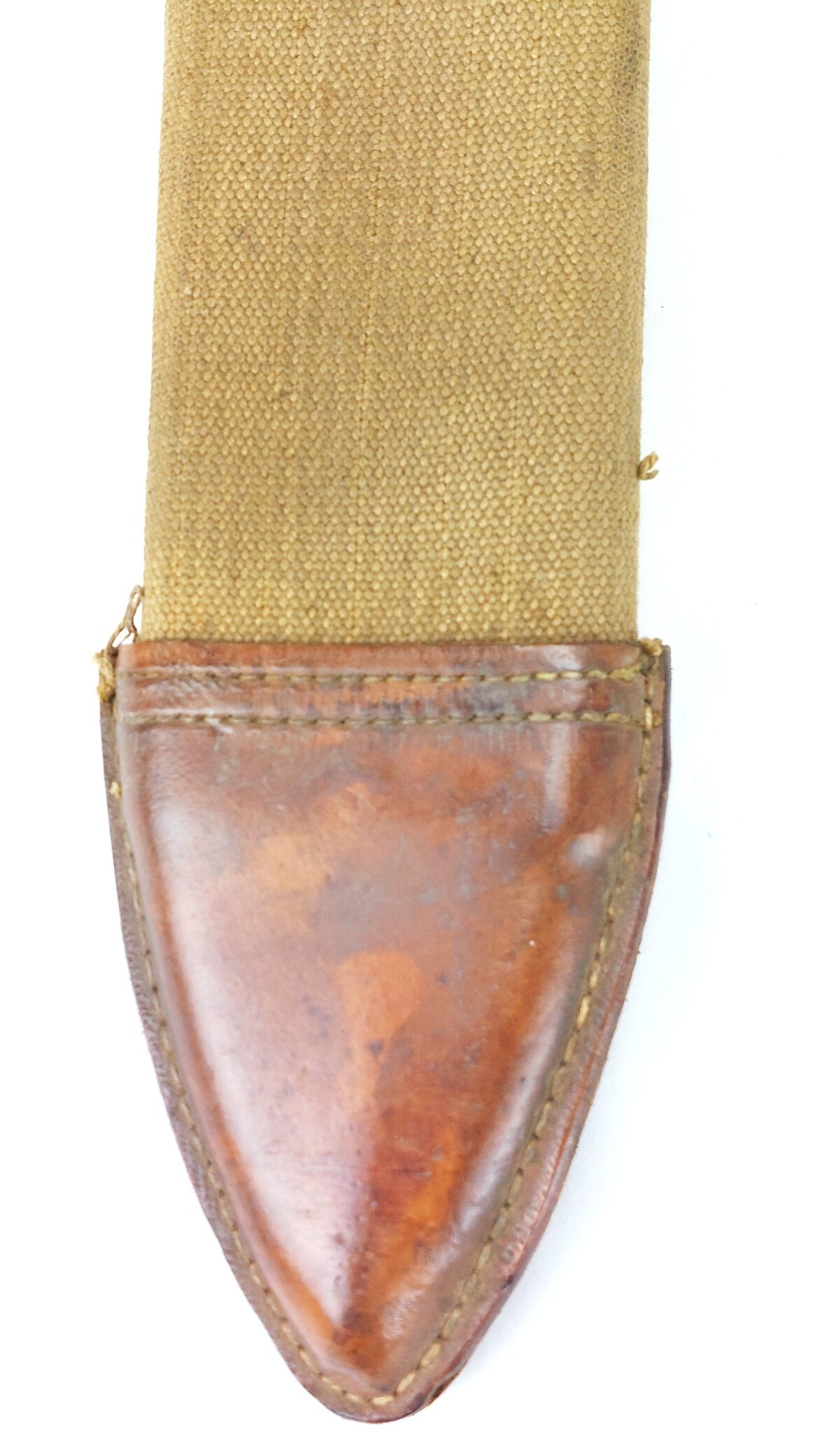
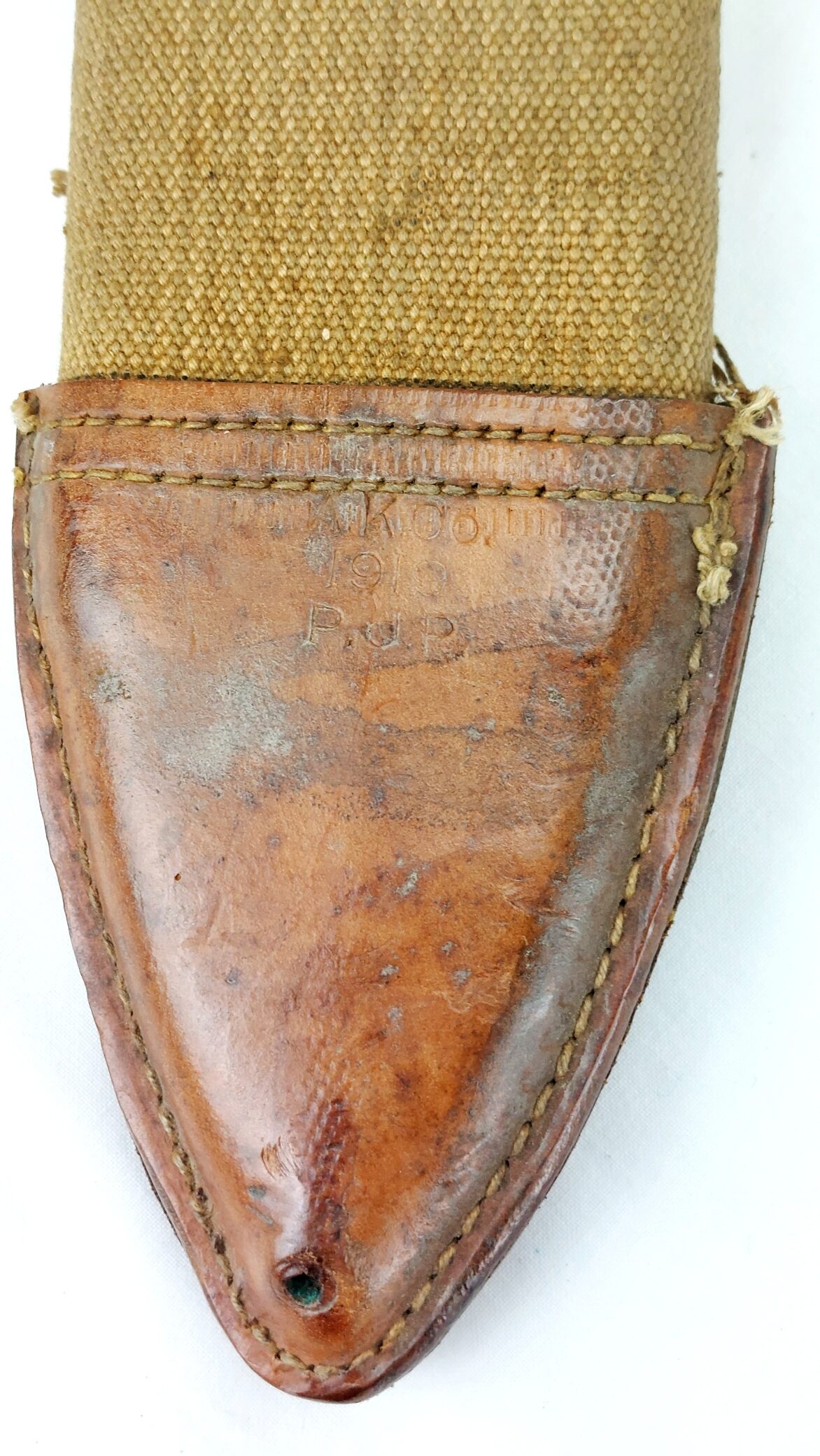
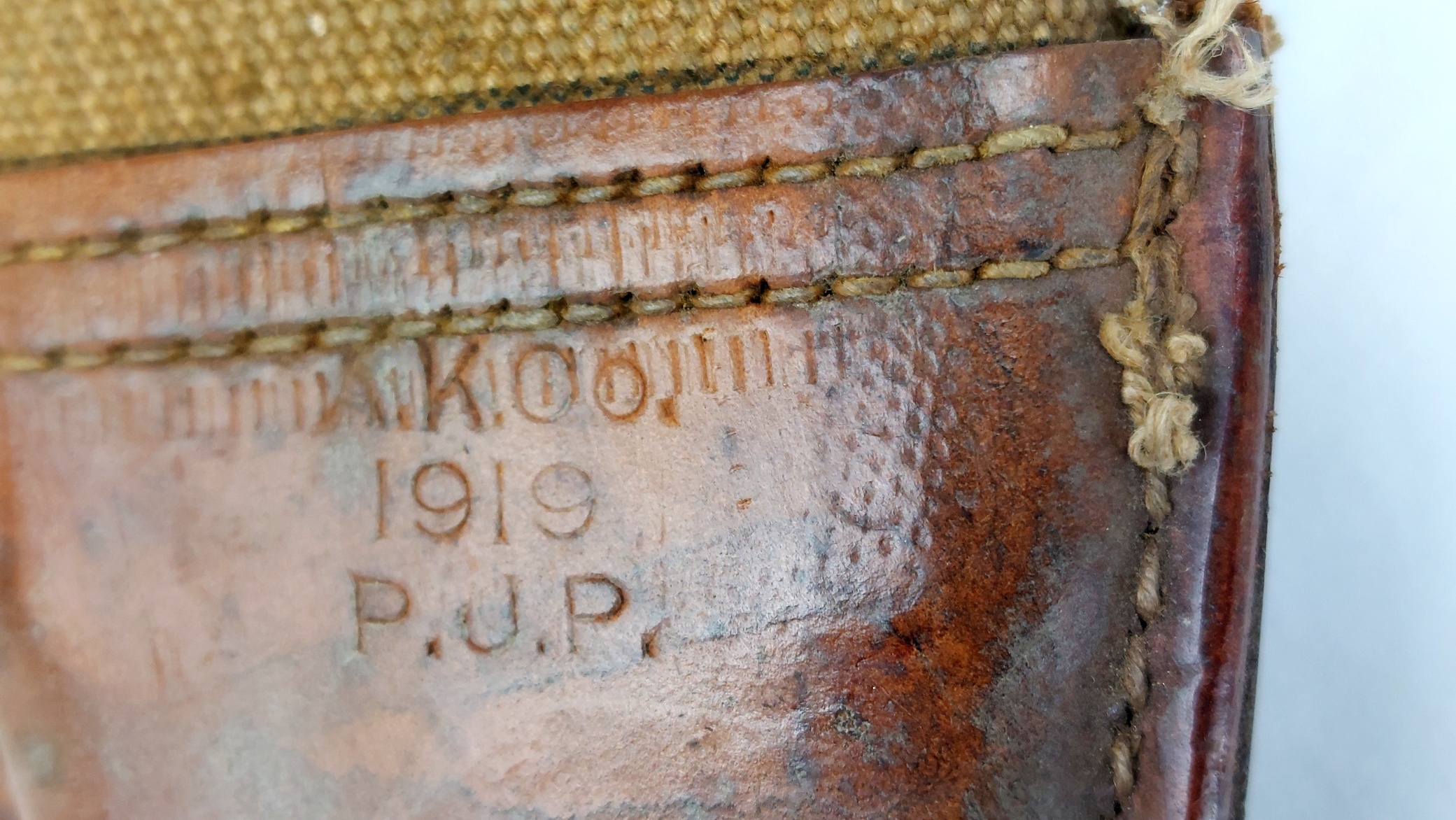
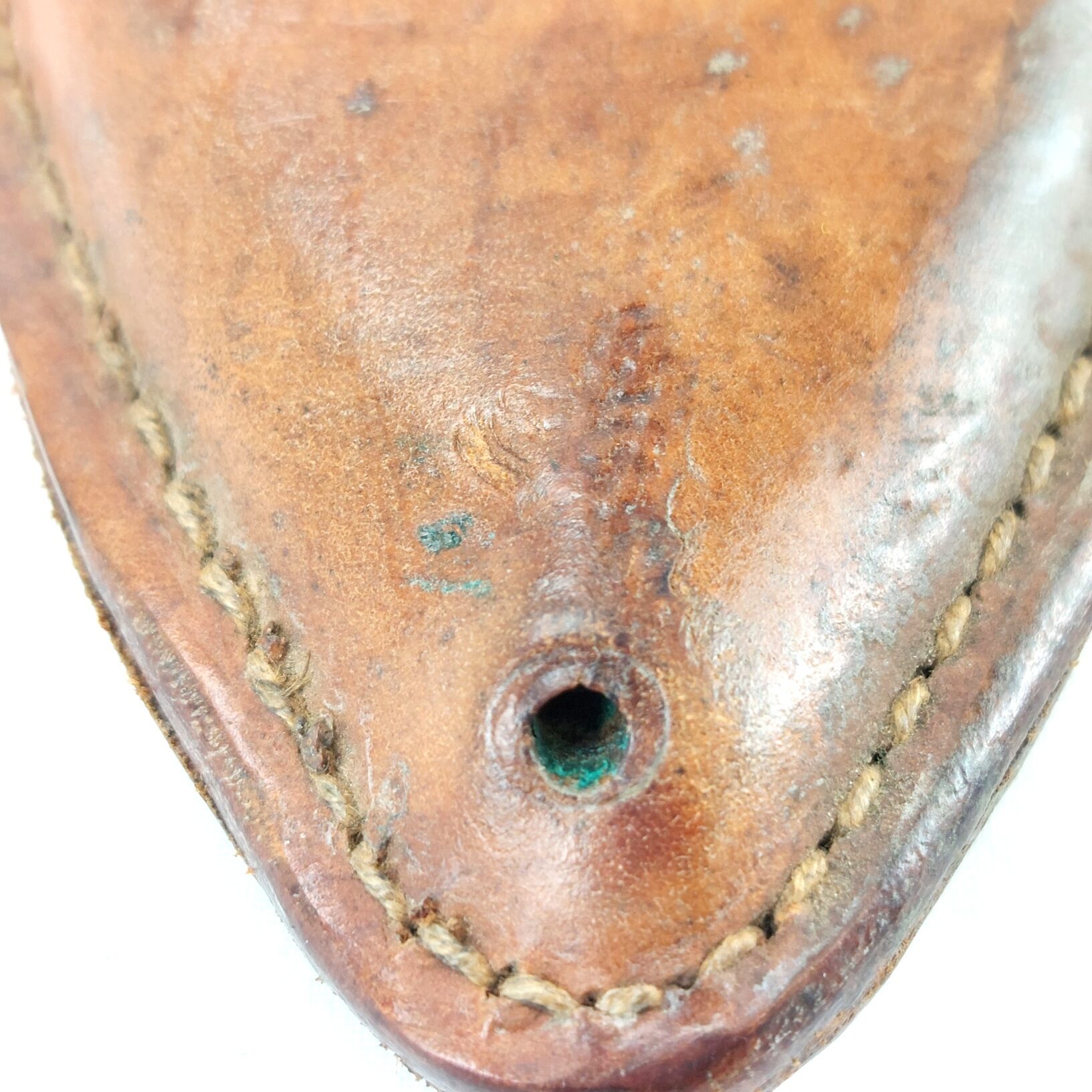
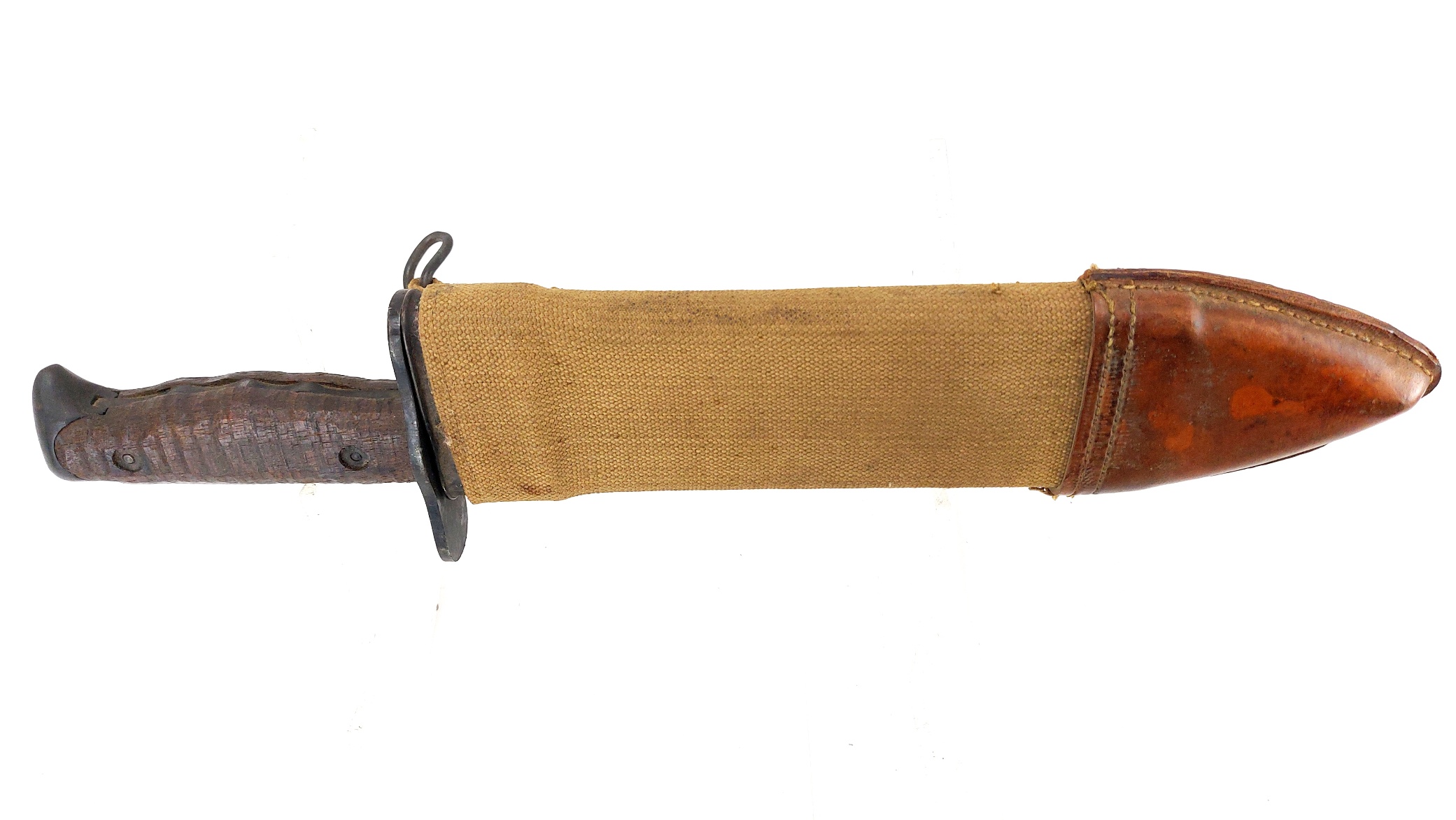
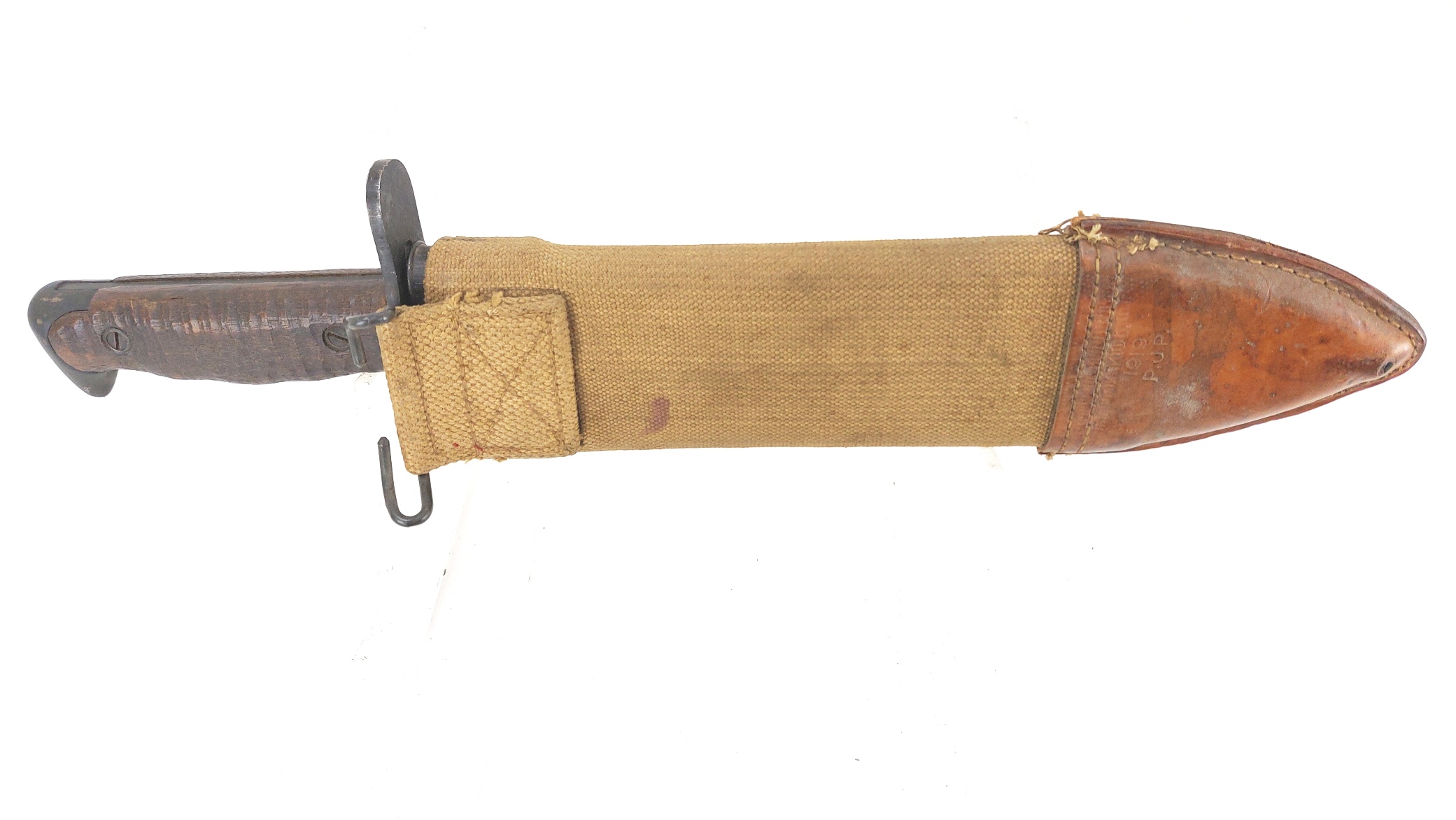
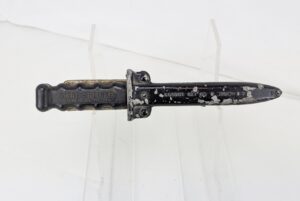
The knife is housed in its correct U.S. Model 1917 scabbard, comprising a wooden core covered in tan webbing, with a stitched brown leather chape and blackened steel throat fitted with dual wire belt hooks for belt suspension. The reverse chape features a blackened brass drainage grommet at the lower point, allowing accumulated moisture to escape from the scabbard interior — a distinctive and practical feature of this pattern. The reverse of the leather tip is clearly impressed in three lines: “A-K-CO / 1919 / P.J.P.” — denoting manufacture by the A. Kenwood Company in 1919 and final inspection under P.J.P.
Historical Note: The Model 1917 Bolo Knife was the simplified wartime successor to the Springfield Armory Model 1910, redesigned for faster and more economical contractor production by removing the earlier spring-catch mechanism while retaining its rugged utility. Intended as a multipurpose field tool serving the roles of machete, axe, and knife, it was widely issued to the American Expeditionary Forces during World War I—most commonly to machine-gun crews for clearing fields of fire, and to engineers and medical personnel for camp and construction work. Within infantry squads it appeared in limited numbers alongside the pick-mattock and hand axe, complementing the standard entrenching tool.
The principal contractors were Fayette R. Plumb Co. of Philadelphia and St. Louis, and American Cutlery Co. of Chicago. Founded in 1869 by Fayette R. Plumb in partnership with Jonathan Yerkes, the Plumb Company became a leading U.S. tool manufacturer, noted for its hammers and axes. After taking full ownership in 1887, Plumb expanded operations and added a second plant in 1910. The firm remained in family hands until 1971, when acquired by Ames Manufacturing Co., later becoming part of the Cooper Group.
The scabbard, marked “A-K-Co / 1919 / P.J.P.”, was produced by the A. Kenwood Company of New York under U.S. Ordnance contract. The inspector’s initials confirm official acceptance under a late-war or immediate post-Armistice production order.
*Condition* A very good, honest example showing light, even service wear consistent with age. The blade retains its original edge profile and clear factory stampings; wooden grips are tight, undamaged, and show only minor handling marks. Metal fittings exhibit smooth, even patination without corrosion. The scabbard remains complete and structurally sound, with intact stitching, clear 1919 maker and inspector stamp, and only minor scuffing to the leather chape. Please see photographs as part of the condition report.
*In order to complete the online purchase we will require a picture/scan of a photo ID (Driving Licence, Passport or an official document with a recent picture). If you don't posses any such document please call to buy. If we consider that the proof of ID is incorect or insuficient, we reserve the right to cancel the transaction.
*We also reserve the right to cancel the transaction with a full refund if there is any suspicion that the provided item will be used in any way contrary to the laws and legislation of UK.