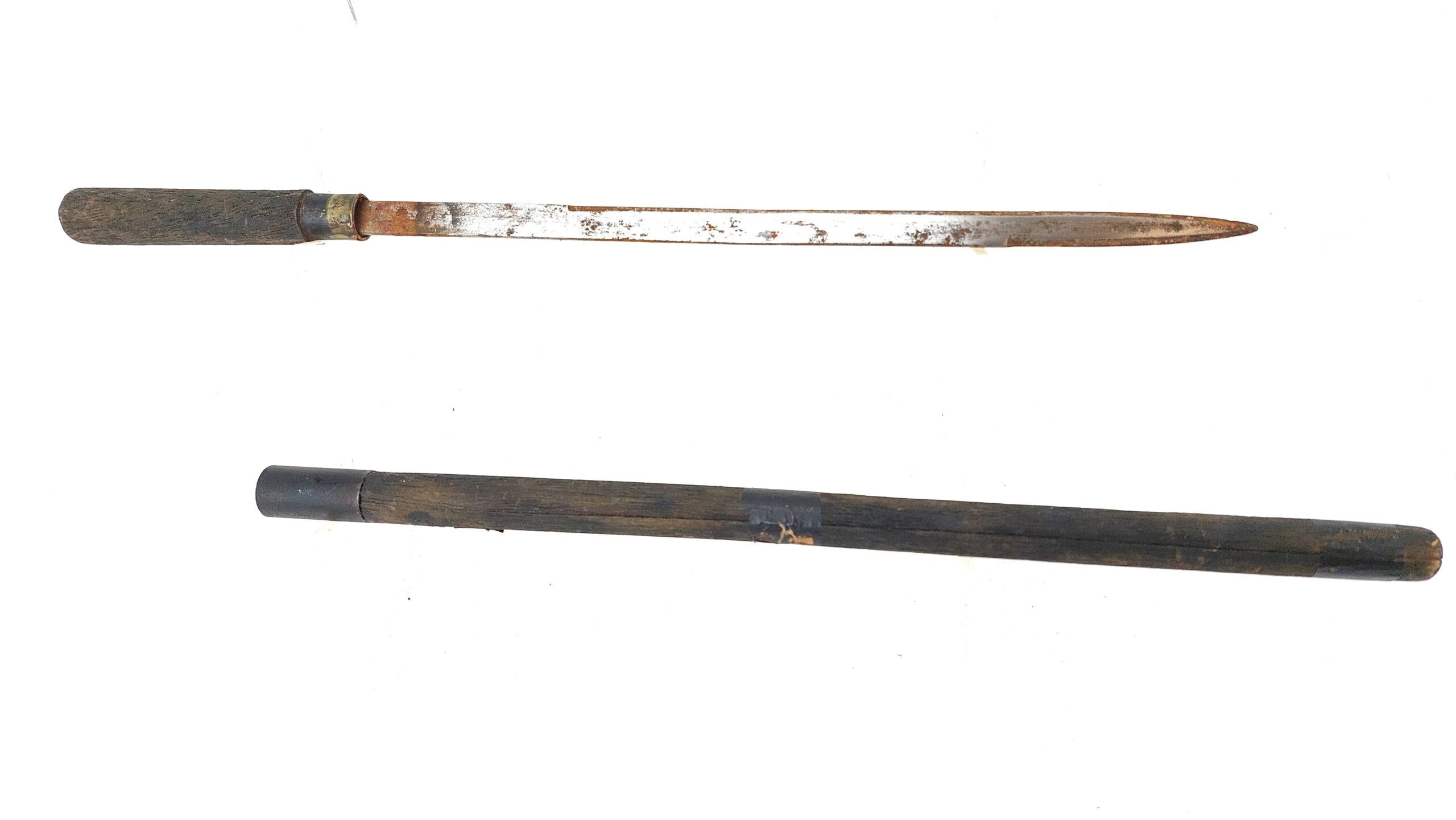
*UK or Continental Europe, c.1880–1910, Concealed Dagger Stick with Spear-Point Blade*
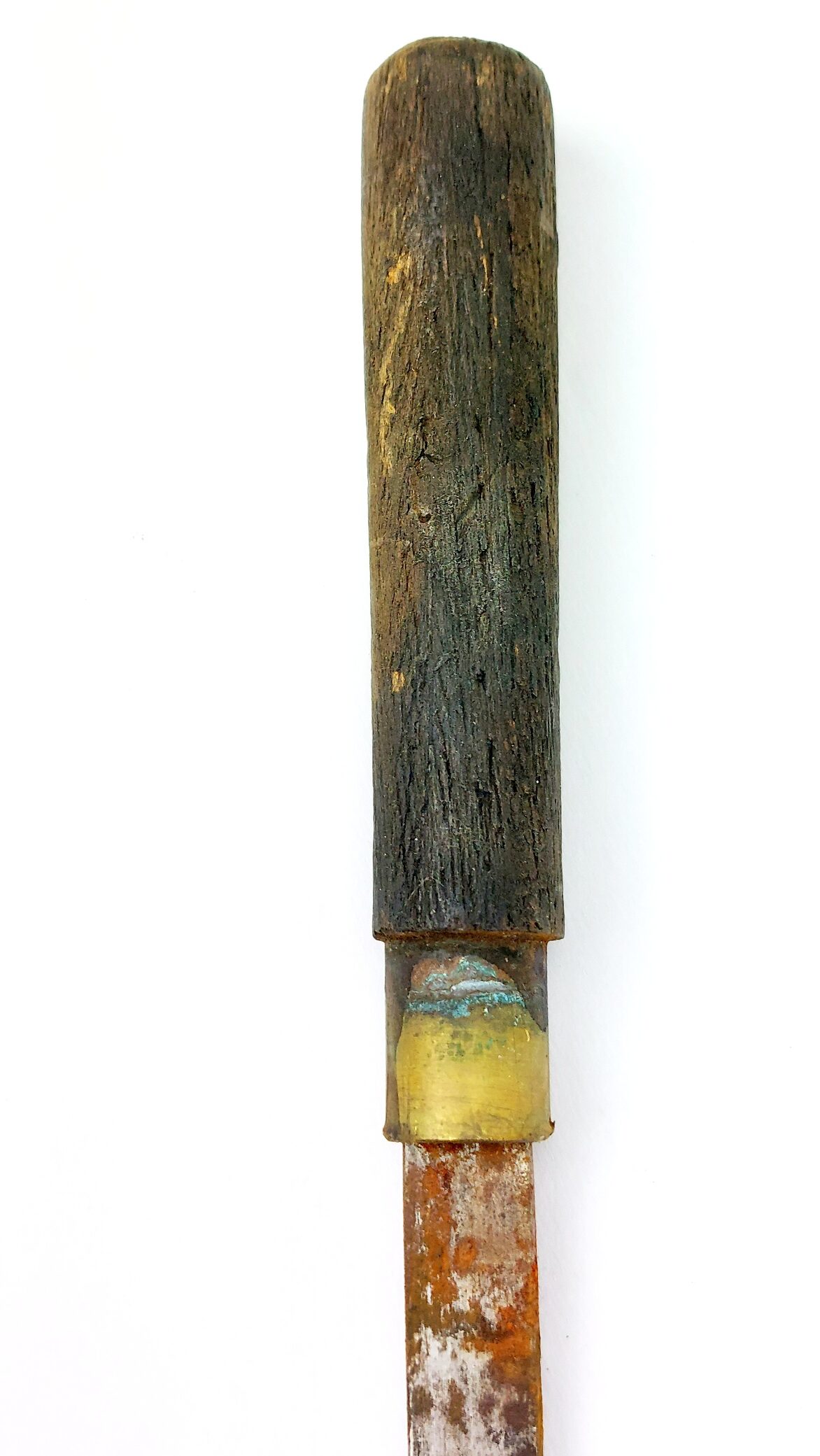
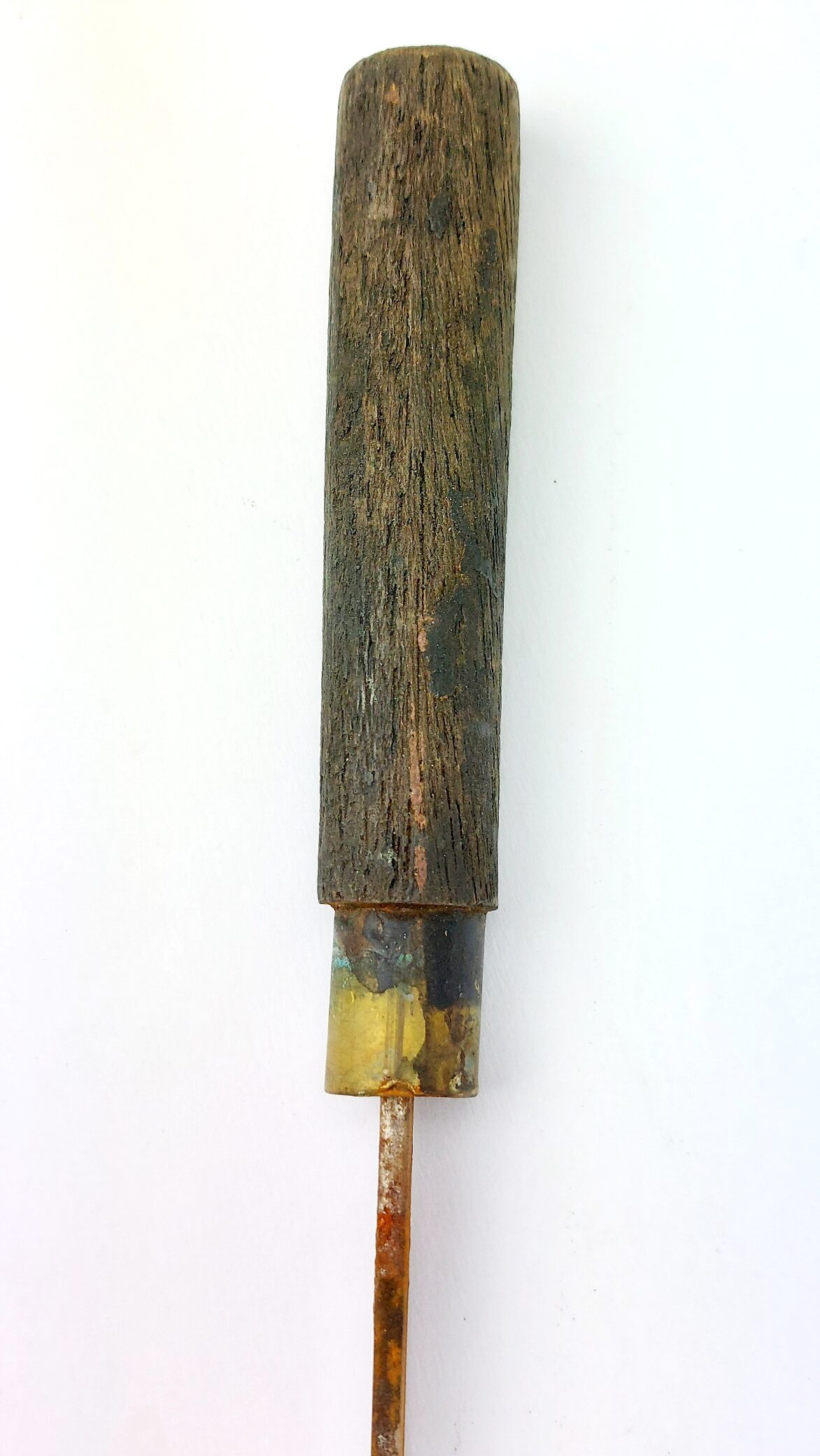
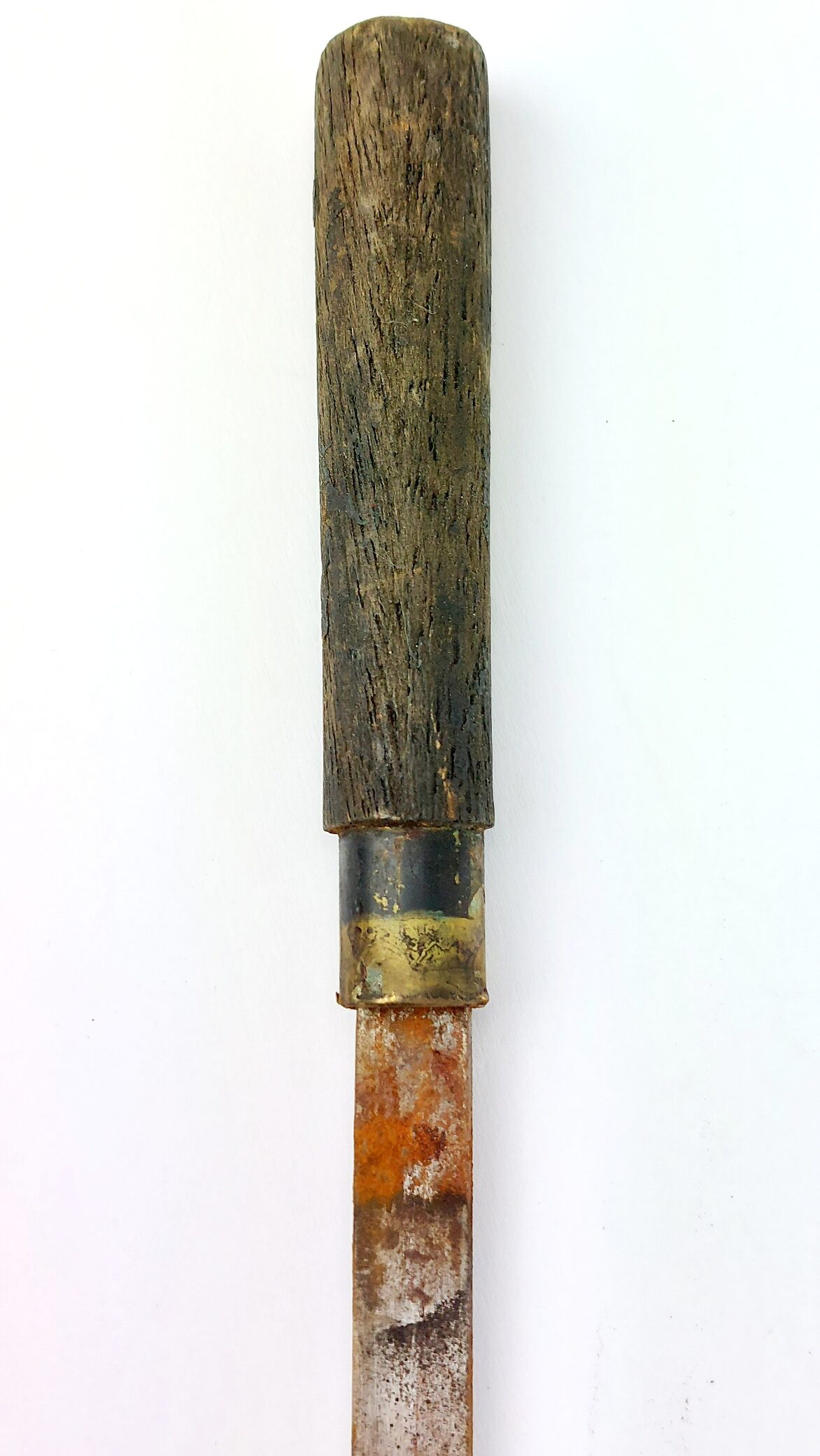
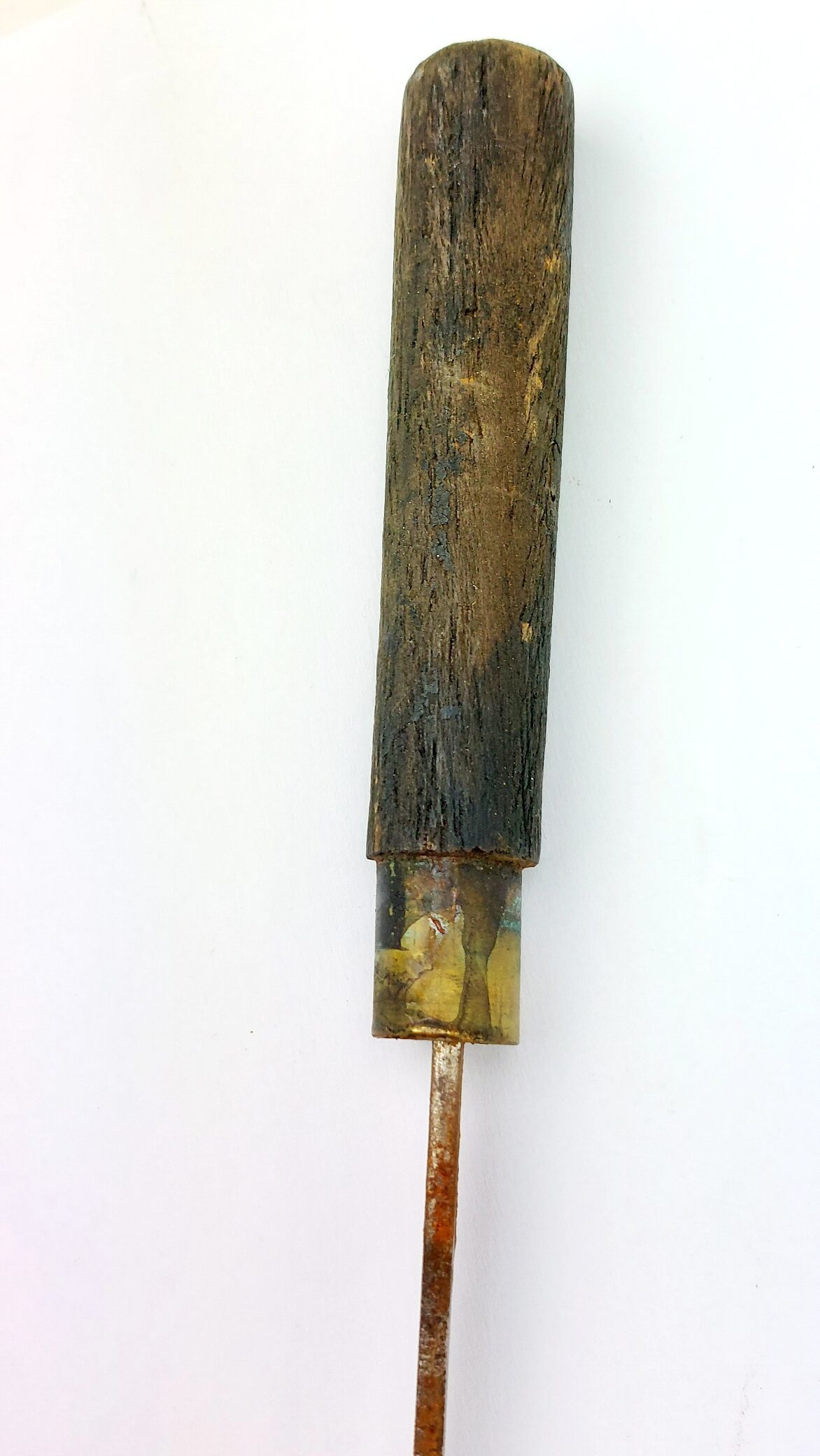
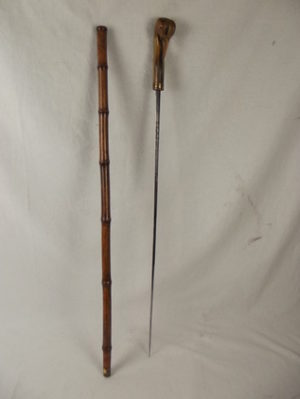
A compact concealed dagger stick dating to the late 19th–early 20th century. At first glance a plain wooden rod, it withdraws to reveal a narrow thrusting blade fitted with a rounded hardwood grip and brass ferrule.
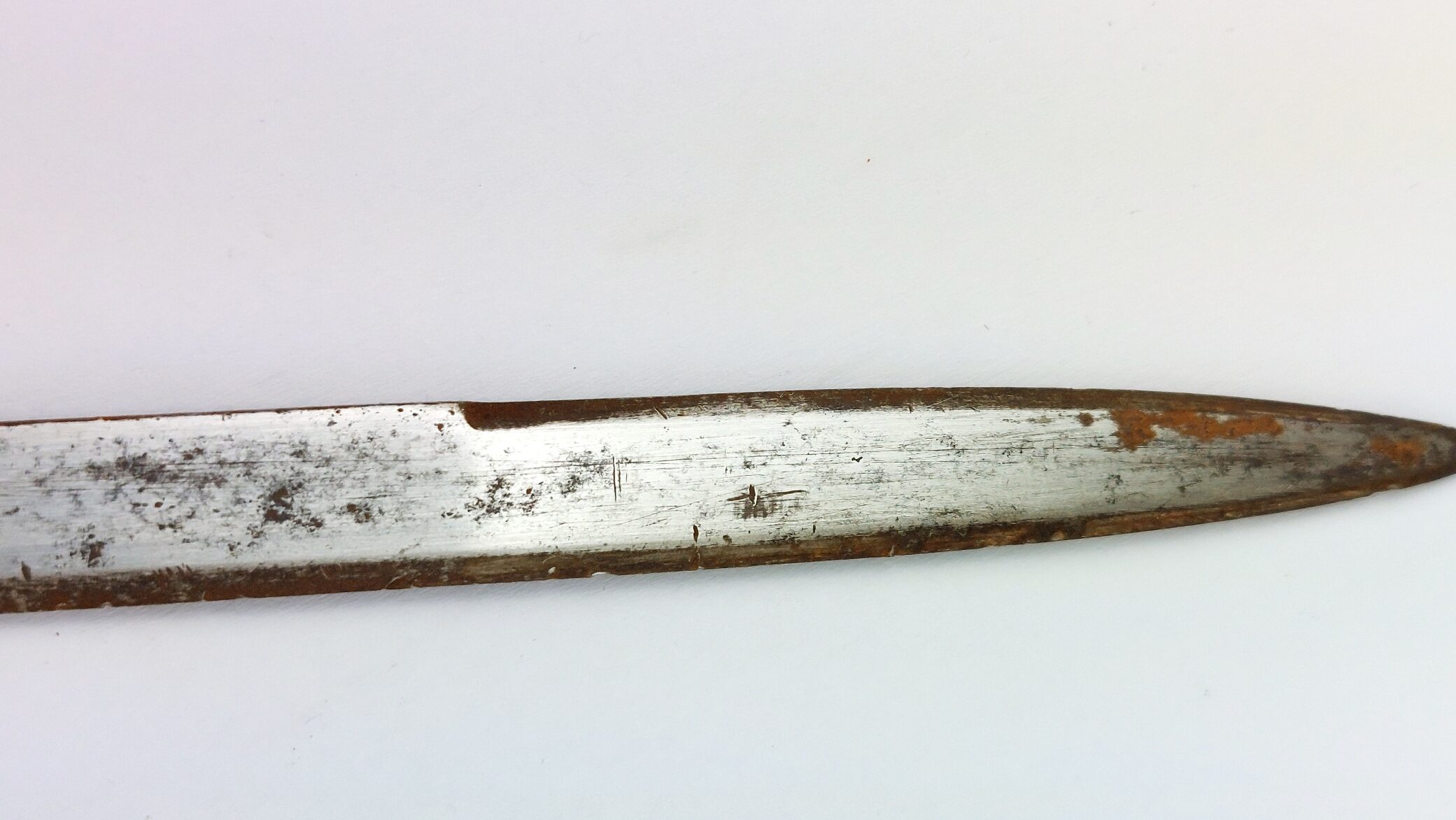
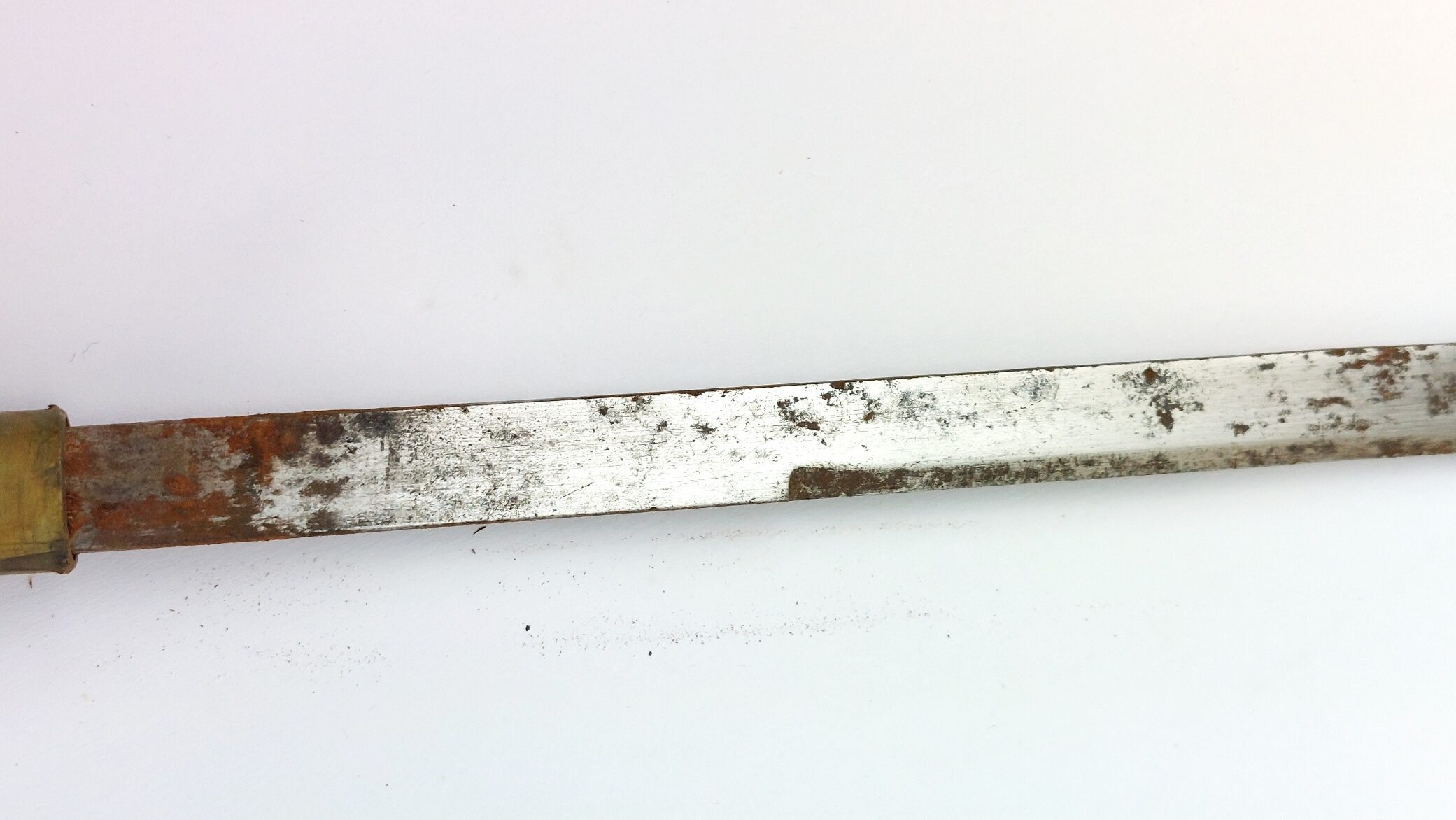
The blade measures 29.5 cm in length and 1.2 cm across the flats. Forged with a flat-backed profile, one edge is sharpened for approximately 22 cm, while the back edge is sharpened only towards the tip for the final 7.5 cm, producing a double-edged spear point optimised for thrusting. The blade surfaces show a combination of bright steel, age-darkened patina, light pitting and stable oxidation.
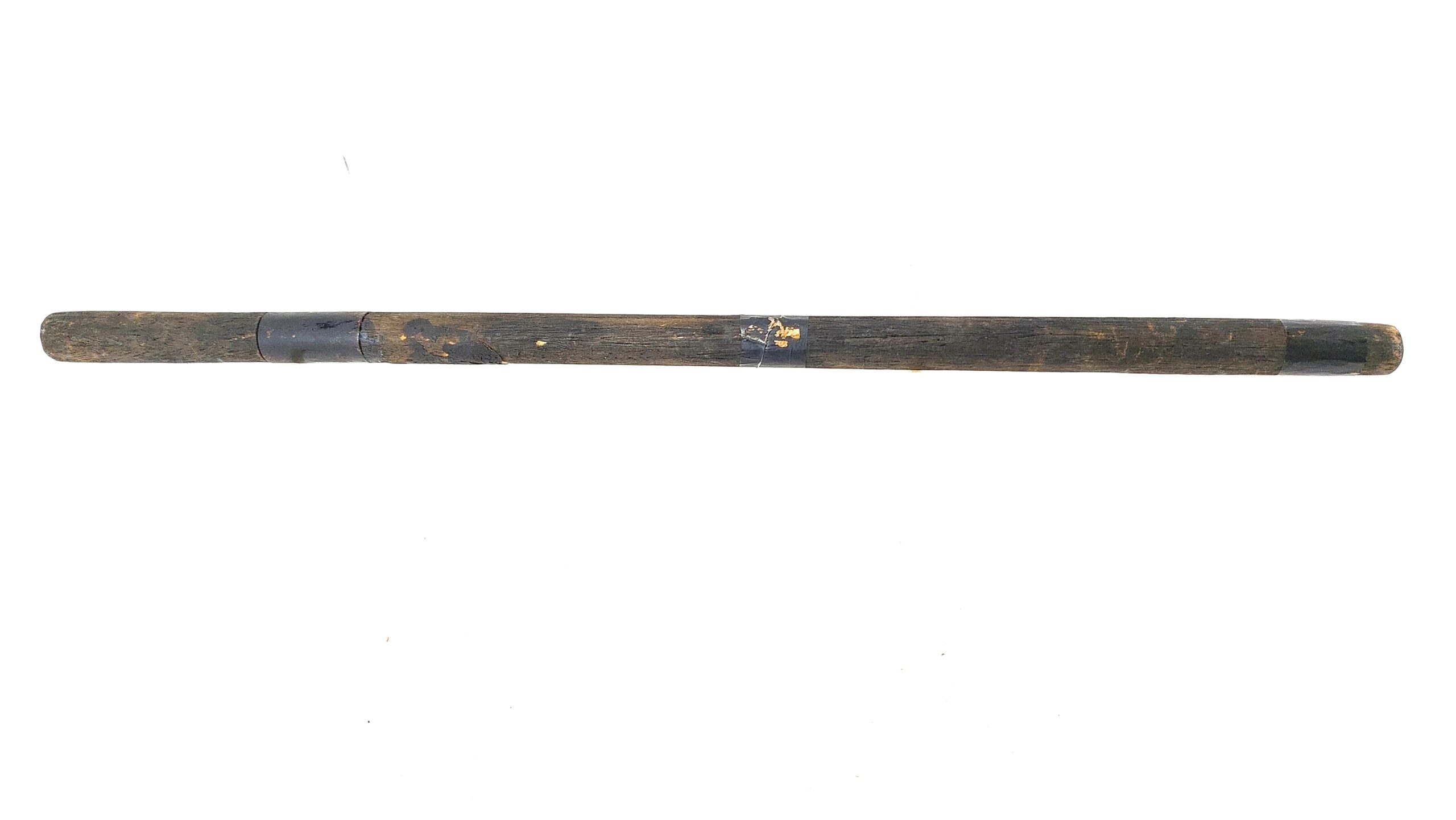
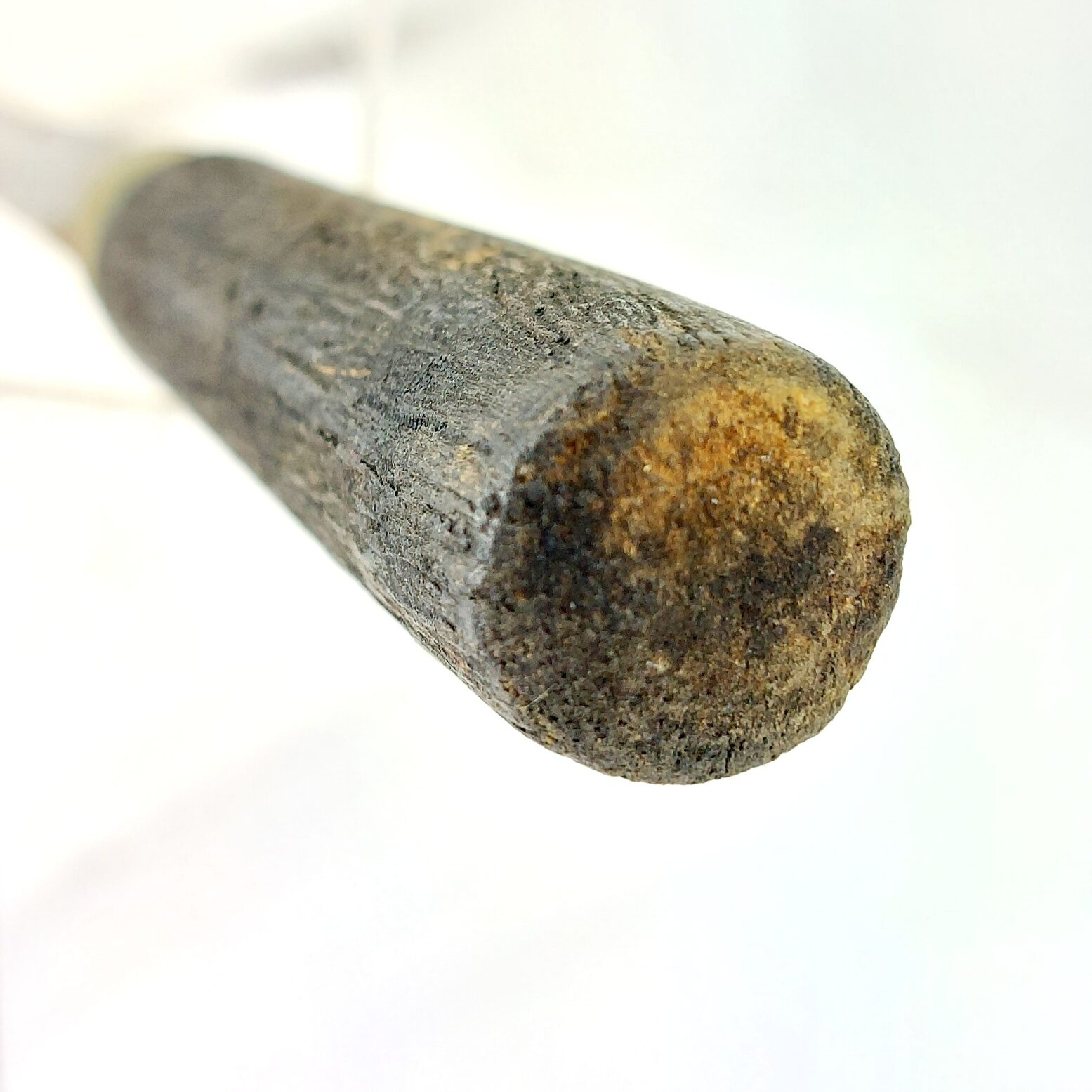
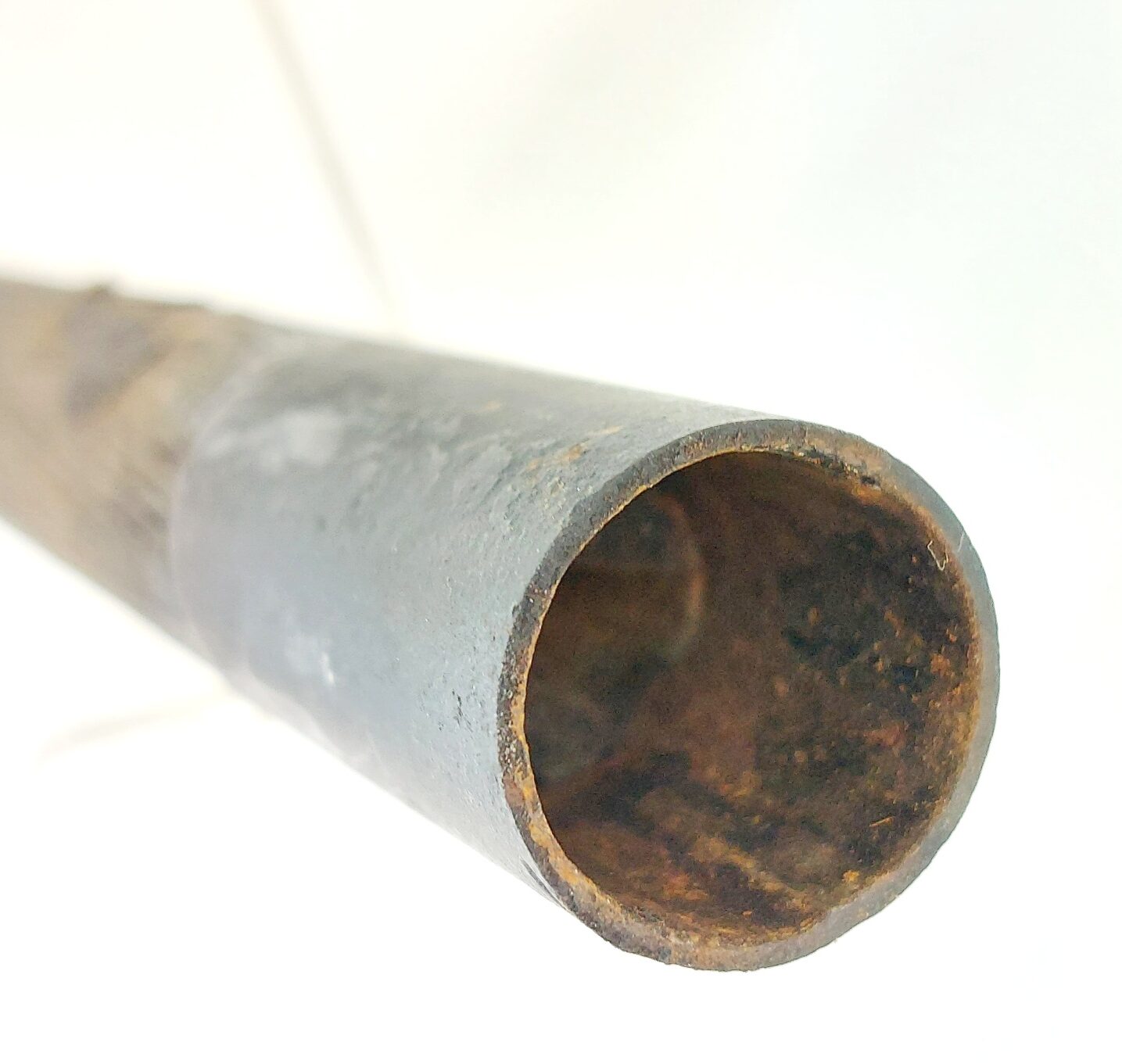
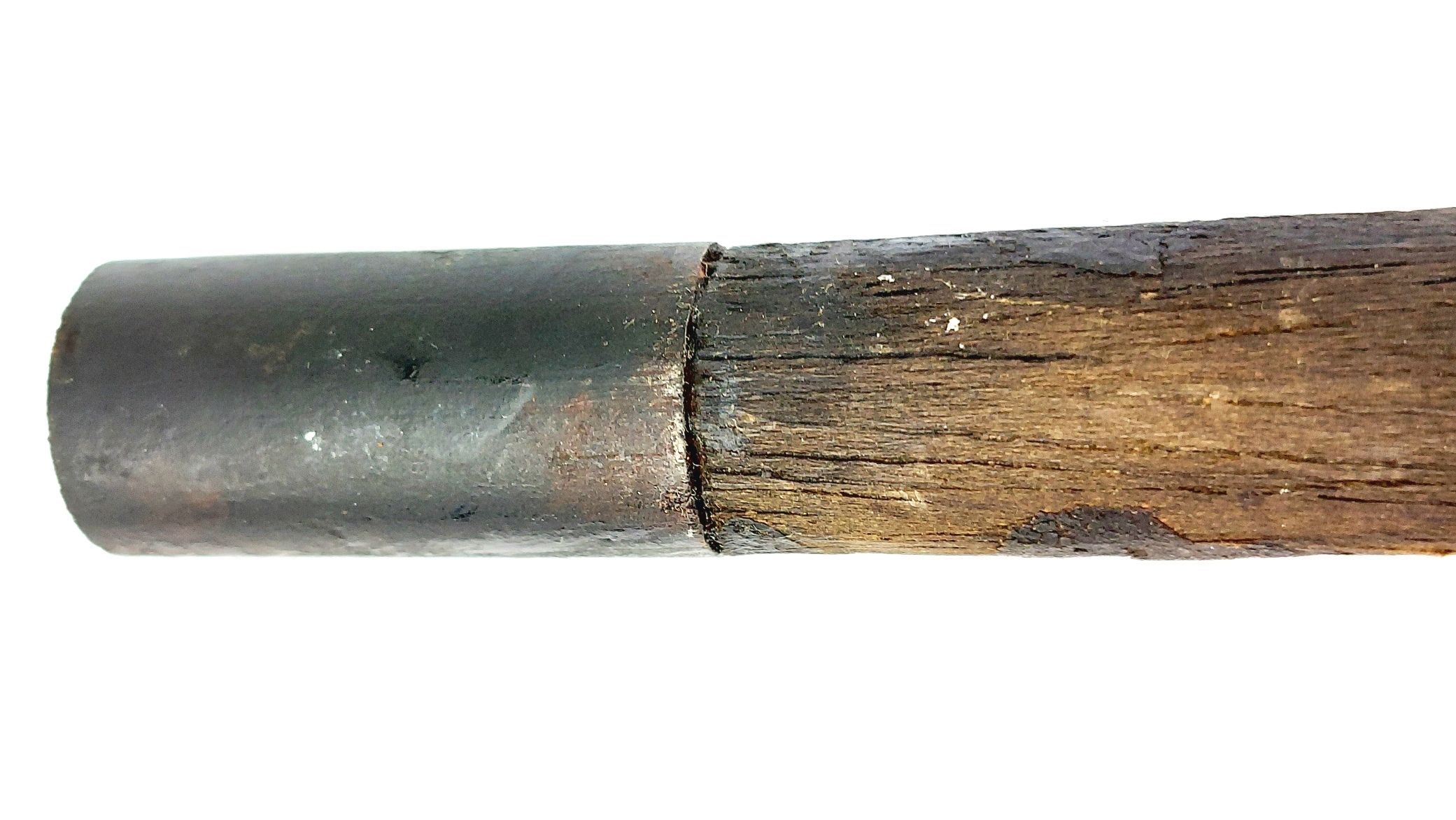
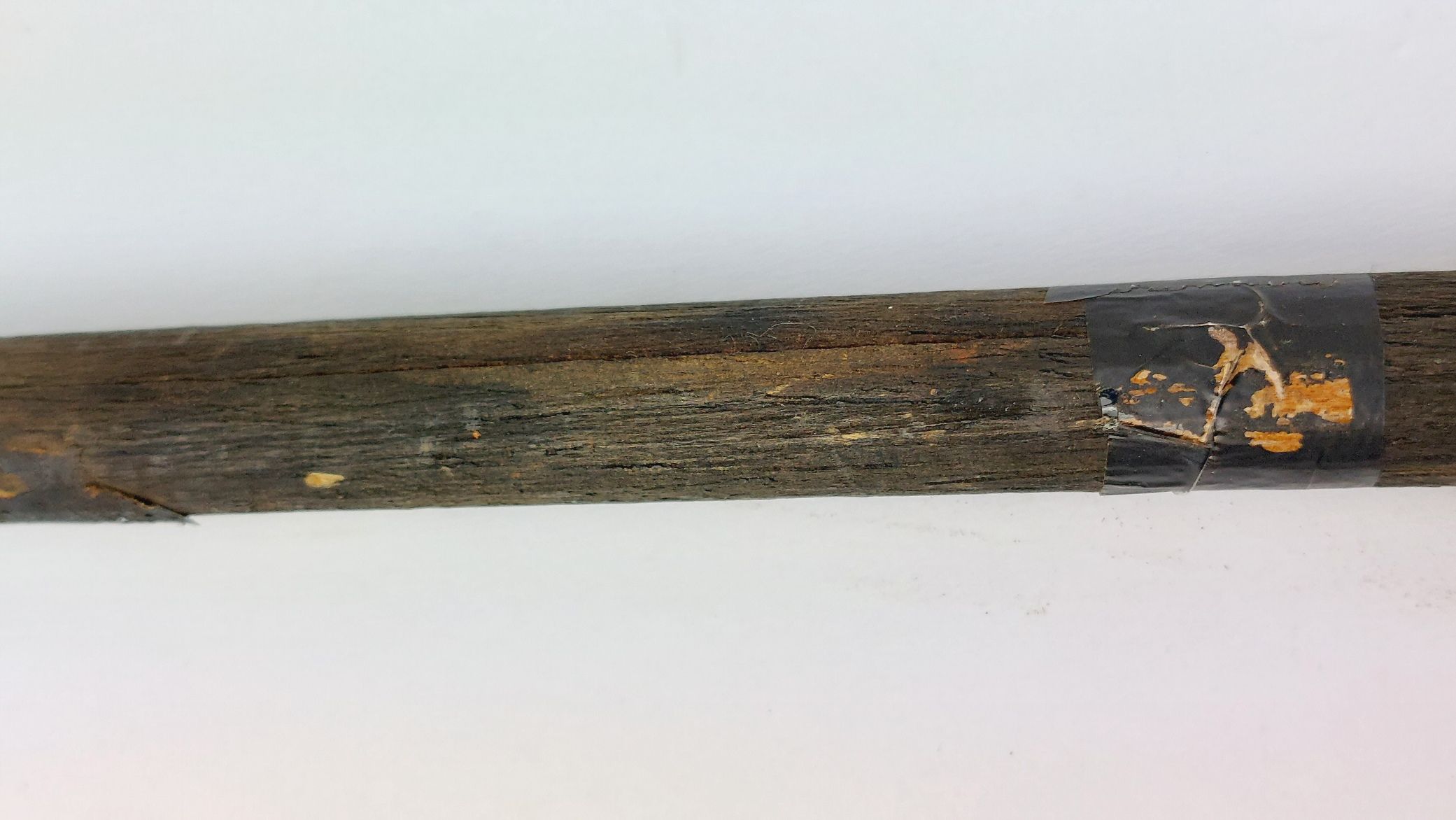
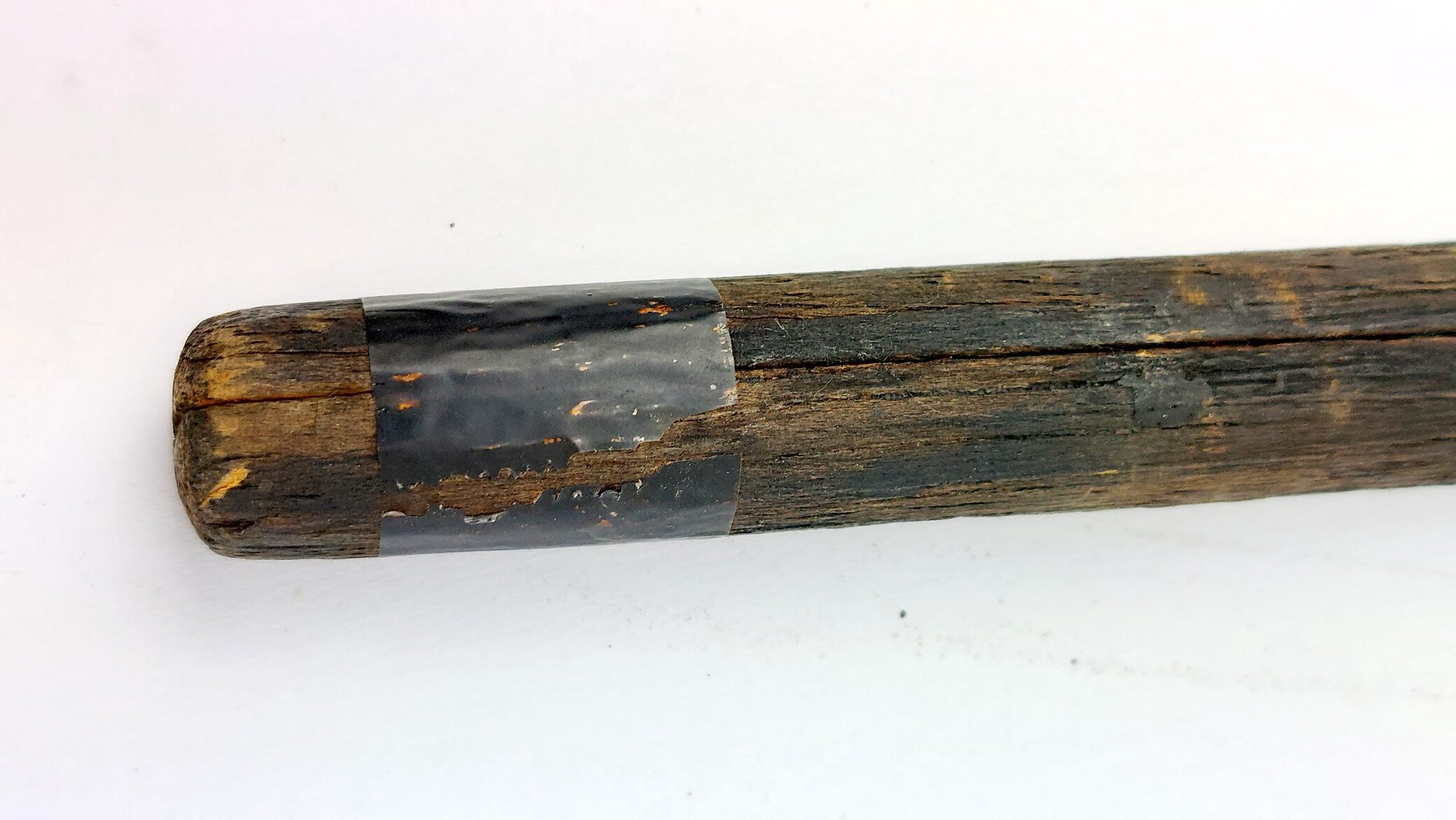
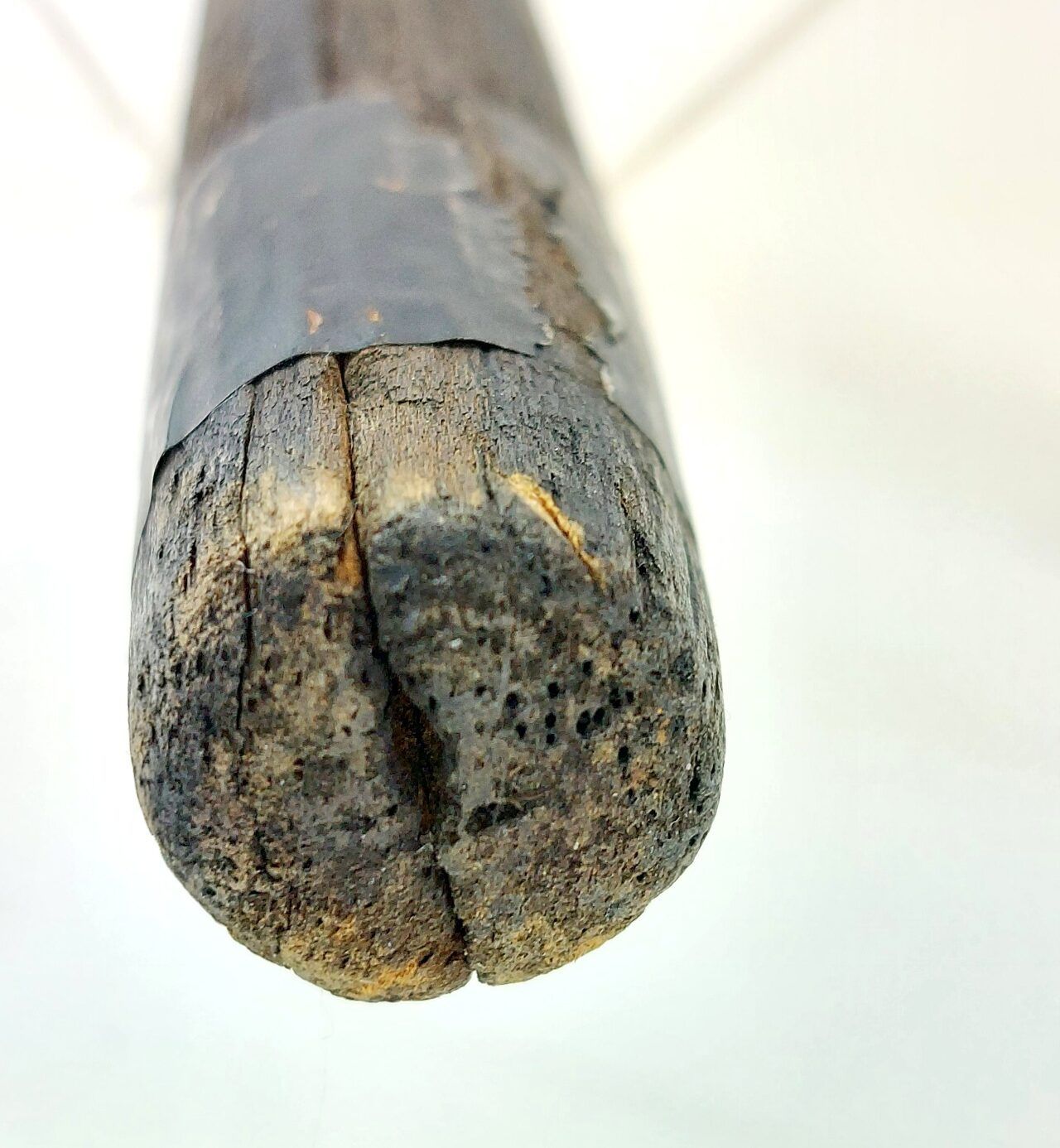
The wooden grip is plain and practical, with a brass ferrule reinforcing the junction with the blade. The outer wooden sheath measures 48 cm overall, capped with an iron/steel collar at the muzzle. The blade sheaths securely into a purpose-made inner channel, with a proper side slit cut inside the wooden body to accommodate the dagger. It displays longitudinal cracks, handling wear, and old period repairs, features typical of surviving working examples. Unsheathed, the piece measures 40.6 cm.
Historical Note:
During the late Victorian and Edwardian era, concealed blades appeared in a variety of guises. While the better-known sword canes were often carried by the middle and upper classes, plainer examples such as dagger sticks provided a more discreet form of defence. These were intended to be carried unobtrusively, offering a hidden thrusting blade within what appeared to be an unremarkable stick or rod.
This example reflects that practical tradition: short, functional, and unadorned, it is closely related to the swagger- or truncheon-daggers of the same period. Surviving specimens of this type are less common than their cane-sized counterparts, as they were generally working pieces rather than decorative objects, and their appeal lies in their straightforward, utilitarian design.
*Condition*
Blade clean and structurally sound, with areas of bright steel mixed with age patination, oxidation, and shallow pitting. Point remains well-defined. Brass ferrule with natural toning and traces of verdigris. Wooden grip and sheath with age cracks, shrinkage, and stable old repairs; wood with an undisturbed dark patina. Iron/steel muzzle cap with surface rusting. Draws and sheaths securely. Please see photographs as part of the condition report.
*In order to complete the online purchase we will require a picture/scan of a photo ID (Driving Licence, Passport or an official document with a recent picture). If you don't posses any such document please call to buy. If we consider that the proof of ID is incorect or insuficient, we reserve the right to cancel the transaction.
*We also reserve the right to cancel the transaction with a full refund if there is any suspicion that the provided item will be used in any way contrary to the laws and legislation of UK.