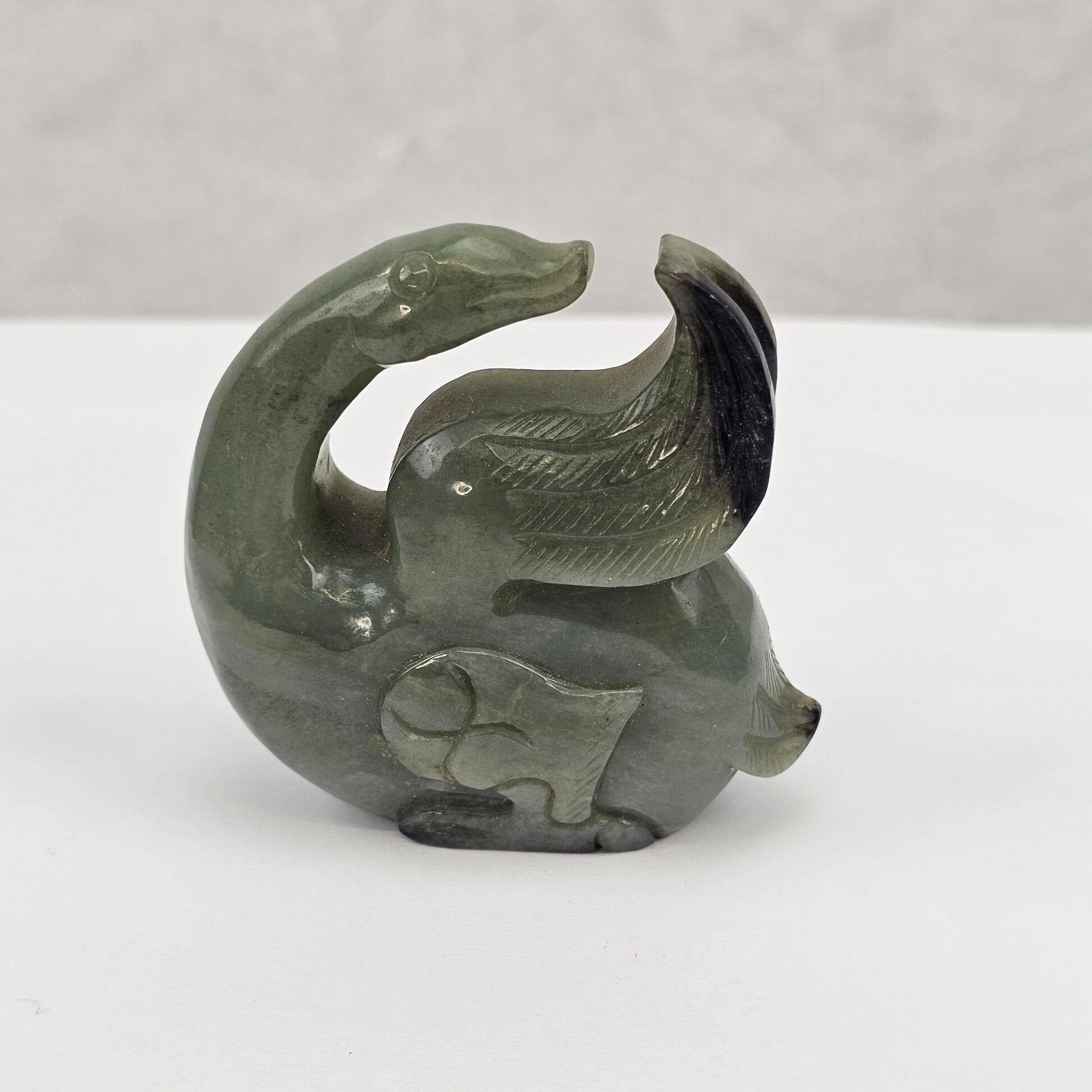
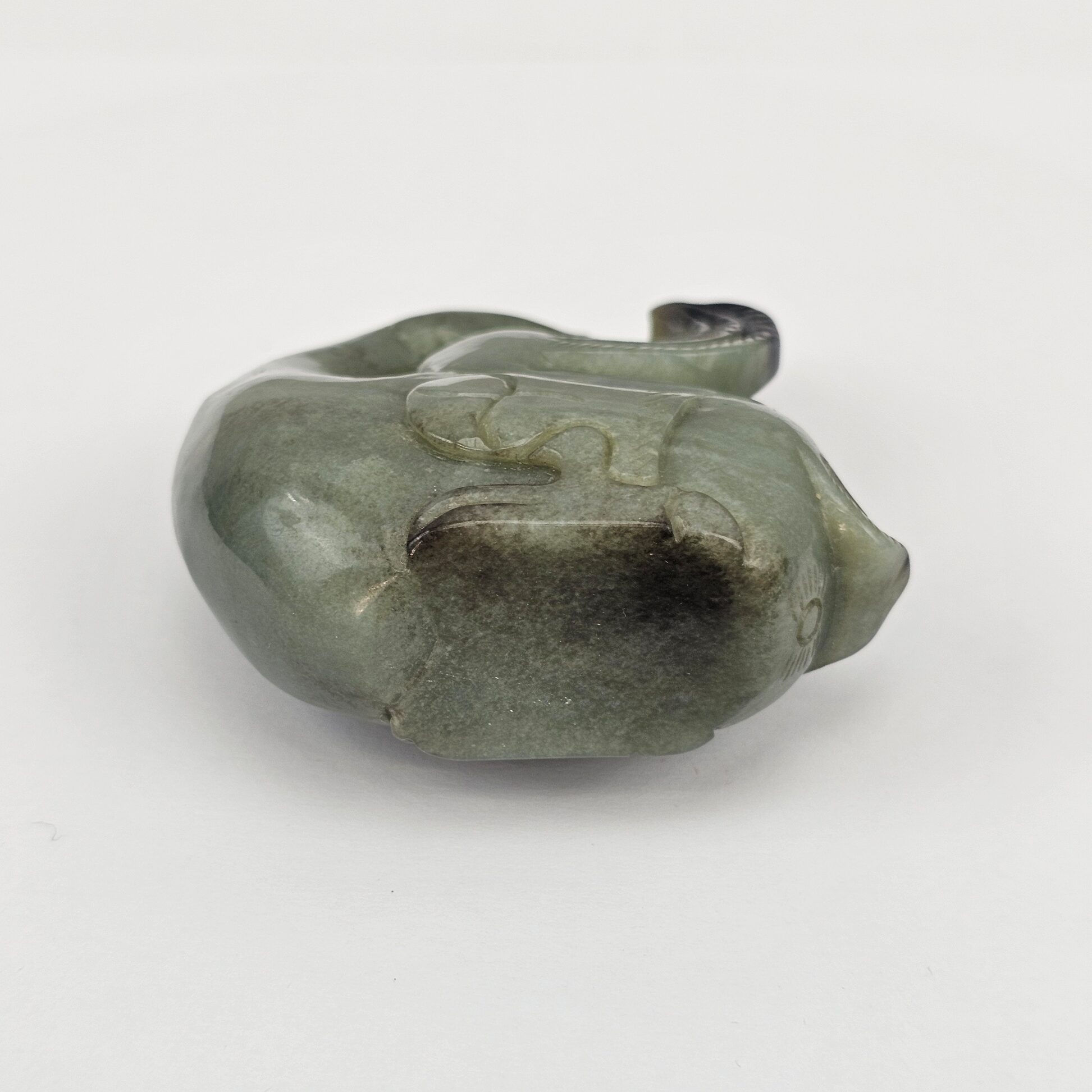
~ Chinese Qing Dynasty Dark Green Nephrite Jade Carving of a Goose and Gosling with Lotus, 18th to 19th Century ~
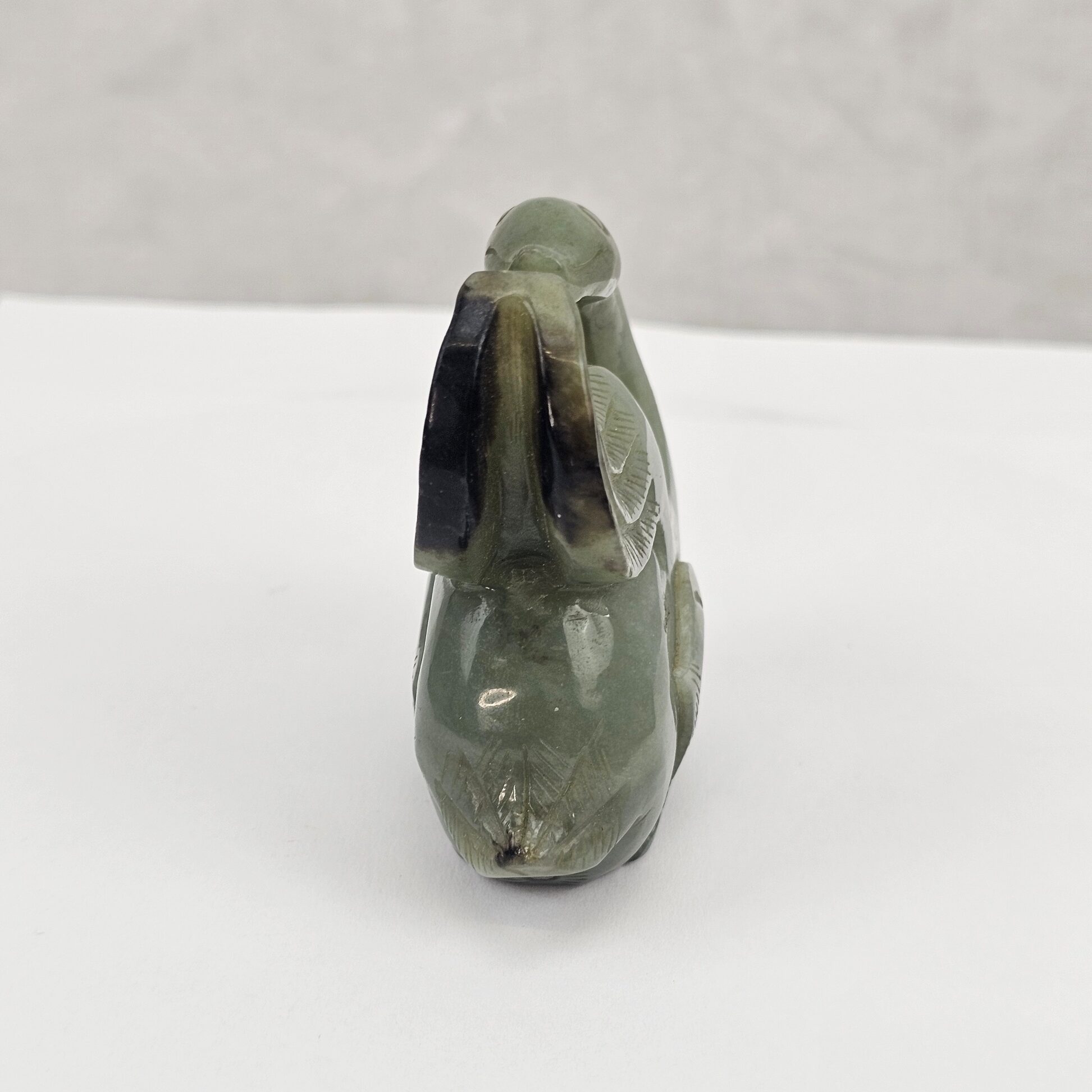
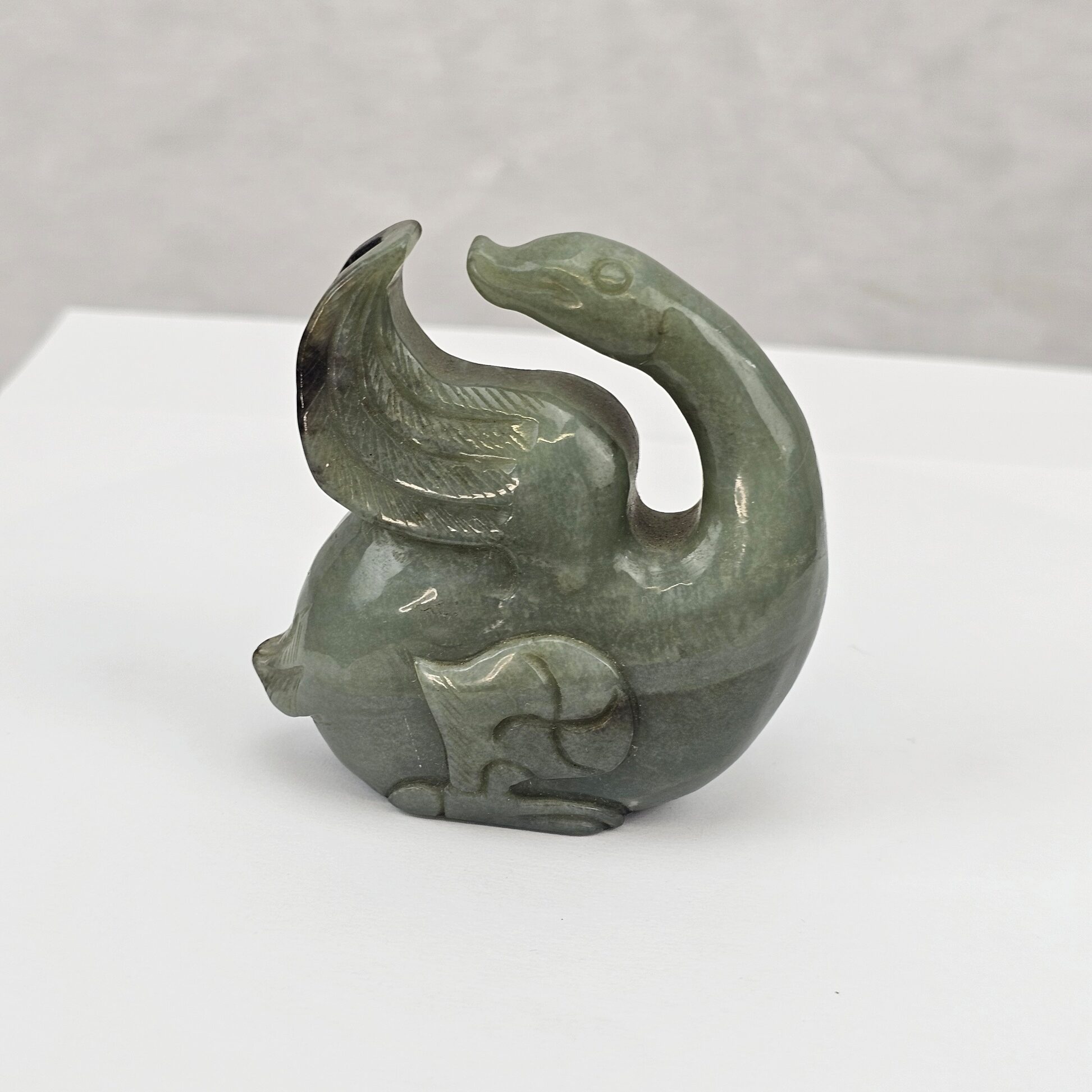
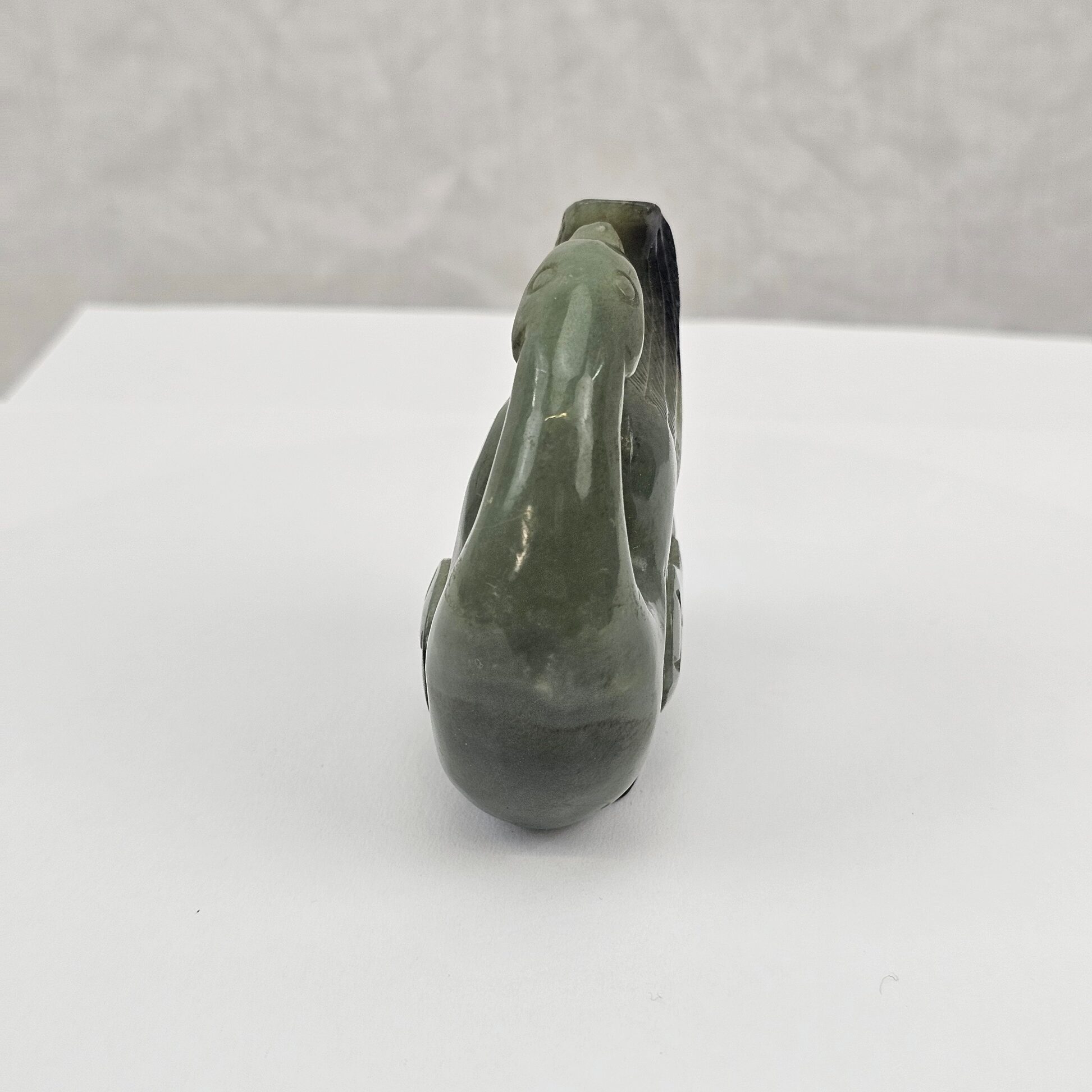
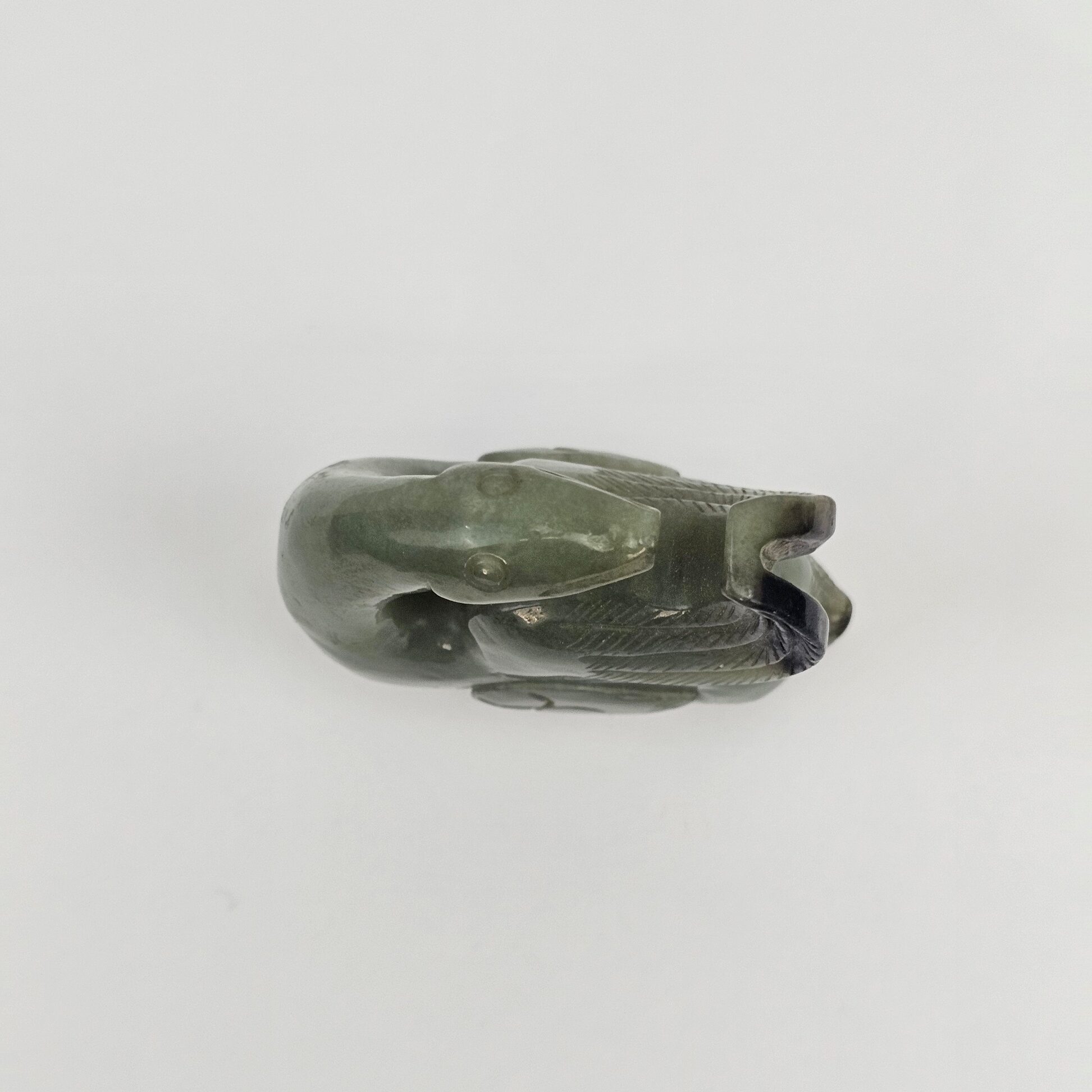
A boldly hand-carved group worked from a single piece of rich dark green nephrite jade, depicting a large goose in a highly dynamic pose, its long neck arching upward and curving dramatically back upon itself in a full reverse arc, the head turned inward with a small circular eye, a flat bill, and smooth rounded contours. The overall silhouette of the piece is commanding and sculptural, the curving neck forming a large open loop against the body. To the upper right, a sweeping fan tail rises in a broad, layered form with deeply incised parallel lines describing the primary feathers, the surface here picking up the deepest zones of near-black natural stone inclusion to dramatic effect. Against the rounded main body of the goose, a smaller gosling is carved in low relief, its own head and body nestled close to the parent bird, rendered with incised wing and feather detail including a small eye. The lower body of the goose carries decorative incised motifs, with an open circular form and scroll or wave elements visible, suggesting water and lotus vegetation appropriate to the aquatic setting. The reverse of the piece is more smoothly worked with the continuation of the breast and body, lightly marked with incised scrollwork visible on the underside. The stone is a rich, deep olive and forest green nephrite throughout, with areas of very dark grey-green to near-black natural stone inclusions that are concentrated in the tail area and distributed across the main body, providing a strong tonal contrast with the warmer olive zones. The surface carries a fine, well-established polish with a reflective sheen.
Historical Context
The goose holds a distinguished position in Chinese cultural and artistic tradition, carrying multiple overlapping symbolic resonances that made it a highly favoured subject for jade carving throughout the Ming and Qing periods. In Chinese literary culture, the goose is indelibly associated with Wang Xizhi, the greatest of all Chinese calligraphers (303 to 361 AD), who was celebrated for his devoted observation of geese, reportedly finding in the fluid movement of their long necks inspiration for the brushwork of his legendary cursive script. This connection between the goose and scholarly attainment gave the bird an elevated status within the culture of the literati and the scholar's studio that persisted across subsequent dynasties. Geese also mate for life, making them symbols of fidelity and devoted partnership, and paired or parent-and-young goose compositions expressed wishes for enduring marriage and flourishing family bonds. The smaller gosling shown here nestled against the parent bird carries additional resonance as a symbol of generational continuity and nurturing.
The pairing of the goose with lotus and water motifs is iconographically coherent, placing the bird in its natural aquatic environment while adding the symbolism of the lotus, representing purity and virtuous emergence, and reinforcing the overall auspicious register of the piece. Dark green nephrite of the kind used here, an olive to forest green stone with deep natural inclusions, was widely used for bird and animal carvings throughout the Qing Dynasty, and the bold exploitation of the dark zones of the stone in the tail and wing areas demonstrates the skilled carver's deliberate use of the natural colour variation to enhance the visual impact of the composition. The accomplished silhouette of the arching neck, the sculptural weight of the rounded body, and the fine detail of the secondary bird and decorative incising are consistent with quality Qing period workshop production.
~ Dimensions ~
One has a height of 2.75 inches (7.1 cm), a length of 2.75 inches (7.1 cm) & a width of 1.25 inches (3 cm).
It weighs 200g
~ Condition ~
The piece is in great condition with no cracks or chips.
#1409