~ Victorian Majolica Table Serving Platter ~
Majolica refers to a style of pottery which was fashionable during the second half of the 19th century after being introduced to the public at the Exhibitions of 1851 and 1862.
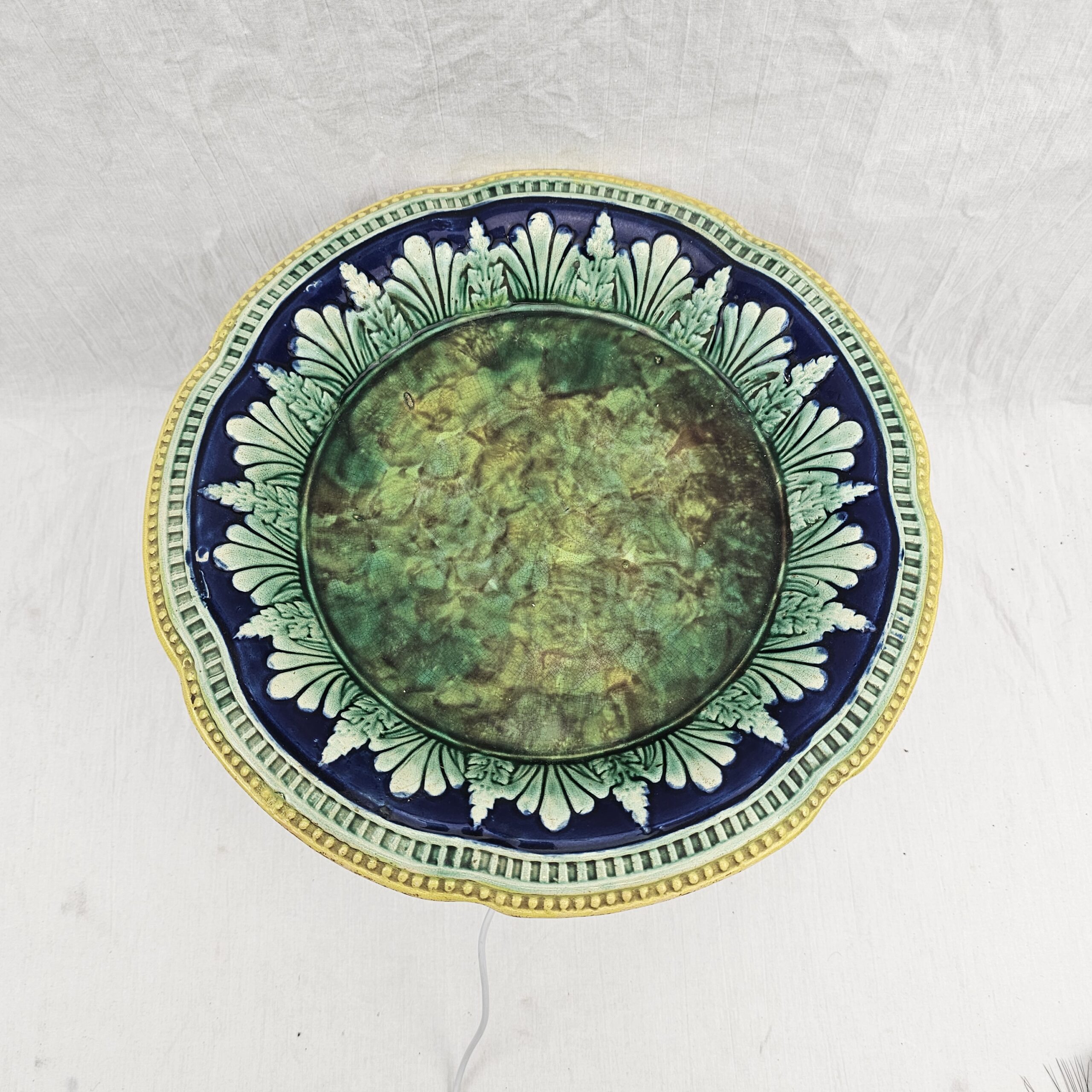
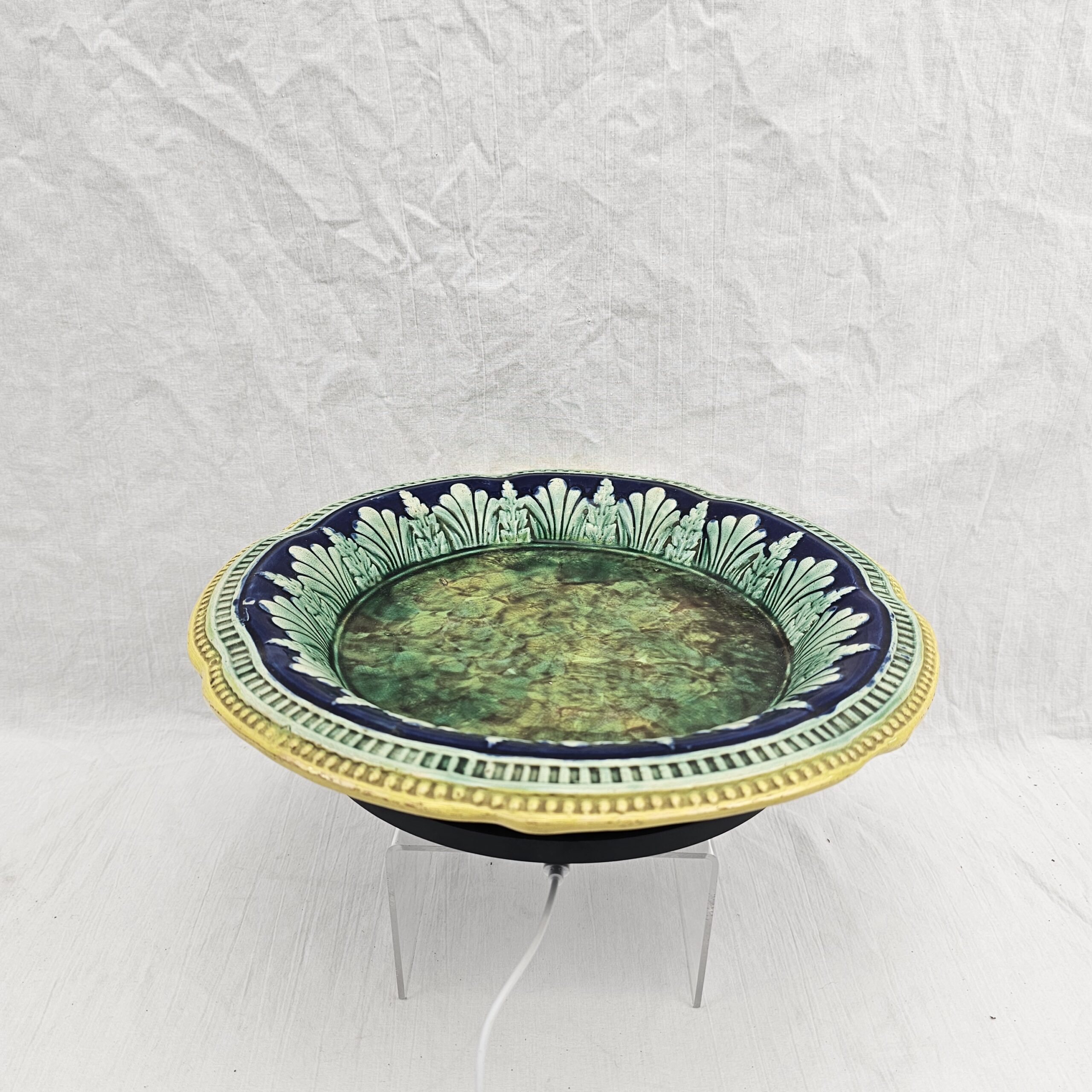
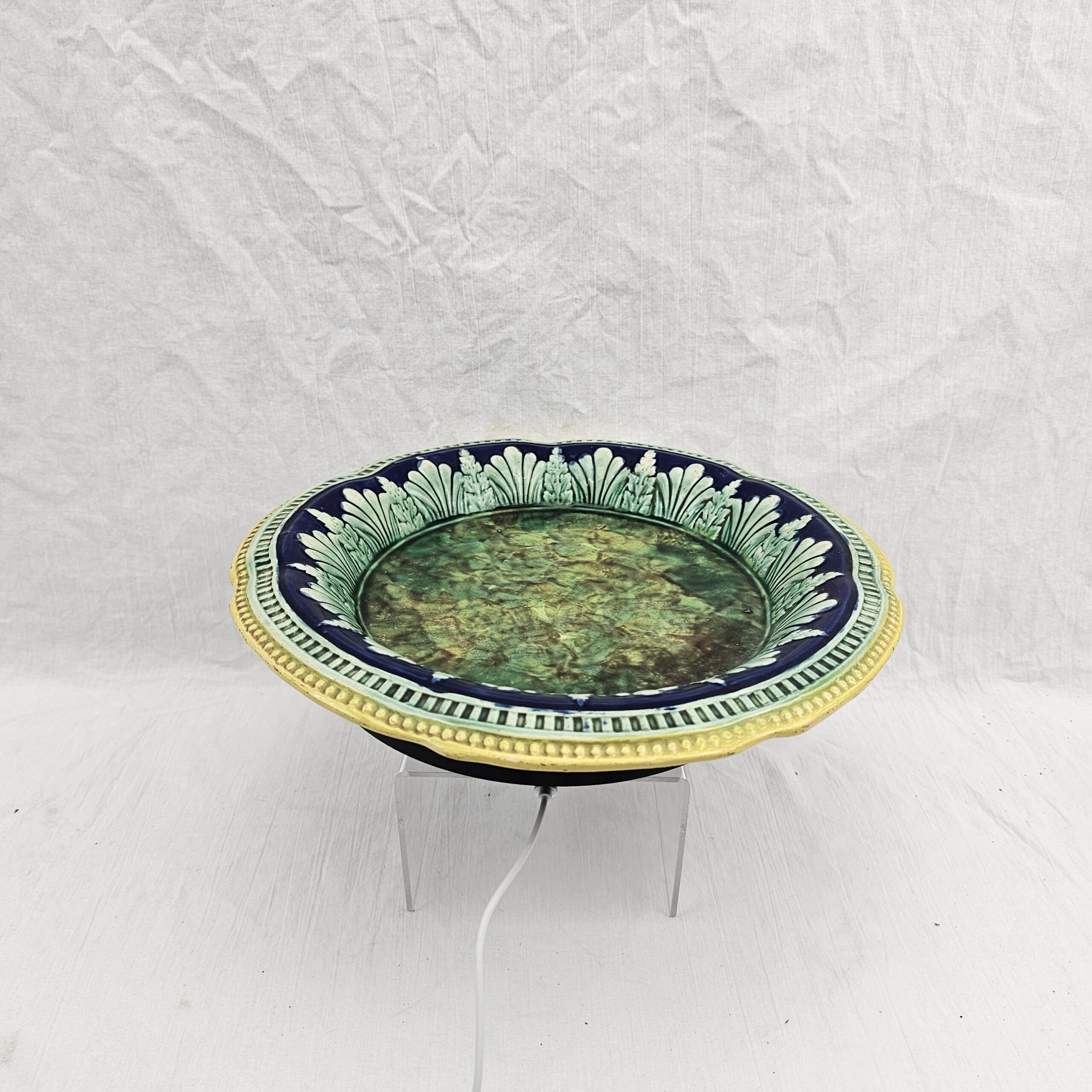
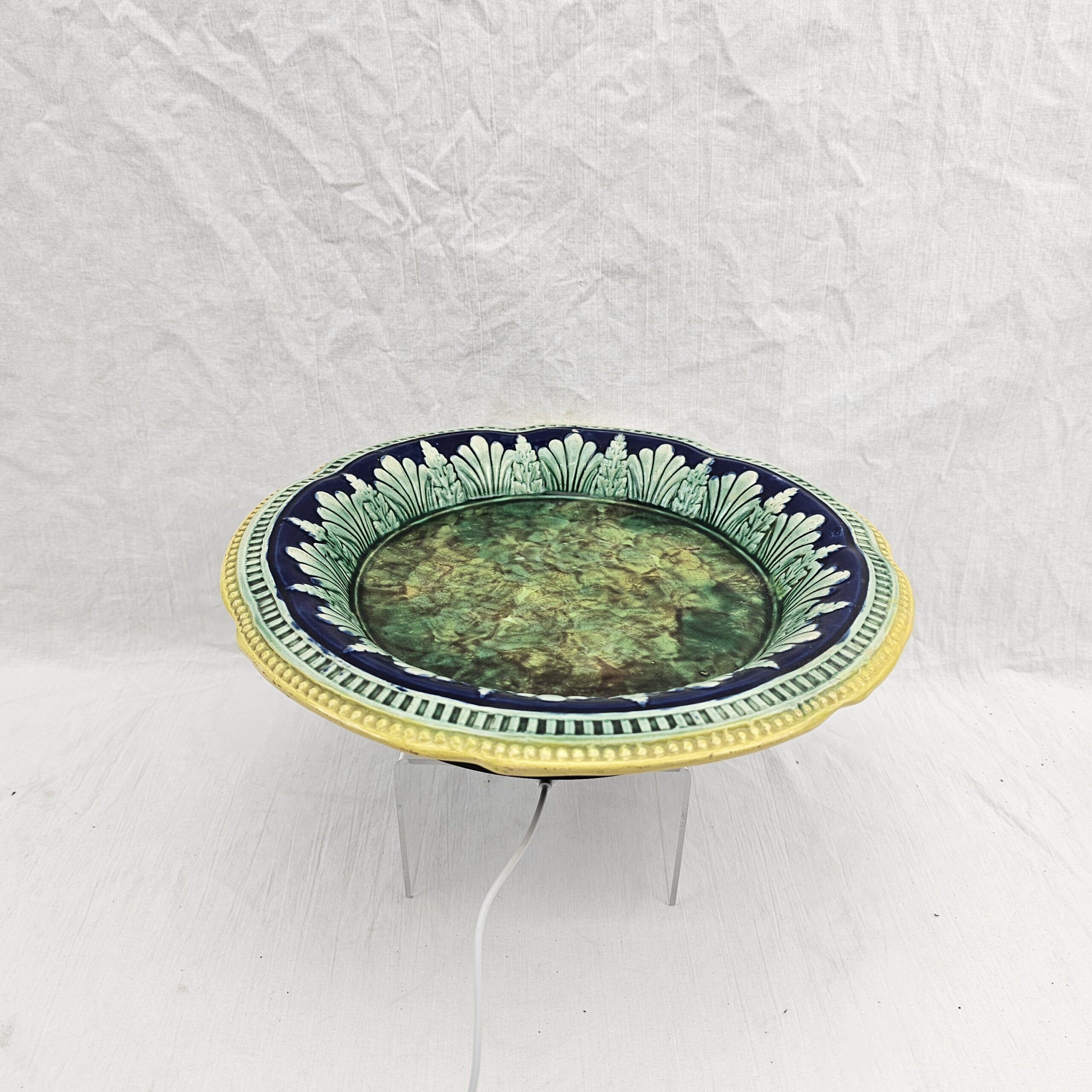
A large and visually striking Victorian majolica charger or serving platter of considerable decorative presence, its deeply concave form and bold colour palette creating an impressive display piece. The broad border is glazed in a rich cobalt blue ground, from which rises a dramatic arrangement of moulded acanthus leaf fans alternating with upright fern or grass sprays, all rendered in pale celadon and cream glazes — the crisp, architectural quality of the modelling strongly suggesting a manufacturer of some standing. The outer edge of the border is defined by two concentric moulded bands: a green lattice or basket-weave strip and a scalloped yellow ochre beaded outer rim, the whole giving the plate a layered, classically elegant framing. The central well is deeply and richly glazed in a swirling, mottled palette of bottle green, olive, amber and warm brown — the kind of deliberately organic, almost geological surface typical of the finest English majolica of the 1870s and 1880s. The overall form is circular with a gently undulating, scalloped rim.
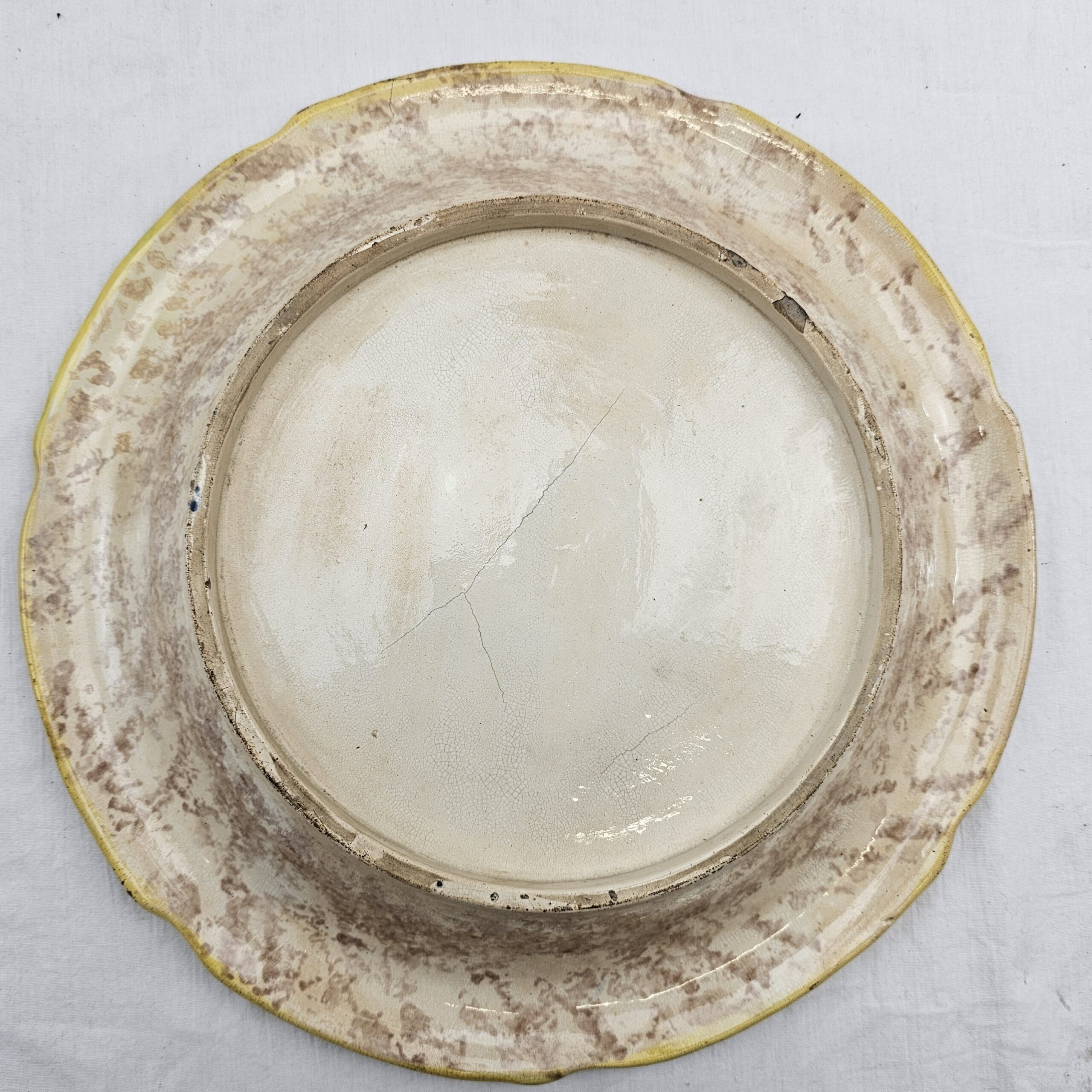
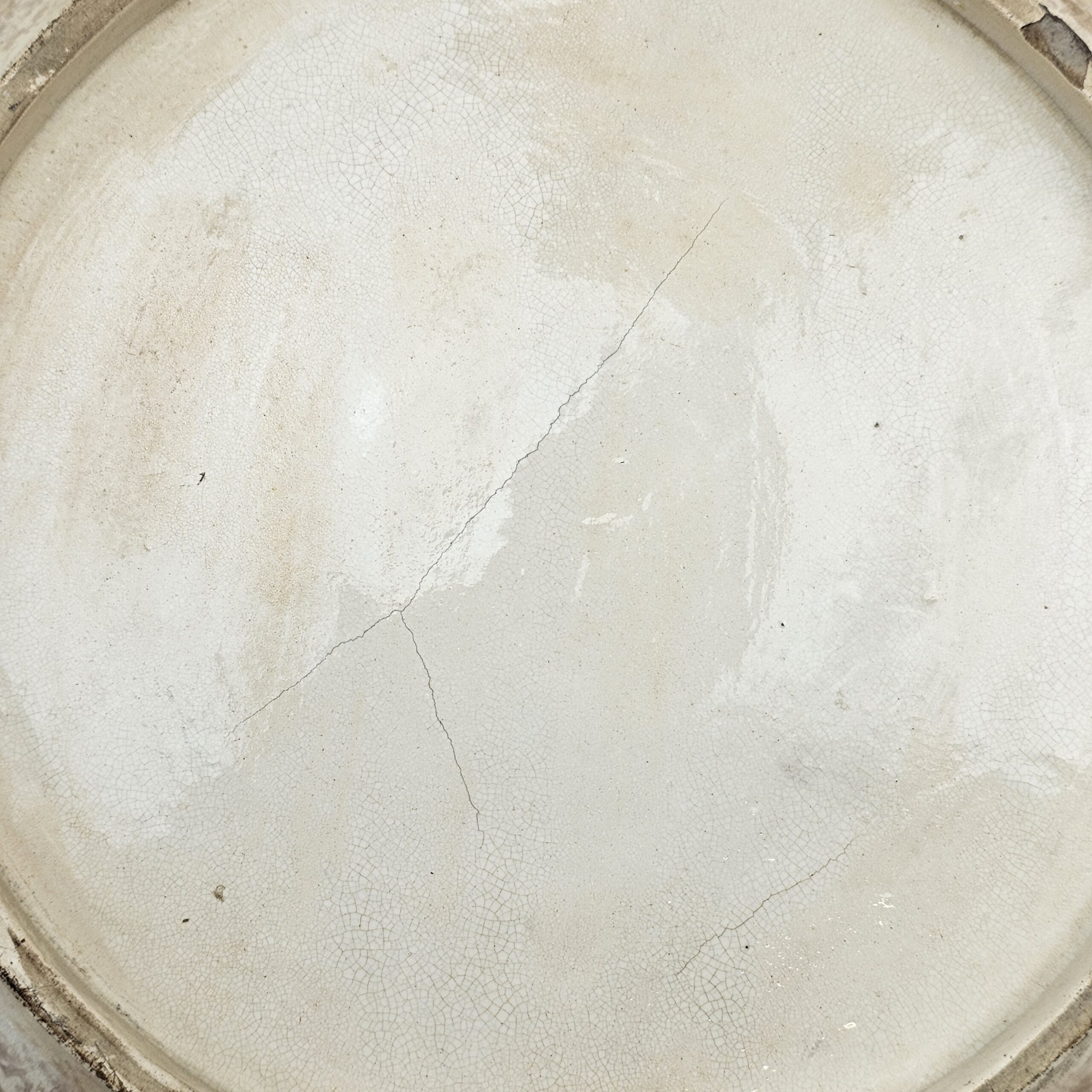
The reverse (images 5–6) shows a white-glazed base with age-related crazing and heavy brown discoloration to the unglazed areas, consistent with long storage or display. No legible maker's mark is visible in the photographs, though the quality of the moulding and the sophistication of the palette are consistent with one of the principal English majolica manufacturers of the period, such as Wedgwood, Minton or a comparable quality producer, circa 1870–1885.
~ Historical Context ~
Victorian majolica was made between 1849 and 1900: hard-wearing, inexpensive, exciting — typically relief-moulded, vibrantly coloured, and used for everything from utilitarian pieces to highly decorative display objects. Stylistically sometimes classical, more often convincingly naturalistic, it was always in step with trending fashion. Carters
The acanthus leaf is one of the oldest decorative motifs in Western art, rooted in classical Greek and Roman architecture, and its revival in Victorian majolica reflects the period's engagement with Neo-classical and Renaissance design traditions. The combination of cobalt blue ground with pale celadon or white-glazed acanthus sprays was particularly popular with quality English manufacturers in the 1870s, creating a strong contrast reminiscent of Wedgwood's Jasperware, translated here into the richer, more tactile language of majolica. The mottled, variegated green centre — suggestive of malachite or natural stone — is a sophisticated device employed by the finest makers to give visual depth to a centrepiece intended for display as much as for use.
The yellow ochre beaded border and the cobalt/acanthus combination, on a piece of this size and modelling quality, are characteristic of the upper-middle tier of English majolica production in this decade.
Several well known companies of the time produced Majolica but this piece bears no makers stamp.